
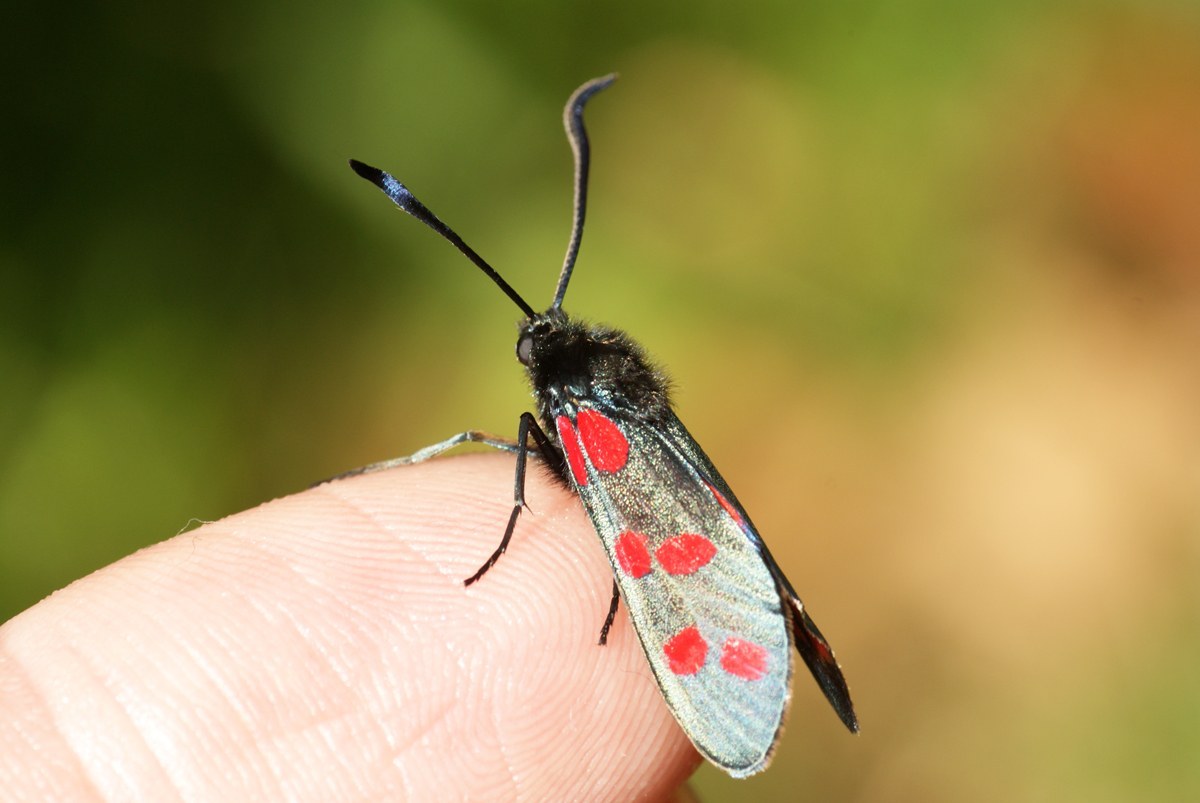
Six-spot Burnet Moth
Zygaena filipendulae
A day-flying moth with glossy black-green forewings marked by six bold red spots and vivid crimson hindwings, a striking warning-colored insect often mistaken for a butterfly as it visits summer wildflowers.
- Size
- 1.2–1.6 in wingspan
- Habitat
- Meadows, grasslands, coastal dunes
- Danger
- Harmless
Spotted a bug like this?
Identify any bug or insect from a photo, free.
Overview
The six-spot burnet is a member of the family Zygaenidae, a group of day-flying moths known for their metallic coloring and bright warning patterns. It is one of the most familiar and widespread burnet moths across Europe, easily spotted in grassy habitats during summer due to its slow, deliberate flight and bold coloration.
Adults have glossy, blue-black to green-black forewings marked with six distinct red spots arranged in pairs, and bright crimson-red hindwings edged in black, a combination that functions as aposematic, or warning, coloration signaling unpalatability to predators. Unlike most moths, it flies actively in bright sunshine, often visiting the same nectar-rich flowers as butterflies and bees.
As a common and conspicuous species of unimproved grasslands, the six-spot burnet serves as a useful indicator of healthy meadow habitat and is frequently studied and photographed due to its approachable, day-active behavior.
How to Identify
- Forewings are glossy blue-black to greenish-black with six well-defined red spots arranged in pairs along the wing.
- Hindwings are bright crimson-red with a narrow black border, visible in flight and often at rest.
- Wingspan roughly 3–4 cm; body compact with a slightly metallic sheen.
- Antennae are club-tipped, unlike the feathery or thread-like antennae of most other moths, giving it a superficially butterfly-like look.
- Distinguished from the similar five-spot burnet by its extra pair of red spots (six versus five) on each forewing.
Habitat & Range
Widespread across the United Kingdom and much of continental Europe, favoring unimproved grasslands, meadows, road verges, and coastal dunes where its caterpillar host plant, bird's-foot trefoil, grows abundantly. Adults fly by day in mid to late summer, often in warm, sunny weather, and are commonly seen nectaring alongside butterflies.
Behavior & Diet
Adults fly slowly and conspicuously in daylight, visiting a range of nectar flowers such as knapweed, thistles, and scabious, relying on their bold warning coloration rather than speed or camouflage to deter predators. Caterpillars feed on bird's-foot trefoil and related legumes and are also boldly patterned in yellow and black, similarly advertising their distastefulness. The bright coloration in both life stages is a classic example of aposematism among day-flying moths.
Life Cycle
Females lay clusters of eggs on the leaves of bird's-foot trefoil, which hatch into yellow-and-black caterpillars that feed through summer and often overwinter as partly grown larvae, resuming feeding the following spring. Mature caterpillars spin a distinctive papery, straw-colored cocoon attached to a grass stem, from which the adult emerges in summer. There is typically one generation per year, with adults active during a relatively short flight period in mid to late summer.
Frequently asked questions
Is the six-spot burnet a moth or a butterfly?
It is a day-flying moth, though its bright colors, club-tipped antennae, and daytime activity often lead people to mistake it for a butterfly.
How do I tell it apart from the five-spot burnet moth?
Count the red spots on each forewing; the six-spot burnet has six spots arranged in pairs, while the five-spot burnet has only five.
What plant does the caterpillar feed on?
It feeds primarily on bird's-foot trefoil, a low-growing legume common in grasslands.
Why are its colors so bright?
The bold red and black coloring functions as a warning signal to predators, a pattern known as aposematism, seen in both the caterpillar and adult stages.
Six-spot Burnet Moth guides
In-depth guides for identifying, understanding, and living alongside Six-spot Burnet Moth.
Other bugs you may enjoy
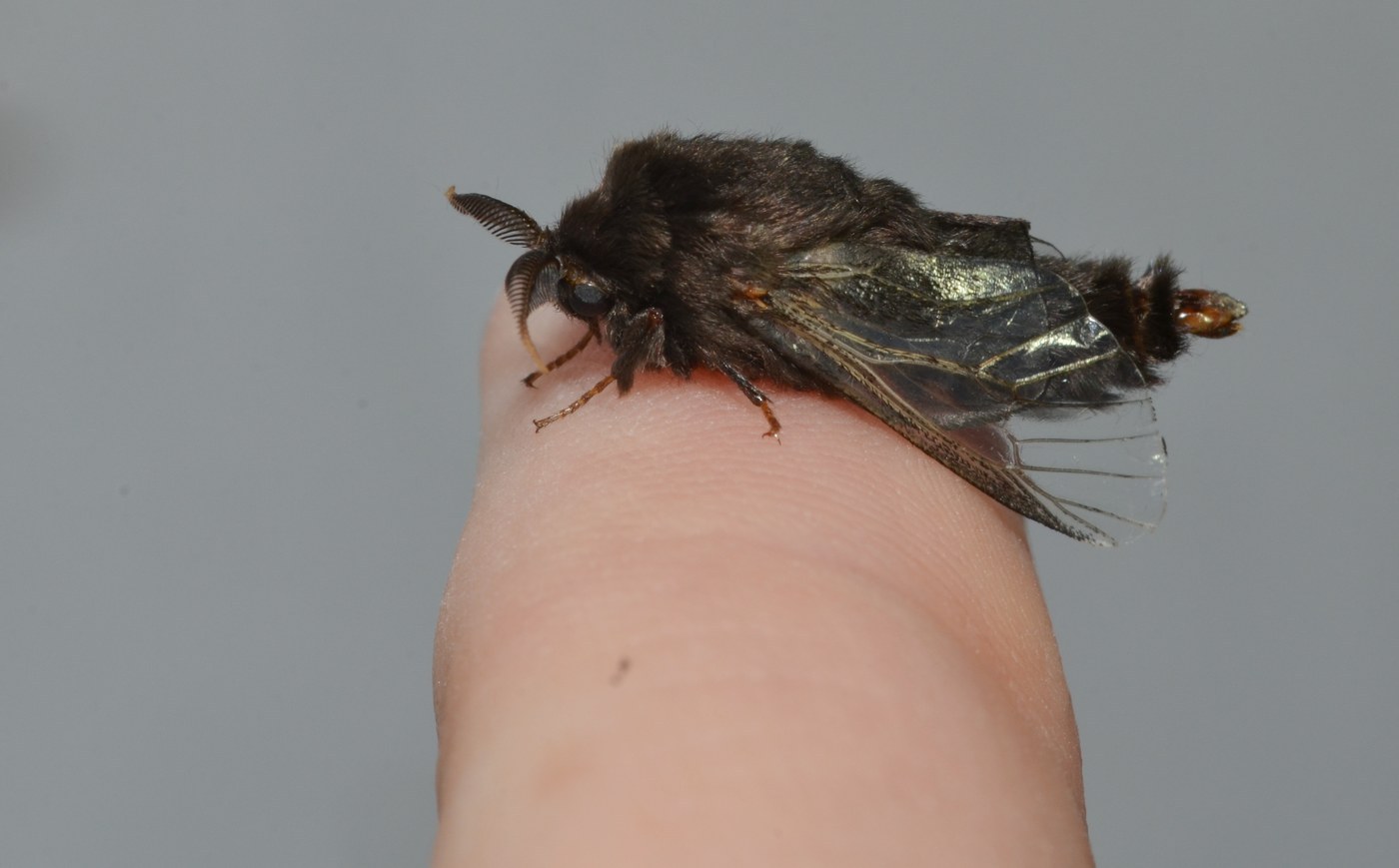
Bagworm Moth
Coniferous and deciduous trees, shrubs, hedges
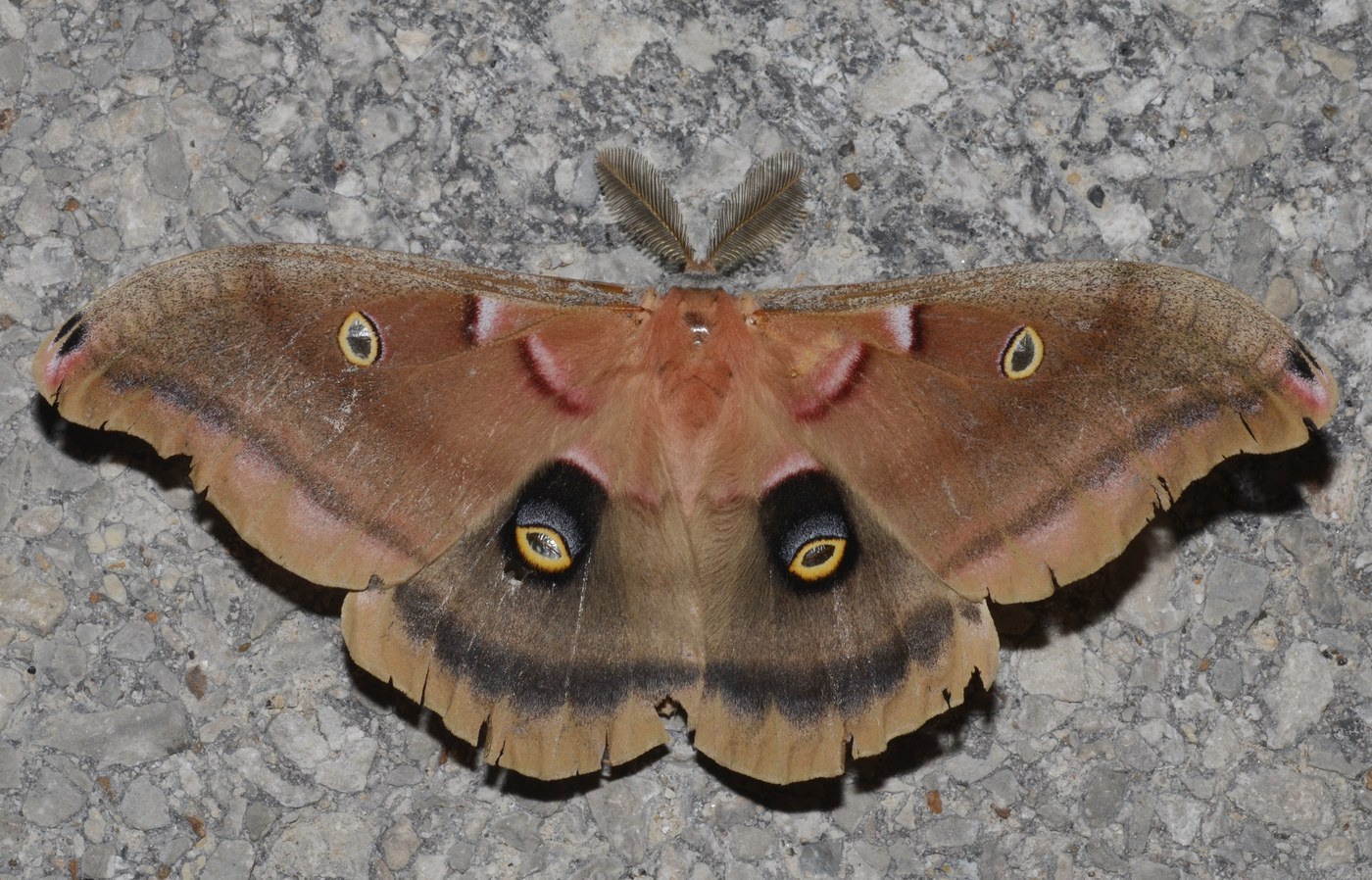
Antheraea Silkmoth
Deciduous forests, woodland edges, orchards
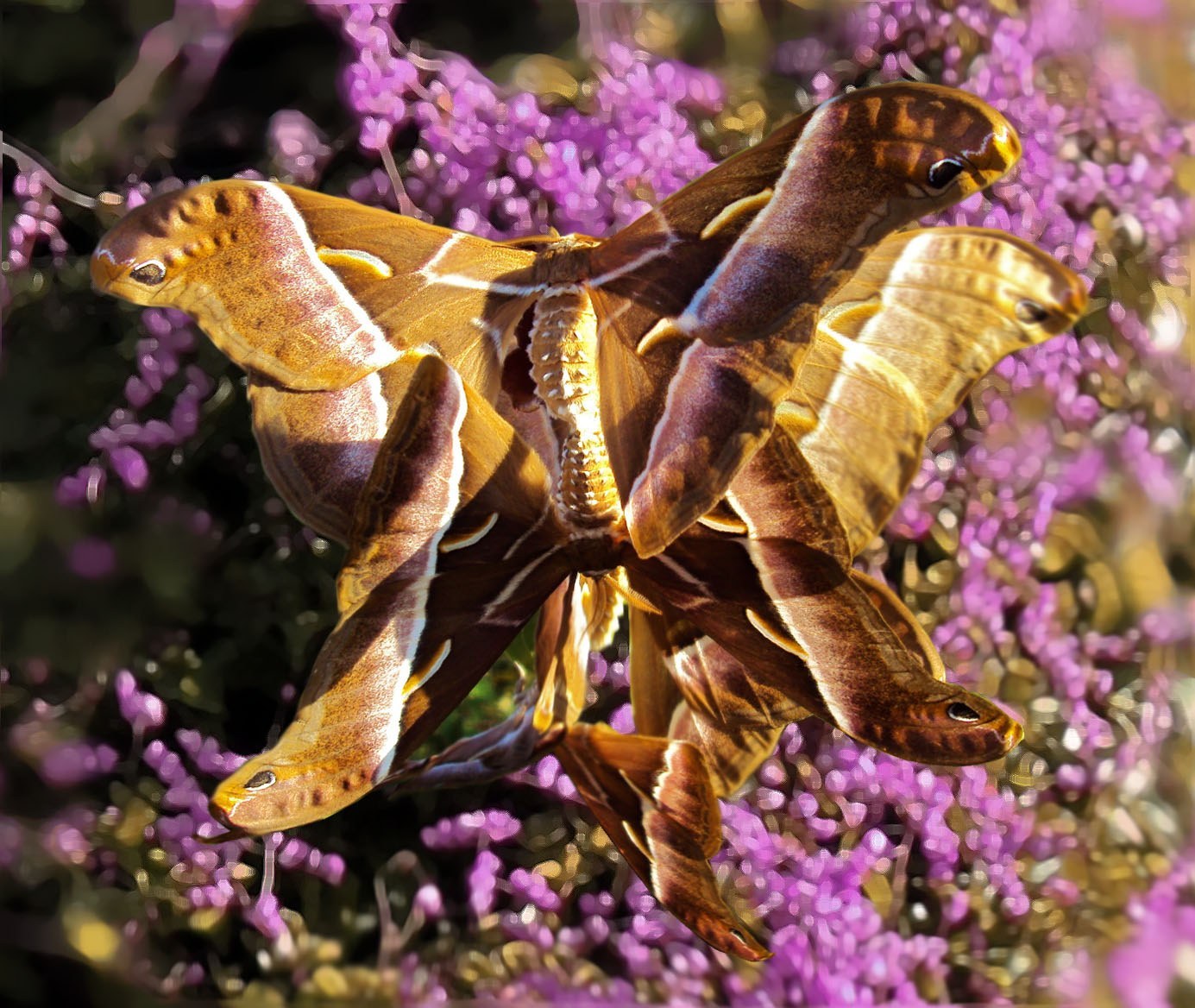
Ailanthus Silkmoth (Cynthia Moth)
Urban parks, wastelands, and woodland edges with tree-of-heaven; native to Asia, introduced in North America and Europe
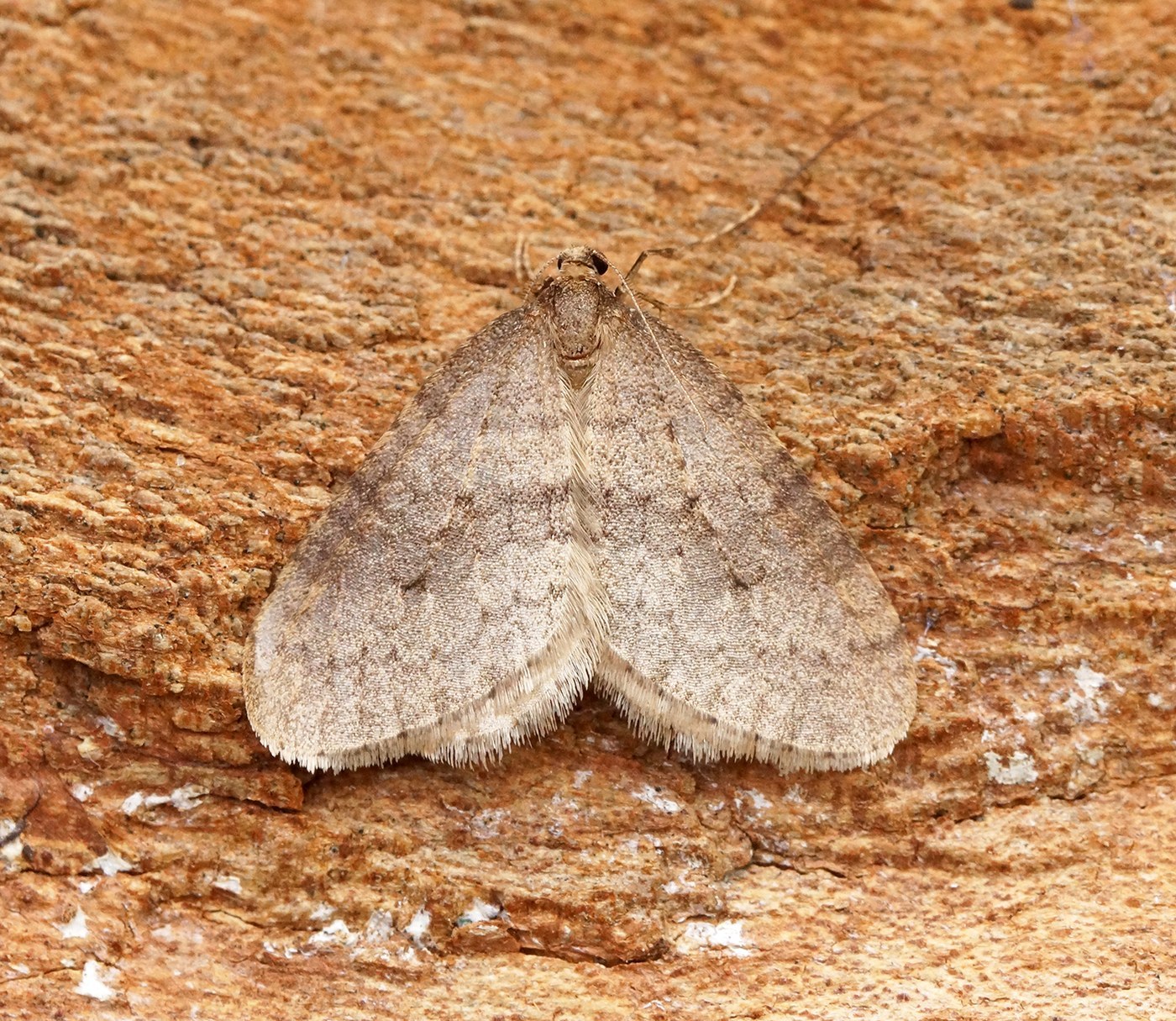
Winter Moth
Deciduous woodland, orchards, gardens, hedgerows
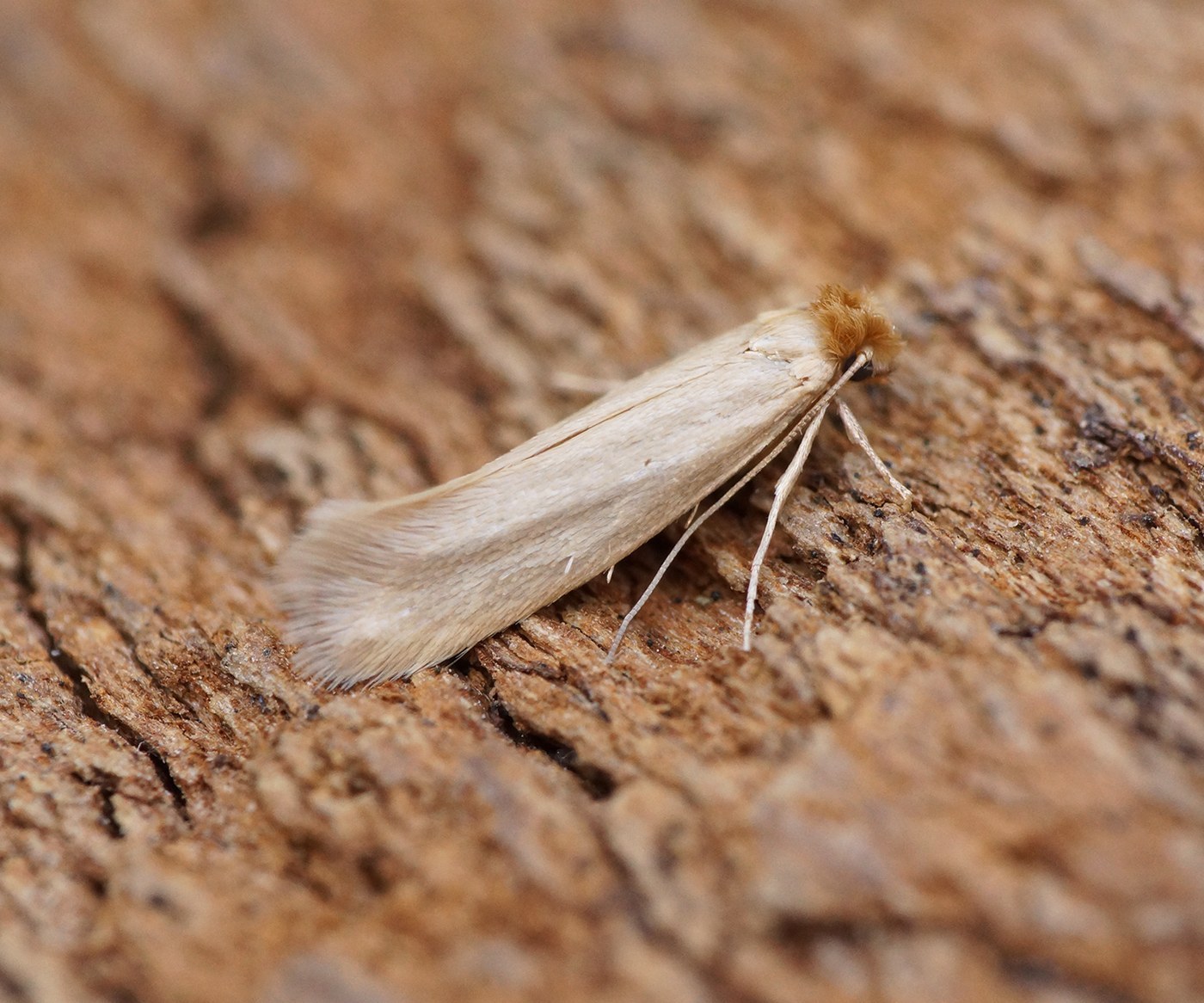
Webbing Clothes Moth
Dark closets, storage areas, and animal nests worldwide
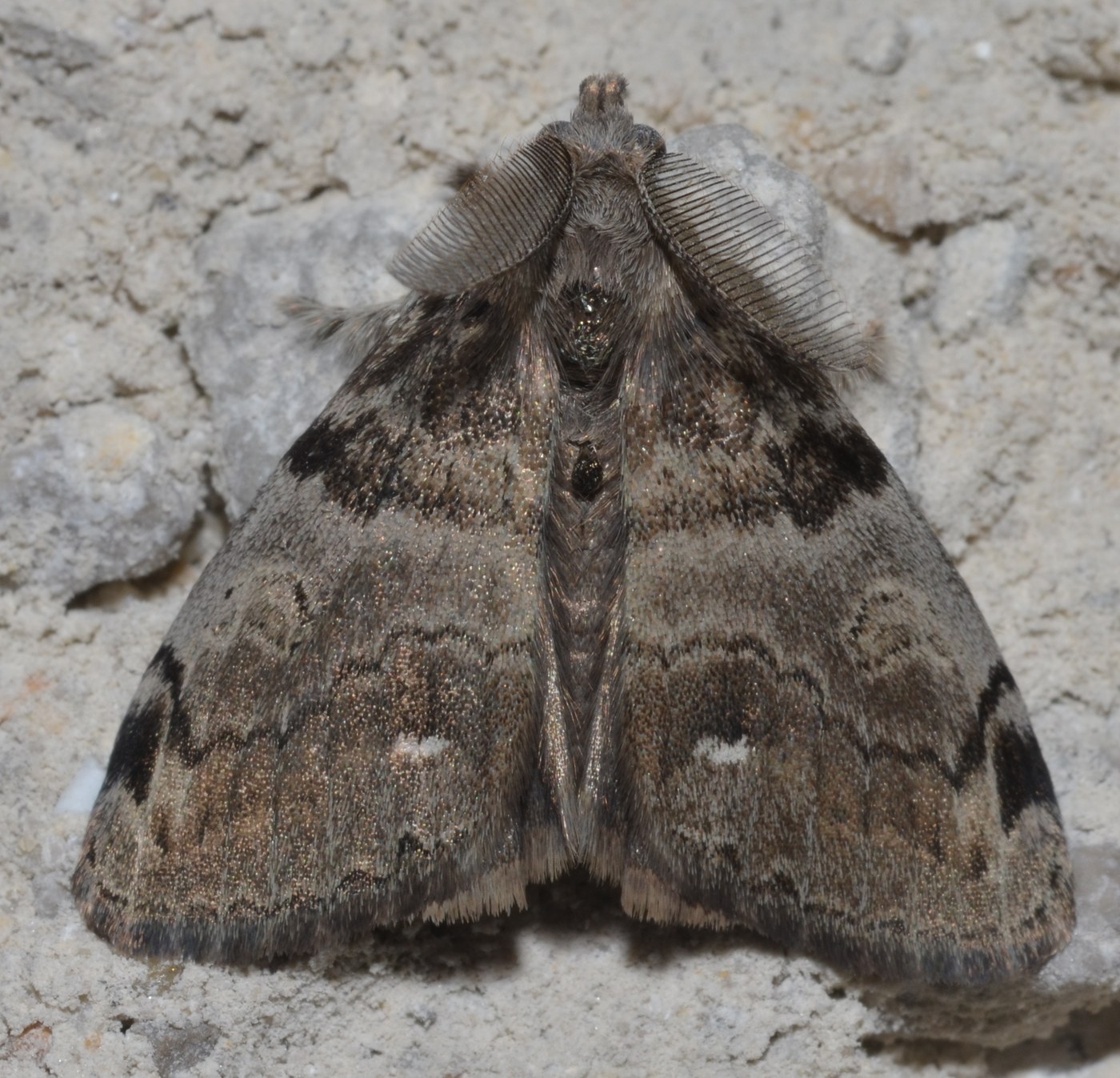
Tussock Moth
Deciduous forests, parks, gardens
Wax Moth
Beehives, apiaries, stored beeswax and comb
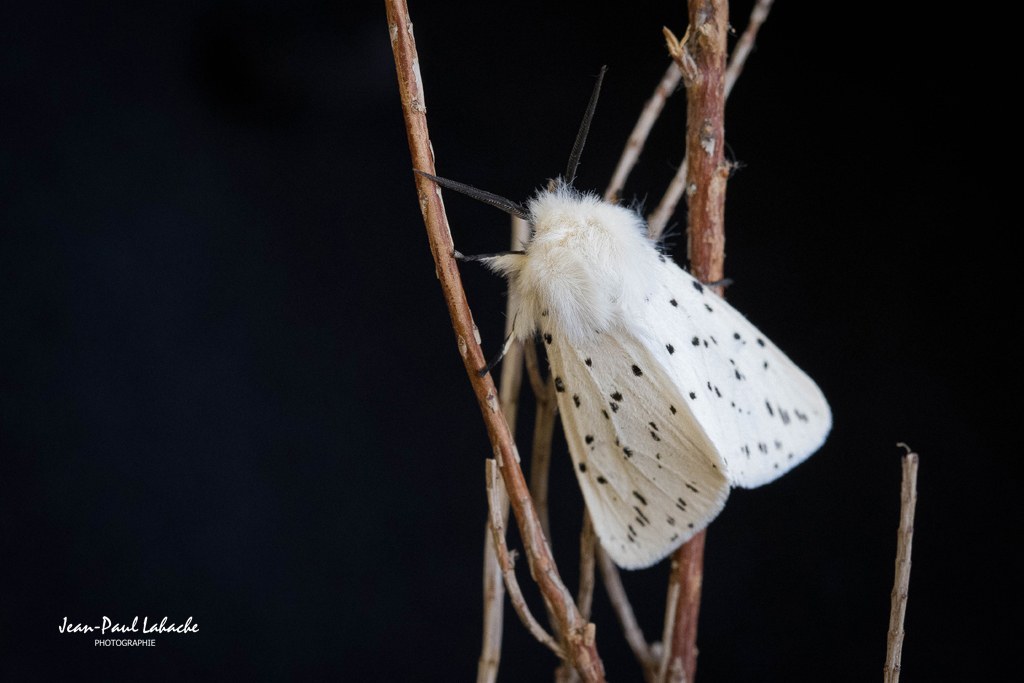
White Ermine Moth
Gardens, meadows, hedgerows
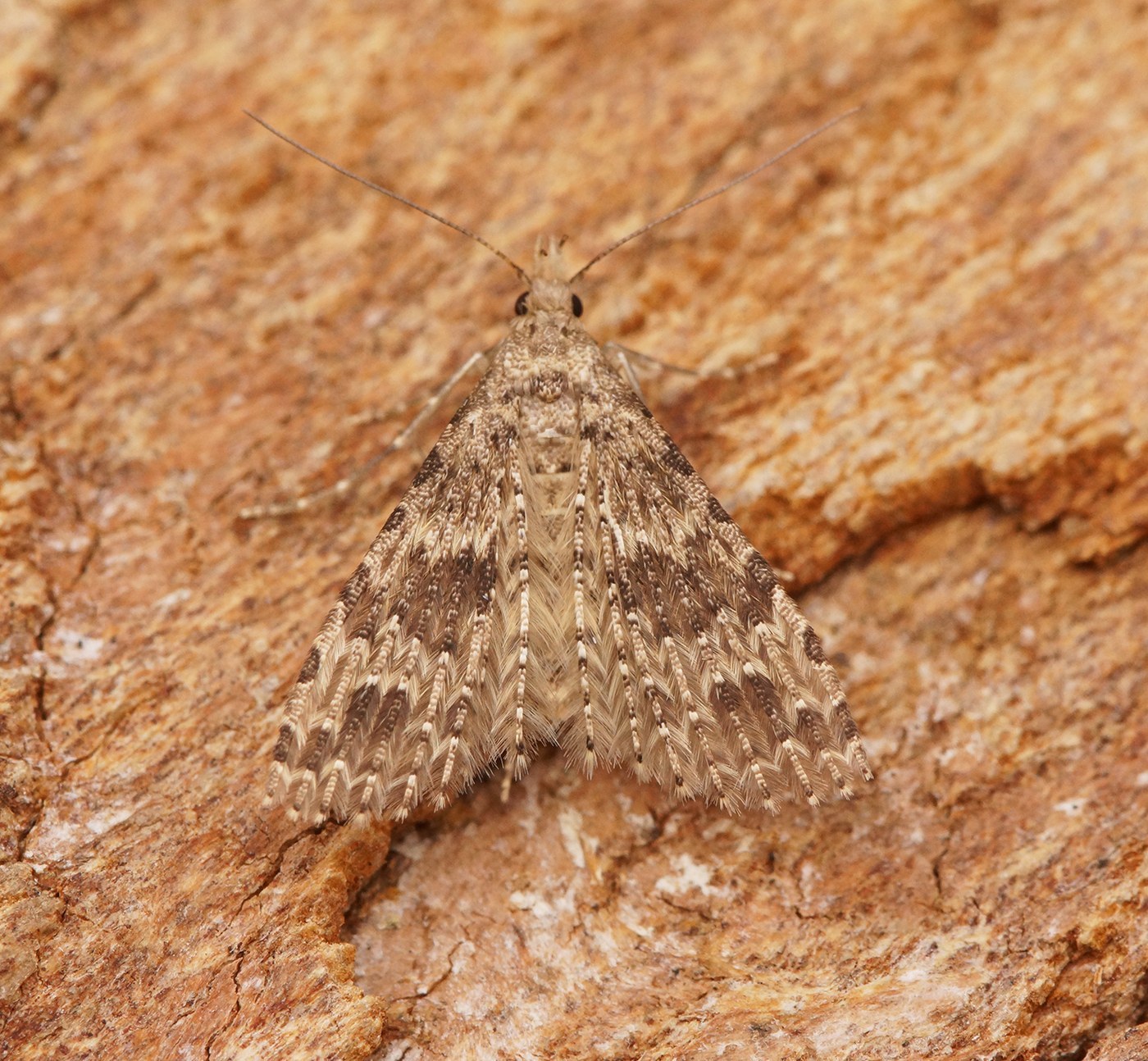
Twenty-plume Moth
Gardens, hedgerows, near honeysuckle
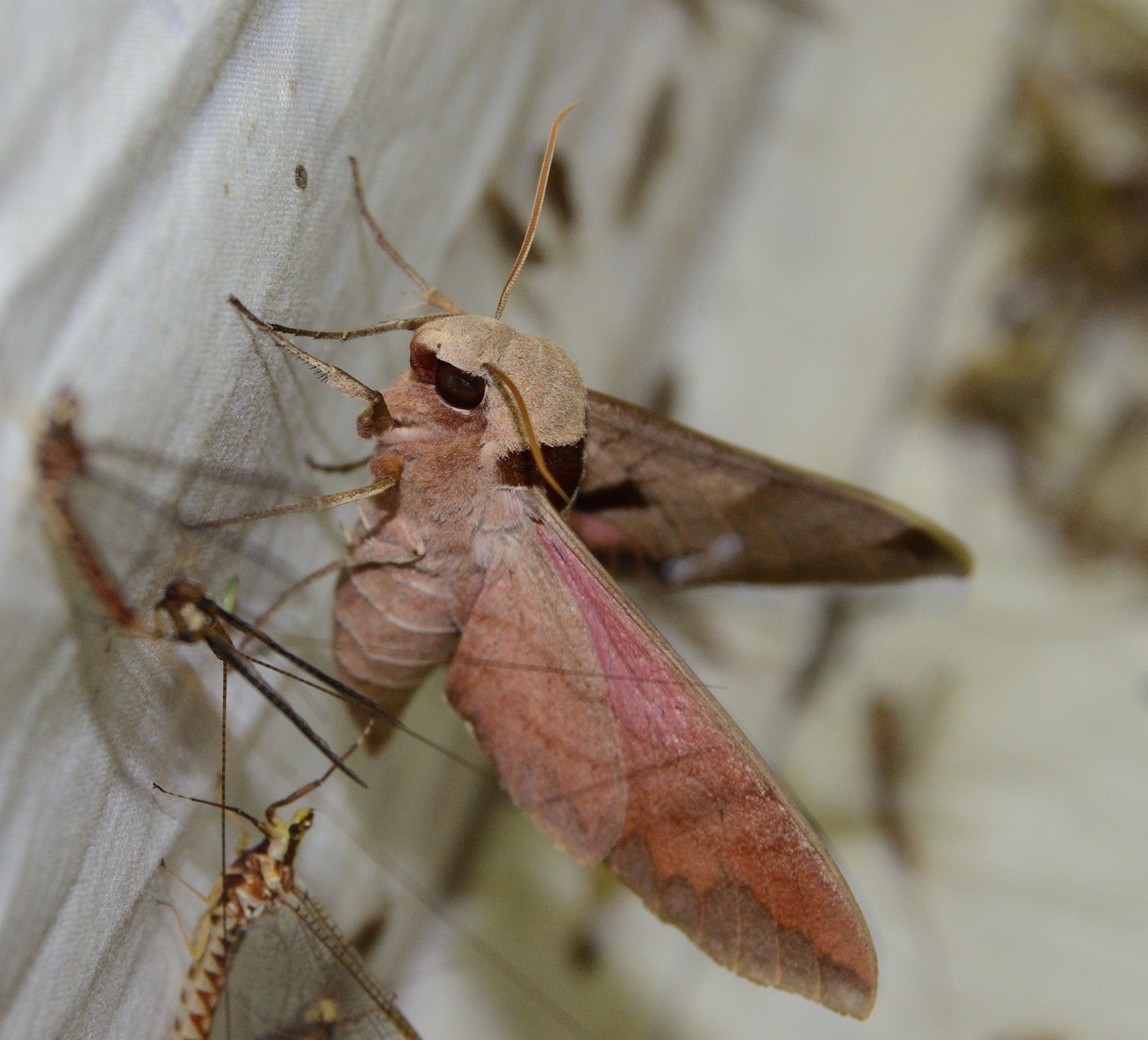
Achemon Sphinx Moth
Vineyards, woodland edges, gardens with wild grape
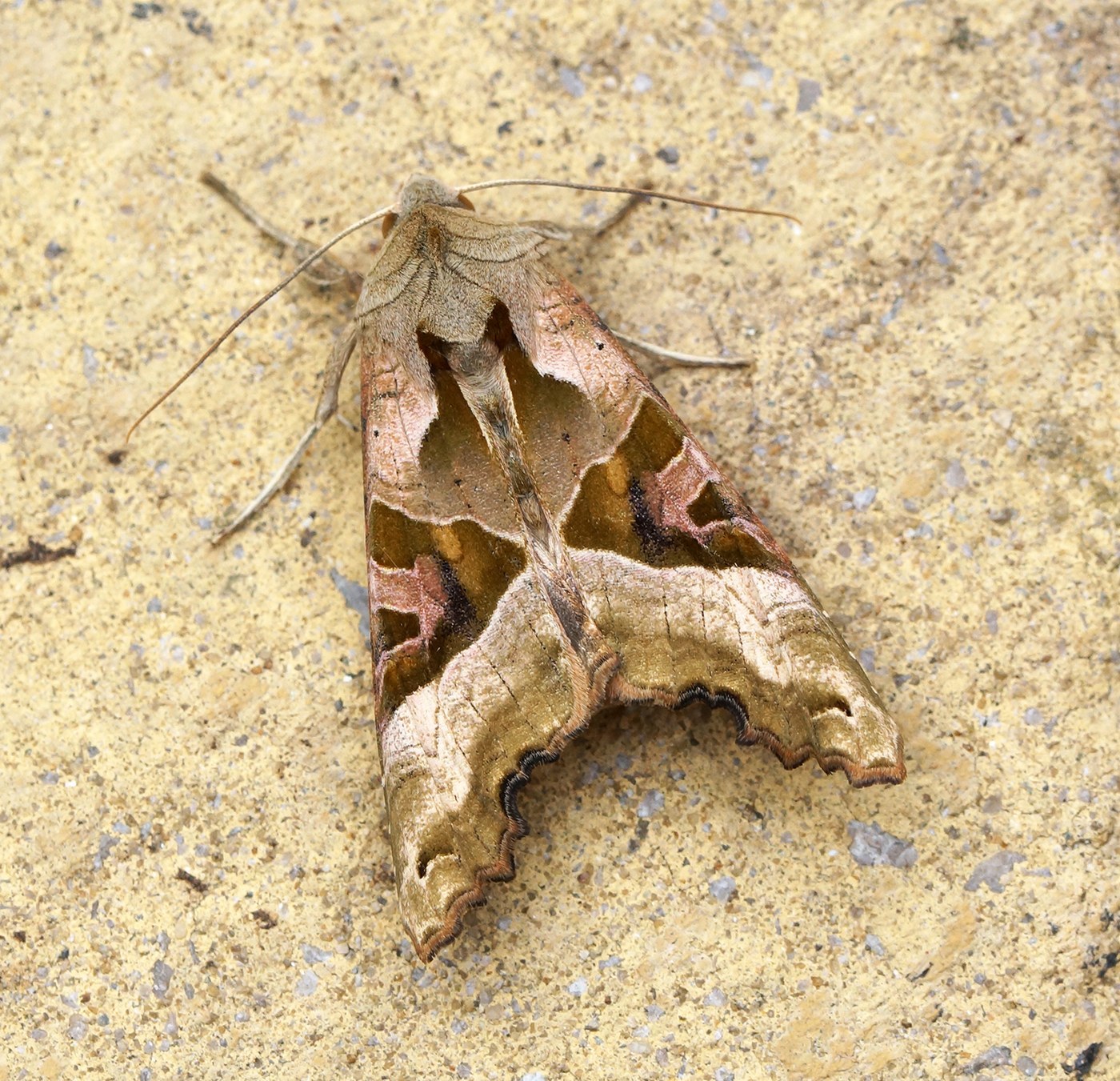
Angle Shades Moth
Gardens, hedgerows, woodland edges, urban parks
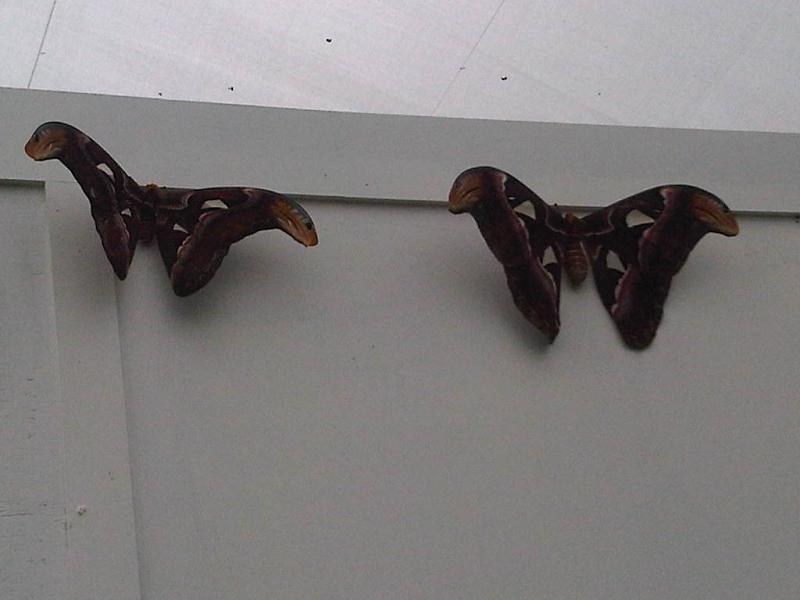
Atlas Moth
Tropical and subtropical lowland forests of Southeast Asia