
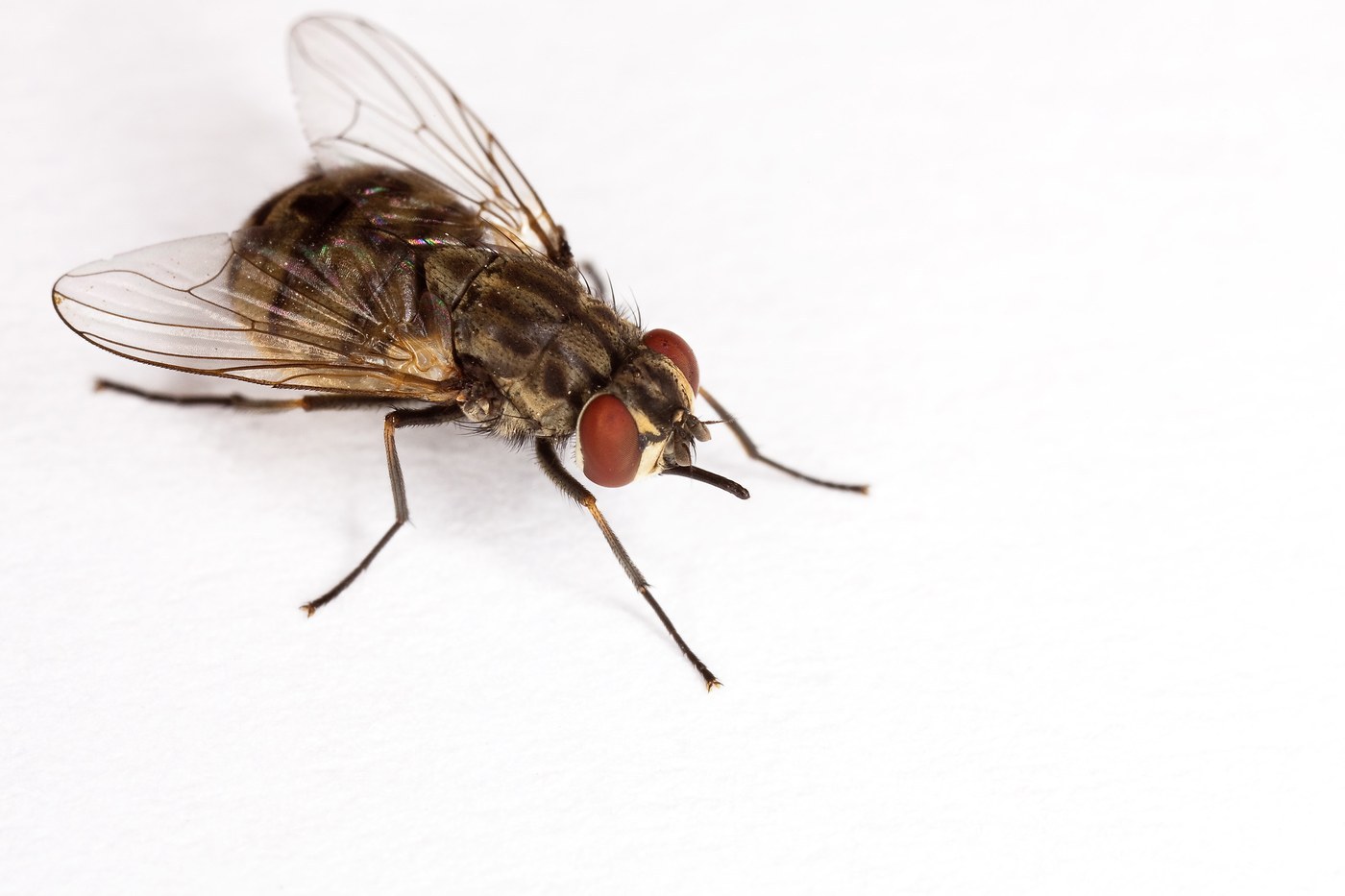
Stable Fly
Stomoxys calcitrans
A gray fly that looks almost identical to the common house fly, but carries a rigid, forward-pointing proboscis built for piercing skin rather than sponging up liquids.
- Size
- 6-8 mm long
- Habitat
- Livestock facilities, stables, beaches with decaying seaweed, and moist decaying organic matter worldwide
- Danger
- Bites
Spotted a bug like this?
Identify any bug or insect from a photo, free.
Overview
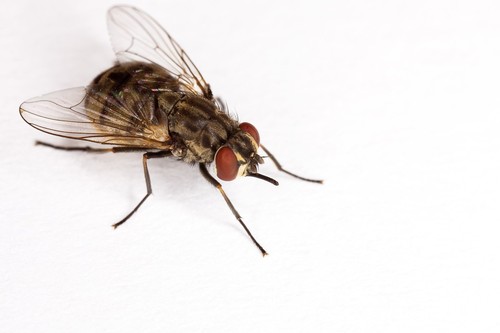
The stable fly, Stomoxys calcitrans, is a cosmopolitan species closely related to the house fly and nearly indistinguishable from it at a glance. The key difference lies in its mouthparts: while house flies have a soft, sponging proboscis for lapping liquids, stable flies possess a rigid, bayonet-like proboscis adapted for piercing skin to feed on blood.
Both male and female stable flies feed on blood, making them a persistent biting nuisance around livestock operations, stables, and beaches where organic debris accumulates. Their bite is typically delivered quickly, often around the legs of a host.
Stable flies breed in moist, decaying organic matter rather than fresh manure alone, and are frequently associated with soiled bedding, grass clippings, and rotting seaweed along shorelines.
How to Identify
- Gray thorax marked with four dark longitudinal stripes
- Checkered gray-and-black pattern on the abdomen with dark spots
- Rigid, slender proboscis projecting forward from the head, visible without magnification
- Body size similar to a house fly, 6-8 mm long
- Lookalikes: house flies appear nearly identical but have a soft sponging mouthpart rather than a piercing proboscis and do not bite
Habitat & Range
Stable flies are found worldwide in temperate and tropical regions. They breed in moist, decaying organic matter such as soiled livestock bedding, grass clippings, compost, and rotting seaweed on beaches, and are especially common around stables, barns, pastures, and coastal areas with wrack lines.
Behavior & Diet
Both sexes require blood meals and typically bite the legs of livestock, pets, and humans, delivering a quick, sharp bite before moving on. Between feedings, stable flies rest on fences, walls, and other surfaces near their breeding sites. They occasionally supplement their diet with plant sugars but rely primarily on blood for reproduction.
Life Cycle
Females lay batches of eggs in moist, decaying organic material such as soiled bedding or rotting vegetation. Larvae develop through three instars while feeding within this material, then move to slightly drier surrounding substrate to pupate. In warm weather, the complete cycle from egg to adult takes roughly two to four weeks, with multiple overlapping generations produced through the warm season and larvae or pupae overwintering in temperate climates.
Frequently asked questions
How can you tell a stable fly from a house fly?
Stable flies look almost identical to house flies but have a rigid, forward-projecting proboscis for piercing skin, visible without magnification, while house flies have a soft sponging mouthpart.
Do both male and female stable flies bite?
Yes, unlike many biting flies, both sexes of stable fly feed on blood.
Where do stable flies typically breed?
They develop in moist, decaying organic matter such as soiled livestock bedding, grass clippings, and rotting seaweed rather than fresh manure alone.
Where on the body do stable flies usually bite?
They most often target the legs of their host while it stands or grazes.
Stable Fly guides
In-depth guides for identifying, understanding, and living alongside Stable Fly.
Stable Fly identified by the community
Real finds identified with Bug Identifier.
Other bugs you may enjoy
Aphid Midge
Gardens, greenhouses, and crops with aphids
Yellow Fever Mosquito
Urban and peri-urban areas near small artificial water containers in tropical and subtropical regions worldwide
Root Maggot
Garden and field soil around the roots of cole crops and other vegetables
Anopheles Mosquito
Clean, still or slow-moving freshwater habitats such as marshes, ponds, and rice paddies
Tachinid Fly
Gardens, meadows, and woodlands wherever host caterpillars and other insects occur
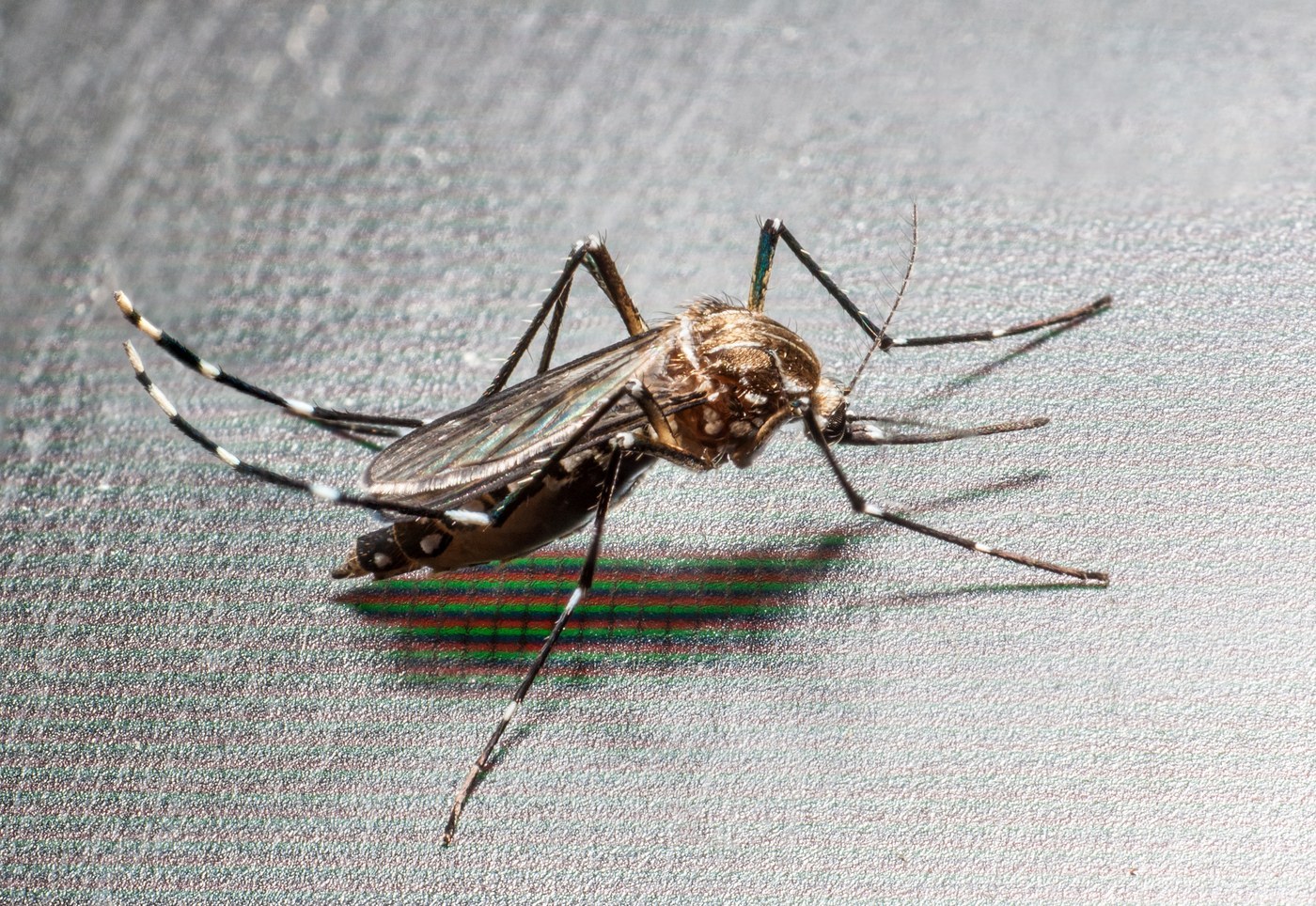
Asian Tiger Mosquito
Shaded urban and suburban areas near small water-holding containers, tires, and tree holes; native to Southeast Asia, now widespread
Tsetse Fly
Wooded savanna, riverine thickets, and forest edges across sub-Saharan Africa
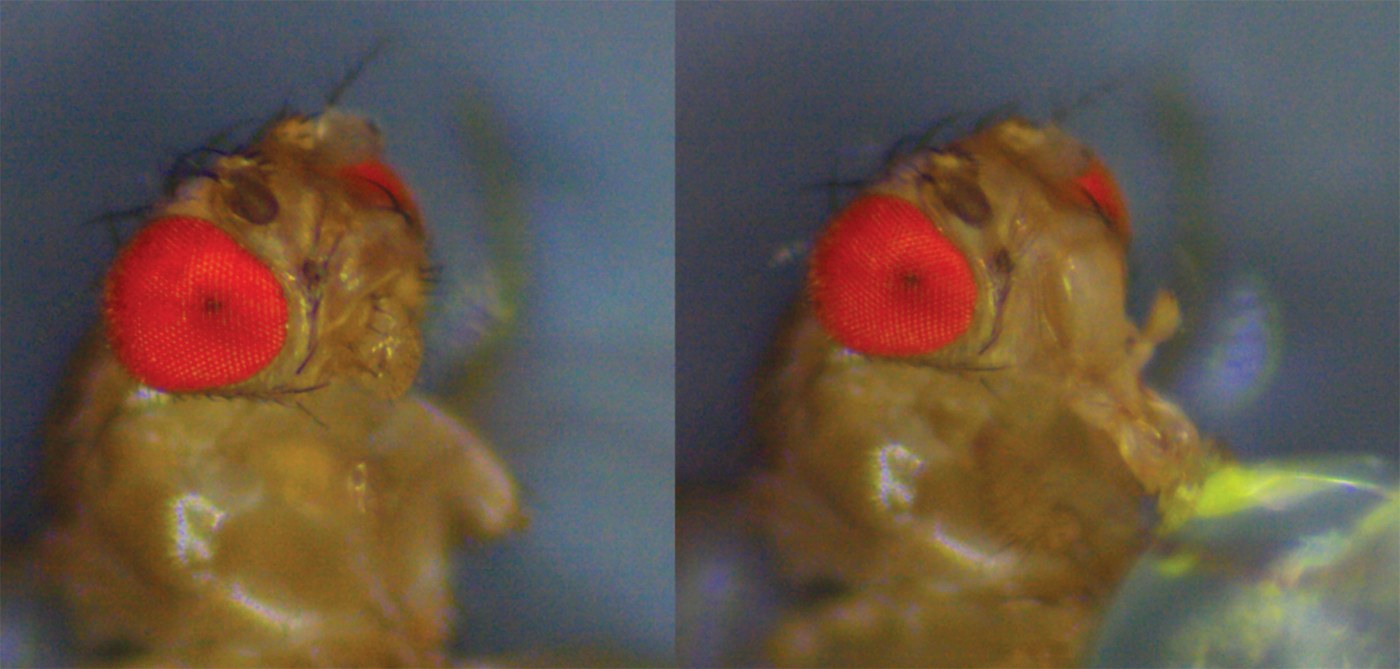
Vinegar Fly
Around overripe fruit, compost, and fermenting materials worldwide
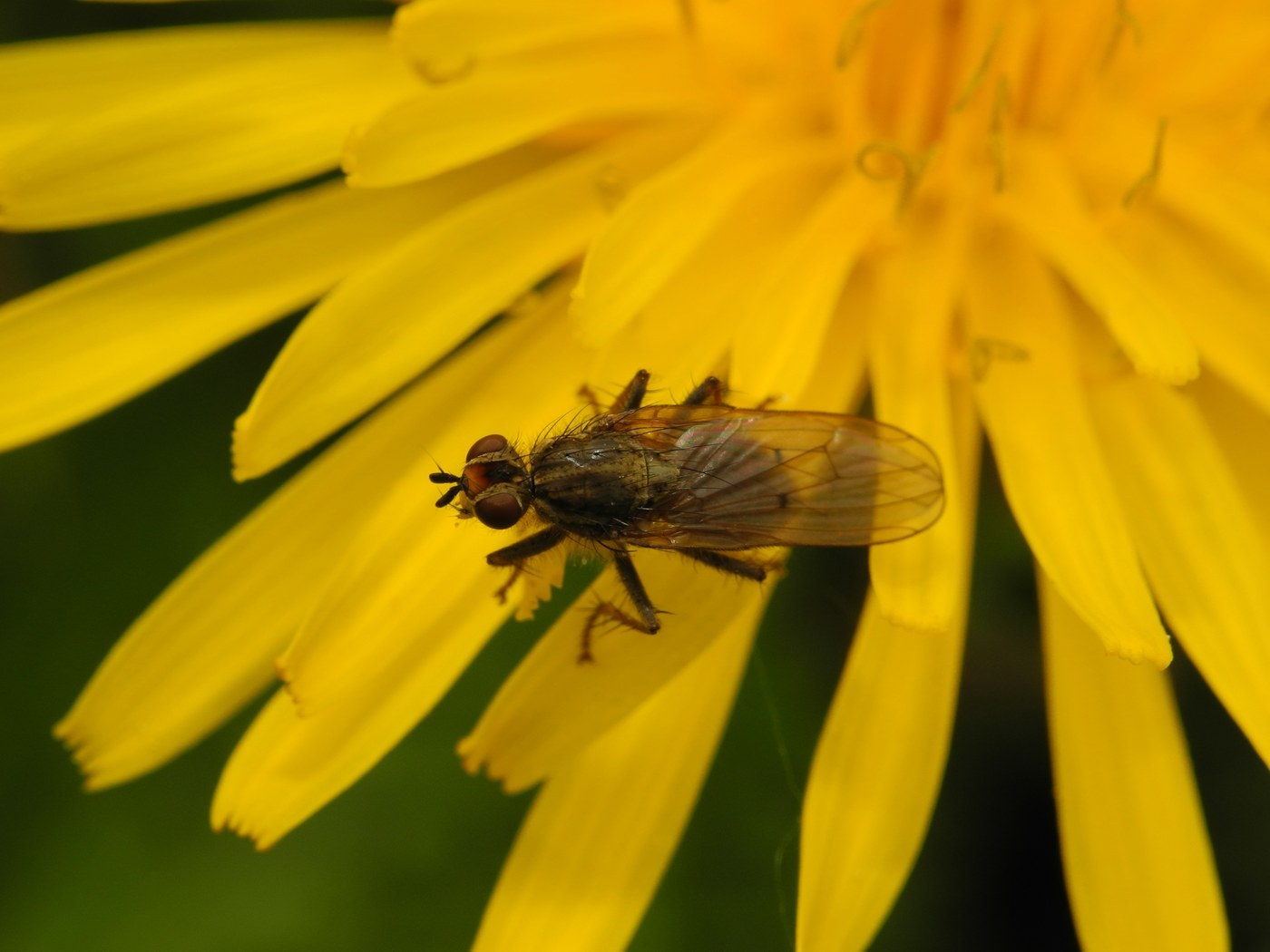
Yellow Dung Fly
Pastures and fields with fresh cattle dung
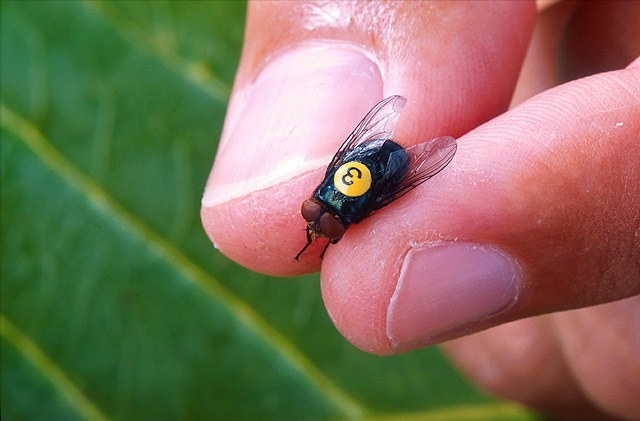
Screwworm Fly
Warm, humid lowlands of the Americas, especially near livestock and wildlife wounds
Soldier Fly
Wetland margins, decaying organic matter, and vegetation near water
Punkie
near marshes, mudflats, ponds, and other standing water