
Grape Leaffolder Caterpillar
Desmia funeralis
This small green caterpillar stitches grape leaves together with silk into a rolled shelter, feeding hidden inside its own leafy tube and leaving skeletonized patches behind.
- Size
- Up to 2 cm (0.8 in) long
- Habitat
- Vineyards and wild grapevines across the southern and central United States
- Danger
- Nuisance pest
Spotted a bug like this?
Identify any bug or insect from a photo, free.
Overview
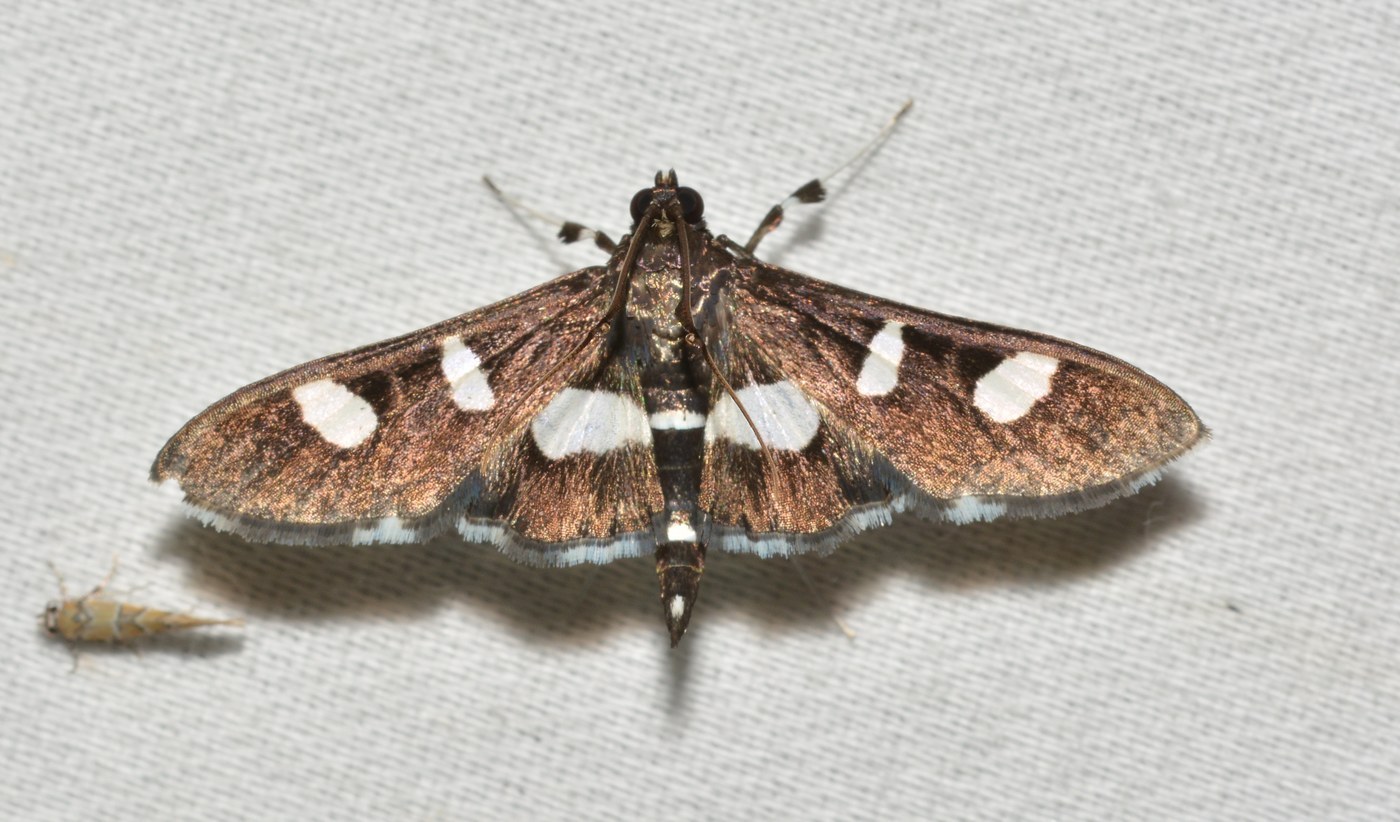
The grape leaffolder, Desmia funeralis, is a moth in the family Crambidae whose caterpillar is best known for the distinctive rolled or folded leaf shelters it constructs on grapevines. Adults are small, dark moths with white wing markings, active mainly at dusk.
The caterpillar's habit of folding a leaf edge over and securing it with silk gives it protection from predators and weather while it feeds on the enclosed leaf tissue. This behavior is shared by a number of unrelated moth species collectively called 'leaffolders' or 'leaftiers,' each specializing on a different host plant.
Found on both cultivated and wild grapevines across much of the southern and central United States, the species is a recognized, if generally minor, pest of vineyards, with damage usually limited to foliage rather than the fruit itself.
How to Identify
- Caterpillar is slender and pale green, blending closely with grape leaf tissue
- Reaches about 2 cm (0.8 in) in length at maturity
- Found inside a distinctive rolled or folded section of a grape leaf, held closed with silk strands
- Feeding leaves behind irregular, skeletonized 'windowpane' patches on the leaf where the caterpillar has fed from within its shelter
- Adult moth is dark brown to black with bold white patches on the wings, quite different in appearance from the larva
Habitat & Range
Occurs on grapevines, both cultivated and wild, across the southern and central United States, particularly in warmer grape-growing regions. Larvae are active from spring through fall, with more than one generation typically overlapping through the growing season.
Behavior & Diet
Newly hatched larvae begin by feeding on the leaf surface before rolling or folding a section of leaf and securing it with silk to create an enclosed feeding shelter. The caterpillar remains largely hidden within this rolled leaf as it feeds, only occasionally leaving to construct a new shelter as it outgrows the old one or exhausts the available leaf tissue. This concealed feeding strategy offers protection from many predators, though the caterpillars remain vulnerable to certain parasitic wasps that specialize in locating hidden larvae.
Life Cycle
Adult moths lay eggs on grape leaves, and larvae hatch and begin constructing rolled leaf shelters soon after. They pass through several instars while feeding within successive leaf rolls, then pupate either within a final leaf shelter or in leaf litter near the base of the vine. Multiple generations occur per year in warmer parts of the range, with the species overwintering as a pupa.
Frequently asked questions
Why does the grape leaffolder caterpillar roll up leaves?
Rolling and securing a leaf with silk creates a concealed shelter that protects the feeding caterpillar from many predators and weather exposure.
Does the grape leaffolder damage grape fruit?
No, feeding is limited to leaf tissue, and the fruit itself is not directly affected by this species.
How many generations of grape leaffolder occur in a year?
In warmer parts of its range, multiple overlapping generations can occur across the growing season.
What does the adult grape leaffolder moth look like?
It is a small, dark brown to black moth with bold white patches on its wings, quite different from its green, leaf-dwelling larva.
Grape Leaffolder Caterpillar guides
In-depth guides for identifying, understanding, and living alongside Grape Leaffolder Caterpillar.
Grape Leaffolder Caterpillar identified by the community
Real finds identified with Bug Identifier.
Other bugs you may enjoy
Bagworm
Trees and shrubs, especially conifers and ornamental landscaping
Armyworm
grasslands, pastures, and cereal crop fields
Zebra Longwing Caterpillar
Tropical and subtropical hammocks with passionflower vines
Tomato Hornworm
Gardens and fields with tomato, pepper, and other nightshade plants
Tent Caterpillar
Deciduous trees such as cherry, apple, and other rosaceous species
Tobacco Hornworm
tobacco, tomato, and pepper plants in gardens and fields
Woolly Bear Caterpillar
Gardens, meadows, roadsides, and woodland edges across North America
Sod Webworm
Turfgrass lawns, golf courses, pastures
Spiny Oak-slug Caterpillar
Deciduous forests and woodland edges with oak and other hardwoods
Saddleback Caterpillar
Deciduous trees and shrubs in eastern and southern North America
Stinging Rose Caterpillar
Gardens and woodlands with rose, dogwood, or oak
Silkworm
Reared exclusively in captivity on mulberry leaves; no independent wild population