
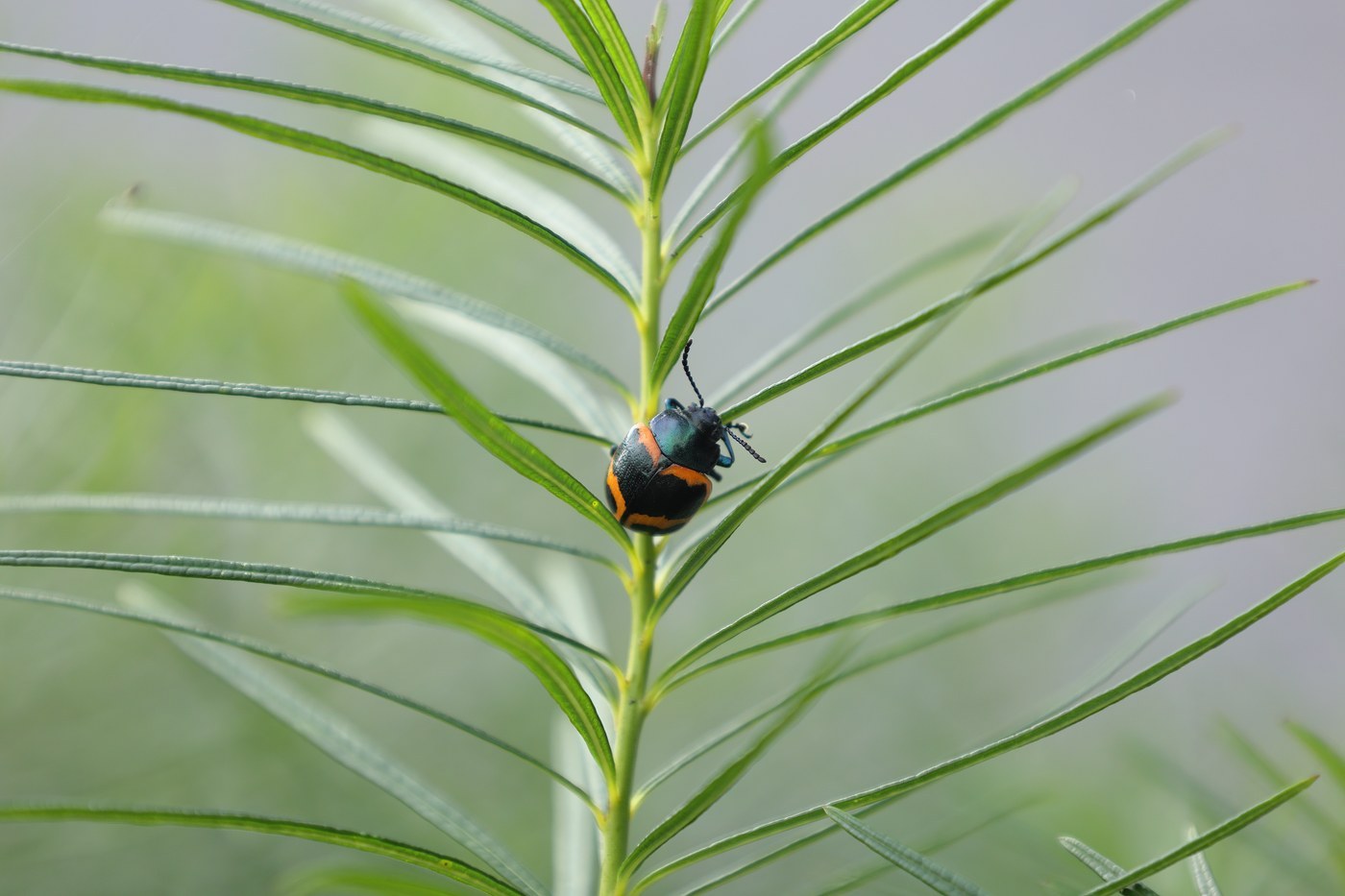
Milkweed Leaf Beetle
Labidomera clivicollis
A large, boldly colored leaf beetle in glossy orange-red with irregular black patches, found feeding exclusively on milkweed plants alongside monarch caterpillars.
- Size
- 9–13 mm
- Habitat
- Milkweed patches in meadows, prairies, roadsides, and wetland margins
- Danger
- Harmless
Spotted a bug like this?
Identify any bug or insect from a photo, free.
Overview
The milkweed leaf beetle is a sizeable member of the leaf beetle family (Chrysomelidae) that shares its host plant with the far more famous monarch butterfly. Like monarchs, it feeds on milkweed foliage and is able to tolerate the plant's toxic cardiac glycosides, sequestering some of these compounds as a chemical defense against predators.
Its bold orange-and-black coloring is a textbook example of aposematism, or warning coloration, advertising its unpalatability to birds and other predators in the same way the monarch's wing pattern does. This convergence among unrelated milkweed-feeding insects highlights how strongly the milkweed plant community shapes the evolution of its herbivores.
As one of the larger and more conspicuous chrysomelid beetles in North American grasslands, it is a useful indicator species for healthy milkweed stands and is often found sharing a single plant with monarch caterpillars, milkweed bugs, and aphids.
How to Identify
- Adult: 9–13 mm, an unusually large and robust leaf beetle with a domed, oval body.
- Coloring is bright orange to red-orange overlaid with irregular, blotchy black markings on the elytra and pronotum, no two individuals patterned exactly alike.
- Strong, stout legs allow it to grip milkweed stems firmly while feeding.
- Lookalikes: distinguished from the smaller, more uniformly striped milkweed bugs (true bugs, not beetles) by its beetle body form, hardened wing covers, and irregular rather than symmetric black patches.
Habitat & Range
Ranges across much of the eastern and central United States and adjacent Canada, anywhere common or swamp milkweed grows, including meadows, prairies, roadside ditches, and wetland edges. Adults and larvae are present from late spring through early fall, closely tracking the growing season of their host plant.
Behavior & Diet
Both adults and larvae feed exclusively on milkweed foliage, often first chewing a shallow trench to interrupt the plant's sticky latex sap before eating the leaf tissue beyond it, a behavior also seen in monarch caterpillars. The beetle sequesters plant toxins as a defense against predators and displays little urgency to flee when approached, relying instead on its unpalatability. It shares its host plant with numerous other milkweed specialists, contributing to the diverse insect community that depends on this single genus of plants.
Life Cycle
Adults overwinter in leaf litter or soil near milkweed stands and emerge in late spring to feed and mate on new milkweed growth. Females lay clusters of yellow-orange eggs on the undersides of leaves, which hatch into soft, orange, grub-like larvae. Larvae feed for several weeks before dropping to the soil to pupate. New adults emerge in mid to late summer, and the species generally produces one generation per year across most of its range, with adults again seeking overwintering shelter in fall.
Frequently asked questions
Is this the same insect as the milkweed bug?
No, the milkweed bug is a true bug with a narrower, more uniform orange-and-black pattern, while this species is a beetle with a domed body and irregular blotchy markings.
Does it harm milkweed plants?
It feeds on milkweed foliage and can chew noticeable holes, but healthy milkweed stands generally tolerate this feeding without lasting harm.
Why is it orange and black?
The coloring functions as a warning signal to predators, similar to the monarch butterfly, advertising toxins the beetle absorbs from its milkweed diet.
Where would I find one?
Look on the leaves and stems of common or swamp milkweed plants in open sunny fields, prairies, and roadside patches during the warmer months.
Milkweed Leaf Beetle guides
In-depth guides for identifying, understanding, and living alongside Milkweed Leaf Beetle.
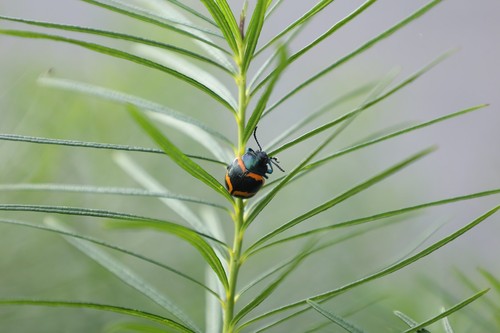
Milkweed Leaf Beetle identified by the community
Real finds identified with Bug Identifier.
Other bugs you may enjoy
American Carrion Beetle
Forests, fields, and roadsides across North America, near decaying animal carcasses
Asparagus Beetle
Asparagus patches, gardens, and farm fields
Asian Lady Beetle
Gardens, crop fields, woodlands, buildings
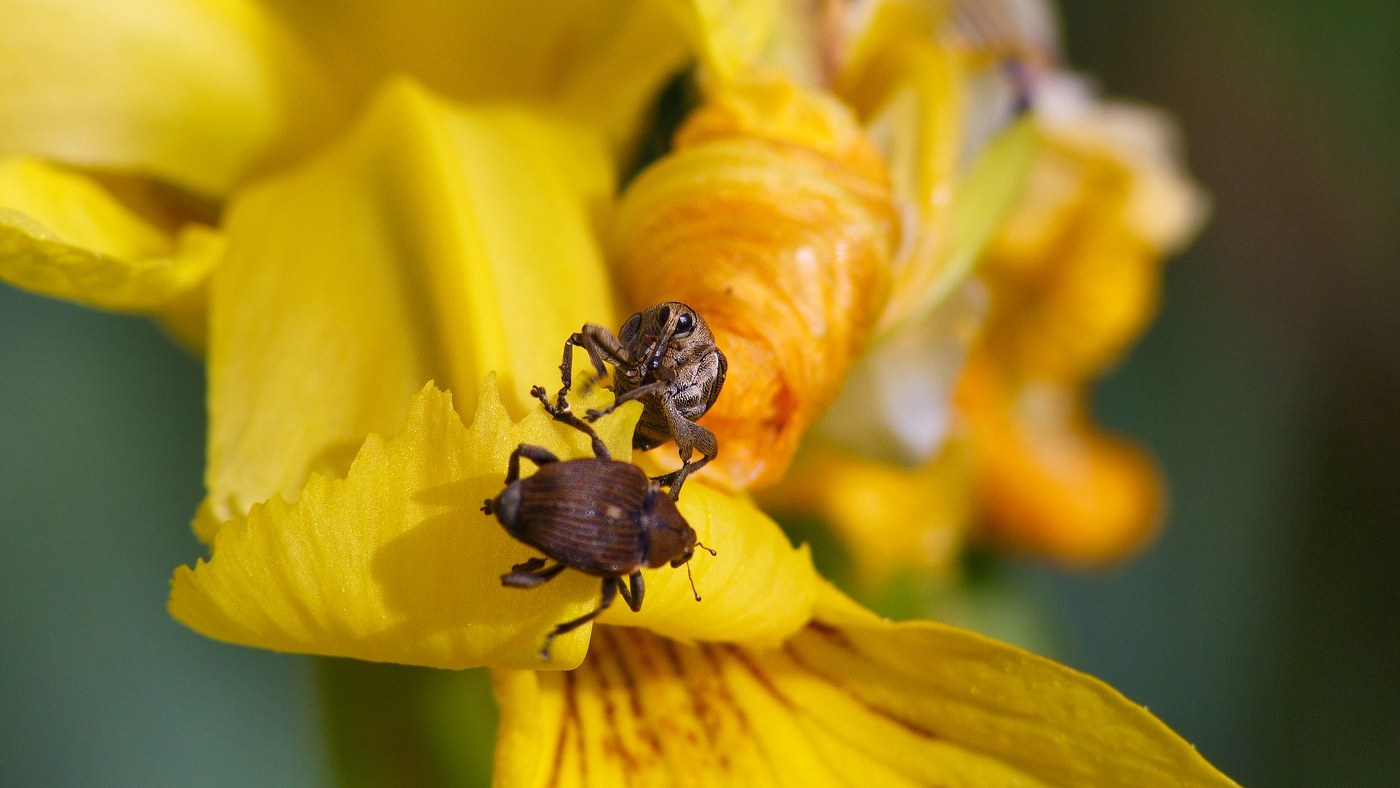
Acorn Weevil
Oak woodlands and forests, on and beneath oak trees
Wireworm
Soil of grasslands, gardens, and cultivated fields worldwide
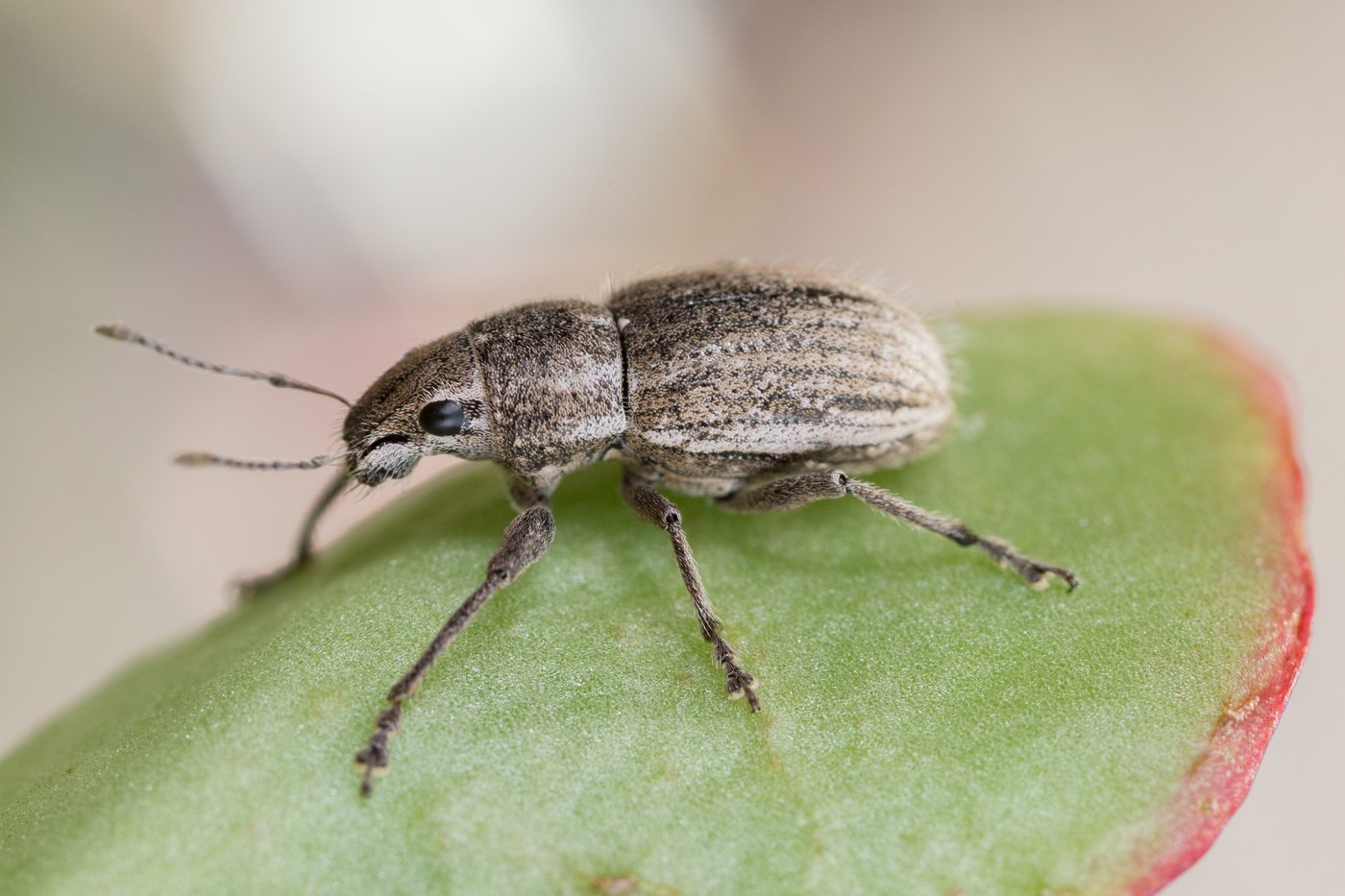
Whitefringed Beetle
Pastures, row crops, lawns, disturbed soils
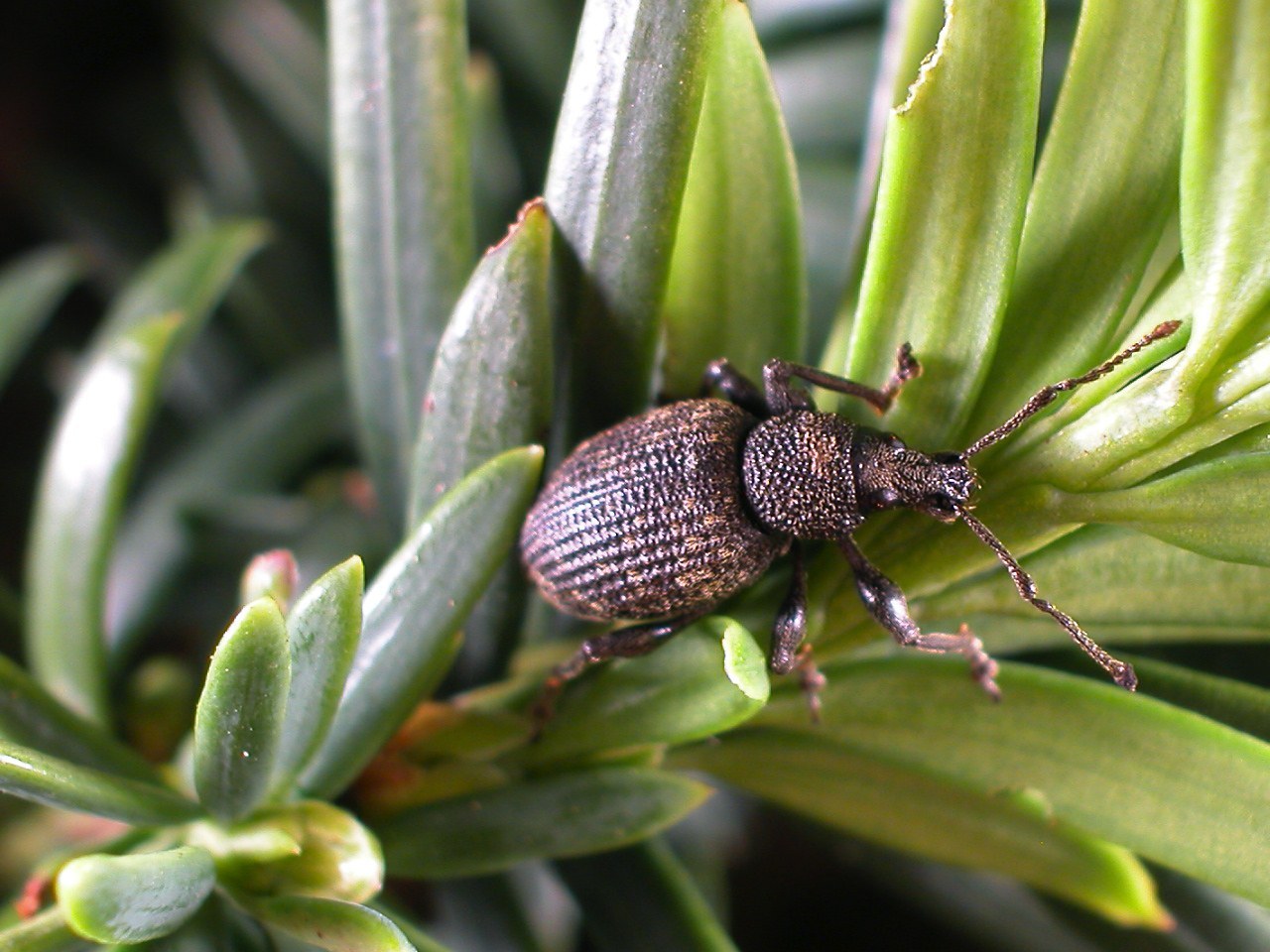
Vine Weevil
Gardens, nurseries, greenhouses, and container plantings
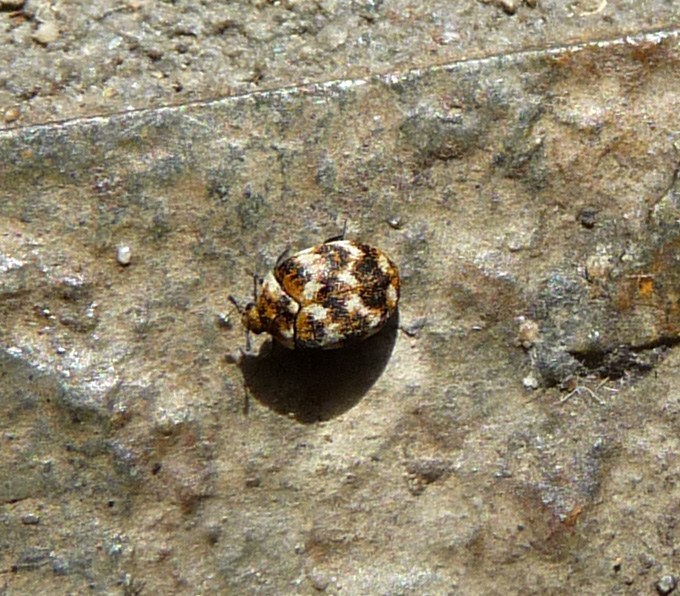
Varied Carpet Beetle
Homes, nests of birds and mammals, and flowers outdoors
Atlas Beetle
Tropical forests of Southeast Asia
Titan Beetle
Amazon rainforest of South America
Ten-lined June Beetle
Sandy soils, pine forests, and orchards of western North America
Squash Beetle
Vegetable gardens and fields growing squash, pumpkin, and other cucurbits