
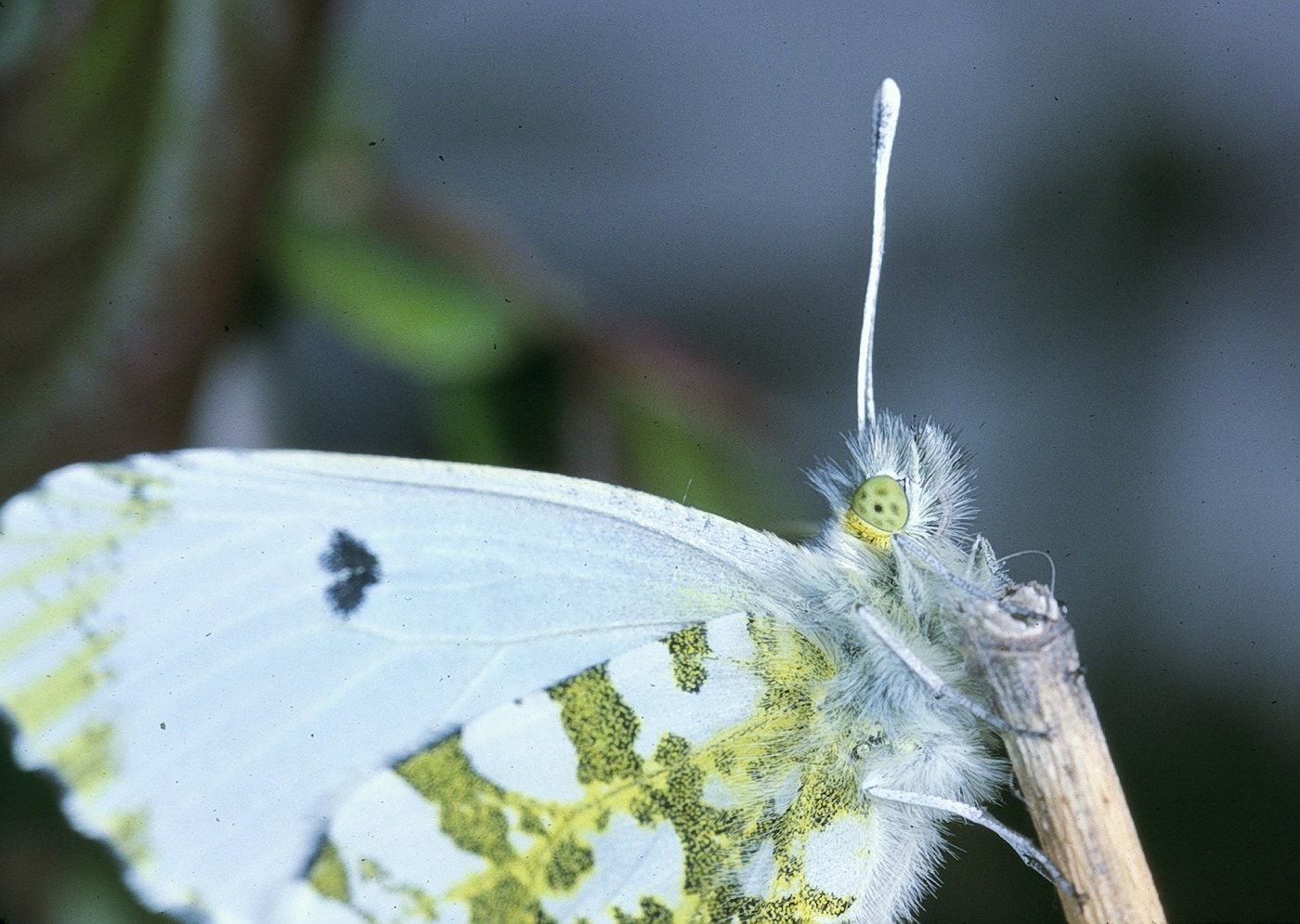
Orange Tip
Anthocharis cardamines
A dainty white butterfly whose males flash vivid orange wingtip patches, while both sexes show a beautifully marbled green-and-white pattern on the underwings.
- Size
- 1.6–1.8 in wingspan
- Habitat
- Meadows, hedgerows, damp grassland, woodland rides
- Danger
- Harmless
Spotted a bug like this?
Identify any bug or insect from a photo, free.
Overview
The Orange Tip belongs to the family Pieridae and is one of the classic harbingers of spring across Europe and temperate Asia. Its striking sexual dimorphism, with only males bearing the namesake orange patches, makes it an easy and rewarding species for beginner identification.
The species is closely associated with cuckooflower and garlic mustard, wild crucifers that bloom in the same short spring window during which the adult butterflies fly, tying the insect's life cycle tightly to seasonal wildflower availability.
Orange Tips are single-brooded and have a relatively short flight period, appearing for only a few weeks each spring before their generation completes its cycle underground as a pupa for the rest of the year.
How to Identify
- Forewings are white with a black tip; males additionally show a bright orange patch covering much of the outer forewing.
- Females lack the orange patch, showing only the black-and-white forewing tip, and can be confused with other small whites at rest.
- The underside of the hindwing in both sexes has a distinctive mottled green-and-white marbled pattern, unique among European whites.
- Wings are rounded, and the butterfly has a fluttery, low, meandering flight close to vegetation.
- Antennae are clubbed with pale tips.
Habitat & Range
Widespread across Europe and temperate Asia, the Orange Tip favors damp meadows, hedgerows, woodland edges, road verges, and gardens where its crucifer host plants grow. It is active from early to late spring, with a flight period typically lasting six to eight weeks.
The species prefers open, sunny but not overly dry habitats, often following linear features like hedgerows and stream banks where cuckooflower and garlic mustard thrive.
Behavior & Diet
Adults feed on nectar from spring flowers including cuckooflower, dandelion, and garlic mustard, and males patrol hedgerows and meadow edges searching for newly emerged females. Flight is low, fluttering, and somewhat erratic as they investigate potential host plants and nectar sources.
Females lay single eggs on flower buds of crucifer host plants; the caterpillars are cannibalistic toward other Orange Tip larvae on the same plant, so females spread their eggs across many individual plants to reduce competition.
Life Cycle
Eggs are laid singly on flower stalks of cuckooflower, garlic mustard, or related crucifers and turn from pale green to orange as they mature. The caterpillar is green and camouflaged to match the seed pods it feeds on almost exclusively.
The species is univoltine, pupating in mid-summer into an elongated, twig-like chrysalis that overwinters and does not emerge as an adult until the following spring, giving the species an unusually long pupal stage relative to its brief adult flight period.
Frequently asked questions
Why don't I ever see an orange female Orange Tip?
Only males develop the orange wingtip patch; females are white with black tips and lack orange entirely.
What could a female Orange Tip be confused with?
At rest with wings closed, females can resemble Green-veined Whites, but the marbled green underwing pattern helps distinguish the Orange Tip.
Why do I only see this butterfly in spring?
It is single-brooded, flying for a few weeks in spring to coincide with its crucifer host plants, then spending the rest of the year as a pupa.
What plants attract Orange Tips to a garden?
Cuckooflower and garlic mustard serve as larval host plants, while various spring wildflowers provide nectar for adults.
Orange Tip guides
In-depth guides for identifying, understanding, and living alongside Orange Tip.
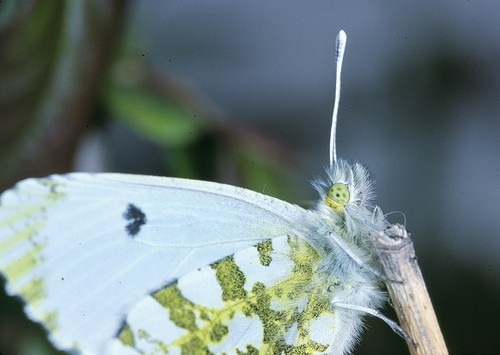
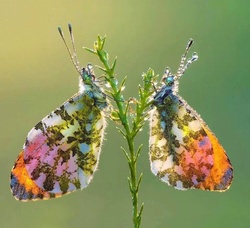
Orange Tip identified by the community
Real finds identified with Bug Identifier.
Other bugs you may enjoy
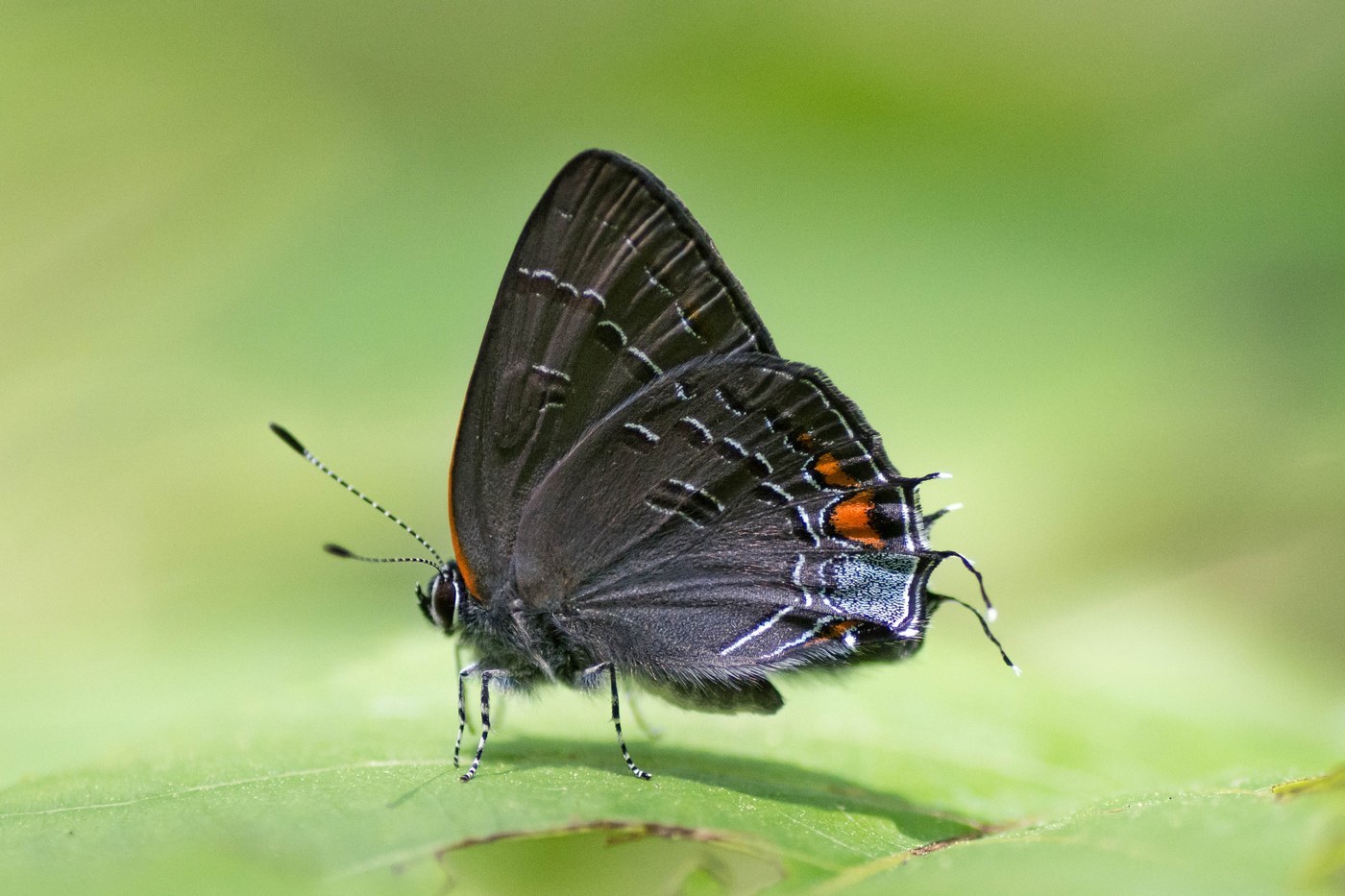
Banded Hairstreak
Deciduous woodlands and edges with oaks and hickories
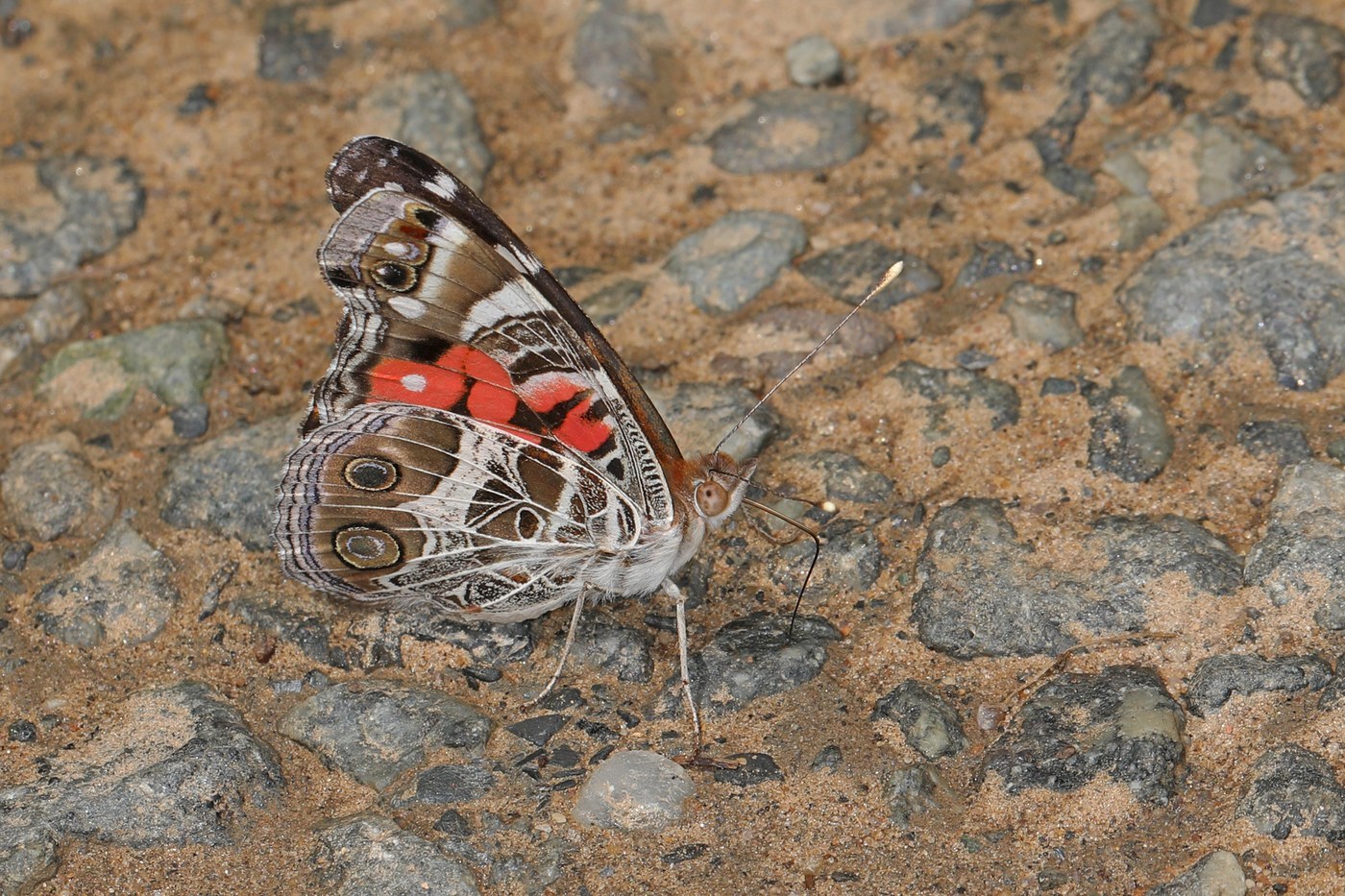
American Lady
Open fields, meadows, gardens, roadsides
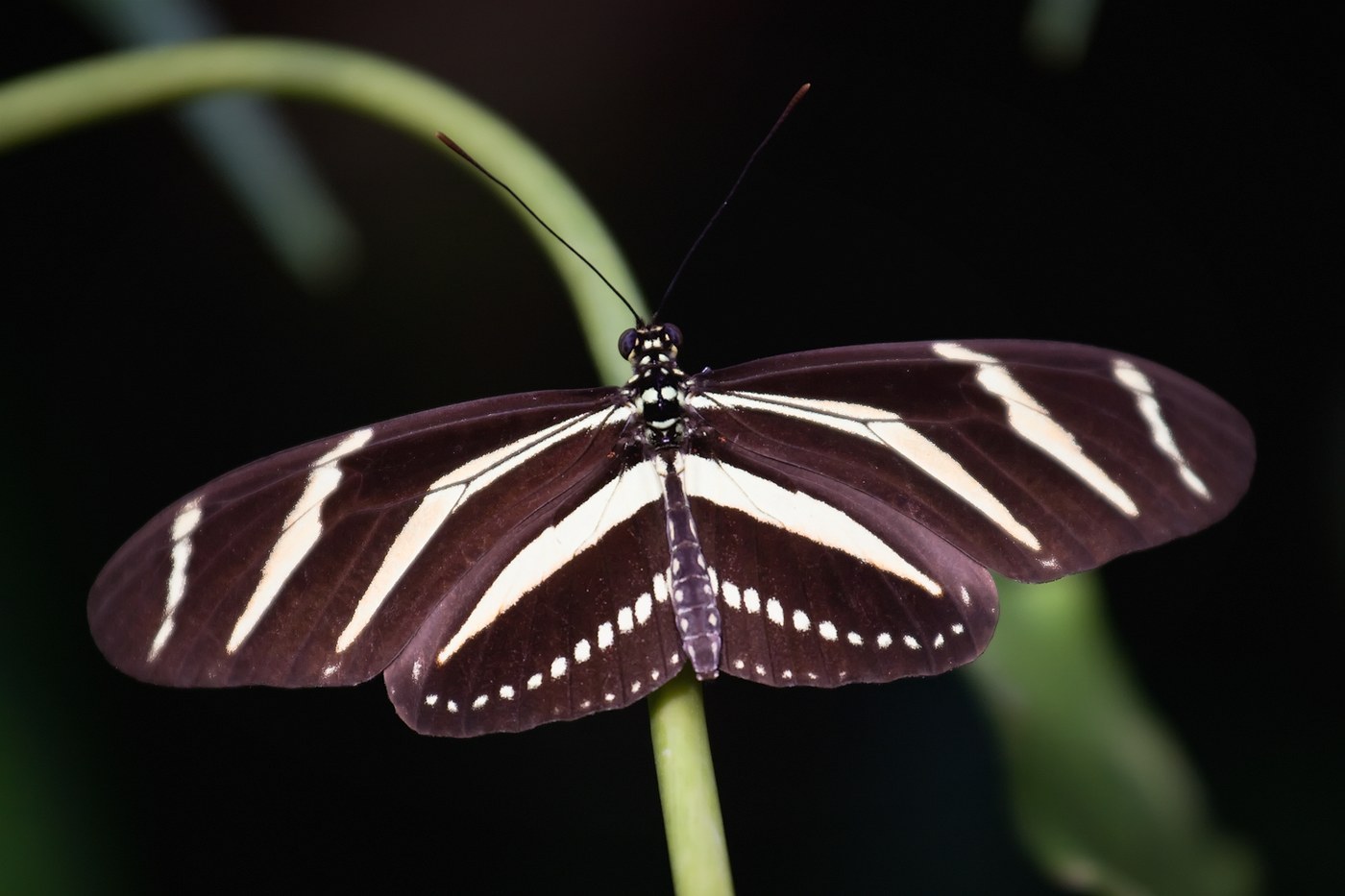
Zebra Longwing
Tropical hammocks, gardens, forest edges
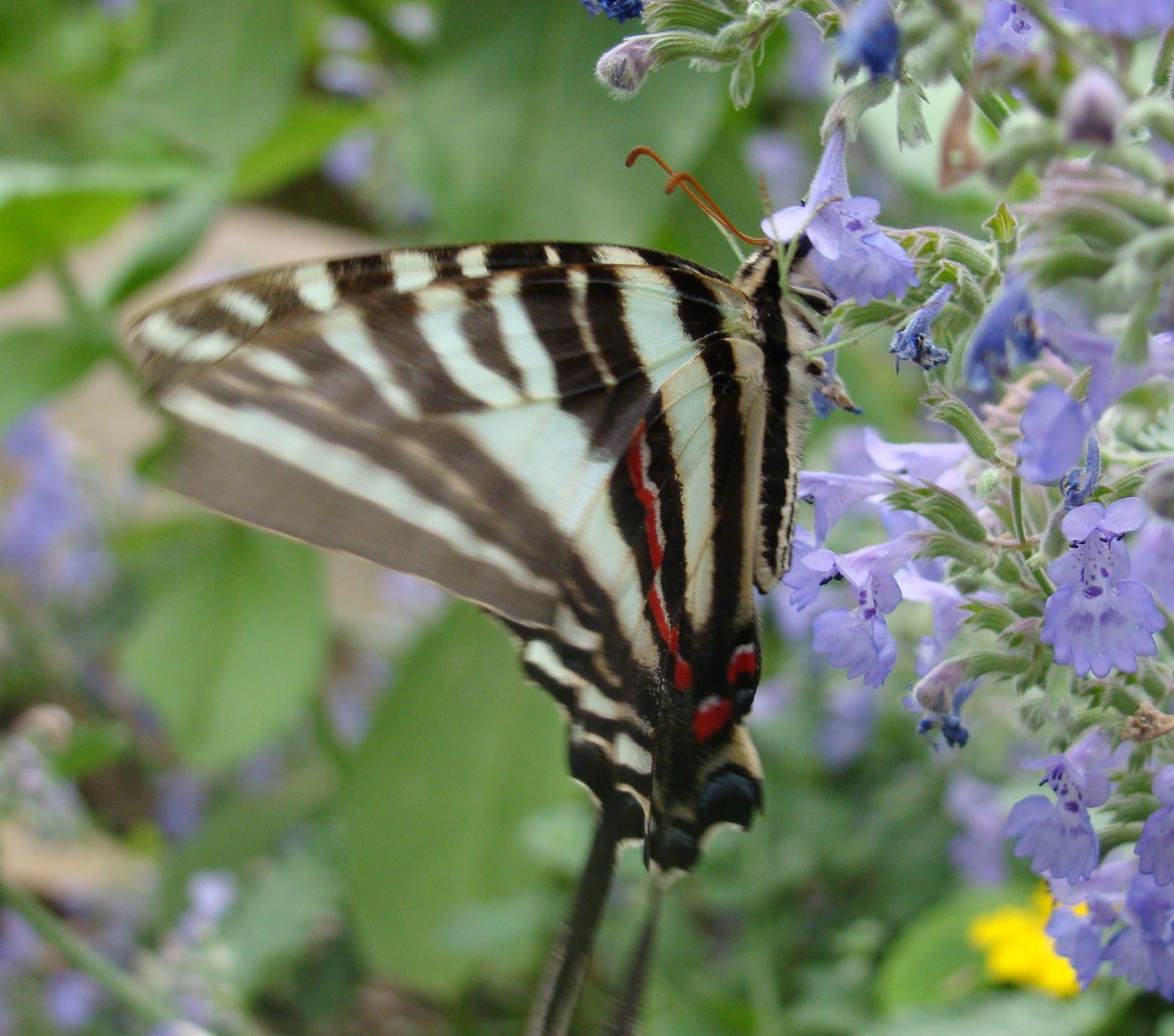
Zebra Swallowtail
Woodlands, floodplains, forest edges near pawpaw
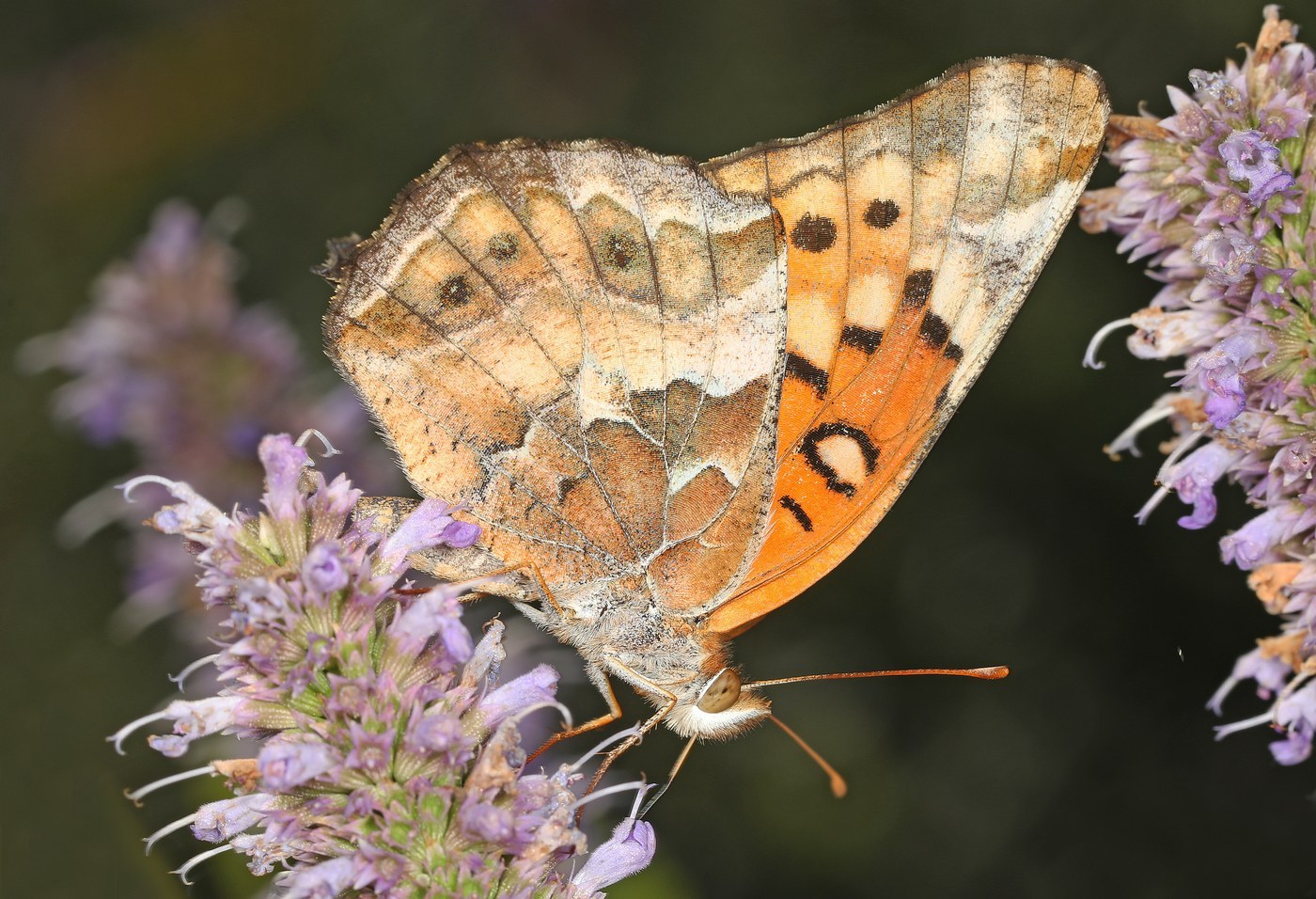
Variegated Fritillary
Open fields, prairies, roadsides, and disturbed ground across most of the United States
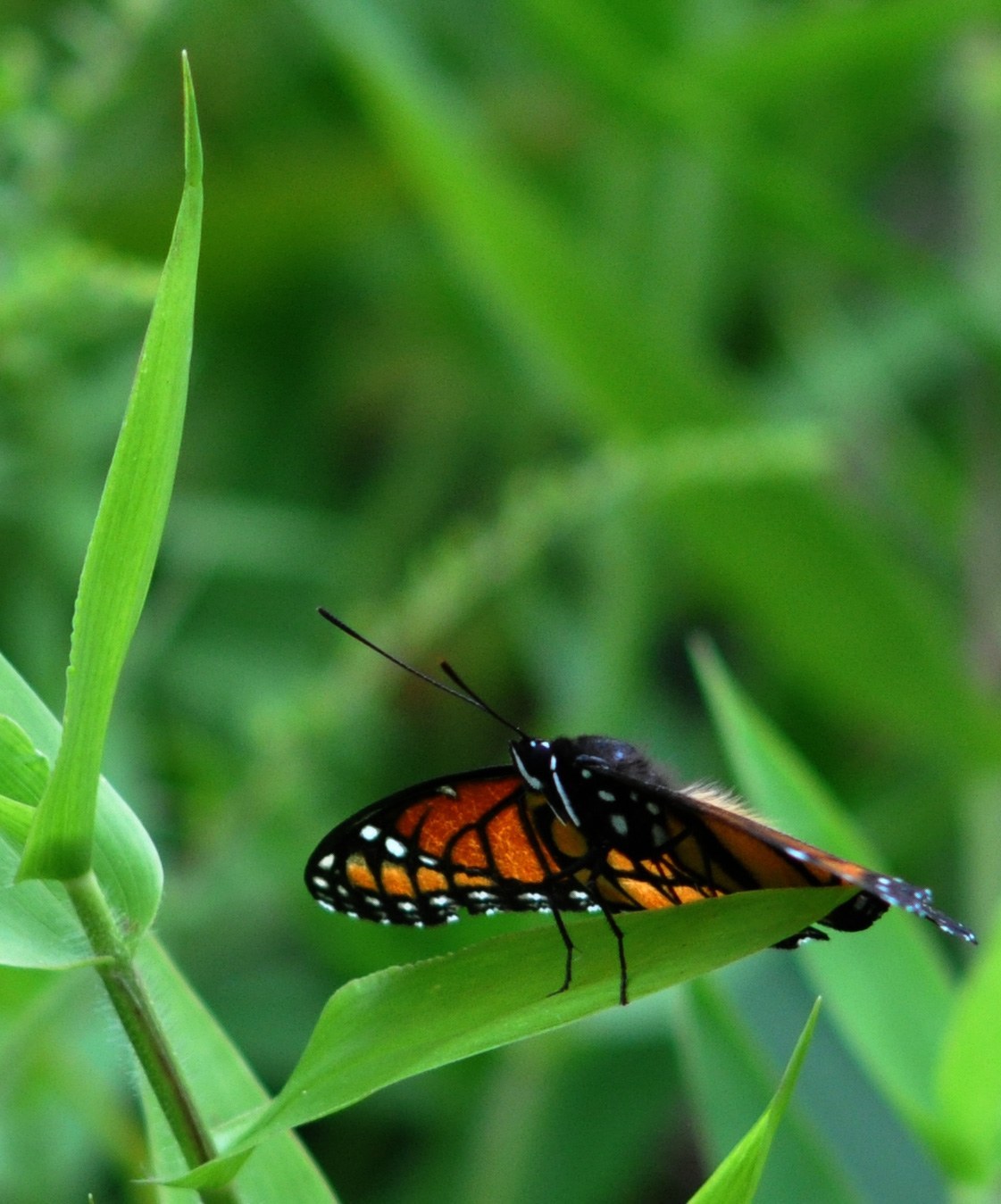
Viceroy Butterfly
Wetlands, meadows, riverbanks, willow thickets (North America)
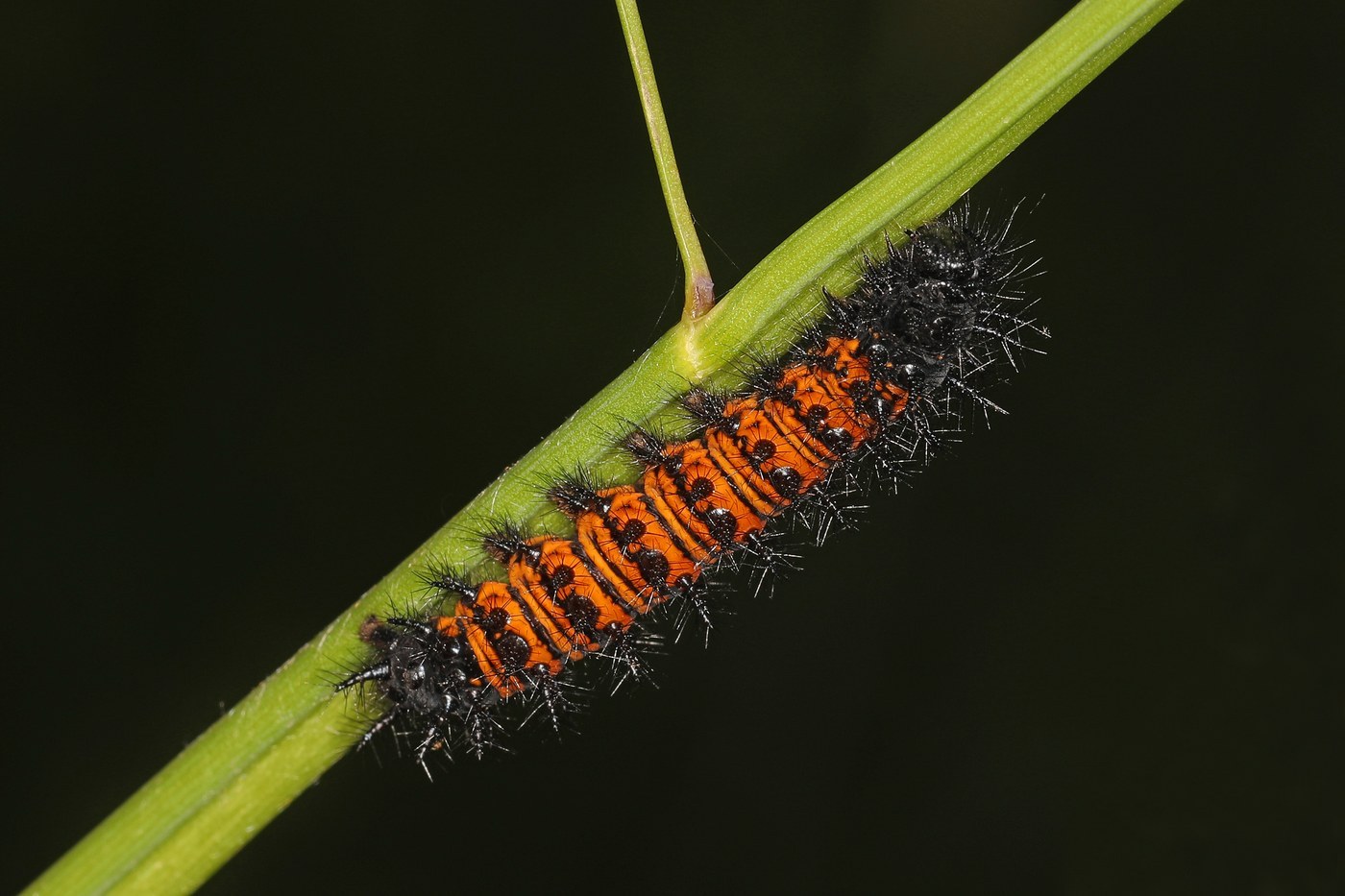
Baltimore Checkerspot
Wet meadows, bogs, and marshy fields in the northeastern and Appalachian US
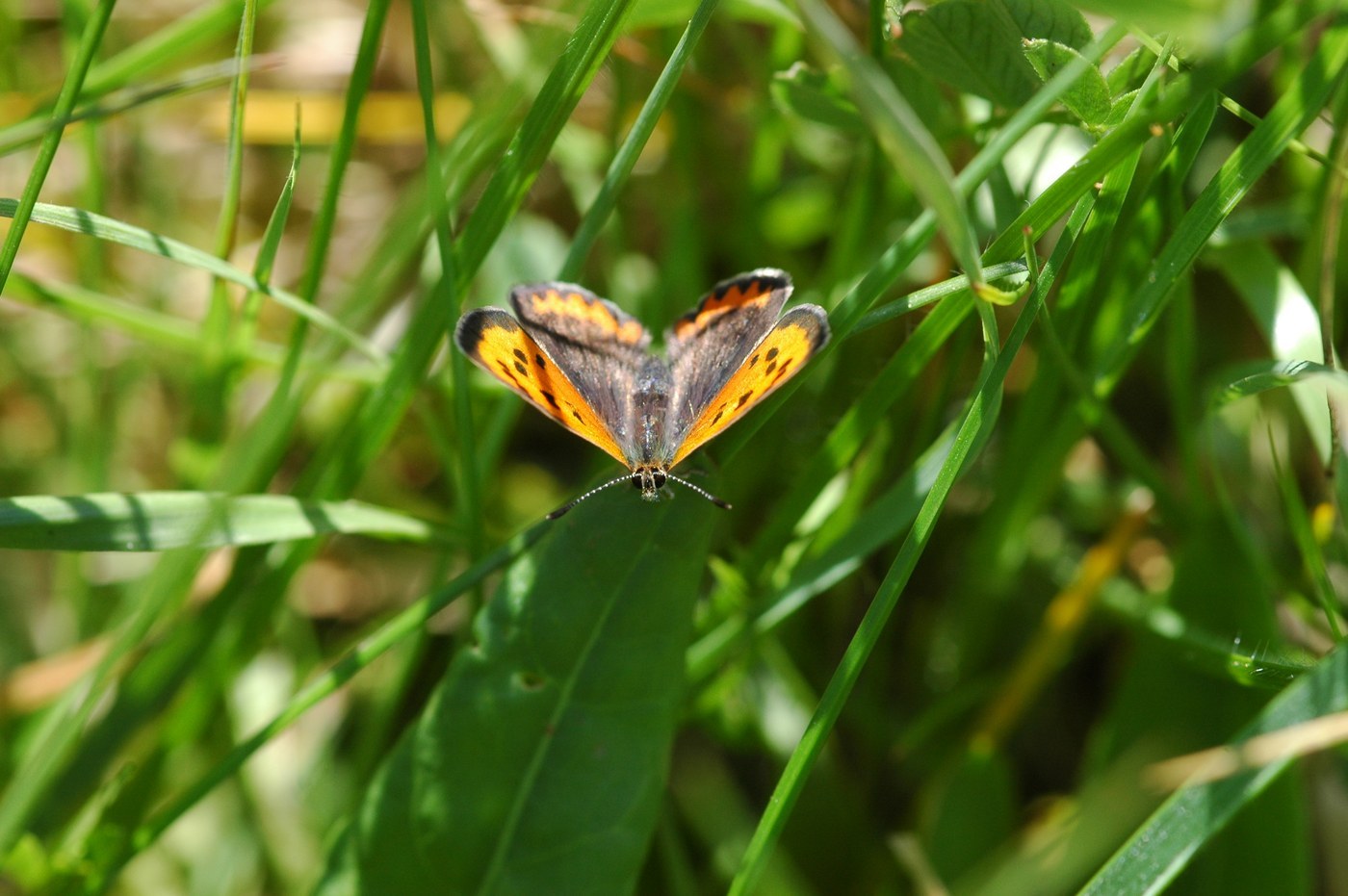
American Copper
Old fields, roadsides, and disturbed open ground with sorrel or dock
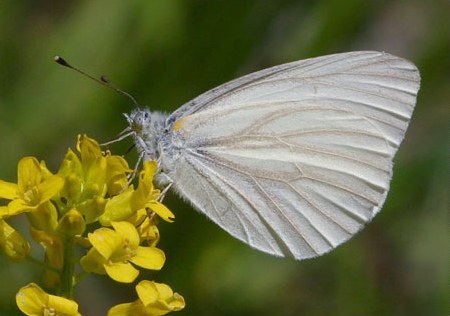
West Virginia White
Rich deciduous forest floors, especially near seeps and streams
Spring Azure
Woodland edges, gardens, shrubby clearings
Red Admiral
Gardens, woodland edges, parks, meadows
Sleepy Orange
Open woodland, fields, roadsides, and disturbed ground