
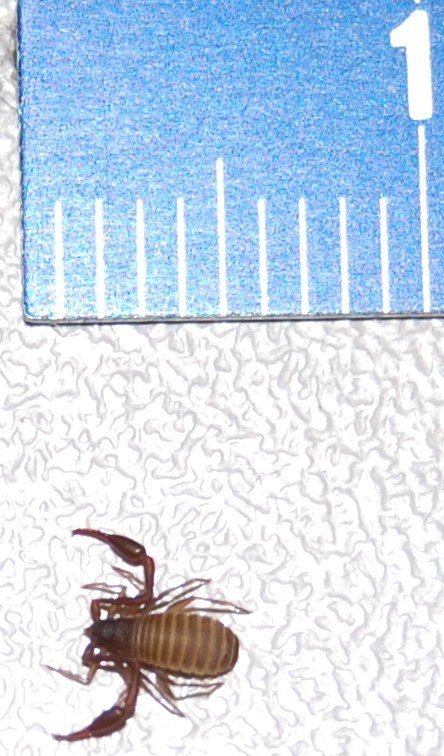
Pseudoscorpion
Chelifer cancroides
A tiny, tail-less relative of true scorpions, complete with a pair of oversized pincers on a body barely bigger than a grain of rice. Often overlooked entirely, it spends its life hunting even smaller arthropods in leaf litter, bark, and sometimes old books.
- Size
- 2–8 mm long, roughly the size of a grain of rice or smaller
- Habitat
- Leaf litter, soil, tree bark, and occasionally indoors among old books and papers
- Danger
- Harmless
Spotted a bug like this?
Identify any bug or insect from a photo, free.
Overview
Pseudoscorpions make up their own arachnid order, Pseudoscorpiones, with more than 3,000 described species worldwide, ranging from tropical forests to caves, deserts, and temperate woodlands. Chelifer cancroides, sometimes called the house pseudoscorpion or book scorpion, is one of the most widely distributed and commonly encountered species, occasionally found indoors among stored papers, an association that gives it its "book scorpion" nickname.
Despite the resemblance in name and general body plan, pseudoscorpions are not closely related to true scorpions in the sense of sharing a stinging tail; they lack a tail and stinger entirely, relying only on their pincers and, in some species, mild venom delivered through those pincers to subdue very small prey.
How to Identify
- Miniature, flattened, oval body typically only a few millimeters long
- Large, prominent pincer-like pedipalps relative to body size, resembling a tiny scorpion's claws
- No tail and no stinger of any kind
- Brownish to reddish body color
- Eight legs, like all adult arachnids
- Easily overlooked due to small size; often mistaken at a glance for a tick or small spider until the pincers are noticed
Habitat & Range
Pseudoscorpions are found worldwide in leaf litter, soil, under loose tree bark, in bird and mammal nests, and in caves. Some species also turn up indoors in houses, particularly among old stacks of books, papers, or stored items, where they hunt the tiny insects that live in similar dusty habitats.
Behavior & Diet
These are active predators of even smaller arthropods, including mites, booklice, springtails, and small insect larvae, which they seize with their pincers. Many species produce silk from glands near the mouth, which they use to build small nest-like chambers for molting, overwintering, or waiting out dry conditions. Some pseudoscorpions also practice phoresy, hitching a ride by grasping onto the legs of larger flying insects such as flies or onto harvestmen to disperse to new habitats. As predators of small insects like booklice, they can be considered beneficial in the structures where they occasionally turn up.
Life Cycle
Mating in pseudoscorpions often involves an elaborate courtship in which the male deposits a stalked packet of sperm (spermatophore) that the female picks up. She then carries the fertilized eggs, and later the newly hatched young, in a brood sac attached to the underside of her abdomen until they are ready to disperse. Young pseudoscorpions resemble miniature adults and undergo several molts before reaching maturity; adults of some species can live two to three years.
Frequently asked questions
Does a pseudoscorpion have a stinger?
No. Unlike true scorpions, pseudoscorpions have no tail or stinger; they rely solely on their pincers to capture prey.
Why is it sometimes called a book scorpion?
Because certain species, including Chelifer cancroides, are occasionally found indoors among stacks of old books and papers, where they hunt tiny insects like booklice.
What do pseudoscorpions eat?
They prey on very small arthropods such as mites, booklice, springtails, and small insect larvae, seizing them with their pincers.
How do pseudoscorpions travel between habitats?
Many species practice phoresy, clinging to the legs of larger insects such as flies to hitch a ride and disperse to new locations.
Pseudoscorpion guides
In-depth guides for identifying, understanding, and living alongside Pseudoscorpion.
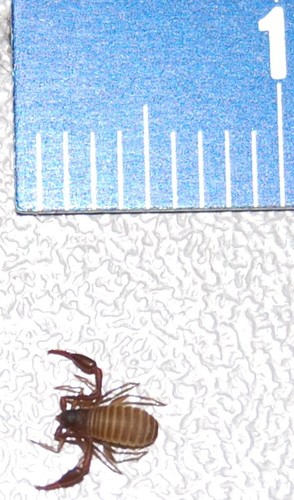
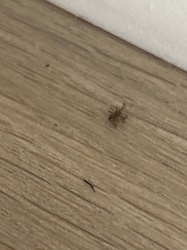
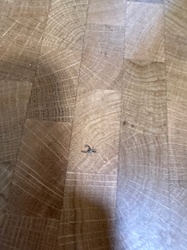
Pseudoscorpion identified by the community
Real finds identified with Bug Identifier.
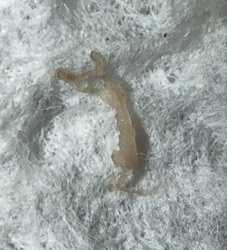
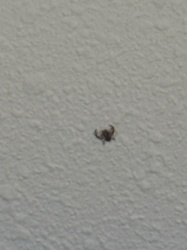
Other bugs you may enjoy
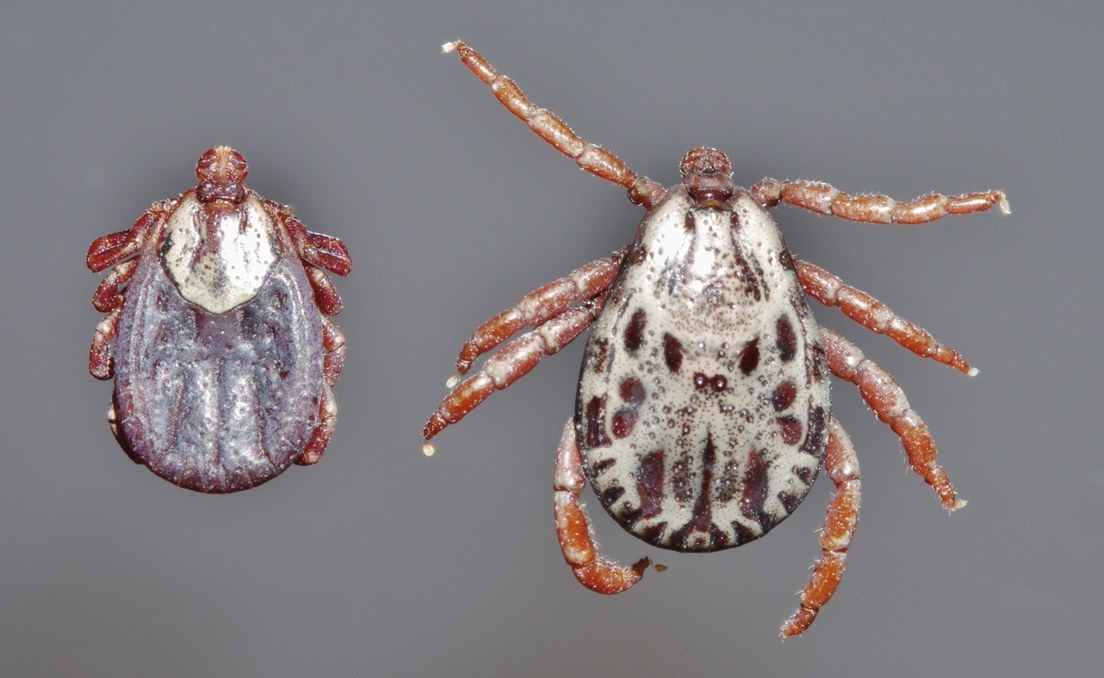
Wood Tick
Grassland, shrub-steppe, and open woodland of western North America
Yellow Scorpion
Arid scrubland, rocky slopes, and desert margins
Whip Spider
Tropical caves, rainforest leaf litter, and under bark
Water Mite
Ponds, lakes, streams, and other freshwater bodies
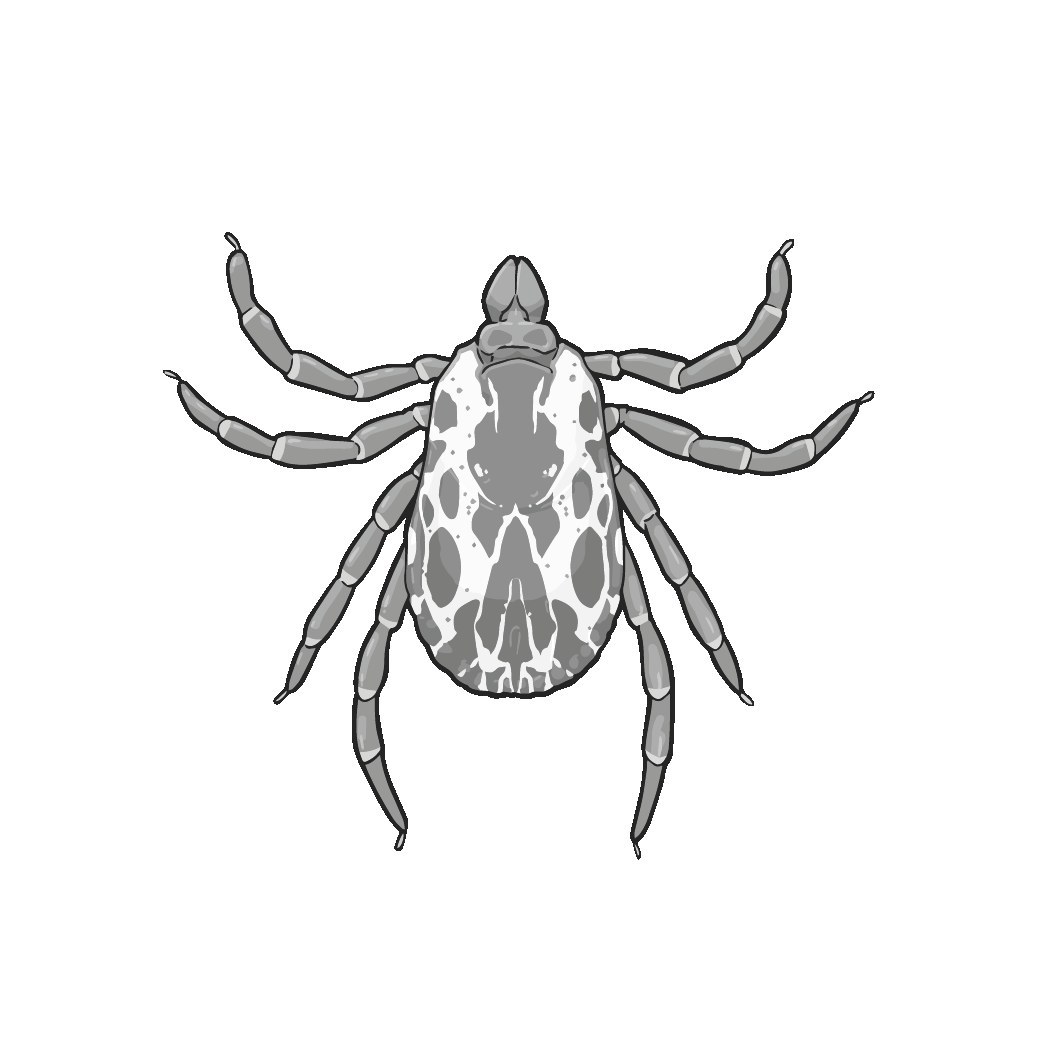
American Dog Tick
Grassy fields, trails, and low vegetation near woodlands
Arizona Bark Scorpion
Rocky desert terrain, tree bark, and structures in the Southwest
Tick
Tall grass, brush, woodland edges, and animal trails
Soil Mite
Soil, leaf litter, moss, and decaying organic matter worldwide
Rocky Mountain Wood Tick
Sagebrush shrublands, grasslands, and montane forest edges
Two-Spotted Spider Mite
Undersides of leaves on garden plants, crops, and houseplants
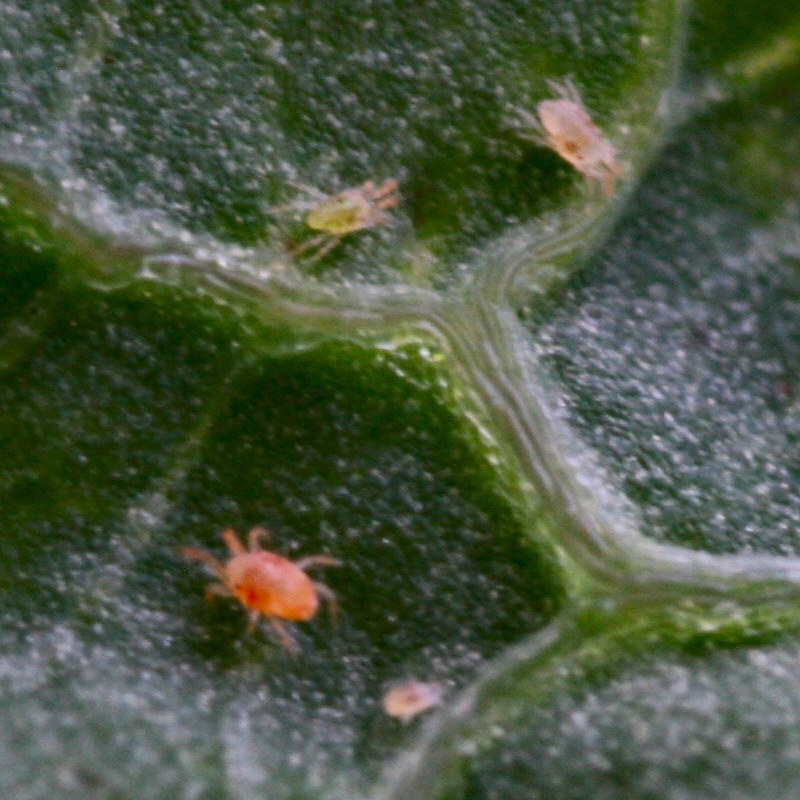
Spider Mite
Undersides of leaves on garden plants, houseplants, and field and orchard crops worldwide
Whip Scorpion
Tropical and subtropical caves, tree bark, and rock crevices worldwide