
Bug Encyclopedia
Search and identify bugs & insects — beetles, butterflies, moths, ants, bees, spiders and more — with size, habitat, danger, behavior, and how to tell them apart.
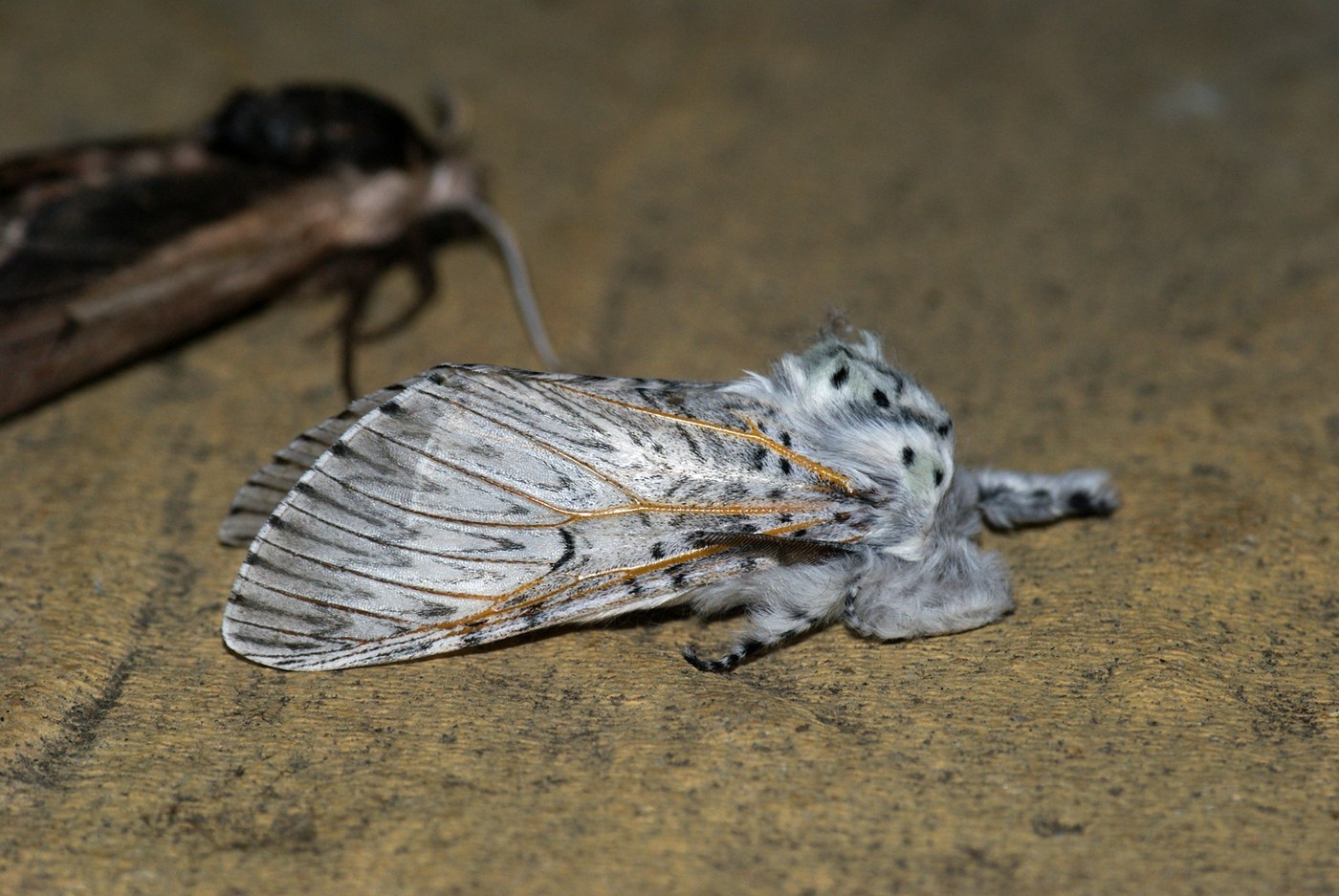
Puss Moth
A stout, furry gray-and-white moth named for its dense, cat-like coat of hair, best known for its bizarre green caterpillar with a hump-backed, face-like front end and forked tail filaments used in defensive displays.
moth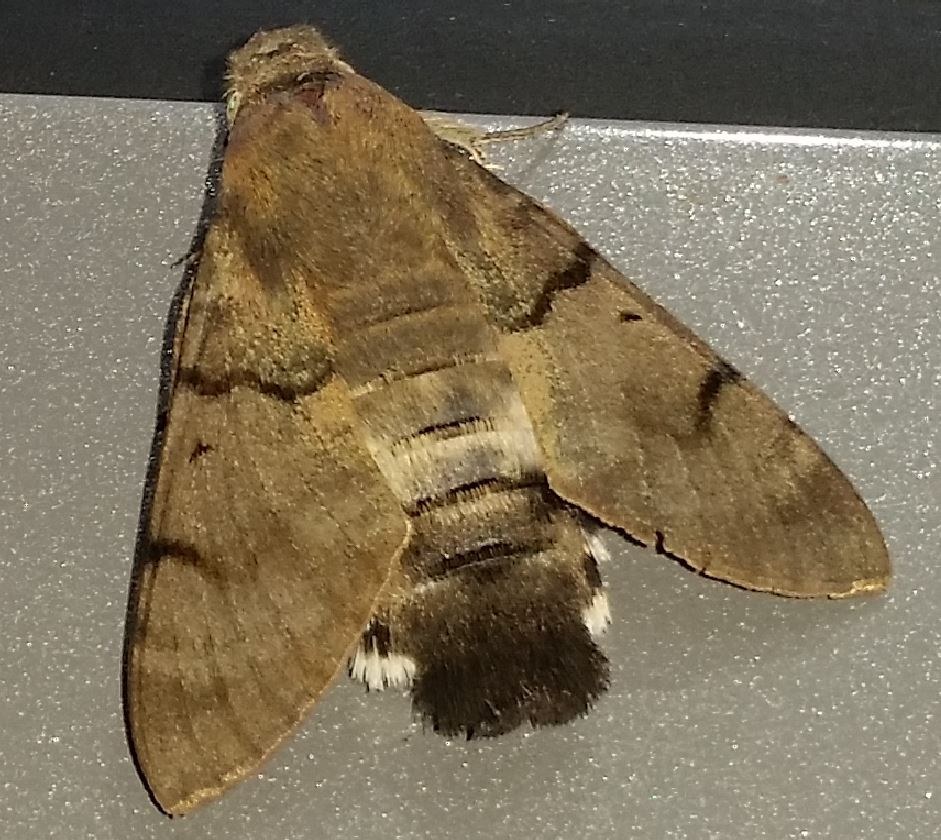
Hummingbird Hawk-Moth
A day-flying moth that hovers in front of flowers on blurring wings while unspooling a long proboscis to sip nectar, so closely mimicking a hummingbird in flight that it is frequently mistaken for one.
mothBlister Beetle
An elongated, soft-bodied beetle with a distinctly narrow neck, often seen feeding in small groups on flowers, and known for releasing a defensive chemical from its leg joints when disturbed.
beetleForest Tent Caterpillar
Named for the silk mats rather than tents it spins, this blue-gray caterpillar sports a row of pale keyhole- or footprint-shaped spots down its back and can appear in outbreak numbers that strip entire stands of trees bare.
caterpillar-larva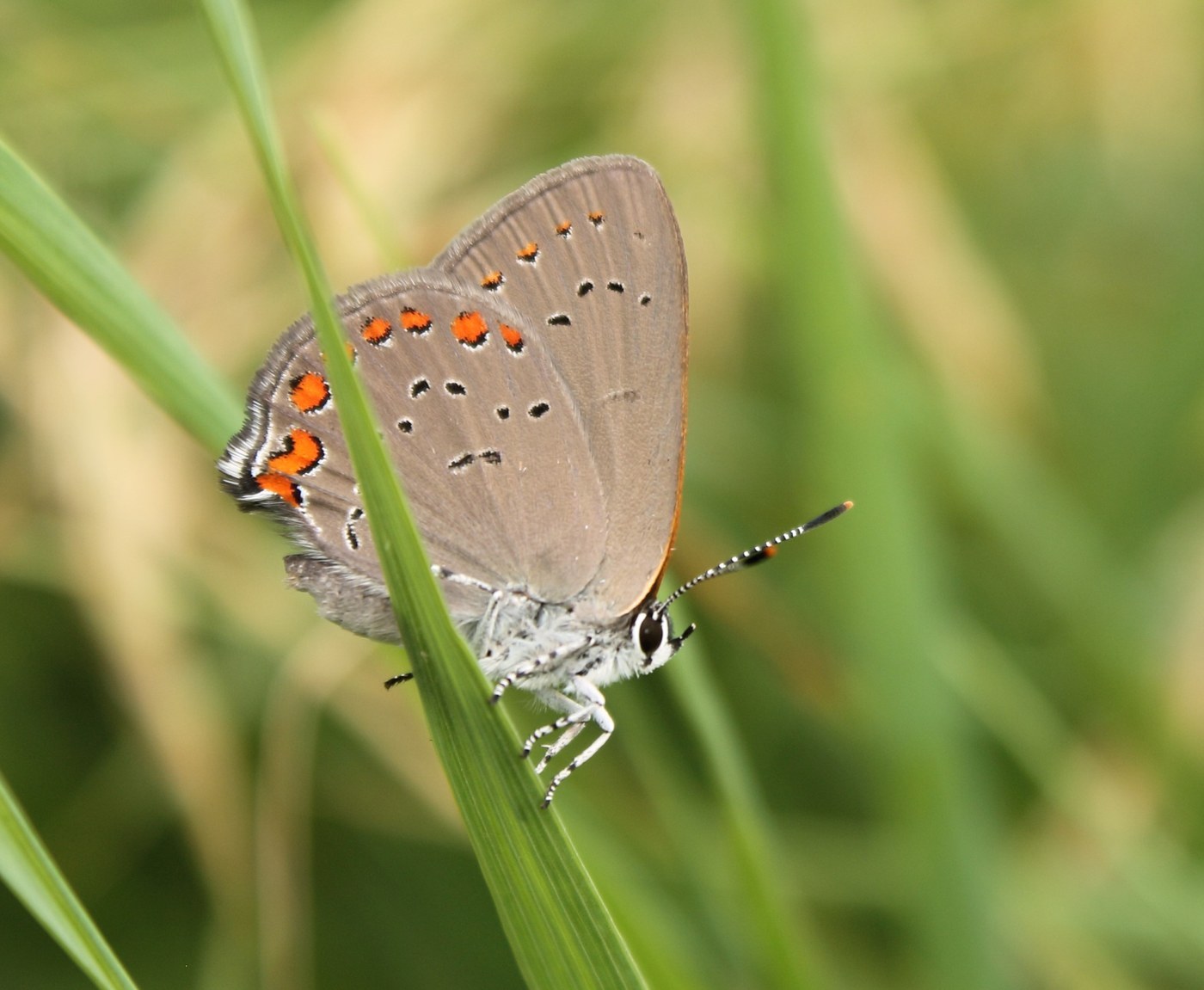
Coral Hairstreak
A tailless hairstreak identified by a bright row of coral-red spots lining the outer margin of the hindwing underside, often seen nectaring in numbers on milkweed and butterfly weed in midsummer meadows.
butterfly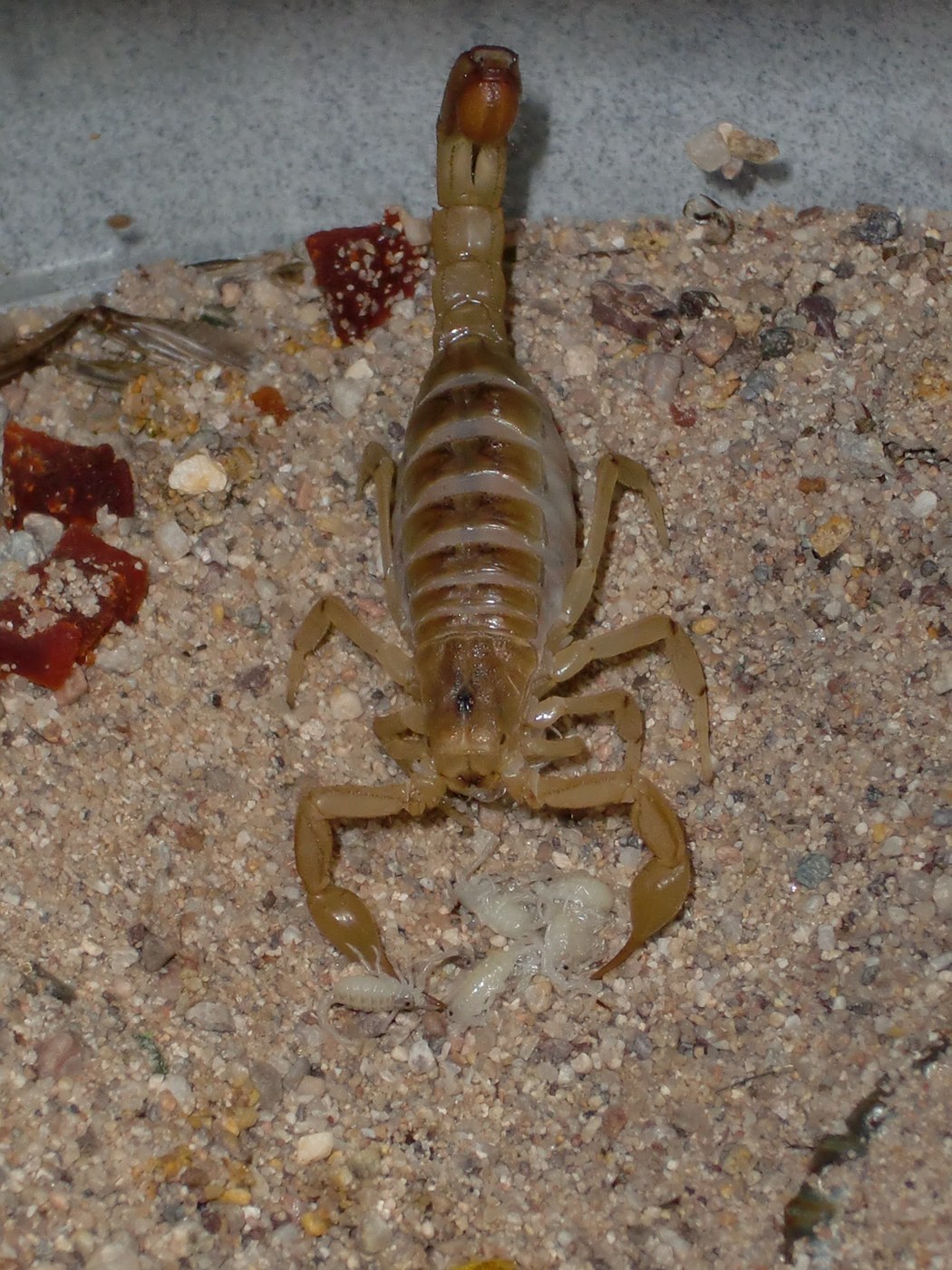
Bark Scorpion
A slender, pale tan scorpion best known for its unusual habit of climbing trees, walls, and rock faces rather than staying on the ground like most scorpions. Its thin build and long, narrow tail set it apart from the stockier, heavy-clawed scorpions found elsewhere.
arachnid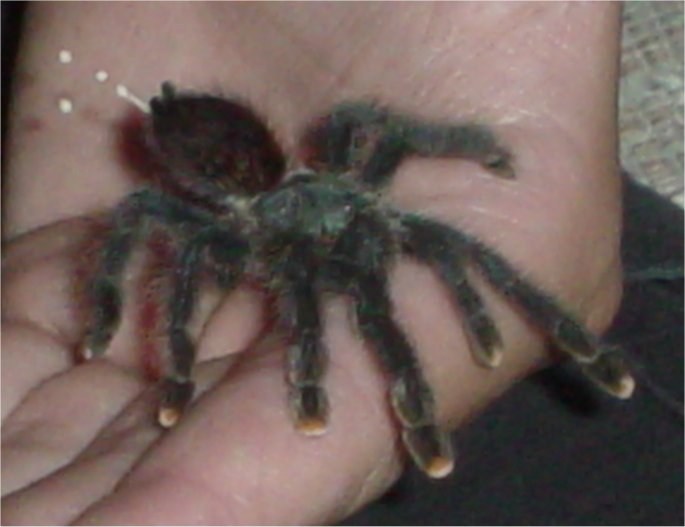
Pink Toe Tarantula
An agile, tree-dwelling tarantula with a dark velvety body and distinctive pale pink tips on its feet, the pink toe spends nearly its entire life above ground, spinning silk retreats among leaves and bark high in the rainforest canopy.
spider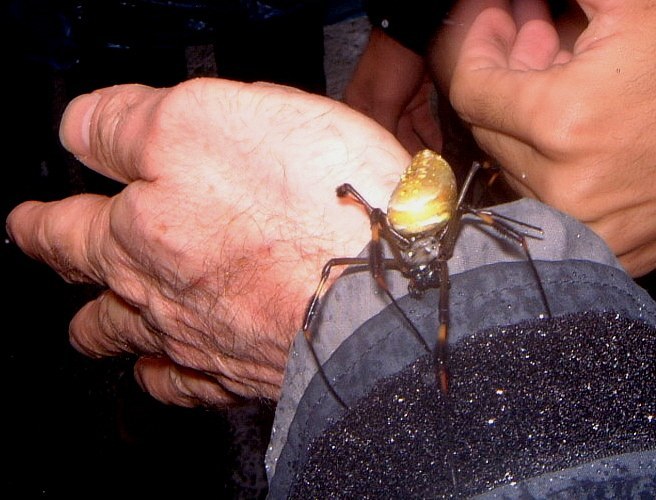
Banana Spider
"Banana spider" is a folk name applied inconsistently across the Americas, but in the southeastern United States it most often refers to the large, golden-silked orb weaver commonly seen spanning gaps between trees along shaded trails.
spider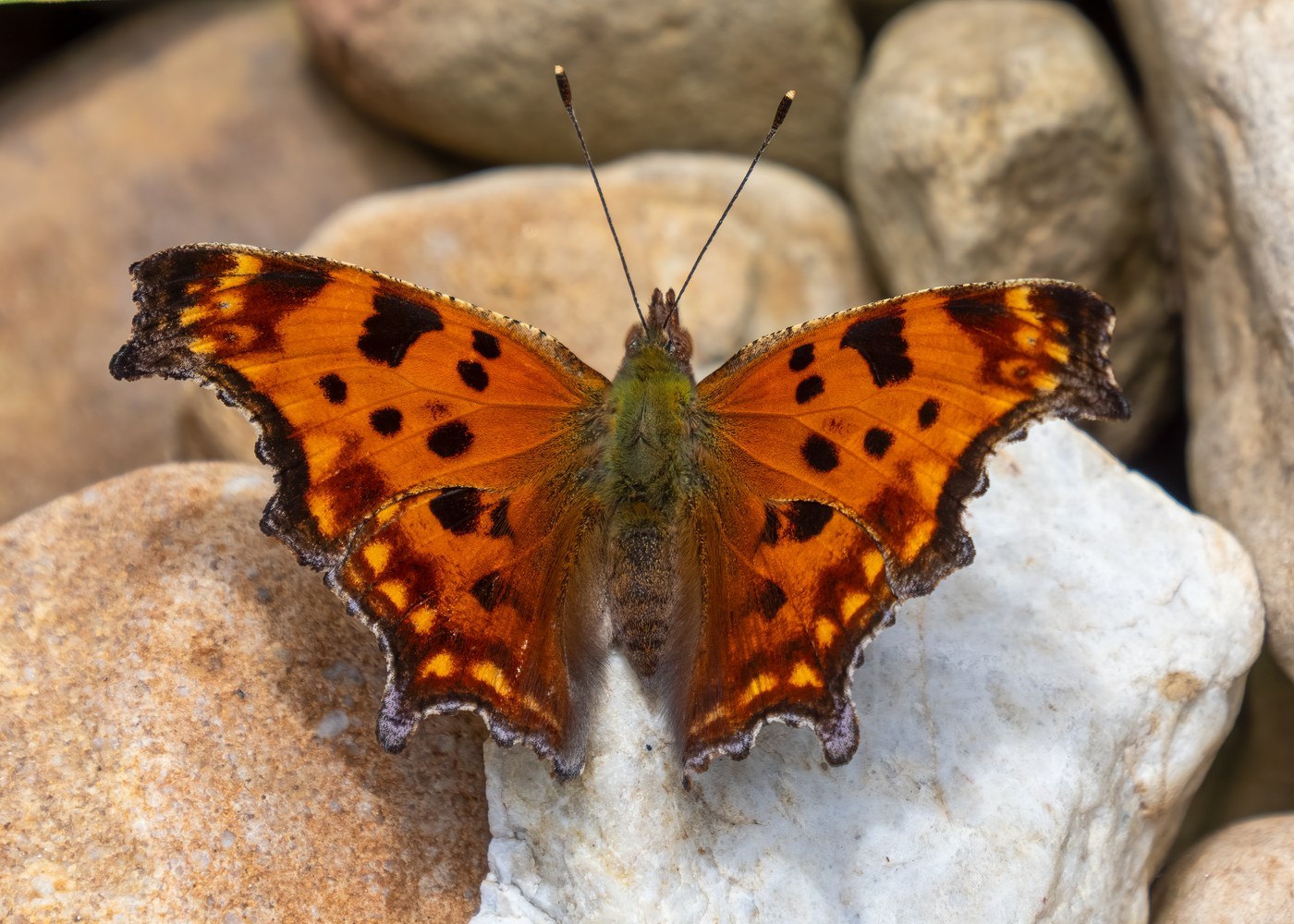
Eastern Comma
A ragged-edged orange-and-brown woodland butterfly named for the small, silvery comma-shaped mark on the underside of its hindwing, with a cryptic dead-leaf pattern that camouflages it perfectly when its wings are closed.
butterflyMarsh Fly
A slender, unassuming fly best known for larvae with a remarkable diet: nearly every species in the family feeds on aquatic or terrestrial snails and slugs, making marsh flies natural specialists in wetland food webs. Adults are often found resting quietly on sedges and other marsh vegetation near the water's edge.
flyRed Velvet Mite
A plump, brilliant red mite covered in a dense coat of short velvety hairs, often seen emerging onto the soil surface in numbers right after a heavy rain. Its vivid color and unusual size for a mite make it one of the more eye-catching arachnids most people will ever encounter.
arachnidMarch Fly
A stout, all-black fly that emerges in sudden, dense swarms during the first warm days of spring, often dangling its long hind legs conspicuously in slow, low flight over grass. Its name comes from its habit of appearing reliably around the start of the month, sometimes on cue near a particular saint's feast day in the traditional European calendar.
flyWarble Fly
A furry, bee-mimicking fly that never lands on flowers or feeds as an adult, spending its brief life darting around grazing cattle to lay eggs on their legs and lower body. Herds sometimes react with sudden panicked runs, known as gadding, whenever a warble fly approaches.
fly