
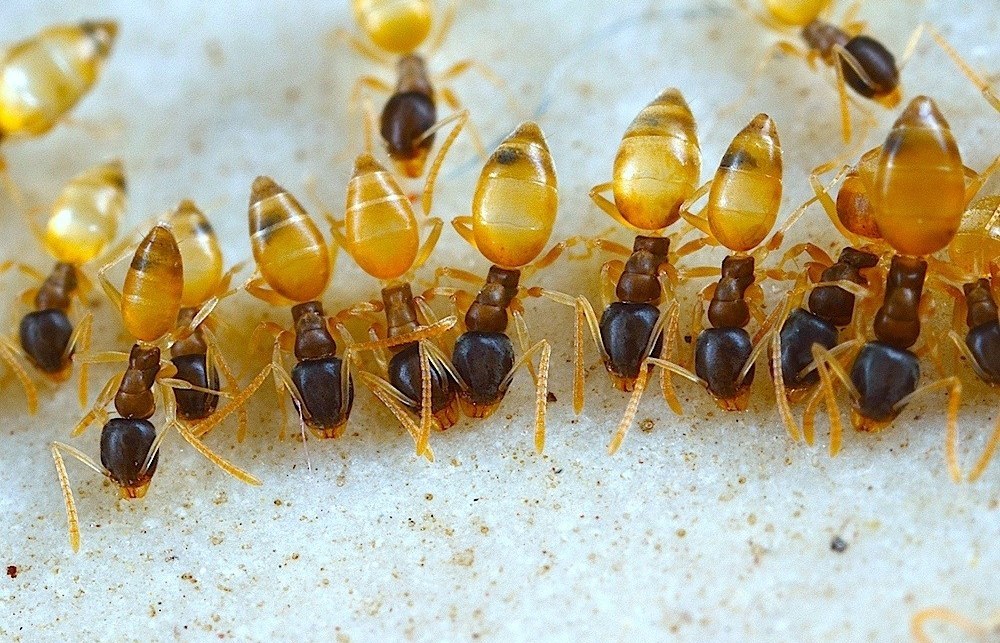
Ghost Ant
Tapinoma melanocephalum
A minuscule ant with a dark head and pale, nearly translucent legs and abdomen that seem to vanish against light-colored surfaces, giving the species its ghostly common name.
- Size
- Workers about 1.3-1.5 mm long
- Habitat
- Tropical and subtropical regions outdoors; potted plants and wall voids indoors
- Danger
- Nuisance pest
Spotted a bug like this?
Identify any bug or insect from a photo, free.
Overview
The ghost ant is a tiny, tropical species believed to have originated in Africa or Asia but now distributed nearly worldwide in warm climates, largely through the transport of infested plants and agricultural goods. In temperate regions, it survives primarily indoors, where consistent warmth and humidity allow it to persist year-round.
The species' common name comes directly from its appearance: a dark brown to black head and thorax paired with strikingly pale, almost translucent legs and abdomen, which can make foraging workers seem to blend into or vanish against light backgrounds.
Ghost ants are closely related to odorous house ants and share several behavioral traits, including a similar defensive odor when crushed and a tendency to form large, loosely structured, multi-queen colonies that spread readily between suitable nesting sites.
How to Identify
- Extremely small workers, only about 1.3-1.5 mm long
- Dark brown to black head and thorax contrasted with pale, whitish-yellow, nearly translucent legs and gaster
- Single small node on the petiole, typically hidden from above
- Emits a faint, coconut-like odor when crushed, similar to the related odorous house ant
- Erratic, wandering foraging trails rather than strictly straight lines
- Distinguished from other tiny ants primarily by its striking two-toned, "ghostly" coloring
Habitat & Range
Ghost ants are common outdoors in tropical and subtropical regions worldwide, nesting in soil, leaf litter, and under debris. In temperate climates, they are largely restricted to indoor environments, where they nest in the soil of potted plants, within wall voids, behind baseboards, and in other warm, humid indoor spaces such as bathrooms and kitchens.
Behavior & Diet
This species is omnivorous with a strong preference for sweet, sugary foods, though it also feeds on other small insects and greasy or protein-rich substances. Ghost ants forage along erratic, winding trails and readily establish new colonies through budding, in which groups of workers and queens split off to found satellite nests, a trait that allows populations to spread quickly, particularly through the movement of infested potted plants.
Life Cycle
Ghost ants undergo complete metamorphosis, developing through egg, larva, pupa, and adult stages. Colonies are polygynous, with multiple reproductive queens supporting continuous brood production, especially in warm, humid conditions where reproduction can proceed nearly year-round. New colonies form primarily through budding rather than large-scale winged mating flights.
Frequently asked questions
Why is it called a ghost ant?
Its dark head and thorax contrast with pale, almost translucent legs and abdomen, giving foraging workers a faint, ghostly appearance against light surfaces.
How big is a ghost ant?
It is one of the smallest common household ants, with workers only about 1.3 to 1.5 millimeters long.
Where do ghost ants typically nest?
Outdoors in tropical regions they nest in soil and leaf litter, while in temperate climates they are usually found indoors in potted plant soil, wall voids, or humid areas like bathrooms.
What do ghost ants eat?
They are omnivorous with a strong preference for sugary foods, though they also feed on other insects and protein-rich substances.
Ghost Ant guides
In-depth guides for identifying, understanding, and living alongside Ghost Ant.
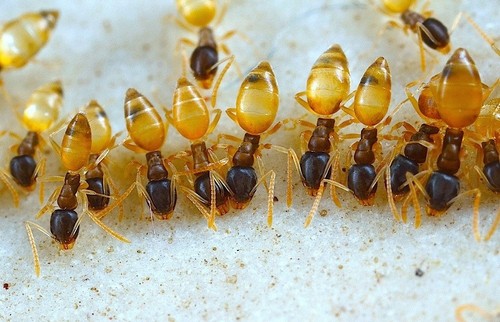
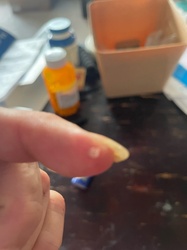
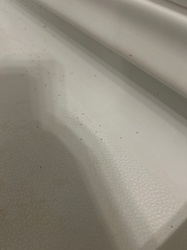
Ghost Ant identified by the community
Real finds identified with Bug Identifier.
Other bugs you may enjoy
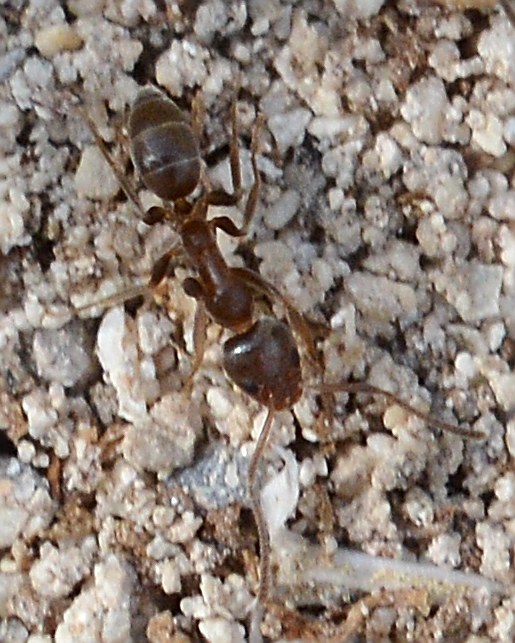
Argentine Ant
Disturbed urban soil, gardens, and building perimeters
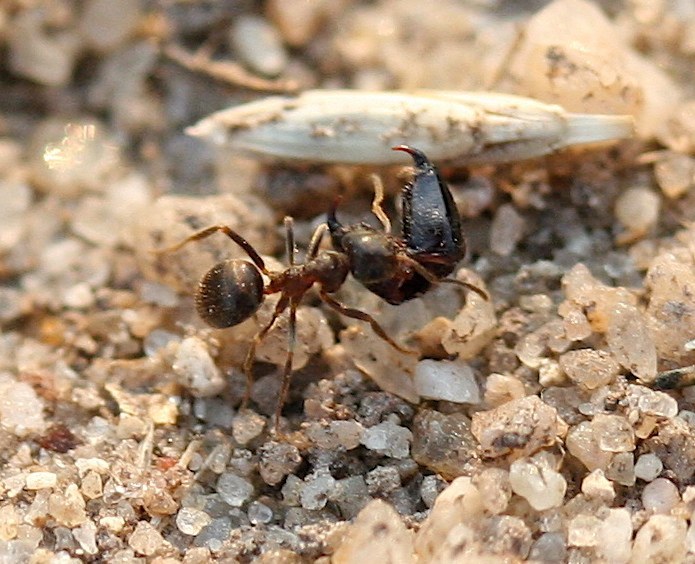
Ant
Gardens, lawns, woodlands, sidewalks, and buildings worldwide
Weaver Ant
Canopy of tropical forests, orchards, and mangroves
Sugar Ant
Gardens, woodlands, and urban areas; nests in soil, timber, or tree hollows
Trap-Jaw Ant
Tropical and subtropical forests, leaf litter, sandy coastal soils
Pharaoh Ant
Warm, humid indoor voids such as wall cavities and heating ducts
Pavement Ant
Cracks in sidewalks, driveways, and building foundations
Odorous House Ant
Soil, mulch, wall voids, and areas near moisture indoors and out
Red Wood Ant
Coniferous and mixed woodland, forest clearings and edges
Harvester Ant
Arid grasslands, deserts, and open sandy areas
Leafcutter Ant
Tropical and subtropical forests, farmland edges
Little Black Ant
Lawns, gardens, rotting wood, and occasionally indoors