
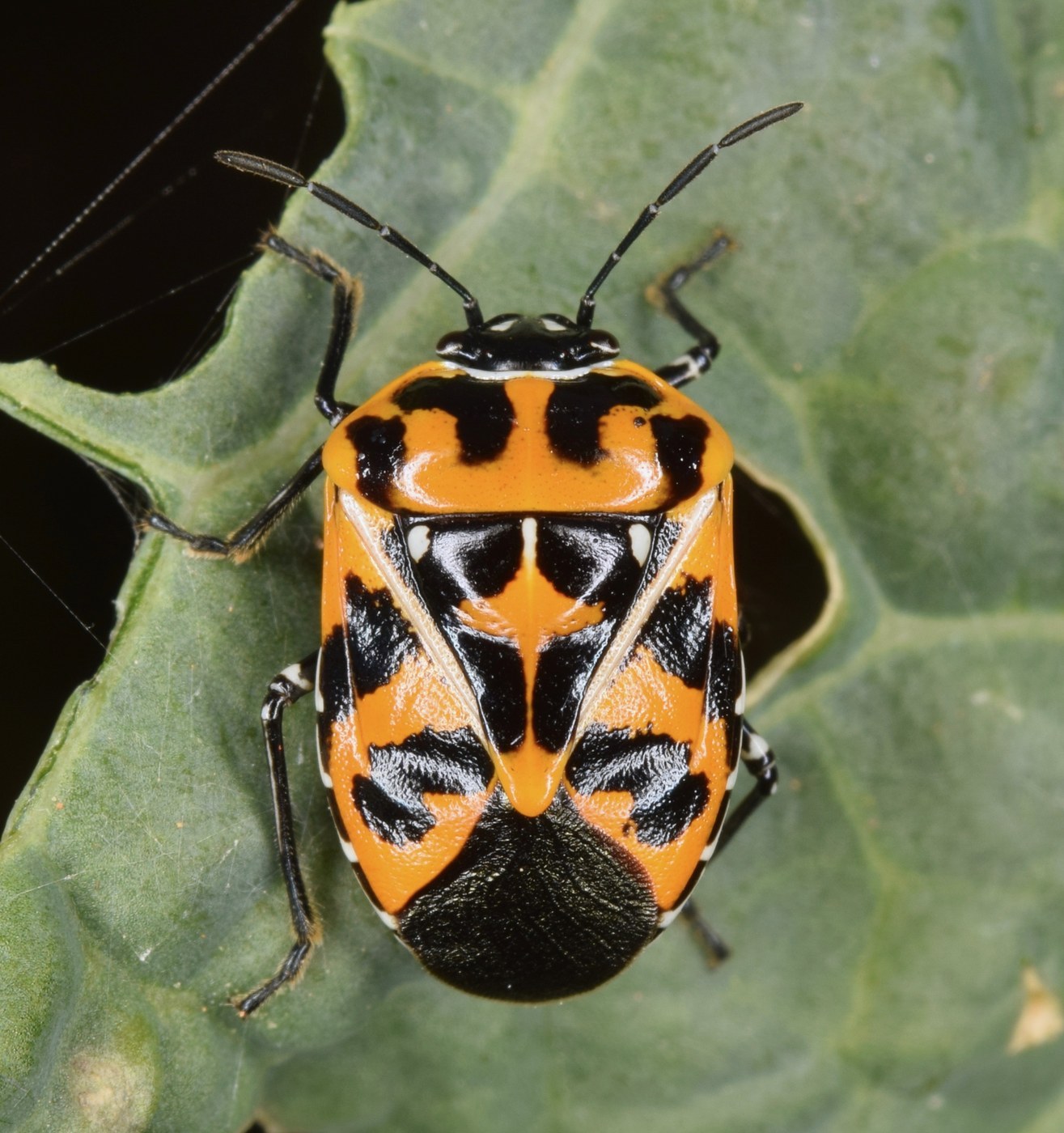
Harlequin Bug
Murgantia histrionica
A shield-shaped stink bug painted in bold black-and-orange (or red-and-yellow) blotches, making it one of the most colorful and easily recognized true bugs on cabbage and other cole crops.
- Size
- 8–11 mm
- Habitat
- Vegetable gardens, cole crop fields, mustard-family weeds
- Danger
- Nuisance pest
Spotted a bug like this?
Identify any bug or insect from a photo, free.
Overview
The harlequin bug is a member of the stink bug family (Pentatomidae), order Hemiptera, named for its flamboyant patchwork coloration rather than any relation to the theatrical Harlequin character. It is native to Mexico and Central America and has expanded across the warmer regions of North America, where it is closely tied to plants in the mustard family.
Unlike the drab browns and greens of most stink bugs, the harlequin bug's striking pattern serves as a visual warning, a phenomenon called aposematism, advertising the distasteful compounds it sequesters from the mustard-oil glycosides in its host plants. This makes it easy to spot in gardens even before any feeding damage is visible.
As a specialist feeder on brassicas, the harlequin bug plays a notable role in agricultural ecosystems as one of the more conspicuous and frequently observed shield bugs in home vegetable gardens.
How to Identify
- Broad, flattened shield-shaped body typical of stink bugs, roughly as wide as it is long.
- Glossy black background boldly marked with irregular orange, red, or yellow blotches and bands across the pronotum and wing covers.
- Piercing-sucking mouthparts folded beneath the head; antennae are five-segmented and dark.
- Nymphs are rounder and softer-bodied but share the same vivid orange-and-black coloring as adults.
- Lookalikes include other brightly patterned stink bugs, but the harlequin bug's high-contrast, irregular blotch pattern (rather than uniform stripes or spots) and tight association with cabbage-family plants help distinguish it.
Habitat & Range
Found throughout the southern and central United States, Mexico, and parts of Central America, with populations extending into cooler regions during warm months. It is almost always found on or near plants in the Brassicaceae family, including cabbage, kale, broccoli, mustard, and related weeds like wild mustard and shepherd's purse.
Active from spring through fall in warmer climates, with several generations possible per year, it clusters densely on host plant stems and undersides of leaves, favoring sunny garden beds and field margins.
Behavior & Diet
Harlequin bugs feed by inserting their needle-like mouthparts into plant tissue and withdrawing sap, which causes characteristic wilting, stippling, and blotchy discoloration on leaves. They tend to aggregate in groups, with clusters of adults and nymphs often visible together on a single plant.
Their bright coloration functions as a warning signal to predators, since the bugs accumulate bitter-tasting mustard oil compounds from their host plants. They do not bite or sting people, and their ecological role is chiefly as a plant-sap feeder within brassica-dominated habitats, occasionally serving as prey for birds and predatory insects that can tolerate their chemical defenses.
Life Cycle
Females lay distinctive barrel-shaped eggs in double rows, banded in black and white like tiny kegs, on the undersides of leaves. Eggs hatch into wingless nymphs that resemble small, rounder versions of the adult, undergoing incomplete metamorphosis through five nymphal instars before reaching the fully winged adult stage.
In warm climates, two to four generations can occur per year. Adults overwinter in leaf litter, garden debris, or under bark near former host plants, emerging in spring to resume feeding and breeding on new brassica growth.
Frequently asked questions
Is the harlequin bug the same as a stink bug?
Yes, it belongs to the stink bug family Pentatomidae, but it is far more colorful than most brown or green stink bug species.
Does the harlequin bug bite people?
No, its piercing mouthparts are adapted for feeding on plant sap, not for biting humans.
Where am I most likely to see one?
On cabbage, kale, broccoli, or wild mustard plants in a vegetable garden, especially clustered near the base of leaves.
Why is it so brightly colored?
The black-and-orange pattern warns predators that the bug carries bitter mustard-oil compounds absorbed from its host plants.
Harlequin Bug guides
In-depth guides for identifying, understanding, and living alongside Harlequin Bug.
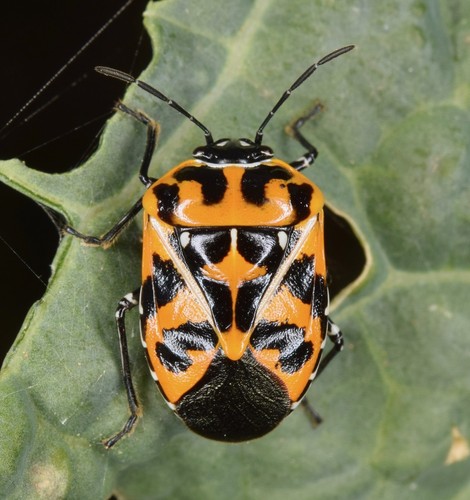
Harlequin Bug identified by the community
Real finds identified with Bug Identifier.

Other bugs you may enjoy
Bagrada Bug
Arid gardens, crucifer fields, desert-adjacent croplands
Assassin Bug
Gardens, meadows, and vegetation worldwide
Water Boatman Bug
Ponds, lakes, and slow-moving freshwater
Water Stick Insect
Still and slow-moving water with dense submerged vegetation
Rough Stink Bug
Tree bark, woodlands, orchards, and shrubby vegetation
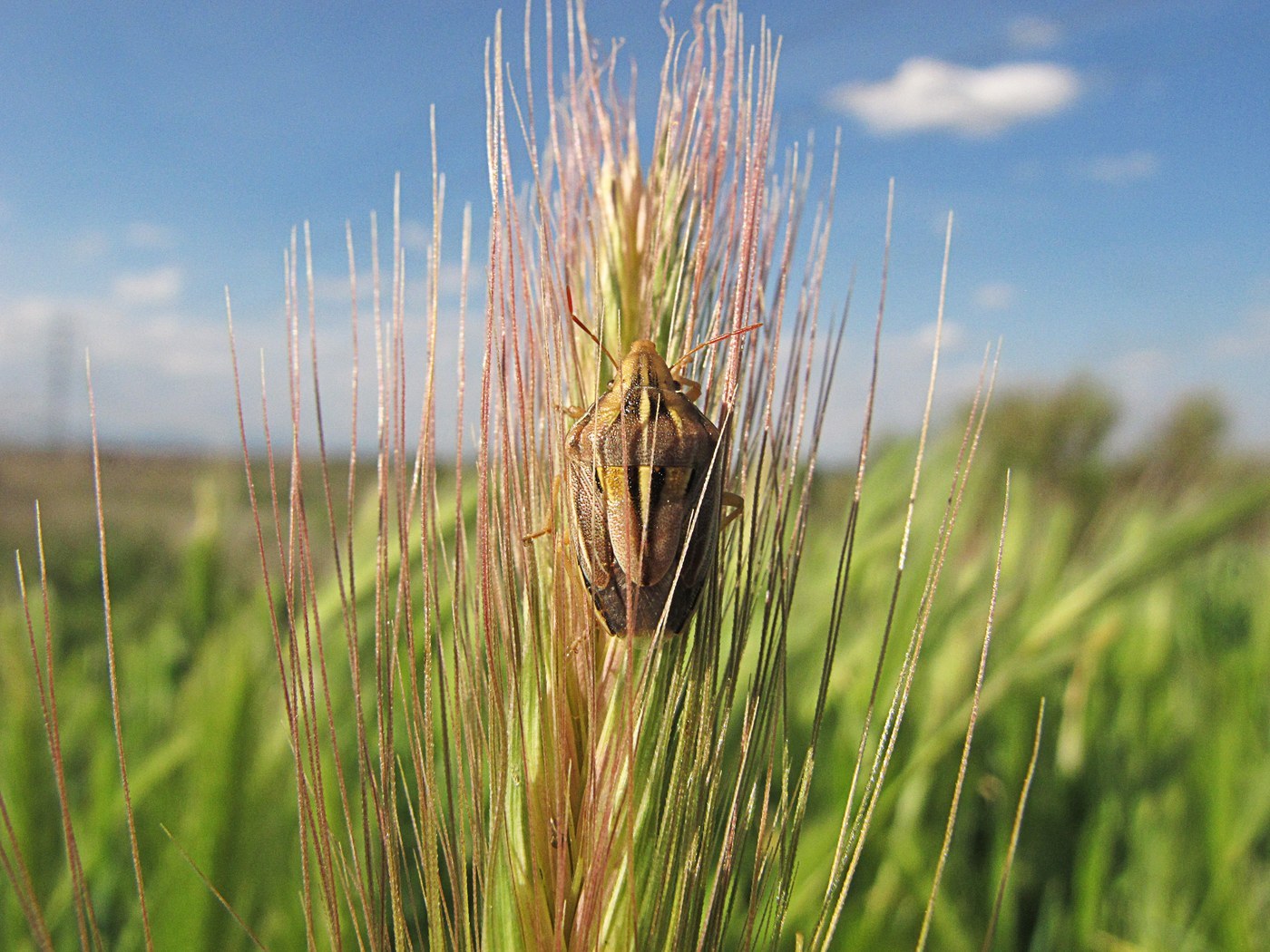
Stink Bug
Gardens, crop fields, and woodlands across temperate and subtropical regions
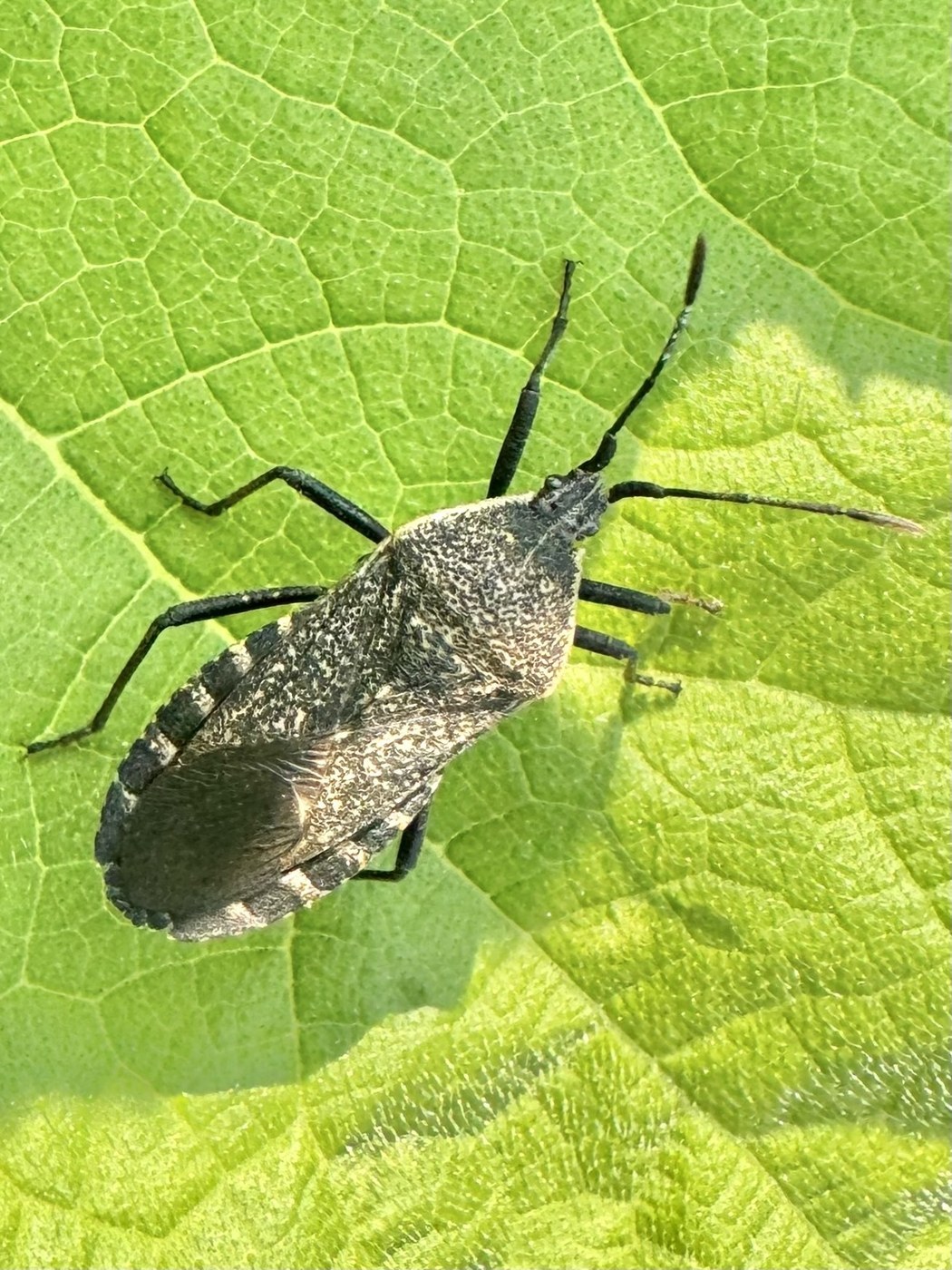
Squash Bug
Vegetable gardens and farm fields growing squash, pumpkin, and other cucurbits
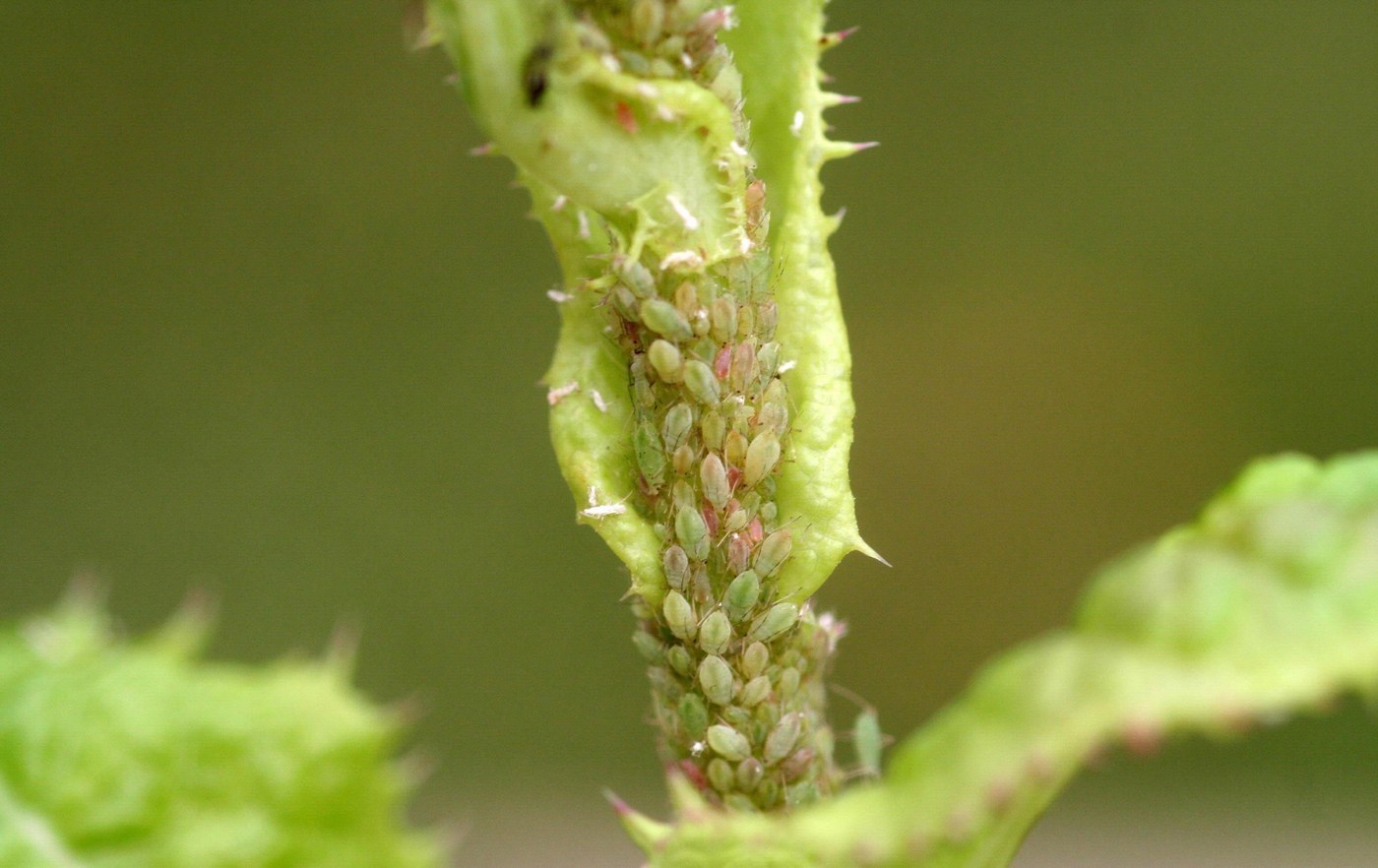
Aphid
On stems, leaves, and buds of a very wide range of host plants
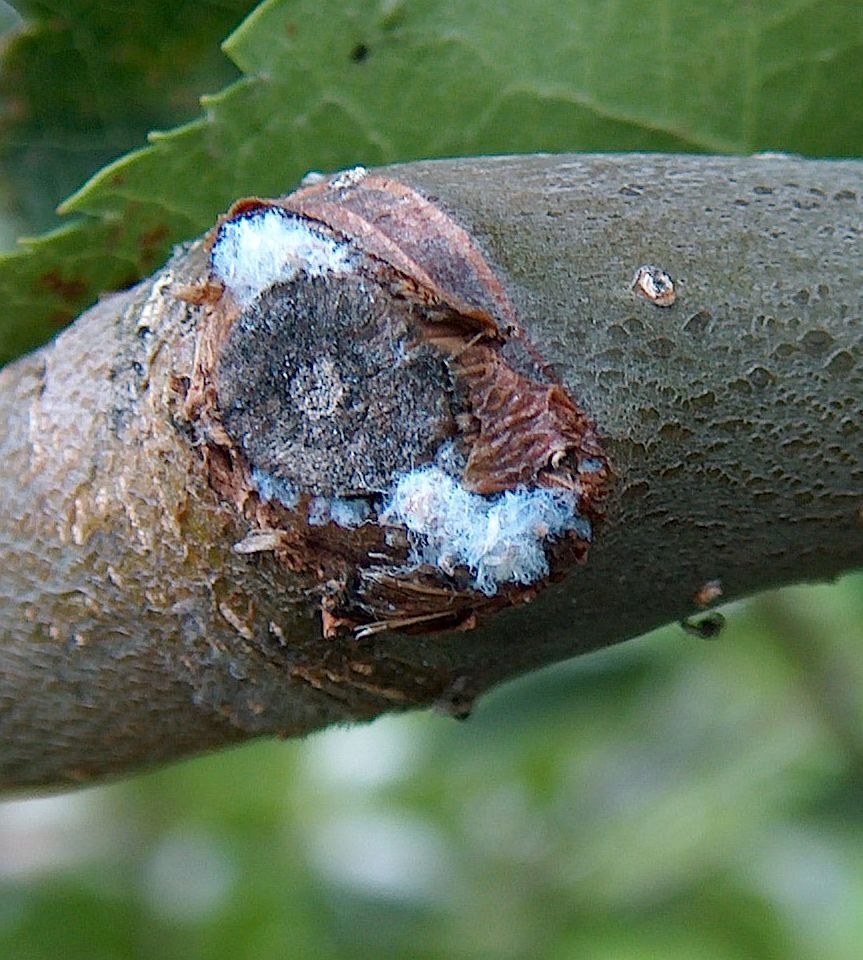
Woolly Aphid
Bark crevices, root collars, and twigs of apple, elm, and alder trees
Whitefly
Greenhouses, gardens, and undersides of leaves on host plants
Water Measurer
Quiet edges of ponds, marshes, and slow streams
Two-Spotted Stink Bug
Gardens and fields with potato and nightshade-family plants