
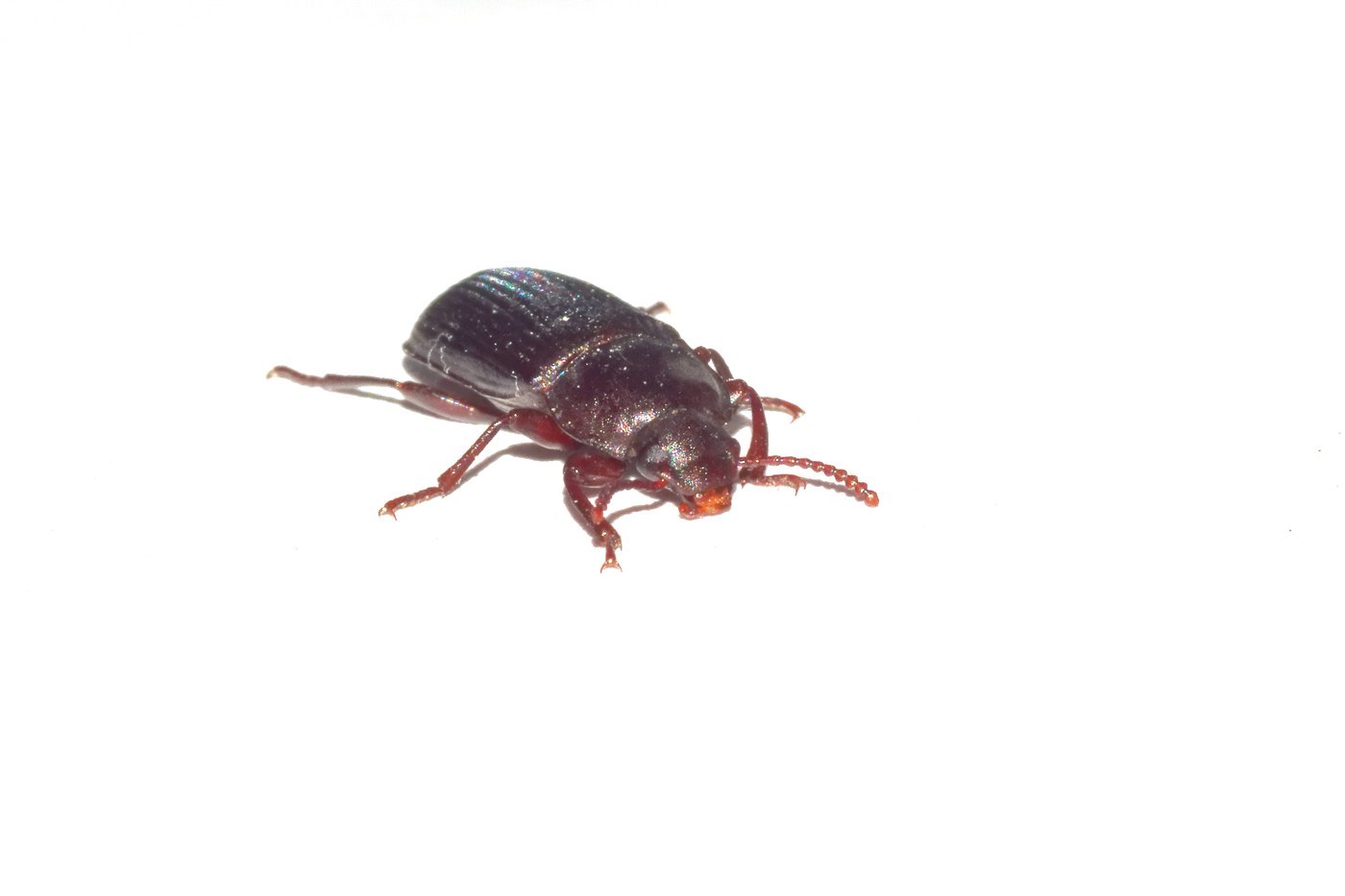
Mealworm Beetle
Tenebrio molitor
A shiny, oval, dark reddish-brown to nearly black beetle whose larva, the familiar 'mealworm,' is a common sight in stored grain products.
- Size
- 12–18 mm
- Habitat
- Grain stores, flour mills, pantries, leaf litter and decaying organic matter
- Danger
- Harmless
Spotted a bug like this?
Identify any bug or insect from a photo, free.
Overview
The mealworm beetle is a member of the darkling beetle family, Tenebrionidae, one of the largest beetle families and one especially well adapted to dry, low-moisture environments. It is best known in its larval stage, the mealworm, which is widely reared for various commercial and educational purposes, but the adult beetle itself is a distinct and easily recognized insect in its own right.
As a species, Tenebrio molitor is nearly cosmopolitan in distribution, having spread around the world alongside stored human food products. It belongs to a broader group of beetles adapted to feeding on dry organic matter such as grain, flour, bran, and decaying plant material, making it ecologically important as a decomposer of dried plant debris in its natural habitats.
The species is notable for its resilience and simple life history, both of which have made it one of the most-studied insects in entomology classrooms and laboratories worldwide.
How to Identify
- Elongated oval body, convex above and flattened below, typically 12–18 mm long.
- Adults are a glossy dark brown to black, with fine longitudinal grooves (striae) running down the wing covers (elytra).
- Head bears thread-like (filiform) antennae and small compound eyes; legs are relatively short and stout.
- Larvae (mealworms) are cylindrical, smooth, yellowish-tan with darker segment bands, and can reach 25–30 mm before pupating.
- Lookalikes include other darkling beetles and grain beetles, but the mealworm beetle's larger size and grooved elytra help distinguish it.
Habitat & Range
Mealworm beetles favor dark, undisturbed places with a supply of dry organic material—grain silos, flour mills, animal feed storage, birds' nests, and rotting logs in the wild. They are found nearly worldwide due to their close association with stored food products and human structures.
Activity peaks in warm months, though indoors they can remain active year-round in climate-controlled storage areas. Larvae favor the interior of stored grain or meal, burrowing through it, while adults are more mobile and can be found on the surface or seeking new food sources.
Behavior & Diet
Both larvae and adults are scavengers, feeding on dry, starchy plant material such as flour, bran, cereal, and decaying wood or leaf litter. Adults are capable of short flights but more often walk or scurry when disturbed, and larvae move by contracting their segmented bodies in a characteristic wriggling crawl.
In the wild, mealworm beetles play a minor but useful role as decomposers, breaking down dried plant matter and returning nutrients to the soil. Where they occur in stored food, the species is considered a household or pantry pest due to its feeding on grain products, though no control measures are described here.
Life Cycle
Mealworm beetles undergo complete metamorphosis with four life stages: egg, larva, pupa, and adult. Females lay small white eggs in cracks or directly within food material, and these hatch into the well-known mealworm larvae.
The larval stage is unusually long for a beetle, often lasting several months and including many molts before the larva pupates into a pale, curled pupa. Adults emerge from the pupa within one to three weeks and live for several weeks to a few months, with multiple generations possible per year in warm, food-rich environments; the species does not have a true winter diapause but slows activity in cold conditions.
Frequently asked questions
Is the mealworm beetle the same insect as a mealworm?
The mealworm is the larval stage of this beetle; the adult beetle is a separate, later life stage of the same species.
How can I tell a mealworm beetle from other dark beetles?
Look for its glossy dark brown to black body with fine parallel grooves on the wing covers and a relatively elongated oval shape.
Where would I typically find one?
In and around stored grain, flour, or animal feed, as well as in dark, undisturbed corners of pantries and storage areas.
Can mealworm beetles fly?
Yes, adults have functional wings under their elytra and can make short flights, though they usually walk.
Mealworm Beetle guides
In-depth guides for identifying, understanding, and living alongside Mealworm Beetle.
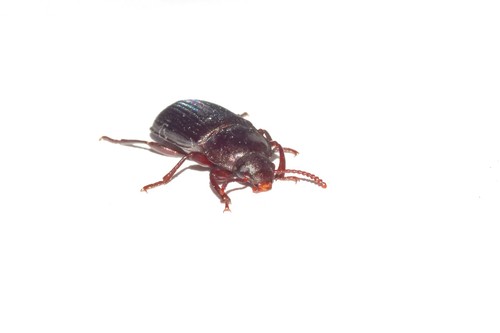
Mealworm Beetle identified by the community
Real finds identified with Bug Identifier.
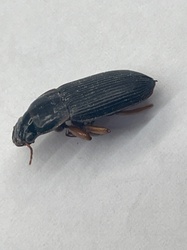
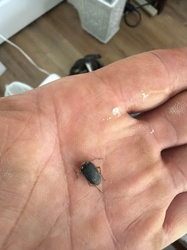
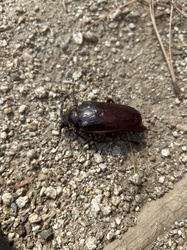
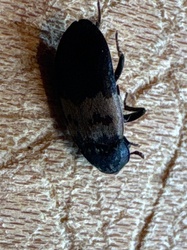
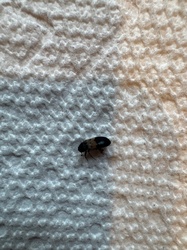
Other bugs you may enjoy
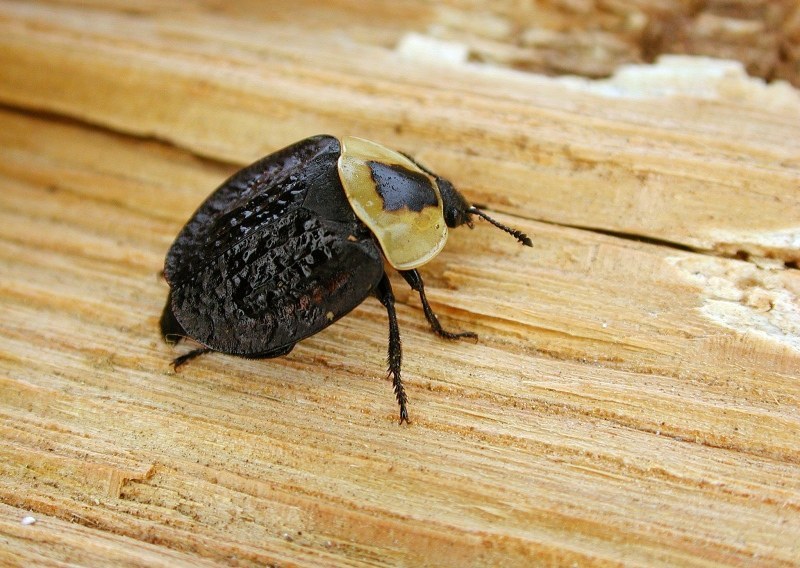
American Carrion Beetle
Forests, fields, and roadsides across North America, near decaying animal carcasses
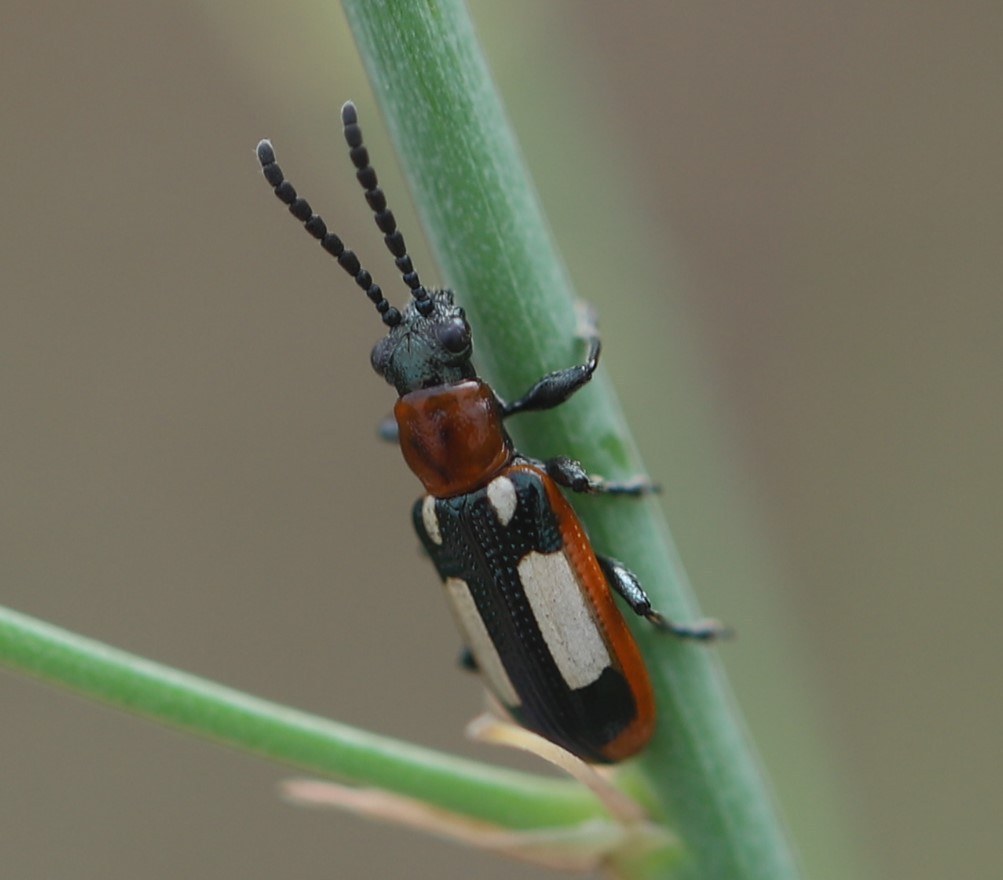
Asparagus Beetle
Asparagus patches, gardens, and farm fields
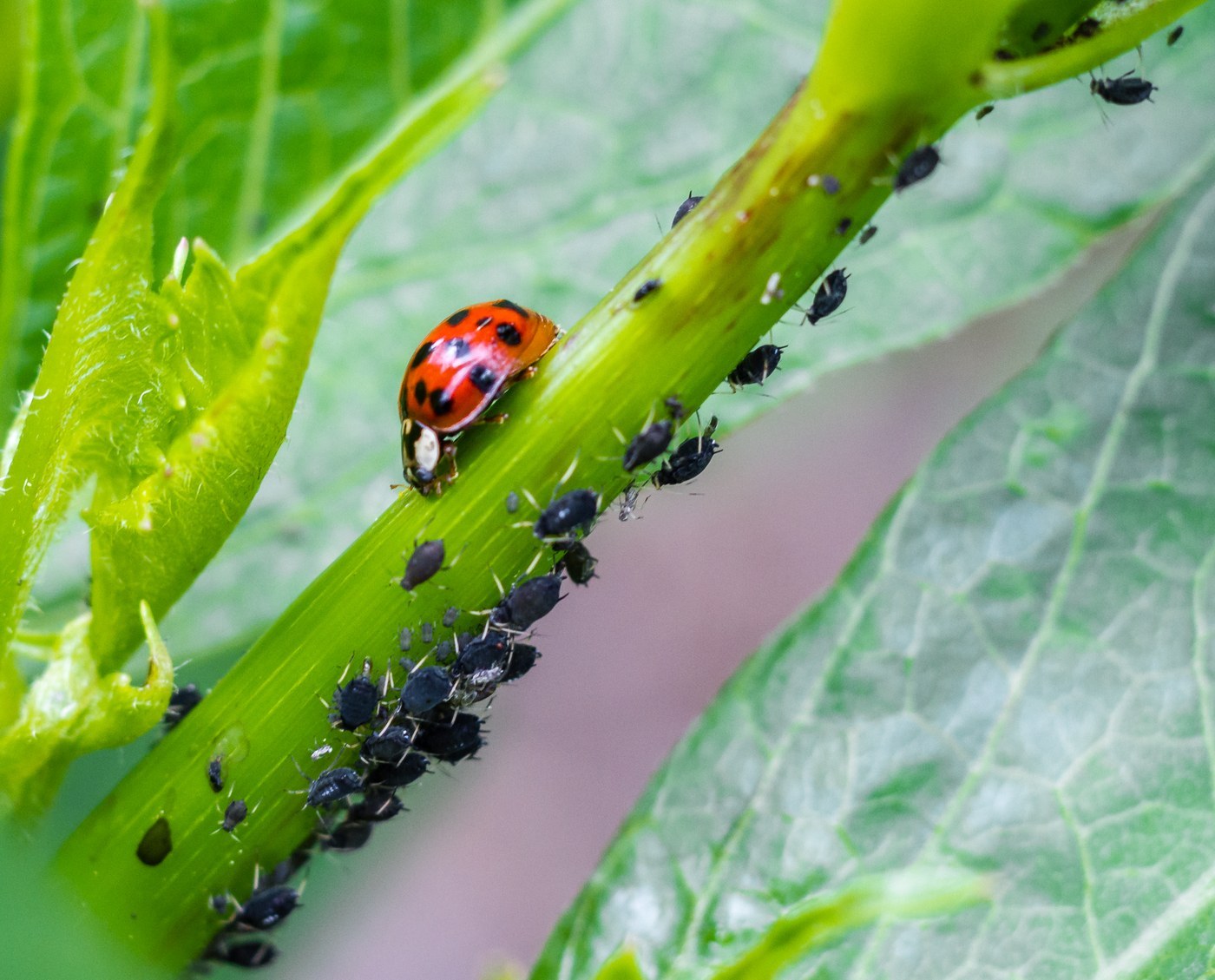
Asian Lady Beetle
Gardens, crop fields, woodlands, buildings
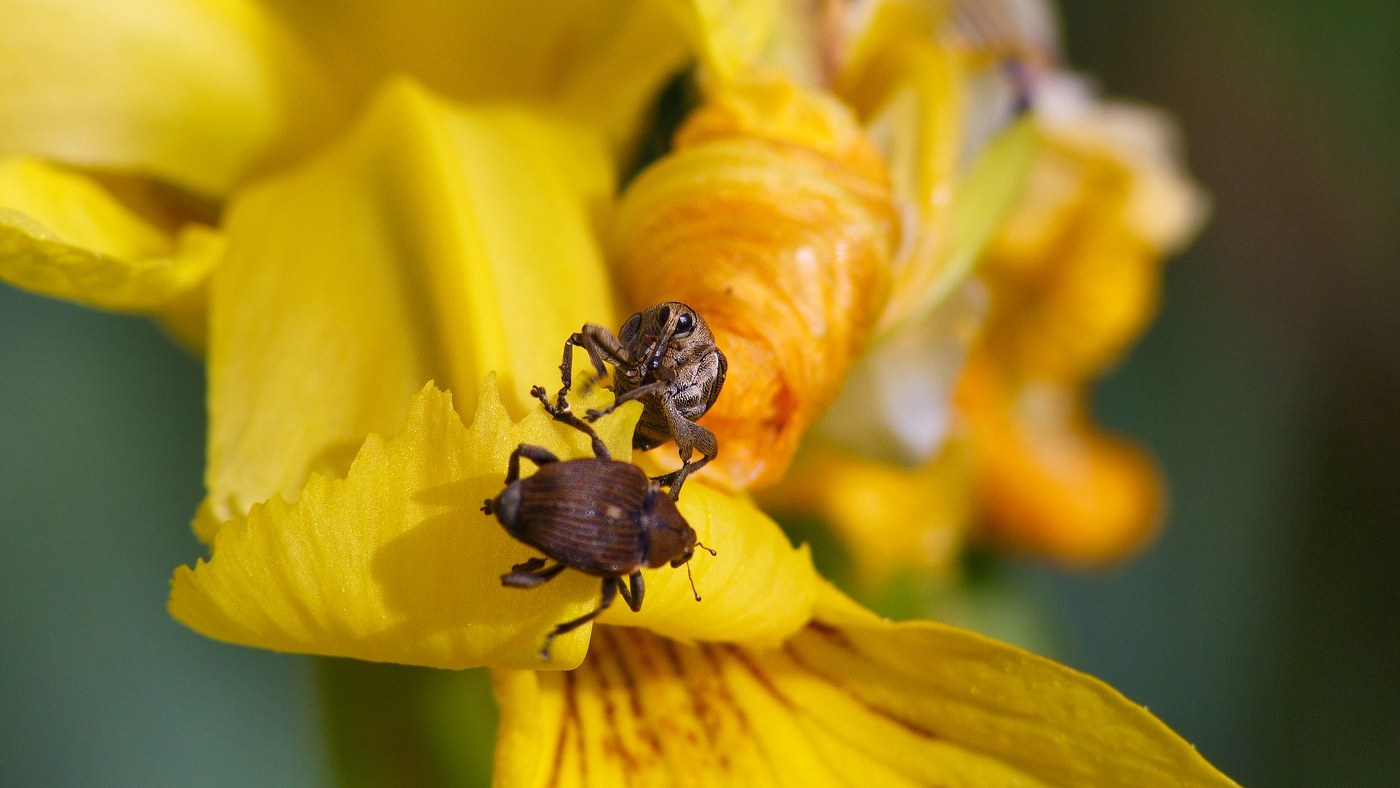
Acorn Weevil
Oak woodlands and forests, on and beneath oak trees
Wireworm
Soil of grasslands, gardens, and cultivated fields worldwide
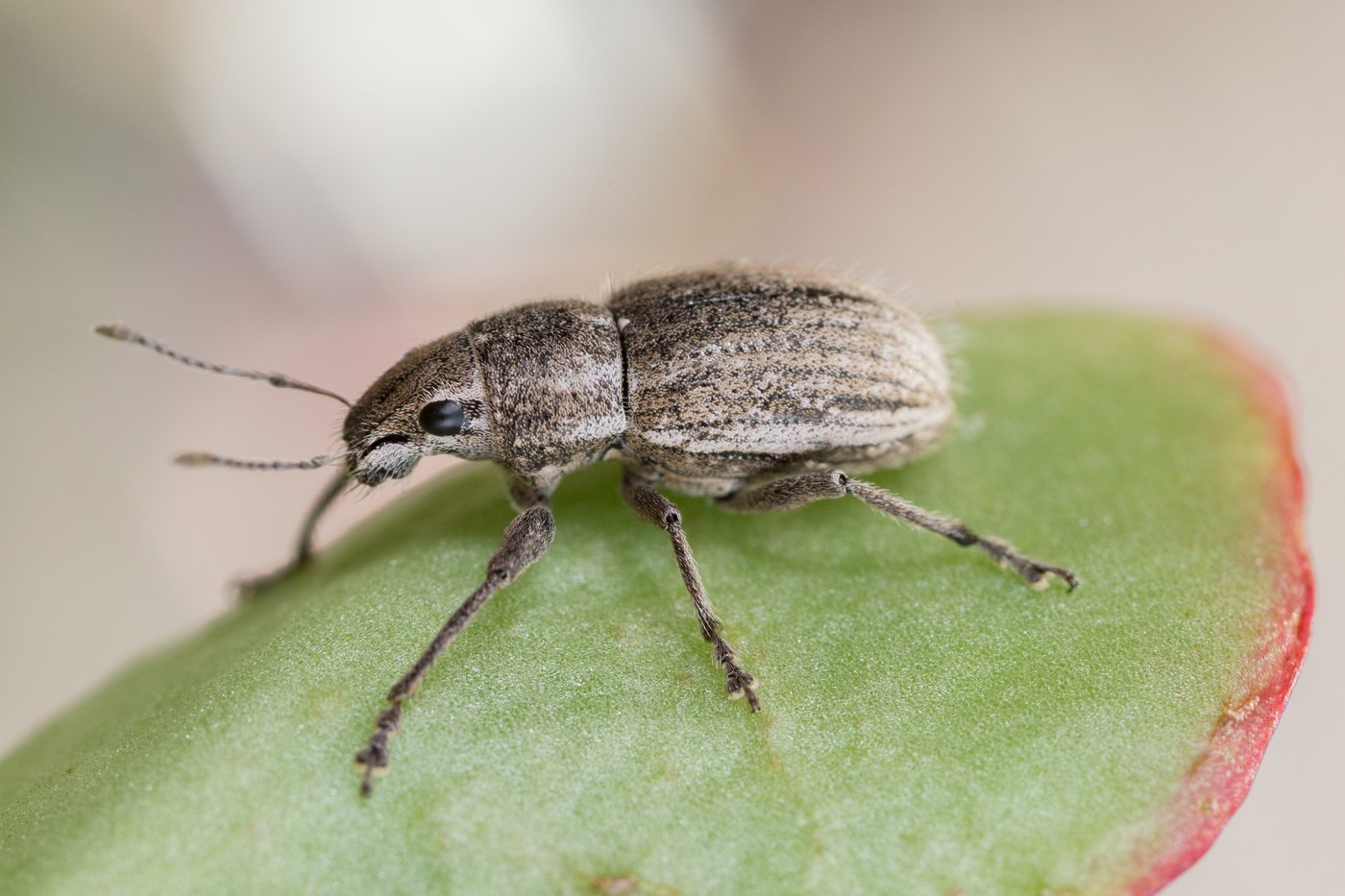
Whitefringed Beetle
Pastures, row crops, lawns, disturbed soils
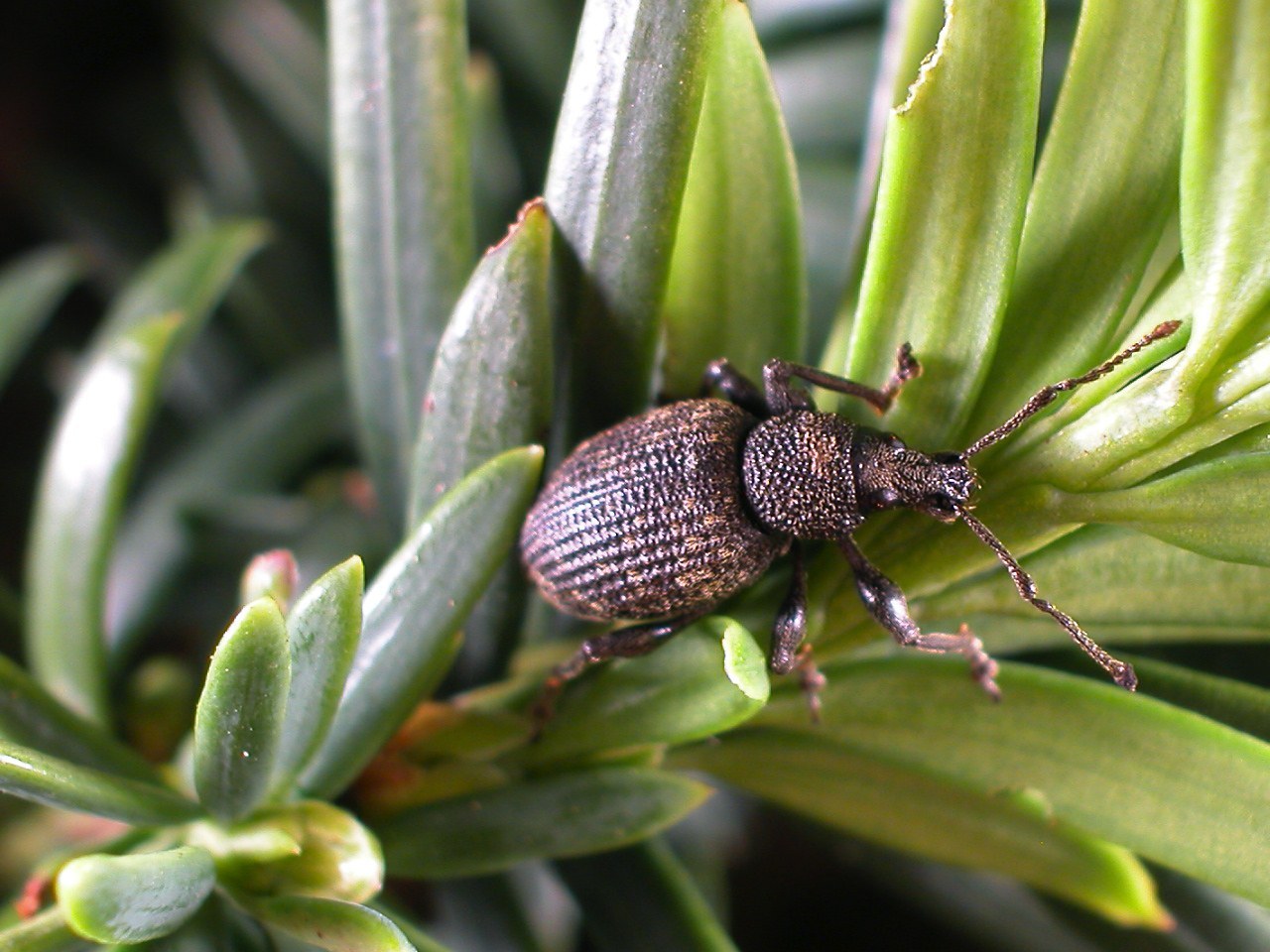
Vine Weevil
Gardens, nurseries, greenhouses, and container plantings
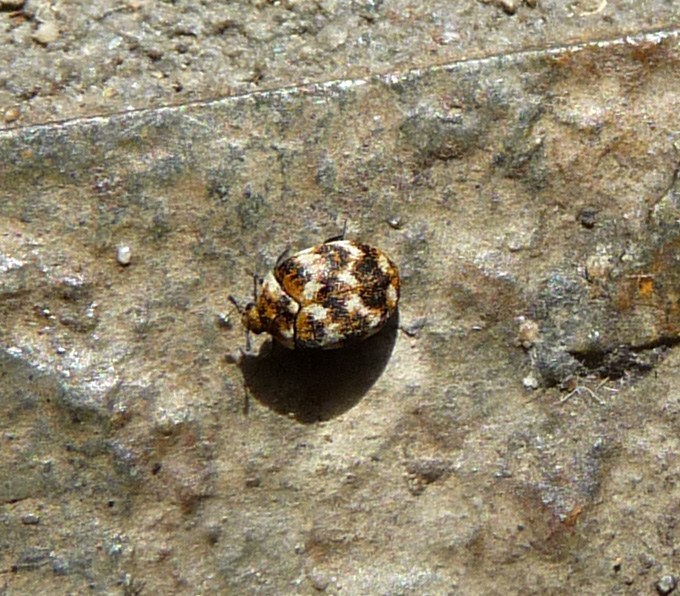
Varied Carpet Beetle
Homes, nests of birds and mammals, and flowers outdoors
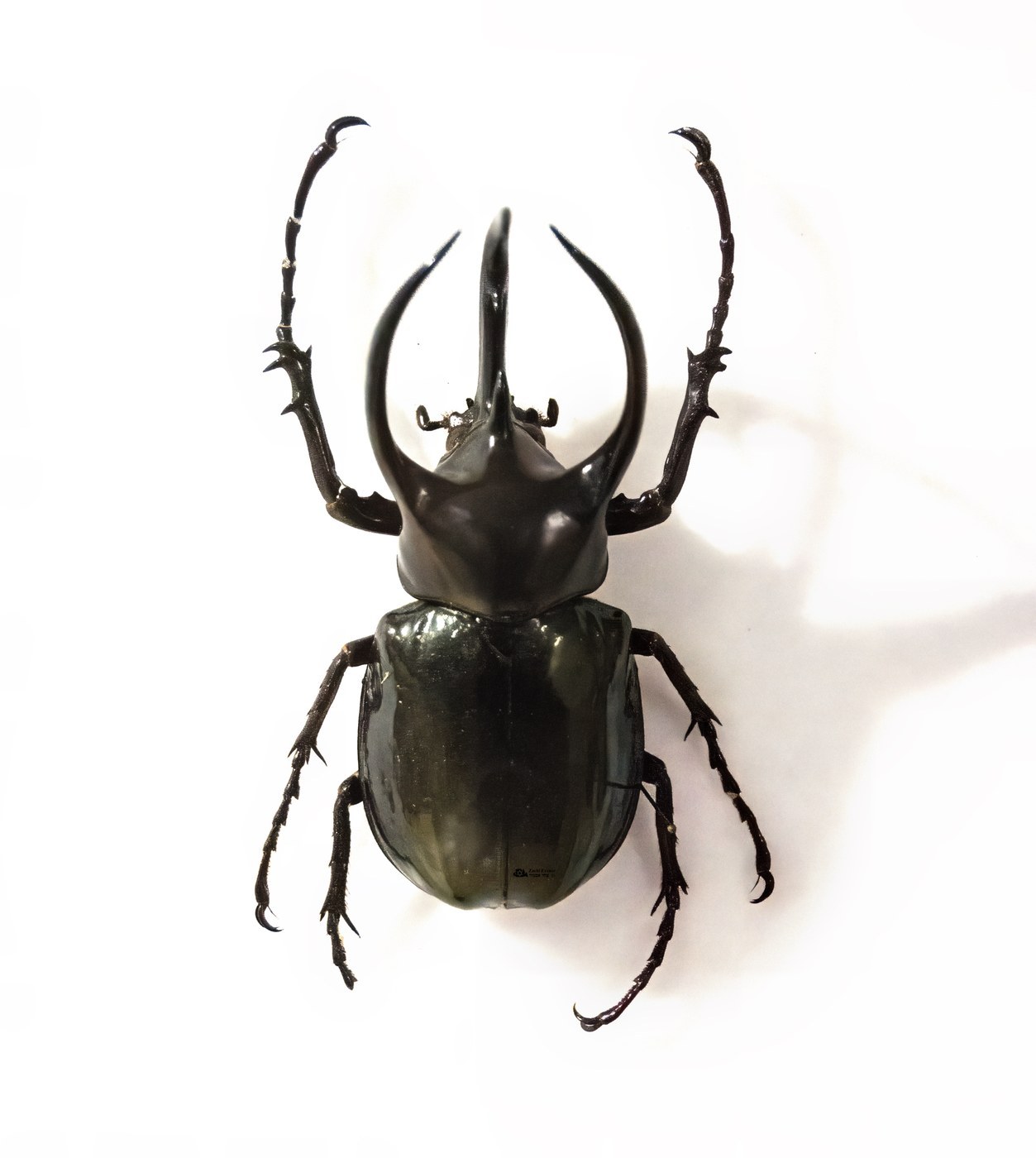
Atlas Beetle
Tropical forests of Southeast Asia
Titan Beetle
Amazon rainforest of South America
Ten-lined June Beetle
Sandy soils, pine forests, and orchards of western North America
Squash Beetle
Vegetable gardens and fields growing squash, pumpkin, and other cucurbits