
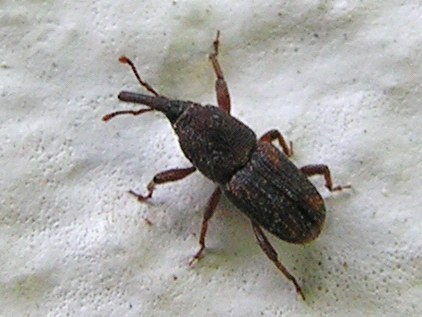
Rice Weevil
Sitophilus oryzae
A tiny reddish-brown weevil with a long curved snout and four faint pale spots on its wing covers, commonly found infesting stored rice, wheat, and other grain products.
- Size
- 2–3 mm
- Habitat
- Stored grain, rice, and cereal products in warehouses and pantries
- Danger
- Nuisance pest
Spotted a bug like this?
Identify any bug or insect from a photo, free.
Overview
The rice weevil is a small snout beetle in the family Curculionidae, one of the most economically significant insects associated with stored grain worldwide. Despite its name, it feeds on a wide variety of cereal grains and grain products, not just rice, making it a broadly distributed pest of stored agricultural commodities.
Like other true weevils, it possesses an elongated, downward-curving rostrum, or snout, tipped with small chewing mouthparts, which it uses to bore into individual grain kernels. This body plan is characteristic of the enormous weevil family, one of the most species-rich groups of beetles on Earth.
The rice weevil is capable of flight, unlike its close relative the granary weevil, and can disperse to infest new grain stores, which has contributed to its worldwide distribution alongside the movement of stored grain through trade.
How to Identify
- Adult: 2–3 mm, small and reddish-brown to nearly black, with a long, slender, curved snout typical of true weevils.
- Elytra bear four faint, pale reddish or yellowish spots arranged in a rough square pattern, though these can be subtle.
- Fully developed hind wings beneath the elytra allow it to fly, unlike the closely related granary weevil.
- Lookalikes: nearly identical to the granary weevil in size and shape, but the rice weevil has the pale spotting on its elytra and can fly, while the granary weevil is uniformly dark and flightless.
Habitat & Range
Found worldwide, particularly in warmer climates, wherever grain is stored, including granaries, warehouses, mills, shipping containers, and household pantries. It infests whole grain kernels of rice, wheat, corn, and other cereals, and can be active year-round in heated indoor storage conditions.
Behavior & Diet
Adults feed on grain kernels and use their snout to chew entry holes for egg-laying, while larvae develop and feed entirely within a single grain kernel, hollowing it out from within. Because it retains functional wings, the rice weevil can fly between grain sources, contributing to the spread of infestations. As a stored-product pest, it is of considerable interest in agricultural and food storage contexts due to the scale of grain it can affect.
Life Cycle
Females chew a small pit into a grain kernel, deposit a single egg inside, and seal the hole with a gelatinous secretion. The larva develops entirely within the kernel, feeding on the starchy interior, then pupates inside the same hollowed-out grain. Adults chew their way out of the kernel upon completing development. In warm conditions, the rice weevil can complete multiple overlapping generations per year, with development from egg to adult taking roughly one month.
Frequently asked questions
Does the rice weevil only infest rice?
No, despite its name it infests many types of stored grain, including wheat, corn, oats, and other cereal products.
How is it different from the granary weevil?
The rice weevil has faint pale spots on its wing covers and can fly, while the granary weevil is uniformly dark, shinier, and unable to fly.
Where does the larva live?
The larva develops entirely inside a single grain kernel, feeding on the starchy interior until it becomes an adult.
How can I tell if grain is infested?
Small emergence holes in kernels and the presence of tiny reddish-brown weevils crawling among stored grain are typical signs.
Rice Weevil guides
In-depth guides for identifying, understanding, and living alongside Rice Weevil.
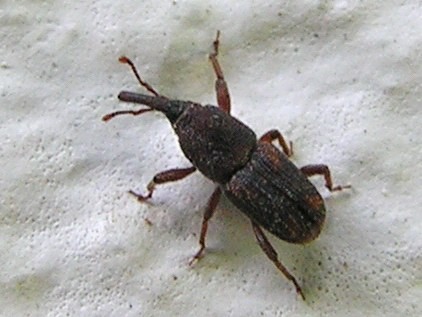
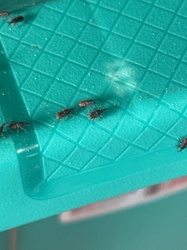
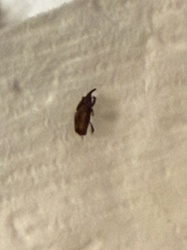
Rice Weevil identified by the community
Real finds identified with Bug Identifier.


Other bugs you may enjoy
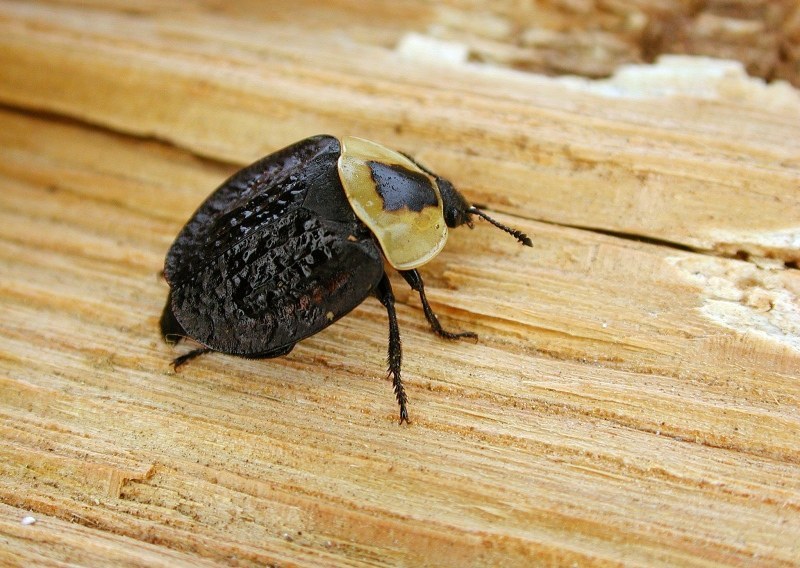
American Carrion Beetle
Forests, fields, and roadsides across North America, near decaying animal carcasses
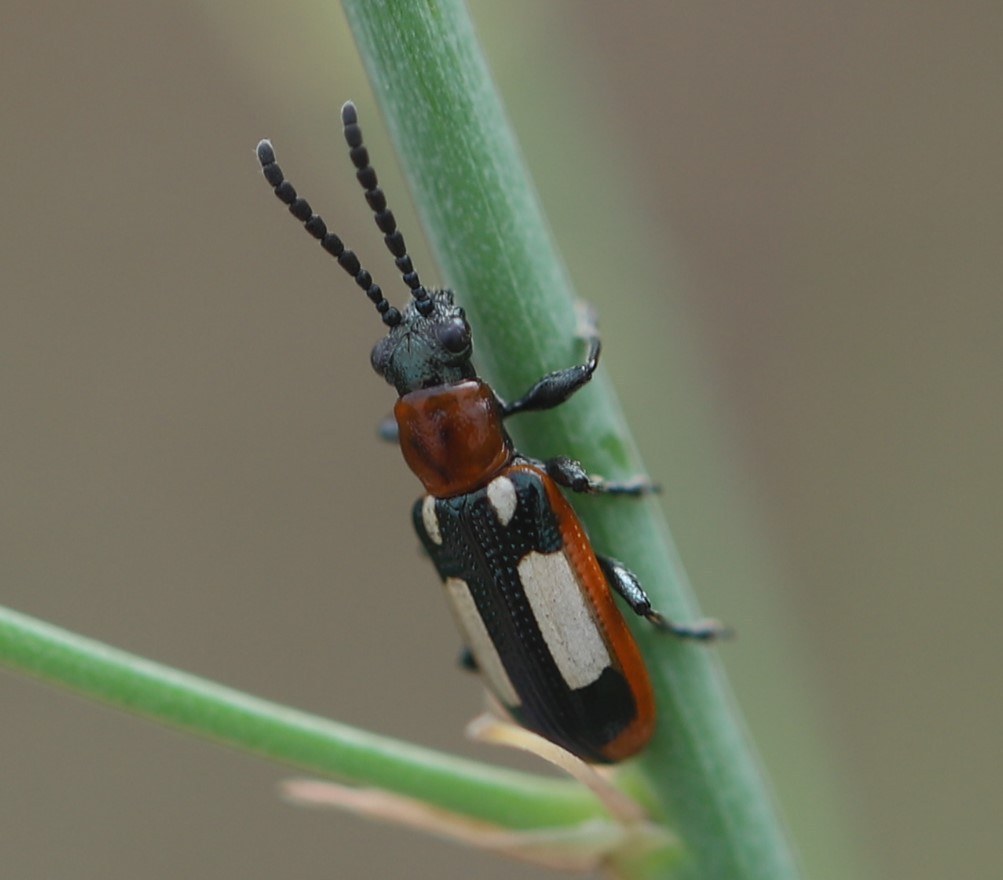
Asparagus Beetle
Asparagus patches, gardens, and farm fields
Asian Lady Beetle
Gardens, crop fields, woodlands, buildings
Acorn Weevil
Oak woodlands and forests, on and beneath oak trees
Wireworm
Soil of grasslands, gardens, and cultivated fields worldwide
Whitefringed Beetle
Pastures, row crops, lawns, disturbed soils
Vine Weevil
Gardens, nurseries, greenhouses, and container plantings
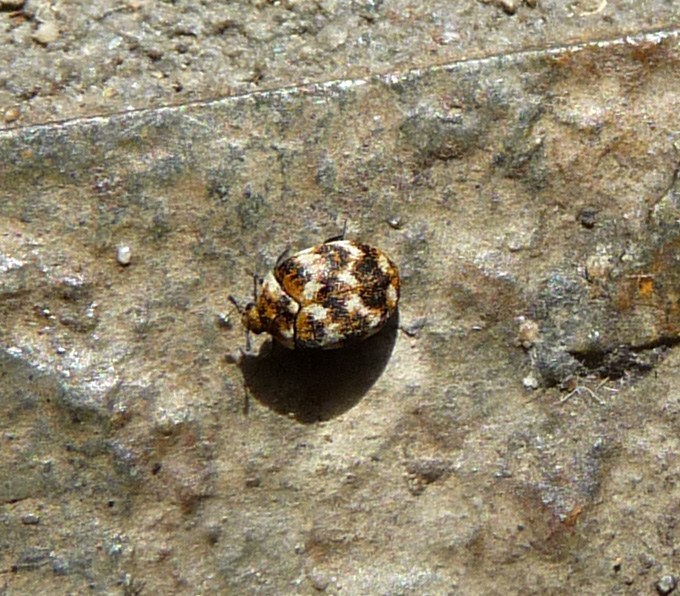
Varied Carpet Beetle
Homes, nests of birds and mammals, and flowers outdoors
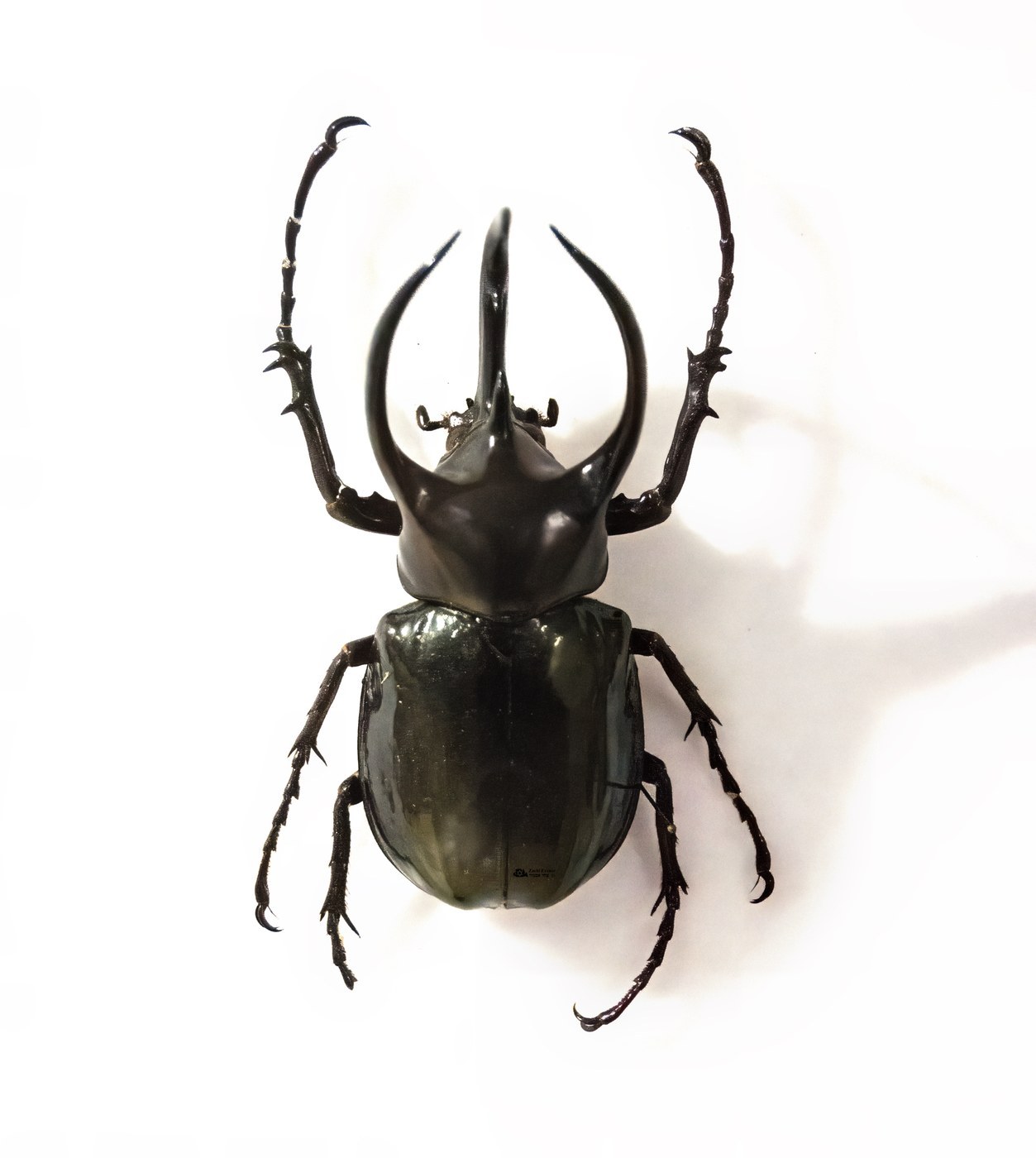
Atlas Beetle
Tropical forests of Southeast Asia
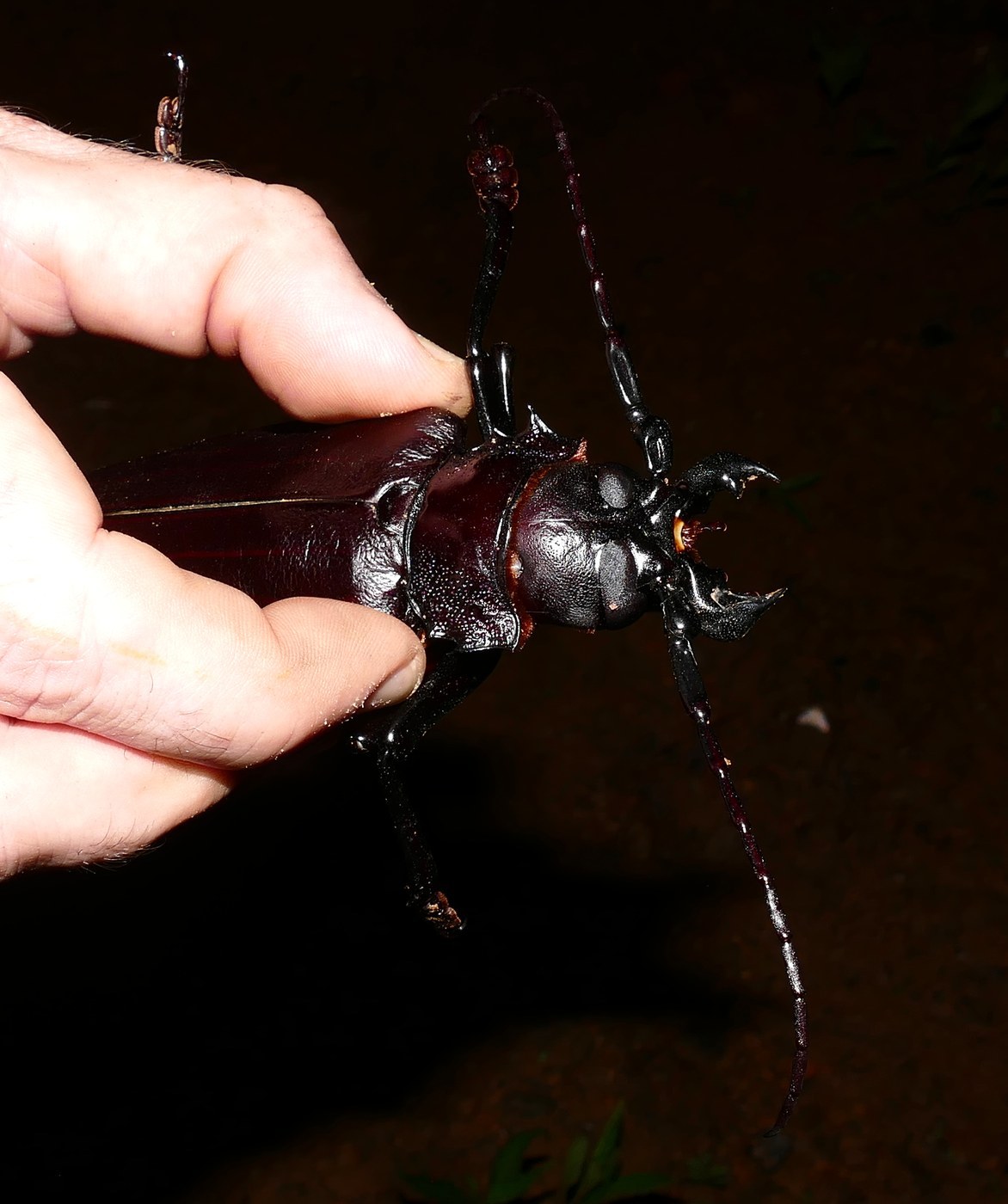
Titan Beetle
Amazon rainforest of South America
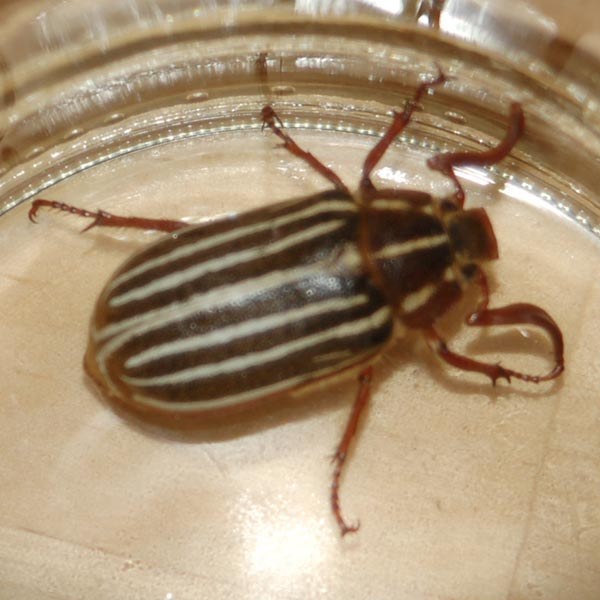
Ten-lined June Beetle
Sandy soils, pine forests, and orchards of western North America
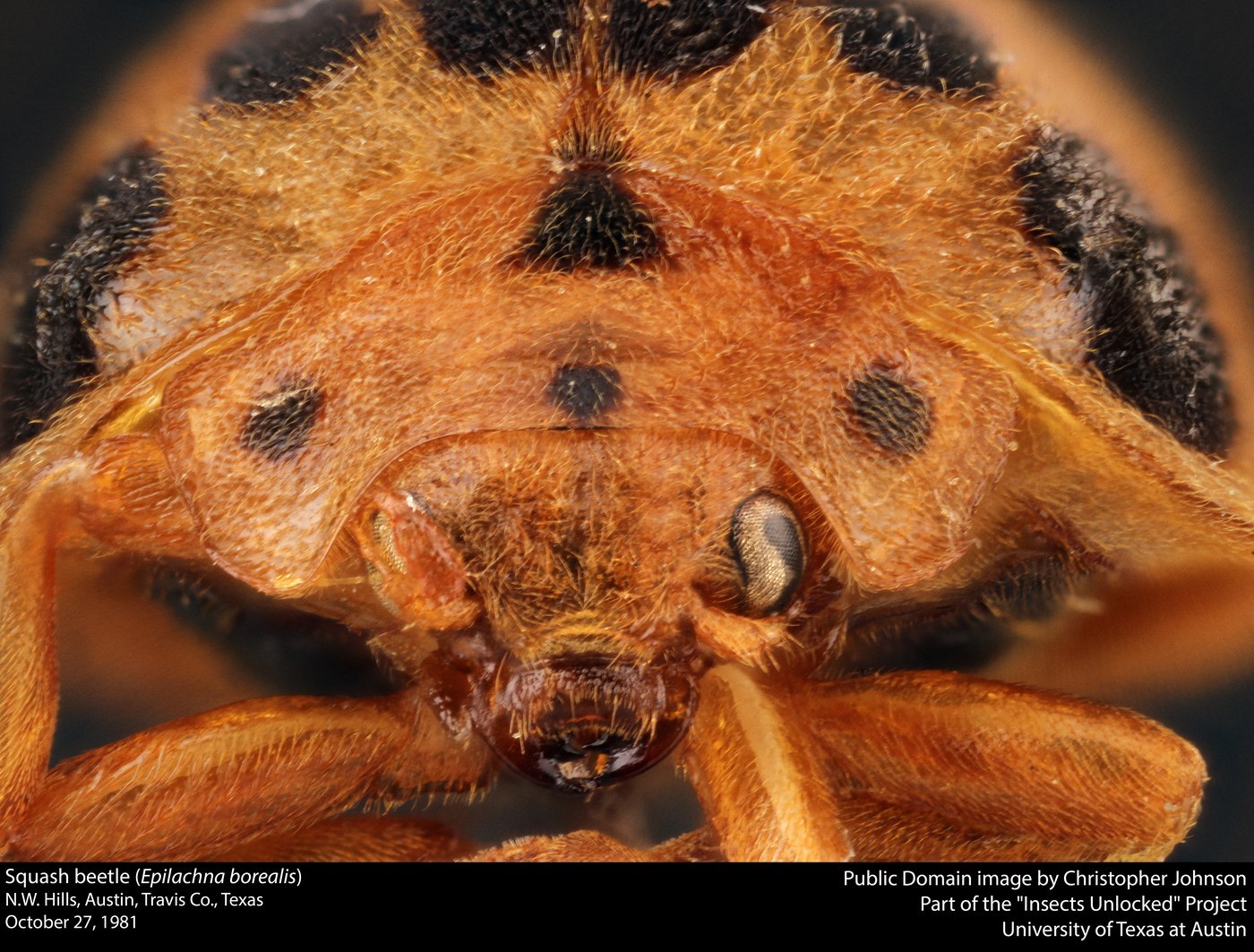
Squash Beetle
Vegetable gardens and fields growing squash, pumpkin, and other cucurbits