
Bug Encyclopedia
Search and identify bugs & insects — beetles, butterflies, moths, ants, bees, spiders and more — with size, habitat, danger, behavior, and how to tell them apart.
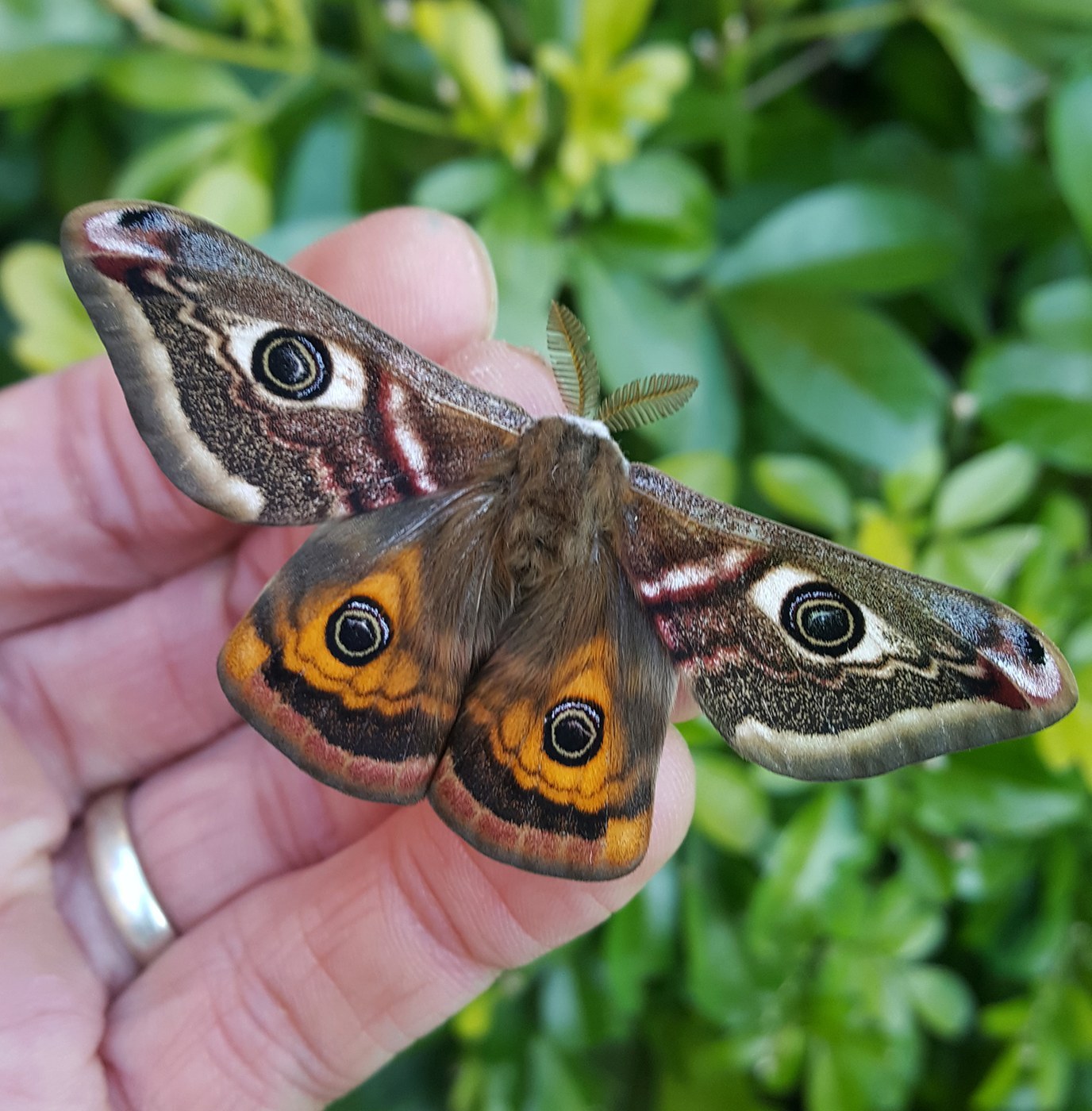
Small Emperor Moth
A striking day-flying moth with large eyespots on all four wings, gray-brown coloring in males and paler gray in the larger females, native to heathlands and open countryside across Europe.
moth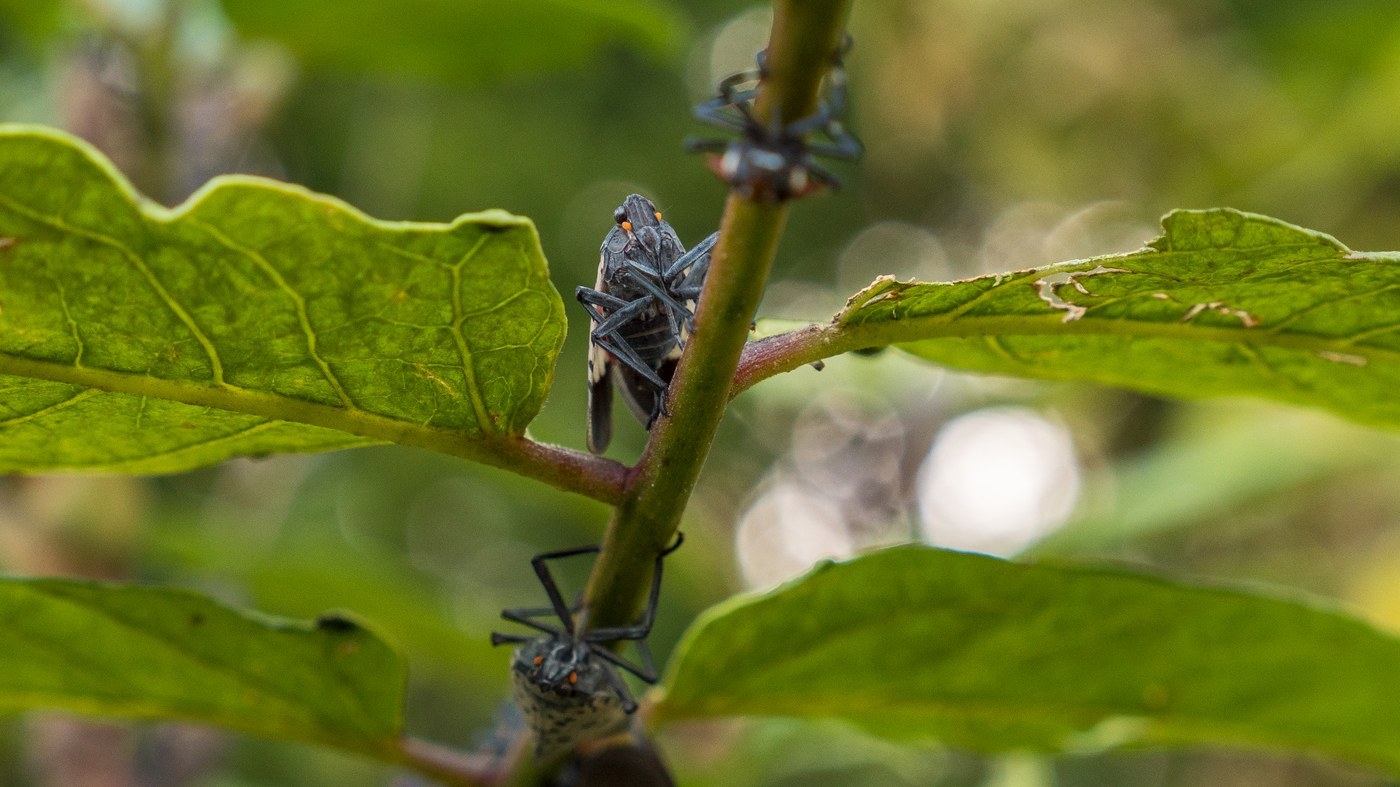
Spotted Lanternfly
A large, strikingly patterned planthopper with gray spotted forewings that flash to reveal crimson hindwings when it leaps or takes flight.
true-bug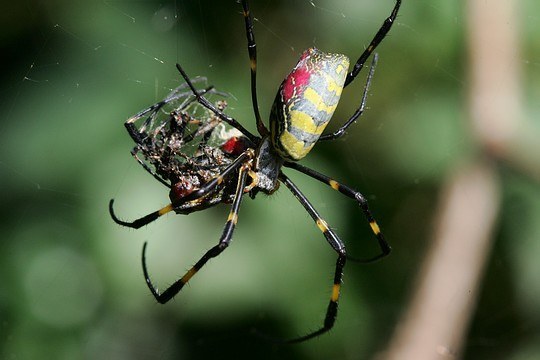
Jorō Spider
A large, strikingly colored East Asian orb weaver with yellow-and-blue-gray banding, now spreading rapidly across the southeastern United States and building enormous golden webs.
spider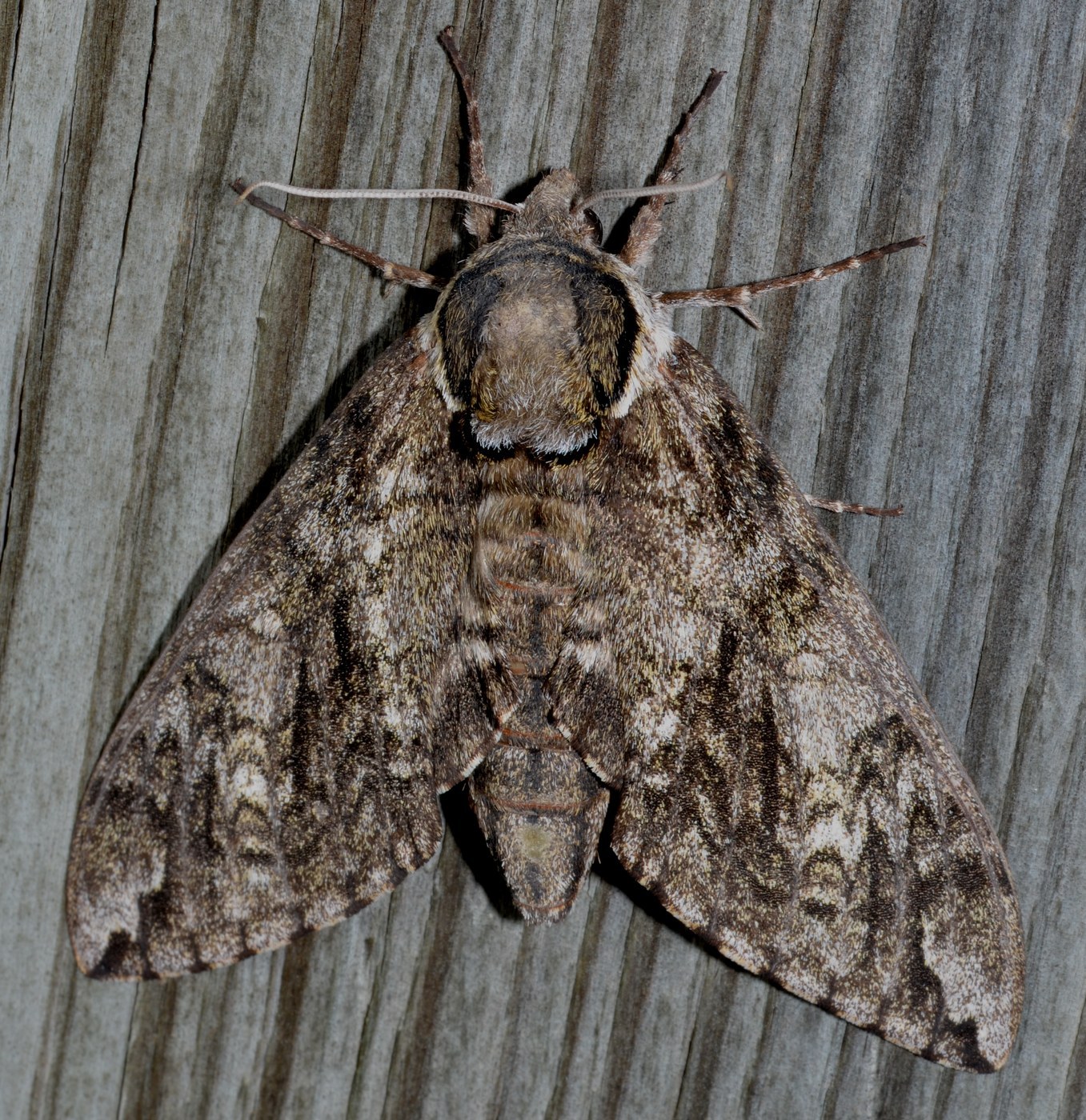
Waved Sphinx Moth
A large gray-brown sphinx moth with fine wavy dark lines across the forewings and a scalloped outer wing margin, closely resembling a piece of weathered tree bark when at rest.
moth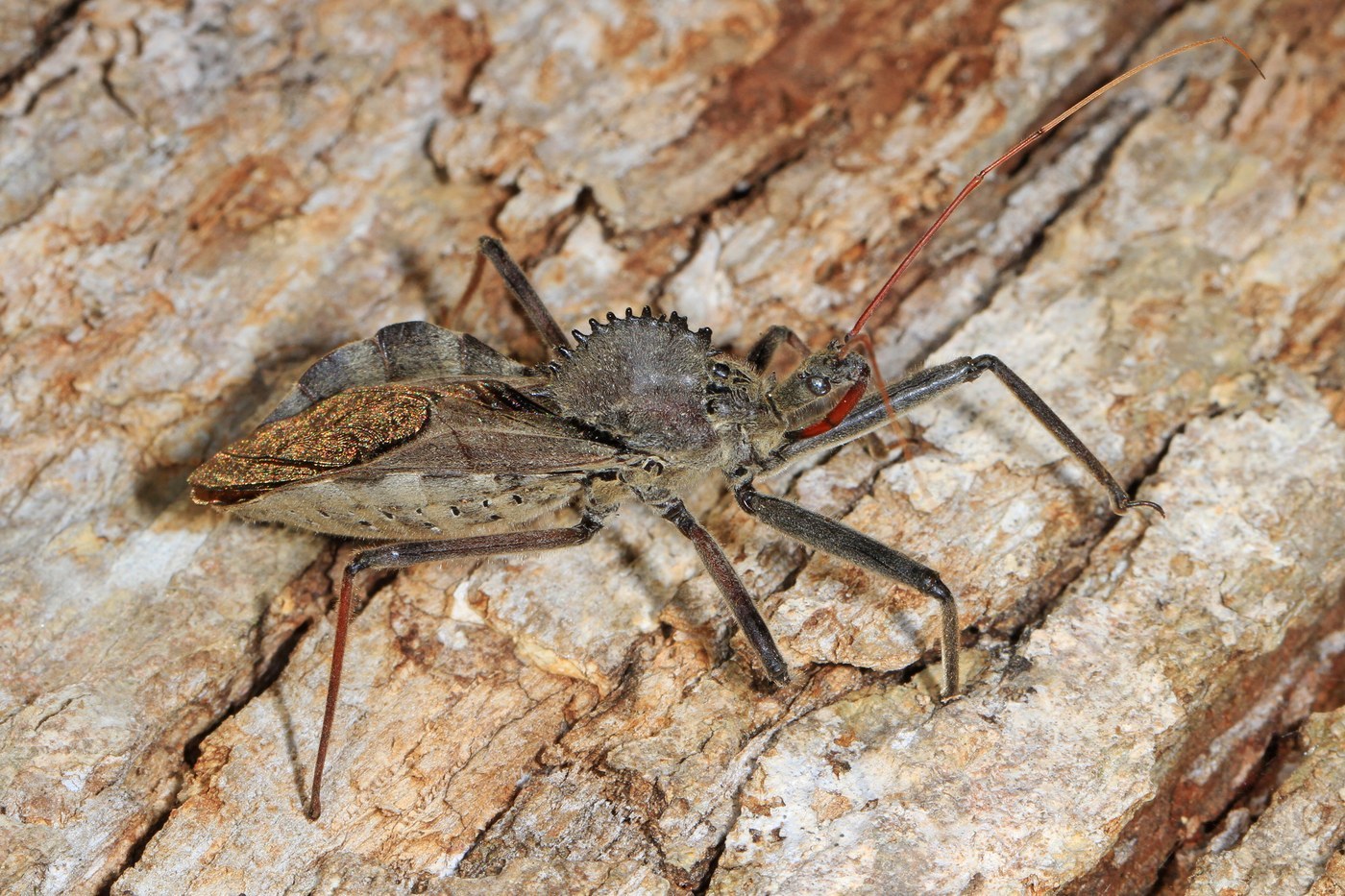
Wheel Bug
A large, gray, armored-looking true bug named for the distinctive cog-like crest rising from its back, one of the biggest and most unmistakable assassin bugs in North America.
true-bug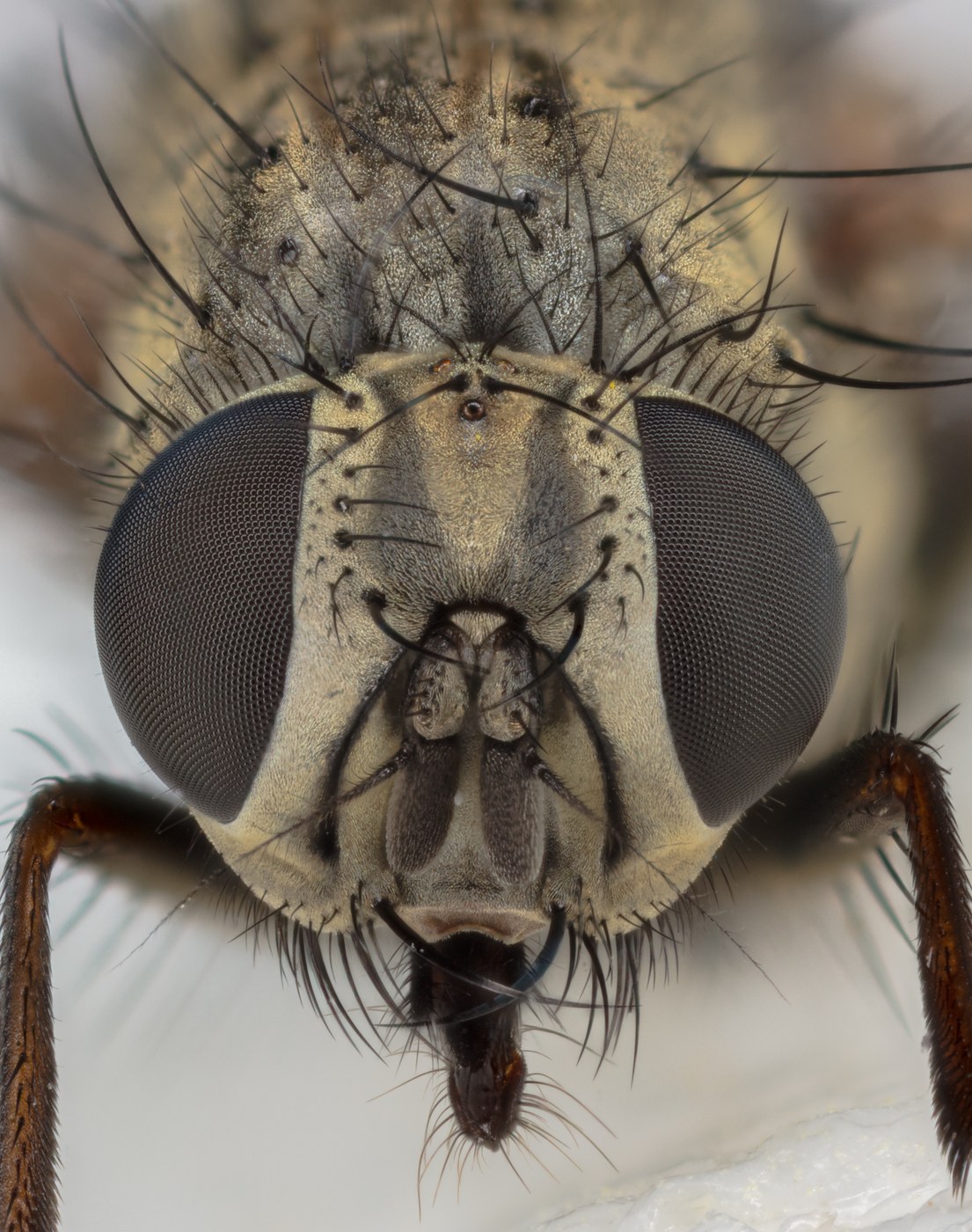
House Fly
A gray, fuzzy-bodied fly with four dark stripes on its thorax and large reddish compound eyes, famous for its erratic buzzing flight and tendency to land repeatedly on food and surfaces.
fly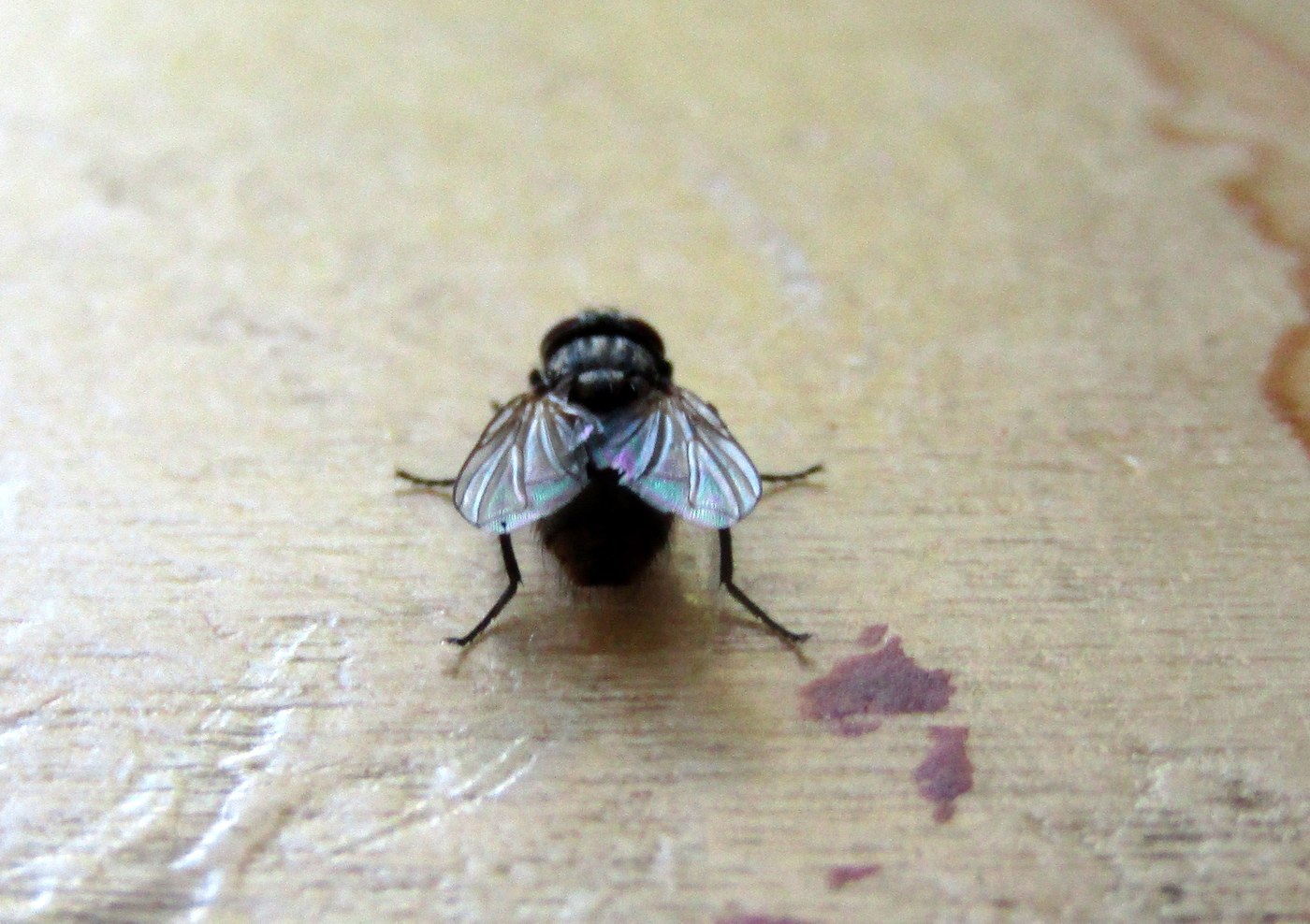
Common Housefly
A dull gray fly with four dark stripes on its thorax and large reddish eyes, one of the most widespread insects on Earth thanks to its close association with human food and waste.
fly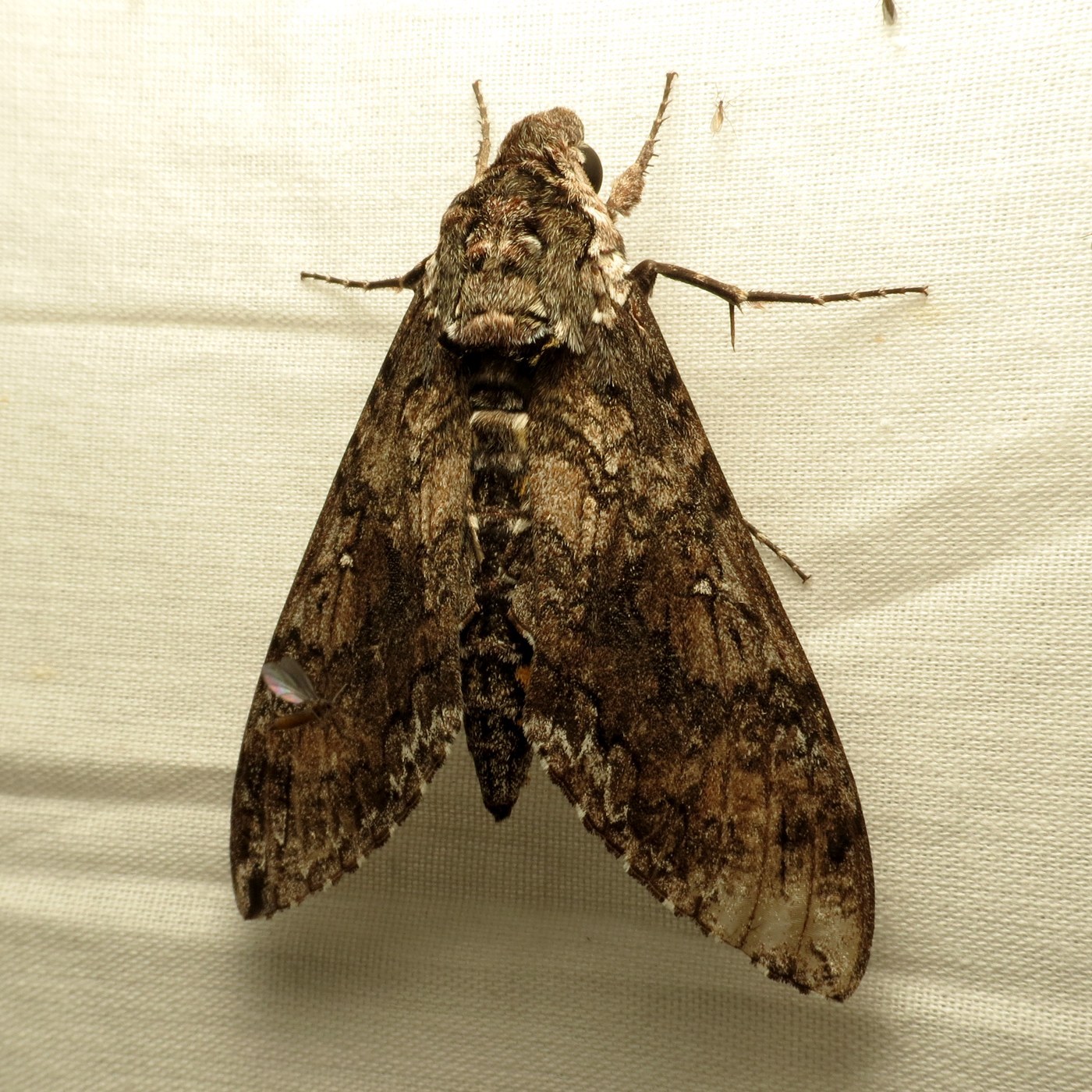
Tobacco Hornworm Moth (Carolina Sphinx)
A large, streamlined gray-brown sphinx moth with six pairs of orange spots along its abdomen, best known as the adult stage of the tobacco hornworm caterpillar that feeds on tomato and tobacco plants.
moth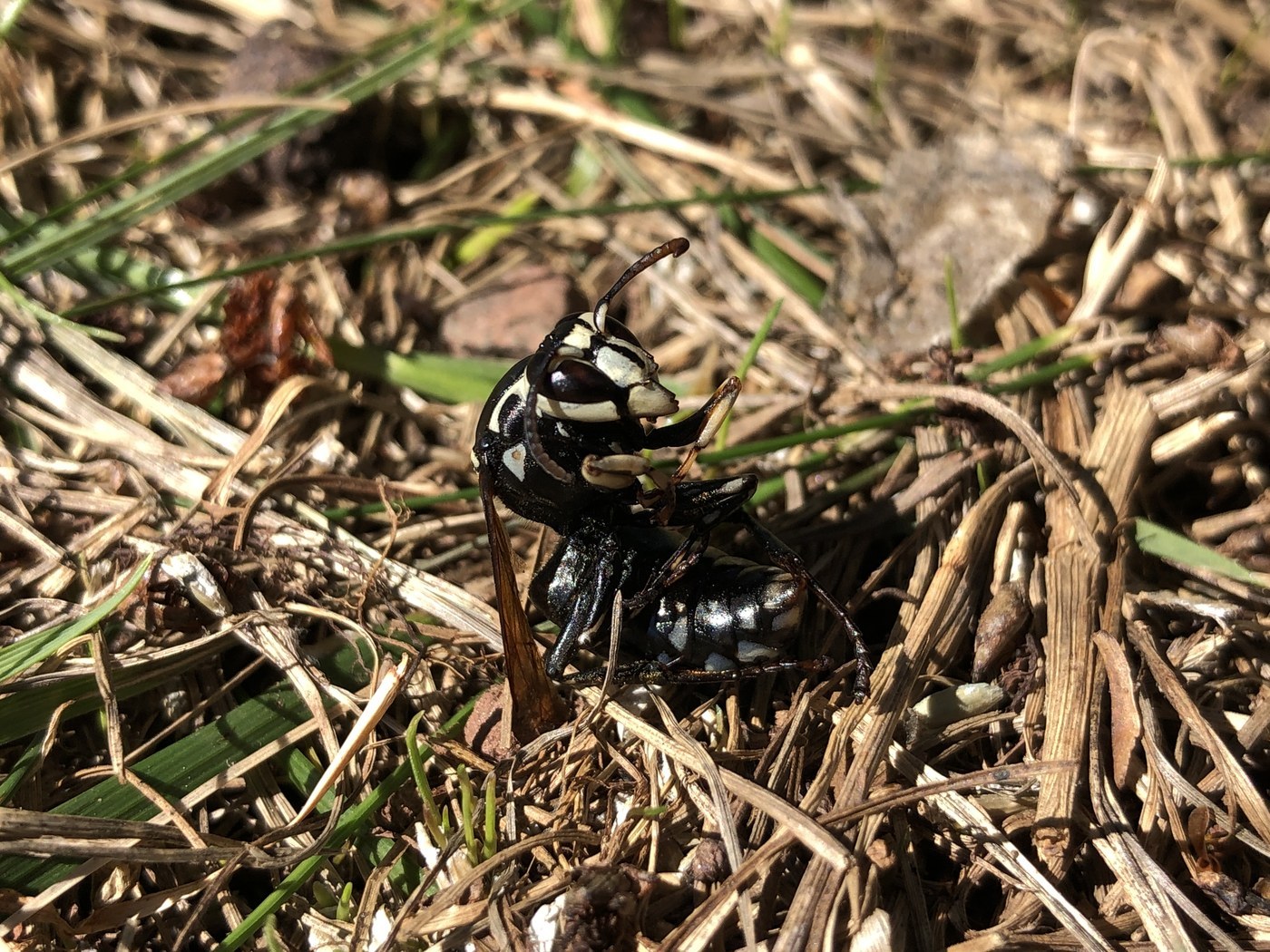
Bald-faced Hornet
A black-and-white social wasp, actually a type of yellowjacket rather than a true hornet, best known for building large, football-shaped gray paper nests suspended from tree branches or eaves.
waspPine Sawyer Beetle
A large, long-antennaed longhorn beetle of pine and spruce forests, mottled gray-brown to black, that produces a rasping sound when handled and whose larvae tunnel deep into dead or dying conifer wood.
beetle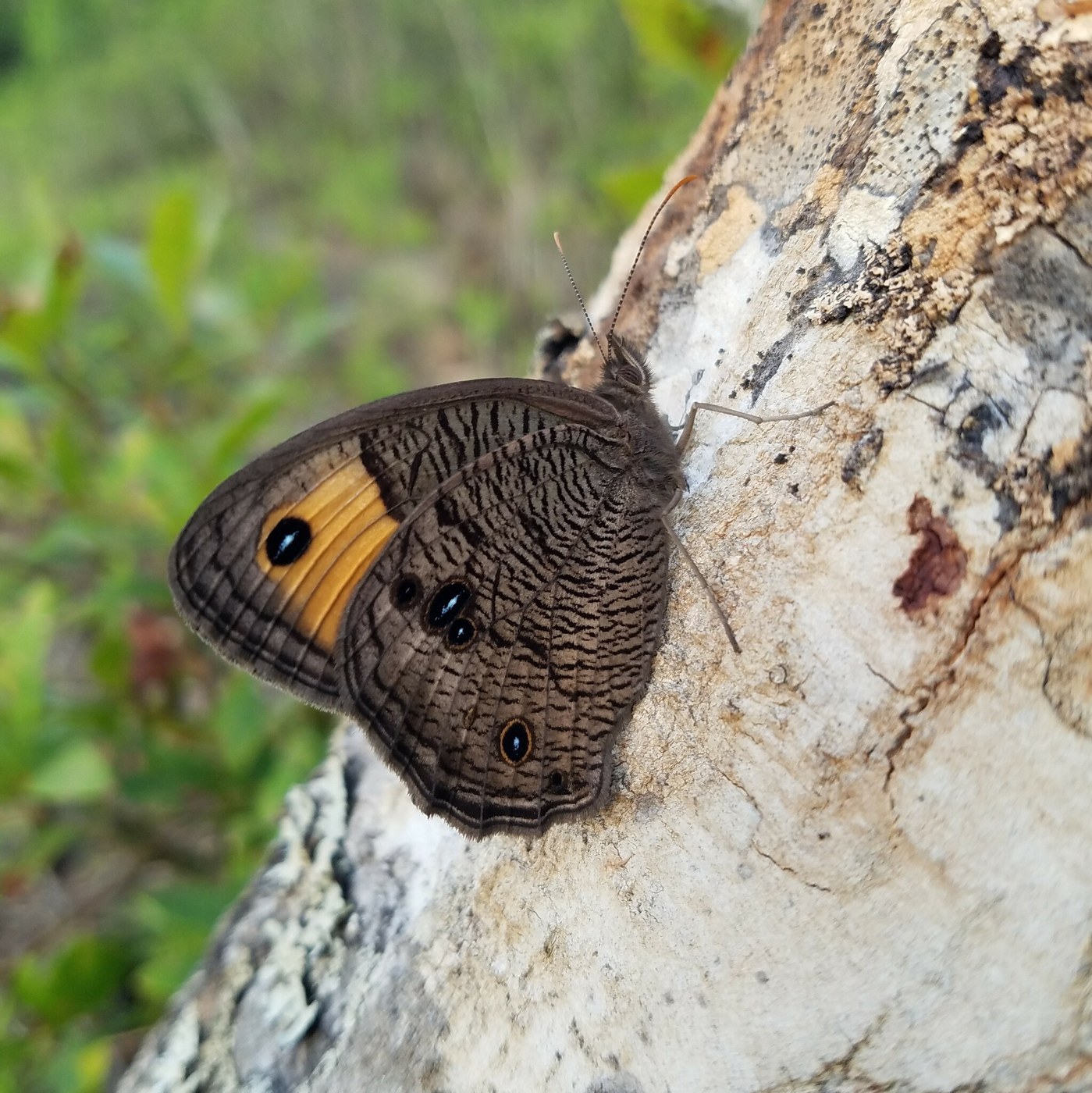
Common Wood-Nymph
A large brown grassland butterfly with a bold yellow patch and one or two prominent black eyespots on the forewing, known for its bouncing, low-to-the-ground flight.
butterfly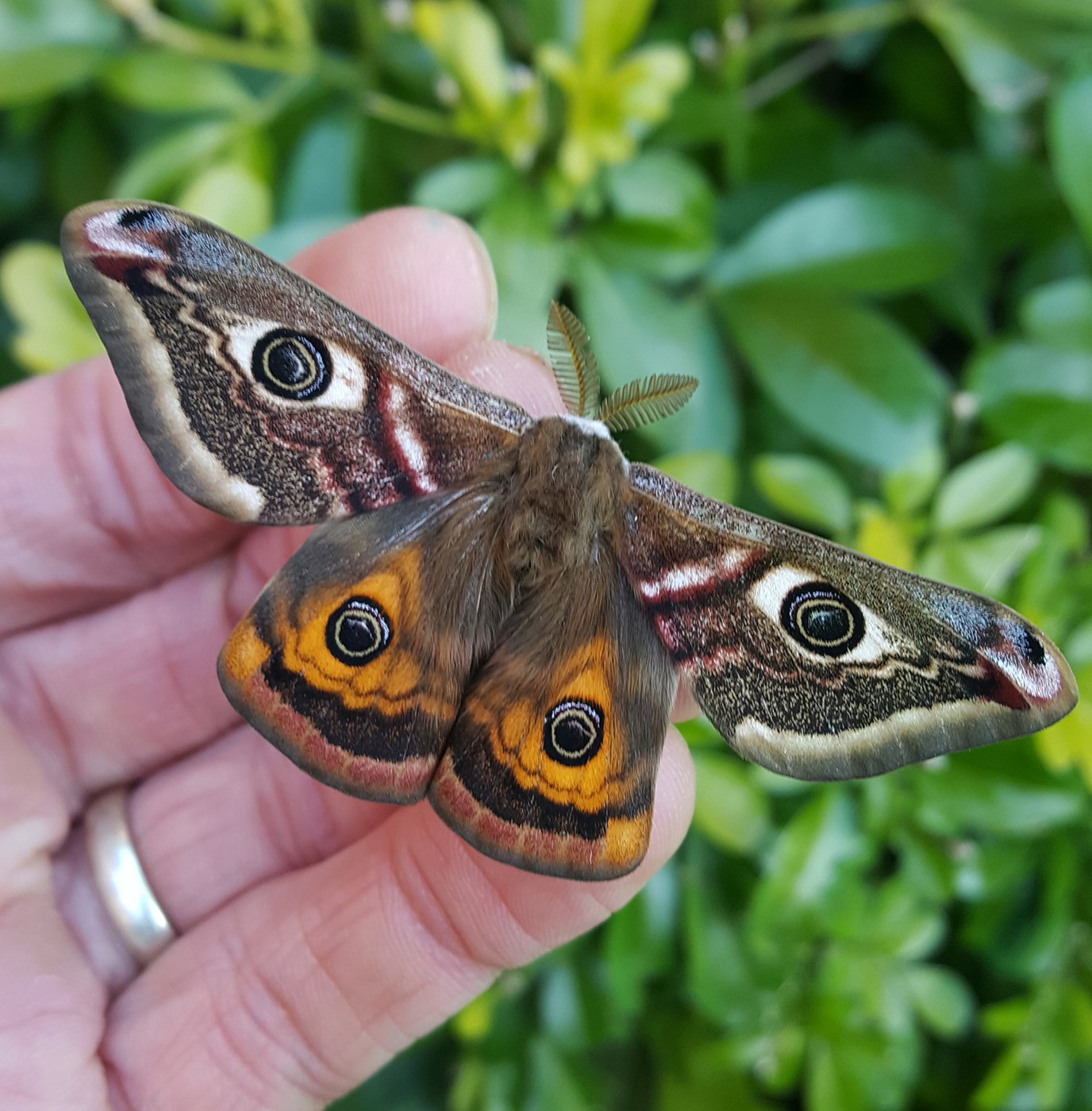
Emperor Moth
A striking silk moth with a large eyespot on each of its four wings, showing pronounced differences between the smaller, orange-brown, day-flying males and the larger, greyer, night-flying females.
mothSand Wasp
A fast, sun-loving solitary wasp with large green or grayish eyes and yellow-striped markings that digs burrows in loose sand and provisions them almost entirely with flies.
wasp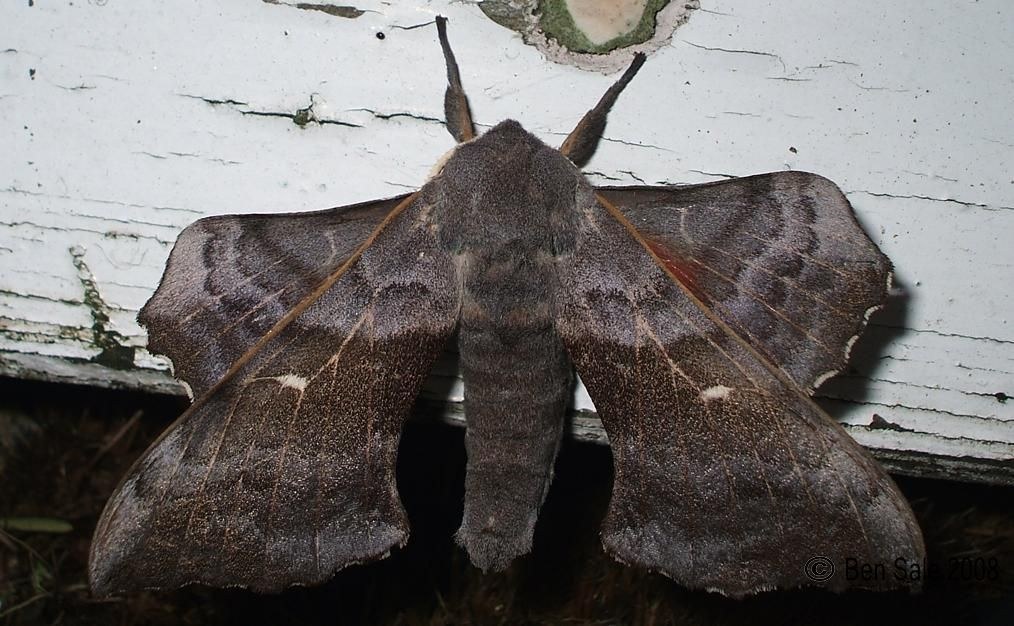
Poplar Hawk-Moth
A large, grayish-brown hawk-moth with an unusual resting posture in which the hindwings project forward past the forewings, revealing a hidden rust-red patch when disturbed.
moth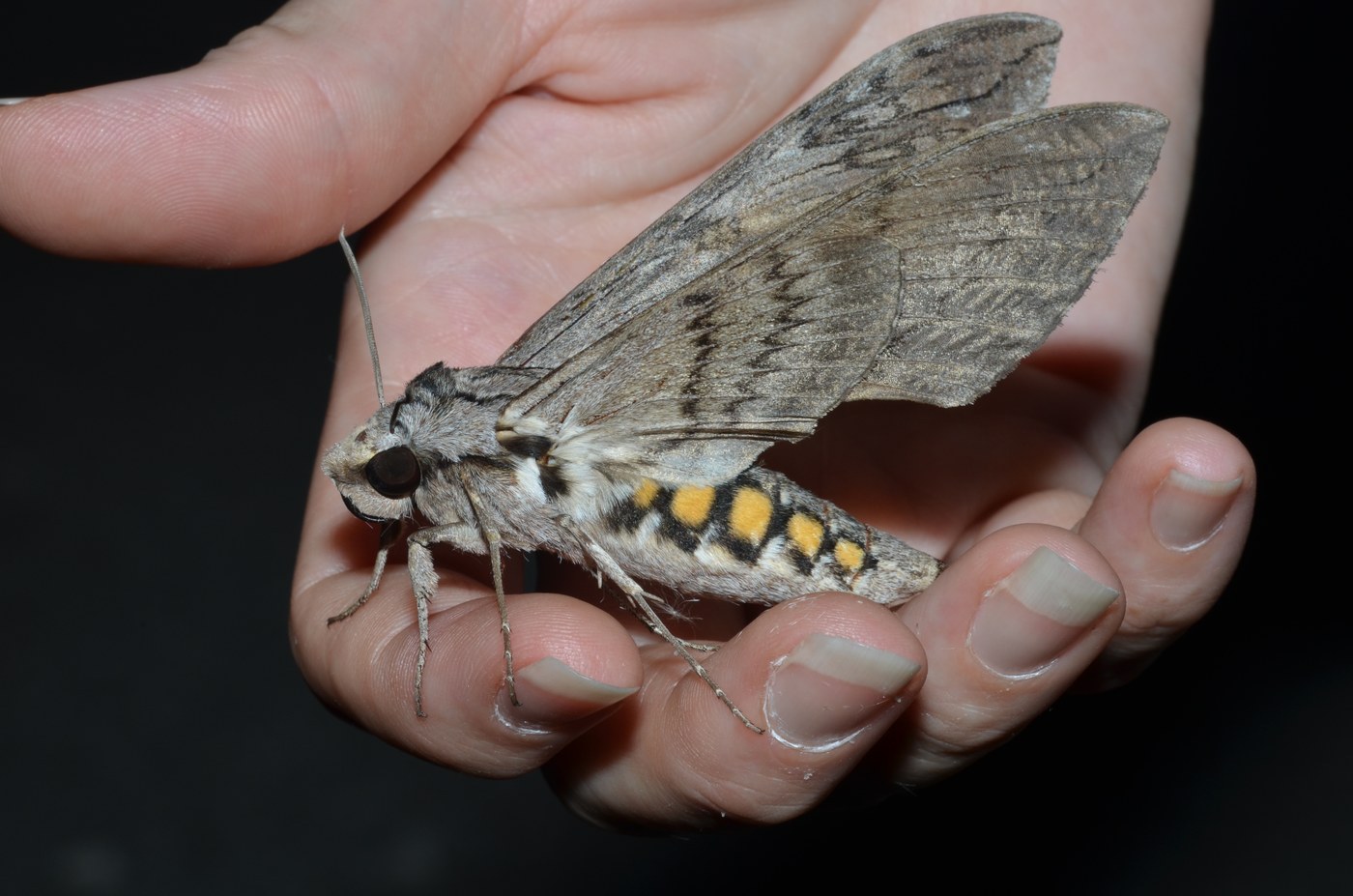
Tomato Hornworm Moth (Five-spotted Hawkmoth)
A large, robust grey-brown sphinx moth named for the five pairs of yellow-orange spots along its abdomen, best known as the adult form of the large green tomato hornworm caterpillar familiar to home gardeners.
moth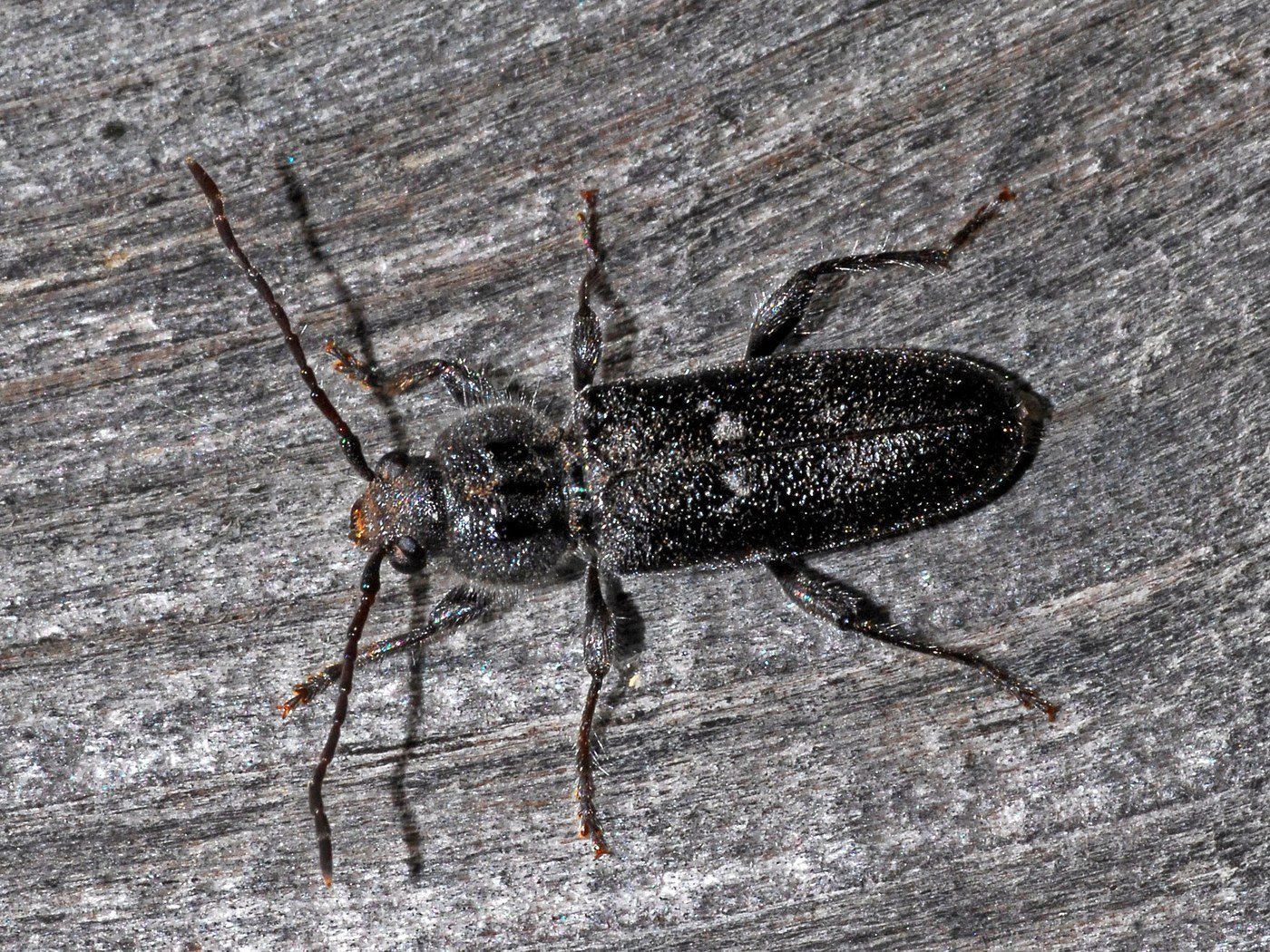
Old House Borer
A grayish-brown to nearly black longhorn beetle whose larvae bore extensively through structural softwood, capable of causing large galleries hidden beneath the wood surface.
beetle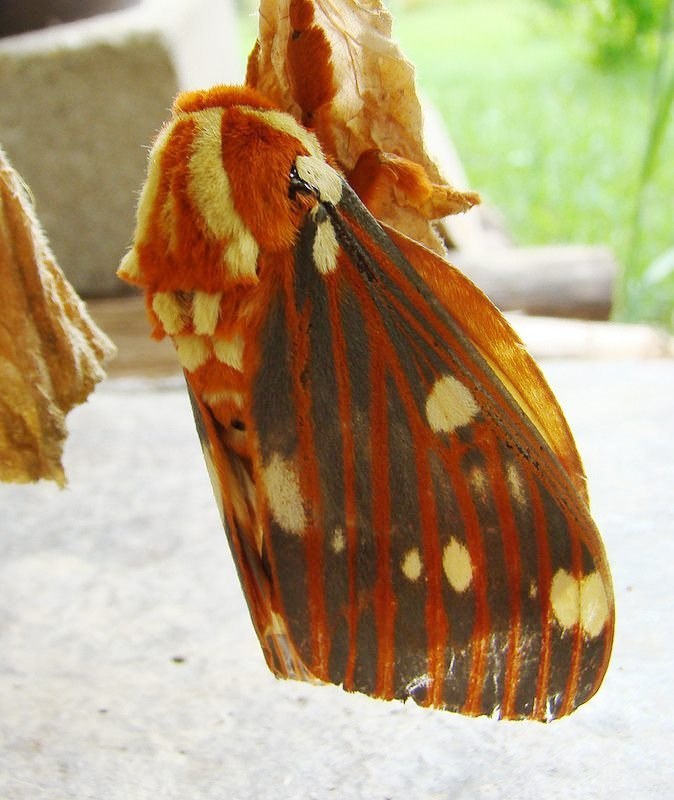
Regal Moth (Hickory Horned Devil)
One of the largest moths in North America, with orange-red and gray-veined wings on the adult, best known for its enormous, formidable-looking caterpillar, the hickory horned devil, a blue-green giant bristling with long orange spines.
mothPine Processionary Moth
An unremarkable grey-brown moth known almost entirely through its larvae, which build large silken nests in pine trees and travel to feed in long, head-to-tail processions covered in fine defensive hairs.
moth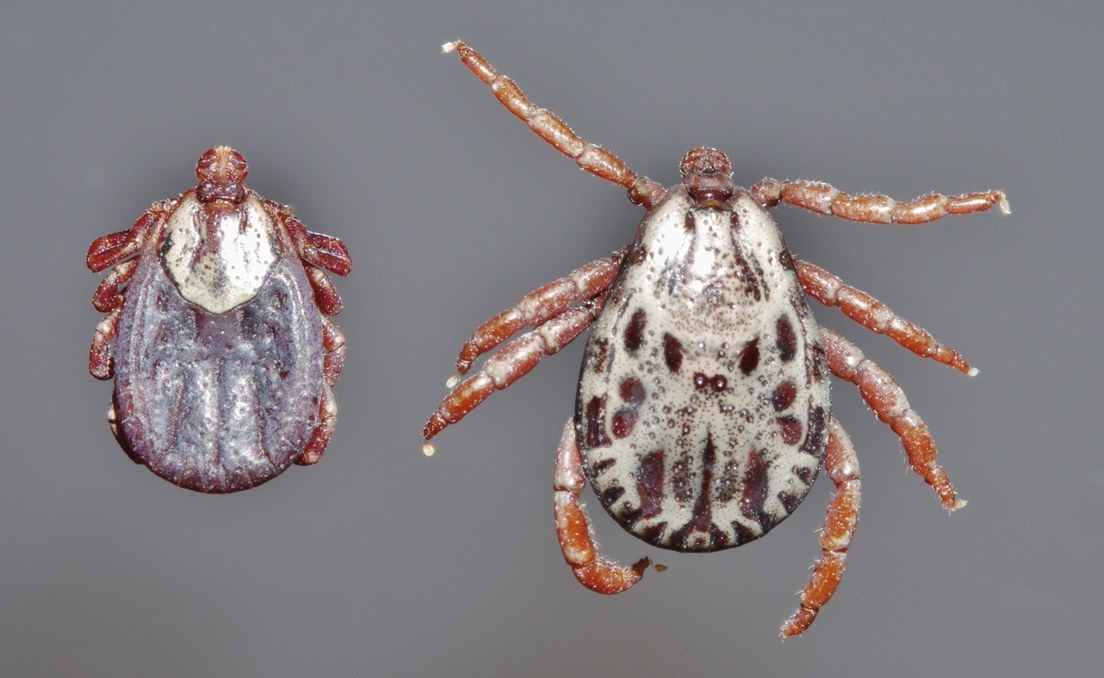
Wood Tick
A flattened, ornately patterned tick that waits on low brush in the Rocky Mountain foothills, ready to grab onto large mammals passing within reach. Its mottled, shield-marked back makes it one of the more distinctive North American ticks to identify.
arachnid