
Bold Jumping Spider
Phidippus audax
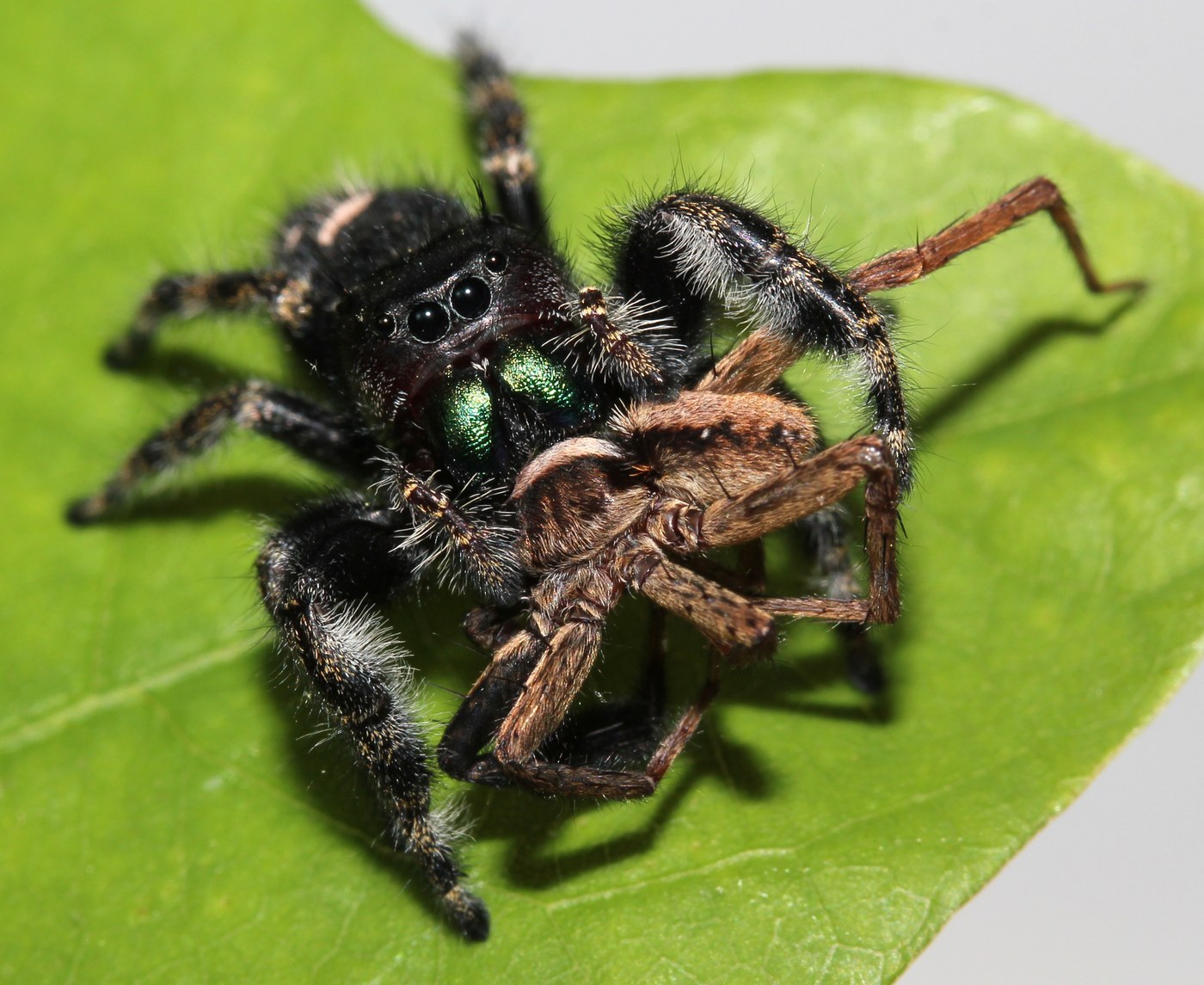
A stocky, fuzzy black spider with iridescent green or blue mouthparts and a bold white or orange spot on its abdomen, the bold jumper is known for its excellent eyesight, curious behavior, and ability to leap many times its own body length.
- Size
- Body 8-19 mm
- Habitat
- Gardens, fields, walls, and building exteriors across North America
- Danger
- Bites
Spotted a bug like this?
Identify any bug or insect from a photo, free.
Overview
The bold jumping spider is one of the most commonly encountered jumping spiders in North America, recognized by its compact, densely hairy black body marked with a bold white, orange, or reddish triangular or spotted pattern on the abdomen. Its chelicerae (mouthparts) often gleam with an iridescent metallic green or blue sheen, especially visible in bright light, adding to its distinctive appearance.
Like other members of the jumping spider family, it has unusually large, forward-facing principal eyes that give it excellent vision for a spider, allowing it to spot, track, and stalk prey visually rather than relying on webs or vibrations. It does not build a web to catch prey; instead it stalks insects at close range and then launches a precise pounce, covering many times its own body length in a single leap, secured by a silk safety line called a dragline.
Bold jumping spiders are commonly found around gardens, fields, fences, and the exterior walls of buildings, where they are often seen basking in sunlight or actively hunting during the day, as they are diurnal hunters rather than nocturnal like many other spider families.
How to Identify
- Compact, robust body covered in dense black hairs, often with a slight sheen
- Bold white, orange, or reddish spots or a triangular marking on the top of the abdomen
- Iridescent green or blue chelicerae (mouthparts), especially visible up close in good light
- Large, forward-facing principal eyes typical of jumping spiders, giving an alert, forward-staring appearance
- Lookalikes: other Phidippus species (similar body shape and coloring, distinguished by subtle abdominal markings and mouthpart color)
Habitat & Range
Widespread across the United States and southern Canada, the bold jumping spider is found in a wide variety of open and semi-open habitats including gardens, meadows, agricultural fields, fence lines, tree bark, and the sunny exteriors of buildings and walls.
Behavior & Diet
This spider is a diurnal, visually oriented hunter that actively stalks prey rather than relying on a web. Using its excellent eyesight, it slowly approaches potential prey, then leaps with precision to capture it, always anchored by a silk dragline that prevents falls during the jump. Diet consists of small insects and other arthropods, including flies, moths, and other spiders. Bold jumping spiders are notably curious and alert, often turning to observe and track movement, including that of a nearby observer, more than most other spider species.
Life Cycle
After courtship, which involves visual displays from the male, mated females produce a flattened silken egg sac, typically hidden under bark, in a curled leaf, or in a similar sheltered crevice, and guard it closely until the spiderlings emerge. Young spiders disperse shortly after hatching and grow through a series of molts over the following months. Depending on climate, the species may complete one or more generations per year, with individuals overwintering as eggs, juveniles, or adults in silk-lined retreats in colder regions.
Frequently asked questions
How can I identify a bold jumping spider?
Look for a compact, hairy black spider with a bold white or orange marking on its abdomen and metallic green or blue mouthparts, along with large, forward-facing eyes typical of jumping spiders.
How far can a bold jumping spider jump?
It can leap several times its own body length in a single bound, using a silk dragline as a safety anchor during the jump.
Does the bold jumping spider build a web to catch prey?
No, it hunts by actively stalking and pouncing on insects using its keen eyesight rather than trapping prey in a web.
Is the bold jumping spider active during the day?
Yes, unlike many spiders it is diurnal, hunting and basking in sunlight during daylight hours rather than at night.
Bold Jumping Spider guides
In-depth guides for identifying, understanding, and living alongside Bold Jumping Spider.
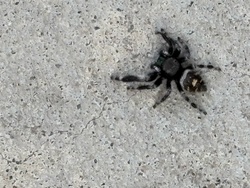
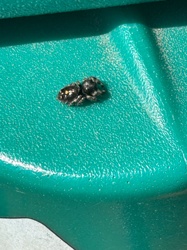
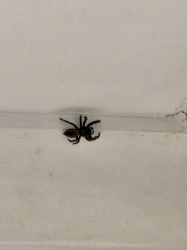
Bold Jumping Spider identified by the community
Real finds identified with Bug Identifier.
Other bugs you may enjoy
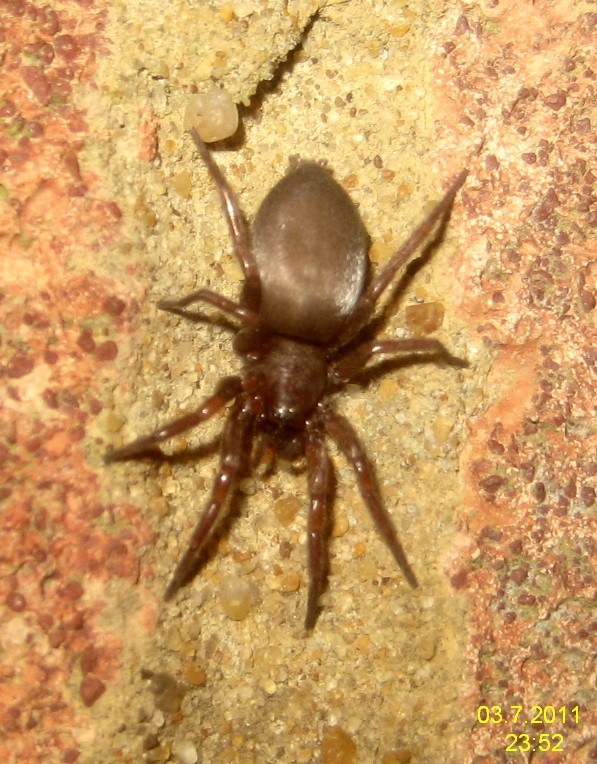
Woodlouse Spider
Damp leaf litter, under logs, stones, and mulch
Wolf Spider
Gardens, grasslands, forests, leaf litter, ground burrows
Wandering Spider
Tropical and subtropical forest floor, foliage, and banana plants
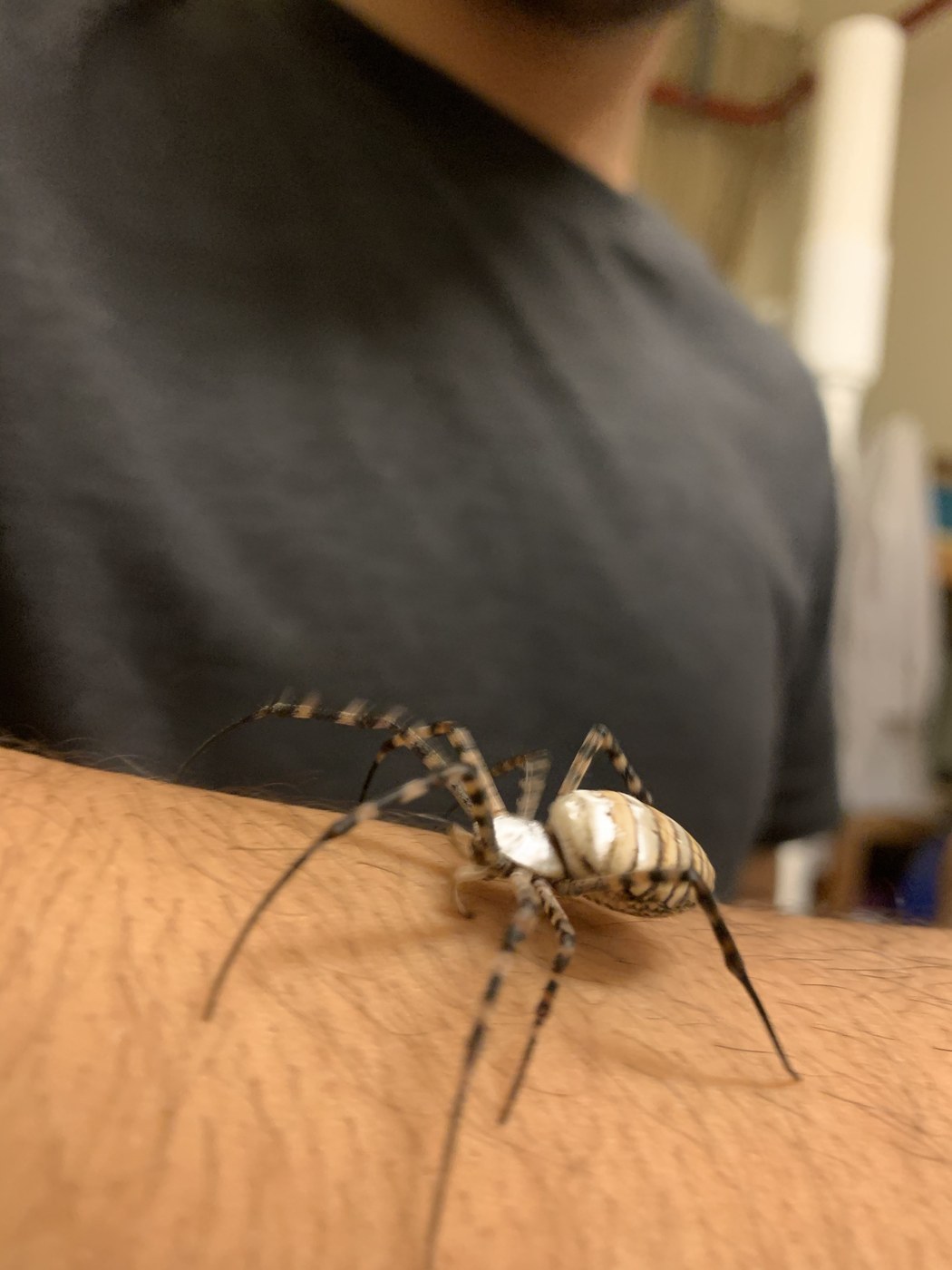
Banded Garden Spider
Tall grass, meadows, and gardens with open sunny vegetation
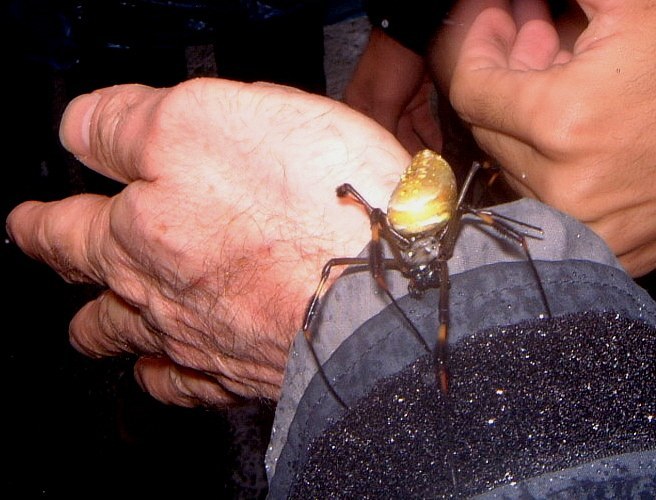
Banana Spider
Wooded trails, forest edges, and gardens across the southeastern U.S. and the American tropics
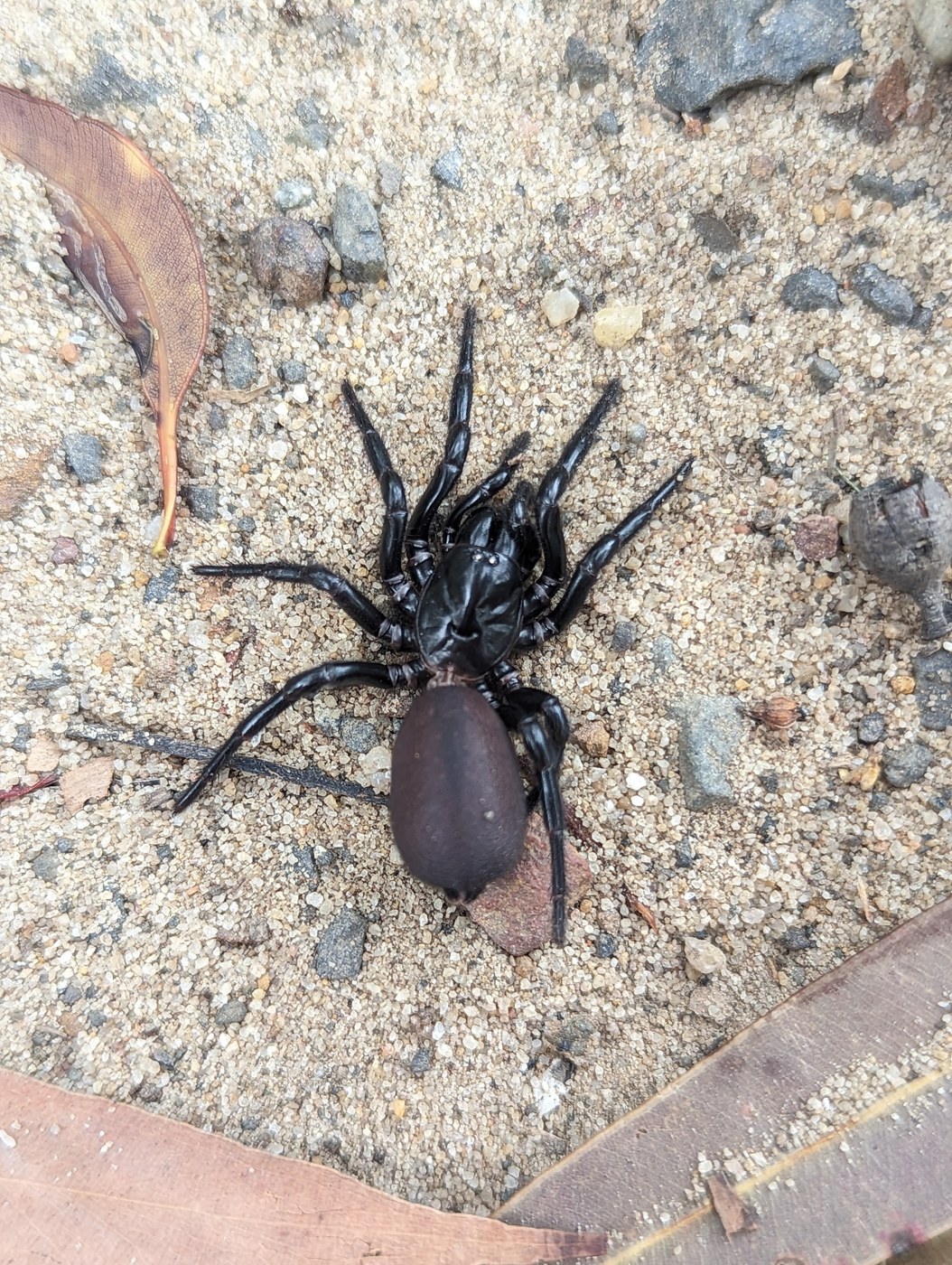
Sydney Funnel-web Spider
Burrows in moist soil, gardens, and forested gullies around the Sydney basin of eastern Australia
Trapdoor Spider
Self-dug silk-lined burrows with a camouflaged door, in dry, well-drained soil worldwide
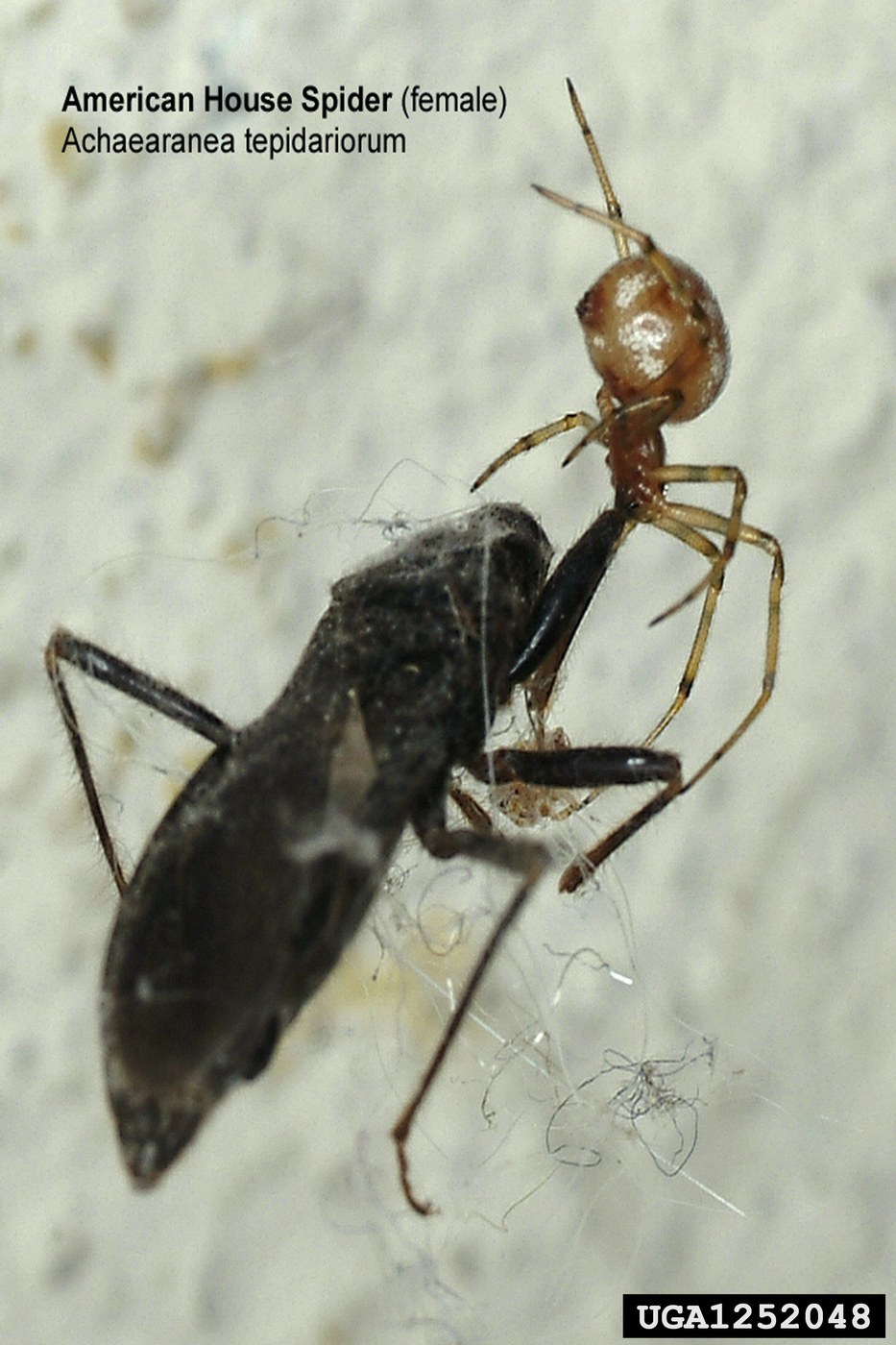
American House Spider
Corners, basements, garages, and outbuildings worldwide
Tube Web Spider
Wall crevices, bark, rockeries, and masonry
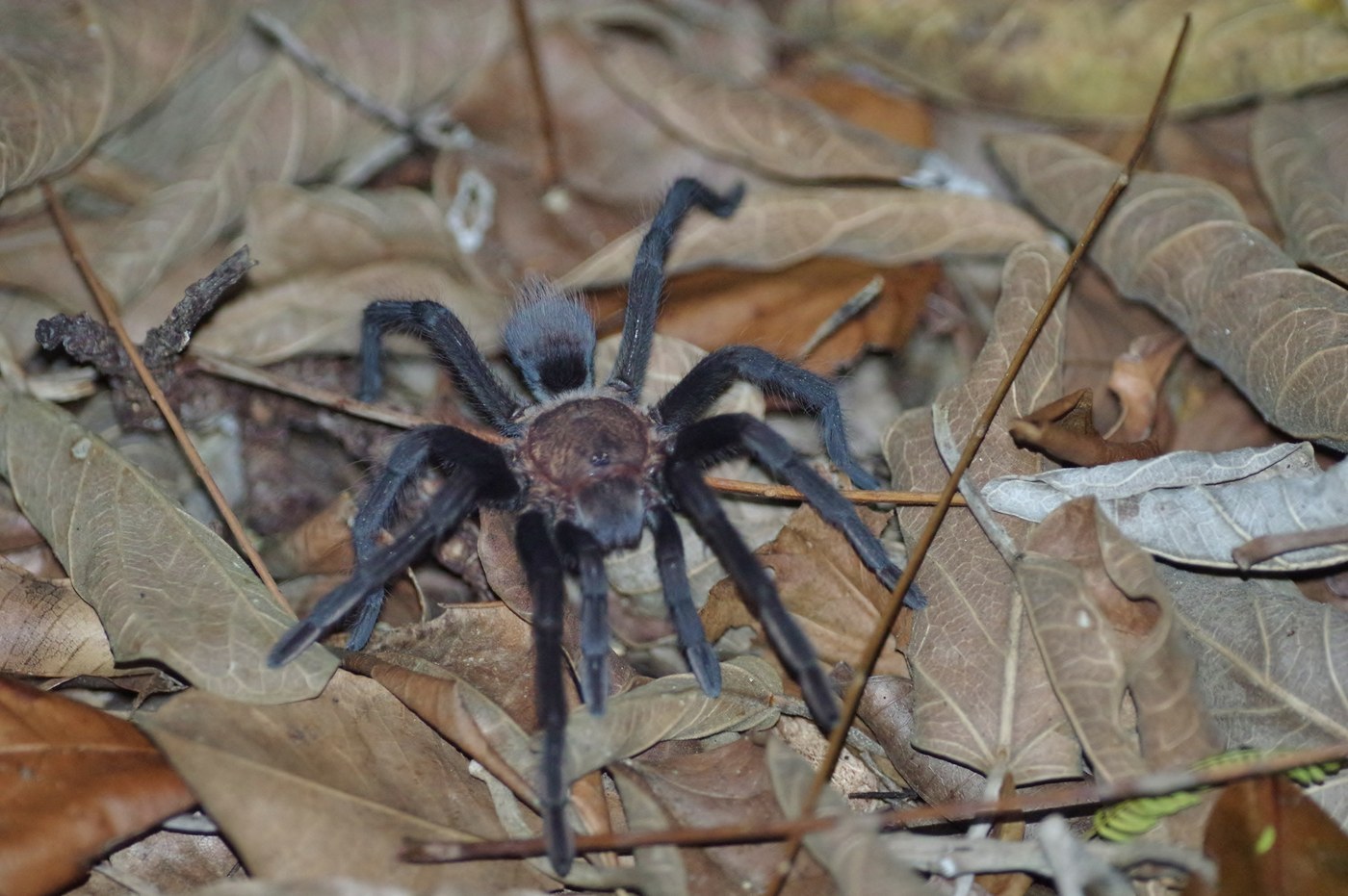
Tarantula
Burrows, rock crevices, and tree hollows in deserts, grasslands, and tropical forests worldwide
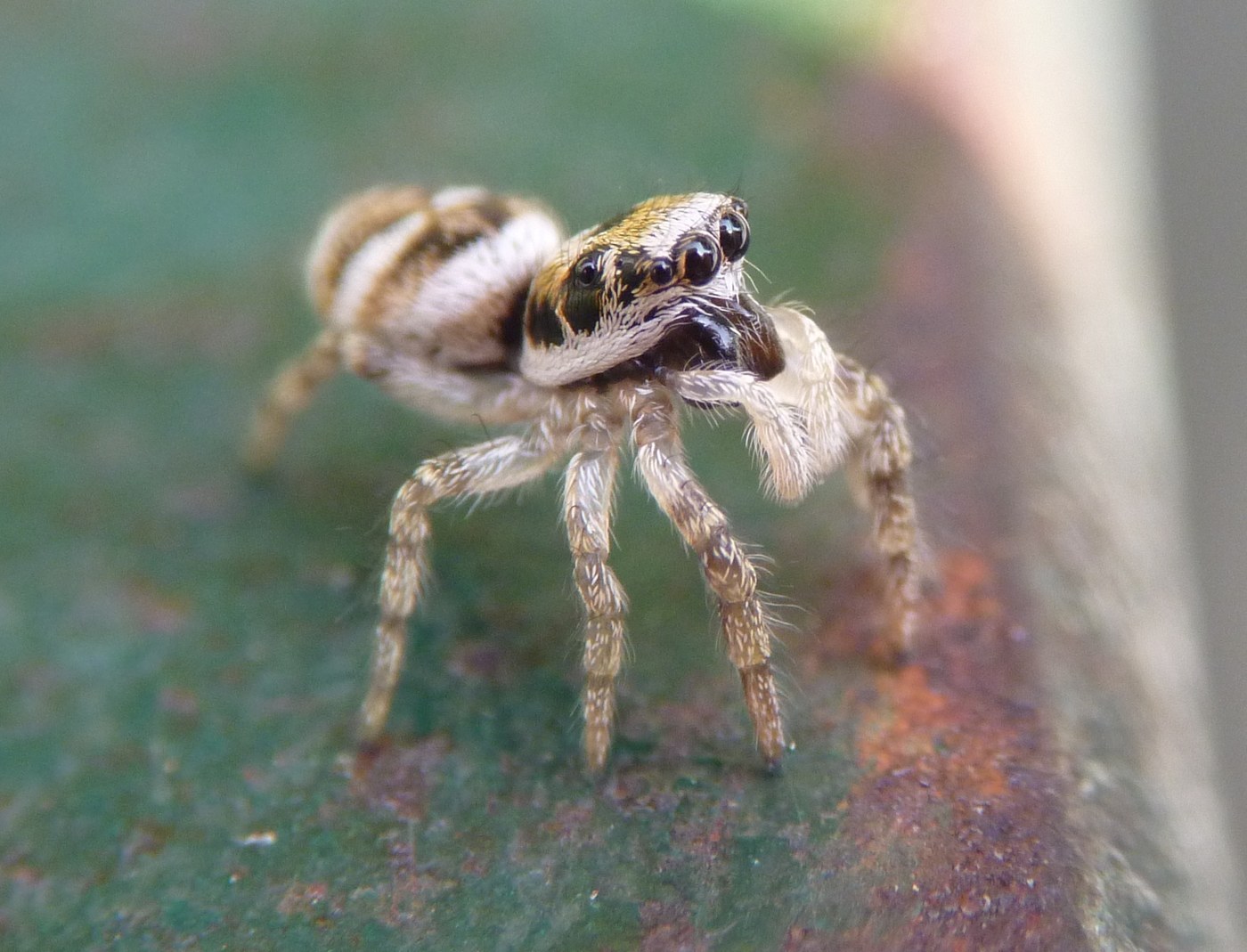
Zebra Jumping Spider
Sunny walls, fences, tree bark, and building exteriors
Wall Spider
Cracks and crevices on exterior and interior walls