
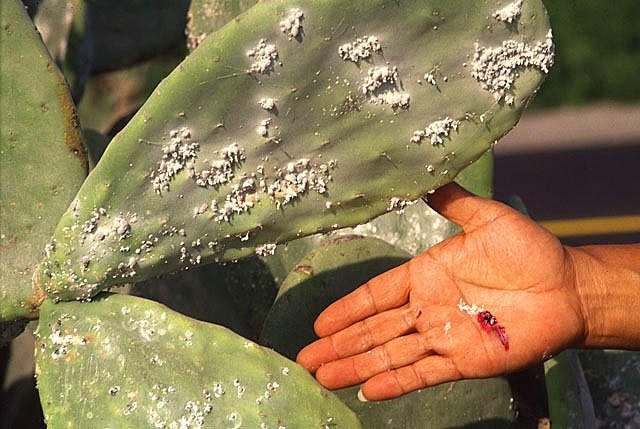
Cochineal
Dactylopius coccus
A tiny, sedentary scale insect that lives clustered on prickly pear cacti beneath a protective coat of white, waxy fluff, historically prized for the deep red pigment it produces.
- Size
- ~5 mm (female, wingless)
- Habitat
- Prickly pear (Opuntia) cactus pads in arid and semi-arid regions
- Danger
- Harmless
Spotted a bug like this?
Identify any bug or insect from a photo, free.
Overview
The cochineal is a scale insect in the family Dactylopiidae, part of the true bug order Hemiptera, and it is closely tied ecologically to Opuntia (prickly pear) cacti, on which it spends nearly its entire life feeding and reproducing. Female cochineals are wingless and largely immobile once settled, covering themselves in a fluffy white waxy secretion that gives infested cactus pads a frosted appearance.
What makes cochineal particularly notable is the vivid red pigment, carminic acid, that the insect produces internally as a chemical deterrent against predators. Historically, this pigment was extracted and used as a natural red dye, and cochineal cultivation became an economically significant practice in parts of the Americas.
Within its native range, cochineal is one of many scale insects that specialize on cactus hosts, and its populations are closely linked to the health and abundance of prickly pear stands.
How to Identify
- Female cochineals are small, oval, wingless, and soft-bodied, appearing as reddish-purple insects hidden beneath a dense coat of white, cottony wax.
- Males are rarely seen, tiny, winged, and short-lived compared to the sedentary females.
- Colonies appear as white, powdery or cottony patches clustered on the flat pads of prickly pear cacti.
- Crushing the waxy covering reveals a deep crimson-colored body fluid, a key identifying trait of this insect.
- Lookalikes include other white, waxy scale insects and mealybugs, but cochineal is distinguished by its strict association with Opuntia cacti and its characteristic red pigment.
Habitat & Range
Cochineal insects are found on the pads of prickly pear cacti in arid and semi-arid regions, native to parts of Mexico, Central America, and South America, and later introduced to other regions with suitable cactus hosts. They remain on their host plant throughout the feeding stages, with populations building up on warm, sun-exposed cactus pads. Activity continues year-round in warm climates where host cacti remain available.
Behavior & Diet
Cochineal insects feed by inserting piercing-sucking mouthparts into cactus pad tissue to draw out plant fluids, remaining stationary at a single feeding site for most of their lives once settled. They secrete a protective coating of white wax filaments that shields them from sun exposure, water loss, and predators. The red carminic acid they produce is believed to function as a chemical defense against ants and other predatory insects. Because females are flightless, dispersal to new cactus pads relies on wind, animal contact, or the mobile first-instar nymphs (called crawlers).
Life Cycle
Cochineal undergoes incomplete metamorphosis typical of scale insects, with eggs, nymphal (crawler) stages, and adults. Eggs are laid beneath the female's waxy covering, and the newly hatched crawlers are the only truly mobile stage, walking short distances across the cactus pad to find a new feeding site before settling permanently. Once settled, females molt through several stages while remaining fixed in place, secreting increasing amounts of protective wax. Multiple generations can occur per year in favorable warm climates.
Frequently asked questions
Is cochineal an insect or a plant growth?
It is an insect, a type of scale insect (Hemiptera), even though the white, cottony masses on cactus pads can resemble a fungal or plant growth at first glance.
Why does cochineal look white but turn red when crushed?
The white appearance comes from a waxy secretion the insect produces for protection, while the deep red color comes from carminic acid pigment inside its body.
What plant does cochineal live on?
It lives almost exclusively on prickly pear (Opuntia) cactus pads, feeding on plant fluids at a fixed site.
Can cochineal fly?
Adult females are wingless and immobile; only males are winged, and even they are short-lived and rarely observed.
Cochineal guides
In-depth guides for identifying, understanding, and living alongside Cochineal.
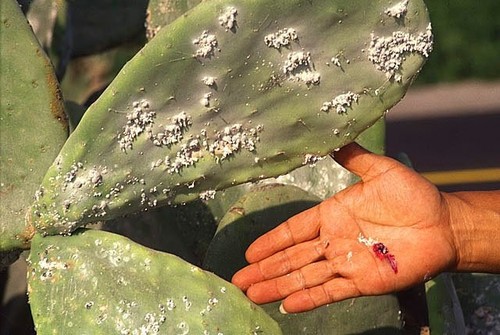
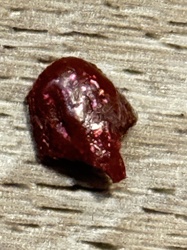
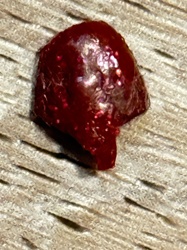
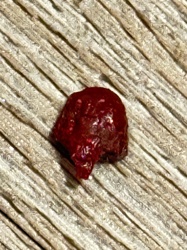
Cochineal identified by the community
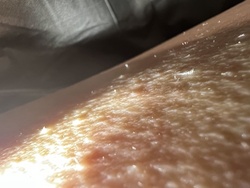
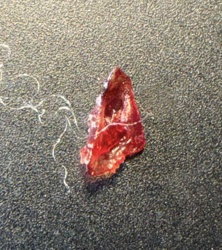
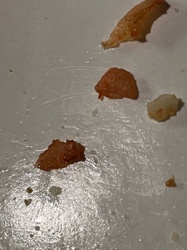
Real finds identified with Bug Identifier.



Other bugs you may enjoy
Bagrada Bug
Arid gardens, crucifer fields, desert-adjacent croplands
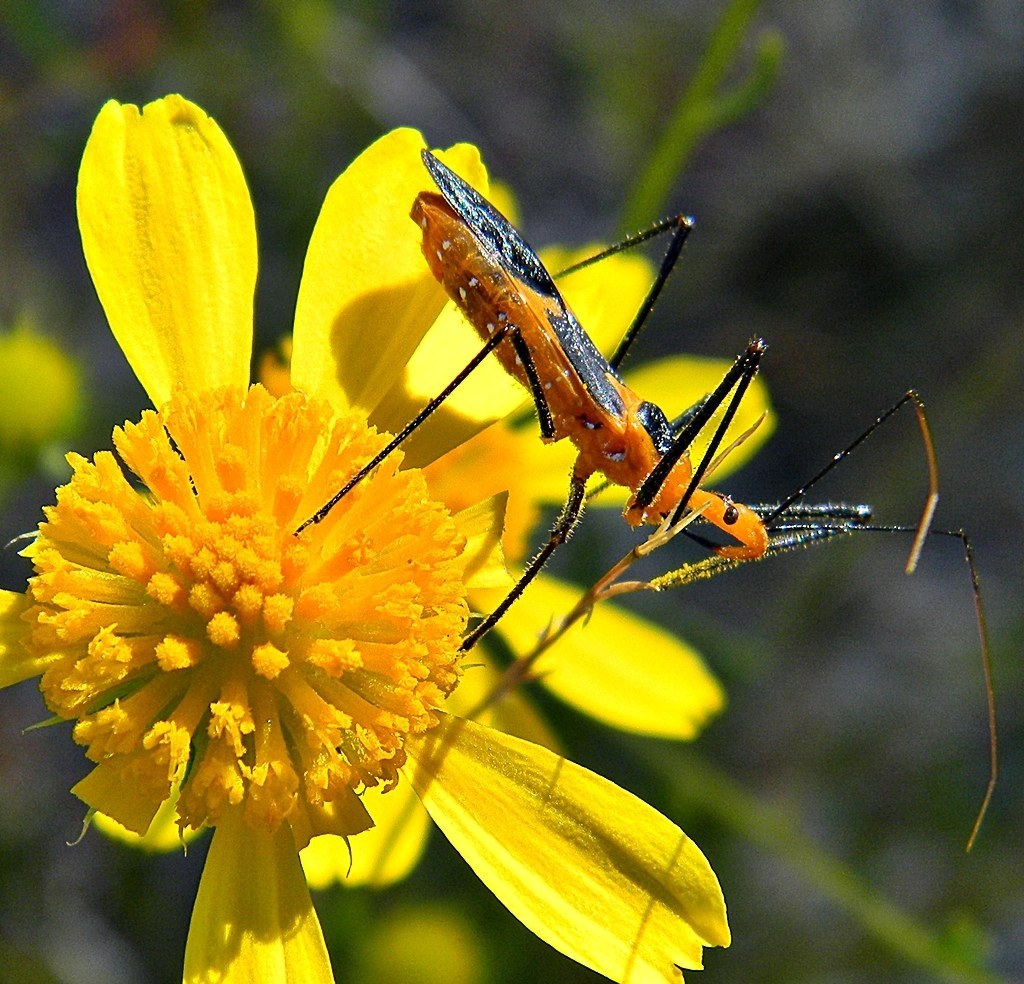
Assassin Bug
Gardens, meadows, and vegetation worldwide
Water Boatman Bug
Ponds, lakes, and slow-moving freshwater
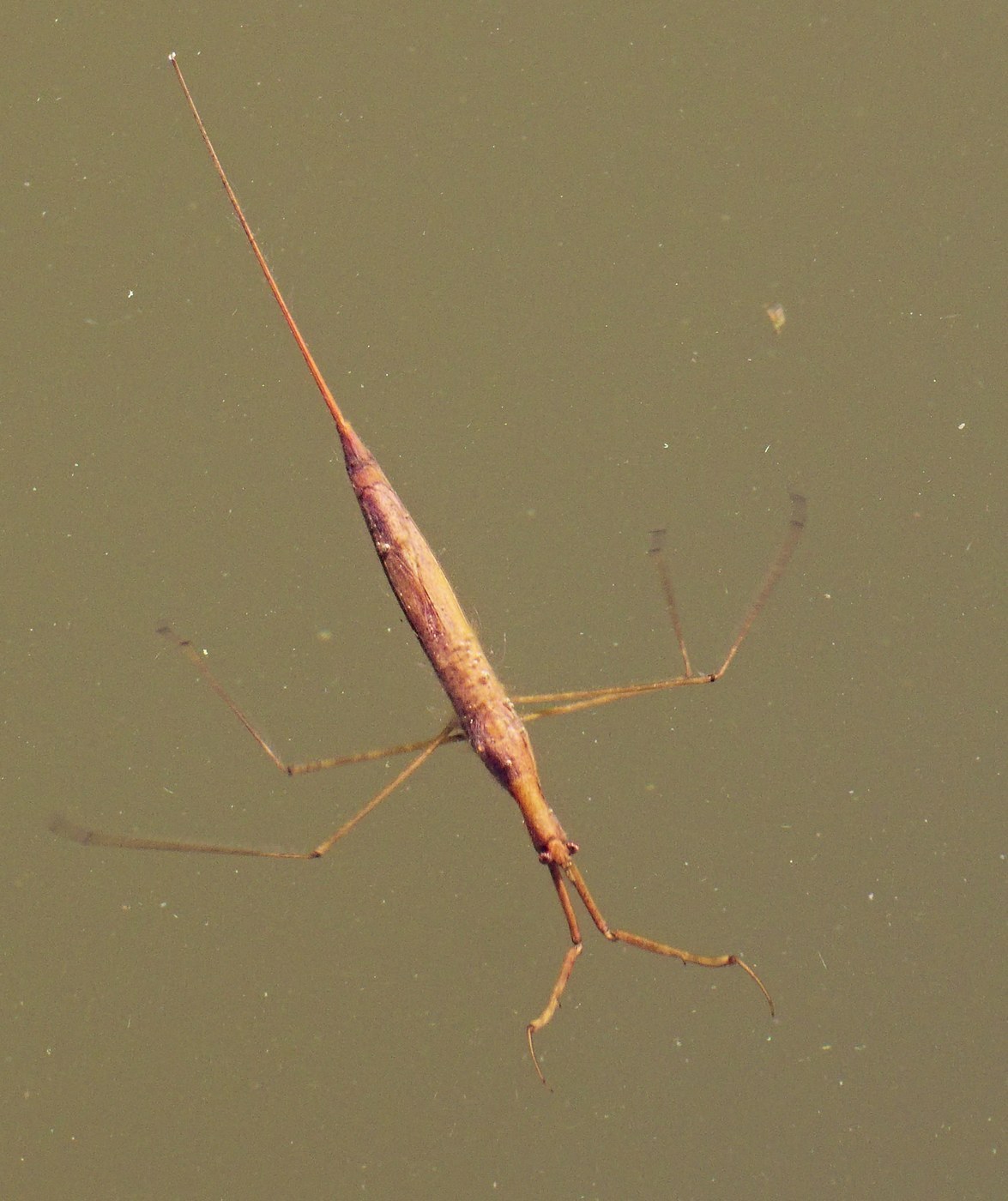
Water Stick Insect
Still and slow-moving water with dense submerged vegetation
Rough Stink Bug
Tree bark, woodlands, orchards, and shrubby vegetation
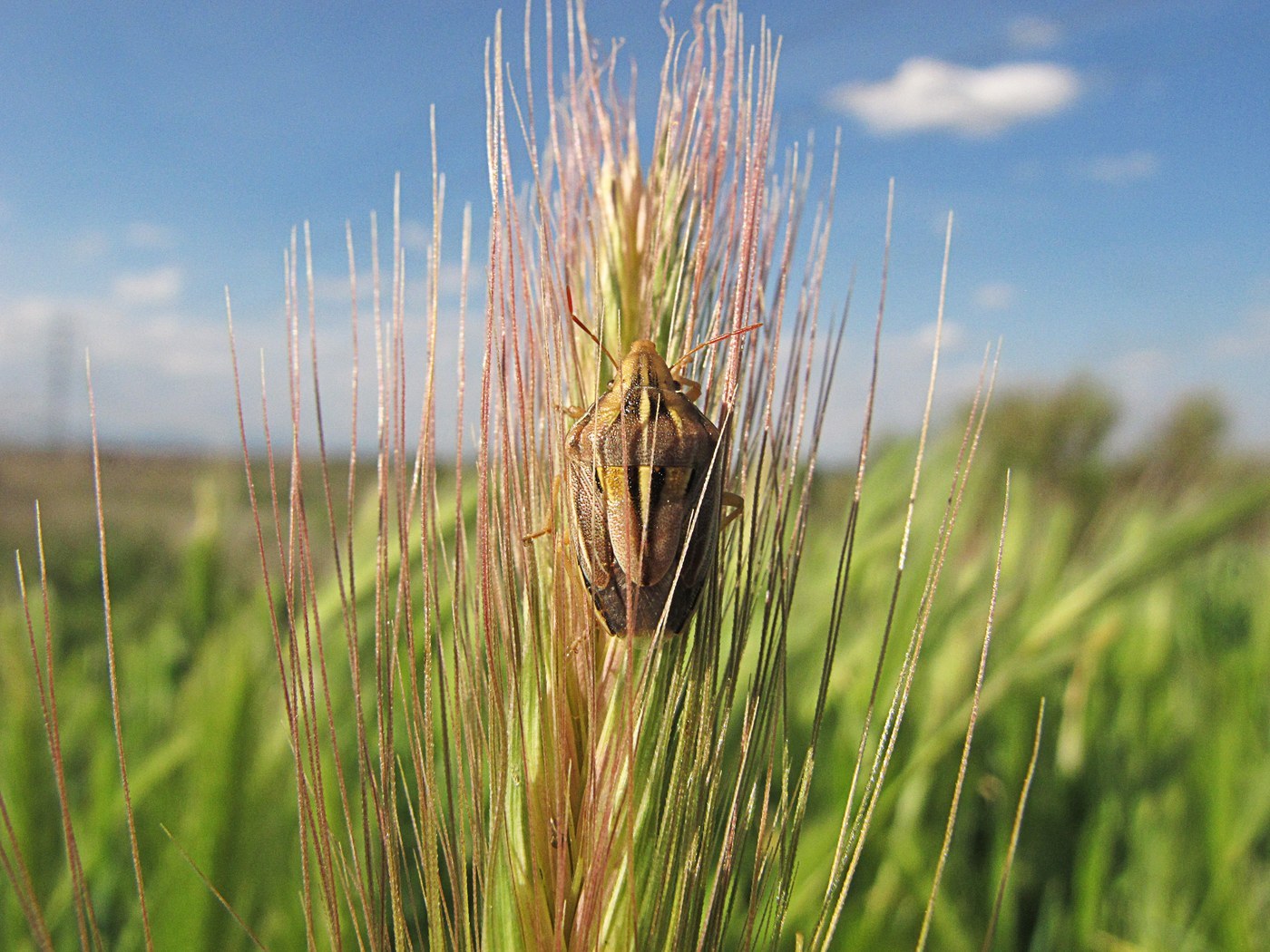
Stink Bug
Gardens, crop fields, and woodlands across temperate and subtropical regions
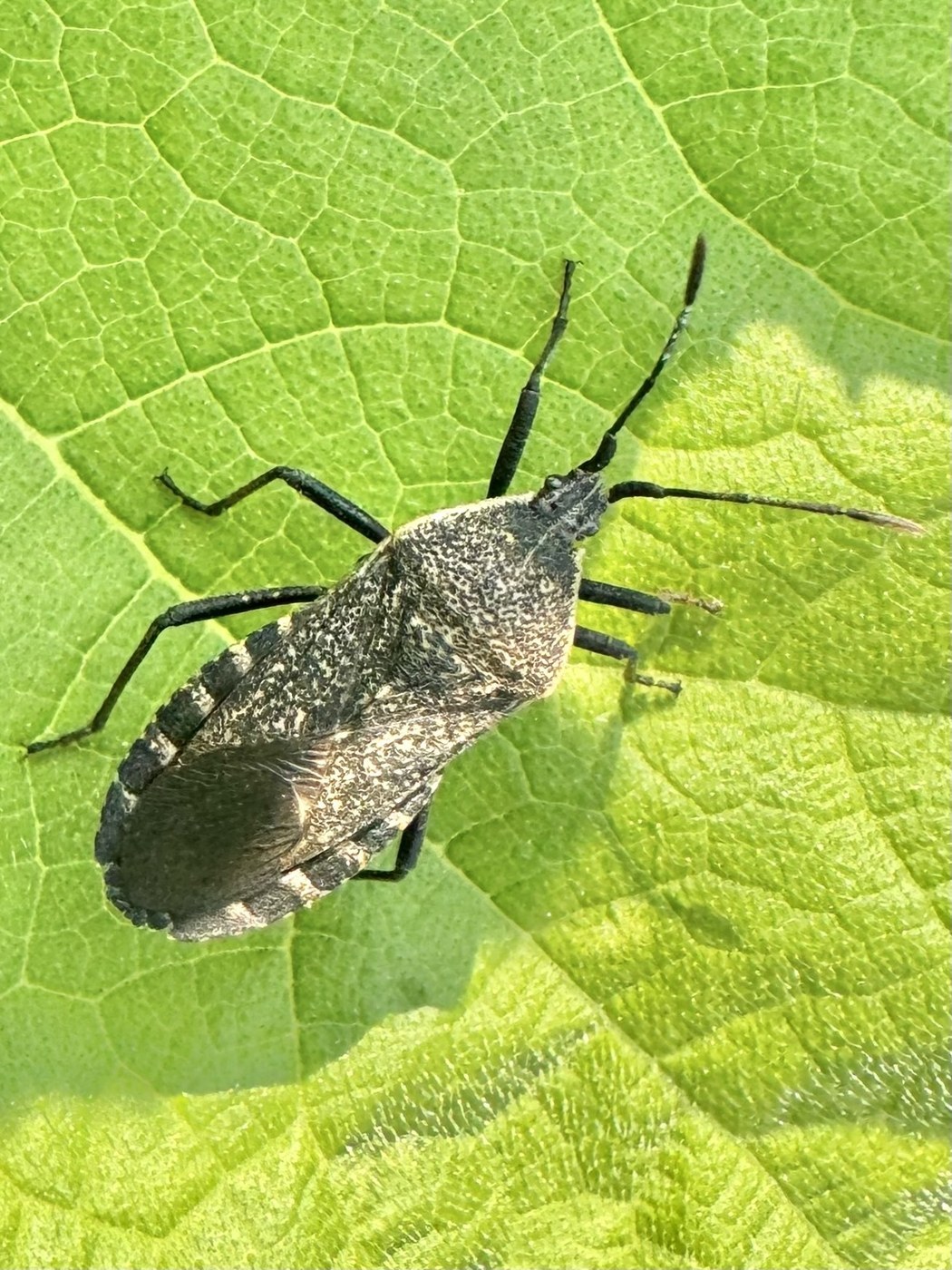
Squash Bug
Vegetable gardens and farm fields growing squash, pumpkin, and other cucurbits
Aphid
On stems, leaves, and buds of a very wide range of host plants
Woolly Aphid
Bark crevices, root collars, and twigs of apple, elm, and alder trees
Whitefly
Greenhouses, gardens, and undersides of leaves on host plants
Water Measurer
Quiet edges of ponds, marshes, and slow streams
Two-Spotted Stink Bug
Gardens and fields with potato and nightshade-family plants