
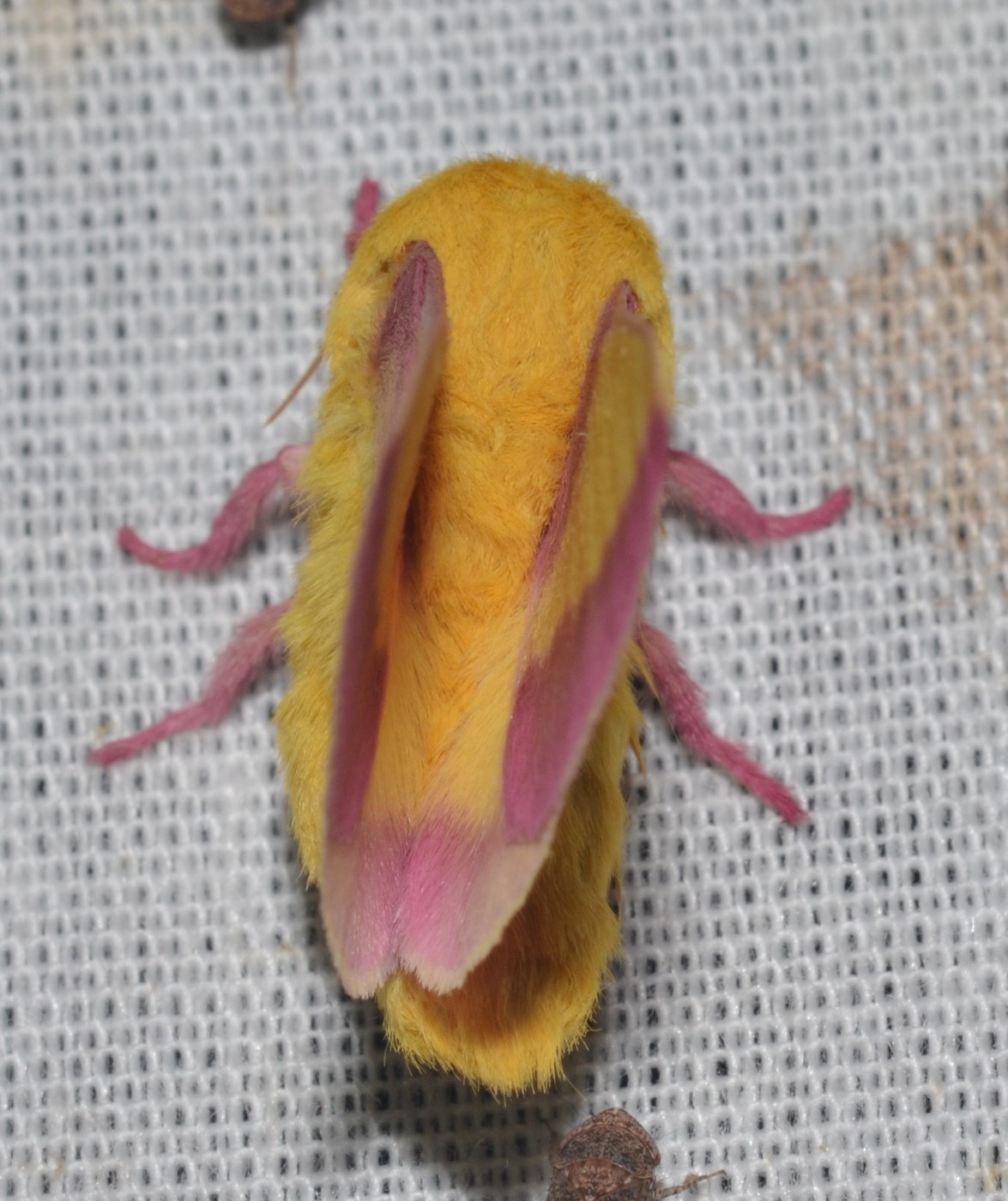
Rosy Maple Moth
Dryocampa rubicunda
A small, plush-looking moth in candy-pink and lemon-yellow, often described as one of the most vividly colored moths in North America despite its modest size.
- Size
- 1.25–2 in wingspan
- Habitat
- Deciduous forests and maple stands in eastern North America
- Danger
- Harmless
Spotted a bug like this?
Identify any bug or insect from a photo, free.
Overview
The rosy maple moth is a member of the family Saturniidae, the giant silk moths, though it is one of the smallest species in that showy family. Its bubblegum-pink and buttery-yellow color scheme makes it a favorite subject for nature photography and a frequent surprise for people who assume such vivid colors belong only to tropical insects.
Despite its delicate appearance, it is a fairly common and widespread woodland species across the eastern half of the continent, closely tied to the maple trees that give it its name. As with other silk moths, the adults are short-lived and exist primarily to mate and reproduce, playing a modest role as prey for nocturnal predators during their brief adult stage.
How to Identify
- Wingspan of about 32–50 mm; body and wings covered in dense, woolly-looking scales.
- Forewings are typically soft pink at the base blending into pale yellow, with a pink outer margin; hindwings follow a similar pink-and-yellow split.
- Color intensity varies regionally and individually, from nearly all-yellow to strongly pink-and-yellow forms.
- Thick, fuzzy yellow legs and a rounded, teddy-bear-like body.
- Lookalikes are few given the unique color combination, though faded individuals can appear pale yellow and be mistaken for other small silk moths.
Habitat & Range
Ranges across the eastern United States and adjacent Canada, wherever maple trees grow, including deciduous forests, wooded suburbs, and parks. Adults are active at night from late spring through summer, with southern populations producing broods into early autumn, and are frequently attracted to porch lights.
Behavior & Diet
Adults do not feed, having reduced, non-functional mouthparts typical of many silk moths, and live only a short time focused on mating and egg-laying. Caterpillars, called green-striped mapleworms, feed gregariously when young on the foliage of maple and sometimes oak trees, later dispersing to feed individually. The species serves as a food source for birds and other predators, and mass caterpillar feeding can occasionally cause noticeable, though temporary, defoliation on host trees.
Life Cycle
Eggs are laid in clusters on maple leaves and hatch into small caterpillars that initially feed together before spreading out as they mature. The green, spined caterpillars pass through several instars over a few weeks before dropping to the ground to pupate in loose soil or leaf litter, without spinning a cocoon. Depending on latitude there may be one or two generations per year, with the final generation overwintering as a pupa underground until adults emerge the following spring.
Frequently asked questions
Is that pink and yellow color natural?
Yes, the pink-and-yellow pattern is entirely natural pigmentation and not the result of dye or damage.
Does the caterpillar look anything like the adult?
No, the caterpillar is a green, spiny mapleworm with dark stripes, quite different from the fuzzy pink-and-yellow adult.
What tree is it most associated with?
Maple trees are its primary host, though the caterpillars will occasionally feed on oak as well.
Why do I see it at my porch light?
Like many night-flying moths, adults are drawn to artificial lights, which is one of the most common ways people encounter this species.
Rosy Maple Moth guides
In-depth guides for identifying, understanding, and living alongside Rosy Maple Moth.
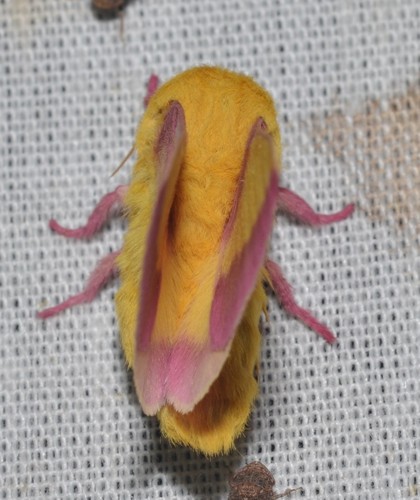
Rosy Maple Moth identified by the community
Real finds identified with Bug Identifier.
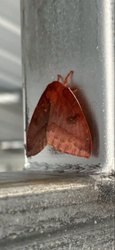
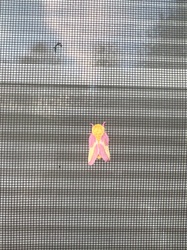
Other bugs you may enjoy
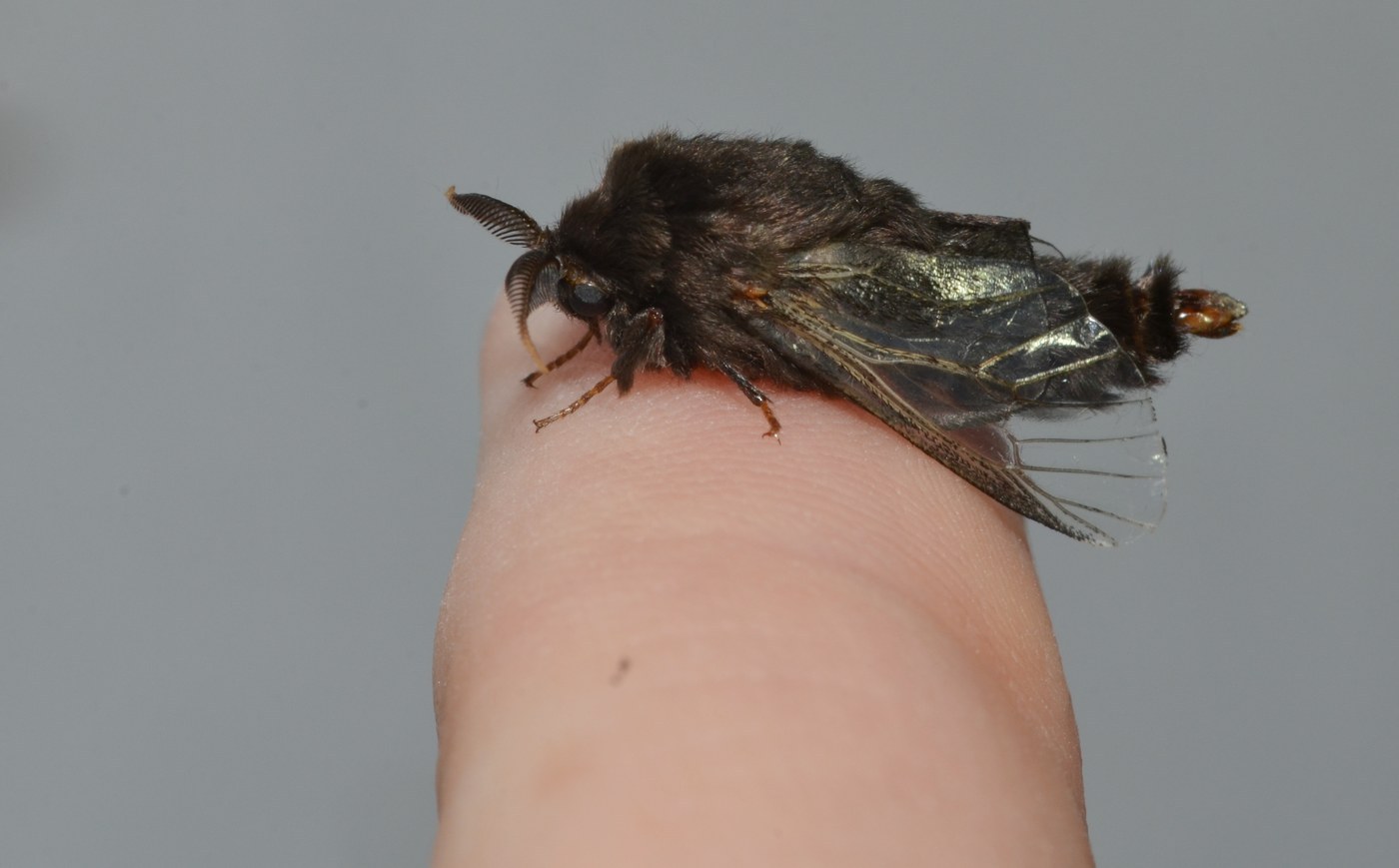
Bagworm Moth
Coniferous and deciduous trees, shrubs, hedges
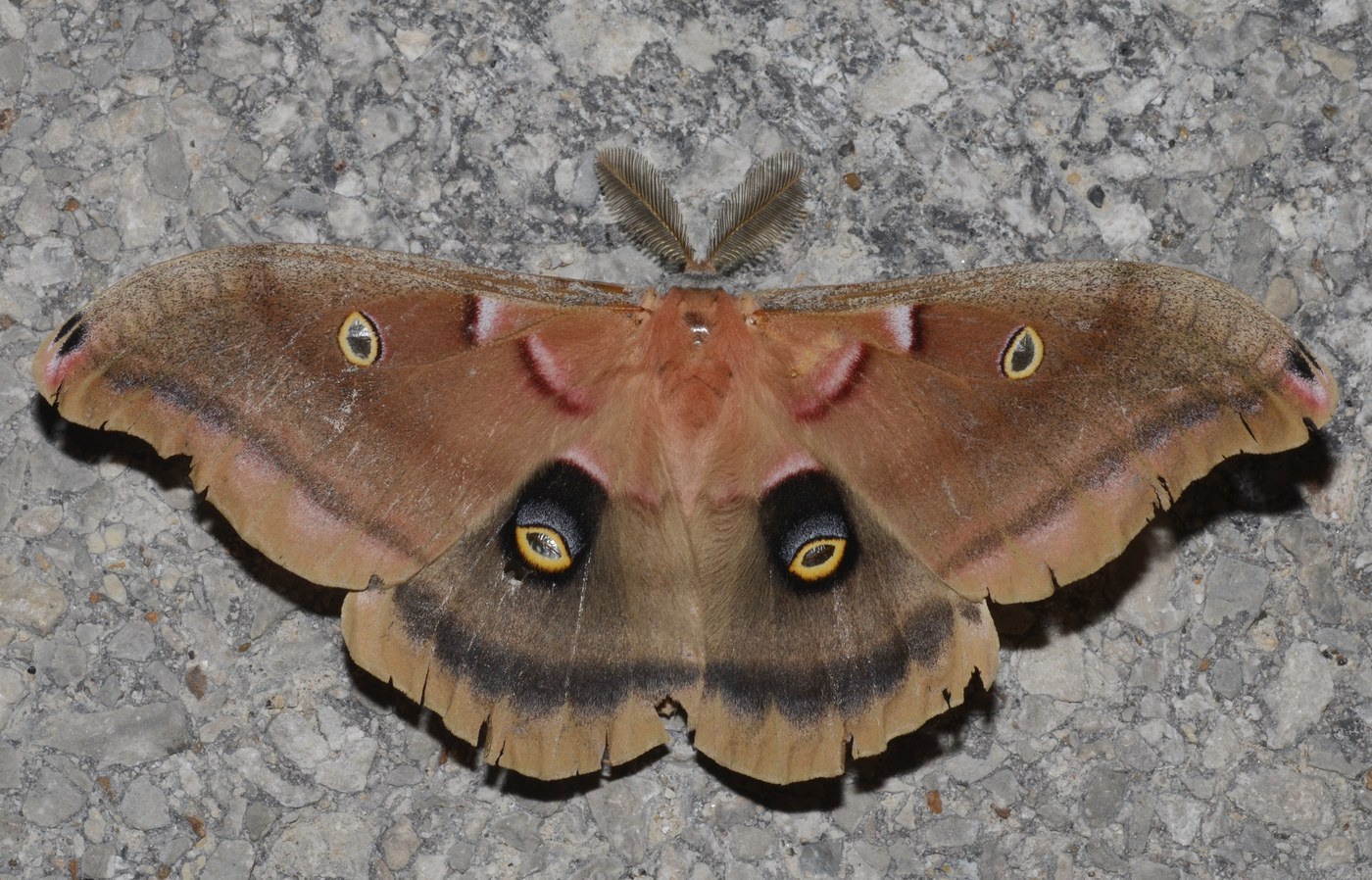
Antheraea Silkmoth
Deciduous forests, woodland edges, orchards
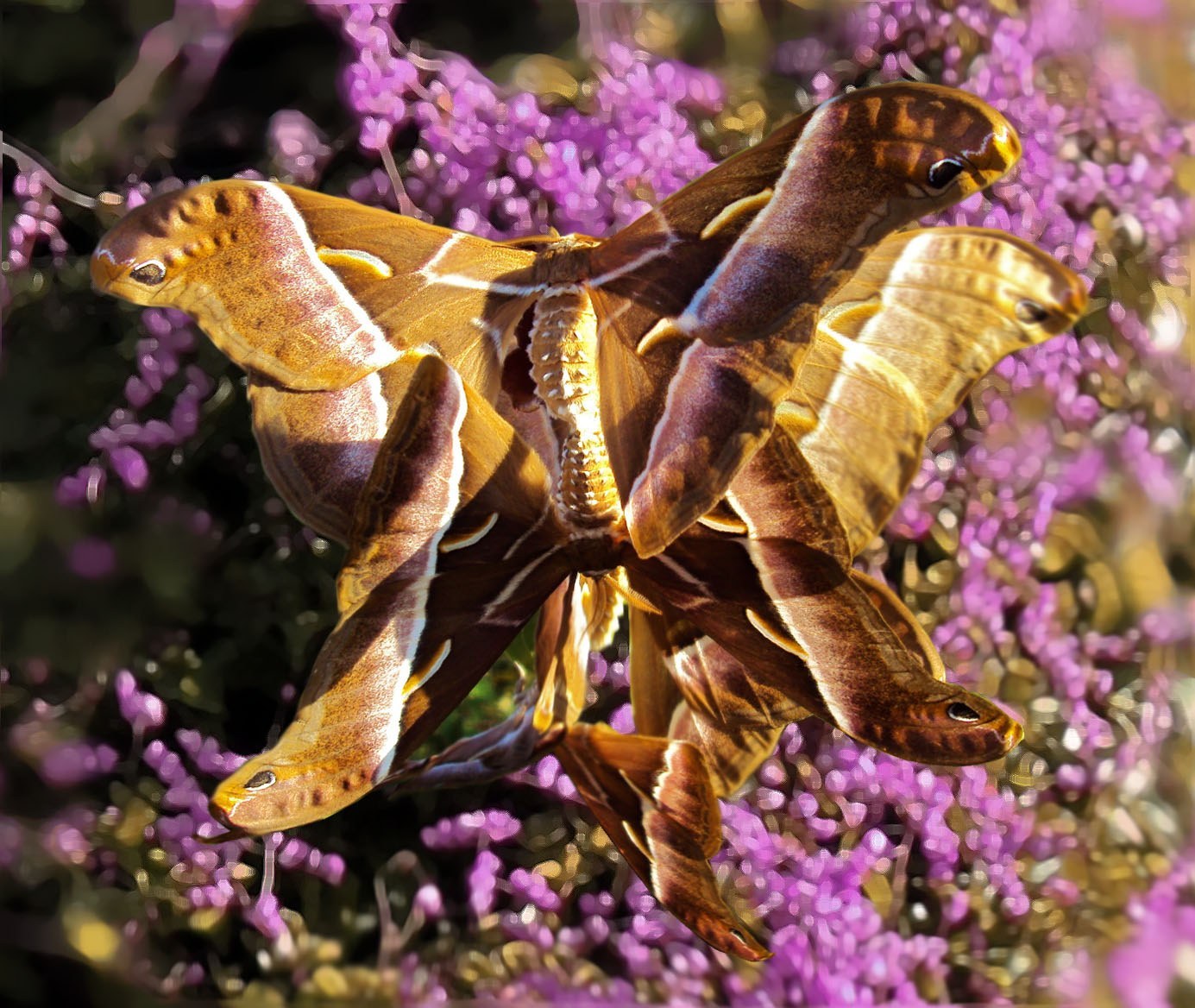
Ailanthus Silkmoth (Cynthia Moth)
Urban parks, wastelands, and woodland edges with tree-of-heaven; native to Asia, introduced in North America and Europe
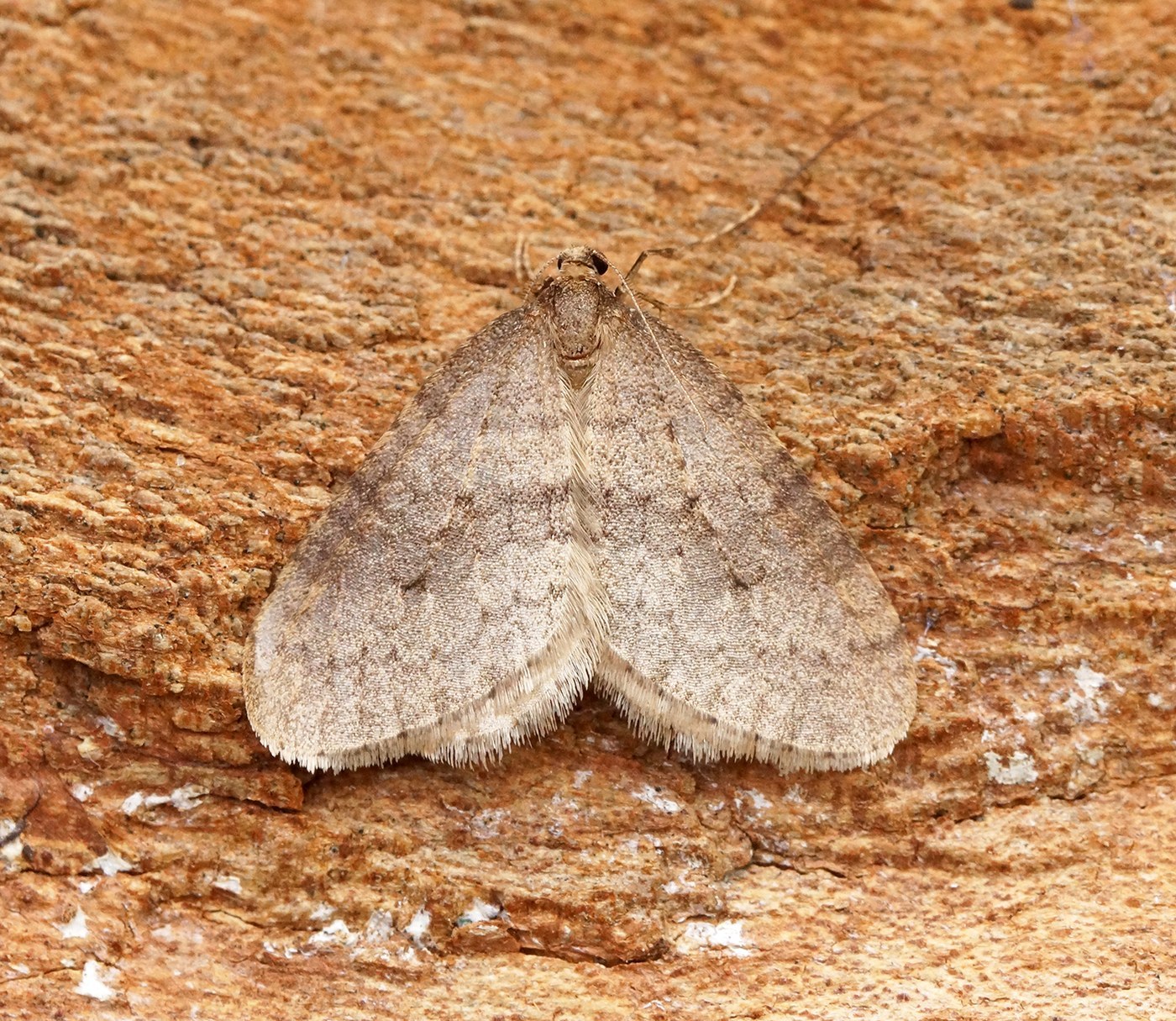
Winter Moth
Deciduous woodland, orchards, gardens, hedgerows
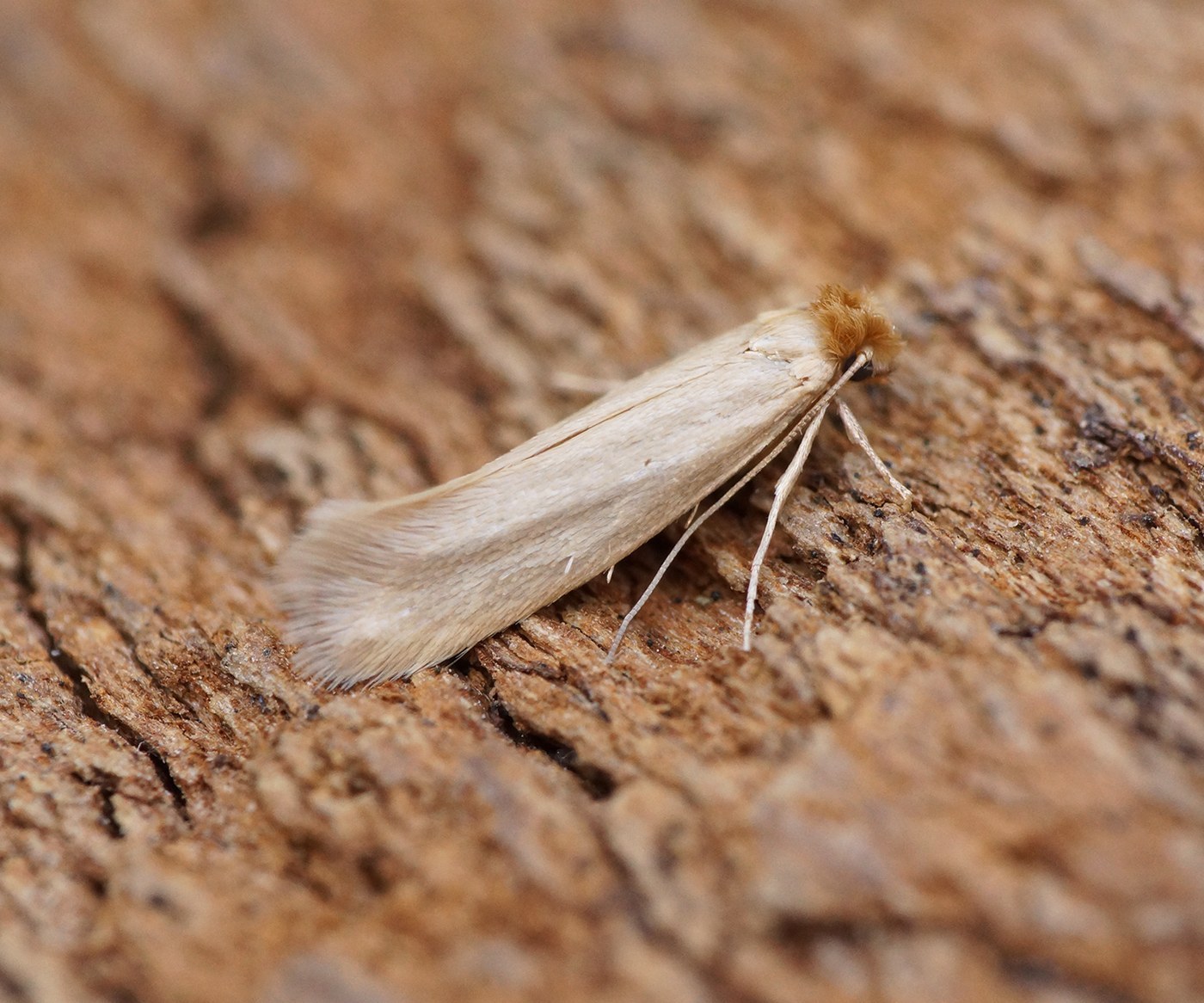
Webbing Clothes Moth
Dark closets, storage areas, and animal nests worldwide
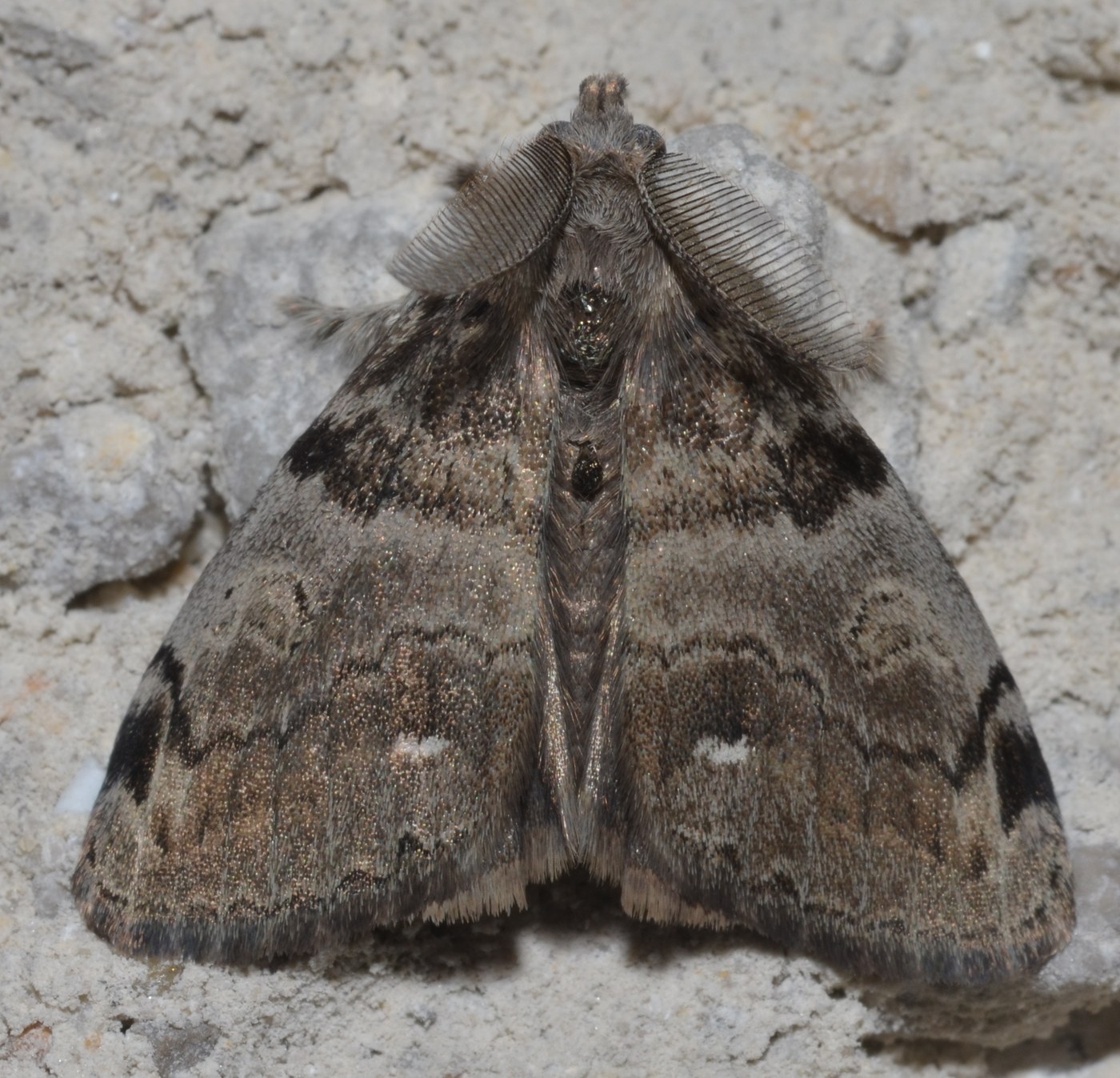
Tussock Moth
Deciduous forests, parks, gardens
Wax Moth
Beehives, apiaries, stored beeswax and comb
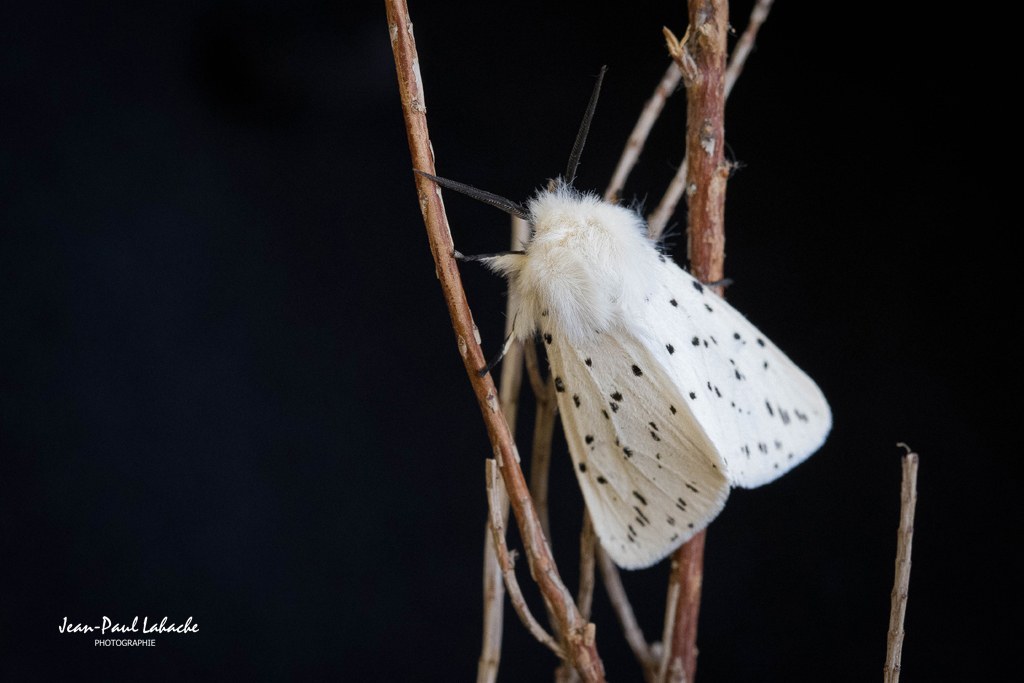
White Ermine Moth
Gardens, meadows, hedgerows
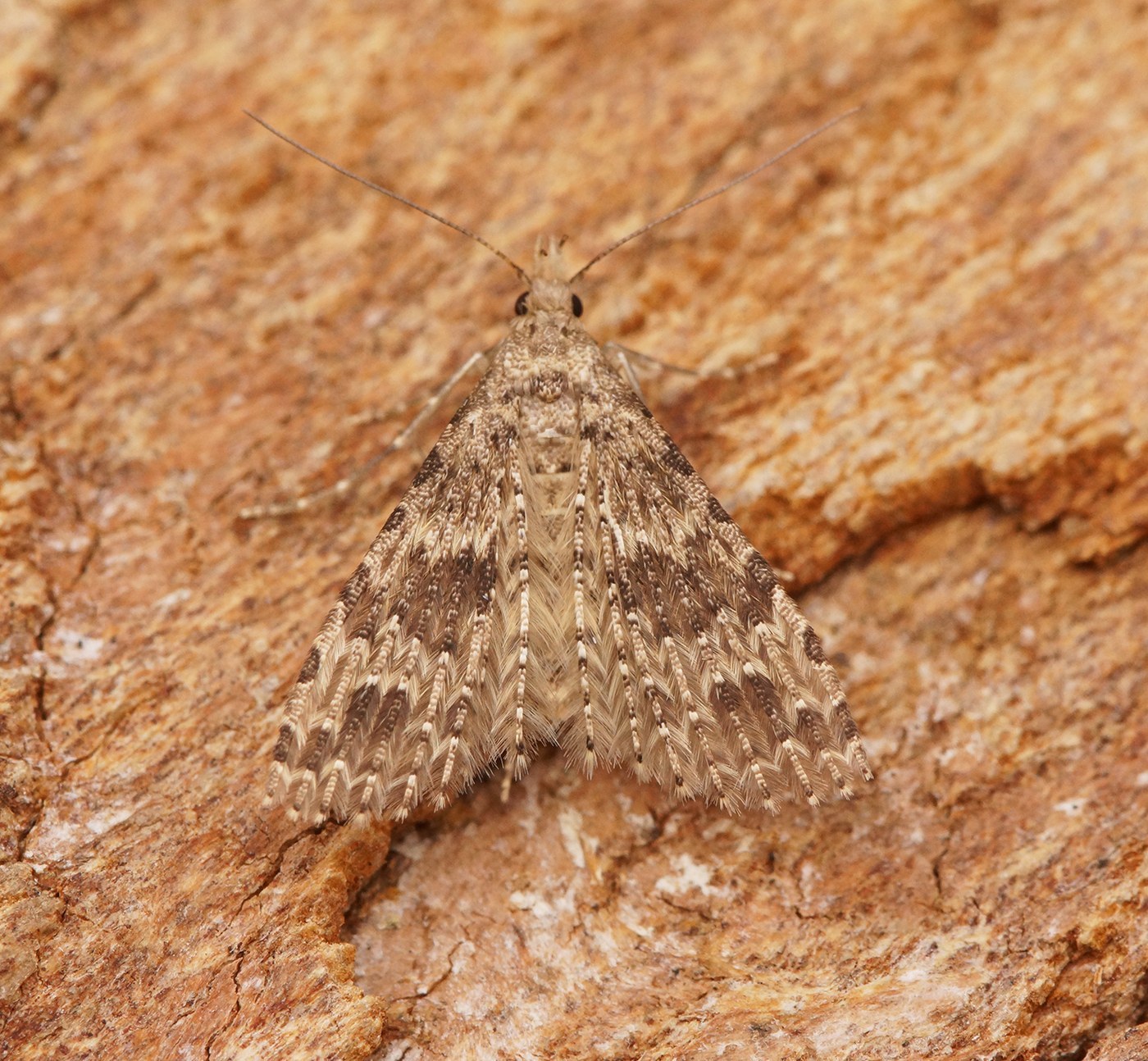
Twenty-plume Moth
Gardens, hedgerows, near honeysuckle
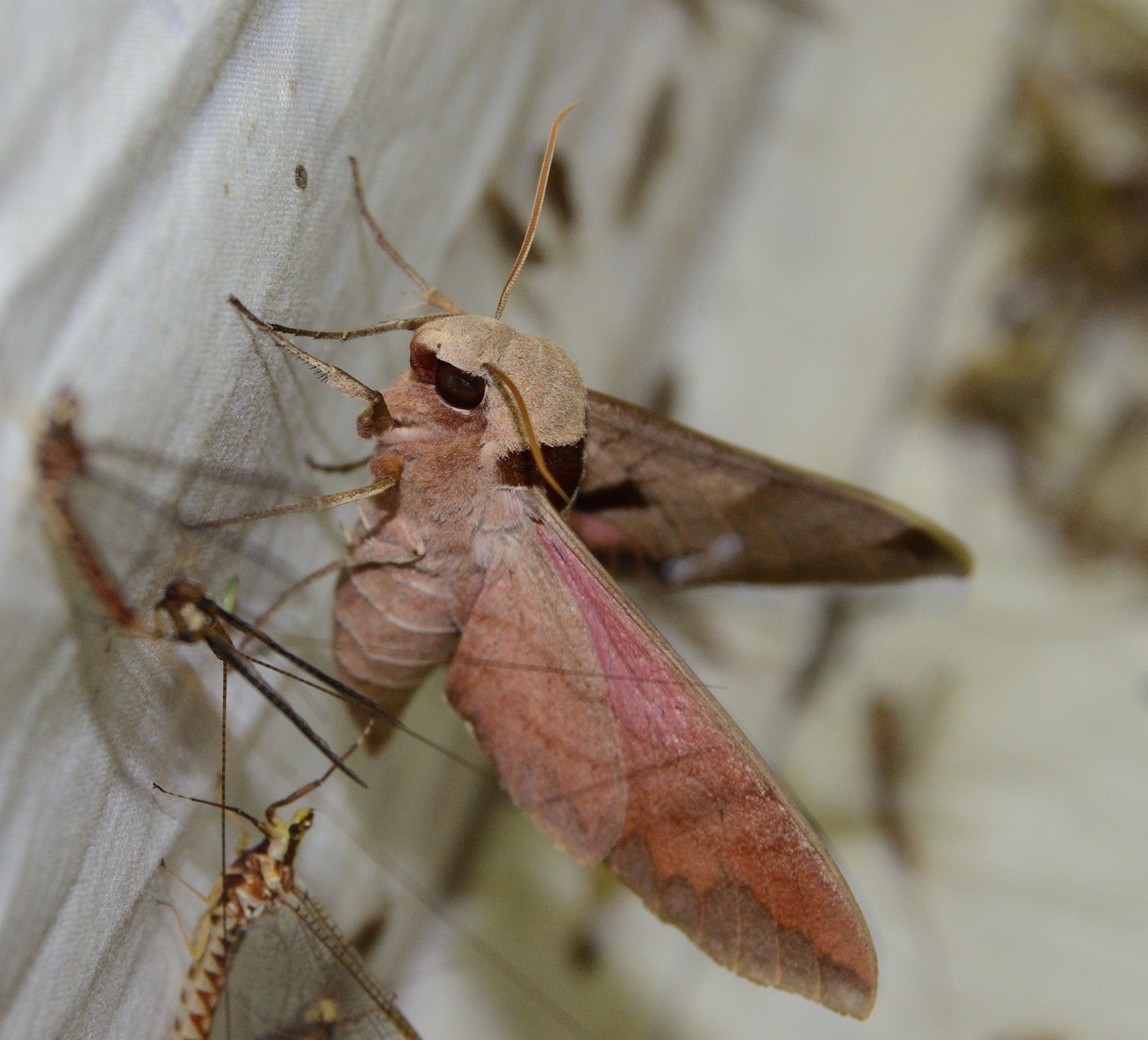
Achemon Sphinx Moth
Vineyards, woodland edges, gardens with wild grape
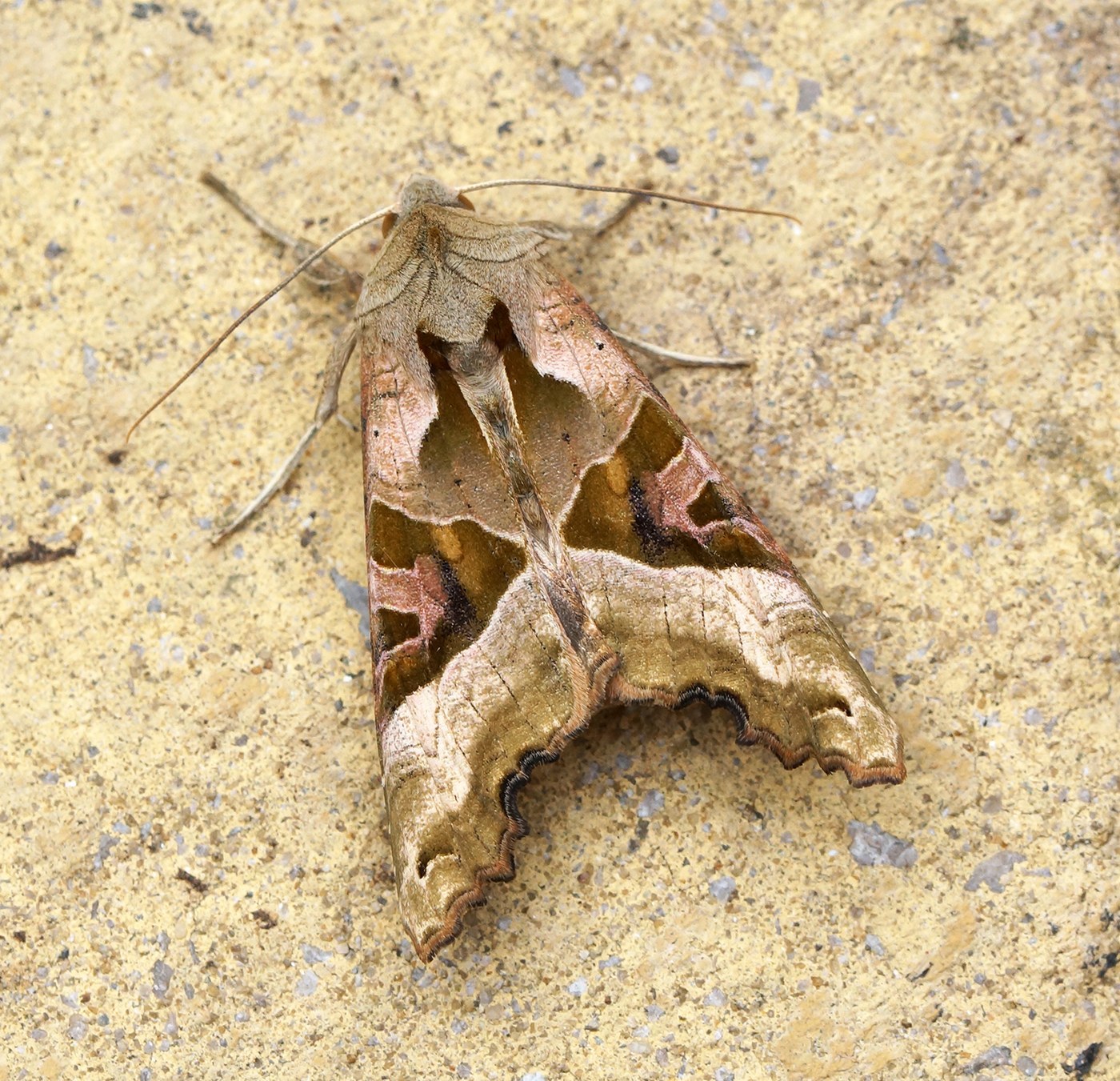
Angle Shades Moth
Gardens, hedgerows, woodland edges, urban parks
Atlas Moth
Tropical and subtropical lowland forests of Southeast Asia