
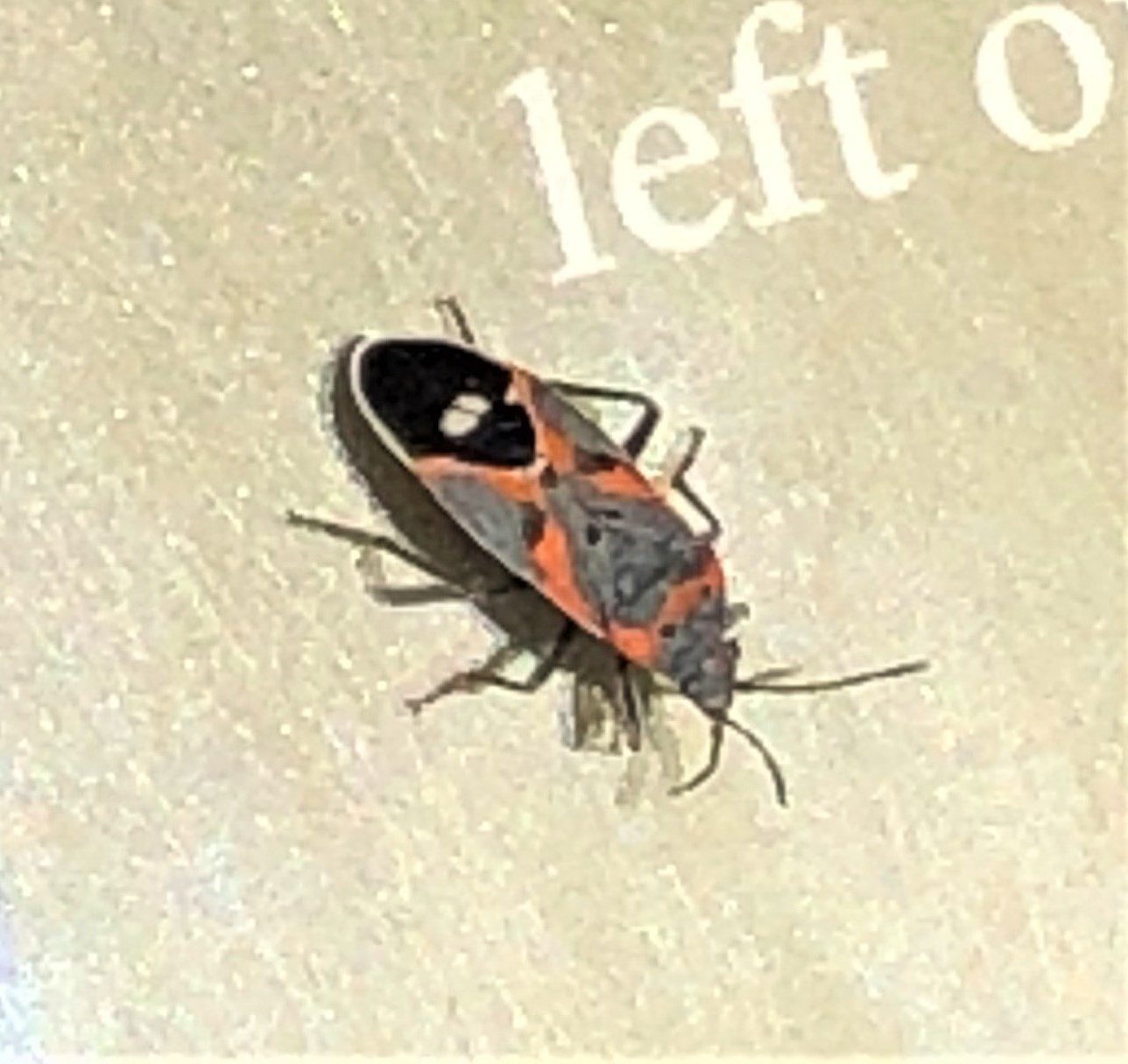
Small Milkweed Bug
Lygaeus kalmii
A red-and-black seed bug with a distinctive X-shaped pattern on its back, commonly found feeding on milkweed seeds and sap alongside monarch caterpillars.
- Size
- 9–12 mm
- Habitat
- Milkweed patches, prairies, roadsides, and open fields
- Danger
- Harmless
Spotted a bug like this?
Identify any bug or insect from a photo, free.
Overview
The small milkweed bug is a member of the seed bug family Lygaeidae, order Hemiptera, and is one of the most frequently encountered true bugs on milkweed plants across North America. Its striking red-and-black coloration mirrors the warning colors of the monarch butterflies that share the same host plants.
Despite its common name, the small milkweed bug is not dramatically smaller than its close relative the large milkweed bug (Oncopeltus fasciatus); the two species are best told apart by their wing patterns rather than overall size. The small milkweed bug has a bold black X or hourglass shape across its folded wings, set against a bright red-orange background.
As a milkweed specialist, this species sequesters toxic cardiac glycosides from its host plant, contributing to its unpalatability to predators and linking it ecologically to the broader guild of milkweed-associated insects, including monarch and queen butterflies.
How to Identify
- Elongated, oval body with a flattened profile typical of seed bugs.
- Bright red-orange background color marked with a bold black X or hourglass-shaped pattern across the back.
- Head and thorax are mostly black with red markings; long, slender antennae and legs.
- Nymphs are wingless and mostly red with black markings, gradually developing the adult wing pattern.
- Distinguished from the large milkweed bug by the black X-shaped pattern (rather than two solid black bands) across the wings, though both share similar red-and-black coloring and milkweed habitat.
Habitat & Range
Widespread across North America, from southern Canada through the United States and into Mexico, wherever milkweed plants grow, including prairies, meadows, roadside ditches, gardens, and old fields.
Active from late spring through fall, small milkweed bugs are most abundant in mid to late summer when milkweed seed pods are developing, often seen in groups on stems, leaves, and seed pods.
Behavior & Diet
Small milkweed bugs feed primarily on milkweed seeds and sap, using their piercing-sucking mouthparts to extract nutrients from developing seed pods, though they will also opportunistically feed on other plant material and occasionally scavenge dead insects. Adults and nymphs are often seen together in loose aggregations on the same plant.
Their bright red-and-black coloration functions as a warning signal, reflecting the toxic compounds they accumulate from milkweed sap, similar to the strategy used by monarch caterpillars and butterflies. They do not bite or sting people; ecologically they are an important part of the milkweed-associated insect community.
Life Cycle
Females lay eggs in clusters in soil, leaf litter, or crevices near milkweed plants. Nymphs hatch and progress through five instars of incomplete metamorphosis, starting out small and wingless with red-and-black coloring, gradually developing full wings and the adult pattern.
Multiple generations can occur per year in warmer climates. In colder regions, adults may migrate southward or overwinter in sheltered leaf litter and plant debris, becoming active again when milkweed growth resumes in spring.
Frequently asked questions
Is the small milkweed bug harmful to monarch caterpillars?
No, it primarily feeds on milkweed seeds and sap rather than preying on monarch caterpillars, though the two species share the same host plant.
How do I tell it apart from the large milkweed bug?
Look at the wing pattern: the small milkweed bug has a black X or hourglass shape, while the large milkweed bug has two solid black bands across its wings.
Does it bite people?
No, its mouthparts are adapted for feeding on milkweed seeds and sap, not for biting humans.
Why is it red and black?
Its coloration warns predators of the toxic compounds it absorbs from feeding on milkweed sap and seeds.
Small Milkweed Bug guides
In-depth guides for identifying, understanding, and living alongside Small Milkweed Bug.
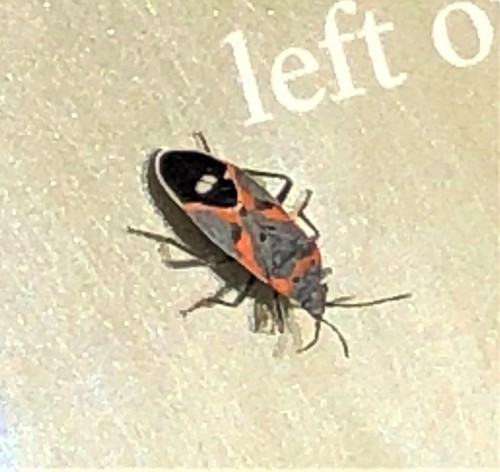
Small Milkweed Bug identified by the community
Real finds identified with Bug Identifier.
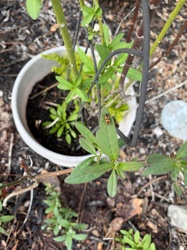
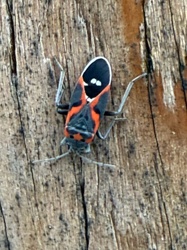
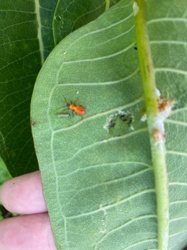
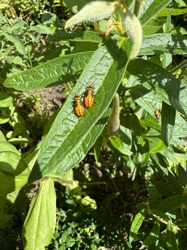
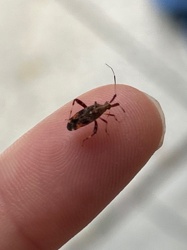
Other bugs you may enjoy
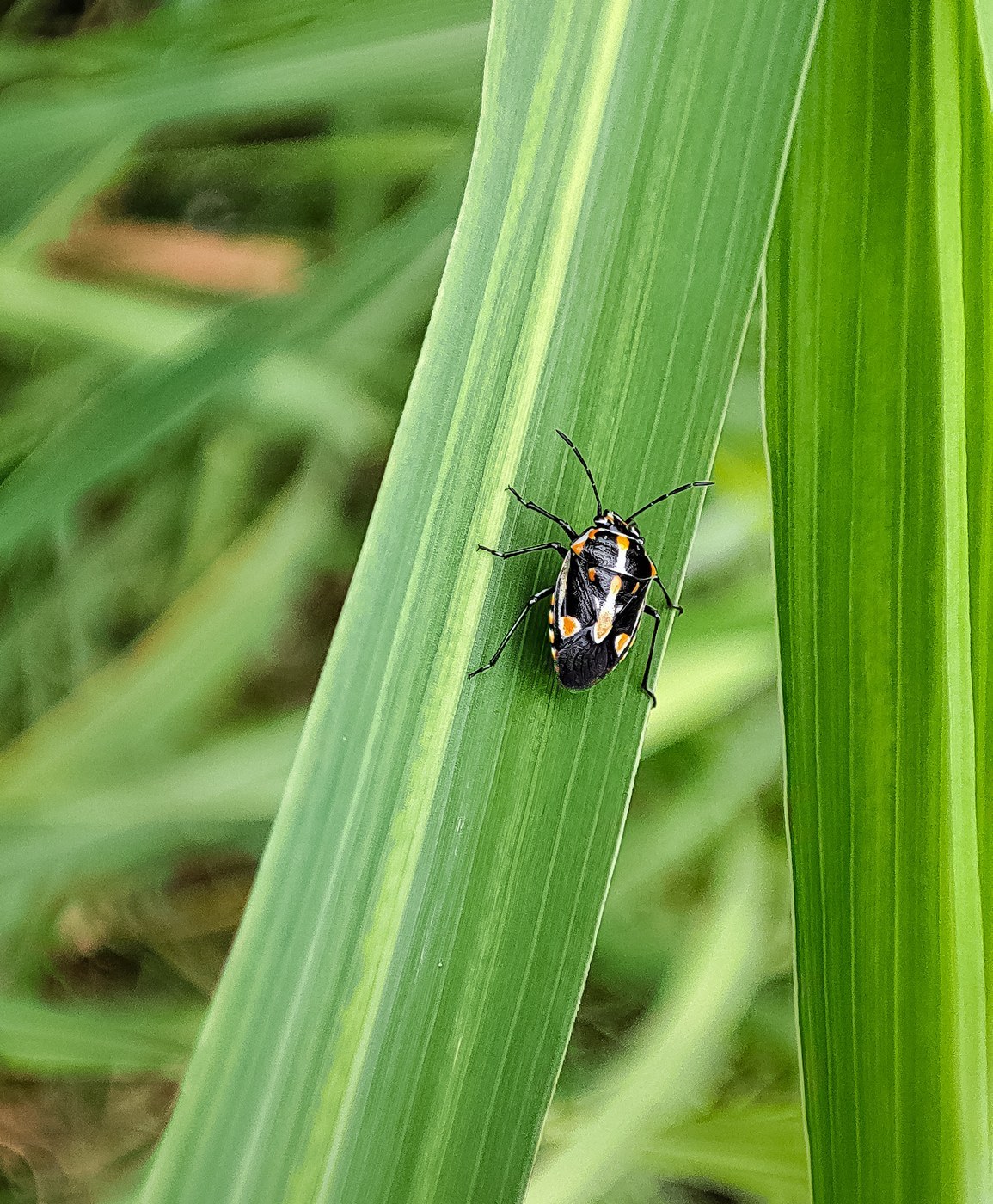
Bagrada Bug
Arid gardens, crucifer fields, desert-adjacent croplands
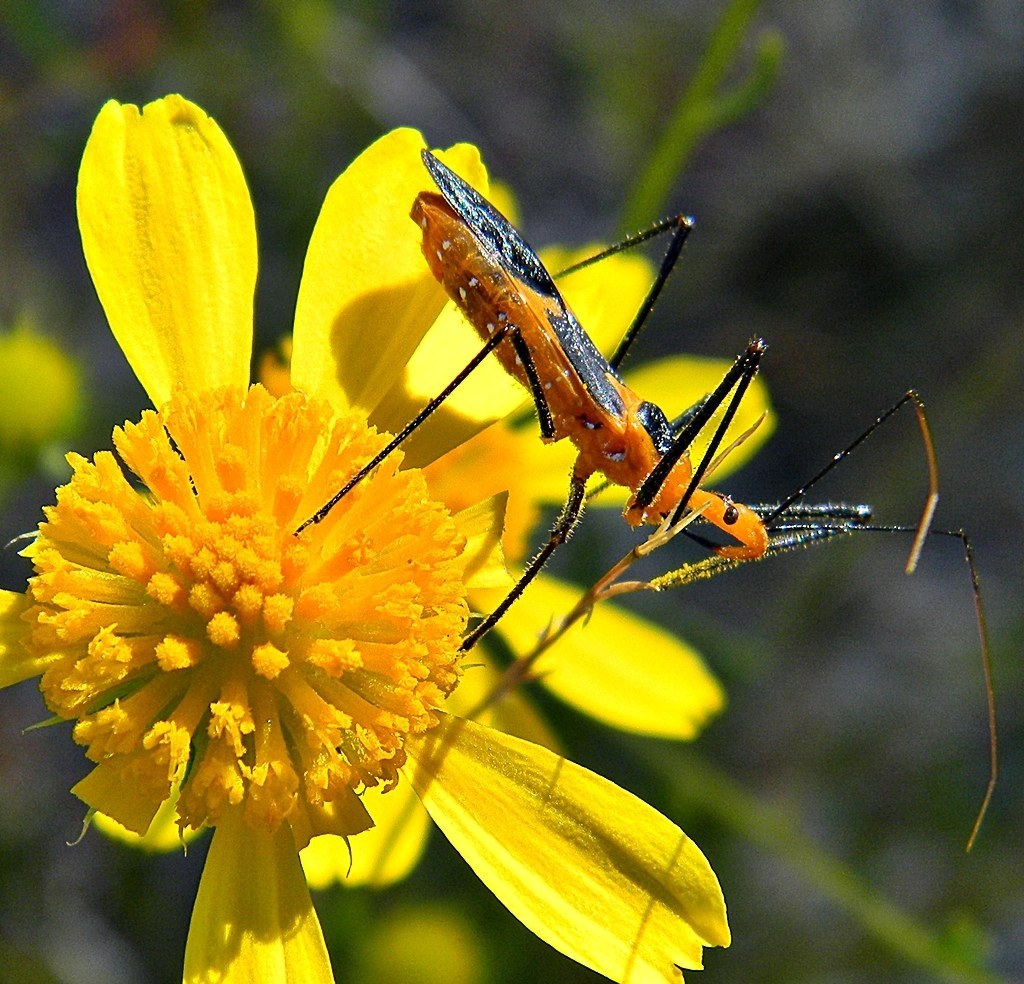
Assassin Bug
Gardens, meadows, and vegetation worldwide
Water Boatman Bug
Ponds, lakes, and slow-moving freshwater
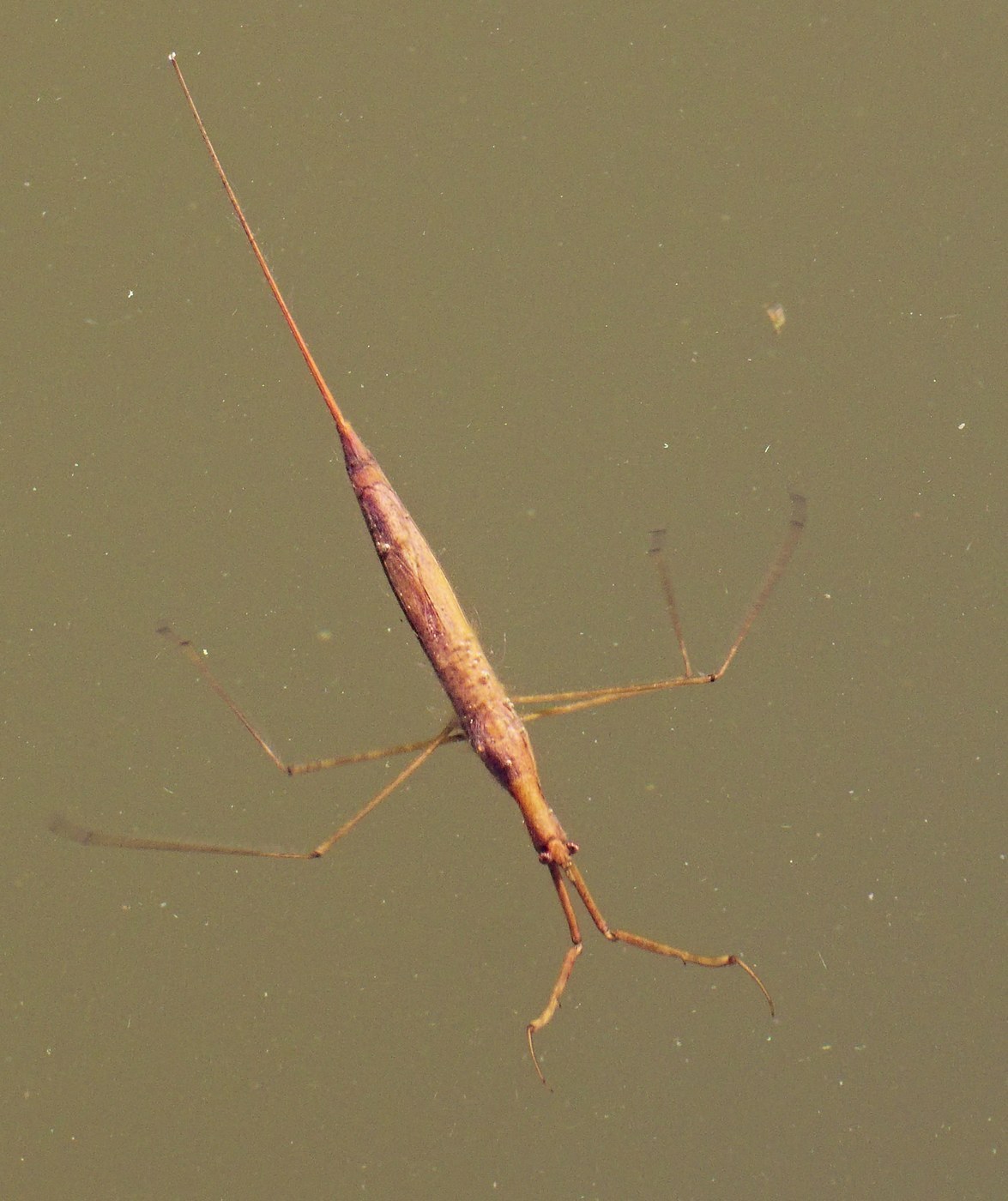
Water Stick Insect
Still and slow-moving water with dense submerged vegetation
Rough Stink Bug
Tree bark, woodlands, orchards, and shrubby vegetation
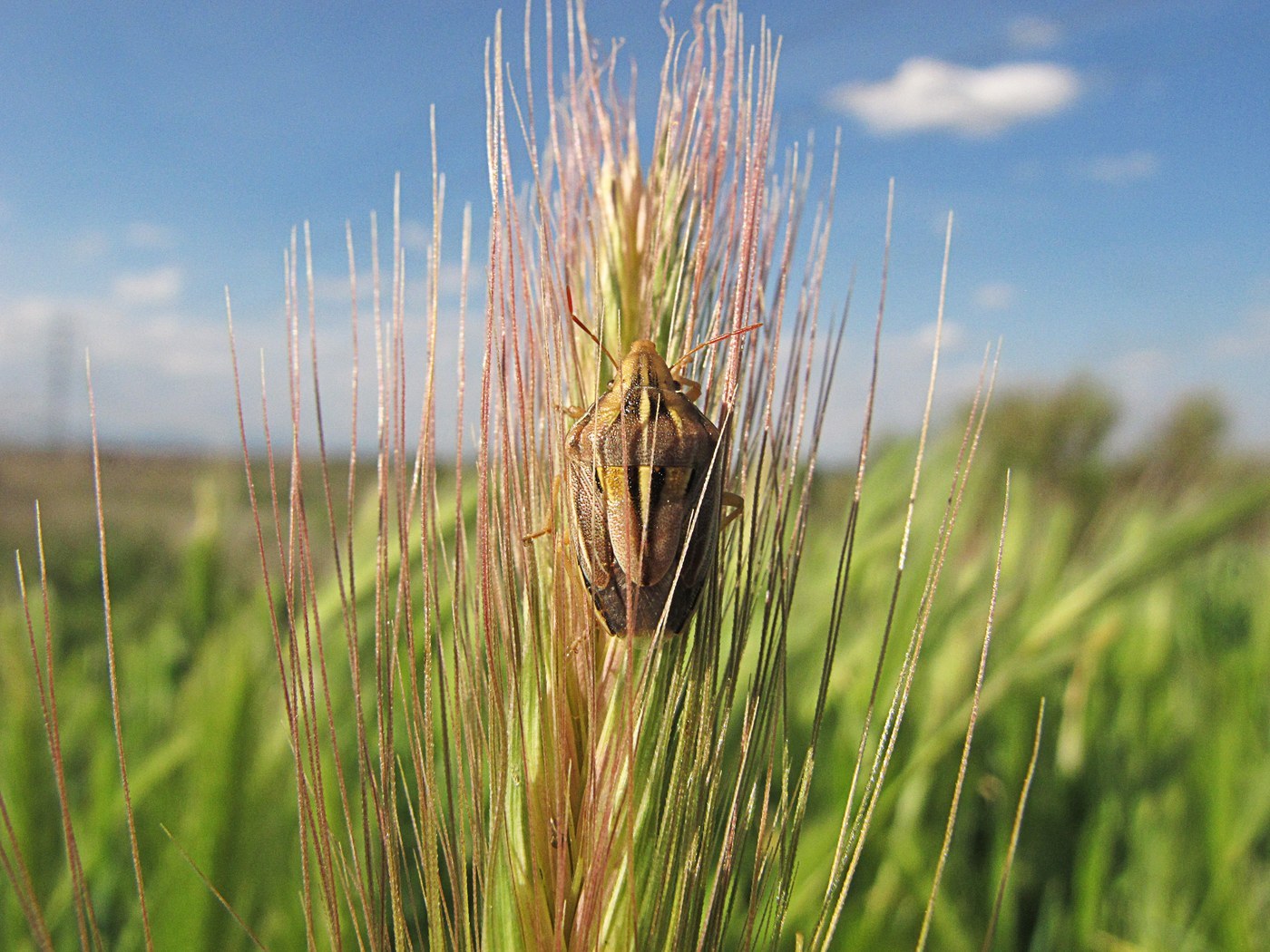
Stink Bug
Gardens, crop fields, and woodlands across temperate and subtropical regions
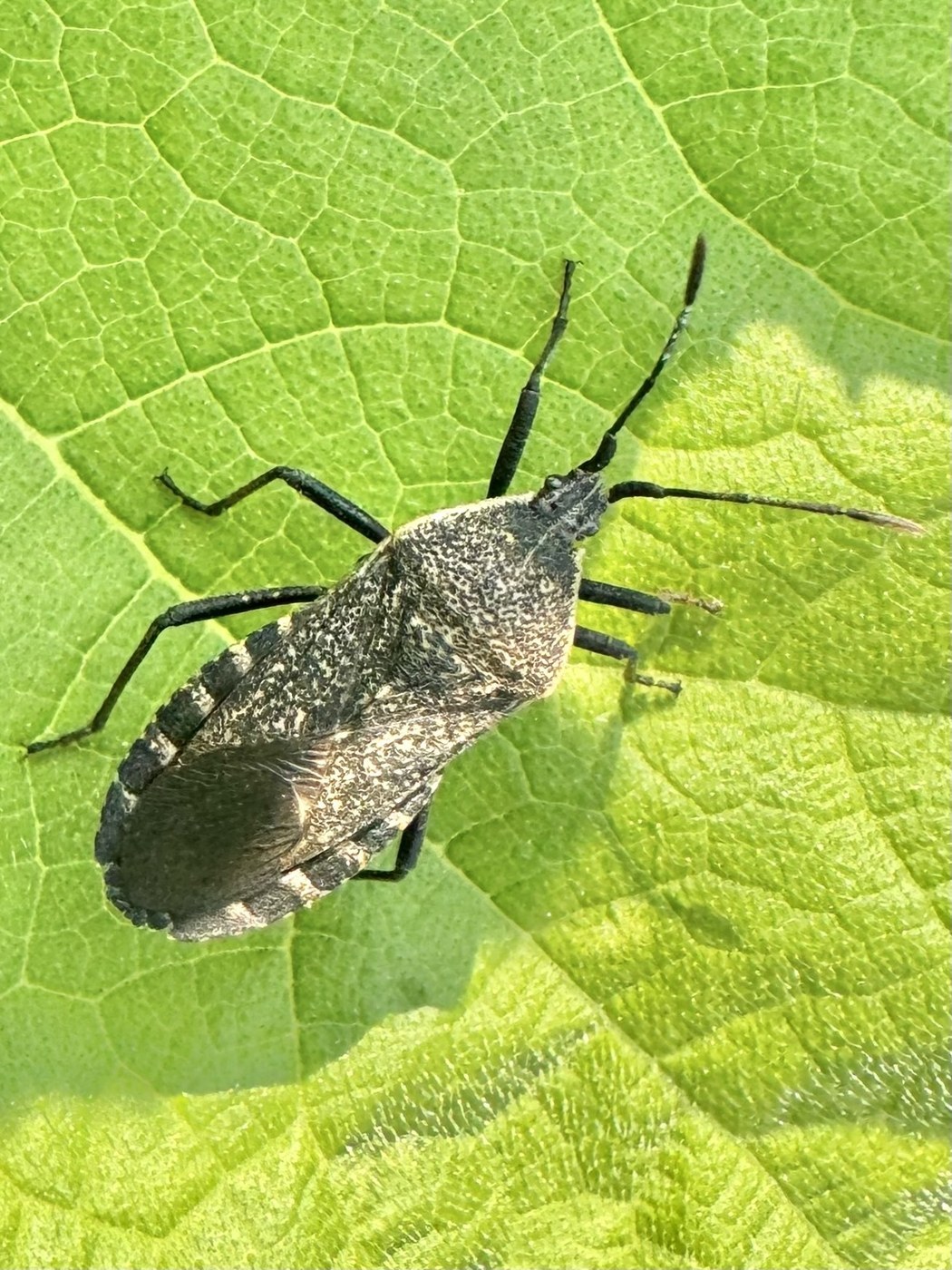
Squash Bug
Vegetable gardens and farm fields growing squash, pumpkin, and other cucurbits
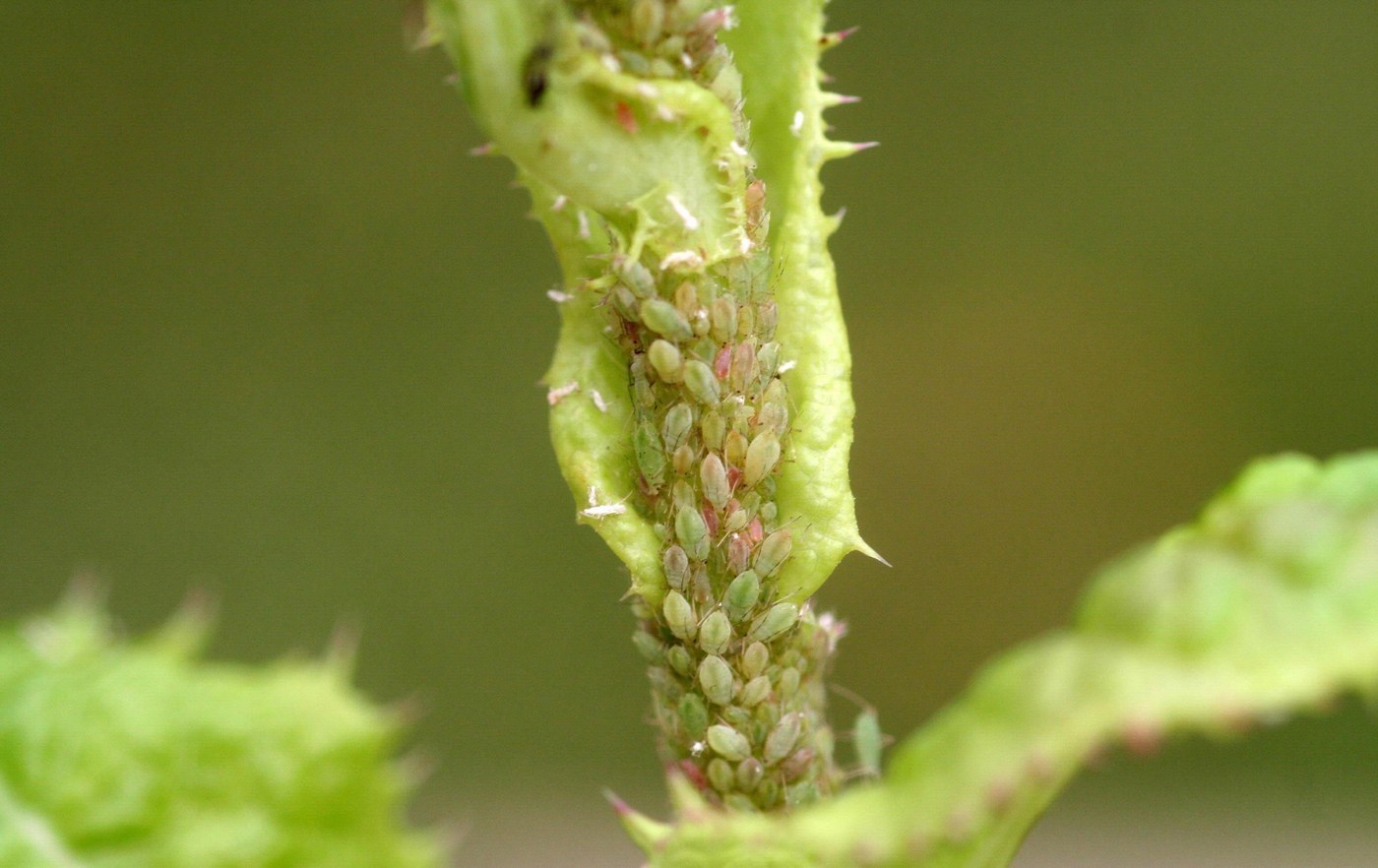
Aphid
On stems, leaves, and buds of a very wide range of host plants
Woolly Aphid
Bark crevices, root collars, and twigs of apple, elm, and alder trees
Whitefly
Greenhouses, gardens, and undersides of leaves on host plants
Water Measurer
Quiet edges of ponds, marshes, and slow streams
Two-Spotted Stink Bug
Gardens and fields with potato and nightshade-family plants