
Bug Encyclopedia
Search and identify bugs & insects — beetles, butterflies, moths, ants, bees, spiders and more — with size, habitat, danger, behavior, and how to tell them apart.
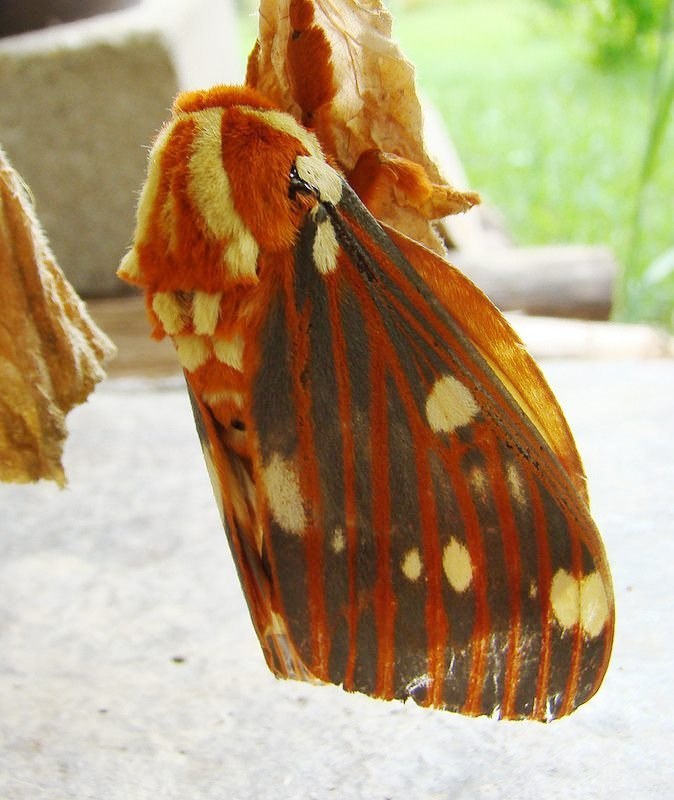
Regal Moth (Hickory Horned Devil)
One of the largest moths in North America, with orange-red and gray-veined wings on the adult, best known for its enormous, formidable-looking caterpillar, the hickory horned devil, a blue-green giant bristling with long orange spines.
mothFireflies (Lightning Bug)
A soft-bodied beetle that turns summer evenings magical by flashing rhythmic patterns of cold light from its abdomen to attract mates across meadows and forest edges.
beetle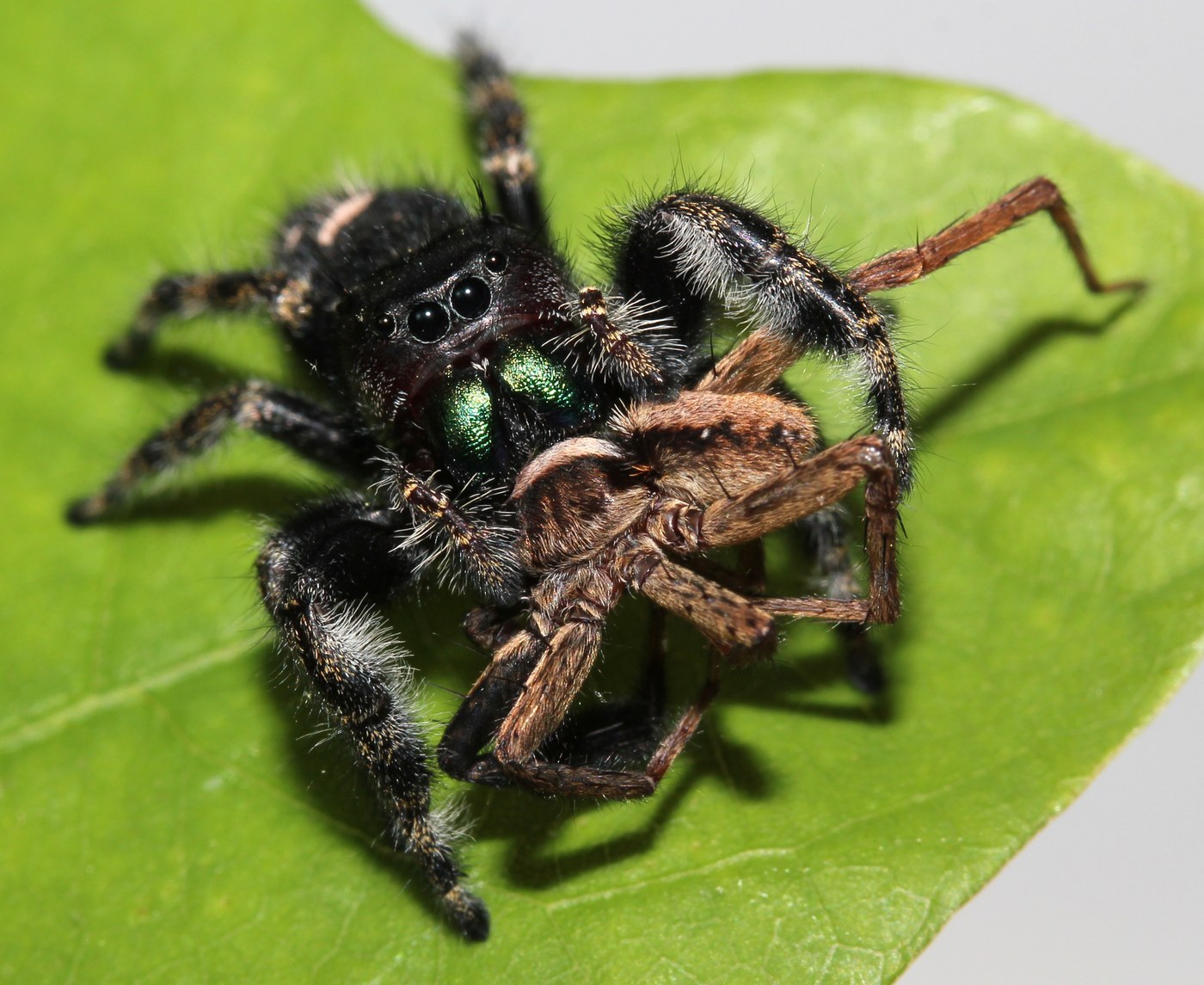
Bold Jumping Spider
A stocky, fuzzy black spider with iridescent green or blue mouthparts and a bold white or orange spot on its abdomen, the bold jumper is known for its excellent eyesight, curious behavior, and ability to leap many times its own body length.
spider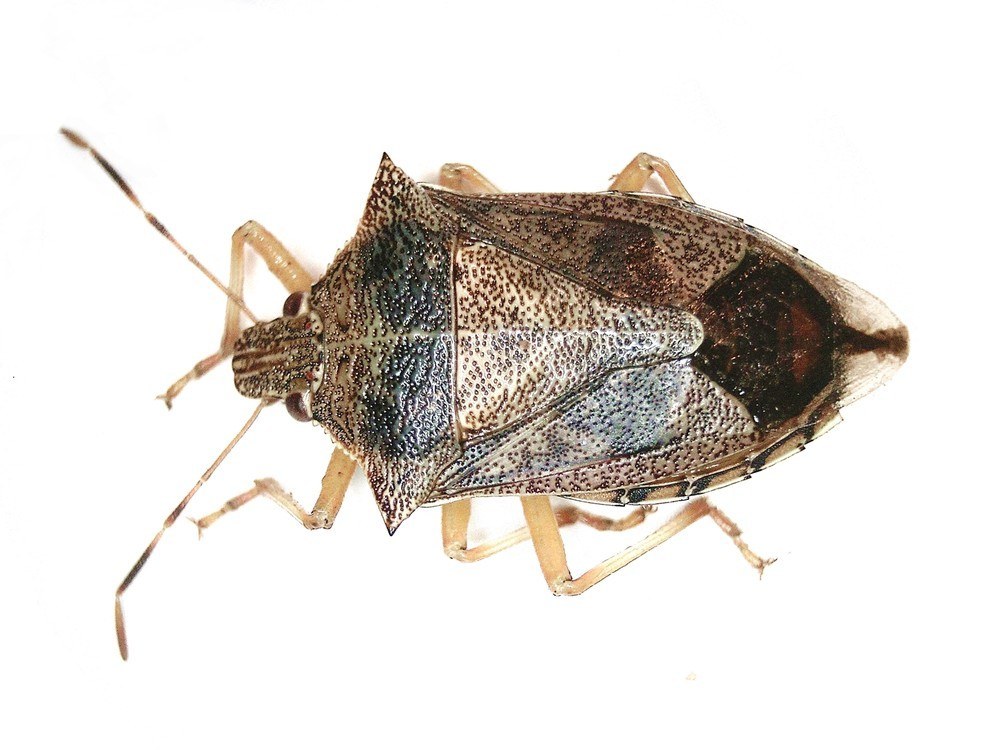
Spined Soldier Bug
A predatory stink bug identified by the sharp, pointed spines projecting from its shoulders, valued in gardens and farm fields for hunting caterpillars, beetle larvae, and other pest insects.
true-bug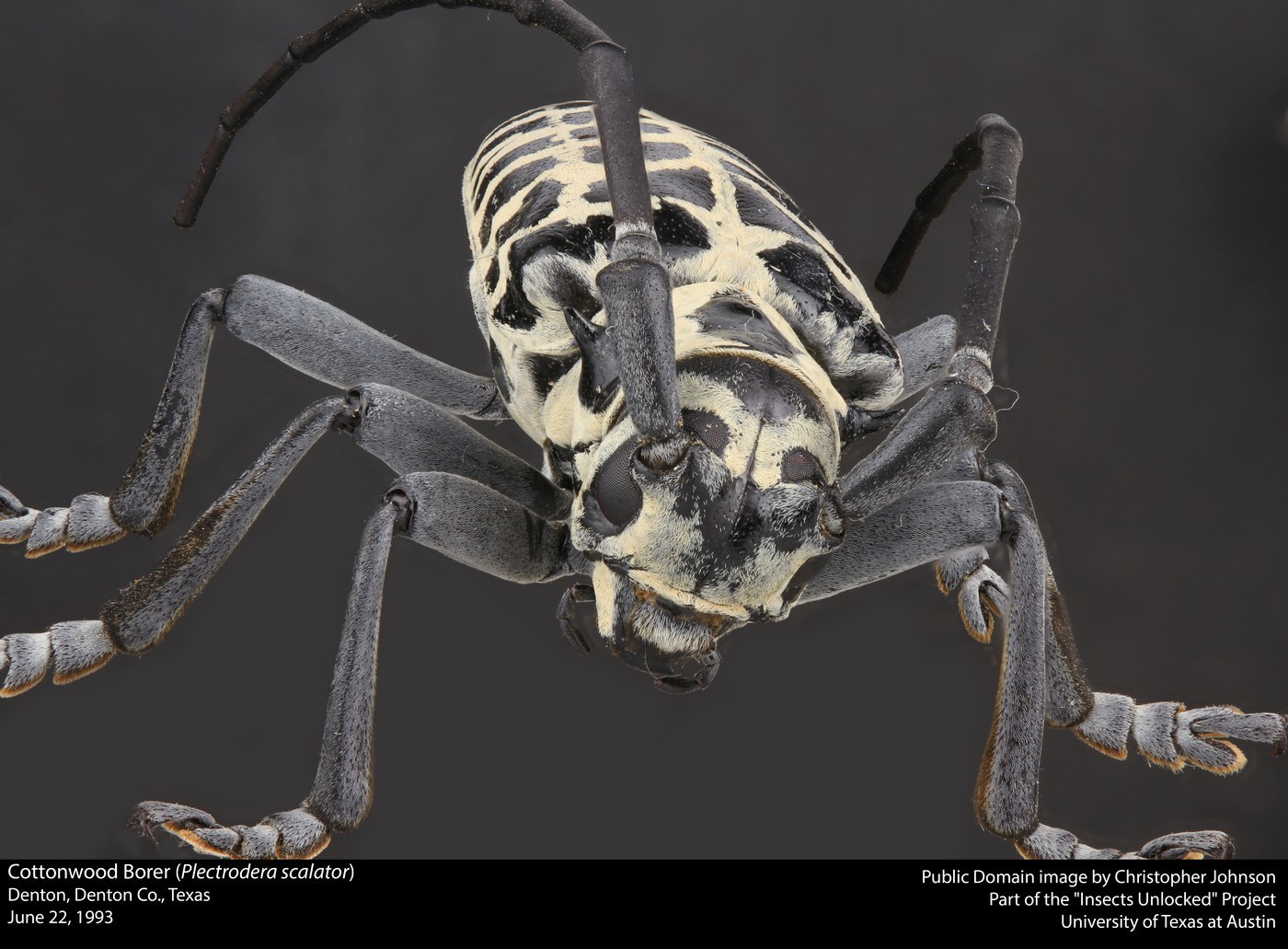
Cottonwood Borer
A large, boldly patterned longhorn beetle in black and chalky white checkerboard markings, often found clinging to the trunks of cottonwood and poplar trees near its larvae's root tunnels.
beetlePredatory Stink Bug
Unlike its plant-feeding relatives, the predatory stink bug is a hunter that spears caterpillars and beetle larvae with a stout beak. The spined soldier bug is a familiar shield-shaped garden ally.
true-bug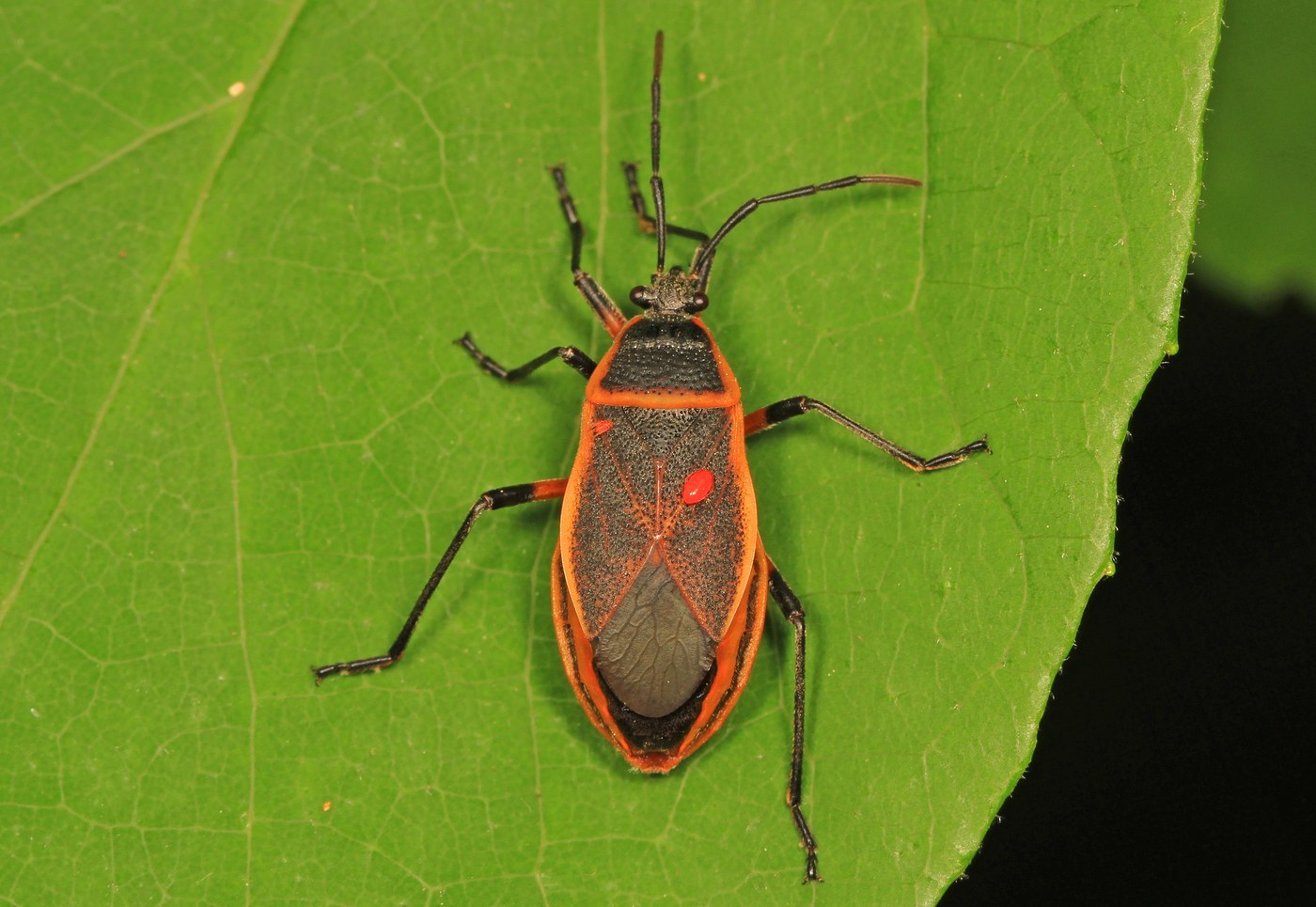
Bordered Plant Bug
A dark, oval-bodied true bug with a distinct pale margin around its wing edges, often mistaken for a large ant or beetle when its nymphs cluster together in tight groups.
true-bug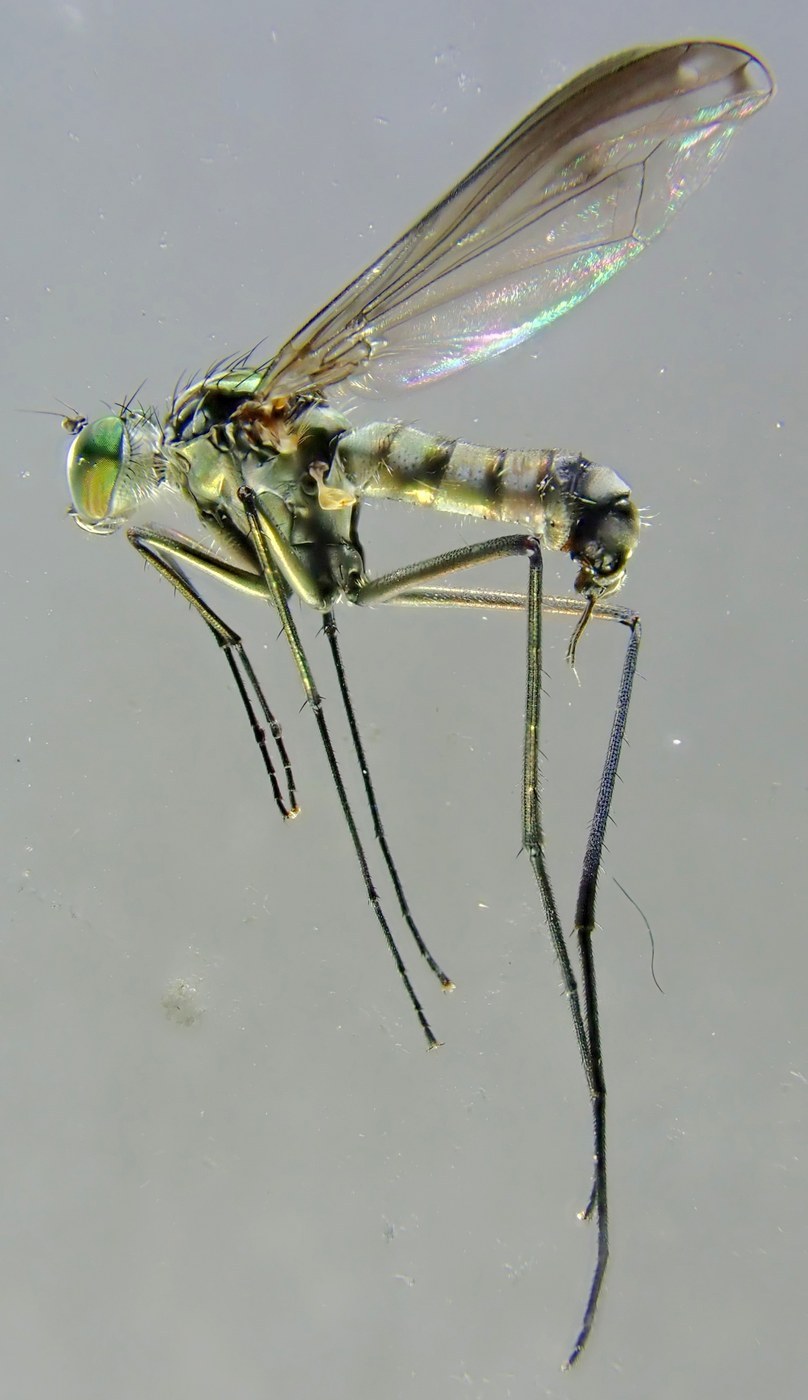
Long-Legged Fly
A jewel-bright little fly that flashes metallic green, blue, or bronze in the sunlight as it darts across leaves on comically long, stilt-like legs, pausing to perform quick territorial displays. Both adults and larvae are active hunters of even smaller insects, making this tiny fly a useful predator in gardens and wetlands alike.
fly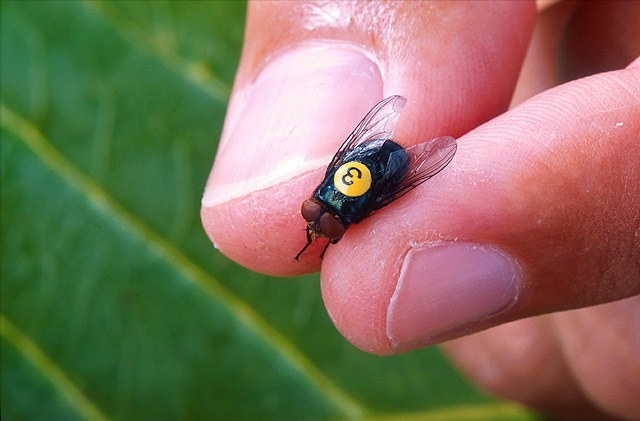
Screwworm Fly
A metallic blue-green blowfly whose larvae are unusual among maggots for feeding on living tissue rather than carrion, drawn to even small open wounds on warm-blooded animals. The species has been the target of one of the most successful large-scale insect eradication campaigns in history across much of North America.
flyRootworm
Working unseen below ground, rootworm larvae chew tunnels through the root systems of corn and other crops, the underground counterpart to the small, often striped or spotted beetles seen on leaves and flowers above.
beetle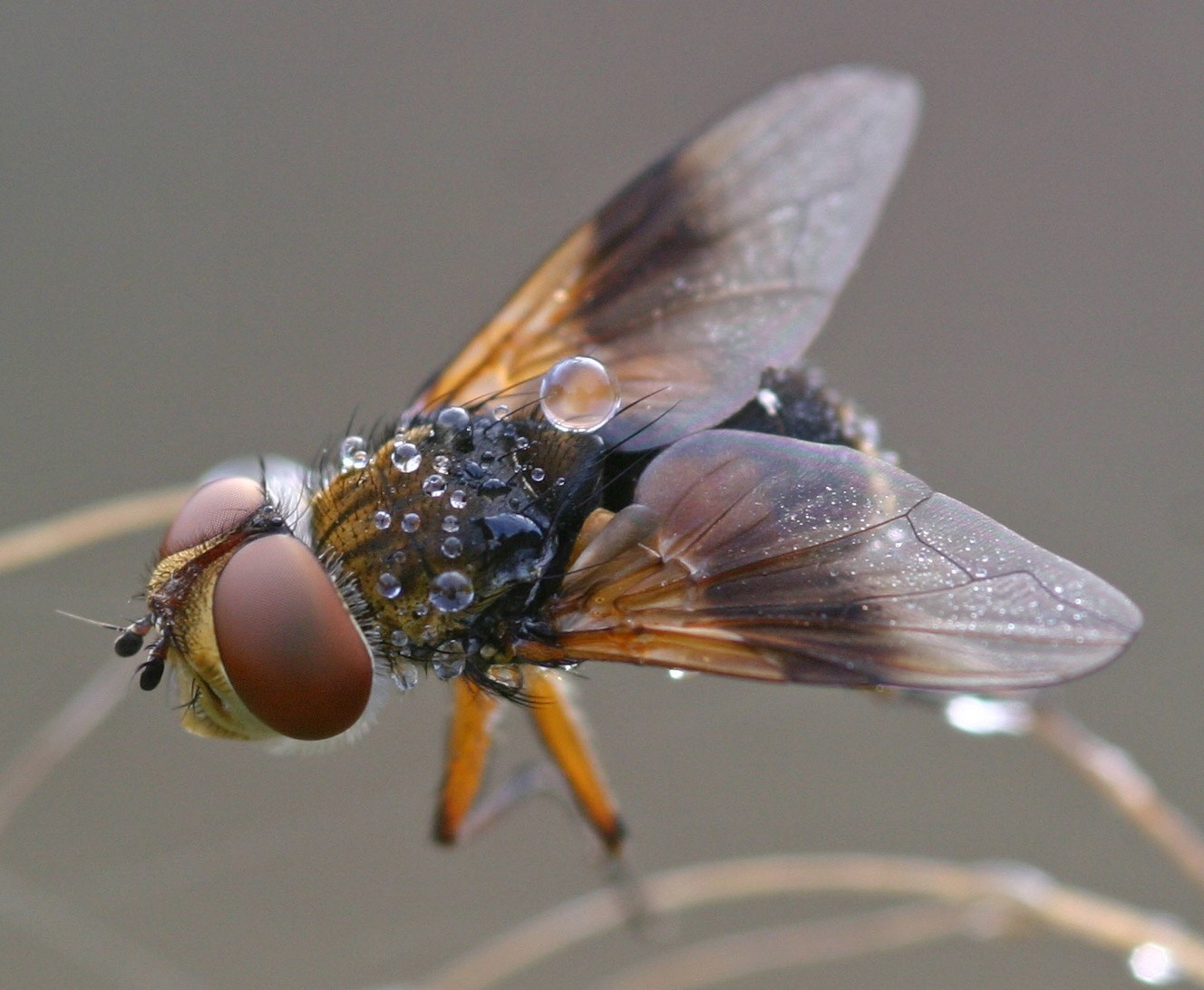
Tachinid Fly
A bristly, house-fly-like insect that looks unremarkable at a glance but hides one of the most important ecological roles among flies: its larvae develop as internal parasites of caterpillars, beetles, and other insects, quietly regulating populations across the landscape. Gardeners often welcome tachinid flies as natural allies against crop-damaging pests.
flyBirdwing Butterfly
Among the largest butterflies on Earth, birdwings soar through rainforest canopies on angular, bird-like wings. Males dazzle with iridescent greens, golds, and blues, while the larger females wear more subdued browns.
butterfly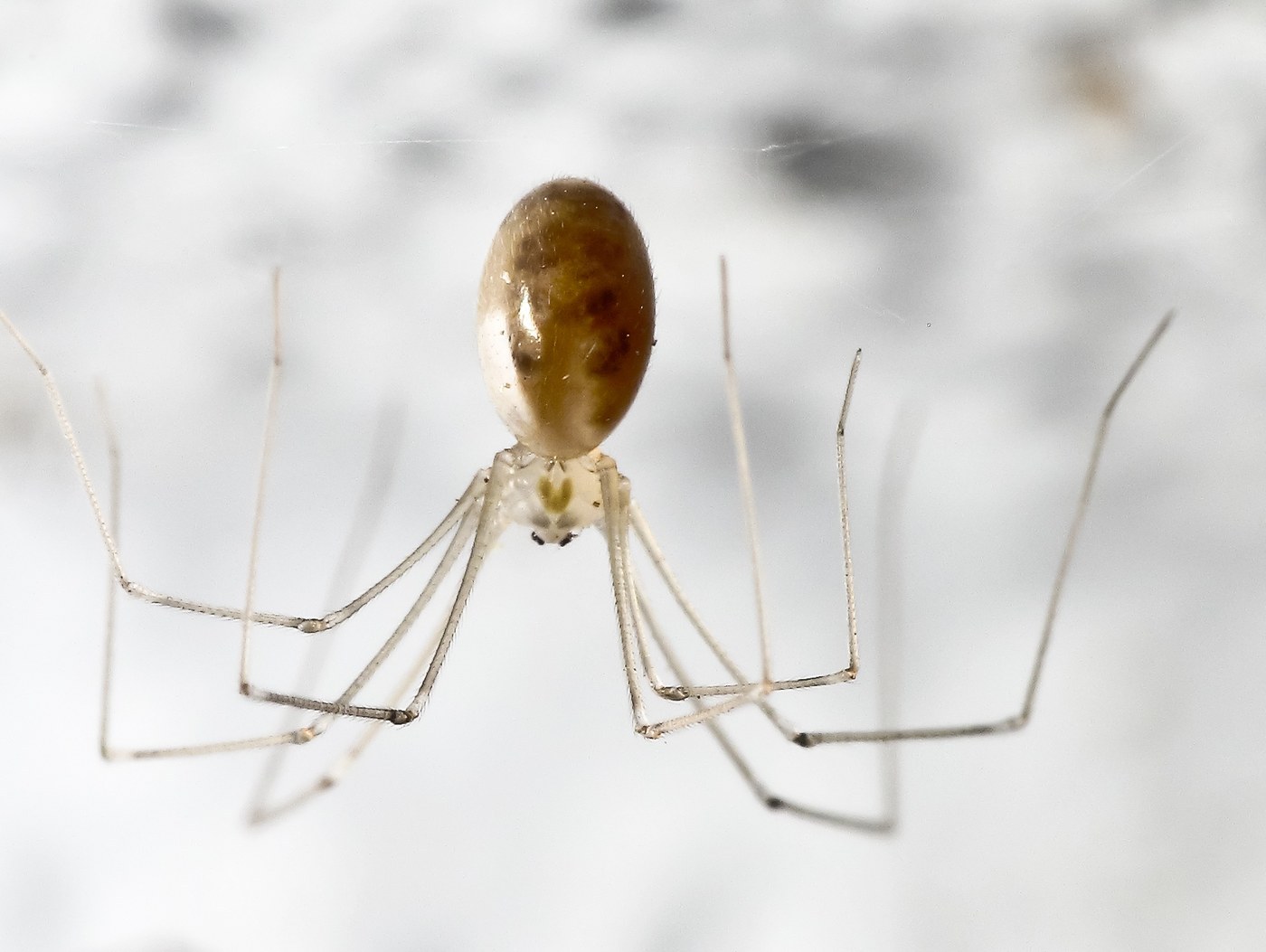
Cellar Spider
A pale, long-legged spider that builds loose, irregular webs in dark corners and is famous for rapidly vibrating in its web when disturbed, causing it to blur into an indistinct shape.
spiderPsyllid
A tiny, sap-sucking hopper that resembles a miniature cicada and springs away in a blur when its host leaf is disturbed.
true-bug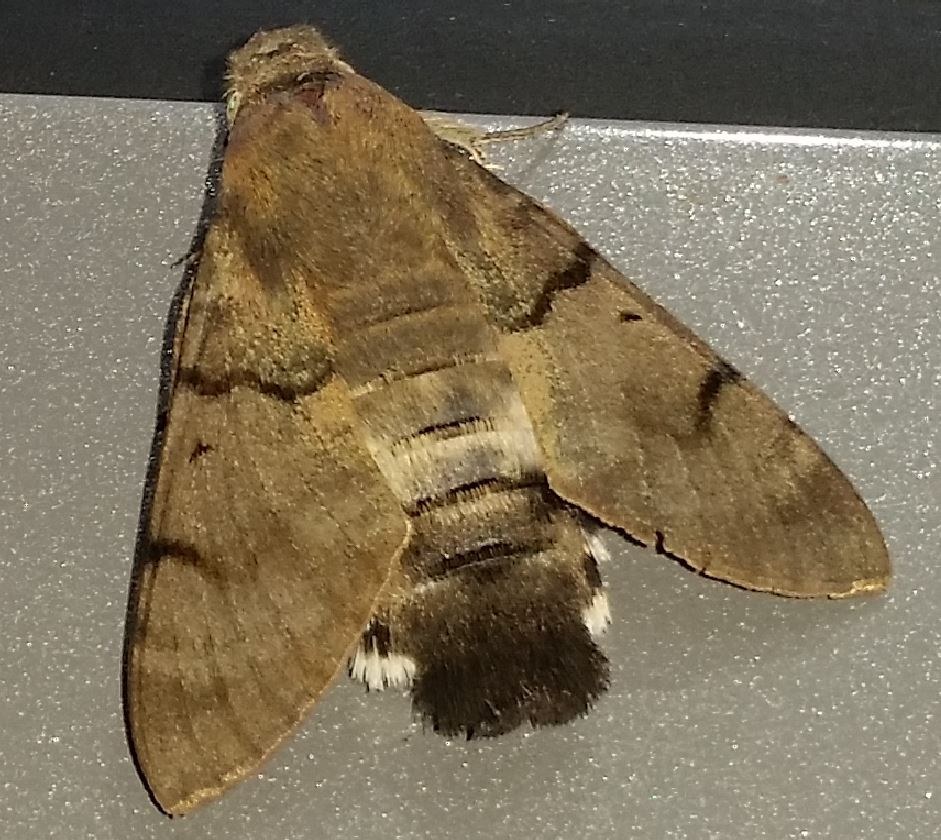
Hummingbird Hawk-Moth
A day-flying moth that hovers in front of flowers on blurring wings while unspooling a long proboscis to sip nectar, so closely mimicking a hummingbird in flight that it is frequently mistaken for one.
mothHummingbird Moth
Hovering at flowers with a blur of wings and a long uncoiling tongue, the hummingbird moth is easily mistaken for a tiny hummingbird. These plump, fast-flying hawk moths feed on nectar in broad daylight.
moth