
Tussock Moth Caterpillar
Orgyia spp.
A boldly tufted caterpillar bristling with dense brush-like hair tussocks and long dark pencil plumes that give it an almost punk-rock silhouette.
- Size
- About 1-1.5 in (2.5-4 cm) long
- Habitat
- Deciduous and mixed forests, orchards, and urban trees
- Danger
- Stings
Spotted a bug like this?
Identify any bug or insect from a photo, free.
Overview
Tussock moth caterpillars belong to the genus Orgyia, part of the tiger and tussock moth subfamily, and are best known for their striking hair tufts arranged in tight brush-like clusters along the back. These larvae feed on a wide range of deciduous trees and shrubs and are commonly noticed clinging to bark, fences, or window screens as they wander in search of a pupation site.
The adults of this genus show extreme sexual dimorphism: males are winged and fly to find mates, while females of many species are flightless with vestigial wings and never leave the cocoon area. The caterpillars themselves are one of the more visually distinctive larvae found in North American gardens and woodlands.
How to Identify
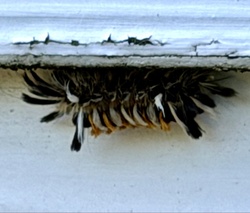
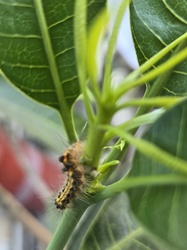
- Four dense, brush-like tufts of pale yellow to white hair set upright along the back (the "tussocks")
- A pair of long, dark pencil-like hair plumes projecting forward from behind the head
- One or two similar long hair plumes projecting backward from the rear
- Body color varies by species but often shows a black or gray background with red or orange spots along the sides
- Head capsule is typically bright red or orange
- Lookalikes include other hairy caterpillars such as woollybears, but the upright brush tufts are distinctive to tussock moths
Habitat & Range
These caterpillars are widespread across North America in deciduous forests, orchards, hedgerows, and urban landscaping wherever their host trees grow. They are especially noticeable in mid to late summer when mature larvae wander from feeding trees to find sheltered spots to spin cocoons.
Behavior & Diet
Tussock moth larvae are foliage feeders on a broad range of trees and shrubs, sometimes causing noticeable defoliation in outbreak years, which is why the species is regarded as a garden and orchard pest by growers. The hair tufts serve as a defense against predators, and the caterpillar is otherwise a slow, deliberate crawler. It plays a role in forest food webs as prey for birds and parasitic insects that specialize on tussock moth larvae.
Life Cycle
Females lay eggs in a frothy mass on or near the cocoon from which they emerged, since flightless females cannot disperse far. Larvae hatch and pass through several instars while feeding on leaves, developing their characteristic tufts as they mature. Mature caterpillars spin cocoons incorporating their own body hairs, often on tree bark or nearby structures, and pupate there. Depending on species and region, tussock moths may produce one or more generations per year, typically overwintering as eggs.
Frequently asked questions
Why does the tussock moth caterpillar have hair tufts?
The dense brush-like tufts and long pencil hairs act as a defense against predators, and the caterpillar can sting in defense if handled.
What plants do tussock moth caterpillars eat?
They feed on the leaves of many deciduous trees and shrubs, including maple, oak, and fruit trees.
Can male and female tussock moths both fly?
No, in many Orgyia species only the males are winged fliers; females are flightless and stay near their cocoon.
Where do tussock moth caterpillars pupate?
They spin a cocoon woven with their own body hairs, usually on bark or a sheltered surface near their feeding site.
Tussock Moth Caterpillar guides
In-depth guides for identifying, understanding, and living alongside Tussock Moth Caterpillar.
Tussock Moth Caterpillar identified by the community
Real finds identified with Bug Identifier.
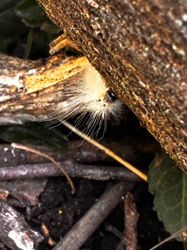
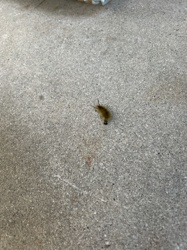
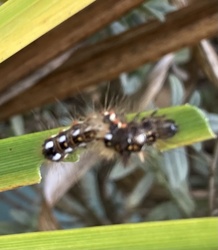
Other bugs you may enjoy
Bagworm
Trees and shrubs, especially conifers and ornamental landscaping
Armyworm
grasslands, pastures, and cereal crop fields
Zebra Longwing Caterpillar
Tropical and subtropical hammocks with passionflower vines
Tomato Hornworm
Gardens and fields with tomato, pepper, and other nightshade plants
Tent Caterpillar
Deciduous trees such as cherry, apple, and other rosaceous species
Tobacco Hornworm
tobacco, tomato, and pepper plants in gardens and fields
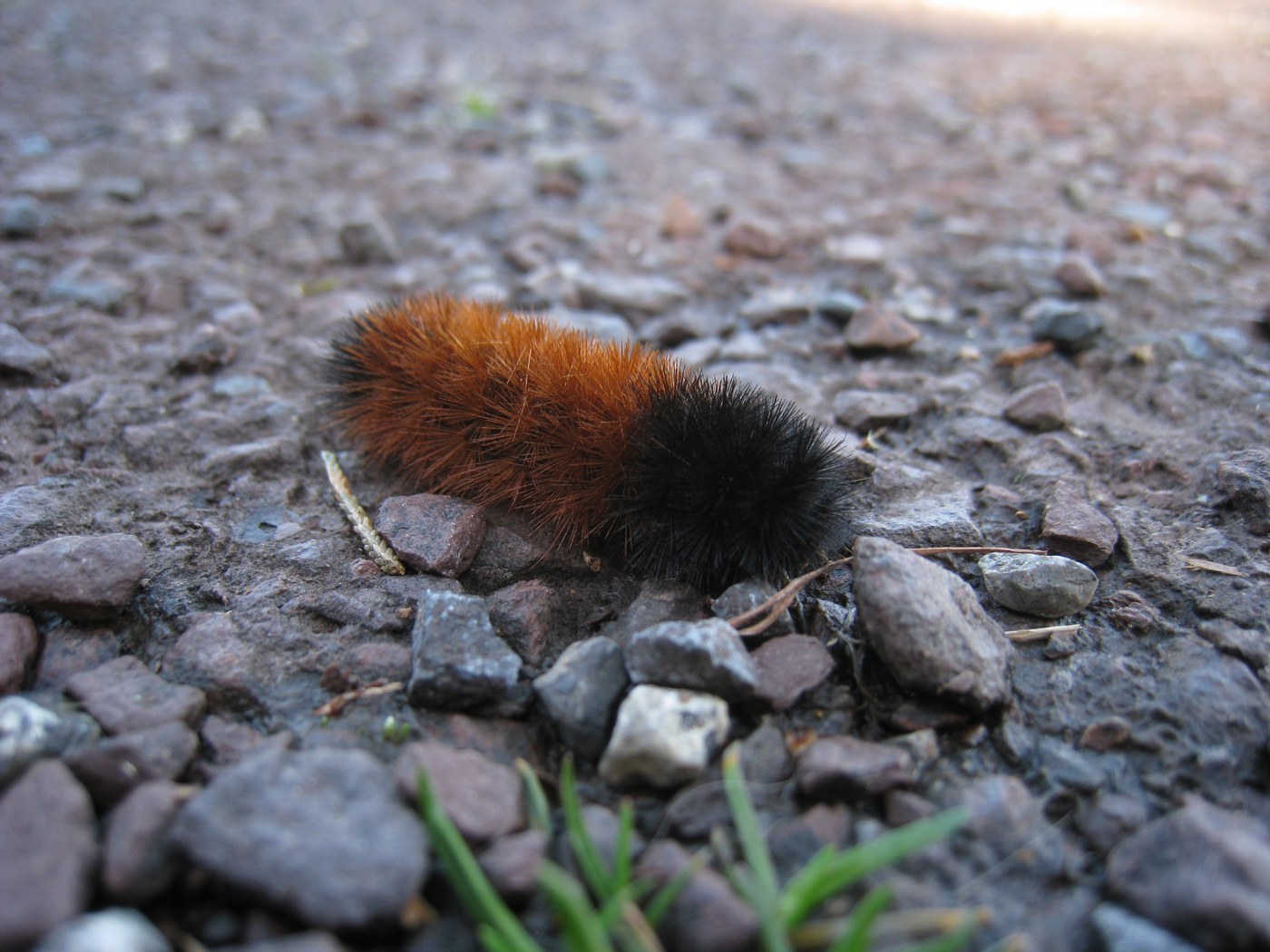
Woolly Bear Caterpillar
Gardens, meadows, roadsides, and woodland edges across North America
Sod Webworm
Turfgrass lawns, golf courses, pastures
Spiny Oak-slug Caterpillar
Deciduous forests and woodland edges with oak and other hardwoods
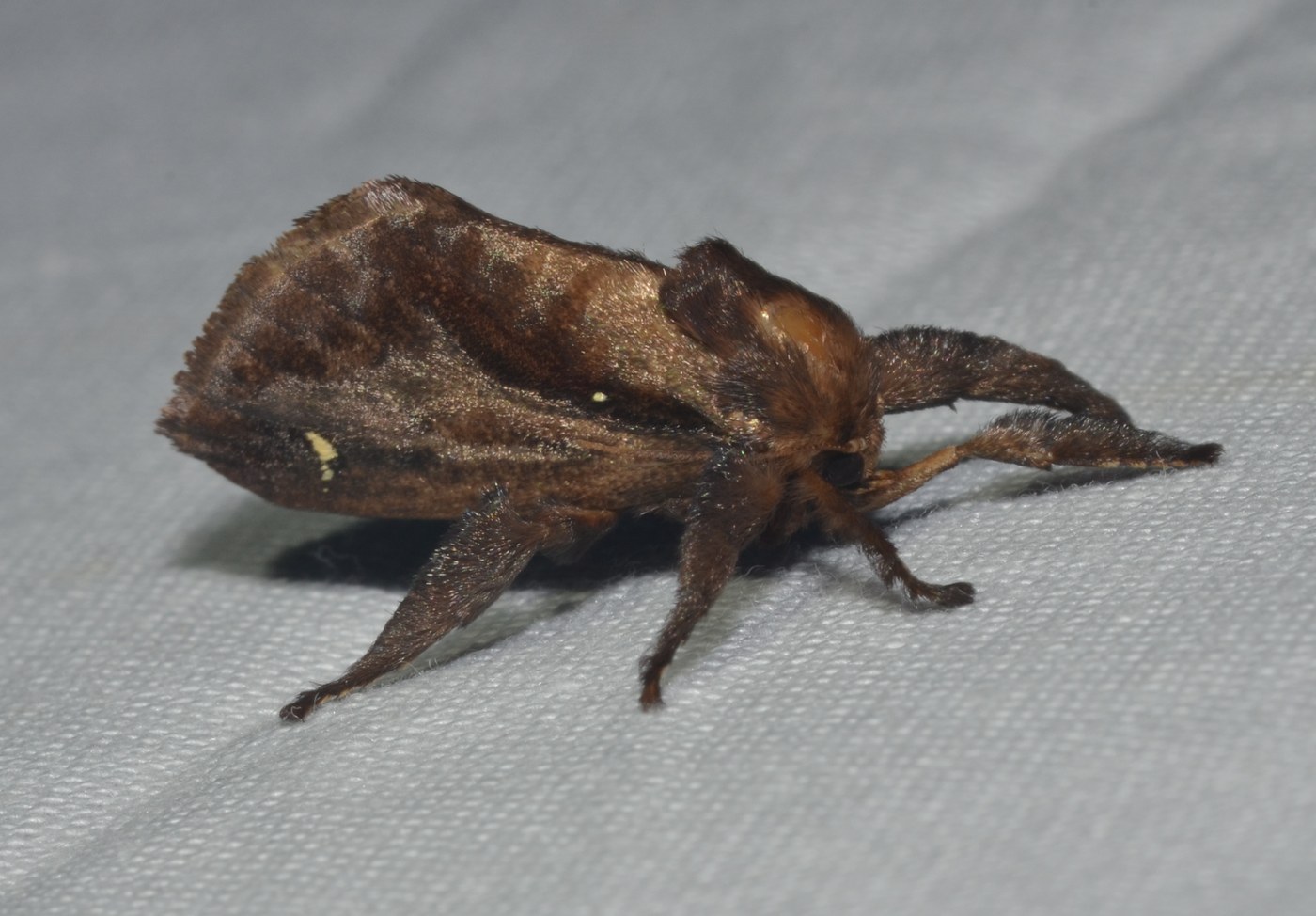
Saddleback Caterpillar
Deciduous trees and shrubs in eastern and southern North America
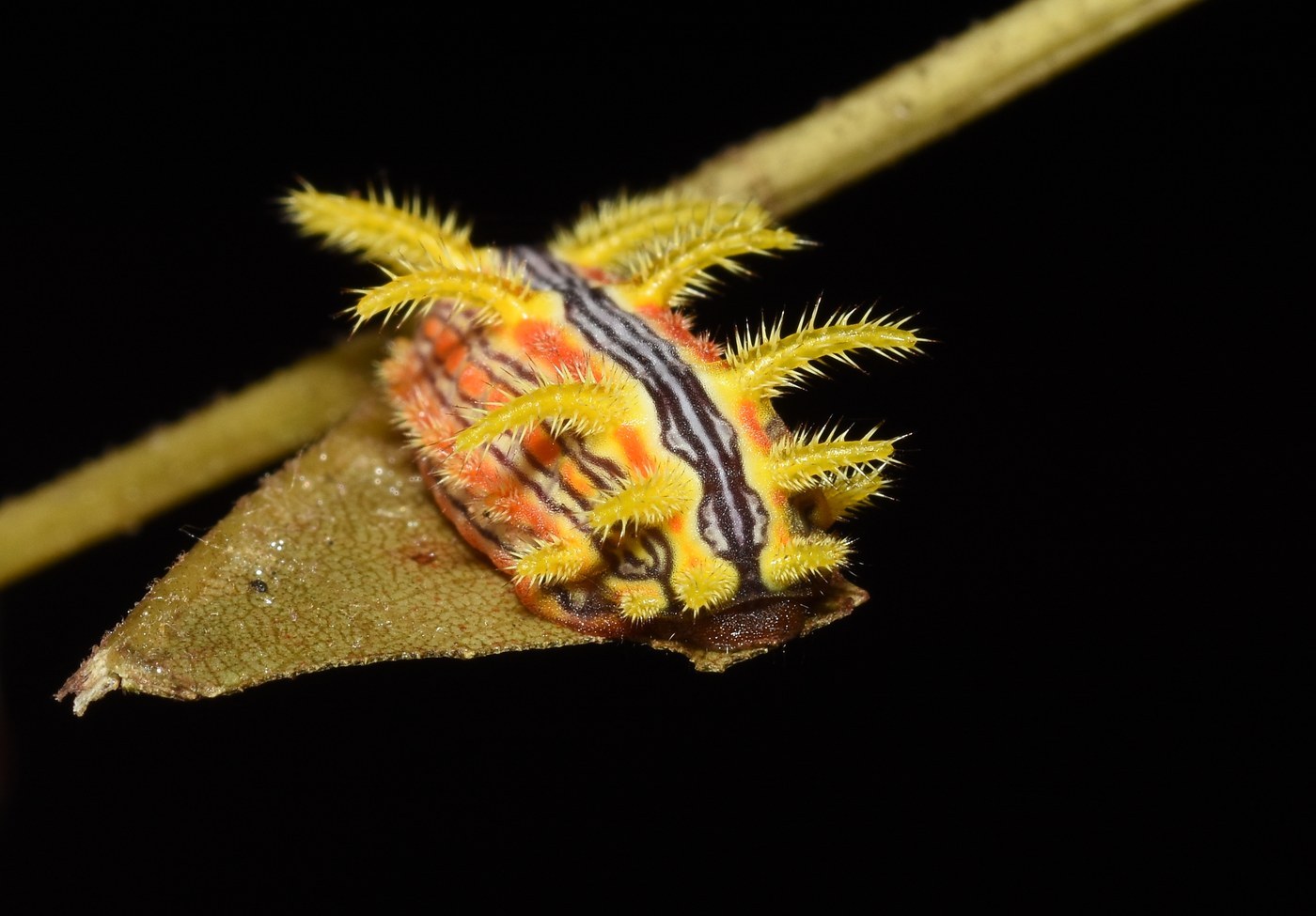
Stinging Rose Caterpillar
Gardens and woodlands with rose, dogwood, or oak
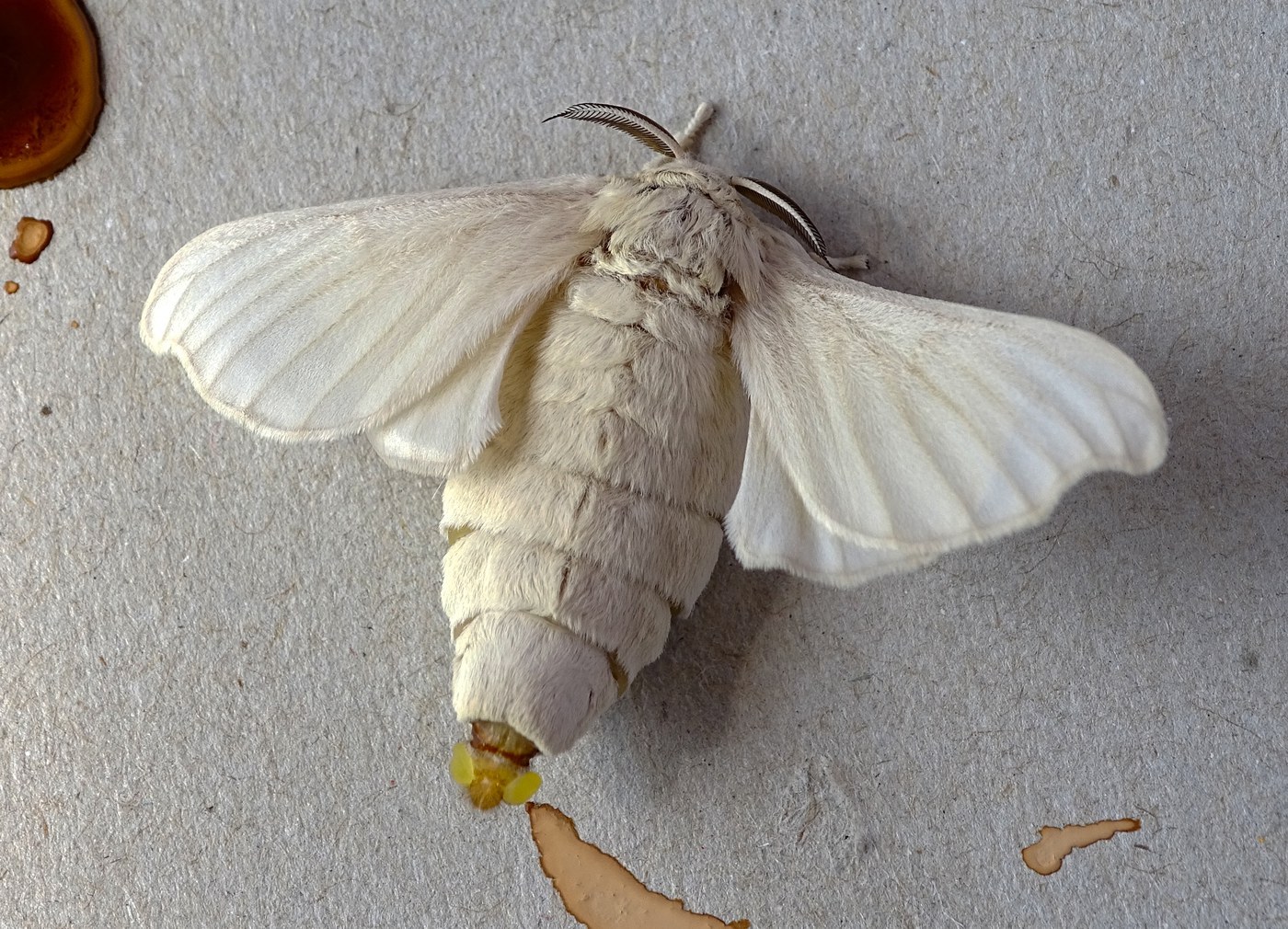
Silkworm
Reared exclusively in captivity on mulberry leaves; no independent wild population