
Bug Encyclopedia
Search and identify bugs & insects — beetles, butterflies, moths, ants, bees, spiders and more — with size, habitat, danger, behavior, and how to tell them apart.
Toe-Biter
One of the largest true bugs in the world, the toe-biter is a broad, flattened ambush predator that lies in wait among pond vegetation, seizing prey many times its own size with powerful raptorial front legs.
true-bugTortoise Beetle
A small, flat, disc-shaped beetle whose expanded wing covers and pronotum hide its head and legs almost entirely, giving it the look of a miniature turtle shell crawling across a leaf.
beetle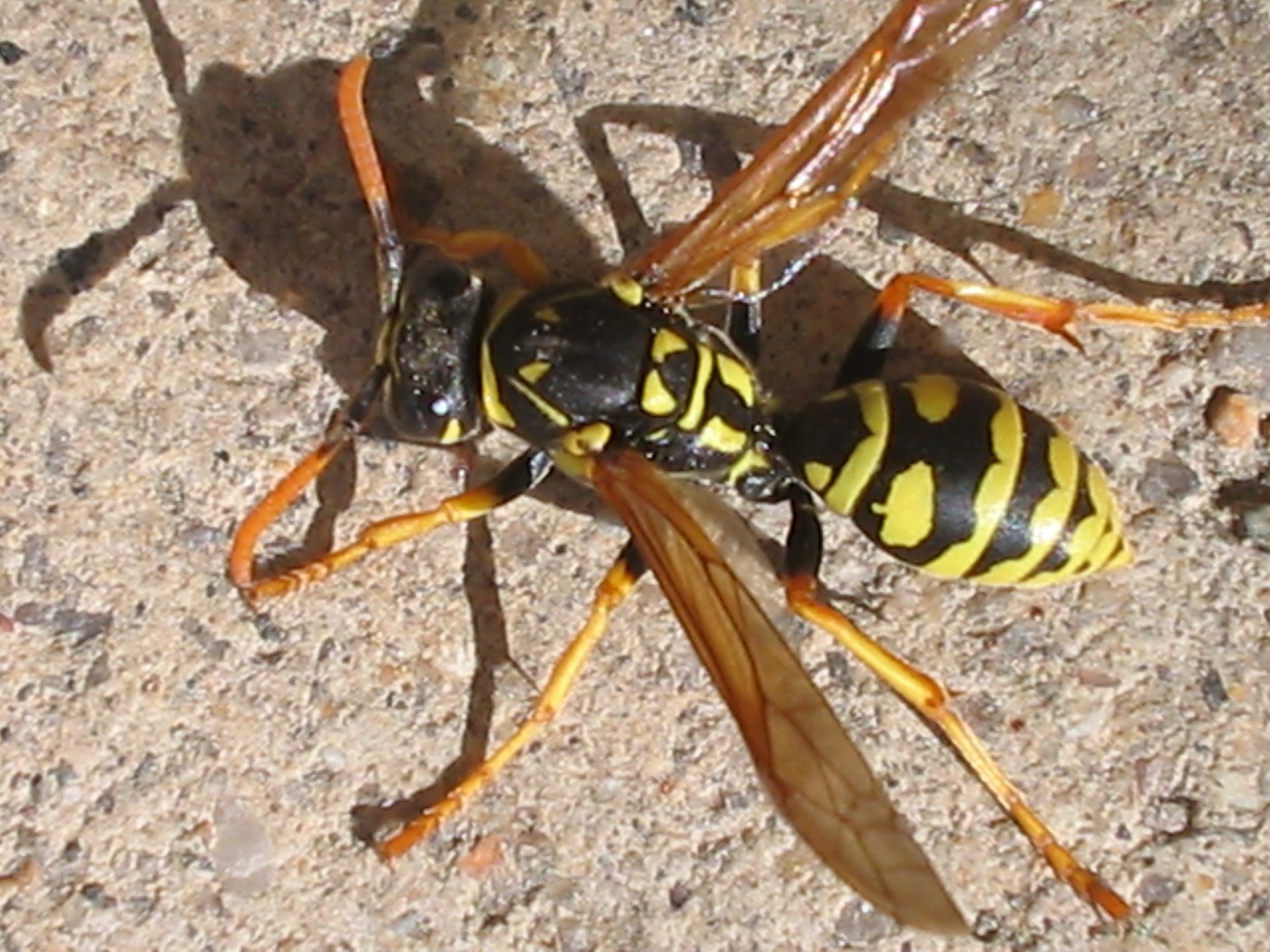
Paper Wasp
A slender, long-legged wasp with a narrow waist and reddish-brown to black coloring marked with yellow, recognized by its open, umbrella-shaped paper nest with visible hexagonal cells.
waspNursery Web Spider
Named for the silken nursery tent females weave to guard their hatching young, this slender, long-legged spider carries her large egg sac beneath her body in her fangs until the eggs are ready to hatch.
spiderGolden Silk Orb-Weaver Spider
Famous for spinning enormous webs of shimmering golden silk, the golden silk orb-weaver is a large, long-legged spider of warm climates. Females dwarf the tiny males and hang head-down in their sprawling snares.
spider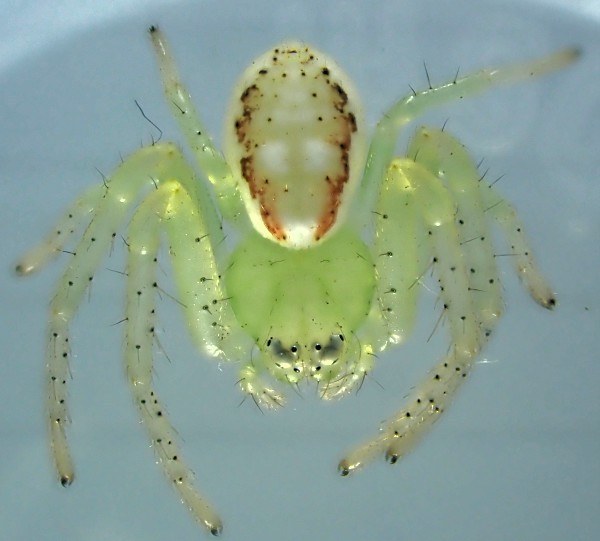
Crab Spider
Perched motionless atop a flower petal, often perfectly matched to its color, the crab spider is a patient ambusher that waits for pollinators to land within reach of its outstretched front legs.
spider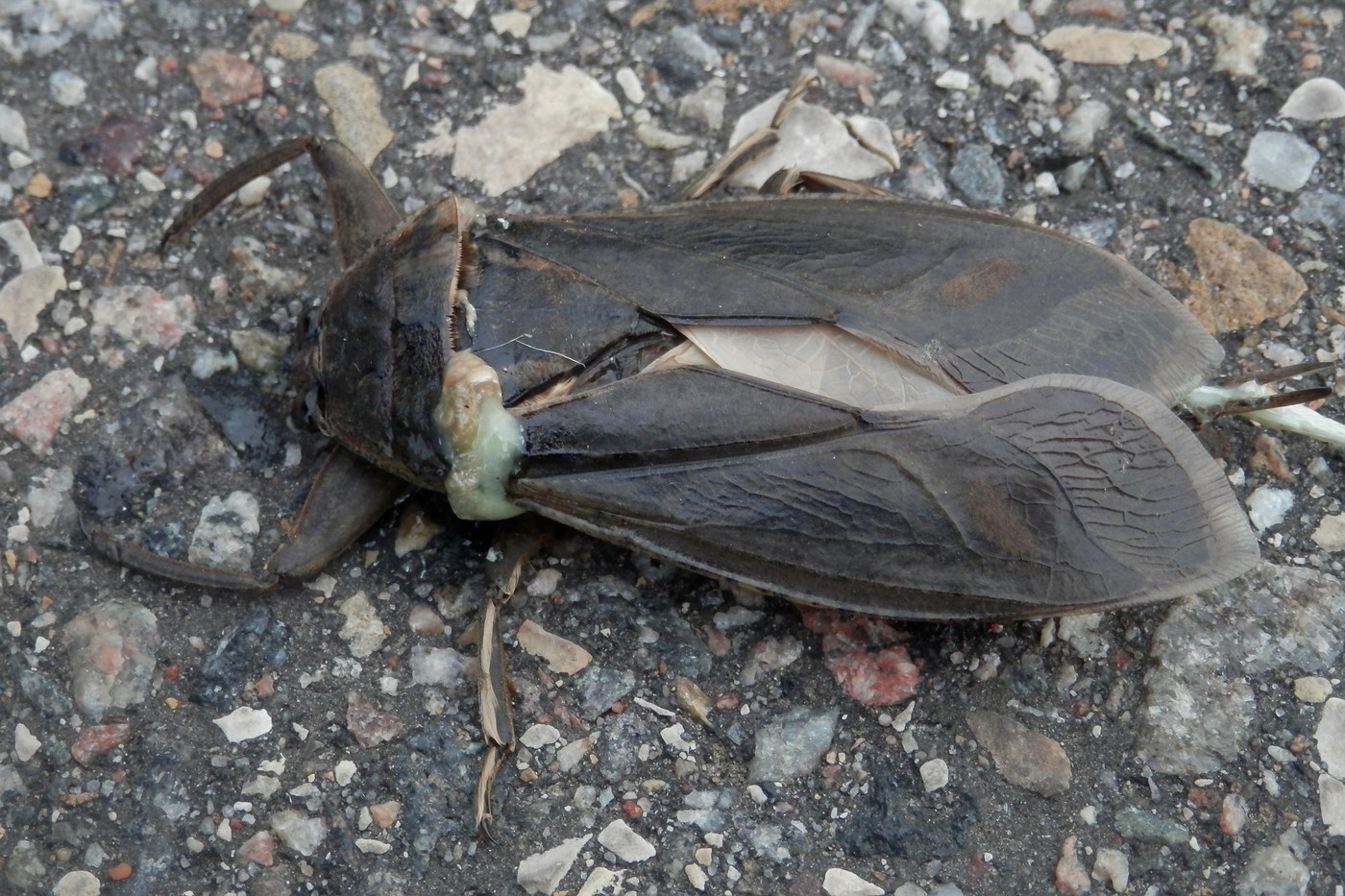
Giant Water Bug
A massive, flattened oval true bug with powerful grasping front legs, the giant water bug is North America's largest aquatic insect and an ambush predator lurking just below the surface of still water.
aquatic-insect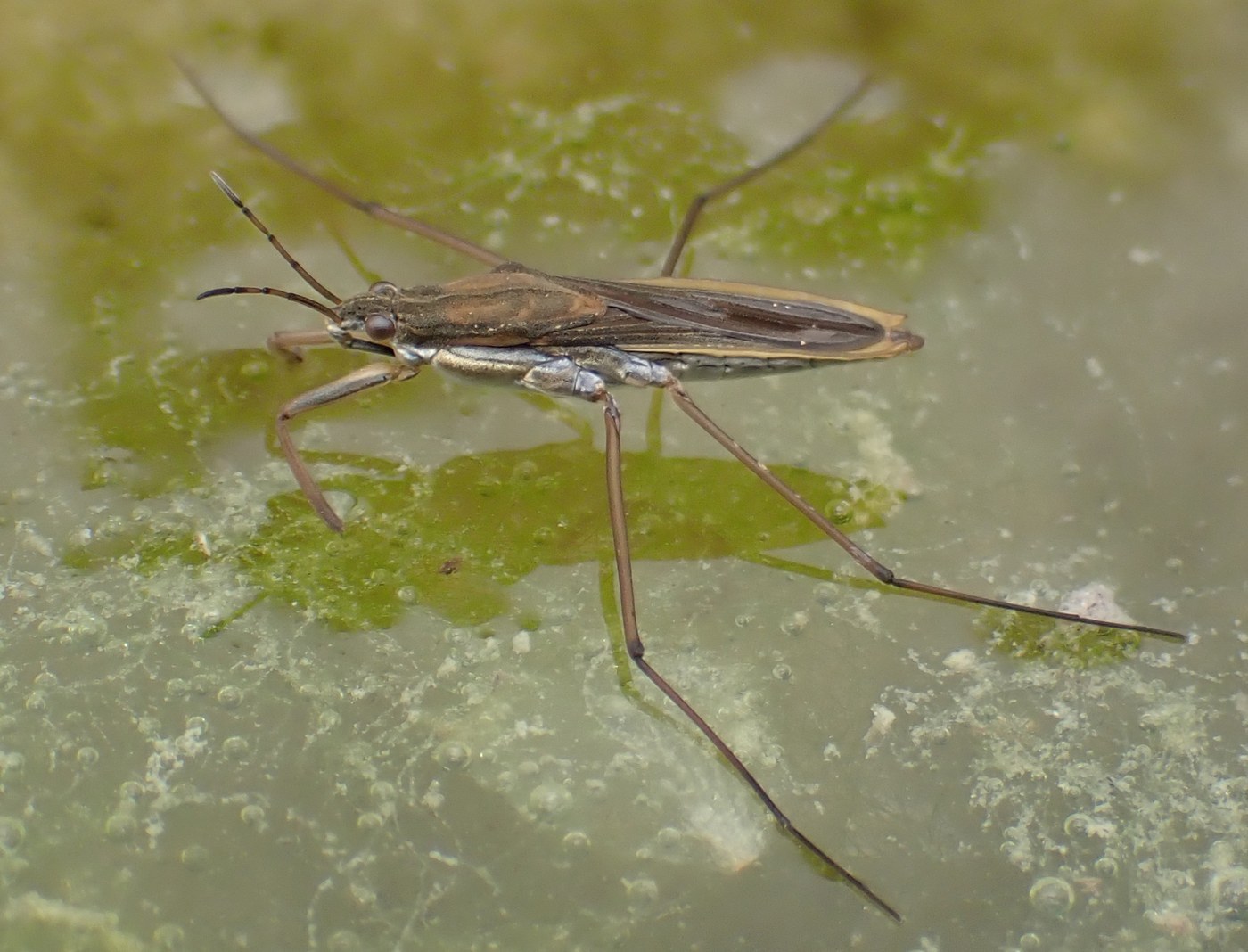
Pond Skater
Skimming effortlessly across the surface of still water on long, spindly legs, the pond skater uses ripples to detect struggling insects, which it seizes and pierces with needle-like mouthparts.
true-bug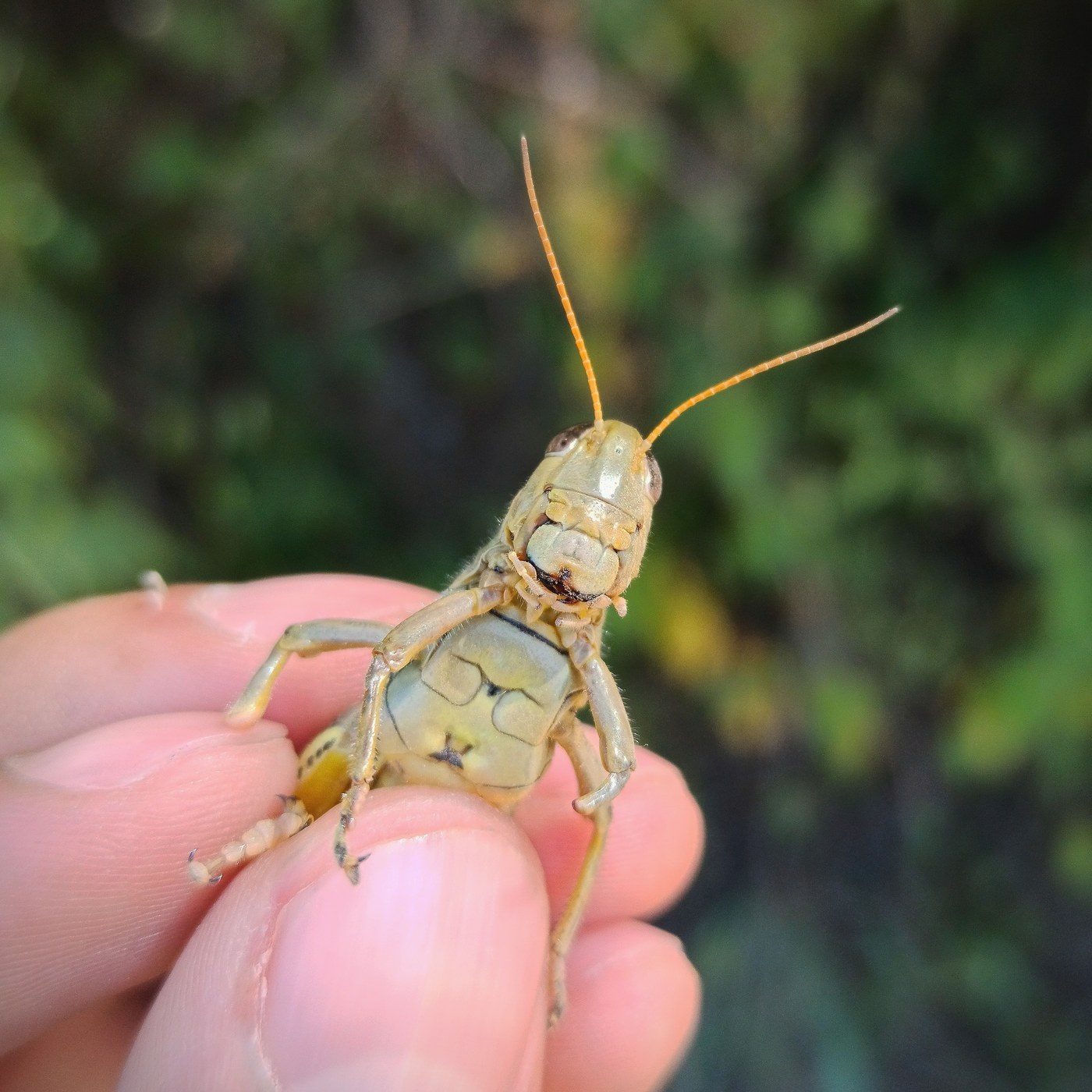
Differential Grasshopper
A large, robust grasshopper with a bold black herringbone pattern etched along its swollen hind legs, the differential grasshopper is one of the biggest and most recognizable pest grasshoppers in North America.
grasshopper-cricketBlister Beetle
An elongated, soft-bodied beetle with a distinctly narrow neck, often seen feeding in small groups on flowers, and known for releasing a defensive chemical from its leg joints when disturbed.
beetle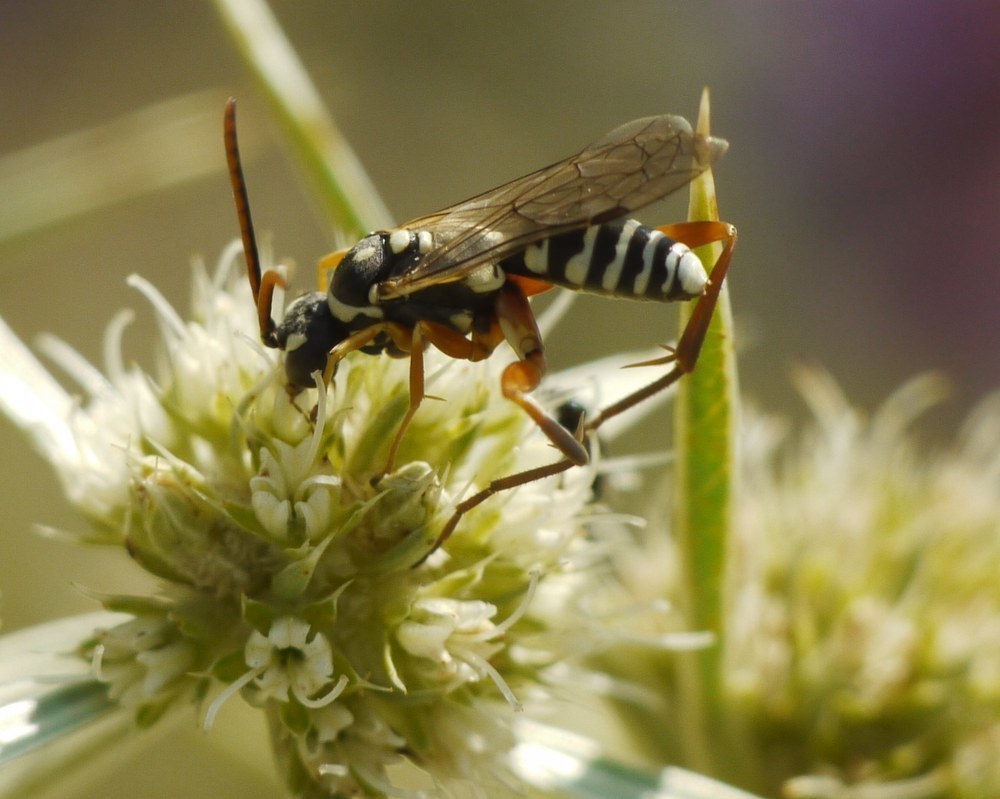
Spider Wasp
A quick, nervous-flying solitary wasp with long spiny legs and constantly flicking wings, recognized for its habit of running across open ground in short bursts while hunting spiders to paralyze and store for its young.
wasp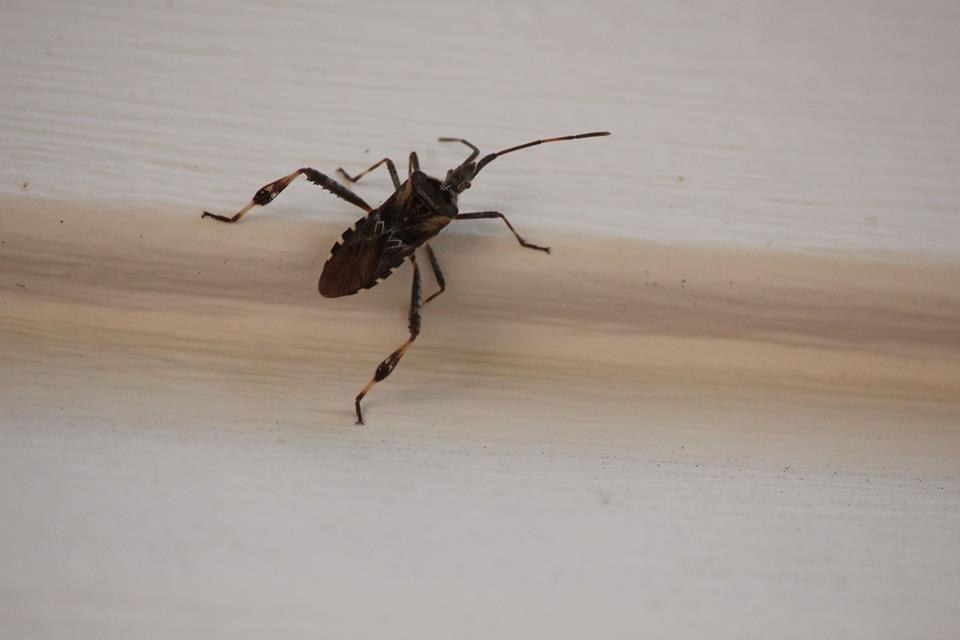
Western Conifer Seed Bug
A large brown true bug with flattened, leaf-shaped hind legs, native to conifer forests of the western United States but now widespread and notorious for gathering on and inside buildings as cooler weather approaches.
true-bug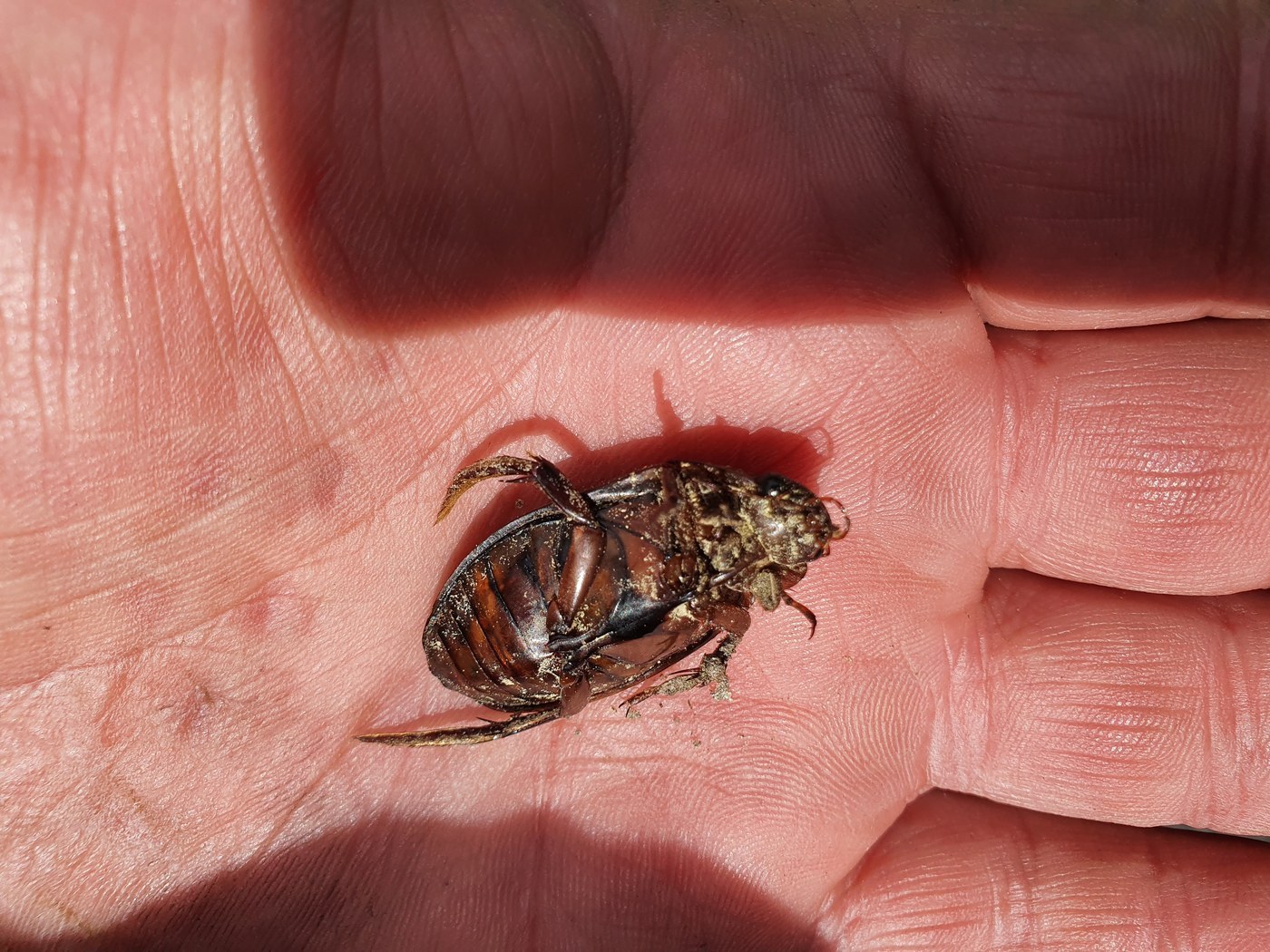
Great Diving Beetle
One of Europe's largest water beetles, the great diving beetle is a streamlined, olive-brown predator that rows through ponds on fringed hind legs, surfacing periodically to trap a bubble of air beneath its wing covers.
beetleCreeping Water Bug
Broad, oval, and flattened like a tiny shield, the creeping water bug crawls methodically through submerged vegetation rather than swimming freely, using its stout, raptorial front legs to seize prey.
true-bugWhip Scorpion
A flattened, spider-like arachnid with a pair of extraordinarily long, whip-thin front legs used to feel out its surroundings in the dark, and large spiny pedipalps held out front like a crab's claws. Despite the name and fearsome appearance, it has no stinger and no fangs.
arachnid
Mexican Redknee Tarantula
One of the most recognizable tarantulas in the world, this heavy-bodied spider has jet-black legs banded with vivid orange-red at each joint, and defends itself by kicking a cloud of irritating hairs from its abdomen rather than attacking.
spider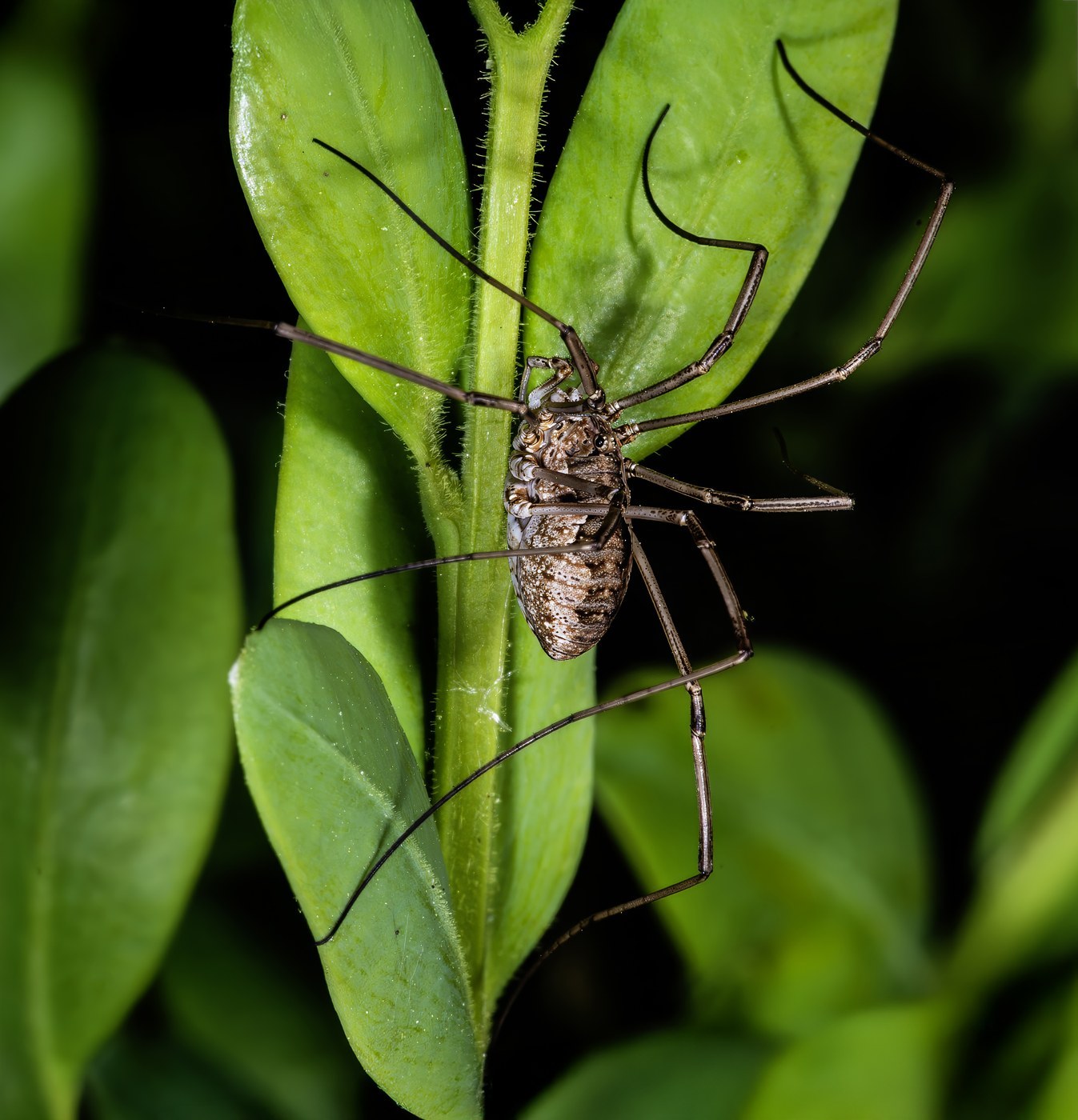
Harvestman
An arachnid built almost entirely of legs, with a single compact, oval body segment and no waist separating it into two parts like a true spider. Common in gardens and forests worldwide, it scuttles along on impossibly long, thin legs scavenging for food after dark.
arachnid
Goliath Birdeater
The heaviest spider in the world, the Goliath birdeater is a massive, hairy tarantula from the South American rainforest whose leg span can rival a dinner plate, though despite its name it primarily hunts insects and other invertebrates rather than birds.
spiderWarble Fly
A furry, bee-mimicking fly that never lands on flowers or feeds as an adult, spending its brief life darting around grazing cattle to lay eggs on their legs and lower body. Herds sometimes react with sudden panicked runs, known as gadding, whenever a warble fly approaches.
flySnipe Fly
A slender, long-legged fly often seen perched head-down on a sunny tree trunk or fence post, patiently watching for smaller insects to ambush. Its tapered, wasp-like abdomen and habit of resting motionless with legs splayed give it a distinctive, almost sentry-like posture in woodland clearings.
flyMarch Fly
A stout, all-black fly that emerges in sudden, dense swarms during the first warm days of spring, often dangling its long hind legs conspicuously in slow, low flight over grass. Its name comes from its habit of appearing reliably around the start of the month, sometimes on cue near a particular saint's feast day in the traditional European calendar.
fly