
Bug Encyclopedia
Search and identify bugs & insects — beetles, butterflies, moths, ants, bees, spiders and more — with size, habitat, danger, behavior, and how to tell them apart.
Hummingbird Moth
Hovering at flowers with a blur of wings and a long uncoiling tongue, the hummingbird moth is easily mistaken for a tiny hummingbird. These plump, fast-flying hawk moths feed on nectar in broad daylight.
moth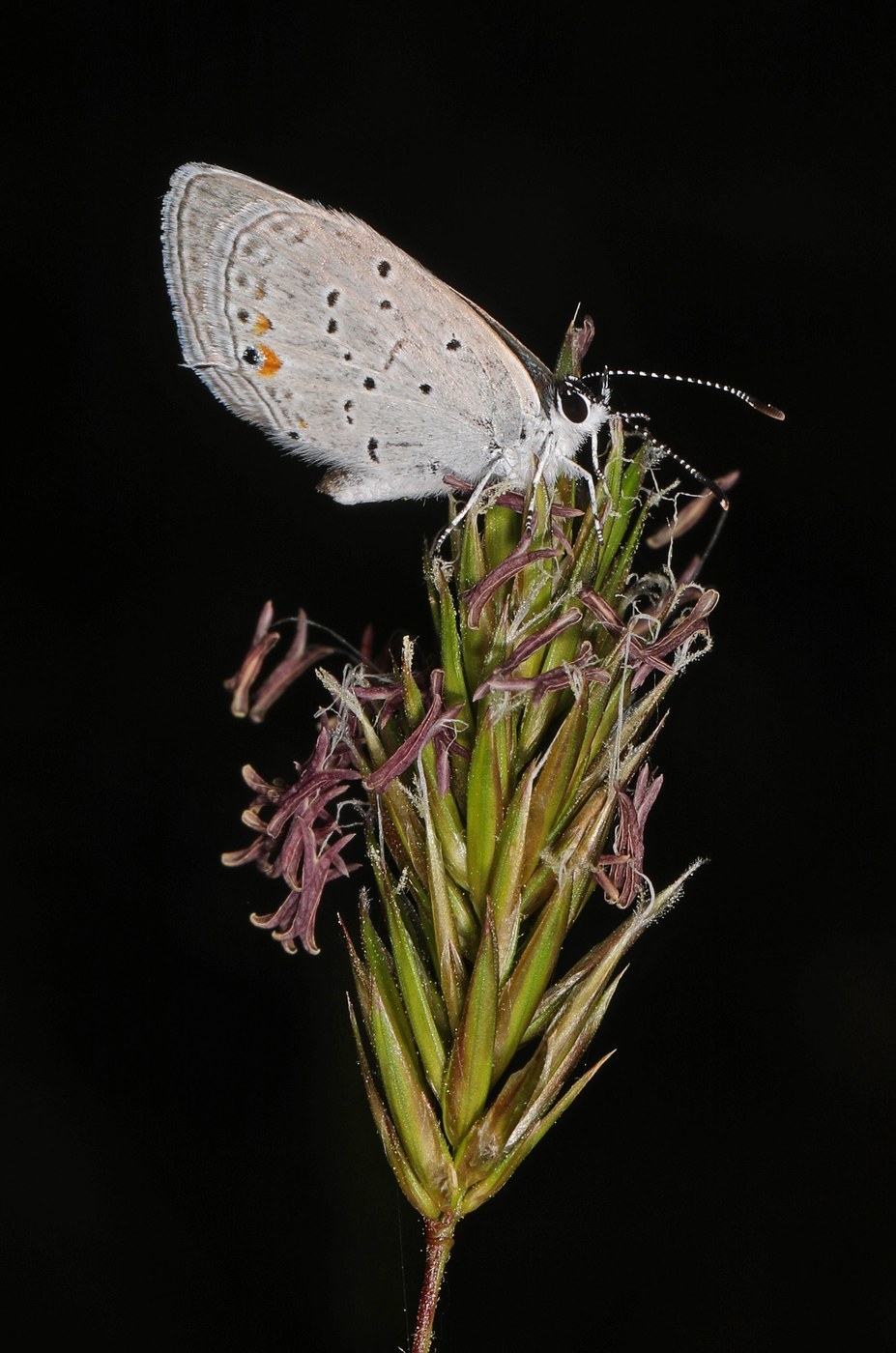
Eastern Tailed-Blue
A tiny gossamer-wing butterfly with a delicate thread-like tail on each hindwing and a small orange spot near the tail base, common in open weedy habitats throughout the eastern half of North America.
butterfly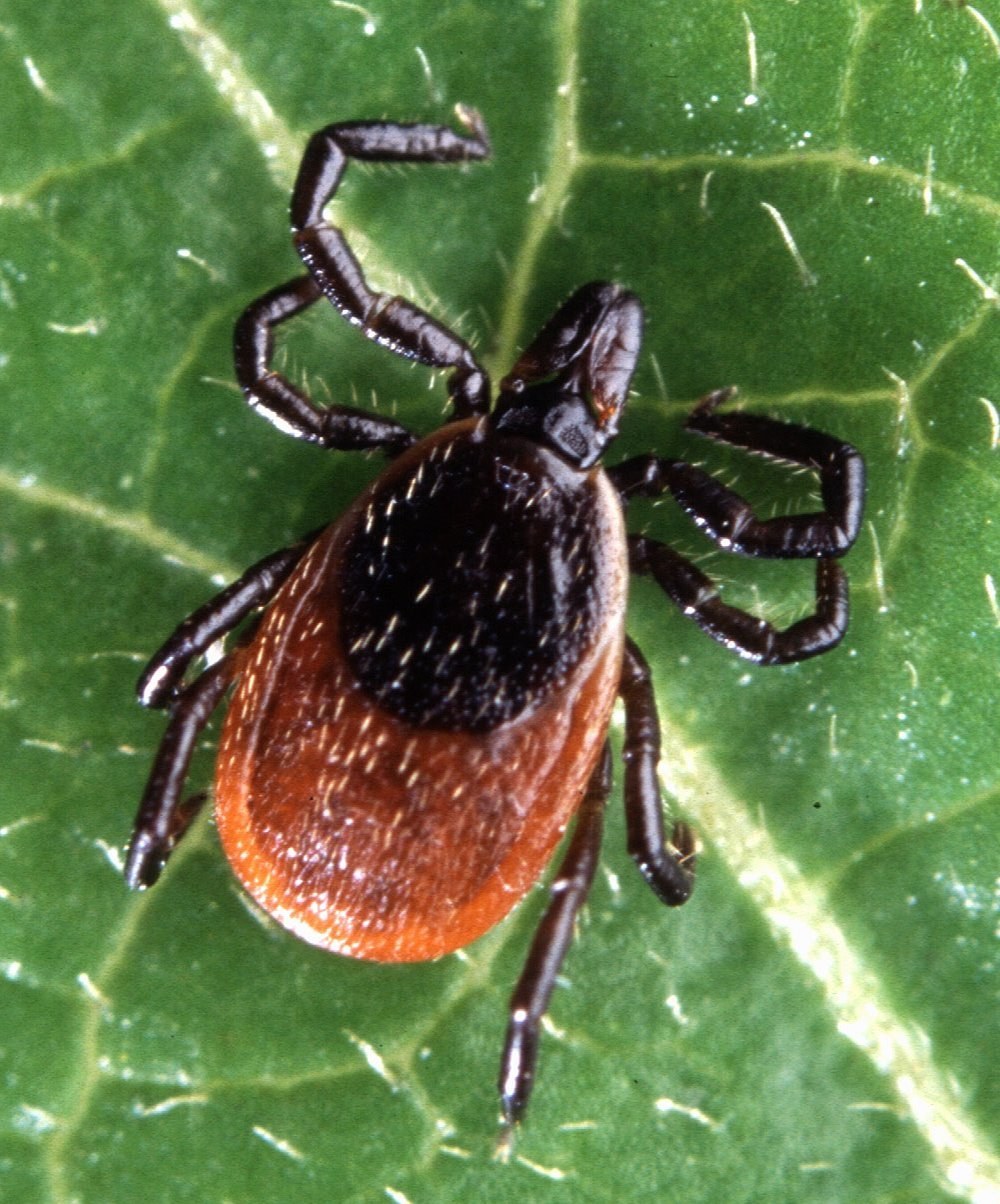
Deer Tick
A small, dark-legged tick with a reddish-brown, teardrop-shaped body, noticeably smaller than many other common tick species and often found questing in wooded or grassy edge habitats.
arachnid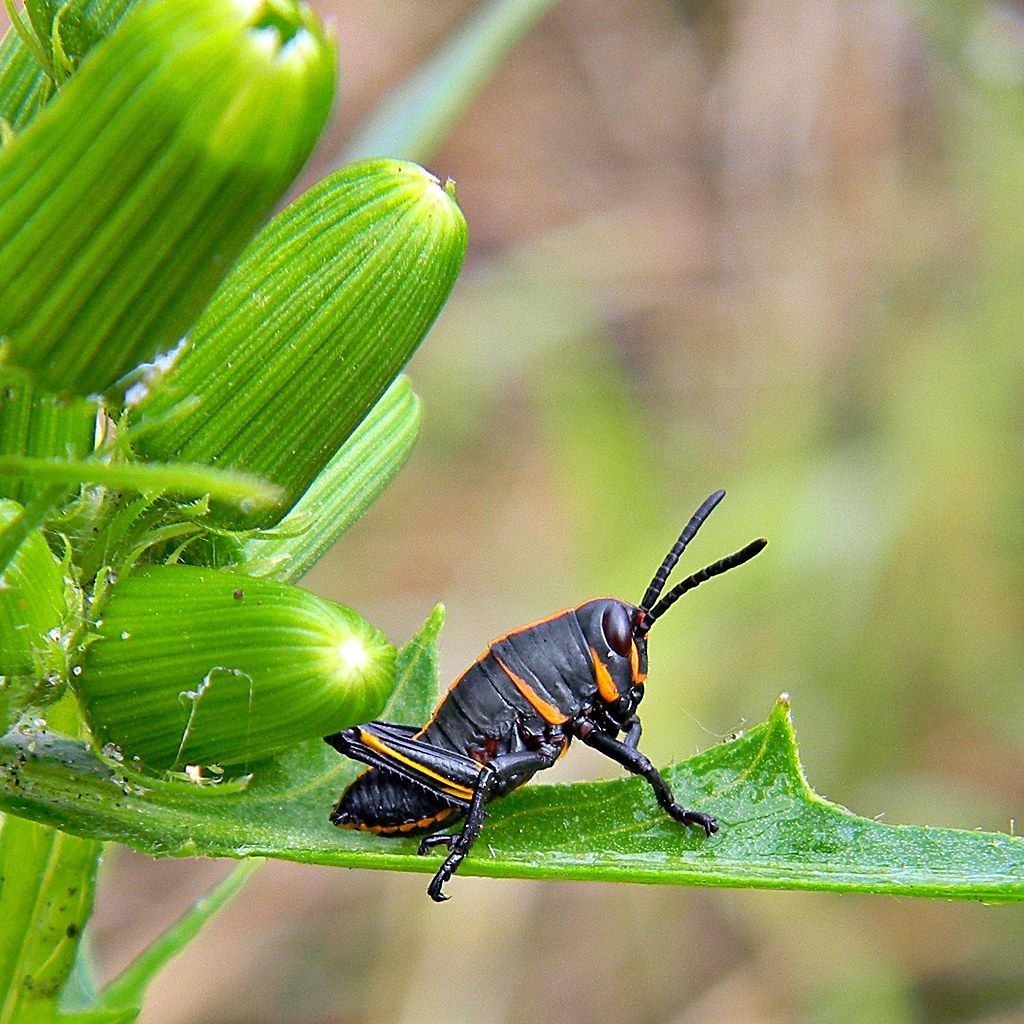
Eastern Lubber Grasshopper
One of the largest grasshoppers in North America, the eastern lubber is a slow, flightless giant clad in bold black, yellow, and red that announces its presence rather than hiding from it.
grasshopper-cricket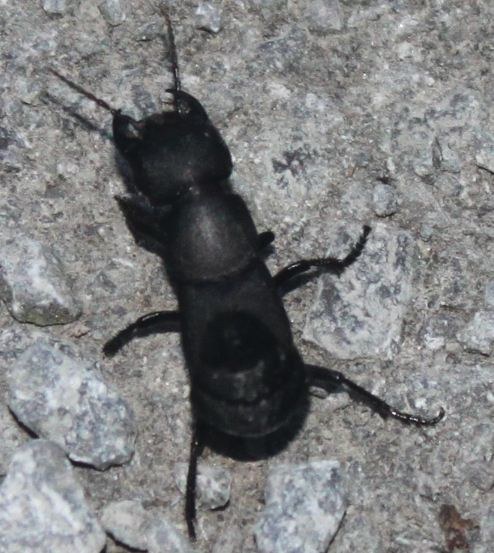
Devil's Coach Horse Beetle
A large, matte-black rove beetle that raises its flexible abdomen up and over its back like a scorpion's tail and gapes its jaws when threatened, one of the biggest and most dramatic rove beetles in Europe.
beetleDragonhunter
North America's largest clubtail, the Dragonhunter is a powerful predator that lives up to its name by capturing and eating other dragonflies, including species nearly its own size.
dragonfly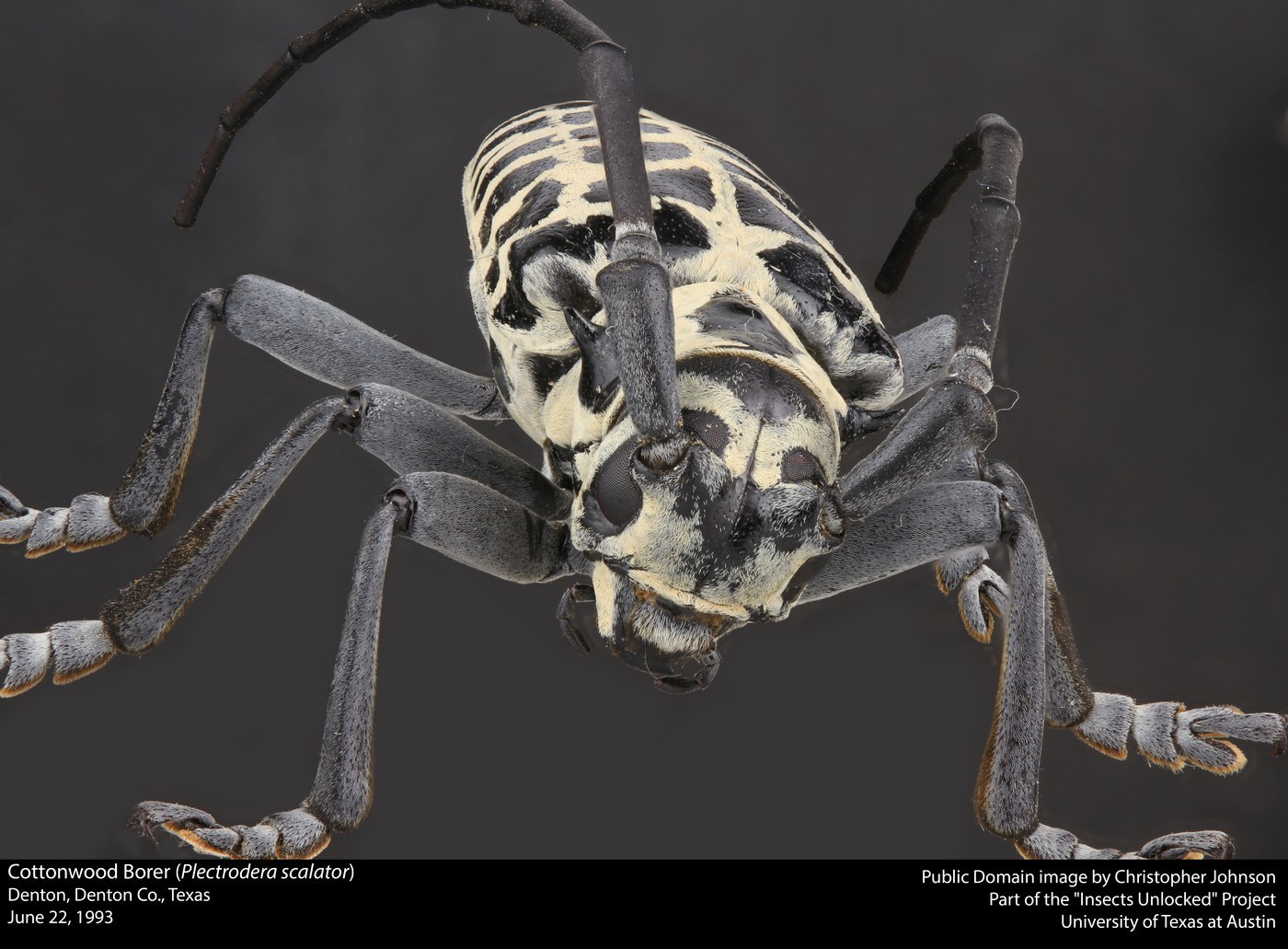
Cottonwood Borer
A large, boldly patterned longhorn beetle in black and chalky white checkerboard markings, often found clinging to the trunks of cottonwood and poplar trees near its larvae's root tunnels.
beetle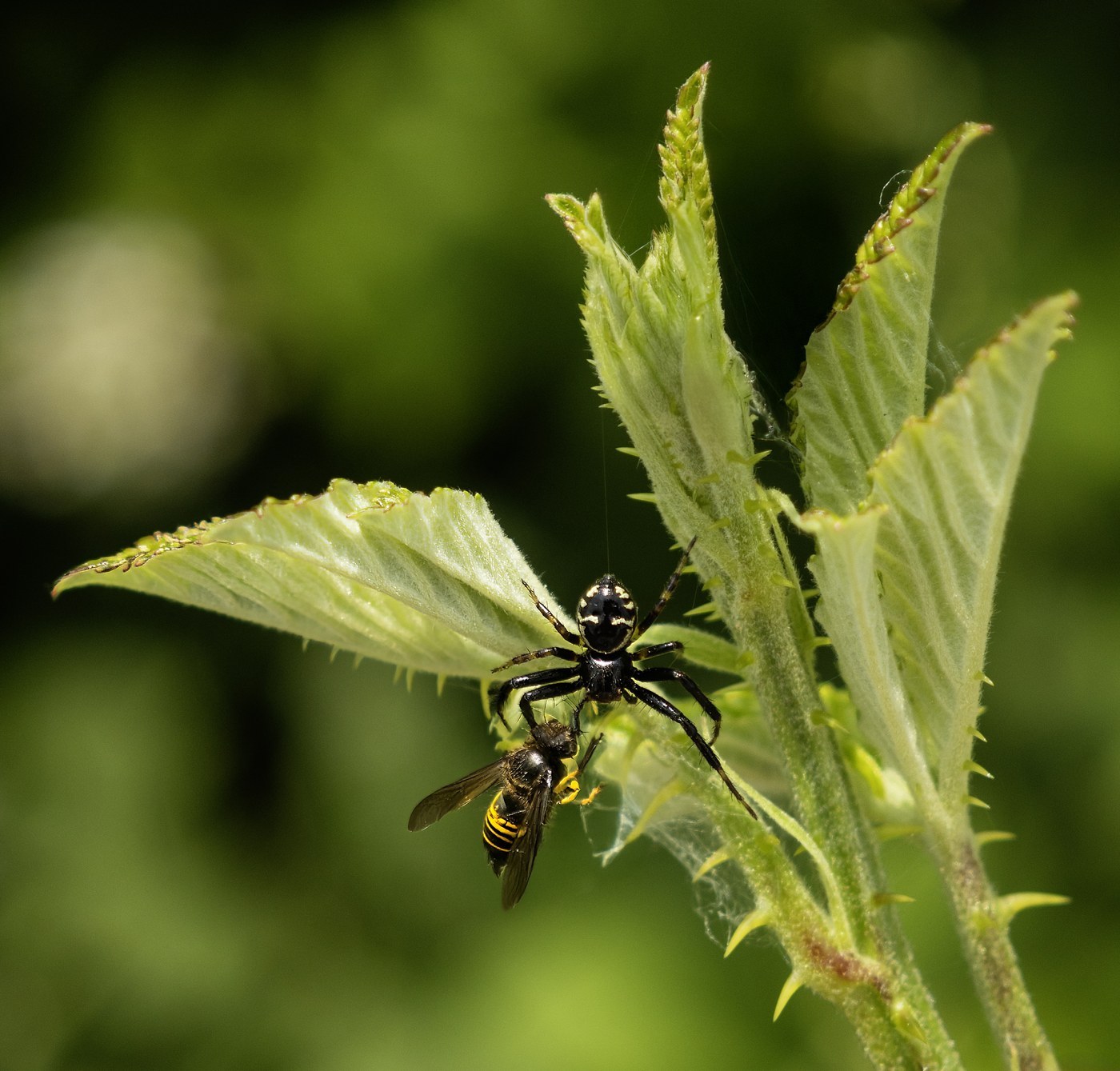
Common Wasp
A black-and-yellow social wasp with a distinct anchor-shaped mark on its face, common around gardens and picnics in late summer as its colony reaches peak size and workers seek out sugary food.
wasp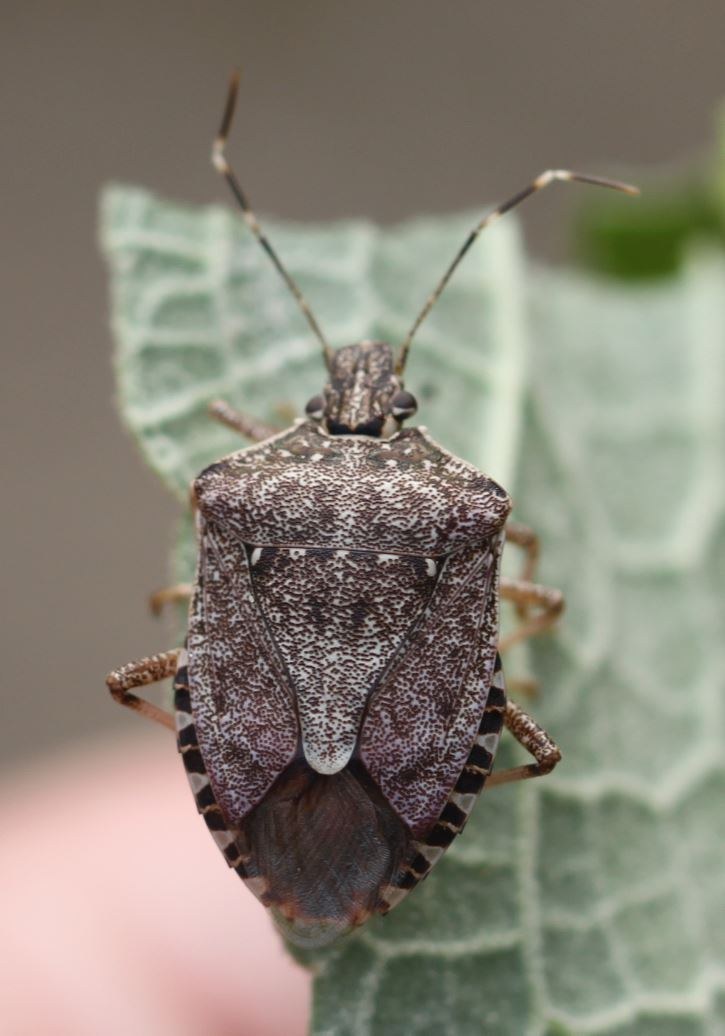
Brown Marmorated Stink Bug
An invasive, mottled brown stink bug identified by alternating light and dark bands on its antennae and abdomen edges, well known for gathering in large numbers on and inside buildings each fall.
true-bugBurying Beetle
A black beetle marked with bold orange-red bands, notable for locating small dead animals, burying them underground, and cooperatively raising larvae with a partner over the buried carcass.
beetle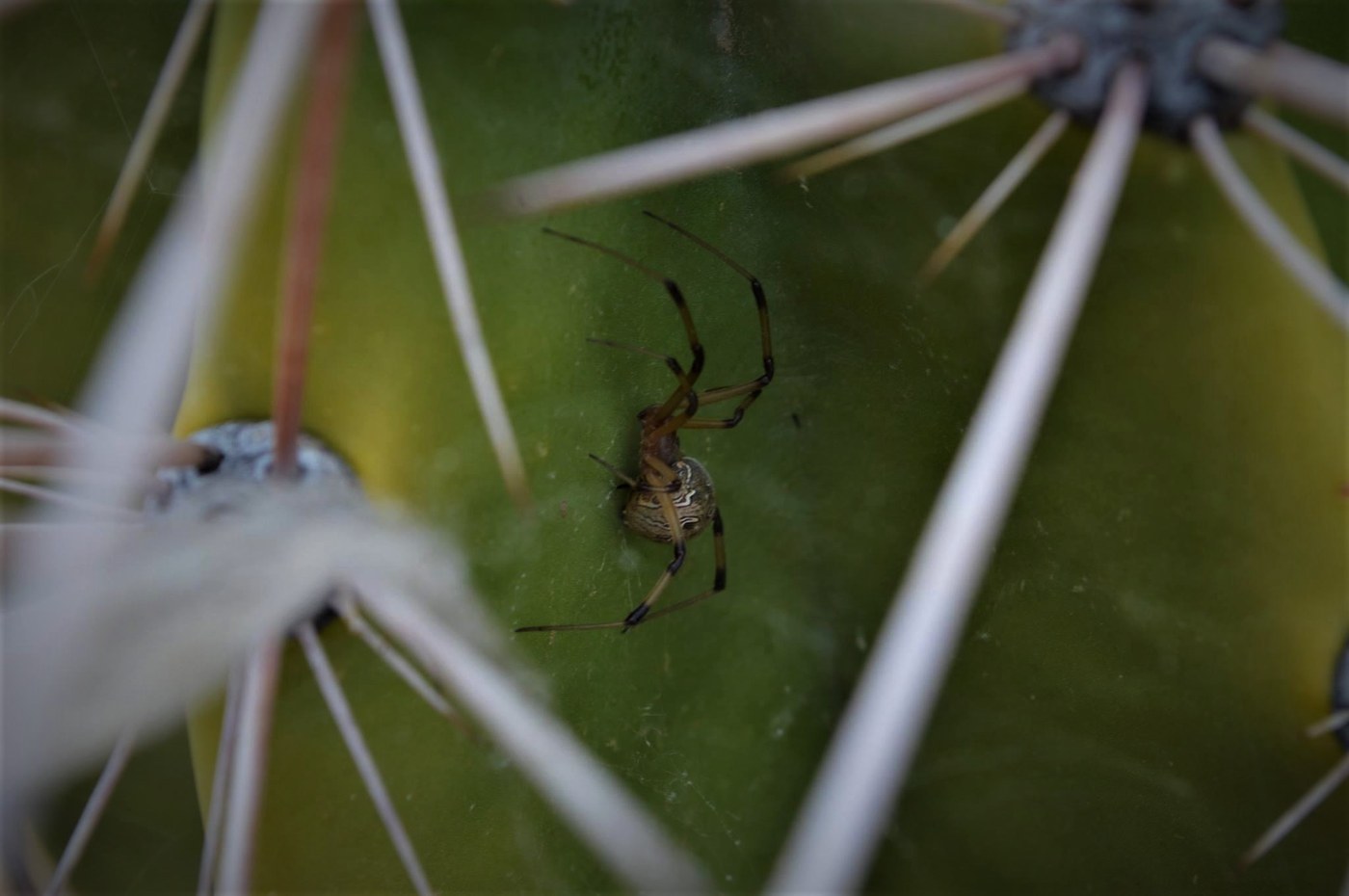
Brown Widow Spider
Named for its mottled tan-and-brown coloring rather than glossy black, the brown widow is easily recognized by its distinctive spiky, off-white egg sacs and an orange hourglass on its underside.
spider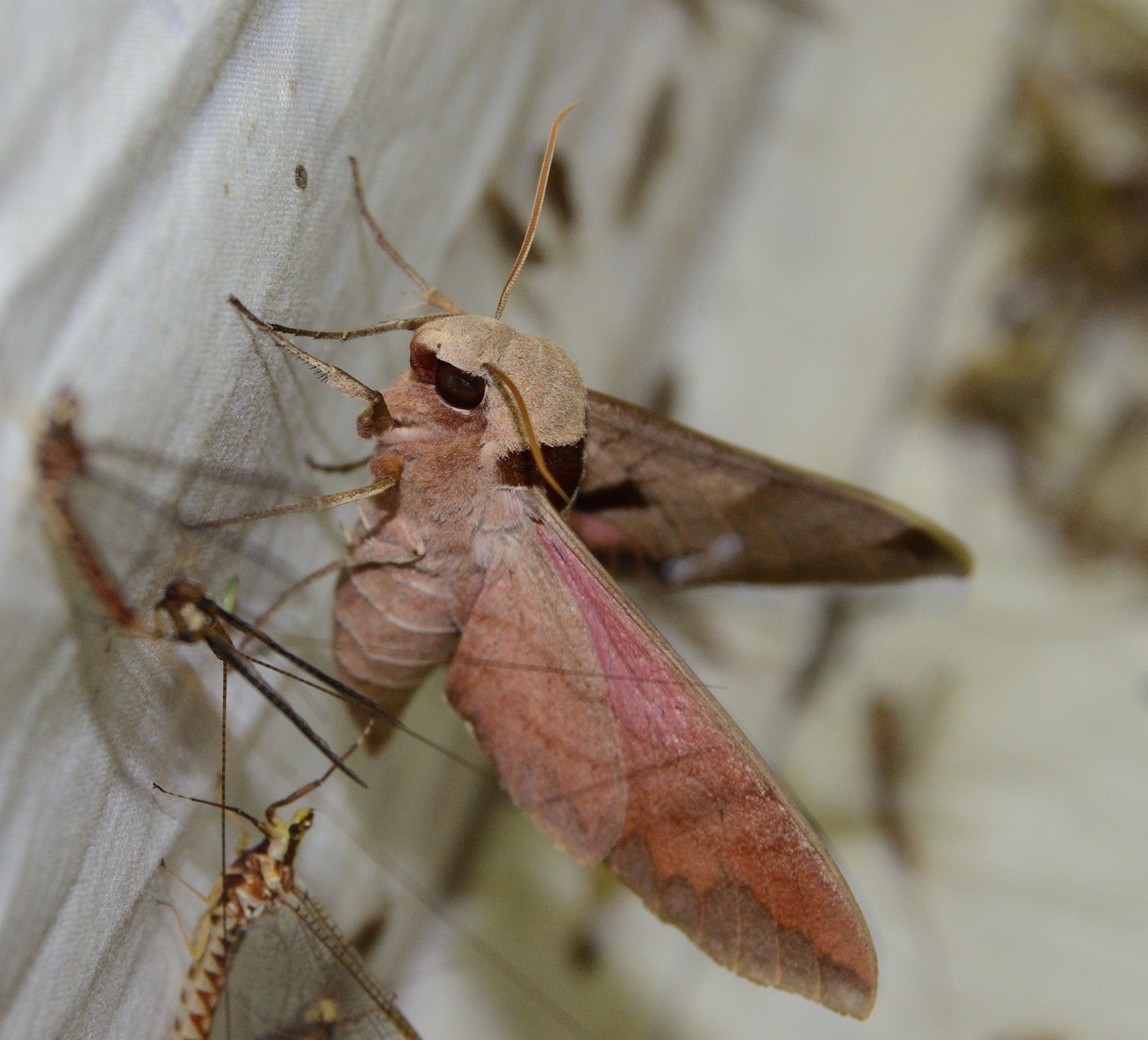
Achemon Sphinx Moth
A large, streamlined sphinx moth with pinkish-brown forewings marked by darker scalloped patches and rosy pink hindwings edged in black, closely tied to grapevines as a larval host.
moth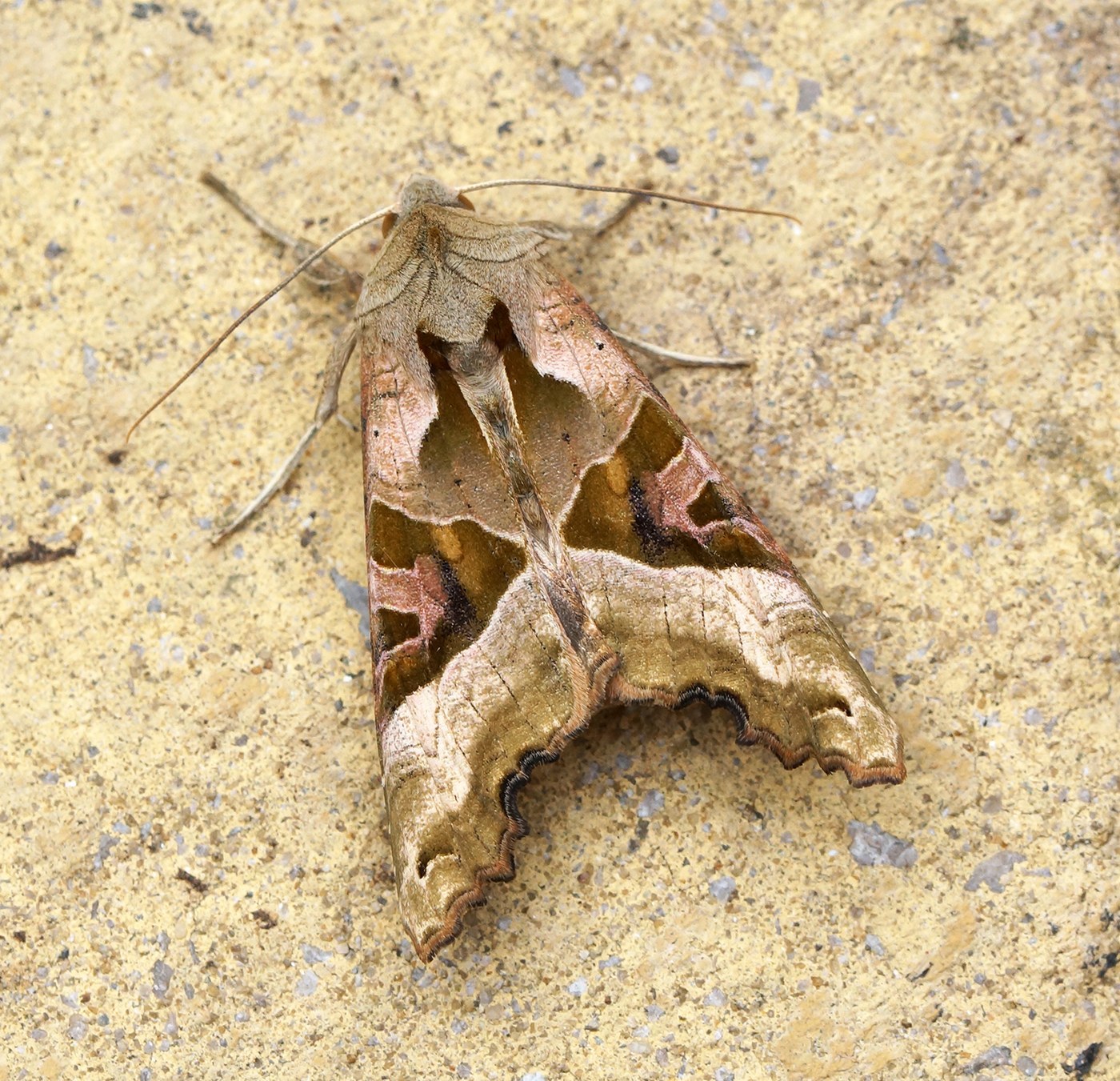
Angle Shades Moth
A common night-flying moth whose forewings fold into a crumpled, tent-like shape that mimics a withered or damaged leaf, marked with bold olive-green and pinkish-brown zigzag bands.
moth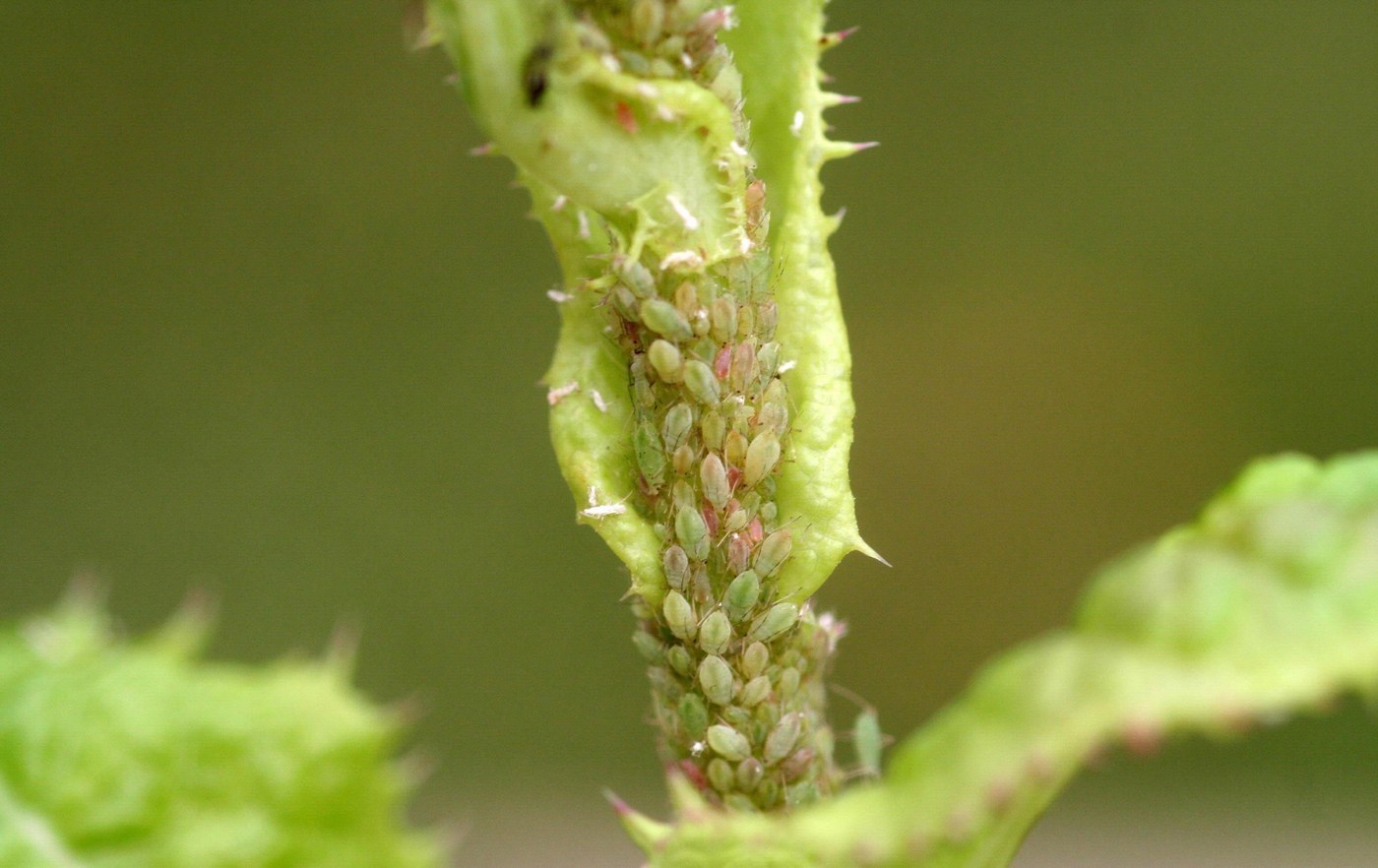
Aphid
A tiny, soft-bodied, pear-shaped insect that clusters in dense colonies on plant stems and leaf undersides, feeding on sap through needle-like mouthparts and often coated in sweet honeydew.
true-bug
Whitefly
A tiny, moth-like white insect that clusters on the undersides of leaves and bursts into a snowy cloud when the plant is disturbed. Despite the name, it is not a true fly but a sap-feeding relative of aphids and scale insects.
true-bug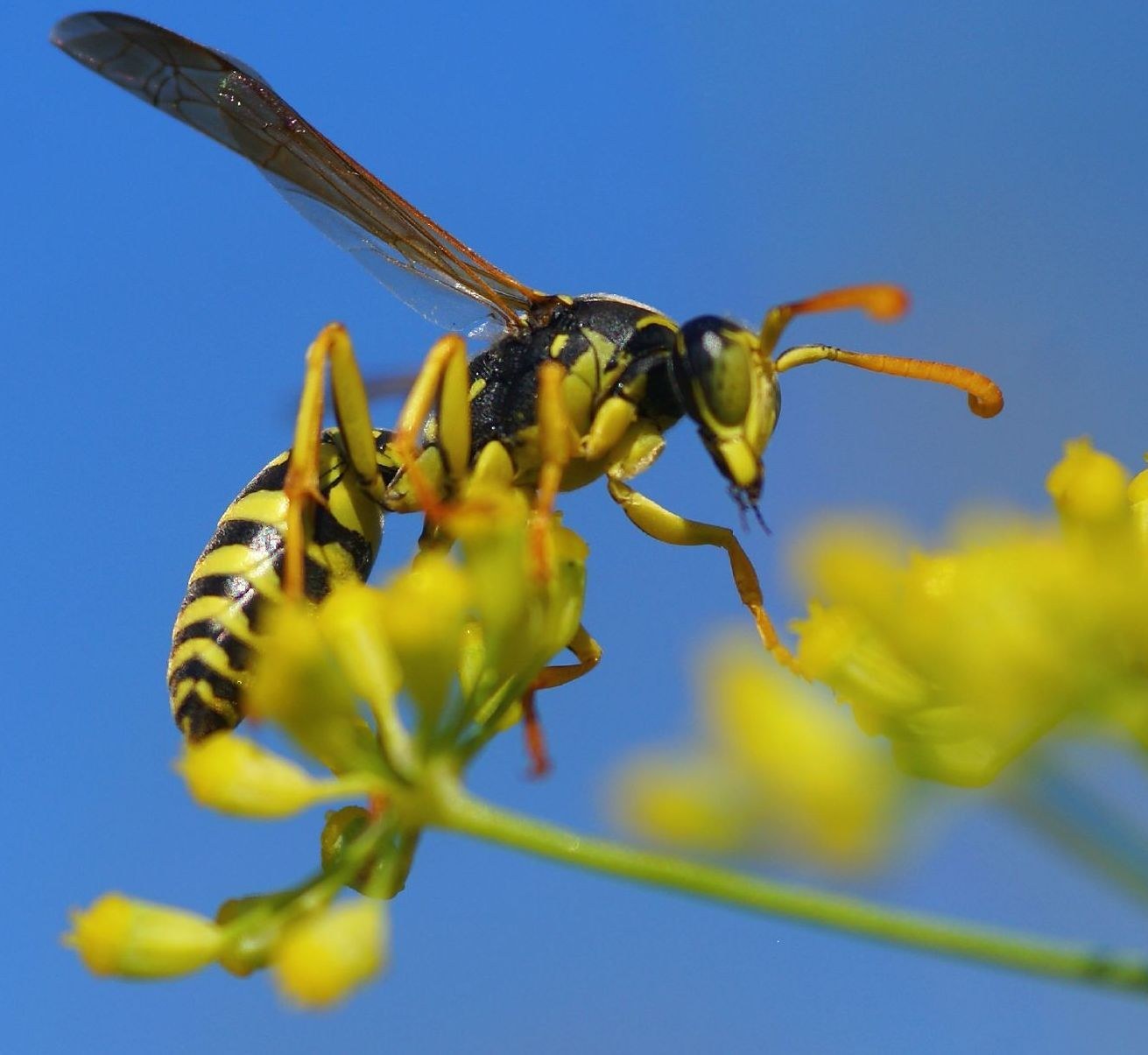
Wasp
A slender-waisted, smooth-bodied flying insect typically banded in black and yellow, recognizable by its narrow 'wasp waist' and folded wings, and often social, building paper nests in colonies.
wasp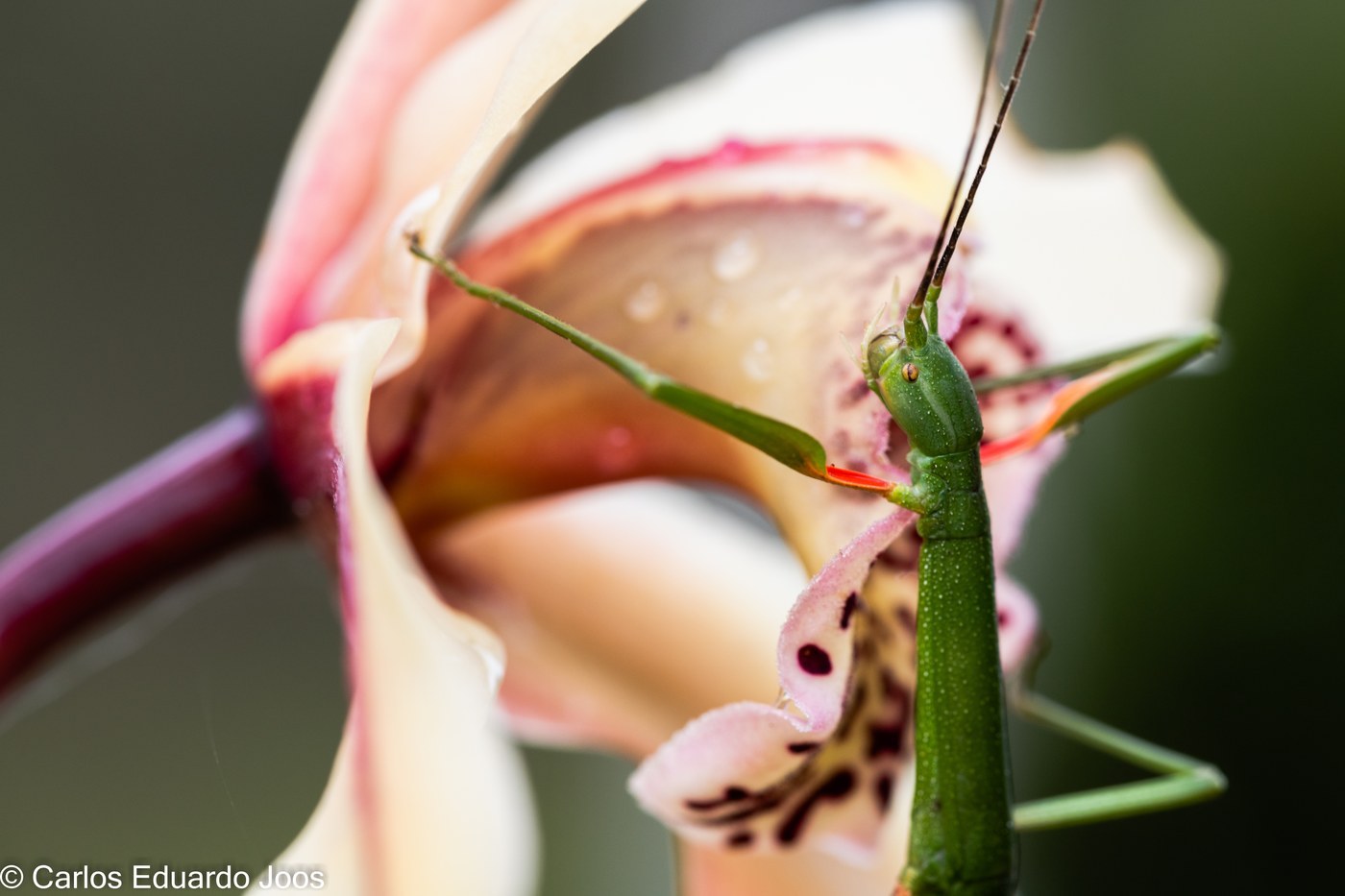
Walking Stick
A remarkably twig-like insect with a long, slender, brown to green body and thin legs, so effective at mimicking a plant stem that it can be nearly invisible while motionless on vegetation.
mantis-stickWhite Grub
A pale, C-shaped larva with a brown head capsule and six stubby legs, spending its entire early life hidden underground feeding on roots before emerging as a stout May or June beetle.
beetleWhirligig Beetle
A small, glossy black beetle that spins and darts in rapid circles across the surface film of ponds, often gathered in loose groups, using divided eyes to see both above and below the water at once.
aquatic-insect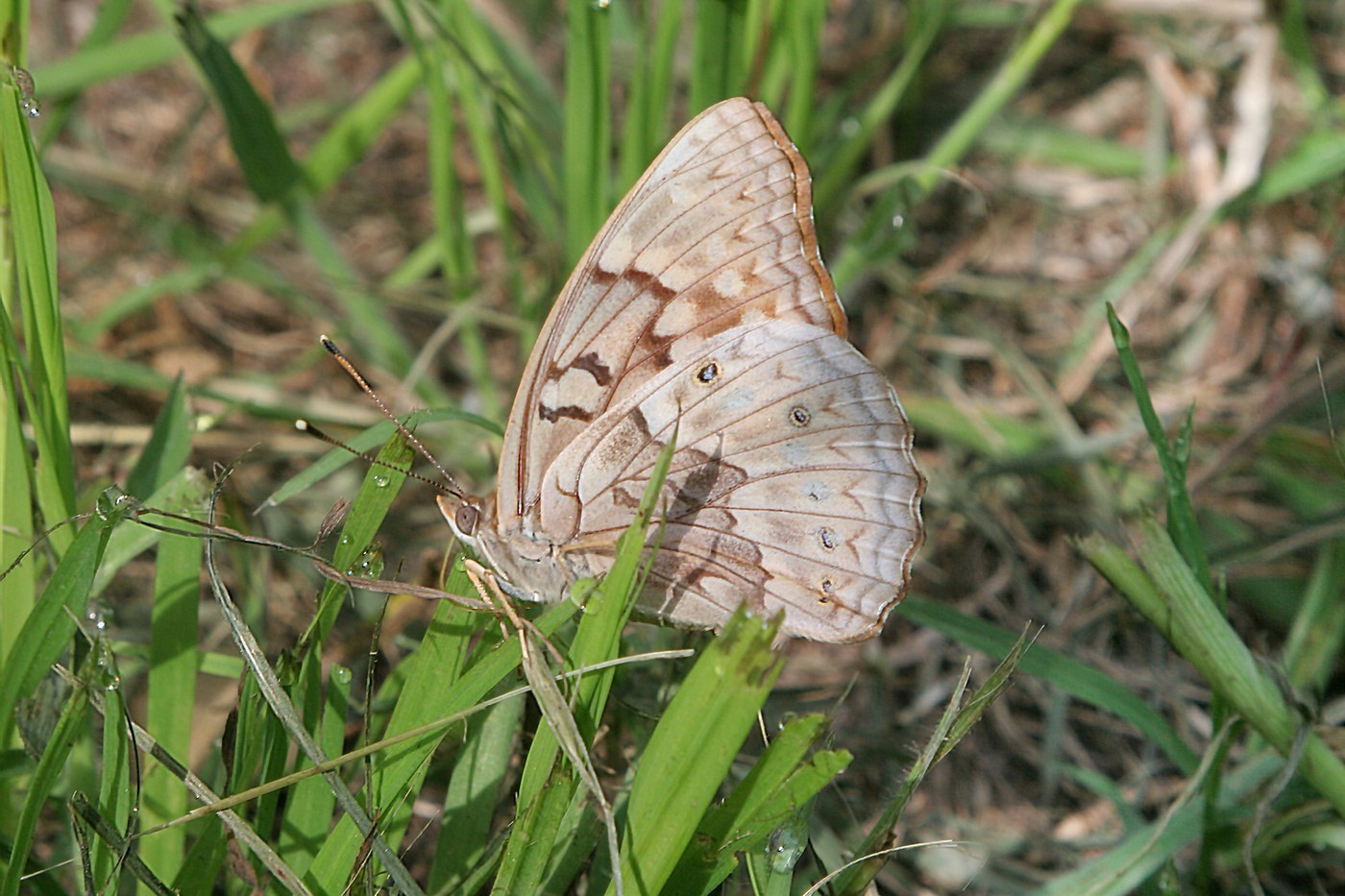
Tawny Emperor
A warm orange-brown woodland butterfly, close relative of the Hackberry Emperor, best distinguished by its lack of a forewing eyespot and its habit of feeding on sap and dung rather than flowers.
butterfly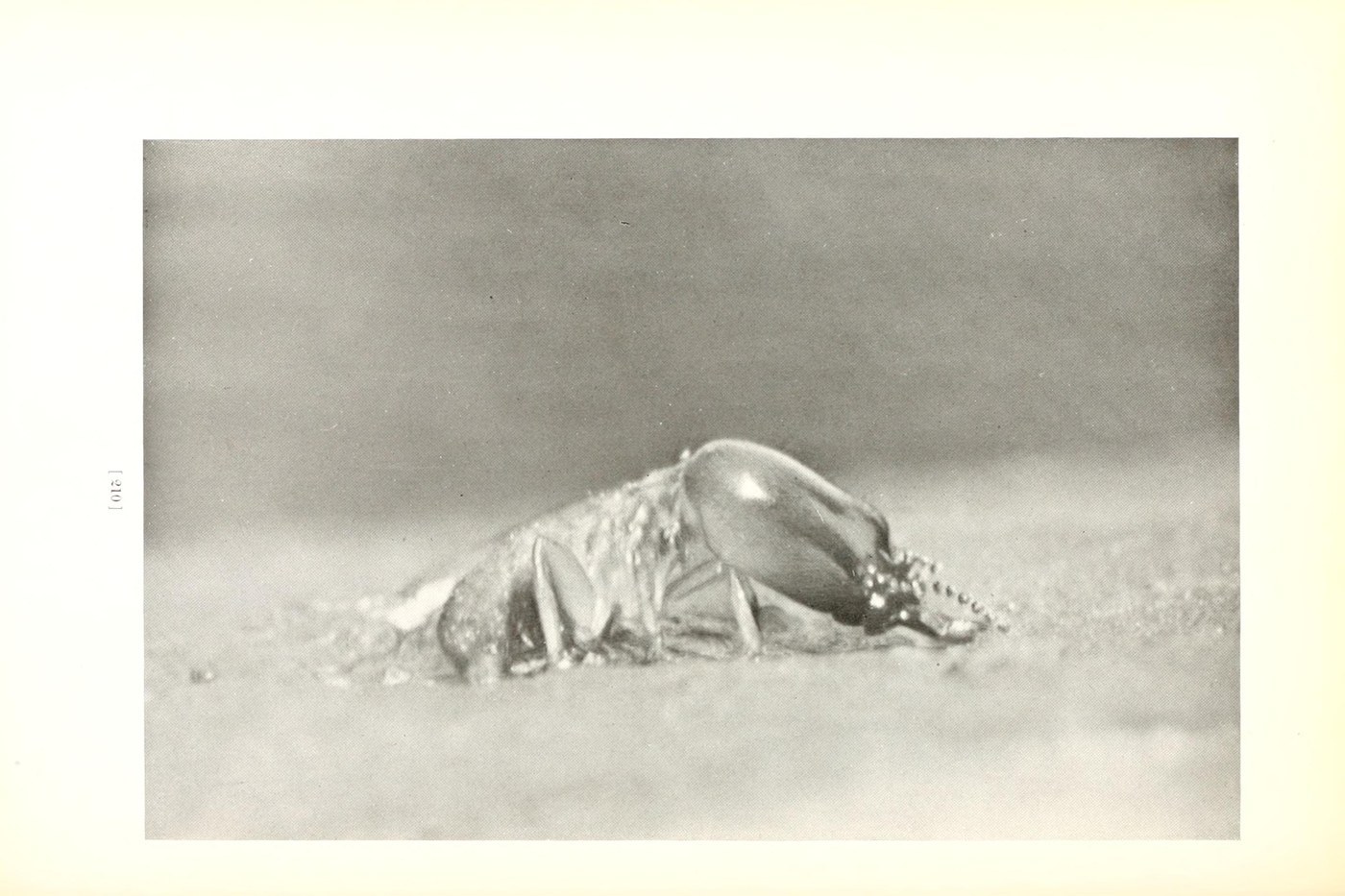
Termite
A pale, soft-bodied social insect that lives in hidden colonies and feeds on cellulose in wood and plant debris, often mistaken for an ant despite belonging to an entirely different insect order.
otherTortoise Beetle
A small, flat, disc-shaped beetle whose expanded wing covers and pronotum hide its head and legs almost entirely, giving it the look of a miniature turtle shell crawling across a leaf.
beetleSmall Tortoiseshell
A vivid orange-red European garden butterfly patterned with black and yellow blocks and a border of blue crescents, one of the most familiar and widely recognized butterflies across its range.
butterfly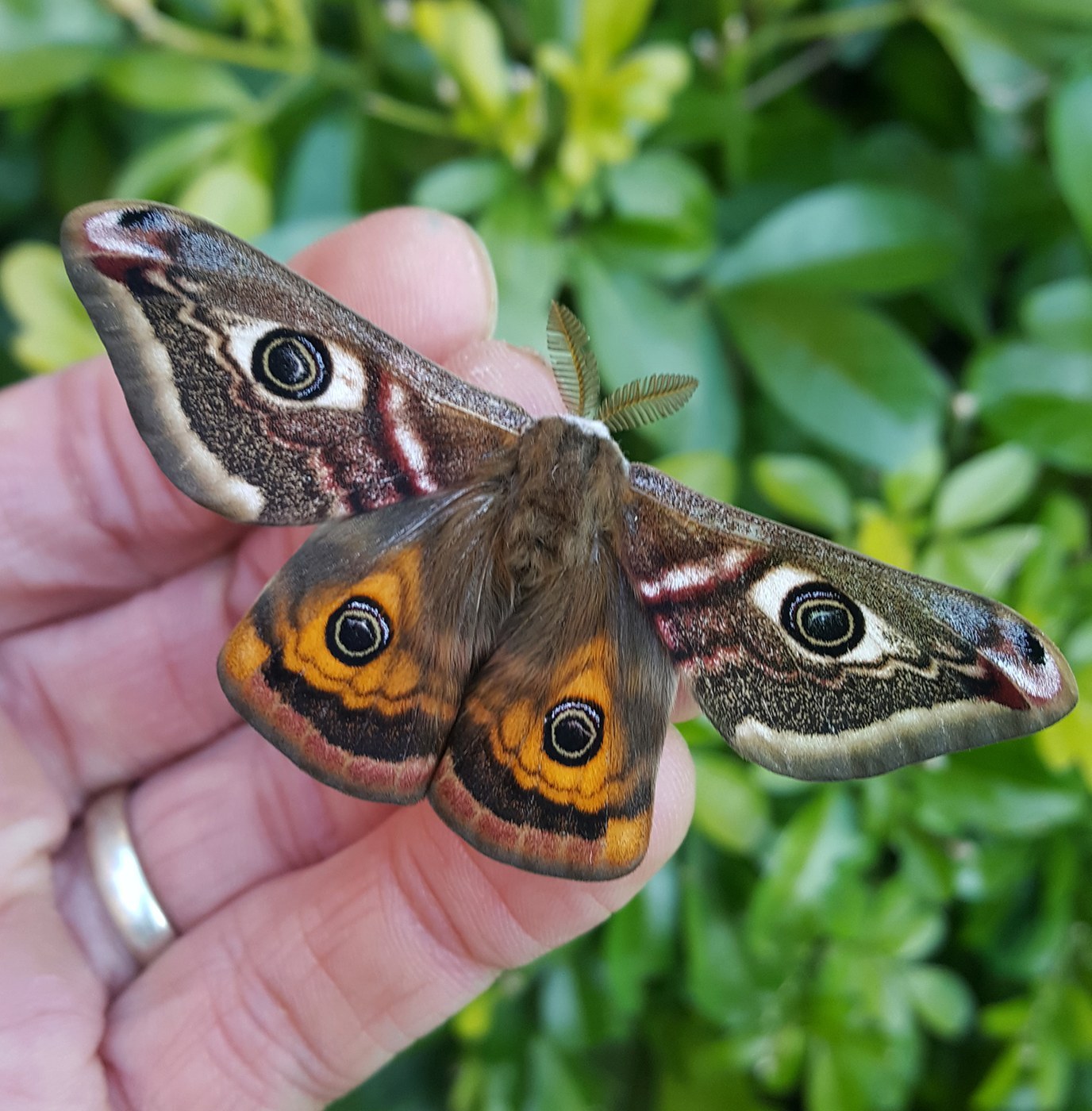
Small Emperor Moth
A striking day-flying moth with large eyespots on all four wings, gray-brown coloring in males and paler gray in the larger females, native to heathlands and open countryside across Europe.
moth