
Japanese Beetle
Popillia japonica
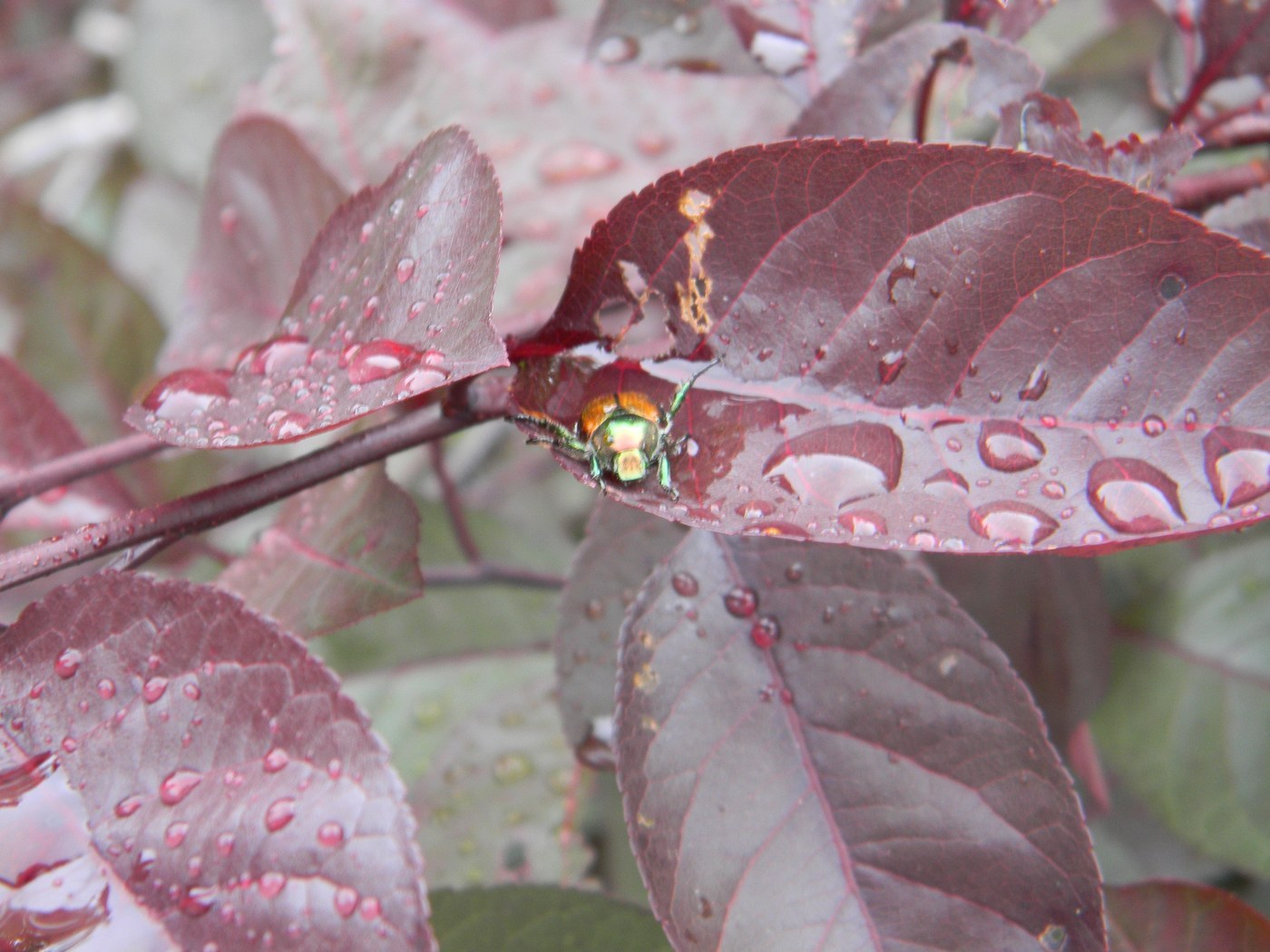
A small, iridescent beetle with a metallic green head and thorax and coppery-bronze wing covers, notorious for skeletonizing the leaves of roses, grapevines, and hundreds of other garden plants.
- Size
- 8–11 mm
- Habitat
- Gardens, lawns, orchards, and deciduous woodland edges
- Danger
- Nuisance pest
Spotted a bug like this?
Identify any bug or insect from a photo, free.
Overview
The Japanese beetle is a scarab beetle in the family Scarabaeidae, subfamily Rutelinae, order Coleoptera. Native to Japan, it was accidentally introduced to New Jersey around 1916 and has since spread across much of eastern and midwestern North America.
It is notable for its extraordinarily broad host range, feeding on the foliage, flowers, and fruit of more than 300 species of plants, and for its habit of aggregating in dense feeding groups. This makes it one of the most recognizable and well-studied invasive scarab beetles in North America.
Ecologically, both the adult beetles and their soil-dwelling grub stage are important food sources for birds and small mammals, even as the species is widely regarded as a significant garden and turf pest.
How to Identify
- Oval, convex body with a shiny metallic green head and thorax
- Coppery-bronze wing covers (elytra) that do not fully cover the tip of the abdomen
- A row of five small tufts of white hair along each side of the abdomen — the most reliable field mark
- Short, clubbed antennae; body length about 8–11 mm
- Lookalikes include other green or bronze scarab beetles, but none combine the white abdominal tufts with this exact color pattern
Habitat & Range
Native to Japan, now established across much of the eastern and midwestern United States and parts of southern Canada. Adults are active in daylight during midsummer, roughly June through August. Larvae (white grubs) live in the top few inches of soil beneath turfgrass and lawns, where they overwinter deeper before pupating in spring.
Behavior & Diet
Adults feed in groups during the day, chewing between leaf veins and leaving a distinctive lace-like skeletonized pattern. They locate host plants and each other partly through aggregation pheromones, leading to dense feeding clusters on a single plant. The subterranean grub stage feeds on the roots of grasses and other plants. Grubs are, in turn, an important food source for moles, skunks, and birds, giving the species a role in the broader food web despite its pest status.
Life Cycle
Complete metamorphosis with one generation per year (univoltine) across most of its range. Eggs are laid in soil in mid-to-late summer; larvae (grubs) feed on roots through fall, move deeper to overwinter, then resume feeding and pupate in spring. Adults emerge in early summer to feed and mate, completing the annual cycle.
Frequently asked questions
How can I tell a Japanese beetle from other green beetles?
Look for the combination of a metallic green head and thorax, coppery-bronze wing covers, and the row of small white hair tufts along each side of the abdomen.
What do Japanese beetle grubs look like?
C-shaped, whitish grubs with a brown head, found just beneath the soil surface in turf, similar in appearance to other scarab beetle larvae.
When are Japanese beetles most active?
During midsummer, typically June through August, on warm sunny days when they feed in groups on foliage.
Is the Japanese beetle native to North America?
No. It is native to Japan and was first detected in the United States in 1916.
Japanese Beetle guides
In-depth guides for identifying, understanding, and living alongside Japanese Beetle.
Japanese Beetle identified by the community
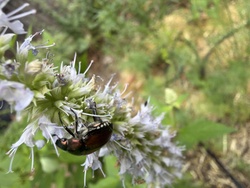
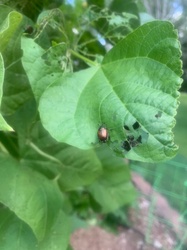
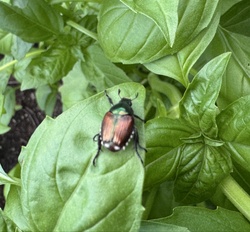
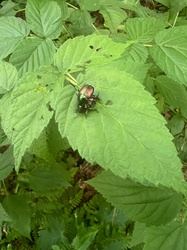
Real finds identified with Bug Identifier.
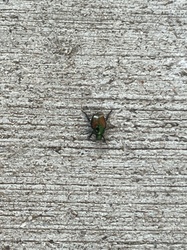
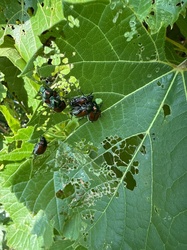
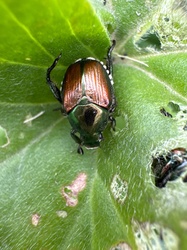
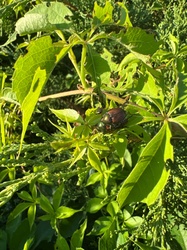
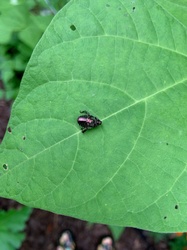
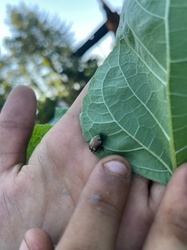
Other bugs you may enjoy
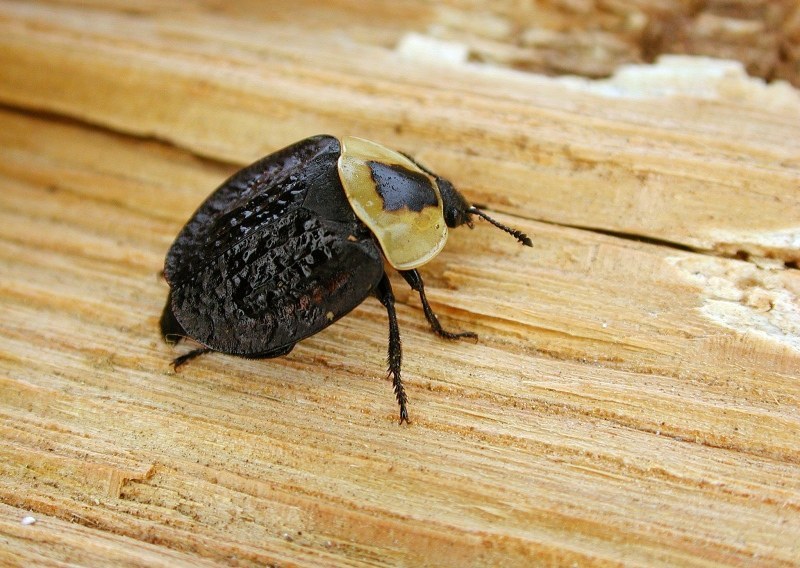
American Carrion Beetle
Forests, fields, and roadsides across North America, near decaying animal carcasses
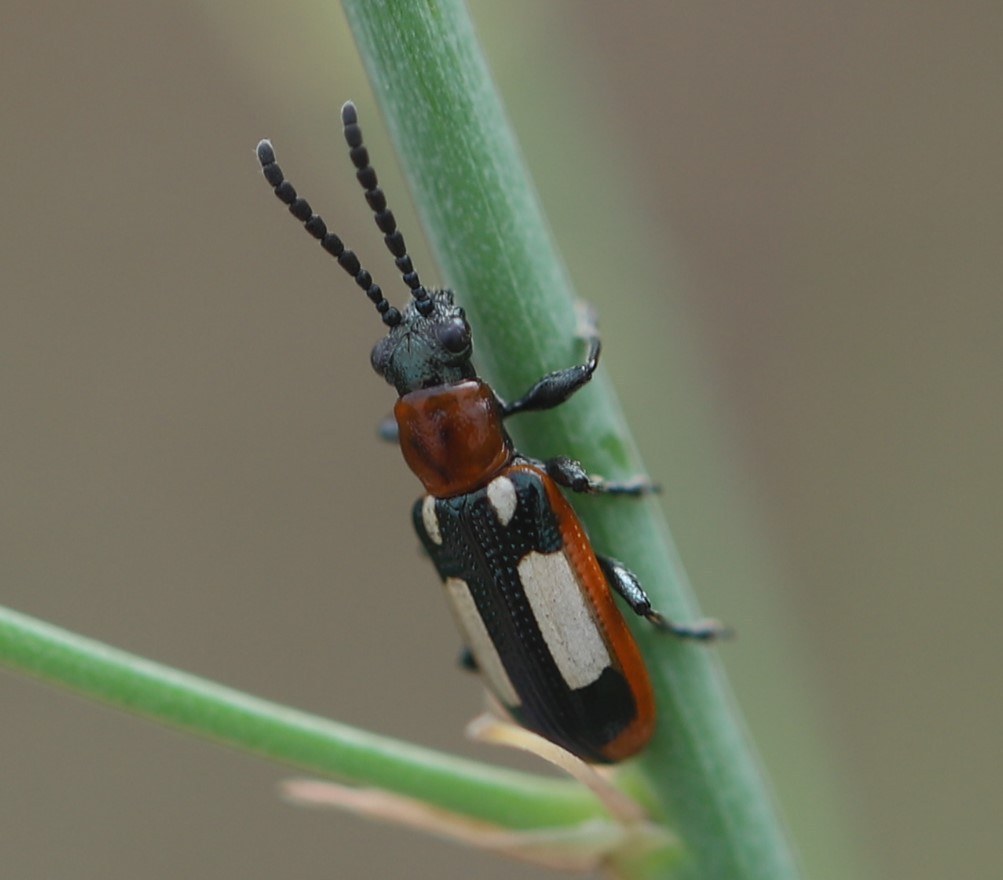
Asparagus Beetle
Asparagus patches, gardens, and farm fields
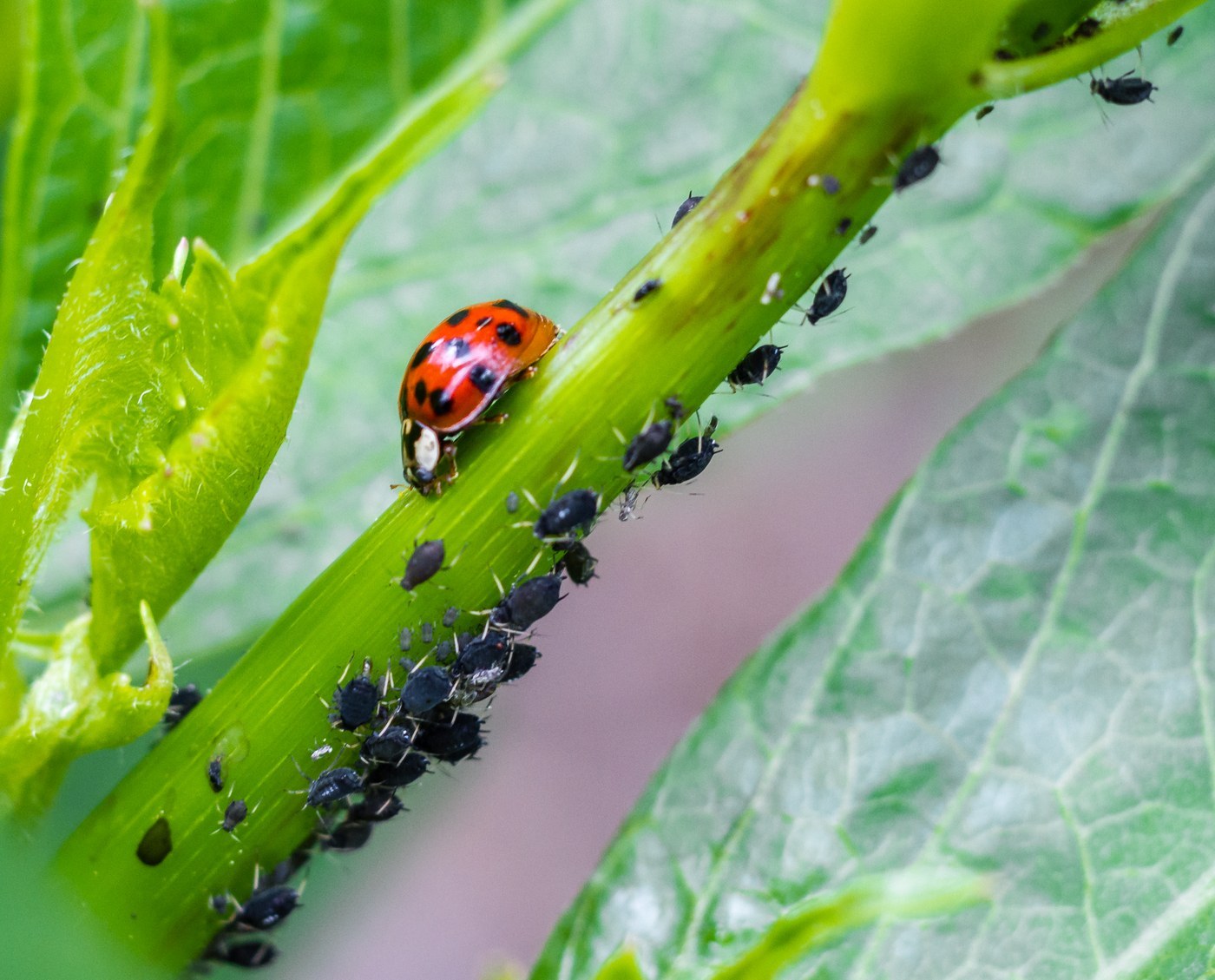
Asian Lady Beetle
Gardens, crop fields, woodlands, buildings
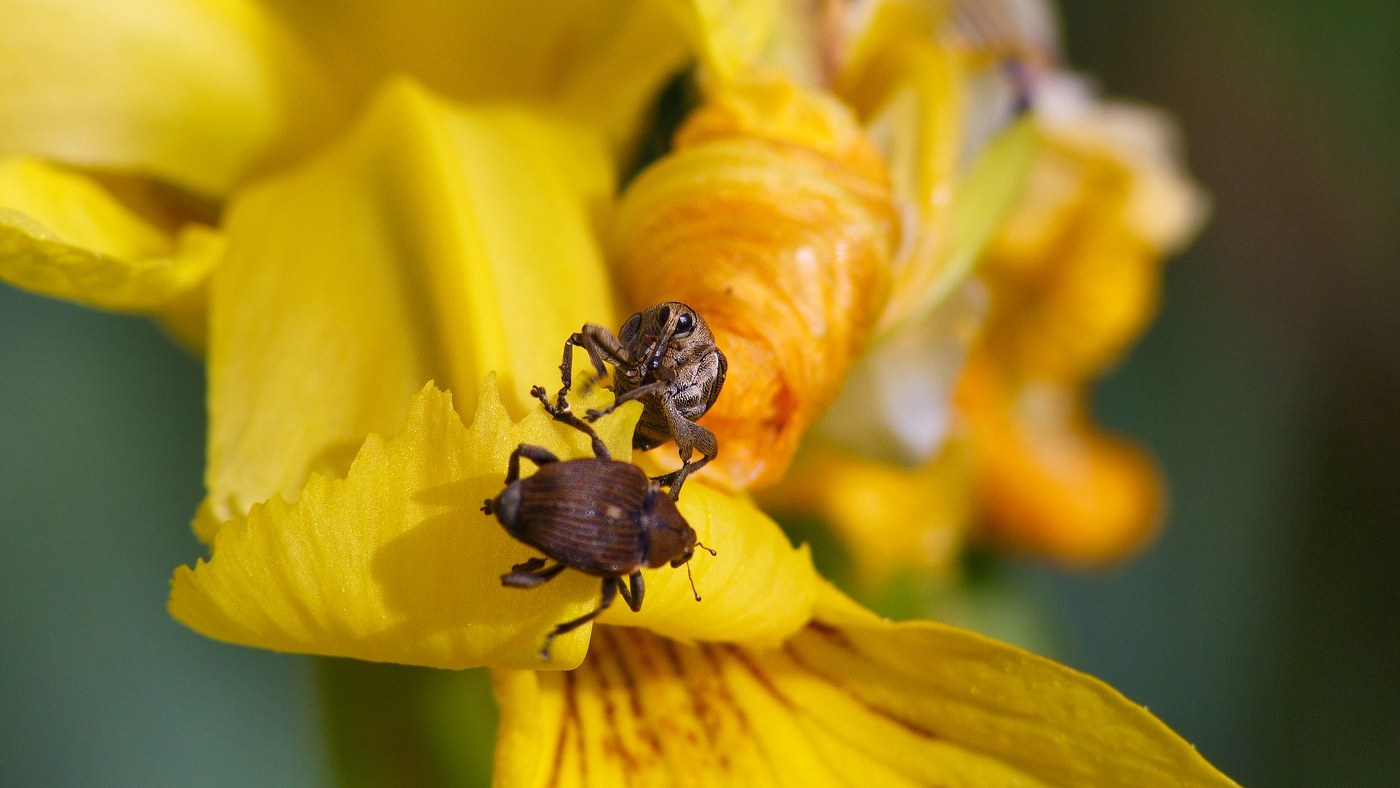
Acorn Weevil
Oak woodlands and forests, on and beneath oak trees
Wireworm
Soil of grasslands, gardens, and cultivated fields worldwide
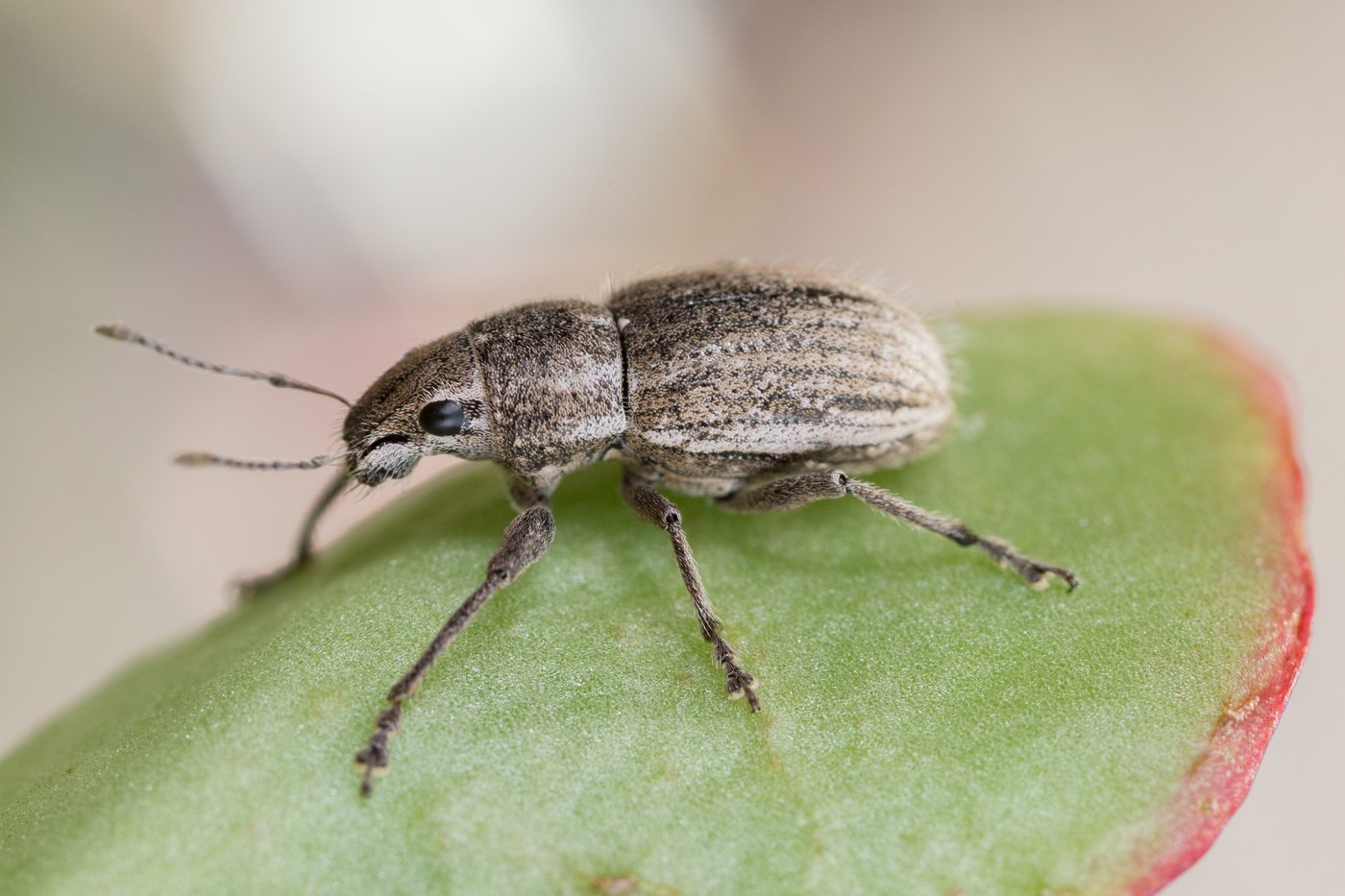
Whitefringed Beetle
Pastures, row crops, lawns, disturbed soils
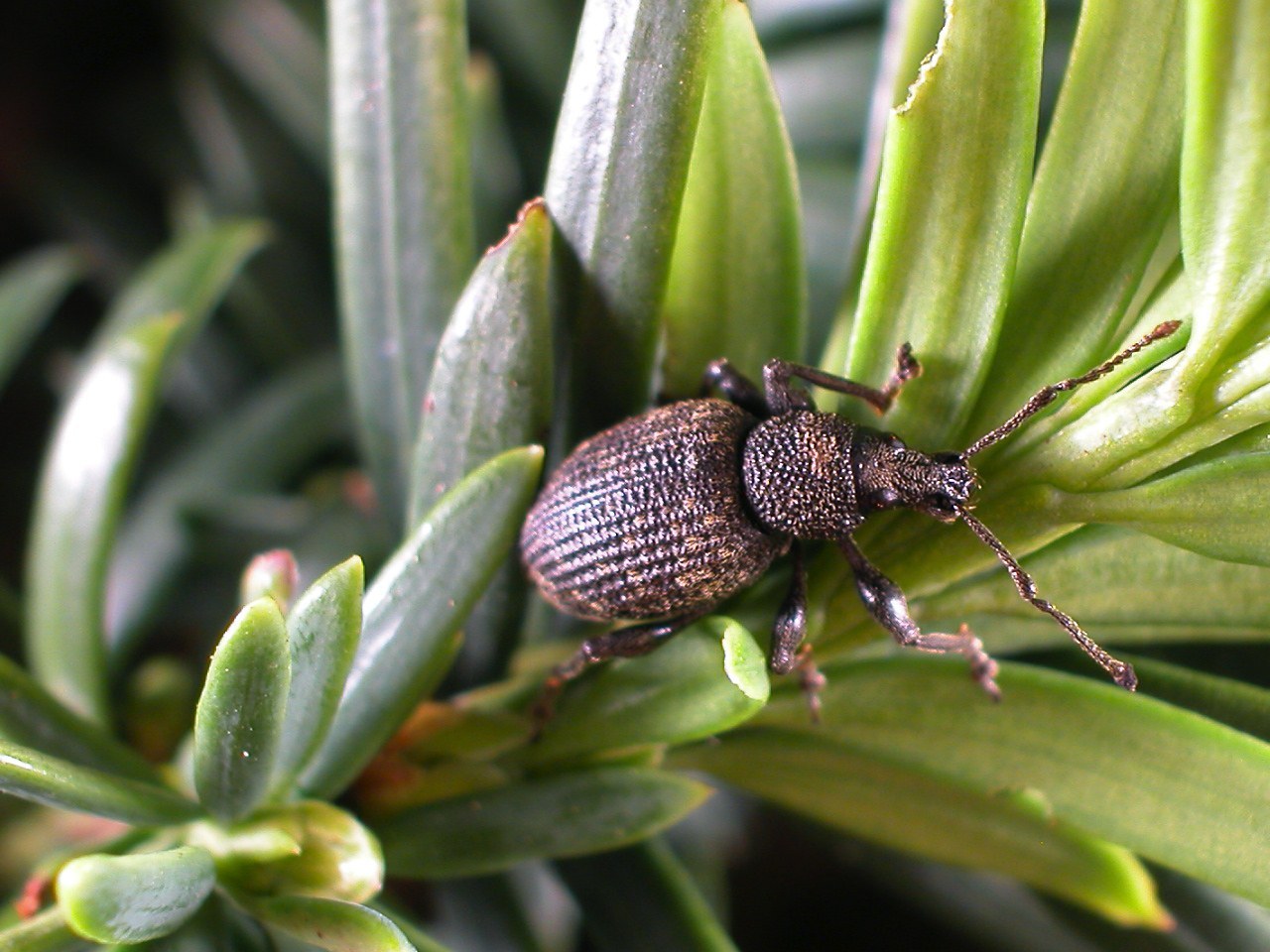
Vine Weevil
Gardens, nurseries, greenhouses, and container plantings
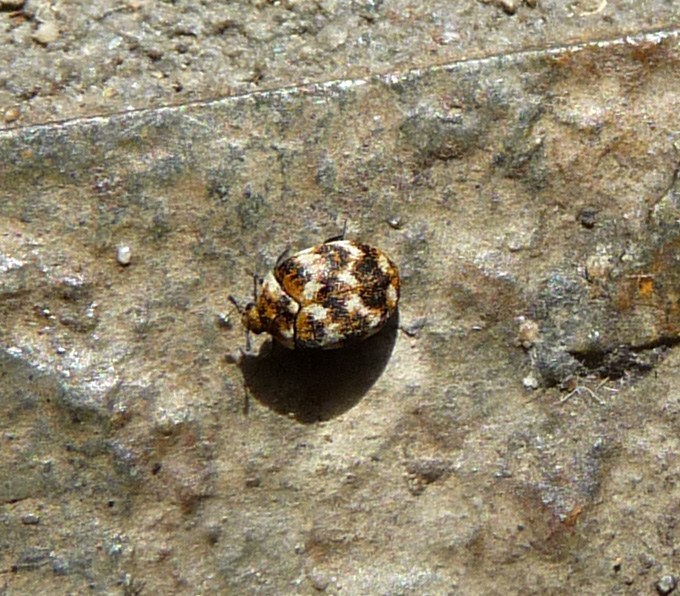
Varied Carpet Beetle
Homes, nests of birds and mammals, and flowers outdoors
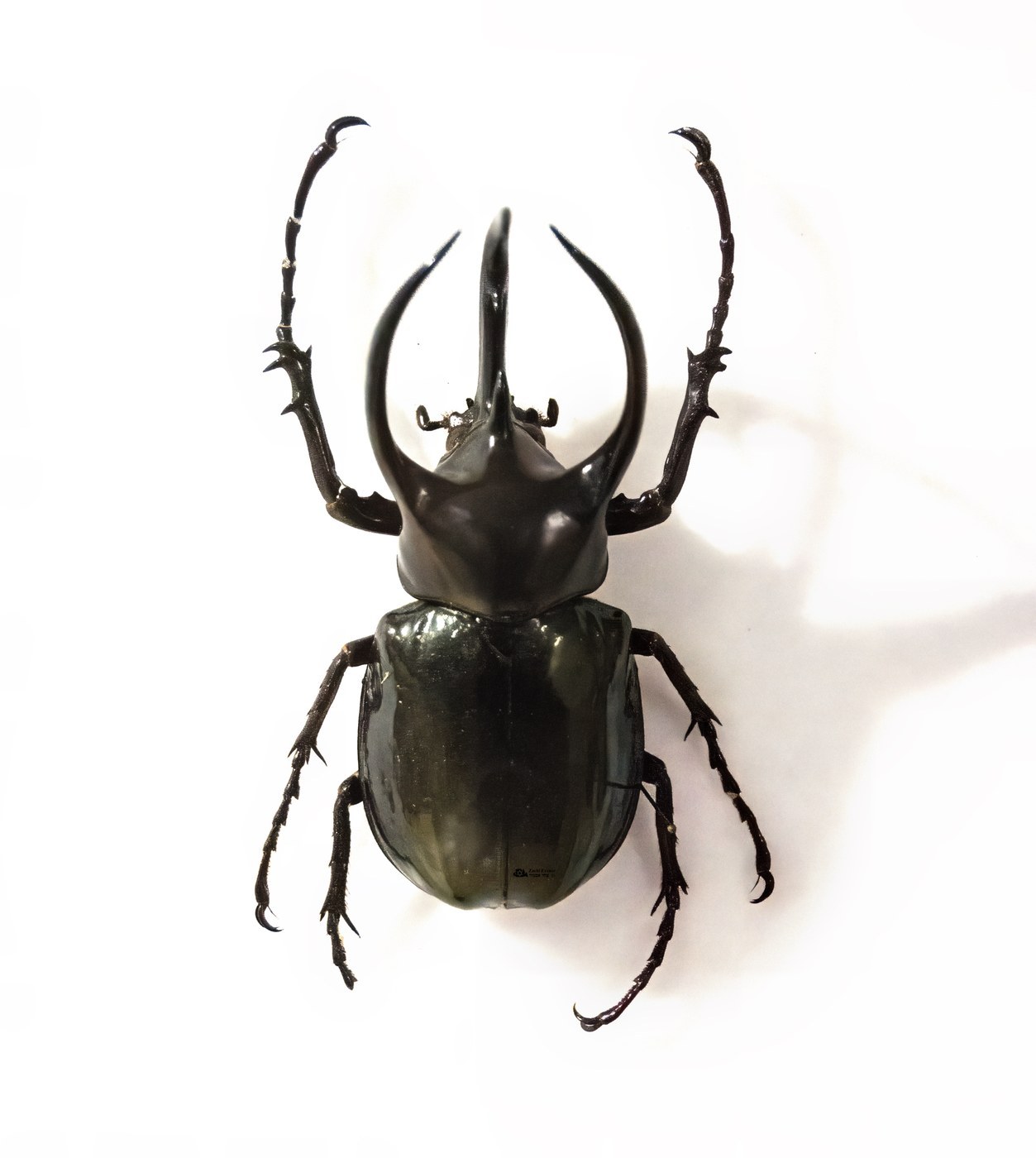
Atlas Beetle
Tropical forests of Southeast Asia
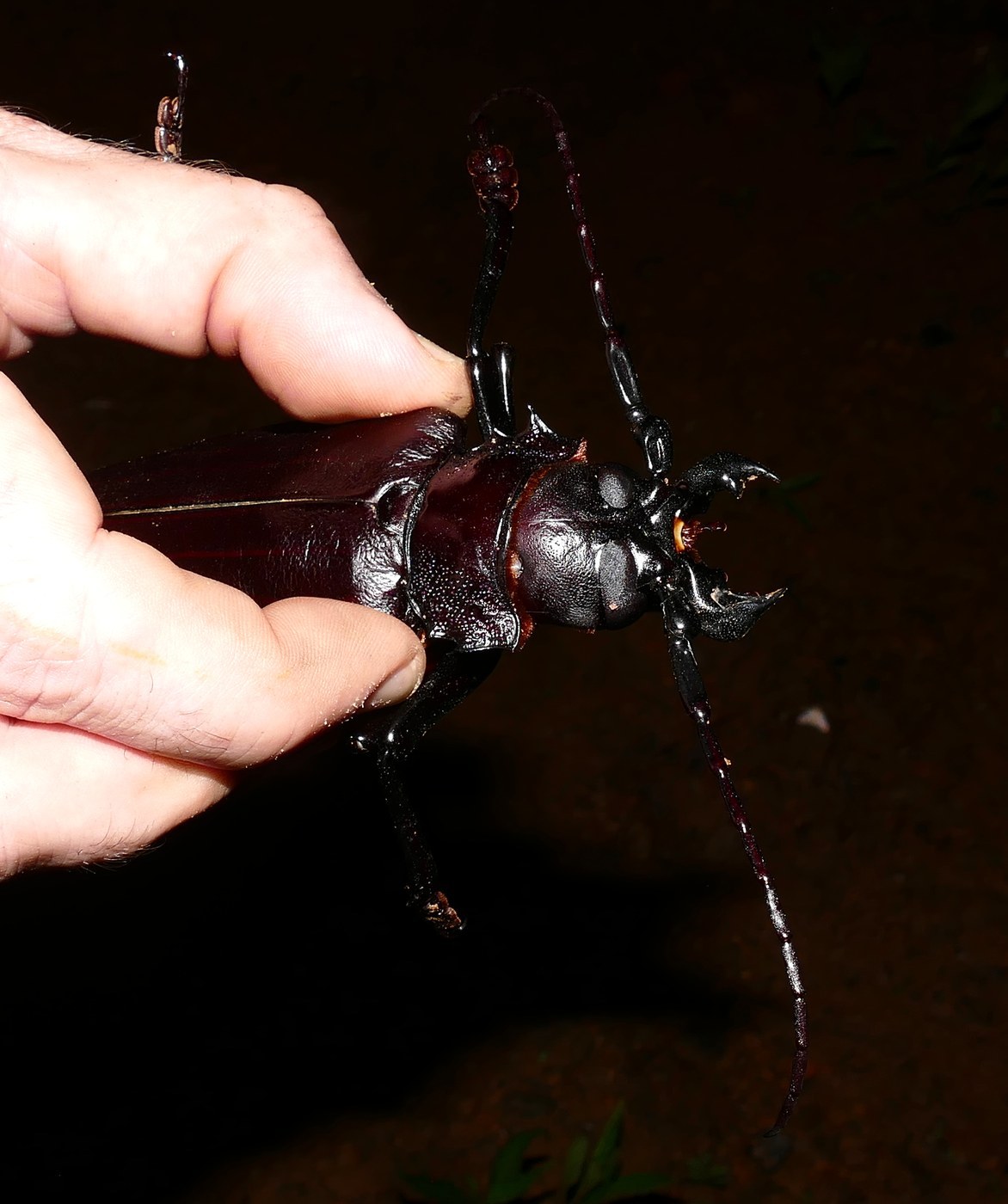
Titan Beetle
Amazon rainforest of South America
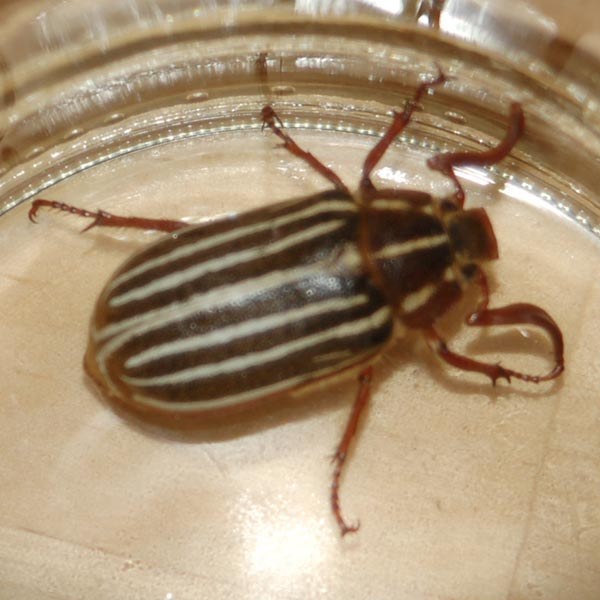
Ten-lined June Beetle
Sandy soils, pine forests, and orchards of western North America
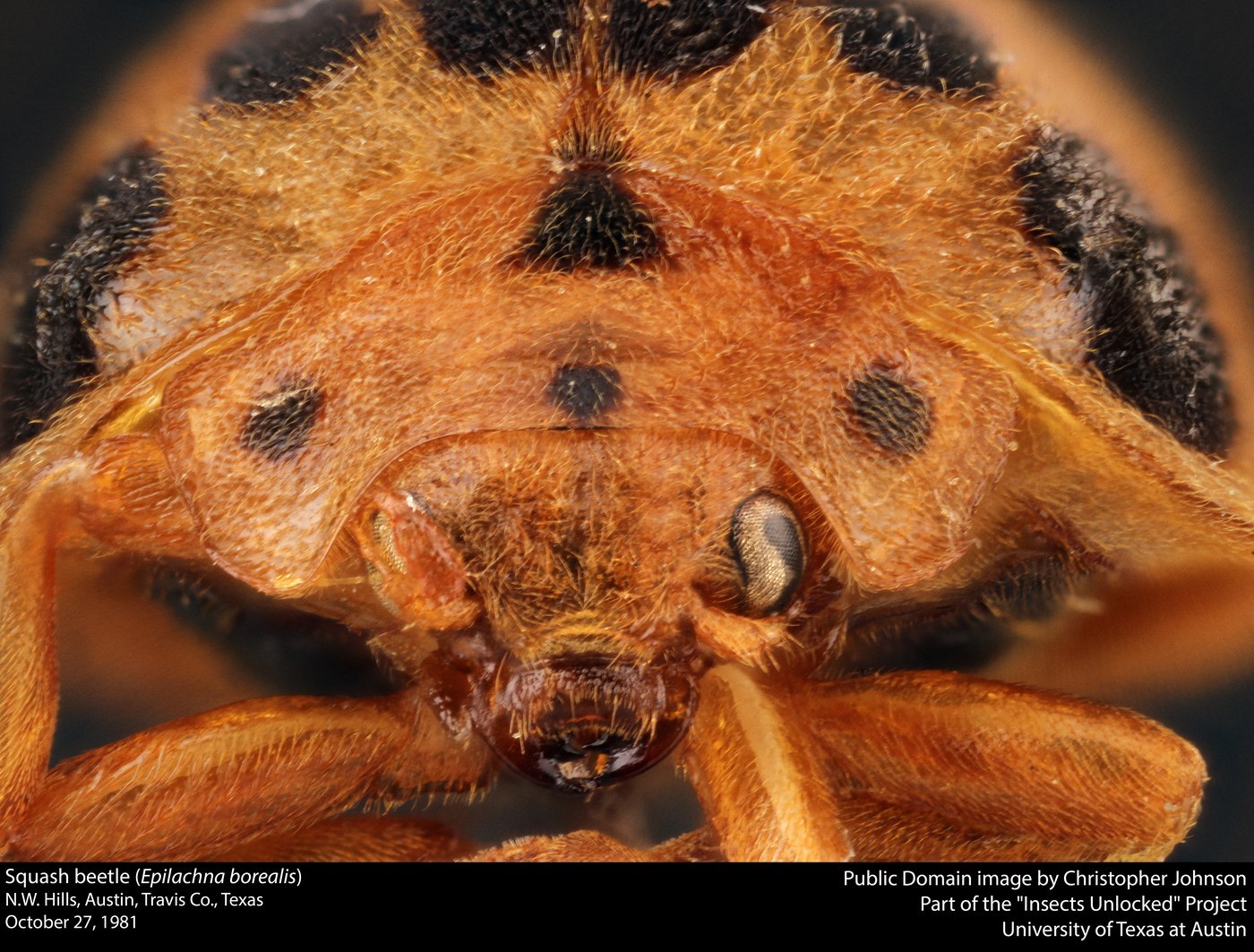
Squash Beetle
Vegetable gardens and fields growing squash, pumpkin, and other cucurbits