
Bug Encyclopedia
Search and identify bugs & insects — beetles, butterflies, moths, ants, bees, spiders and more — with size, habitat, danger, behavior, and how to tell them apart.
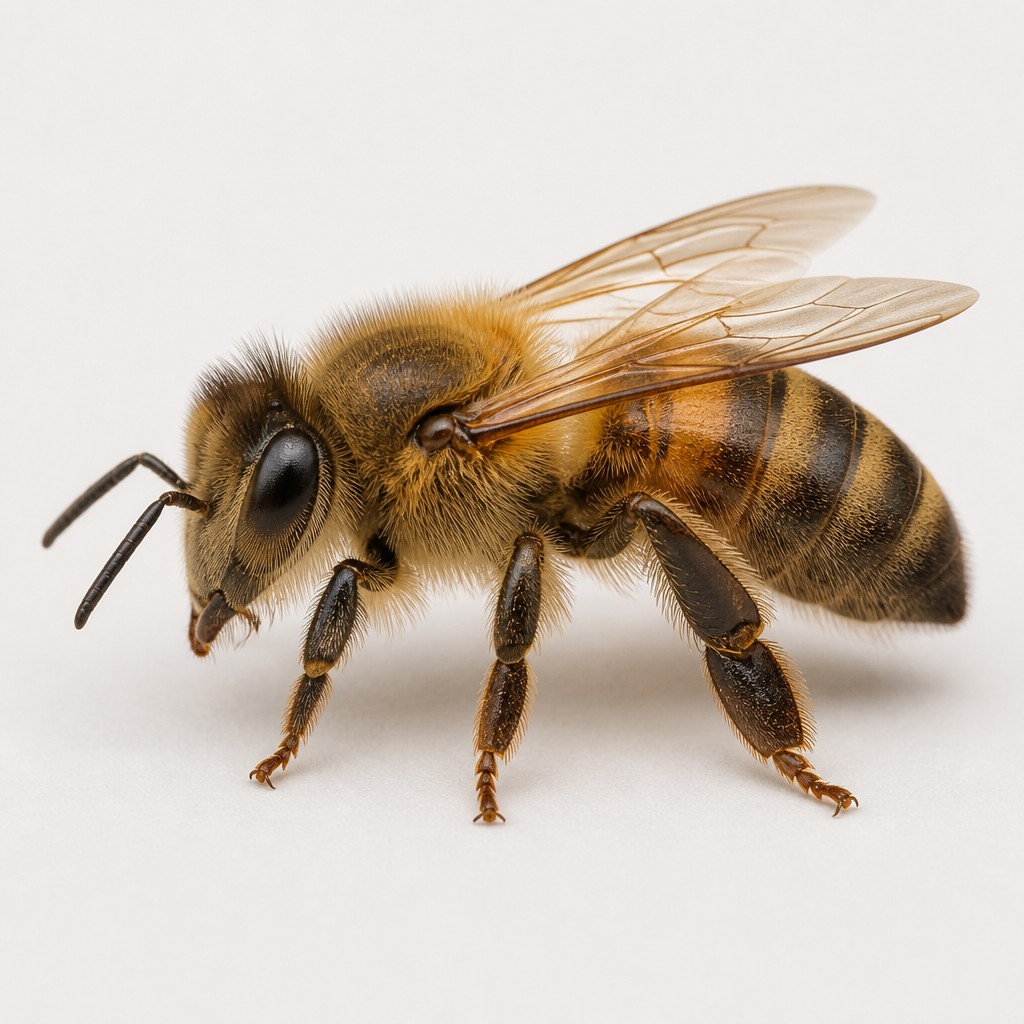
Western Honey Bee
The familiar golden-brown, fuzzy-banded honey bee kept worldwide for honey production and crop pollination, living in large perennial colonies built around wax comb and a single egg-laying queen.
bee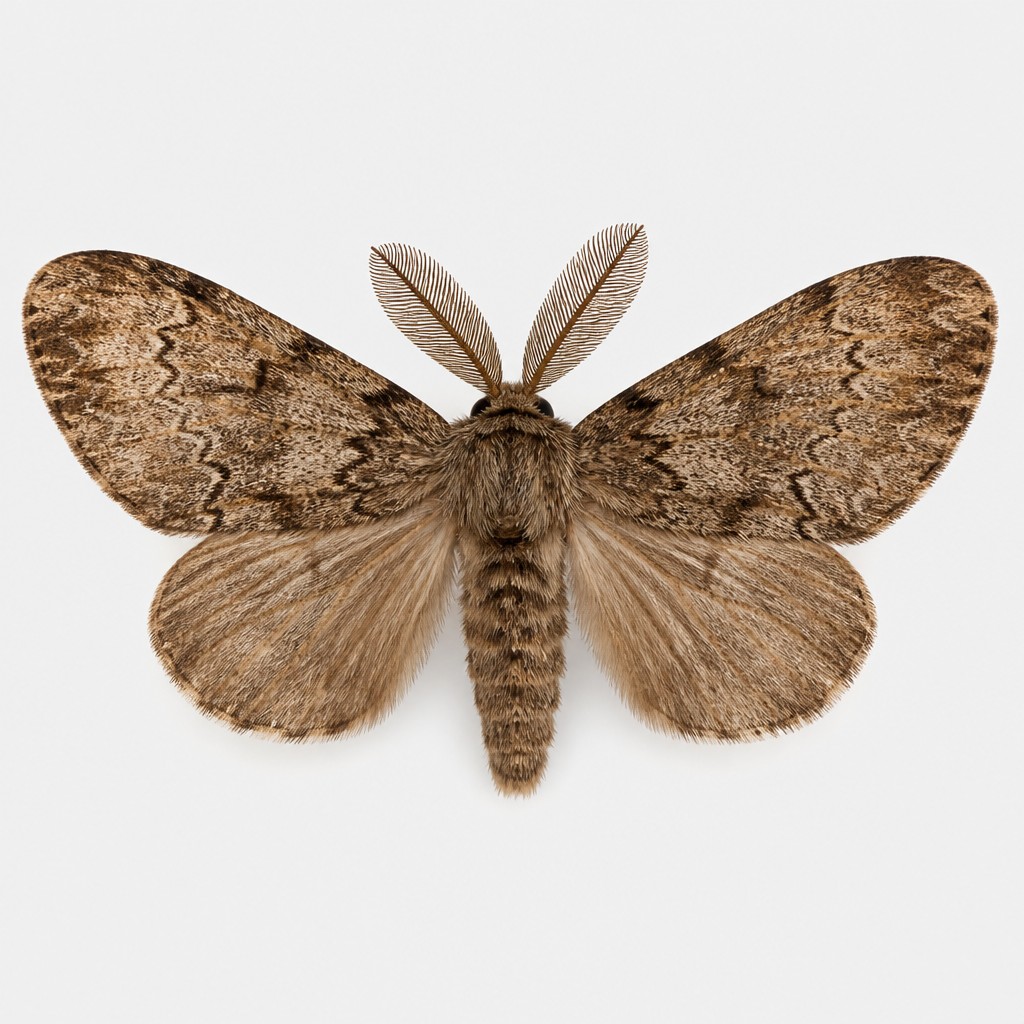
Gypsy Moth (Spongy Moth)
A strongly sexually dimorphic moth, recently renamed the Spongy Moth for its distinctive spongy, tan egg masses, whose caterpillars are known for periodically defoliating oak and other hardwood trees in large outbreak years.
moth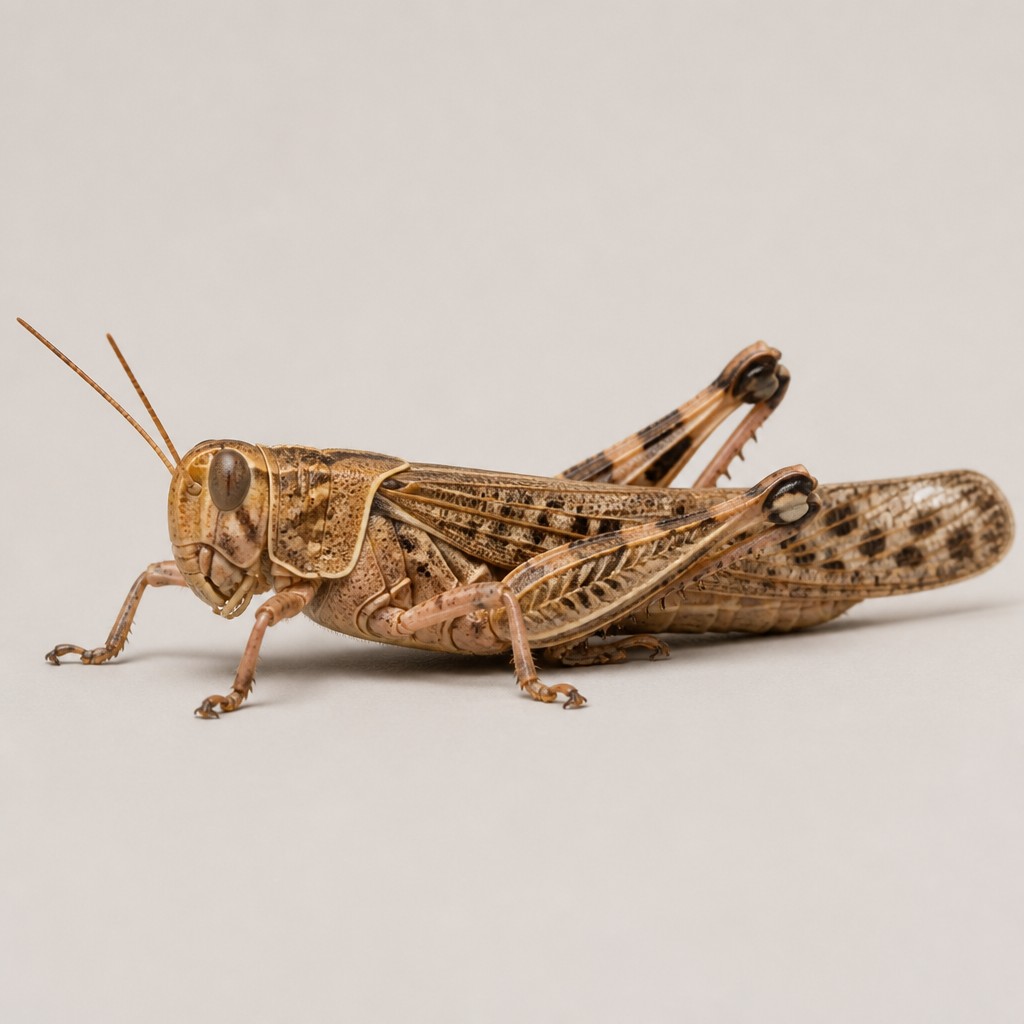
Desert Locust
A large, powerful grasshopper capable of forming some of the most extensive and historically devastating insect swarms on Earth, transforming from a solitary desert dweller into a densely packed migrating horde under the right conditions.
grasshopper-cricket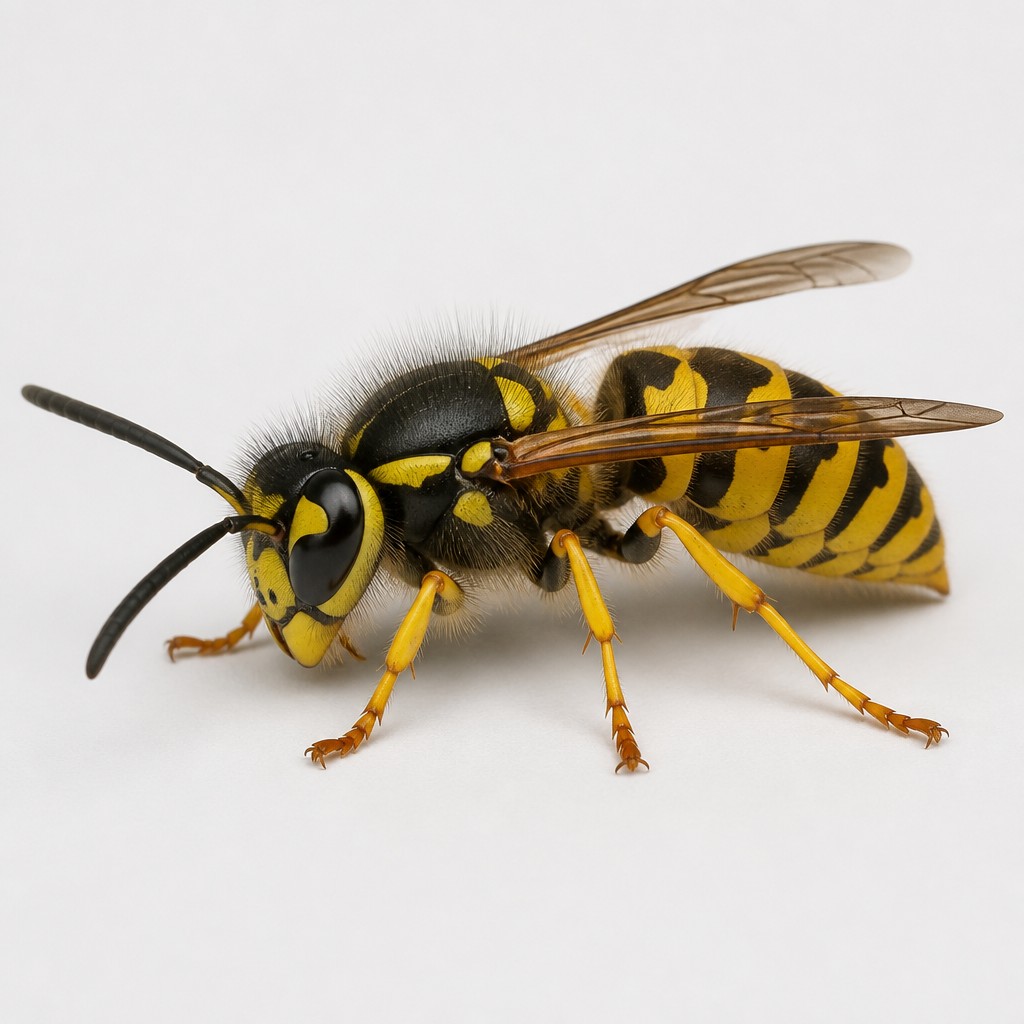
German Yellowjacket
A black-and-yellow social wasp closely resembling the common wasp, distinguished by three black facial dots, that builds large paper nests in wall voids and roof cavities and is widespread in both its native and introduced ranges.
wasp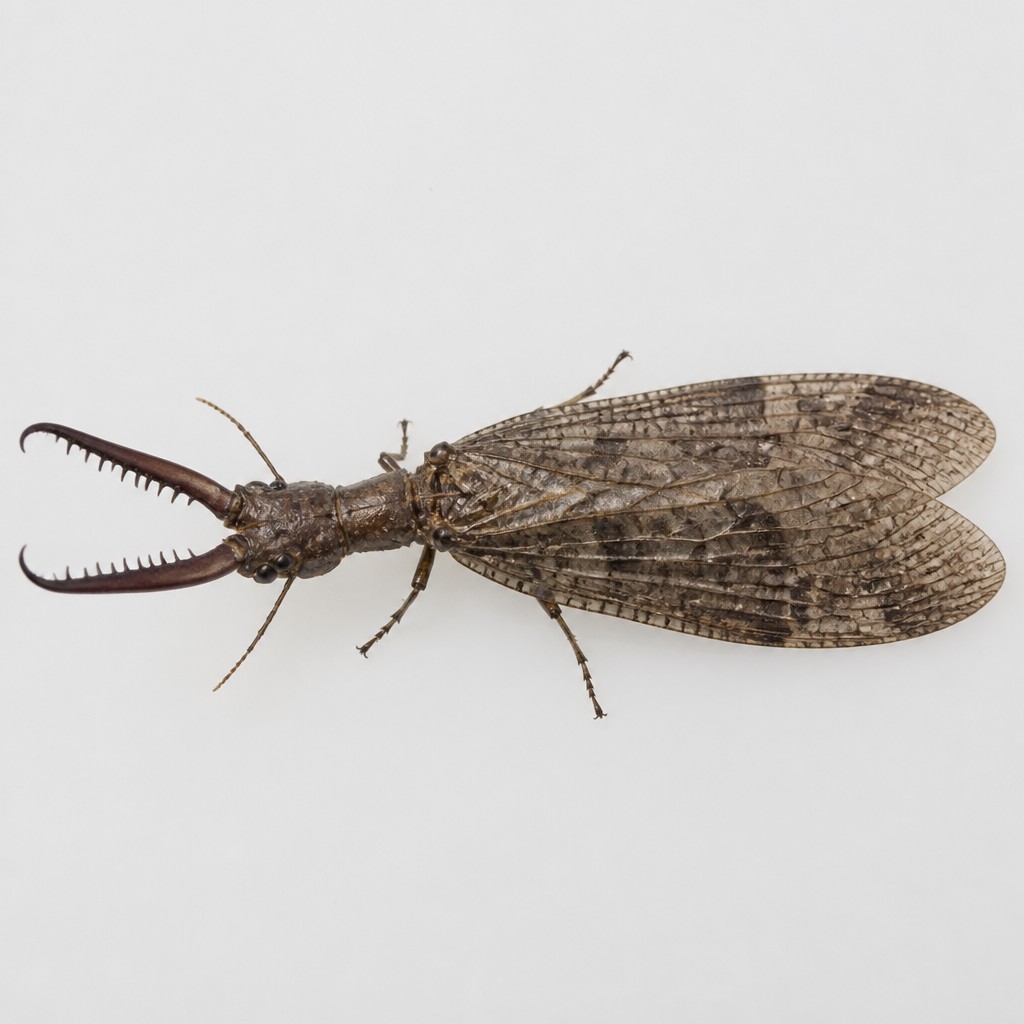
Eastern Dobsonfly
The classic dobsonfly of eastern North America, famous for the male's outsized, tusk-like jaws and for its aquatic larva, the hellgrammite, a favorite live-bait fishing lure.
aquatic-insect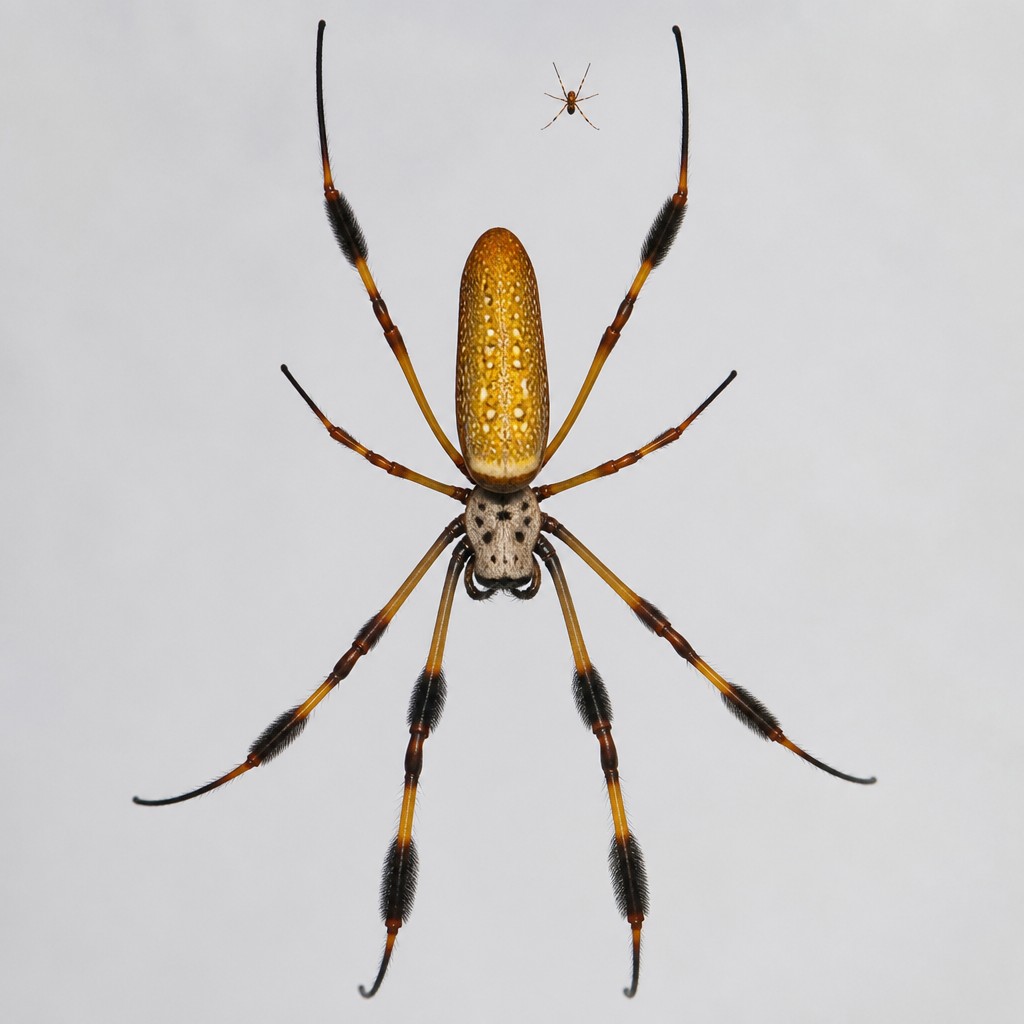
Golden Silk Orb-Weaver Spider
Famous for spinning enormous webs of shimmering golden silk, the golden silk orb-weaver is a large, long-legged spider of warm climates. Females dwarf the tiny males and hang head-down in their sprawling snares.
spider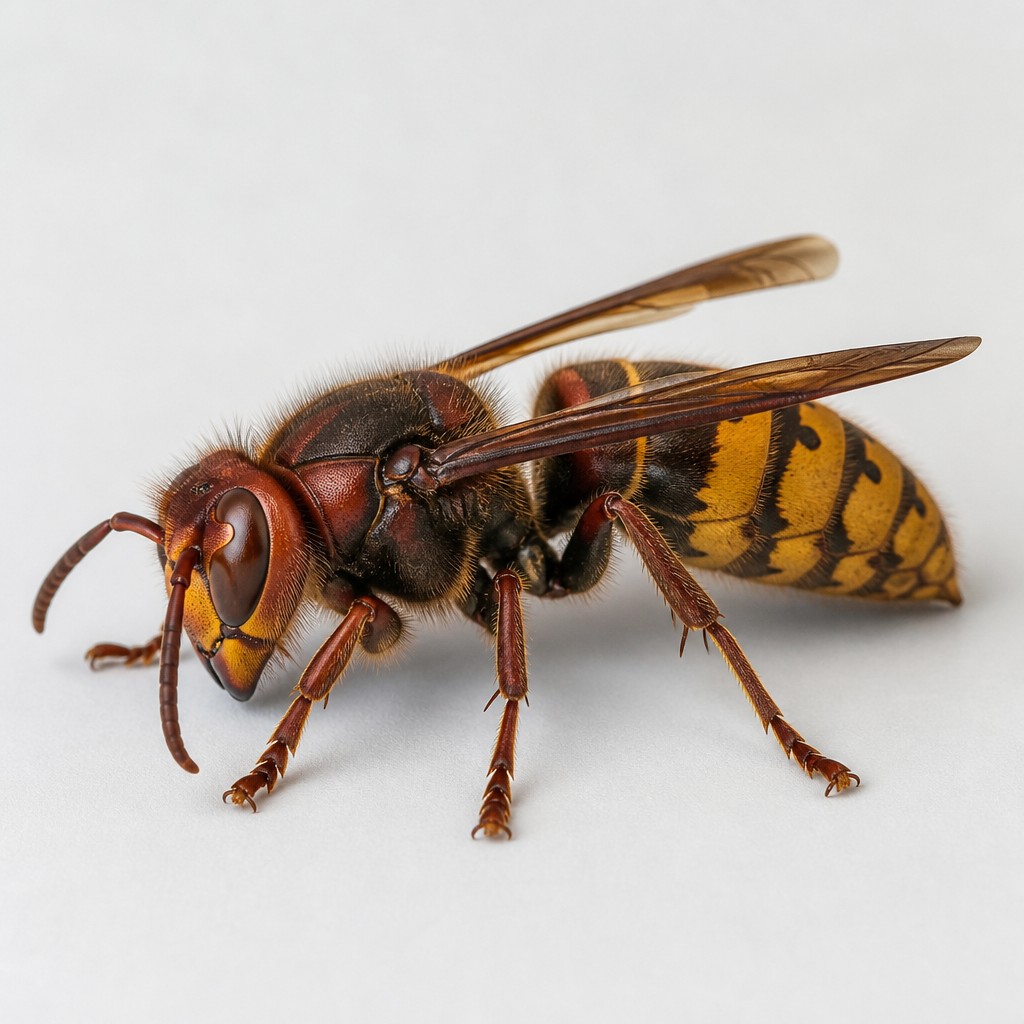
European Hornet
A large, robust wasp with a reddish-brown thorax, yellow-and-brown striped abdomen, and a distinctive habit of nesting in hollow trees, making it the largest true hornet native to Europe and introduced to eastern North America.
wasp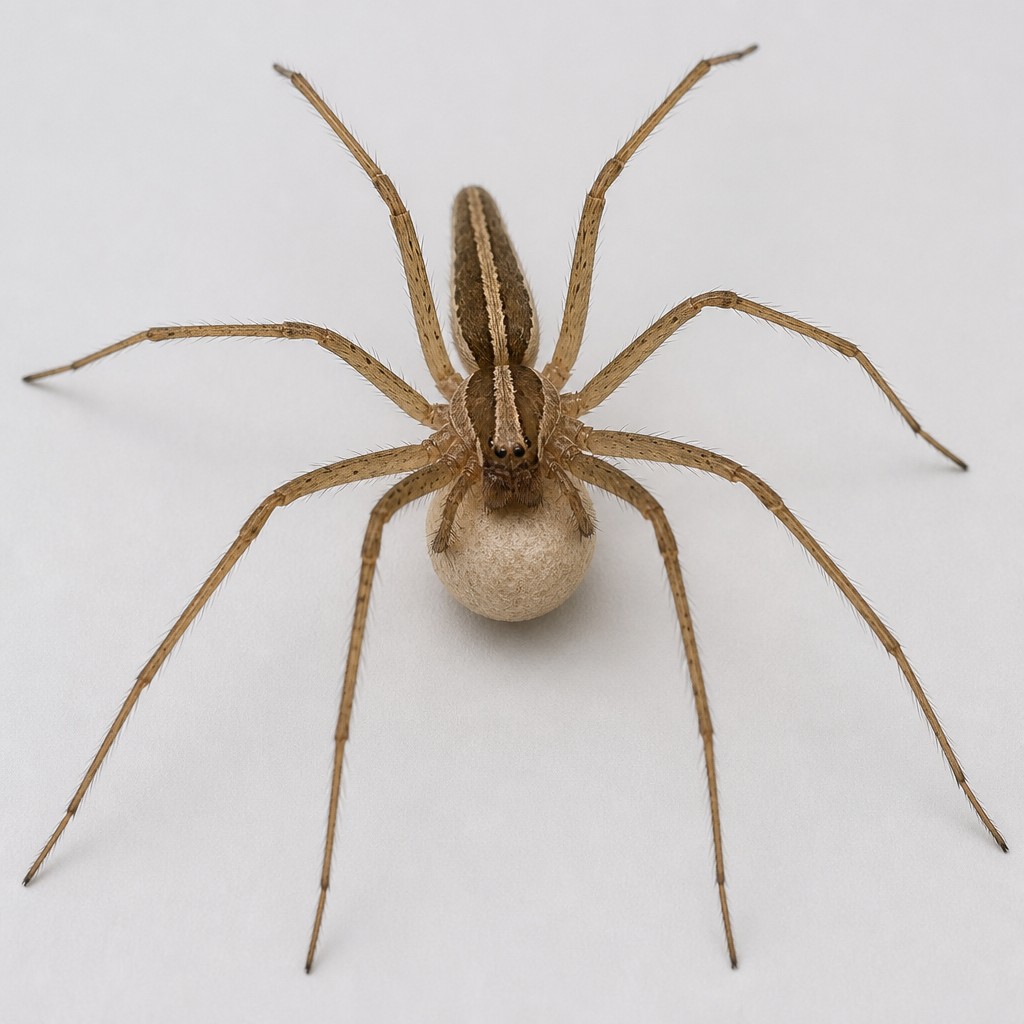
Nursery Web Spider
Named for the silken nursery tent females weave to guard their hatching young, this slender, long-legged spider carries her large egg sac beneath her body in her fangs until the eggs are ready to hatch.
spider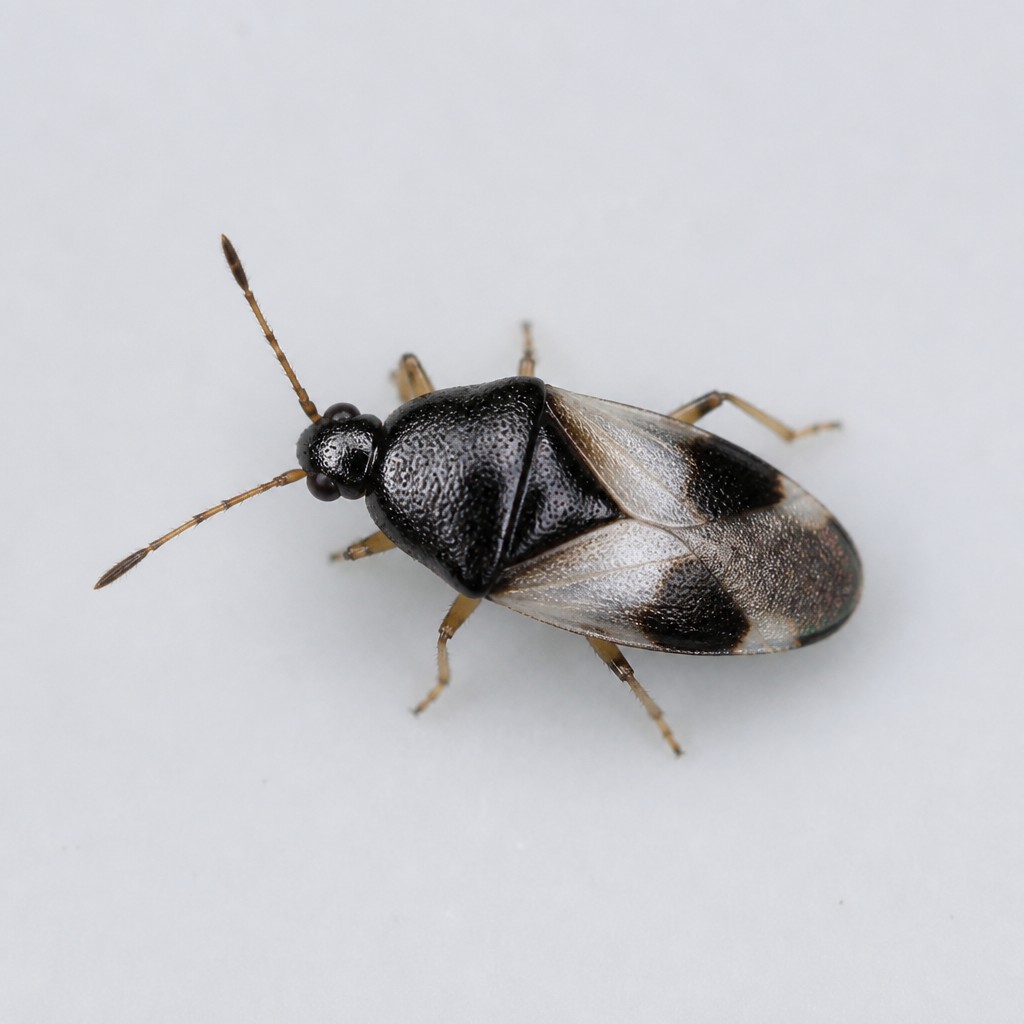
Minute Pirate Bug
A tiny, black-and-white patterned true bug barely visible without close inspection, the minute pirate bug is a voracious predator of thrips, mites, and insect eggs on flowers and foliage.
true-bug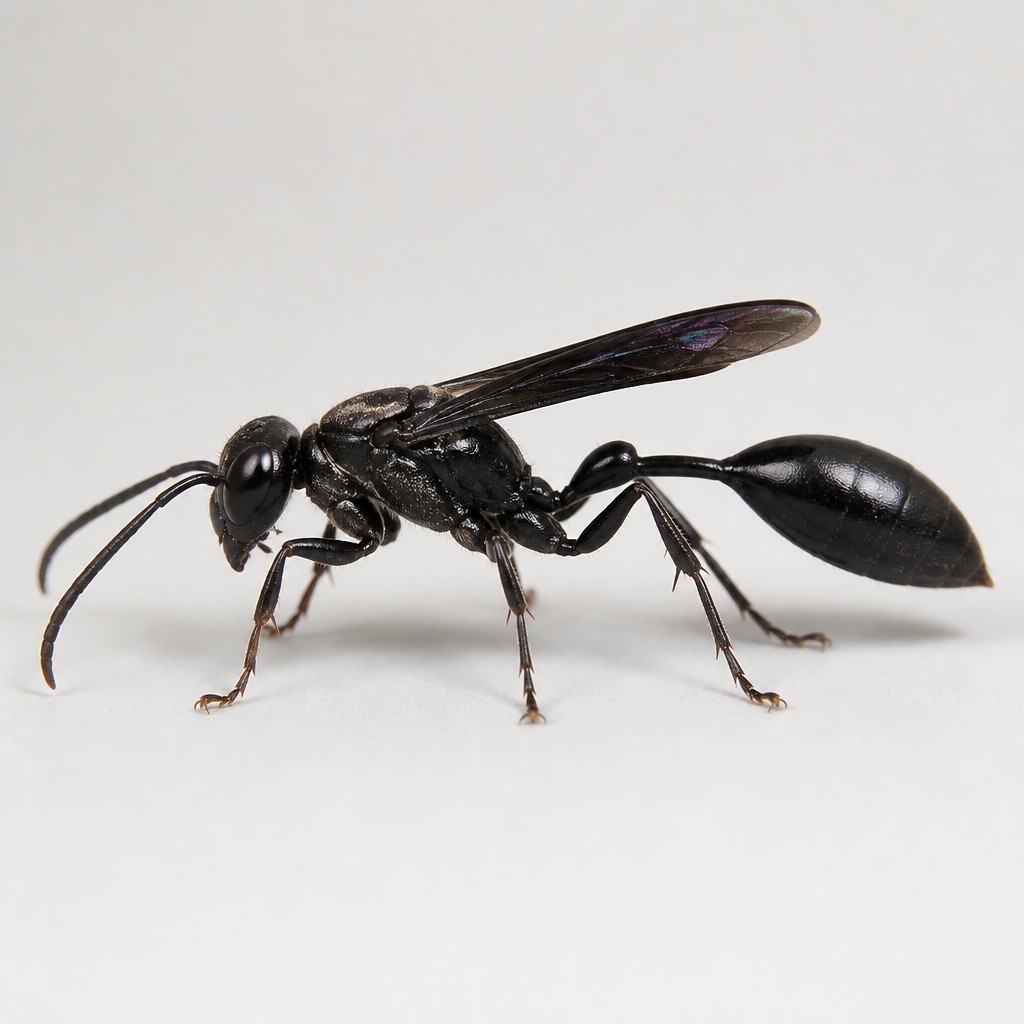
Mud Wasp
A slender, thread-waisted solitary wasp famous for plastering rows of tube-shaped mud cells under eaves and porch ceilings, each one stocked with paralyzed spiders for its larva.
wasp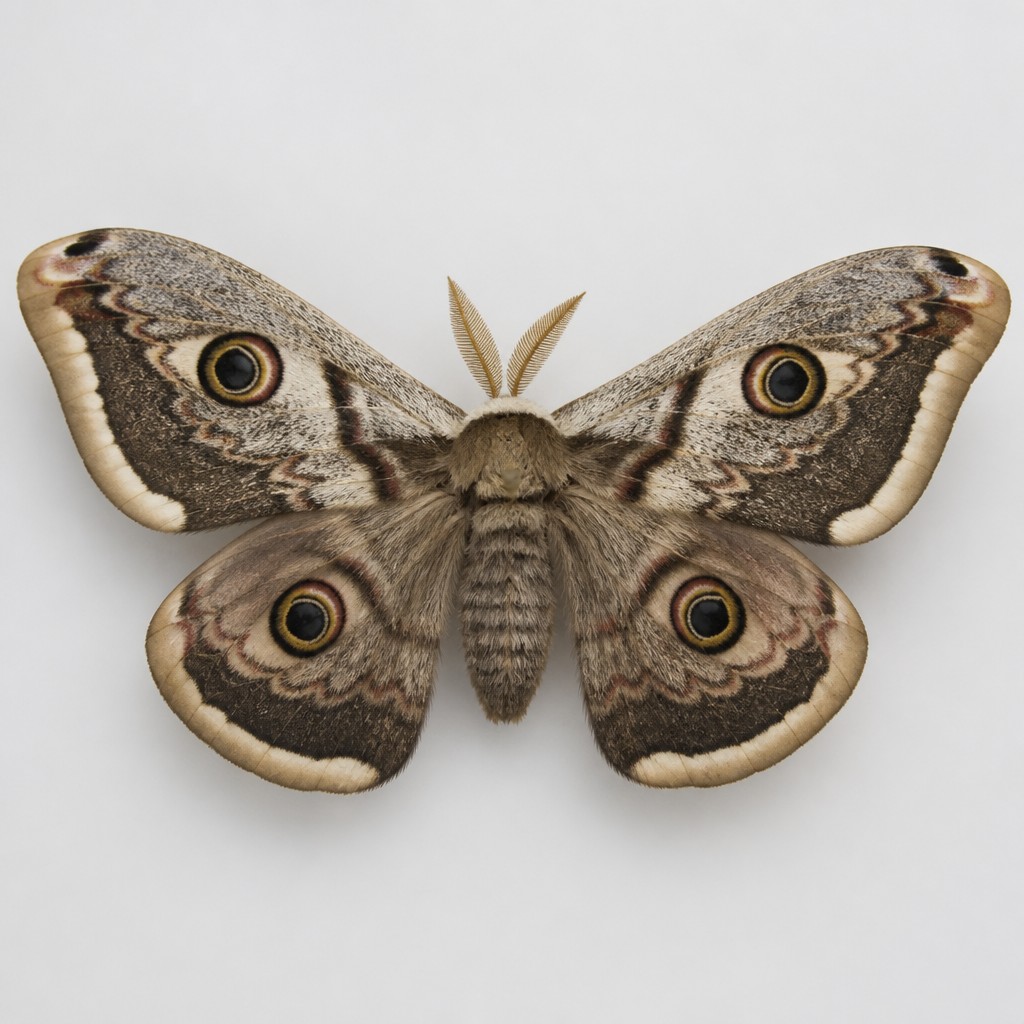
Emperor Moth
A striking silk moth with a large eyespot on each of its four wings, showing pronounced differences between the smaller, orange-brown, day-flying males and the larger, greyer, night-flying females.
moth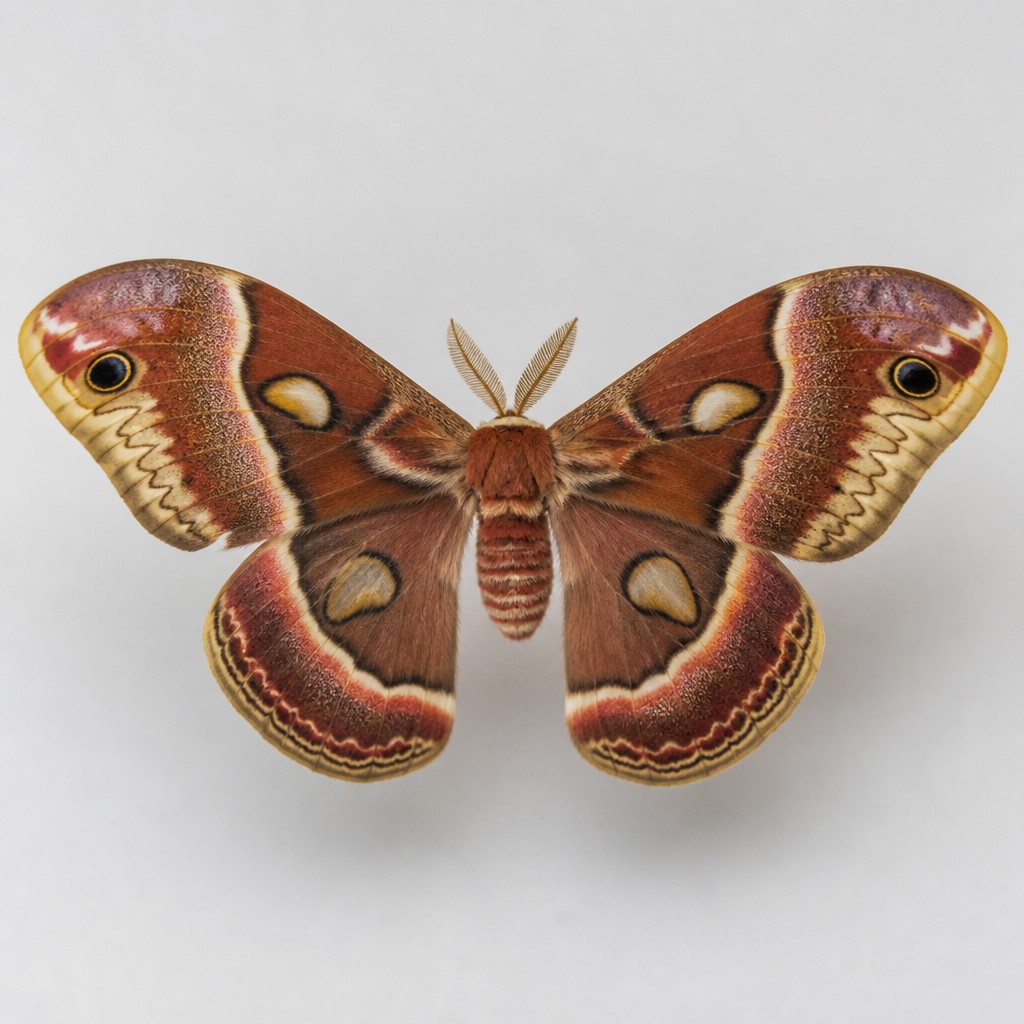
Promethea Moth
A medium-sized silk moth showing striking differences between the sexes, with dark, blackish-maroon males that mimic a distasteful swallowtail butterfly in flight and larger, more colorful reddish-brown females marked with pale borders and eyespots.
moth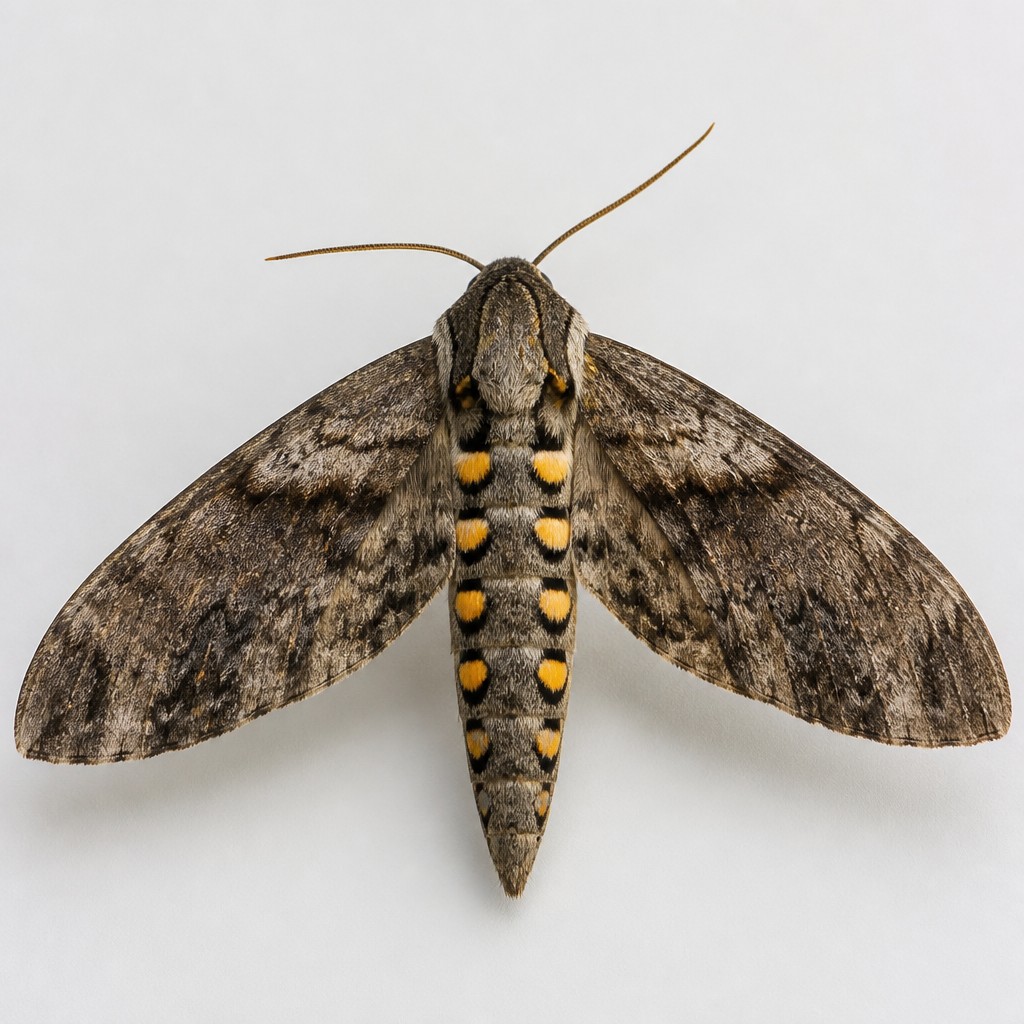
Tomato Hornworm Moth (Five-spotted Hawkmoth)
A large, robust grey-brown sphinx moth named for the five pairs of yellow-orange spots along its abdomen, best known as the adult form of the large green tomato hornworm caterpillar familiar to home gardeners.
moth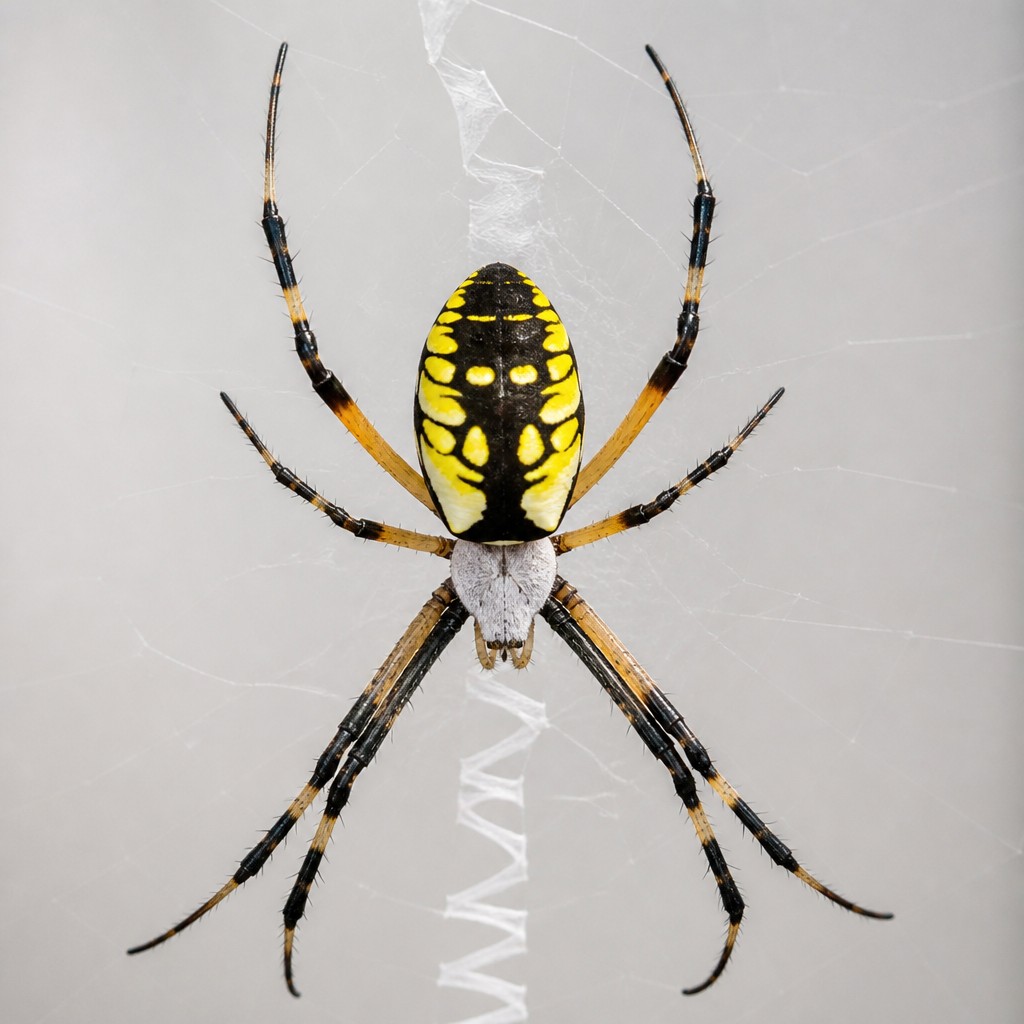
Yellow Garden Spider
Bold black and yellow markings, a large orb web anchored with a bright zigzag of silk, and a habit of sitting in plain view make the yellow garden spider one of the most eye-catching and recognizable spiders in North American backyards.
spider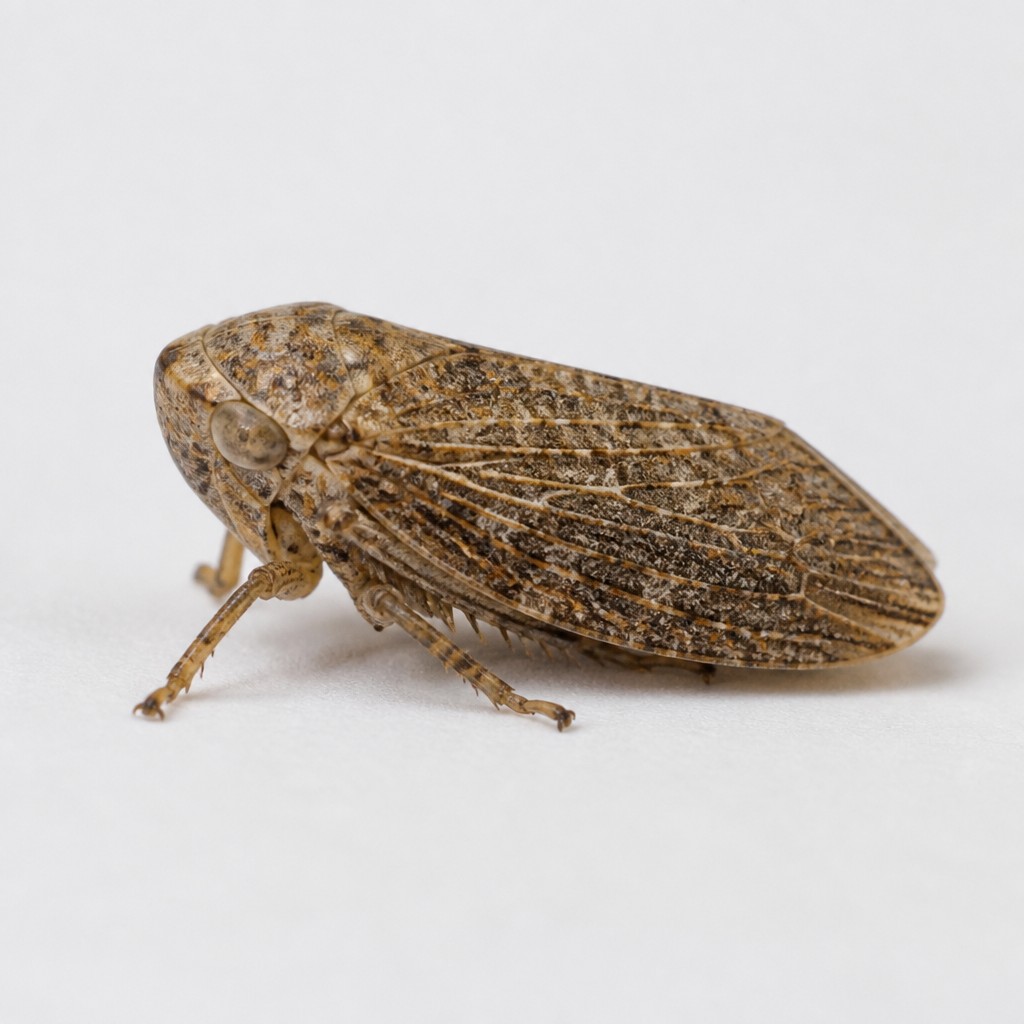
Spittlebug
A small hopping true bug best known in its nymph stage, which surrounds itself in a frothy mass of white foam on plant stems, commonly called cuckoo spit.
true-bug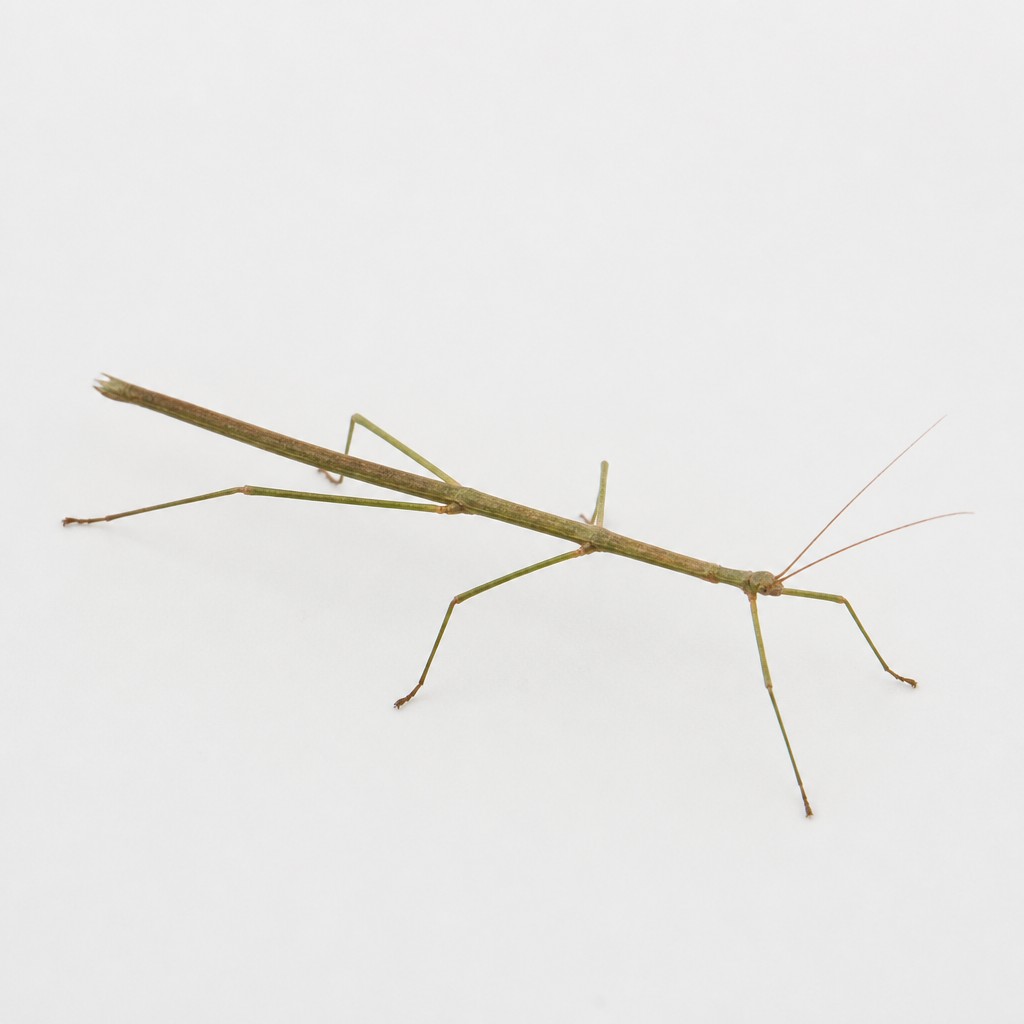
Walking Stick
A remarkably twig-like insect with a long, slender, brown to green body and thin legs, so effective at mimicking a plant stem that it can be nearly invisible while motionless on vegetation.
mantis-stick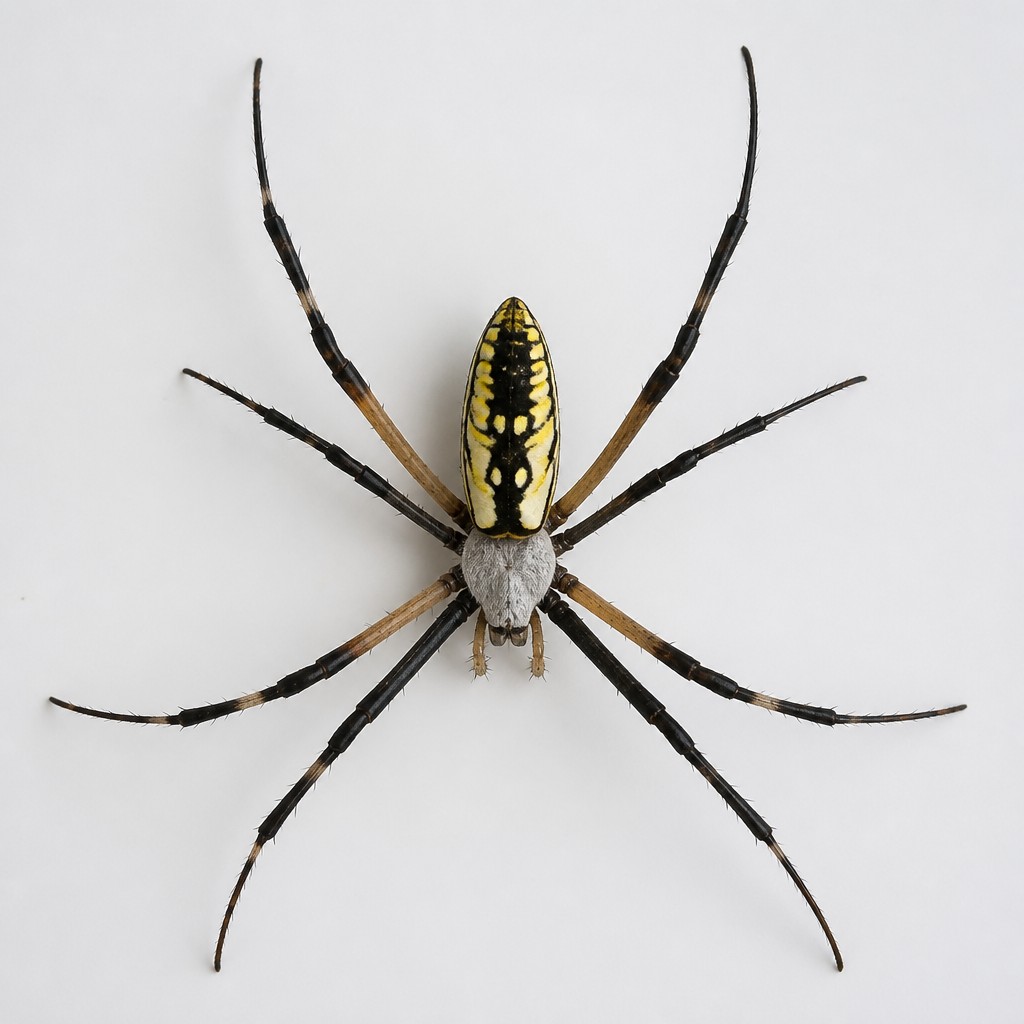
Banana Spider
"Banana spider" is a folk name applied inconsistently across the Americas, but in the southeastern United States it most often refers to the large, golden-silked orb weaver commonly seen spanning gaps between trees along shaded trails.
spider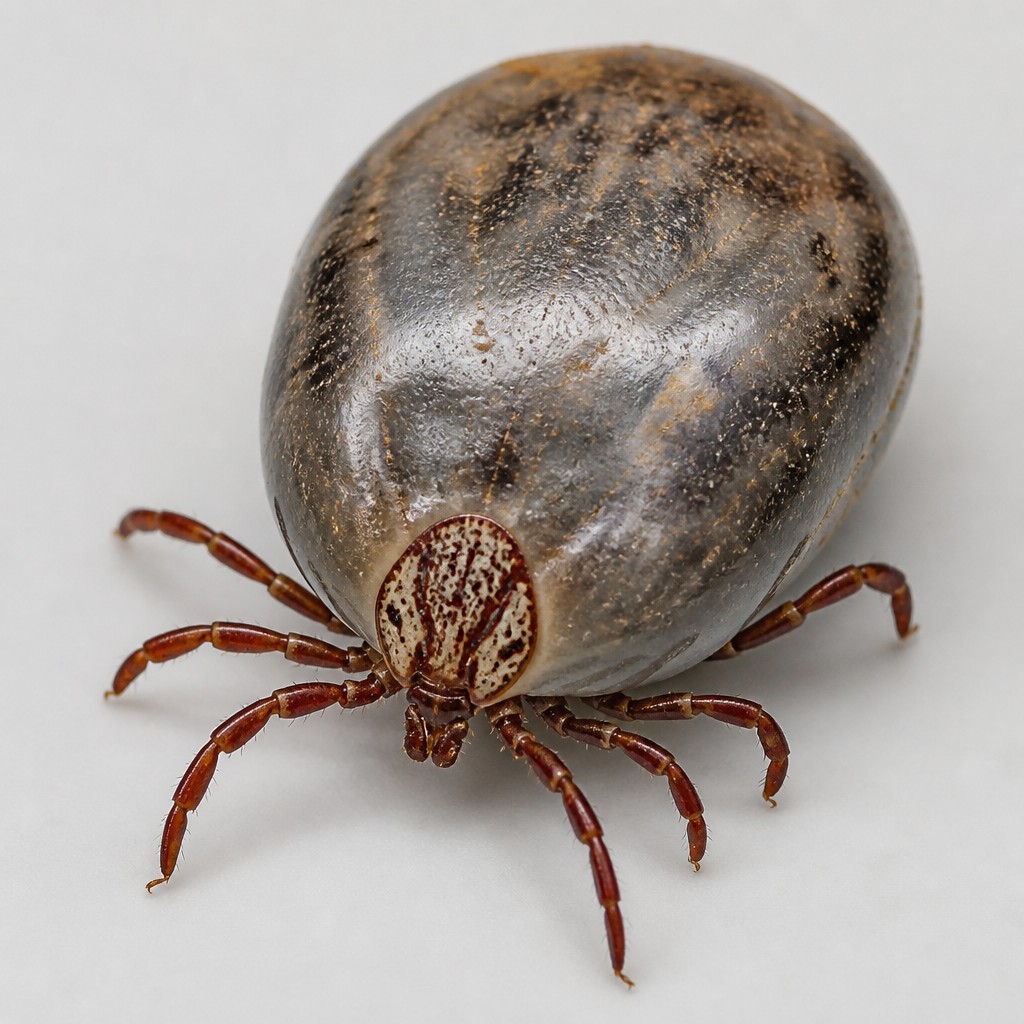
Wood Tick
A flattened, ornately patterned tick that waits on low brush in the Rocky Mountain foothills, ready to grab onto large mammals passing within reach. Its mottled, shield-marked back makes it one of the more distinctive North American ticks to identify.
arachnid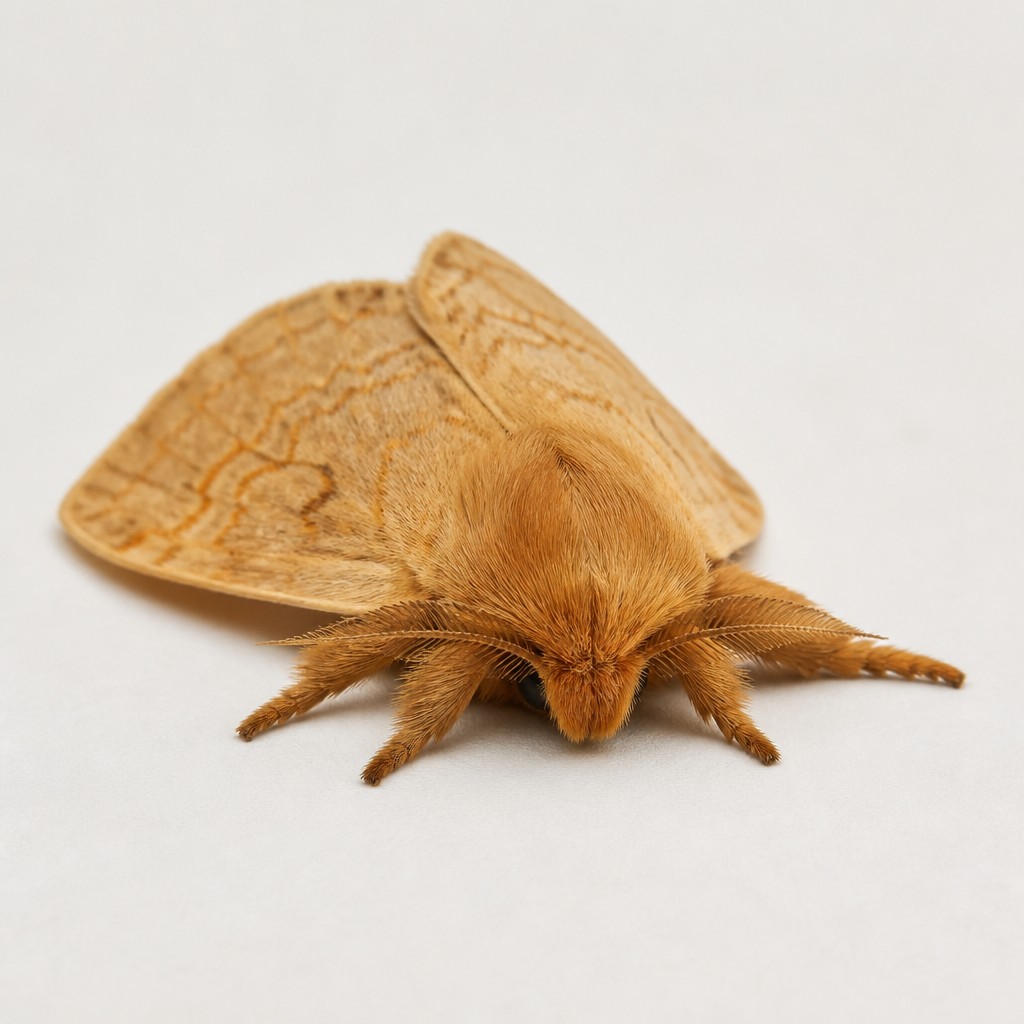
Southern Flannel Moth (Puss Caterpillar Moth)
A small, densely furred tan-to-orange moth best known for its unusual larva, a soft-looking, cat-tailed caterpillar whose fluffy coat hides rows of venomous spines.
moth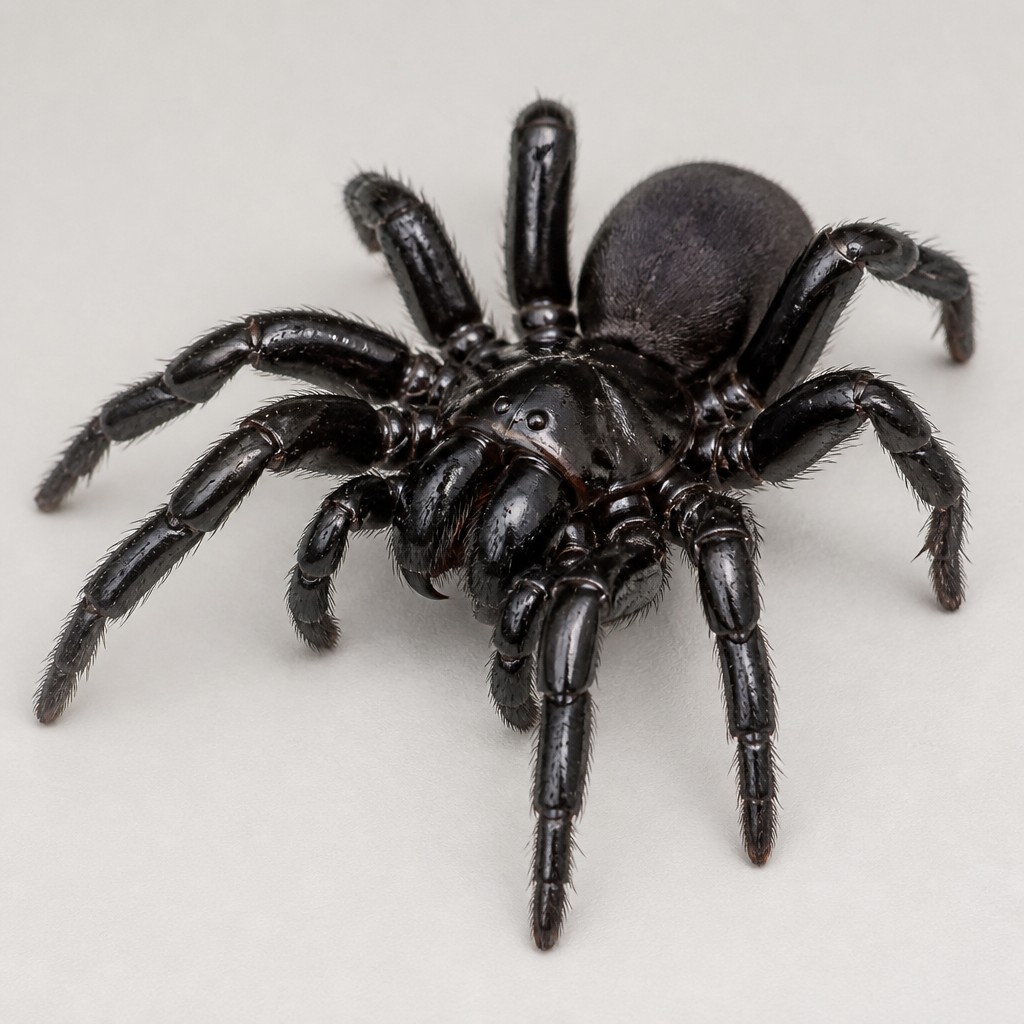
Sydney Funnel-web Spider
Glossy black and heavily built, with large fangs held ready in front of its face, the Sydney funnel-web spider shelters in a silk-lined burrow in moist, shaded ground across the Sydney region, one of Australia's most distinctive ground-dwelling spiders.
spider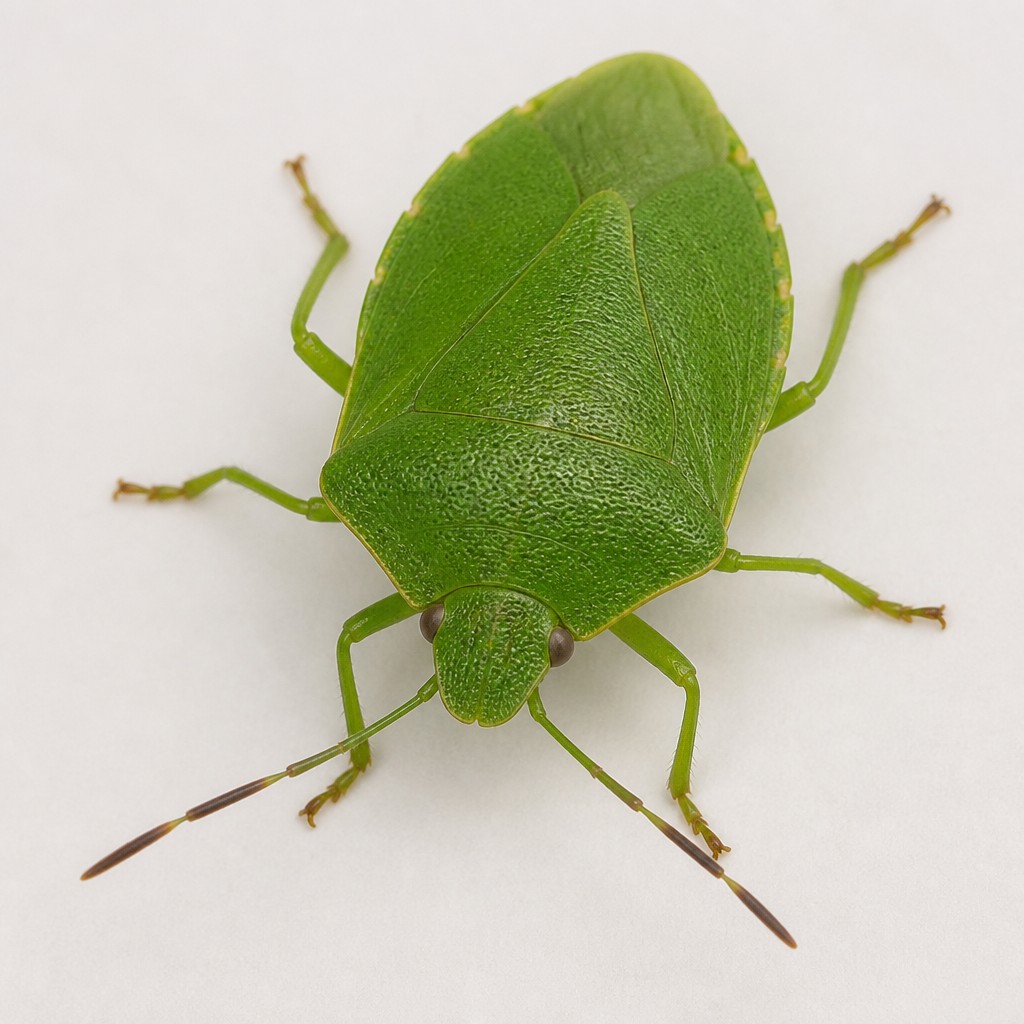
Southern Green Stink Bug
A large, shield-shaped, solid bright green true bug found on a wide variety of garden and crop plants across warm regions worldwide, recognizable by its broad body and, in some individuals, a row of small pale dots along the shoulders.
true-bug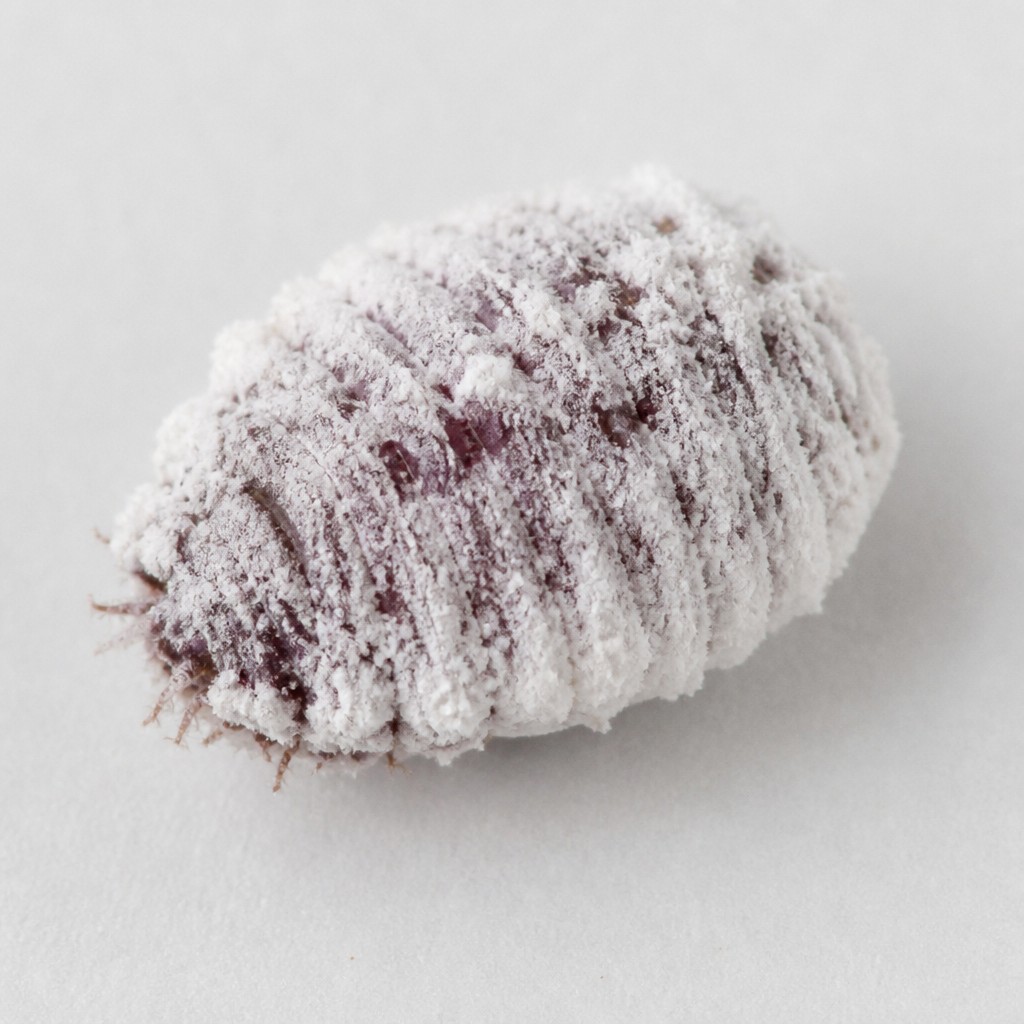
Cochineal
A tiny, sedentary scale insect that lives clustered on prickly pear cacti beneath a protective coat of white, waxy fluff, historically prized for the deep red pigment it produces.
true-bug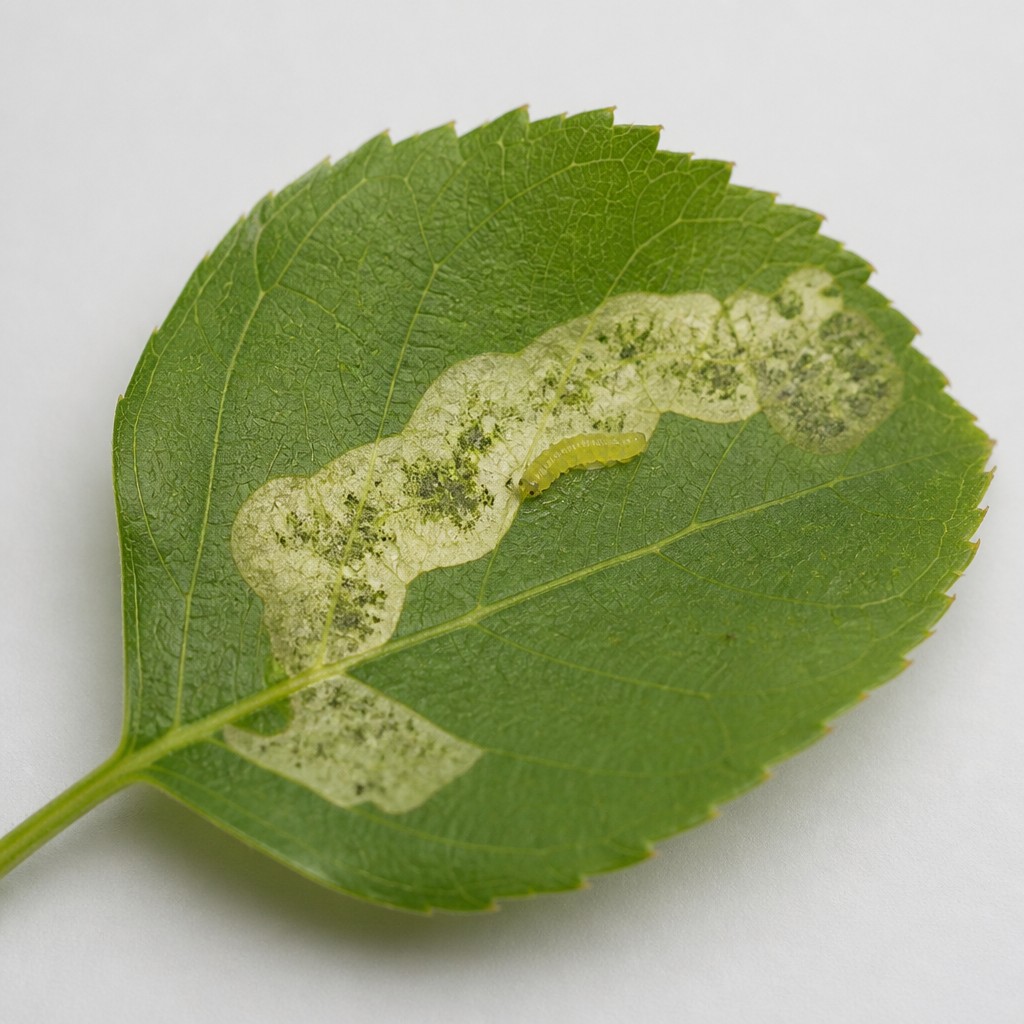
Leaf Miner
Rather than chewing from the outside, a leaf miner larva tunnels between the upper and lower surfaces of a leaf, leaving behind pale, winding trails or blotches that trace its path as it feeds.
fly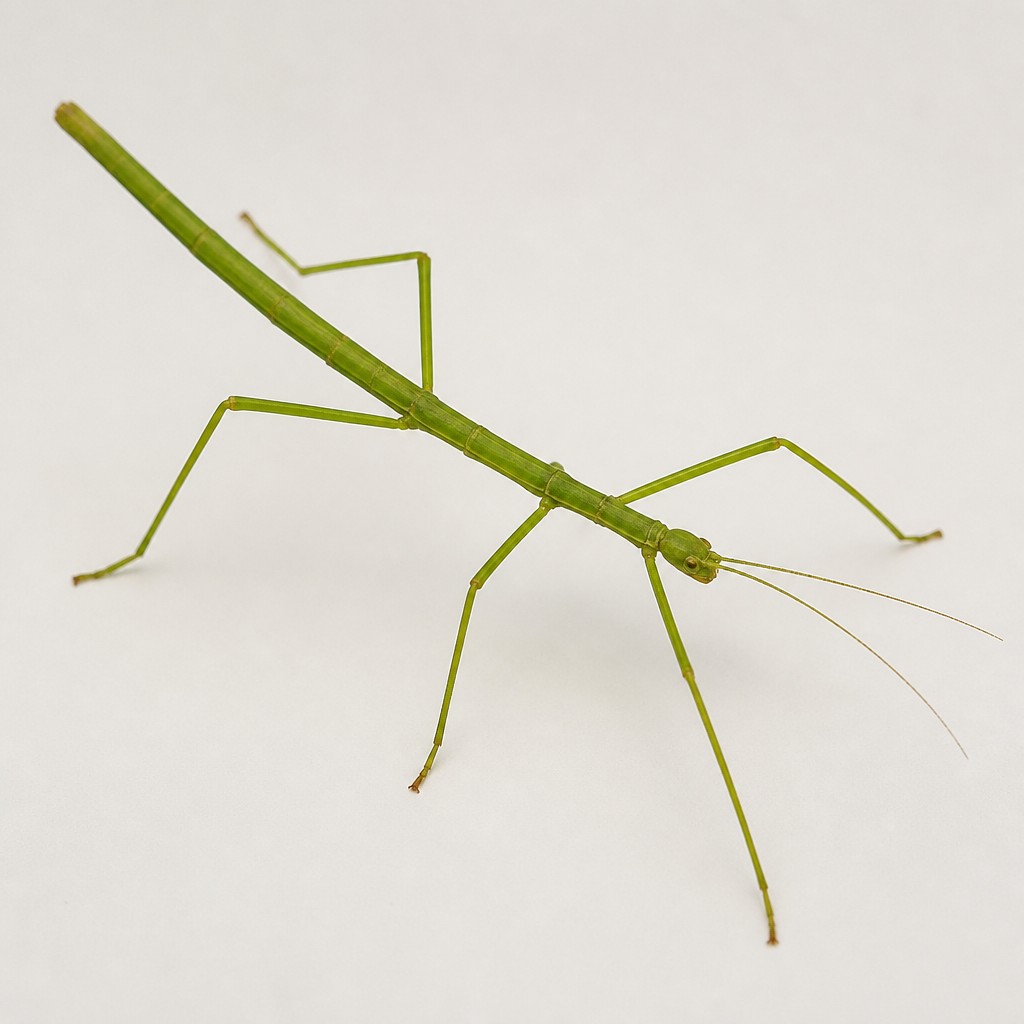
Vietnamese Walking Stick
A slender tropical stick insect popular in classrooms and terrariums, notable for females that can produce healthy offspring entirely on their own, without ever mating.
mantis-stick