
Bug Encyclopedia
Search and identify bugs & insects — beetles, butterflies, moths, ants, bees, spiders and more — with size, habitat, danger, behavior, and how to tell them apart.
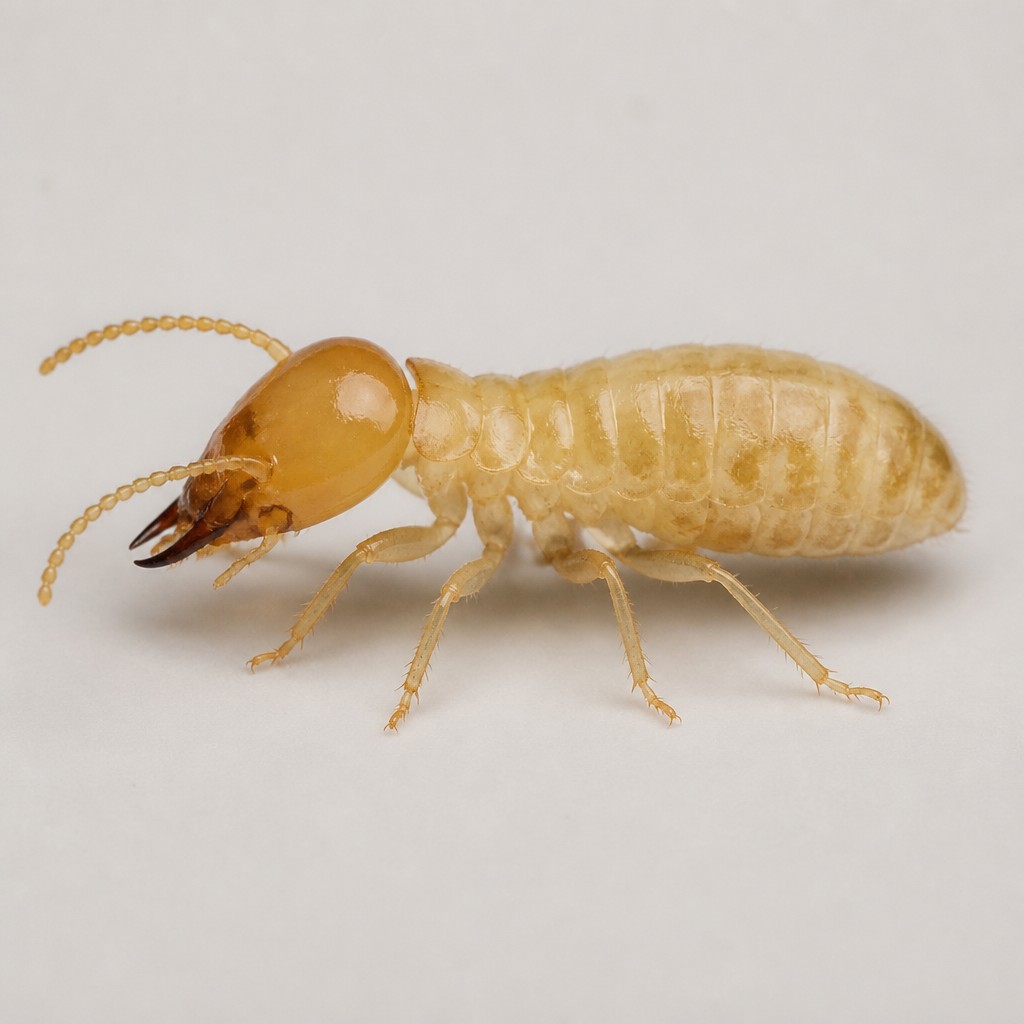
Termite
A pale, soft-bodied social insect that lives in hidden colonies and feeds on cellulose in wood and plant debris, often mistaken for an ant despite belonging to an entirely different insect order.
other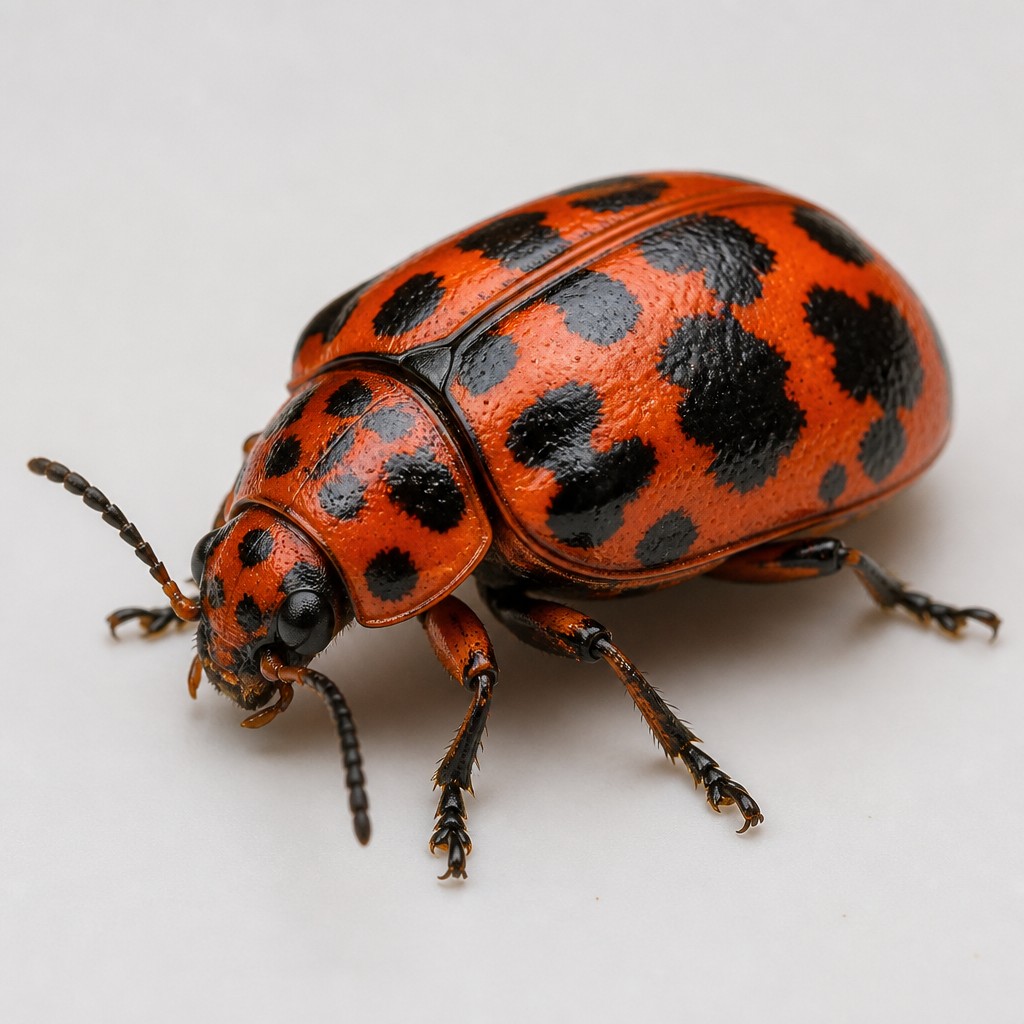
Milkweed Leaf Beetle
A large, boldly colored leaf beetle in glossy orange-red with irregular black patches, found feeding exclusively on milkweed plants alongside monarch caterpillars.
beetle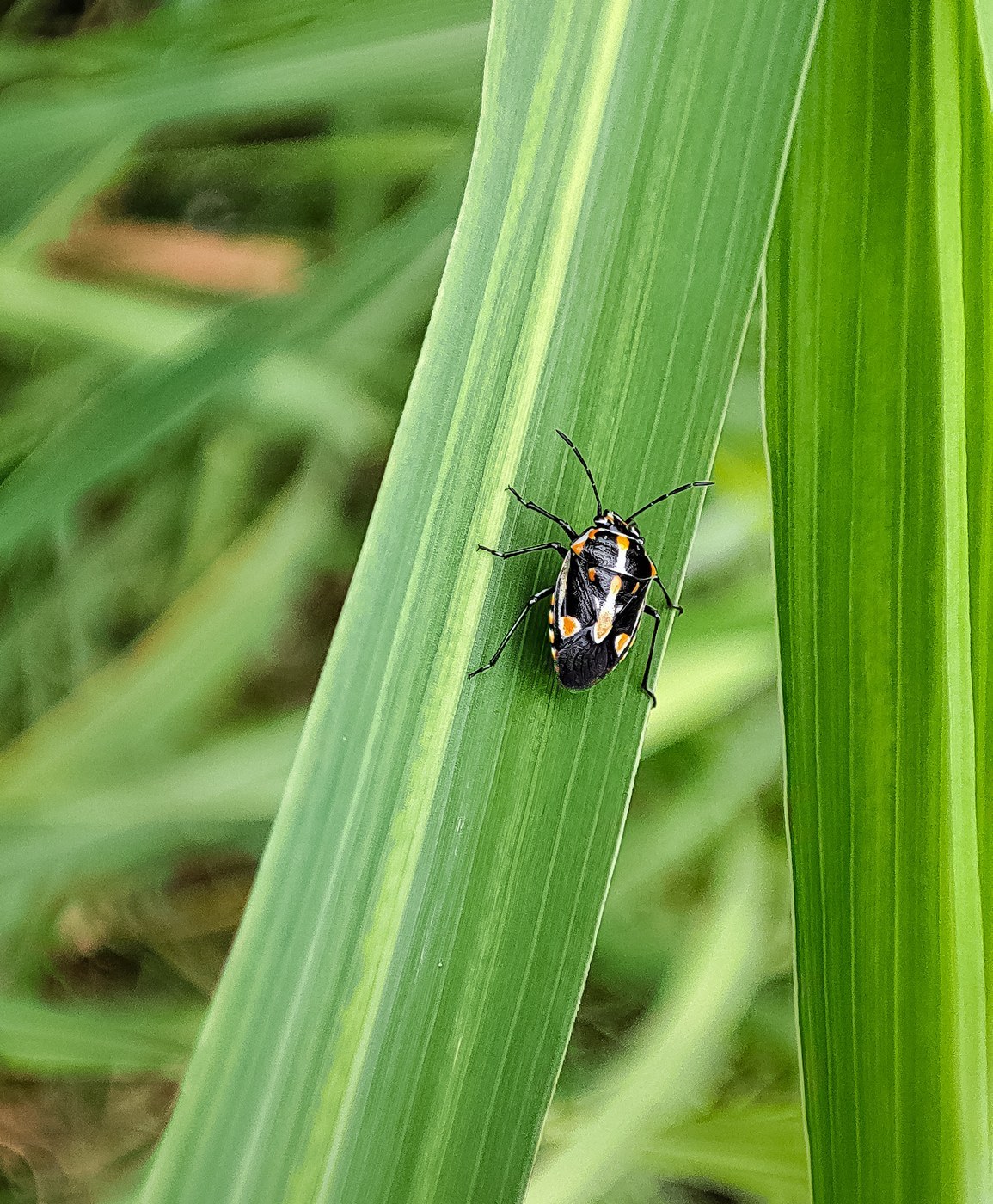
Bagrada Bug
A tiny, orange-and-black stink bug with an intricate mottled pattern, notable as a small-bodied specialist pest of cabbage-family plants in warm, dry climates.
true-bug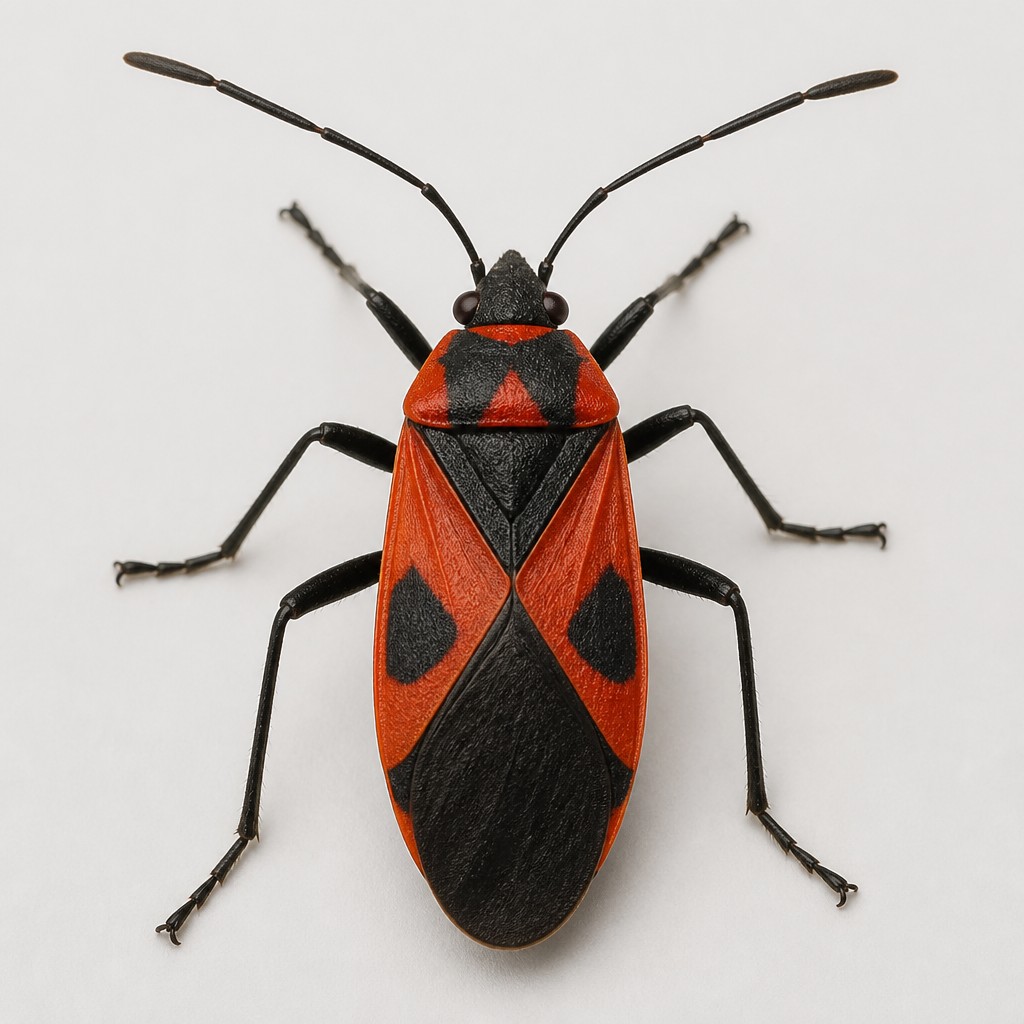
Milkweed Bug
A bold orange-and-black true bug that clusters conspicuously on milkweed seed pods, its warning colours advertising the plant toxins it safely stores from its host.
true-bug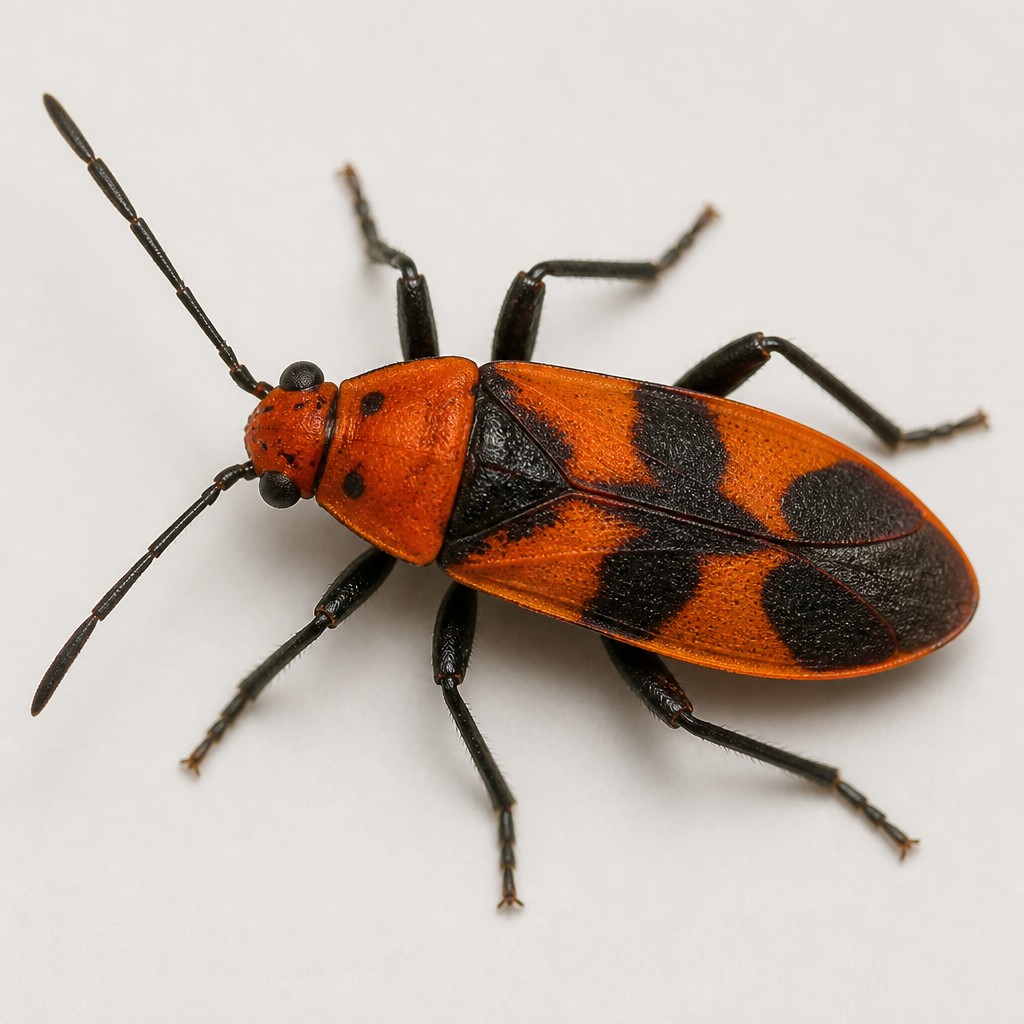
Monarch's Milkweed
A boldly orange-and-black true bug that shares milkweed plants with Monarch butterfly caterpillars, often clustering in large groups on seed pods and stems.
true-bug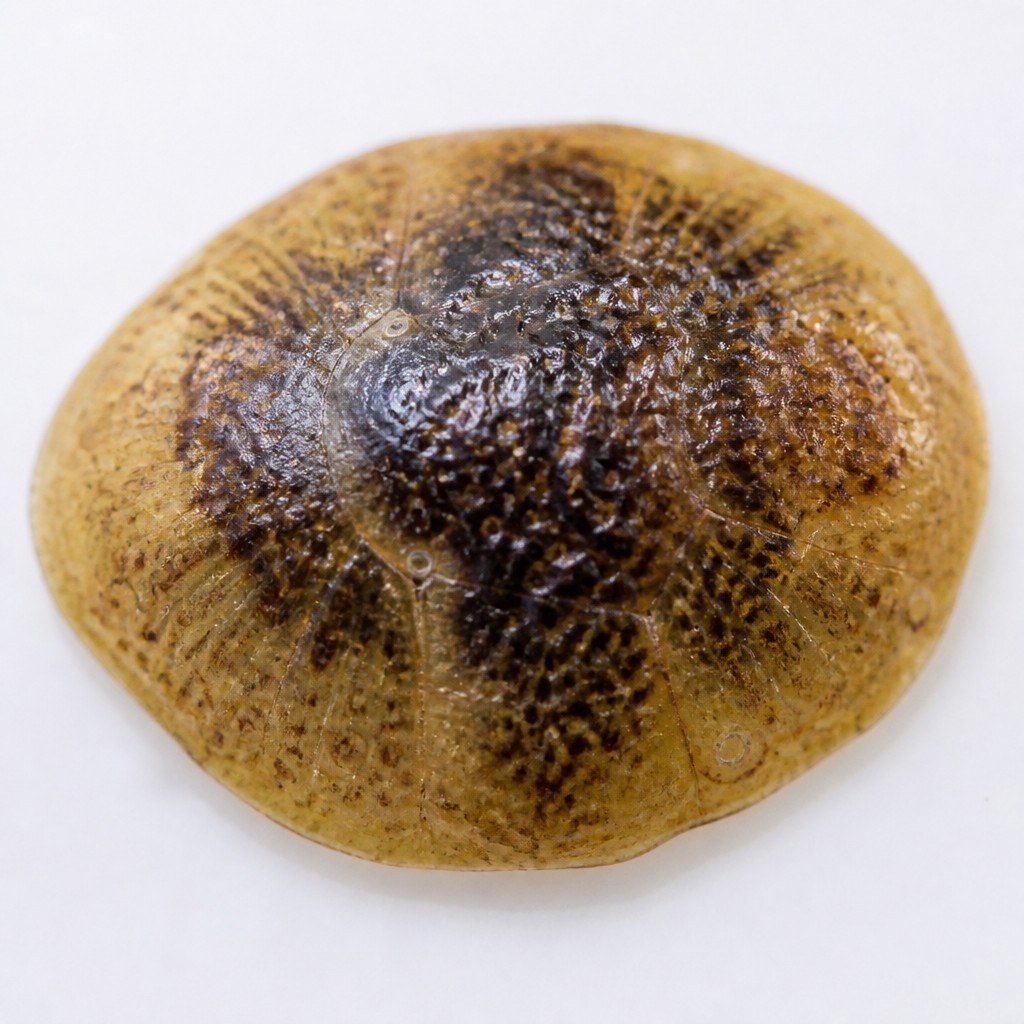
Scale Insect
A small, immobile insect that appears as a flat or domed, waxy bump firmly attached to a stem or leaf, easily mistaken for a plant blemish rather than a living creature.
true-bug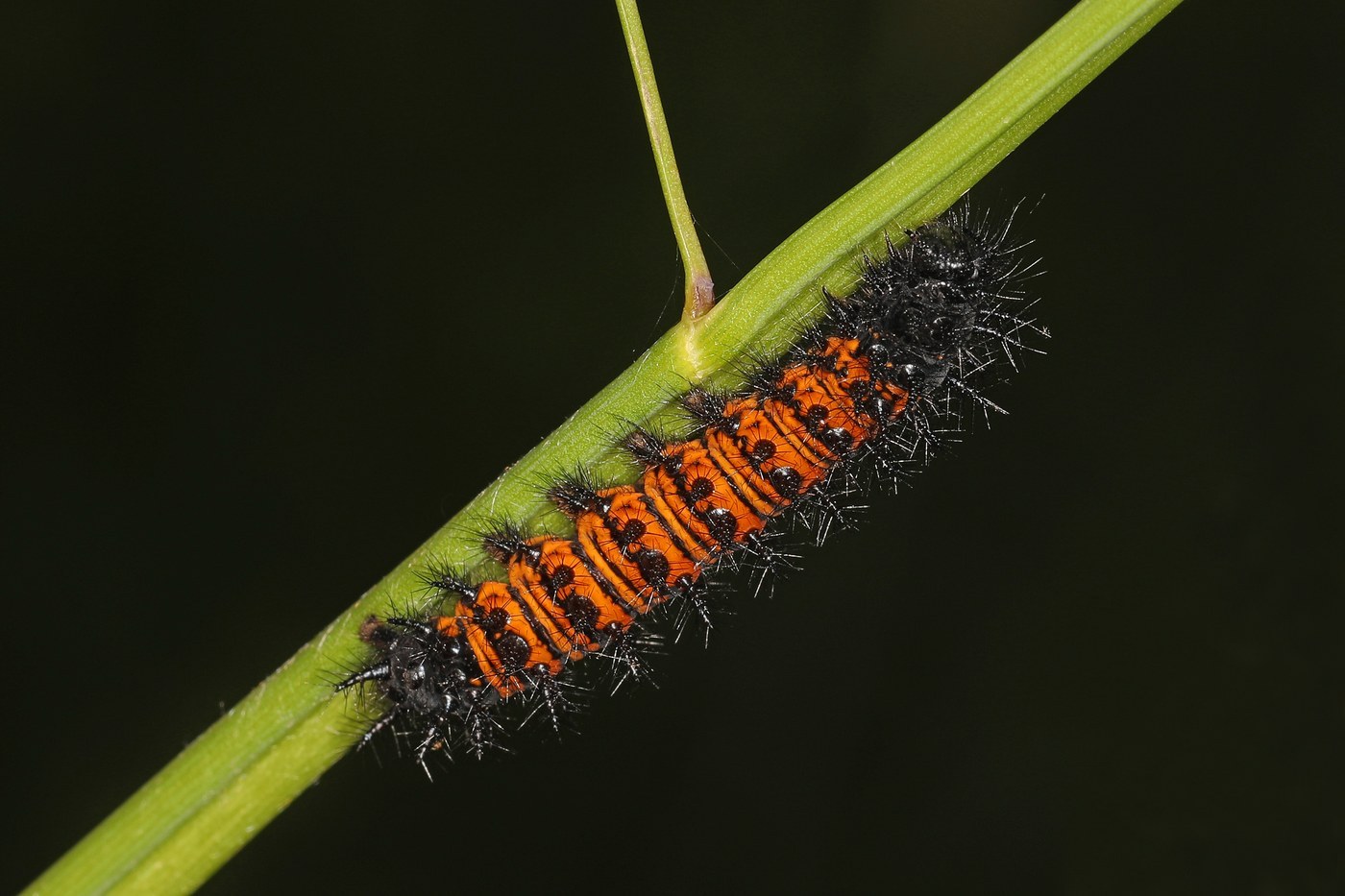
Baltimore Checkerspot
A striking black butterfly checkered with rows of orange and cream-white spots, closely associated with wet meadows and its turtlehead host plant, and recognized as a state insect symbol in parts of its range.
butterfly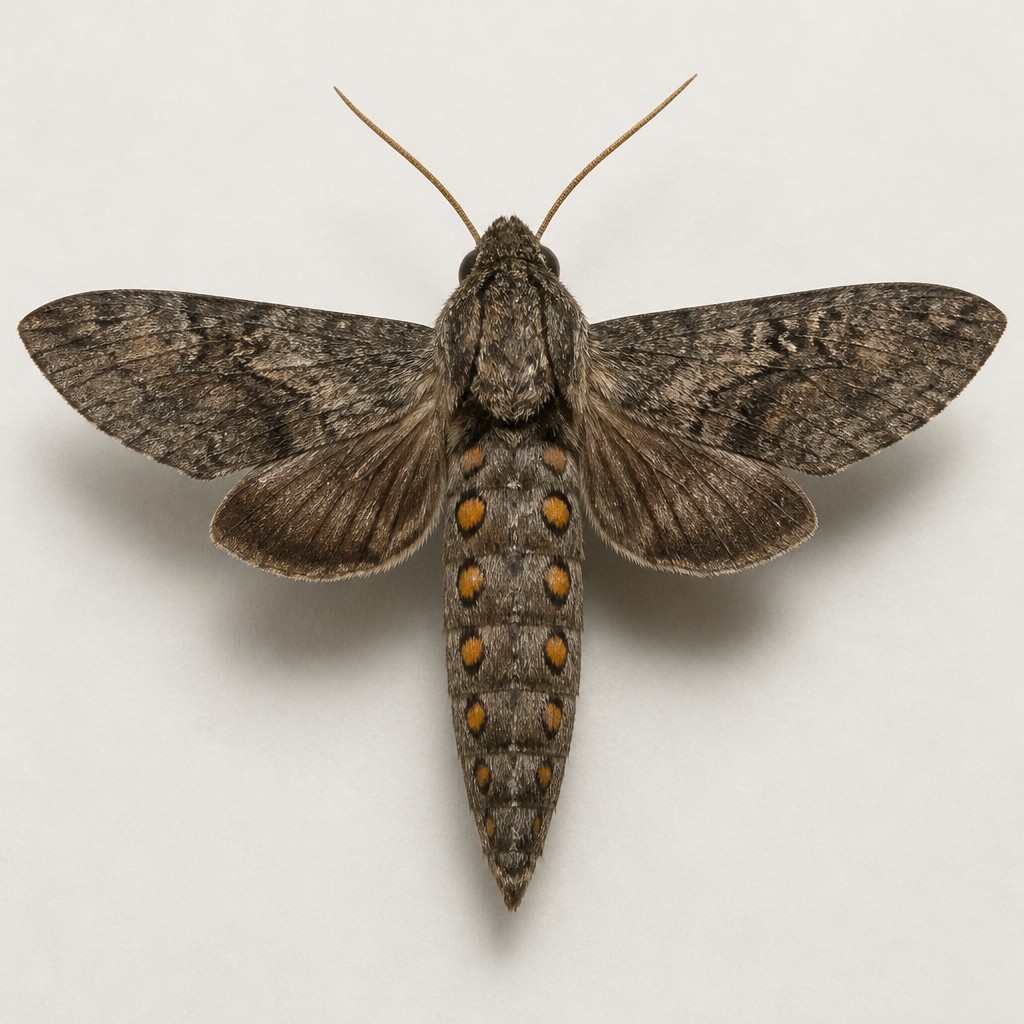
Tobacco Hornworm Moth (Carolina Sphinx)
A large, streamlined gray-brown sphinx moth with six pairs of orange spots along its abdomen, best known as the adult stage of the tobacco hornworm caterpillar that feeds on tomato and tobacco plants.
moth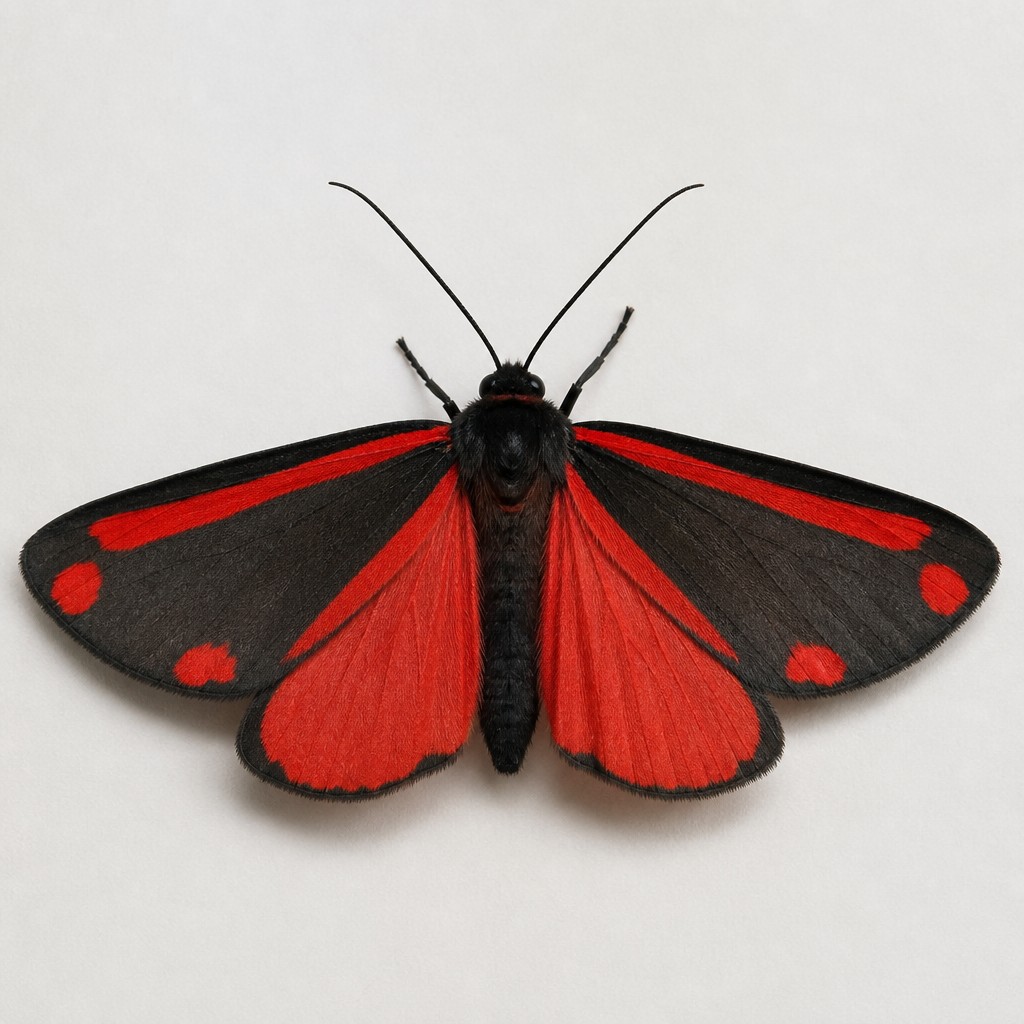
Cinnabar Moth
A striking black-and-red day-flying moth whose boldly banded orange-and-black caterpillars feed conspicuously on ragwort, sequestering plant compounds as a chemical defense advertised by their vivid warning colors.
moth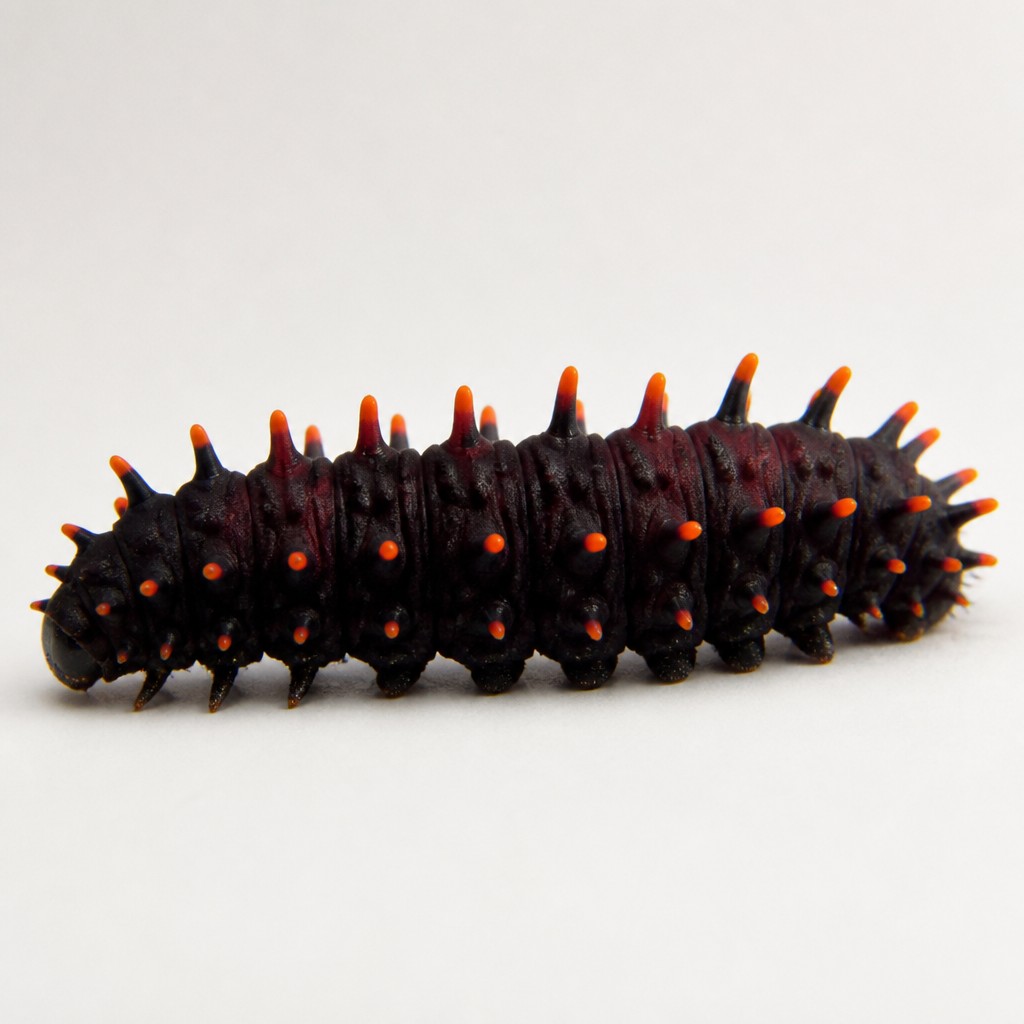
Pipevine Swallowtail Caterpillar
A dark, velvety caterpillar studded with fleshy orange-tipped tubercles that feeds exclusively on pipevine, storing its host plant's chemistry for later defense as a butterfly.
caterpillar-larva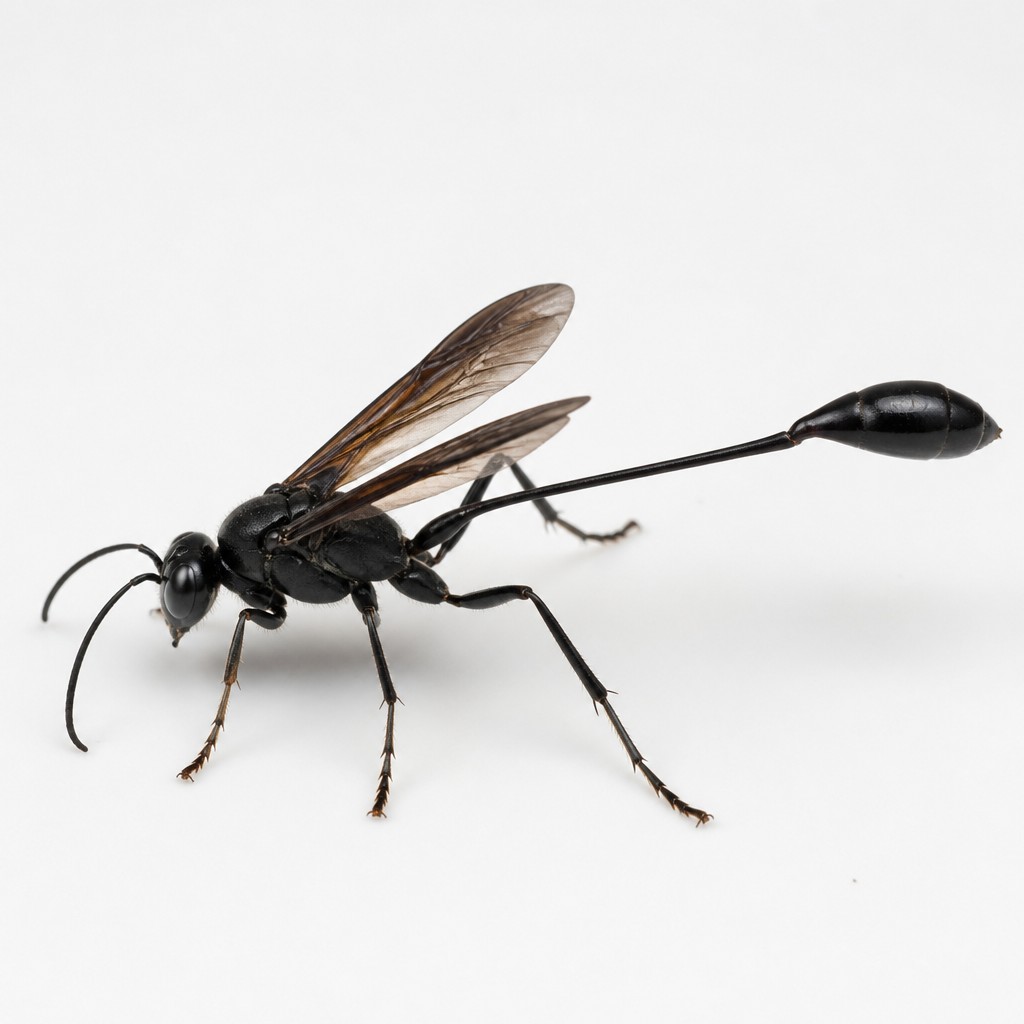
Mud Dauber
A slender, non-aggressive solitary wasp with a distinctively long, thread-like waist, known for constructing tube- or pot-shaped nests out of mud pellets on walls and eaves.
wasp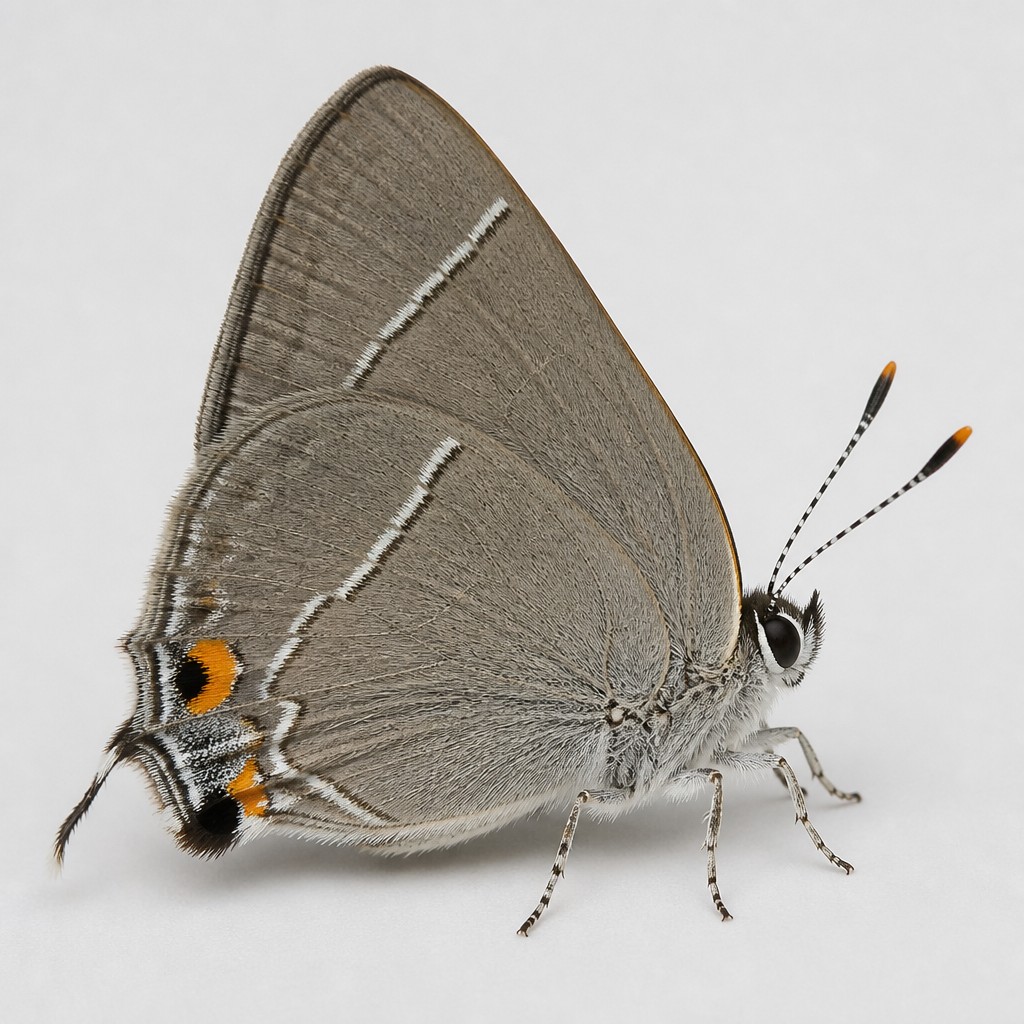
Gray Hairstreak
A small slate-gray butterfly with thin white lines, an orange-capped black spot near the hindwing tail, and one of the broadest host-plant ranges of any North American butterfly, making it a familiar visitor to gardens and fields alike.
butterfly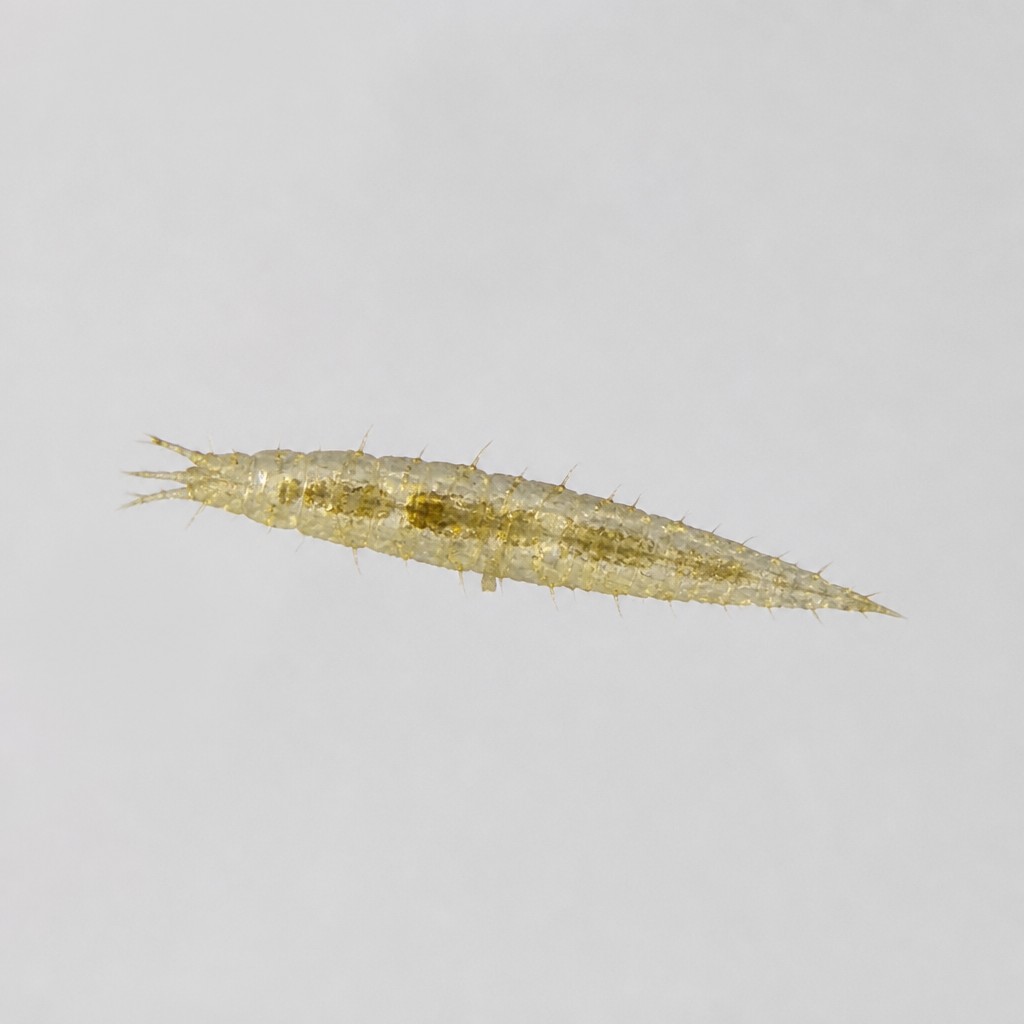
Gall Mite
An almost worm-shaped, microscopic mite that induces plants to grow strange pouches, pockets, and felt-like patches around its feeding sites.
arachnid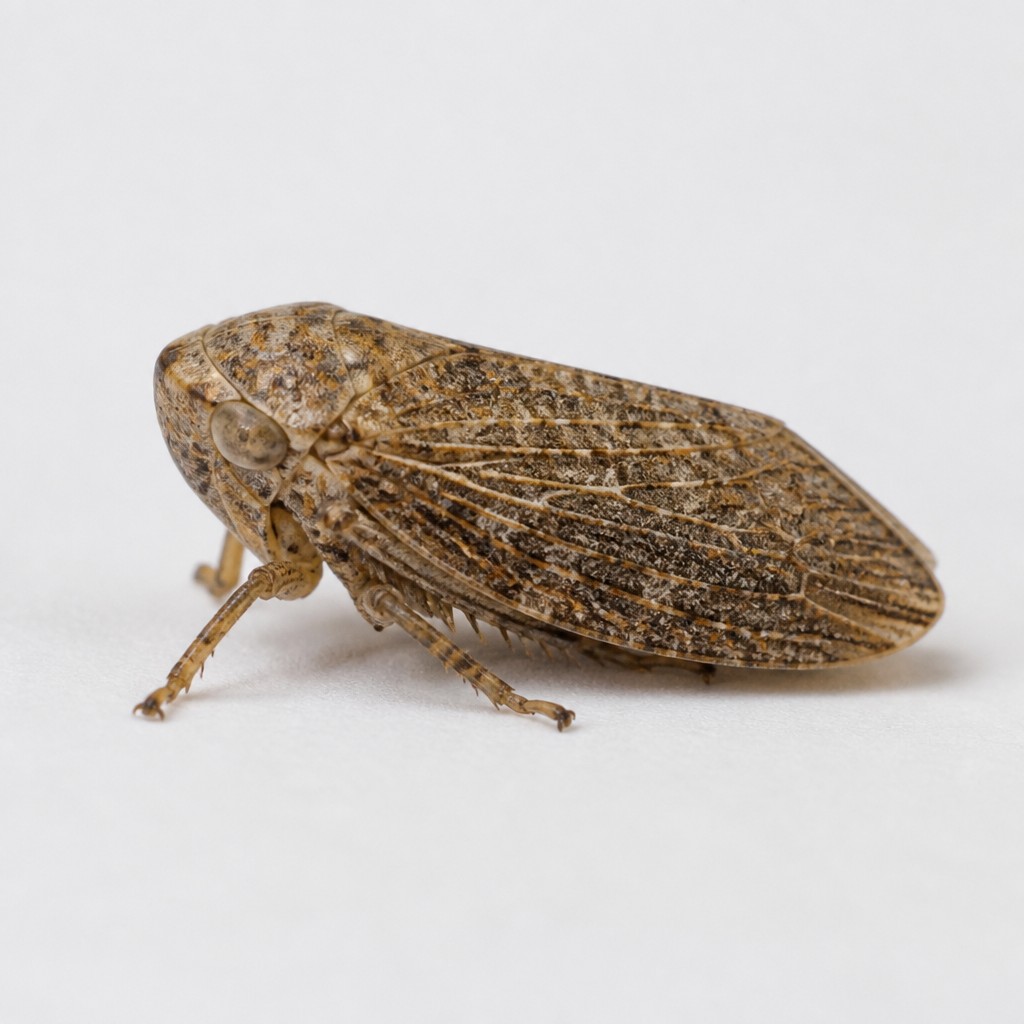
Spittlebug
A small hopping true bug best known in its nymph stage, which surrounds itself in a frothy mass of white foam on plant stems, commonly called cuckoo spit.
true-bug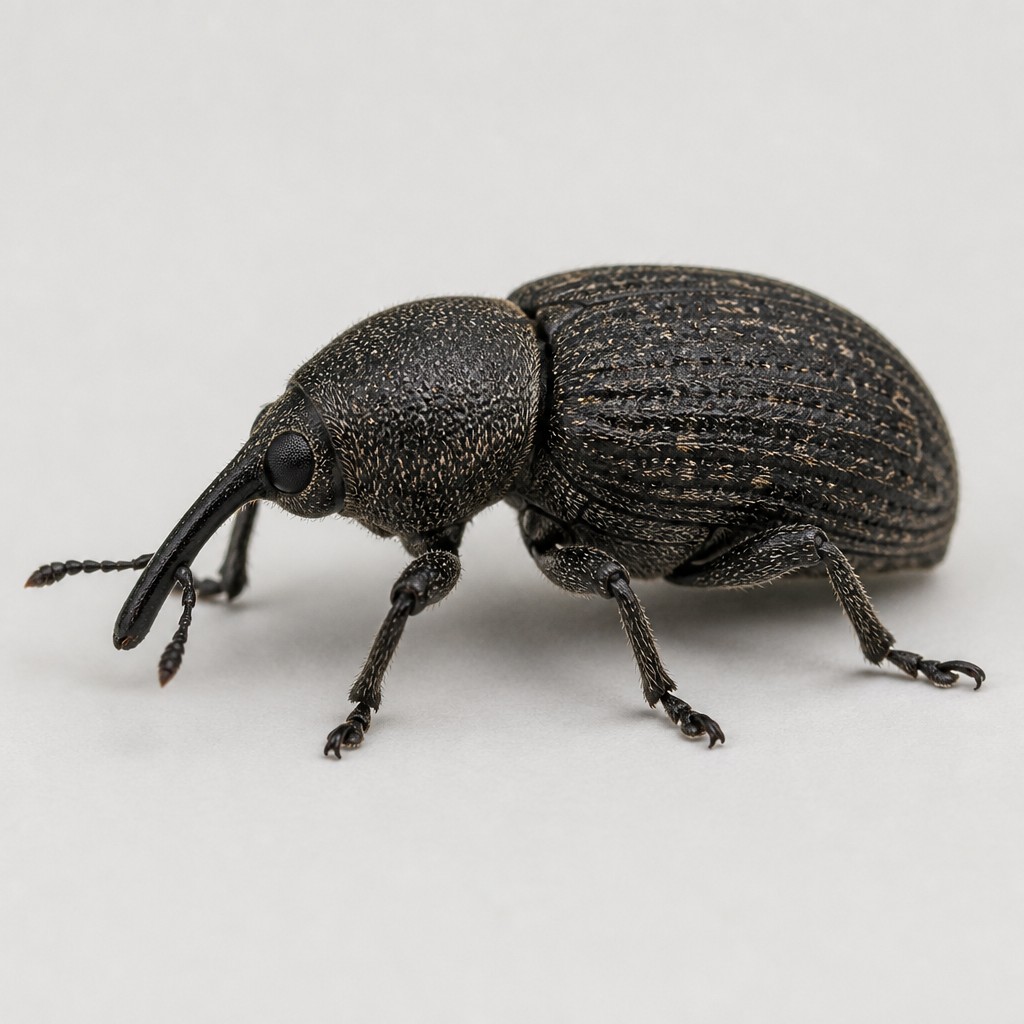
Black Vine Weevil
A flightless, all-black snout beetle notorious for notching the edges of leaves at night while its underground larvae feed on plant roots and crowns.
beetle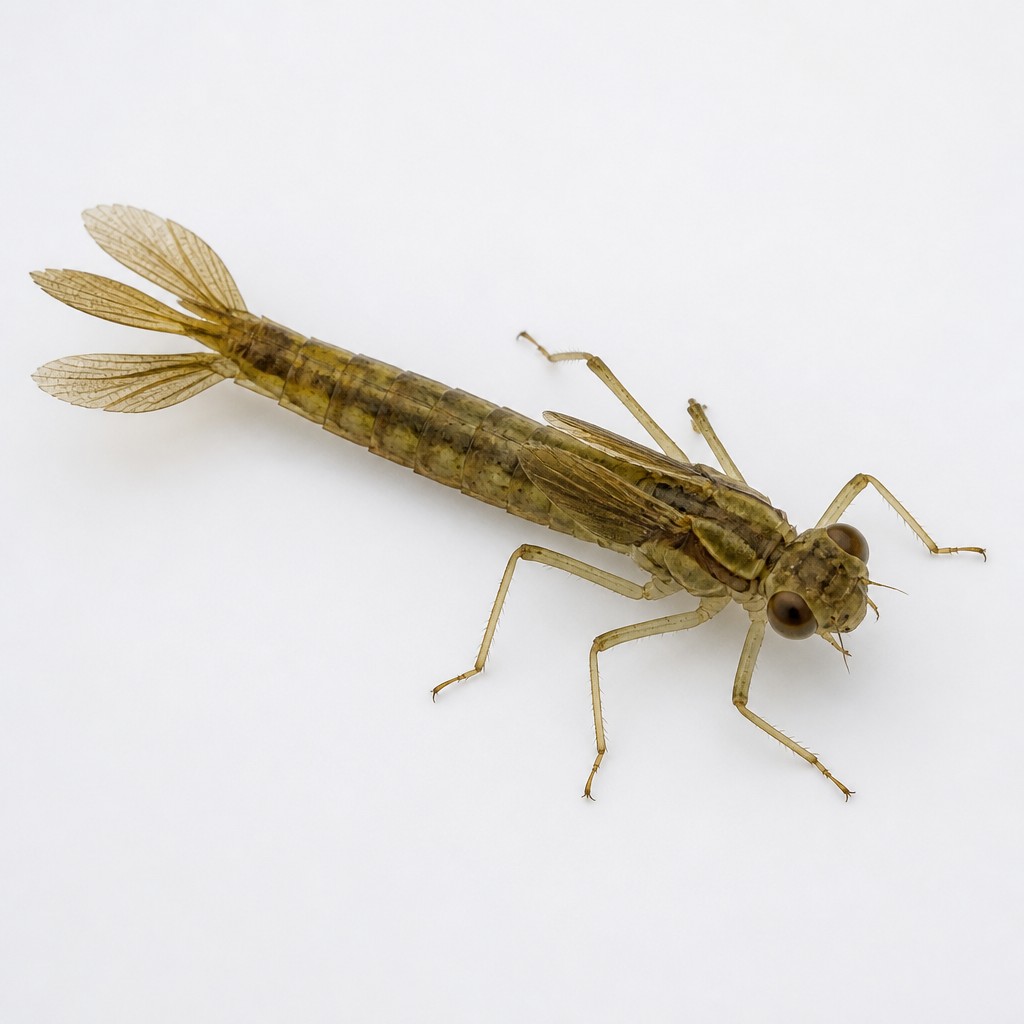
Damselfly Nymph
A slender aquatic predator with three feathery tail gills, patiently stalking small prey among pond plants before emerging as a delicate flying damselfly.
aquatic-insect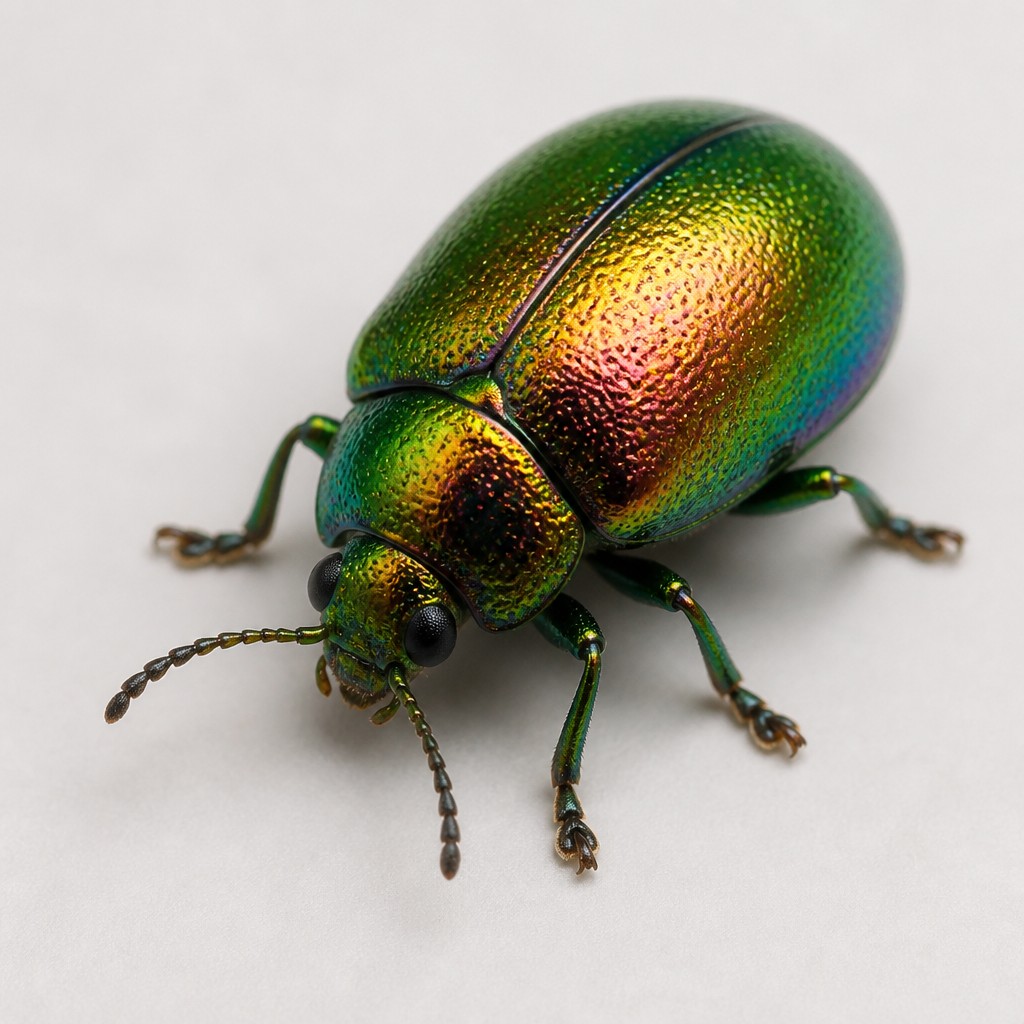
Dogbane Beetle
A small, brilliantly iridescent leaf beetle that shifts between shades of green, gold, blue, and copper depending on the viewing angle, always found on dogbane plants.
beetle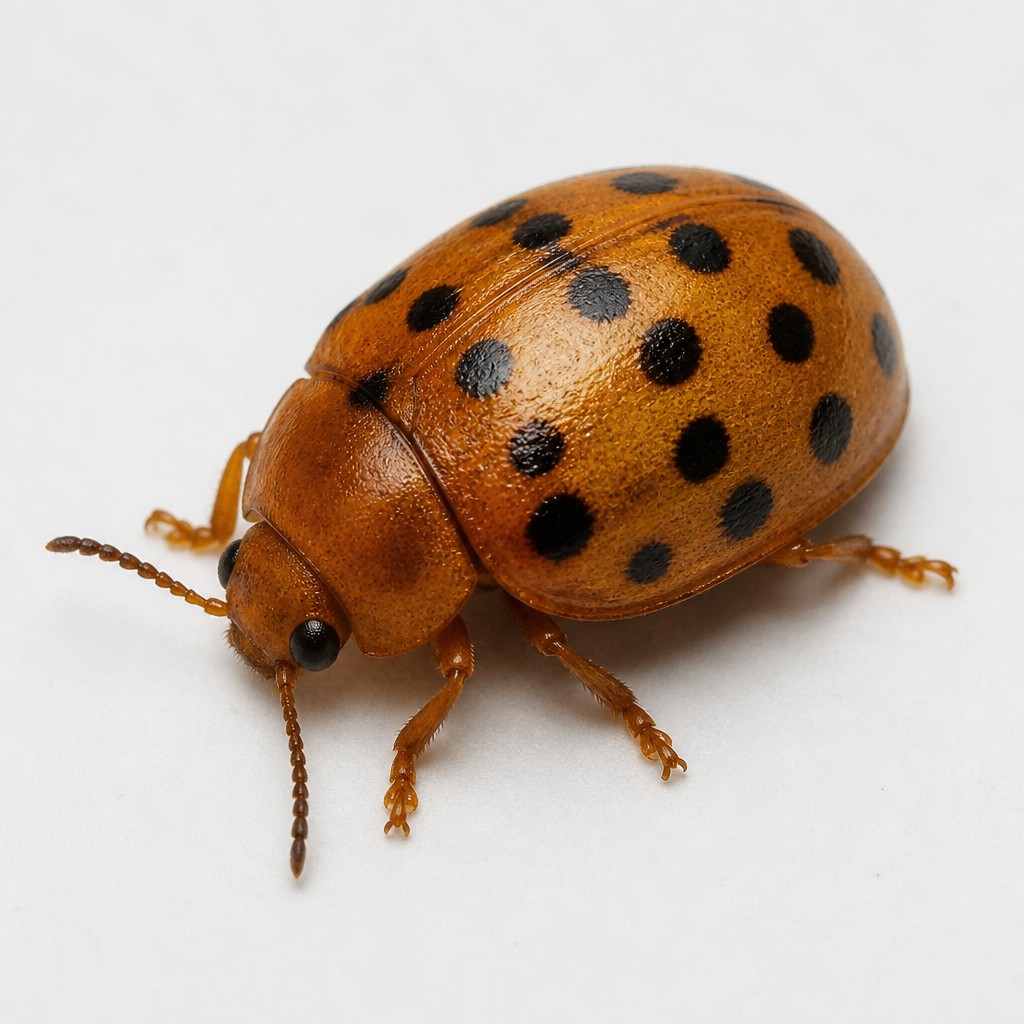
Mexican Bean Beetle
A copper-colored, spotted beetle resembling an overgrown ladybird that feeds on bean plant leaves along with its spiny yellow larvae.
beetle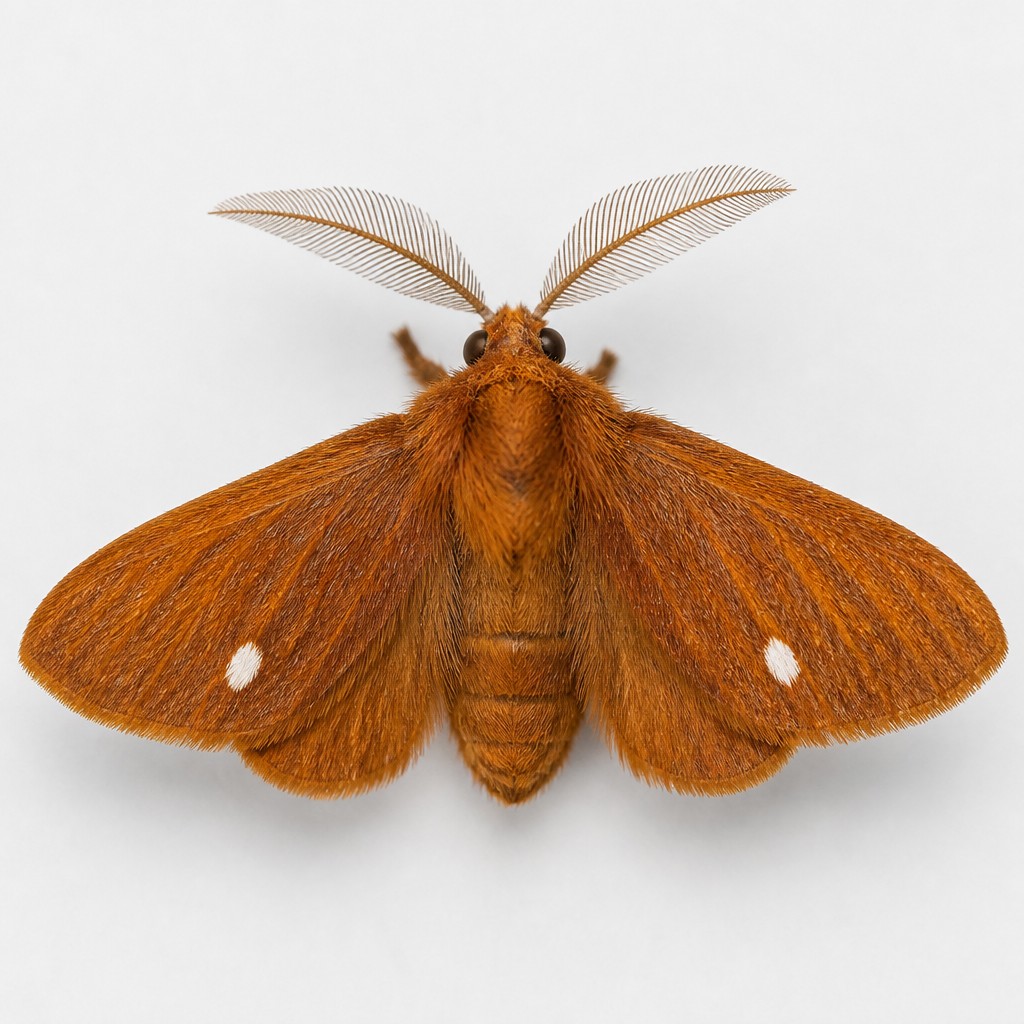
Vaporer Moth
A tussock moth with dramatic sexual differences: the male is a small rusty-brown day-flying moth with a white wing spot, while the female is a flightless, wingless gray sac-like insect that never leaves her cocoon.
moth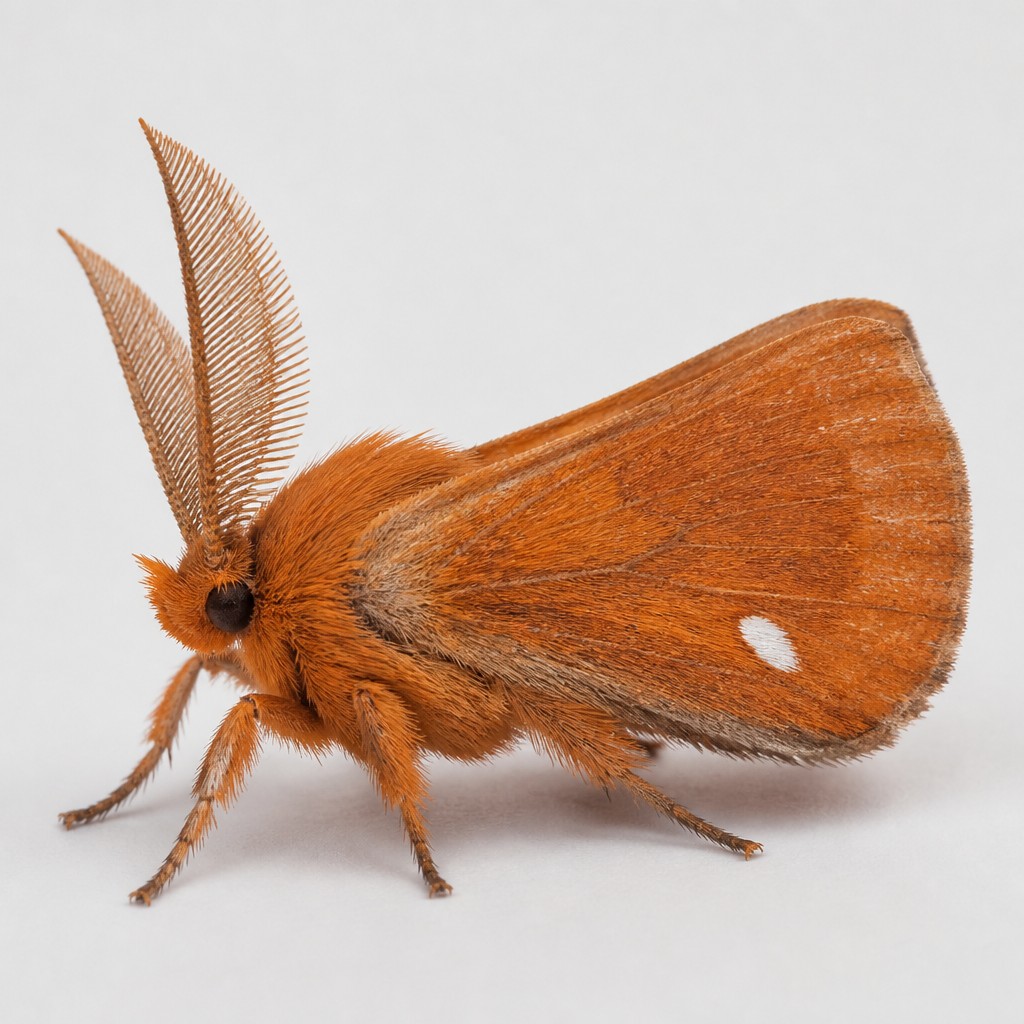
Vapourer Moth
A small tussock moth with striking sexual dimorphism: rusty-orange, day-flying males with feathery antennae contrast with flightless, grub-like grey females that never leave their cocoon to lay eggs.
moth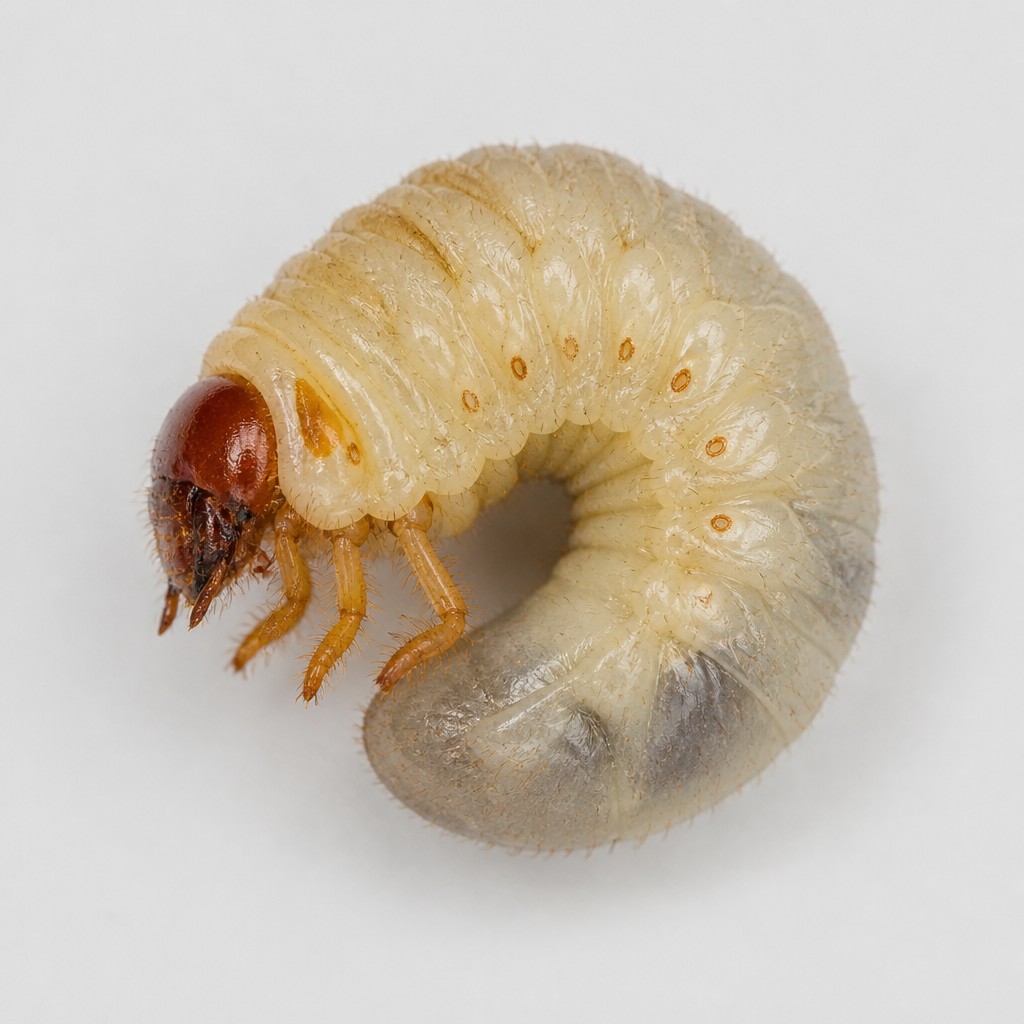
Grub Worm
A plump, C-shaped, creamy-white larva with a distinct brown head, living underground where it feeds on grass and plant roots before eventually maturing into a scarab beetle.
beetle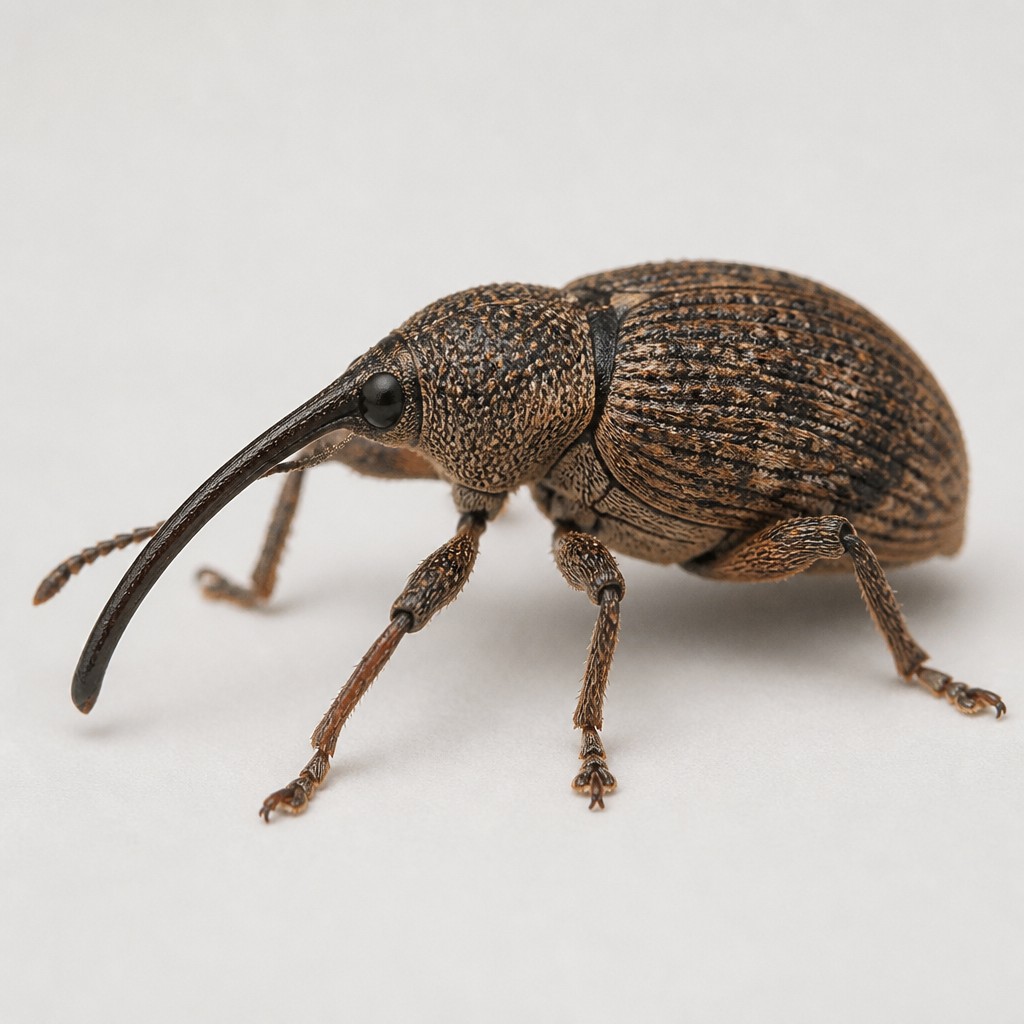
Weevil
A beetle instantly recognizable by its elongated, downward-curving snout tipped with tiny chewing mouthparts, used to bore into seeds, nuts, grain, and plant stems.
beetle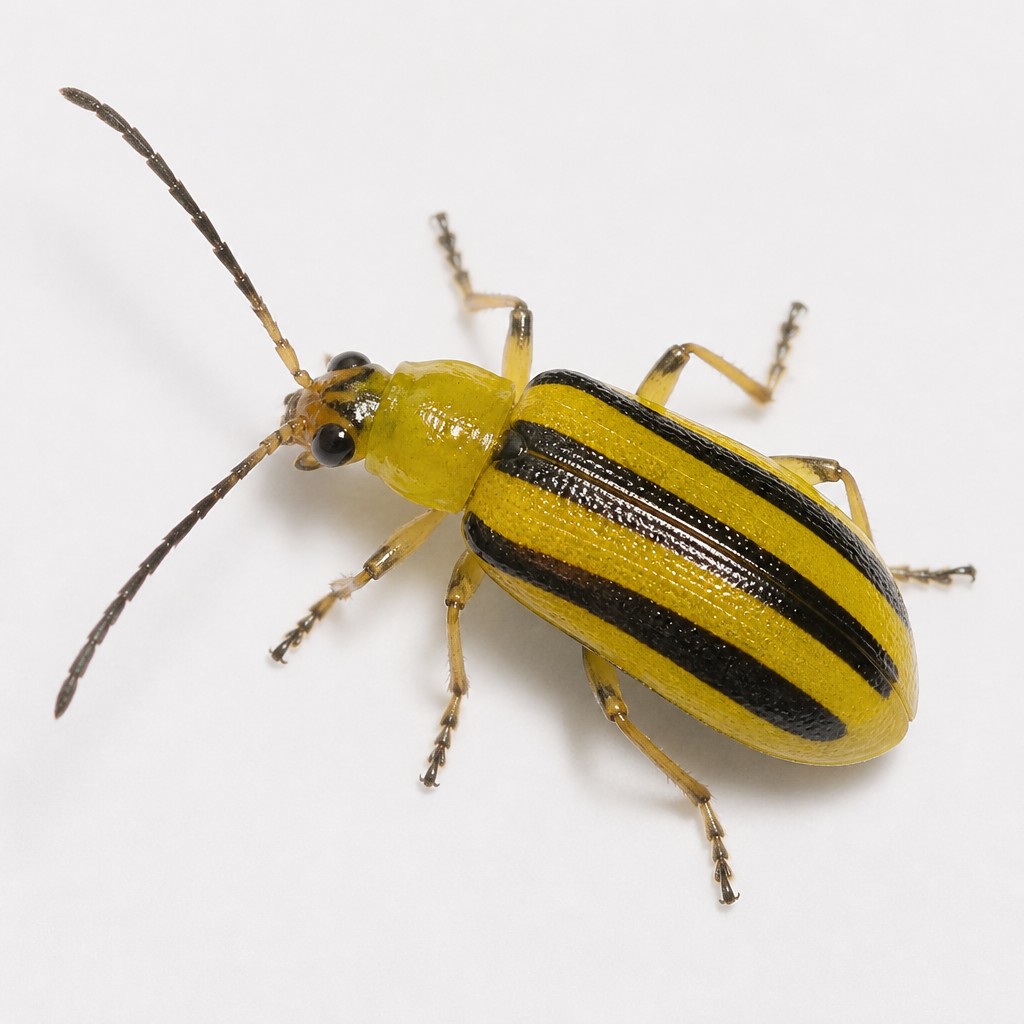
Striped Cucumber Beetle
A small, bright yellow beetle marked with three bold black stripes running the length of its wing covers, a frequent and highly visible visitor to cucumber, squash, and melon plants.
beetle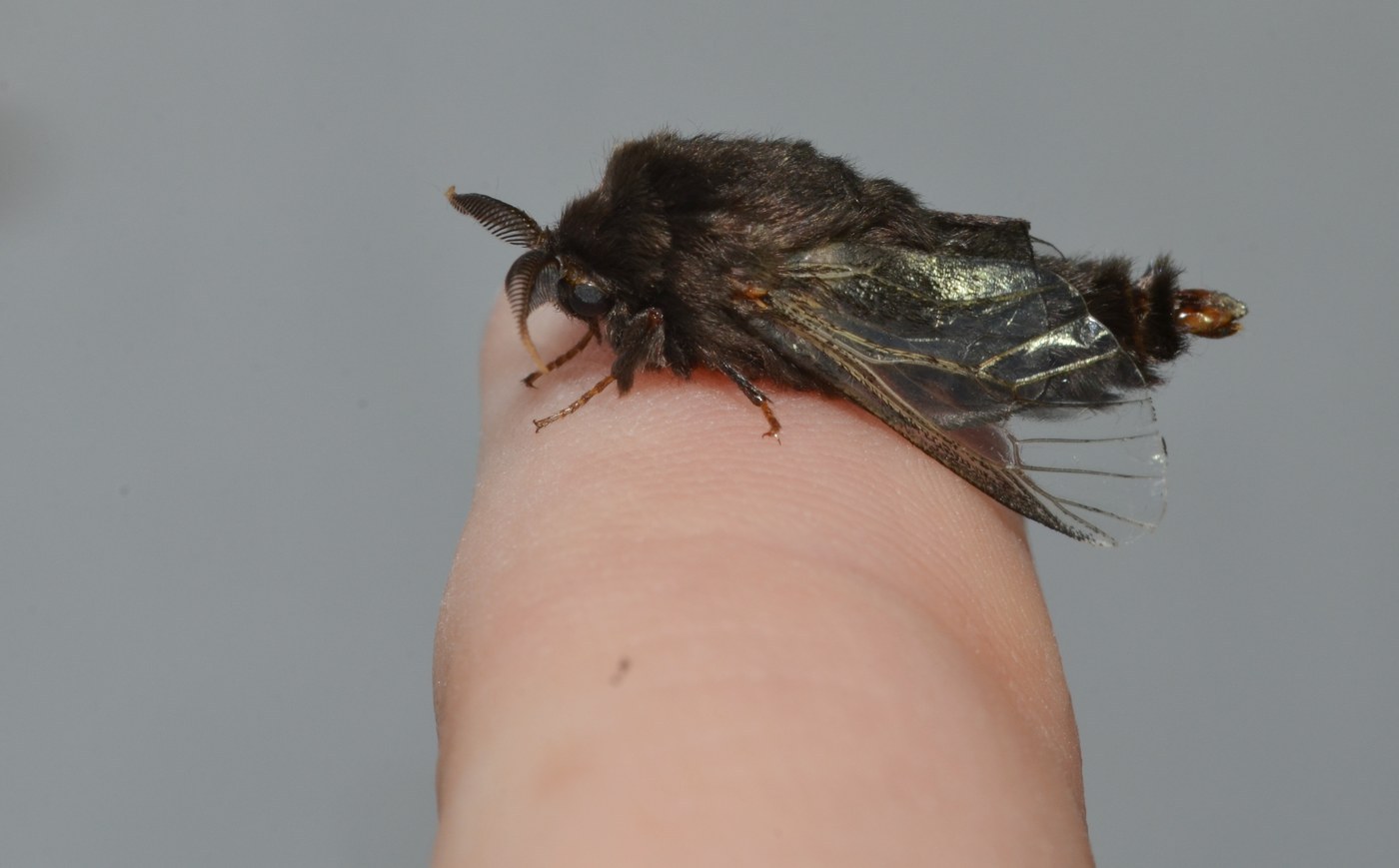
Bagworm
A caterpillar that constructs and lives inside a spindle-shaped case of silk and plant debris, dragging its portable shelter along as it feeds on tree foliage.
caterpillar-larva