
Bug Encyclopedia
Search and identify bugs & insects — beetles, butterflies, moths, ants, bees, spiders and more — with size, habitat, danger, behavior, and how to tell them apart.
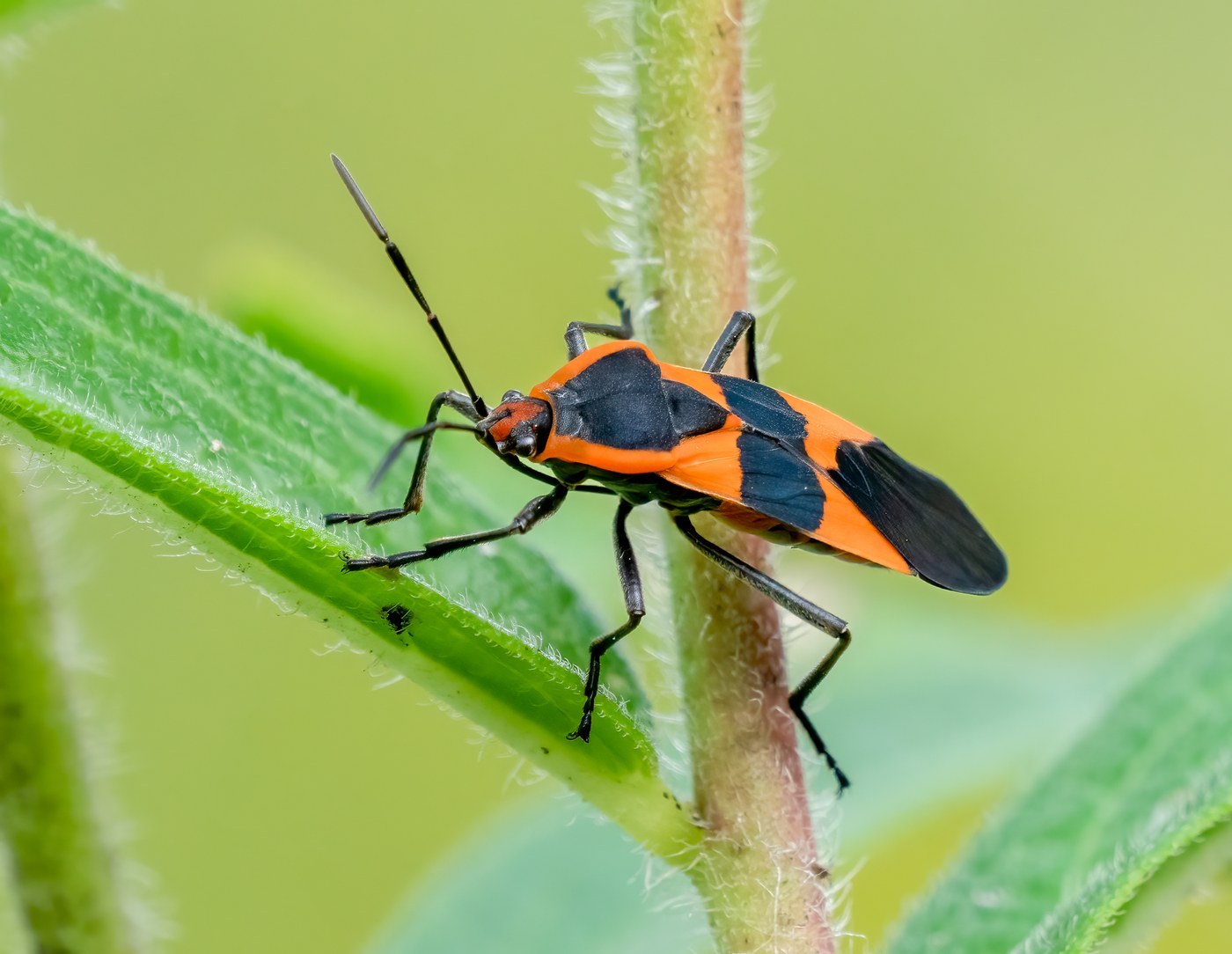
Monarch's Milkweed
A boldly orange-and-black true bug that shares milkweed plants with Monarch butterfly caterpillars, often clustering in large groups on seed pods and stems.
true-bug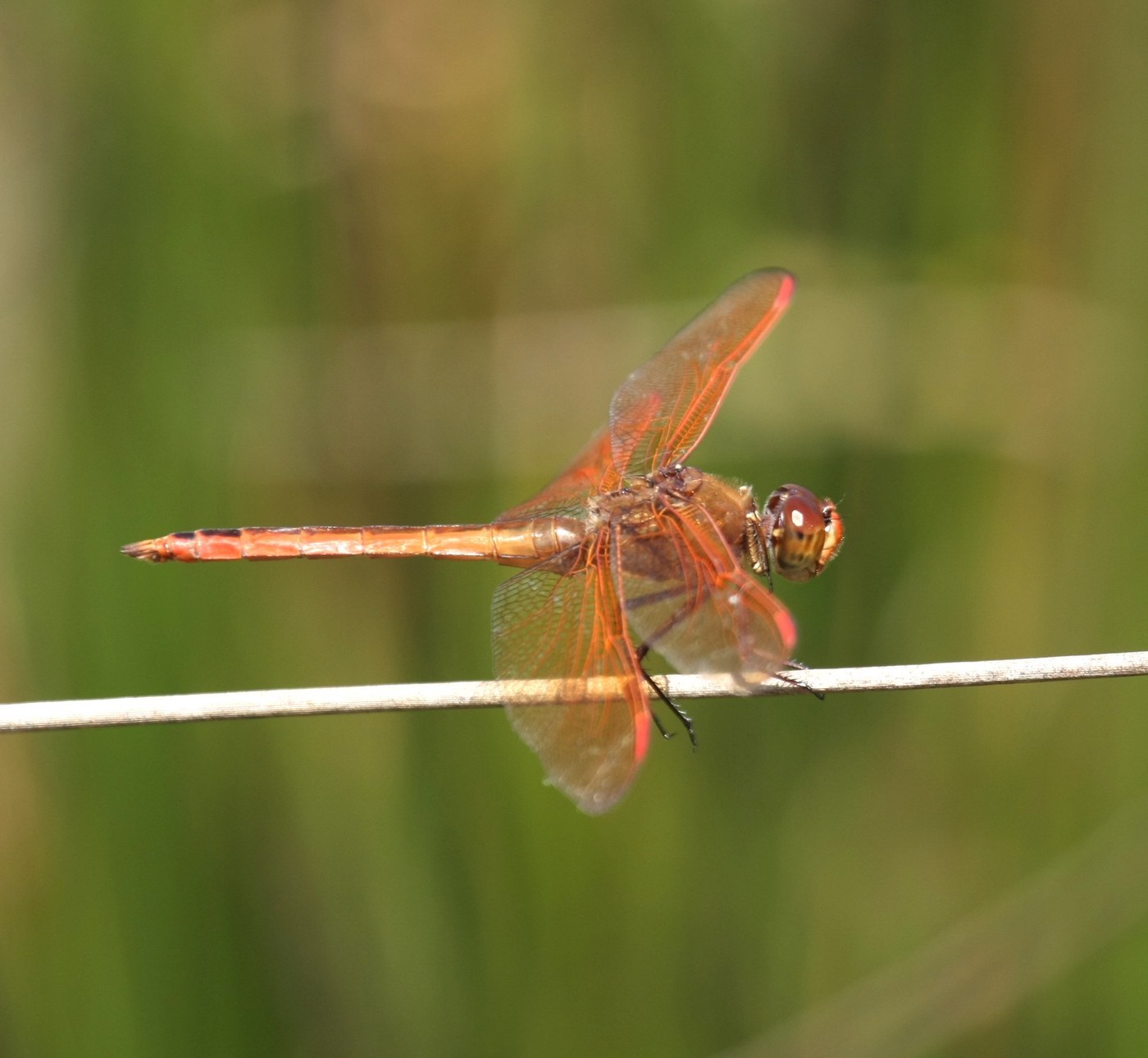
Golden-winged Skimmer
A large skimmer of southeastern wetlands, its wings brushed with a warm golden-amber wash along the leading edge that catches the light as it patrols still, sunlit water.
dragonfly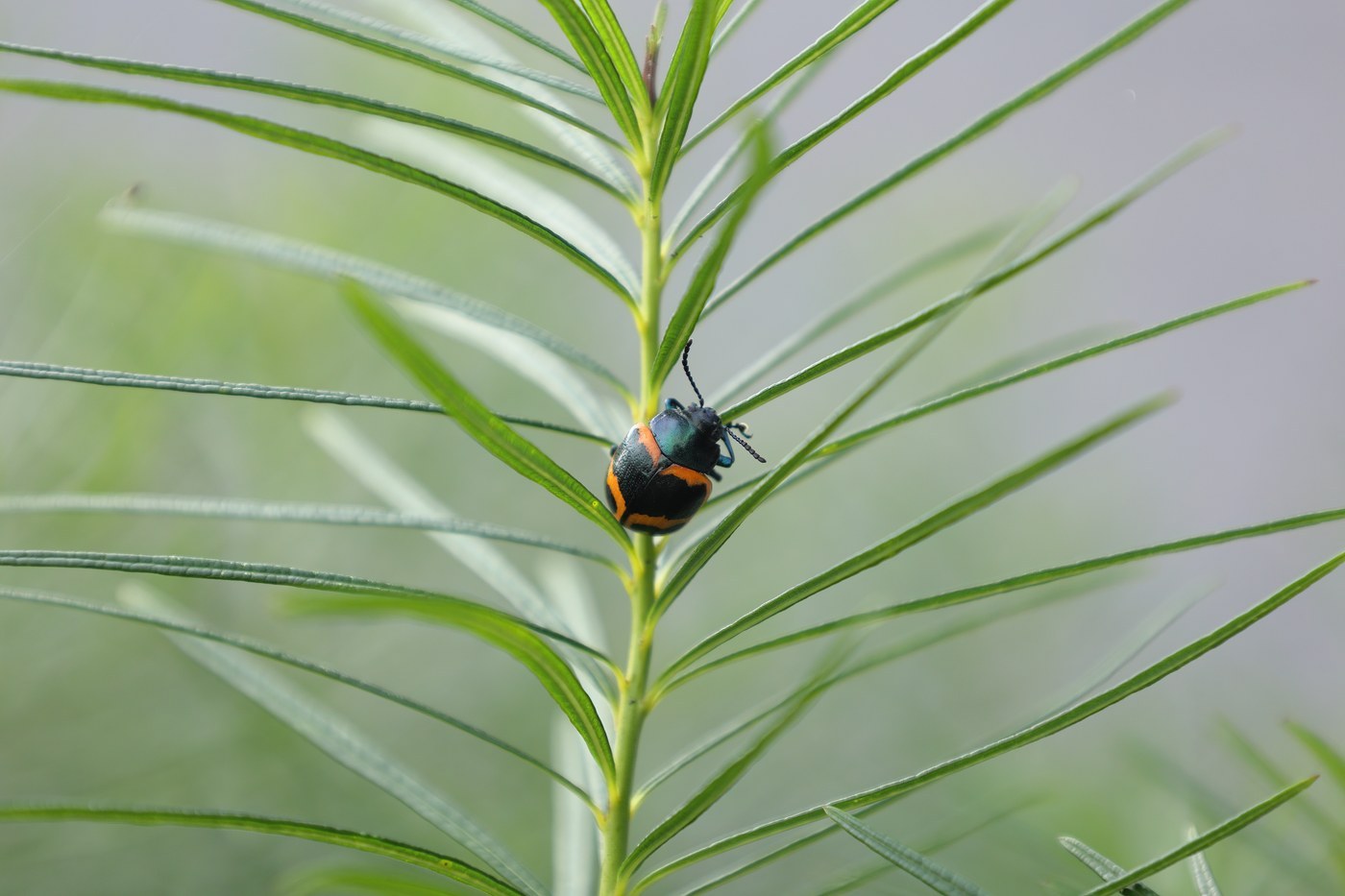
Milkweed Leaf Beetle
A large, boldly colored leaf beetle in glossy orange-red with irregular black patches, found feeding exclusively on milkweed plants alongside monarch caterpillars.
beetle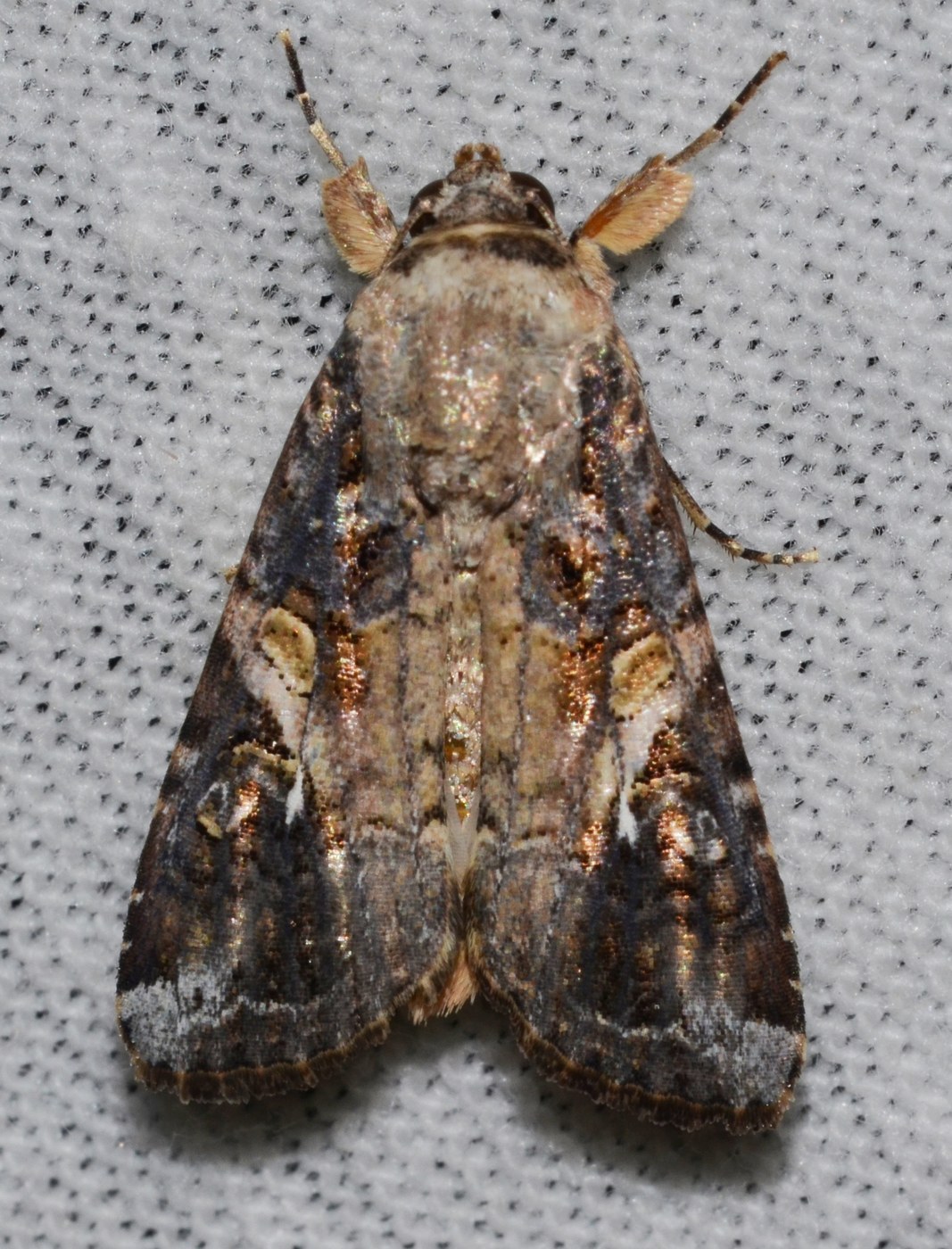
Fall Armyworm
A brownish-green caterpillar marked with a pale inverted "Y" on its head, notorious for rapid, large-scale outbreaks that devastate corn and other grass crops across the globe.
caterpillar-larva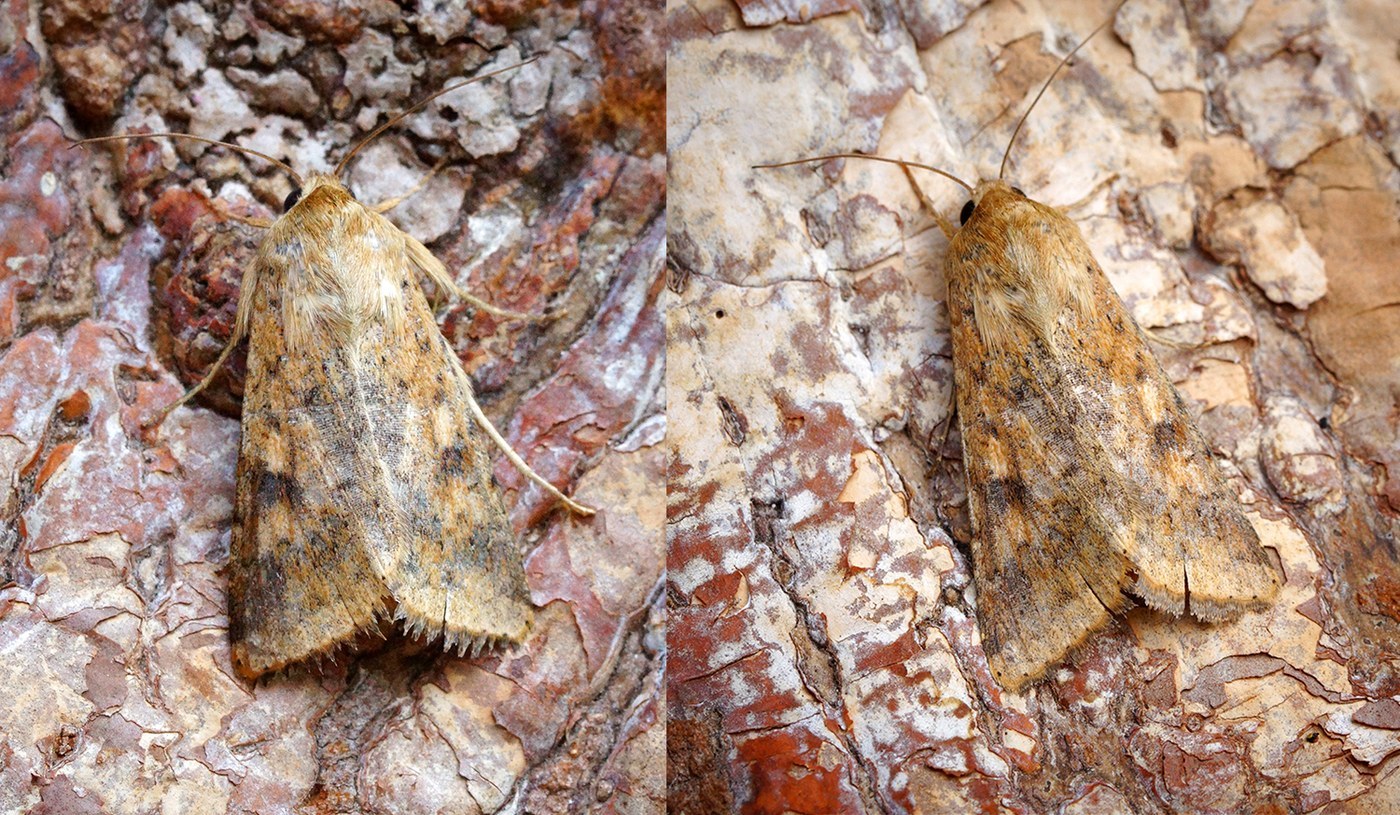
Cotton Bollworm
A variably colored caterpillar, ranging from green to brown to nearly pink, that burrows into cotton bolls, corn ears, and tomato fruit, feeding concealed inside the very structures it damages.
caterpillar-larva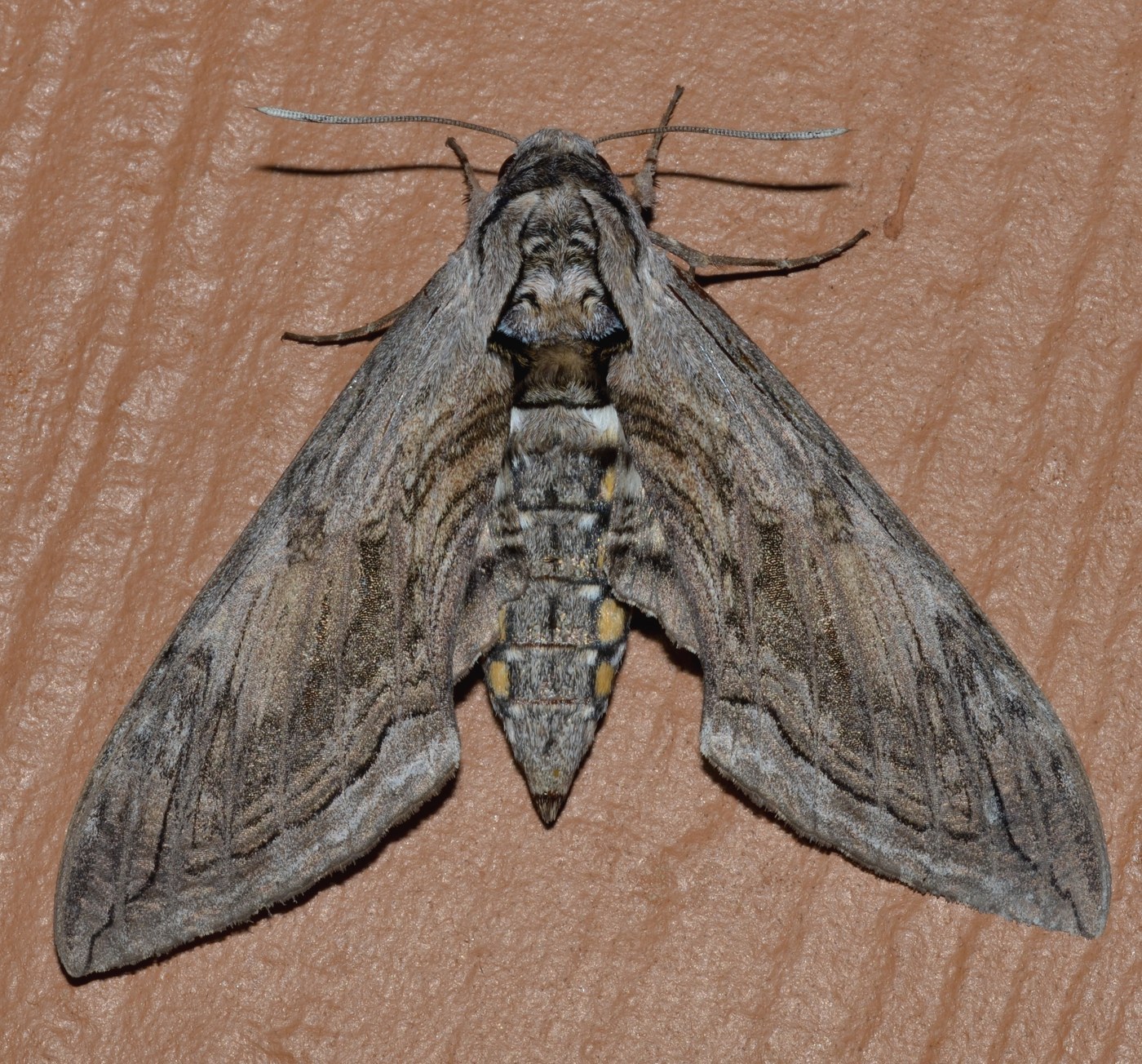
Tomato Hornworm
A large, thick green caterpillar with diagonal white stripes and a distinctive curved horn at its tail end, often found stripping leaves from tomato plants in gardens.
caterpillar-larva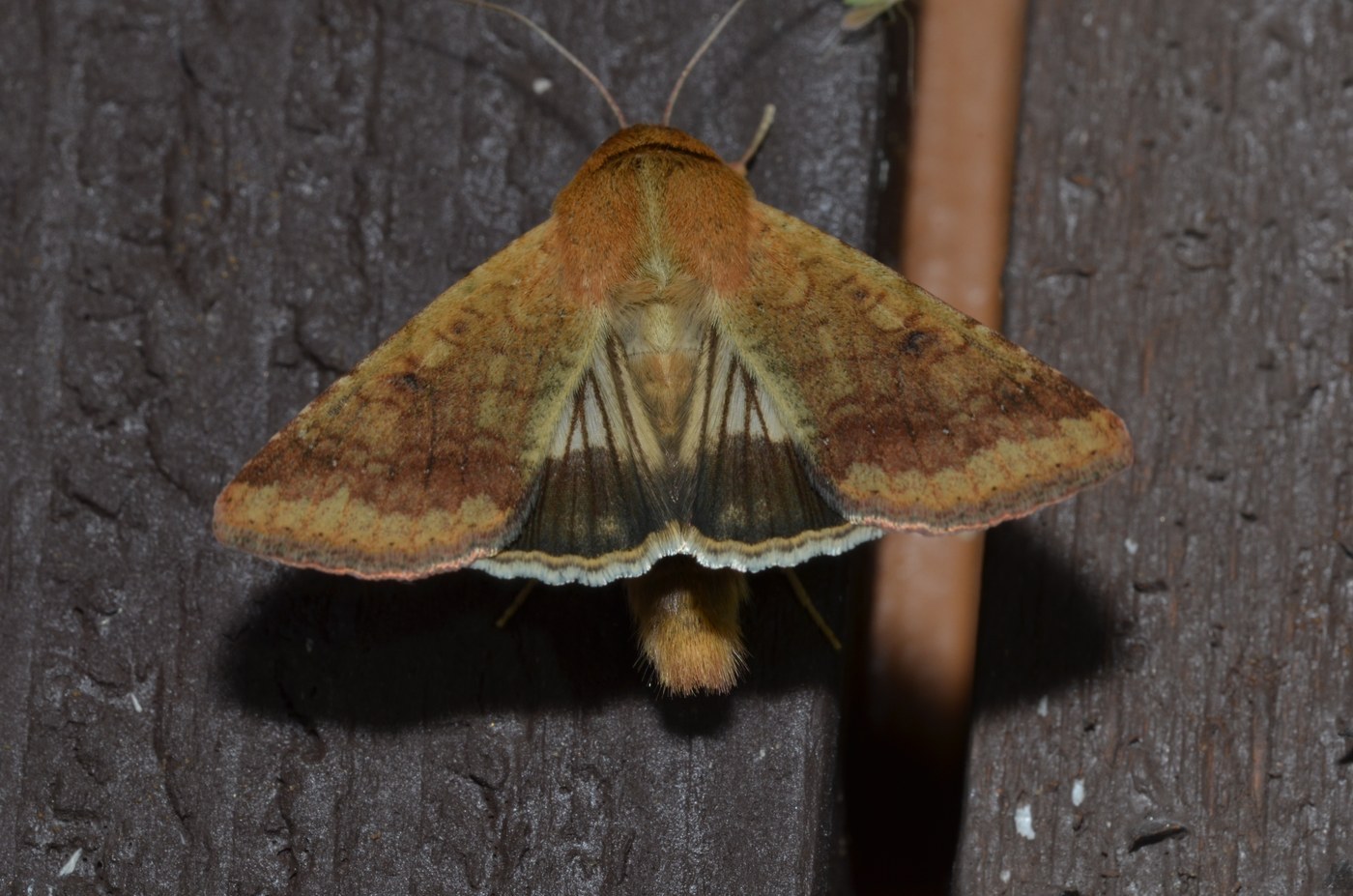
Corn Earworm Moth
A tan to olive-colored moth whose caterpillar, the corn earworm, is one of the most economically significant crop pests in North America, feeding inside corn ears, tomatoes, and cotton bolls.
moth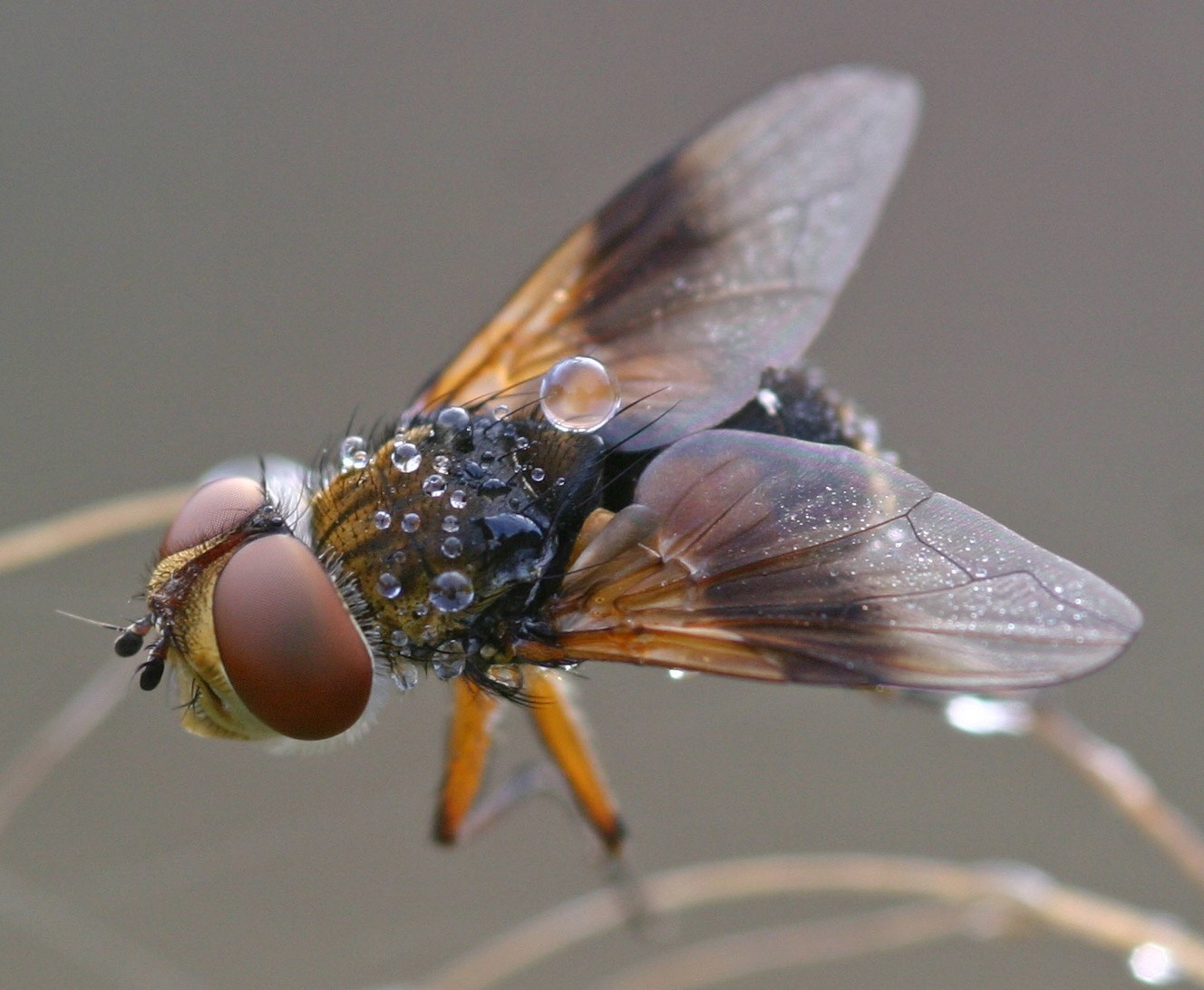
Tachinid Fly
A bristly, house-fly-like insect that looks unremarkable at a glance but hides one of the most important ecological roles among flies: its larvae develop as internal parasites of caterpillars, beetles, and other insects, quietly regulating populations across the landscape. Gardeners often welcome tachinid flies as natural allies against crop-damaging pests.
fly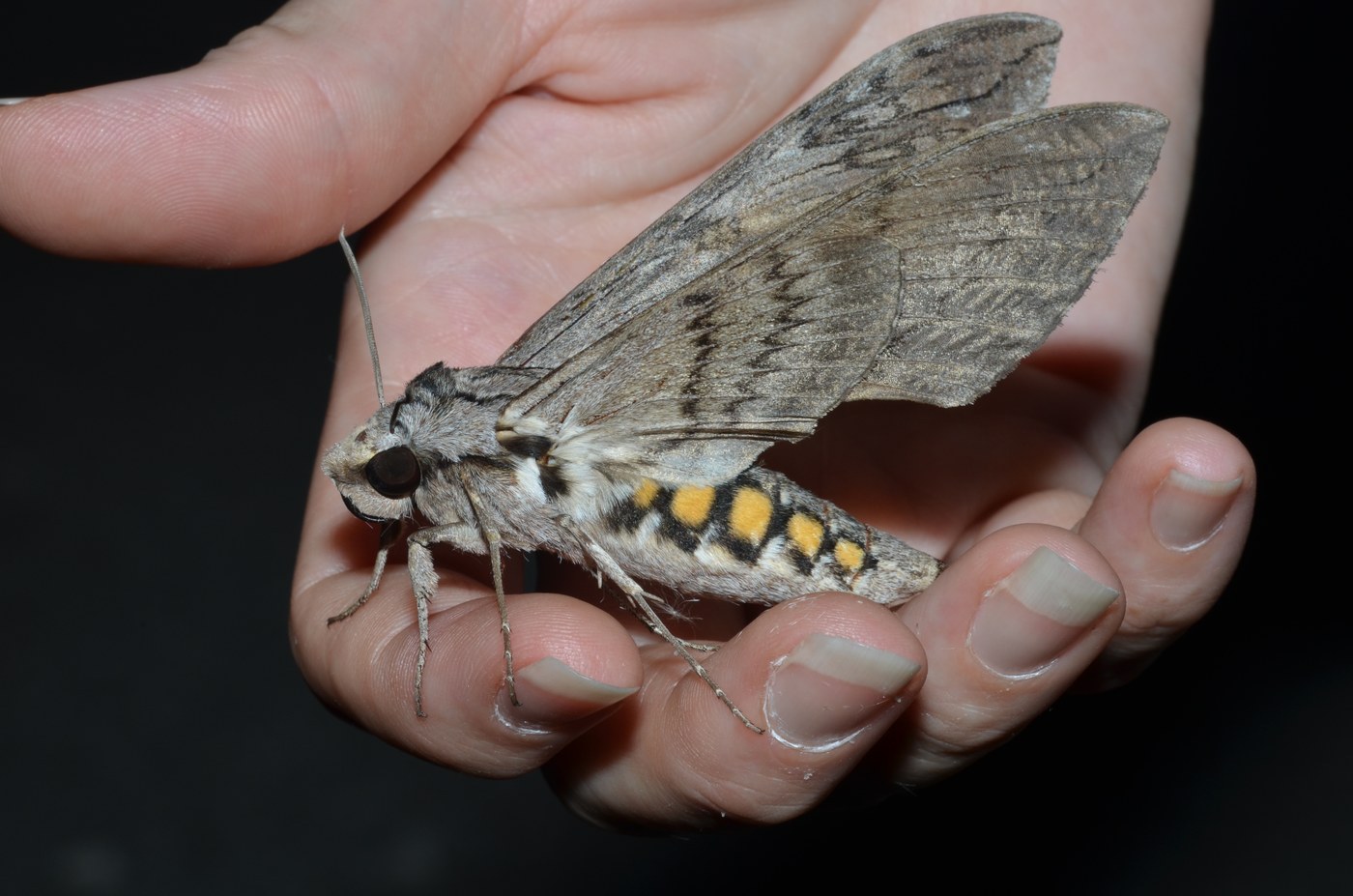
Tomato Hornworm Moth (Five-spotted Hawkmoth)
A large, robust grey-brown sphinx moth named for the five pairs of yellow-orange spots along its abdomen, best known as the adult form of the large green tomato hornworm caterpillar familiar to home gardeners.
mothBraconid Wasp
A tiny, often overlooked parasitoid wasp best known for laying eggs inside caterpillars and other insect hosts, sometimes leaving telltale clusters of small white cocoons on a host's back.
wasp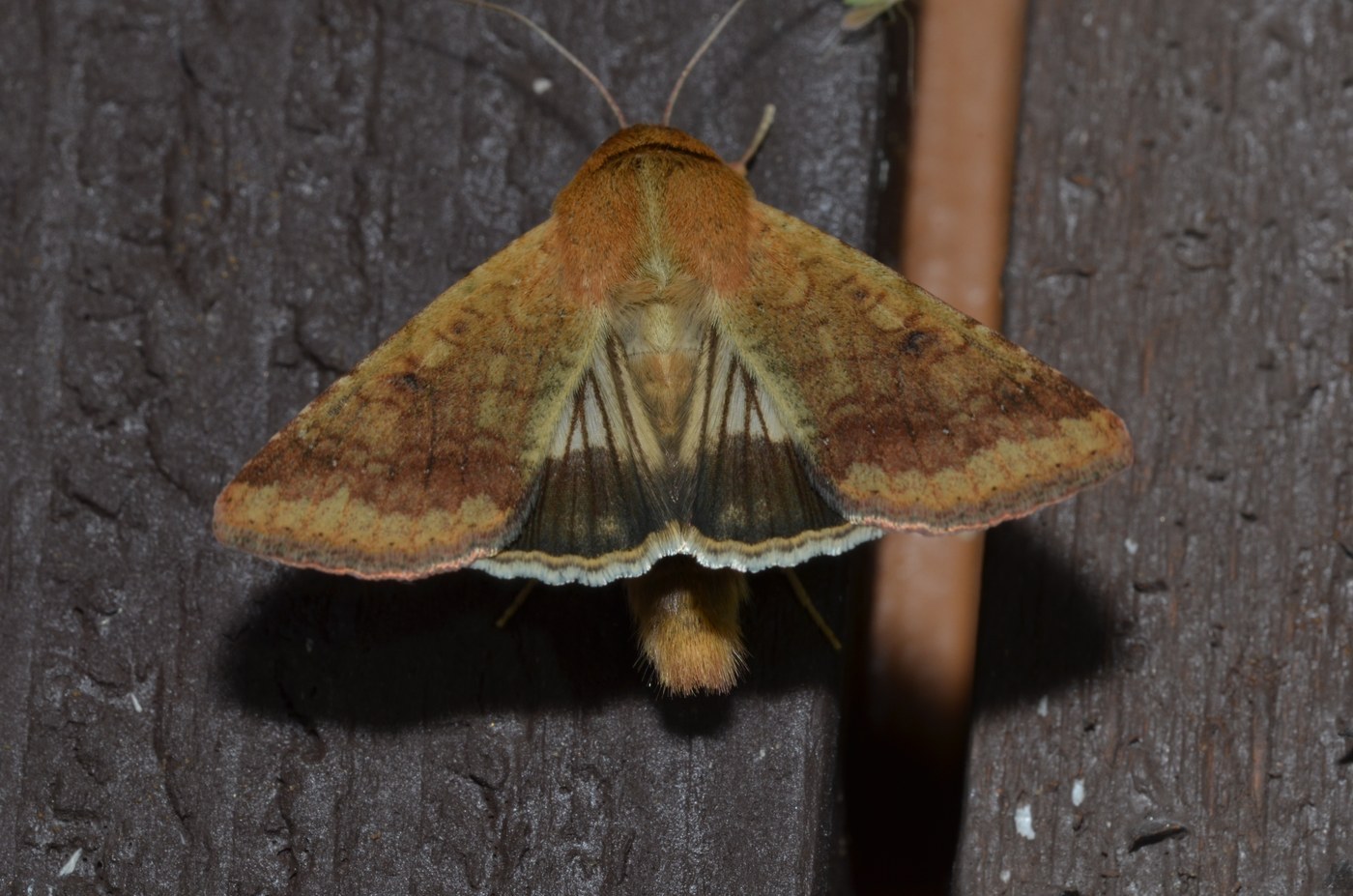
Corn Earworm
A color-variable caterpillar, ranging from pale green to reddish-brown, that burrows headfirst into corn ears and is one of the most economically significant crop pests in North America.
caterpillar-larva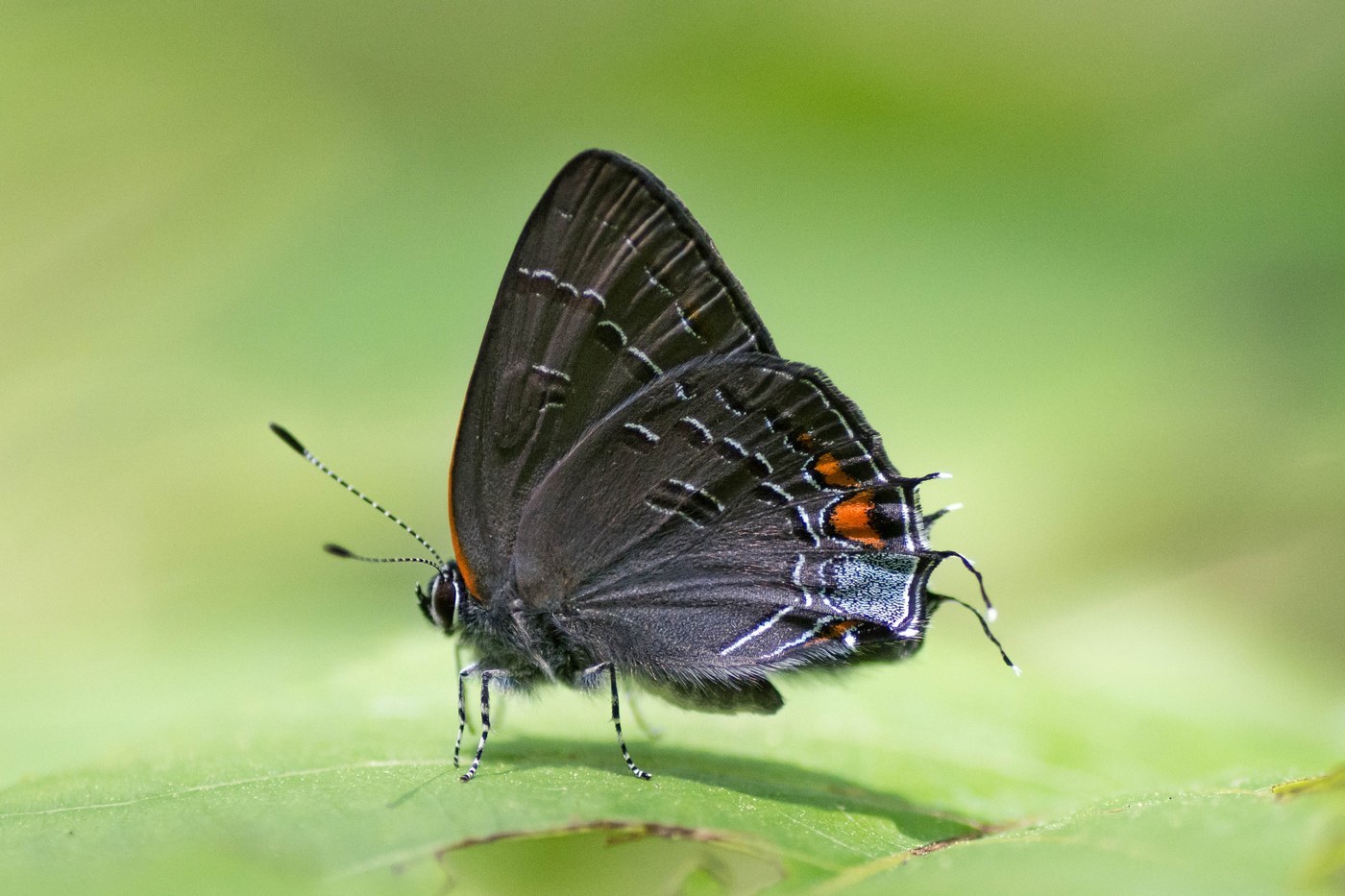
Banded Hairstreak
A gray-brown, tailed hairstreak marked by a postmedian band of white-edged dark spots on the hindwing underside and a small orange-capped blue spot near the tail, closely tied to oak and hickory woodlands.
butterfly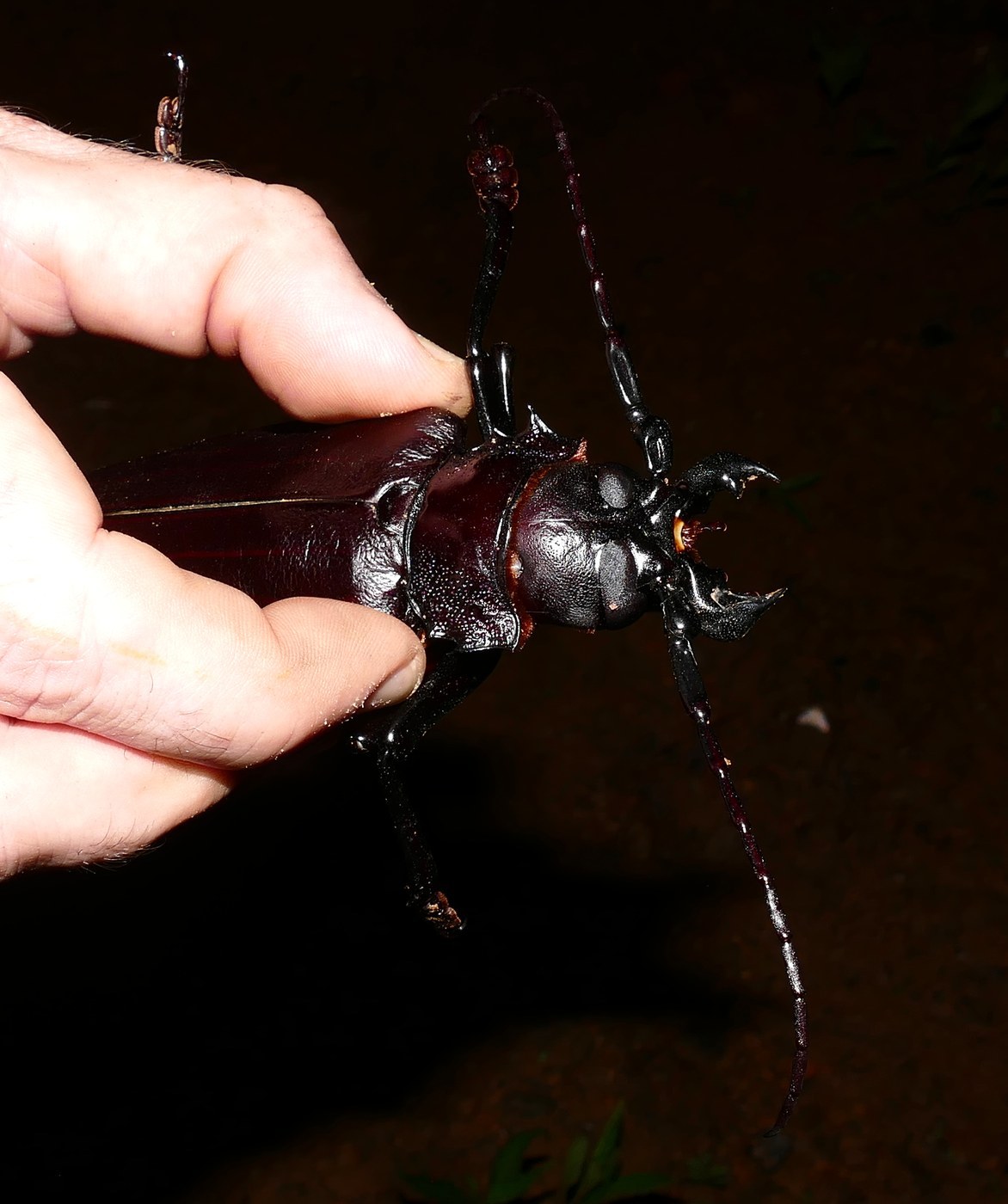
Titan Beetle
One of the largest insects on Earth, the titan beetle is a colossal longhorn from the Amazon whose body can exceed 16 cm. Its powerful jaws and loud hiss make it an imposing rainforest giant.
beetle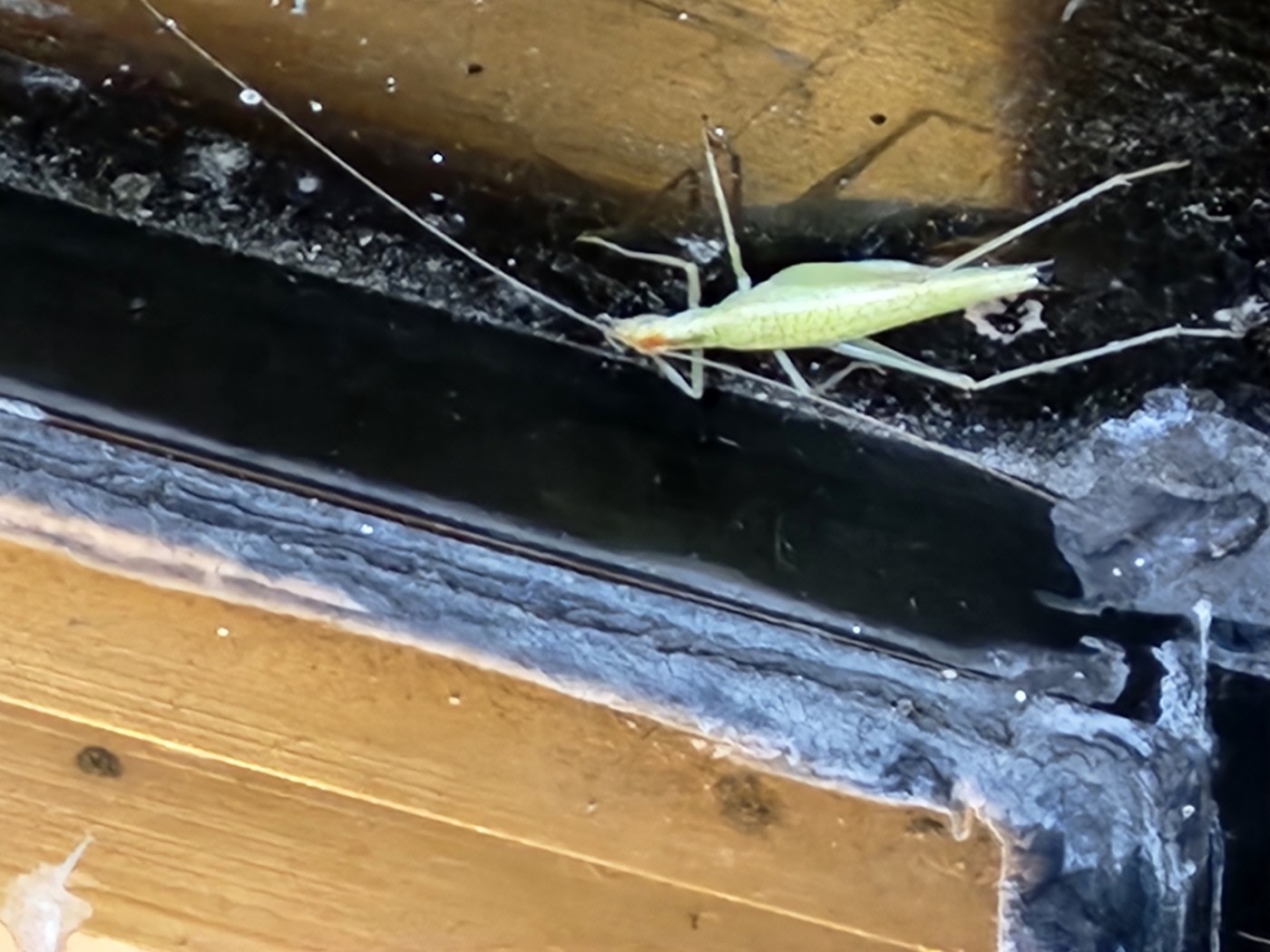
Snowy Tree Cricket
Nicknamed the thermometer cricket, this pale, delicate insect sings a steady, rhythmic chirp whose pace rises and falls so predictably with temperature that its chirp rate can be used to estimate the air temperature.
grasshopper-cricketRat-Tailed Maggot
Named for its long, thin, telescoping breathing tube, the rat-tailed maggot is the aquatic larva of the drone fly, thriving in stagnant, low-oxygen water where few other insects can survive.
aquatic-insect
Fishing Spider
One of the largest spiders in North America, the fishing spider can walk on water, dive beneath the surface to escape danger, and ambush small fish and tadpoles with its front legs from the water's edge.
spider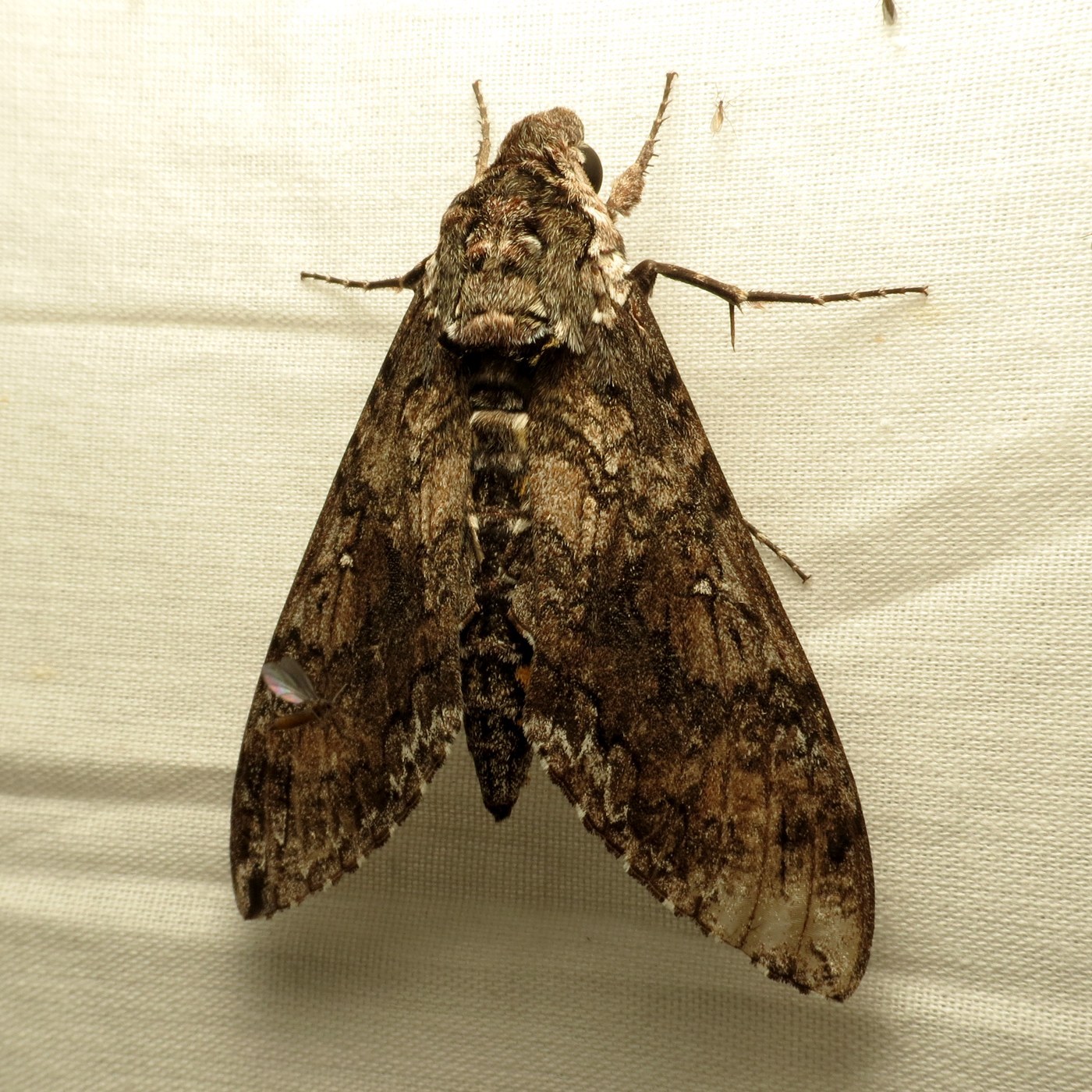
Tobacco Hornworm Moth (Carolina Sphinx)
A large, streamlined gray-brown sphinx moth with six pairs of orange spots along its abdomen, best known as the adult stage of the tobacco hornworm caterpillar that feeds on tomato and tobacco plants.
mothPredatory Stink Bug
Unlike its plant-feeding relatives, the predatory stink bug is a hunter that spears caterpillars and beetle larvae with a stout beak. The spined soldier bug is a familiar shield-shaped garden ally.
true-bug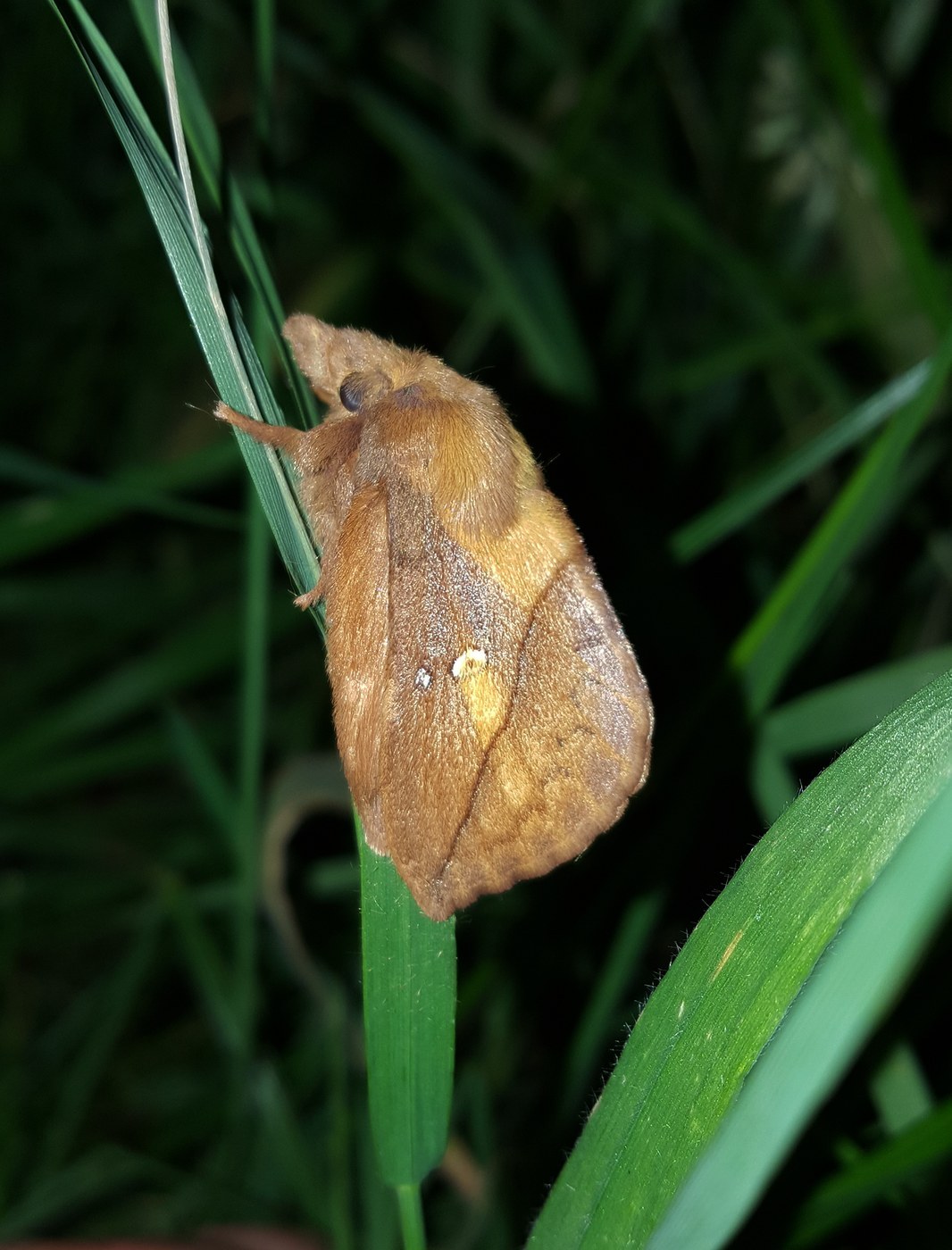
Drinker Moth
A stout, furry moth with warm tawny-orange to buff-brown wings marked by two small white spots on each forewing, named for its caterpillar's habit of drinking water droplets from grass blades.
moth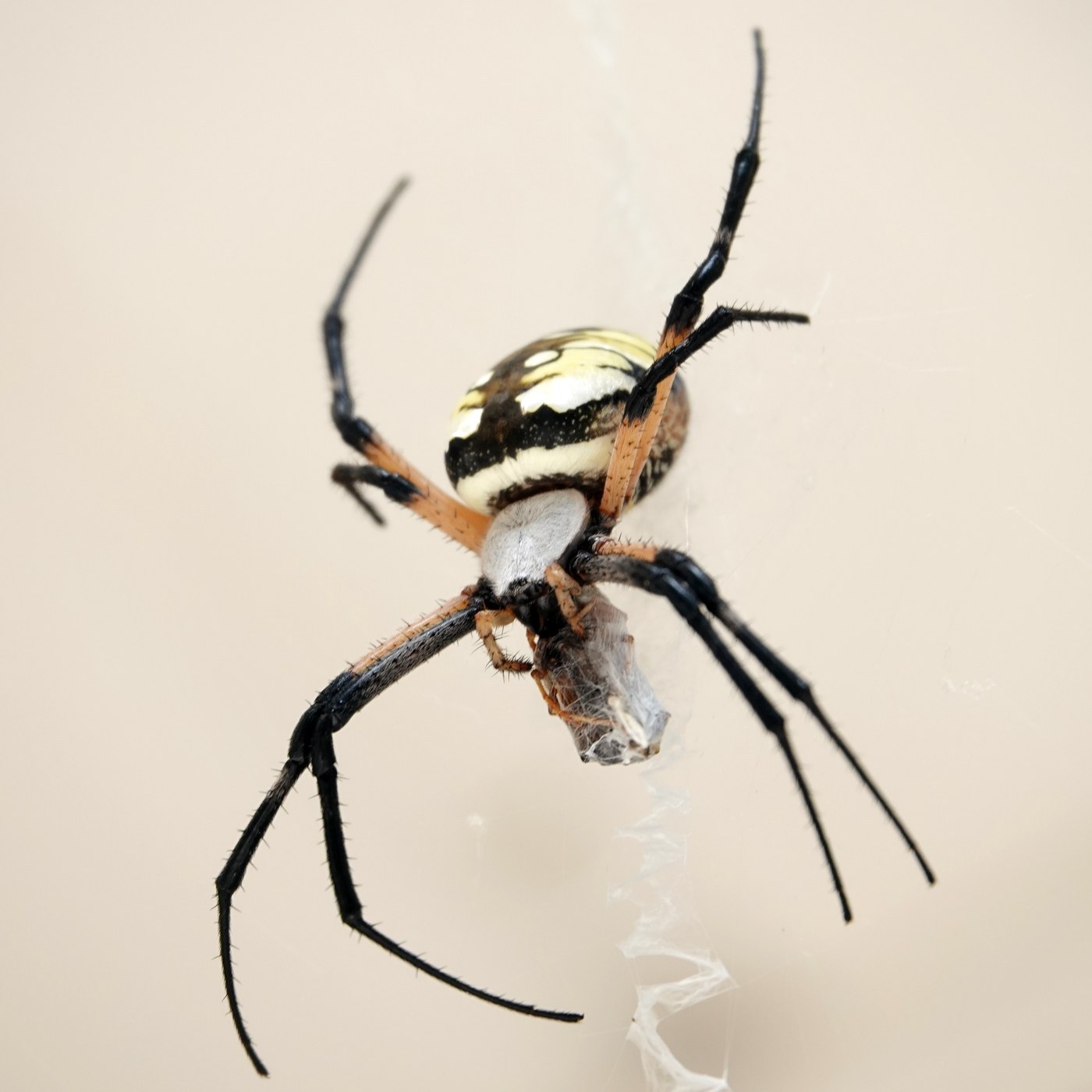
Yellow Garden Spider
Bold black and yellow markings, a large orb web anchored with a bright zigzag of silk, and a habit of sitting in plain view make the yellow garden spider one of the most eye-catching and recognizable spiders in North American backyards.
spider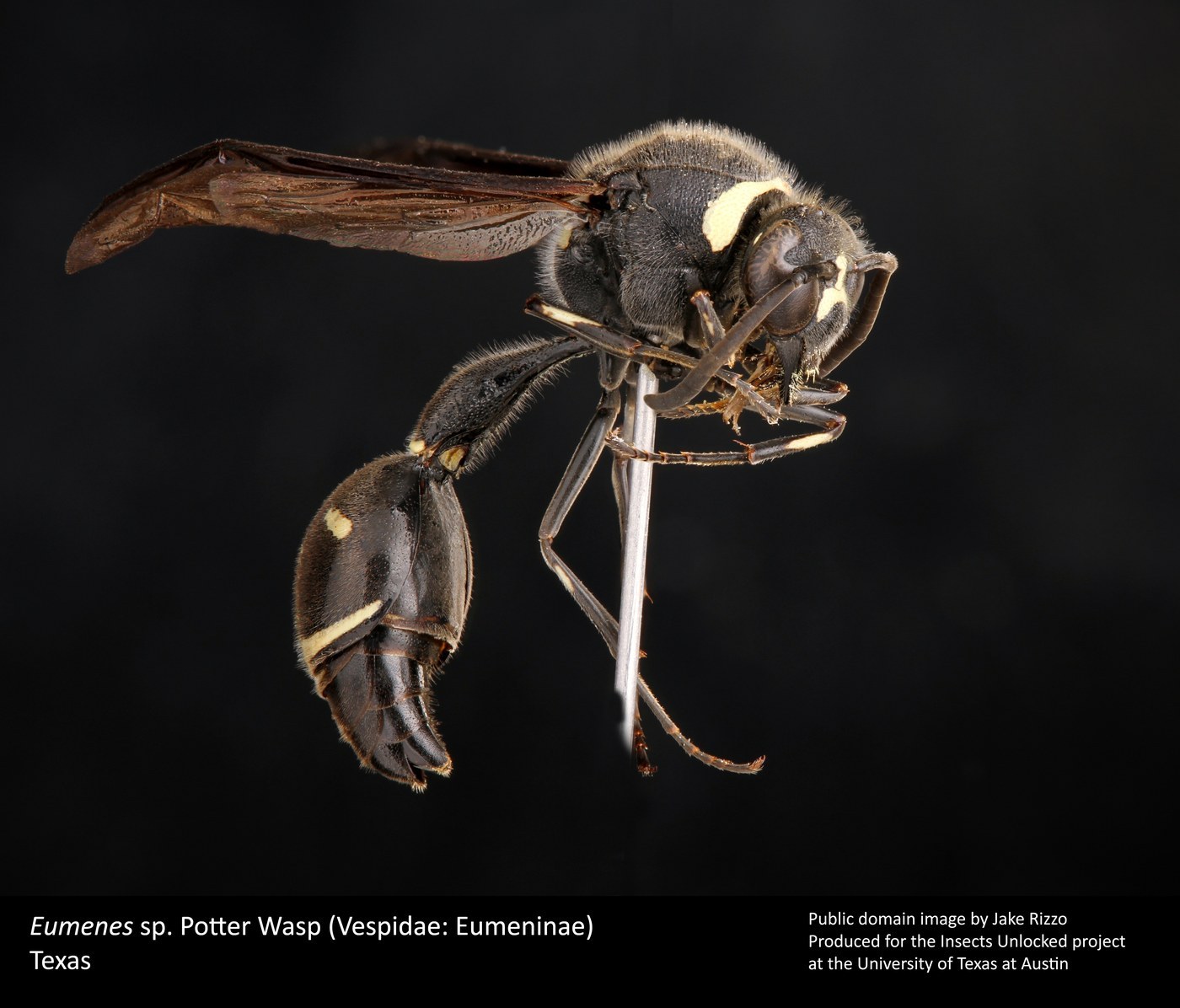
Potter Wasp
A solitary wasp with a pronounced hourglass waist that sculpts tiny, perfectly rounded mud pots resembling miniature clay jugs, each one stocked with paralyzed caterpillars for a single offspring.
wasp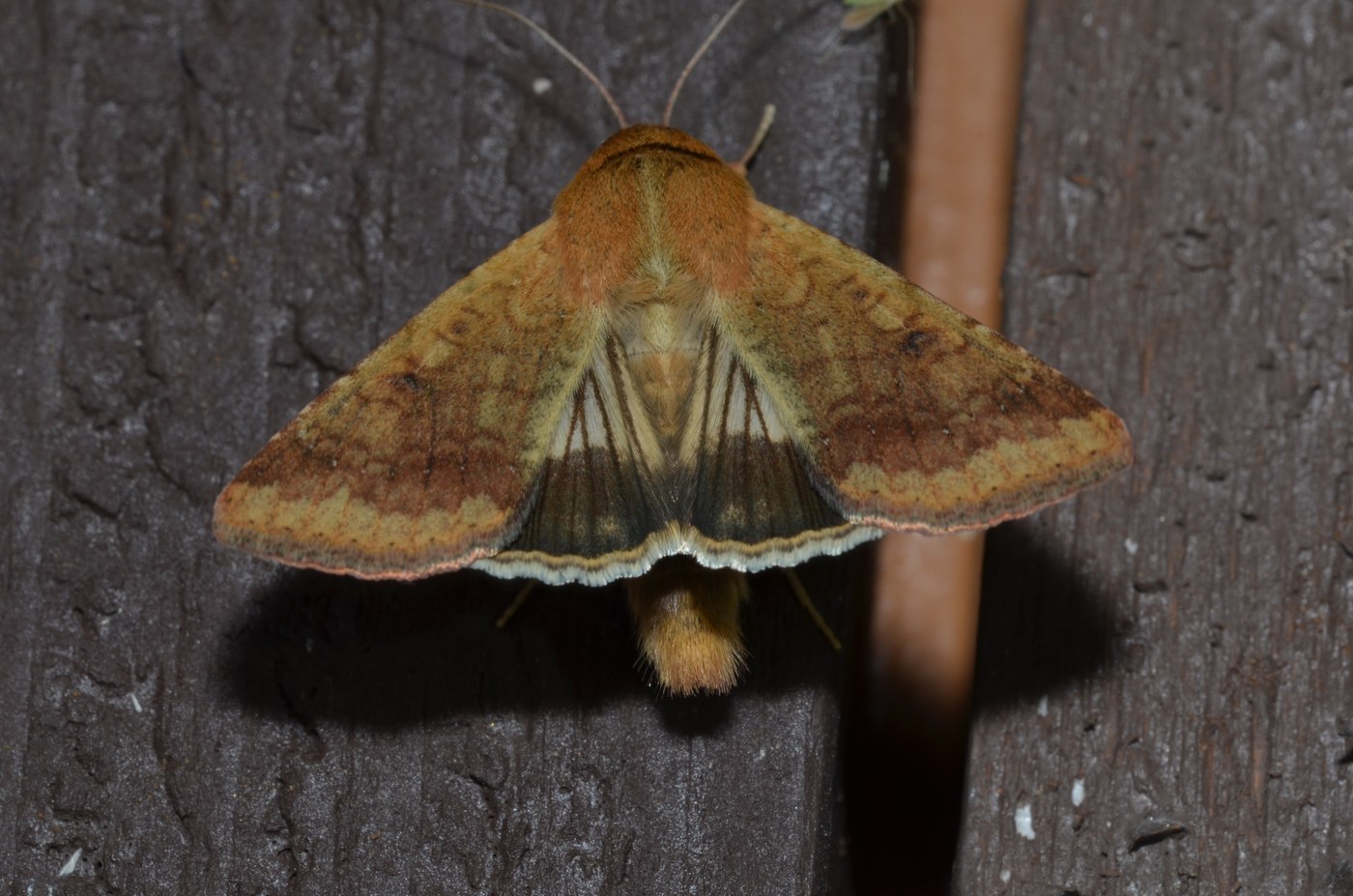
Bollworm
One of the most economically significant caterpillars in North American agriculture, the bollworm changes color from green to brown to pink across its life and bores into cotton bolls, corn ears, and tomato fruit alike.
caterpillar-larvaAsian Longhorned Beetle
A large, glossy black longhorn beetle patterned with irregular white spots and boldly banded blue-white antennae, notable as one of the largest and most eye-catching wood-boring beetles seen in temperate hardwood trees.
beetle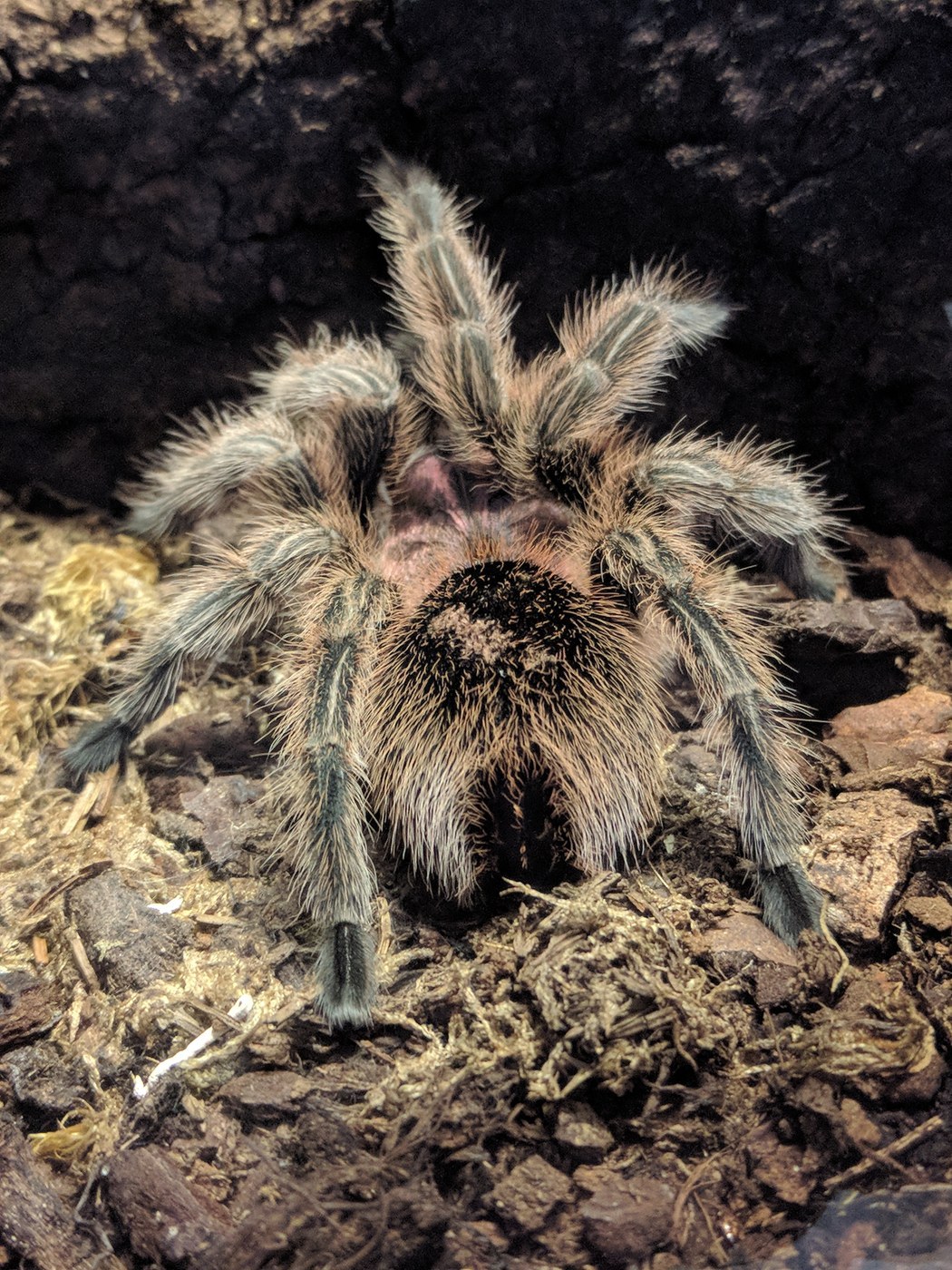
Rose Hair Tarantula
A calm, ground-dwelling tarantula from the deserts of Chile, the rose hair is named for the pinkish sheen its bristly hairs can take on in certain light, and is known for its slow, deliberate movements and generally placid temperament.
spider