
Bug Encyclopedia
Search and identify bugs & insects — beetles, butterflies, moths, ants, bees, spiders and more — with size, habitat, danger, behavior, and how to tell them apart.
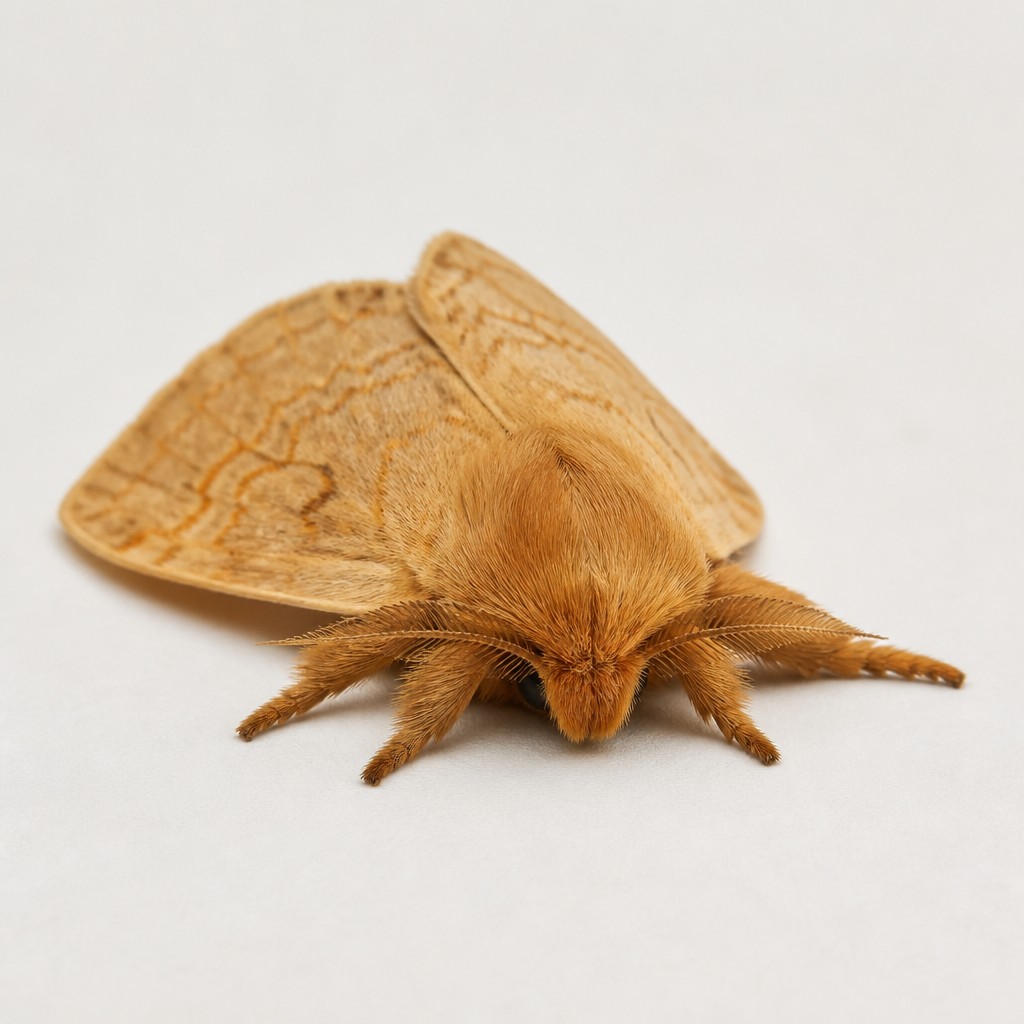
Southern Flannel Moth (Puss Caterpillar Moth)
A small, densely furred tan-to-orange moth best known for its unusual larva, a soft-looking, cat-tailed caterpillar whose fluffy coat hides rows of venomous spines.
moth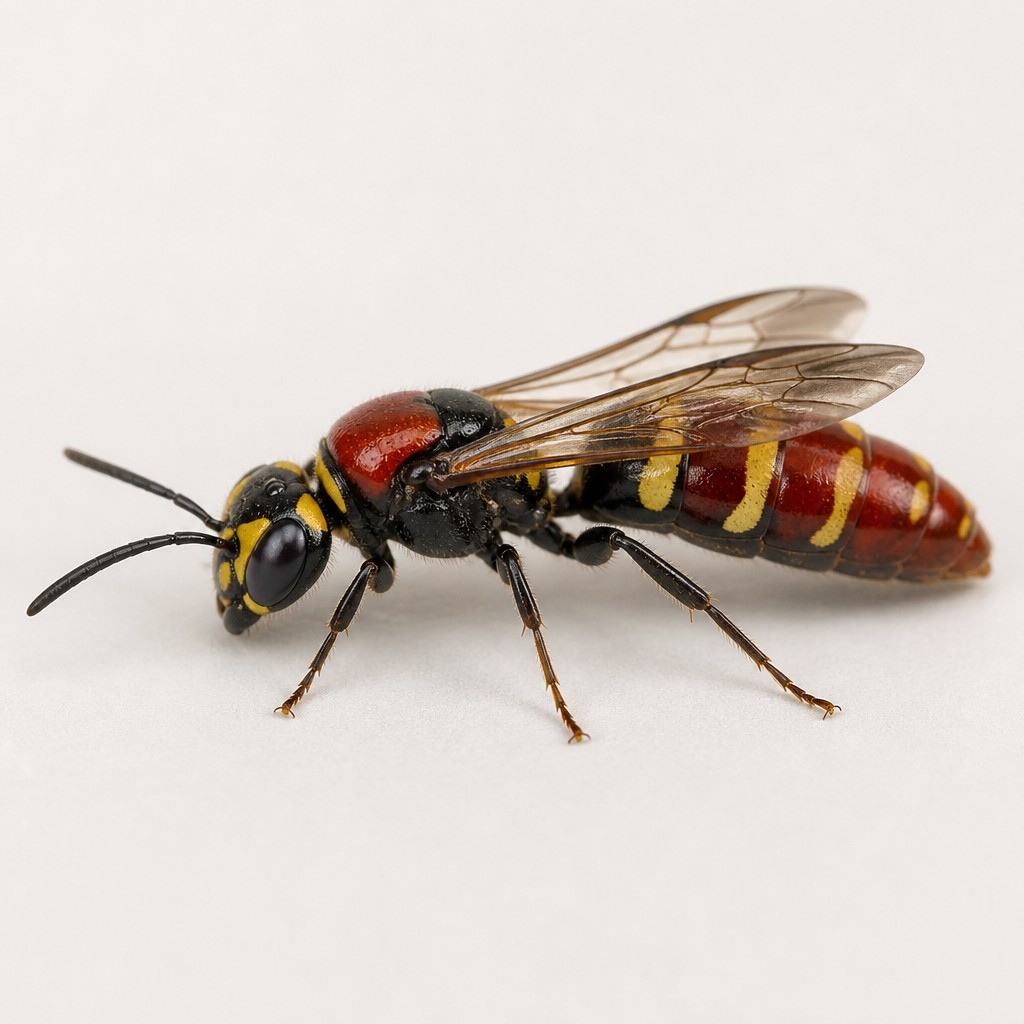
Cuckoo Bee
A slender, wasp-like bee that lacks pollen-carrying hairs because it never gathers its own pollen, instead sneaking into the nests of other solitary bees to lay eggs that hatch and consume the host's food stores.
bee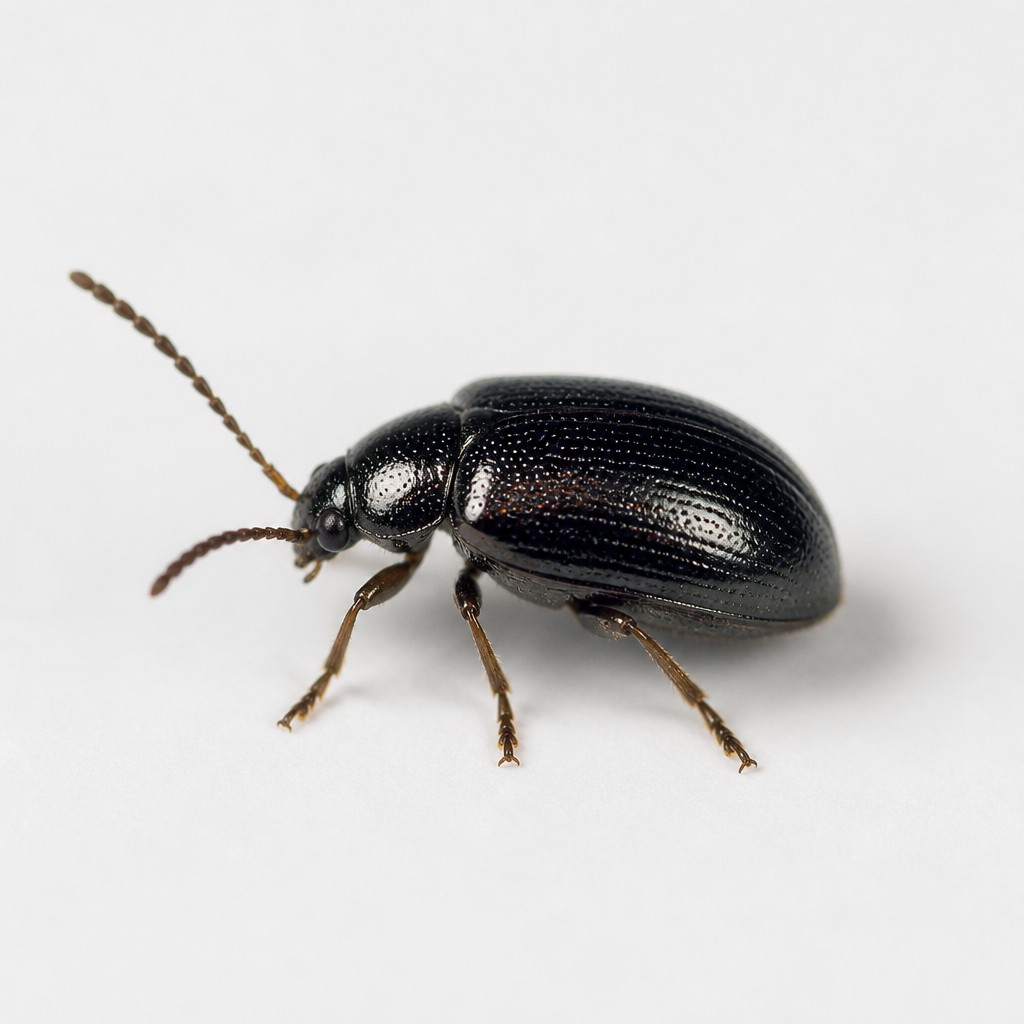
Flea Beetle
A tiny, shiny beetle that springs away like a flea when disturbed, leaving characteristic small round holes peppered across the leaves it feeds on.
beetle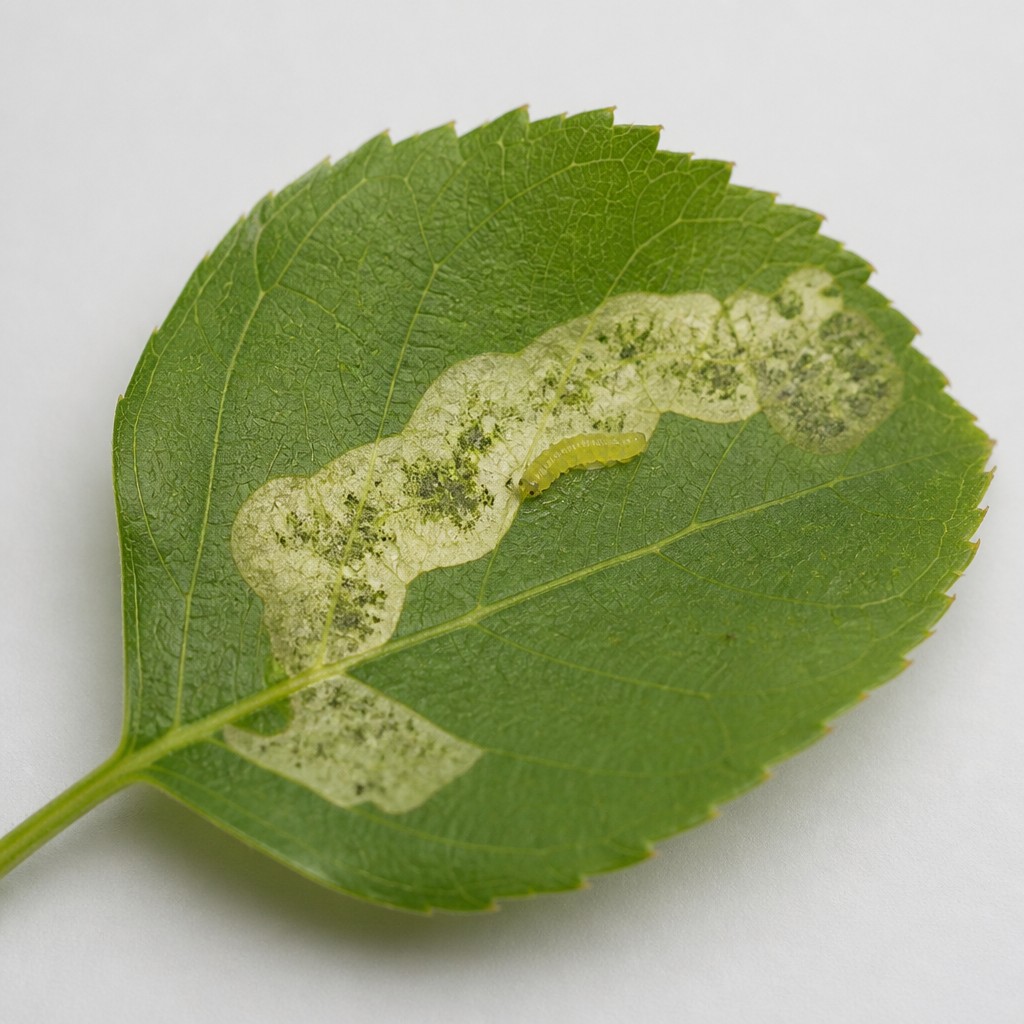
Leaf Miner
Rather than chewing from the outside, a leaf miner larva tunnels between the upper and lower surfaces of a leaf, leaving behind pale, winding trails or blotches that trace its path as it feeds.
fly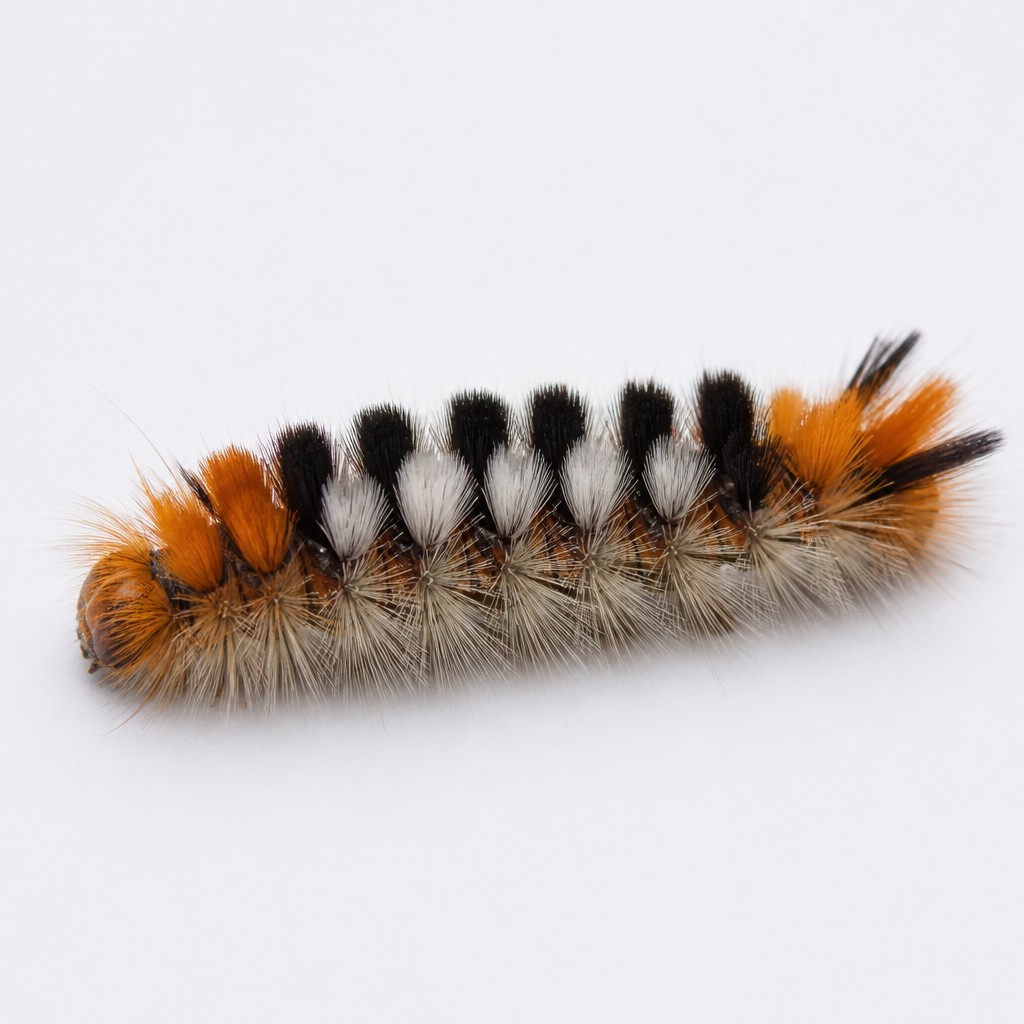
Milkweed Tussock Caterpillar
Rows of dense orange, black, and white hair tufts run down the back of this milkweed specialist, whose young larvae feed in tight groups that skeletonize milkweed leaves before dispersing to feed alone.
caterpillar-larva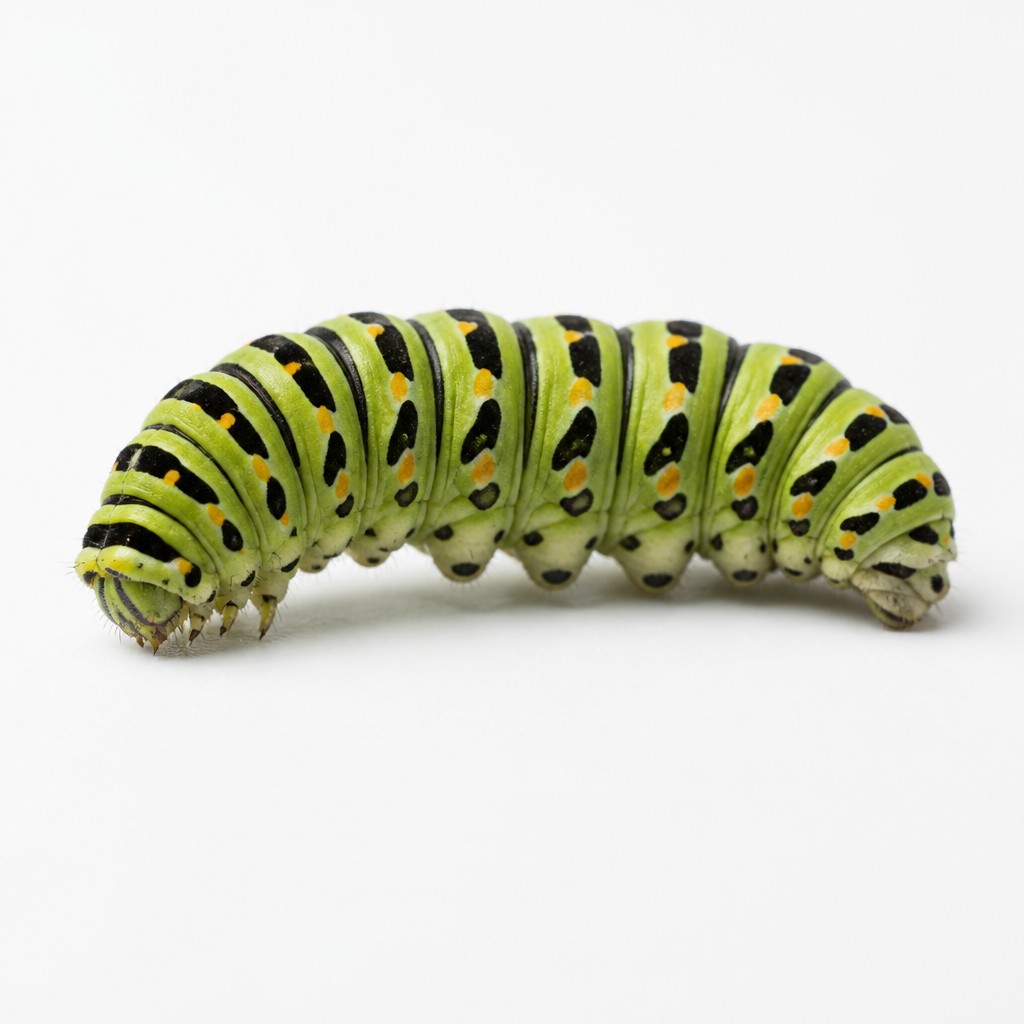
Caterpillar
The soft-bodied, segmented larval stage of butterflies and moths, recognized by its worm-like shape, multiple pairs of stubby legs, and voracious appetite for leaves.
caterpillar-larva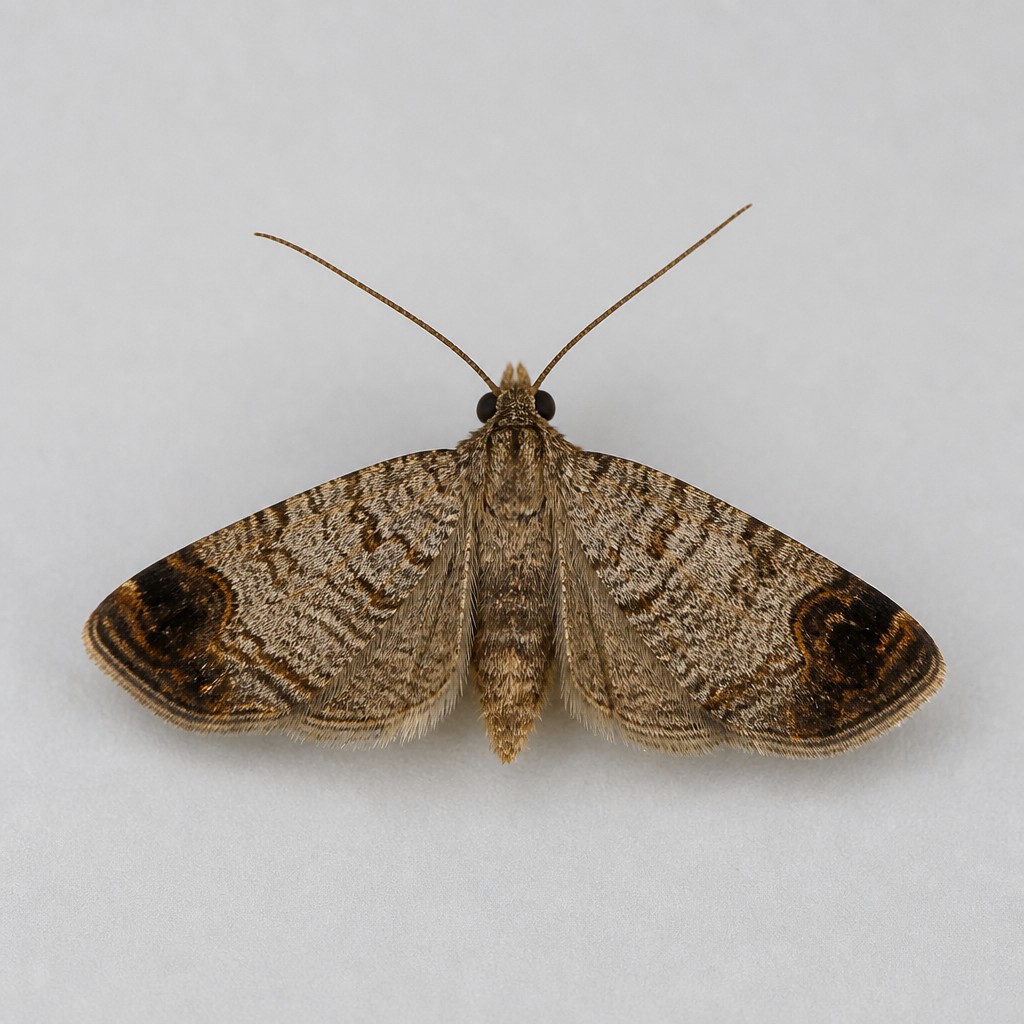
Codling Moth
A small, inconspicuous grey-brown moth best known through the work of its larva, the classic apple 'worm' that tunnels into fruit, making this tiny moth one of the most economically significant insects in orchards worldwide.
moth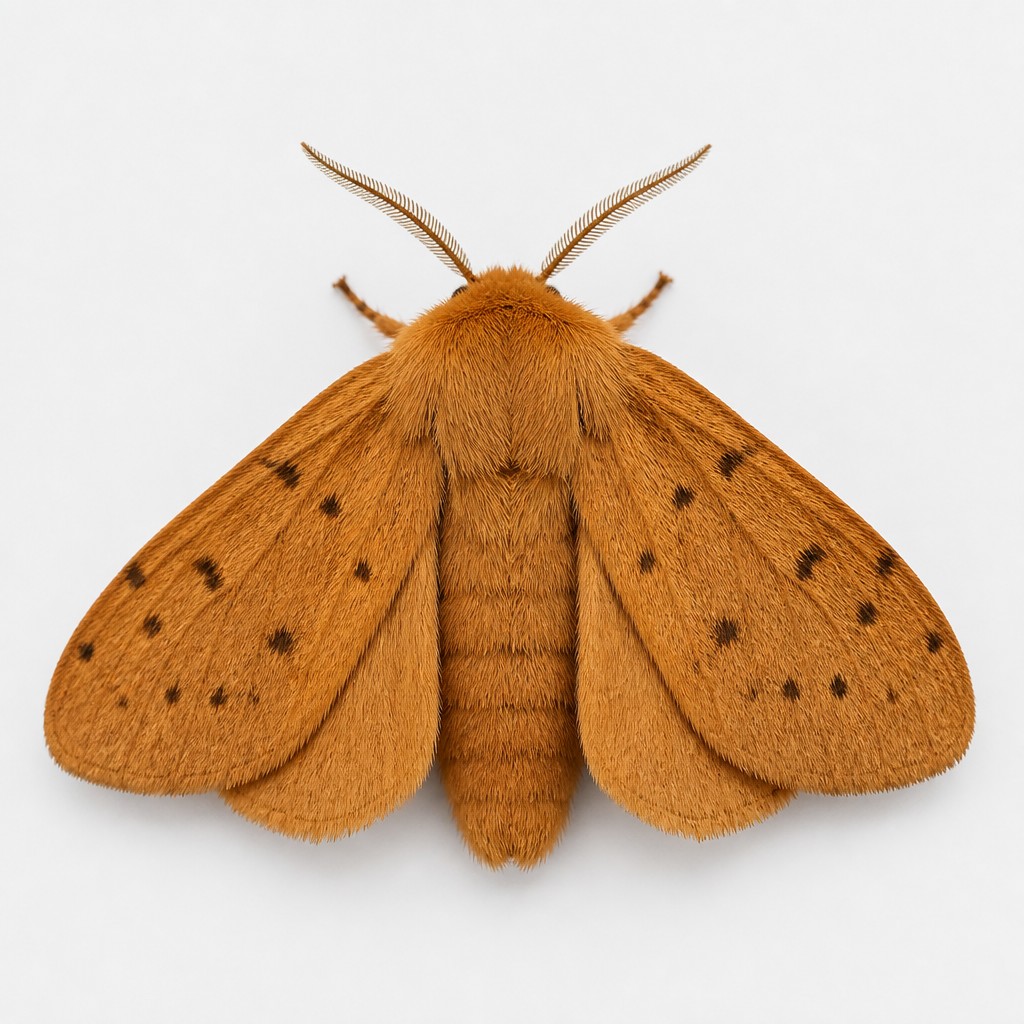
Isabella Tiger Moth (Woolly Bear)
Famous chiefly in its larval stage as the banded woolly bear caterpillar, this tiger moth's fuzzy black-and-rust-colored caterpillar is a familiar autumn sight, while the adult is a soft, tawny-orange moth with a stout, furry body.
moth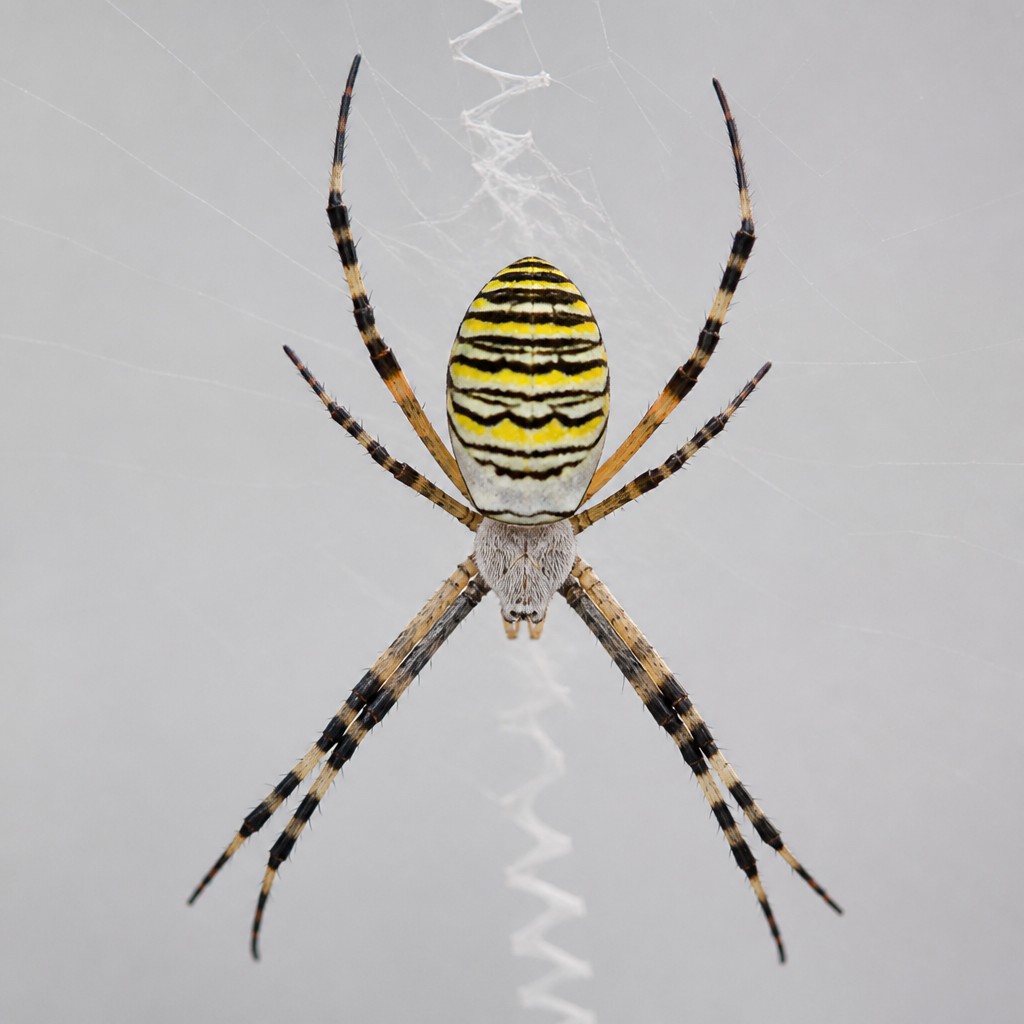
Banded Garden Spider
A large orb weaver with a silvery, banded abdomen striped in yellow and black, spinning a distinctive zigzag stabilimentum through the center of its web.
spider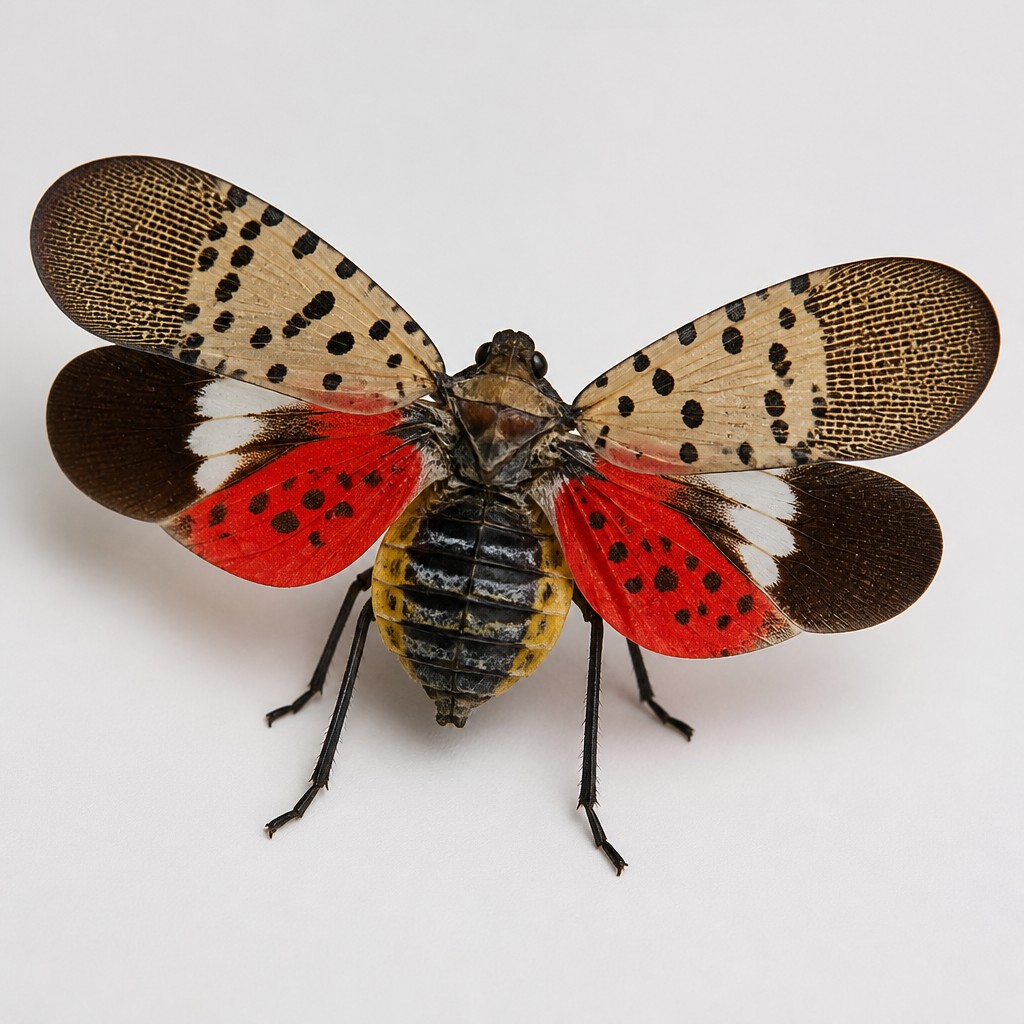
Spotted Lanternfly
A large, strikingly patterned planthopper with gray spotted forewings that flash to reveal crimson hindwings when it leaps or takes flight.
true-bug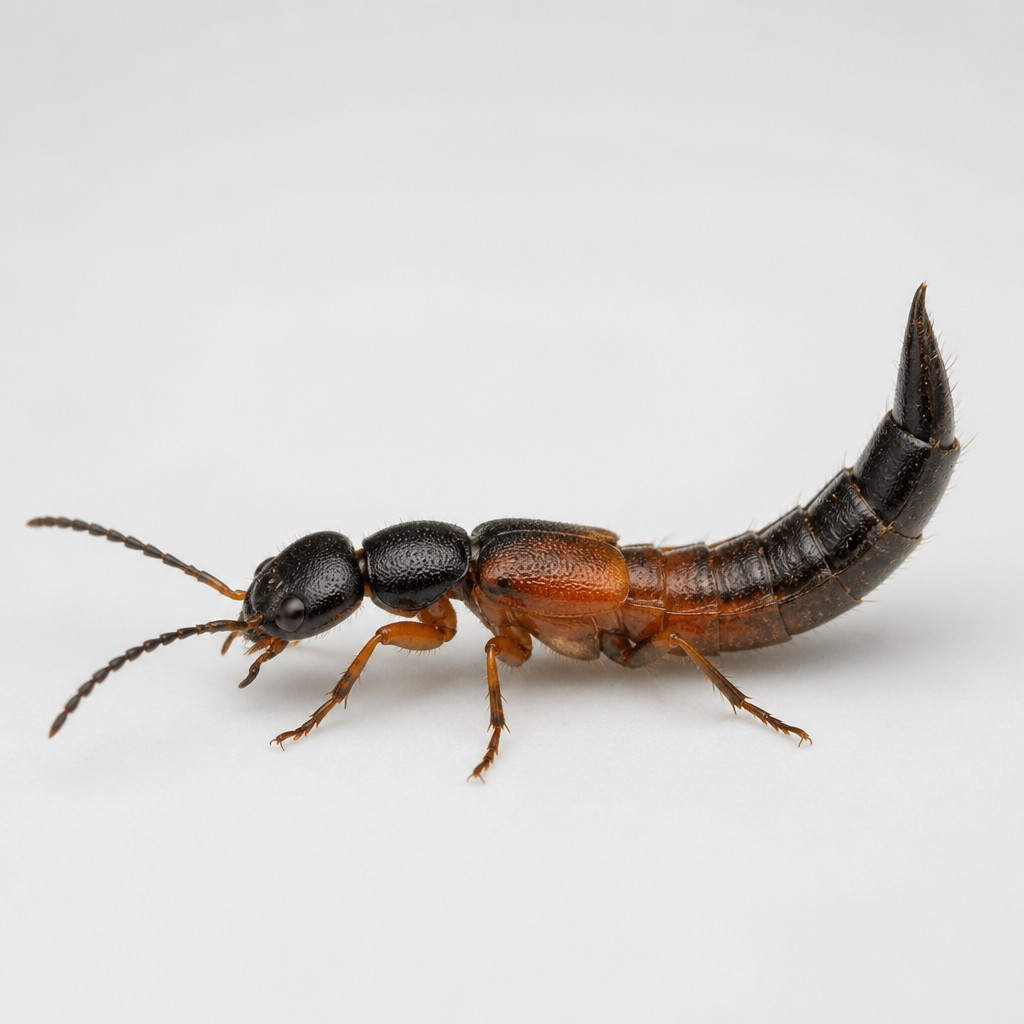
Rove Beetle
A slender, fast-running beetle with unusually short wing covers that leave much of its flexible abdomen exposed, often curling its tail upward like a scorpion when alarmed.
beetle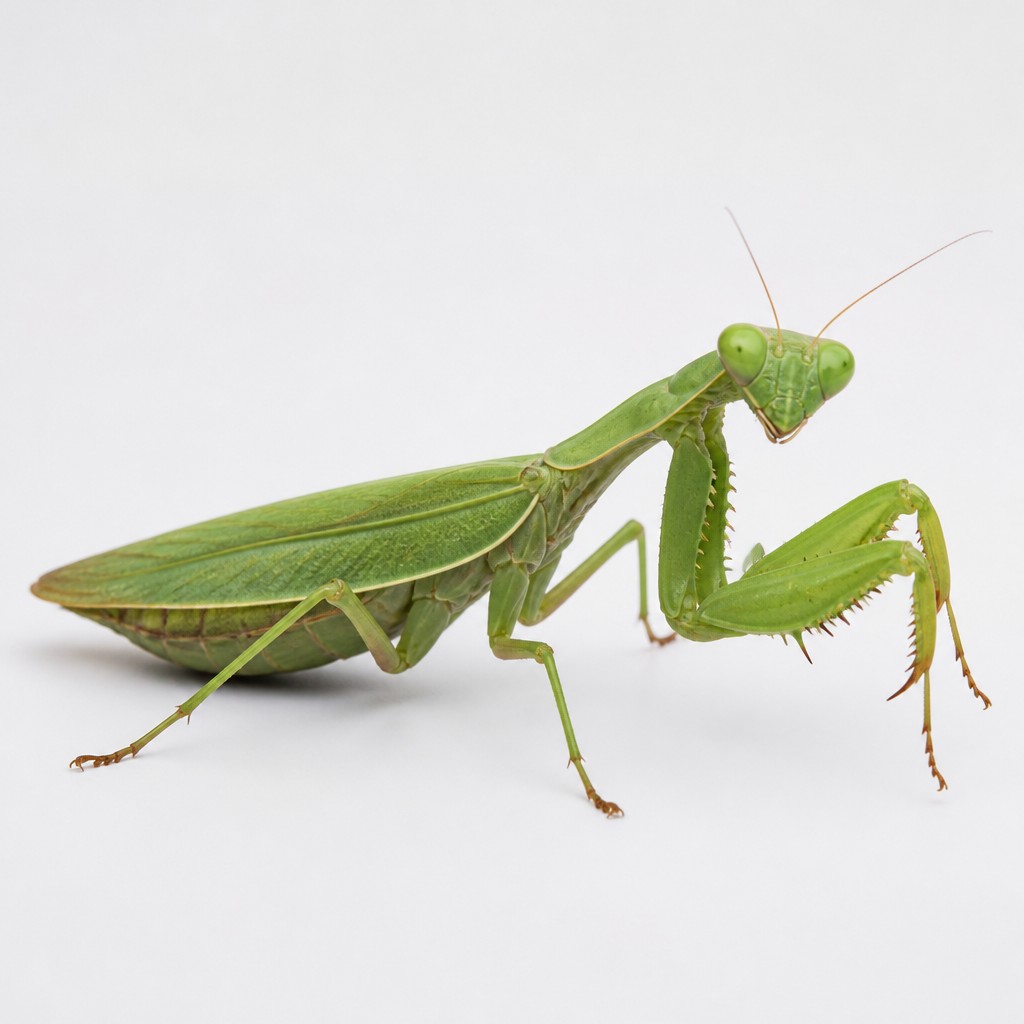
African Mantis
A large, sturdy green or brown mantis frequently found perched on garden shrubs, patiently scanning for insect prey with its sharply angled triangular head.
mantis-stick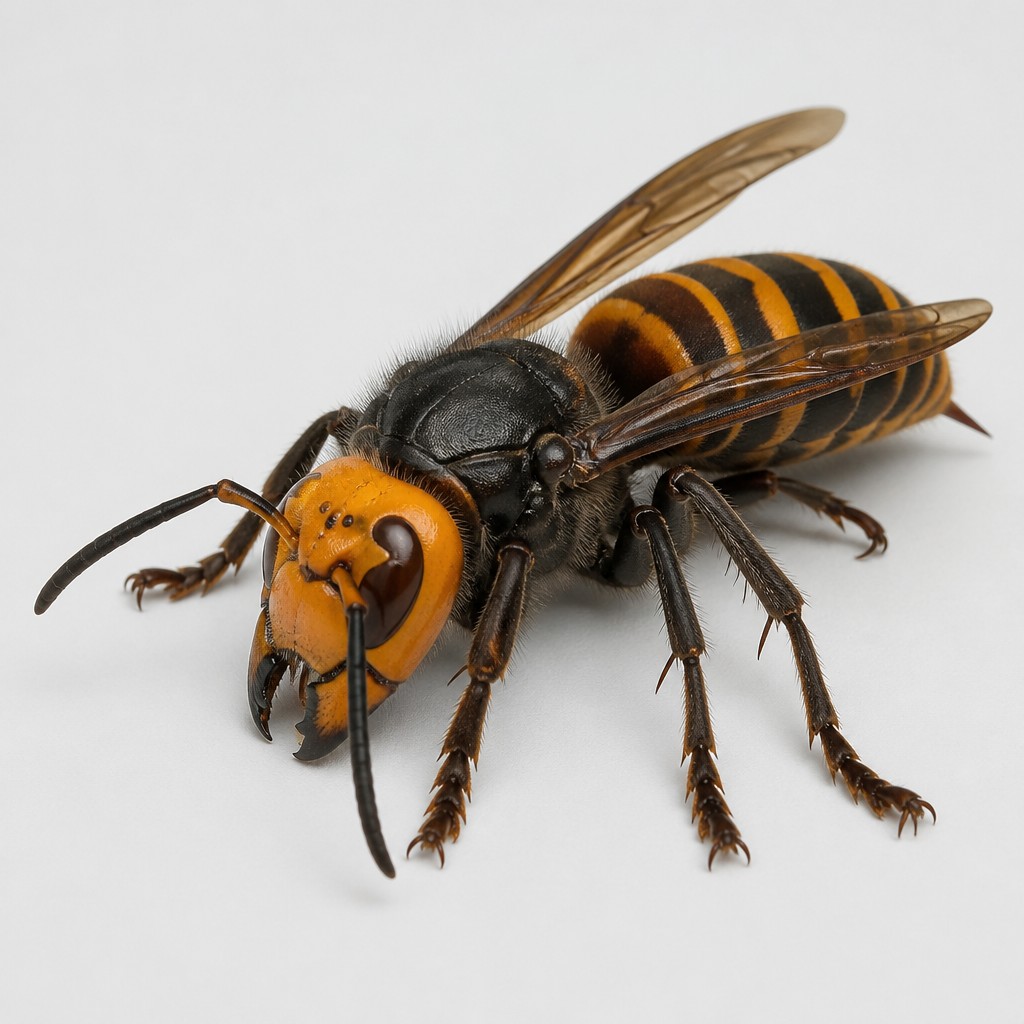
Asian Giant Hornet
The world's largest hornet, an imposing orange-and-black wasp with a wide head and long stinger, best known for raiding honey bee colonies to feed its brood.
wasp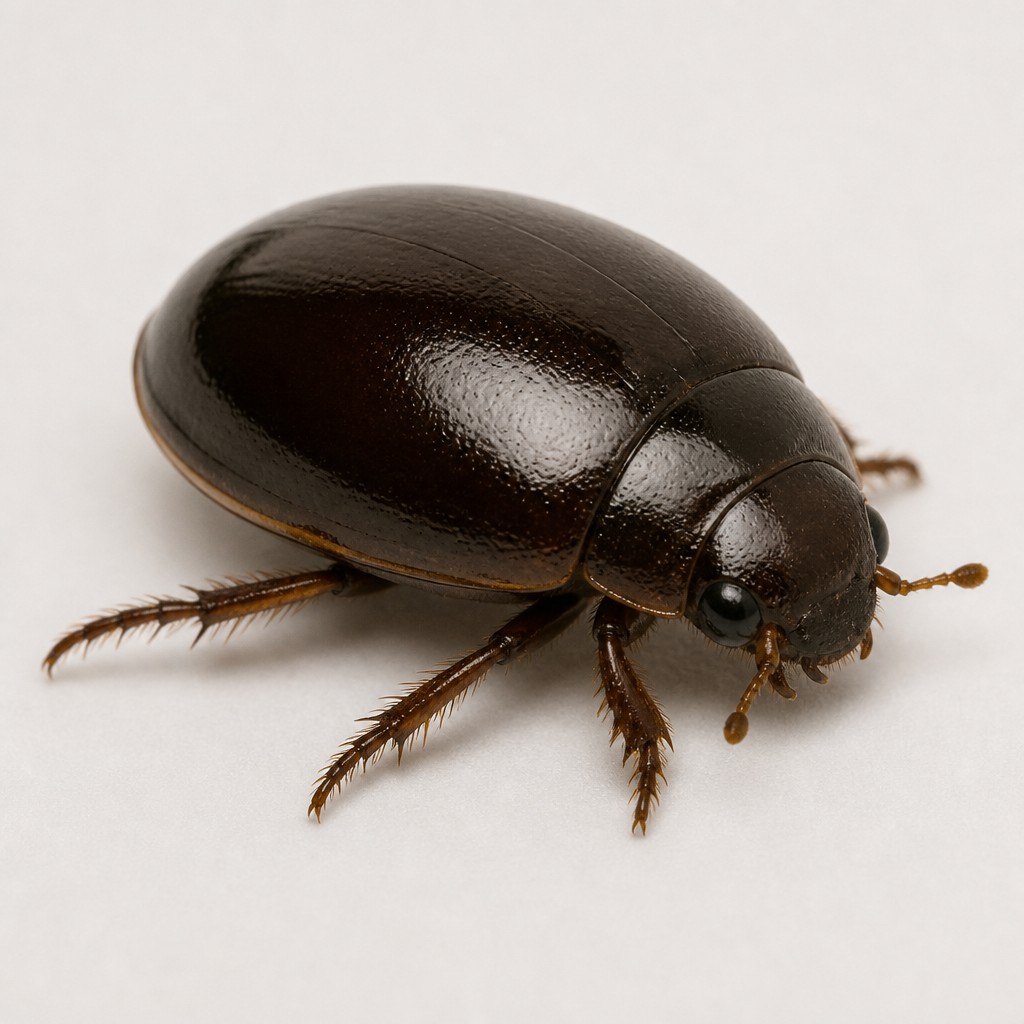
Water Scavenger Beetle
Rounded and glossy, water scavenger beetles paddle through weedy ponds gathering air with a short antenna rather than a snorkel-like tube, feeding mostly on decaying plant matter and algae.
beetle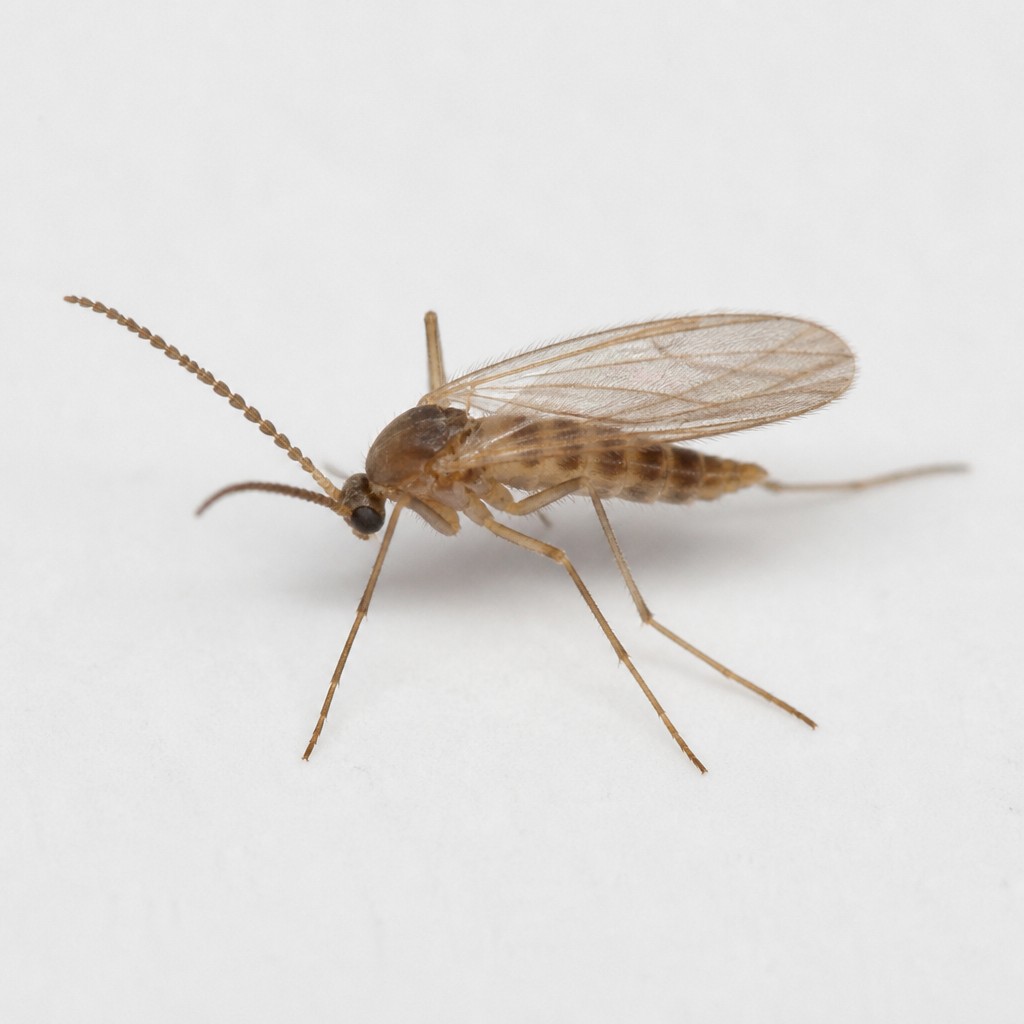
Gall Midge
A delicate, mosquito-like fly whose larvae trigger plants to grow strange, often colorful swellings called galls, each species usually tied to one particular host plant.
fly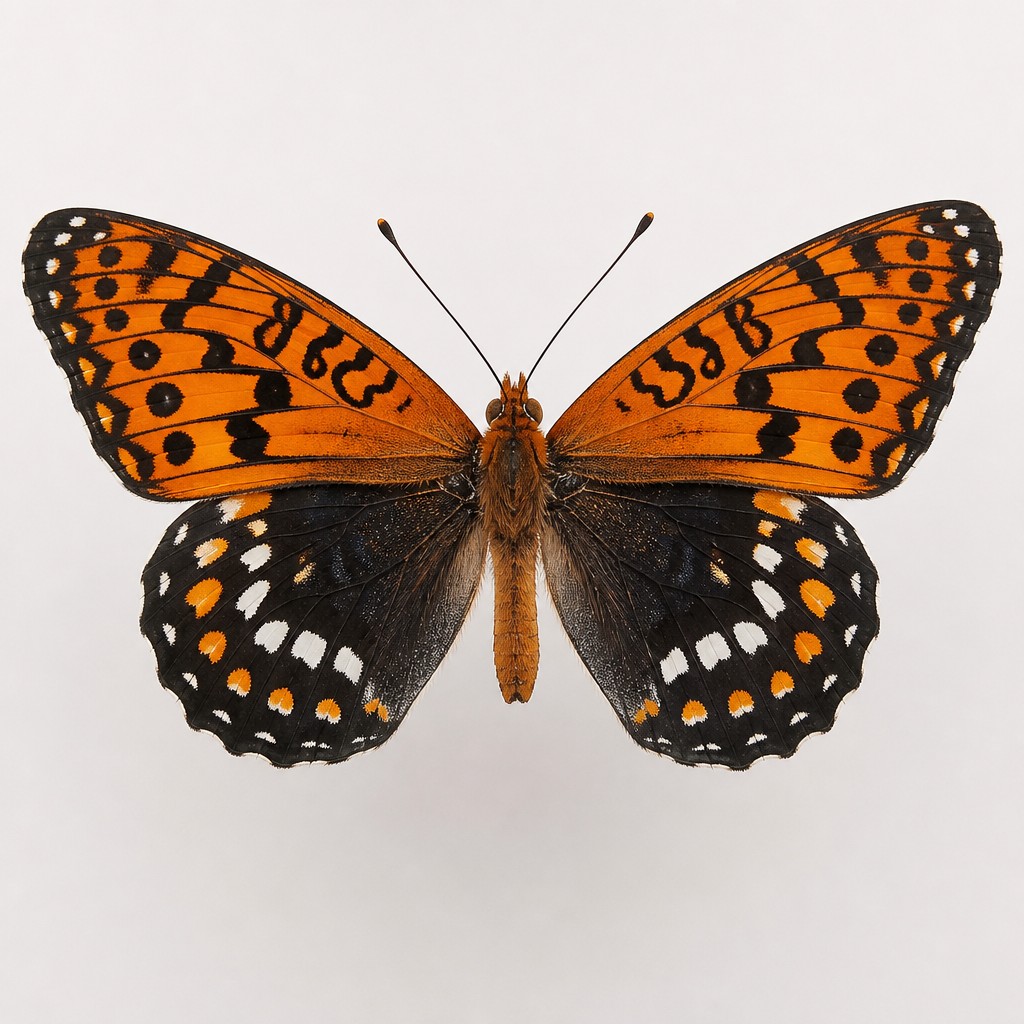
Regal Fritillary
A large, showy prairie butterfly with bright orange forewings and dramatically contrasting black hindwings dotted with rows of white and cream spots.
butterfly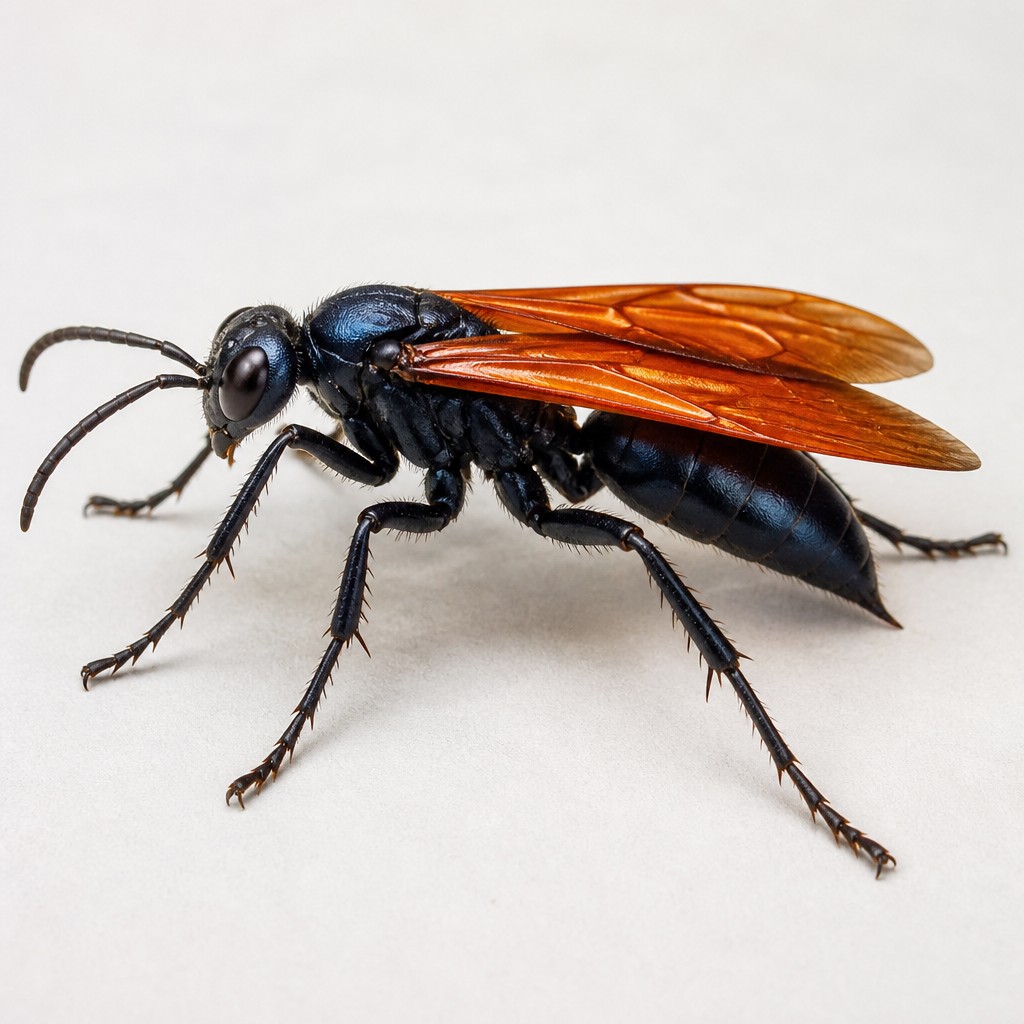
Tarantula Hawk Wasp
A giant metallic-blue wasp with rust-orange wings, the tarantula hawk is one of the largest wasps in the world. Females hunt tarantulas as living food for their single offspring.
wasp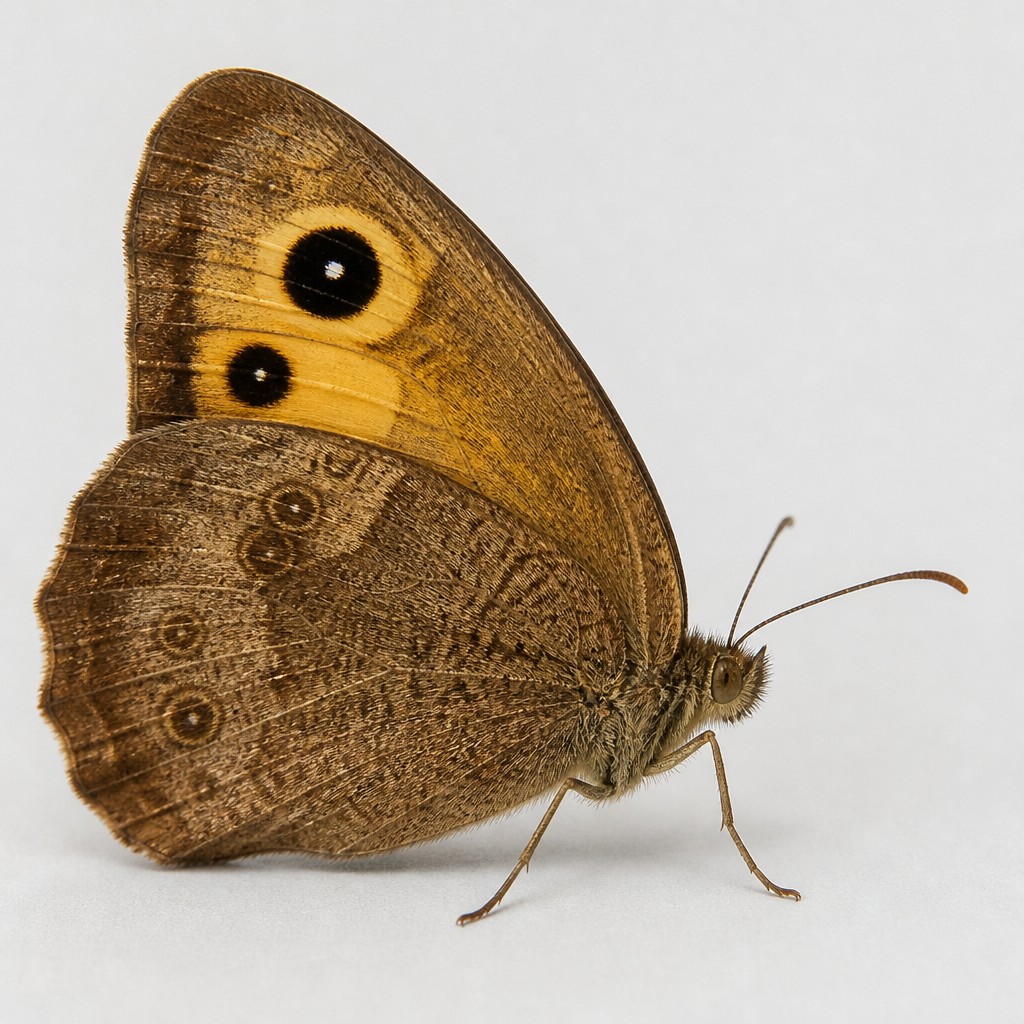
Common Wood-Nymph
A large brown grassland butterfly with a bold yellow patch and one or two prominent black eyespots on the forewing, known for its bouncing, low-to-the-ground flight.
butterfly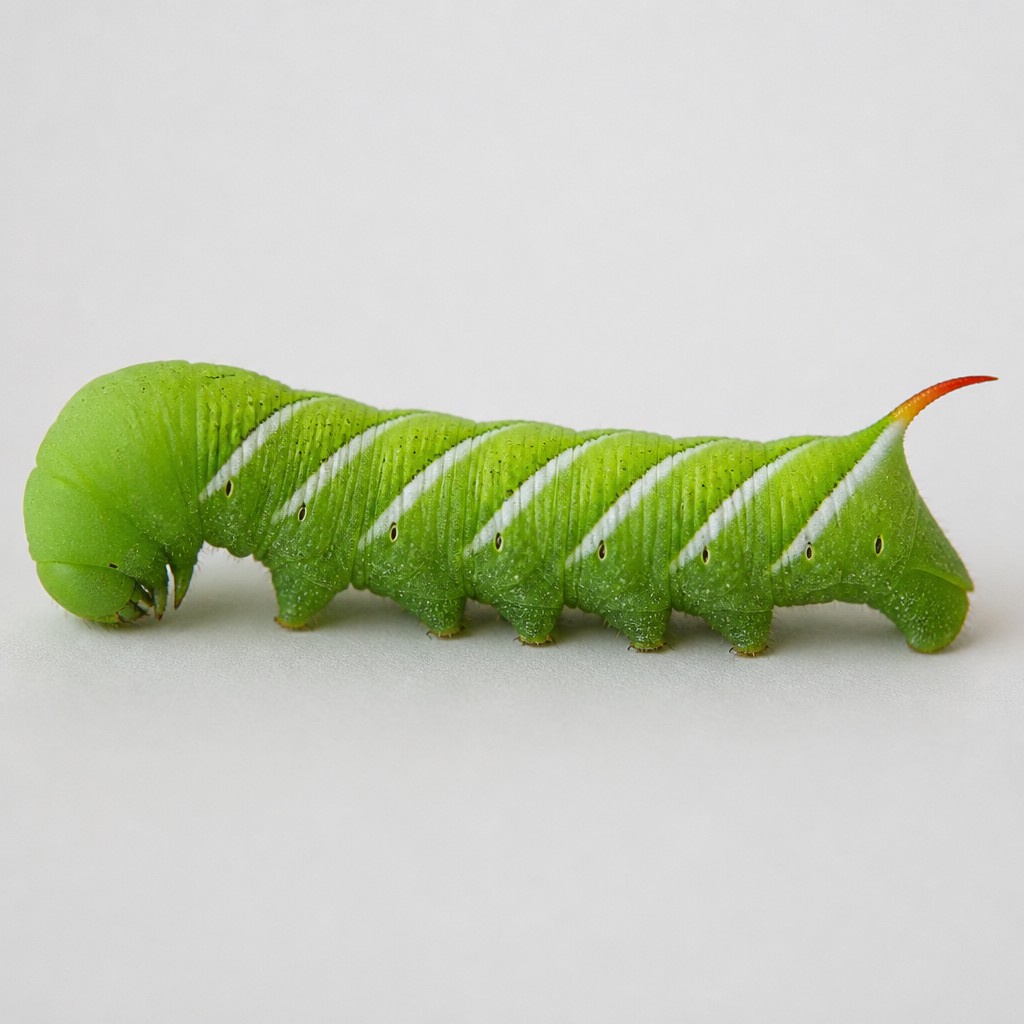
Tobacco Hornworm
A large, chunky green caterpillar with diagonal white stripes and a curved red-orange horn at its tail end, often found stripping tomato and tobacco plants.
caterpillar-larva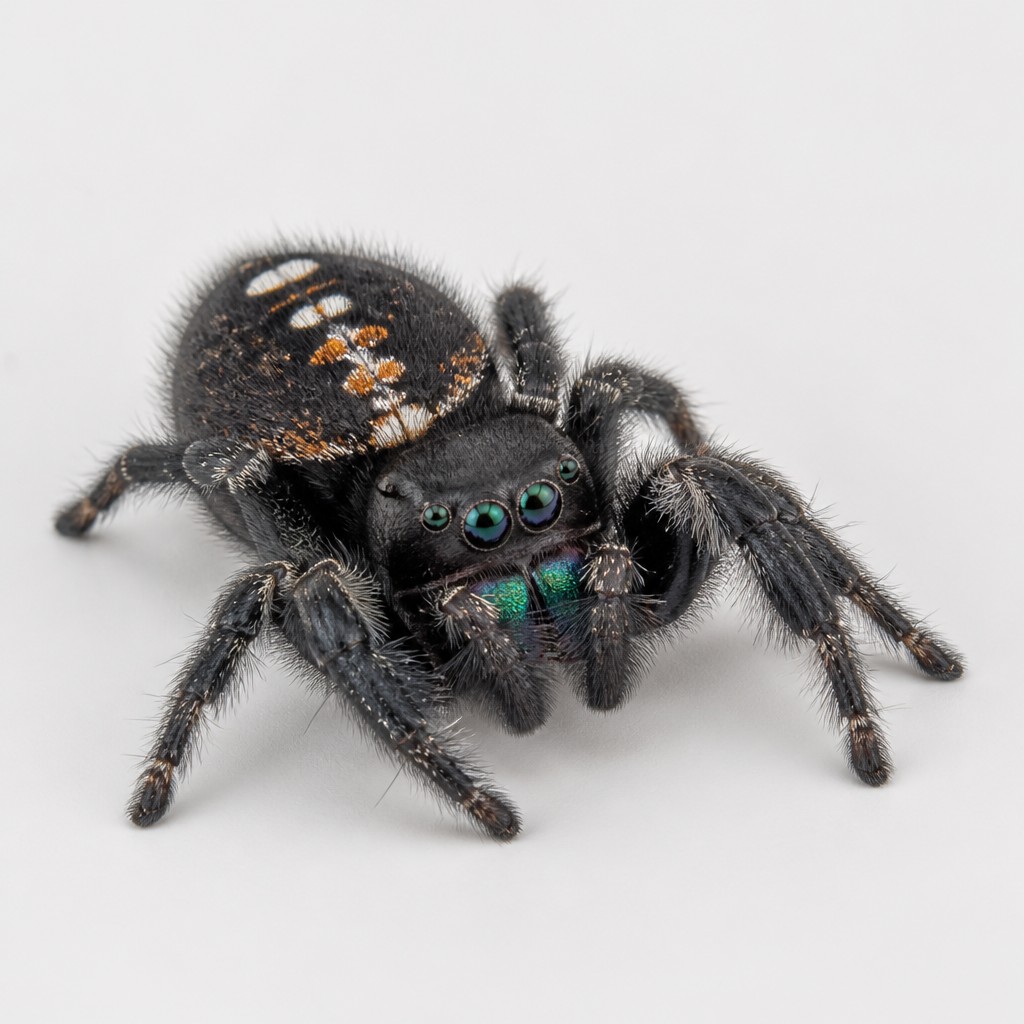
Regal Jumping Spider
One of the largest and most striking North American jumping spiders, with a velvety black body, bold markings, and huge iridescent green or blue-lined eyes.
spider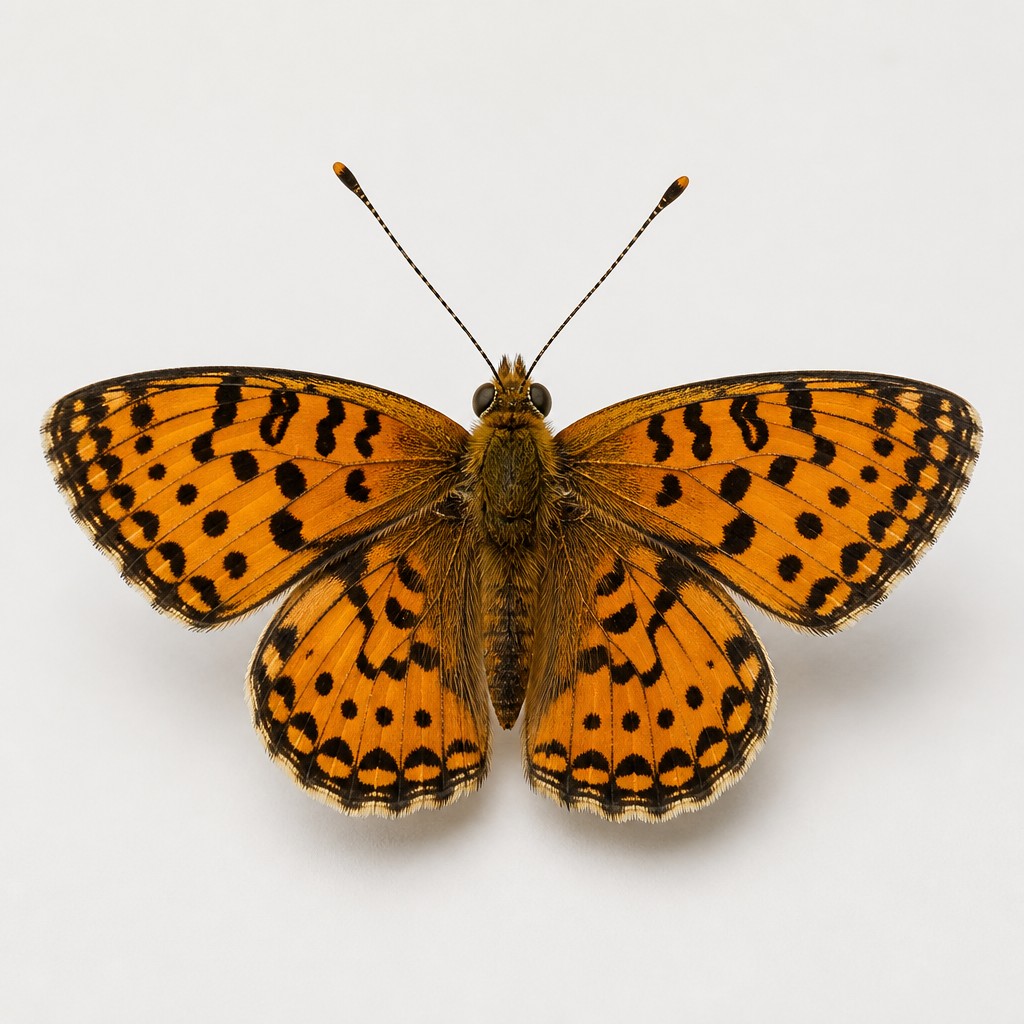
Meadow Fritillary
A small, fast-flying orange-and-black fritillary of open grassy fields, easily told from its larger cousins by its lack of silvery spots on the underside of the hindwing.
butterfly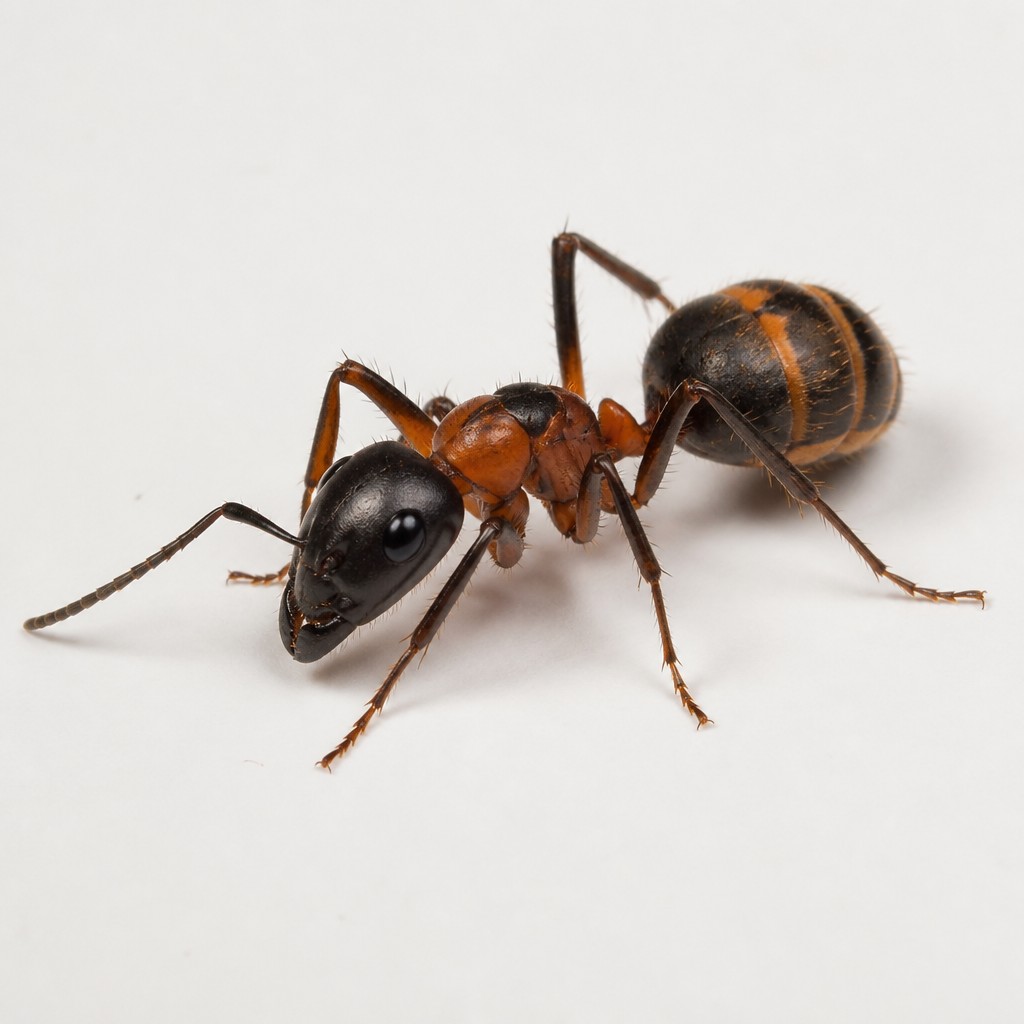
Sugar Ant
A common name for several large, sugar-loving ants, most famously the black-and-orange banded sugar ant of Australia, known for its persistent nighttime foraging around kitchens and picnics.
ant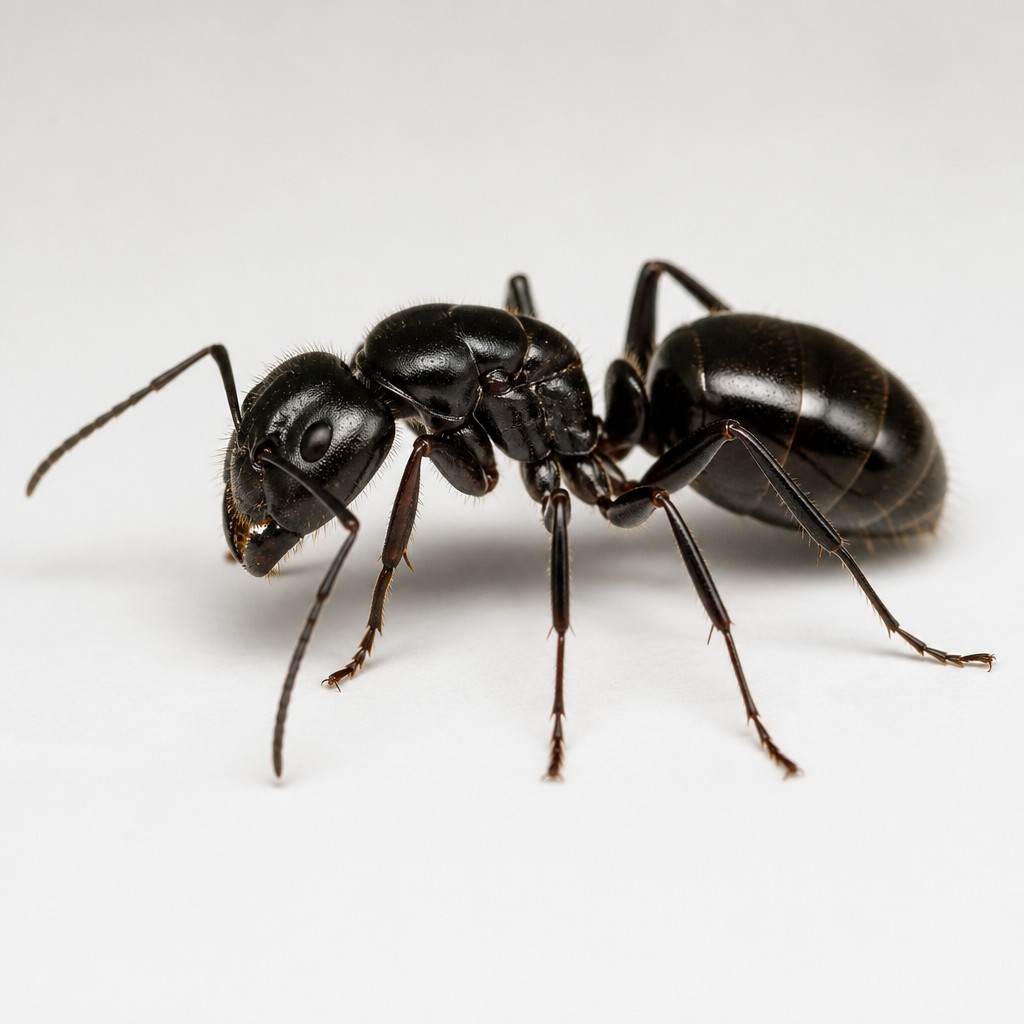
Carpenter Ant
A large, often shiny black ant that excavates smooth tunnels in dead or damp wood for nesting, recognizable by its size, evenly rounded thorax, and elbowed antennae.
ant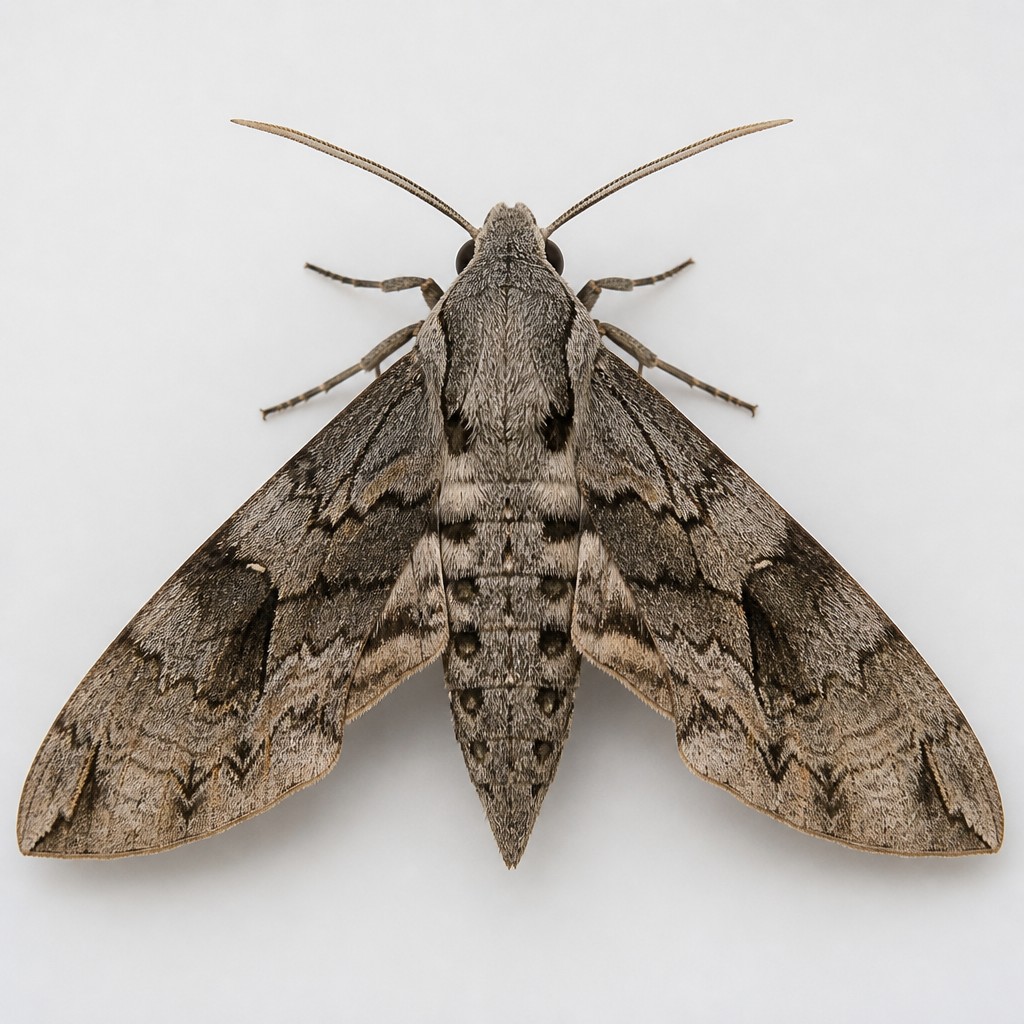
Sphinx Moth
A large, streamlined, fast-flying moth with narrow triangular wings and a robust, tapering body, famous for hovering at flowers at dusk like a hummingbird.
moth