
Bug Encyclopedia
Search and identify bugs & insects — beetles, butterflies, moths, ants, bees, spiders and more — with size, habitat, danger, behavior, and how to tell them apart.
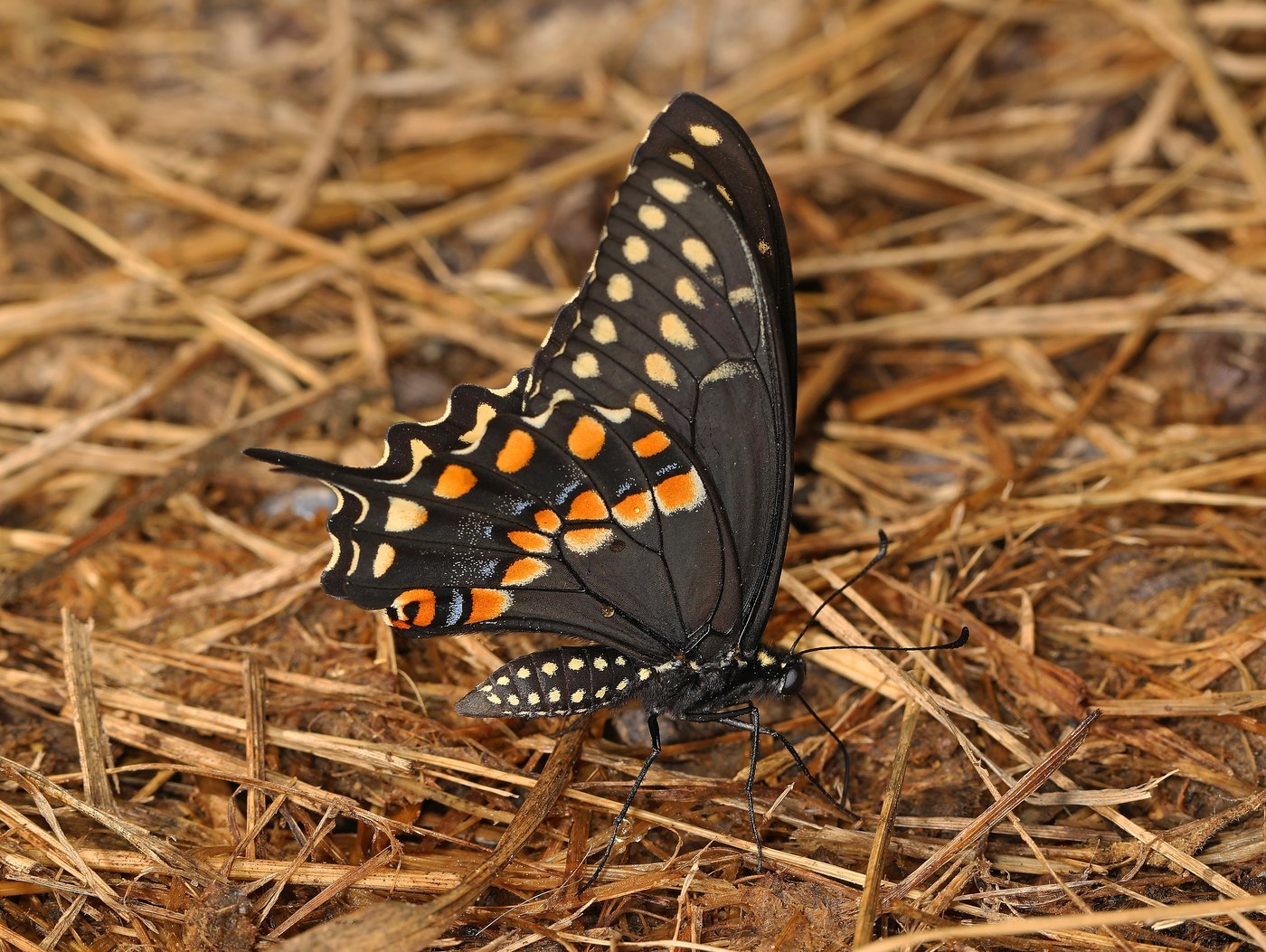
Black Swallowtail
A striking black swallowtail with two rows of yellow spots and a patch of blue scaling on the hindwings, whose green-and-black banded caterpillars are a familiar sight on garden dill, parsley, and carrot foliage.
butterfly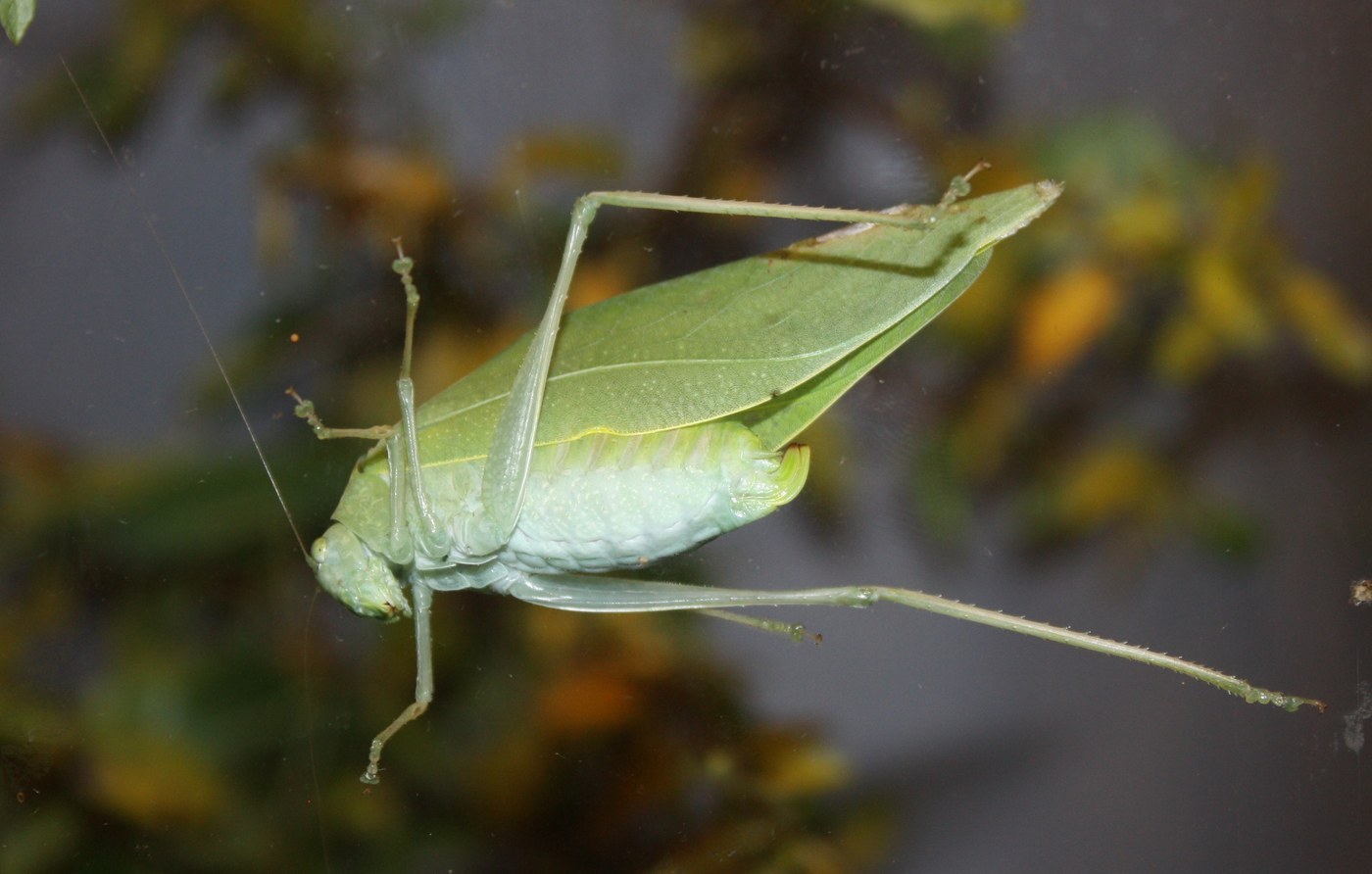
Angular-winged Katydid
A leaf-green katydid whose broad, leaf-shaped wings make it nearly invisible among tree foliage until its soft nighttime calls give it away.
grasshopper-cricket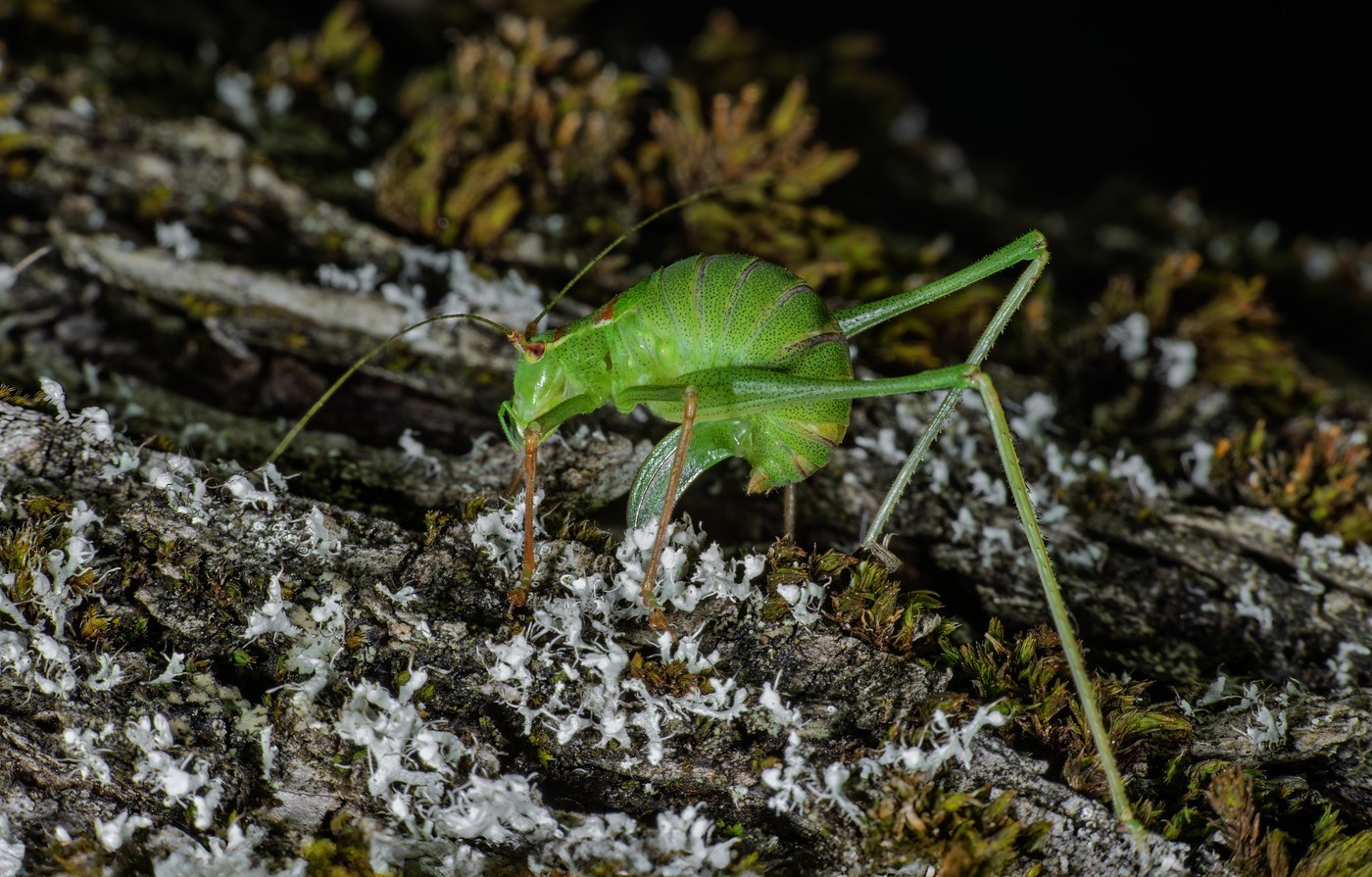
Speckled Bush Cricket
A tiny, plump, green insect finely dotted with dark speckles, this bush cricket forgoes song almost entirely, communicating instead through nearly silent, ultrasonic clicks.
grasshopper-cricket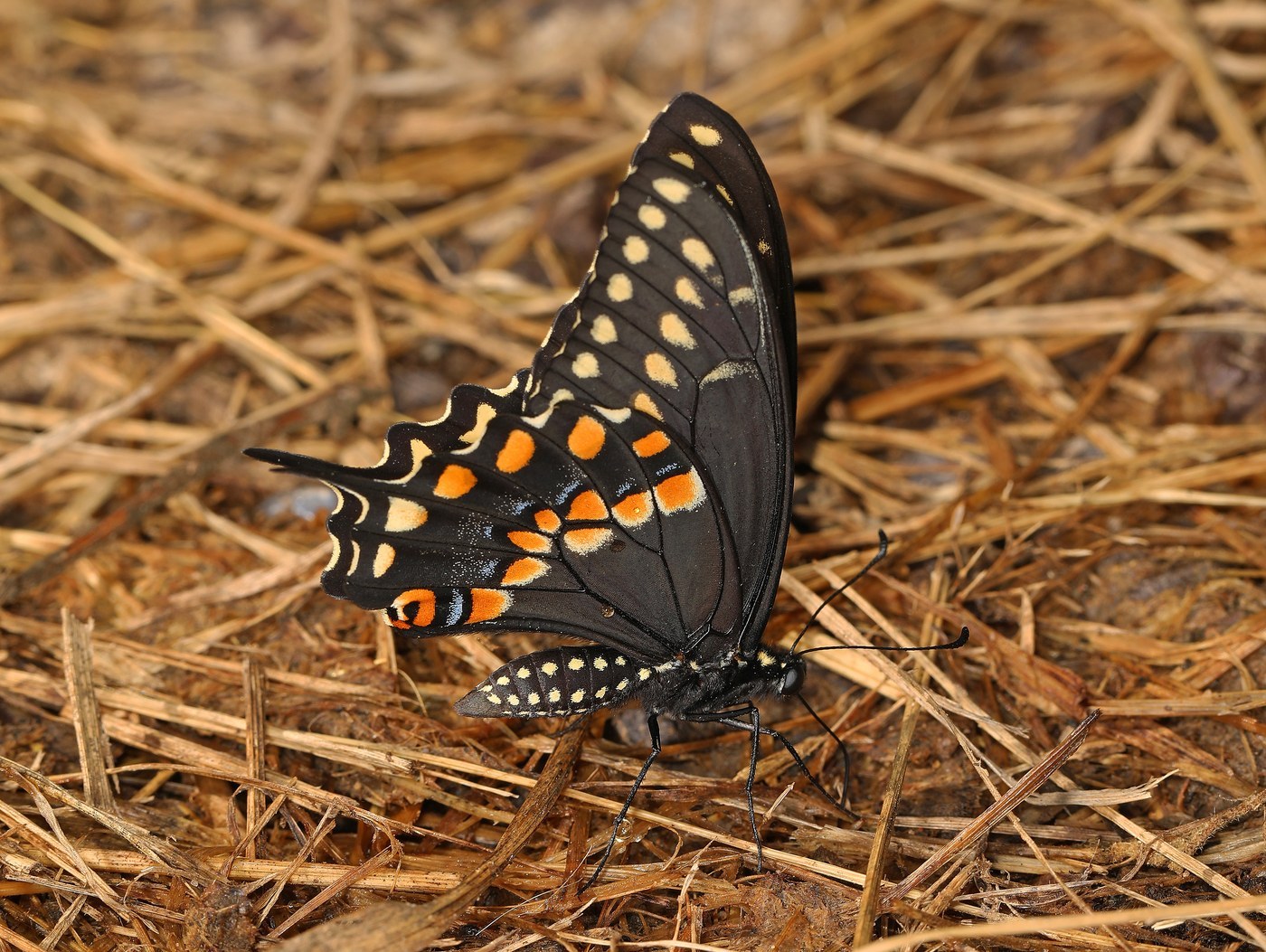
Parsley Worm
Banded in green, black, and yellow, the parsley worm rears up and flashes a bright orange, forked scent gland when disturbed, a signature defense of black swallowtail caterpillars.
caterpillar-larva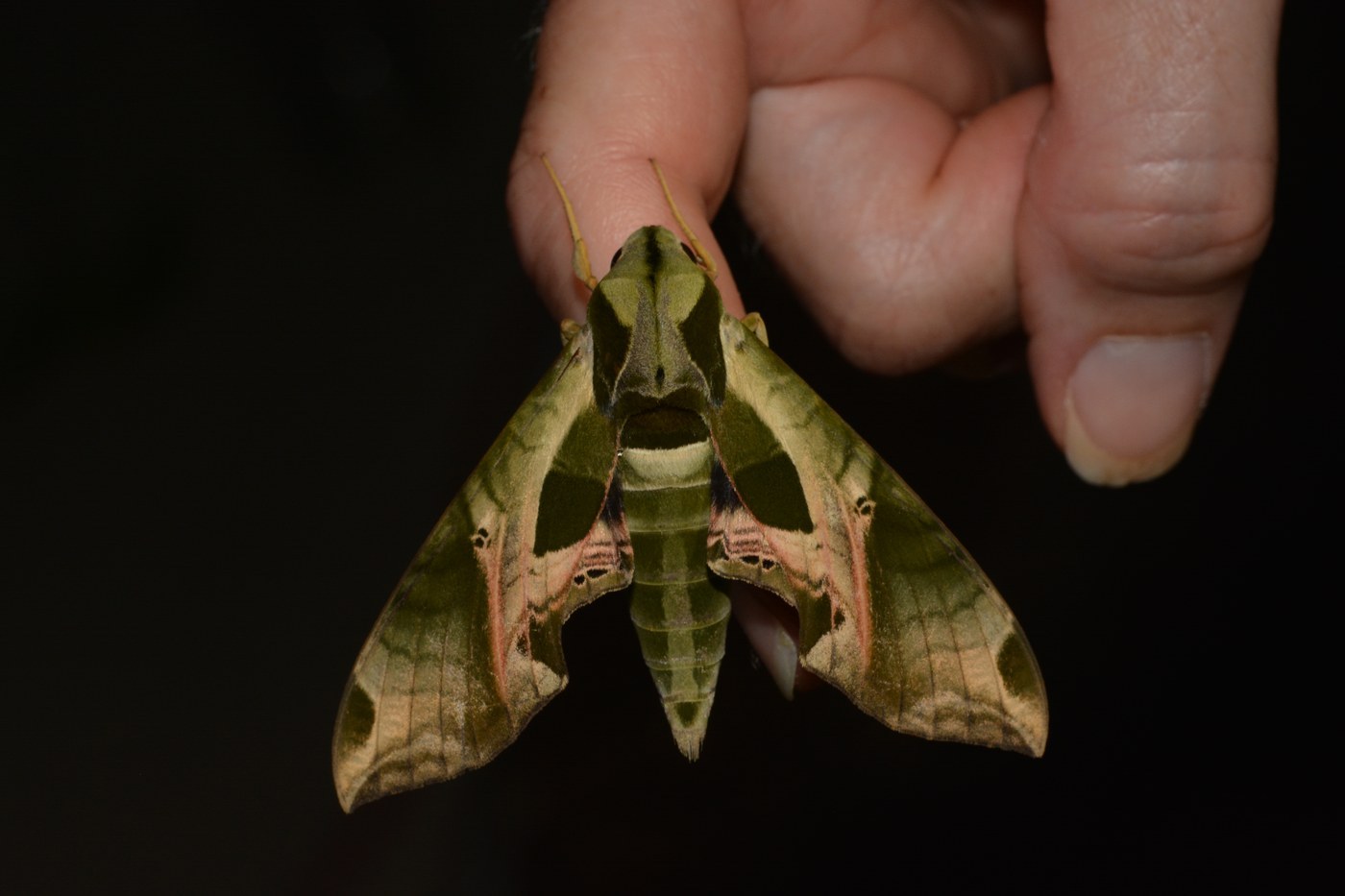
Pandora Sphinx Moth
A large, richly mottled sphinx moth in shades of olive-green and dusky pink, with a streamlined body and angular wing markings that provide excellent camouflage against bark and foliage.
moth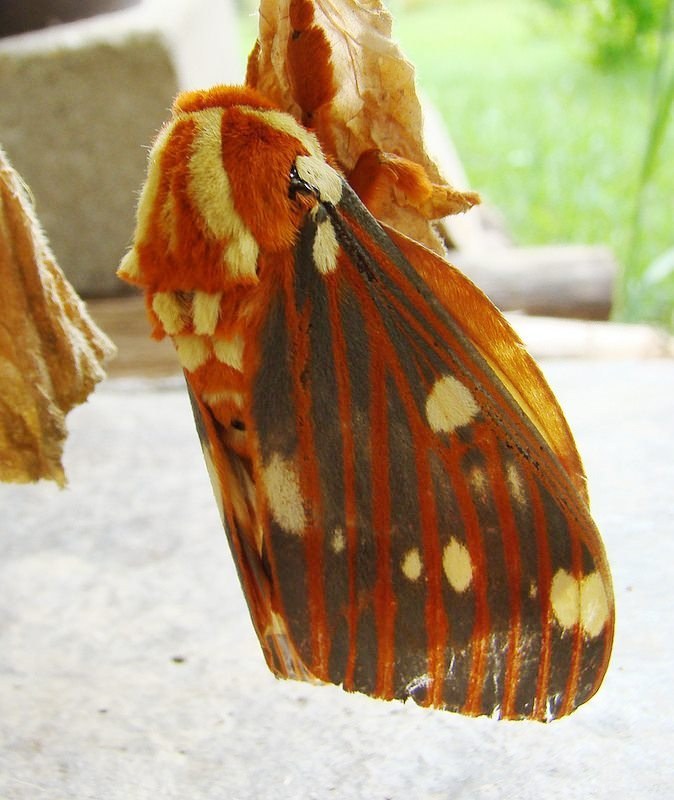
Hickory Horned Devil
An enormous, blue-green caterpillar armed with long, curved orange-red horns tipped in black, giving it a fearsome dragon-like appearance despite being completely harmless.
caterpillar-larva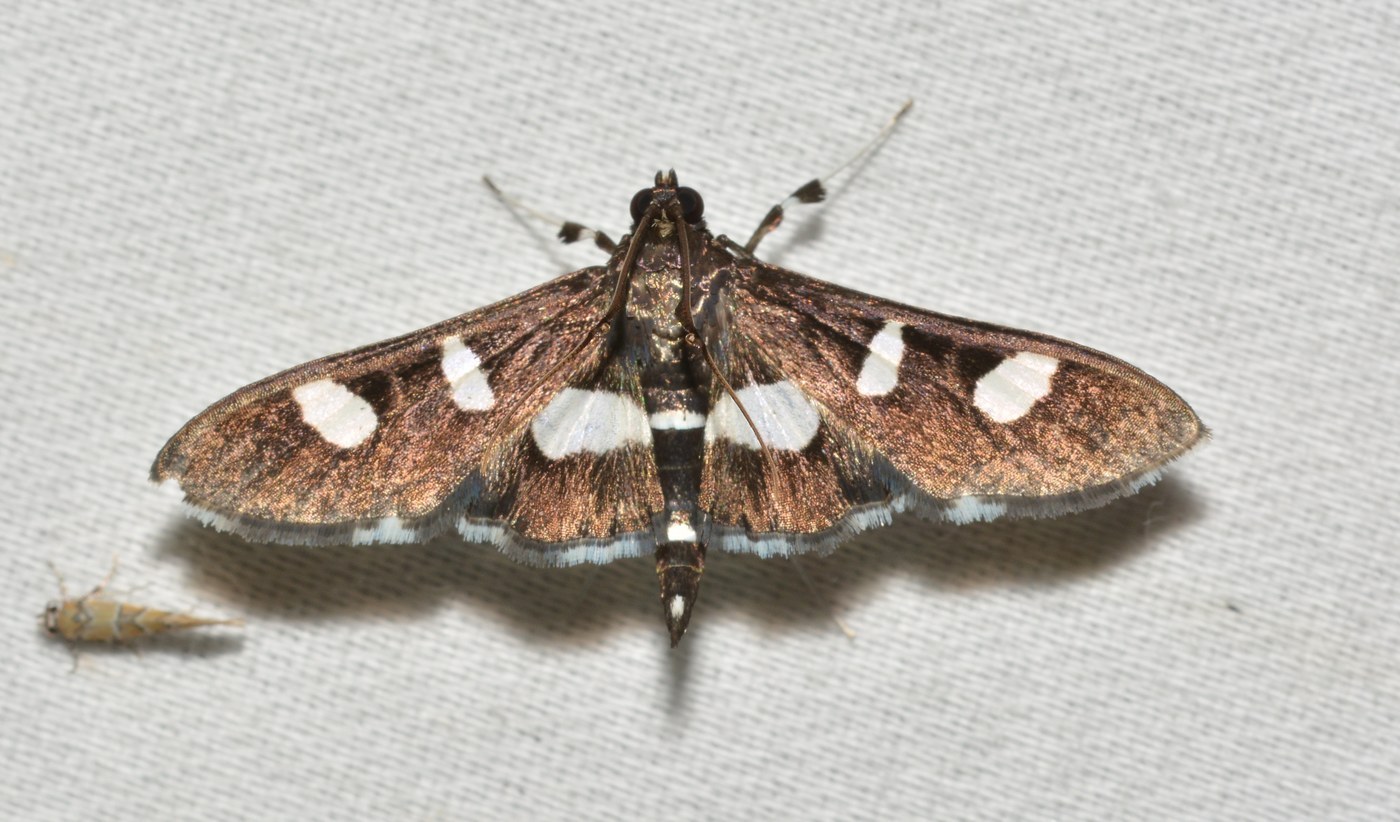
Grape Leaffolder Caterpillar
This small green caterpillar stitches grape leaves together with silk into a rolled shelter, feeding hidden inside its own leafy tube and leaving skeletonized patches behind.
caterpillar-larva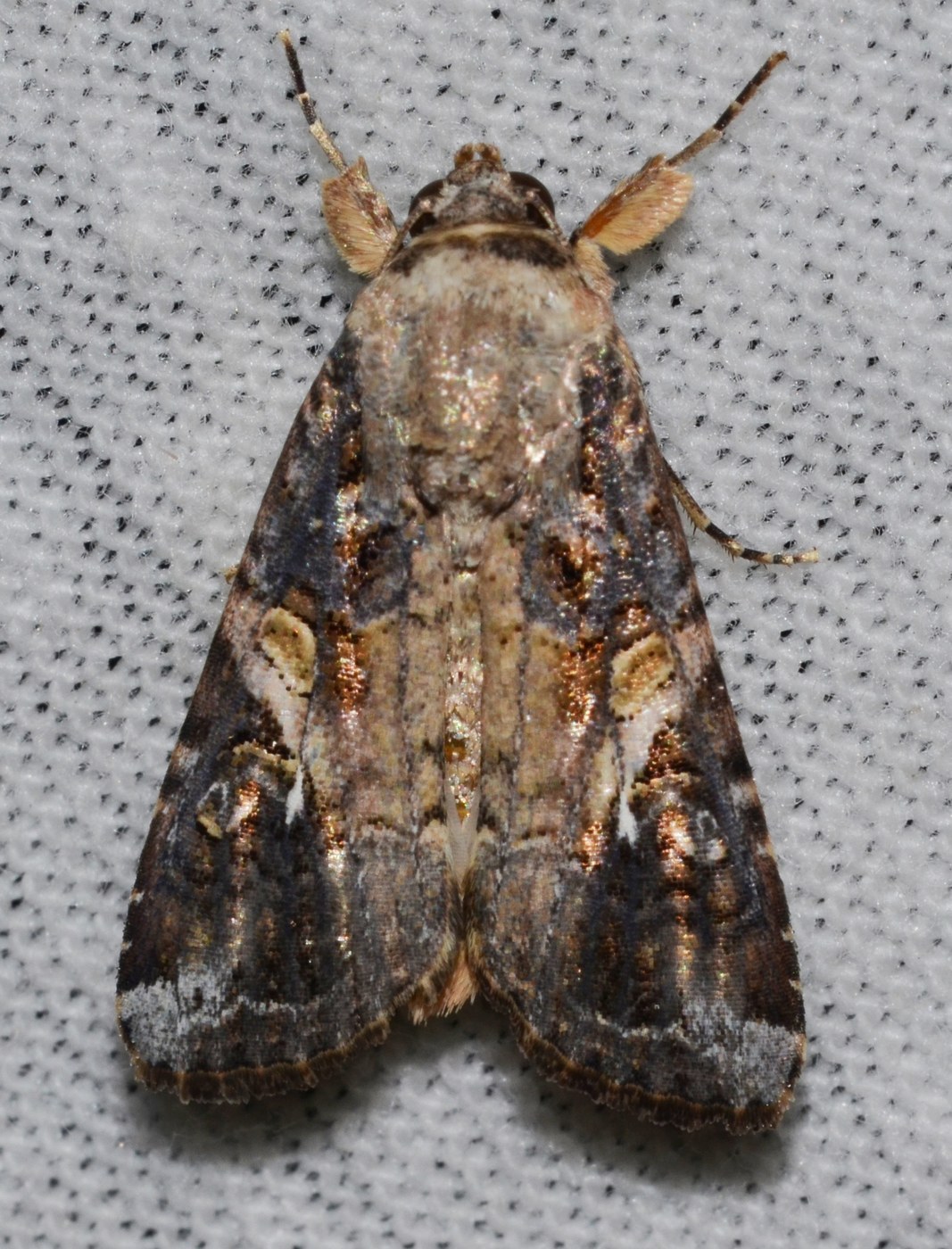
Fall Armyworm
A brownish-green caterpillar marked with a pale inverted "Y" on its head, notorious for rapid, large-scale outbreaks that devastate corn and other grass crops across the globe.
caterpillar-larvaCecropia Moth Caterpillar
North America's largest native caterpillar, a bulky blue-green giant studded with rows of bright red, yellow, and blue knobby tubercles resembling tiny coral formations.
caterpillar-larva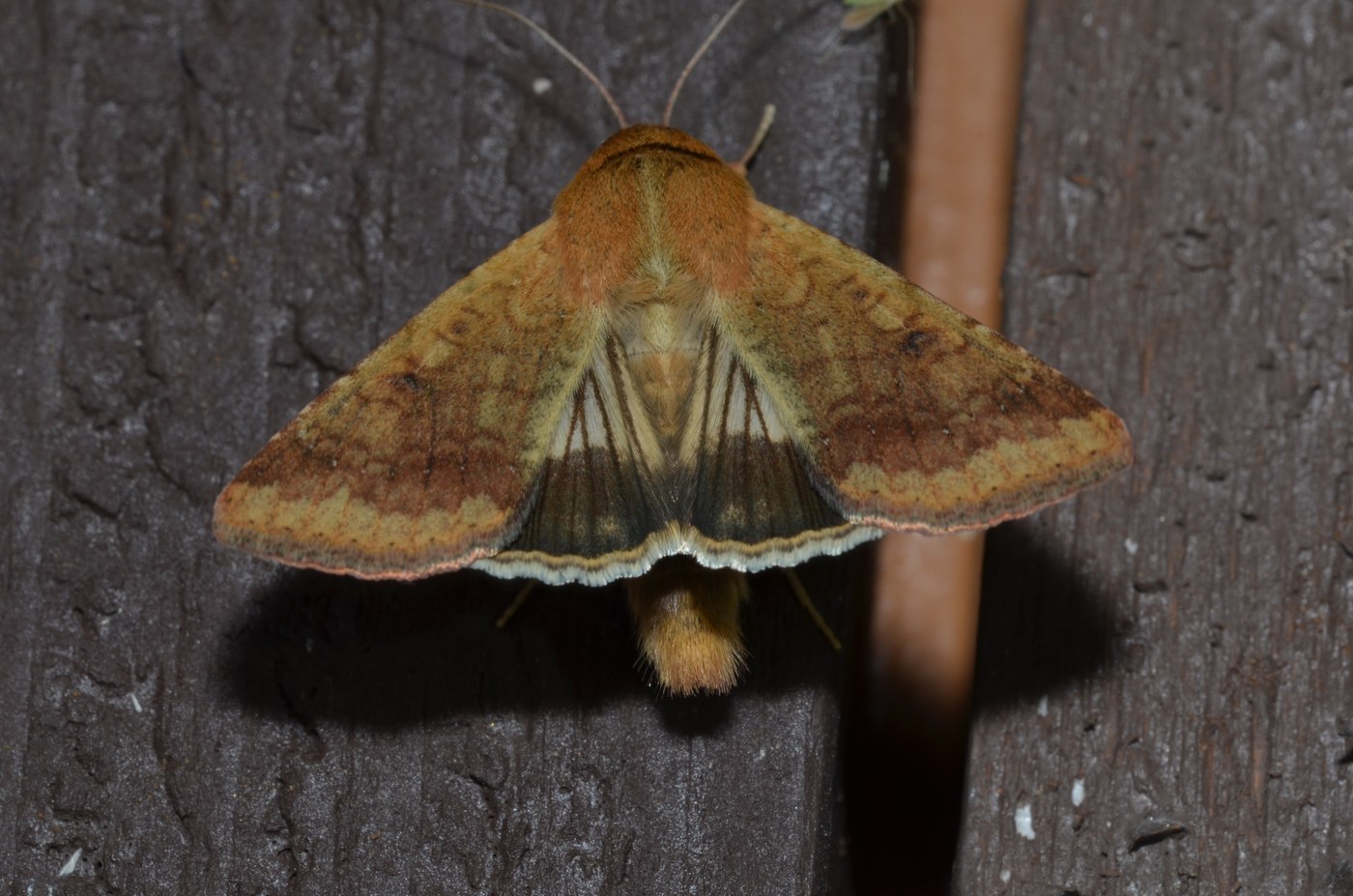
Bollworm
One of the most economically significant caterpillars in North American agriculture, the bollworm changes color from green to brown to pink across its life and bores into cotton bolls, corn ears, and tomato fruit alike.
caterpillar-larva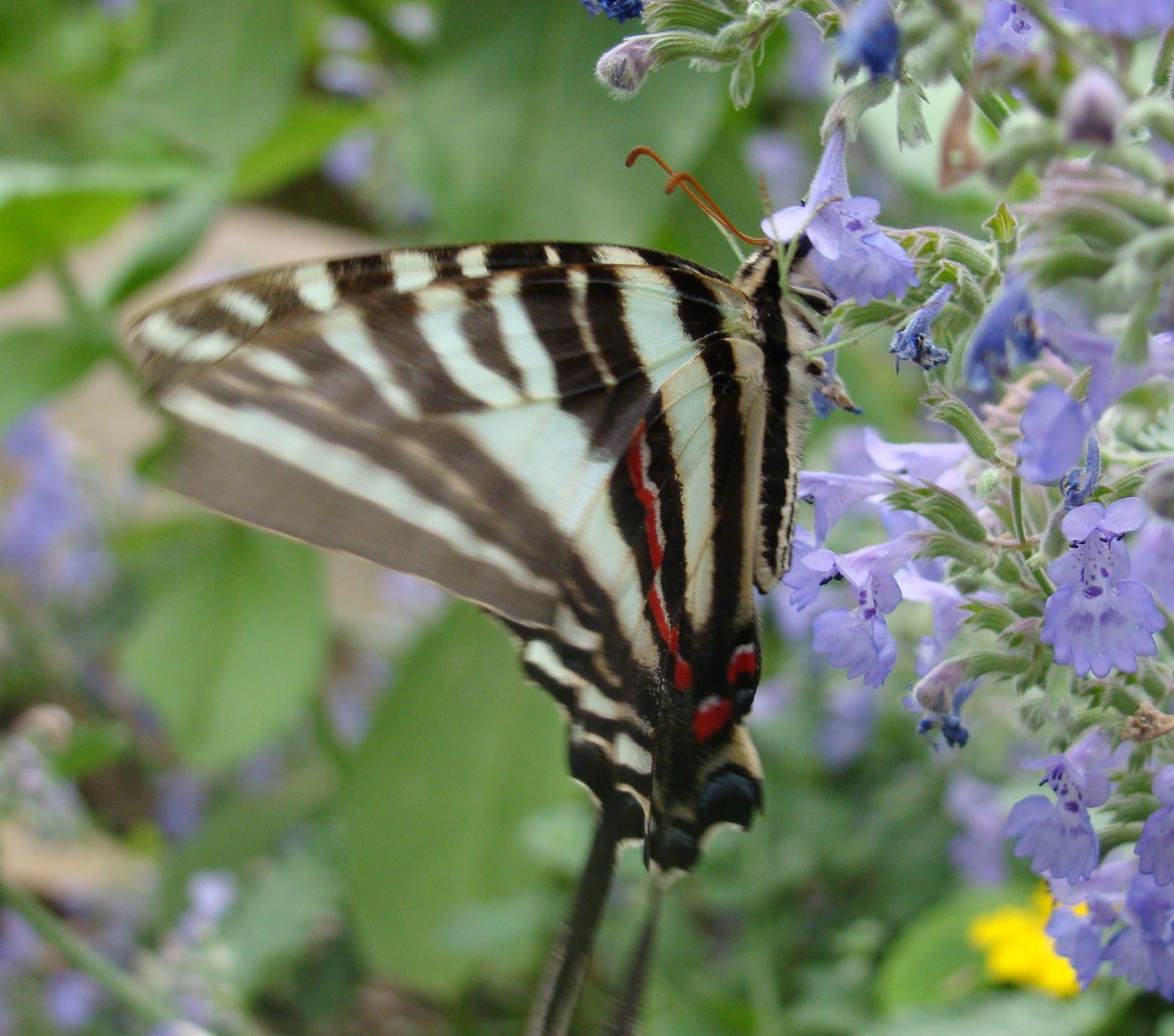
Zebra Swallowtail
A sleek, triangular-winged swallowtail striped boldly in black and pale green-white like a zebra, with long tails and red-and-blue accent spots, whose caterpillars feed exclusively on pawpaw trees.
butterfly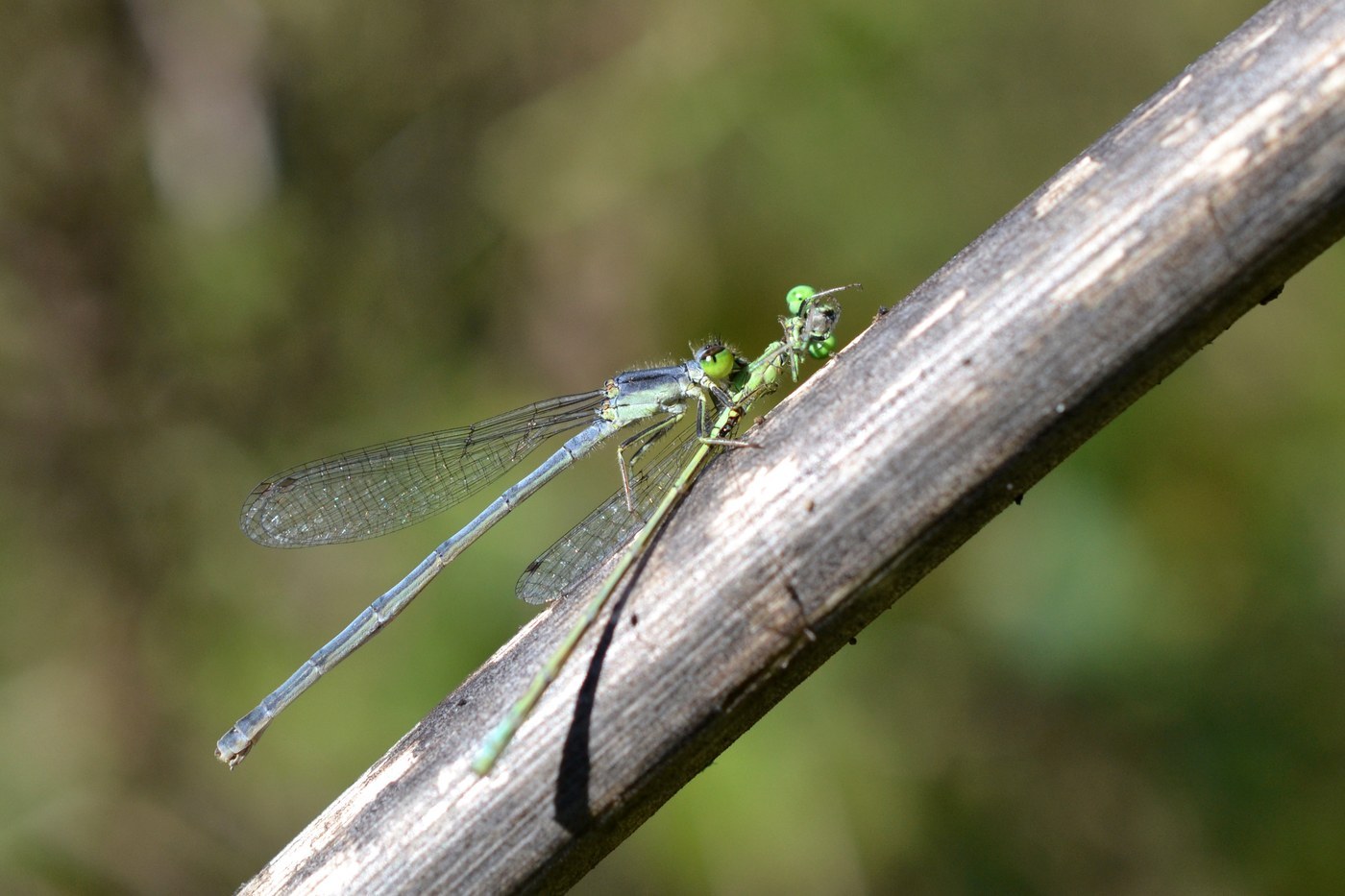
Eastern Forktail
One of the smallest and most adaptable damselflies in eastern North America, the Eastern Forktail thrives in everything from wild marshes to roadside ditches, with bright green-and-black males and color-changing females.
other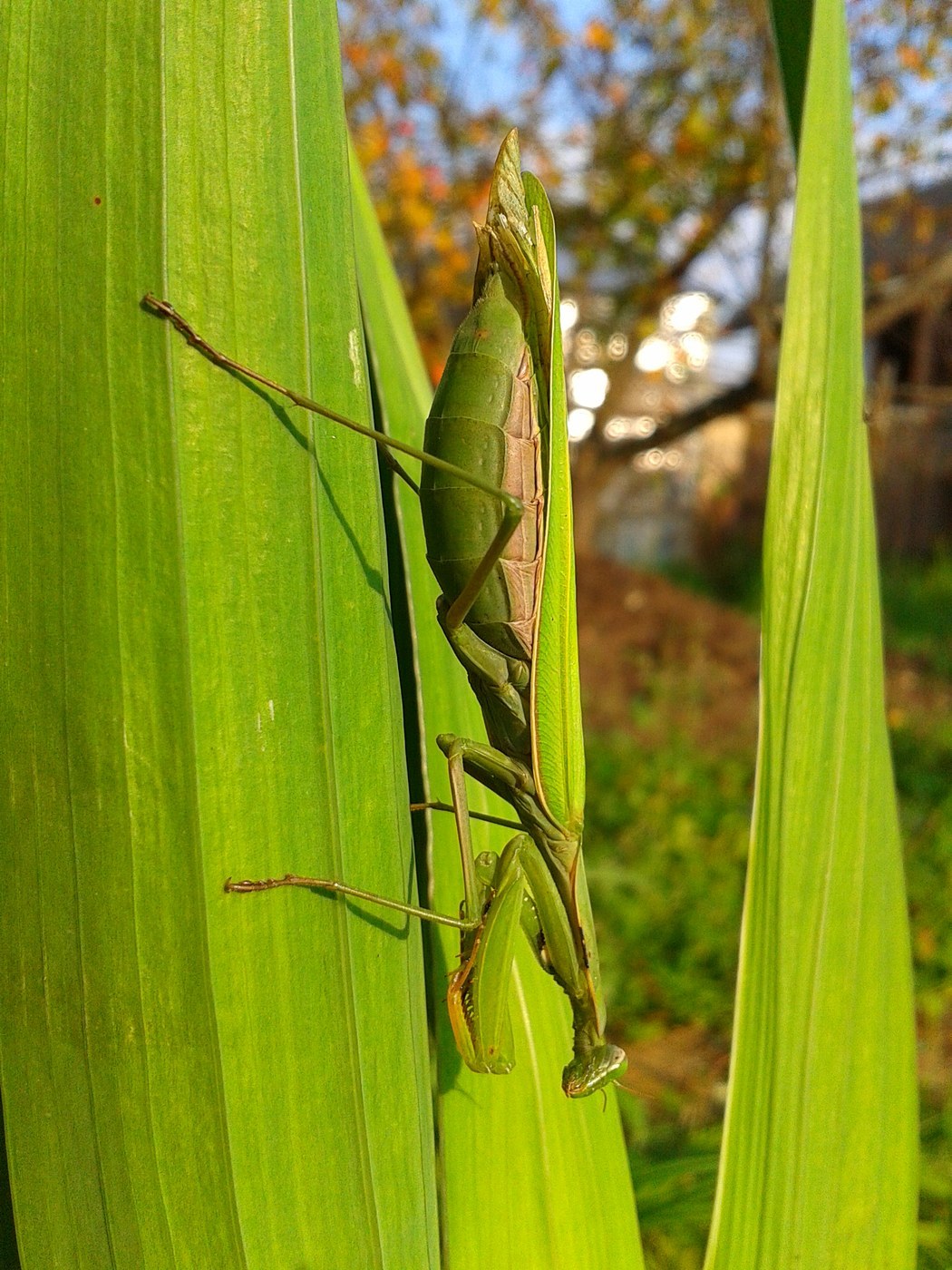
European Mantis
A slender, typically bright green mantis native to Europe, Africa, and Asia, now widely established in North America, easily recognized by a small dark bullseye mark on the inside of its front legs.
mantis-stick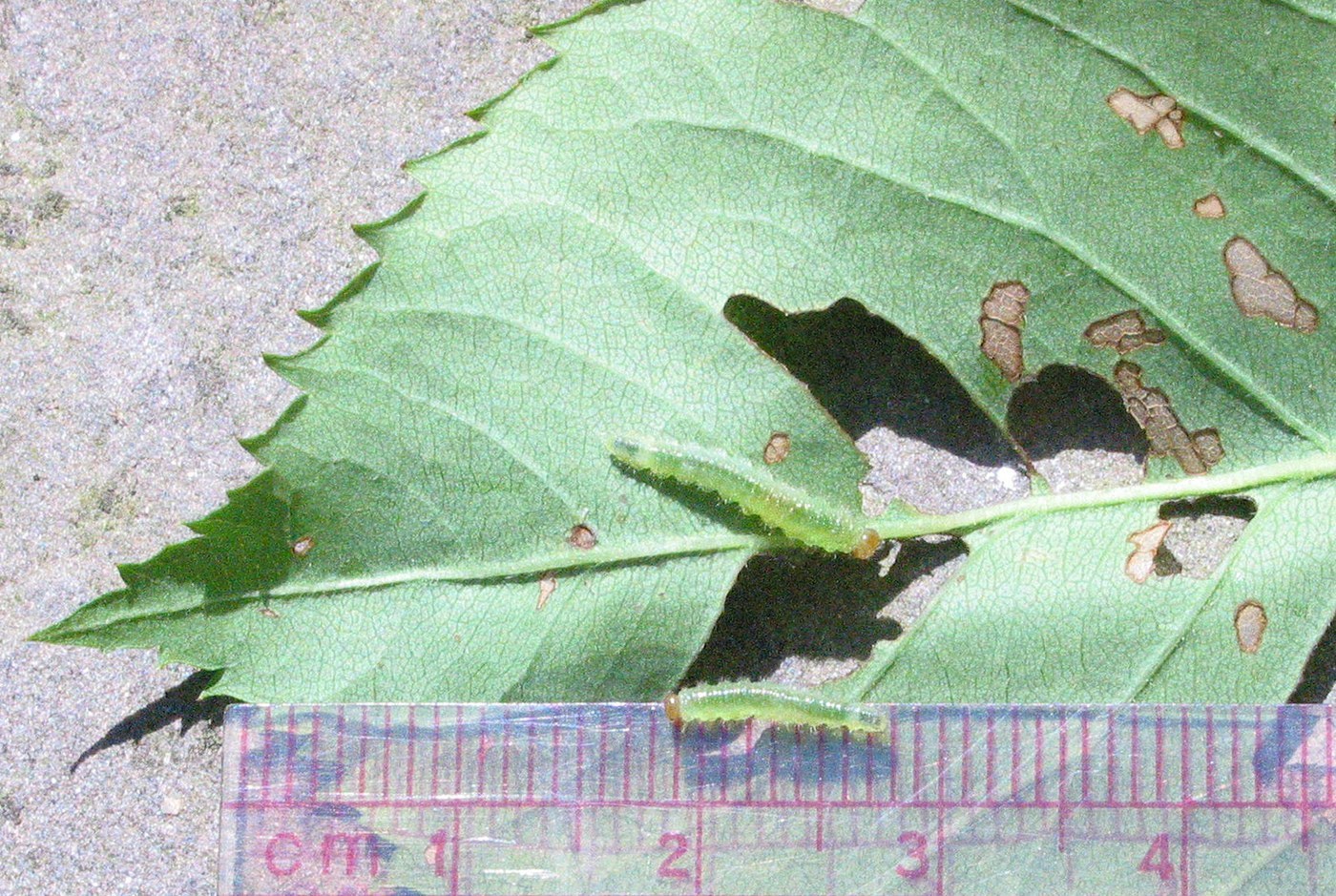
Bristly Rose Slug
Despite its caterpillar-like, slug-shaped body covered in fine bristles, this pale green larva is actually the offspring of a small sawfly and feeds on rose leaves by skeletonizing them from the underside.
caterpillar-larvaMadagascan Sunset Moth
A day-flying moth with iridescent wings that shimmer through bands of green, blue, red, and gold, so vividly colored that it is frequently mistaken for a butterfly despite being a true moth.
moth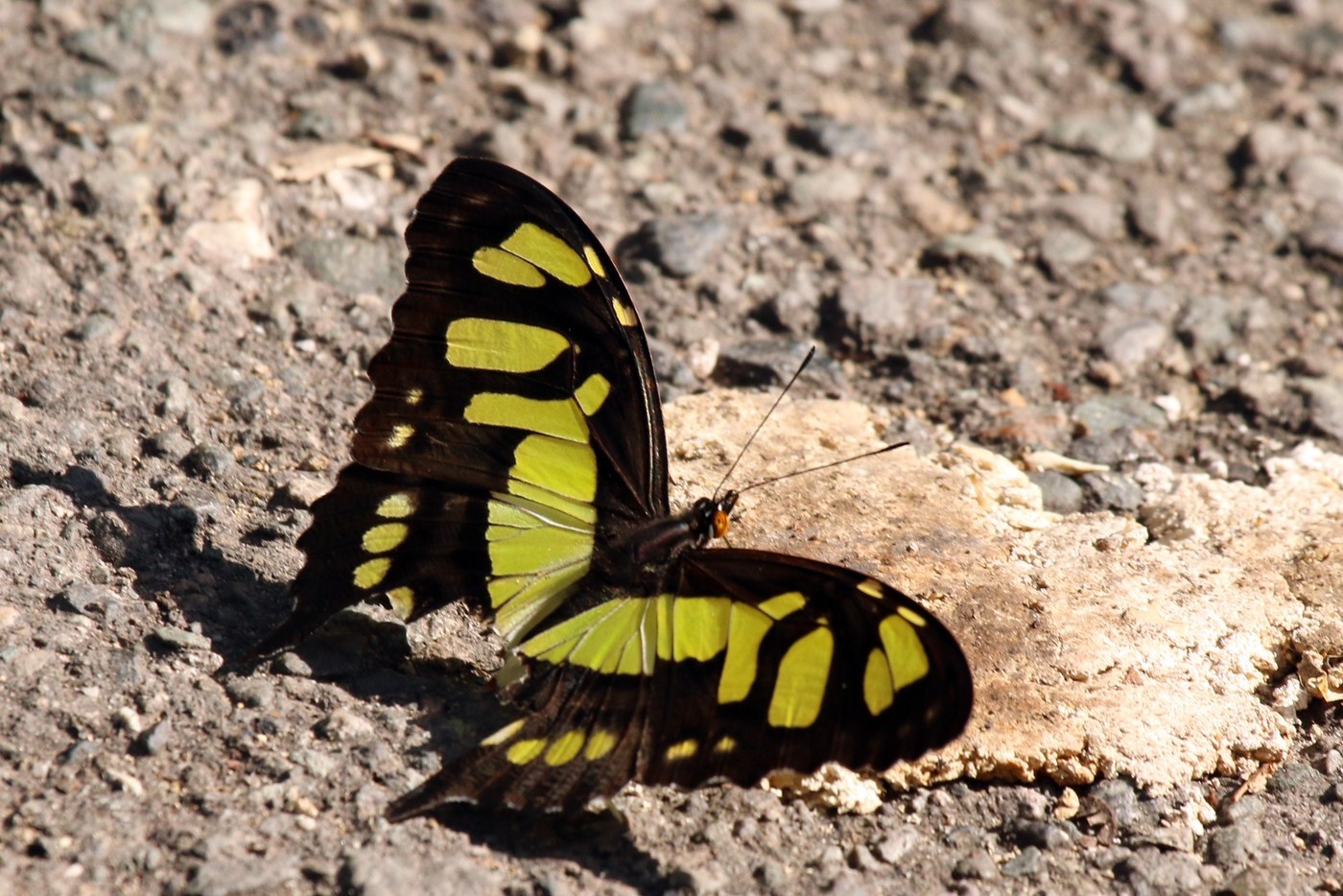
Malachite Butterfly
A large tropical butterfly named for the vivid green, mineral-like patches that break up its otherwise dark brown wings, giving it a translucent, stained-glass appearance in flight.
butterflyKatydid
A leaf-mimicking insect with broad, veined green wings shaped remarkably like foliage, best known for the loud, rhythmic 'katy-did, katy-didn't' chorus males produce on warm summer nights.
grasshopper-cricket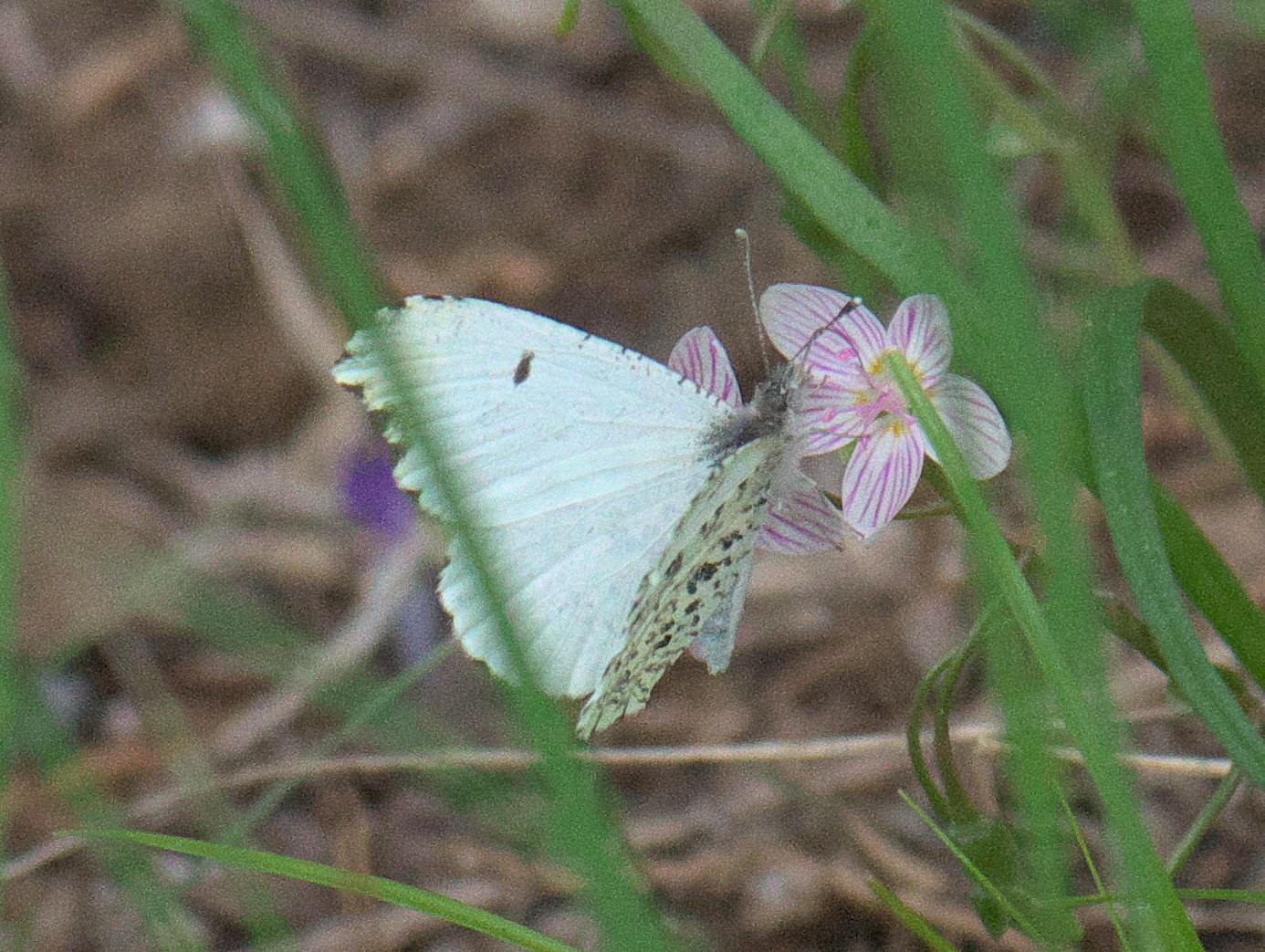
Falcate Orangetip
An early-spring white butterfly whose males flash bright orange wingtips, while both sexes show a distinctive hooked (falcate) forewing shape and marbled green underside pattern.
butterfly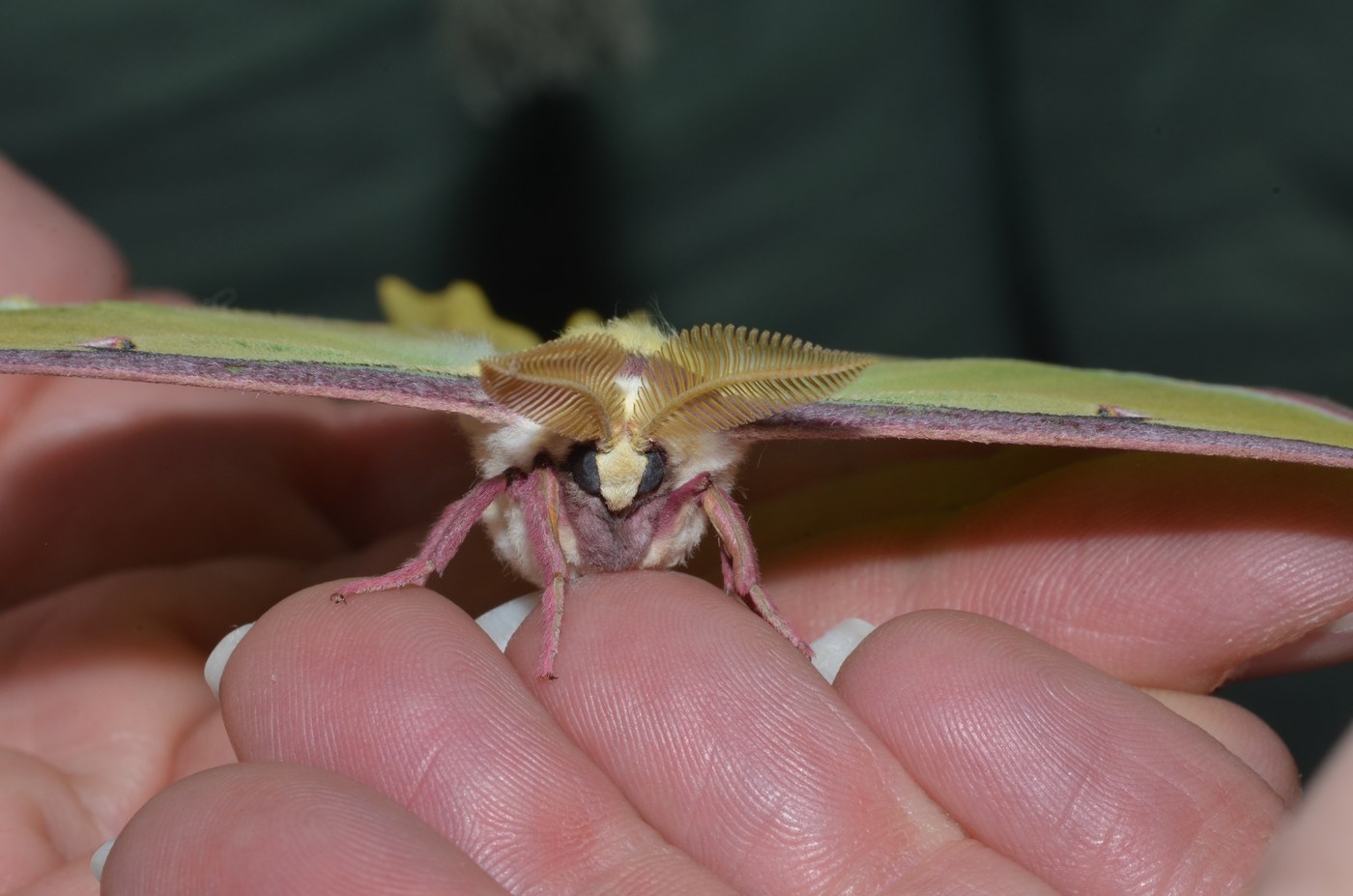
Luna Moth Caterpillar
A large, plump, apple-green caterpillar with faint yellow side stripes and rows of small red-orange tubercles, the larval form of one of North America's most beautiful giant silk moths.
caterpillar-larva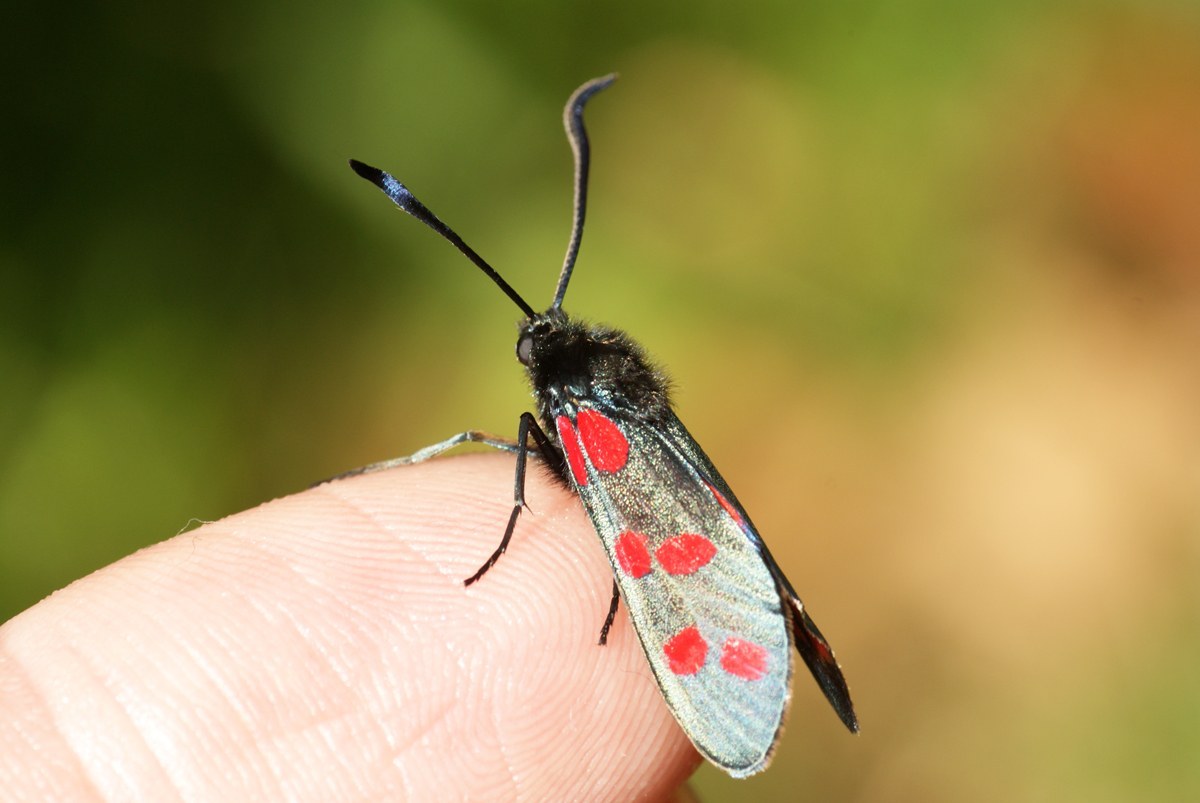
Six-spot Burnet Moth
A day-flying moth with glossy black-green forewings marked by six bold red spots and vivid crimson hindwings, a striking warning-colored insect often mistaken for a butterfly as it visits summer wildflowers.
moth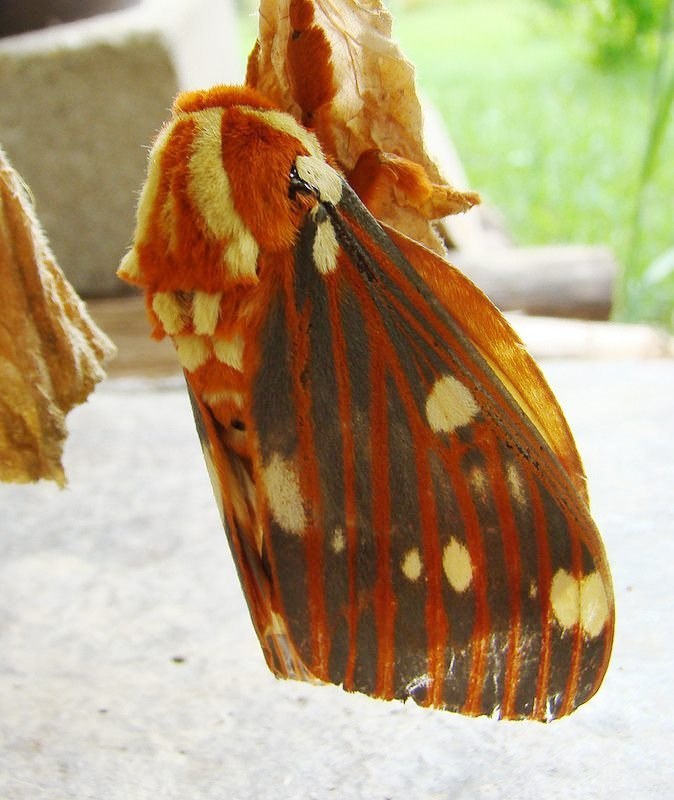
Regal Moth (Hickory Horned Devil)
One of the largest moths in North America, with orange-red and gray-veined wings on the adult, best known for its enormous, formidable-looking caterpillar, the hickory horned devil, a blue-green giant bristling with long orange spines.
moth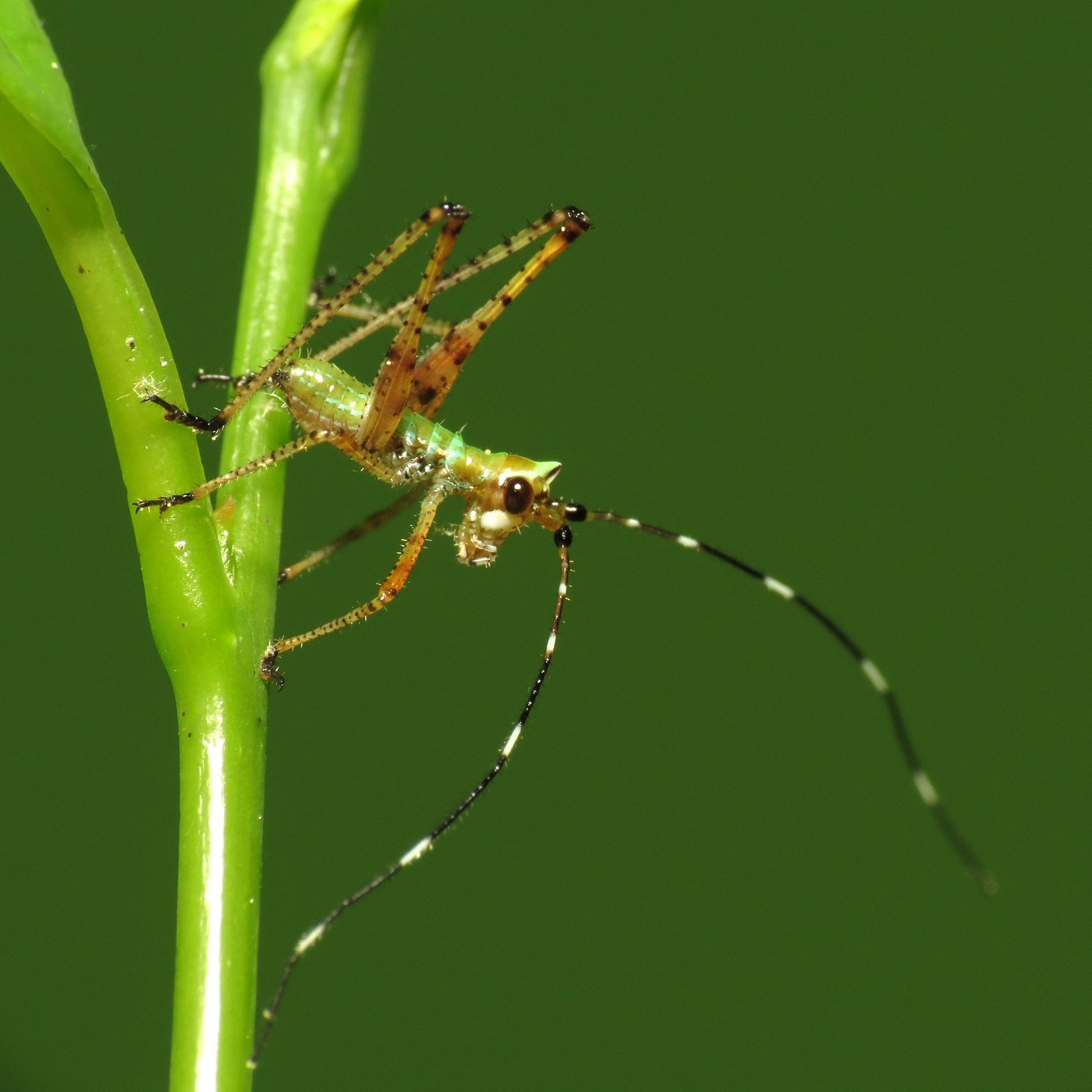
Fork-tailed Bush Katydid
Slimmer and greener than its treetop relatives, the fork-tailed bush katydid lives among shrubs and garden plants, with males identified by the distinctive forked appendages at the tip of the abdomen that give the species its name.
grasshopper-cricket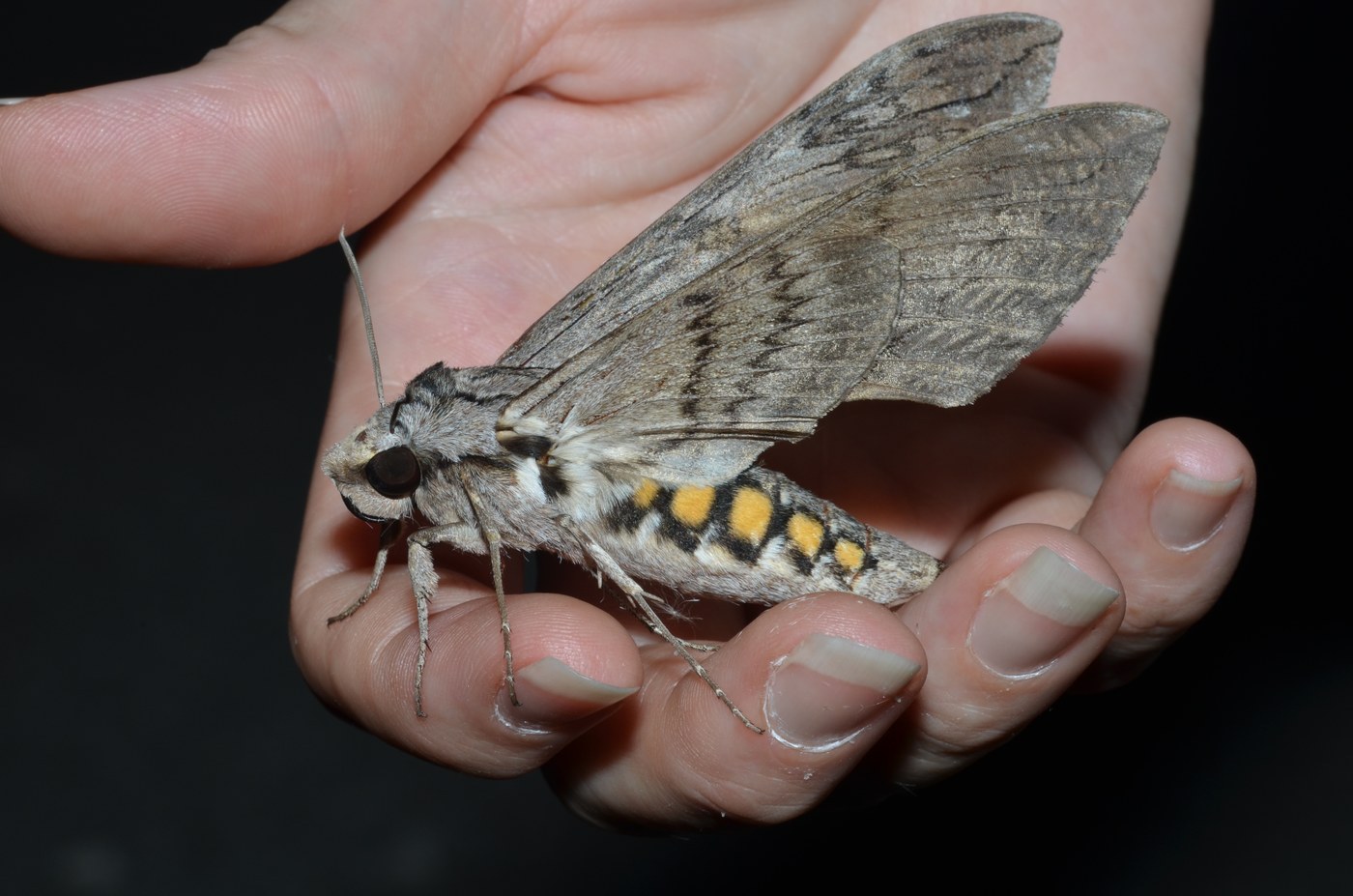
Tomato Hornworm Moth (Five-spotted Hawkmoth)
A large, robust grey-brown sphinx moth named for the five pairs of yellow-orange spots along its abdomen, best known as the adult form of the large green tomato hornworm caterpillar familiar to home gardeners.
moth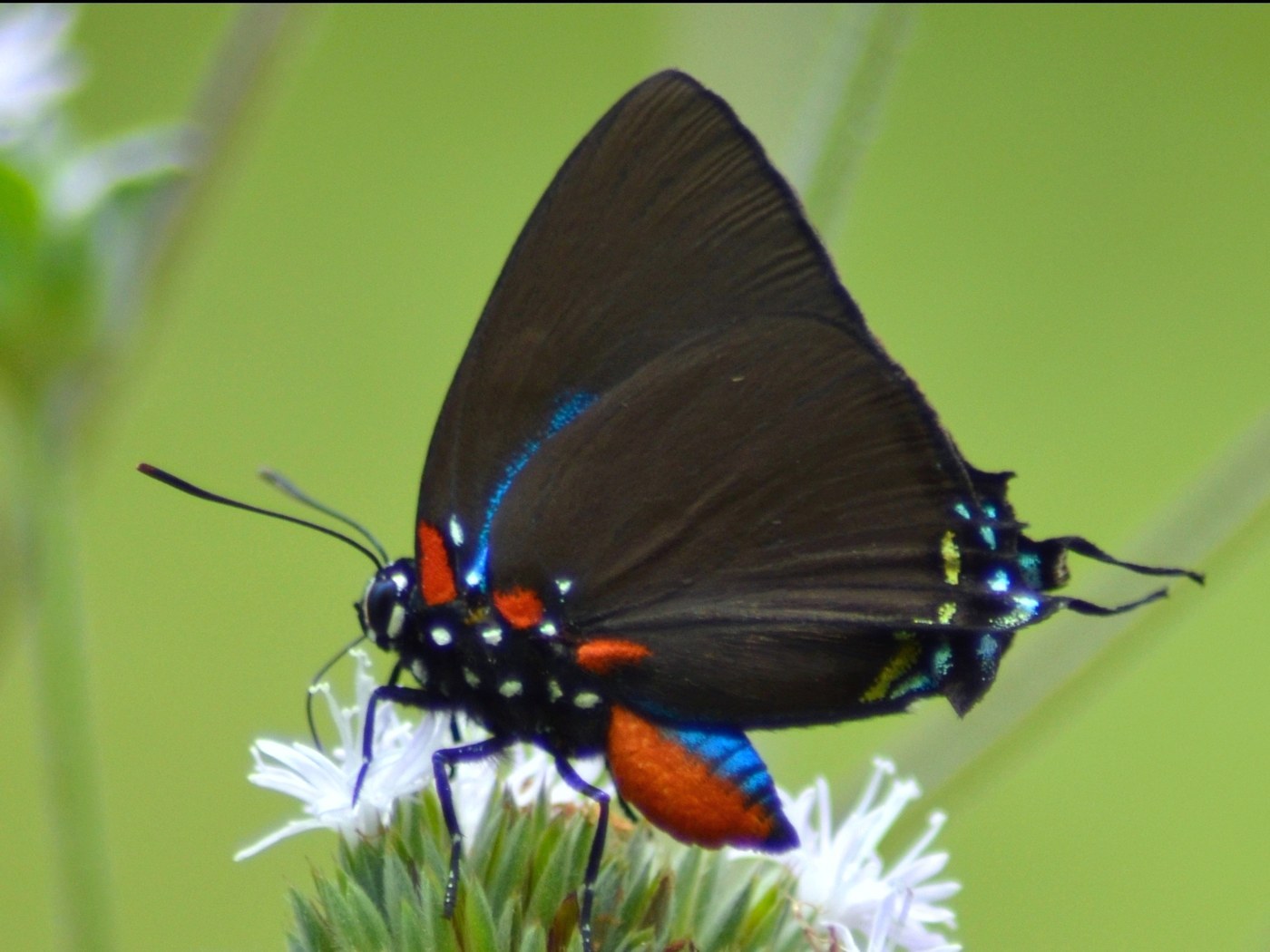
Great Purple Hairstreak
The largest and most iridescent hairstreak in North America, with brilliant blue-green upperwings, red-orange spots on the body and wing base, and long twin tails, its caterpillars feeding on parasitic mistletoe clumps in host trees.
butterfly