
Bug Encyclopedia
Search and identify bugs & insects — beetles, butterflies, moths, ants, bees, spiders and more — with size, habitat, danger, behavior, and how to tell them apart.
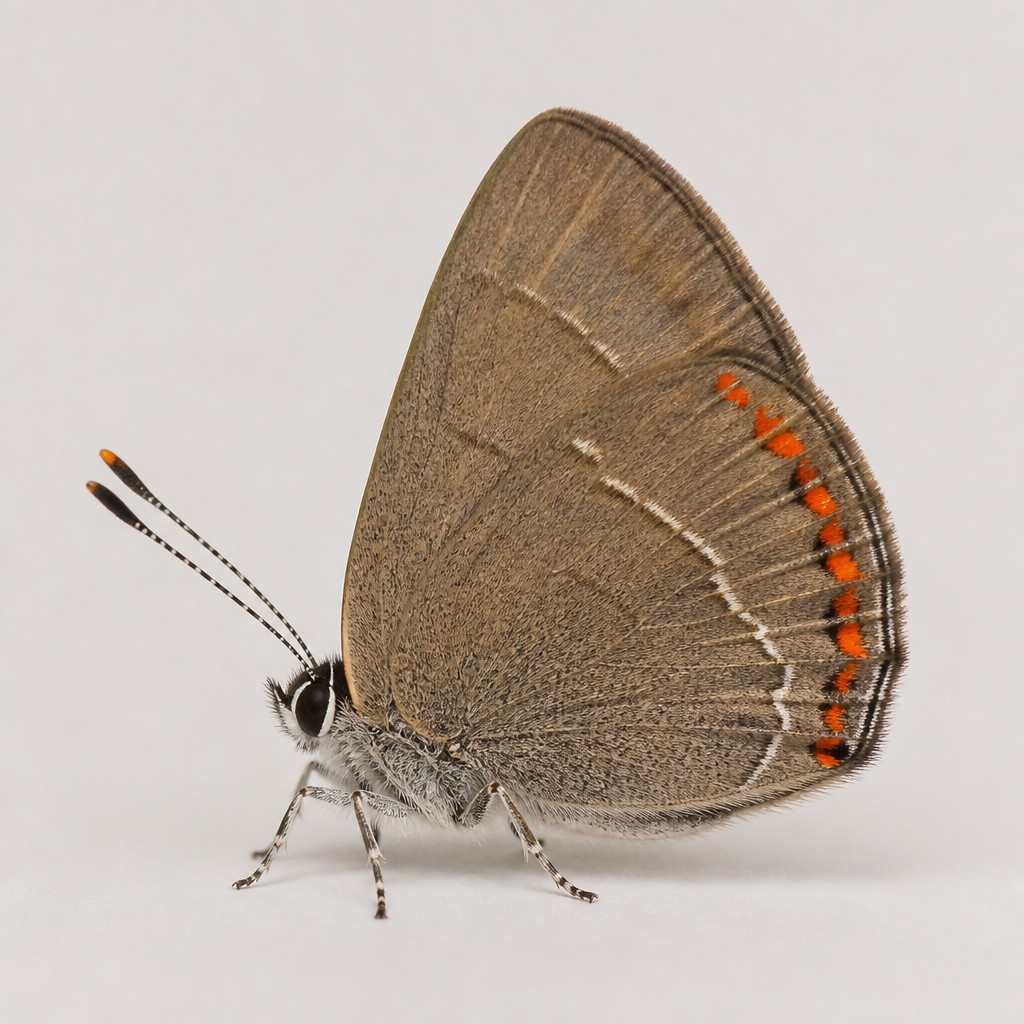
Coral Hairstreak
A tailless hairstreak identified by a bright row of coral-red spots lining the outer margin of the hindwing underside, often seen nectaring in numbers on milkweed and butterfly weed in midsummer meadows.
butterfly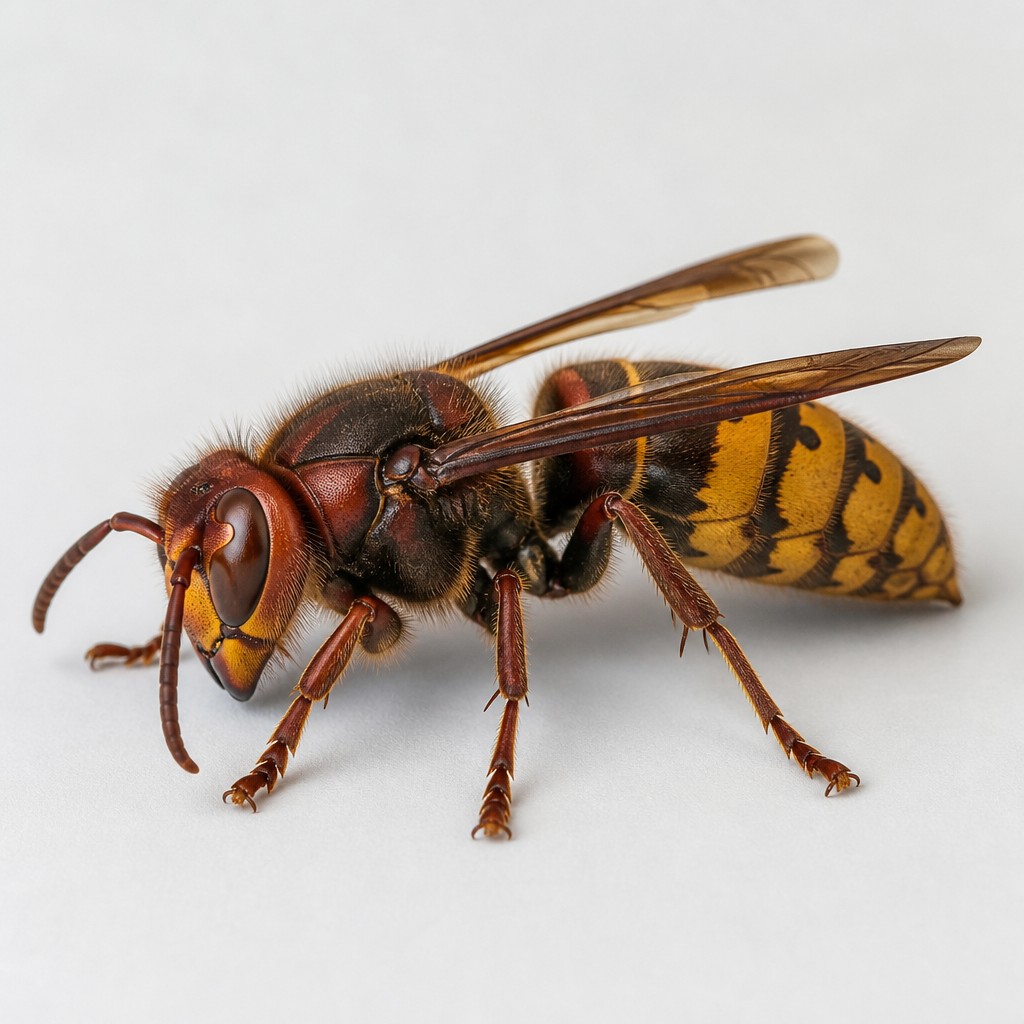
European Hornet
A large, robust wasp with a reddish-brown thorax, yellow-and-brown striped abdomen, and a distinctive habit of nesting in hollow trees, making it the largest true hornet native to Europe and introduced to eastern North America.
wasp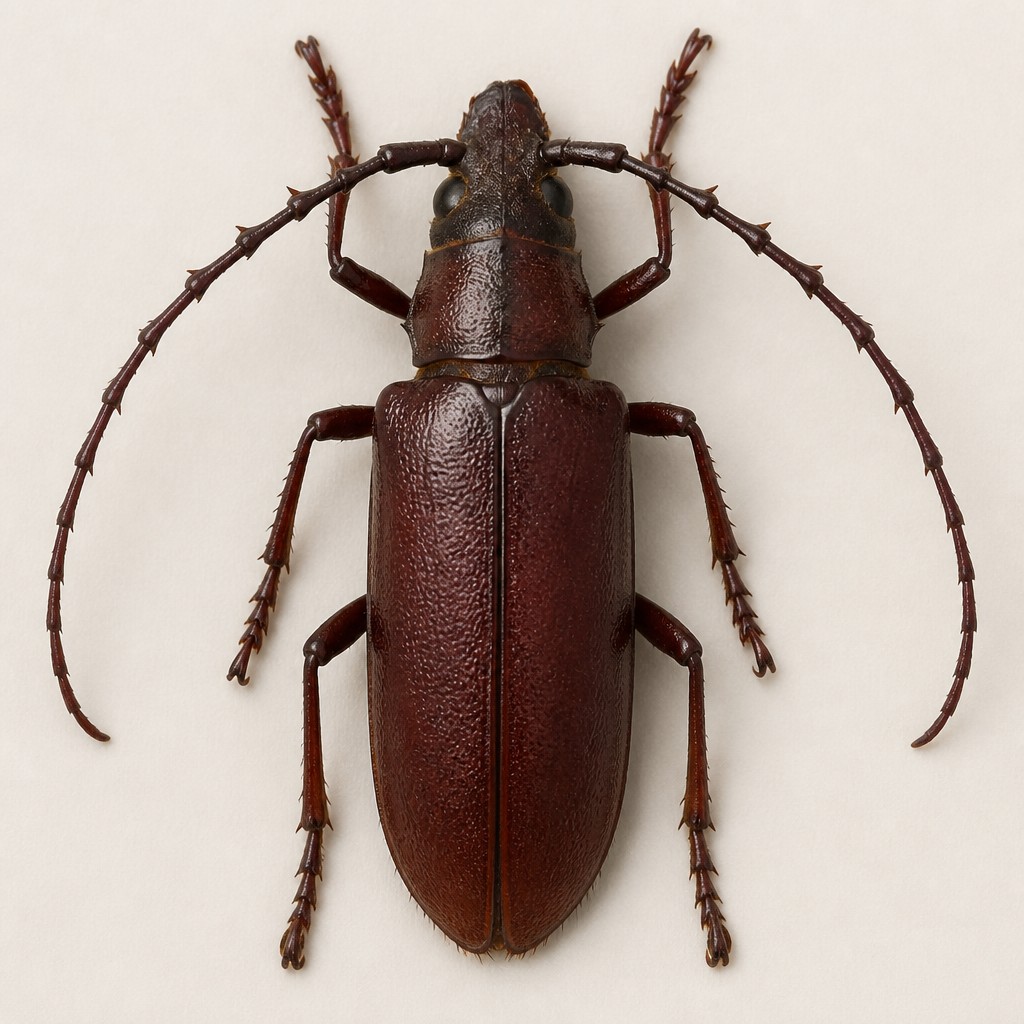
Palo Verde Beetle
One of the largest beetles in North America, a heavy, dark reddish-brown longhorn beetle with long spiny antennae and a loud, buzzing flight that emerges from the desert soil around palo verde and mesquite trees in summer.
beetle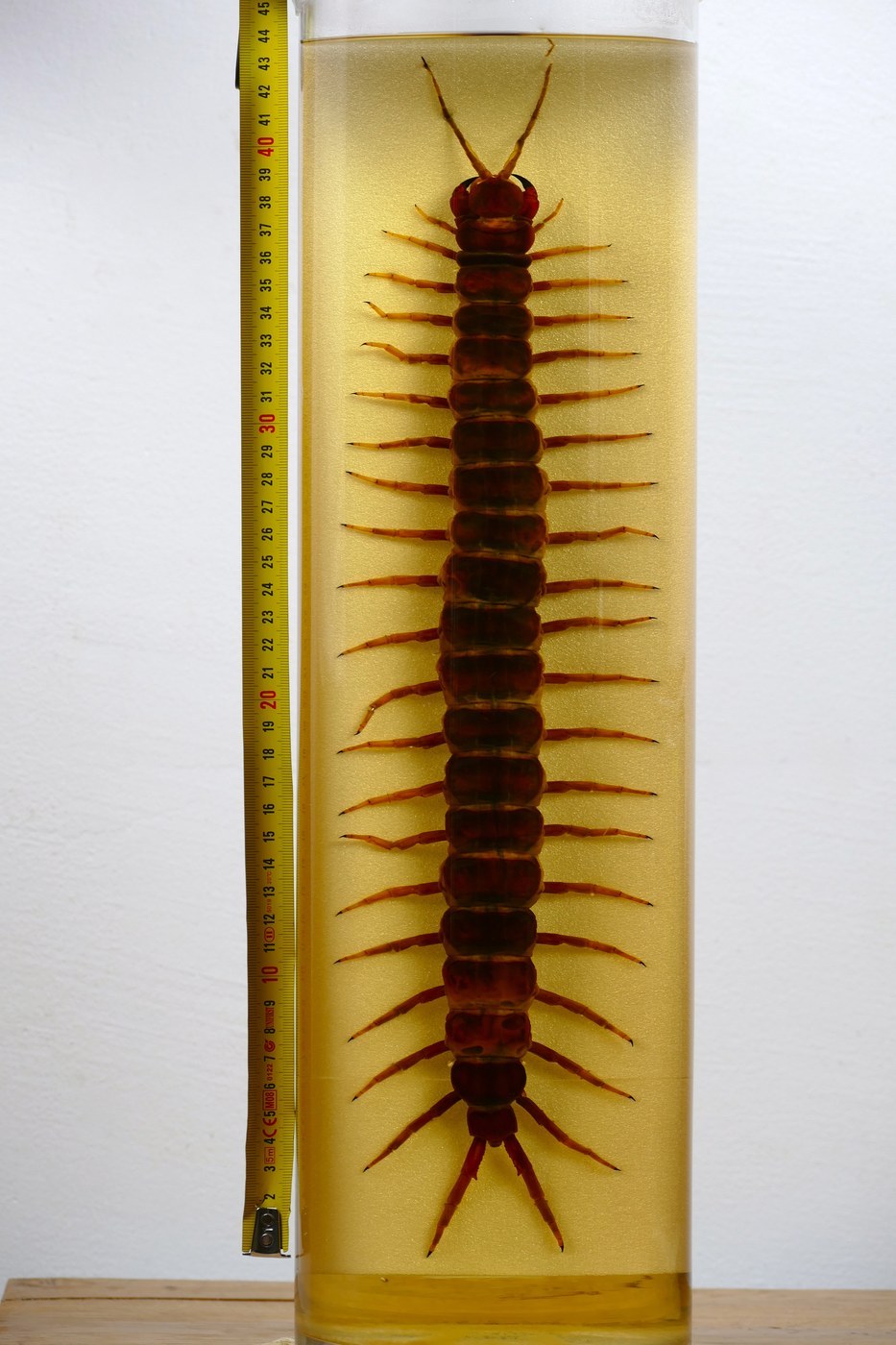
Amazonian Giant Centipede
The largest centipede on the planet, a formidable dark reddish-brown predator from South American rainforests capable of capturing prey as large as bats and small reptiles.
myriapod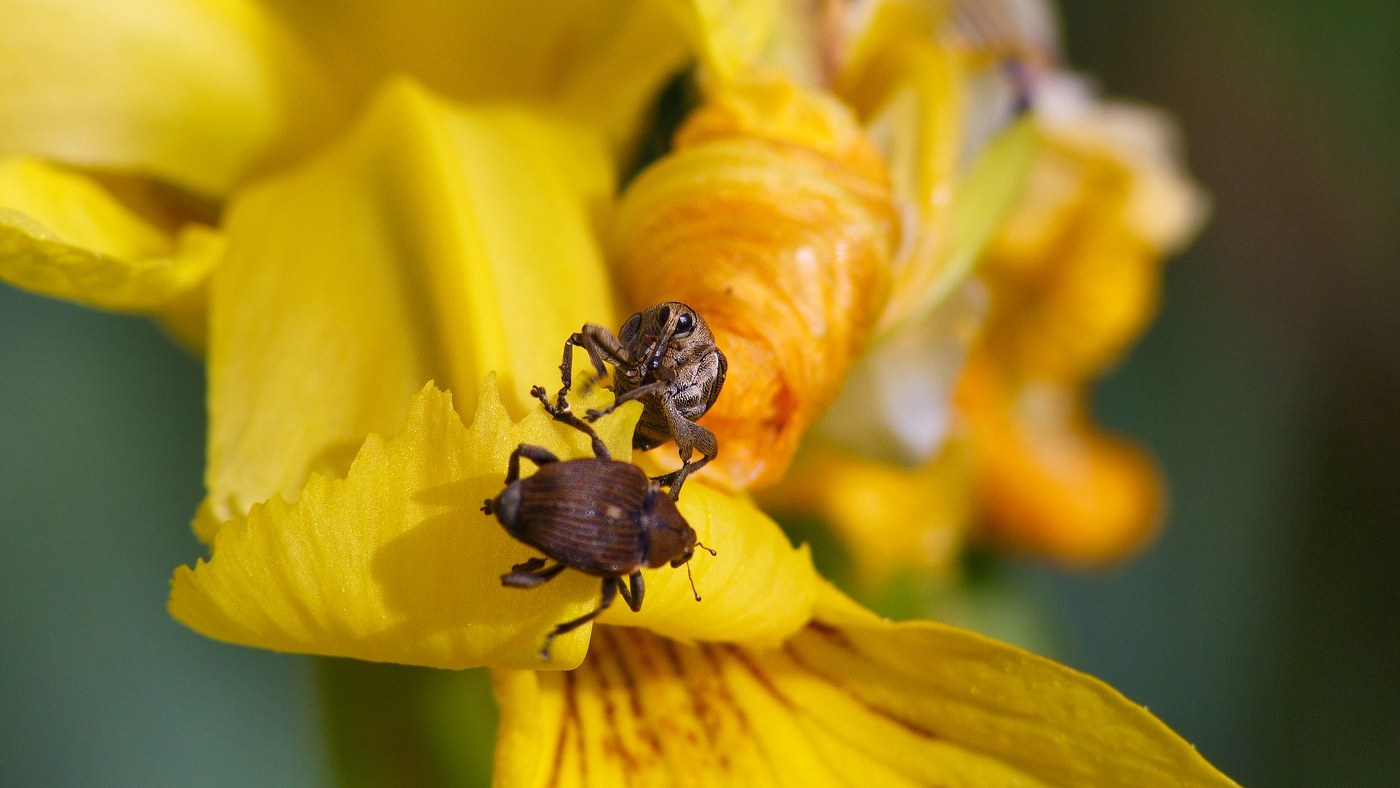
Acorn Weevil
A small brown weevil with an extraordinarily long, thread-thin snout, often longer than its own body, which it uses to drill into developing acorns before laying its eggs inside.
beetle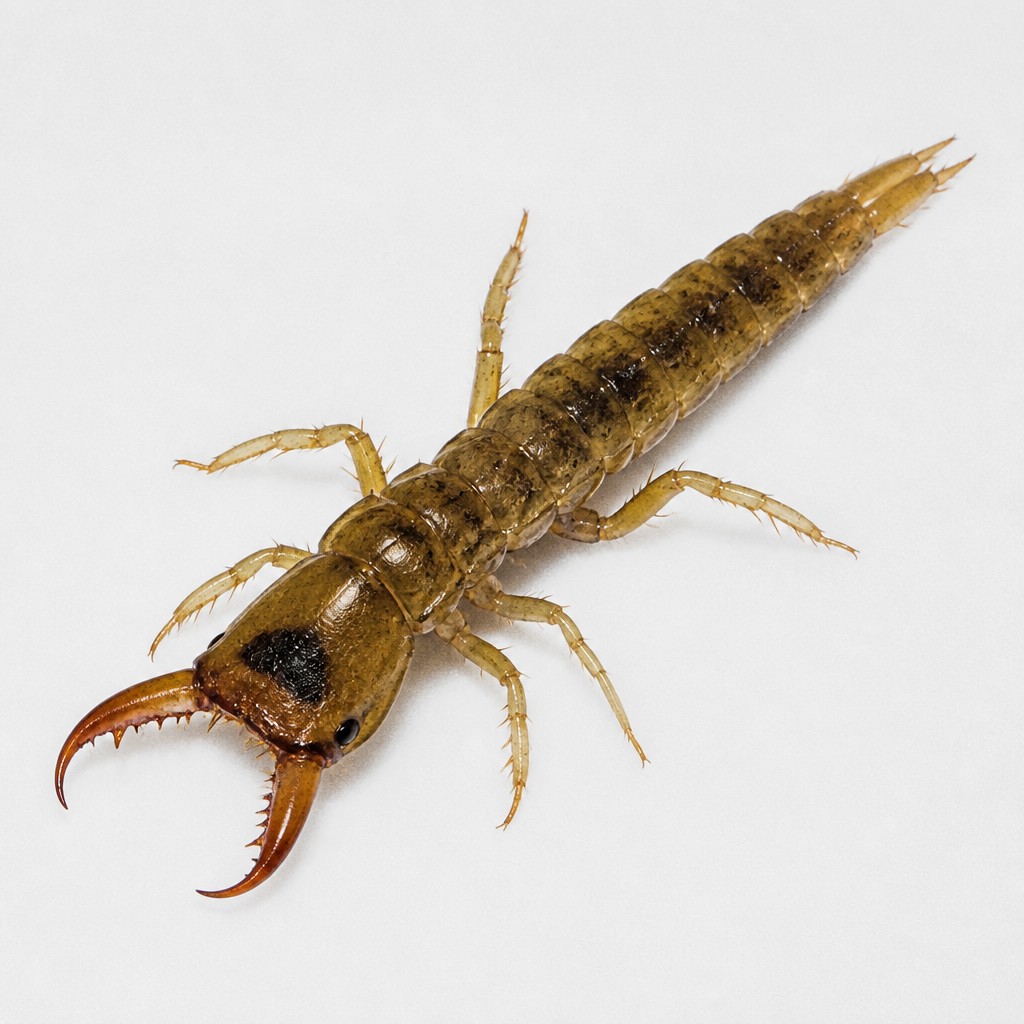
Diving Beetle Larva (Water Tiger)
Nicknamed the water tiger, the larva of a predaceous diving beetle is an elongated, sickle-jawed hunter that stalks the shallows and seizes prey many times its own size.
beetle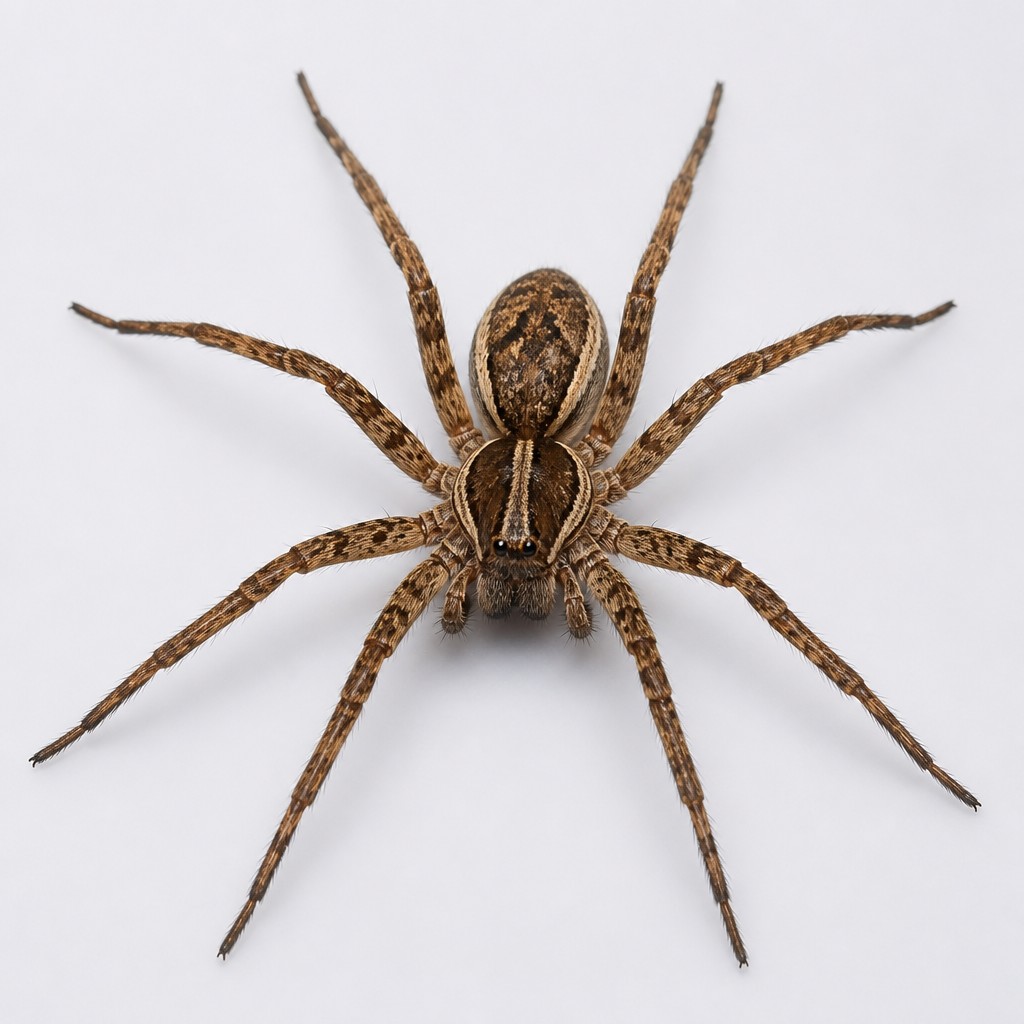
Fishing Spider
One of the largest spiders in North America, the fishing spider can walk on water, dive beneath the surface to escape danger, and ambush small fish and tadpoles with its front legs from the water's edge.
spider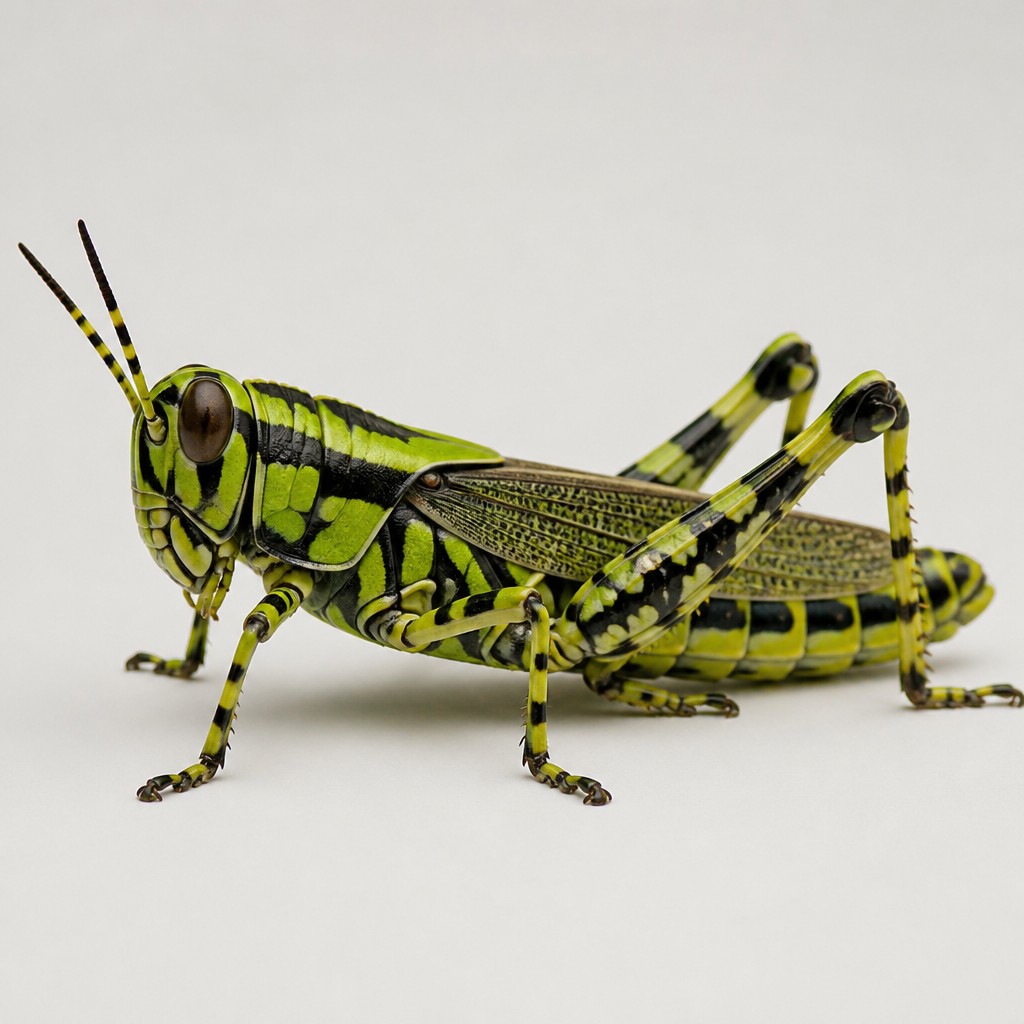
Painted Grasshopper
A large, boldly striped grasshopper of South Asia whose vivid green, yellow, and black pattern warns predators that it has fed on toxic milkweed plants.
grasshopper-cricket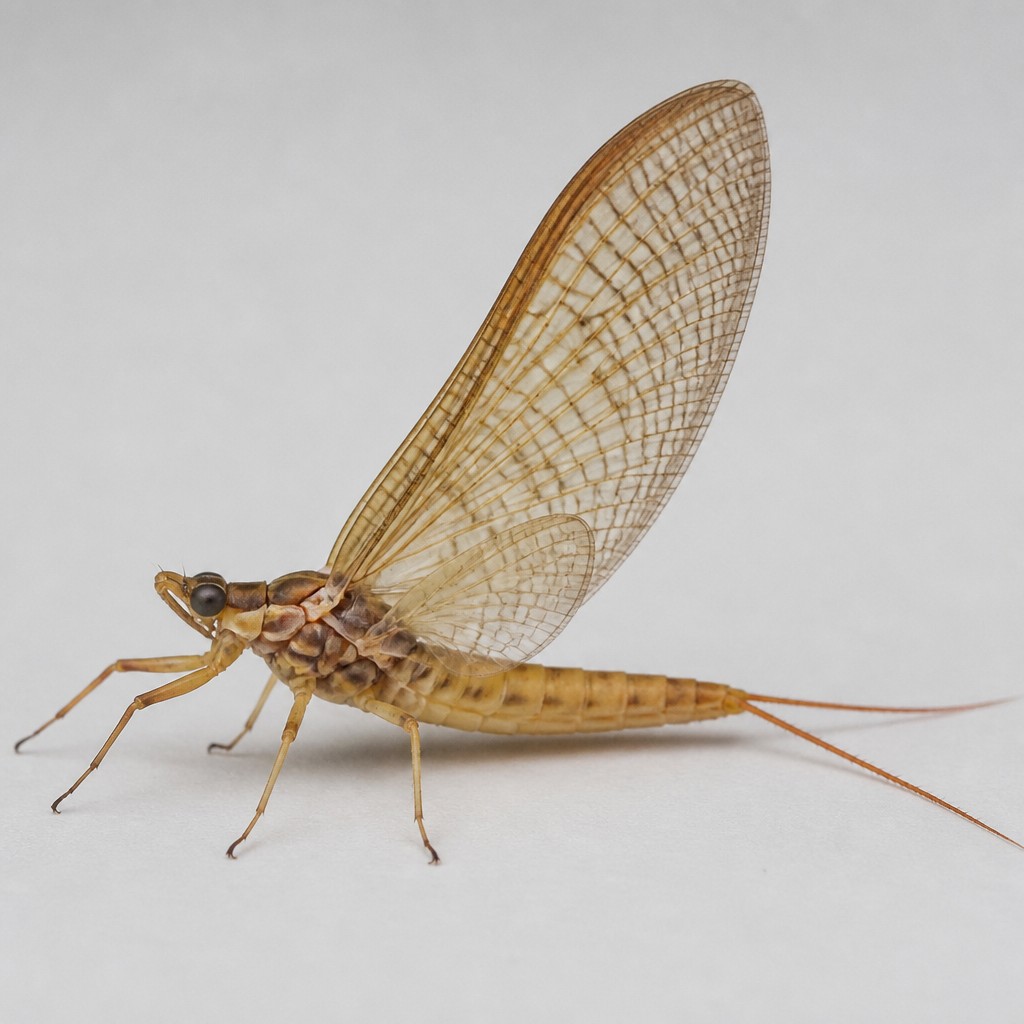
Giant Mayfly
Known for emerging by the billions in summer swarms so dense they can show up on weather radar, the Giant Mayfly is one of the largest and most abundant mayflies in North America.
aquatic-insect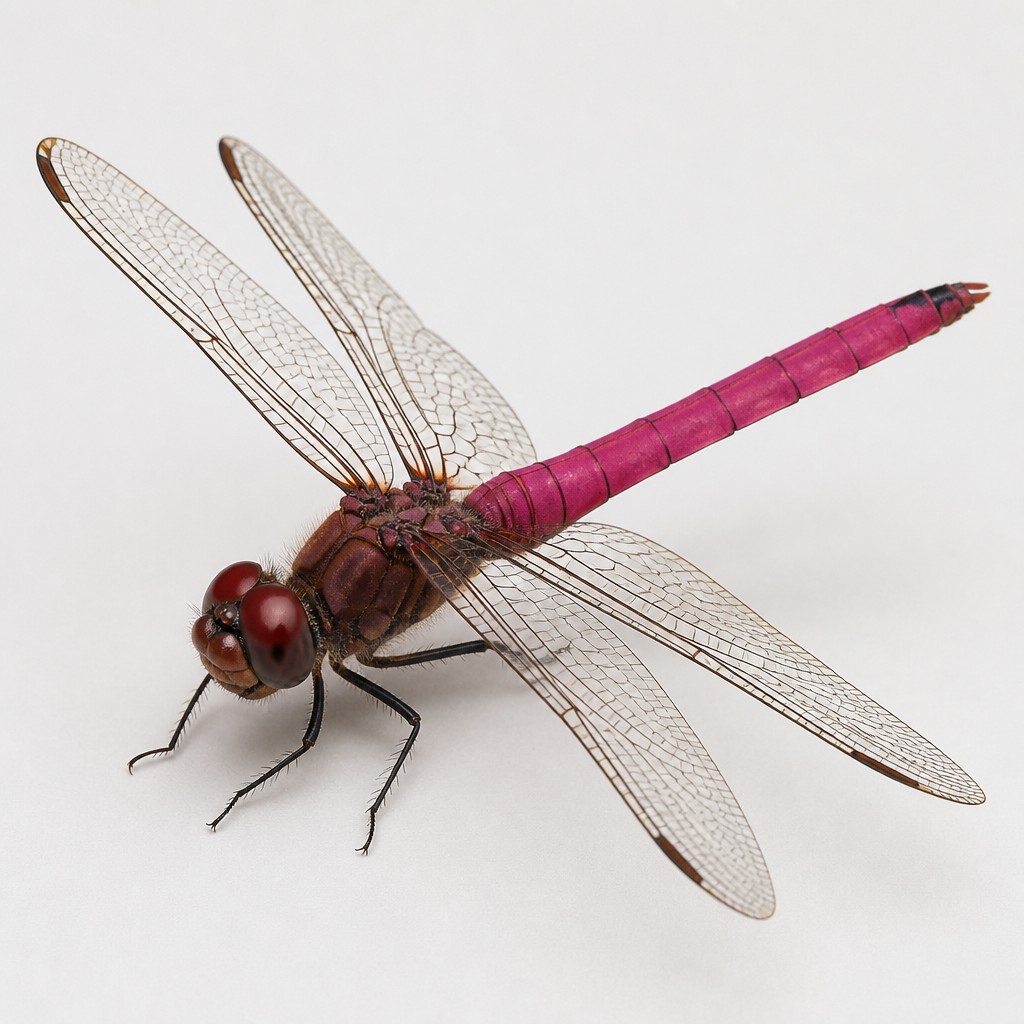
Roseate Skimmer
A vivid pink-violet dragonfly of southern wetlands, the mature male's rose-pruinose body makes it one of the most striking skimmers found around ponds and canals.
dragonfly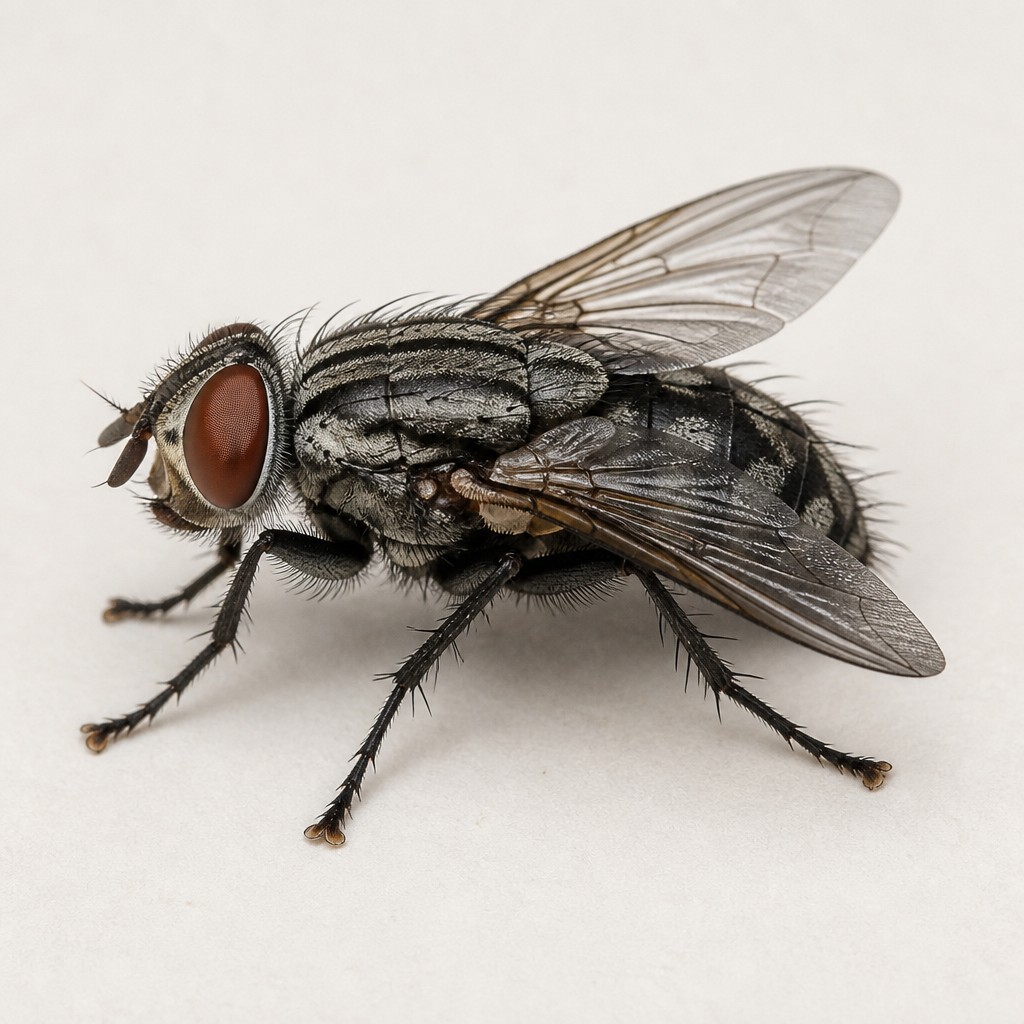
Flesh Fly
A bristly gray fly marked with three dark thoracic stripes and a checkerboard-patterned abdomen, often spotted hovering near carrion or garbage.
fly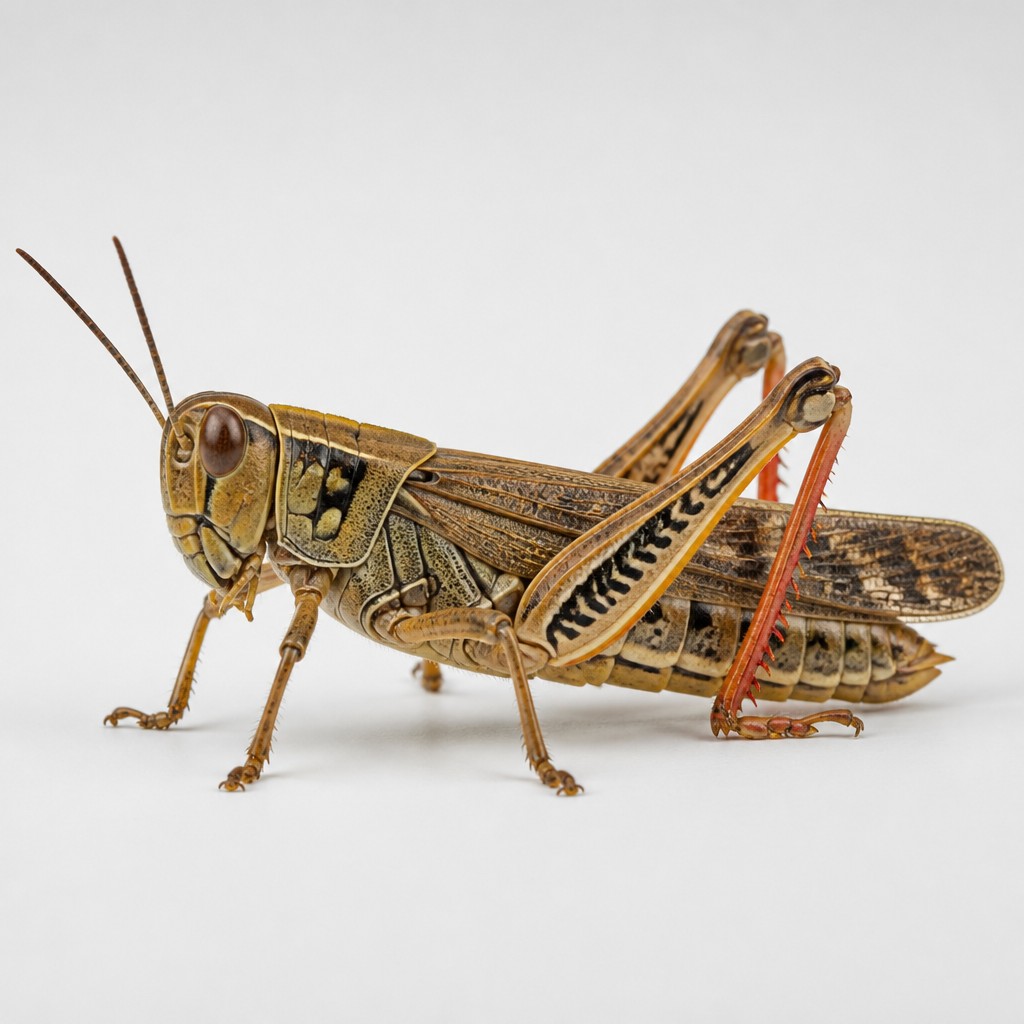
Spur-throated Grasshopper
One of the most familiar grasshopper groups in North America, named for the small spine on its throat and known for including some of the continent's most abundant rangeland species.
grasshopper-cricket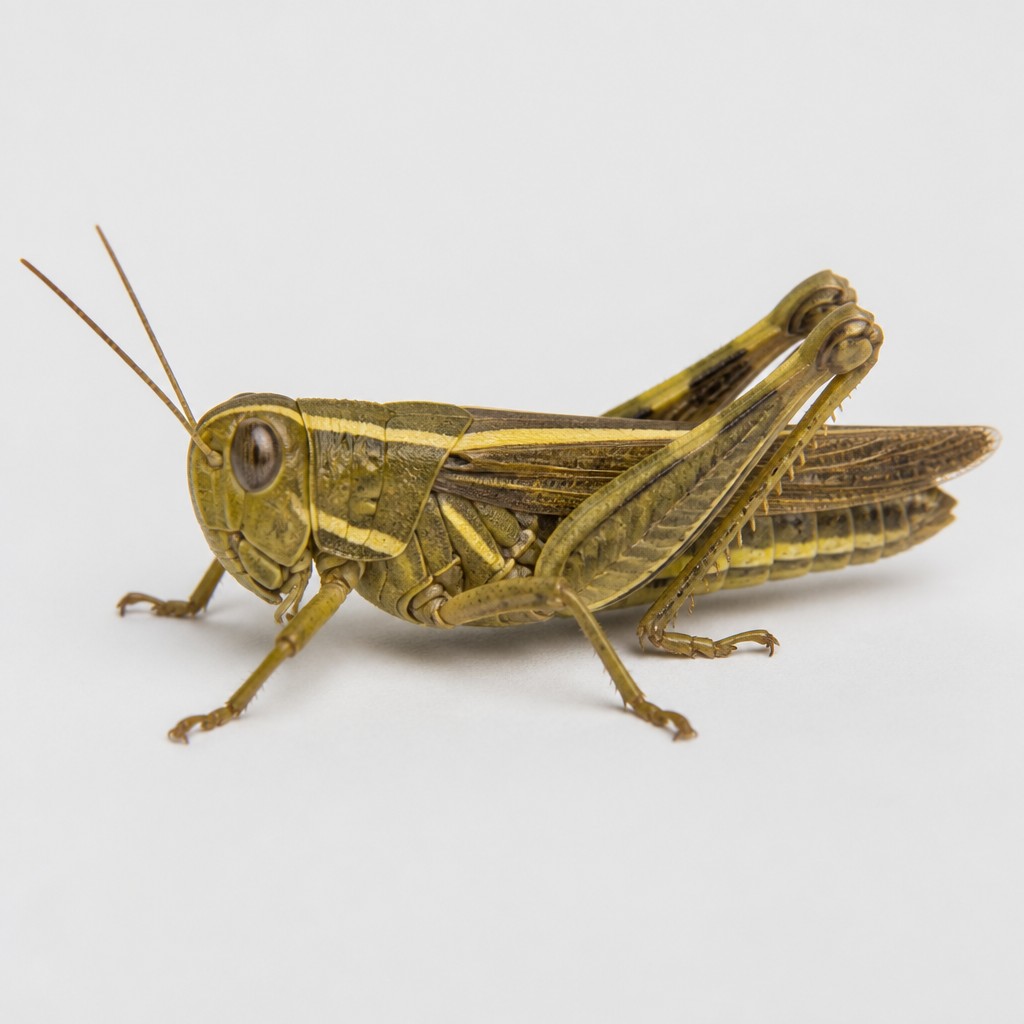
Two-striped Grasshopper
Easily spotted by the pair of pale cream stripes running the length of its body, the two-striped grasshopper is one of the largest and most economically important grasshoppers in North America.
grasshopper-cricket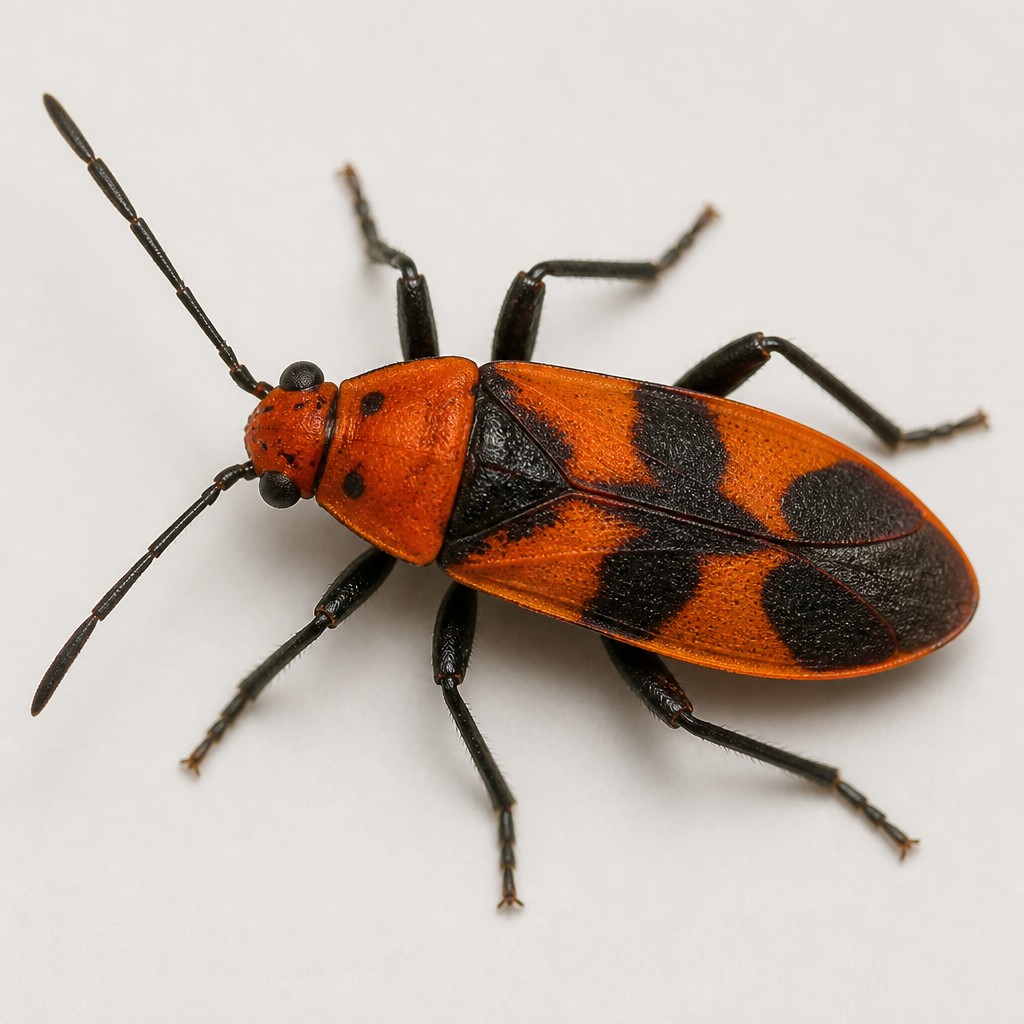
Monarch's Milkweed
A boldly orange-and-black true bug that shares milkweed plants with Monarch butterfly caterpillars, often clustering in large groups on seed pods and stems.
true-bug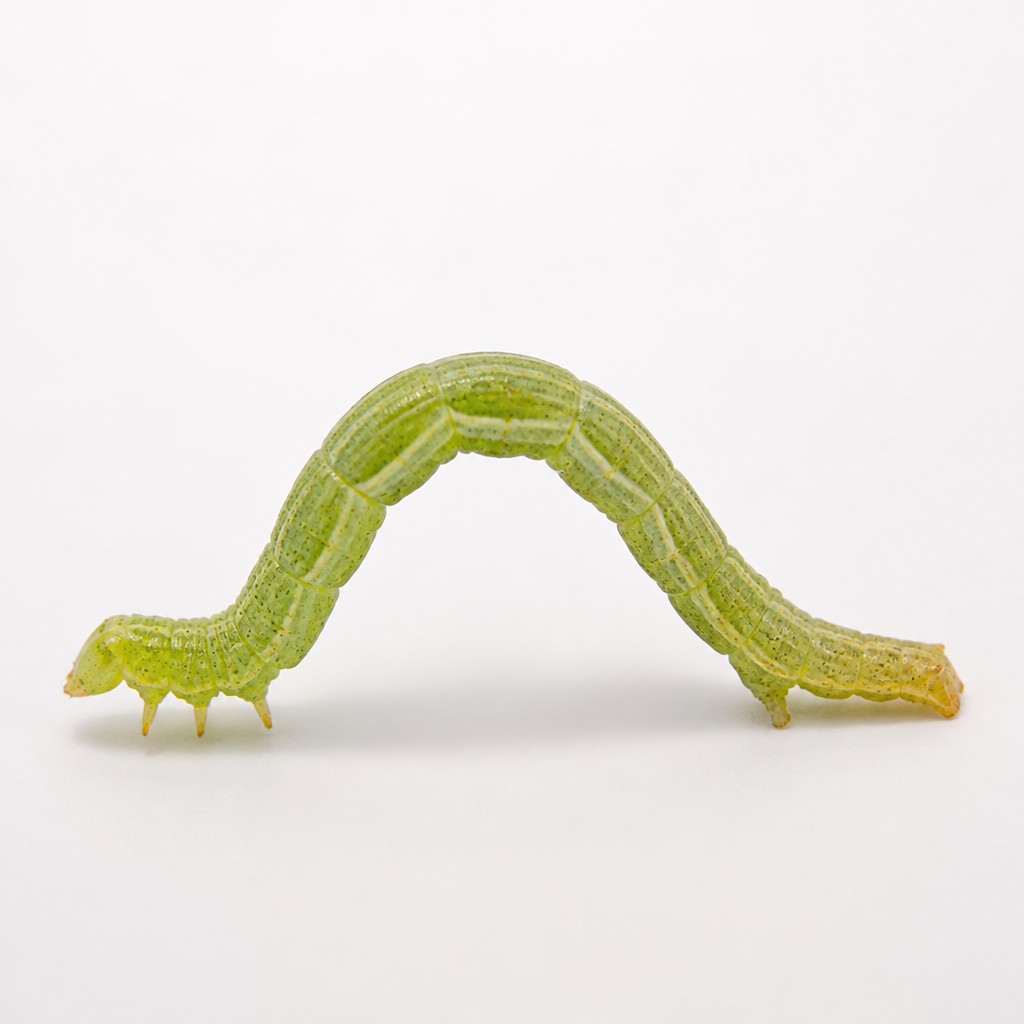
Inchworm
A slender, twig-mimicking caterpillar that travels by looping its body into an arch and releasing a strand of silk to drop and dangle at the slightest disturbance.
caterpillar-larva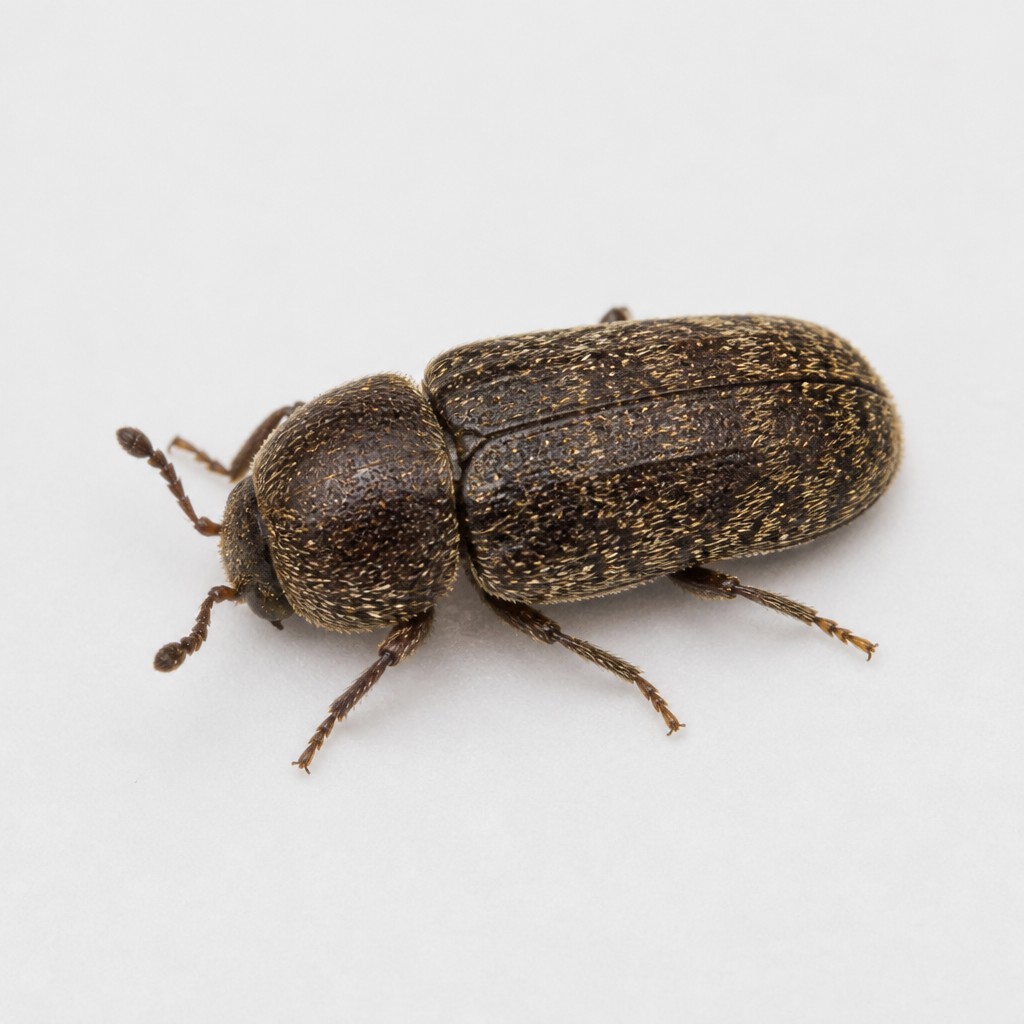
Death Watch Beetle
A mottled brown wood-boring beetle famous for the faint ticking sound it taps out inside old timbers, once thought by superstitious listeners to be an omen of death.
beetle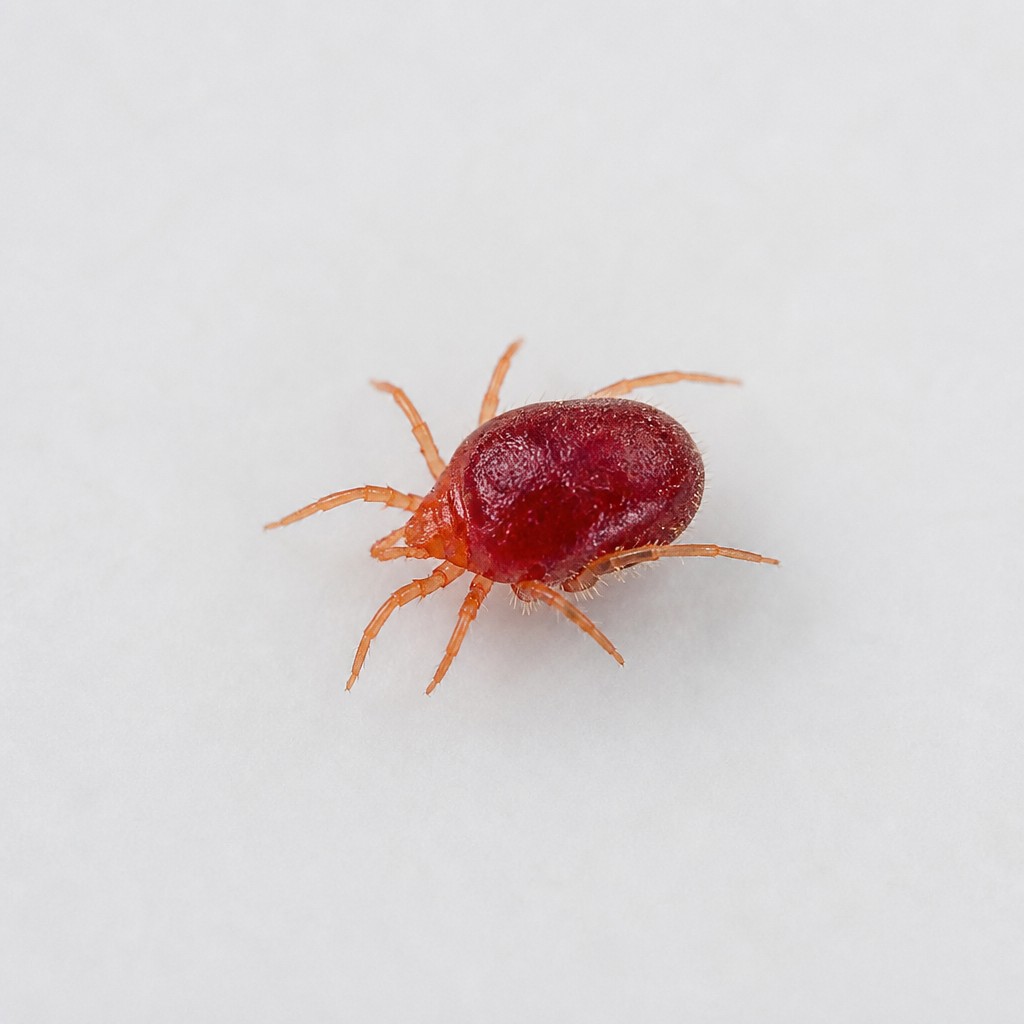
Chicken Mite
A tiny, blood-feeding mite that hides in cracks and crevices of poultry housing by day and emerges at night to feed on roosting birds, turning a dull gray to deep red after a blood meal.
arachnid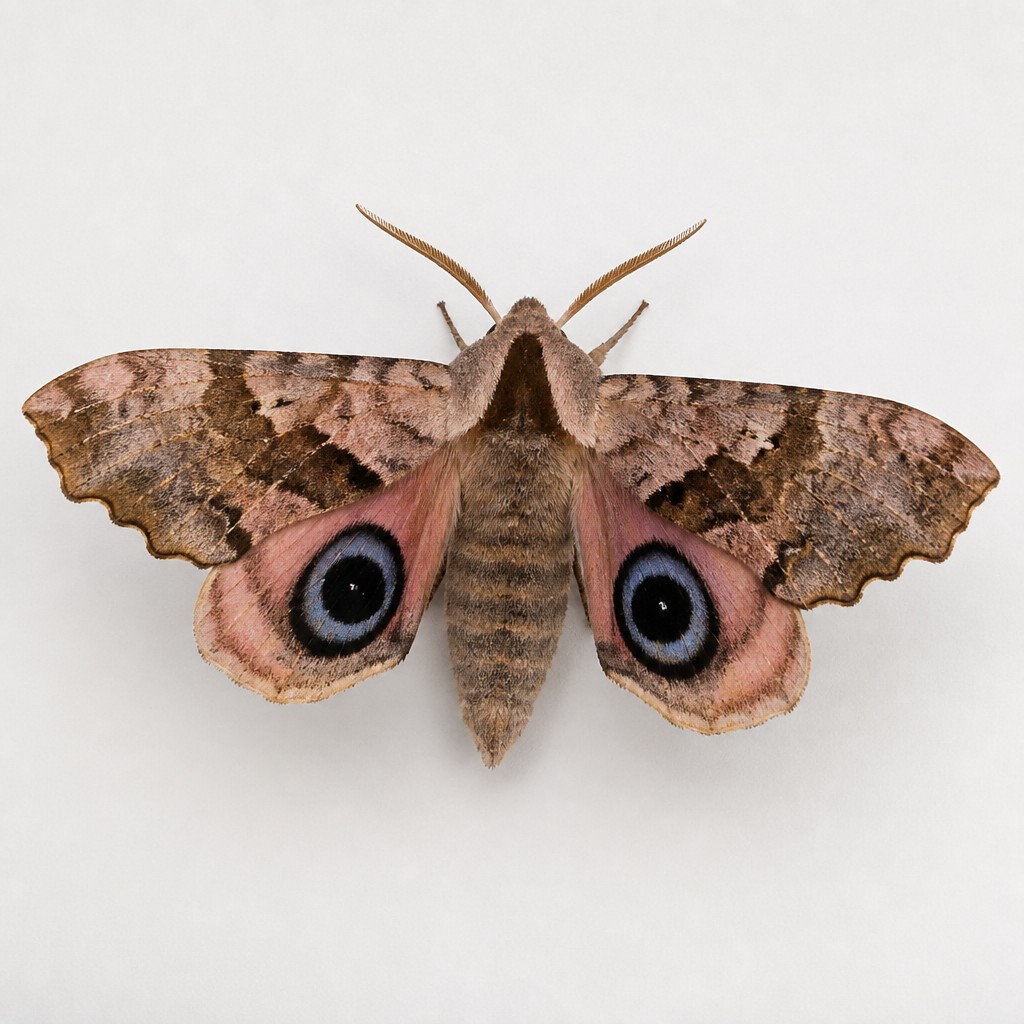
Eyed Hawk-Moth
A pinkish-brown hawk-moth that reveals a pair of large, blue-and-black eyespots on its hindwings when threatened, using the sudden flash of "eyes" to startle would-be predators.
moth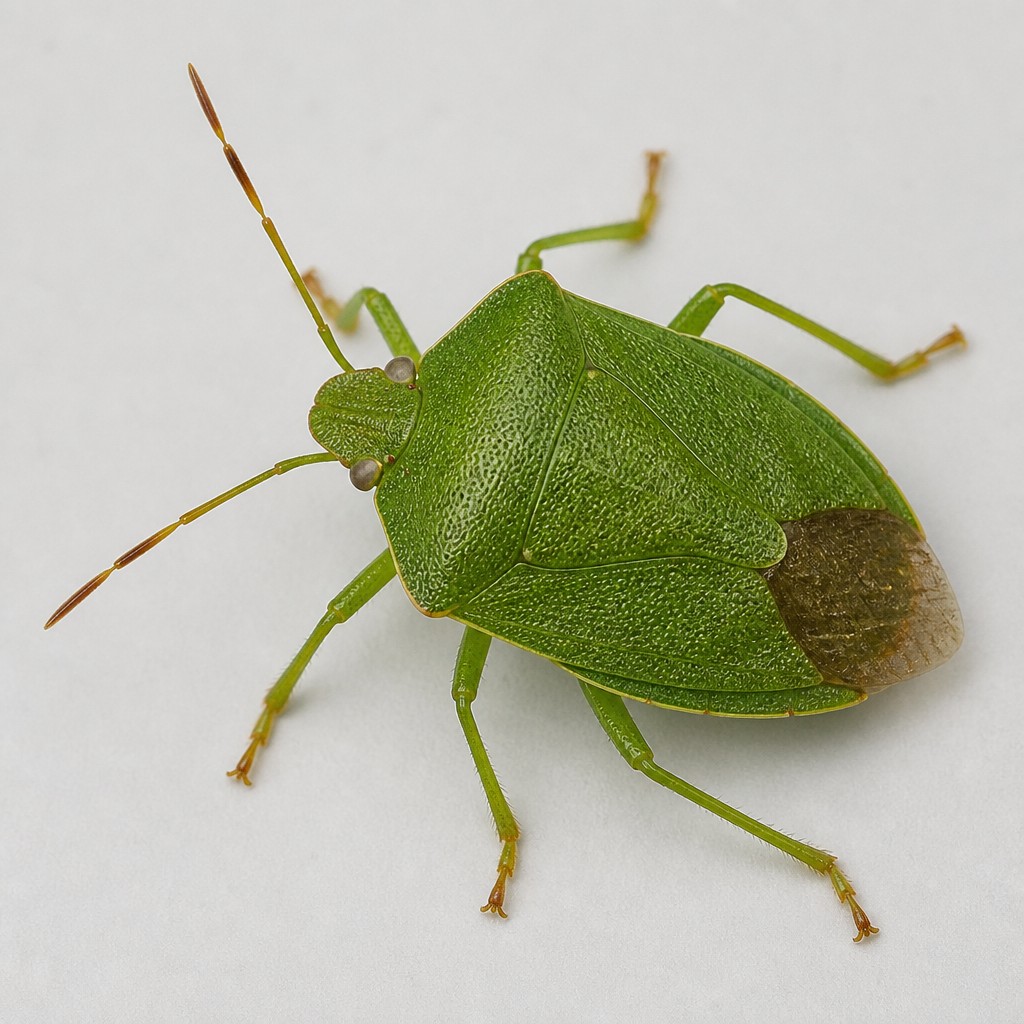
Green Shield Bug
A broad, shield-shaped true bug in solid bright green with a bronzy tinge in autumn, the green shield bug is one of the most commonly encountered stink bugs in European gardens and hedgerows.
true-bug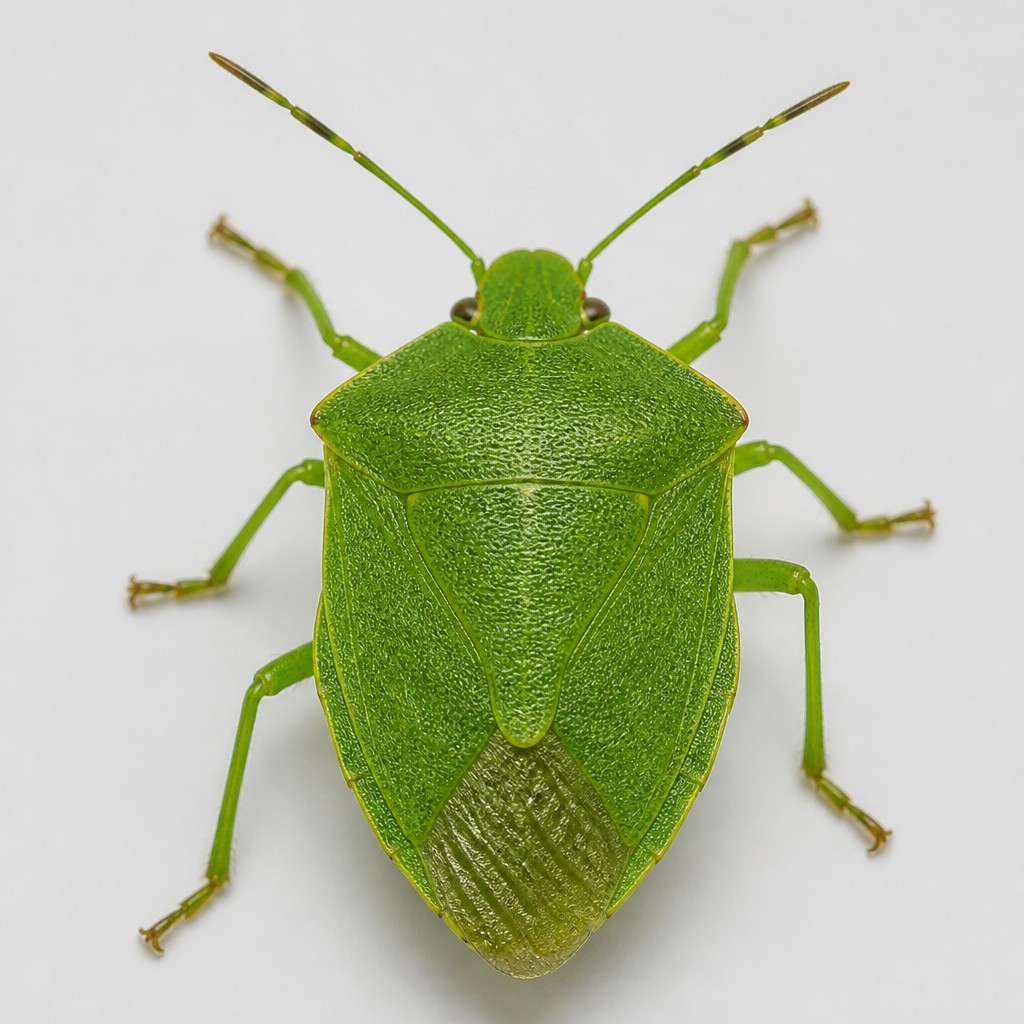
Green Stink Bug
A broad, shield-shaped bug in solid bright green with a shell-like appearance, easily disturbed off host plants and known for releasing a pungent odor when handled.
true-bug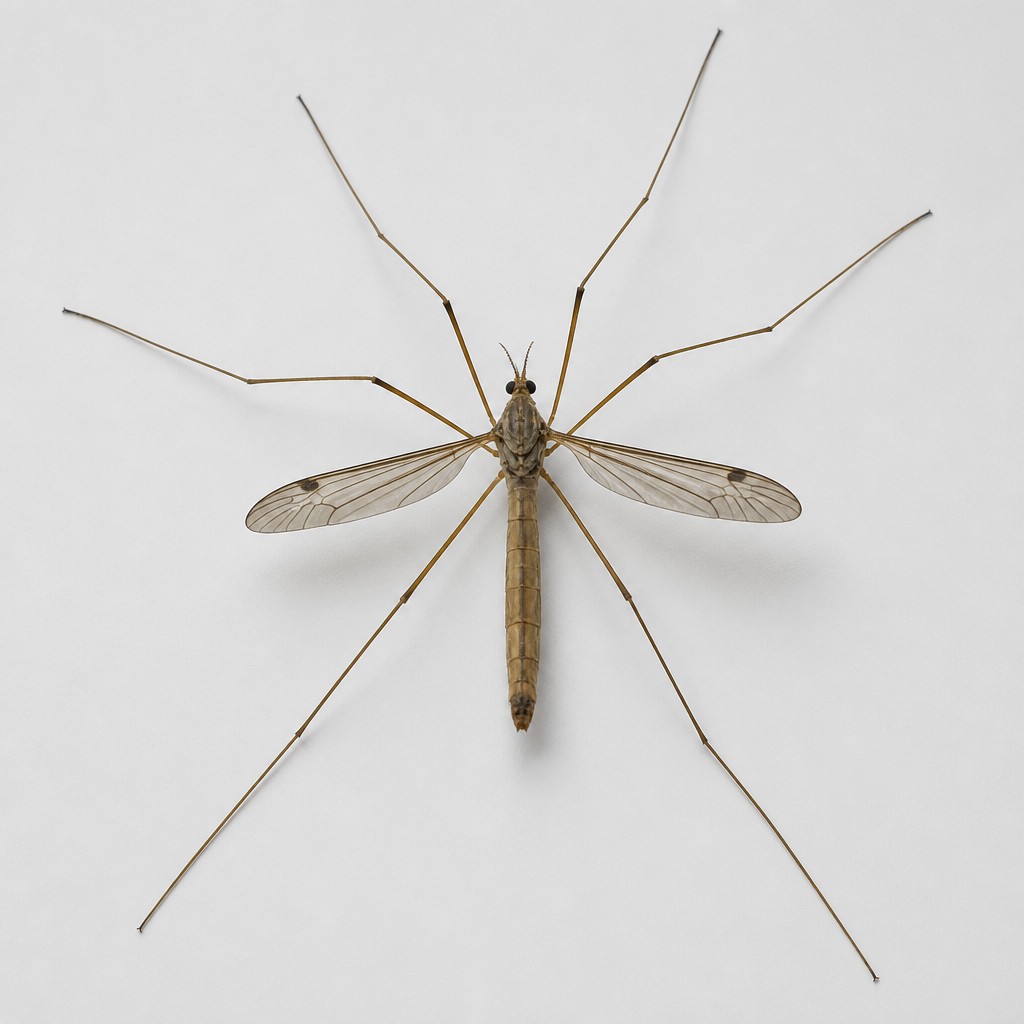
Crane Fly
A long-legged, mosquito-like fly with a slender tan or gray body and a single pair of narrow wings, often seen wobbling clumsily around outdoor lights on summer evenings.
fly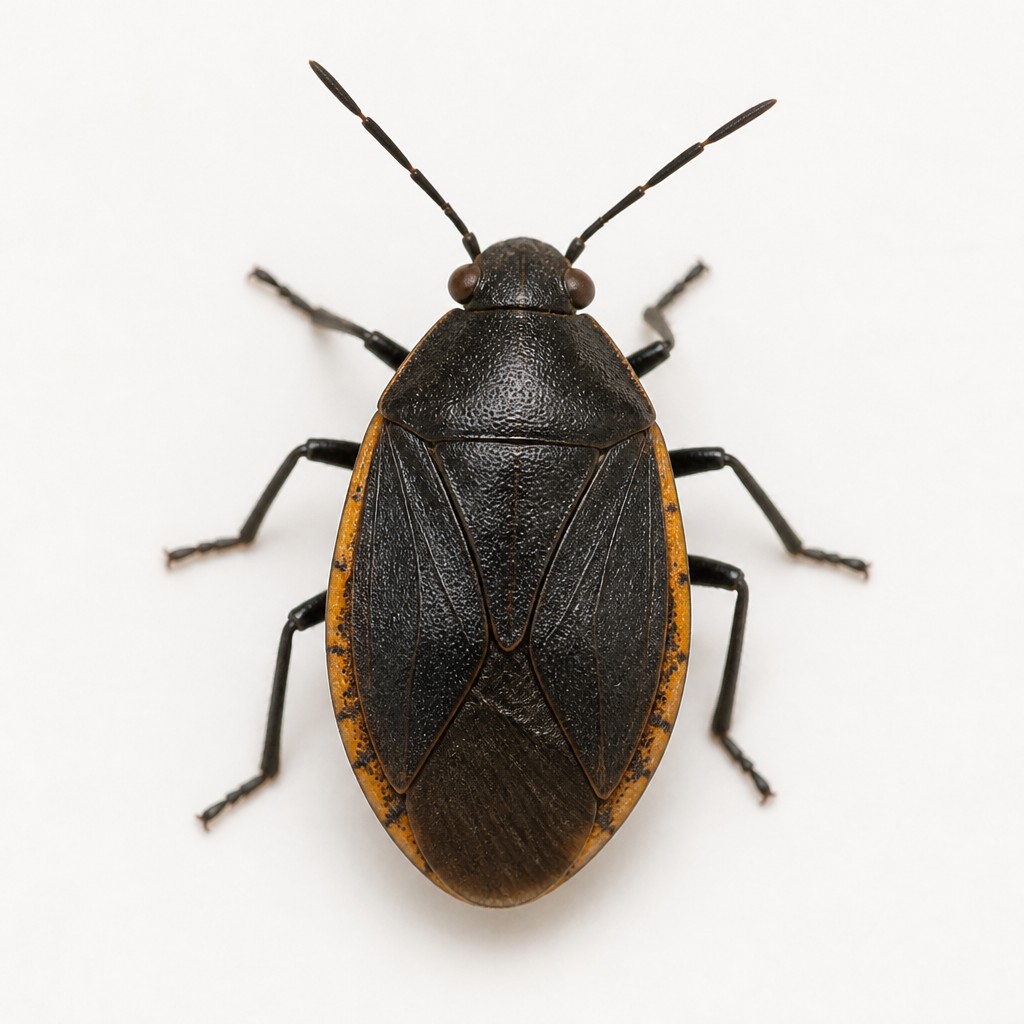
Bordered Plant Bug
A dark, oval-bodied true bug with a distinct pale margin around its wing edges, often mistaken for a large ant or beetle when its nymphs cluster together in tight groups.
true-bug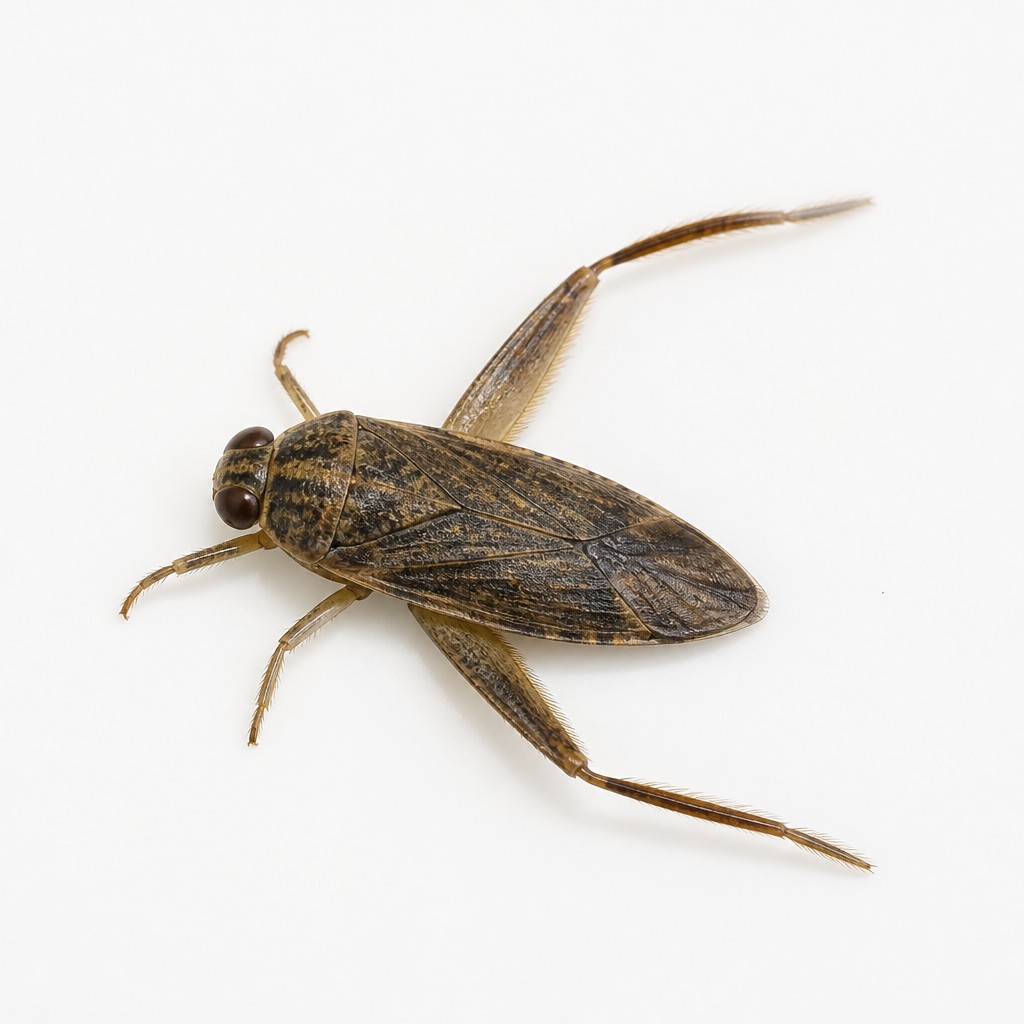
Water Boatman
A small, streamlined aquatic true bug with oar-like hind legs used for swimming, commonly seen gliding just beneath the surface of ponds and calm freshwater.
aquatic-insect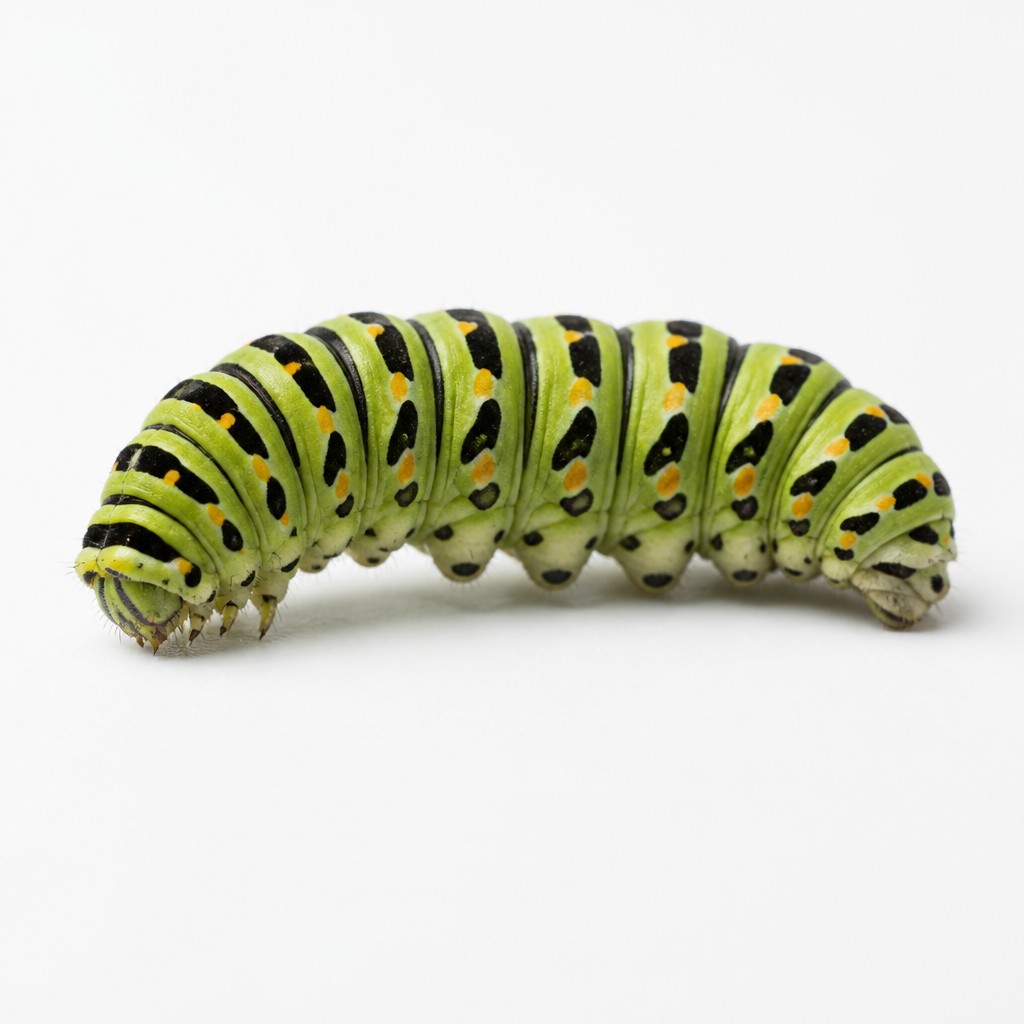
Caterpillar
The soft-bodied, segmented larval stage of butterflies and moths, recognized by its worm-like shape, multiple pairs of stubby legs, and voracious appetite for leaves.
caterpillar-larva