
Bug Encyclopedia
Search and identify bugs & insects — beetles, butterflies, moths, ants, bees, spiders and more — with size, habitat, danger, behavior, and how to tell them apart.
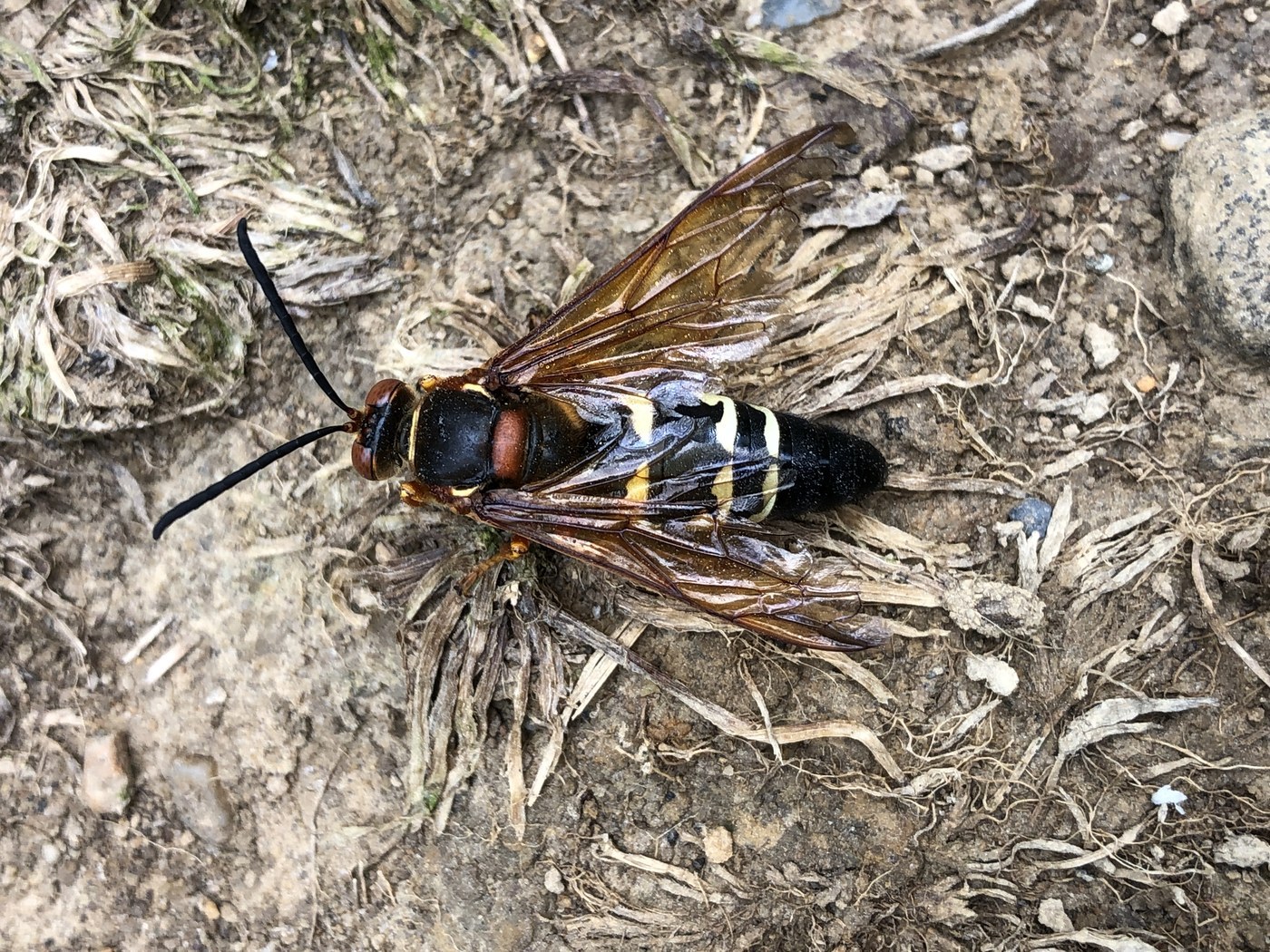
Cicada Killer Wasp
One of the largest wasps in North America, a robust rust-and-black or yellow-marked digger wasp that excavates burrows in bare soil and specializes in hunting cicadas to provision its underground nest.
wasp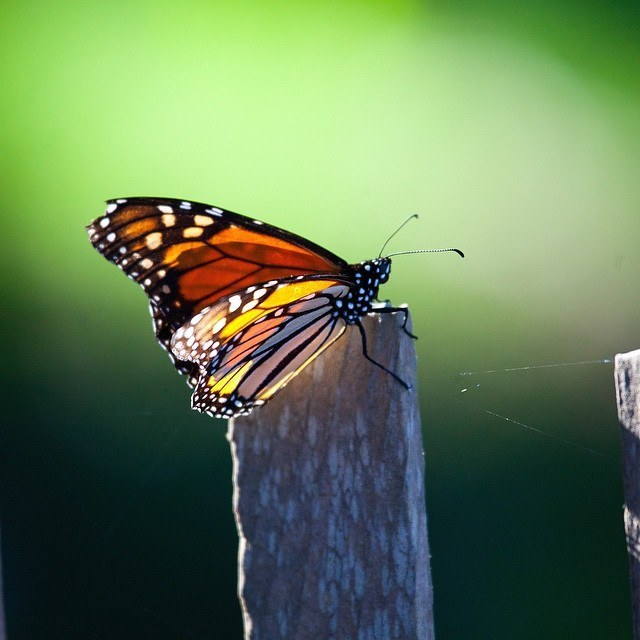
Monarch Butterfly
A large butterfly with bold orange wings crossed by black veins and a black, white-spotted border, famous for its multi-generational migration between North America and central Mexico.
butterfly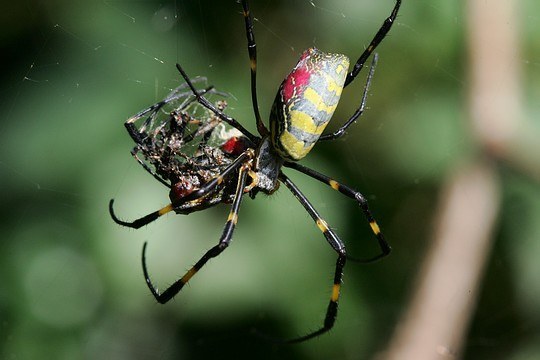
Jorō Spider
A large, strikingly colored East Asian orb weaver with yellow-and-blue-gray banding, now spreading rapidly across the southeastern United States and building enormous golden webs.
spider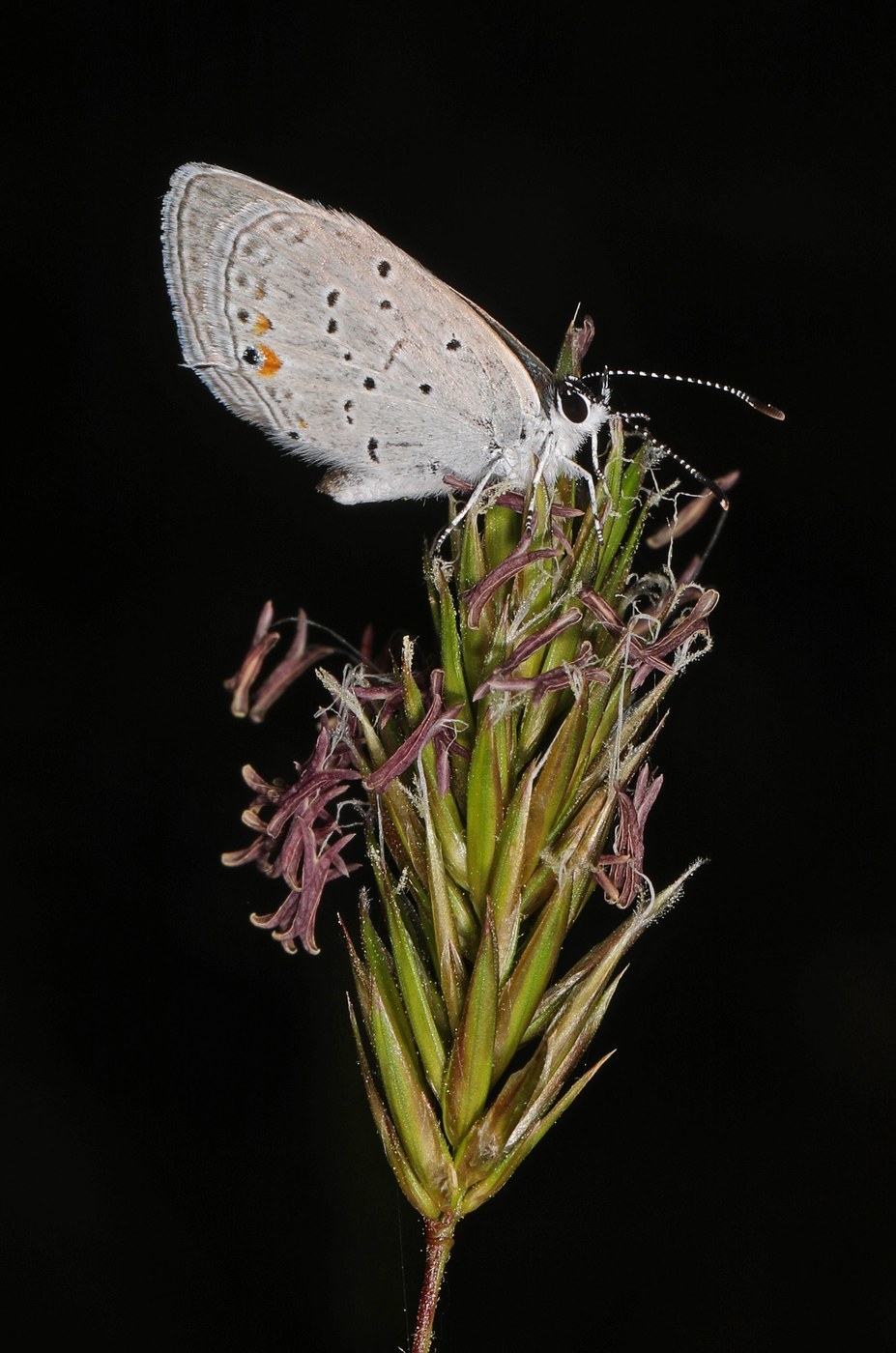
Eastern Tailed-Blue
A tiny gossamer-wing butterfly with a delicate thread-like tail on each hindwing and a small orange spot near the tail base, common in open weedy habitats throughout the eastern half of North America.
butterfly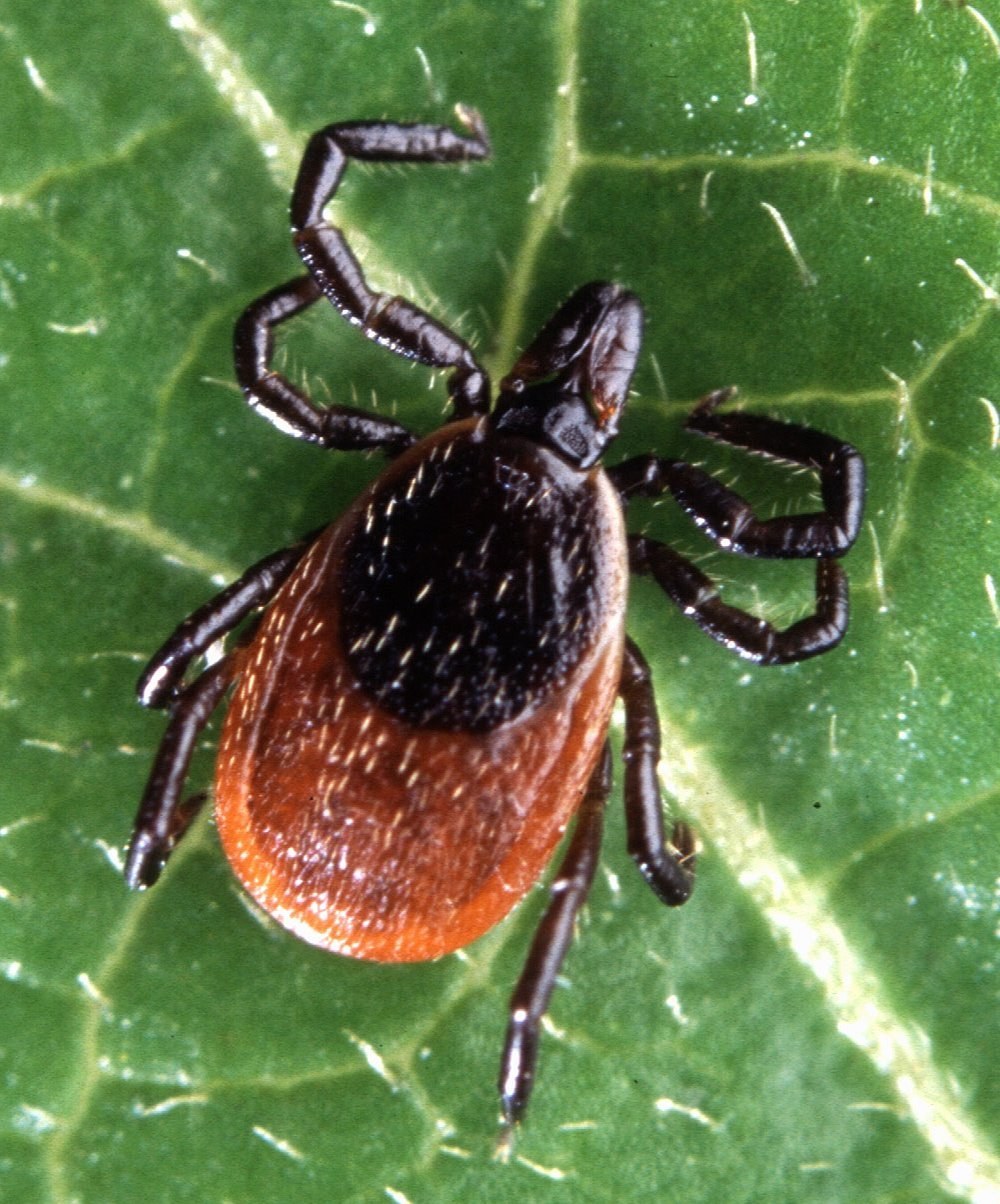
Deer Tick
A small, dark-legged tick with a reddish-brown, teardrop-shaped body, noticeably smaller than many other common tick species and often found questing in wooded or grassy edge habitats.
arachnidBurying Beetle
A black beetle marked with bold orange-red bands, notable for locating small dead animals, burying them underground, and cooperatively raising larvae with a partner over the buried carcass.
beetle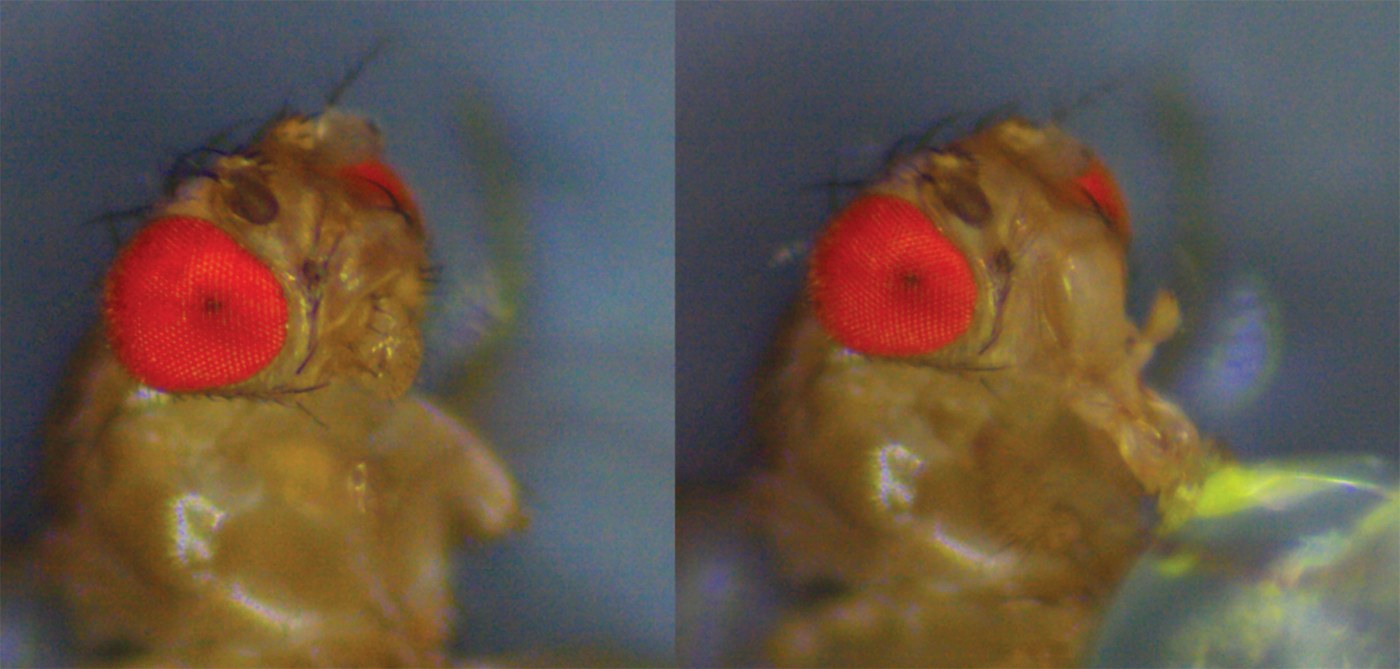
Vinegar Fly
A tiny tan fly with bright red eyes that seems to appear out of nowhere the moment a banana starts to spoil, drawn in by the smell of fermentation rather than the fruit itself. Few insects have contributed more to the science of genetics, making this unassuming kitchen visitor one of the most studied animals on Earth.
fly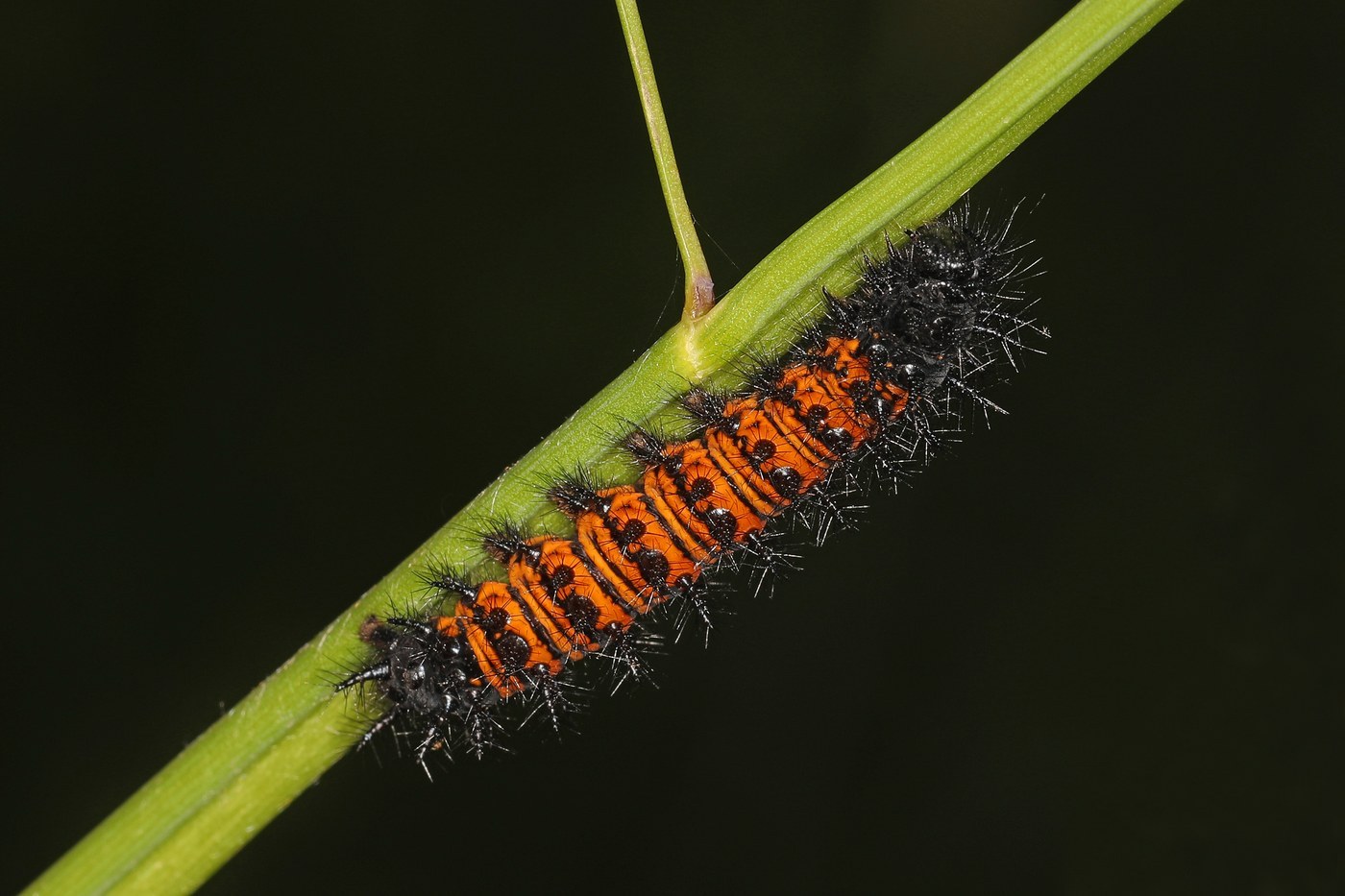
Baltimore Checkerspot
A striking black butterfly checkered with rows of orange and cream-white spots, closely associated with wet meadows and its turtlehead host plant, and recognized as a state insect symbol in parts of its range.
butterflySilverfish Firebrat
Two closely related, wingless, silvery or mottled insects with fish-like darting movements and three long tail bristles, one favoring damp basements and the other thriving near warm ovens and furnaces.
other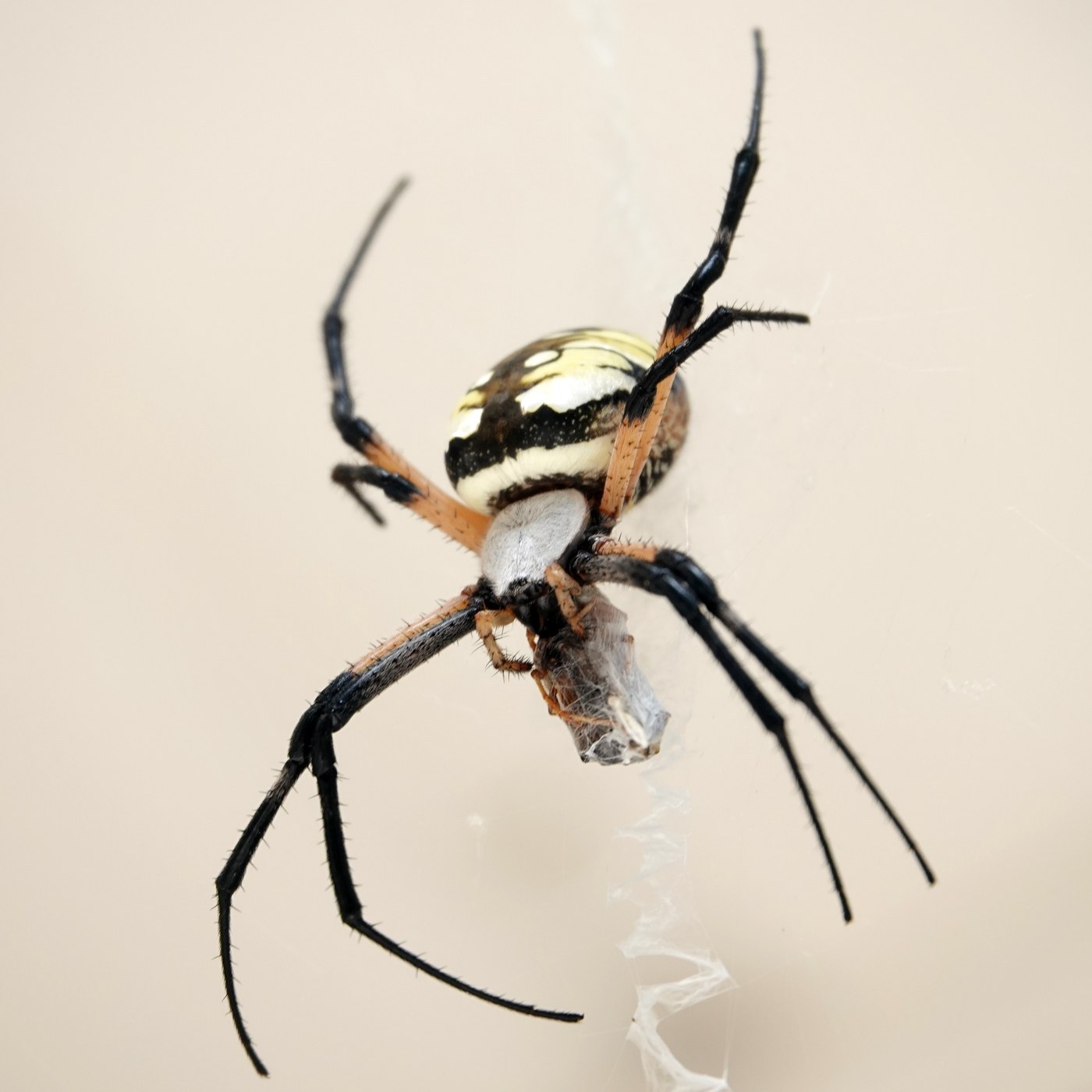
Yellow Garden Spider
Bold black and yellow markings, a large orb web anchored with a bright zigzag of silk, and a habit of sitting in plain view make the yellow garden spider one of the most eye-catching and recognizable spiders in North American backyards.
spider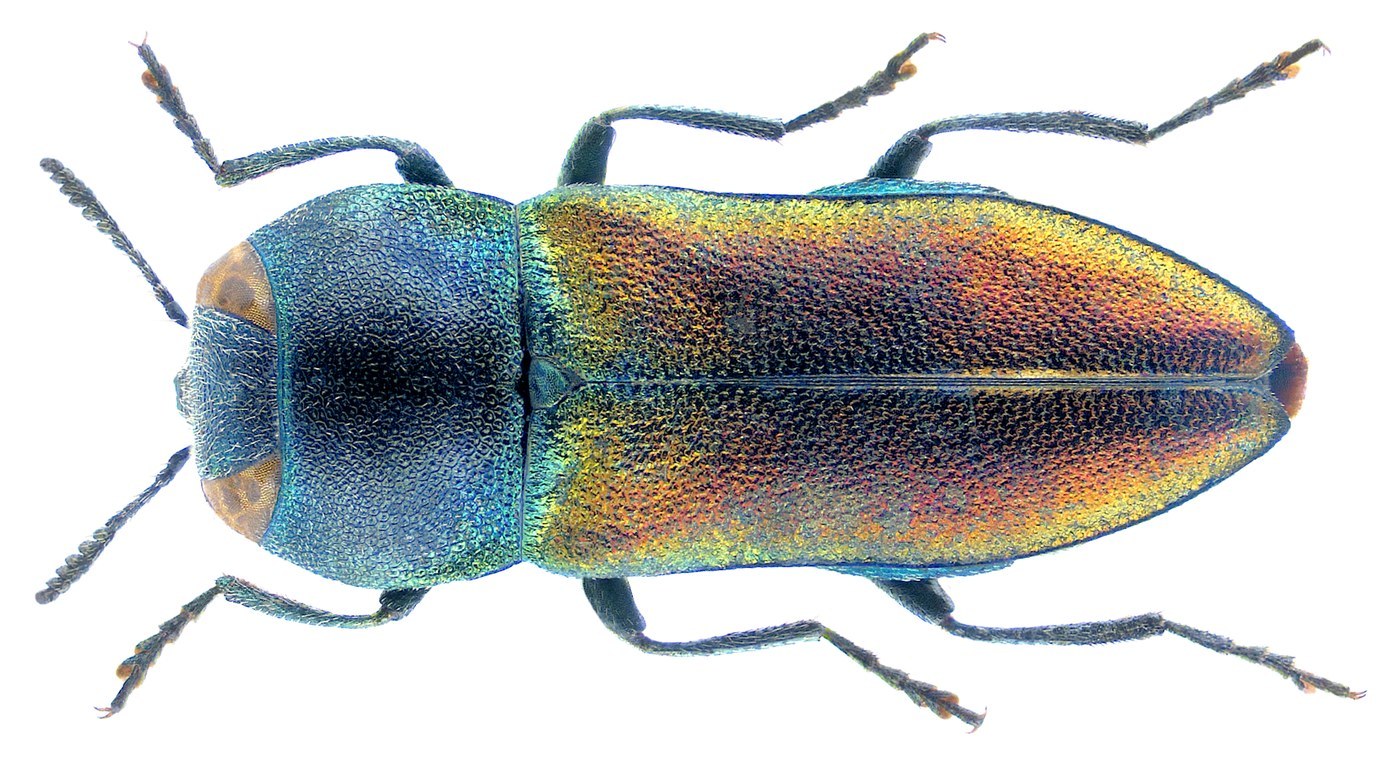
Metallic Wood-boring Beetle
The North American common name for jewel beetles, emphasizing the wood-tunneling habits of their larvae, which leave telltale flattened, D-shaped exit holes in bark of stressed or dying trees.
beetle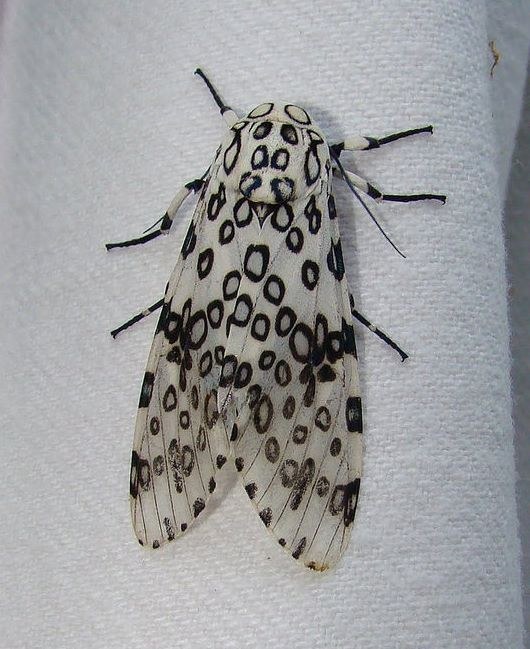
Giant Leopard Moth
A striking white moth patterned with bold, hollow black rings and dots resembling leopard spots, revealing an iridescent blue-black abdomen marked with orange when its wings part, making it one of the most eye-catching tiger moths in North America.
moth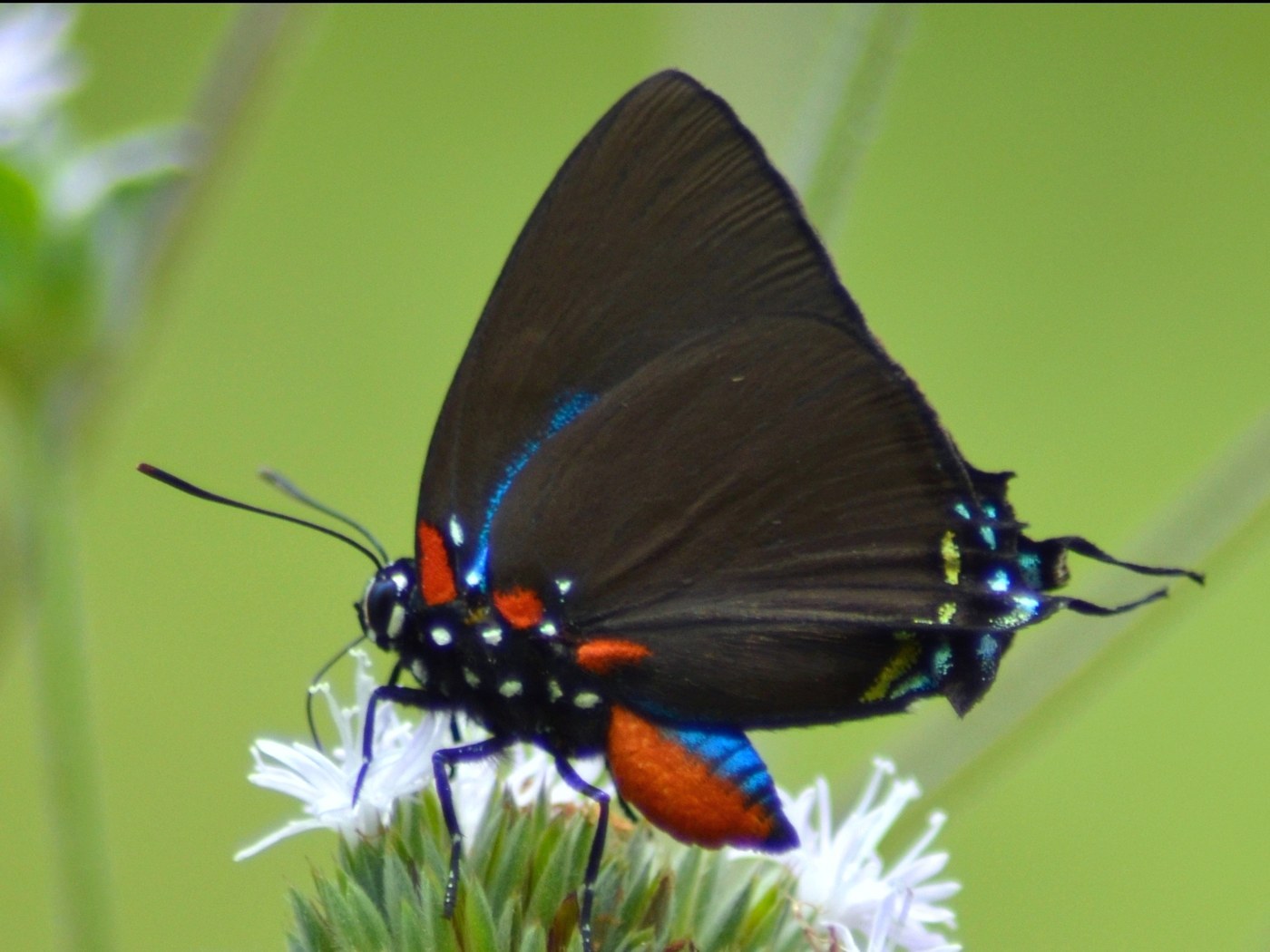
Great Purple Hairstreak
The largest and most iridescent hairstreak in North America, with brilliant blue-green upperwings, red-orange spots on the body and wing base, and long twin tails, its caterpillars feeding on parasitic mistletoe clumps in host trees.
butterfly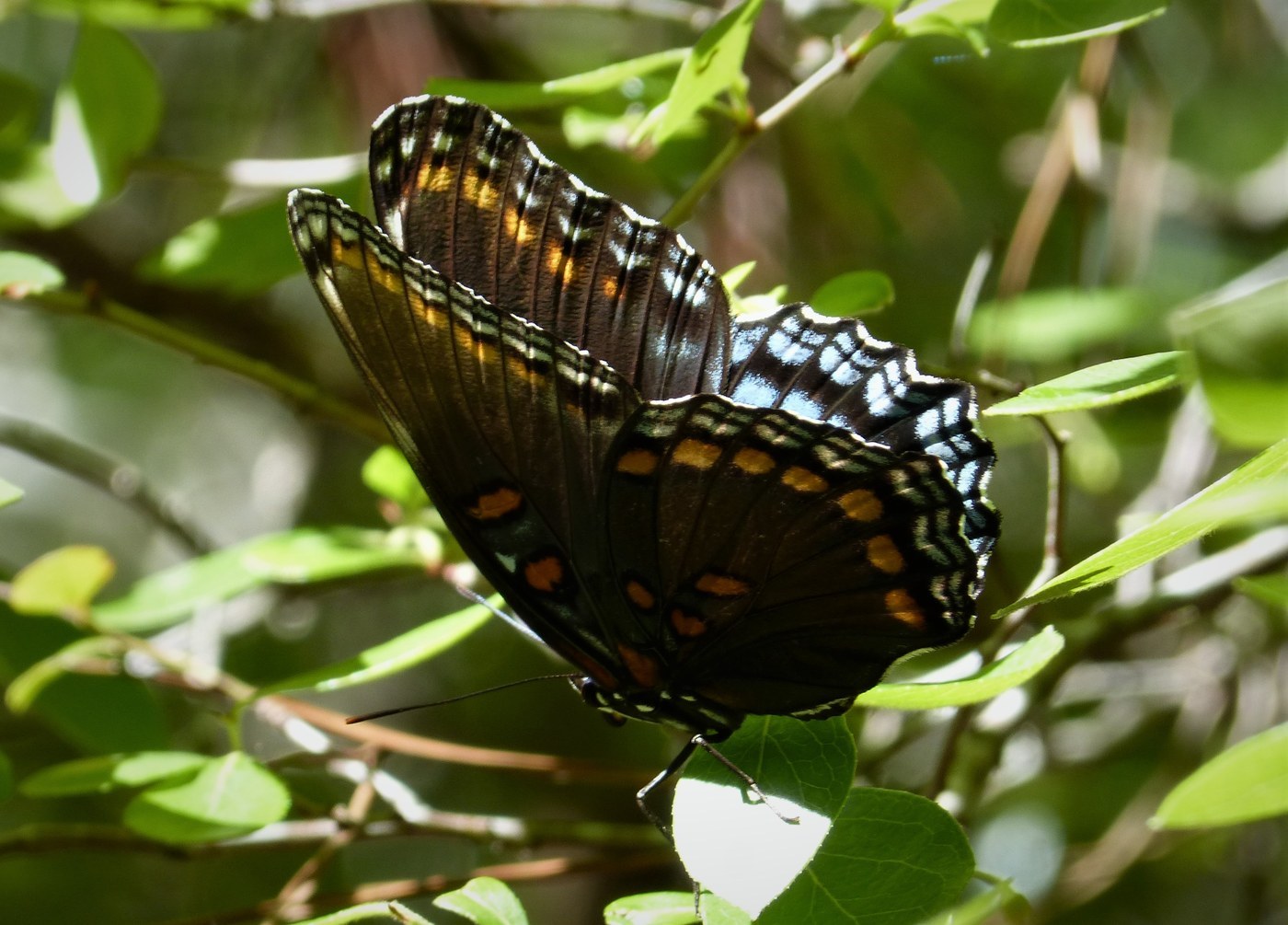
Red-spotted Purple
A large, iridescent blue-black butterfly lacking tails, notable for closely mimicking the unpalatable Pipevine Swallowtail, with rows of red-orange spots visible along the underside wing margins.
butterflyIchneumon Wasp
A slender, long-antennaed parasitoid wasp, often mistaken for a giant mosquito or a stinging insect, that is best known for the extraordinarily long ovipositor some species use to drill into wood and lay eggs on hidden larvae.
wasp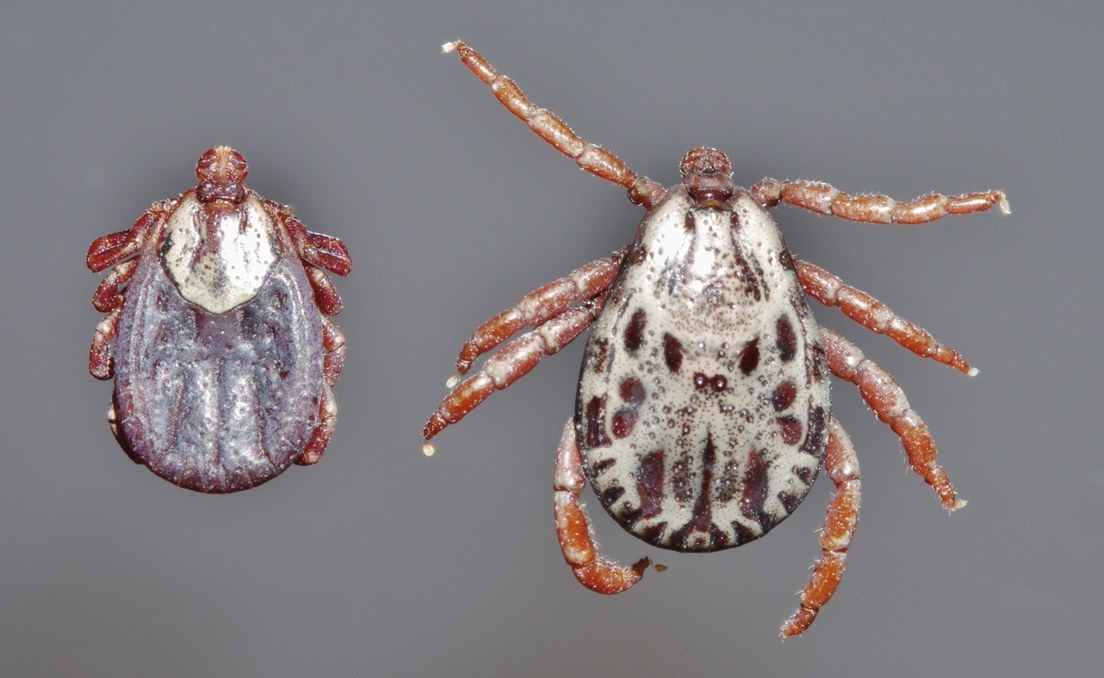
Wood Tick
A flattened, ornately patterned tick that waits on low brush in the Rocky Mountain foothills, ready to grab onto large mammals passing within reach. Its mottled, shield-marked back makes it one of the more distinctive North American ticks to identify.
arachnid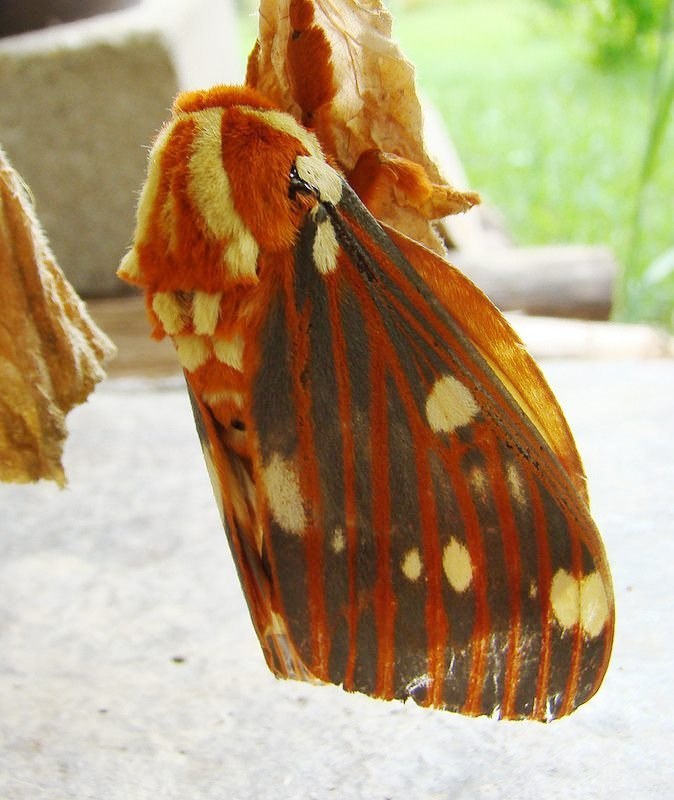
Regal Moth (Hickory Horned Devil)
One of the largest moths in North America, with orange-red and gray-veined wings on the adult, best known for its enormous, formidable-looking caterpillar, the hickory horned devil, a blue-green giant bristling with long orange spines.
moth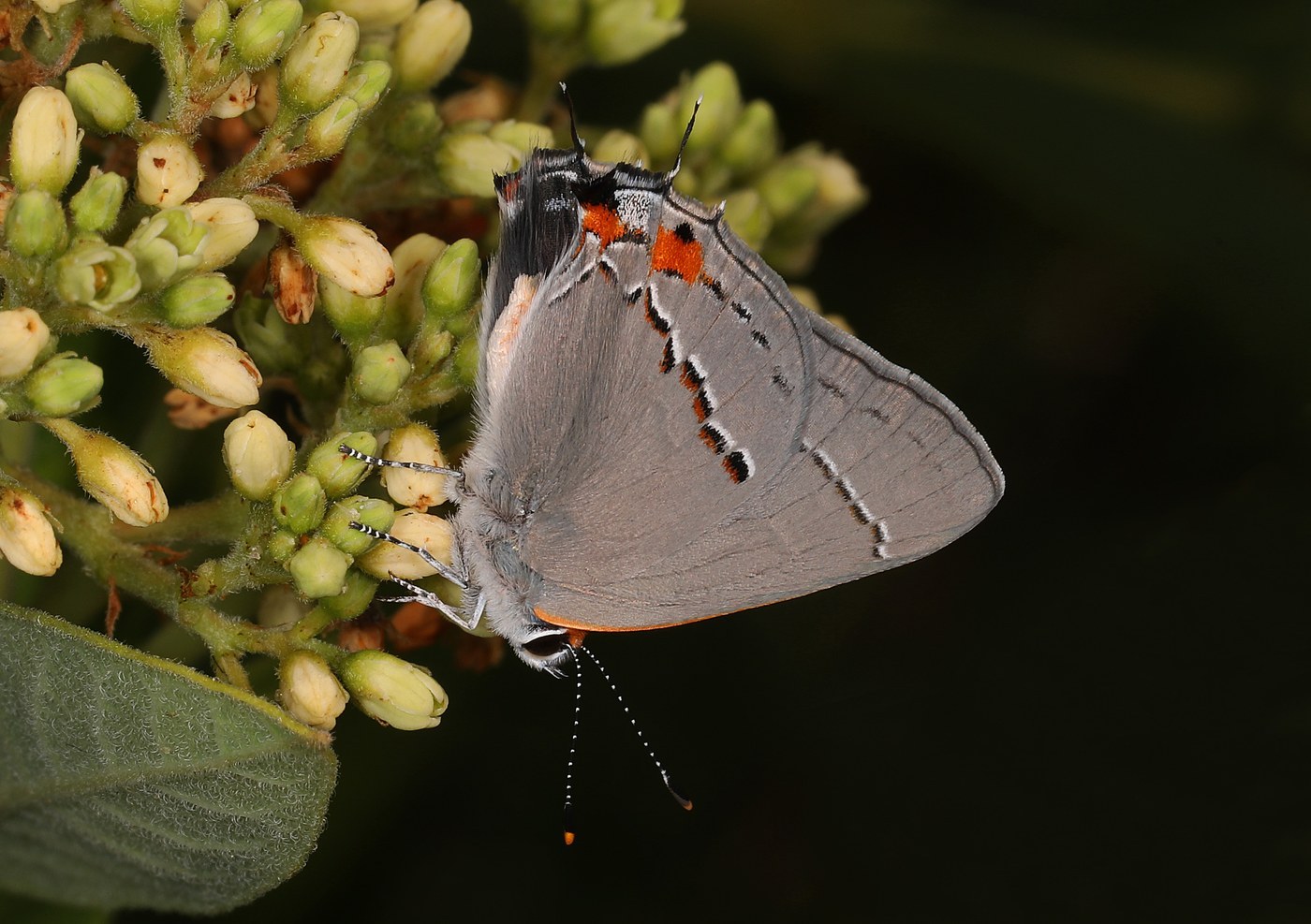
Gray Hairstreak
A small slate-gray butterfly with thin white lines, an orange-capped black spot near the hindwing tail, and one of the broadest host-plant ranges of any North American butterfly, making it a familiar visitor to gardens and fields alike.
butterfly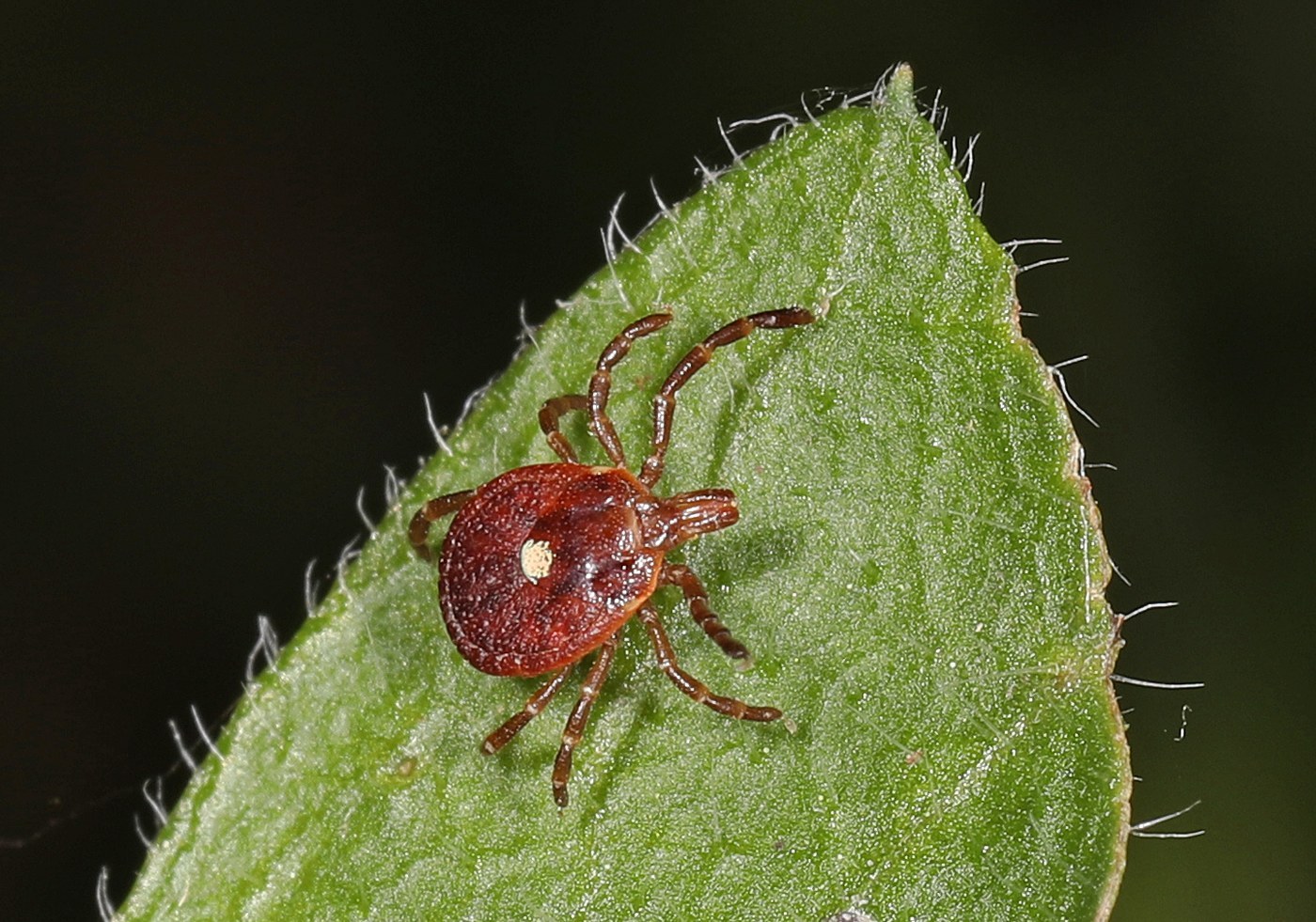
Lone Star Tick
Named for the single silvery-white spot on the back of the adult female, the lone star tick is unusually active for a tick, moving toward hosts rather than simply waiting for them to pass. Its reddish-brown, ornamented body makes it one of the easier North American ticks to identify at a glance.
arachnid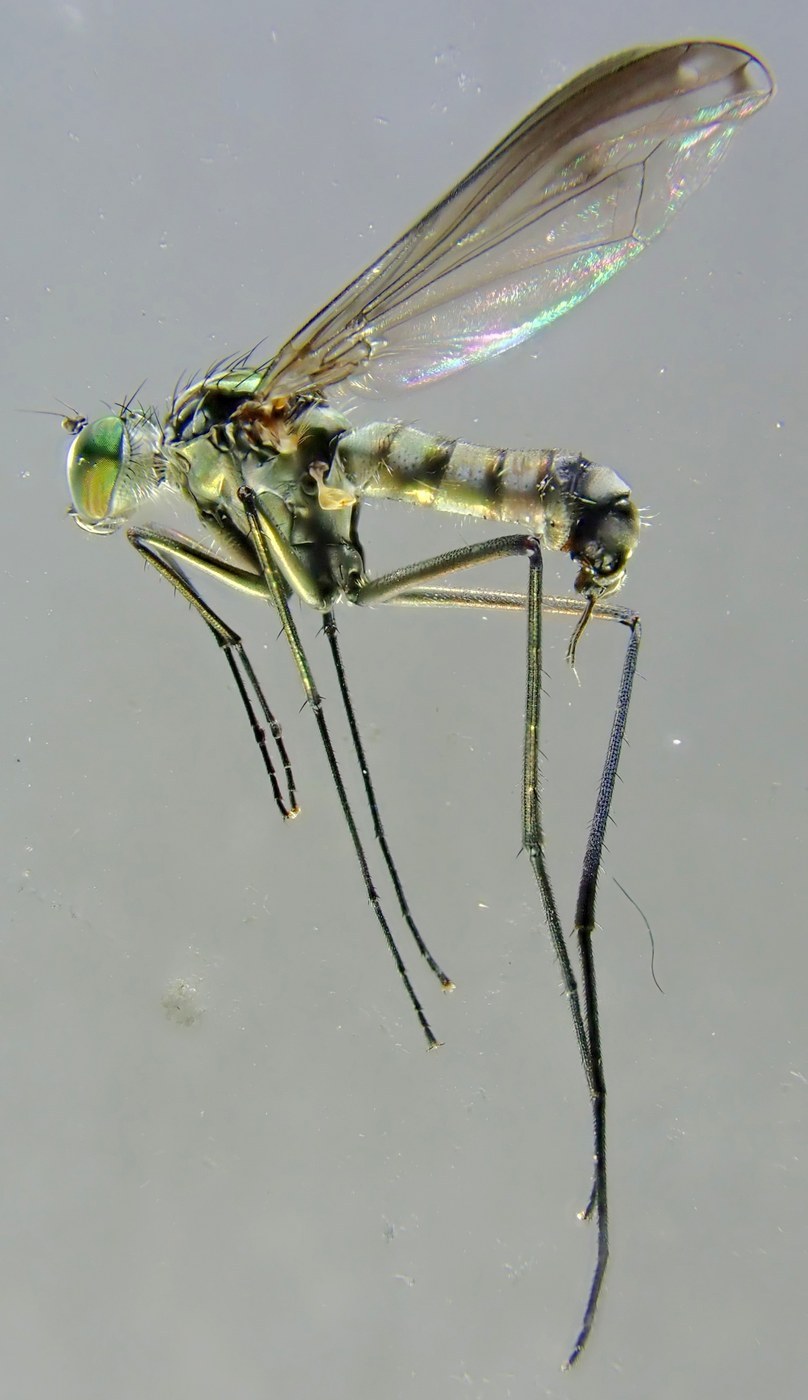
Long-Legged Fly
A jewel-bright little fly that flashes metallic green, blue, or bronze in the sunlight as it darts across leaves on comically long, stilt-like legs, pausing to perform quick territorial displays. Both adults and larvae are active hunters of even smaller insects, making this tiny fly a useful predator in gardens and wetlands alike.
flySnipe Fly
A slender, long-legged fly often seen perched head-down on a sunny tree trunk or fence post, patiently watching for smaller insects to ambush. Its tapered, wasp-like abdomen and habit of resting motionless with legs splayed give it a distinctive, almost sentry-like posture in woodland clearings.
fly