
Bug Encyclopedia
Search and identify bugs & insects — beetles, butterflies, moths, ants, bees, spiders and more — with size, habitat, danger, behavior, and how to tell them apart.
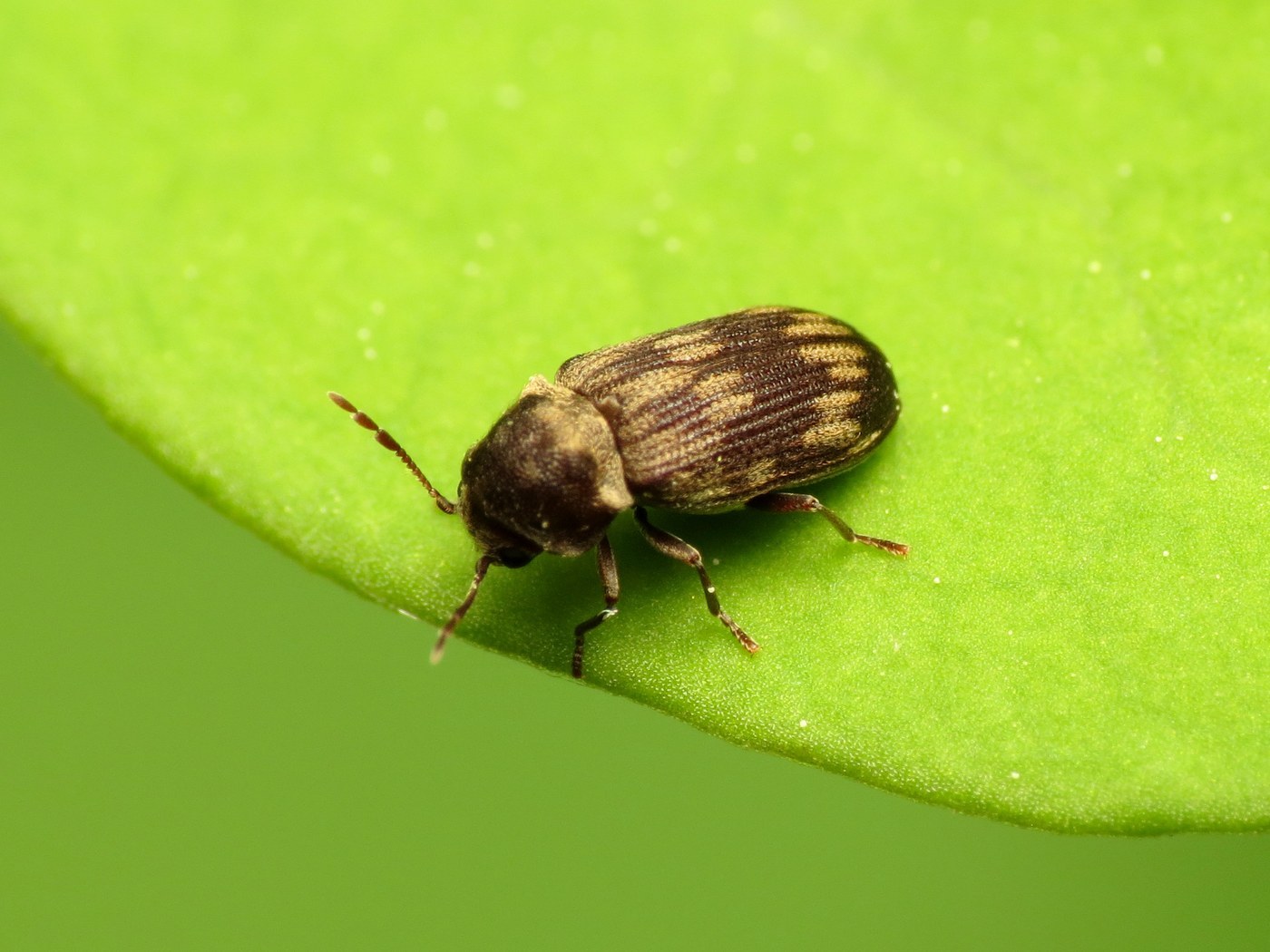
Deathwatch Beetle
A small, mottled brown wood-boring beetle famous for the faint ticking sound it makes by tapping its head against wood, historically associated with old timber-framed buildings.
beetlePine Processionary Moth
An unremarkable grey-brown moth known almost entirely through its larvae, which build large silken nests in pine trees and travel to feed in long, head-to-tail processions covered in fine defensive hairs.
mothTortoise Beetle
A small, flat, disc-shaped beetle whose expanded wing covers and pronotum hide its head and legs almost entirely, giving it the look of a miniature turtle shell crawling across a leaf.
beetleGolden Silk Orb-Weaver Spider
Famous for spinning enormous webs of shimmering golden silk, the golden silk orb-weaver is a large, long-legged spider of warm climates. Females dwarf the tiny males and hang head-down in their sprawling snares.
spiderBombardier Beetle
A dark, quick-moving ground beetle famous for firing a hot, audible chemical spray from its abdomen when disturbed, using two-tone coloring of a reddish head and thorax against blue-black wing covers as a warning signal.
beetleBackswimmer
A boat-shaped aquatic true bug that swims upside down using oar-like hind legs, patrolling pond water in search of small prey.
aquatic-insect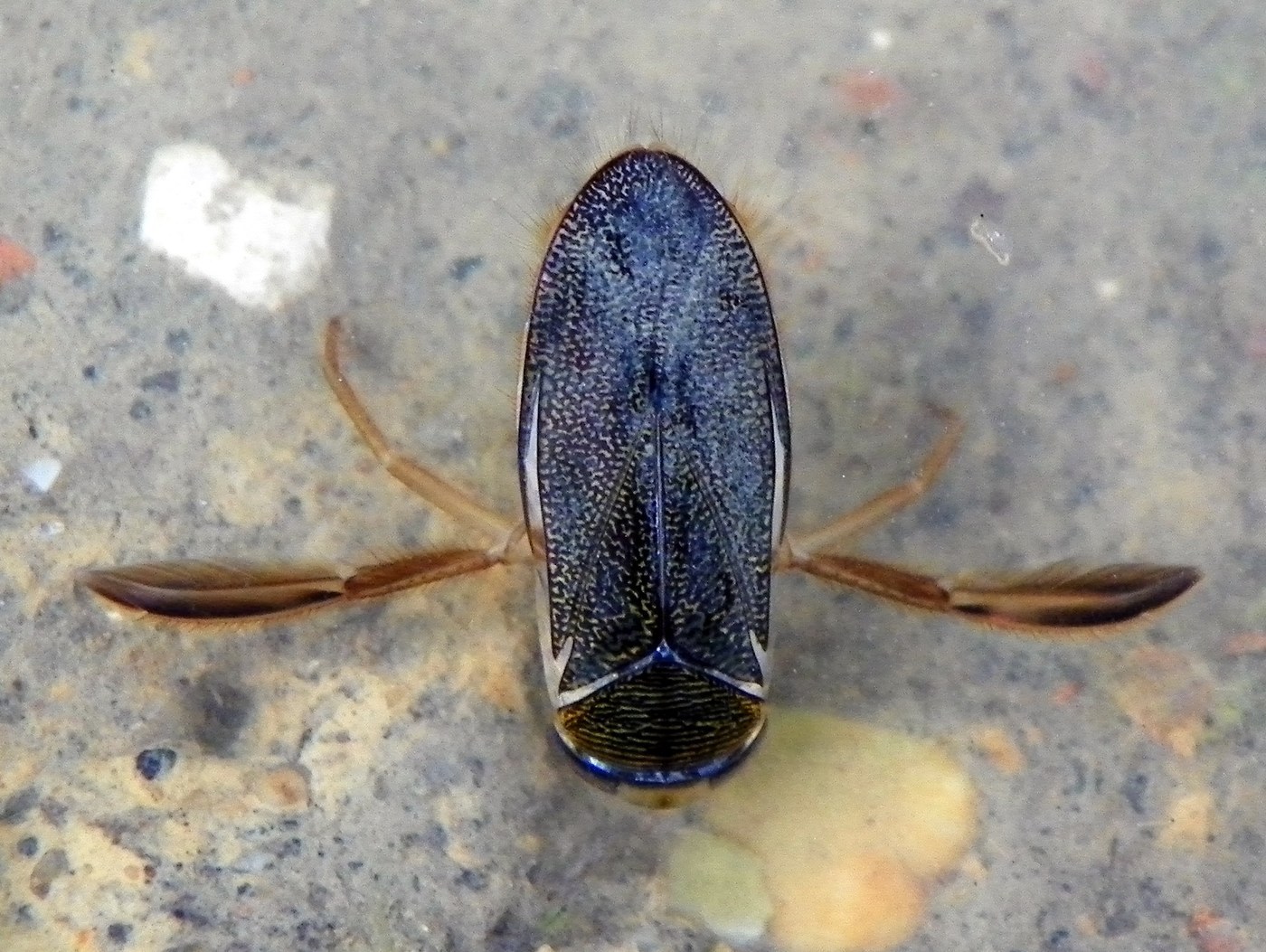
Lesser Water Boatman
A flat-backed, oar-legged true bug that rows through pond water with fringed hind legs, surfacing periodically to trap a silvery bubble of air against its body.
true-bugSnipe Fly
A slender, long-legged fly often seen perched head-down on a sunny tree trunk or fence post, patiently watching for smaller insects to ambush. Its tapered, wasp-like abdomen and habit of resting motionless with legs splayed give it a distinctive, almost sentry-like posture in woodland clearings.
fly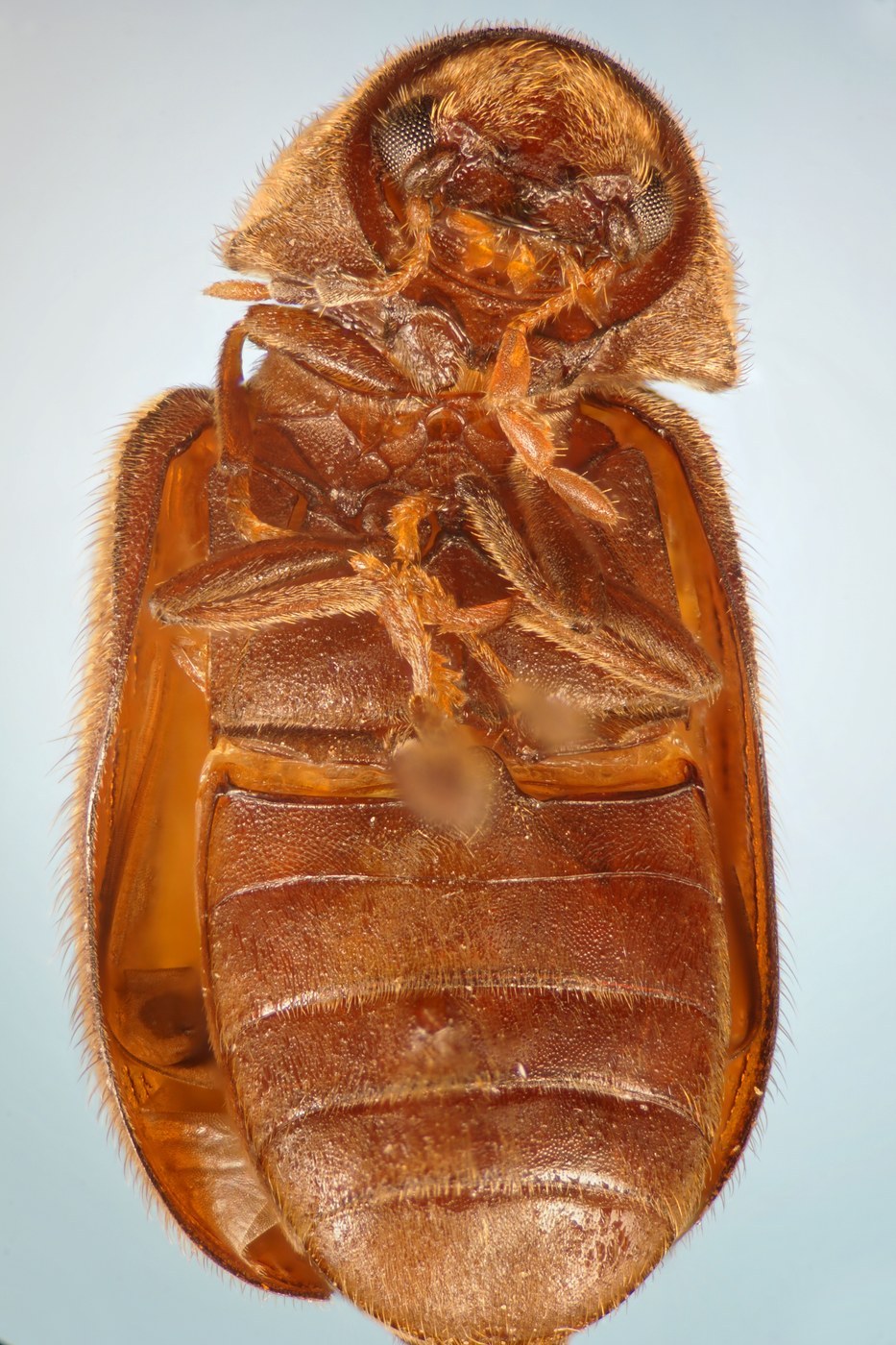
Drugstore Beetle
A tiny brown beetle with grooved wing covers that once earned its name by burrowing into dried herbs and medicines kept on pharmacy shelves.
beetle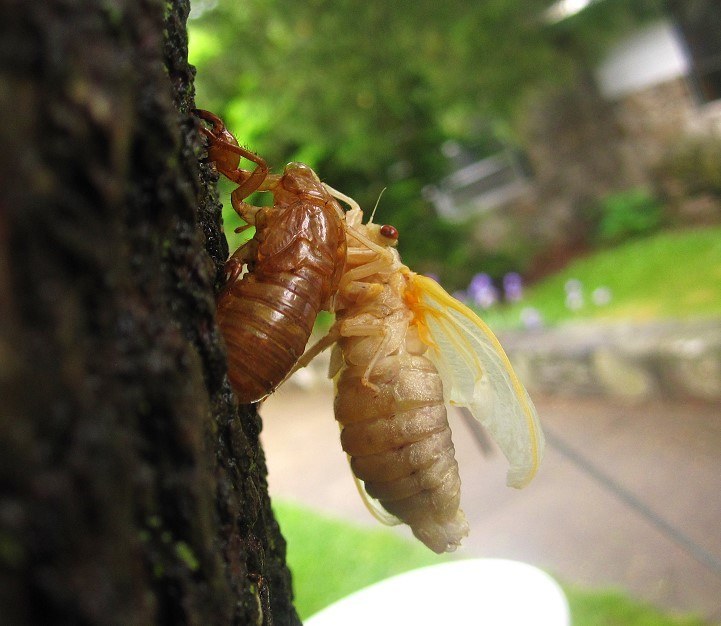
Periodical Cicada
A black-bodied cicada with striking red eyes and orange-veined wings, famous for emerging in massive, synchronized broods after spending 13 or 17 years developing underground.
true-bug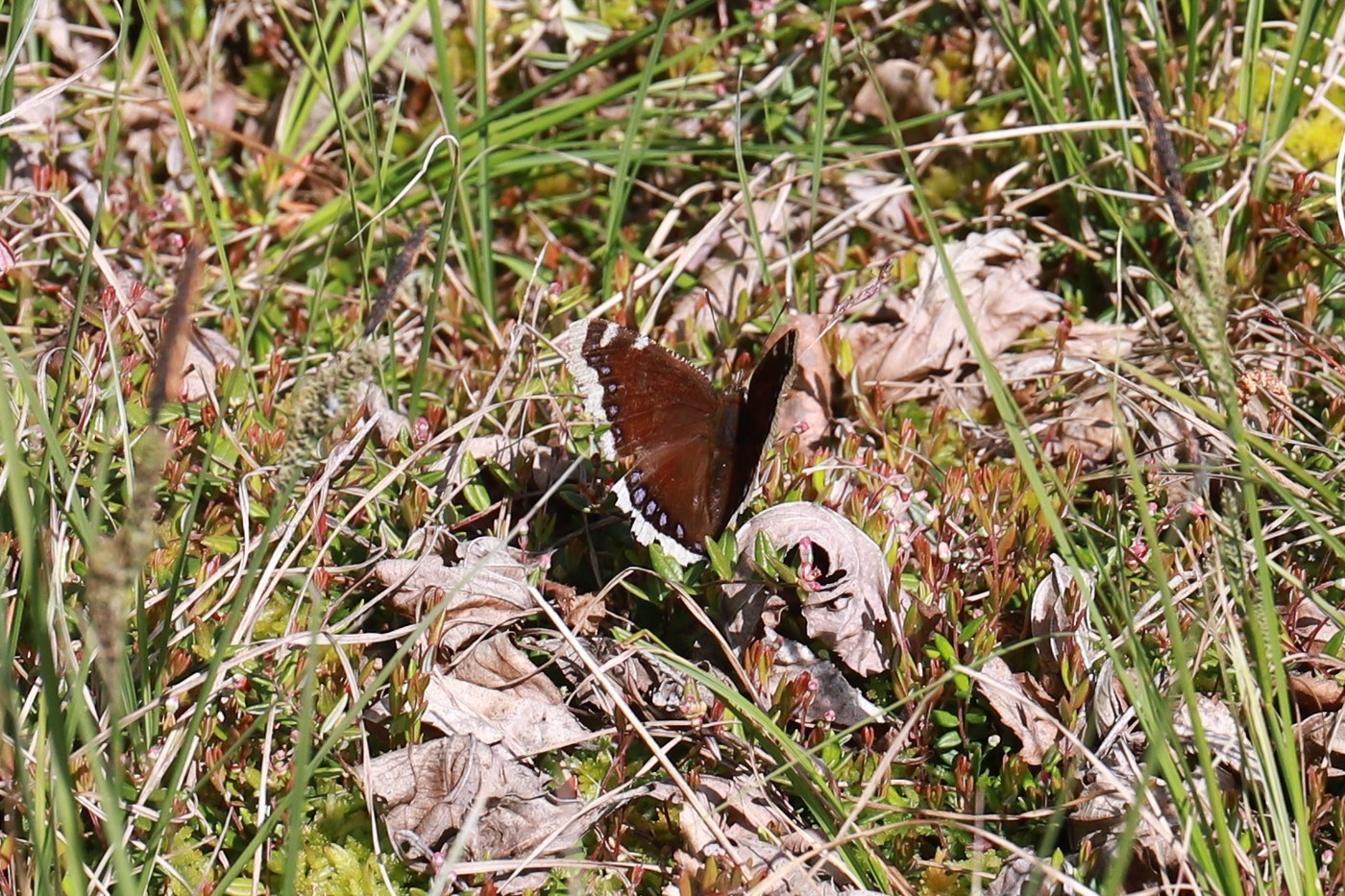
Mourning Cloak
A dark, velvety maroon-brown butterfly edged with a ragged cream-yellow border and a row of iridescent blue spots, notable for overwintering as an adult and often being one of the very first butterflies seen flying in early spring.
butterflyMourning Cloak Caterpillar
A gregarious, velvety black caterpillar speckled with white dots and a striking row of brick-red spots down its back, often seen feeding in clusters on willow branches.
caterpillar-larva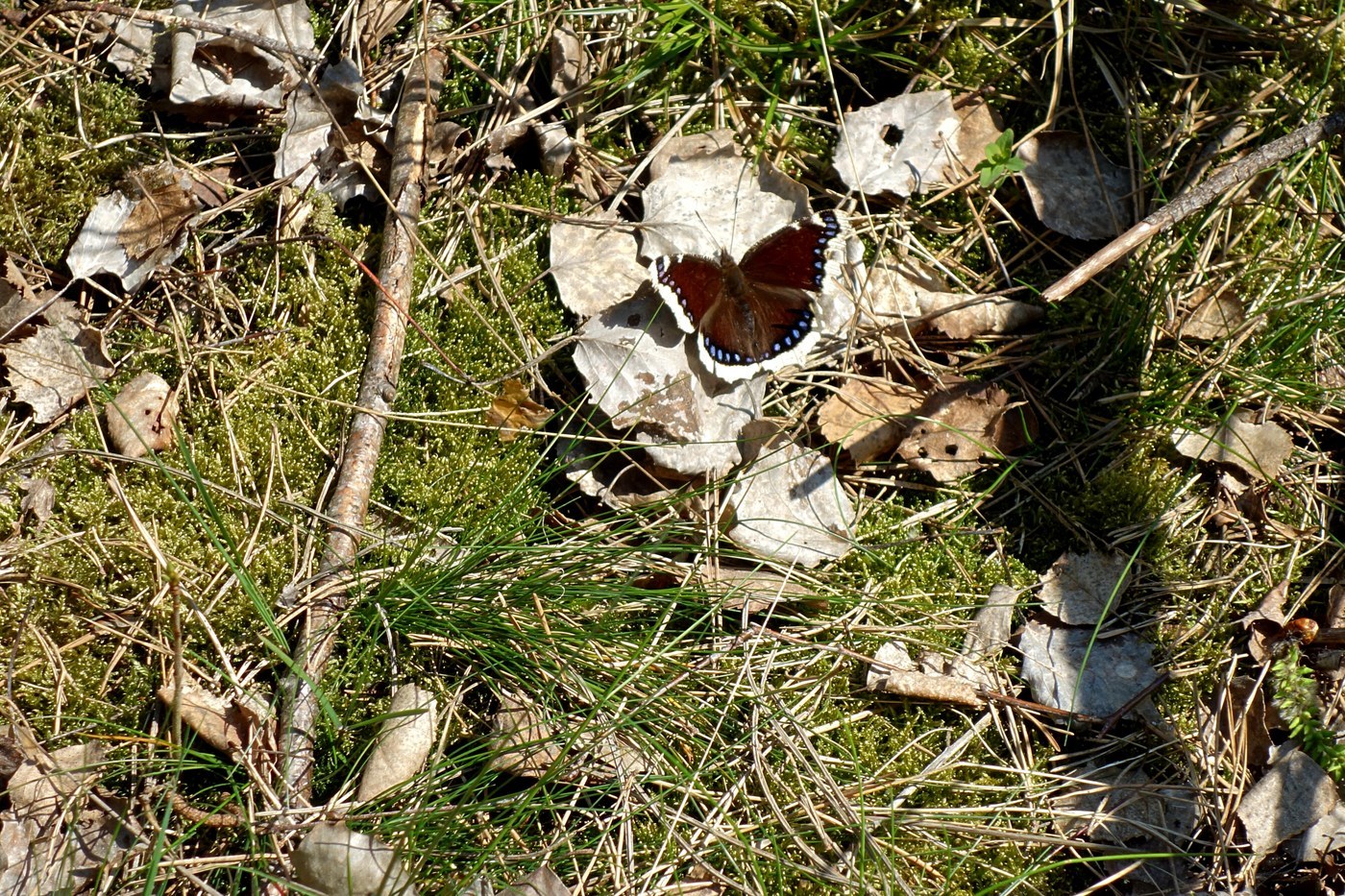
Mourning Cloak Butterfly
A deep maroon-brown butterfly bordered with a cream-yellow band and a row of iridescent blue spots, unusual among butterflies for overwintering as an adult and being one of the first to appear in early spring.
butterfly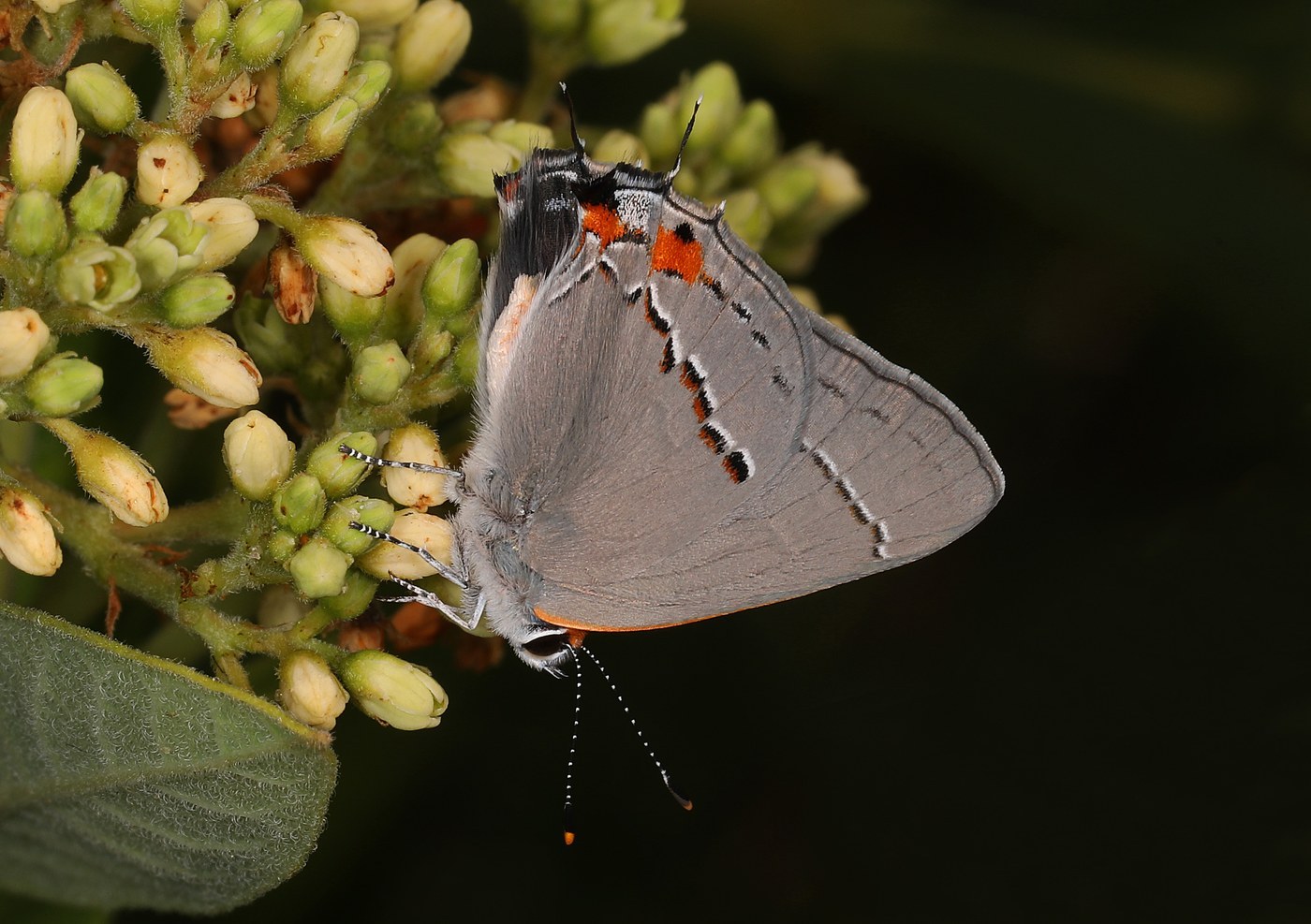
Gray Hairstreak
A small slate-gray butterfly with thin white lines, an orange-capped black spot near the hindwing tail, and one of the broadest host-plant ranges of any North American butterfly, making it a familiar visitor to gardens and fields alike.
butterfly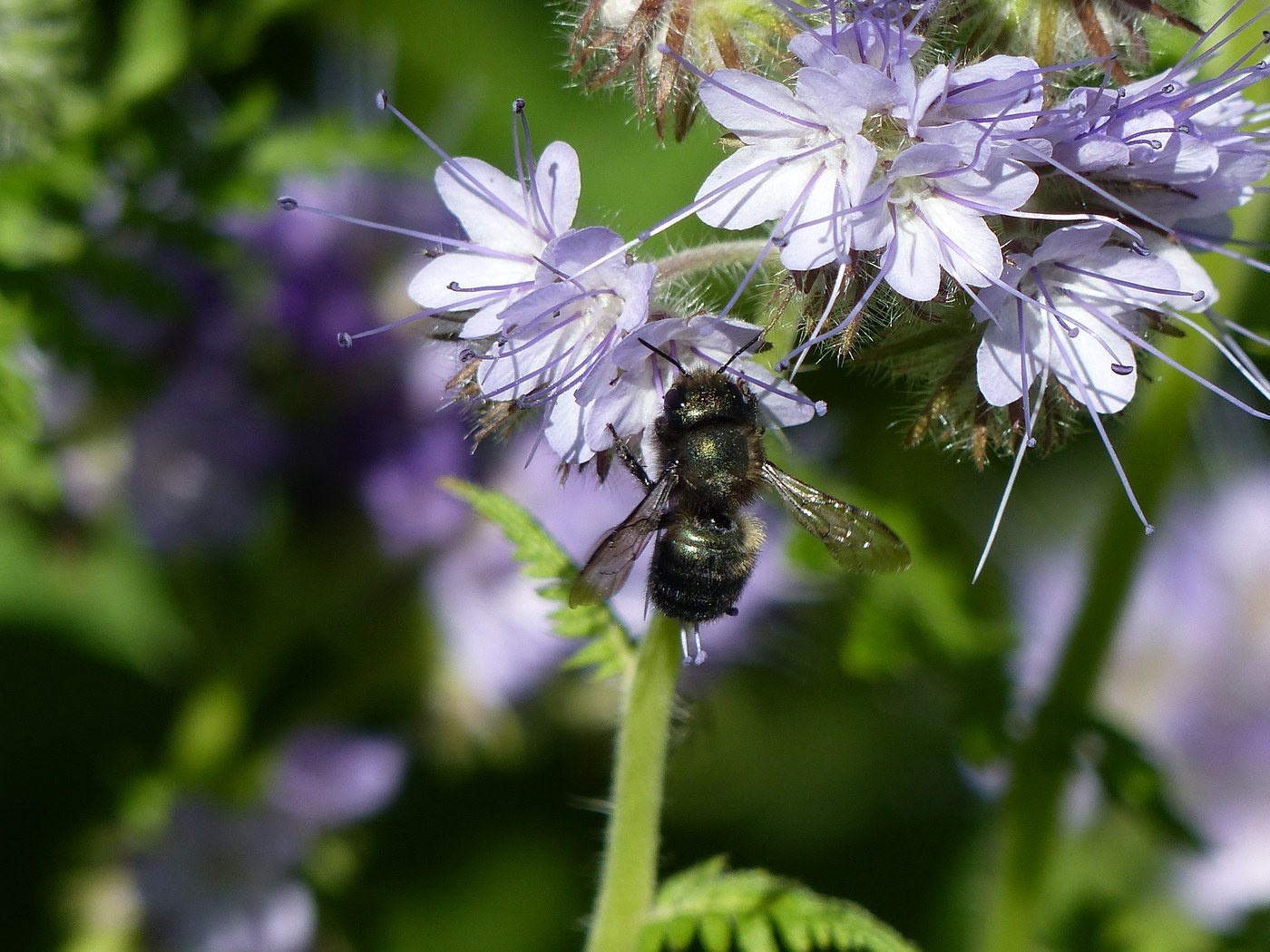
Mason Bee
A compact, metallic blue-black bee that nests in existing narrow cavities and seals its brood cells with mud, prized as one of the most efficient early-spring pollinators of fruit trees.
bee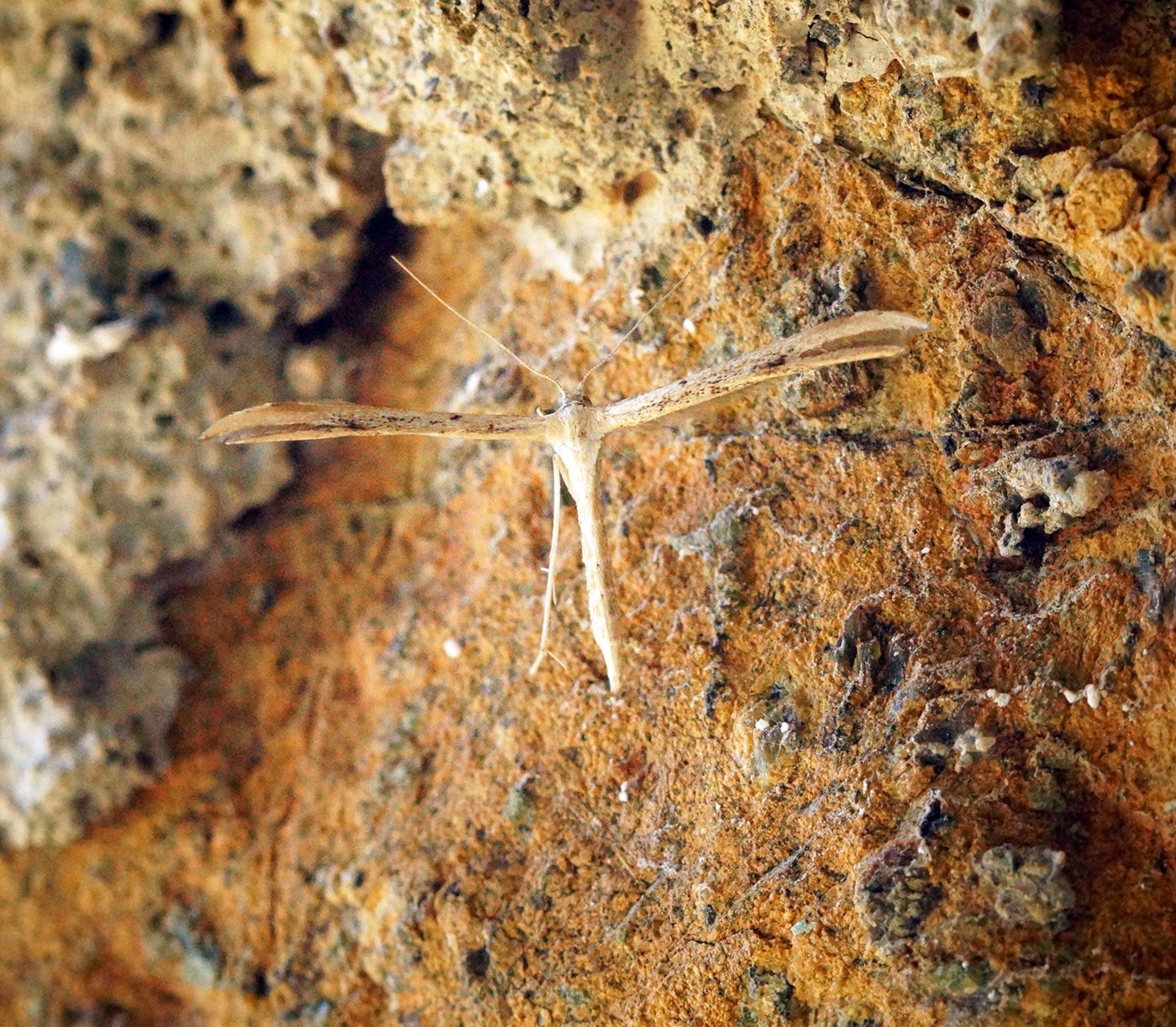
Plume Moth
A slender, long-legged moth that rests with its wings rolled tightly and held out at right angles to its body, forming a distinctive letter-T silhouette.
moth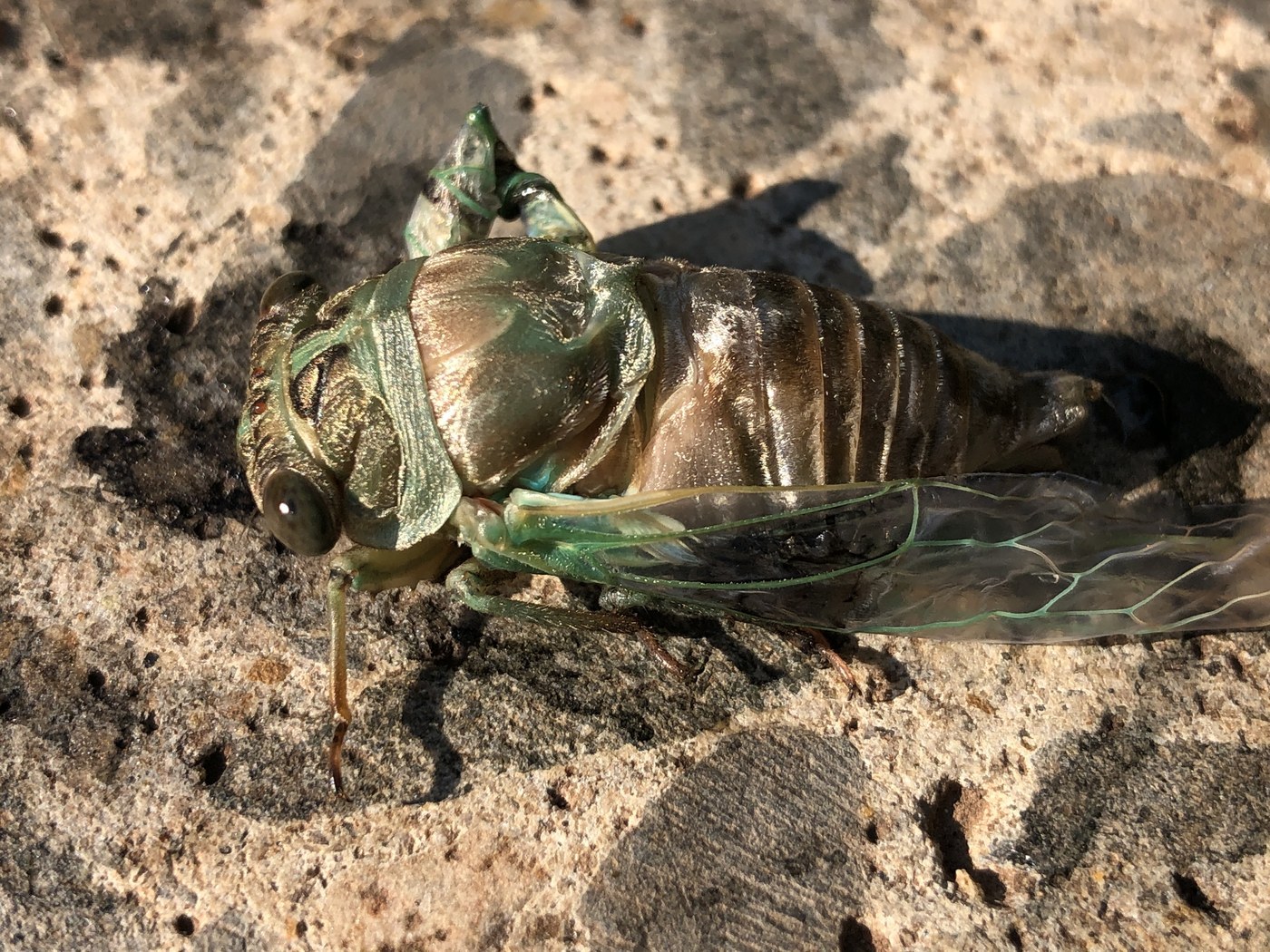
Dog-Day Cicada
A stout, thick-bodied cicada with mottled green and brown camouflage patterning, named for its loud droning calls heard during the hot "dog days" of late summer.
true-bug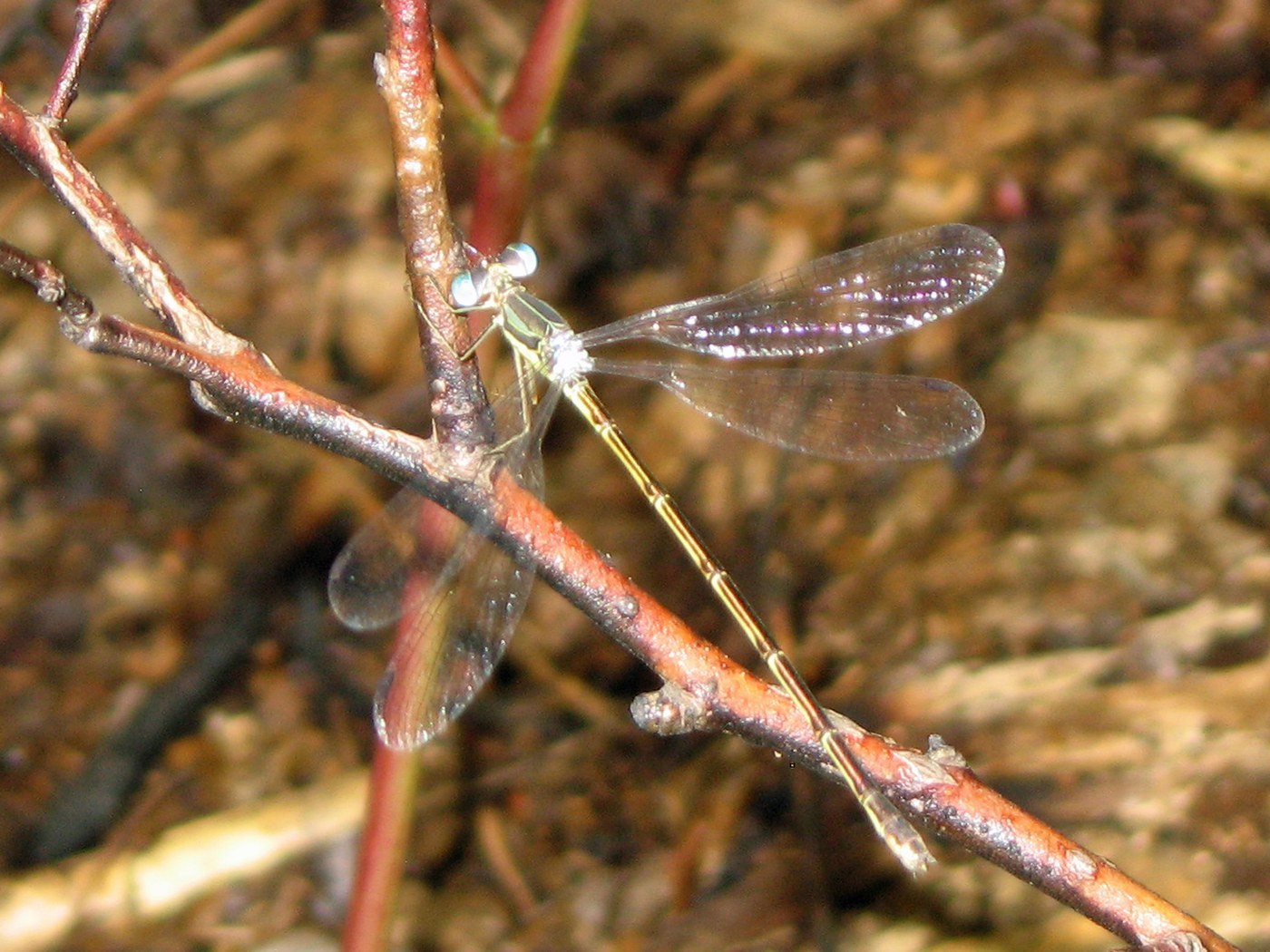
Common Spreadwing
True to its family name, the Common Spreadwing perches with its wings held out at an angle rather than folded together, setting it apart from most other damselflies.
dragonfly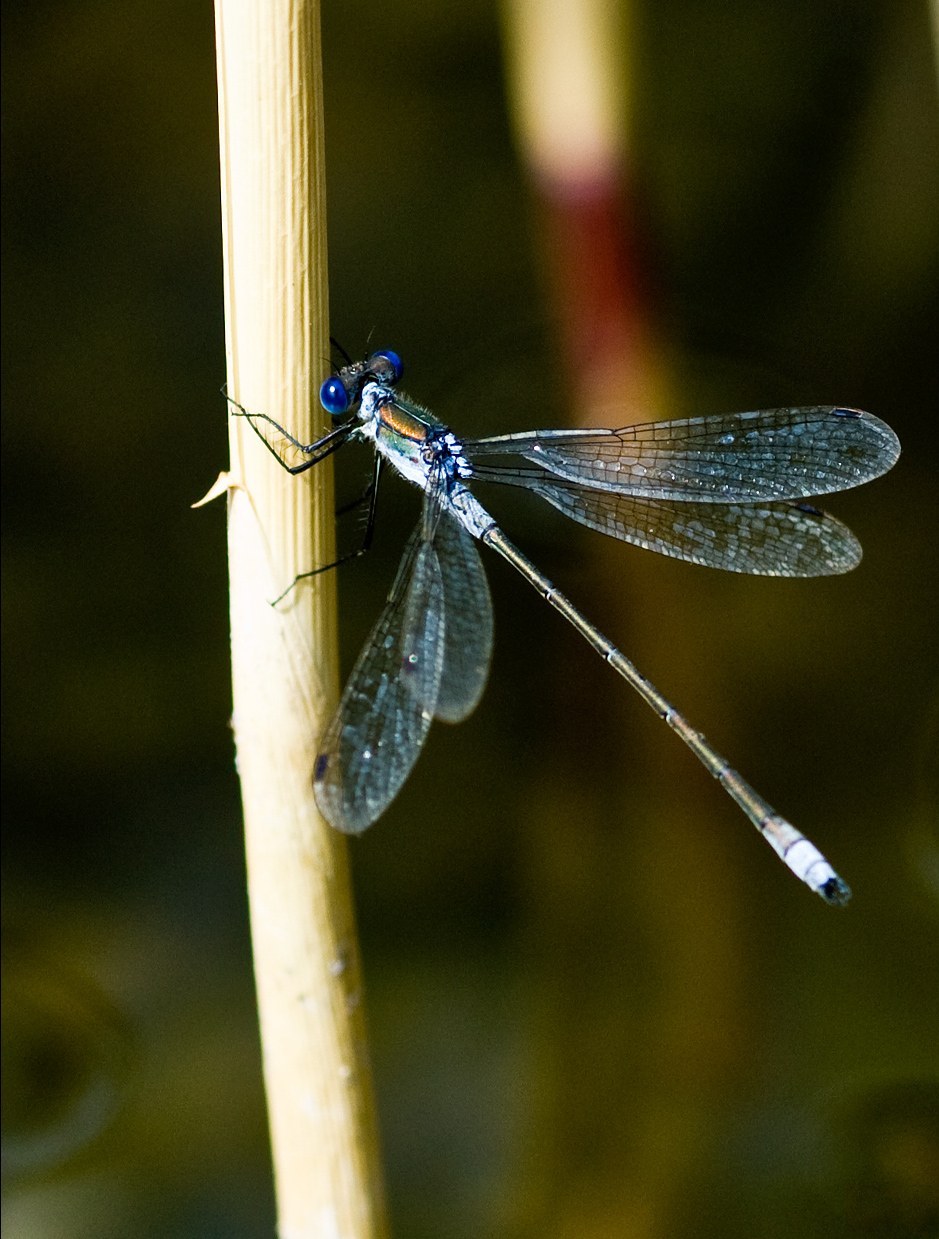
Emerald Spreadwing
A robust, metallic green damselfly of northern wetlands, the Emerald Spreadwing rests with its wings held open in the characteristic spreadwing posture and thrives in shallow, seasonal ponds.
dragonfly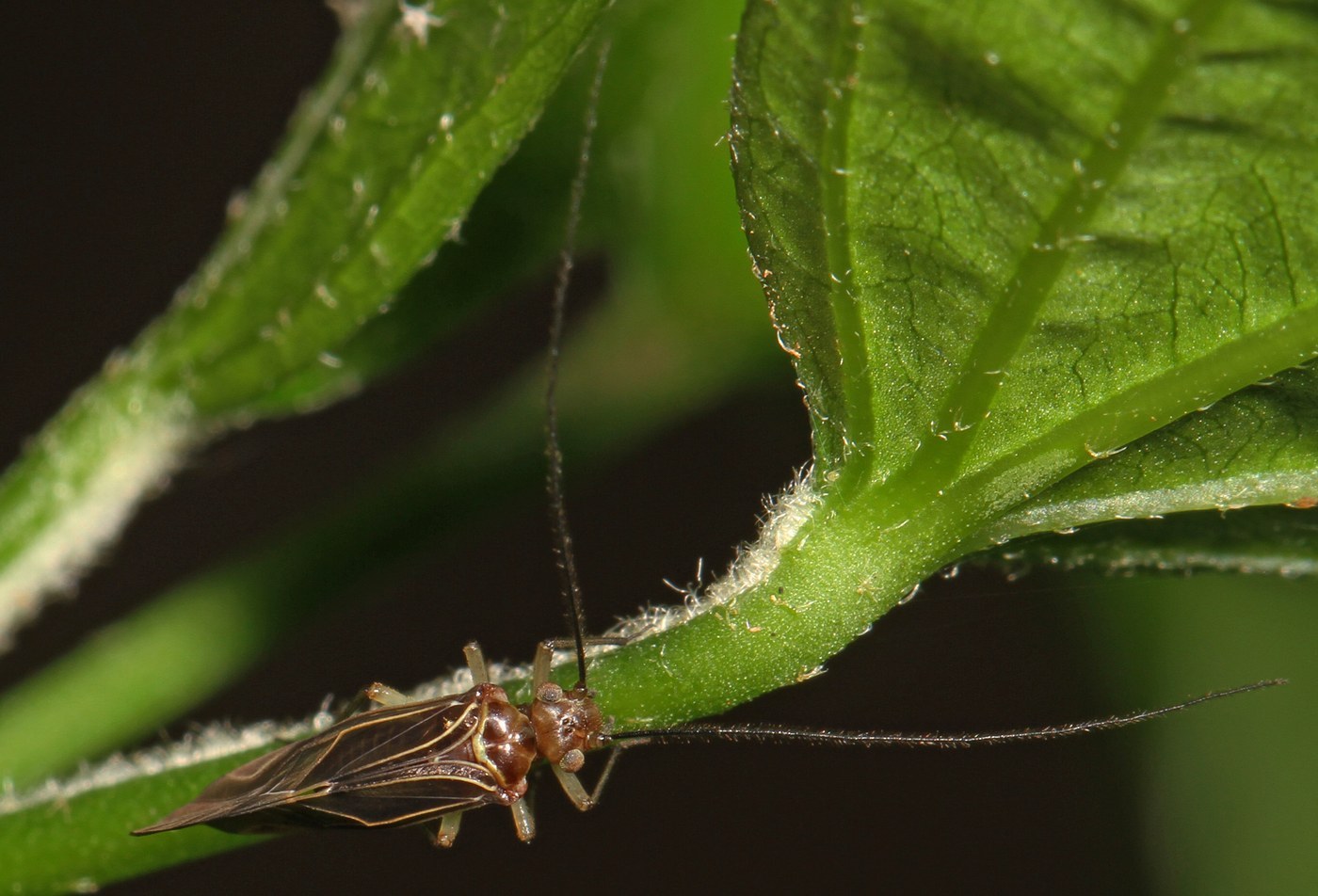
Bark Louse
A small, soft-bodied insect often seen in dense, moving herds on tree trunks, the bark louse grazes on algae, lichen, and fungal residue coating bark surfaces.
other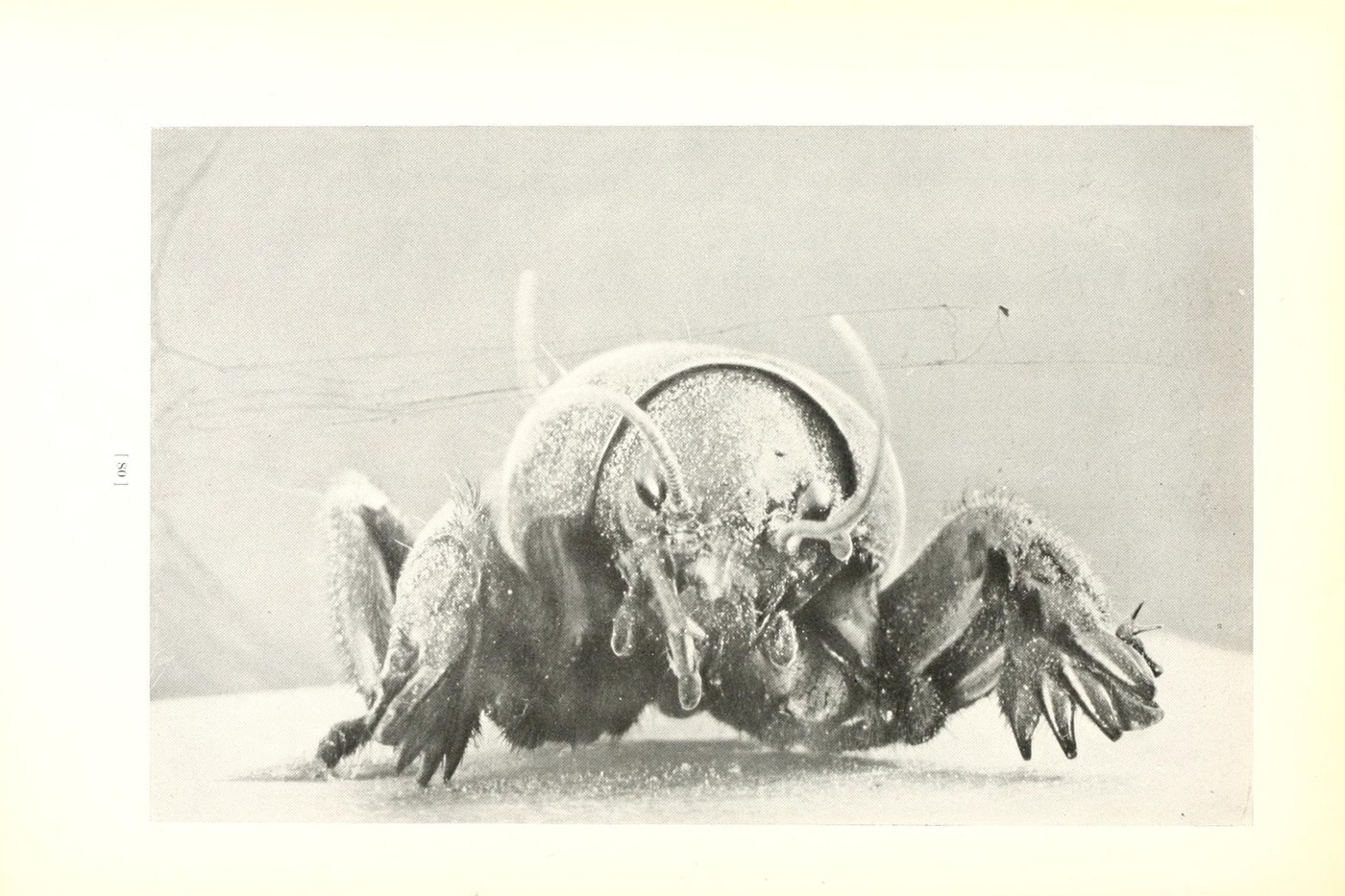
Northern Mole Cricket
A stout, velvety brown cricket with shovel-like front legs built for tunneling through damp soil, more often heard as a low buzzing trill at night than seen above ground.
grasshopper-cricket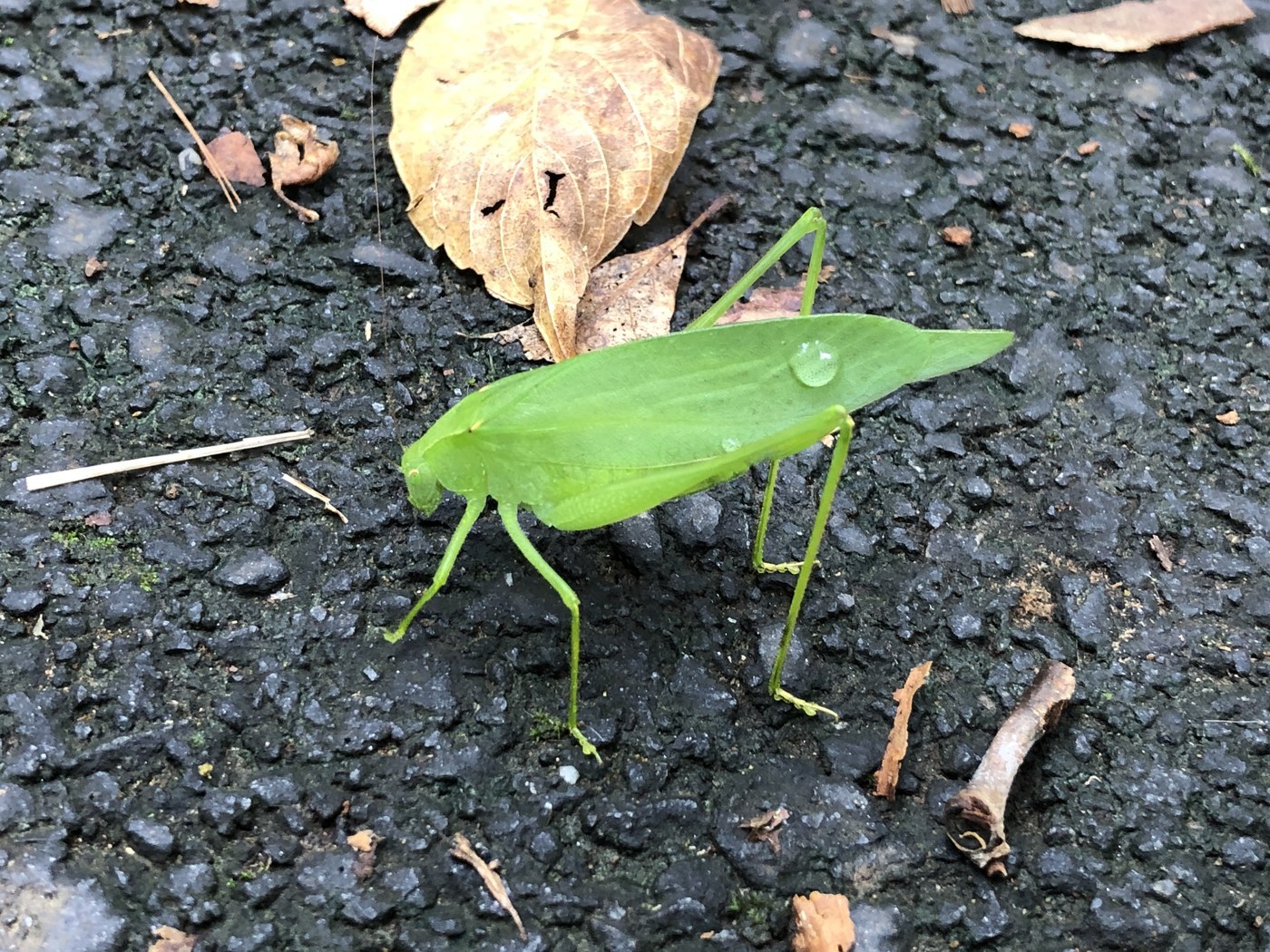
Common True Katydid
A living leaf that spends its life high in the treetops, the common true katydid is far more often heard than seen, producing the loud, rasping "katy-did, katy-didn't" chorus that fills eastern summer nights.
grasshopper-cricket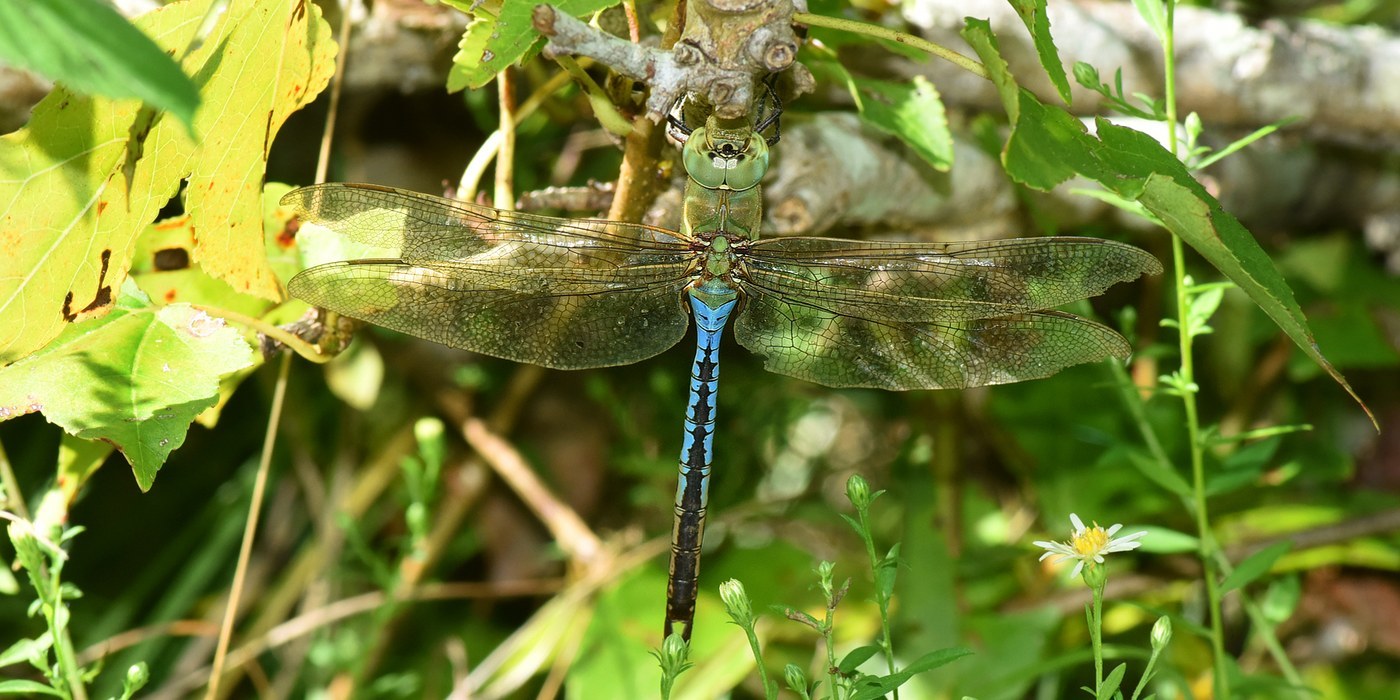
Dragonfly
A large, agile aerial predator with an elongated body, enormous compound eyes, and two pairs of strong wings held straight out to the sides at rest, often seen patrolling over water in search of prey.
dragonflyBush Cricket
Known by its long, thread-like antennae and evening chorus of chirps, this leaf-colored insect spends its life hidden among grass and foliage, often heard far more often than seen.
grasshopper-cricket