
Bug Encyclopedia
Search and identify bugs & insects — beetles, butterflies, moths, ants, bees, spiders and more — with size, habitat, danger, behavior, and how to tell them apart.
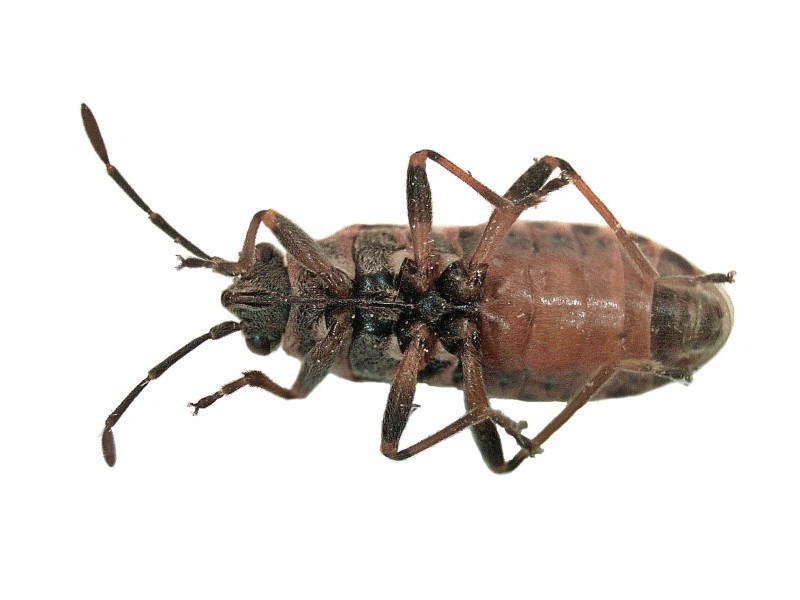
Elm Seed Bug
A slim, brownish-orange seed bug that develops on elm seeds and becomes a familiar autumn nuisance as it seeks shelter on sun-warmed walls and window frames.
true-bug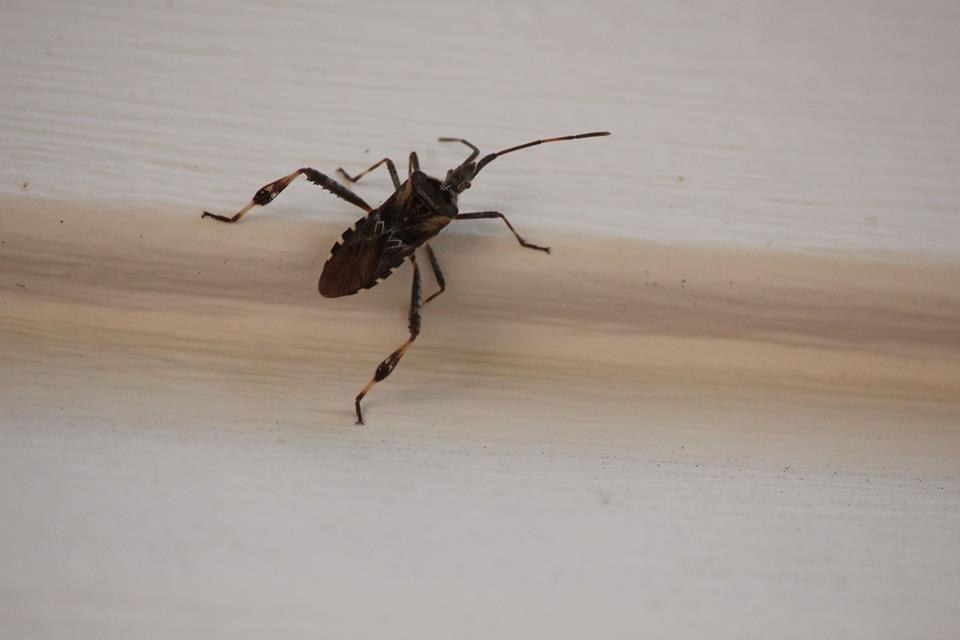
Western Conifer Seed Bug
A large brown true bug with flattened, leaf-shaped hind legs, native to conifer forests of the western United States but now widespread and notorious for gathering on and inside buildings as cooler weather approaches.
true-bugGrasshopper
A robust, strong-jumping insect with short antennae and powerful hind legs, commonly seen springing away through grass and low vegetation on warm sunny days.
grasshopper-cricketGrass Spider
Best known for the shimmering, dew-covered funnel webs that appear across lawns on autumn mornings, grass spiders are swift, striped runners that dash into a silken tunnel the instant prey - or a threat - approaches.
spider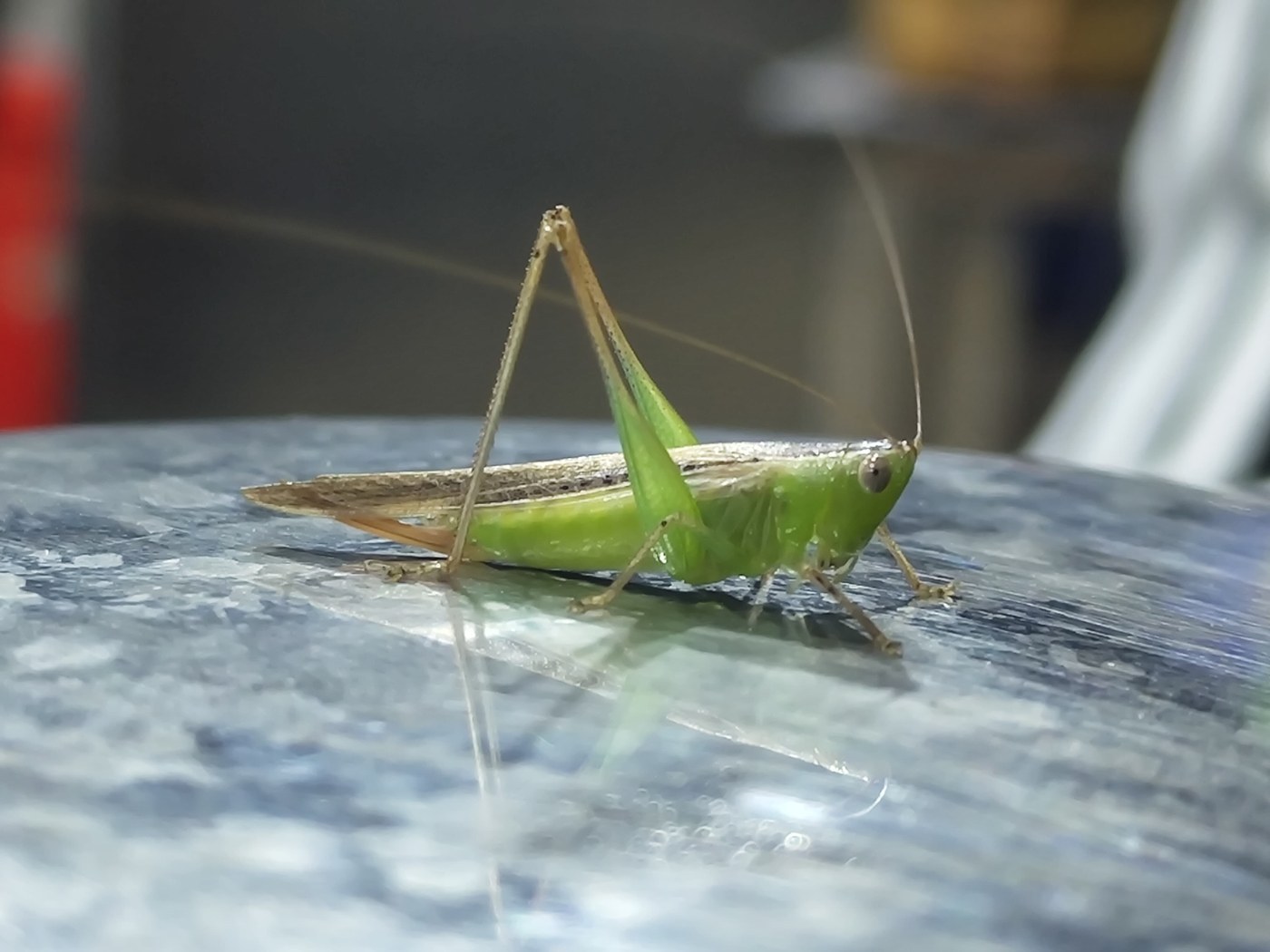
Green Grasshopper
A bright grass-green grasshopper with a rasping, sustained song, the common green grasshopper is one of the most familiar sounds of a European summer meadow.
grasshopper-cricketPygmy Grasshopper
A tiny, ground-hugging grasshopper with an elongated pronotum extending back over its body, often found hopping along muddy pond edges.
grasshopper-cricketLubber Grasshopper
Heavy-bodied and slow-moving, lubber grasshoppers make up for their poor flying ability with large size, bold coloring, and a lumbering, ground-bound lifestyle.
grasshopper-cricket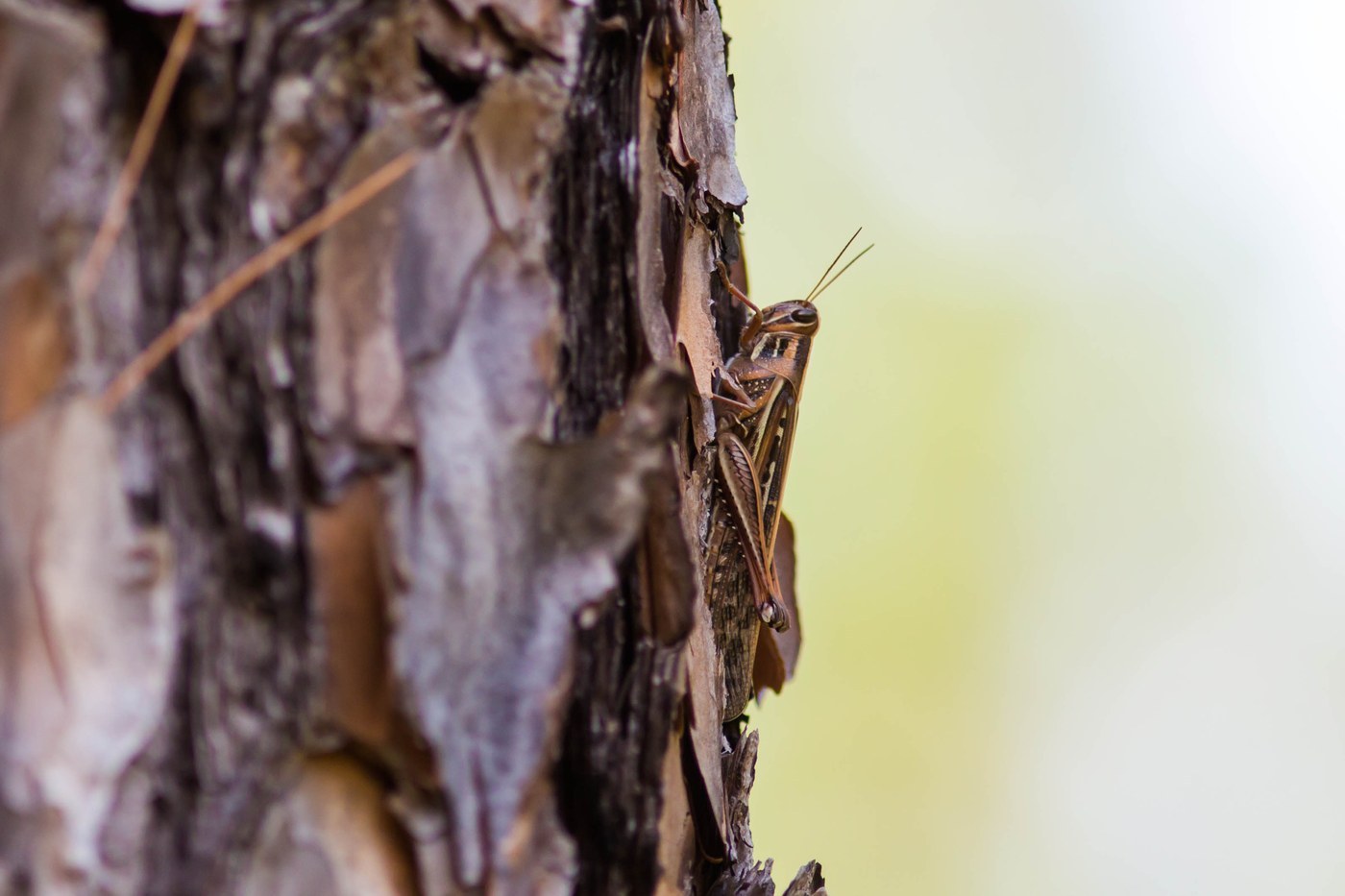
American Grasshopper
A large, strong-flying grasshopper related to the locusts of the Old World, the American grasshopper can occasionally form dense, damaging aggregations across the southern United States.
grasshopper-cricket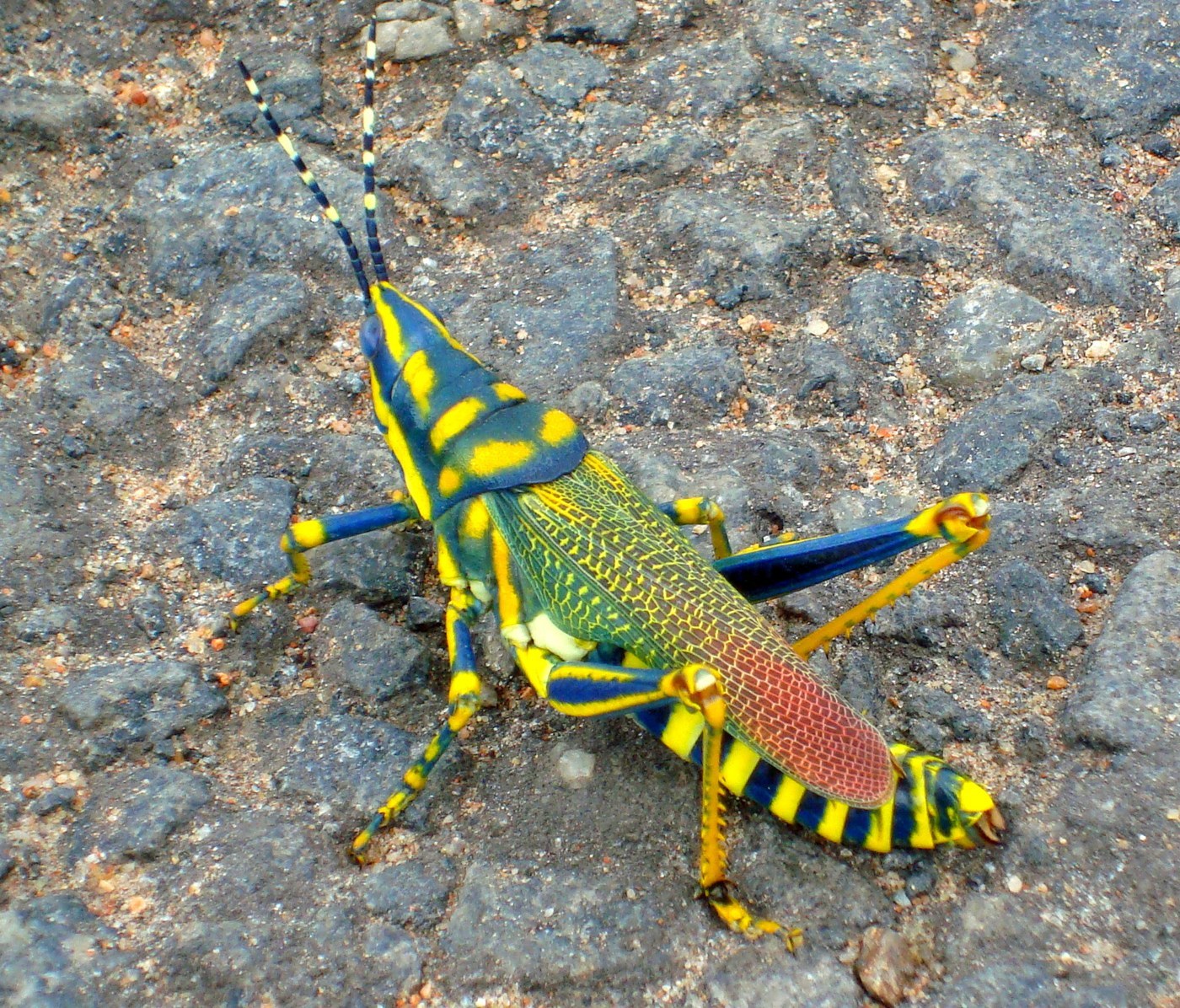
Painted Grasshopper
A large, boldly striped grasshopper of South Asia whose vivid green, yellow, and black pattern warns predators that it has fed on toxic milkweed plants.
grasshopper-cricket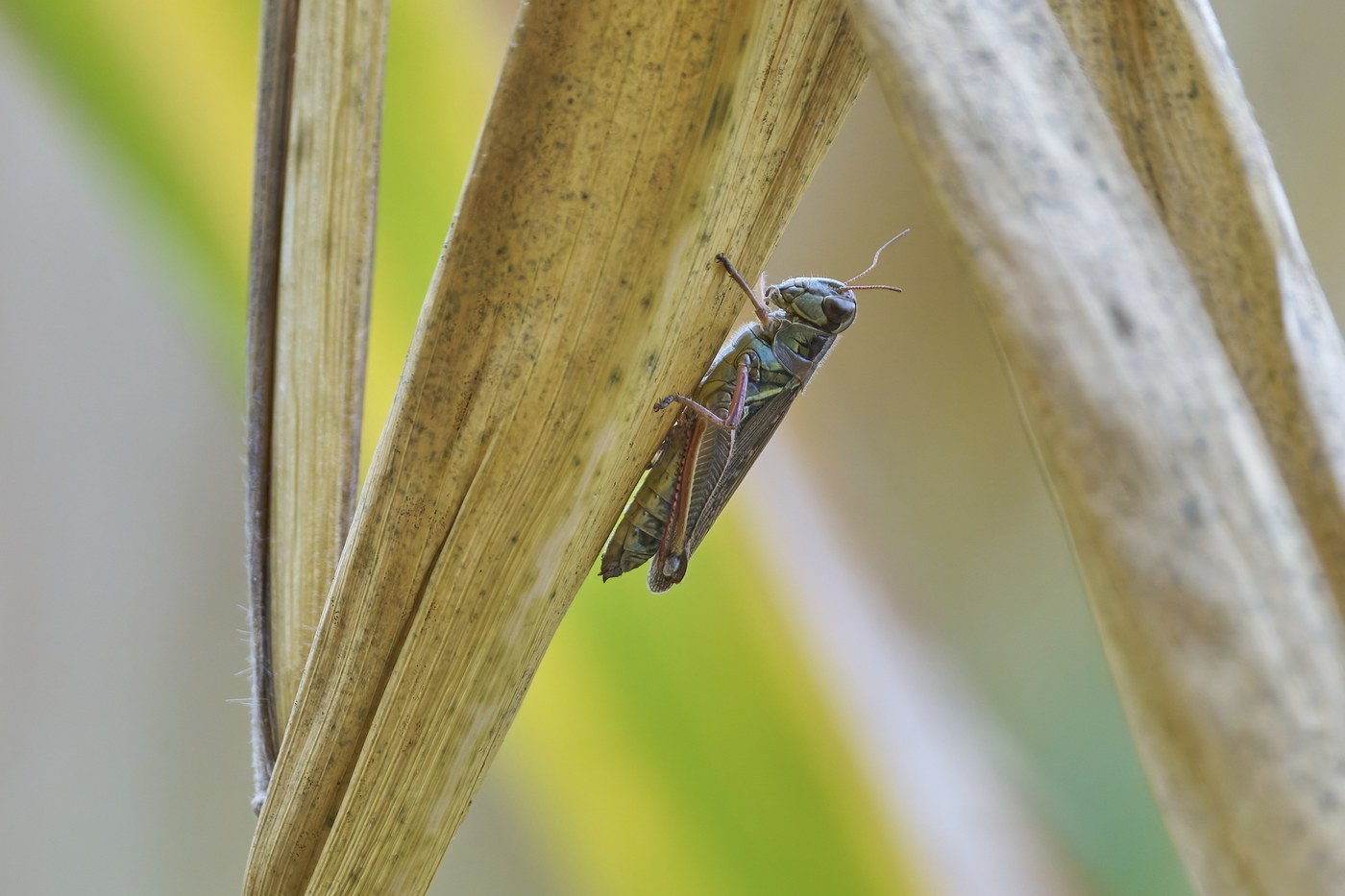
Red-legged Grasshopper
One of the most abundant and widespread grasshoppers in North America, the red-legged grasshopper is easily spotted by its reddish hind shins flashing amid a brown, mottled body.
grasshopper-cricket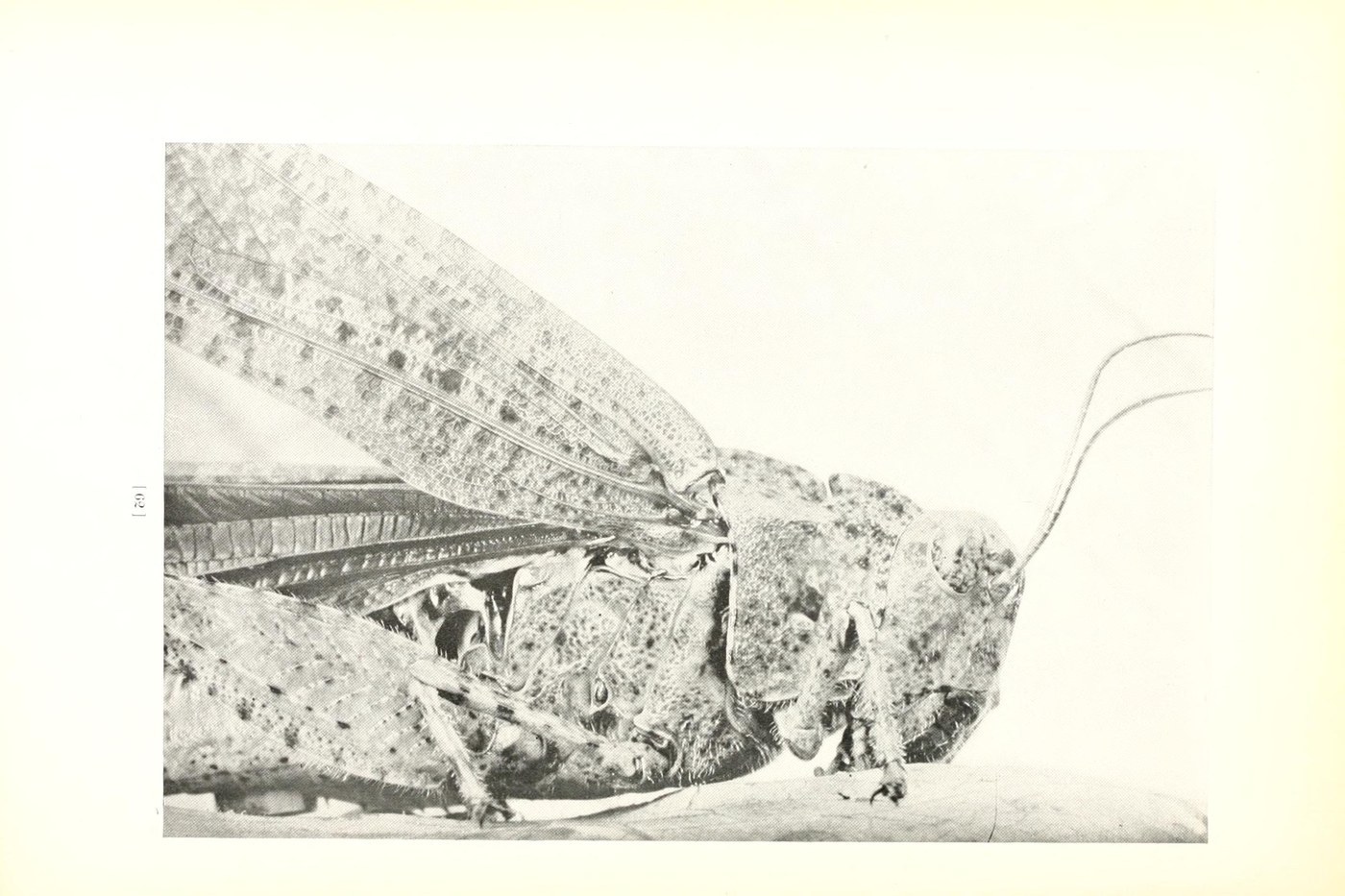
Carolina Grasshopper
Well camouflaged against dusty ground until it bursts into flight, the Carolina grasshopper flashes broad black hindwings edged in pale yellow before dropping back into invisibility.
grasshopper-cricketBand-winged Grasshopper
A camouflaged grasshopper that flashes vivid yellow, red, or blue hindwings in flight before vanishing again into the dust the instant it lands.
grasshopper-cricket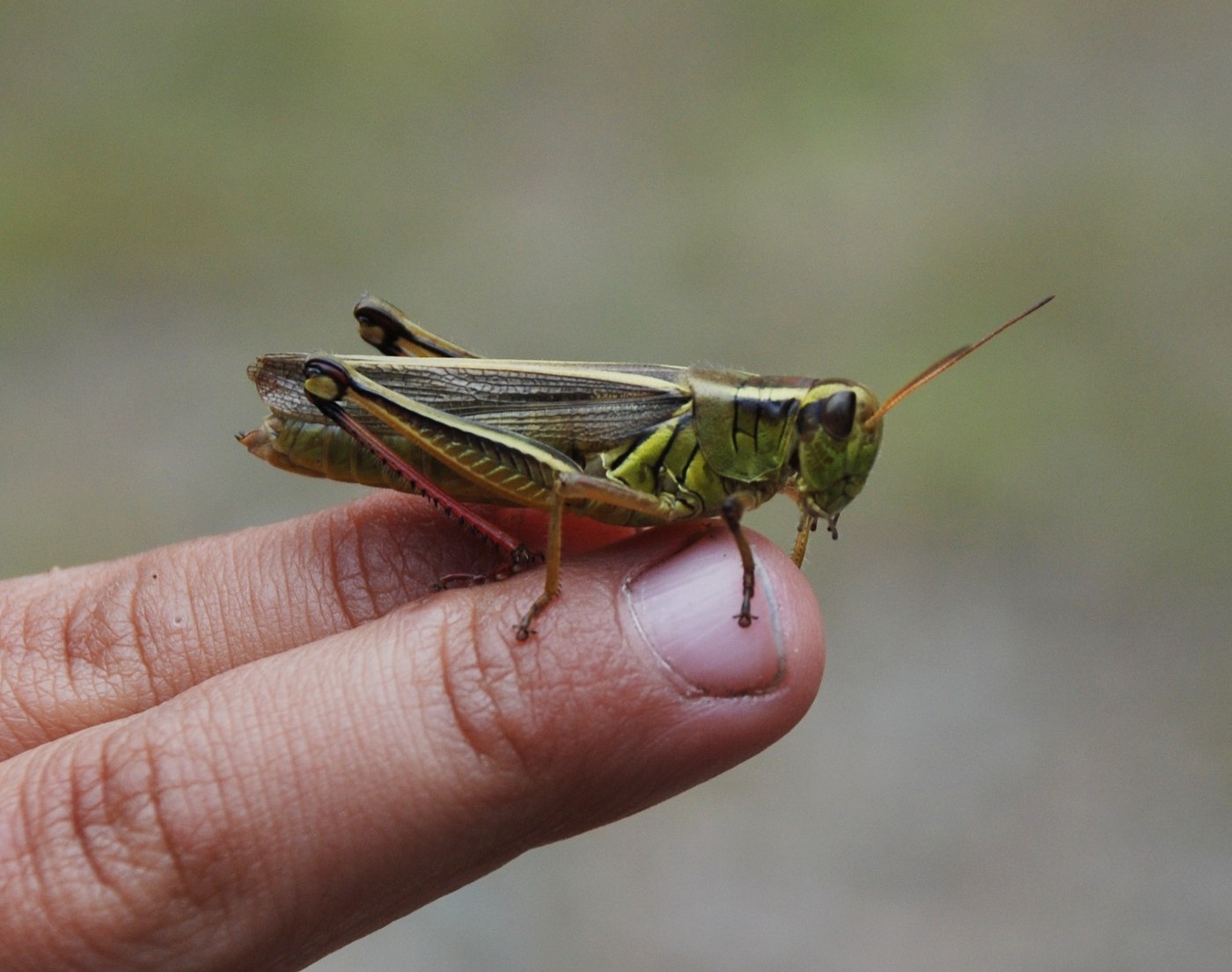
Two-striped Grasshopper
Easily spotted by the pair of pale cream stripes running the length of its body, the two-striped grasshopper is one of the largest and most economically important grasshoppers in North America.
grasshopper-cricket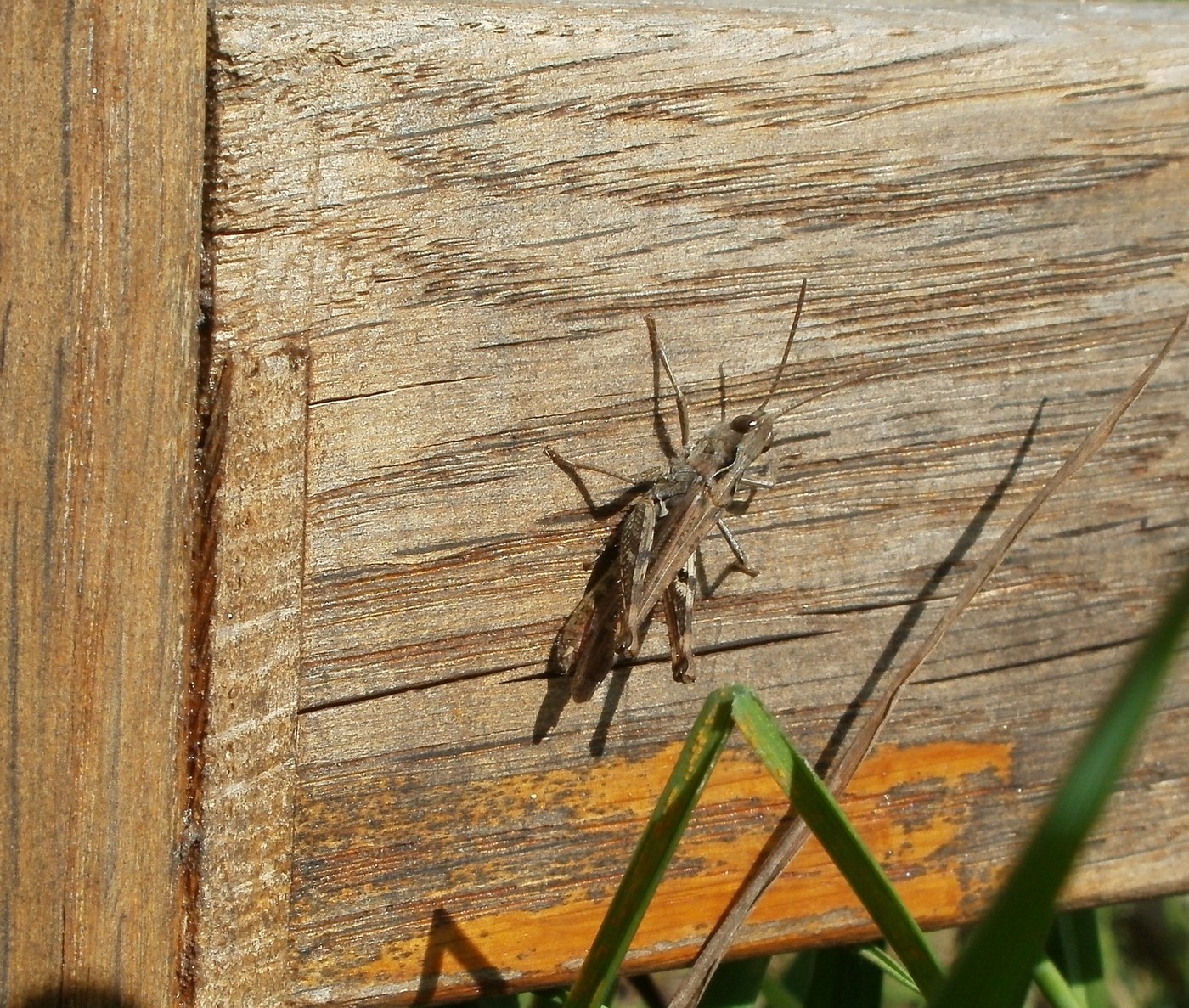
Blue-winged Grasshopper
A drab, camouflaged grasshopper that startles onlookers with a sudden flash of bright blue hindwings the instant it takes flight.
grasshopper-cricket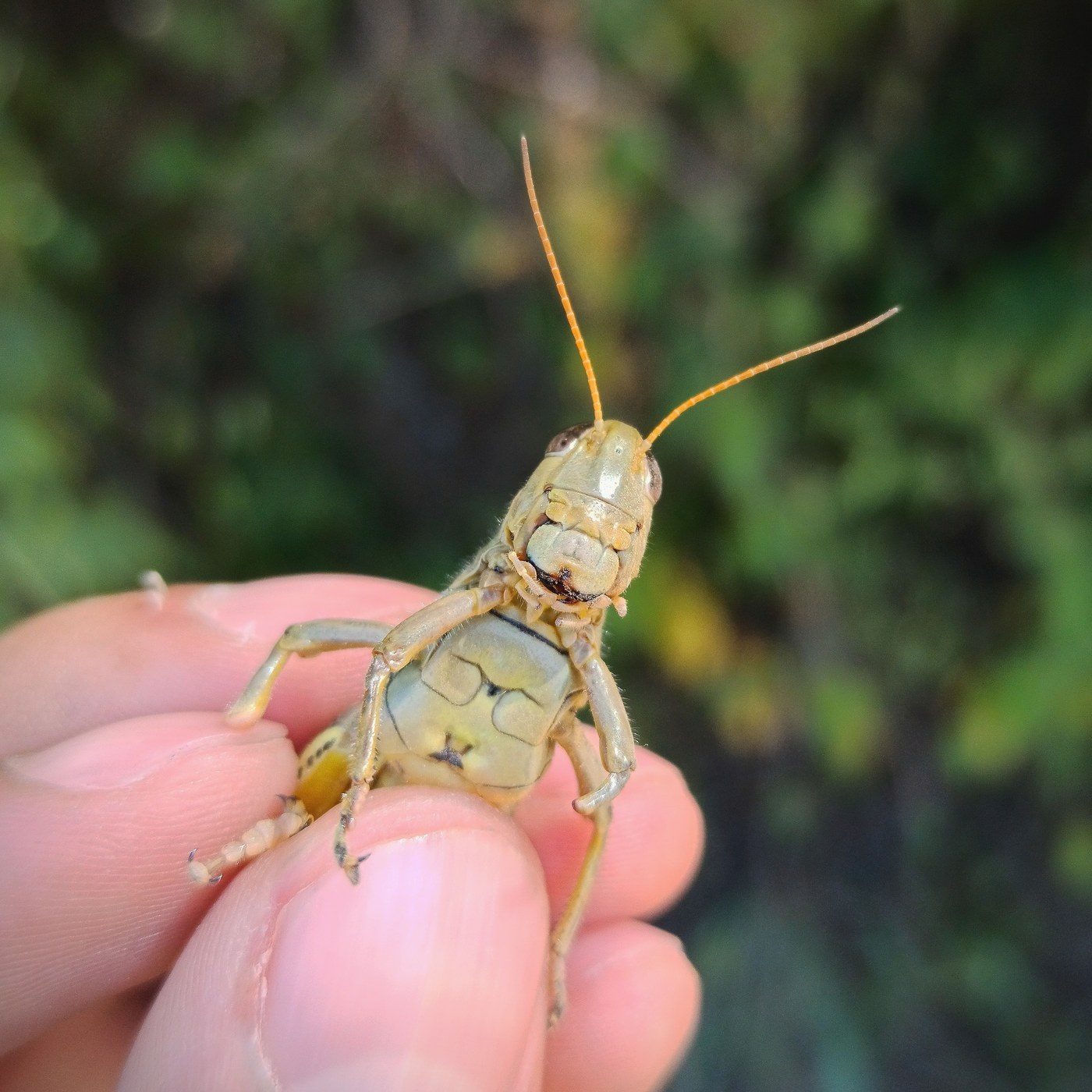
Differential Grasshopper
A large, robust grasshopper with a bold black herringbone pattern etched along its swollen hind legs, the differential grasshopper is one of the biggest and most recognizable pest grasshoppers in North America.
grasshopper-cricketSpur-throated Grasshopper
One of the most familiar grasshopper groups in North America, named for the small spine on its throat and known for including some of the continent's most abundant rangeland species.
grasshopper-cricket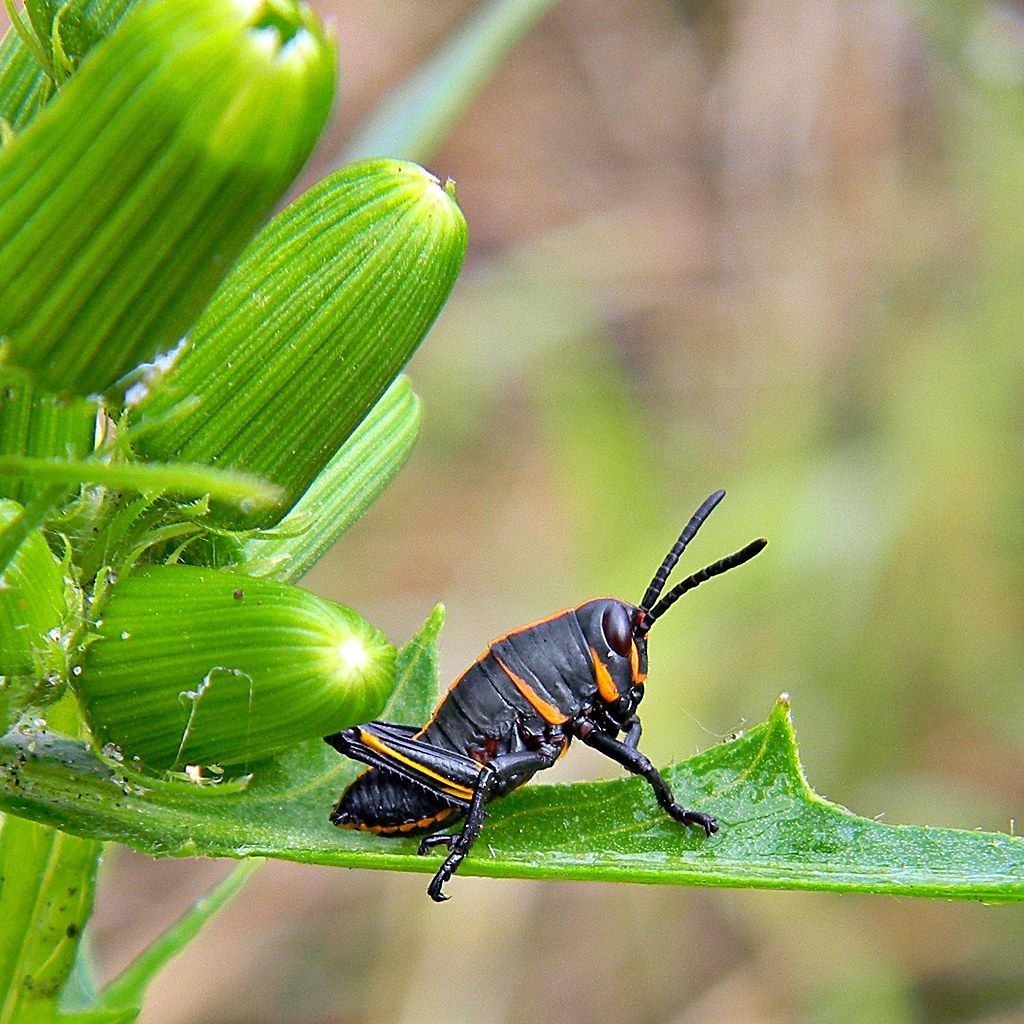
Eastern Lubber Grasshopper
One of the largest grasshoppers in North America, the eastern lubber is a slow, flightless giant clad in bold black, yellow, and red that announces its presence rather than hiding from it.
grasshopper-cricket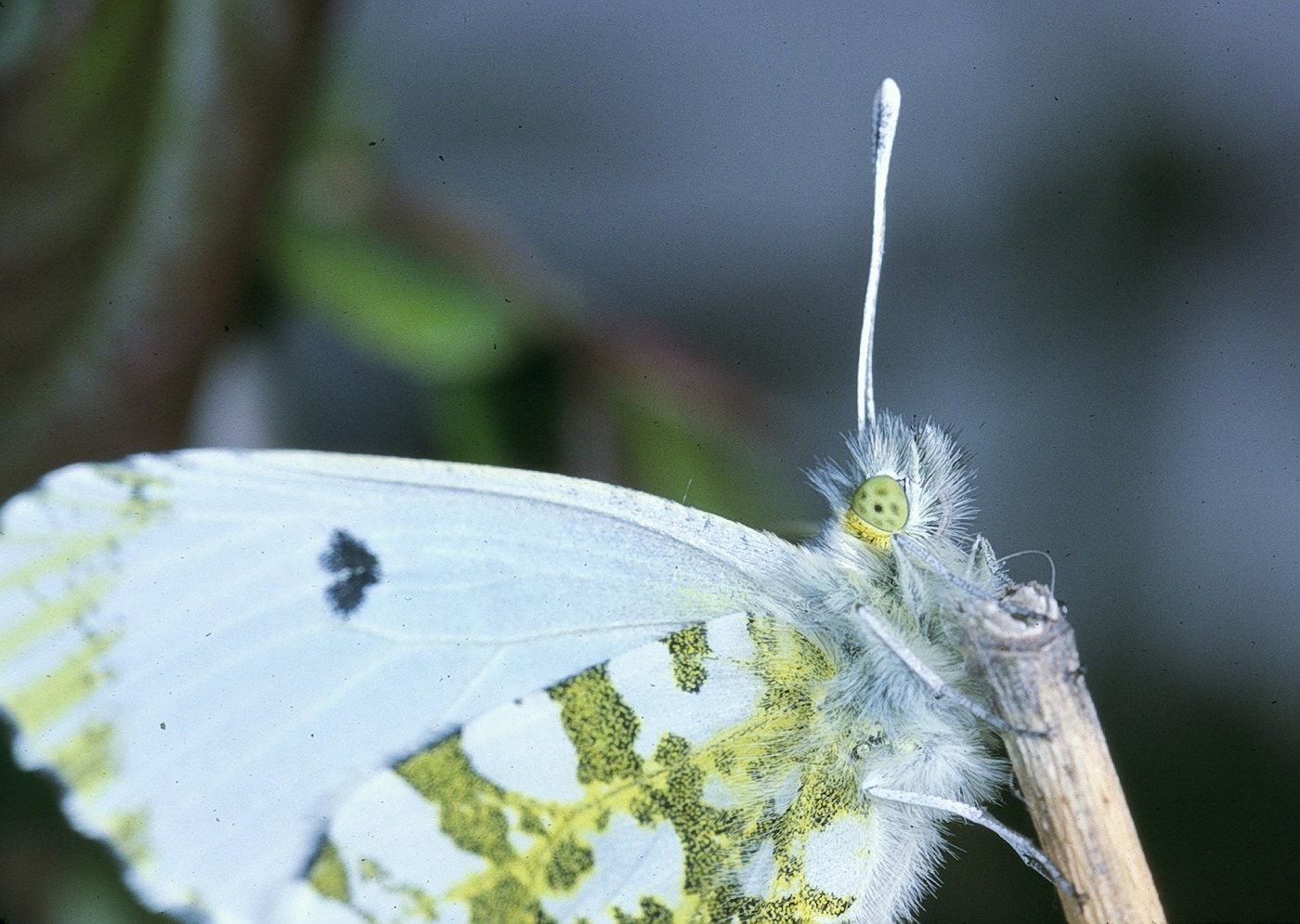
Orange Tip
A dainty white butterfly whose males flash vivid orange wingtip patches, while both sexes show a beautifully marbled green-and-white pattern on the underwings.
butterfly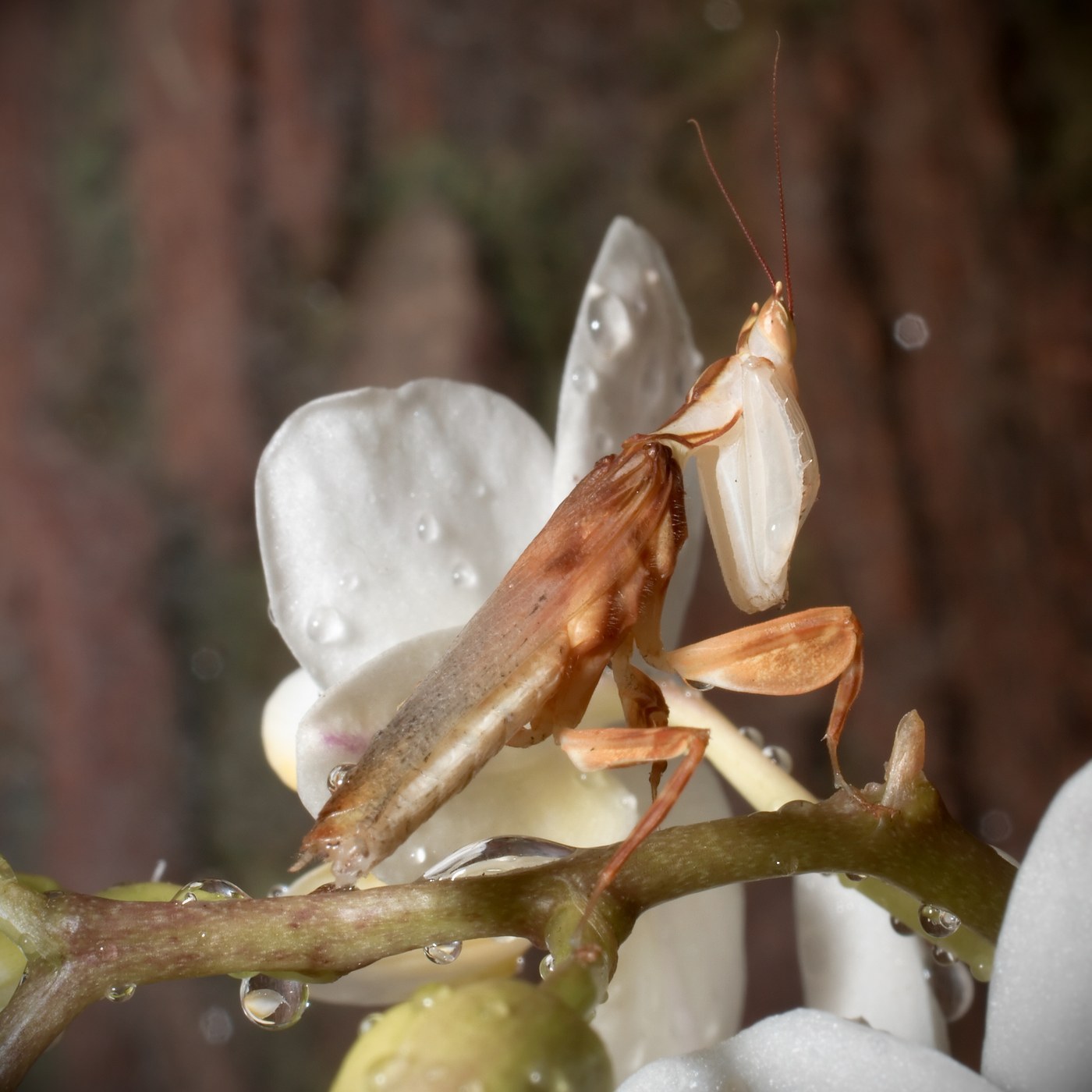
Orchid Mantis
A dazzling pink-and-white mantis whose petal-shaped leg lobes let it pass as a flower, luring pollinating insects close enough to ambush.
mantis-stick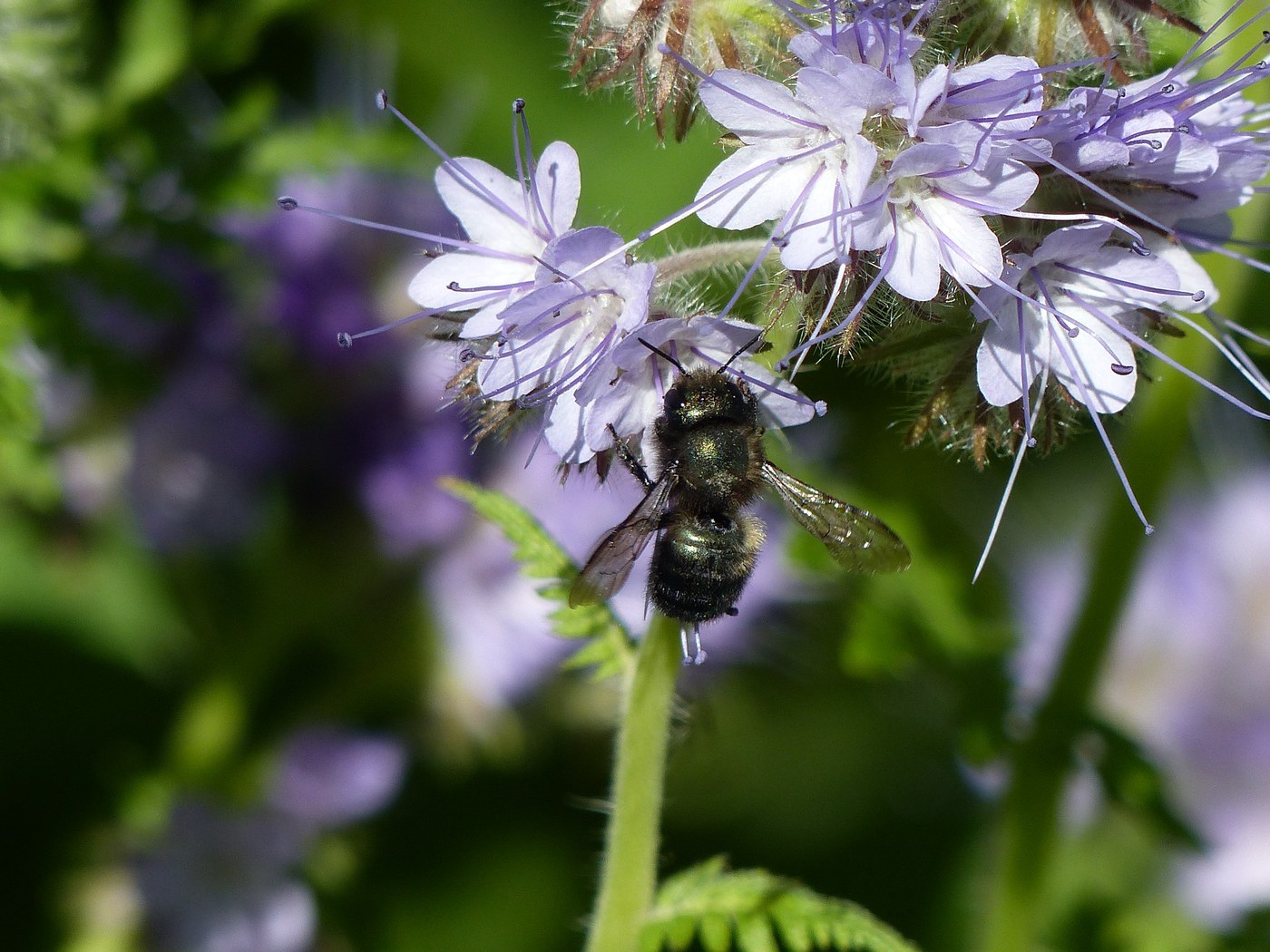
Blue Orchard Bee
A small, metallic blue-black solitary bee widely valued as an efficient early-spring pollinator of fruit trees, nesting in narrow tunnels and hollow stems rather than building hives.
bee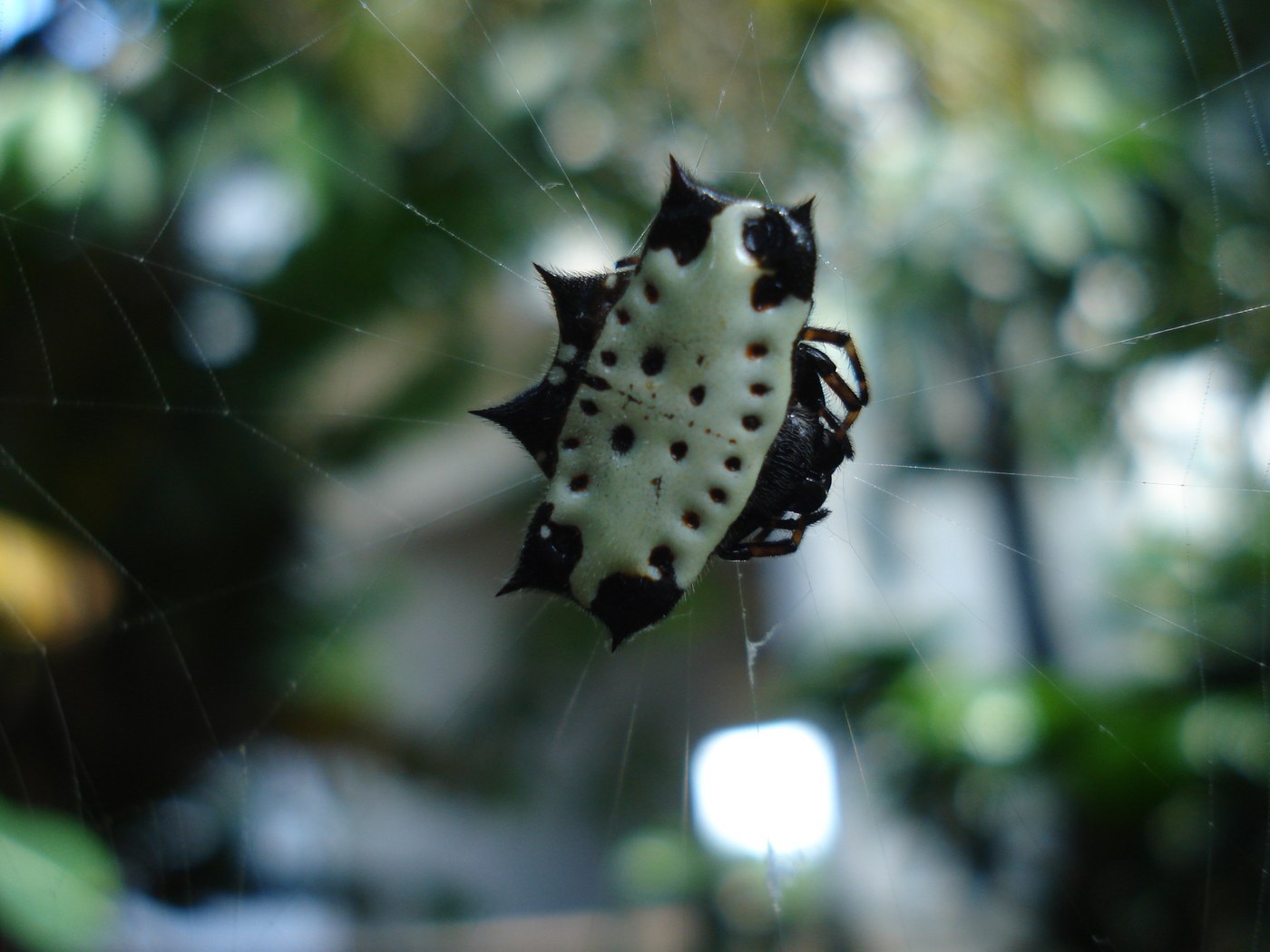
Spiny Orb Weaver
A small, hard-shelled orb weaver shaped like a tiny crab, with six sharp spines projecting from a brightly colored abdomen suspended in a neat wheel-shaped web.
spider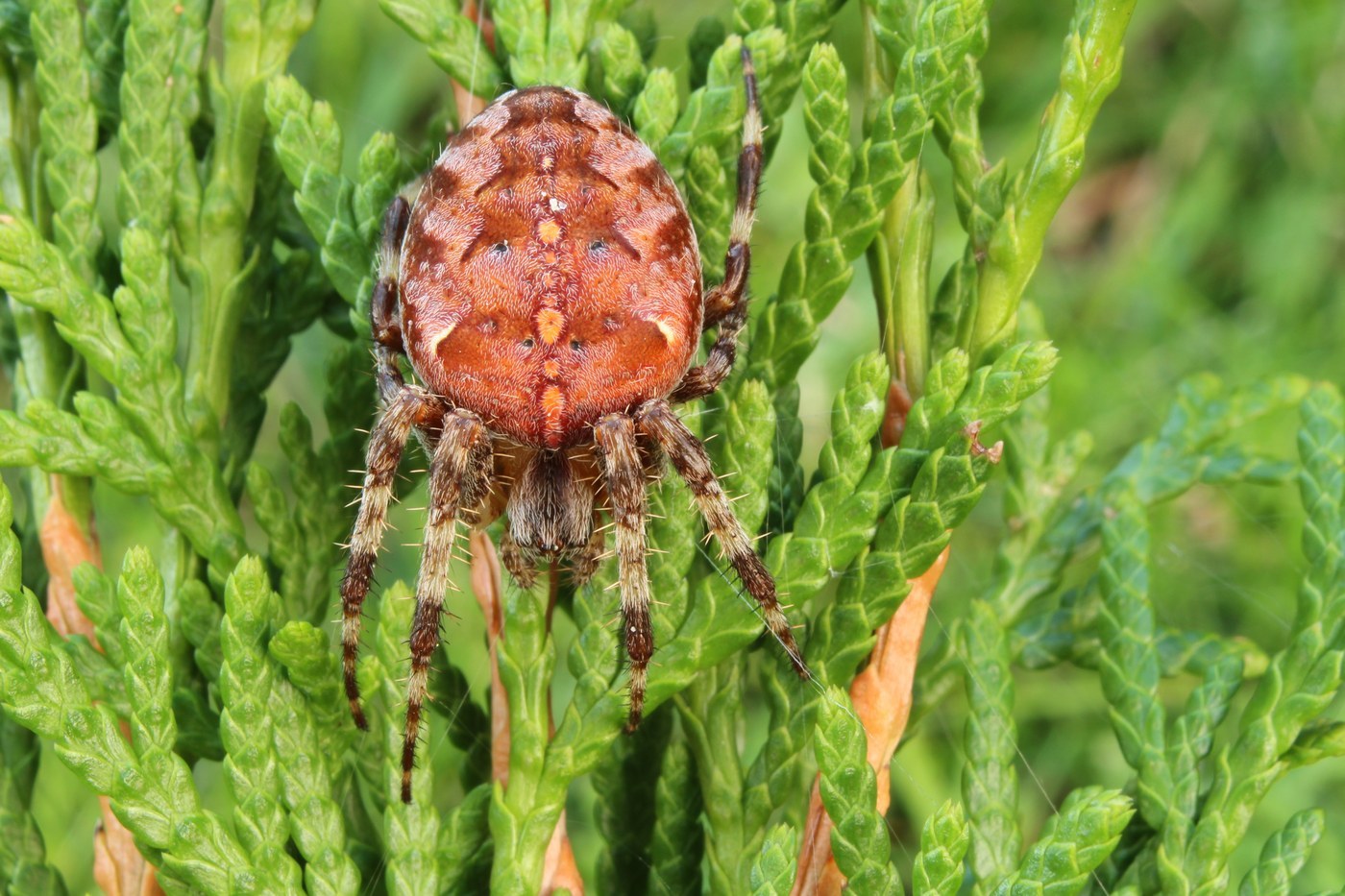
Cross Orbweaver
Named for the pale cross of dots marking its rounded abdomen, the cross orbweaver spins one of the most classic wheel-shaped webs, rebuilding it fresh nearly every night to keep its silk sticky and effective.
spider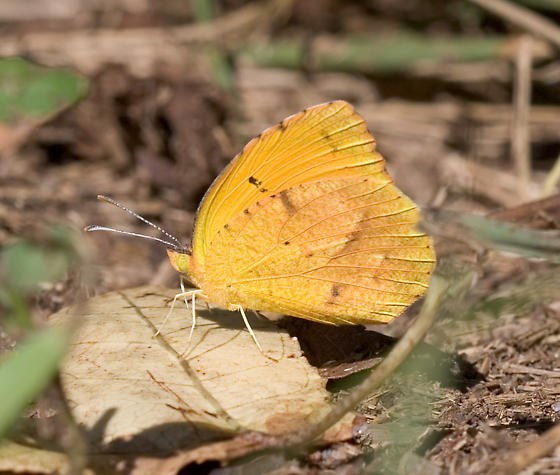
Sleepy Orange
A small, deep orange sulphur butterfly with dark wing borders and a low, wandering flight, named for a faint dark mark that suggests a half-closed, sleepy eye.
butterfly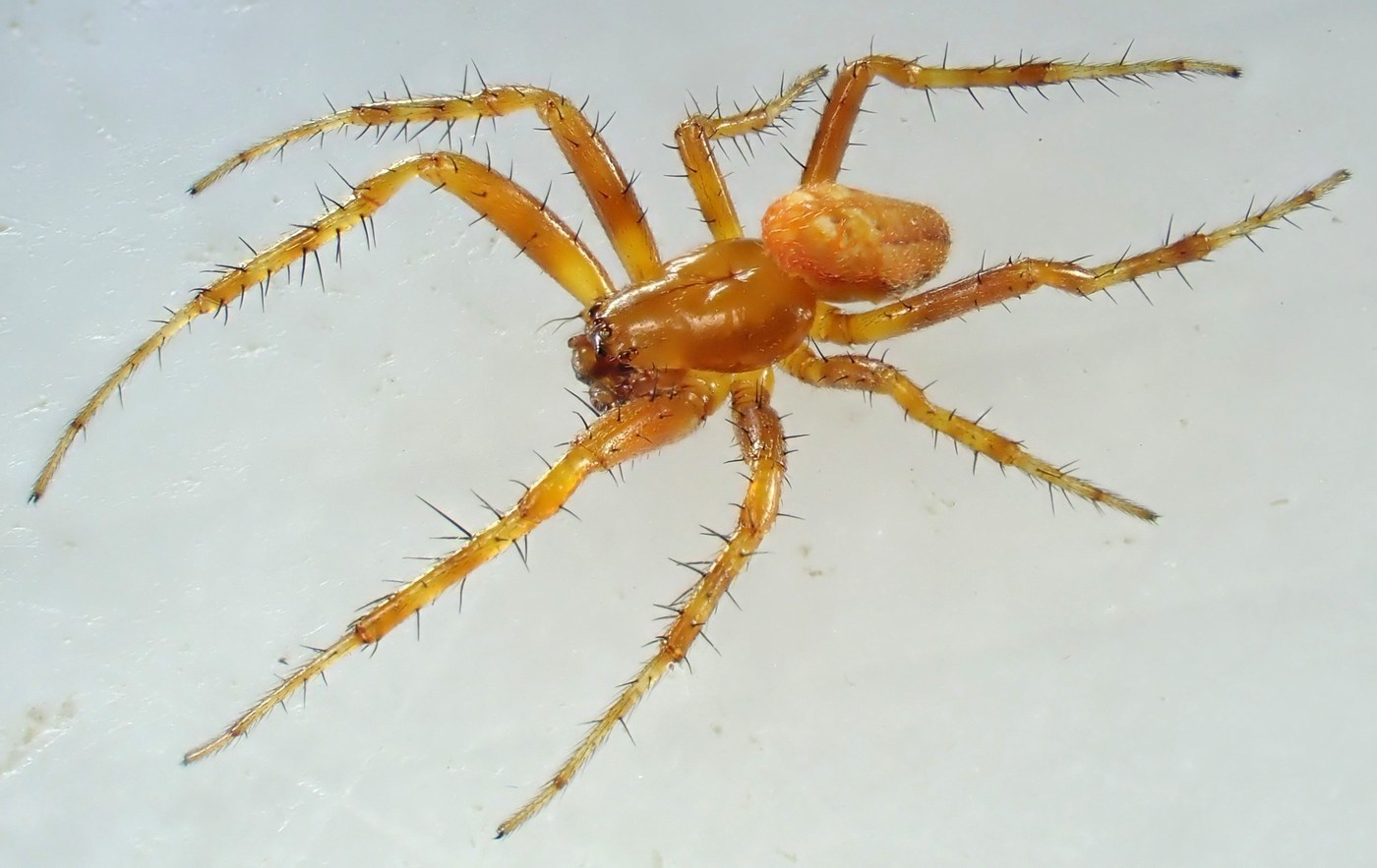
Orb Weaver Spider
A stout-bodied spider best known for spinning the classic, near-perfect circular "orb" web strung between plants, eaves, or fences, often rebuilt fresh each night.
spider