
Bug Encyclopedia
Search and identify bugs & insects — beetles, butterflies, moths, ants, bees, spiders and more — with size, habitat, danger, behavior, and how to tell them apart.
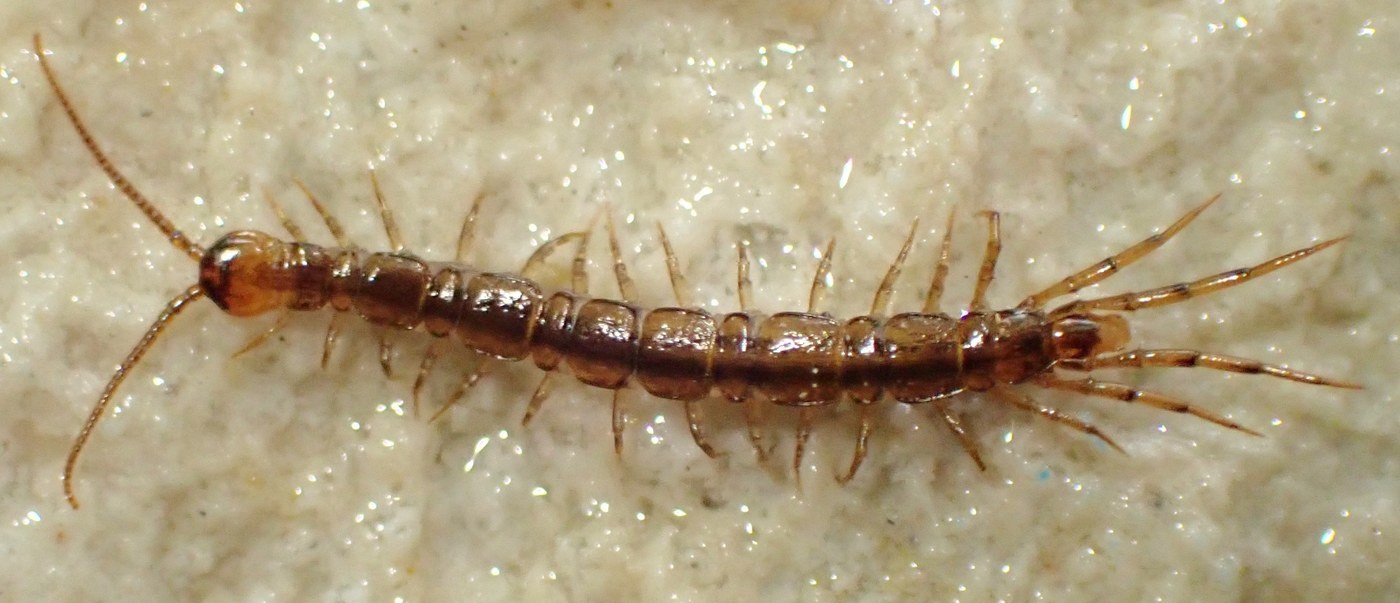
Stone Centipede
A quick, flattened, reddish-brown centipede that darts for cover the instant its stone or log shelter is lifted, one of the most commonly seen centipedes in temperate gardens.
myriapod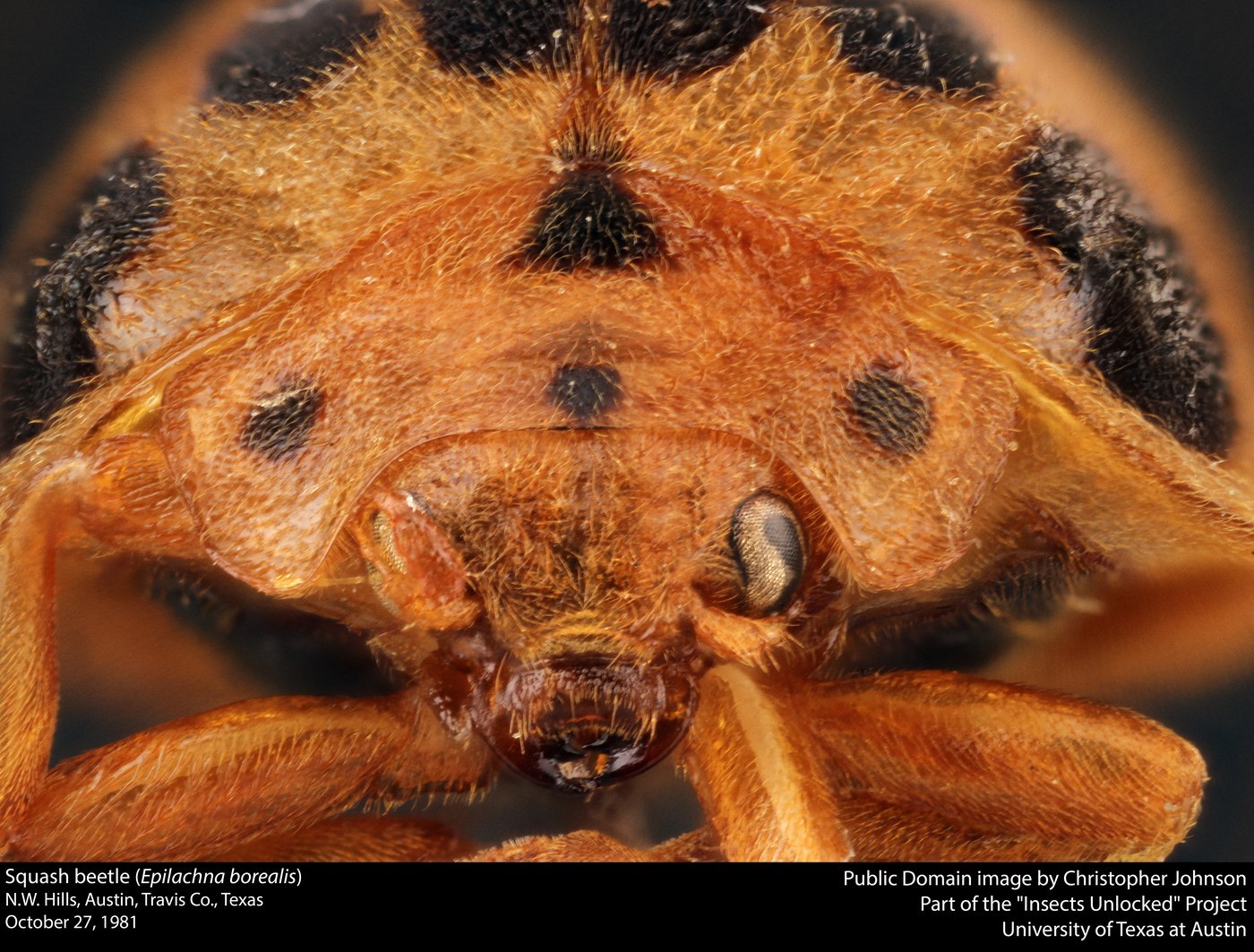
Squash Beetle
A large, coppery-orange, spotted beetle that resembles an oversized ladybird but, unlike most of its relatives, feeds on squash and pumpkin leaves rather than aphids.
beetle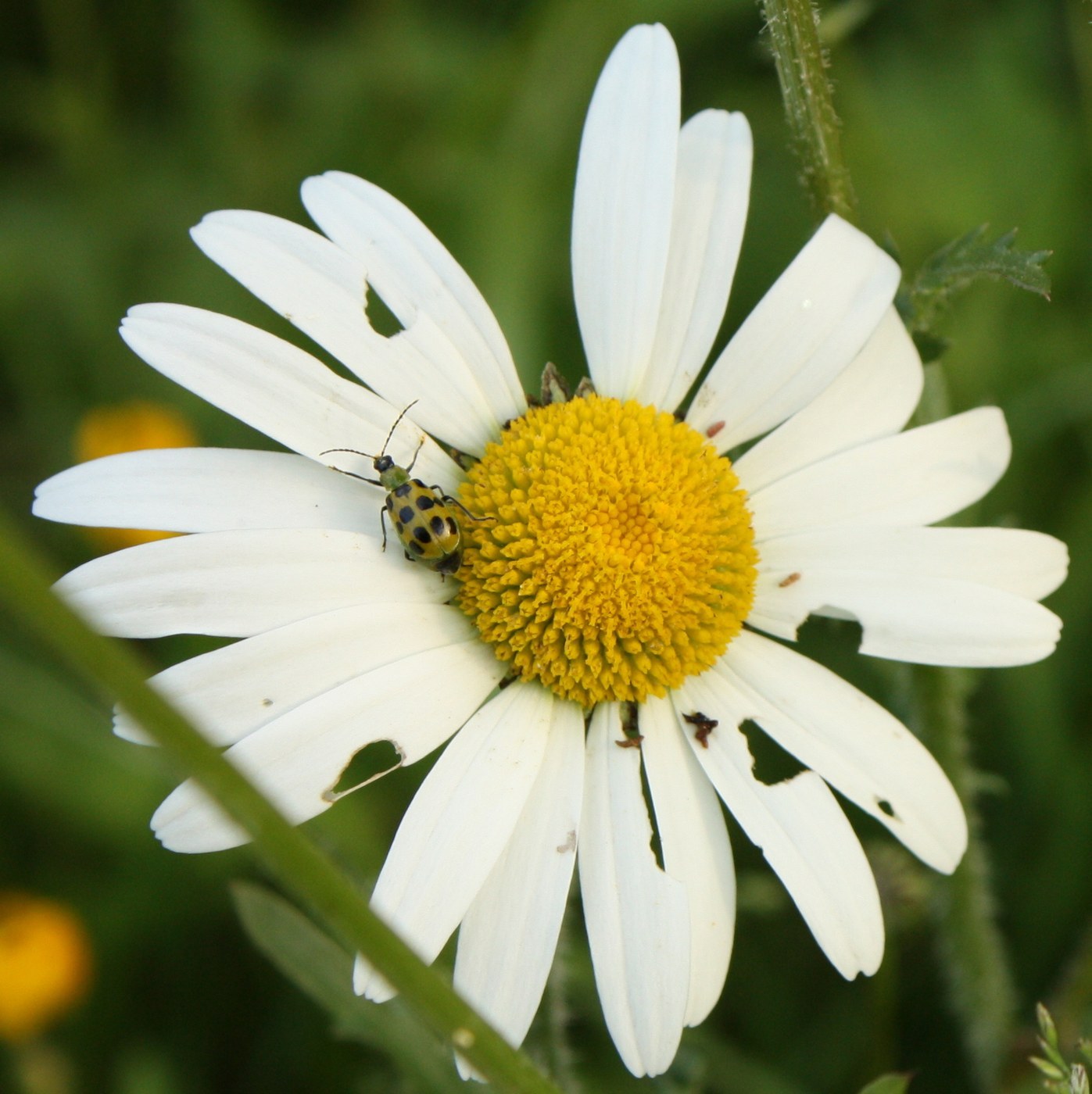
Spotted Cucumber Beetle
A small, elongated yellow-green beetle marked with twelve black spots across its wing covers, commonly seen on cucurbit and corn plants throughout the growing season.
beetleSix-eyed Sand Spider
A flattened, sand-colored spider that buries itself just beneath the desert surface, ambushing prey while remaining almost invisible against the dunes.
spiderRocky Mountain Locust
Once the most destructive insect in North American history, this swarming grasshopper vanished within a few decades of forming the largest insect swarm ever recorded.
grasshopper-cricket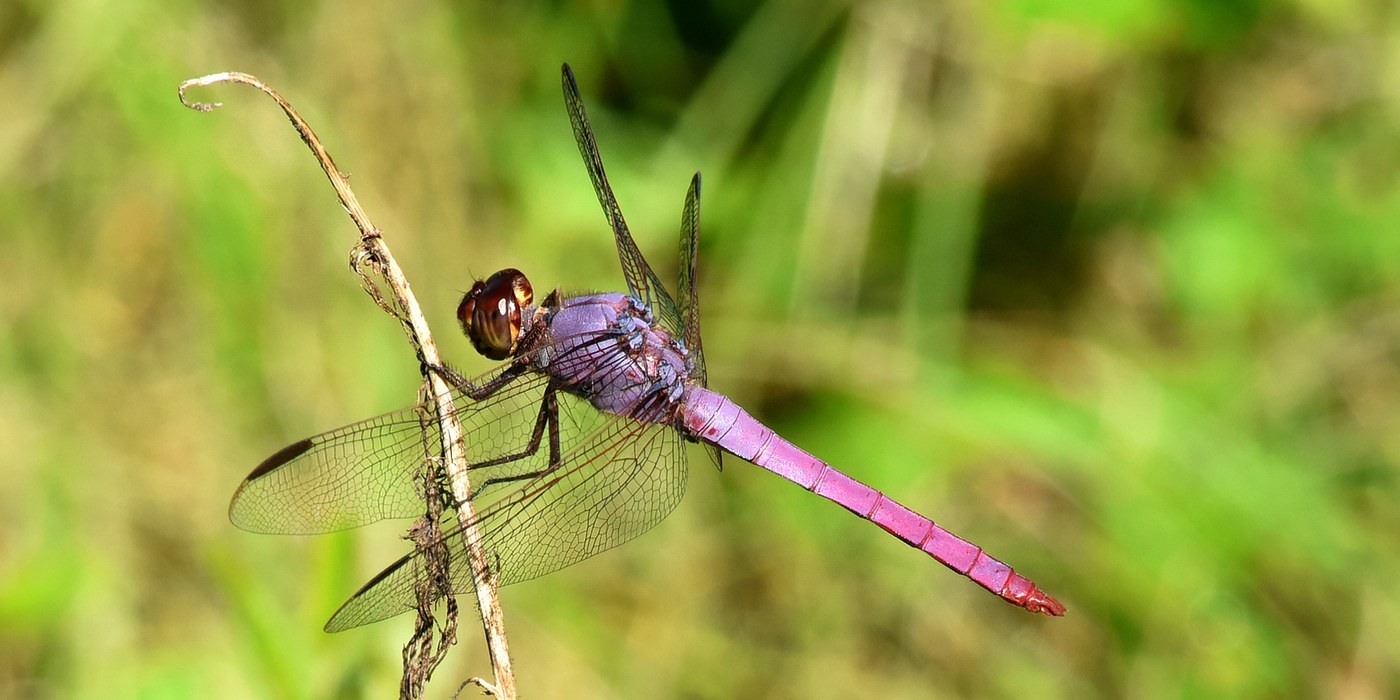
Roseate Skimmer
A vivid pink-violet dragonfly of southern wetlands, the mature male's rose-pruinose body makes it one of the most striking skimmers found around ponds and canals.
dragonflyScale Insect
A small, immobile insect that appears as a flat or domed, waxy bump firmly attached to a stem or leaf, easily mistaken for a plant blemish rather than a living creature.
true-bug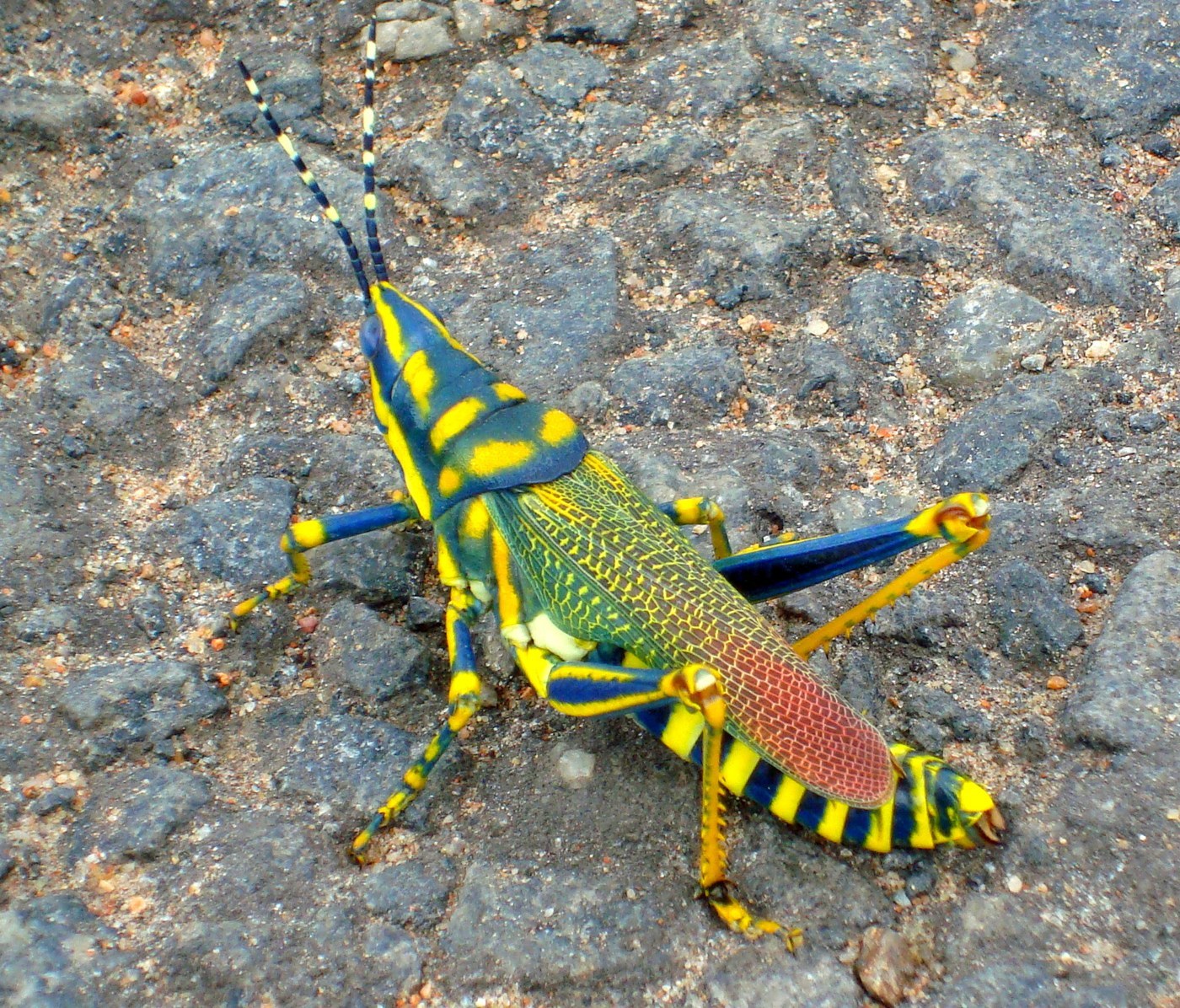
Painted Grasshopper
A large, boldly striped grasshopper of South Asia whose vivid green, yellow, and black pattern warns predators that it has fed on toxic milkweed plants.
grasshopper-cricket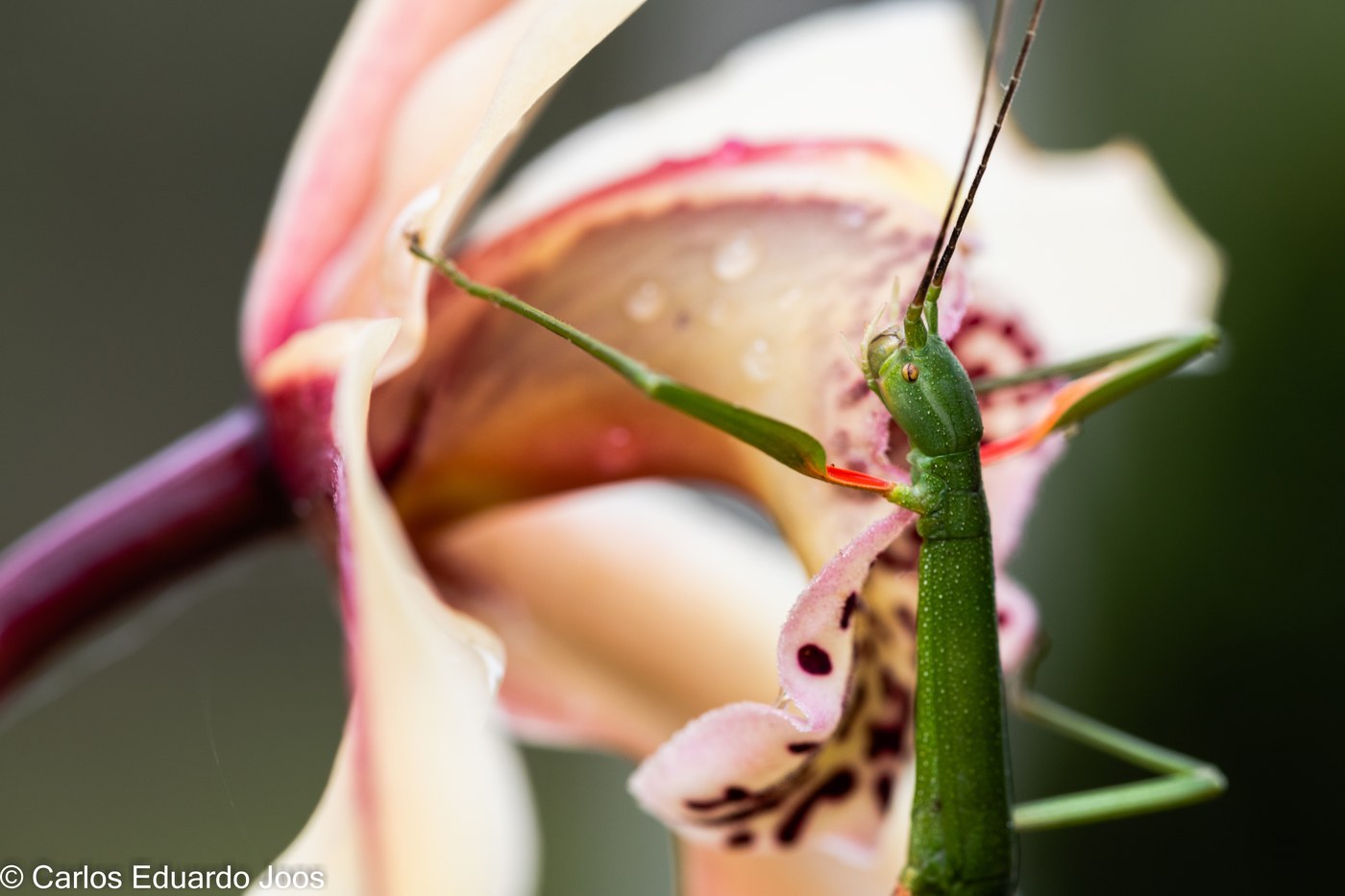
Northern Walkingstick
A slender, wingless insect so convincingly shaped like a twig that it can rest motionless on a branch just inches from view and go completely unnoticed.
mantis-stick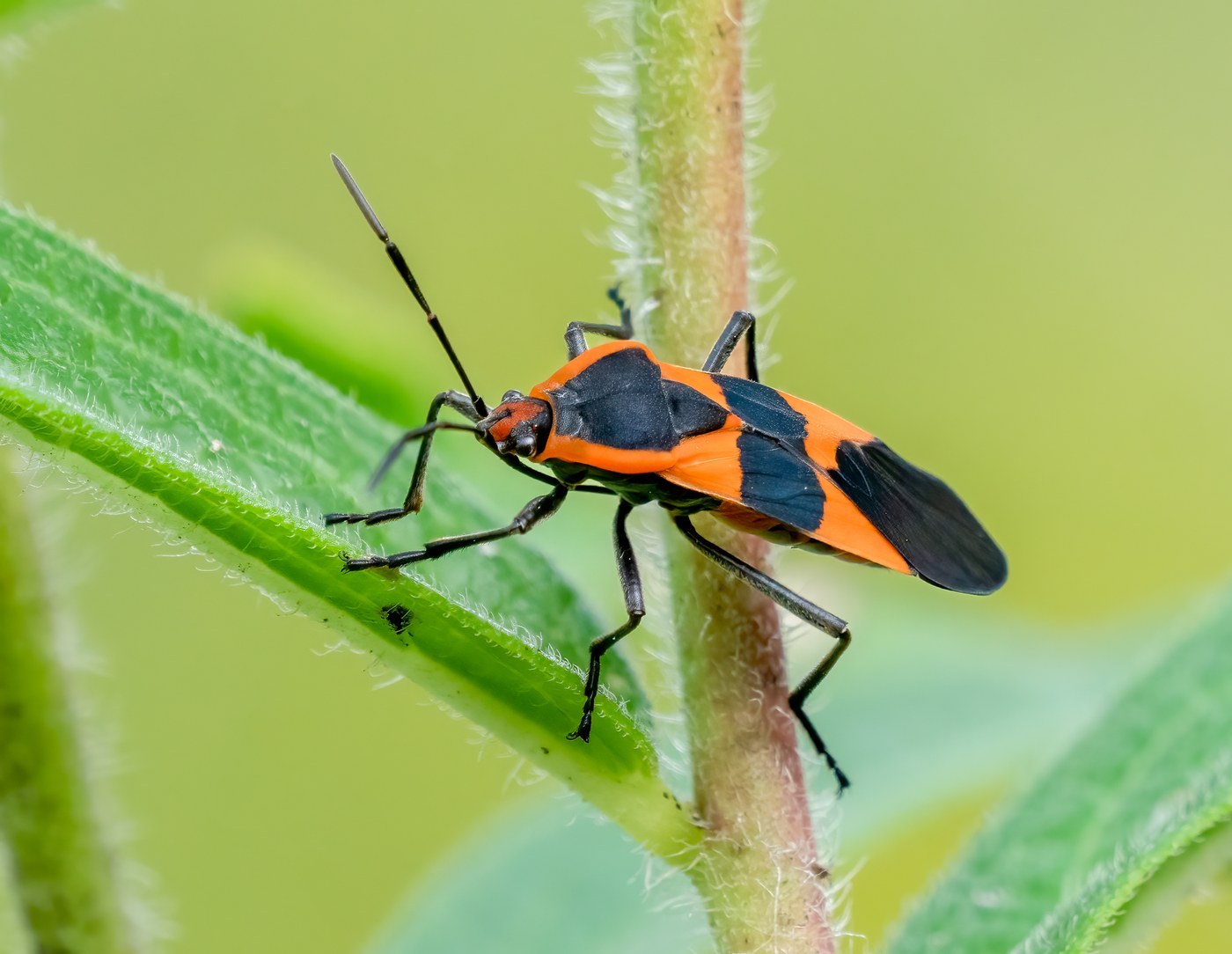
Monarch's Milkweed
A boldly orange-and-black true bug that shares milkweed plants with Monarch butterfly caterpillars, often clustering in large groups on seed pods and stems.
true-bug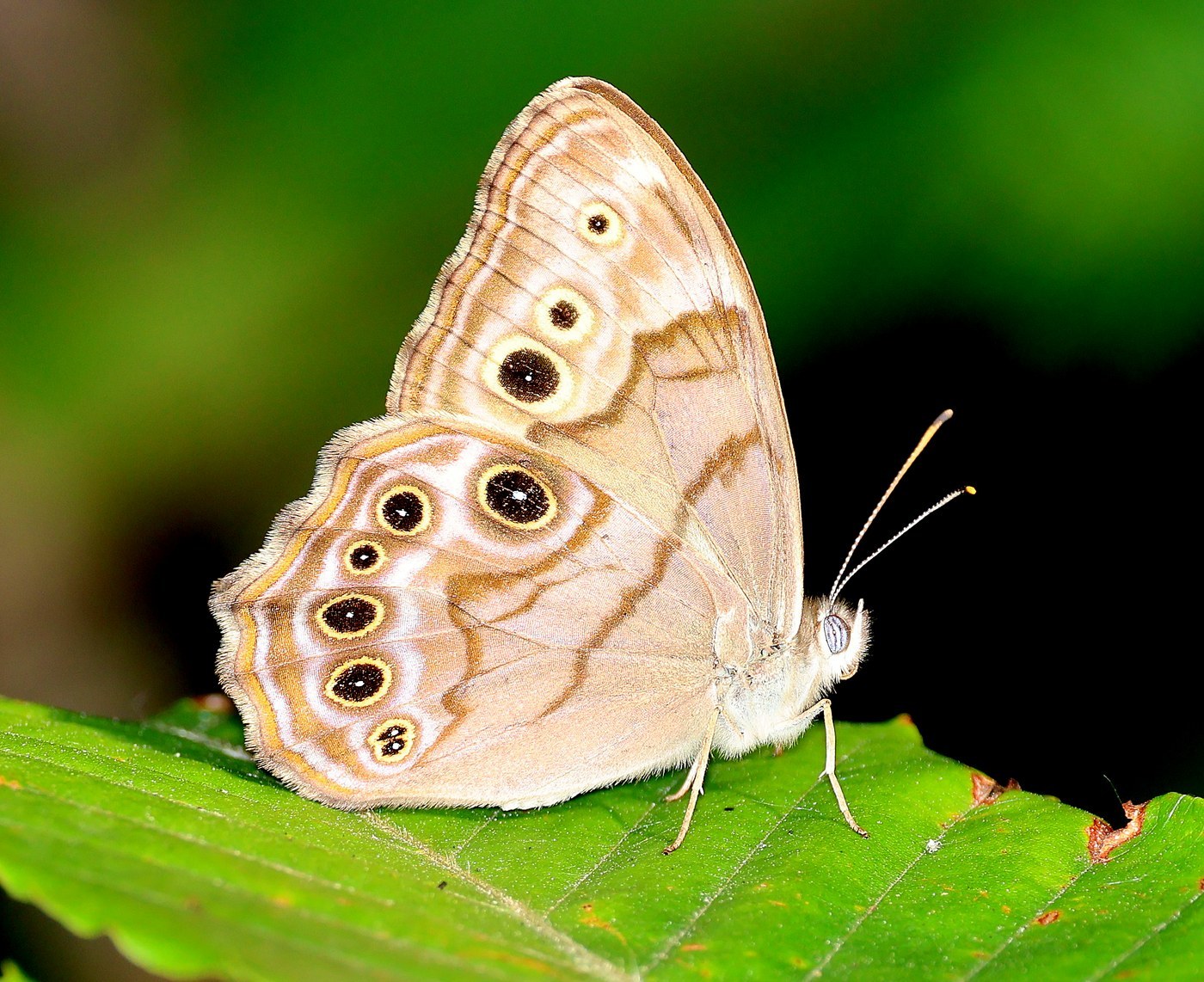
Northern Pearly-eye
A shade-loving brown woodland butterfly with rows of dark, pale-ringed eyespots, more often seen resting on tree trunks in forest gaps than flying in open sun.
butterfly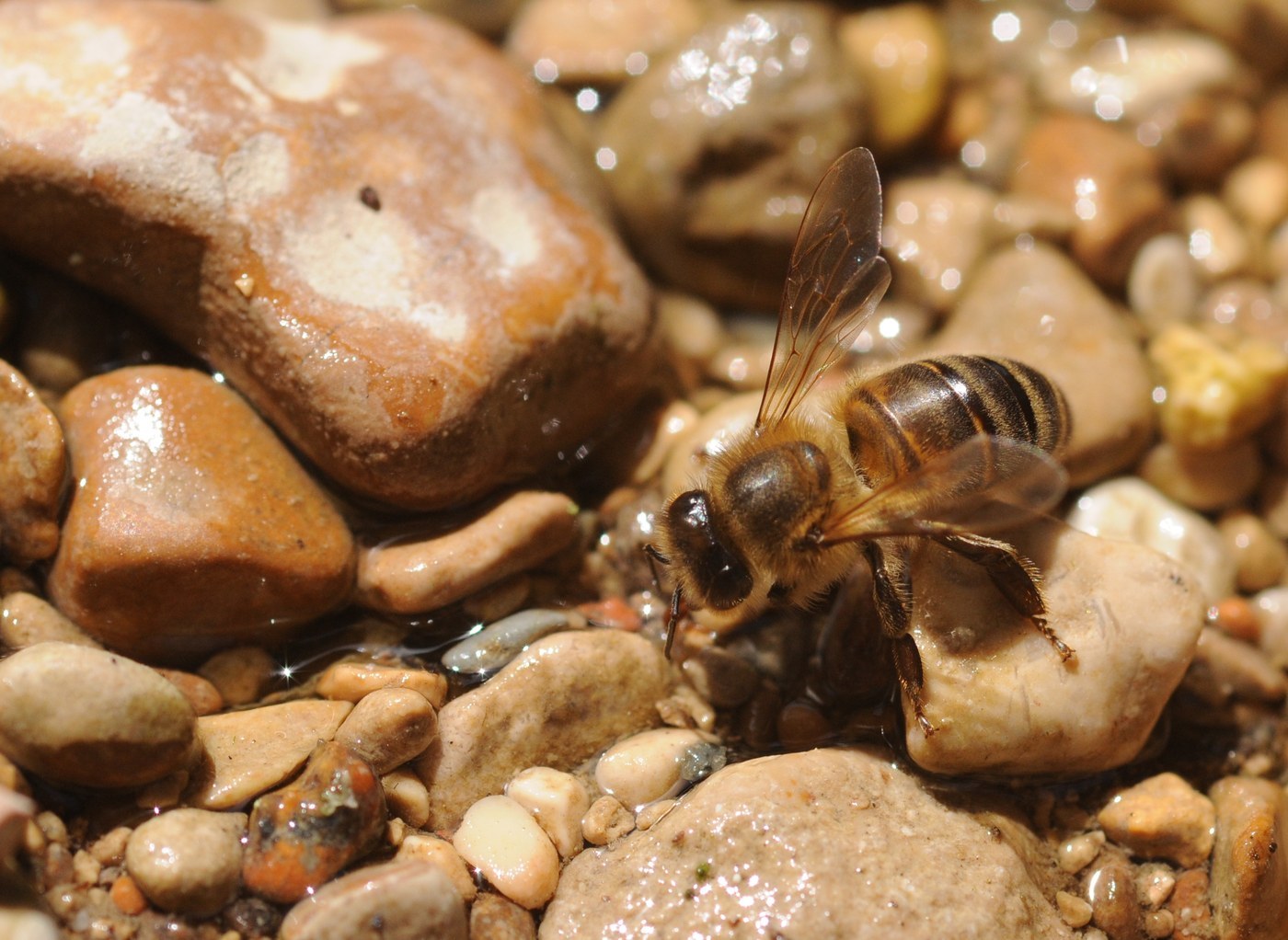
Honey Bee
A fuzzy, golden-brown and black-banded bee that lives in large, highly organized colonies, best known for its role in pollination and its production of wax comb and honey.
bee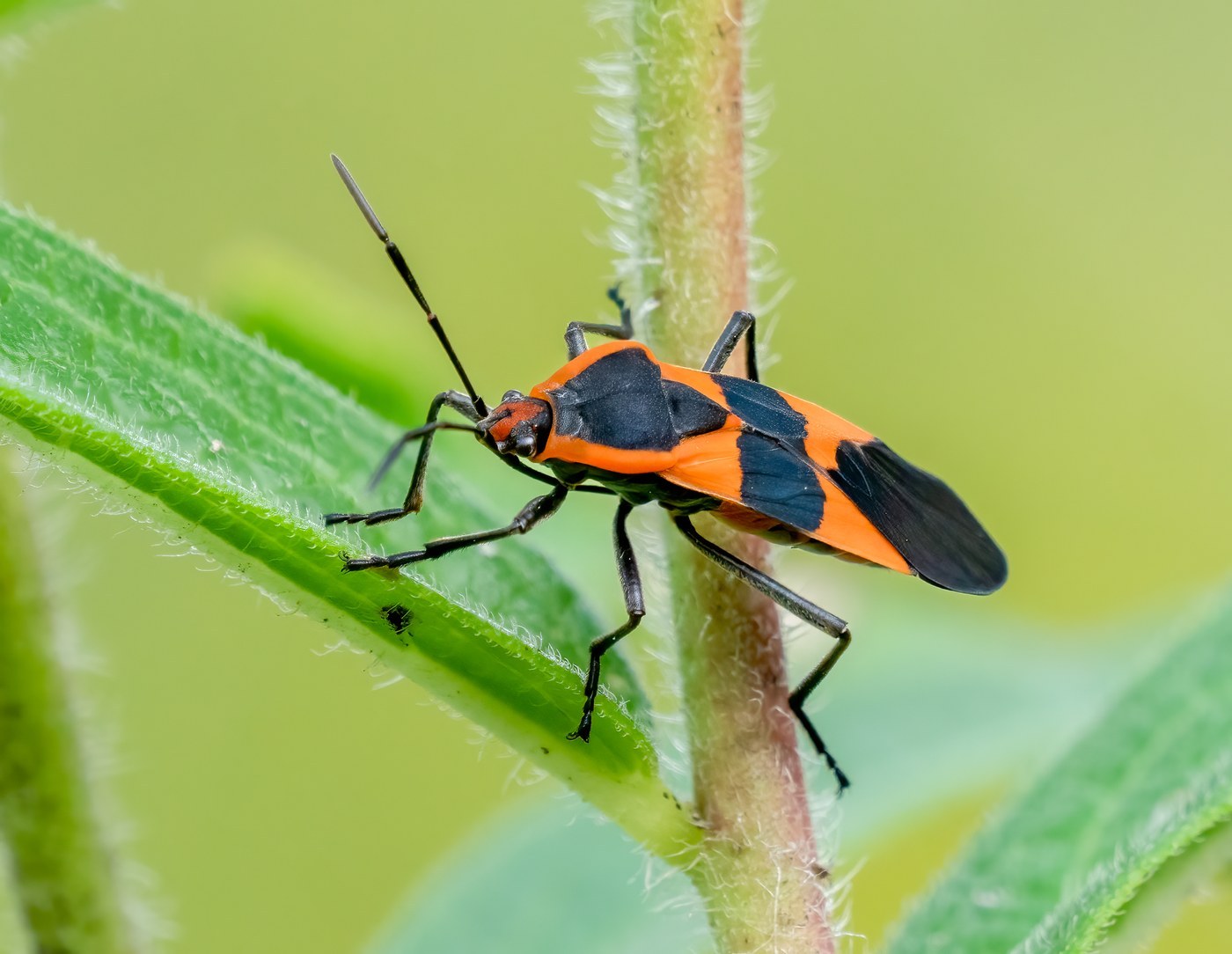
Milkweed Bug
A bold orange-and-black true bug that clusters conspicuously on milkweed seed pods, its warning colours advertising the plant toxins it safely stores from its host.
true-bugLubber Grasshopper
Heavy-bodied and slow-moving, lubber grasshoppers make up for their poor flying ability with large size, bold coloring, and a lumbering, ground-bound lifestyle.
grasshopper-cricket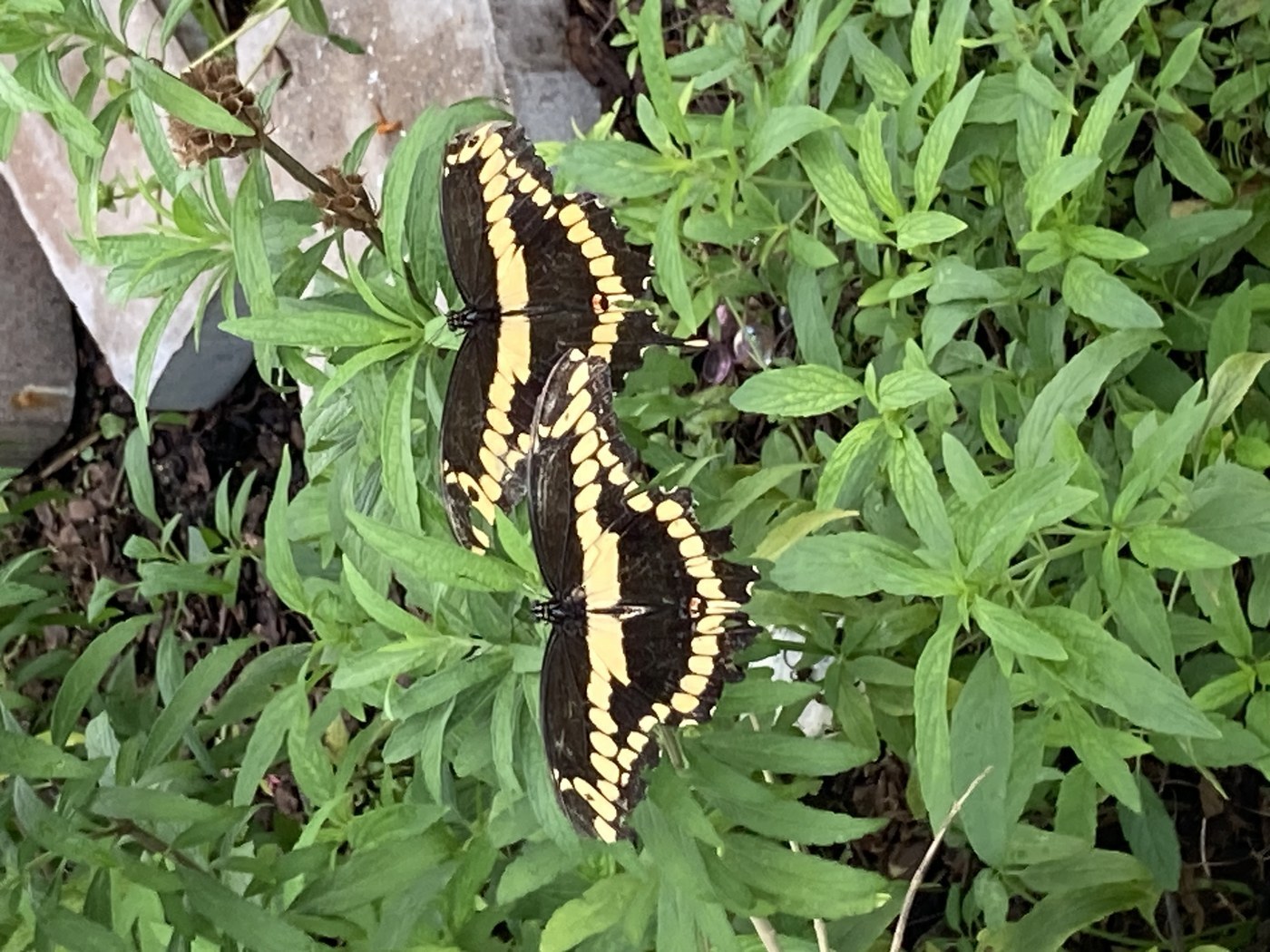
Giant Swallowtail
The largest butterfly in North America, a dark brown giant marked with a bold diagonal yellow band and yellow spotting that forms an X-like pattern when the wings are spread.
butterfly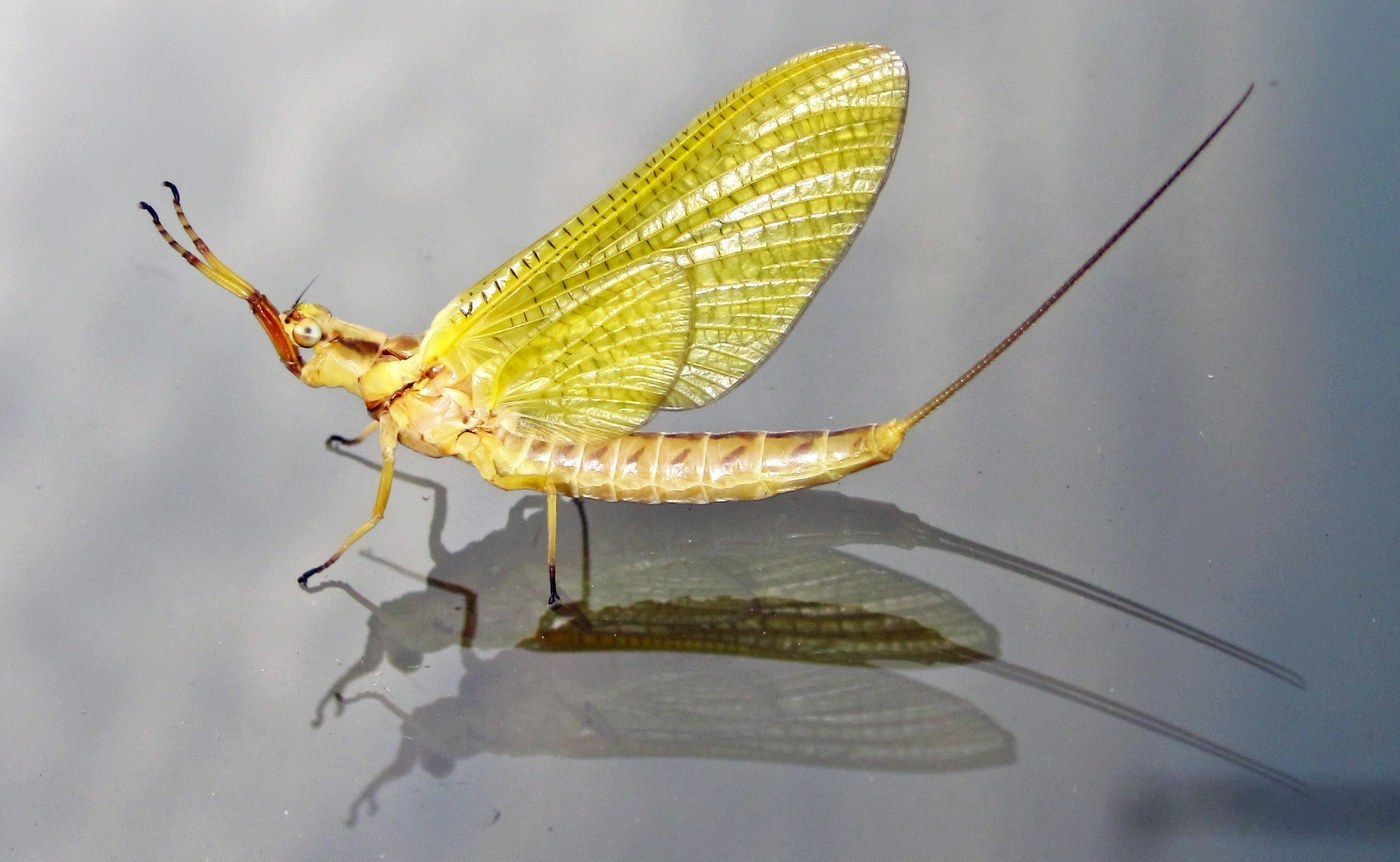
Giant Mayfly
Known for emerging by the billions in summer swarms so dense they can show up on weather radar, the Giant Mayfly is one of the largest and most abundant mayflies in North America.
aquatic-insect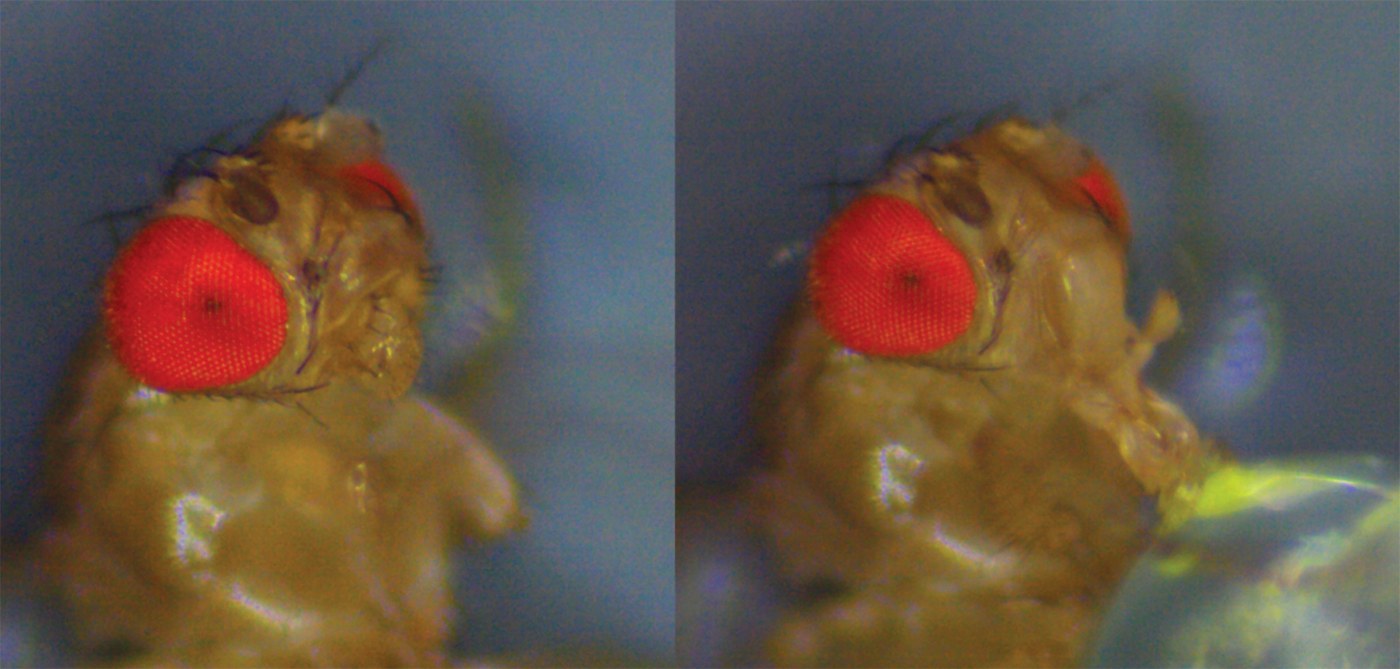
Fruit Fly
A tiny tan fly with prominent red eyes that swarms around overripe fruit, wine, and vinegar, appearing seemingly out of nowhere thanks to an extremely fast life cycle.
flyHarvester Ant
A large, industrious desert ant that clears a bare, sunburned disk of ground around its nest entrance while collecting and storing seeds by the thousands.
antGrasshopper
A robust, strong-jumping insect with short antennae and powerful hind legs, commonly seen springing away through grass and low vegetation on warm sunny days.
grasshopper-cricket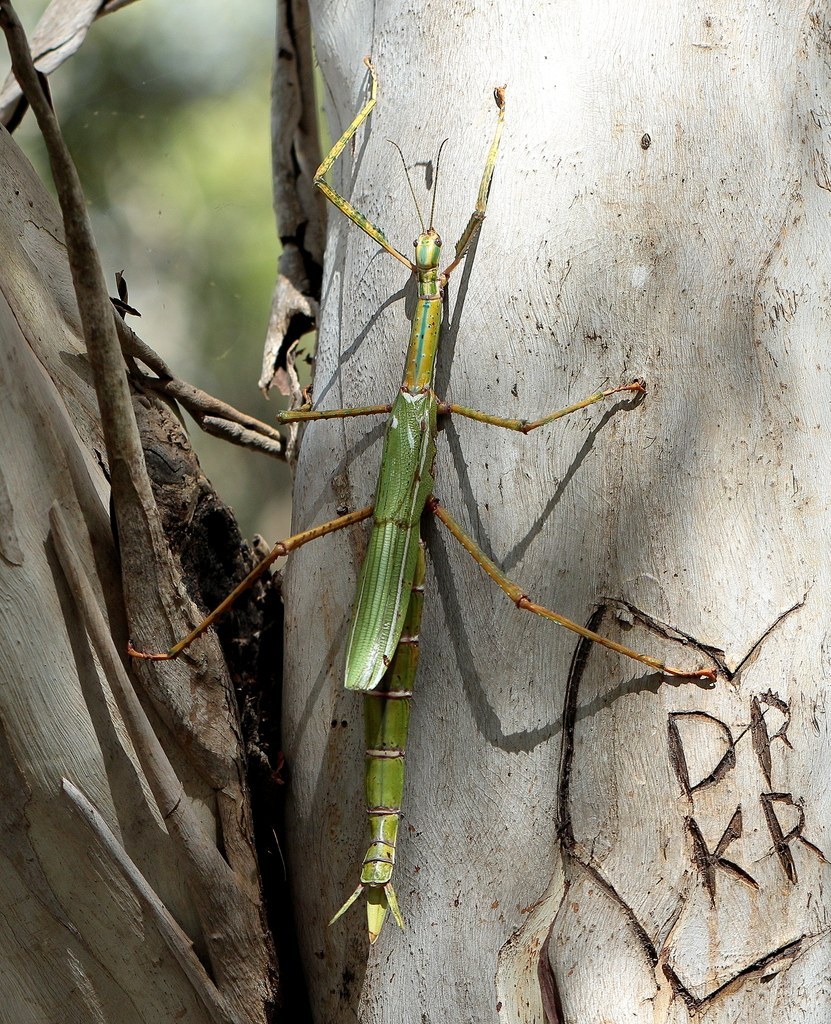
Goliath Stick Insect
One of the largest stick insects in the world, this vivid green giant unfurls startling crimson underwings when startled, briefly abandoning its disguise as foliage.
mantis-stickGarden Orb Weaver Spider
The classic maker of the round, wheel-shaped web, the garden orb weaver hangs head-down at the center of its silken snare. Many sport a cross-like pattern of pale spots on a rounded abdomen.
spider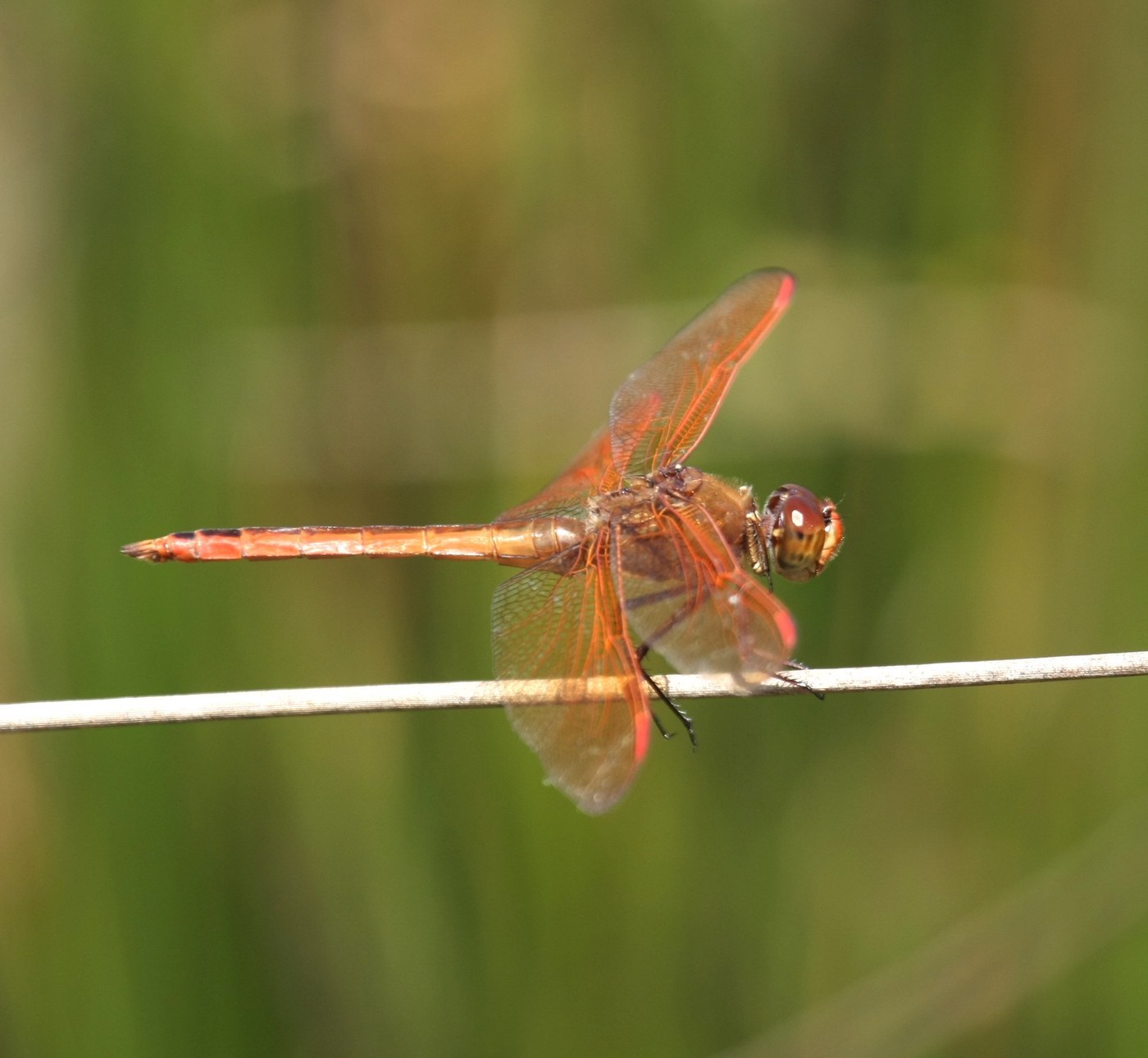
Golden-winged Skimmer
A large skimmer of southeastern wetlands, its wings brushed with a warm golden-amber wash along the leading edge that catches the light as it patrols still, sunlit water.
dragonfly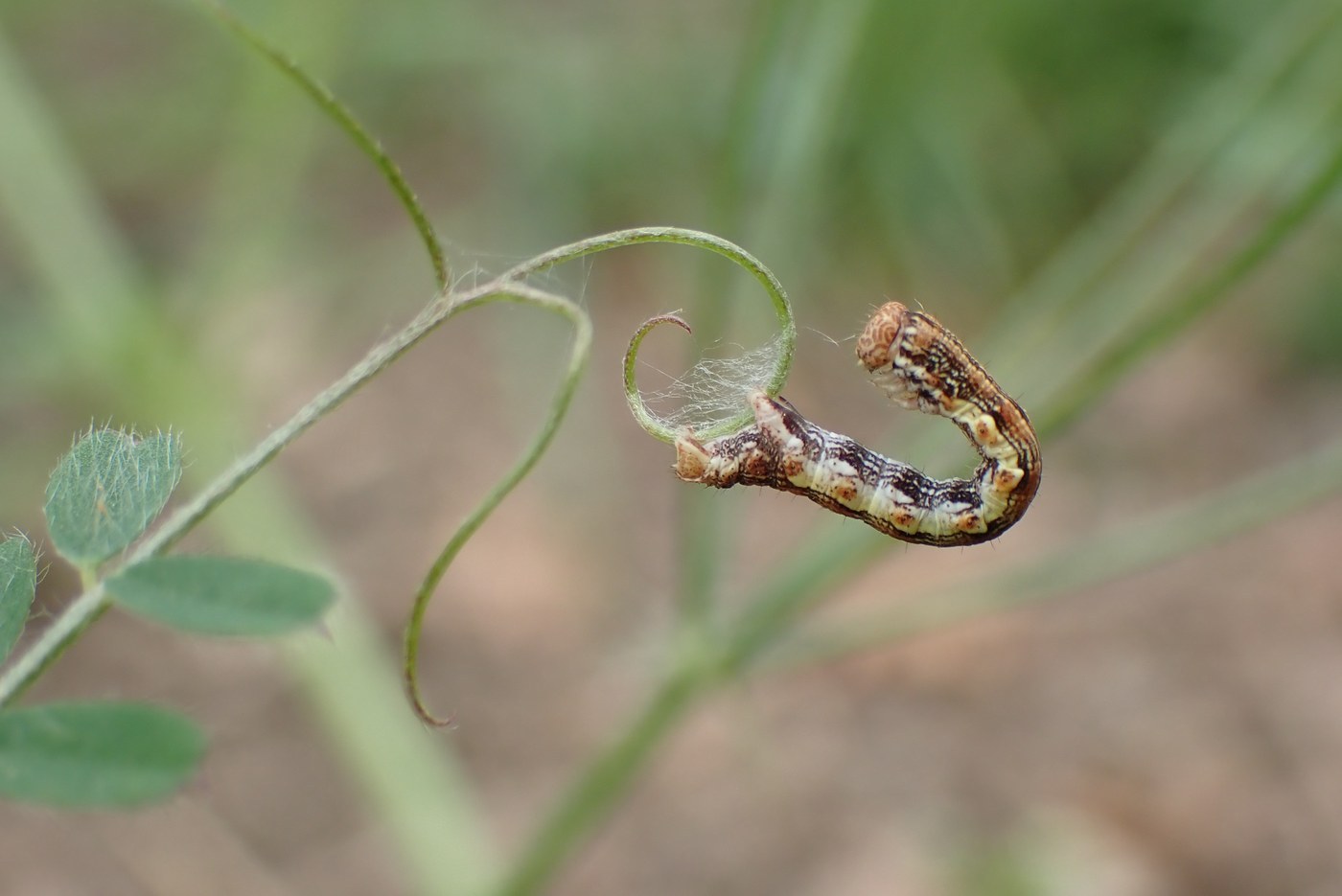
Inchworm
A slender, twig-mimicking caterpillar that travels by looping its body into an arch and releasing a strand of silk to drop and dangle at the slightest disturbance.
caterpillar-larva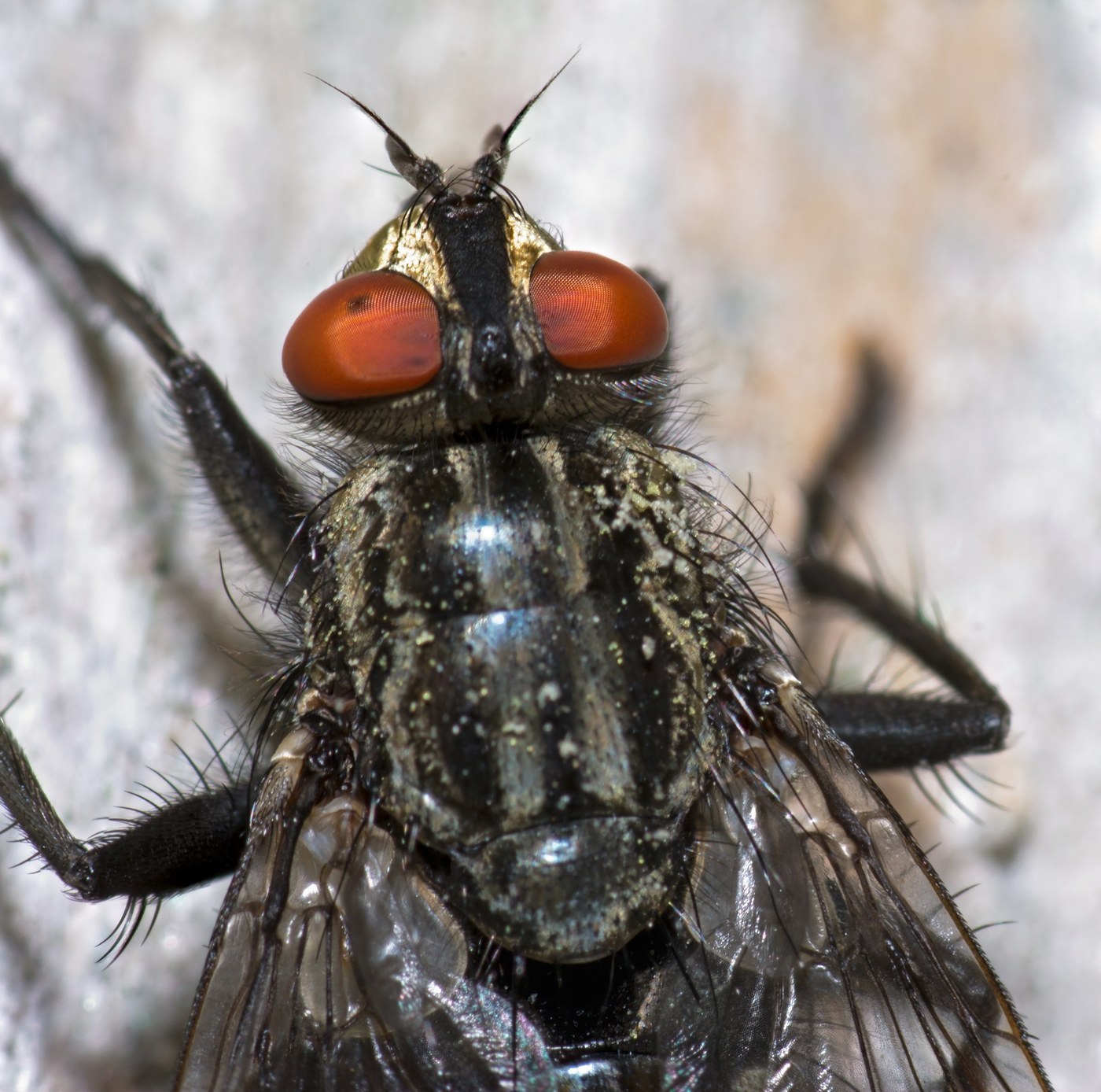
Flesh Fly
A bristly gray fly marked with three dark thoracic stripes and a checkerboard-patterned abdomen, often spotted hovering near carrion or garbage.
fly