
Bug Encyclopedia
Search and identify bugs & insects — beetles, butterflies, moths, ants, bees, spiders and more — with size, habitat, danger, behavior, and how to tell them apart.
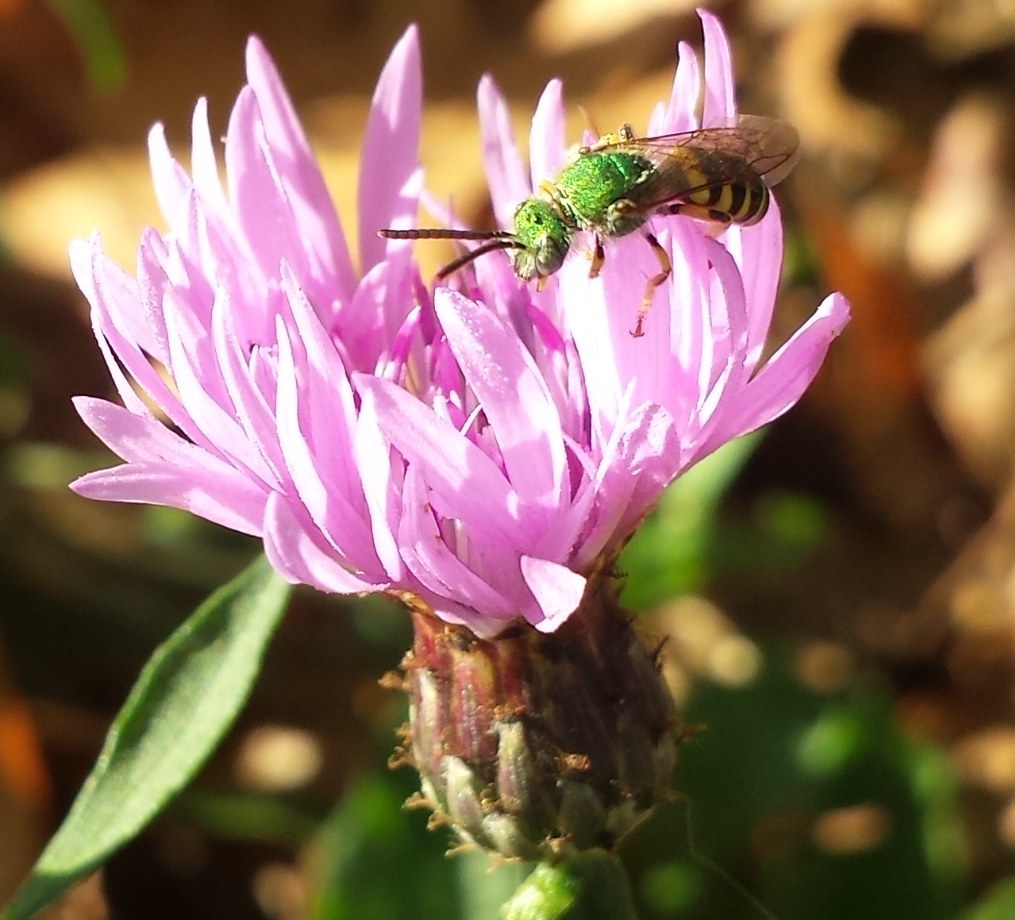
Sweat Bee
A small, often metallic green or bronze bee in the family Halictidae, named for its habit of landing on skin to sip perspiration, and an important generalist pollinator of wildflowers and crops.
beeSpringtail
A minuscule, wingless hexapod best known for its spring-loaded tail-like structure that flicks it into sudden, erratic hops when disturbed, often found in huge numbers in damp soil and leaf litter.
other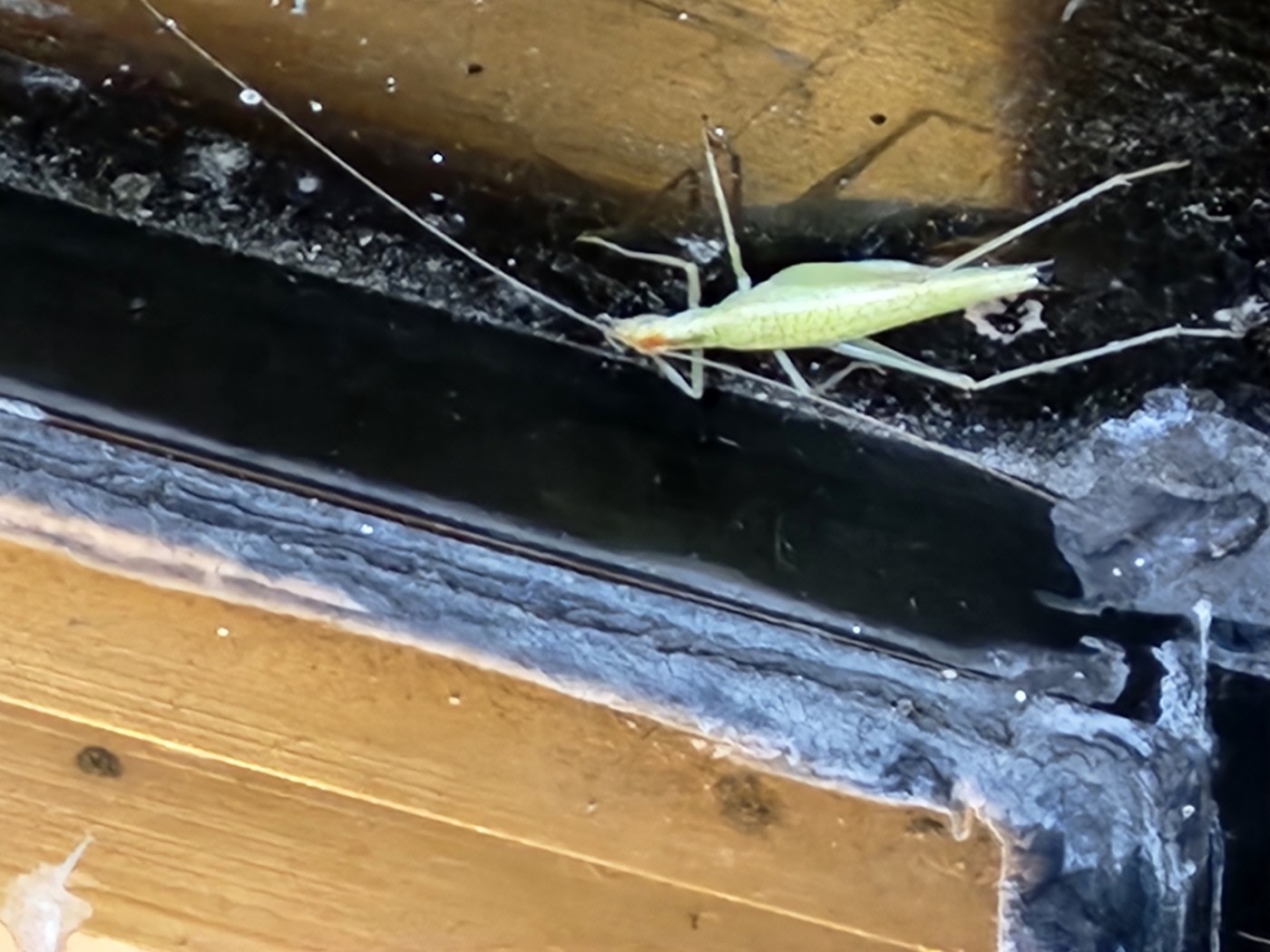
Snowy Tree Cricket
Nicknamed the thermometer cricket, this pale, delicate insect sings a steady, rhythmic chirp whose pace rises and falls so predictably with temperature that its chirp rate can be used to estimate the air temperature.
grasshopper-cricket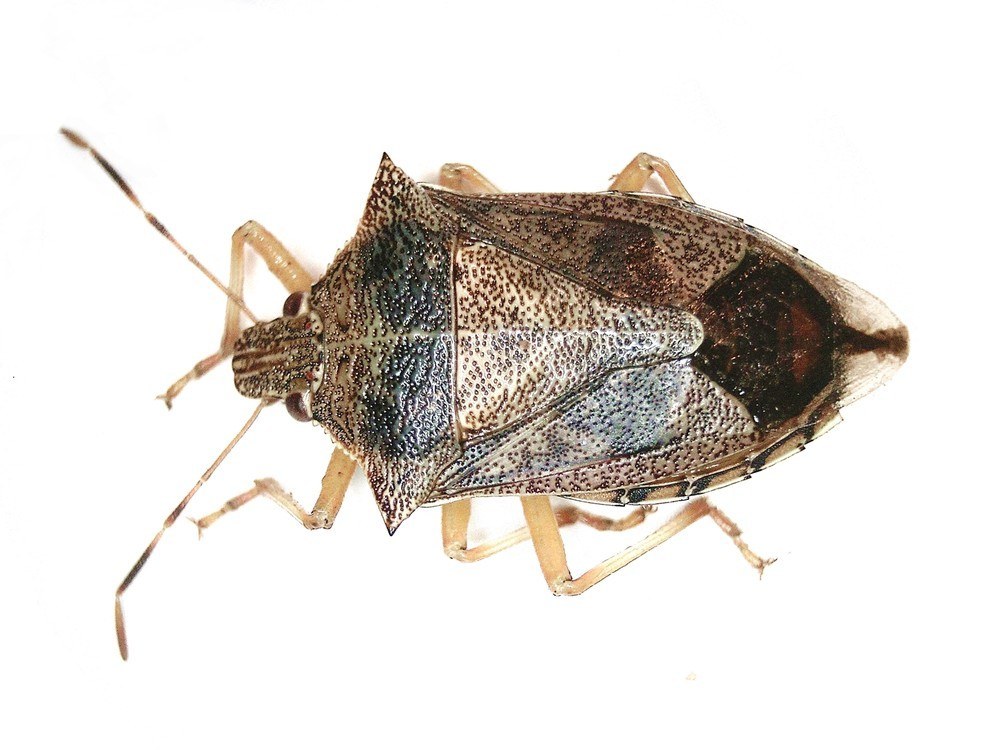
Spined Soldier Bug
A predatory stink bug identified by the sharp, pointed spines projecting from its shoulders, valued in gardens and farm fields for hunting caterpillars, beetle larvae, and other pest insects.
true-bug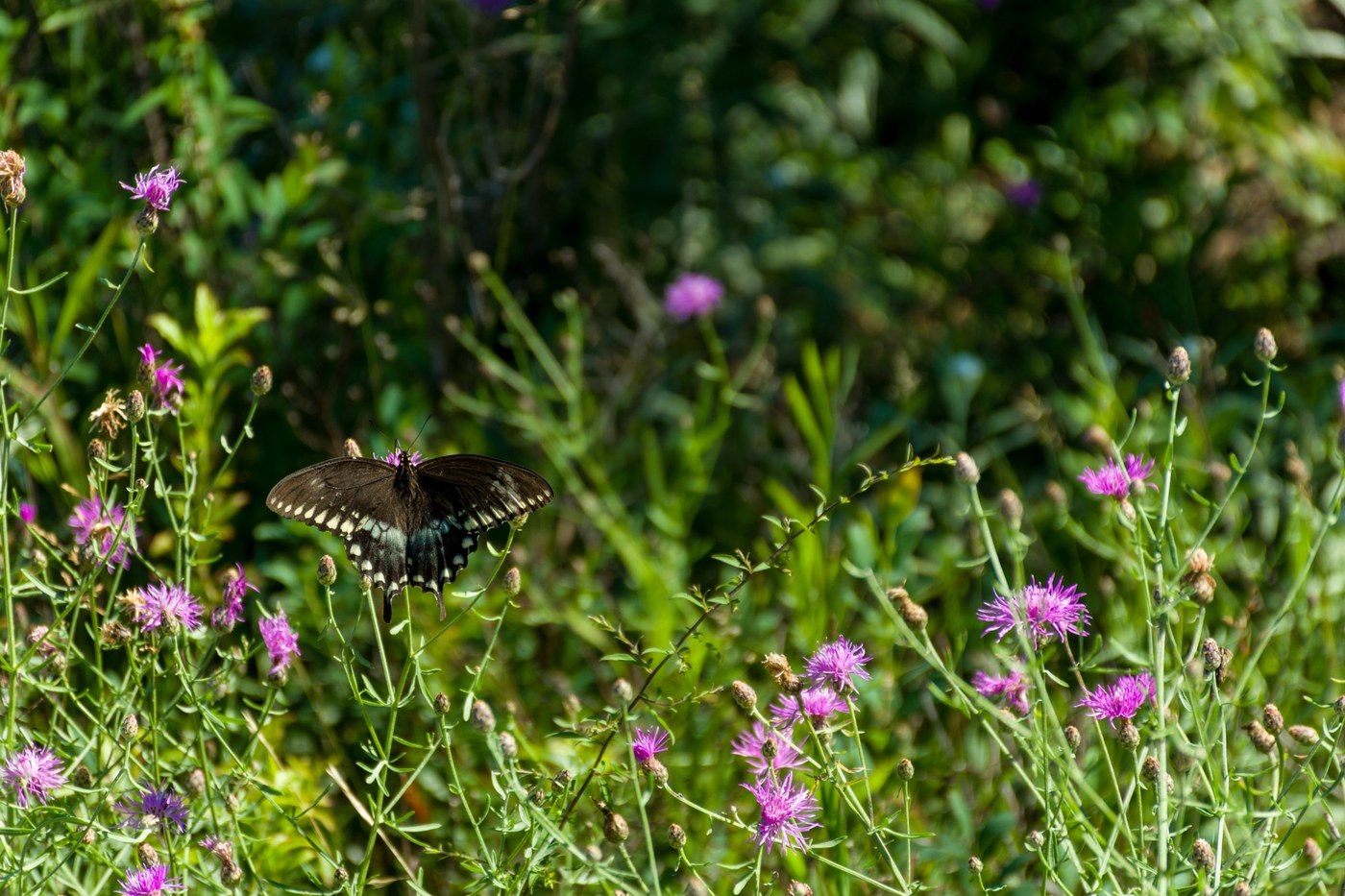
Spicebush Swallowtail
A black swallowtail with a blue-green wash across the hindwings and a row of pale spots along the forewing margin, whose caterpillars have famous large false eyespots and mimic the Pipevine Swallowtail as adults.
butterflyRootworm
Working unseen below ground, rootworm larvae chew tunnels through the root systems of corn and other crops, the underground counterpart to the small, often striped or spotted beetles seen on leaves and flowers above.
beetle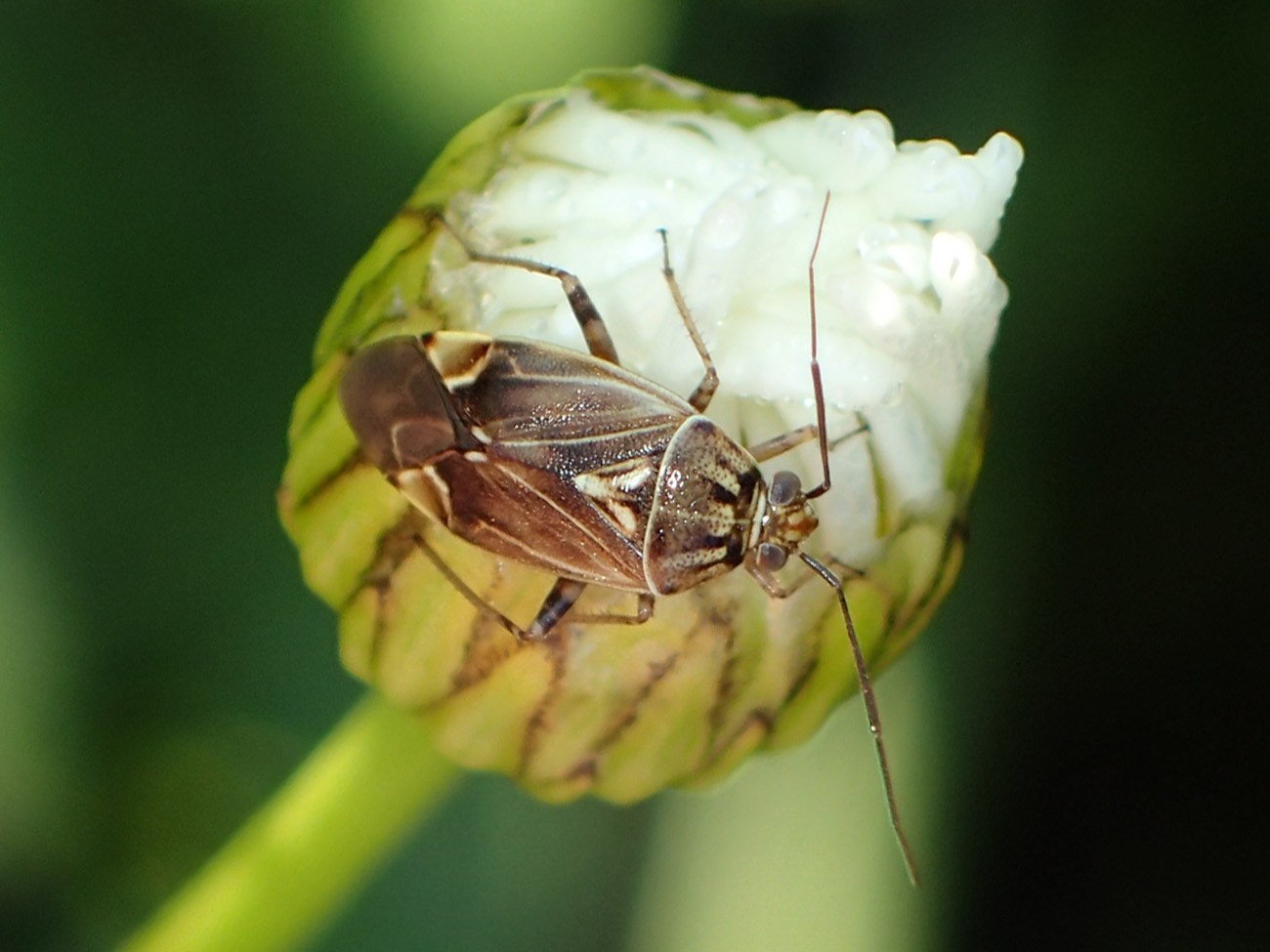
Plant Bug (Tarnished Plant Bug)
A small, oval, mottled brownish true bug with a distinctive yellow triangular marking behind the head, the tarnished plant bug is a fast-moving plant feeder common across gardens, fields, and weedy edges.
true-bugPine Sawyer Beetle
A large, long-antennaed longhorn beetle of pine and spruce forests, mottled gray-brown to black, that produces a rasping sound when handled and whose larvae tunnel deep into dead or dying conifer wood.
beetle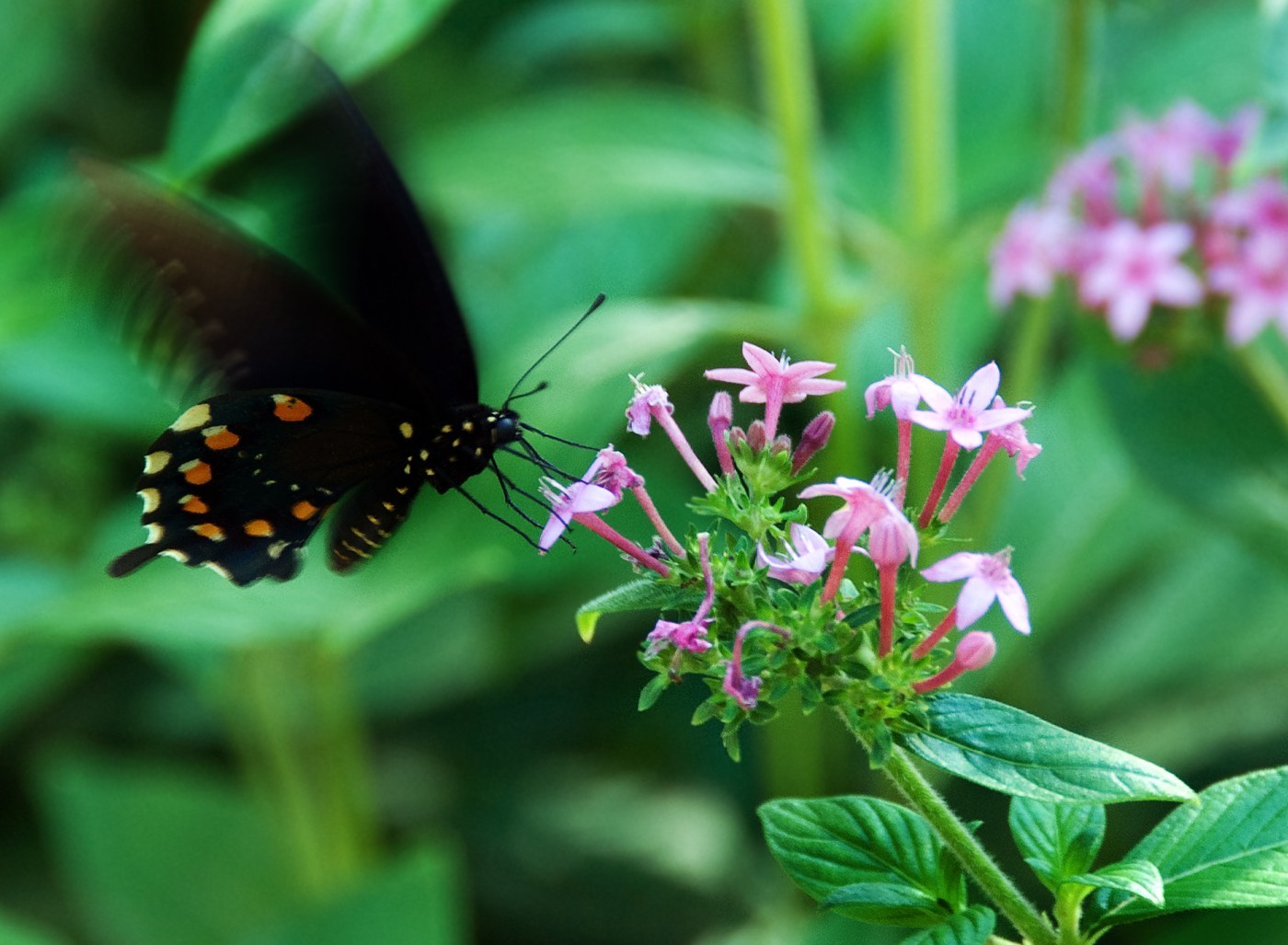
Pipevine Swallowtail
A striking black swallowtail with iridescent blue-green hindwings and a row of round orange spots beneath, whose toxin-sequestering caterpillars make it a model for several butterfly mimics.
butterfly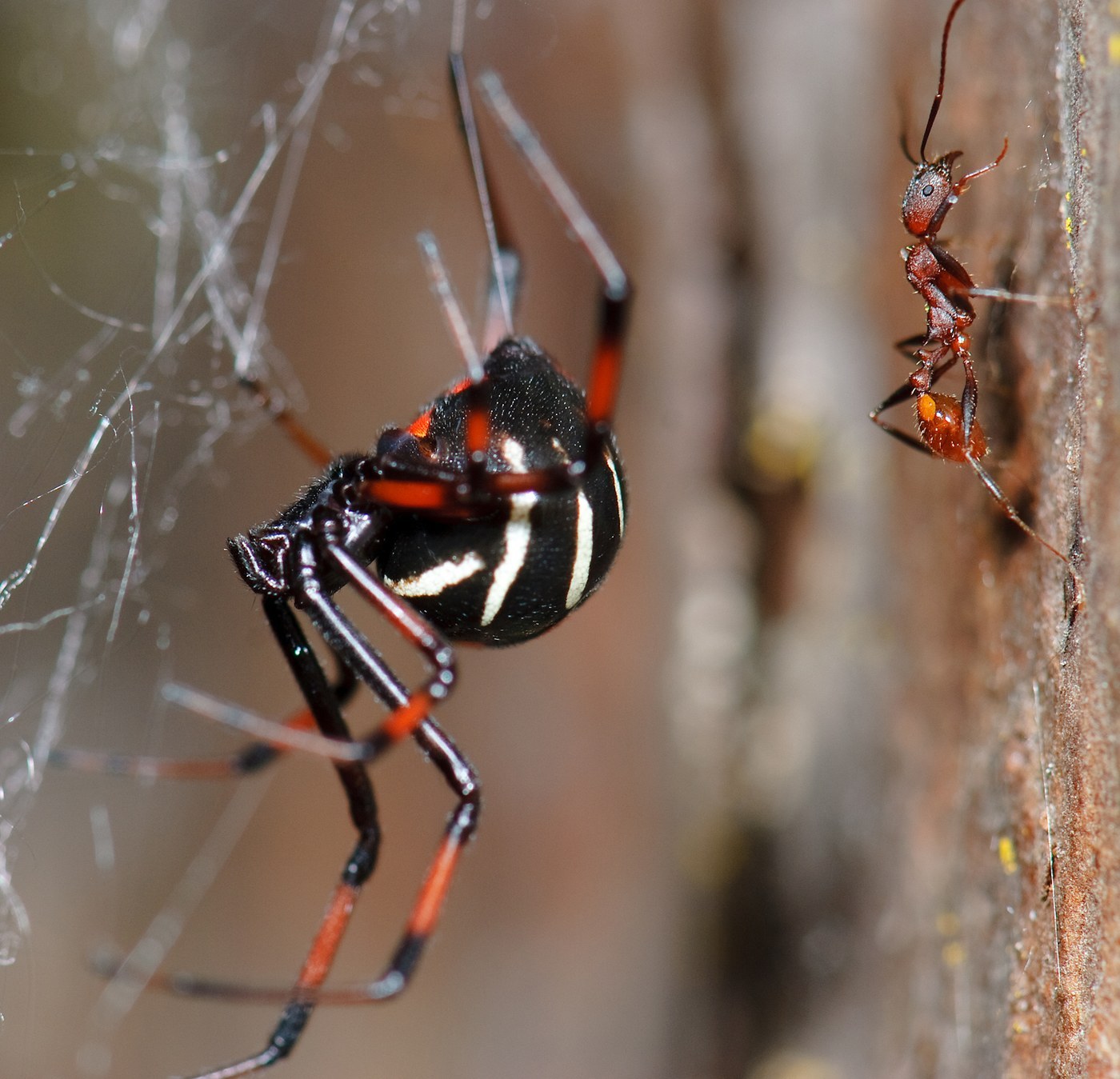
Northern Black Widow
Slightly more elusive than its southern cousin, the northern black widow shows a row of red spots down its back and a broken, hourglass marking on its belly, and prefers wilder, brushier habitats over buildings.
spider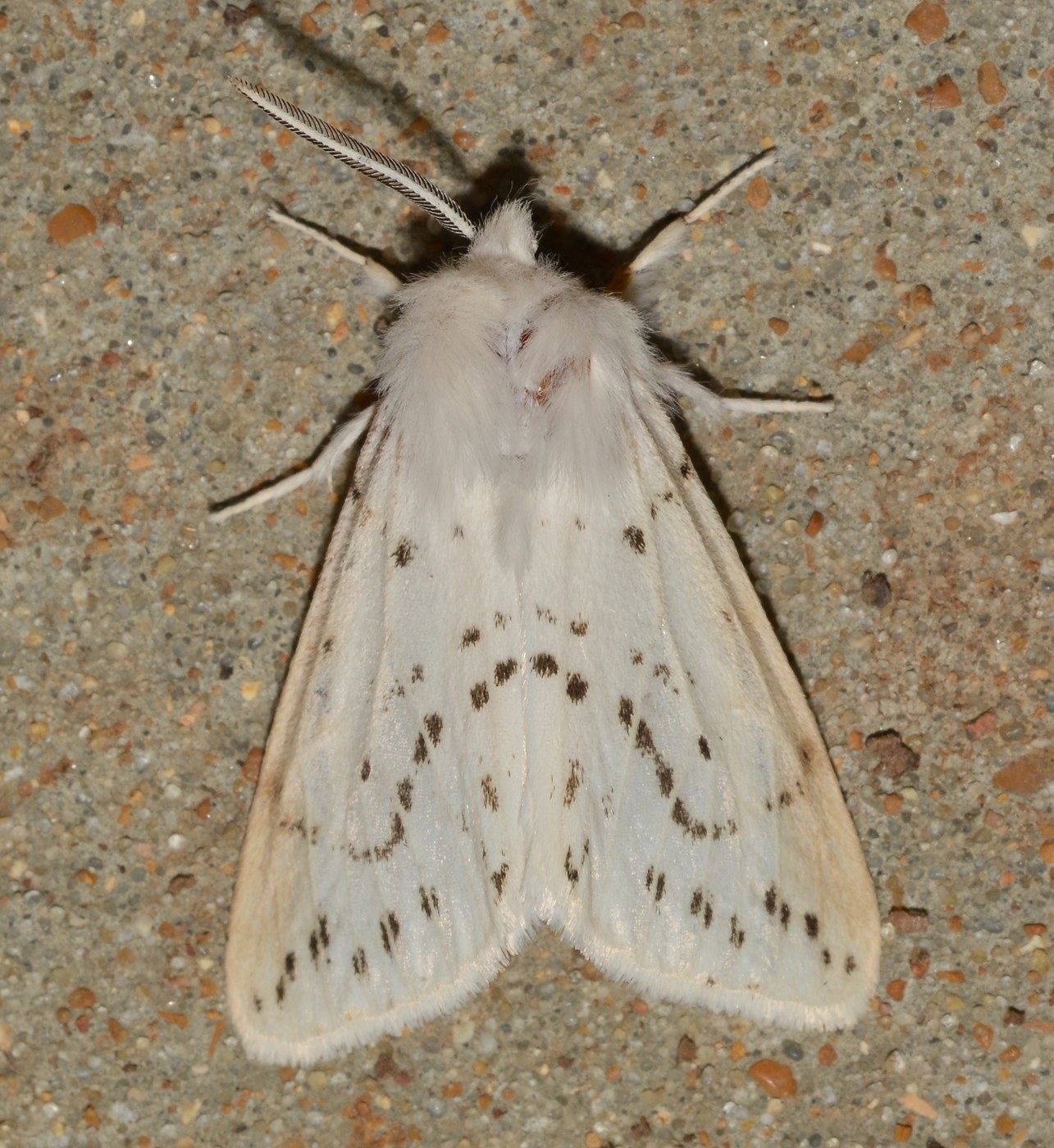
Fall Webworm Moth
A plain white (sometimes lightly speckled) moth whose caterpillars are far more familiar than the adult, spinning large communal silk webs over the ends of tree branches in late summer and early autumn.
moth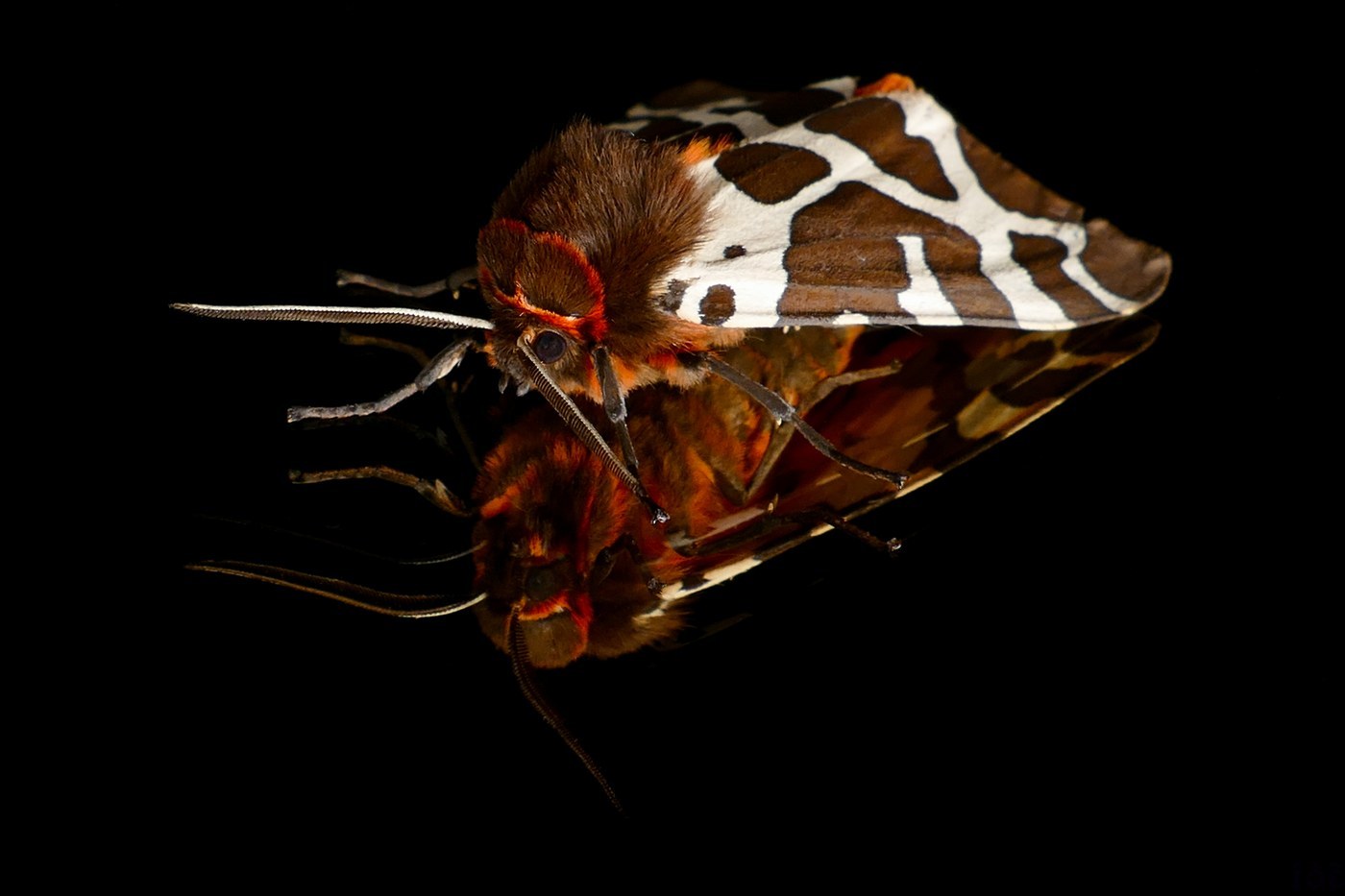
Great Tiger Moth
A boldly patterned tiger moth with chocolate-brown and cream lace-like markings on the forewings and vivid orange hindwings spotted with blue-black, one of the most visually striking moths in temperate gardens.
moth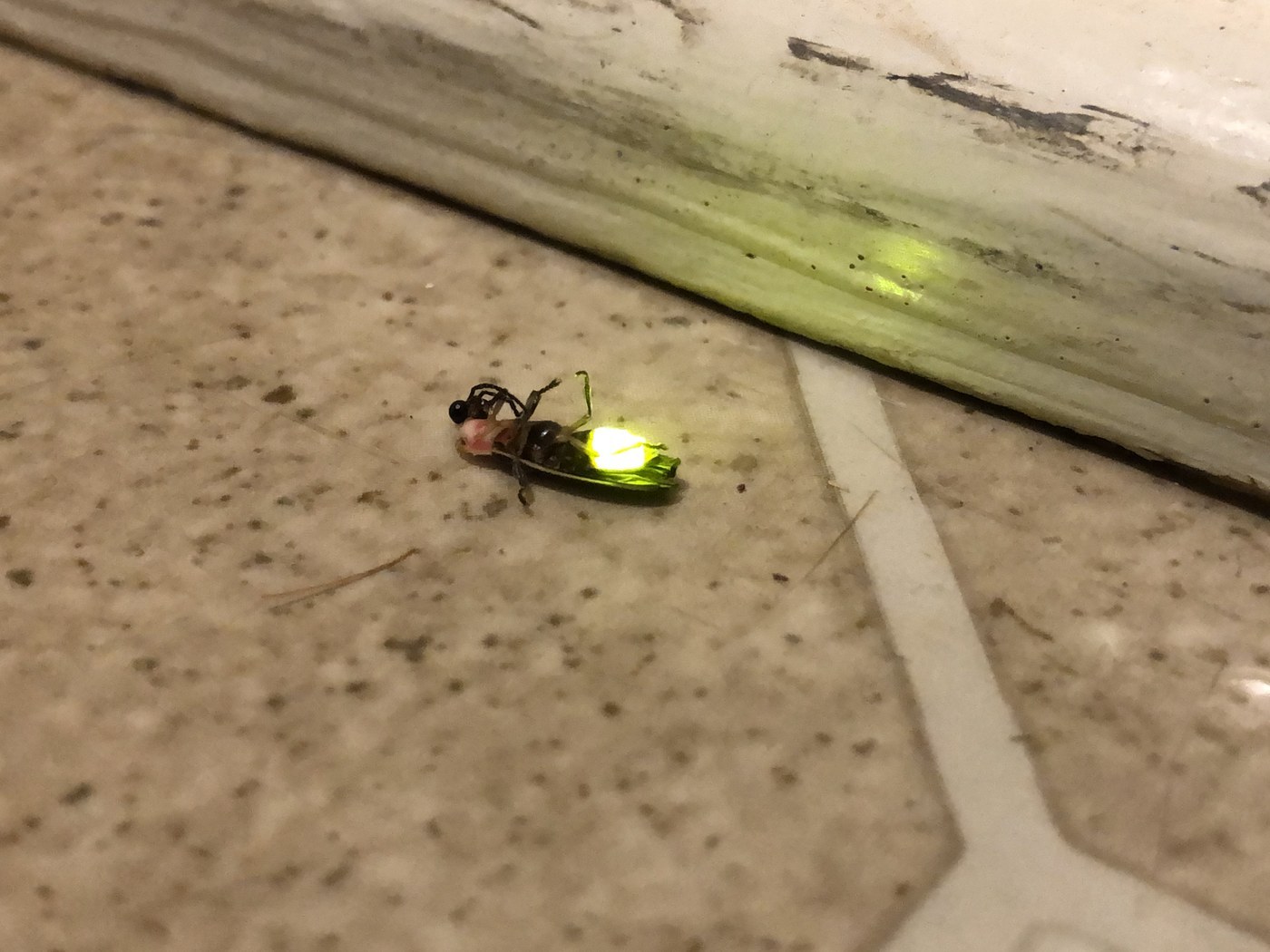
Fireflies
A soft-bodied beetle famous for producing rhythmic, glowing flashes of light from its abdomen at dusk, used to signal and attract mates across meadows and gardens on warm summer evenings.
beetle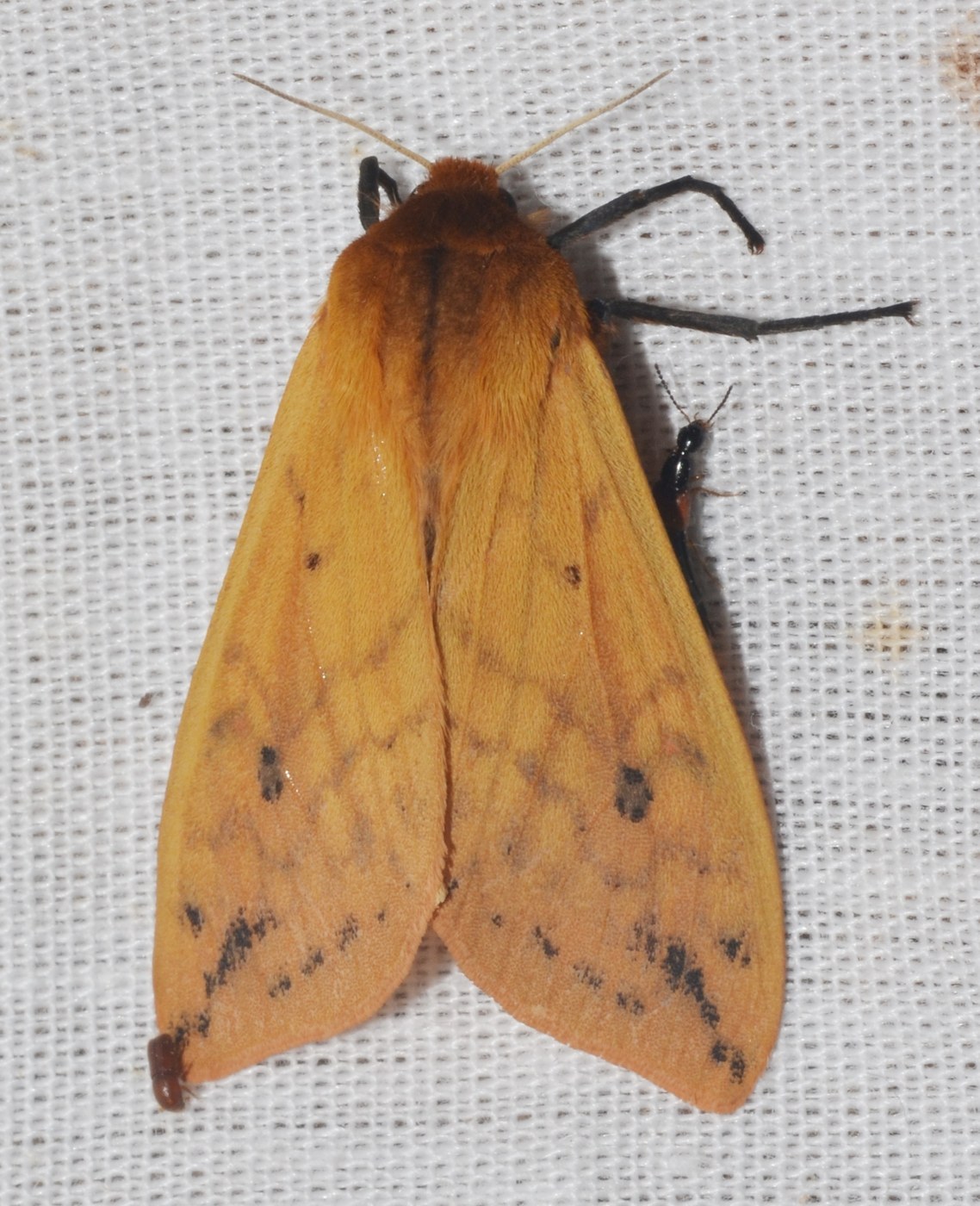
Isabella Tiger Moth (Woolly Bear)
Famous chiefly in its larval stage as the banded woolly bear caterpillar, this tiger moth's fuzzy black-and-rust-colored caterpillar is a familiar autumn sight, while the adult is a soft, tawny-orange moth with a stout, furry body.
moth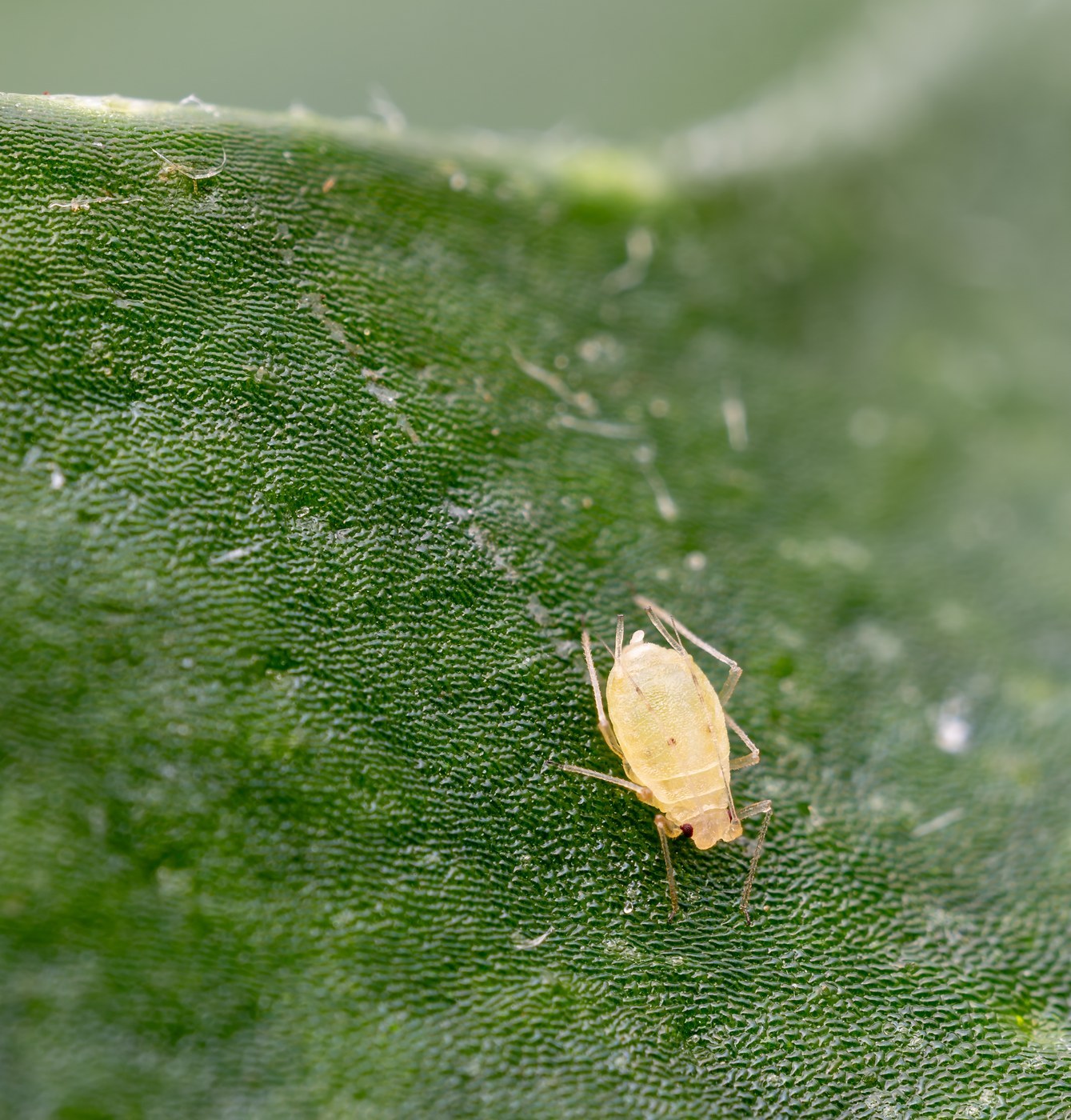
Green Peach Aphid
A small, pale yellow-green aphid with an exceptionally broad host range, recognized as one of the most widespread and adaptable aphid species found on garden vegetables, ornamentals, and stone fruit trees.
true-bug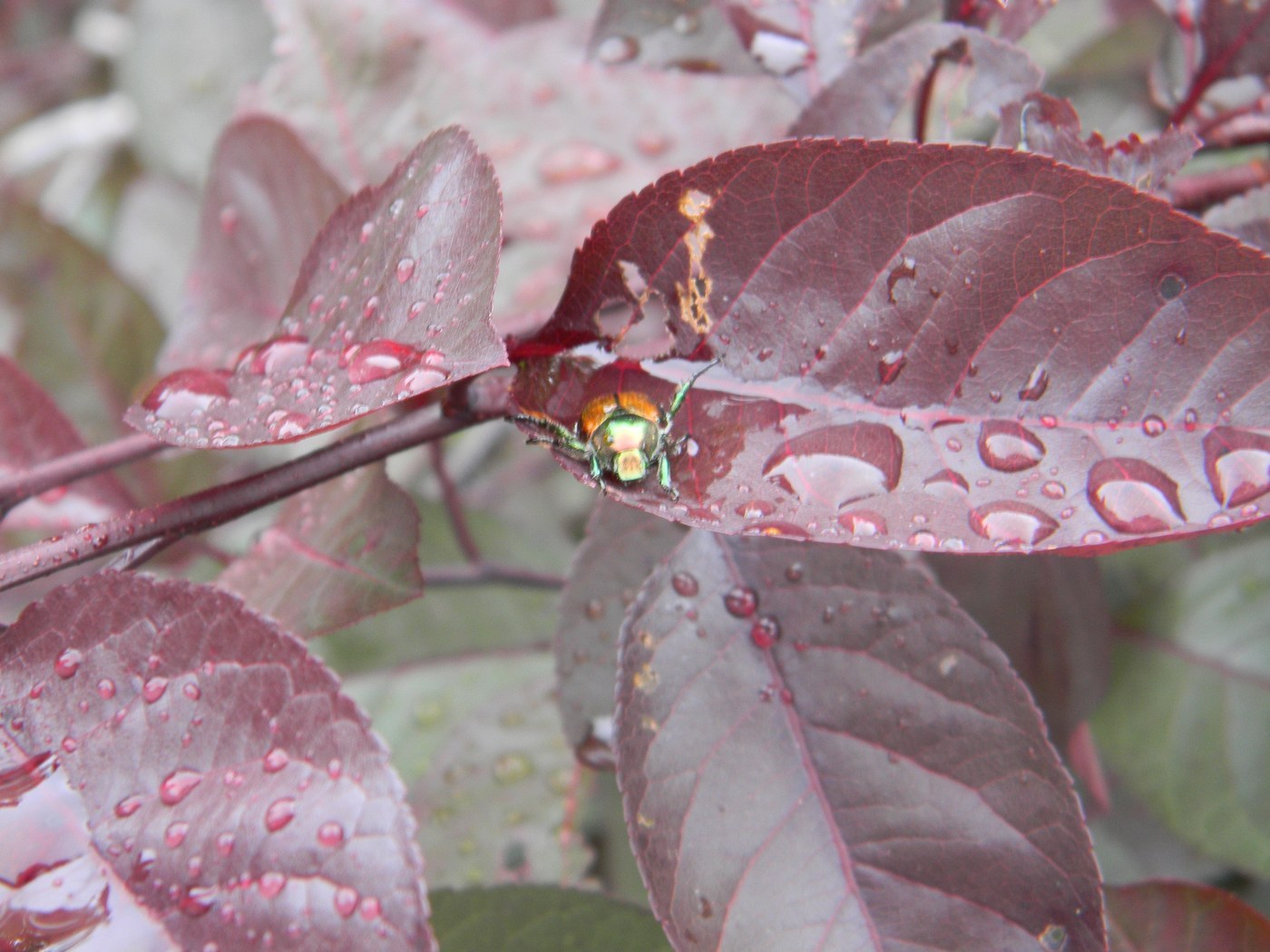
Japanese Beetle
A small, iridescent beetle with a metallic green head and thorax and coppery-bronze wing covers, notorious for skeletonizing the leaves of roses, grapevines, and hundreds of other garden plants.
beetle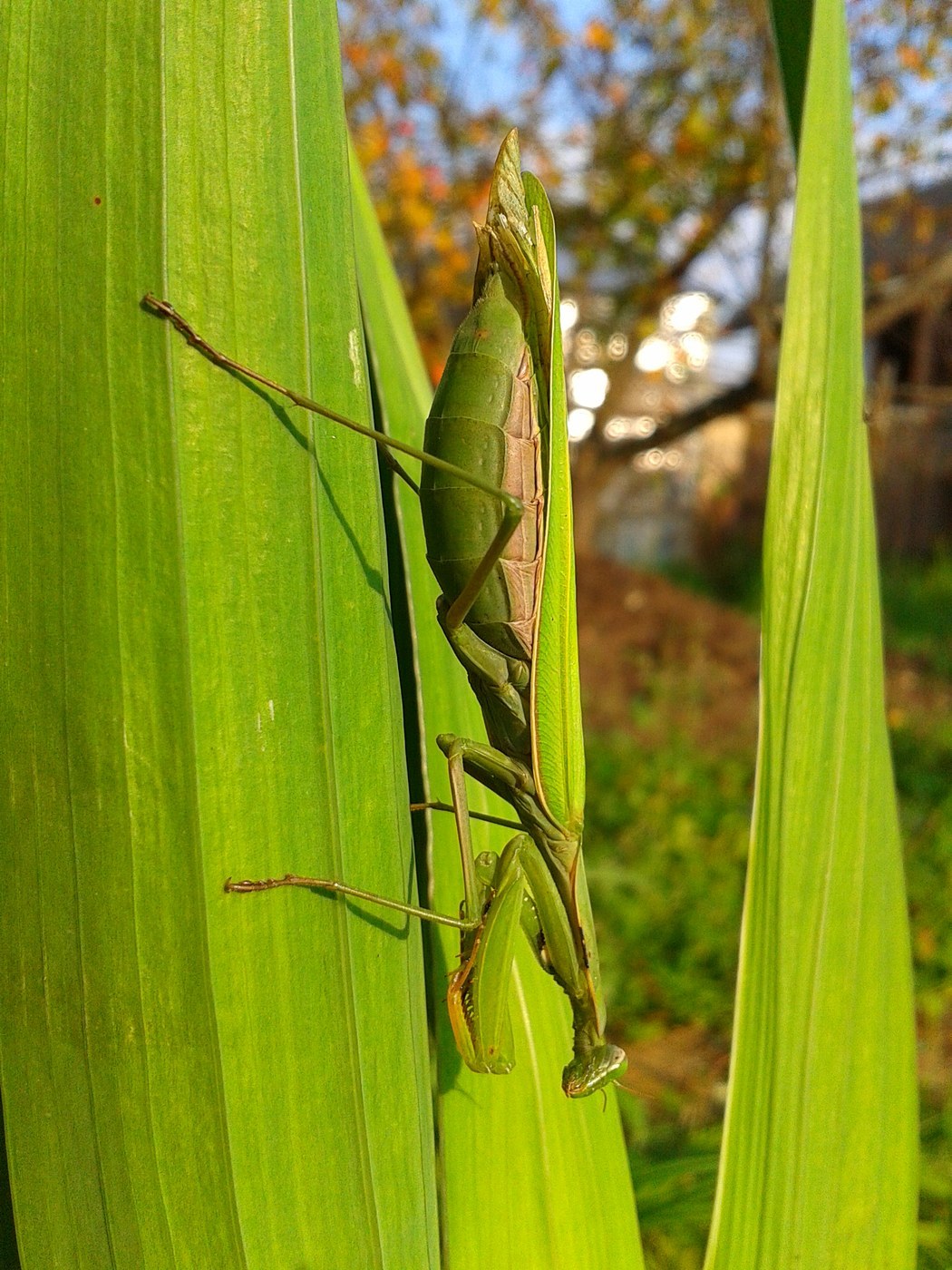
European Mantis
A slender, typically bright green mantis native to Europe, Africa, and Asia, now widely established in North America, easily recognized by a small dark bullseye mark on the inside of its front legs.
mantis-stick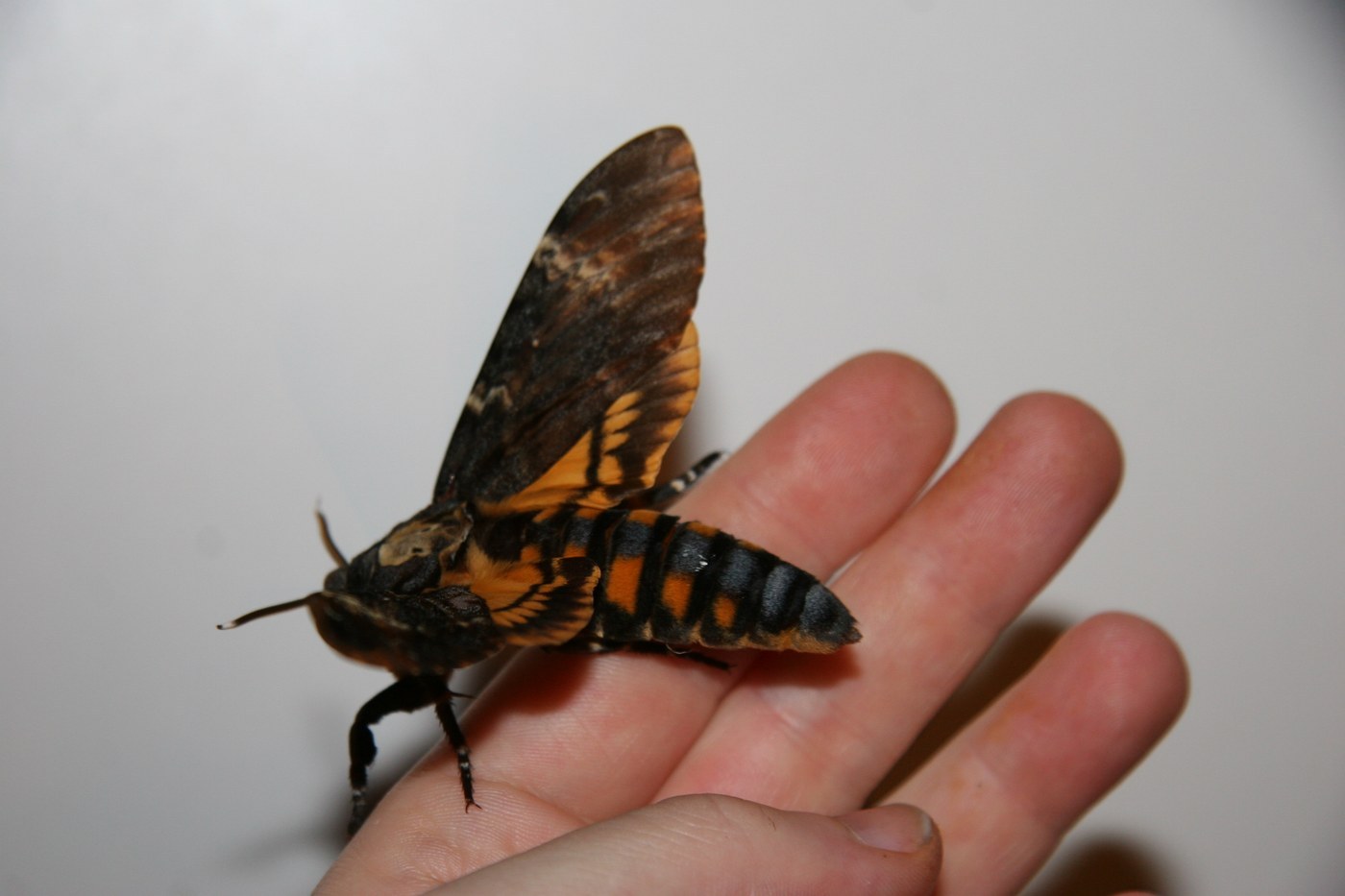
Death's-head Hawkmoth
A large, thick-bodied hawkmoth instantly recognized by the pale, skull-and-crossbones marking on its furry thorax, famous for entering beehives and letting out a shrill squeak when disturbed.
moth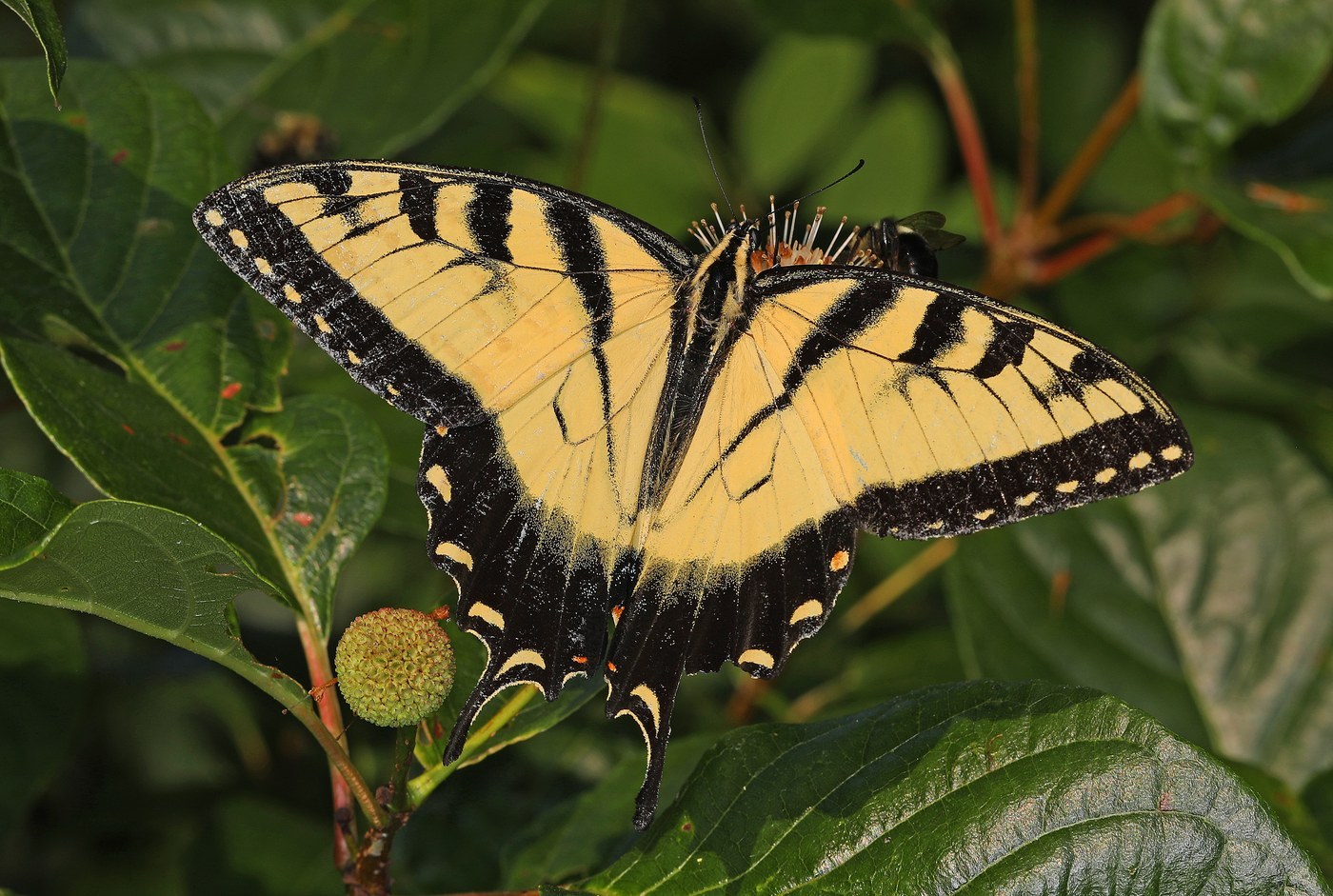
Eastern Tiger Swallowtail
A large, showy yellow-and-black striped swallowtail with elegant tail extensions on the hindwings, one of the most recognizable butterflies of eastern North American woodlands and gardens.
butterflyDaddy Longlegs (Harvestman)
A leggy, one-piece-bodied arachnid that scurries through leaf litter and garden beds on impossibly long, spindly legs, easily mistaken for a spider despite belonging to an entirely different arachnid order.
arachnidDampwood Termite
A relatively large termite that nests directly inside heavily moistened, decaying wood such as rotting logs and stumps, needing no soil contact but requiring consistently damp timber.
otherCrane Fly Larva
Thick-skinned and worm-like, the crane fly larva, often called a leatherjacket, burrows through wet mud and decaying vegetation at the edges of ponds and streams, breaking down plant material as it grows.
aquatic-insect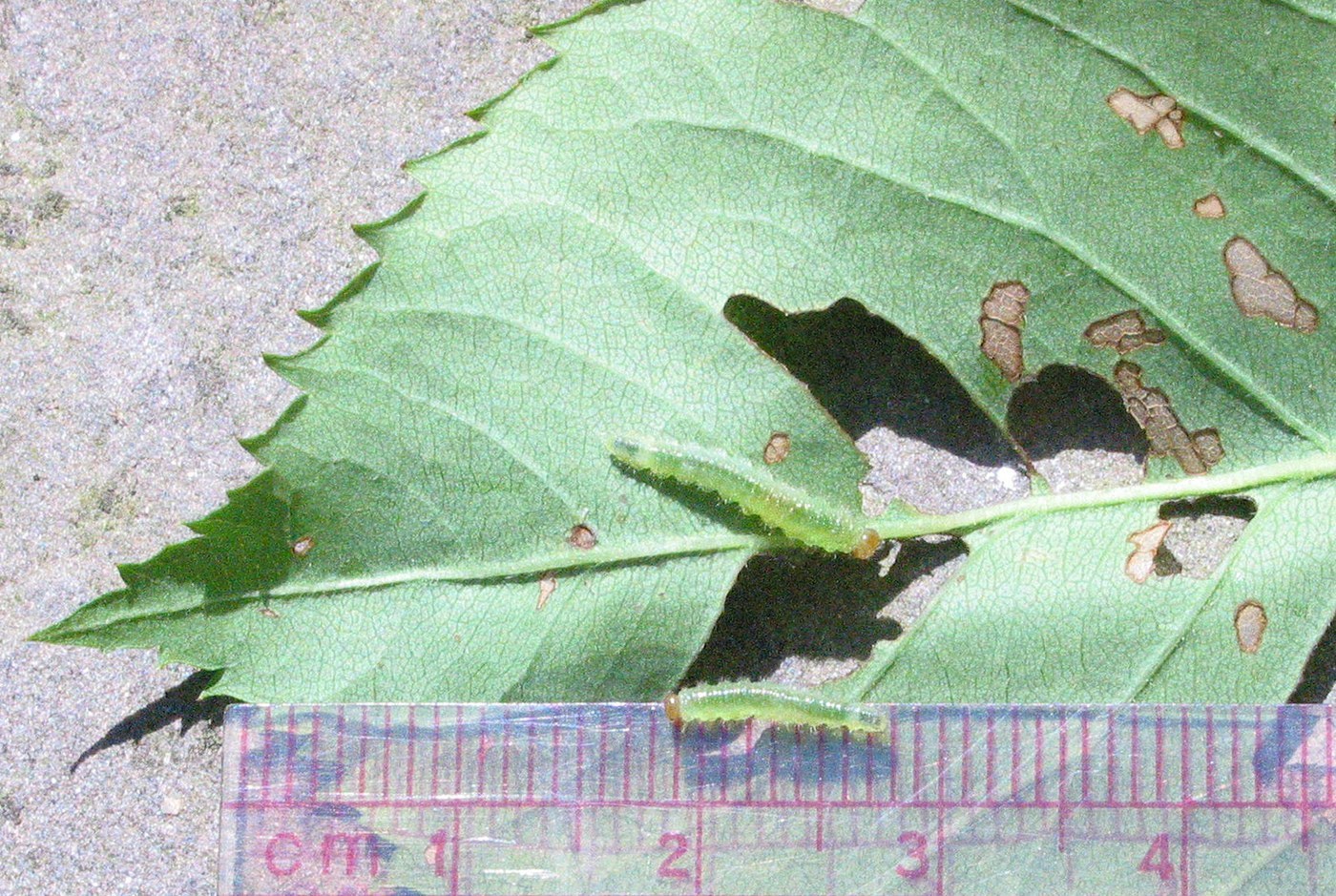
Bristly Rose Slug
Despite its caterpillar-like, slug-shaped body covered in fine bristles, this pale green larva is actually the offspring of a small sawfly and feeds on rose leaves by skeletonizing them from the underside.
caterpillar-larvaBumble Bee Queen
The large, robust foundress of a bumble bee colony, noticeably bigger and fuzzier than her worker offspring, seen alone in early spring searching for a nesting cavity before her colony's first workers emerge.
bee