
Bug Encyclopedia
Search and identify bugs & insects — beetles, butterflies, moths, ants, bees, spiders and more — with size, habitat, danger, behavior, and how to tell them apart.
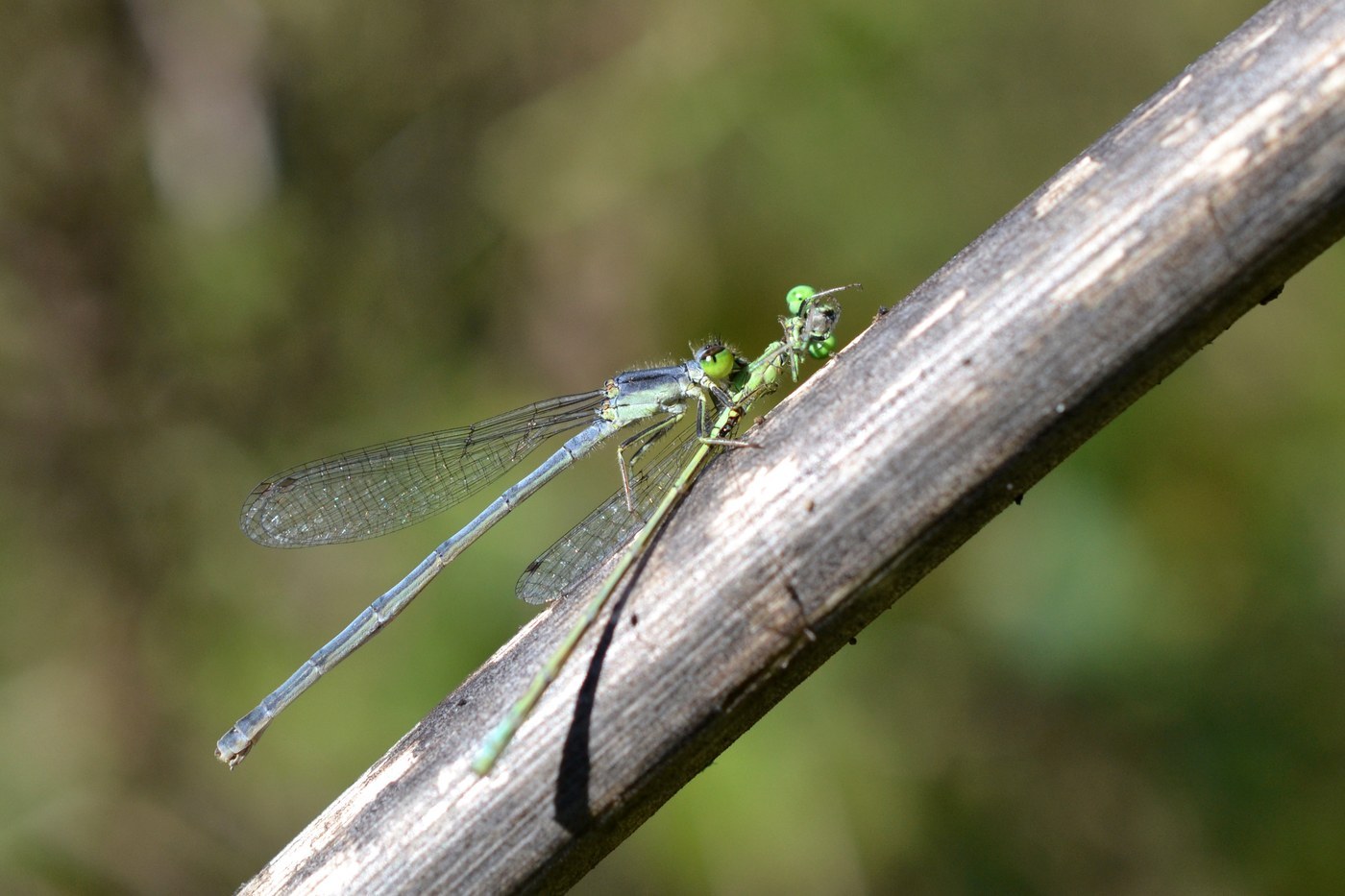
Eastern Forktail
One of the smallest and most adaptable damselflies in eastern North America, the Eastern Forktail thrives in everything from wild marshes to roadside ditches, with bright green-and-black males and color-changing females.
other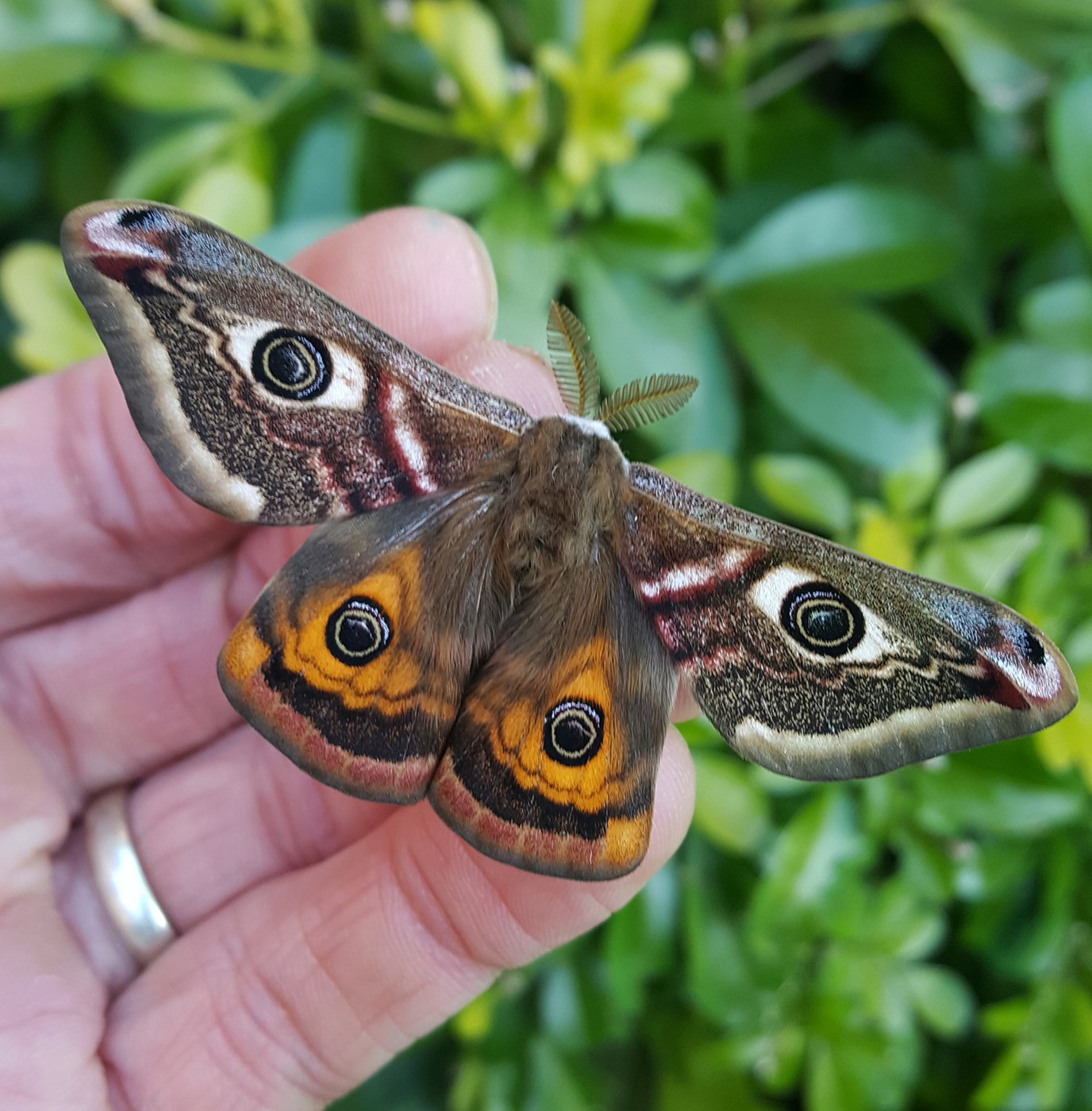
Emperor Moth
A striking silk moth with a large eyespot on each of its four wings, showing pronounced differences between the smaller, orange-brown, day-flying males and the larger, greyer, night-flying females.
moth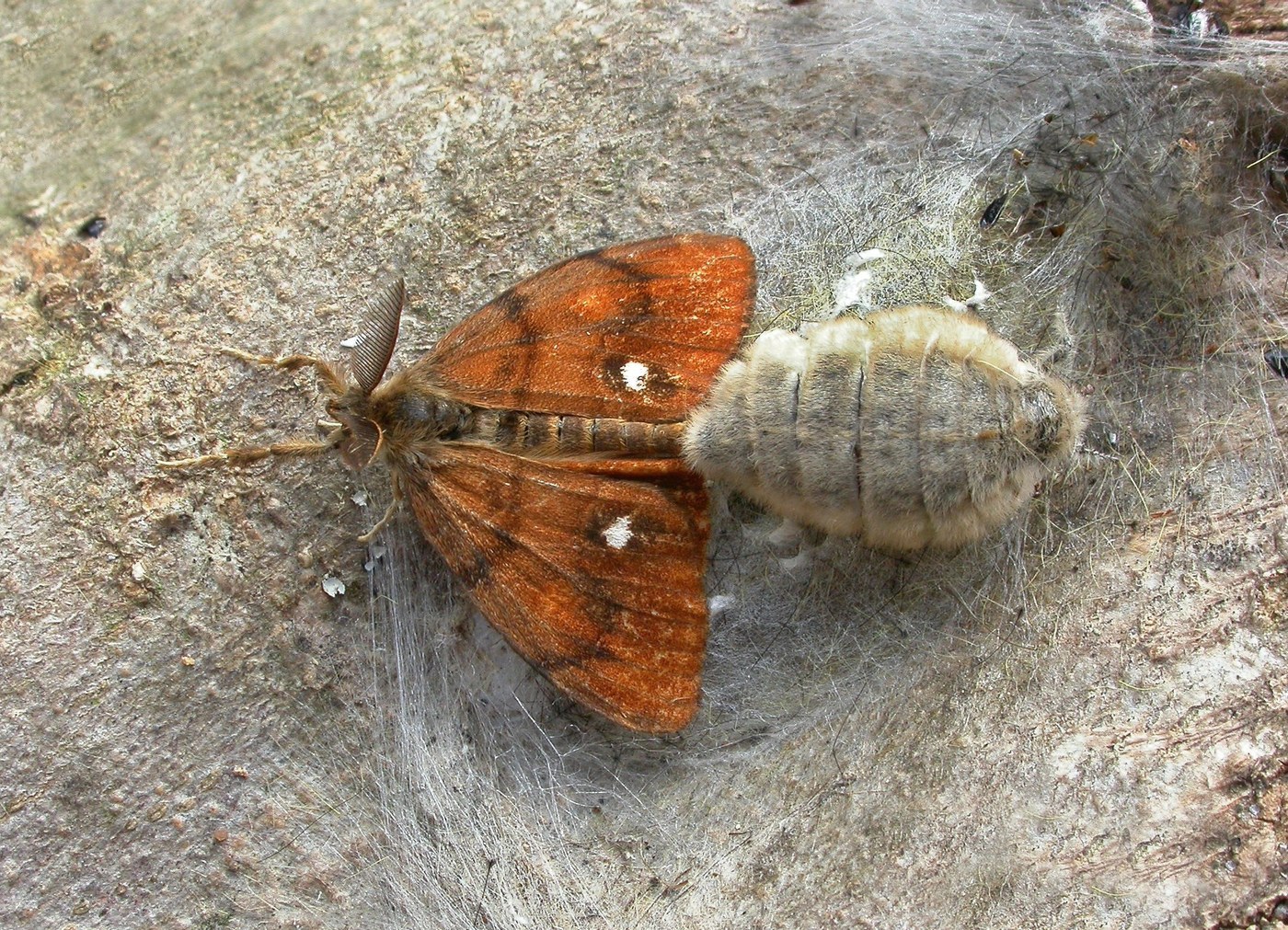
Vapourer Moth
A small tussock moth with striking sexual dimorphism: rusty-orange, day-flying males with feathery antennae contrast with flightless, grub-like grey females that never leave their cocoon to lay eggs.
mothCicada Killer's Prey Cicada
A large, thick-bodied, clear-winged insect best known for the loud, buzzing chorus males produce from treetops on hot summer afternoons, and a preferred prey item of the cicada killer wasp.
true-bug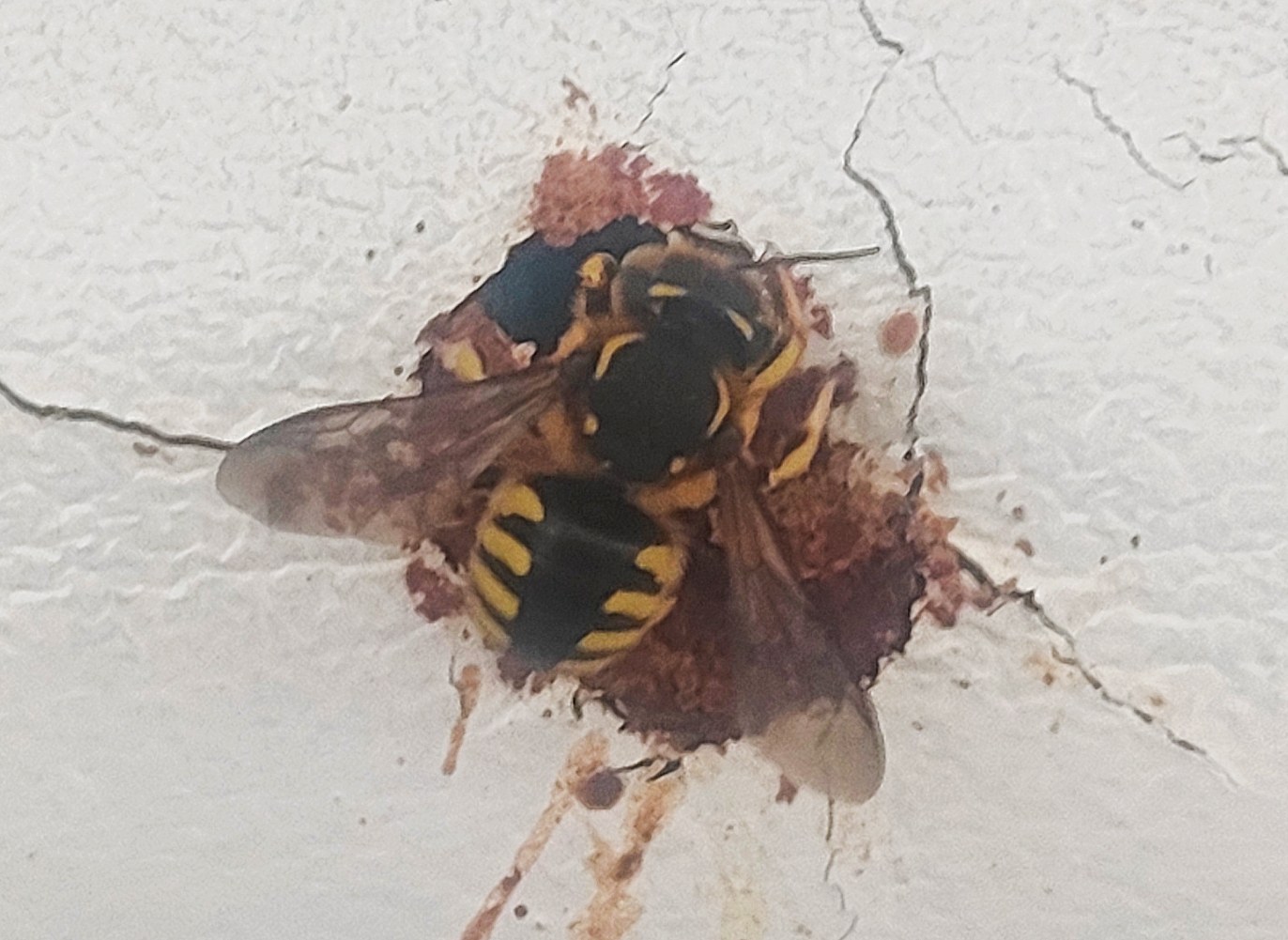
Wool Carder Bee
A stocky, yellow-and-black solitary bee named for its habit of scraping soft plant fibers from fuzzy leaves to line its nest, with territorial males that aggressively patrol and defend flower patches.
bee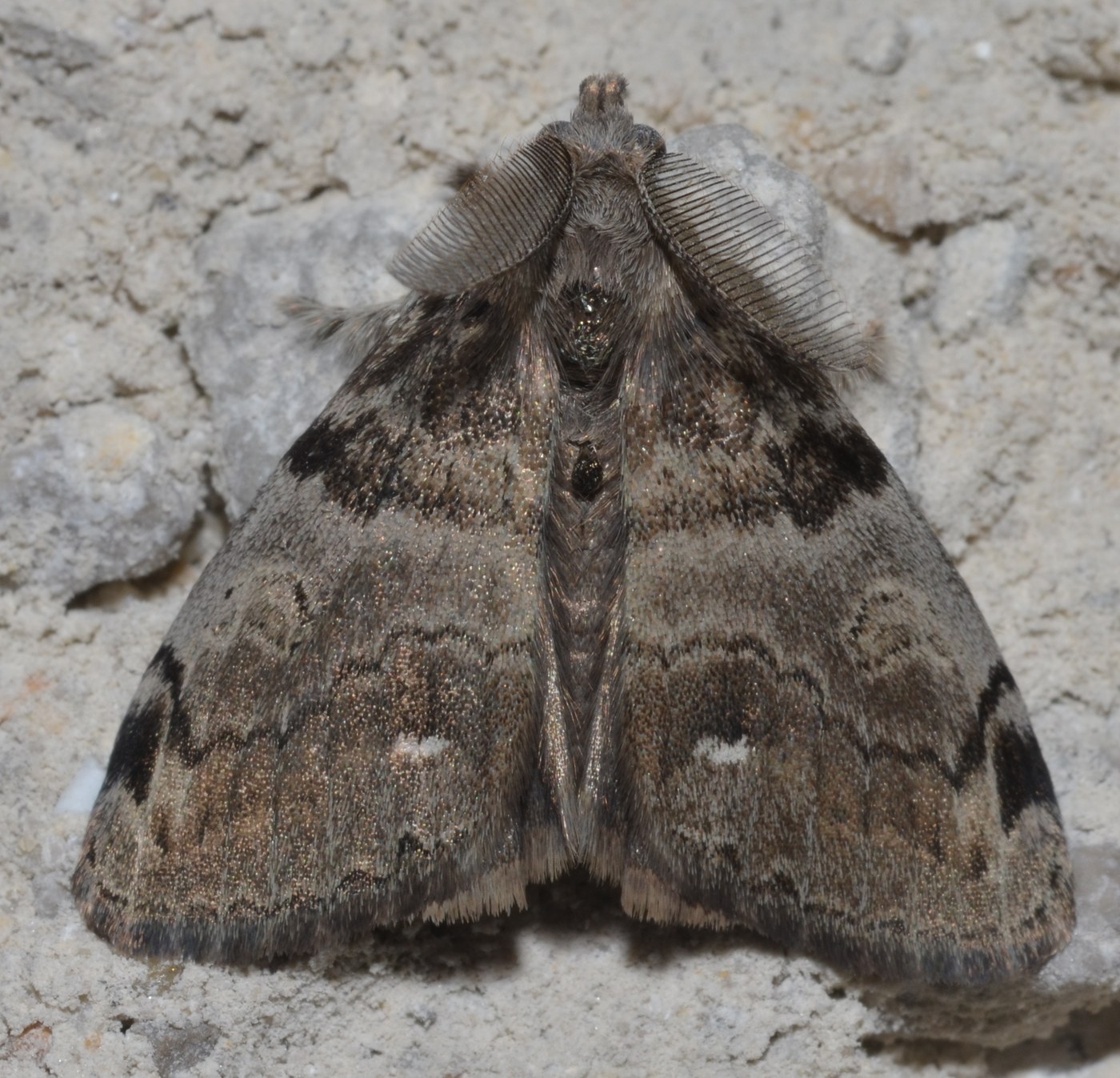
Tussock Moth
A moth with a striking split lifestyle: winged, drab gray-brown males fly to seek out flightless, grub-like females, while the ornate caterpillars sport dense tufts of colorful bristly hair.
mothKatydid
A leaf-mimicking insect with broad, veined green wings shaped remarkably like foliage, best known for the loud, rhythmic 'katy-did, katy-didn't' chorus males produce on warm summer nights.
grasshopper-cricket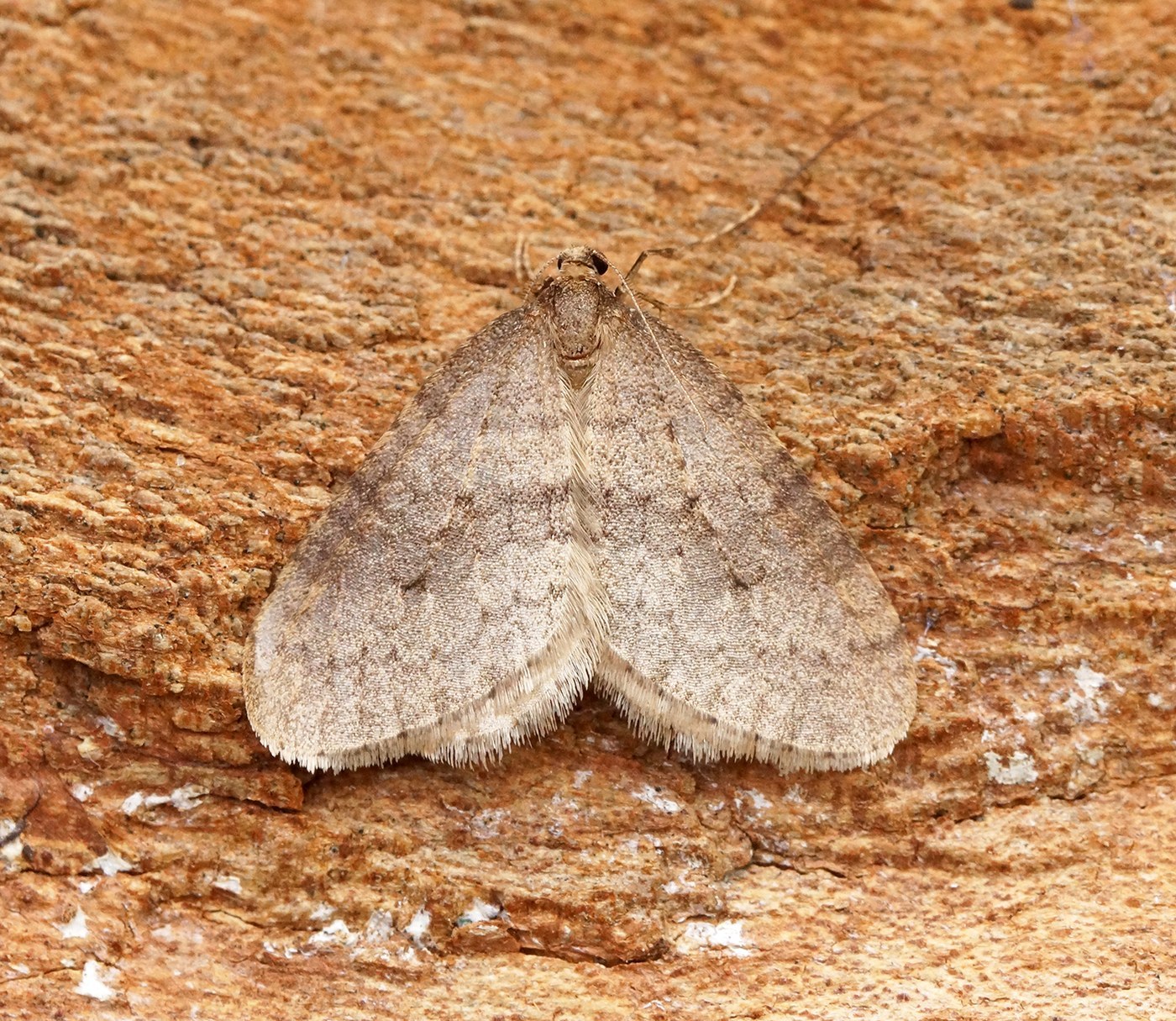
Winter Moth
A small tan-brown moth unusual for flying in the cold of late autumn and early winter, with strongly dimorphic sexes: fully winged males and flightless, near-wingless females that climb tree trunks to lay eggs.
moth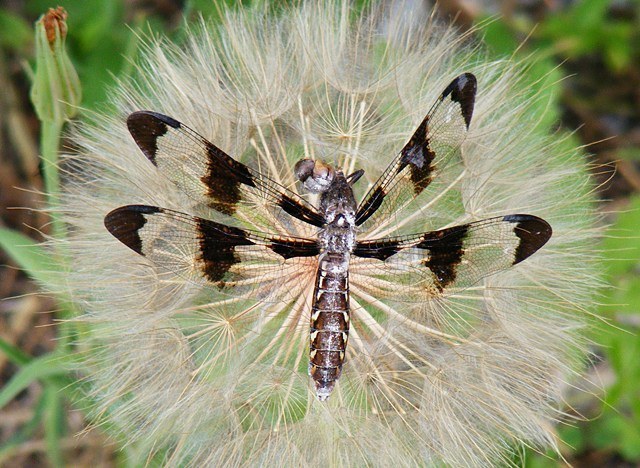
Twelve-spotted Skimmer
A big, boldly patterned skimmer whose wings each carry three chocolate-brown patches, and whose mature males add chalky white flashes between them for a striking black-and-white flicker in flight.
dragonfly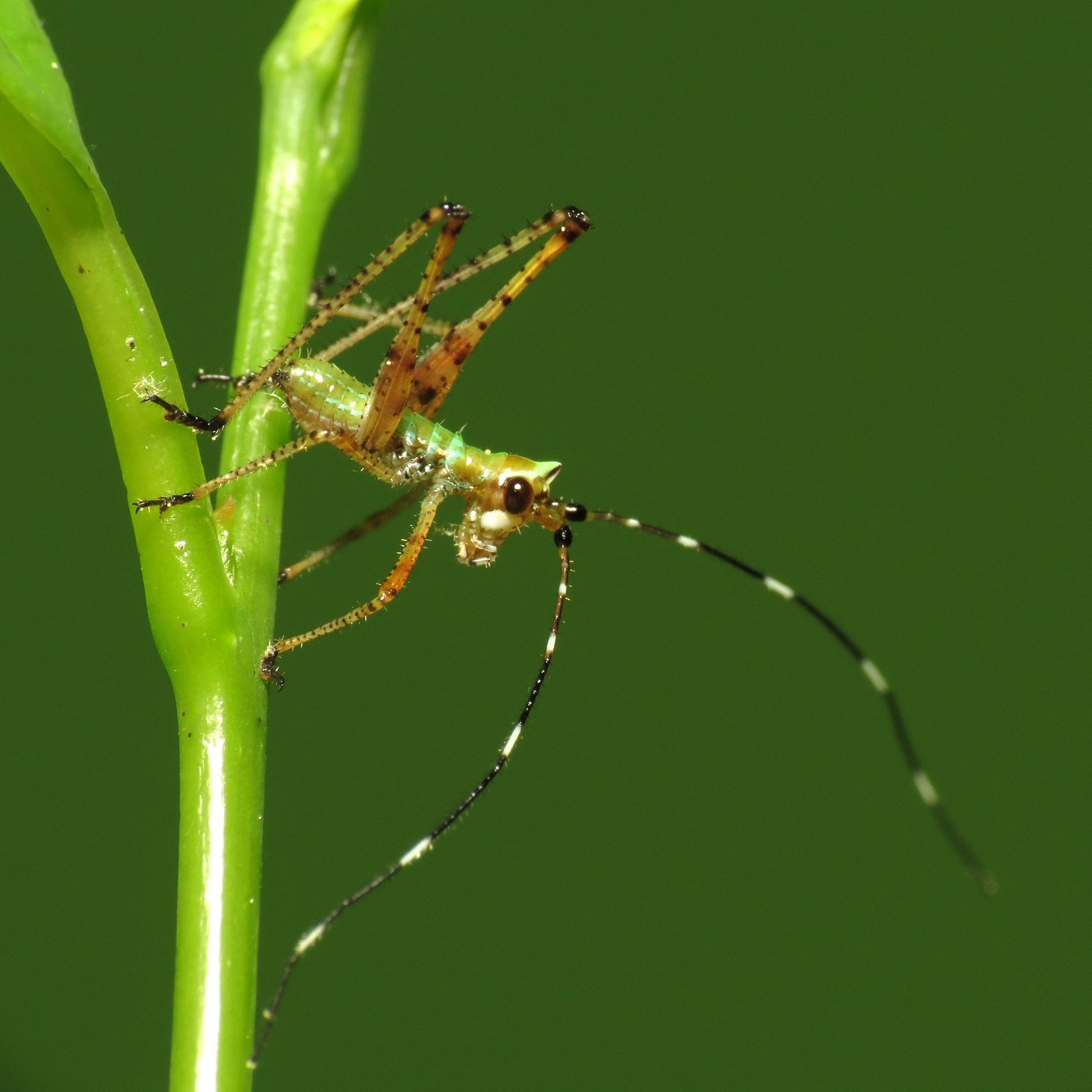
Fork-tailed Bush Katydid
Slimmer and greener than its treetop relatives, the fork-tailed bush katydid lives among shrubs and garden plants, with males identified by the distinctive forked appendages at the tip of the abdomen that give the species its name.
grasshopper-cricketGolden Silk Orb-Weaver Spider
Famous for spinning enormous webs of shimmering golden silk, the golden silk orb-weaver is a large, long-legged spider of warm climates. Females dwarf the tiny males and hang head-down in their sprawling snares.
spiderBirdwing Butterfly
Among the largest butterflies on Earth, birdwings soar through rainforest canopies on angular, bird-like wings. Males dazzle with iridescent greens, golds, and blues, while the larger females wear more subdued browns.
butterflyGlowworm Beetle
A beetle whose females remain larva-like and glowing for their entire lives, producing rows of soft greenish light along their segmented, worm-like bodies, while males develop into small, feathery-antennaed flying beetles.
beetle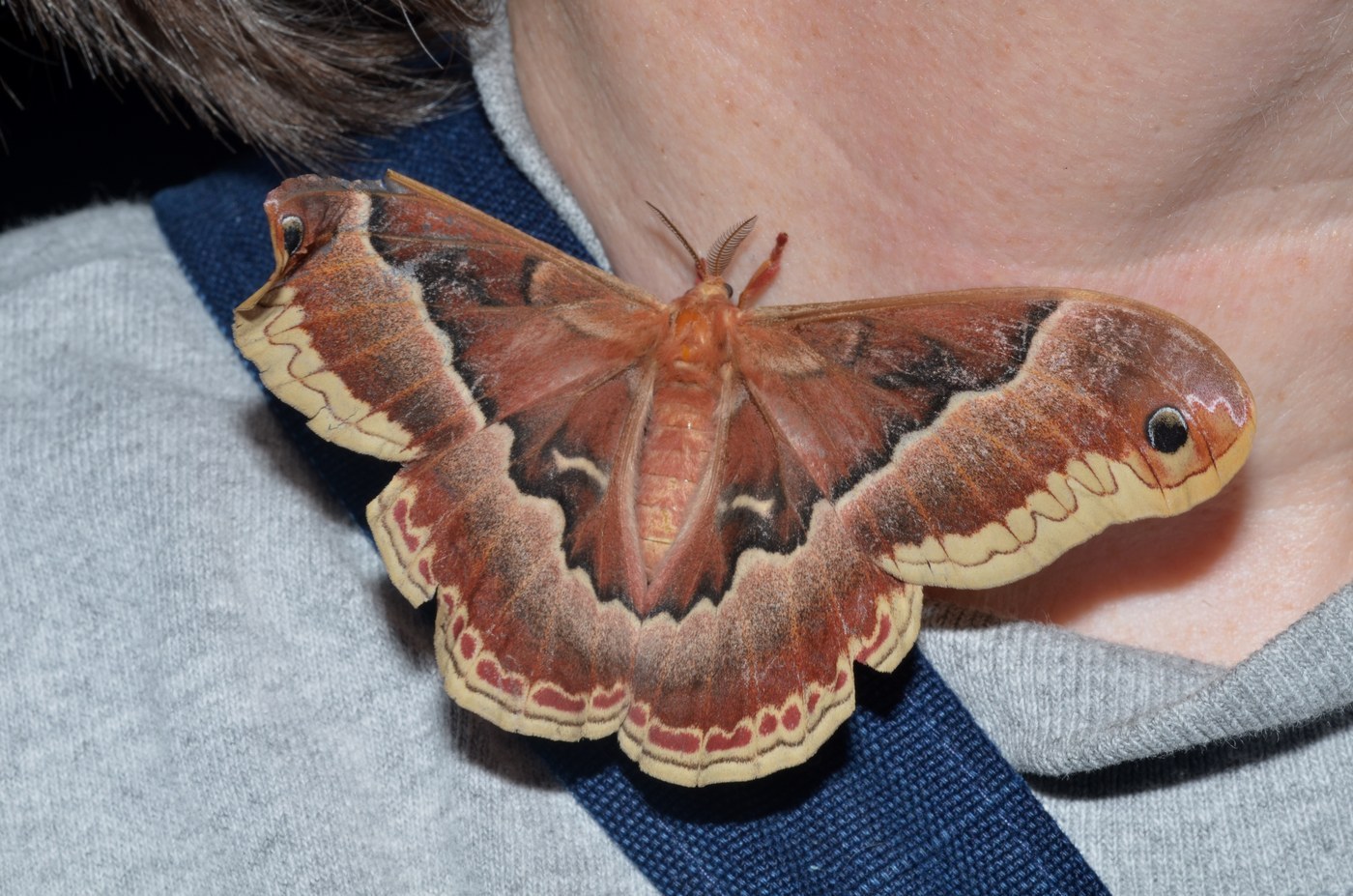
Promethea Moth
A medium-sized silk moth showing striking differences between the sexes, with dark, blackish-maroon males that mimic a distasteful swallowtail butterfly in flight and larger, more colorful reddish-brown females marked with pale borders and eyespots.
moth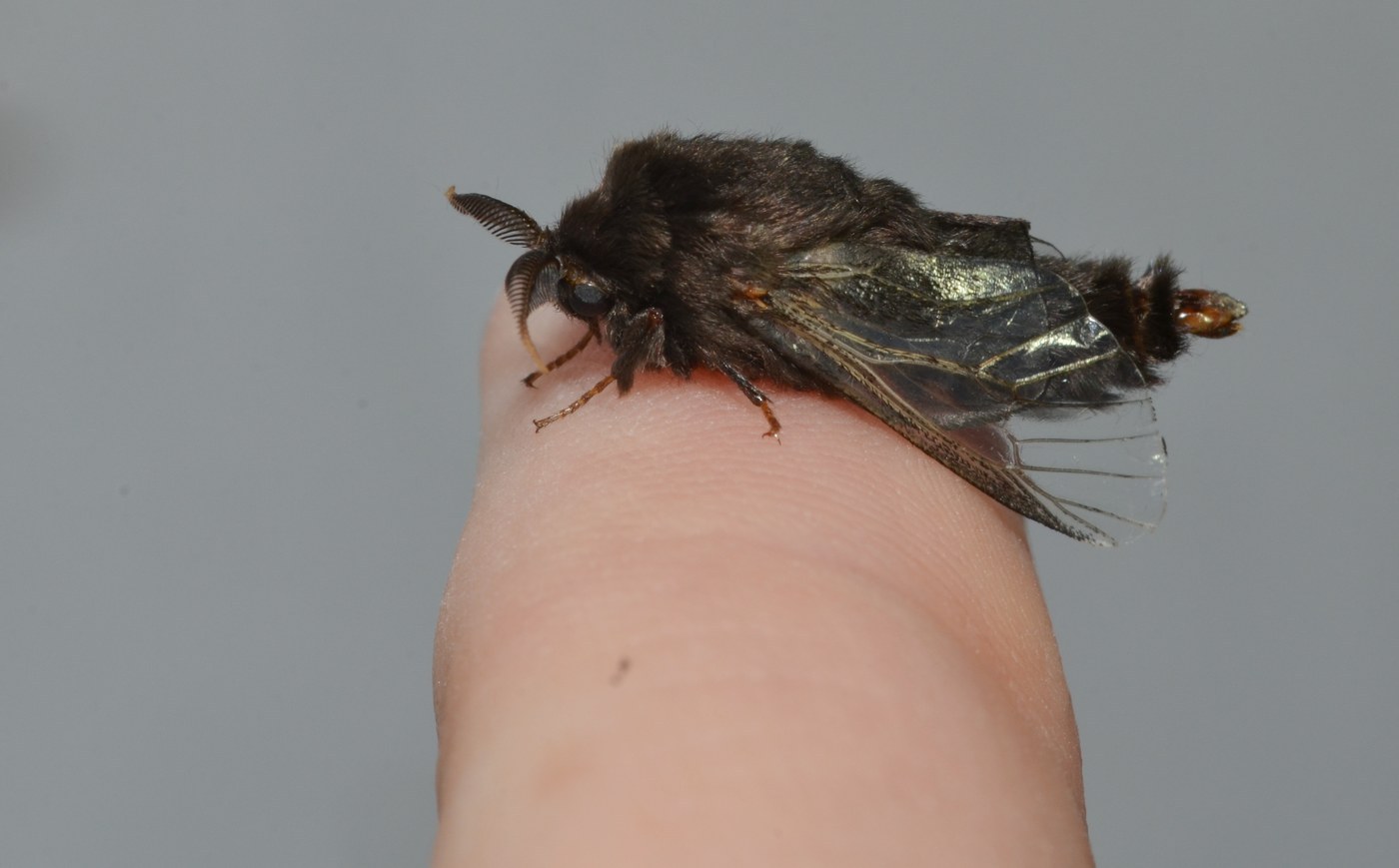
Bagworm Moth
A moth best known for its larva's habit of constructing and living inside a spindle-shaped case of silk and plant debris that hangs from twigs, with adult males a plain sooty-winged moth and females remaining wingless and grub-like inside the bag for life.
moth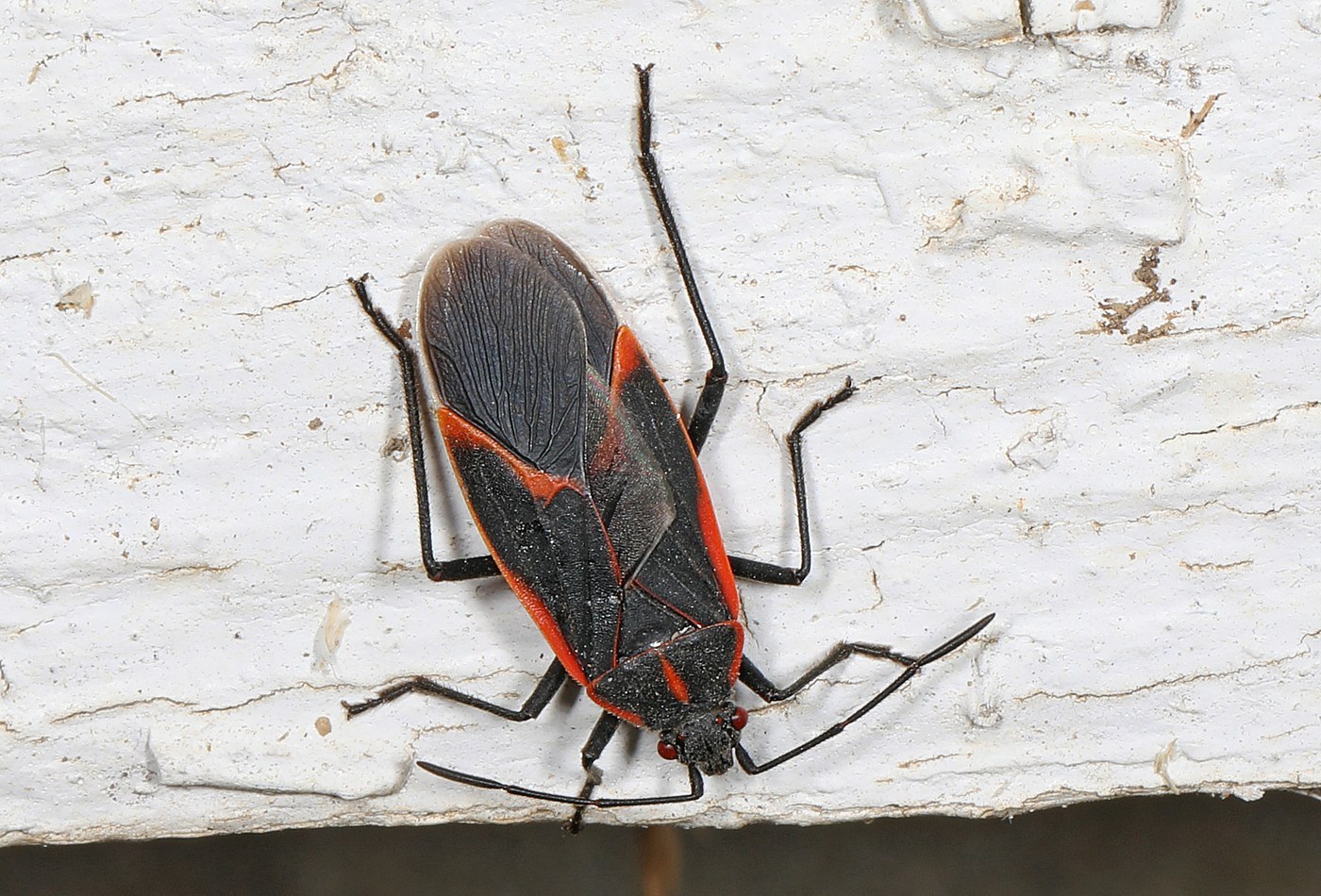
Boxelder Bug (Eastern)
A flat, black true bug boldly trimmed in red-orange lines, famous for massing by the hundreds on sun-warmed walls and tree trunks each autumn.
true-bug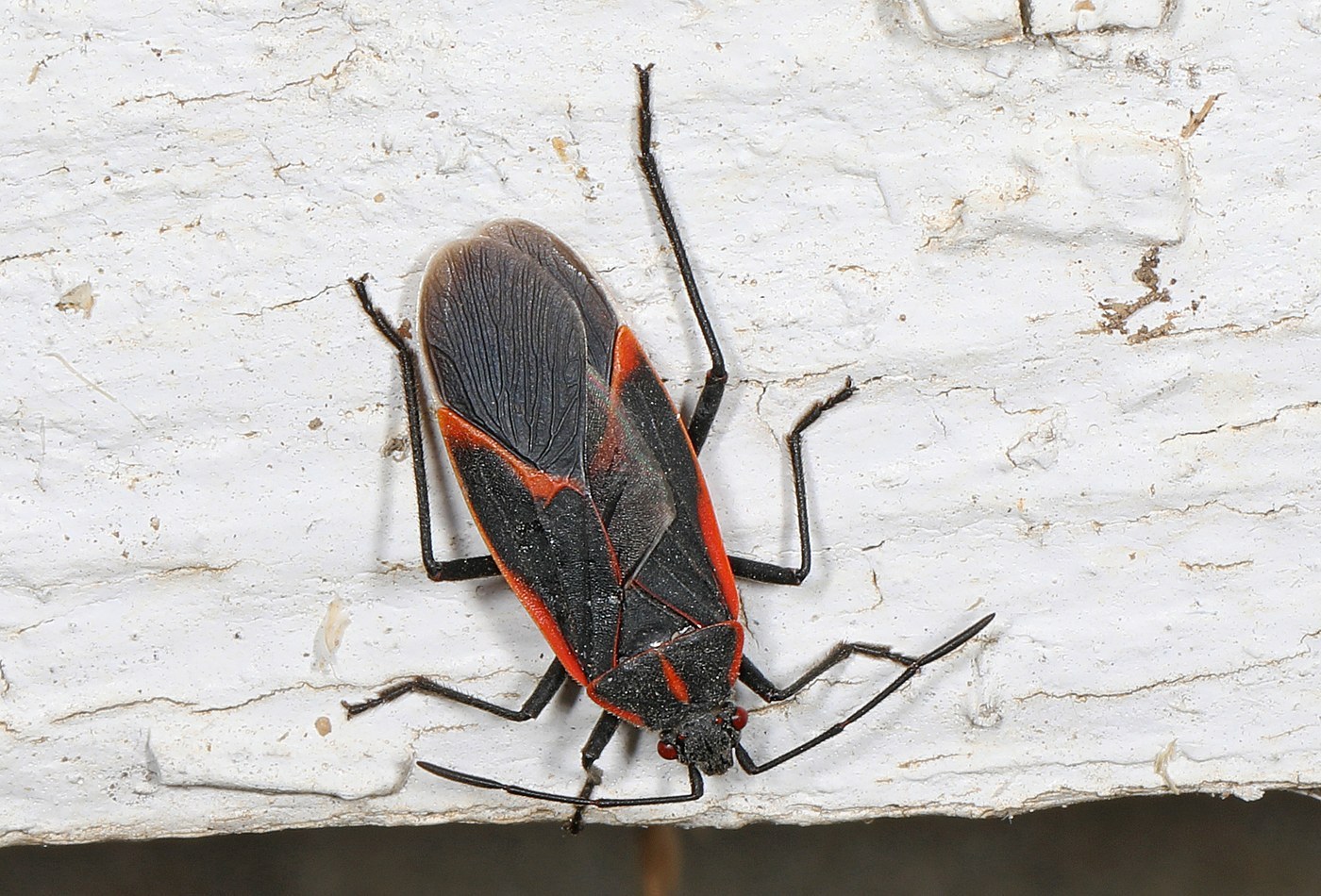
Boxelder Bug
A slender black true bug marked with three bold red-orange stripes on its thorax and red wing veins, famous for massing by the hundreds on tree trunks and sun-warmed walls in autumn.
true-bug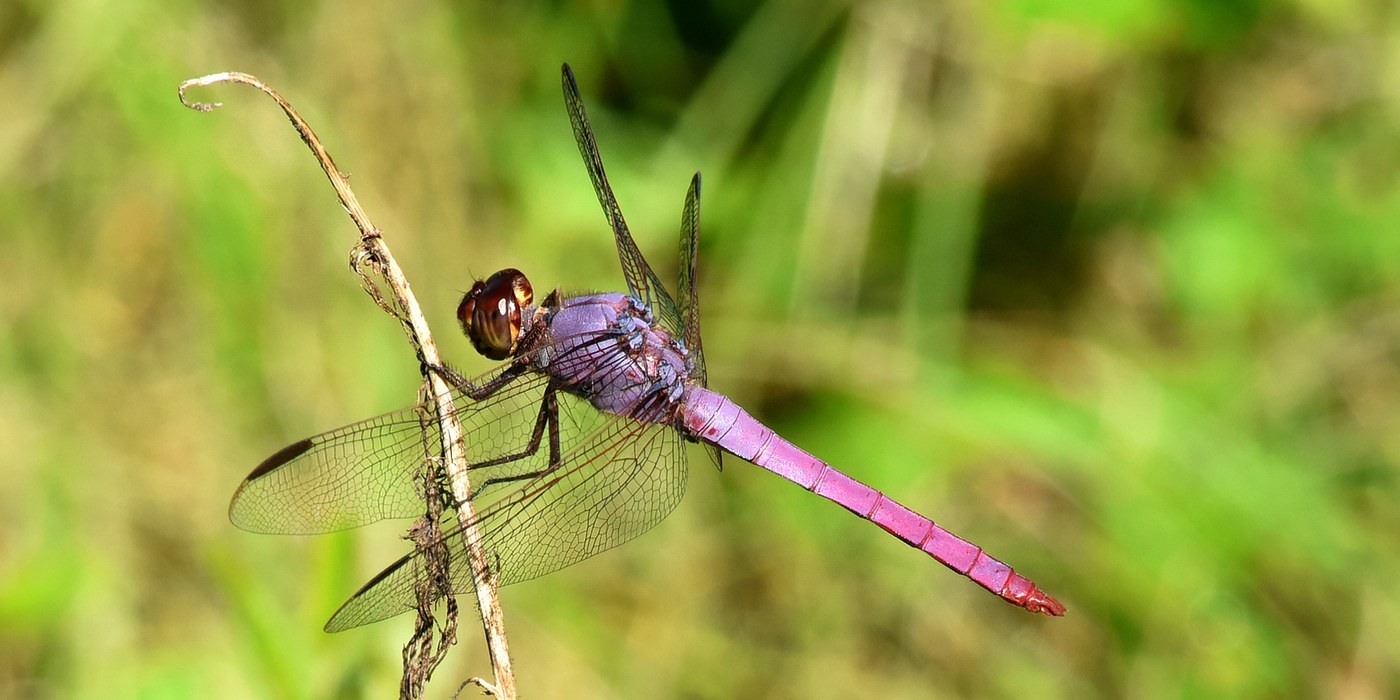
Roseate Skimmer
A vivid pink-violet dragonfly of southern wetlands, the mature male's rose-pruinose body makes it one of the most striking skimmers found around ponds and canals.
dragonfly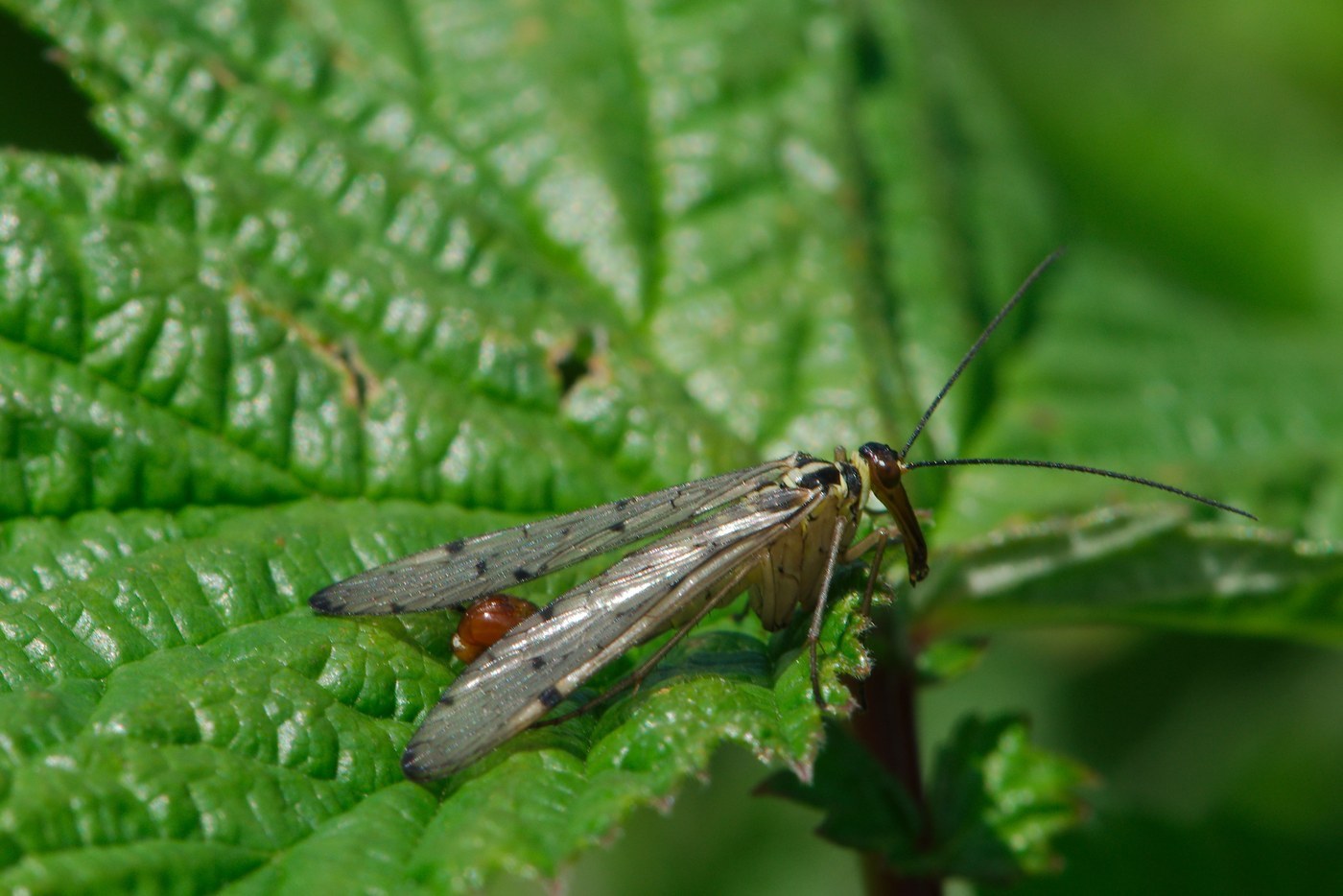
Scorpionfly
A harmless scavenger whose alarming name comes from the male's swollen, upturned abdominal tip, which curls like a scorpion's tail but carries no sting.
other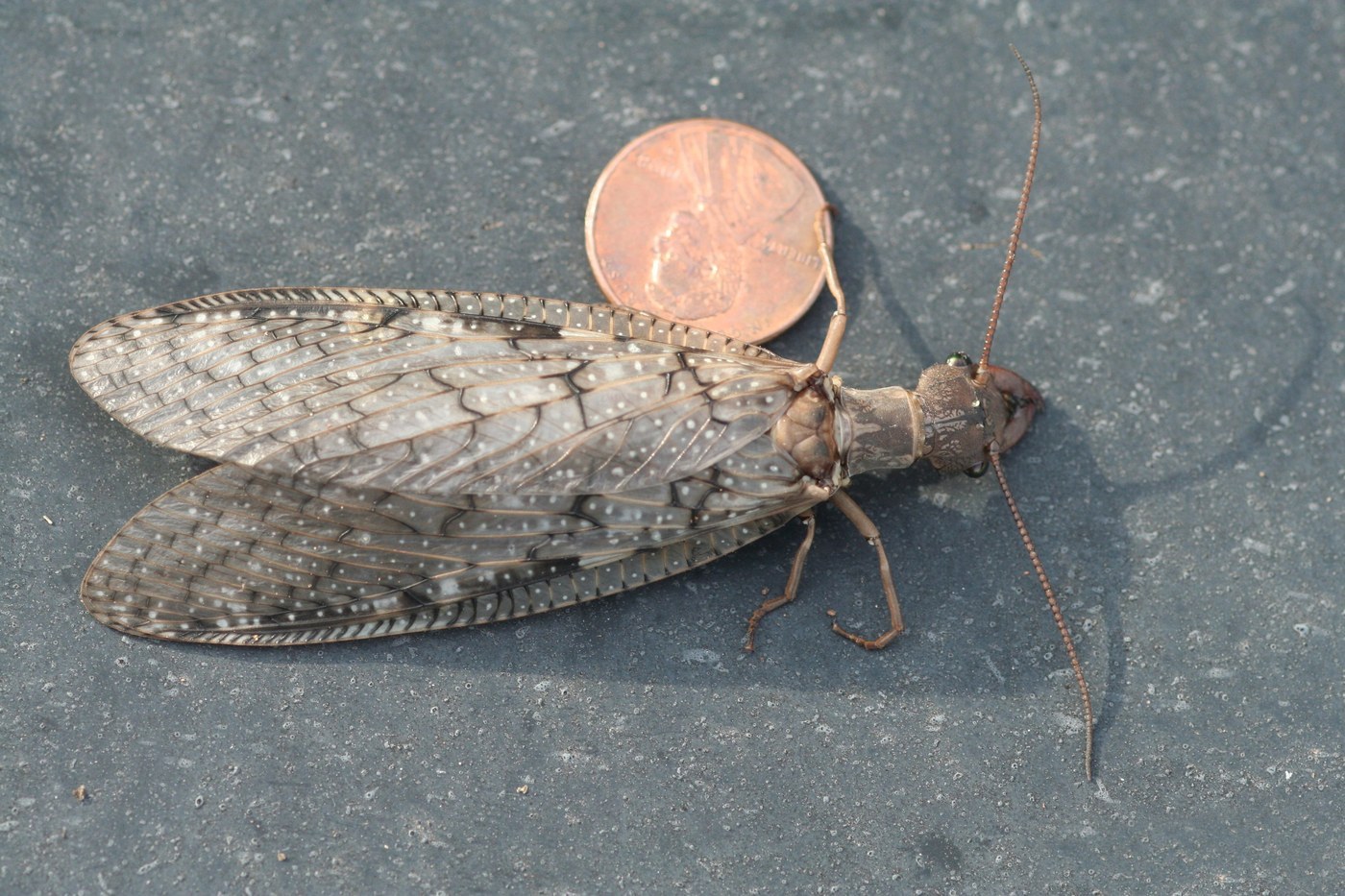
Eastern Dobsonfly
The classic dobsonfly of eastern North America, famous for the male's outsized, tusk-like jaws and for its aquatic larva, the hellgrammite, a favorite live-bait fishing lure.
aquatic-insect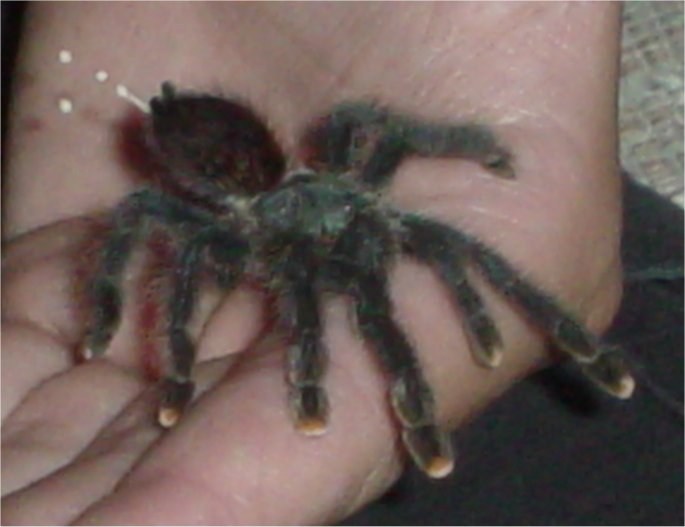
Pink Toe Tarantula
An agile, tree-dwelling tarantula with a dark velvety body and distinctive pale pink tips on its feet, the pink toe spends nearly its entire life above ground, spinning silk retreats among leaves and bark high in the rainforest canopy.
spiderDigger Bee
A robust, fast-flying, densely furry solitary bee that excavates tunnels in bare or sloped soil, often confused with bumble bees due to its bulky, hairy build and loud buzzing flight.
beeOnion Fly
A slender gray fly closely related to houseflies whose white legless larvae bore into onion bulbs, feeding in clusters within a single rotting bulb.
flyMourning Cloak Caterpillar
A gregarious, velvety black caterpillar speckled with white dots and a striking row of brick-red spots down its back, often seen feeding in clusters on willow branches.
caterpillar-larva