
Bug Encyclopedia
Search and identify bugs & insects — beetles, butterflies, moths, ants, bees, spiders and more — with size, habitat, danger, behavior, and how to tell them apart.
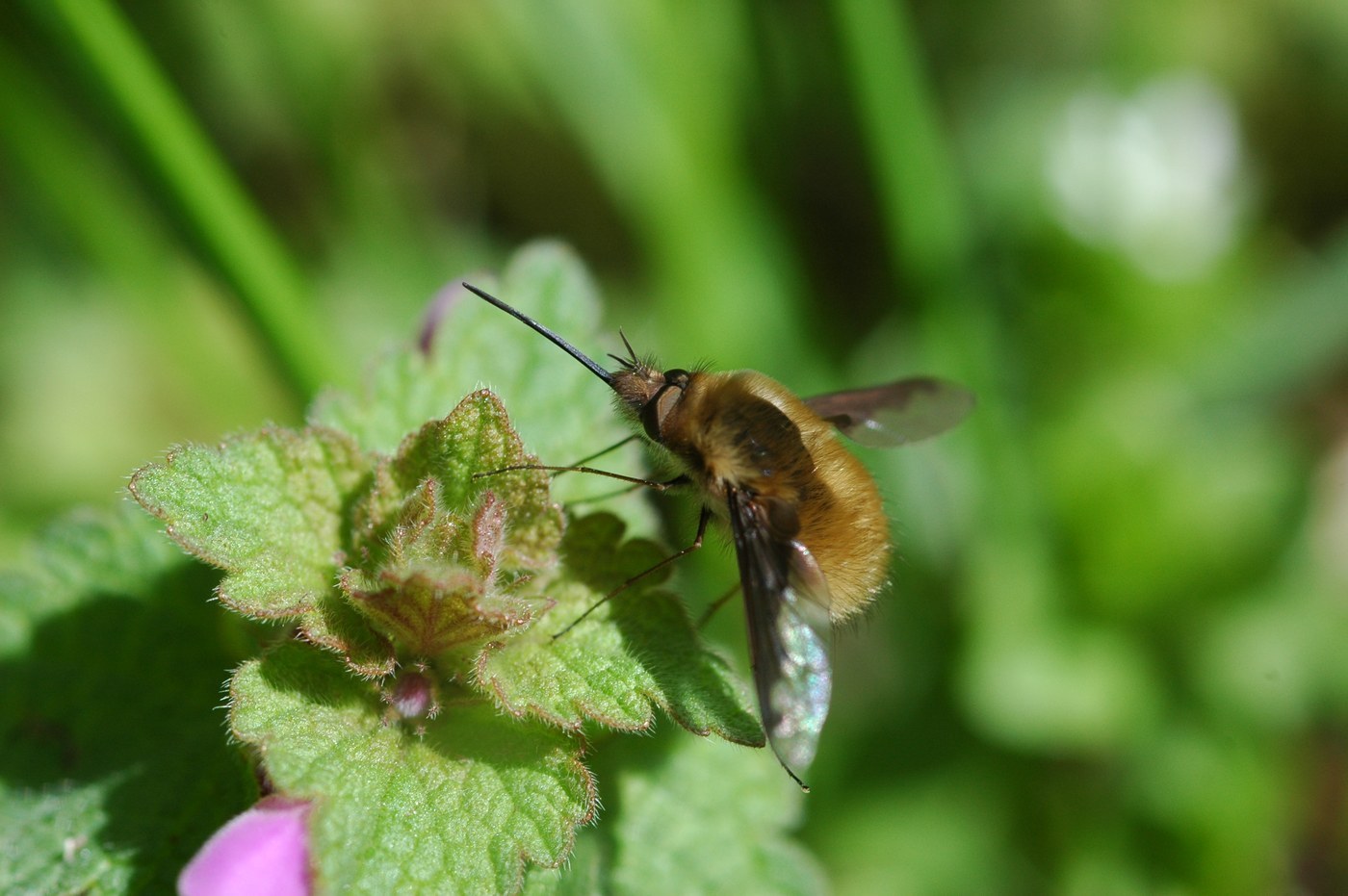
Bee Fly
A fuzzy, bee-mimicking fly with a long, forward-pointing proboscis that hovers motionless in front of spring flowers while sipping nectar.
flyLace Weaver Spider
A stocky, mottled spider that spins a distinctive bluish, woolly-looking lace-like web across bark and wall crevices to snare passing insects.
spiderWhip Scorpion
A flattened, spider-like arachnid with a pair of extraordinarily long, whip-thin front legs used to feel out its surroundings in the dark, and large spiny pedipalps held out front like a crab's claws. Despite the name and fearsome appearance, it has no stinger and no fangs.
arachnid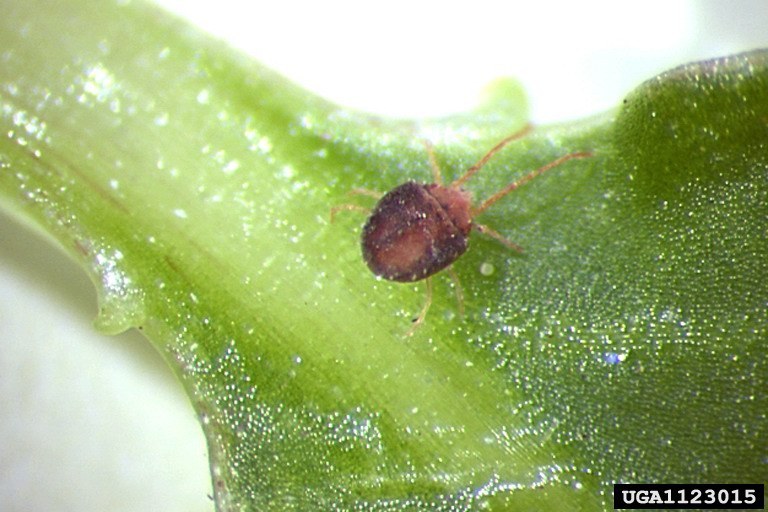
Clover Mite
A speck-sized reddish mite that streaks a rust-colored stain if crushed and invades homes by the hundreds when lawns dry out or turn cold.
arachnid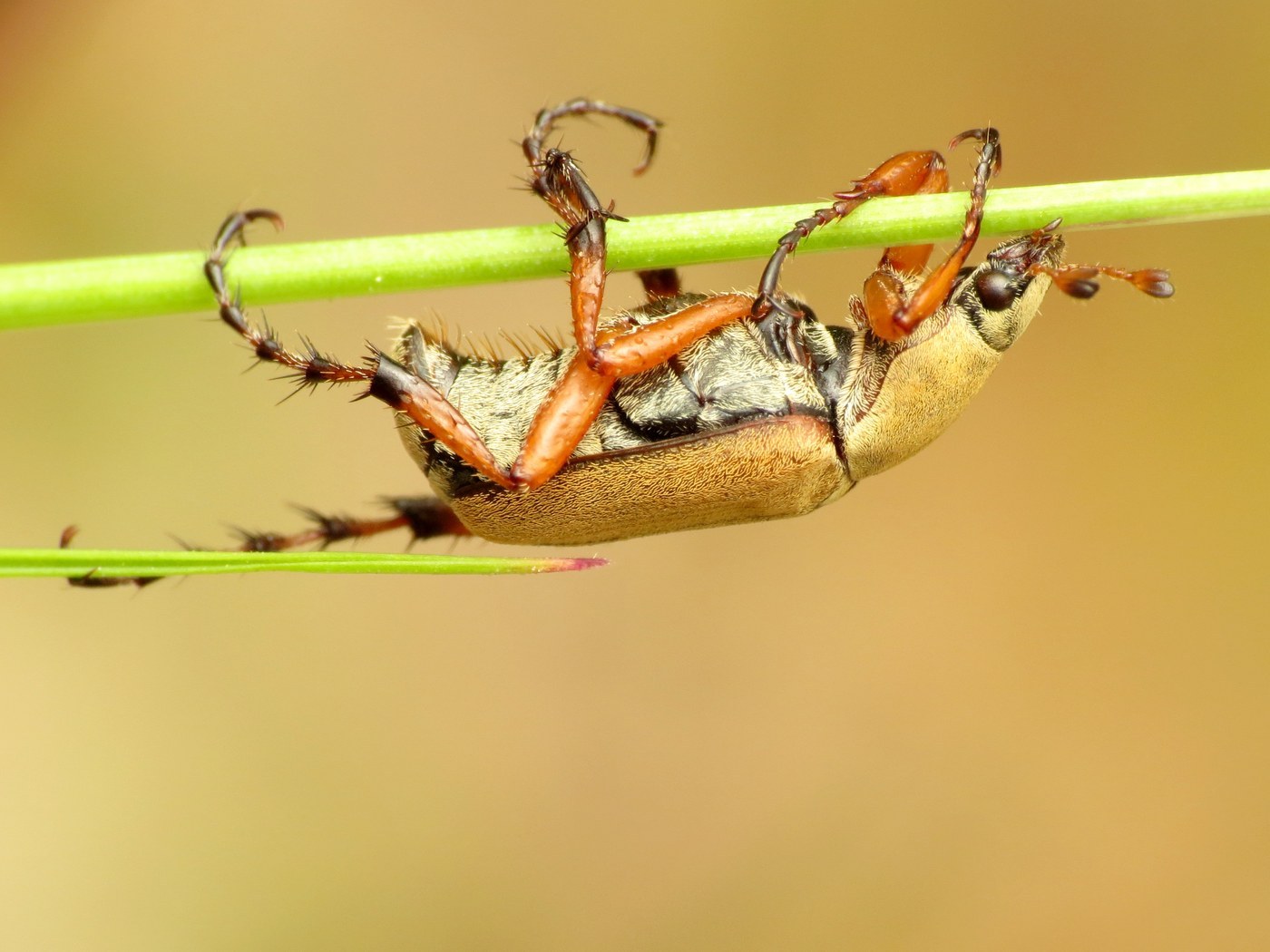
Rose Chafer
A slender, tan, long-legged scarab beetle that gathers in swarms on rose blossoms and other flowers in late spring, chewing petals and foliage into a lacy, skeletonized pattern.
beetle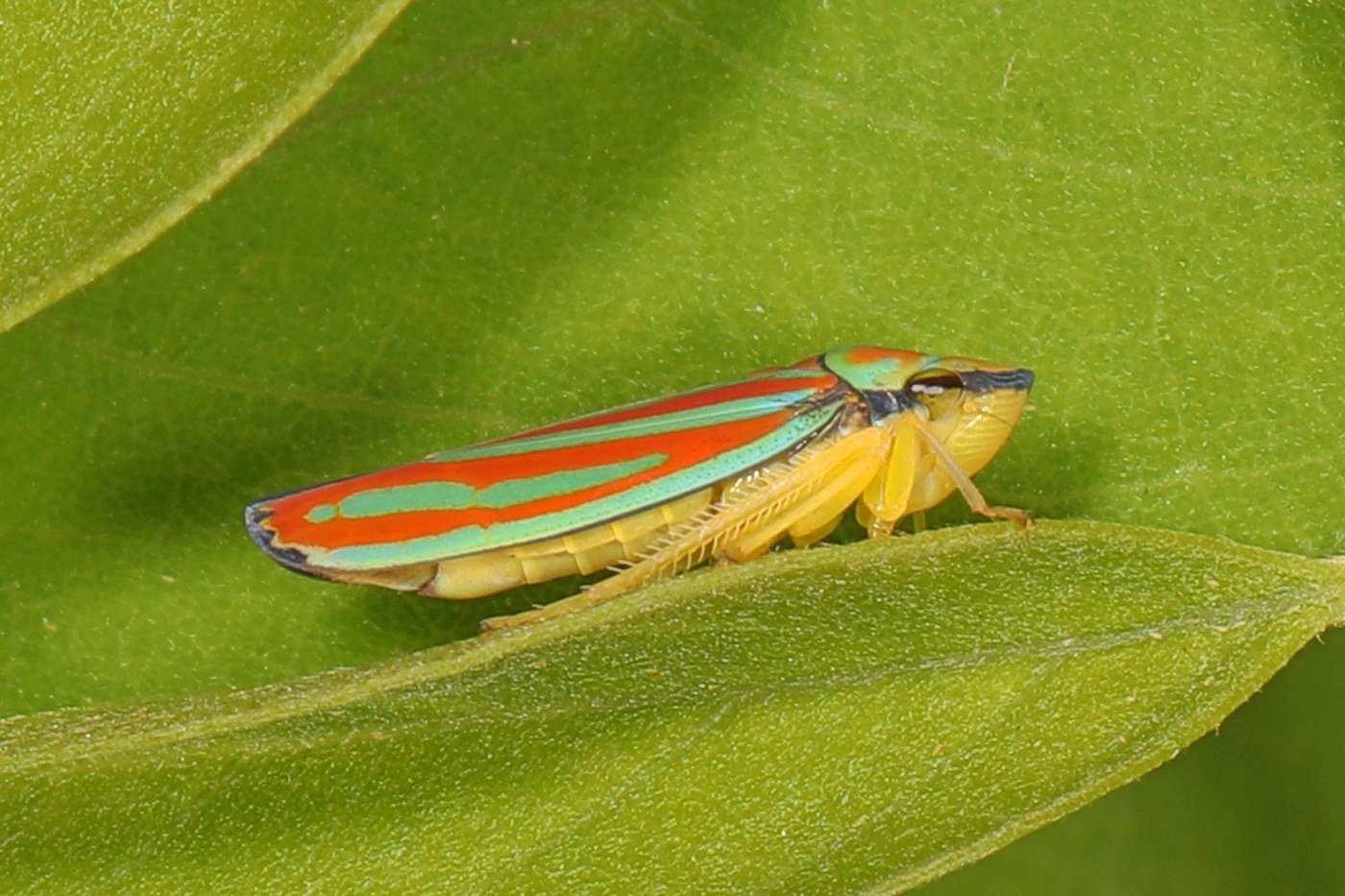
Leafhopper
A small, wedge-shaped insect that darts sideways and springs away in quick hops when disturbed, often brightly striped or patterned and found clinging to the underside of leaves.
true-bugGrasshopper
A robust, strong-jumping insect with short antennae and powerful hind legs, commonly seen springing away through grass and low vegetation on warm sunny days.
grasshopper-cricket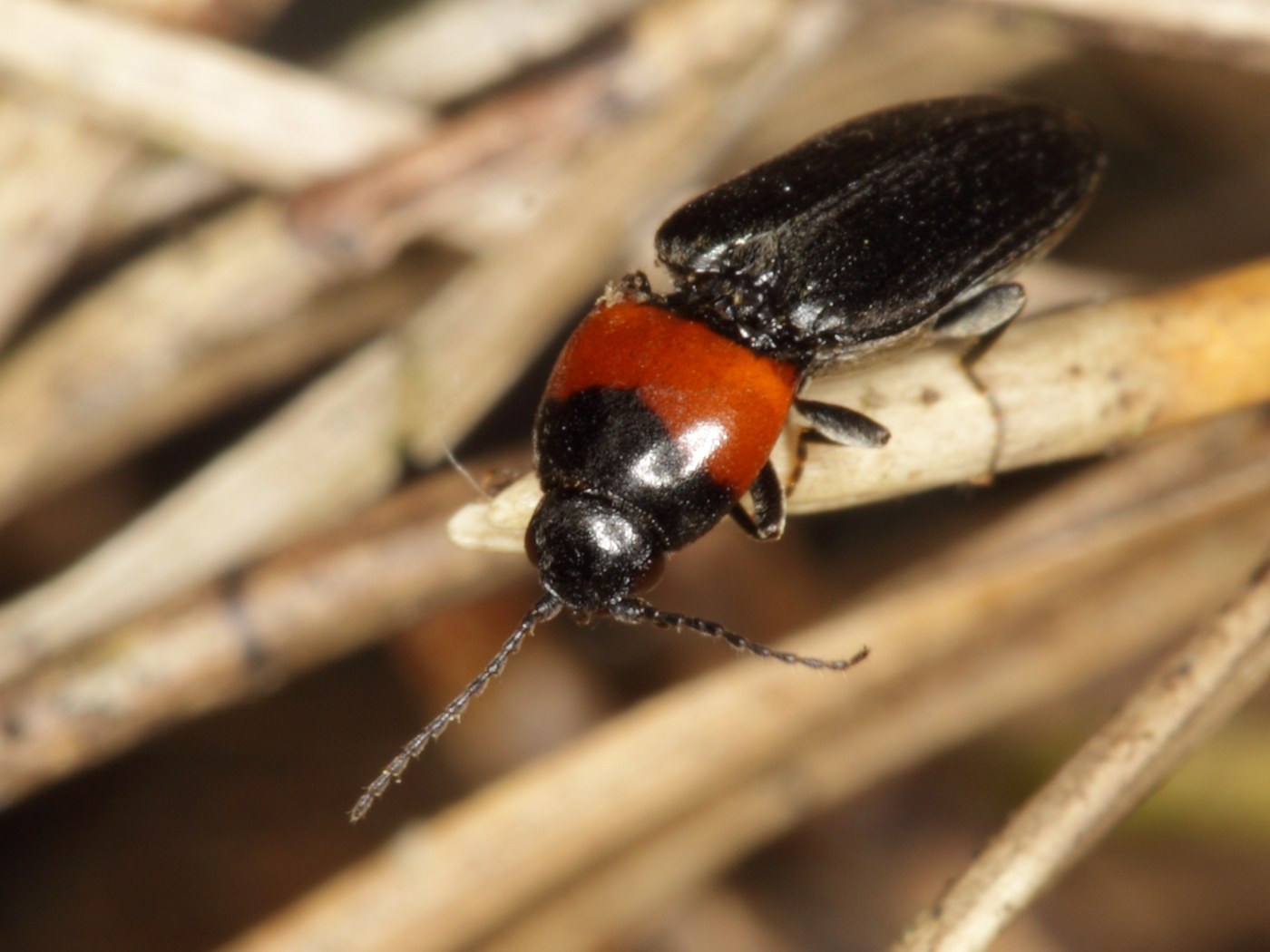
Click Beetle
An elongated, streamlined beetle famous for the audible clicking snap it makes to flip itself upright when placed on its back, a spring-loaded escape mechanism unique to this family.
beetle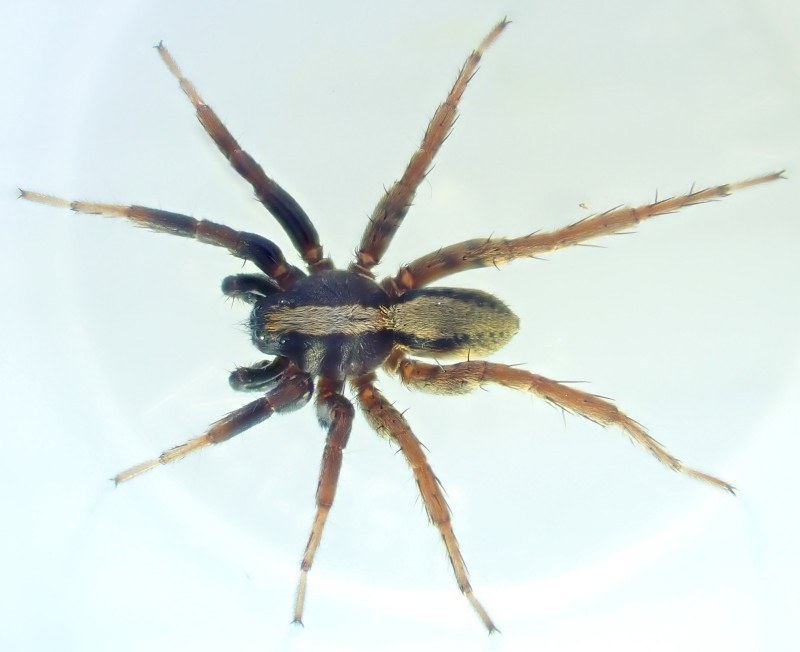
Wolf Spiderling
A tiny, fast-moving juvenile wolf spider, often seen riding in dozens on its mother's back before dispersing to hunt on its own across open ground.
spider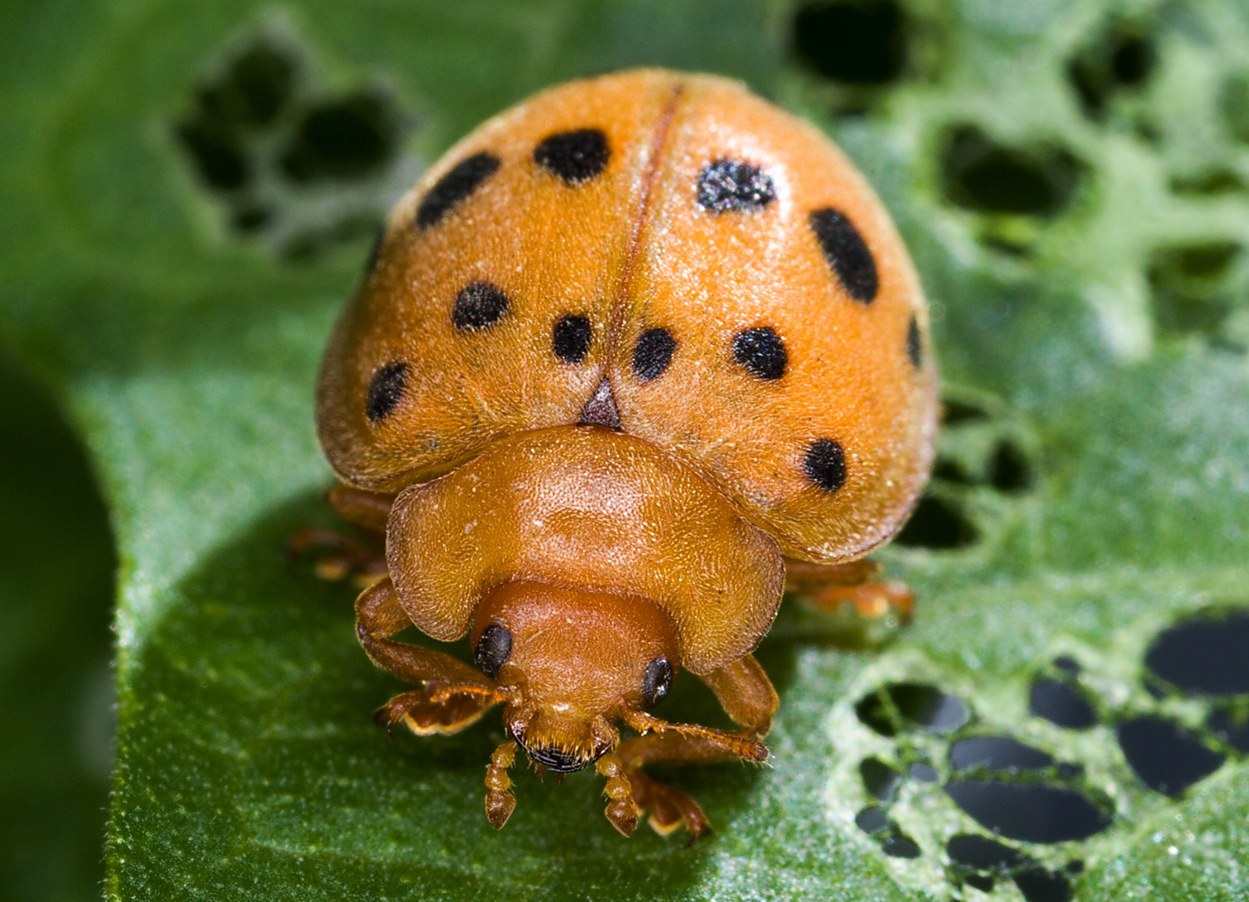
Mexican Bean Beetle
A copper-colored, spotted beetle resembling an overgrown ladybird that feeds on bean plant leaves along with its spiny yellow larvae.
beetle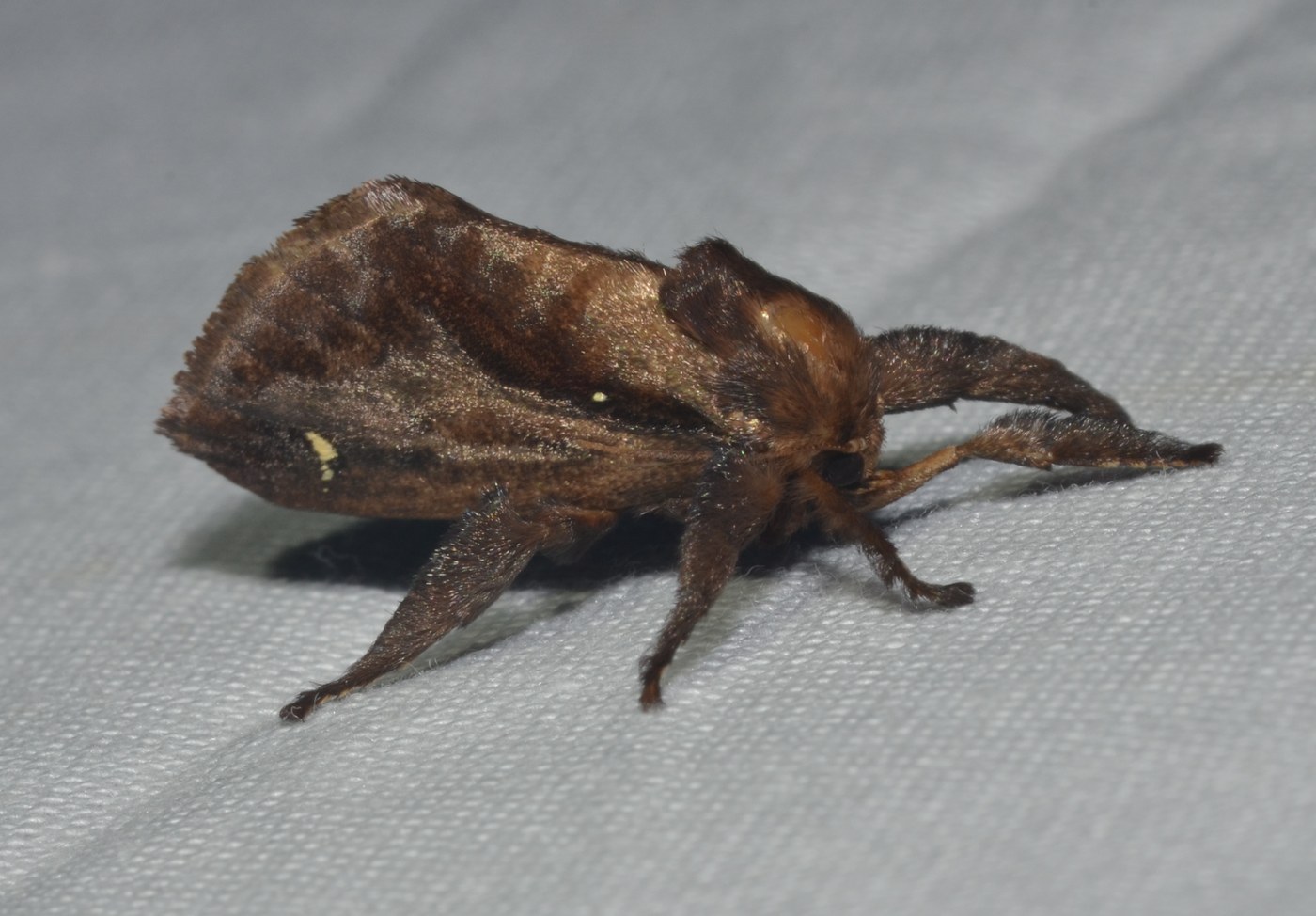
Saddleback Caterpillar
An unmistakable stout caterpillar with a bright green saddle-shaped patch on a brown back, bristling with clusters of spines along its stocky body.
caterpillar-larvaZebra Longwing Caterpillar
A creamy-white caterpillar dotted with black spots and armed with branching black spines, feeding exclusively on passionflower vines whose chemistry it stores for defense.
caterpillar-larva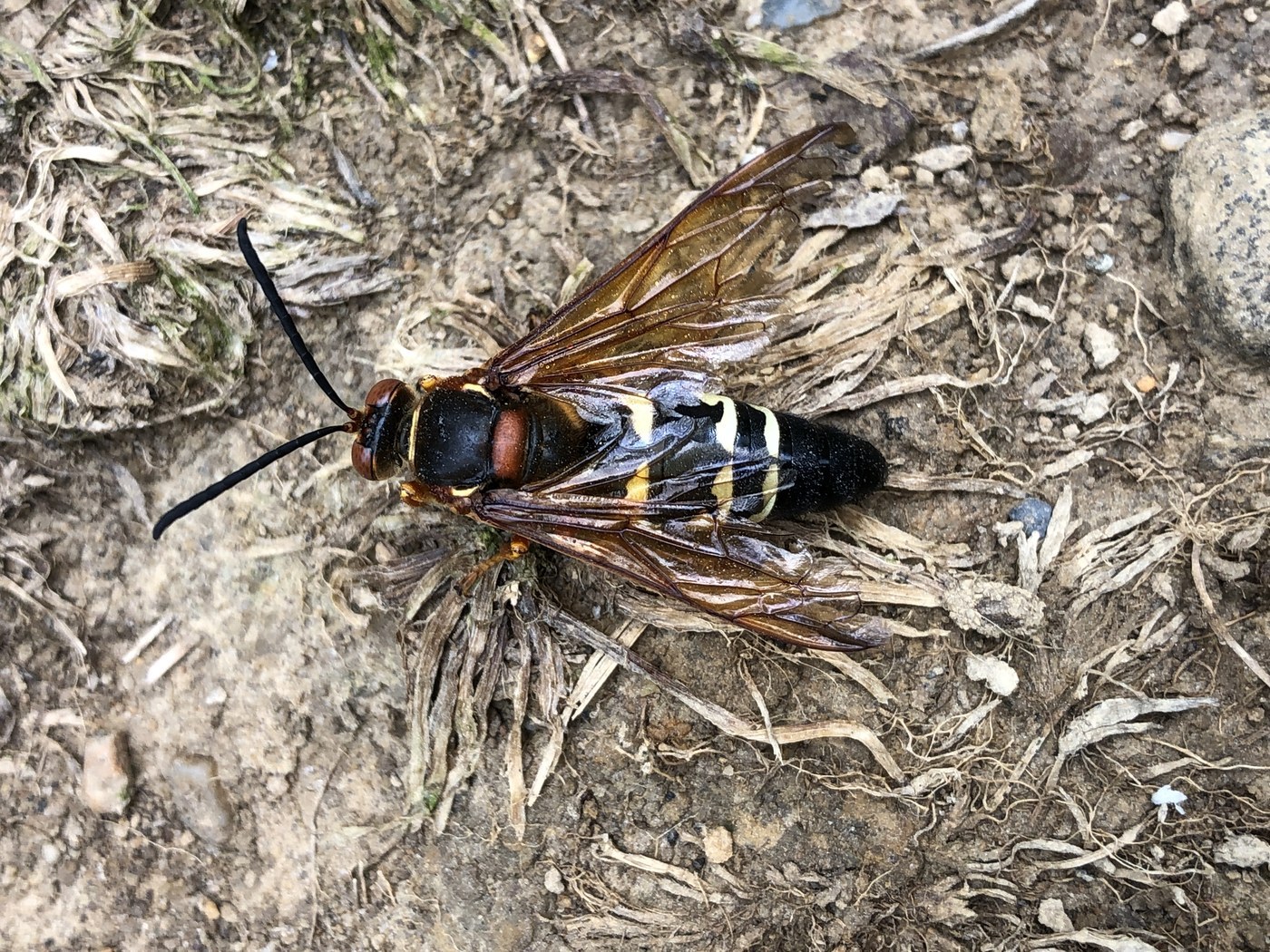
Cicada Killer Wasp
One of the largest wasps in North America, a robust rust-and-black or yellow-marked digger wasp that excavates burrows in bare soil and specializes in hunting cicadas to provision its underground nest.
waspJune Bug
A chunky, reddish-brown to nearly black scarab beetle that bumbles noisily around porch lights on warm late-spring and early-summer evenings.
beetleJune Beetle
A stout, reddish-brown scarab beetle that emerges in late spring and early summer, famous for clumsily bumping into porch lights and window screens at night.
beetle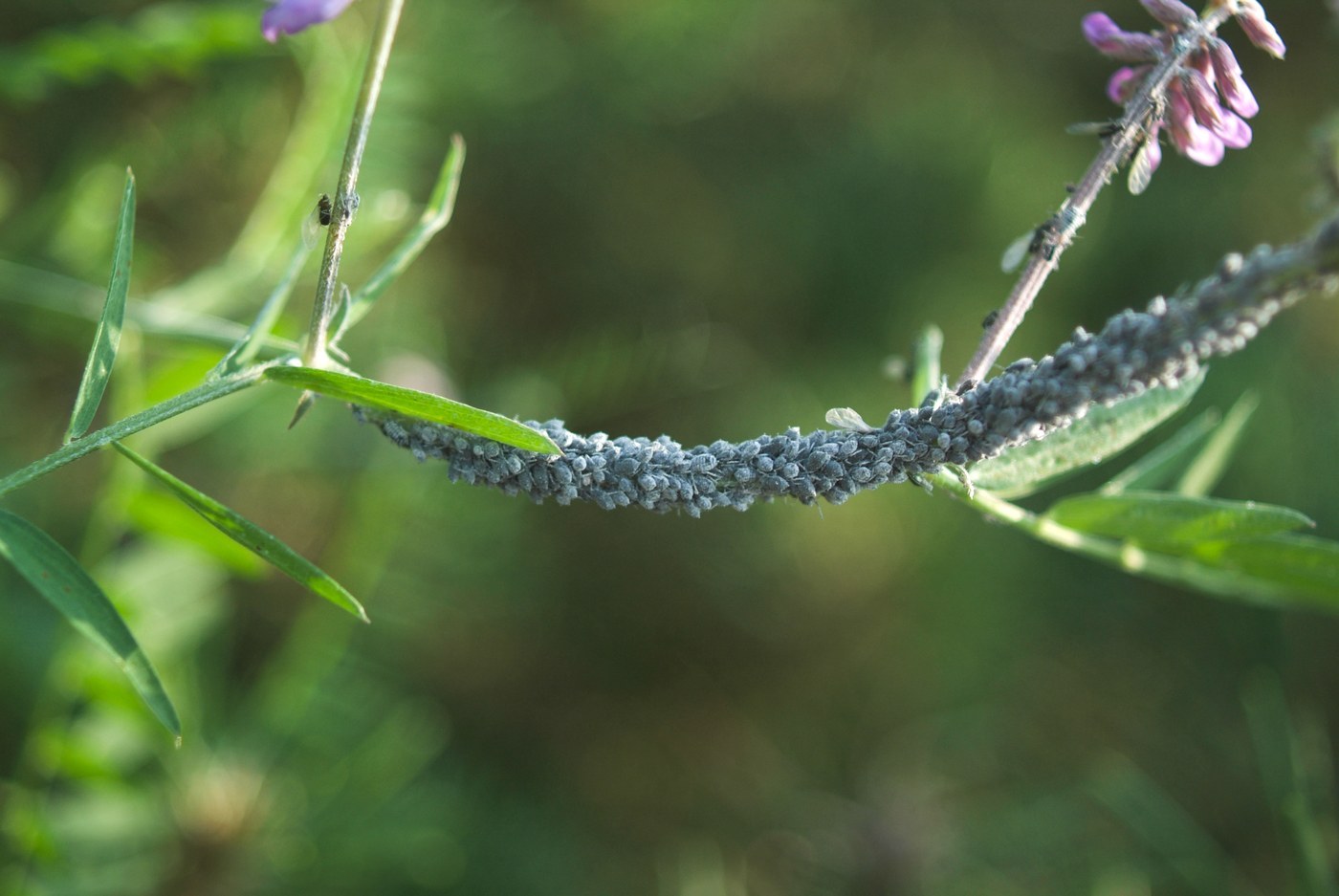
Rosy Apple Aphid
A small, dusty pink to purplish-gray aphid that clusters on apple foliage in spring, causing distinctive curled, reddened leaves that make its presence easy to spot even before the insects themselves are seen.
true-bugTarantula Hawk Wasp
A giant metallic-blue wasp with rust-orange wings, the tarantula hawk is one of the largest wasps in the world. Females hunt tarantulas as living food for their single offspring.
waspSpur-throated Grasshopper
One of the most familiar grasshopper groups in North America, named for the small spine on its throat and known for including some of the continent's most abundant rangeland species.
grasshopper-cricket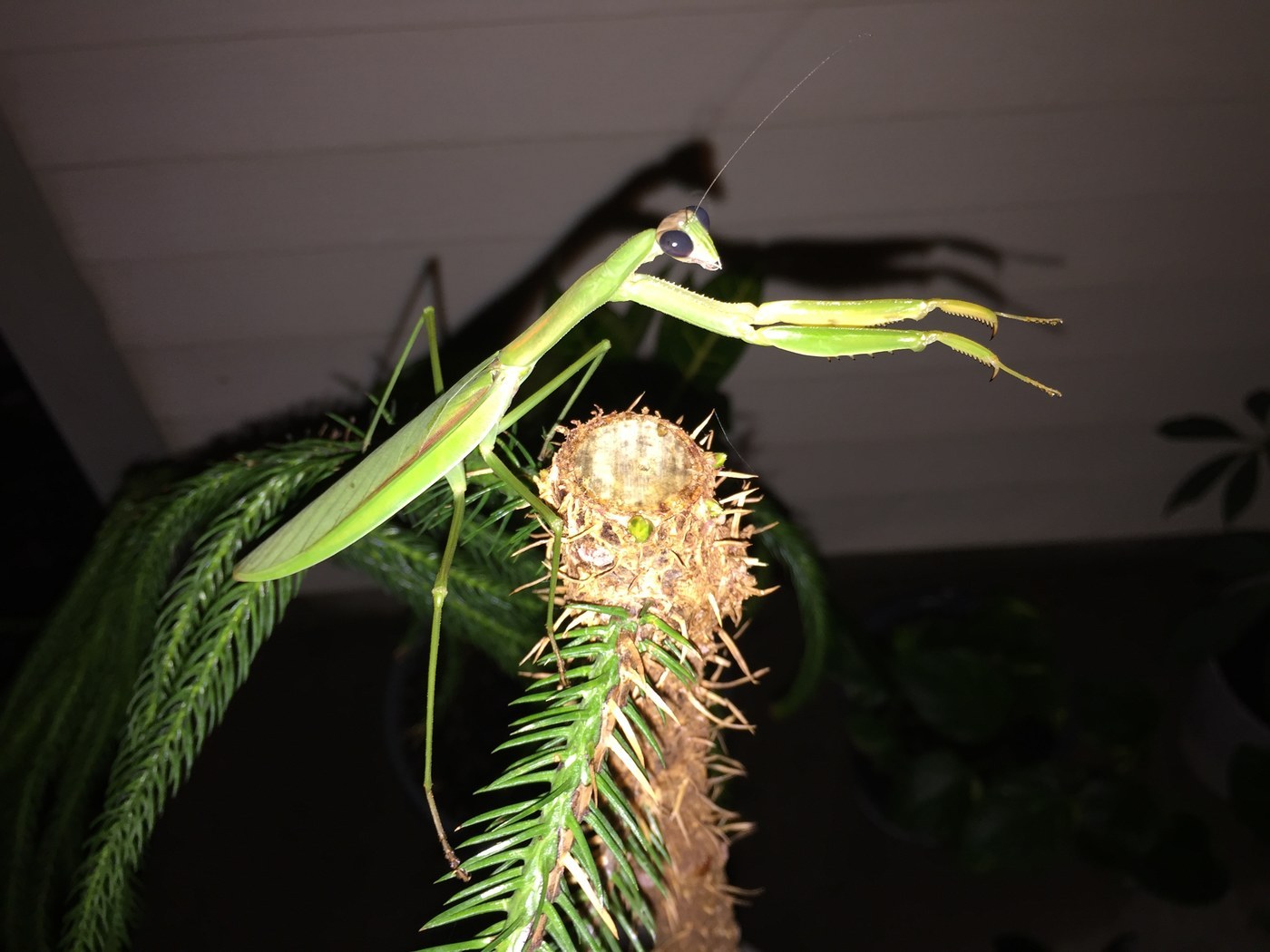
Chinese Mantis
One of the largest praying mantises found in North America, an introduced species with a lean brown-and-green body and grasping spined forelegs built for ambushing insect prey.
mantis-stick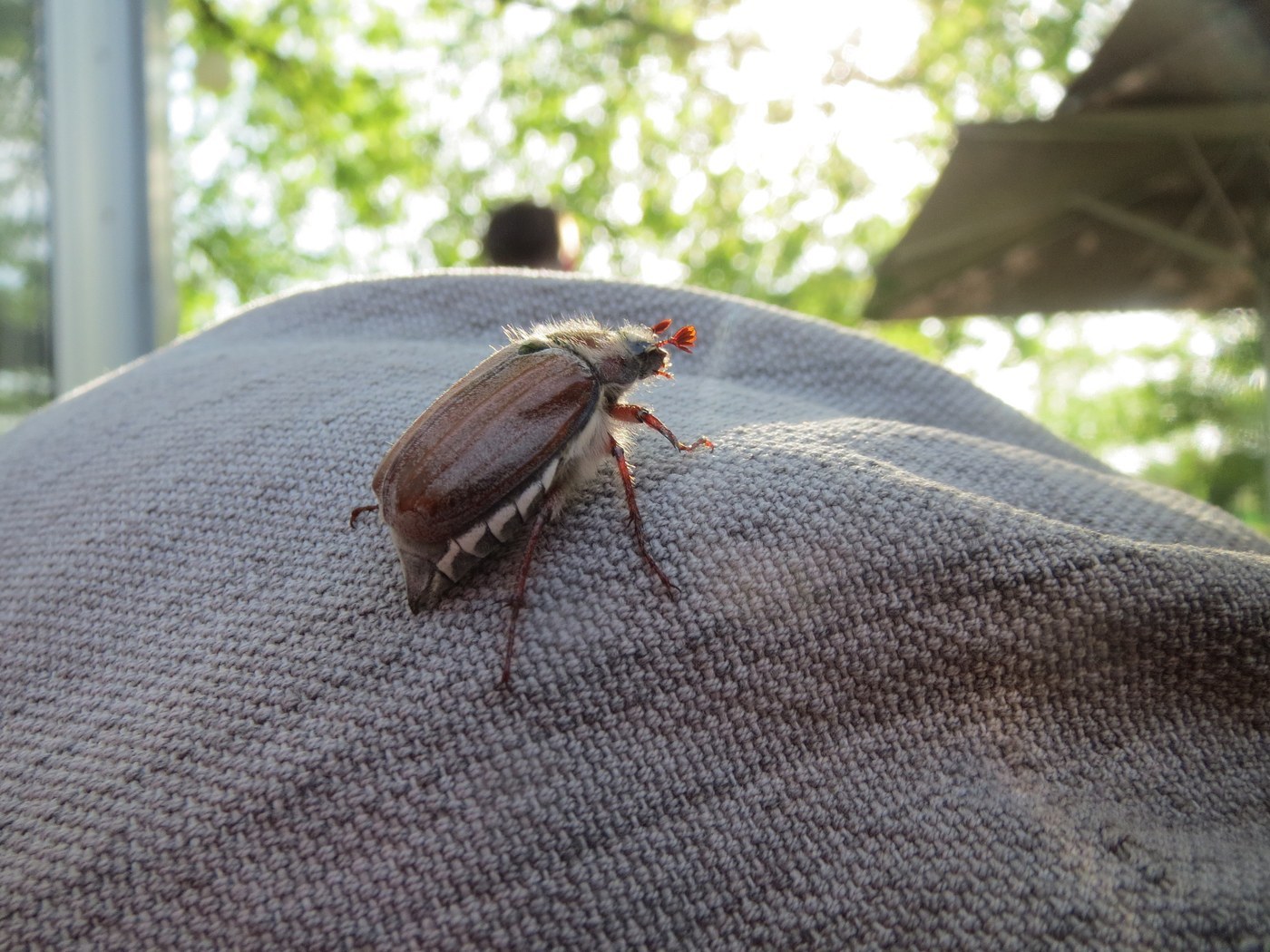
Cockchafer
A large, reddish-brown scarab beetle with distinctive fan-shaped antennae, famous for its noisy, clumsy evening flights around trees in late spring, giving rise to its alternate name, the May bug.
beetleBumble Bee Queen
The large, robust foundress of a bumble bee colony, noticeably bigger and fuzzier than her worker offspring, seen alone in early spring searching for a nesting cavity before her colony's first workers emerge.
bee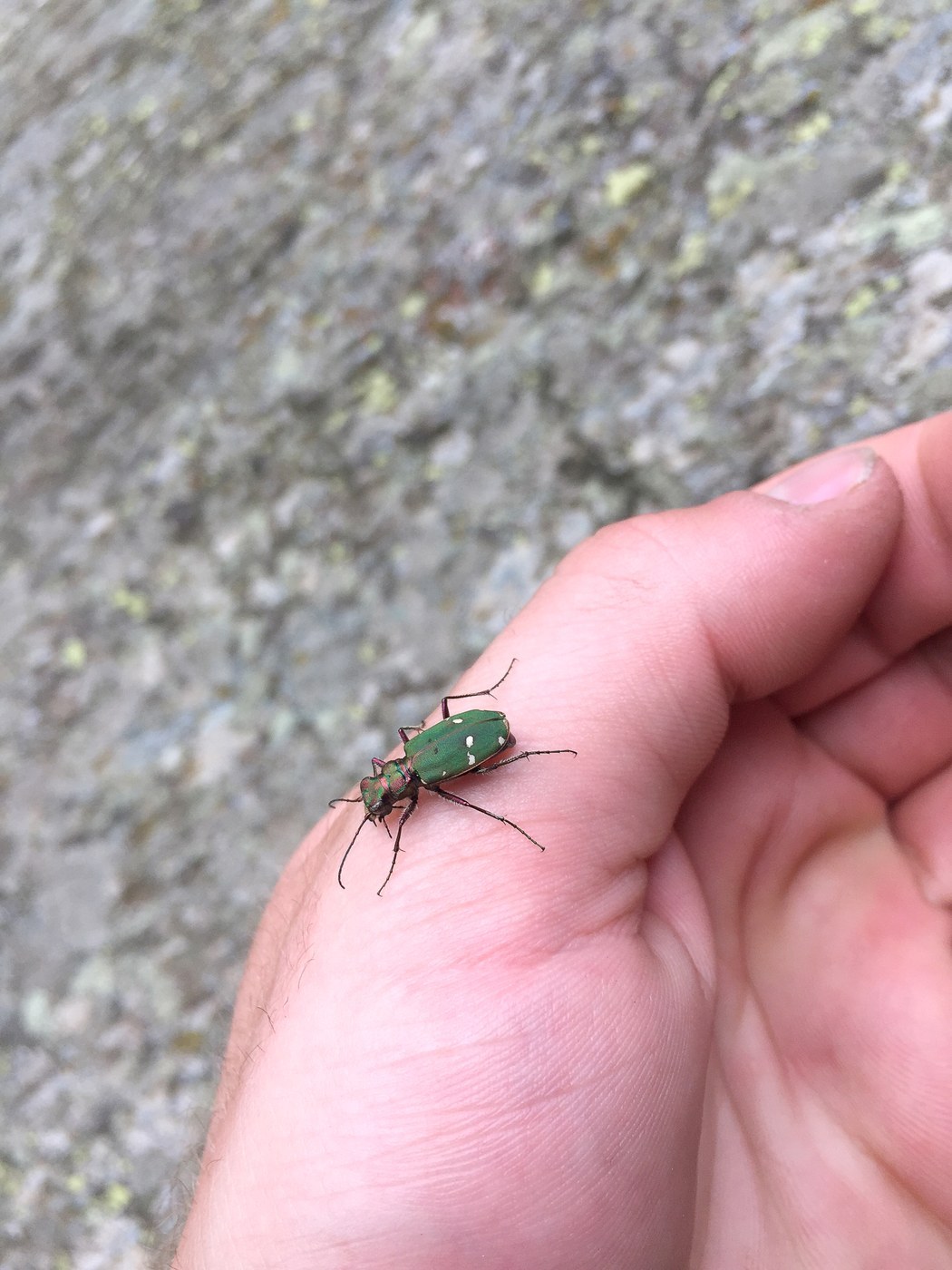
Tiger Beetle
A fast, metallic-hued ground beetle with oversized sickle-shaped jaws that sprints and short-flies down open sandy trails in pursuit of tiny prey.
beetle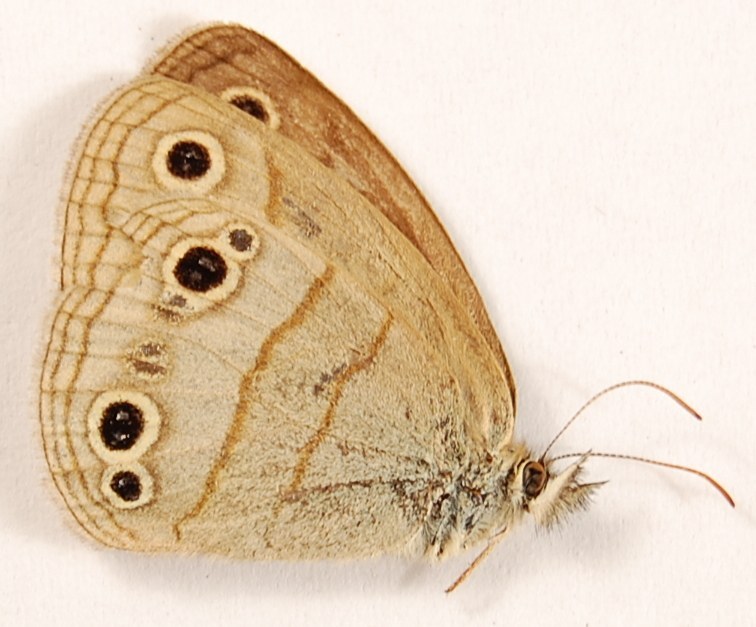
Little Wood-Satyr
A small, weak-flying brown butterfly with two prominent yellow-ringed eyespots on each wing, common along shaded woodland edges in late spring.
butterflyQuestion Mark Caterpillar
A spiny, variably colored caterpillar named for the silver question-mark-shaped mark on the underside of the adult butterfly's wings.
caterpillar-larva