
Bug Encyclopedia
Search and identify bugs & insects — beetles, butterflies, moths, ants, bees, spiders and more — with size, habitat, danger, behavior, and how to tell them apart.
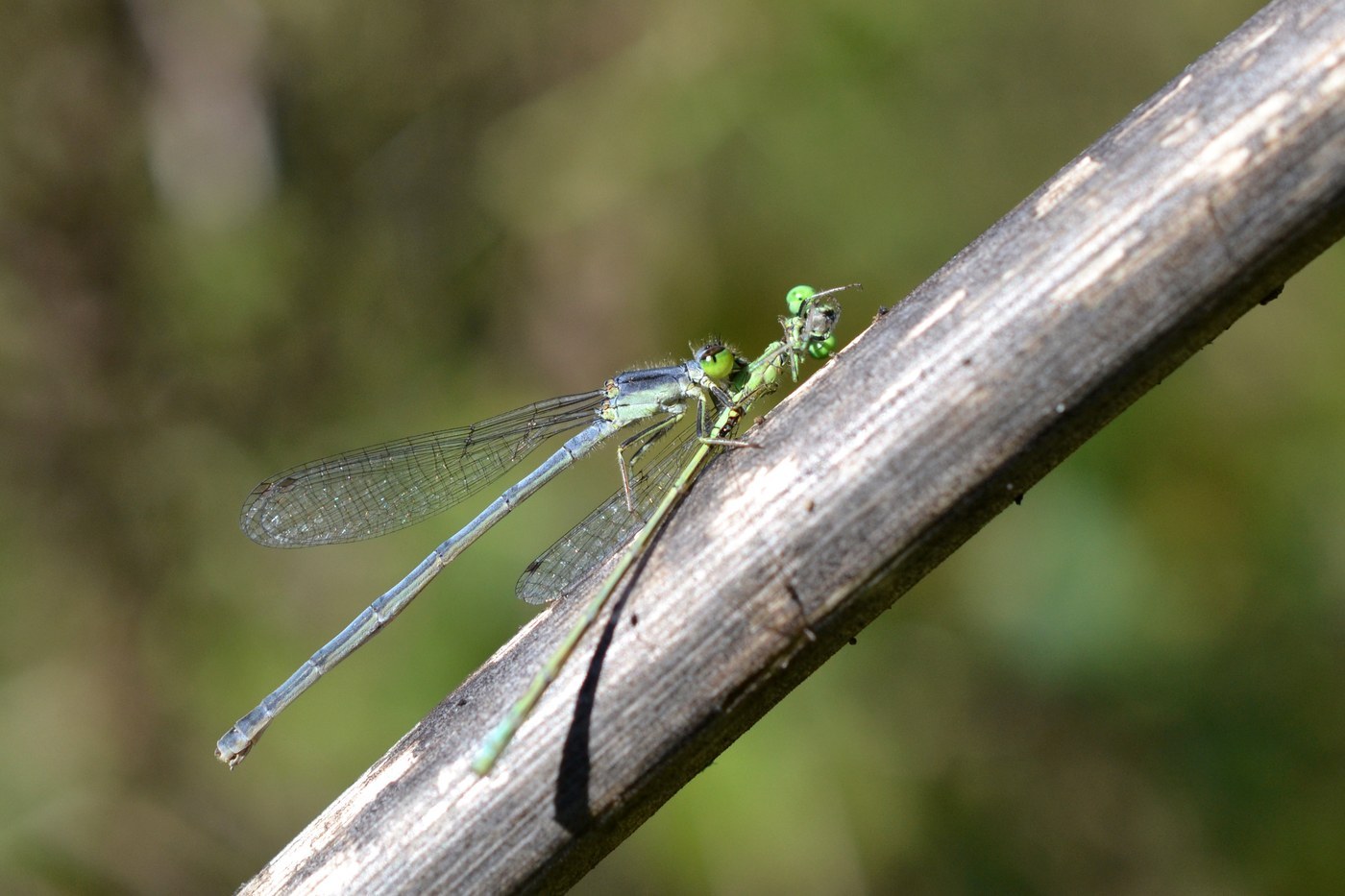
Eastern Forktail
One of the smallest and most adaptable damselflies in eastern North America, the Eastern Forktail thrives in everything from wild marshes to roadside ditches, with bright green-and-black males and color-changing females.
other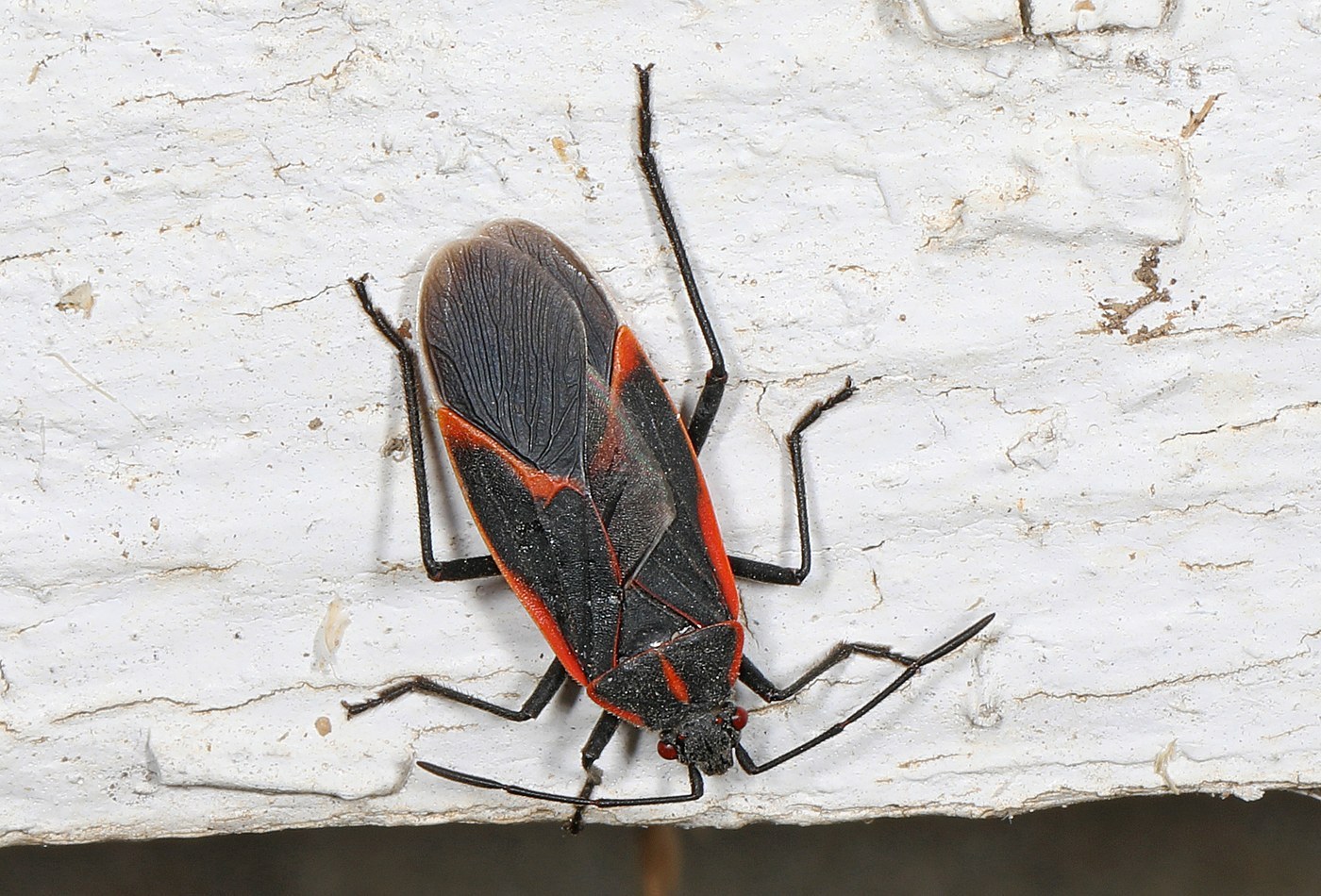
Boxelder Bug
A slender black true bug marked with three bold red-orange stripes on its thorax and red wing veins, famous for massing by the hundreds on tree trunks and sun-warmed walls in autumn.
true-bug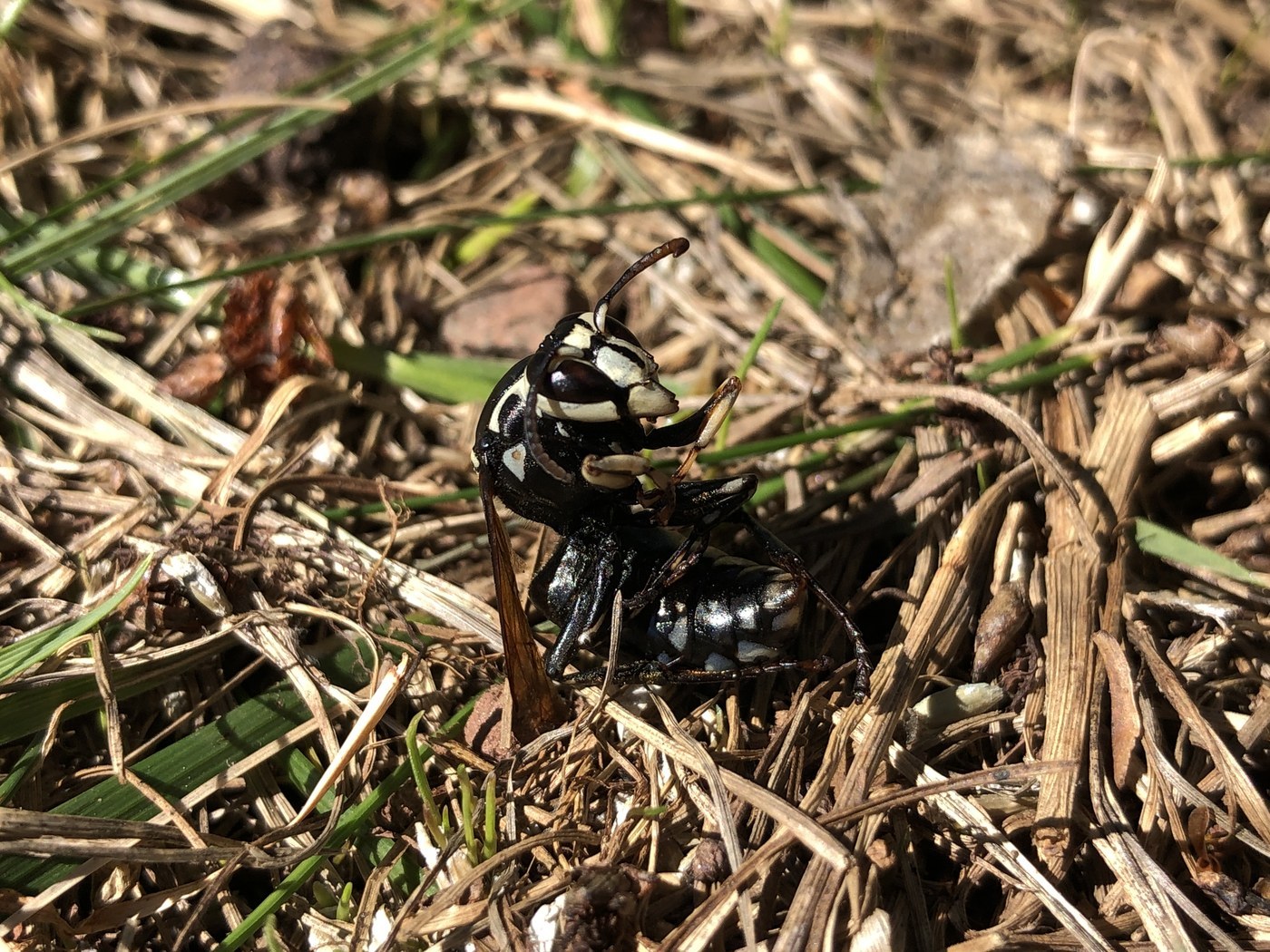
Bald-faced Hornet
A black-and-white social wasp, actually a type of yellowjacket rather than a true hornet, best known for building large, football-shaped gray paper nests suspended from tree branches or eaves.
wasp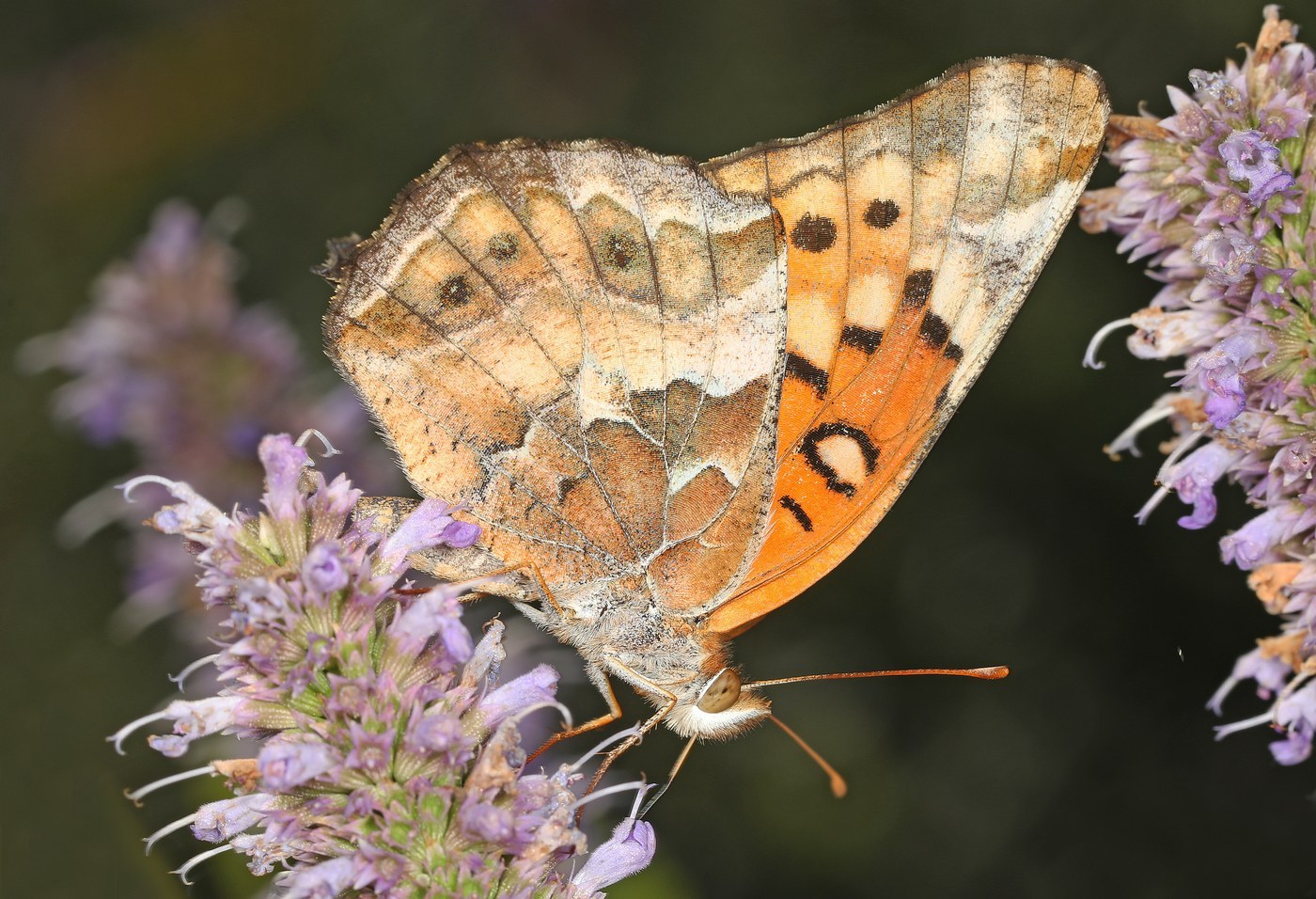
Variegated Fritillary
A wide-ranging, mottled orange-brown butterfly that lacks the silvery underside spots of true fritillaries and instead shows an intricate patchwork of tan, orange, and black markings, known for its wandering, migratory habits.
butterfly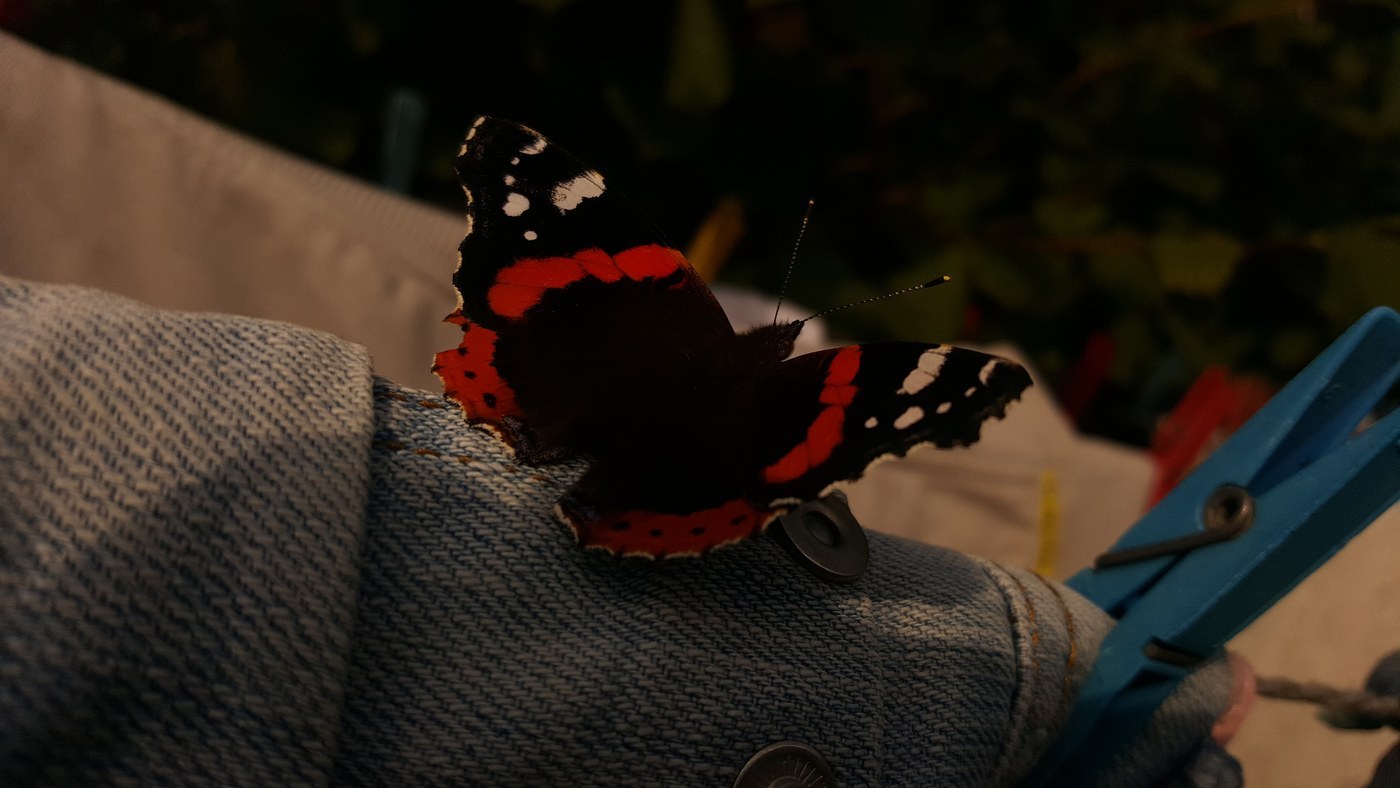
Red Admiral
A fast-flying, strikingly patterned butterfly with velvety black wings crossed by a bold orange-red band and white-spotted tips, often seen basking on tree trunks or sipping from fallen fruit.
butterfly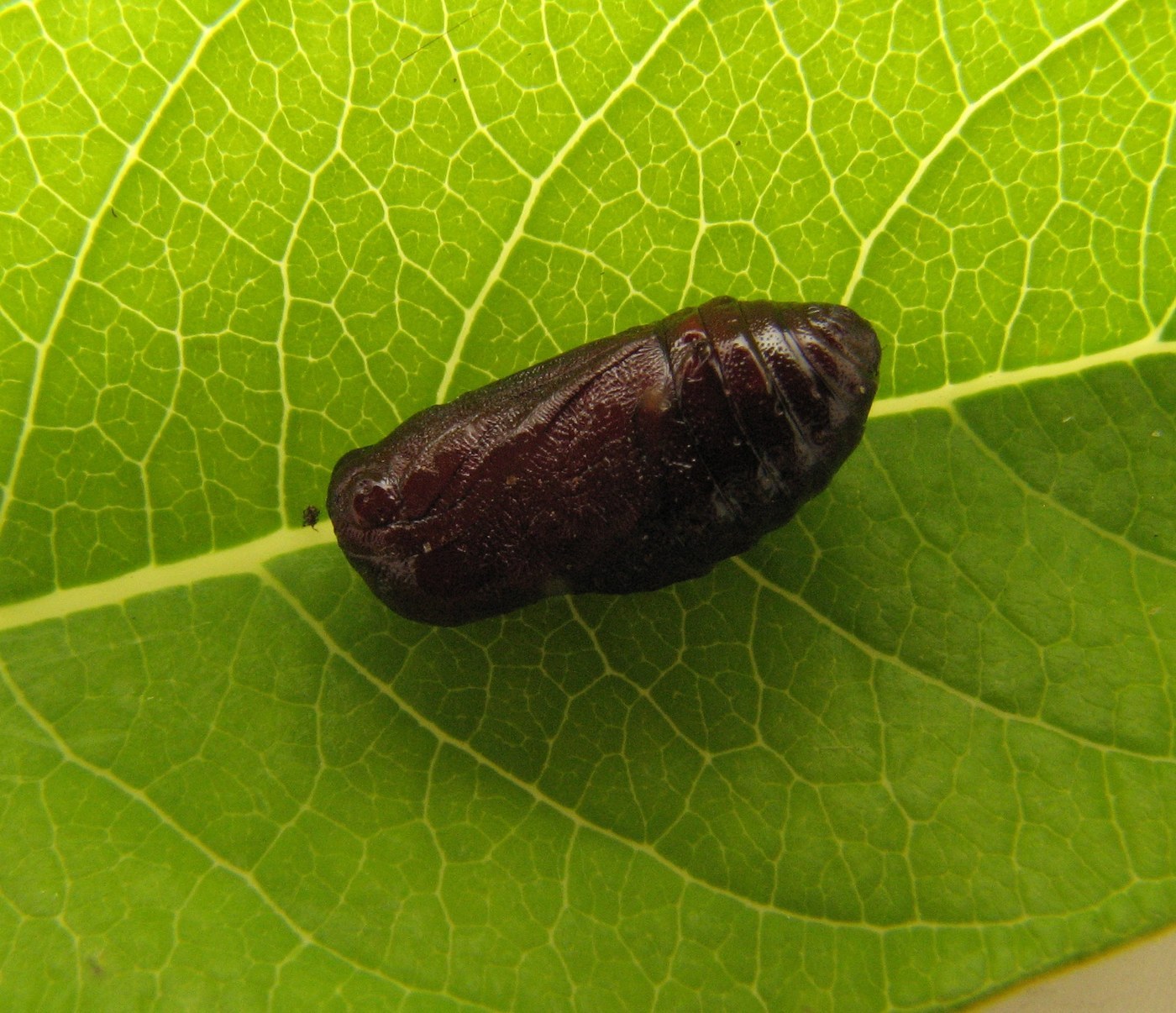
Milkweed Tussock Caterpillar
Rows of dense orange, black, and white hair tufts run down the back of this milkweed specialist, whose young larvae feed in tight groups that skeletonize milkweed leaves before dispersing to feed alone.
caterpillar-larva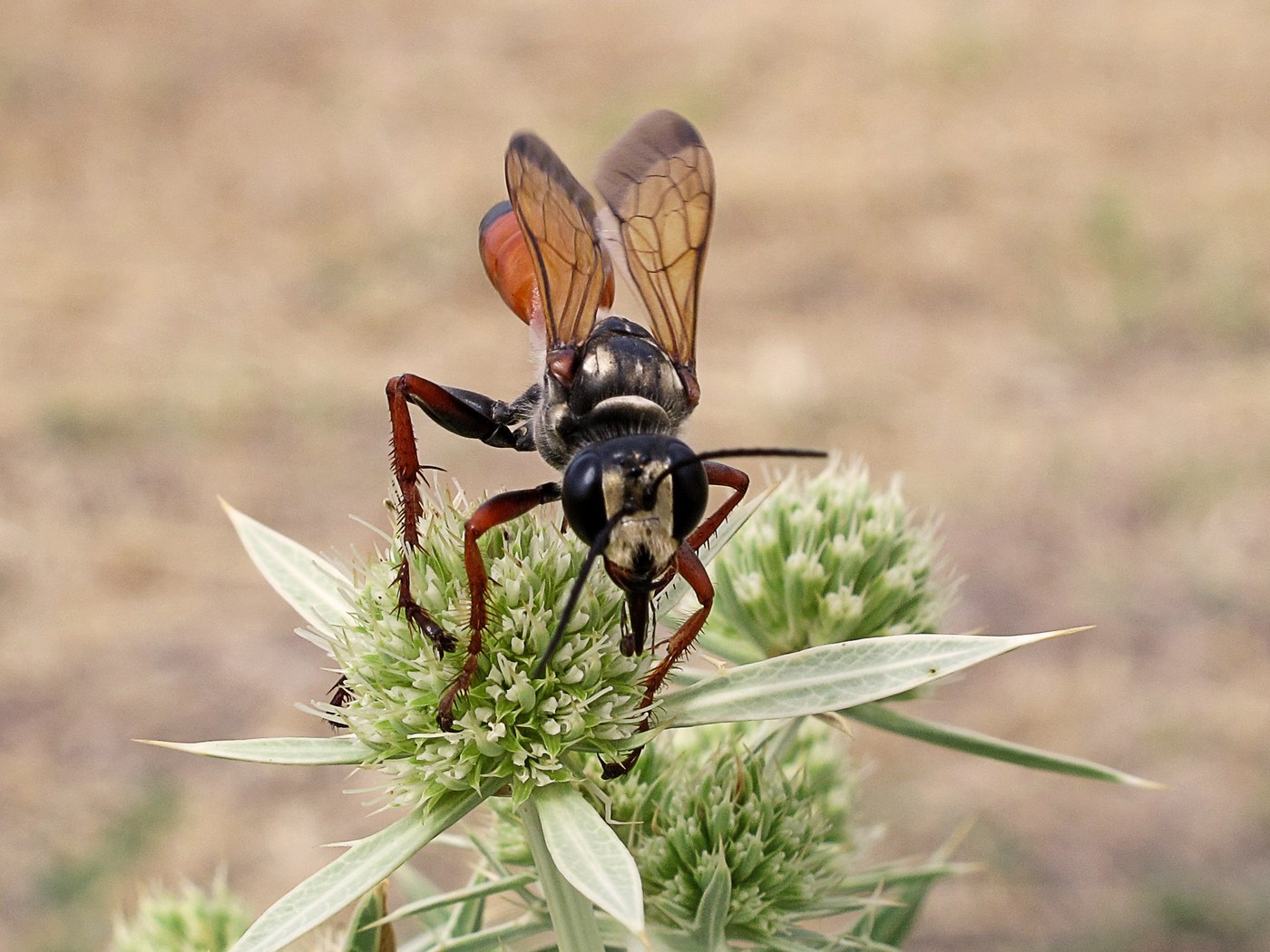
Great Golden Digger Wasp
A large, strikingly two-toned solitary wasp with a golden-haired thorax, reddish-orange midsection, and black-tipped abdomen, often seen digging burrows in bare soil to stock with paralyzed katydids and crickets.
wasp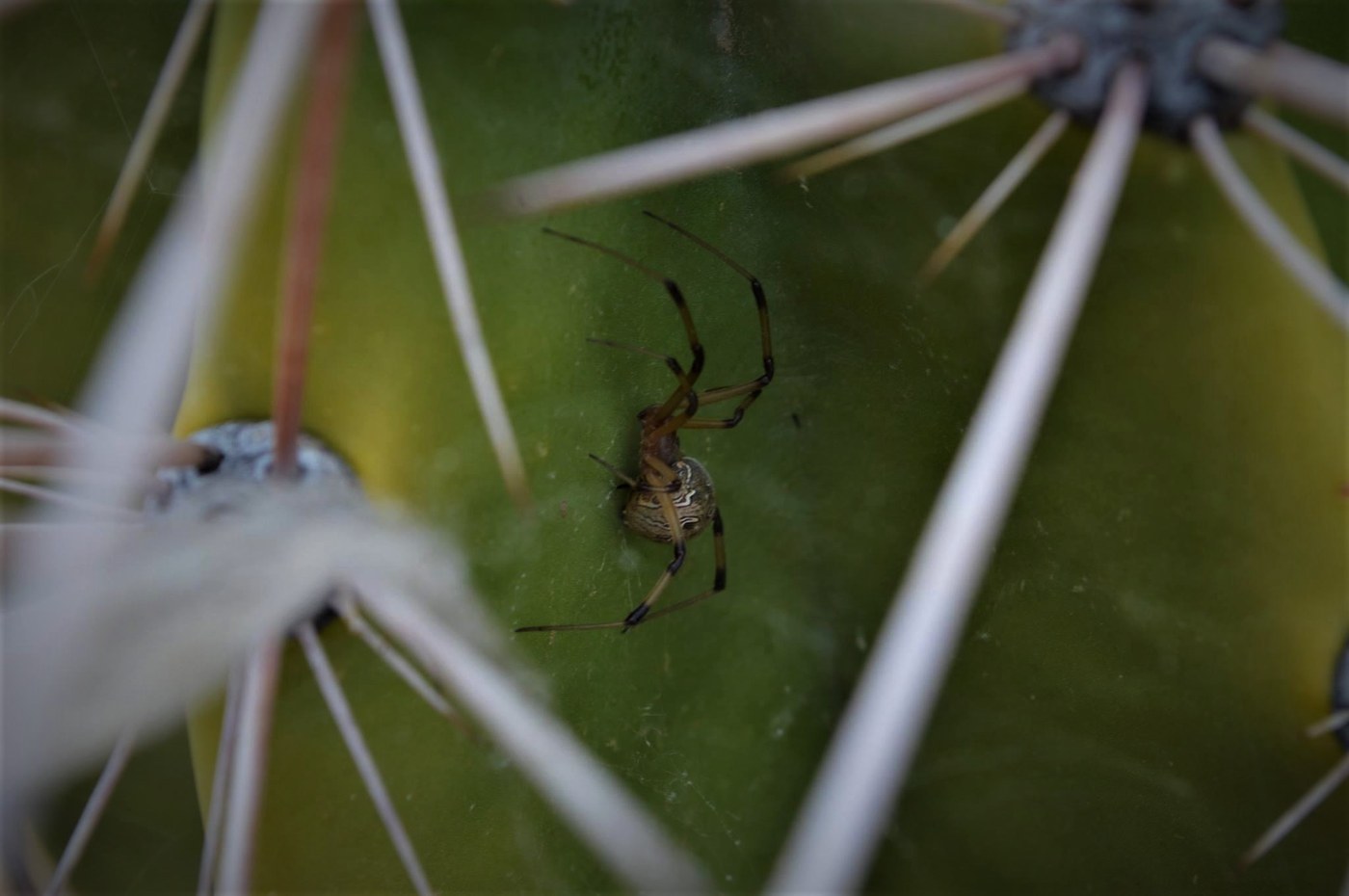
Brown Widow Spider
Named for its mottled tan-and-brown coloring rather than glossy black, the brown widow is easily recognized by its distinctive spiky, off-white egg sacs and an orange hourglass on its underside.
spider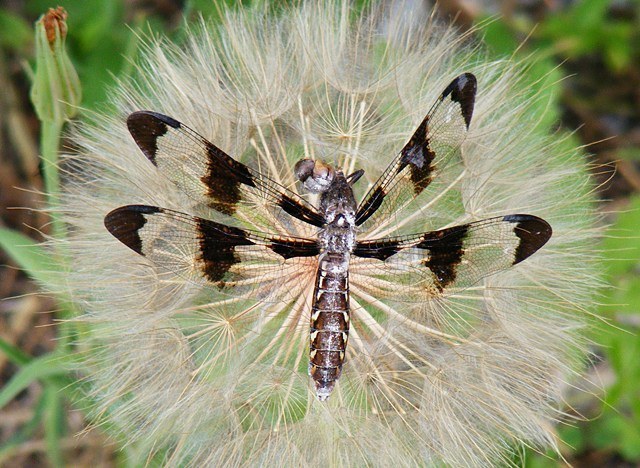
Twelve-spotted Skimmer
A big, boldly patterned skimmer whose wings each carry three chocolate-brown patches, and whose mature males add chalky white flashes between them for a striking black-and-white flicker in flight.
dragonfly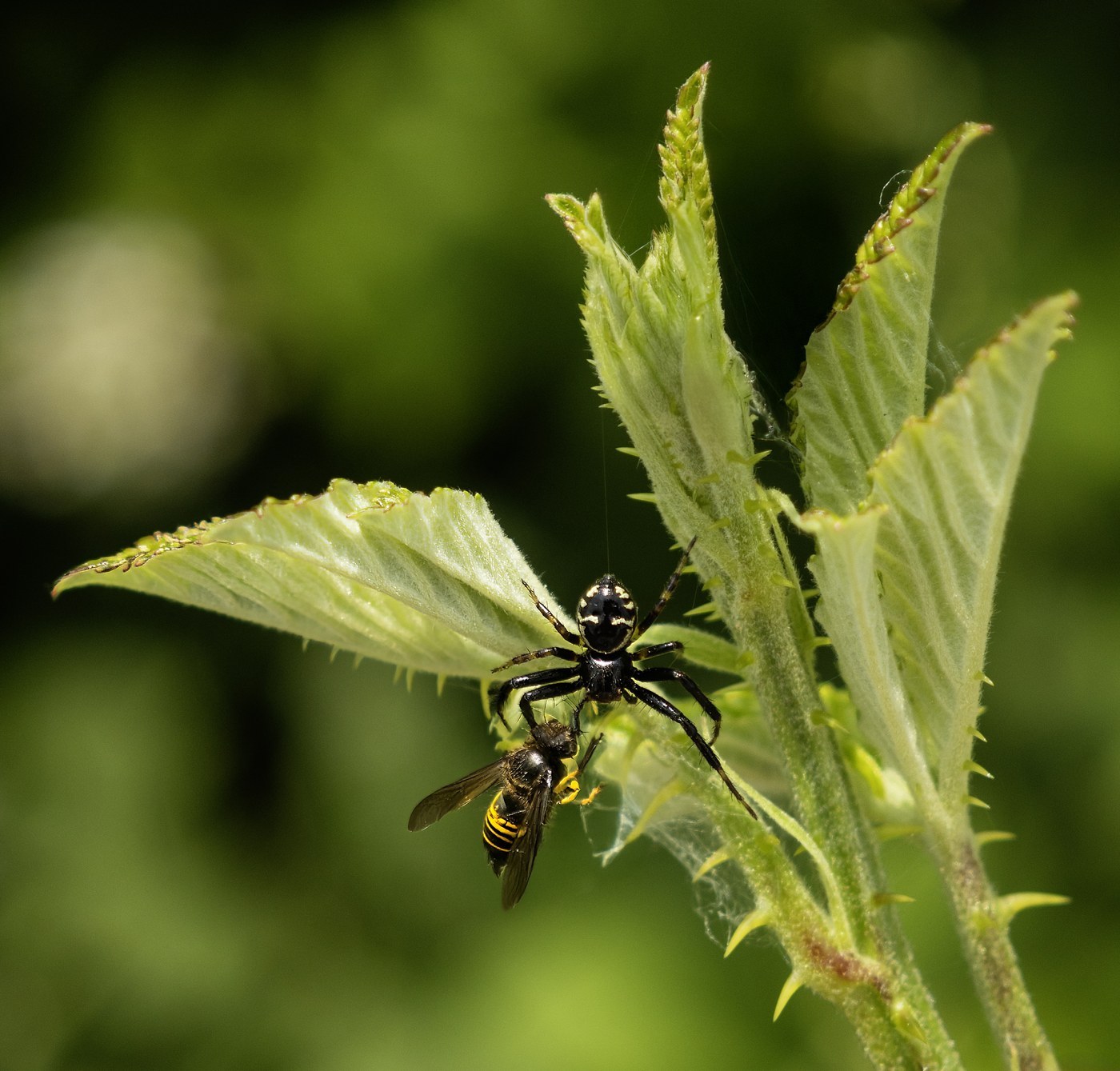
Common Wasp
A black-and-yellow social wasp with a distinct anchor-shaped mark on its face, common around gardens and picnics in late summer as its colony reaches peak size and workers seek out sugary food.
wasp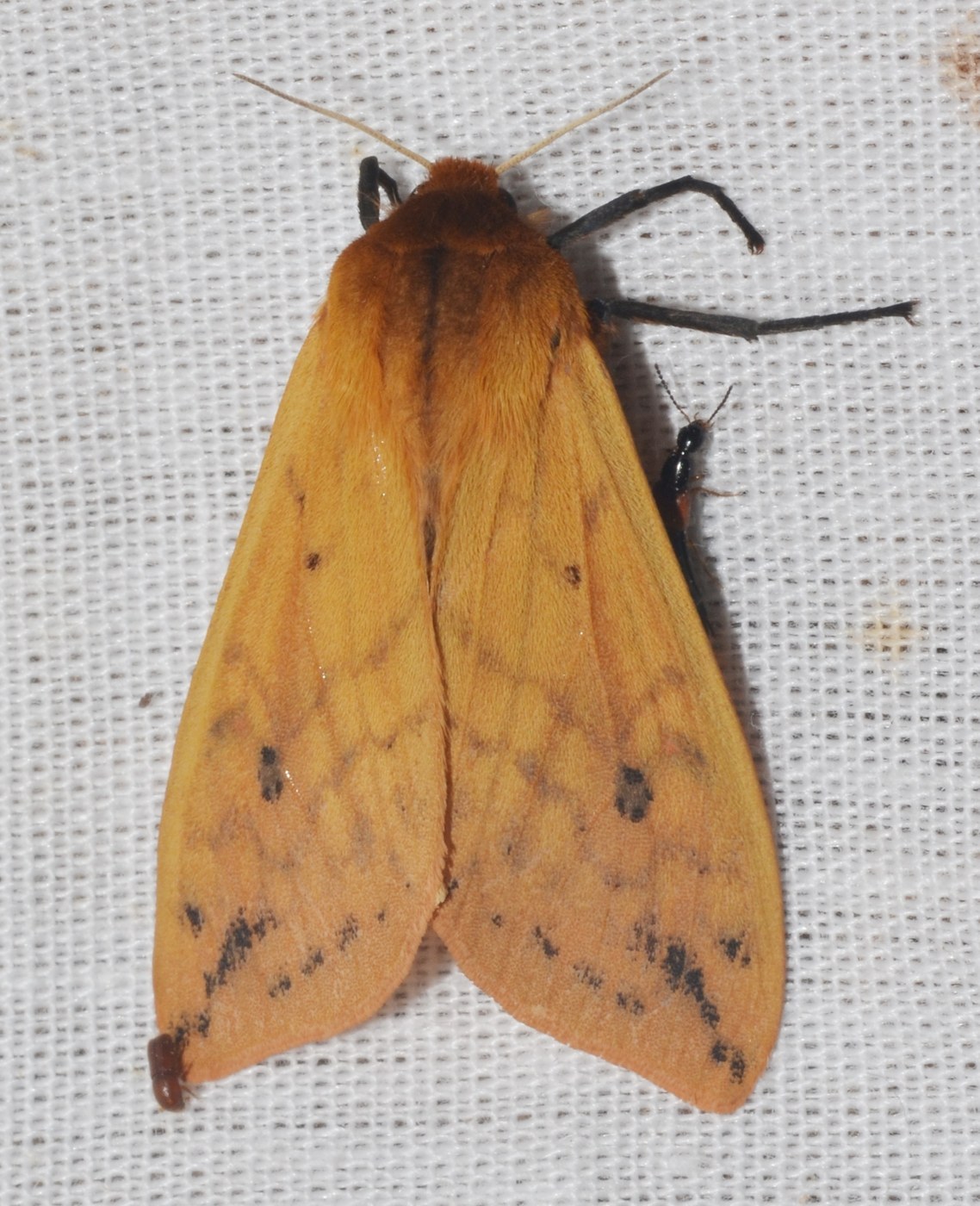
Isabella Tiger Moth (Woolly Bear)
Famous chiefly in its larval stage as the banded woolly bear caterpillar, this tiger moth's fuzzy black-and-rust-colored caterpillar is a familiar autumn sight, while the adult is a soft, tawny-orange moth with a stout, furry body.
moth
Gray Hairstreak
A small slate-gray butterfly with thin white lines, an orange-capped black spot near the hindwing tail, and one of the broadest host-plant ranges of any North American butterfly, making it a familiar visitor to gardens and fields alike.
butterfly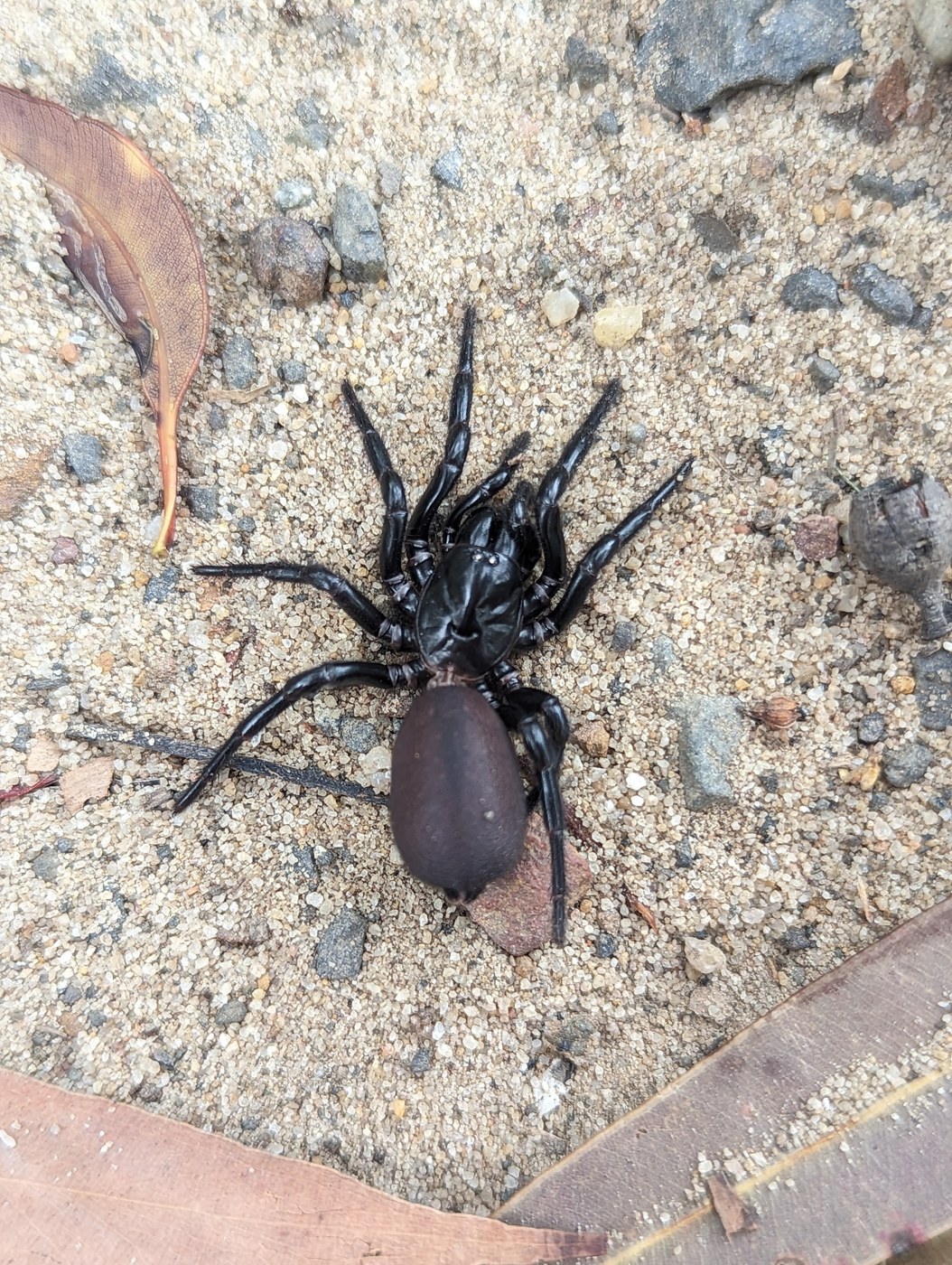
Sydney Funnel-web Spider
Glossy black and heavily built, with large fangs held ready in front of its face, the Sydney funnel-web spider shelters in a silk-lined burrow in moist, shaded ground across the Sydney region, one of Australia's most distinctive ground-dwelling spiders.
spider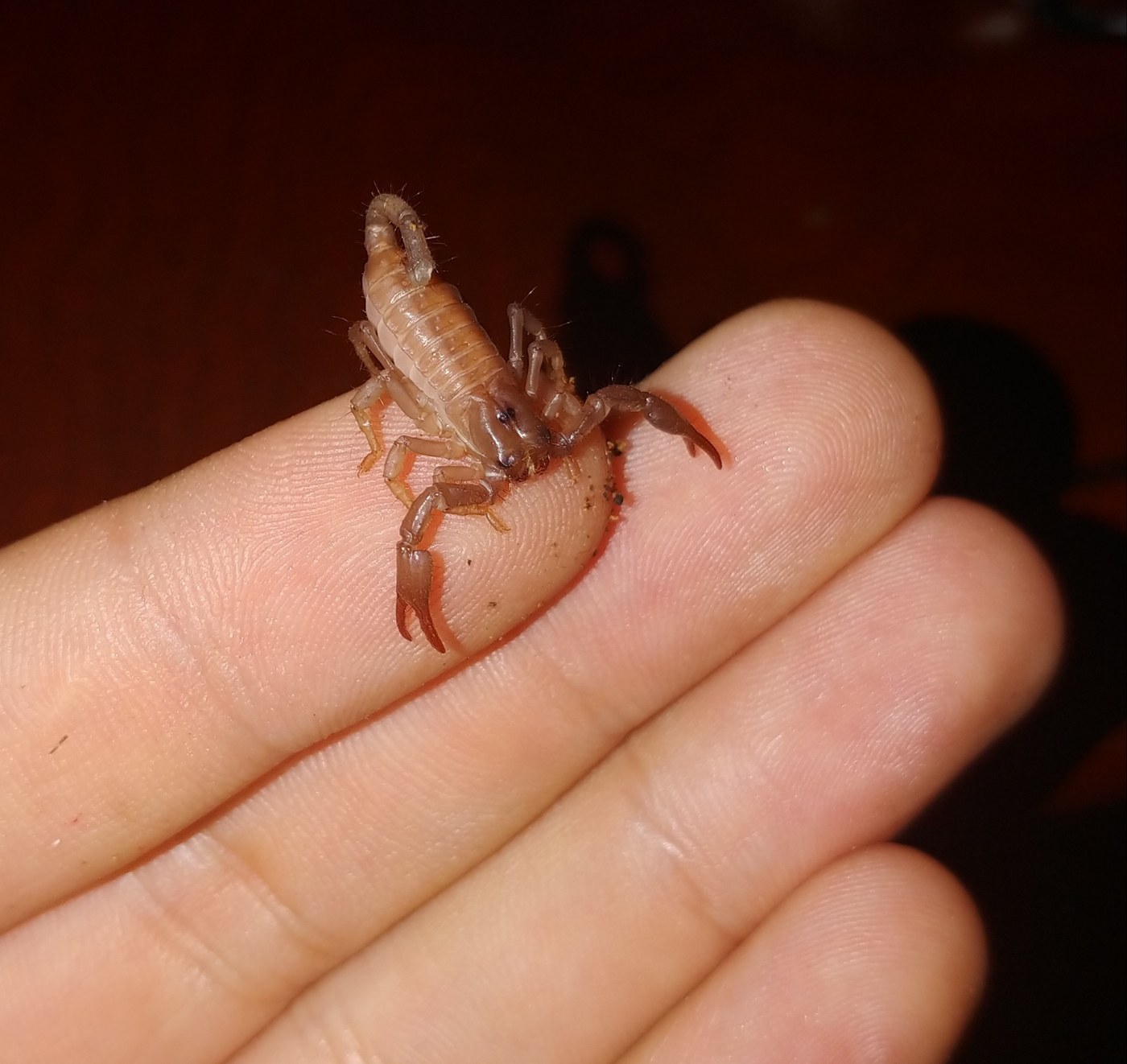
Emperor Scorpion
A massive, glossy black scorpion with heavy, oversized pincers built for crushing prey rather than stinging it, the emperor scorpion is one of the biggest and most recognizable scorpions on Earth. It digs deep burrows in rainforest soil and is unusual among scorpions for tolerating close family groups.
arachnid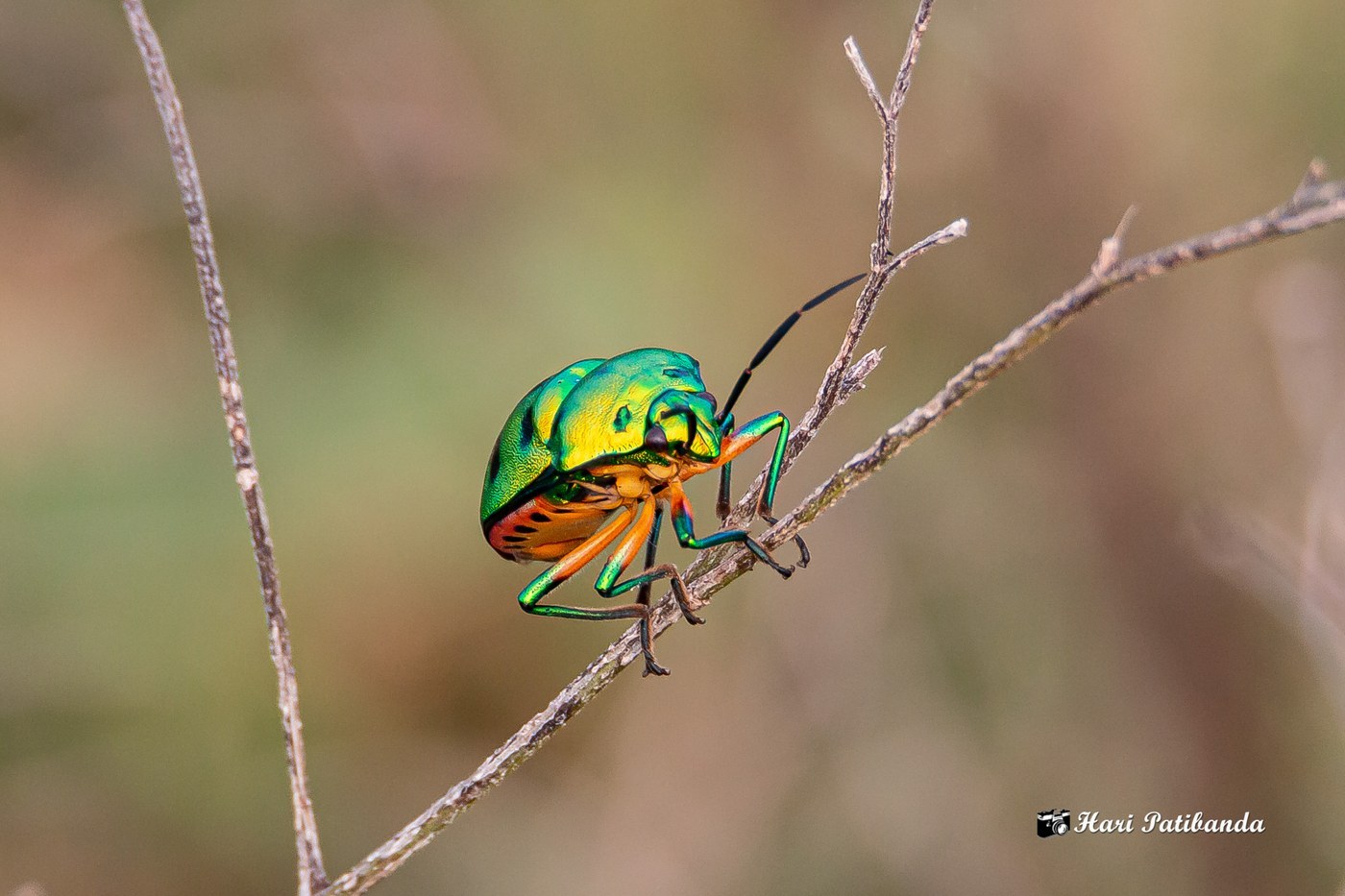
Jewel Bug
A living gemstone of the insect world, the jewel bug shimmers in dazzling metallic greens, blues, reds, and golds. Its enlarged shield-like back covers the entire body, making it look like a polished piece of enamelware.
true-bugMarch Fly
A stout, all-black fly that emerges in sudden, dense swarms during the first warm days of spring, often dangling its long hind legs conspicuously in slow, low flight over grass. Its name comes from its habit of appearing reliably around the start of the month, sometimes on cue near a particular saint's feast day in the traditional European calendar.
fly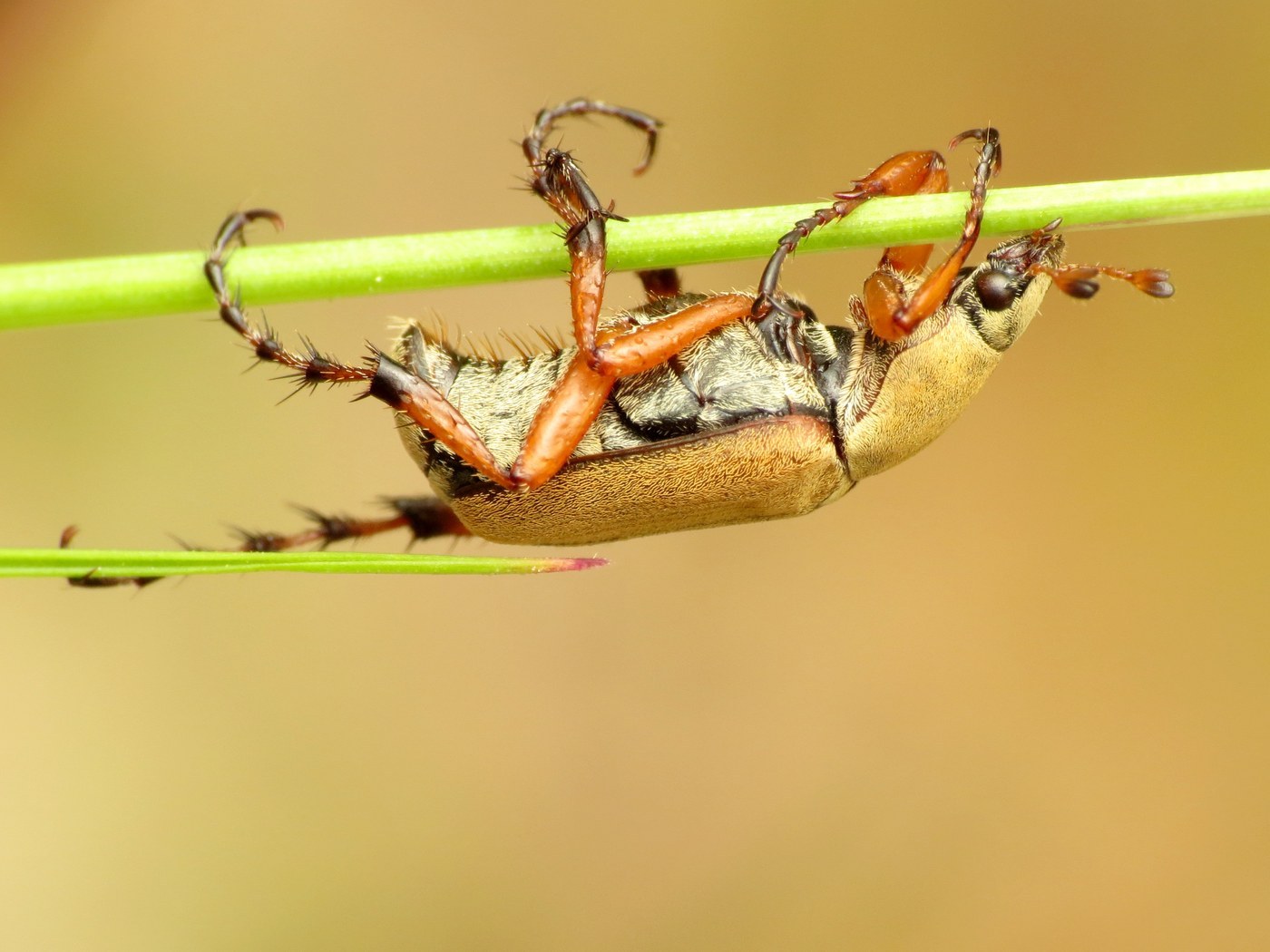
Rose Chafer
A slender, tan, long-legged scarab beetle that gathers in swarms on rose blossoms and other flowers in late spring, chewing petals and foliage into a lacy, skeletonized pattern.
beetleWireworm
Slender, shiny, and armor-hard, the wireworm is the long-lived soil-dwelling larva of a click beetle, spending years underground feeding on seeds, roots, and tubers before ever taking beetle form.
beetleGrub Worm
A plump, C-shaped, creamy-white larva with a distinct brown head, living underground where it feeds on grass and plant roots before eventually maturing into a scarab beetle.
beetleSoil Mite
A microscopic, heavily armored mite found by the millions in a single handful of soil, quietly breaking down leaf litter and helping build the fertile ground beneath forests and fields.
arachnidWhite Grub
A pale, C-shaped larva with a brown head capsule and six stubby legs, spending its entire early life hidden underground feeding on roots before emerging as a stout May or June beetle.
beetle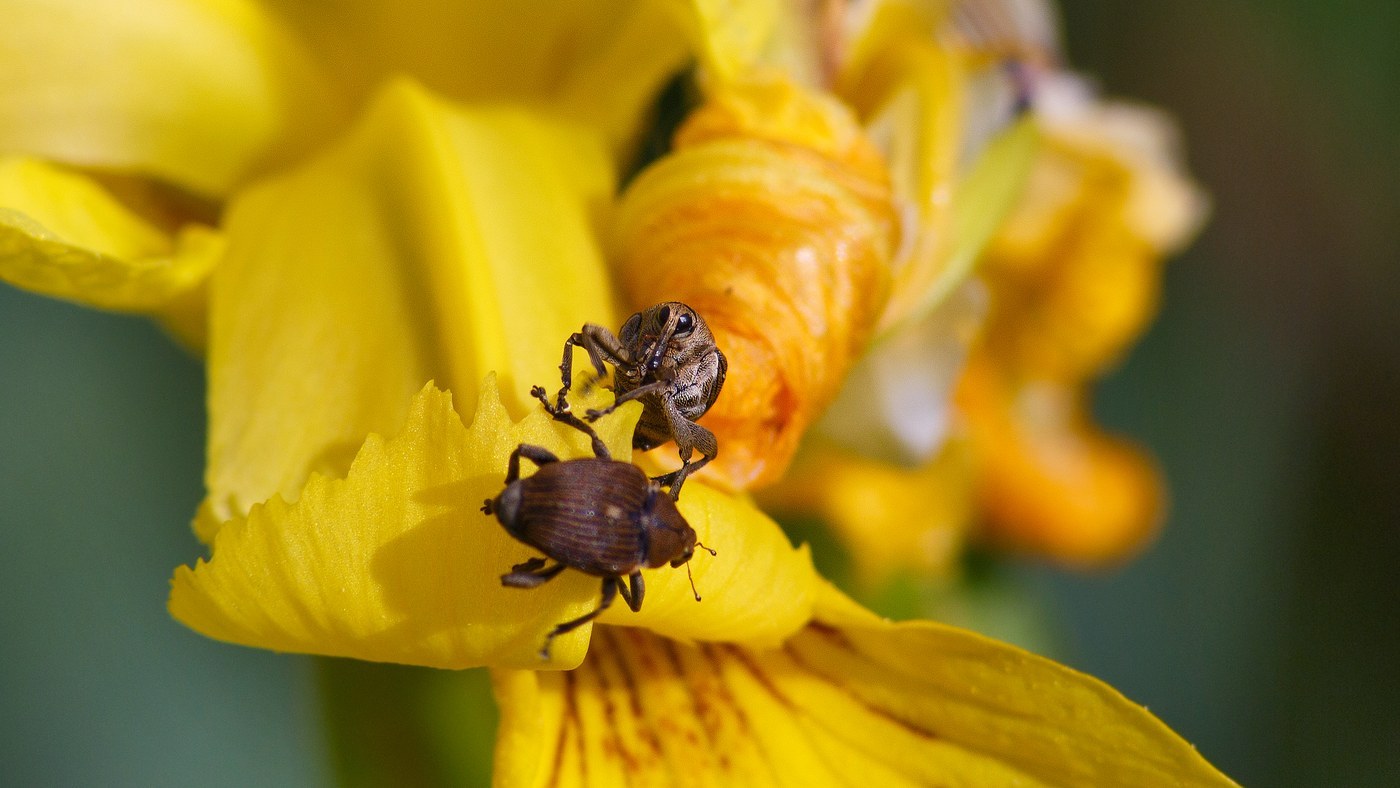
Weevil
A beetle instantly recognizable by its elongated, downward-curving snout tipped with tiny chewing mouthparts, used to bore into seeds, nuts, grain, and plant stems.
beetle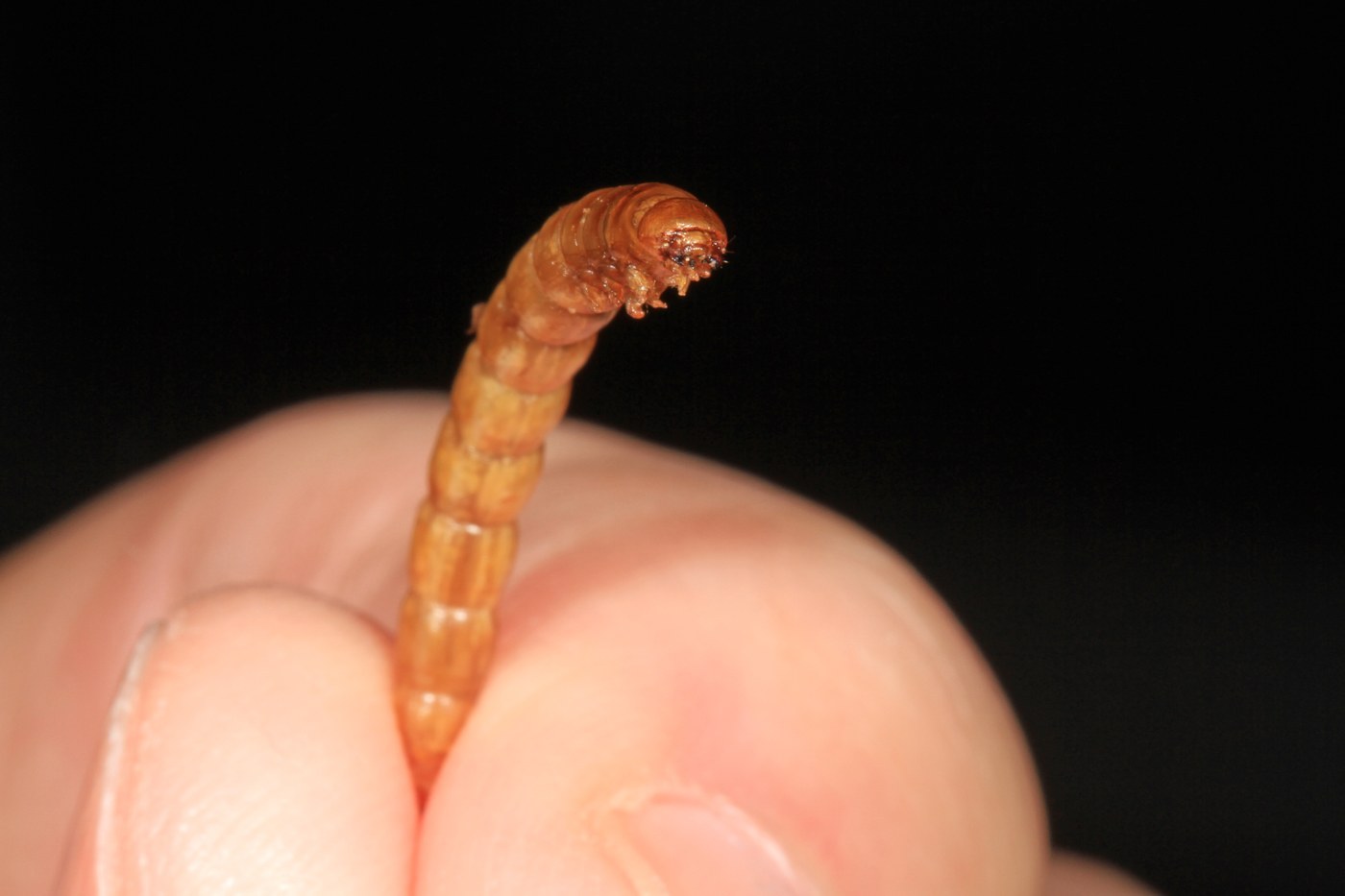
Mealworm
A tan, segmented larva with a shiny hard exoskeleton that tunnels through stored grain and flour before transforming into a darkling beetle.
caterpillar-larva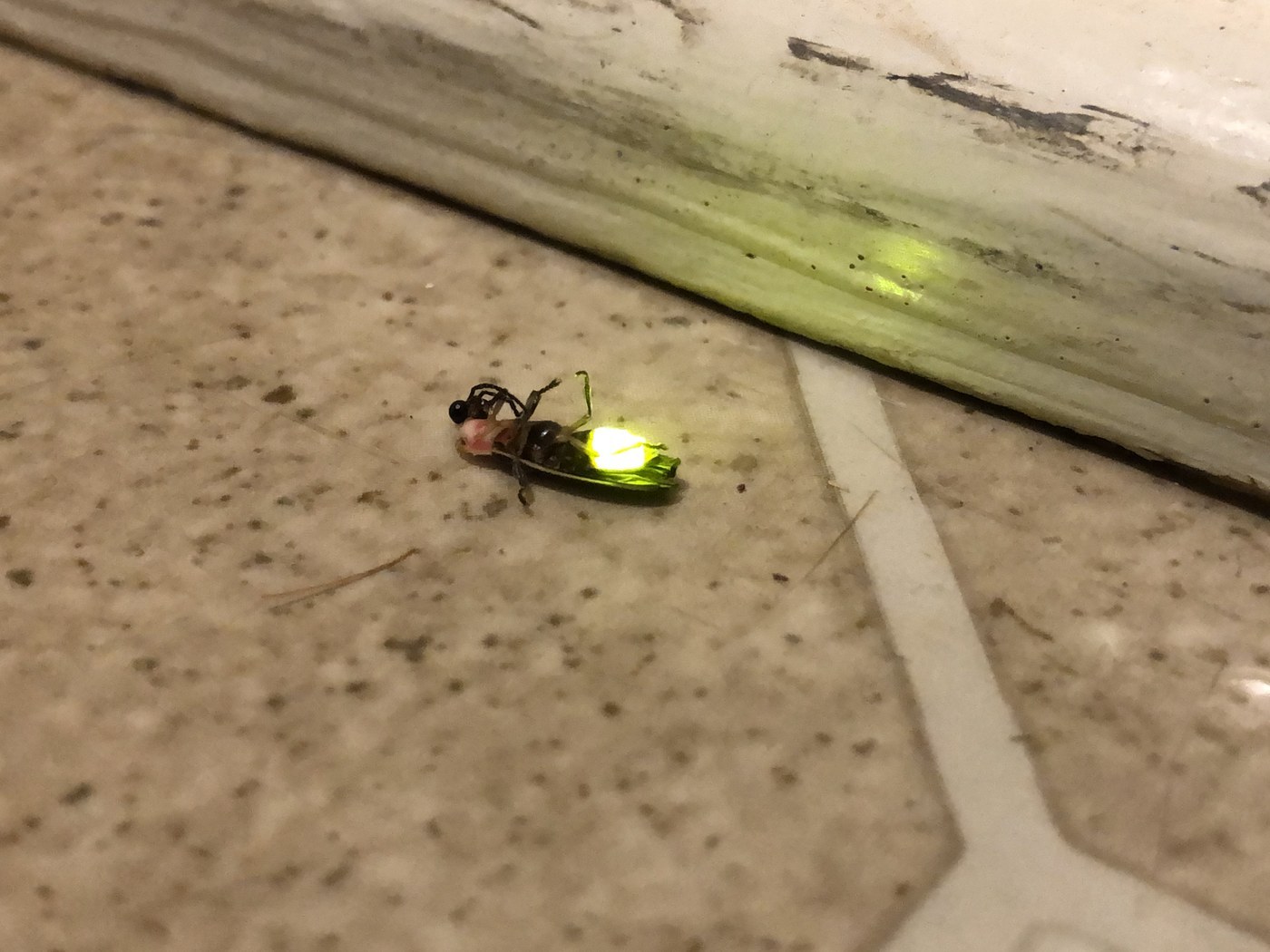
Fireflies
A soft-bodied beetle famous for producing rhythmic, glowing flashes of light from its abdomen at dusk, used to signal and attract mates across meadows and gardens on warm summer evenings.
beetle