
Bug Encyclopedia
Search and identify bugs & insects — beetles, butterflies, moths, ants, bees, spiders and more — with size, habitat, danger, behavior, and how to tell them apart.
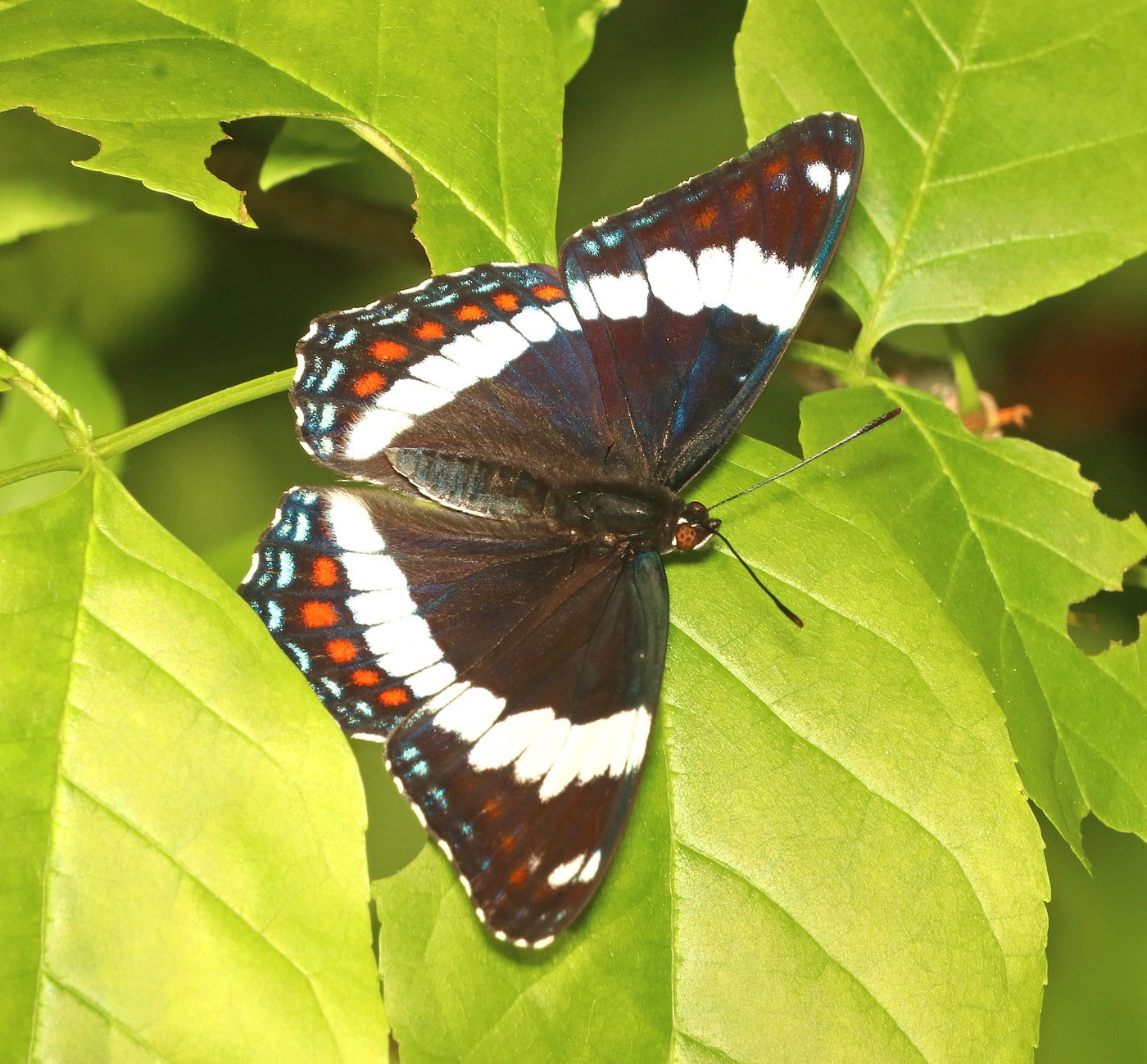
White Admiral
A large, dark butterfly crossed by a bold white band on both wings, the northern form of the same species that produces the iridescent blue Red-spotted Purple farther south.
butterfly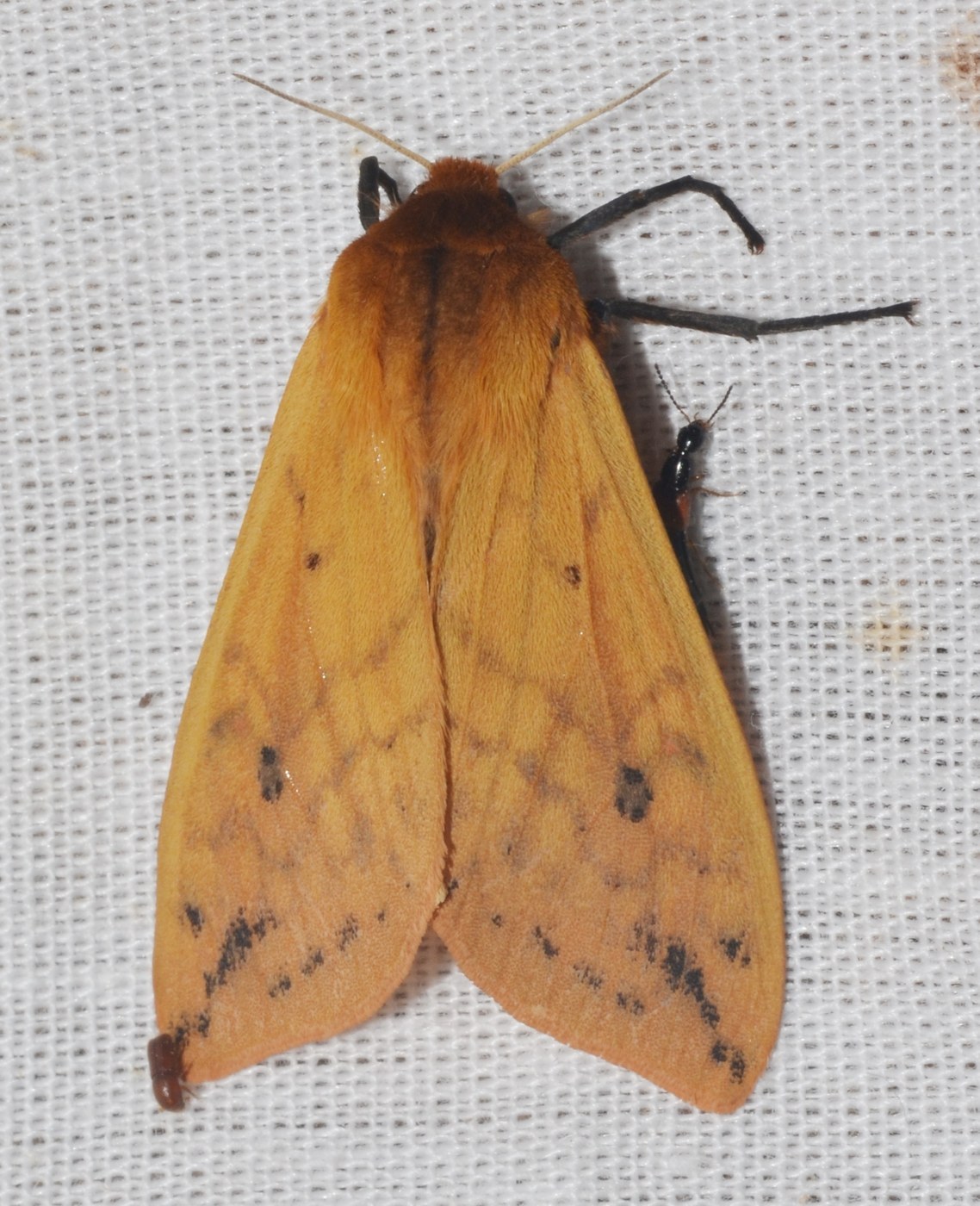
Banded Woolly Bear Moth
Best known as the black-and-rust-banded fuzzy caterpillar that famously curls into a ball when disturbed, this species matures into a plain golden-orange to tan tiger moth.
mothPicture-Winged Fly
A small fly whose clear wings are decorated with bold bands, spots, or intricate patterns, often waved and flicked in slow, deliberate displays that give the impression of a tiny fan being opened and closed. Some species even raise their patterned wings above the body and walk sideways in courtship displays reminiscent of a strutting peacock.
fly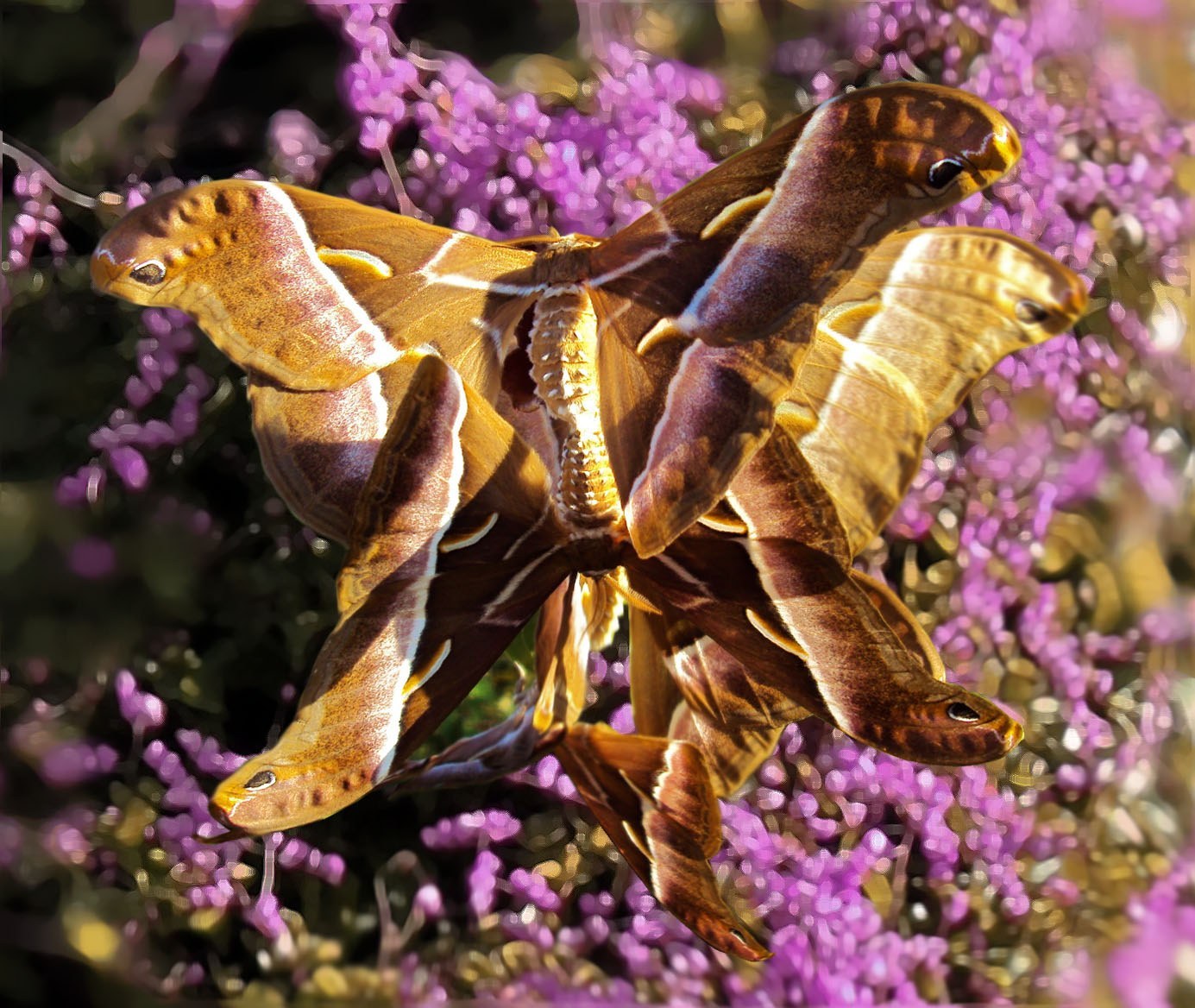
Ailanthus Silkmoth (Cynthia Moth)
A very large silkmoth with broad, tan-brown wings crossed by white, crescent-moon-shaped bands, closely associated with the fast-spreading tree-of-heaven that both feeds its larvae and carried the species around the world.
mothPlanthopper
A varied group of sap-feeding true bugs known for their sideways-held wings, jumping ability, and, in some tropical species, exaggerated head projections used for display.
true-bug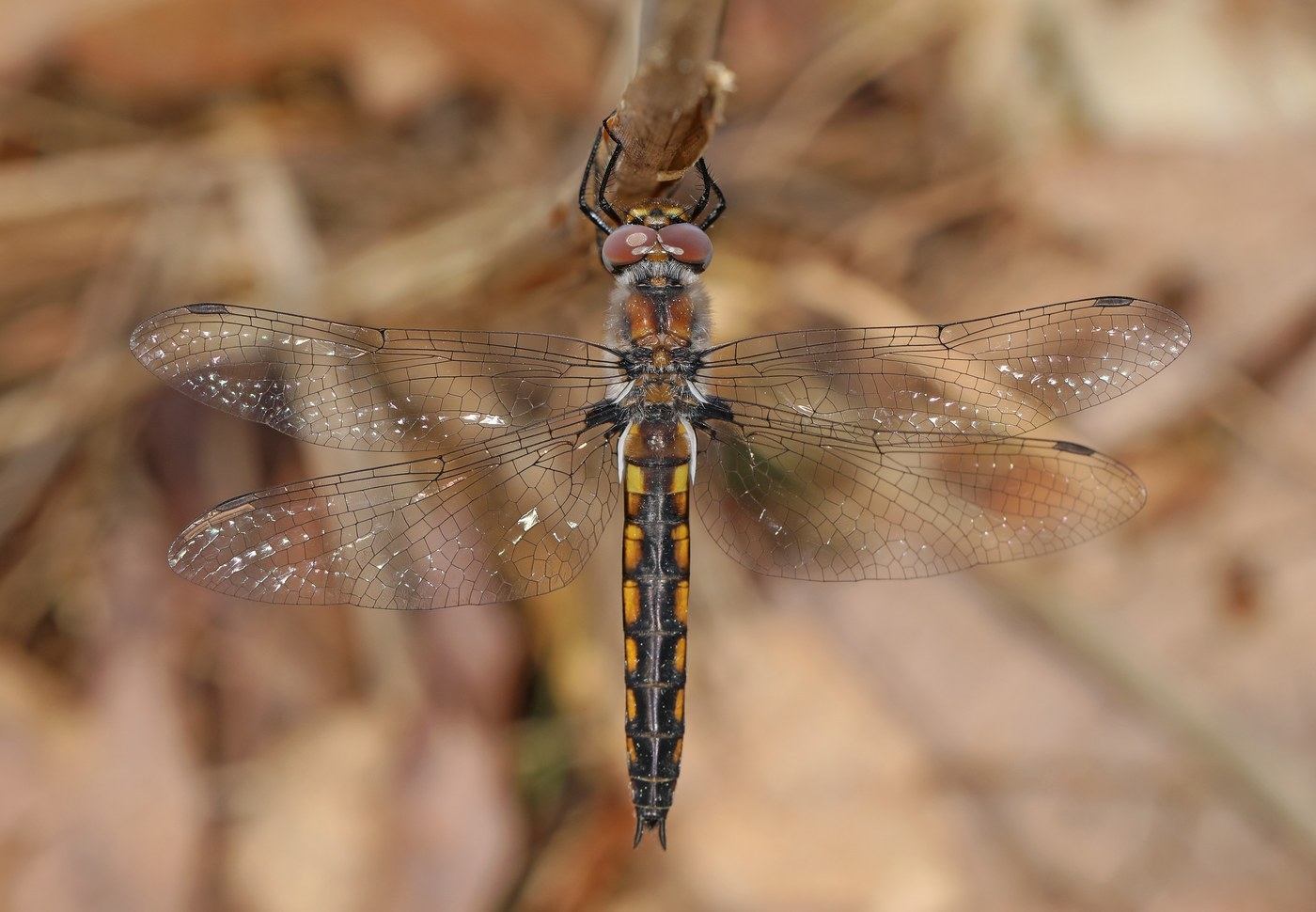
Common Baskettail
One of the earliest dragonflies to appear each spring, this brown, green-eyed skimmer often swarms in numbers over sunny clearings before most other species have emerged.
dragonflyCockroach Egg Case
A small, purse-shaped, ridged capsule that houses dozens of developing cockroach eggs, its size, color, and shape offering telltale clues to which species produced it.
otherMarsh Fly
A slender, unassuming fly best known for larvae with a remarkable diet: nearly every species in the family feeds on aquatic or terrestrial snails and slugs, making marsh flies natural specialists in wetland food webs. Adults are often found resting quietly on sedges and other marsh vegetation near the water's edge.
fly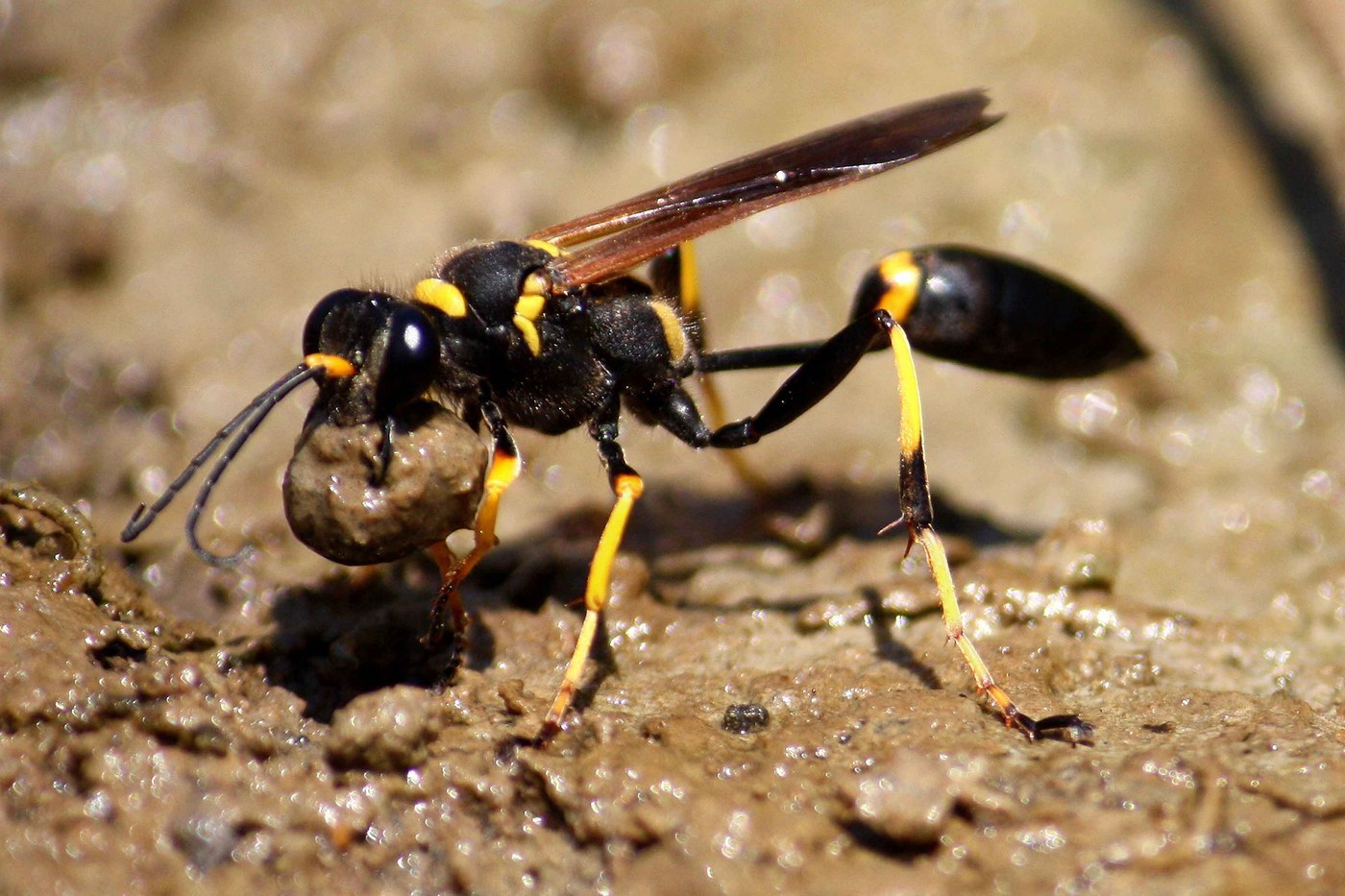
Mud Dauber
A slender, non-aggressive solitary wasp with a distinctively long, thread-like waist, known for constructing tube- or pot-shaped nests out of mud pellets on walls and eaves.
waspSpur-throated Grasshopper
One of the most familiar grasshopper groups in North America, named for the small spine on its throat and known for including some of the continent's most abundant rangeland species.
grasshopper-cricket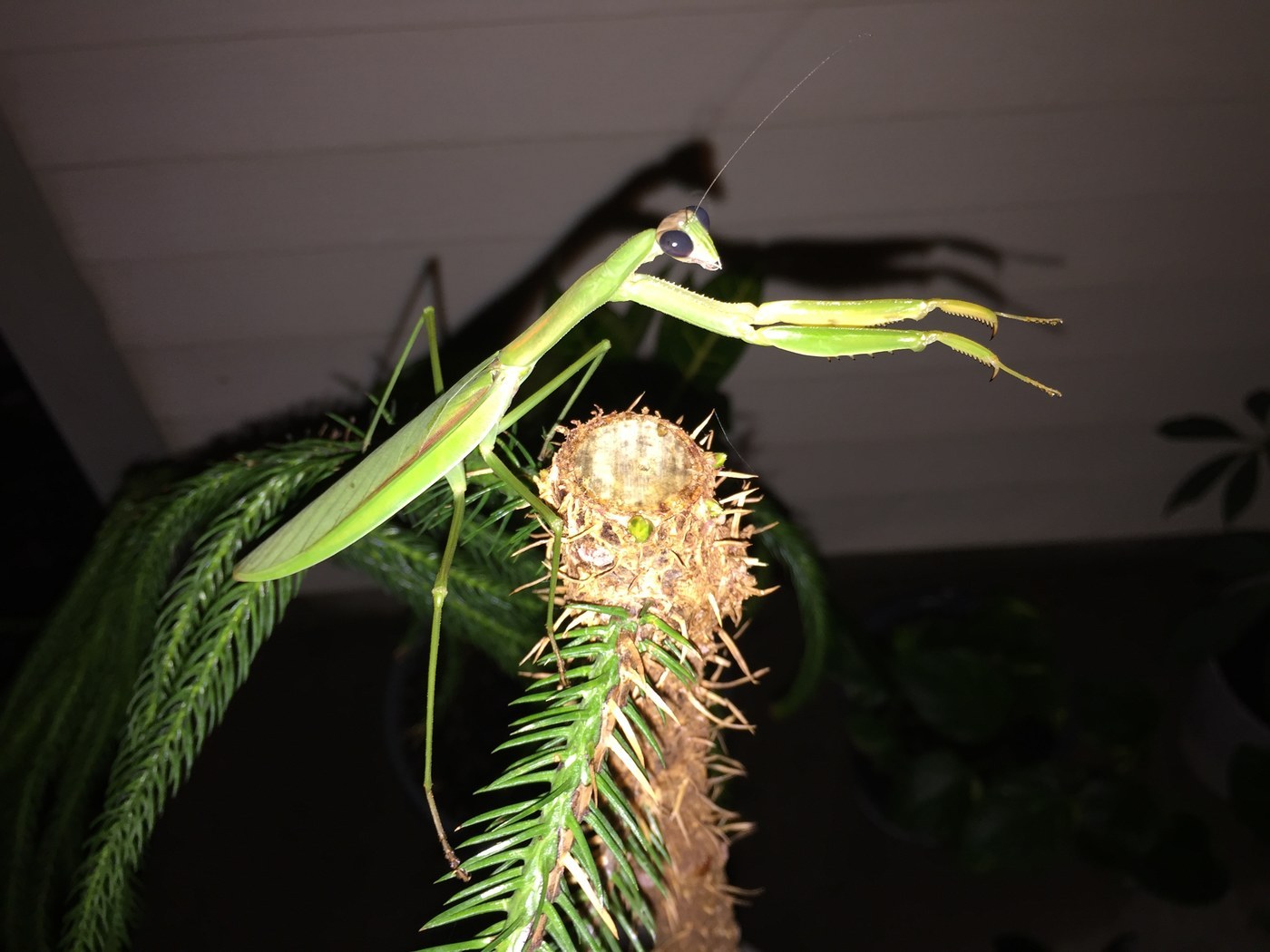
Chinese Mantis
One of the largest praying mantises found in North America, an introduced species with a lean brown-and-green body and grasping spined forelegs built for ambushing insect prey.
mantis-stick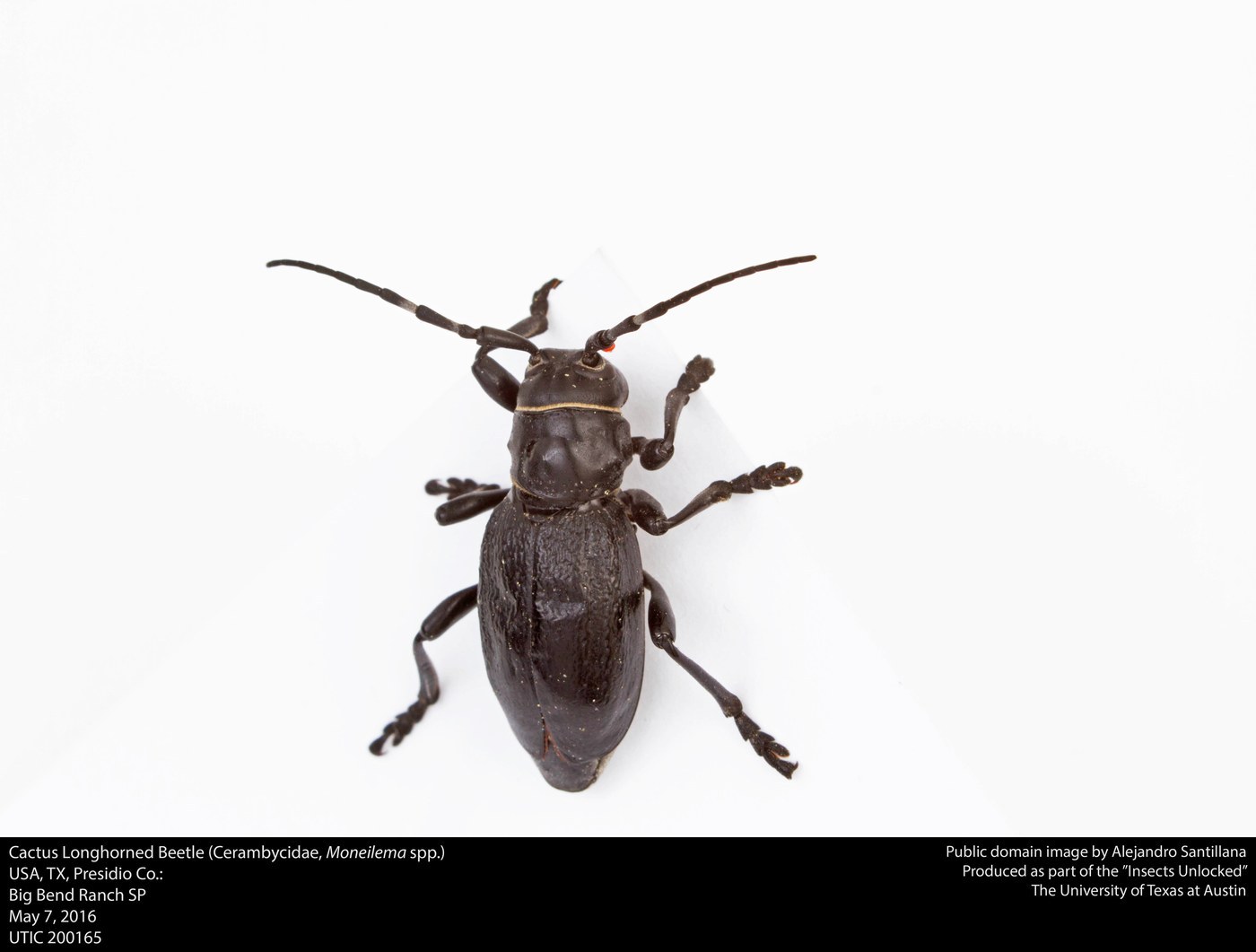
Longhorn Beetle
A beetle instantly recognizable by antennae often longer than its own body, ranging from small woodland species to large, dramatically patterned tropical and temperate forms.
beetle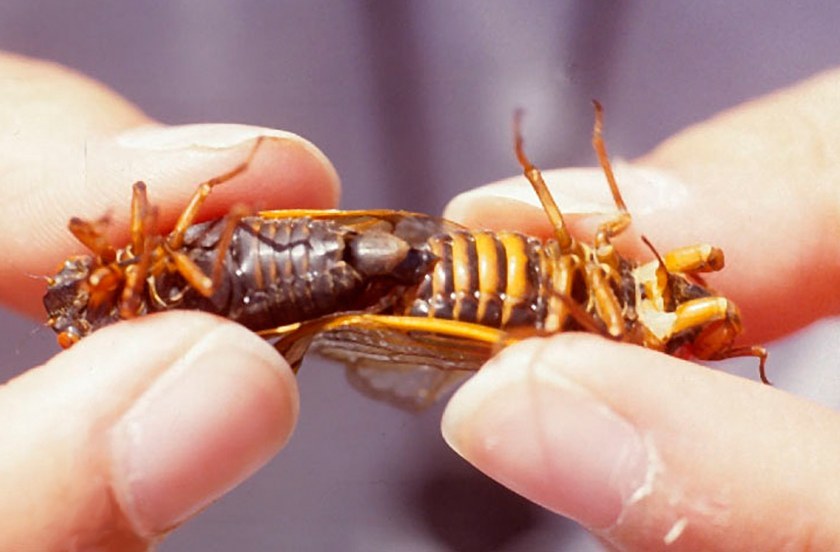
Cicada
A stout, big-eyed insect best known for the loud, buzzing chorus of song produced by males, and for periodical species that emerge from the ground by the millions after living underground for over a decade.
true-bug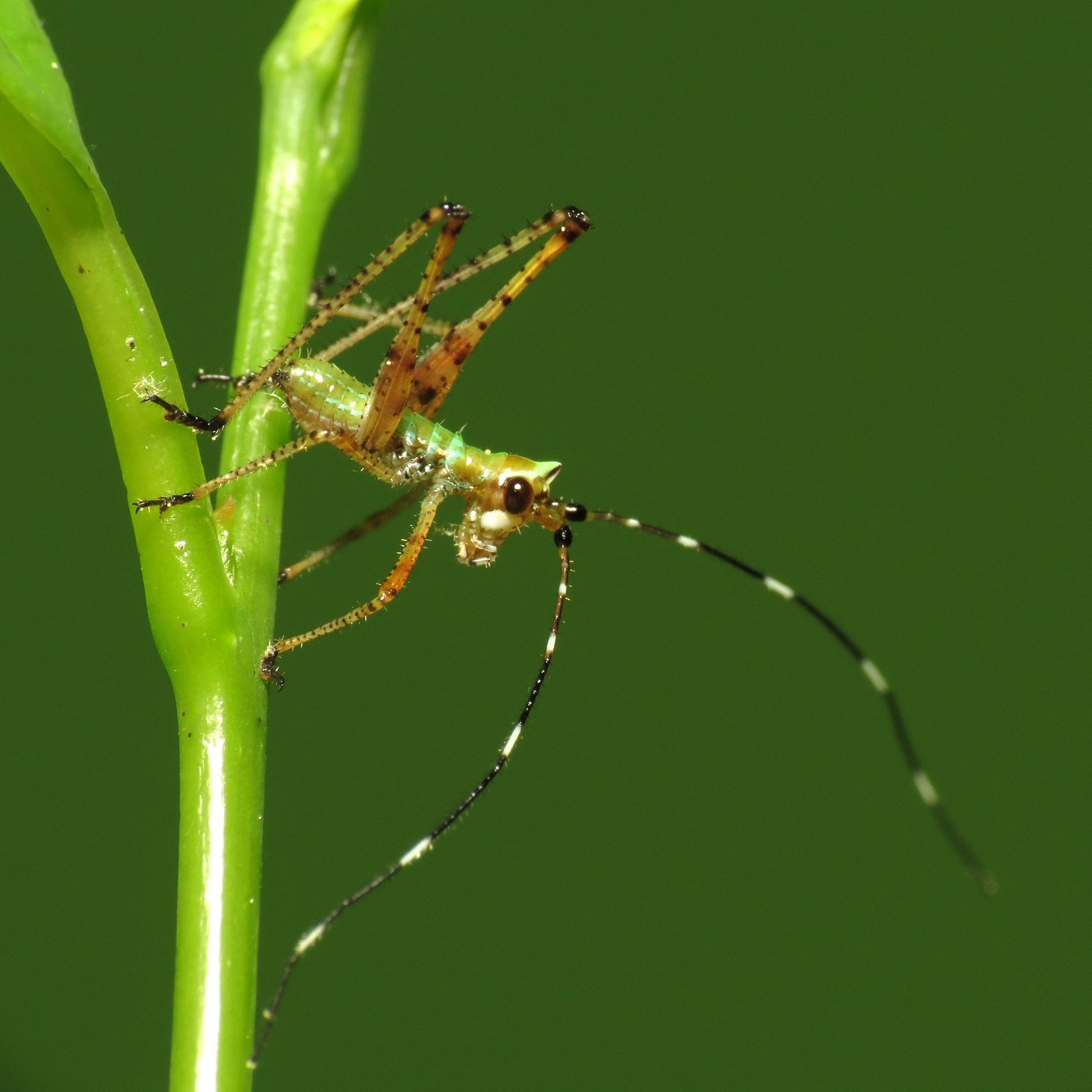
Fork-tailed Bush Katydid
Slimmer and greener than its treetop relatives, the fork-tailed bush katydid lives among shrubs and garden plants, with males identified by the distinctive forked appendages at the tip of the abdomen that give the species its name.
grasshopper-cricket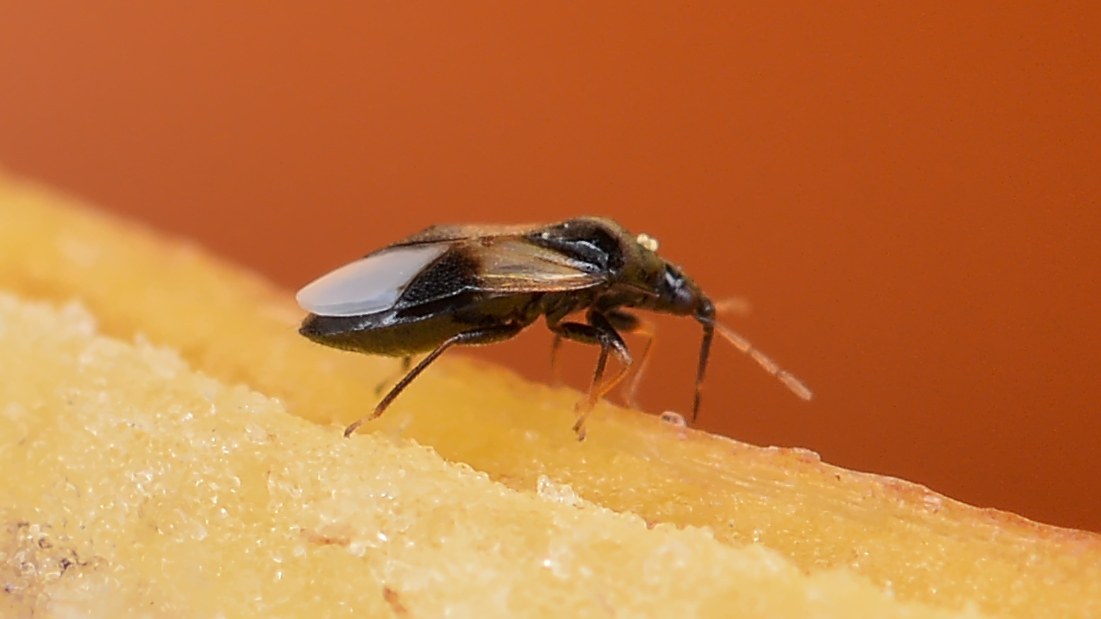
Minute Pirate Bug
A tiny, black-and-white patterned true bug barely visible without close inspection, the minute pirate bug is a voracious predator of thrips, mites, and insect eggs on flowers and foliage.
true-bugBird Mite
A minute, pale to reddish mite that lives among feathers and nesting material of wild and domestic birds, sometimes dispersing into nearby buildings when nests are abandoned.
arachnid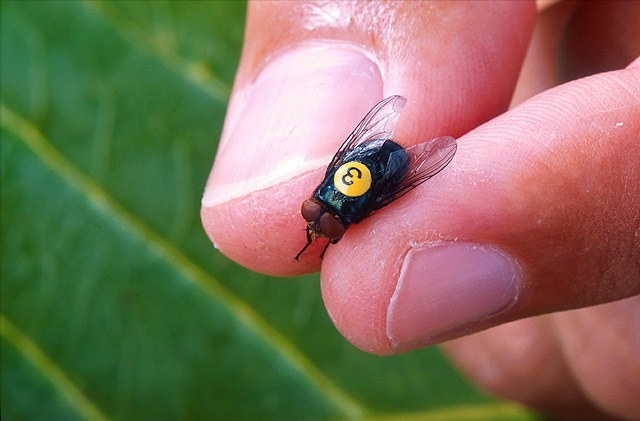
Screwworm Fly
A metallic blue-green blowfly whose larvae are unusual among maggots for feeding on living tissue rather than carrion, drawn to even small open wounds on warm-blooded animals. The species has been the target of one of the most successful large-scale insect eradication campaigns in history across much of North America.
fly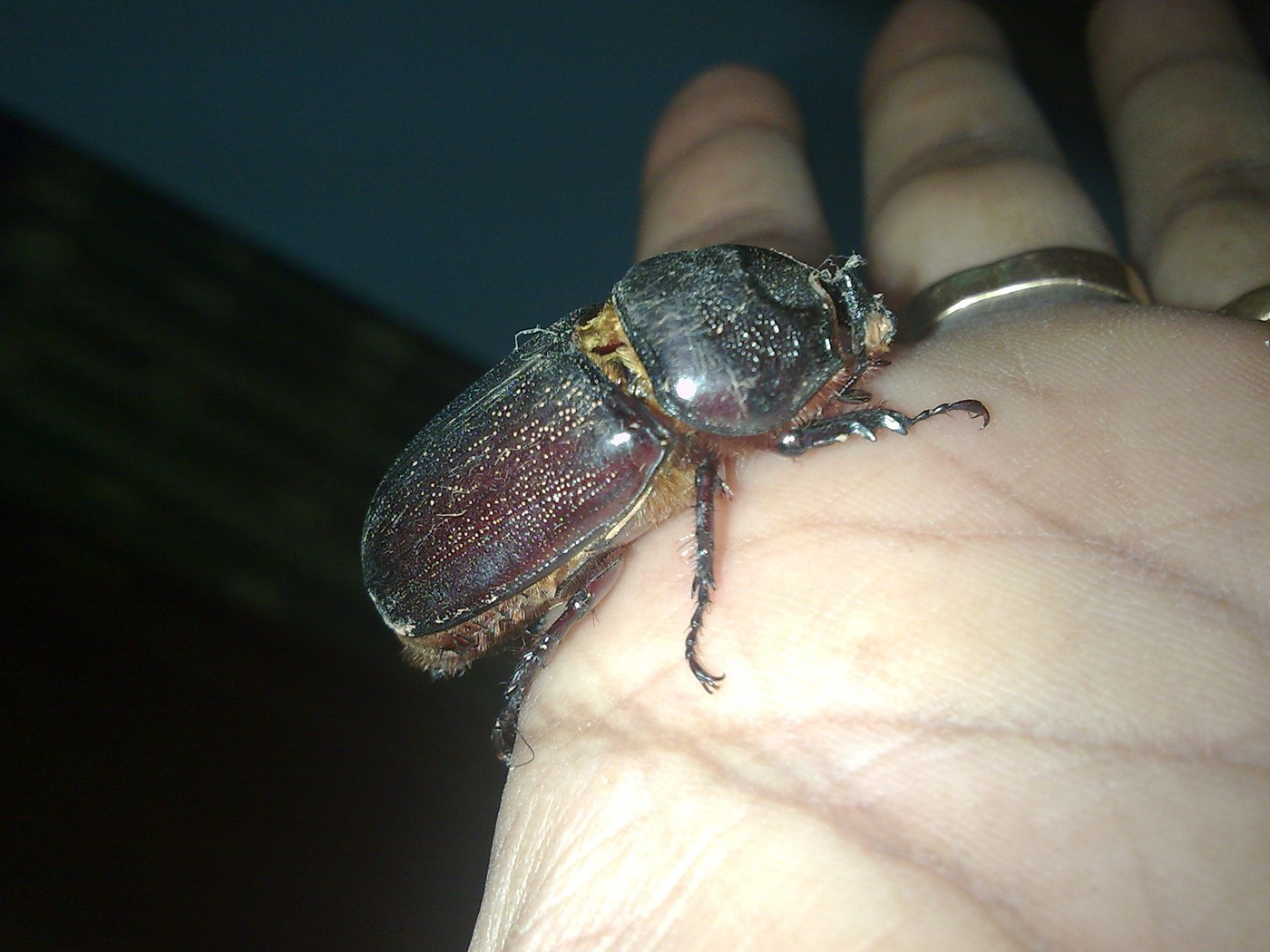
Rhinoceros Beetle
A massive, heavily armored beetle whose males sport a single large, curved horn projecting forward from the head, used to shove and flip rival males in contests of strength.
beetle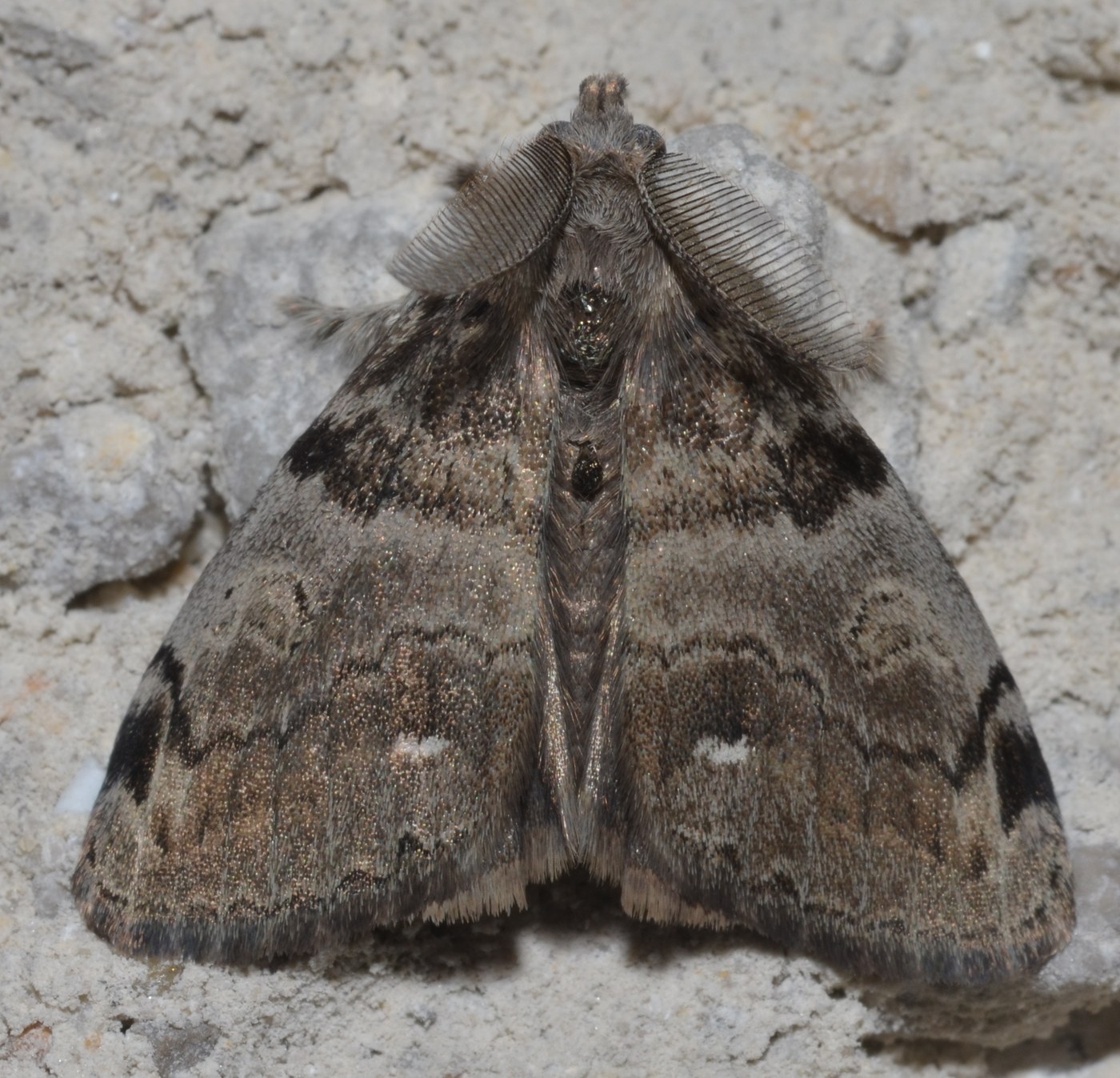
Tussock Moth
A moth with a striking split lifestyle: winged, drab gray-brown males fly to seek out flightless, grub-like females, while the ornate caterpillars sport dense tufts of colorful bristly hair.
moth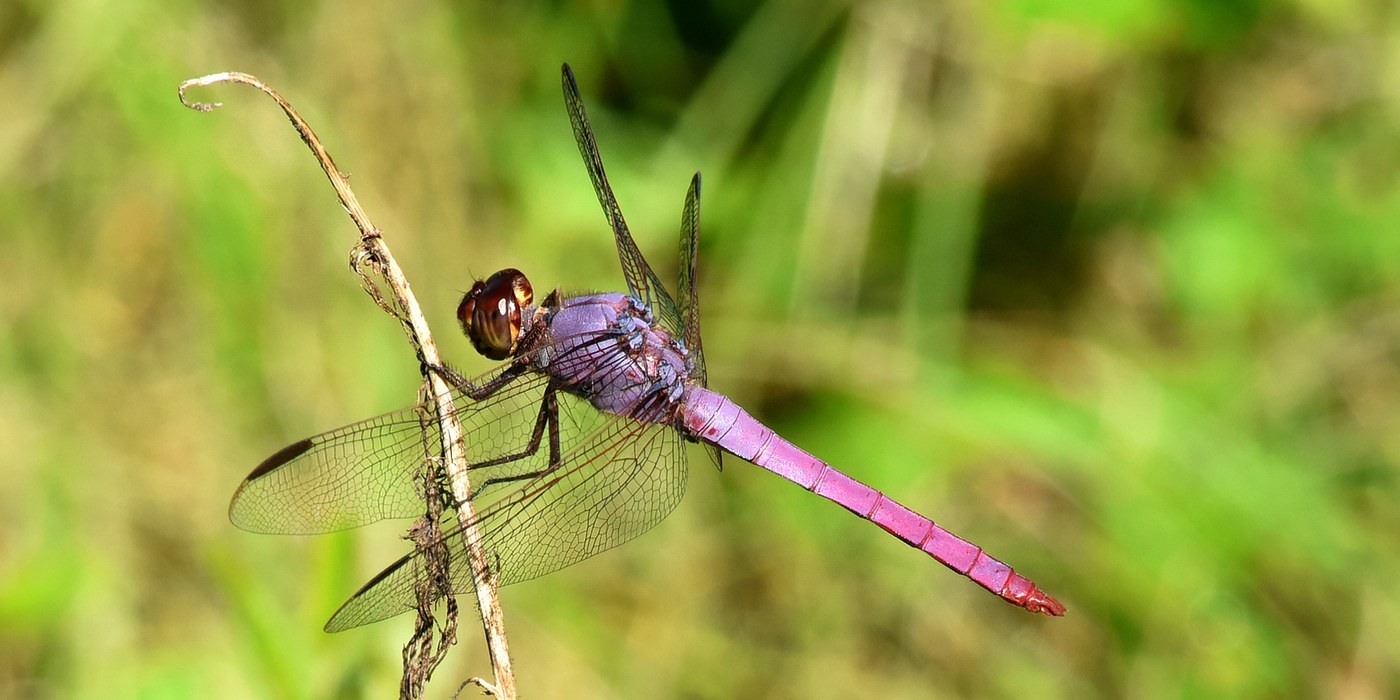
Roseate Skimmer
A vivid pink-violet dragonfly of southern wetlands, the mature male's rose-pruinose body makes it one of the most striking skimmers found around ponds and canals.
dragonfly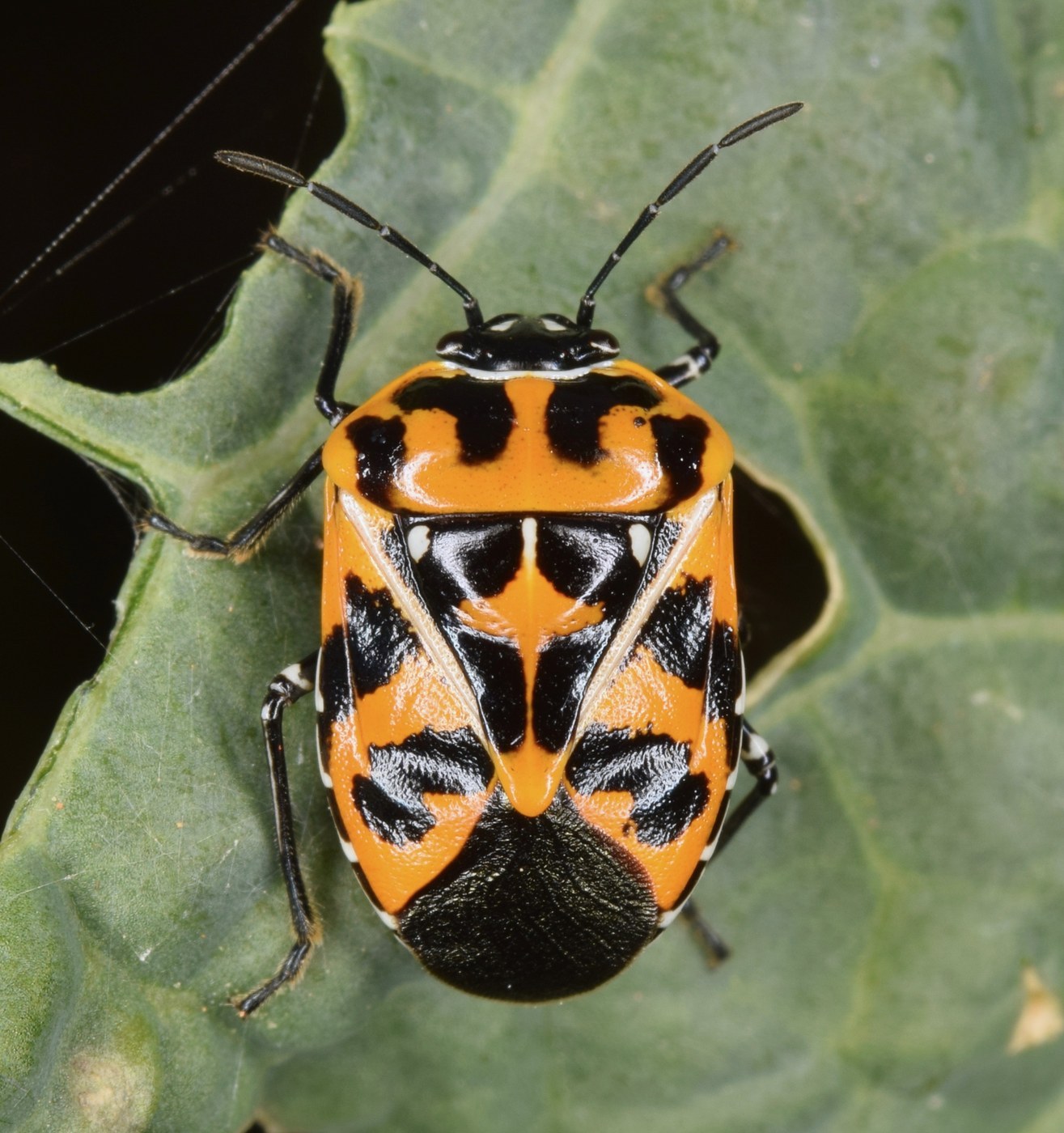
Harlequin Bug
A shield-shaped stink bug painted in bold black-and-orange (or red-and-yellow) blotches, making it one of the most colorful and easily recognized true bugs on cabbage and other cole crops.
true-bugSnakefly
A slender predator named for its habit of rearing up its long, mobile neck like a tiny cobra when hunting or threatened.
otherTermite Swarmer
A dense, short-lived cloud of dark, equal-winged insects pouring from a crack in soil or wood, each one a would-be founder of a brand-new termite colony.
other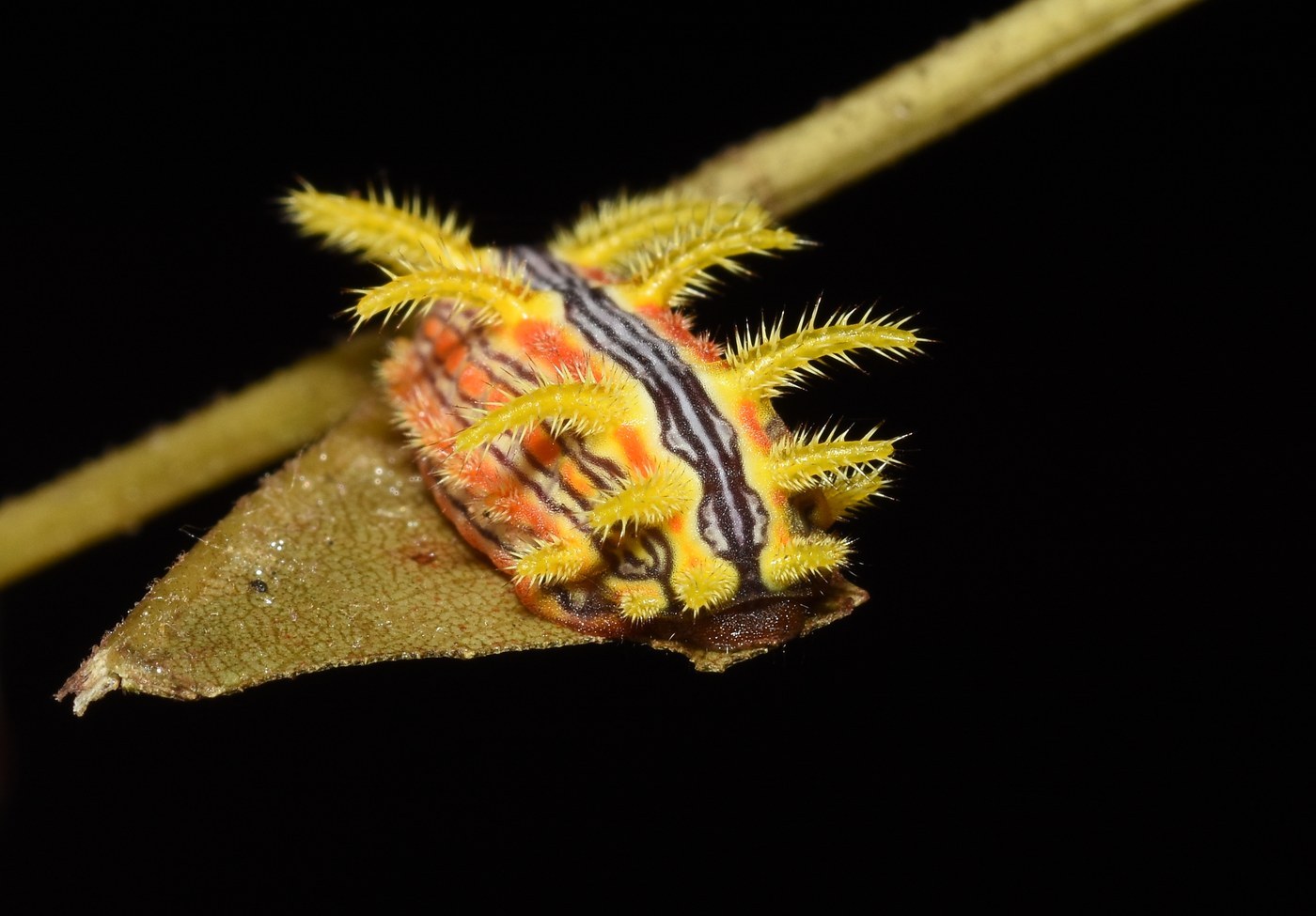
Stinging Rose Caterpillar
A boldly striped slug caterpillar in candy-like tones of yellow, orange, and purple, crowned with tufted spine clusters that can sting on contact.
caterpillar-larva