
Bug Encyclopedia
Search and identify bugs & insects — beetles, butterflies, moths, ants, bees, spiders and more — with size, habitat, danger, behavior, and how to tell them apart.
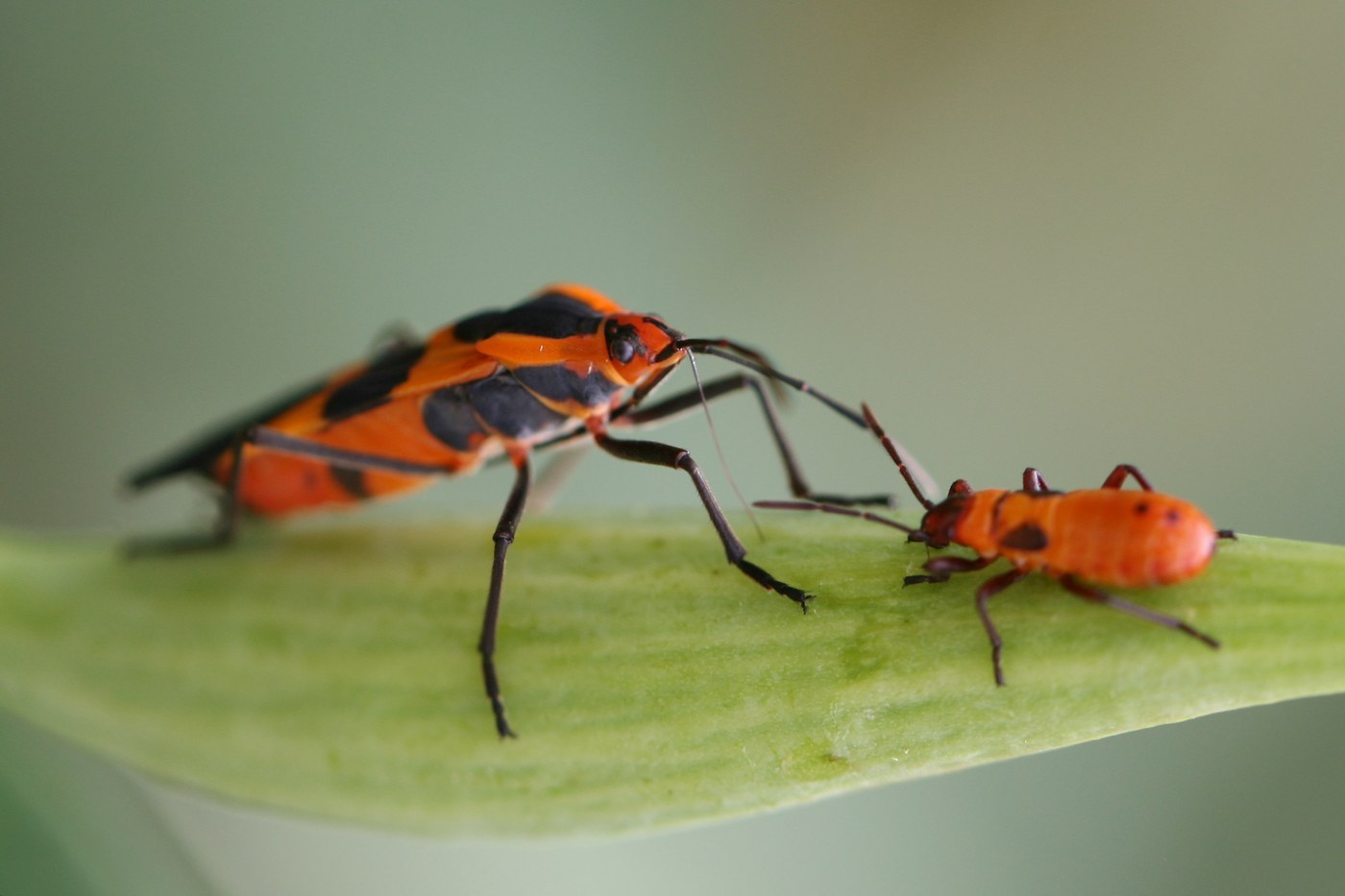
Milkweed Bug (Large Milkweed Bug)
A boldly patterned orange-and-black true bug found clustering on milkweed seed pods, sporting an elongated body with a distinctive black band across the wings.
true-bug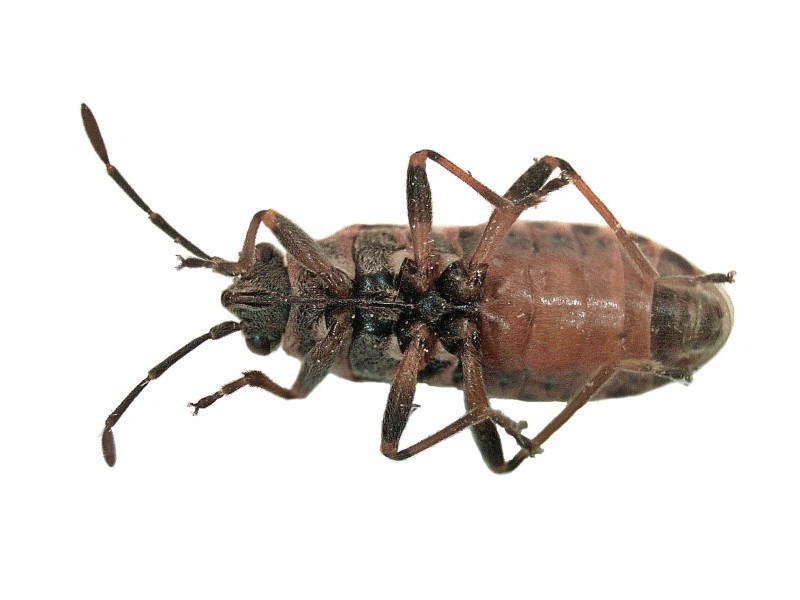
Elm Seed Bug
A slim, brownish-orange seed bug that develops on elm seeds and becomes a familiar autumn nuisance as it seeks shelter on sun-warmed walls and window frames.
true-bug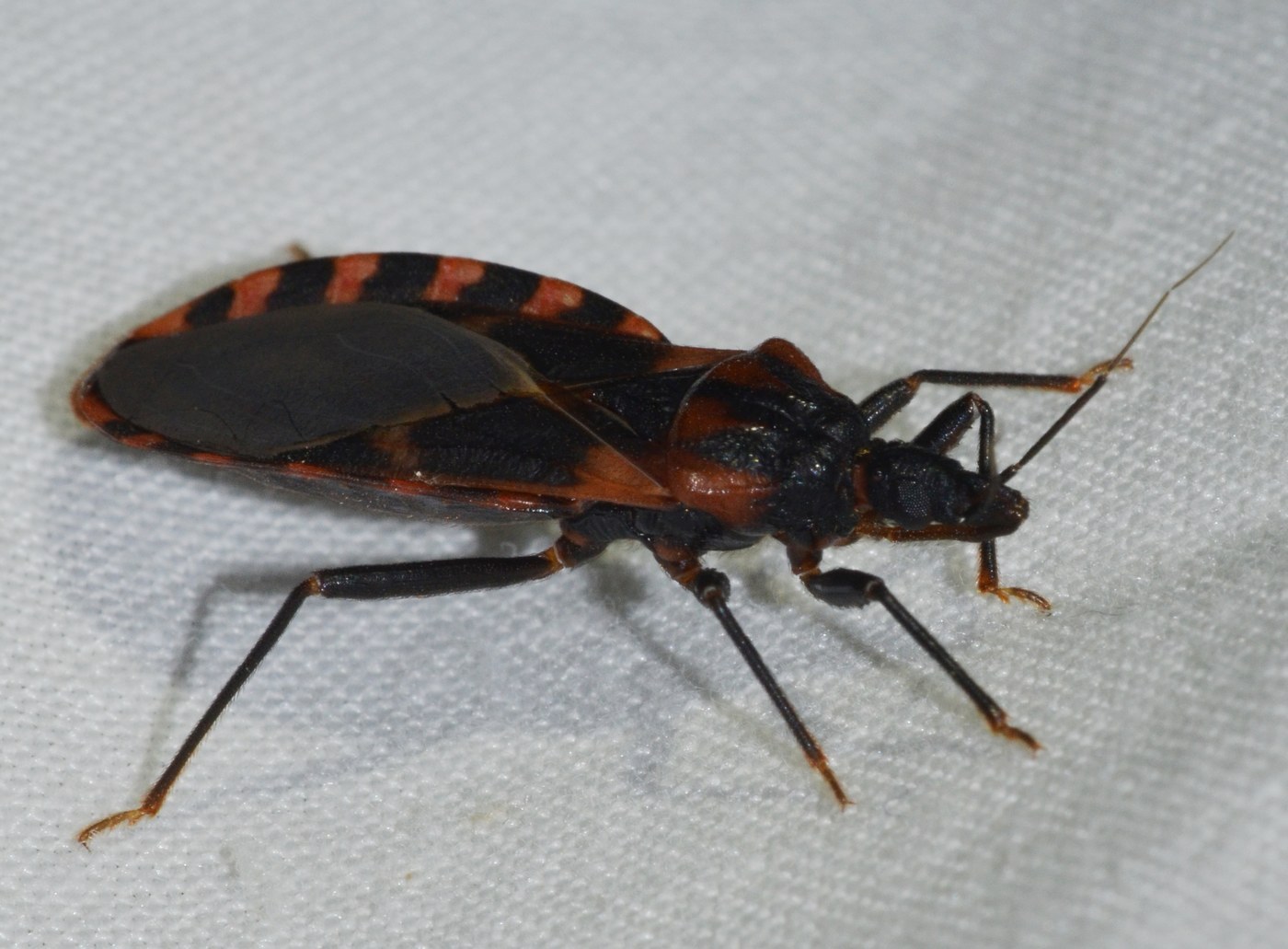
Kissing Bug
A dark, elongated true bug with a narrow, cone-shaped head and distinctive orange or red markings along the edges of its abdomen, most active at night.
true-bug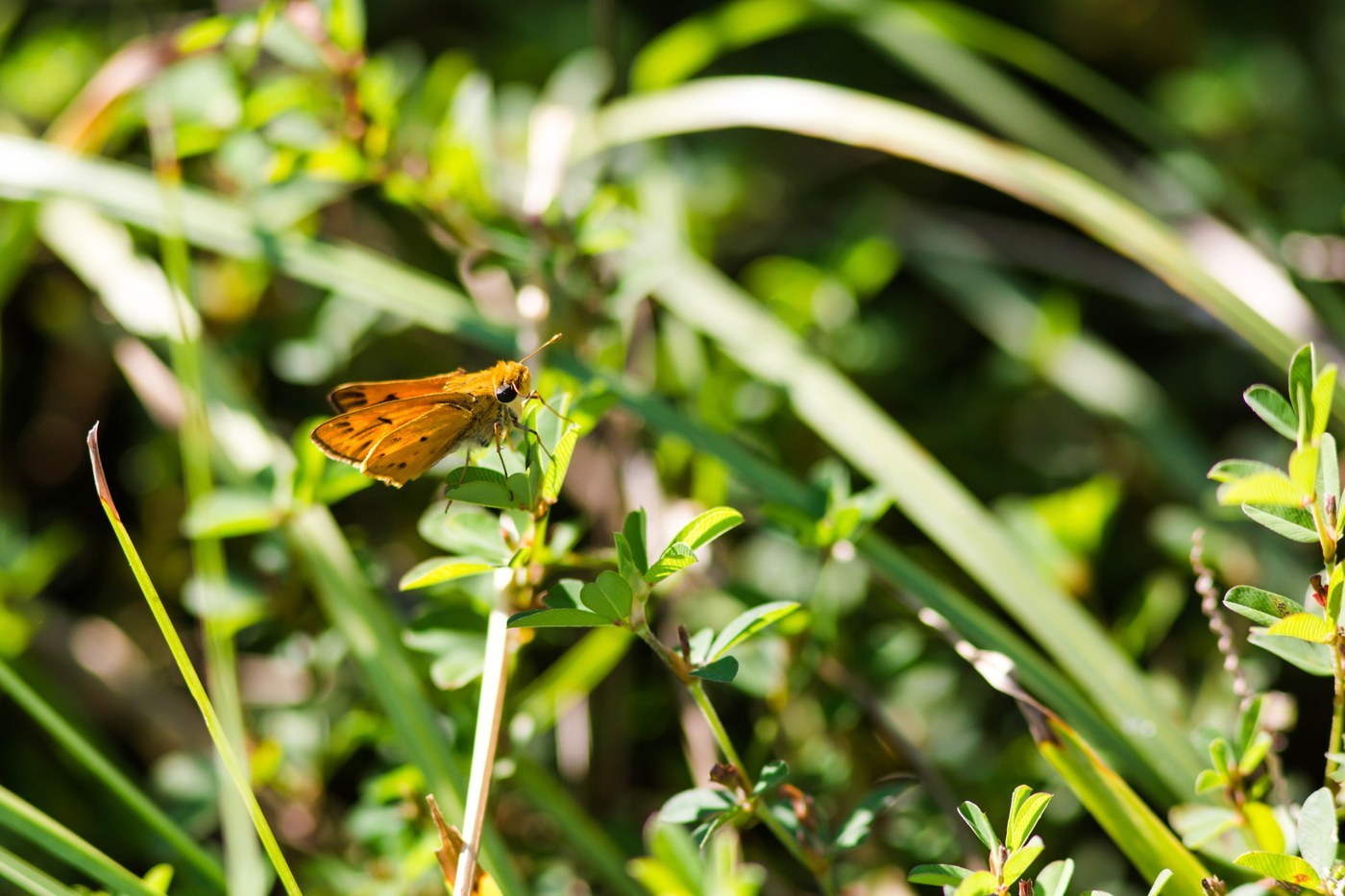
Fiery Skipper
A small, fast, orange-and-black skipper often seen zipping low over lawns and gardens, with jagged black wing borders that resemble scorched edges.
butterfly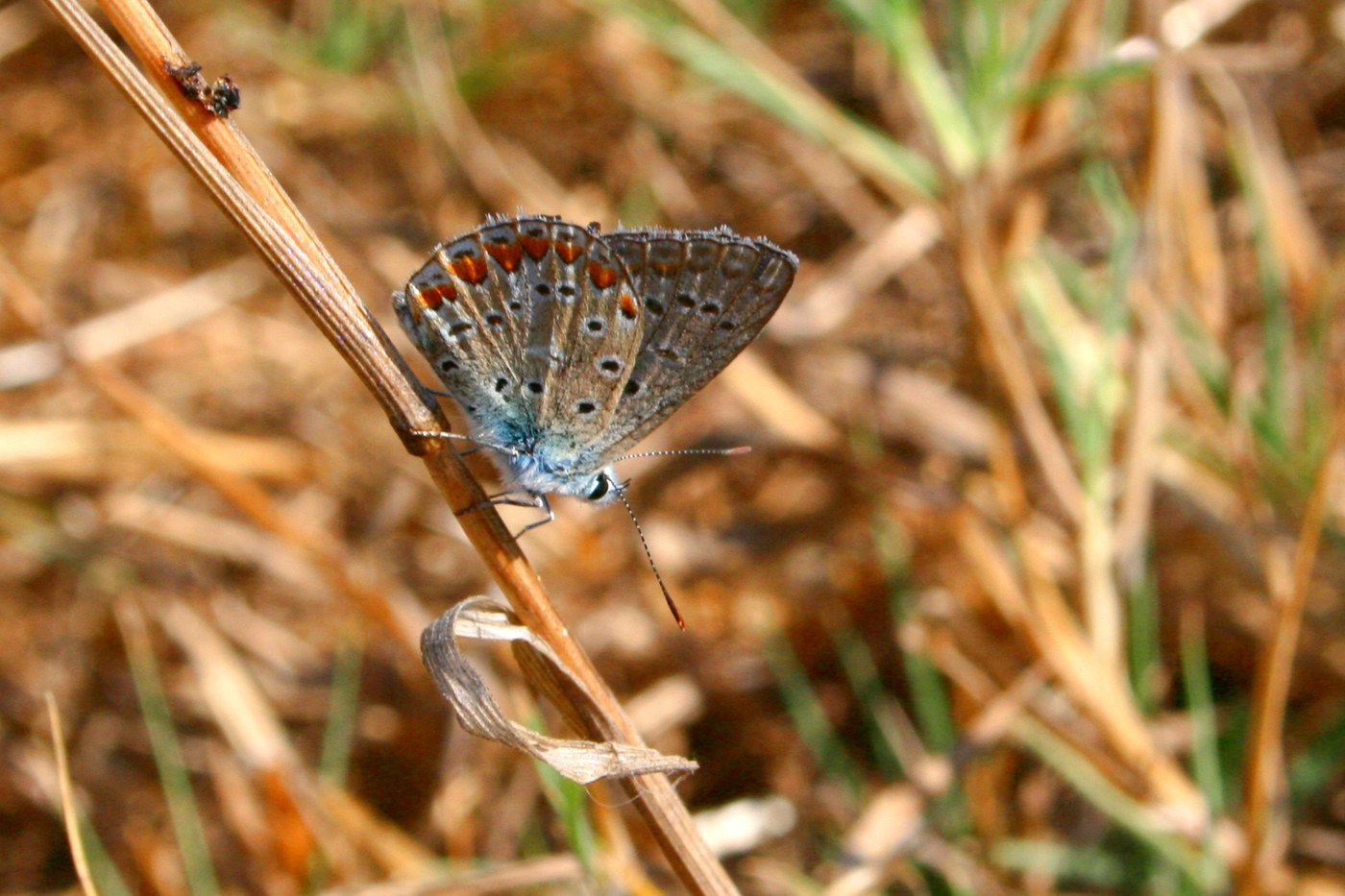
Common Blue
A small, sun-loving butterfly whose males flash brilliant violet-blue wings while females wear warm brown with a scattering of orange spots.
butterfly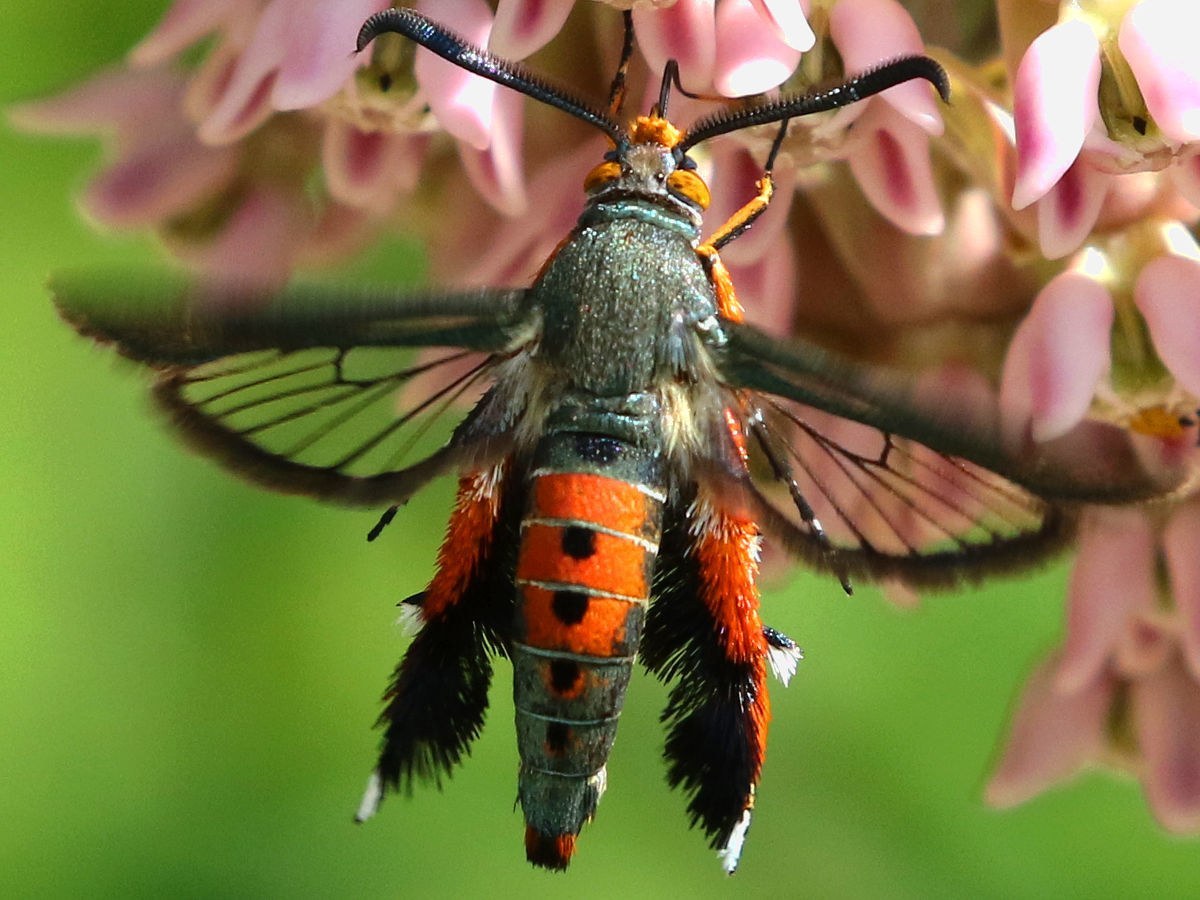
Squash Vine Borer
A day-flying, wasp-mimicking moth whose orange fuzzy hind legs and metallic wings make it easy to mistake for a wasp as it darts around squash vines.
moth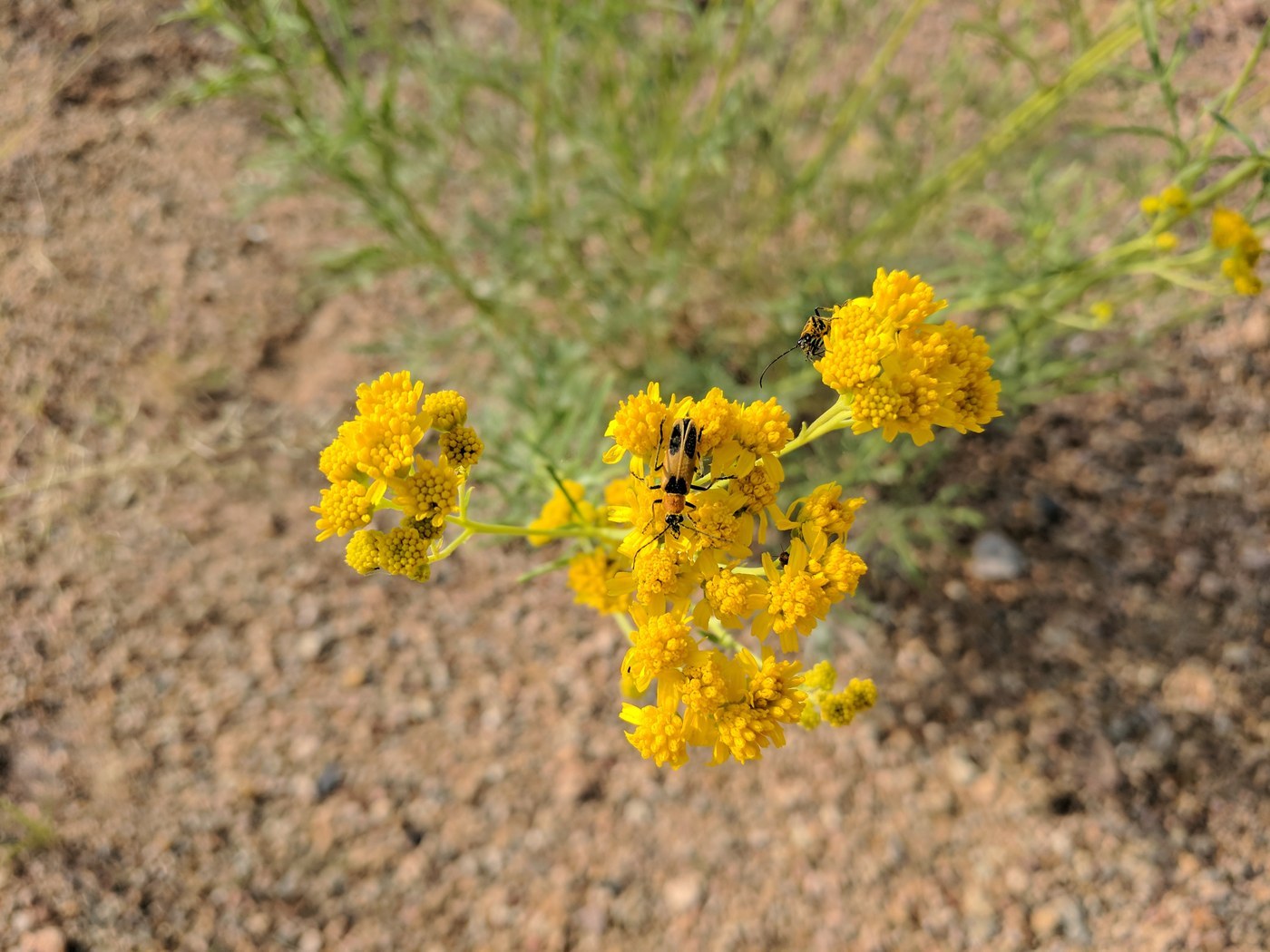
Soldier Beetle
A slender, soft-bodied beetle in orange and black or yellow and brown, often seen clustered on late-summer flowers where it feeds on pollen, nectar, and small insects.
beetle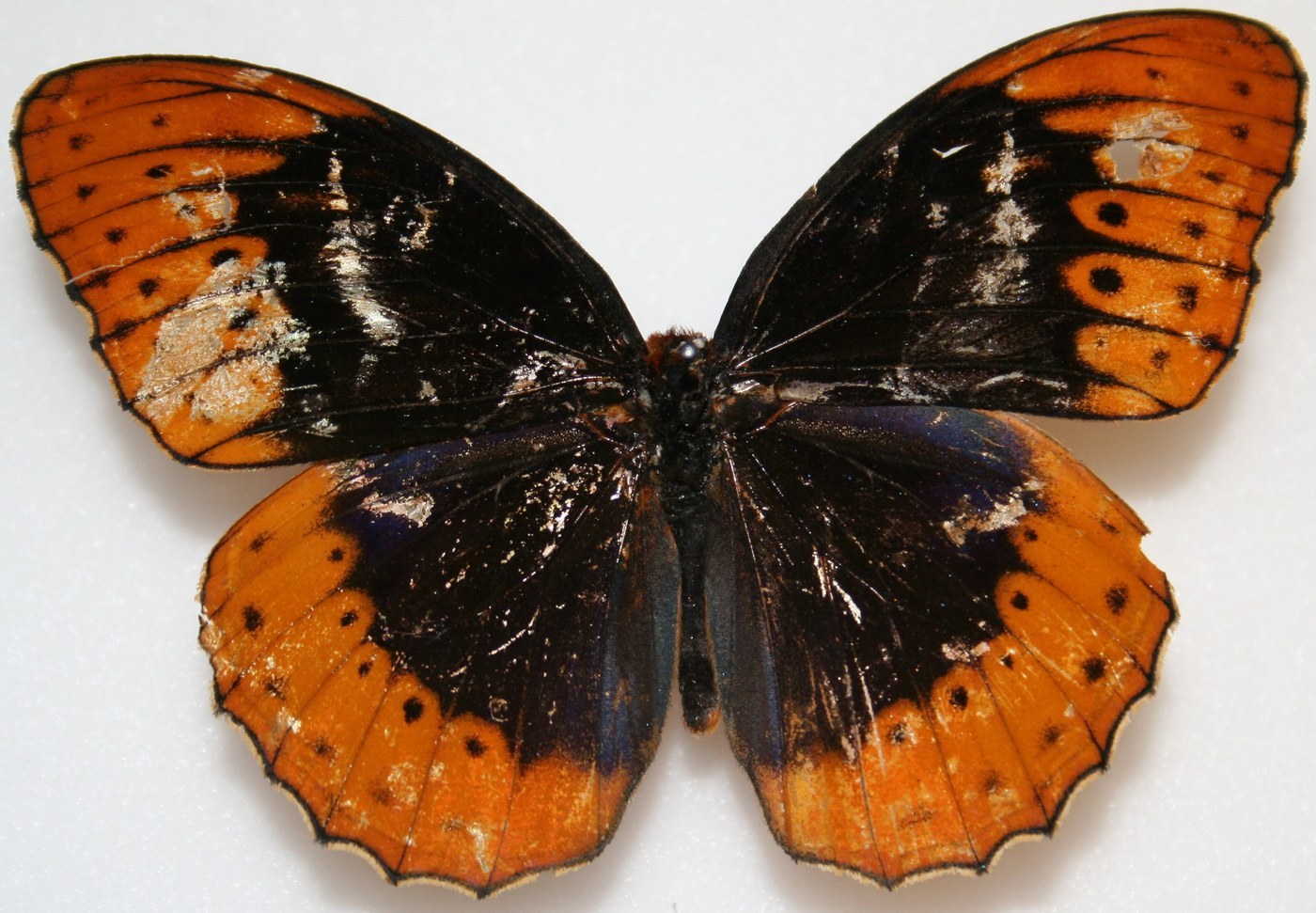
Diana Fritillary
A large southern Appalachian fritillary famous for extreme sexual dimorphism — males are burnt-orange and black while females are an iridescent blue-black that mimics a distasteful swallowtail.
butterfly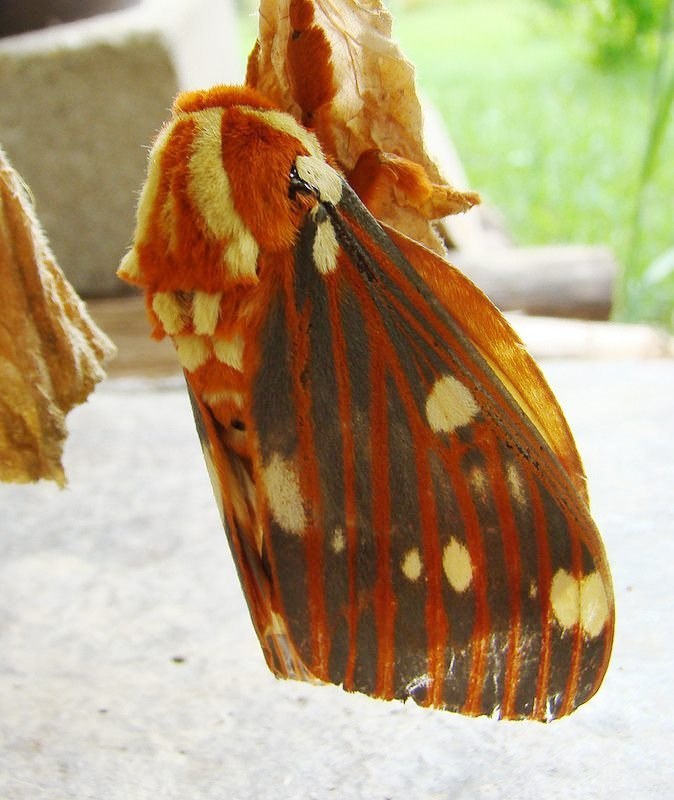
Regal Moth (Hickory Horned Devil)
One of the largest moths in North America, with orange-red and gray-veined wings on the adult, best known for its enormous, formidable-looking caterpillar, the hickory horned devil, a blue-green giant bristling with long orange spines.
mothPipevine Swallowtail Caterpillar
A dark, velvety caterpillar studded with fleshy orange-tipped tubercles that feeds exclusively on pipevine, storing its host plant's chemistry for later defense as a butterfly.
caterpillar-larva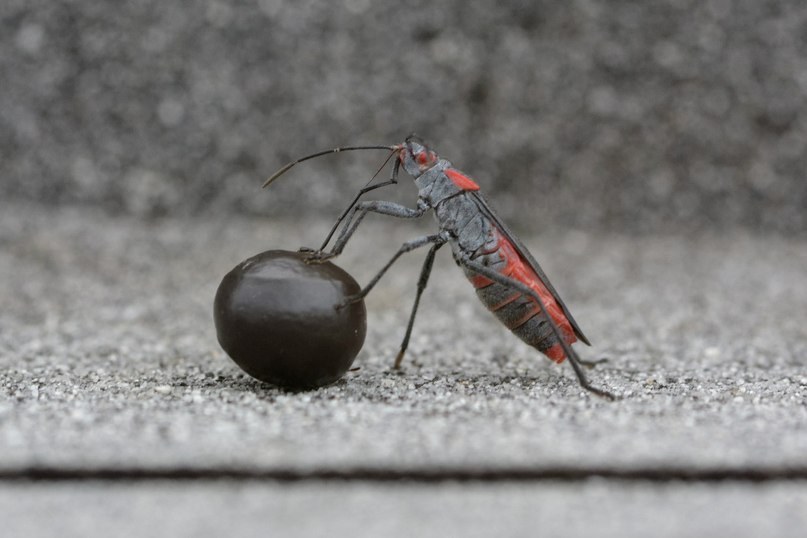
Red-Shouldered Bug
A dark, flattened true bug with a bright red-orange collar across its shoulders, often seen clustering beneath goldenrain trees and other soapberry-family hosts.
true-bug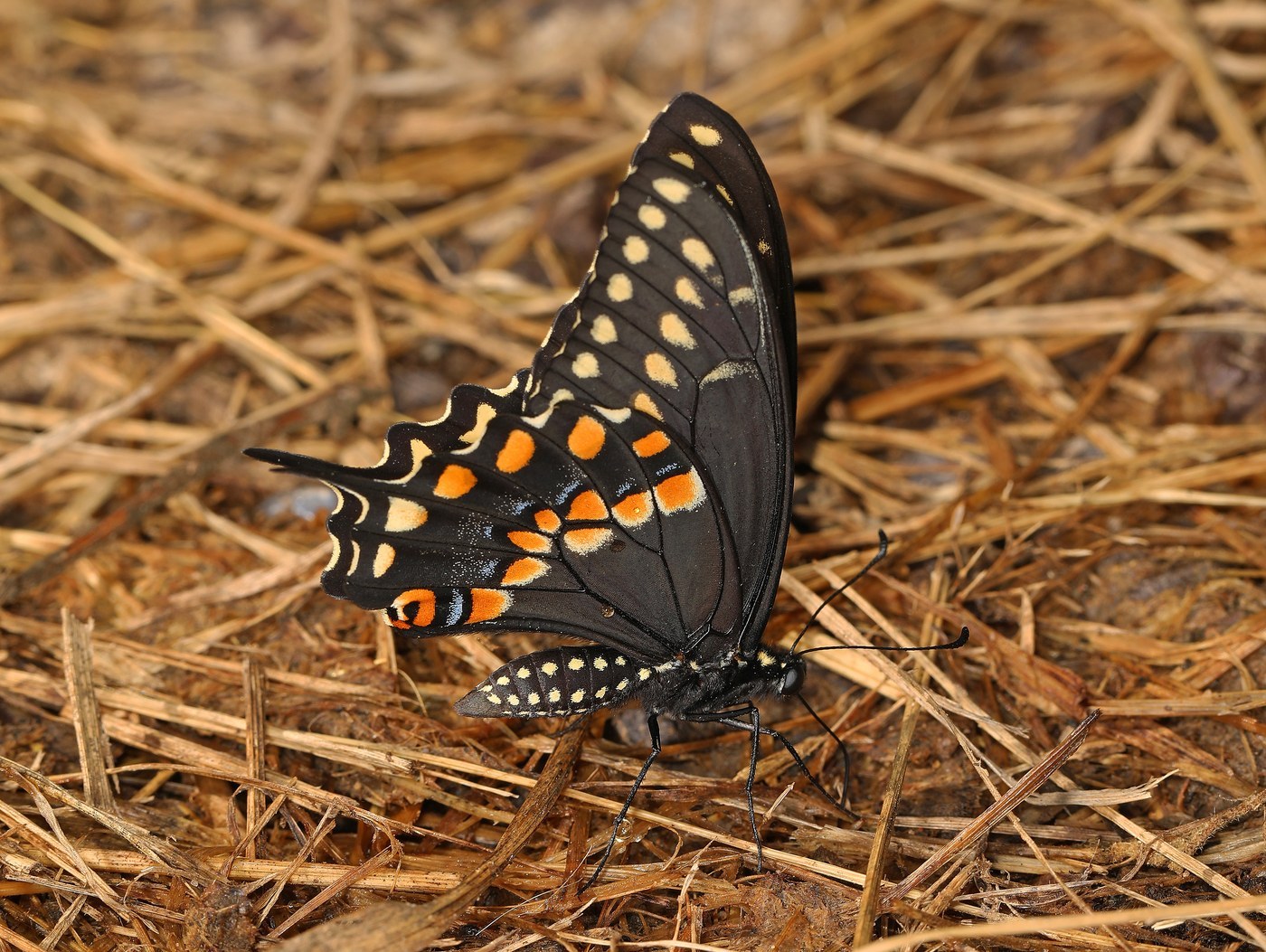
Parsley Worm
Banded in green, black, and yellow, the parsley worm rears up and flashes a bright orange, forked scent gland when disturbed, a signature defense of black swallowtail caterpillars.
caterpillar-larva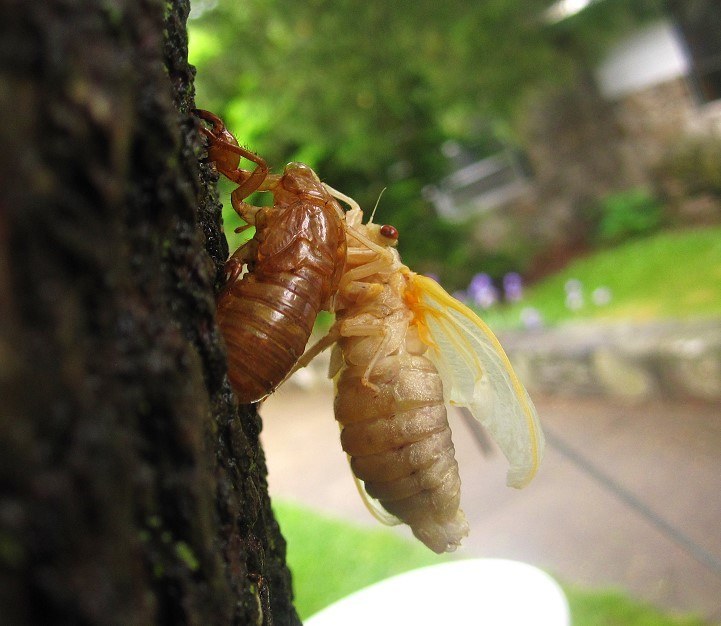
Periodical Cicada
A black-bodied cicada with striking red eyes and orange-veined wings, famous for emerging in massive, synchronized broods after spending 13 or 17 years developing underground.
true-bug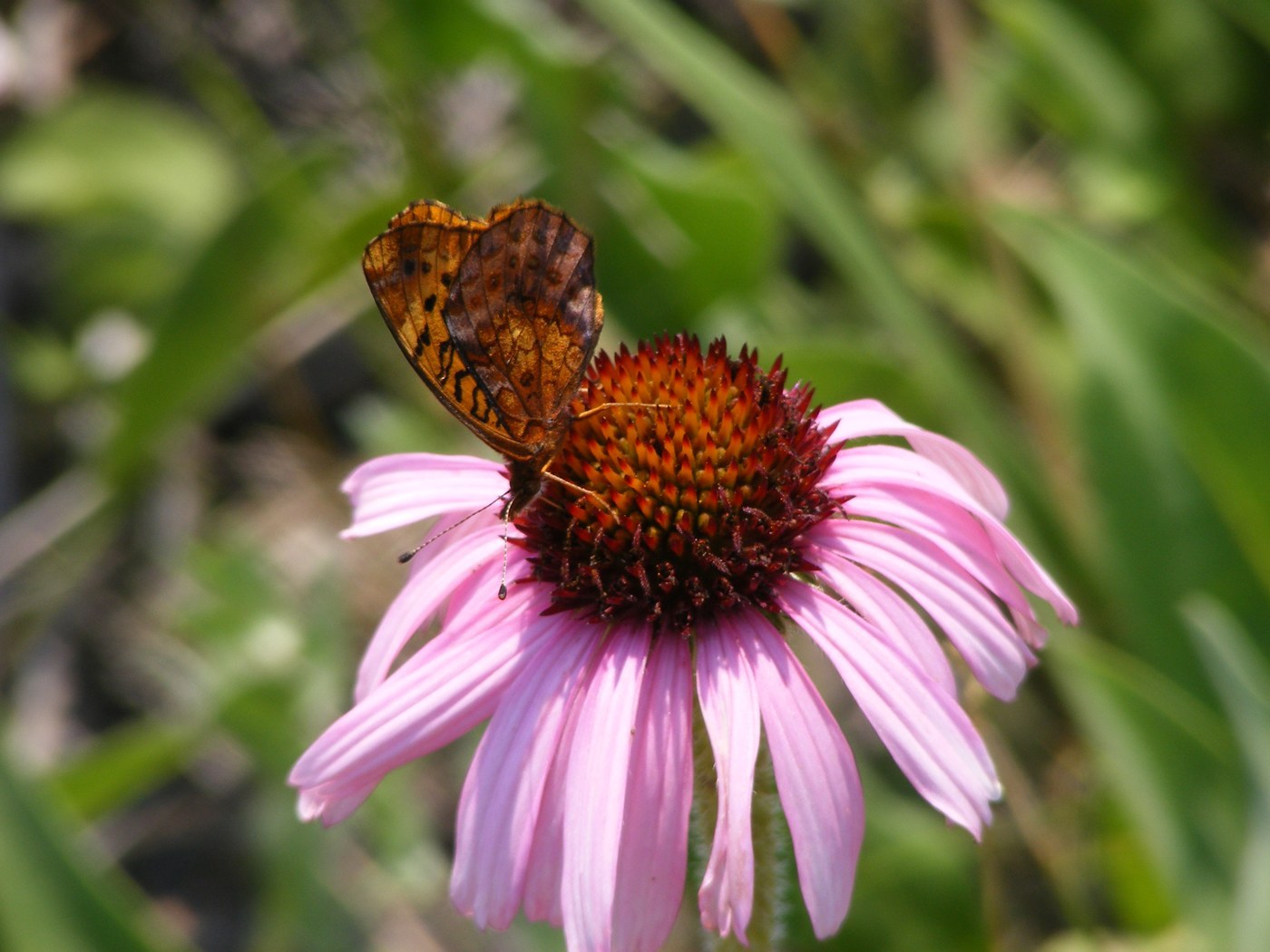
Meadow Fritillary
A small, fast-flying orange-and-black fritillary of open grassy fields, easily told from its larger cousins by its lack of silvery spots on the underside of the hindwing.
butterfly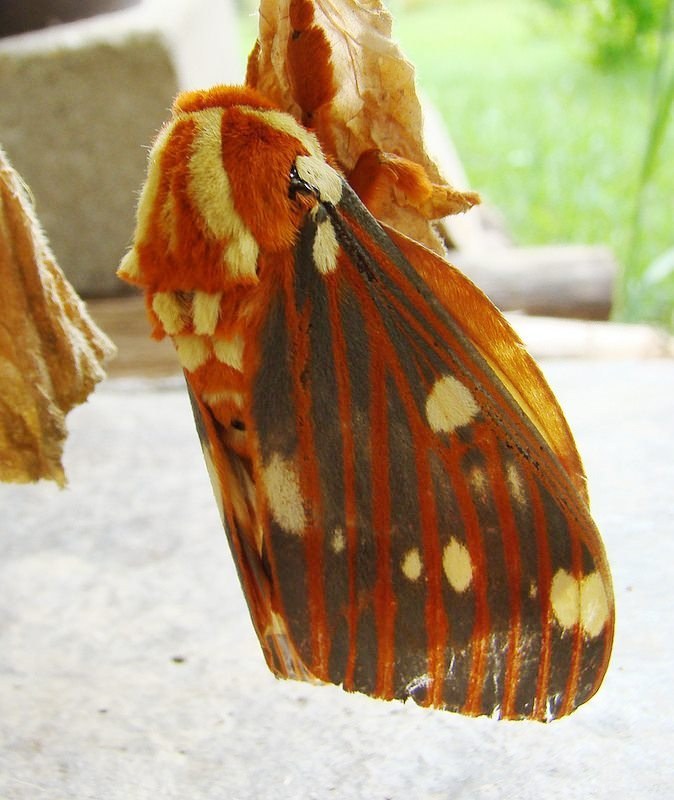
Hickory Horned Devil
An enormous, blue-green caterpillar armed with long, curved orange-red horns tipped in black, giving it a fearsome dragon-like appearance despite being completely harmless.
caterpillar-larva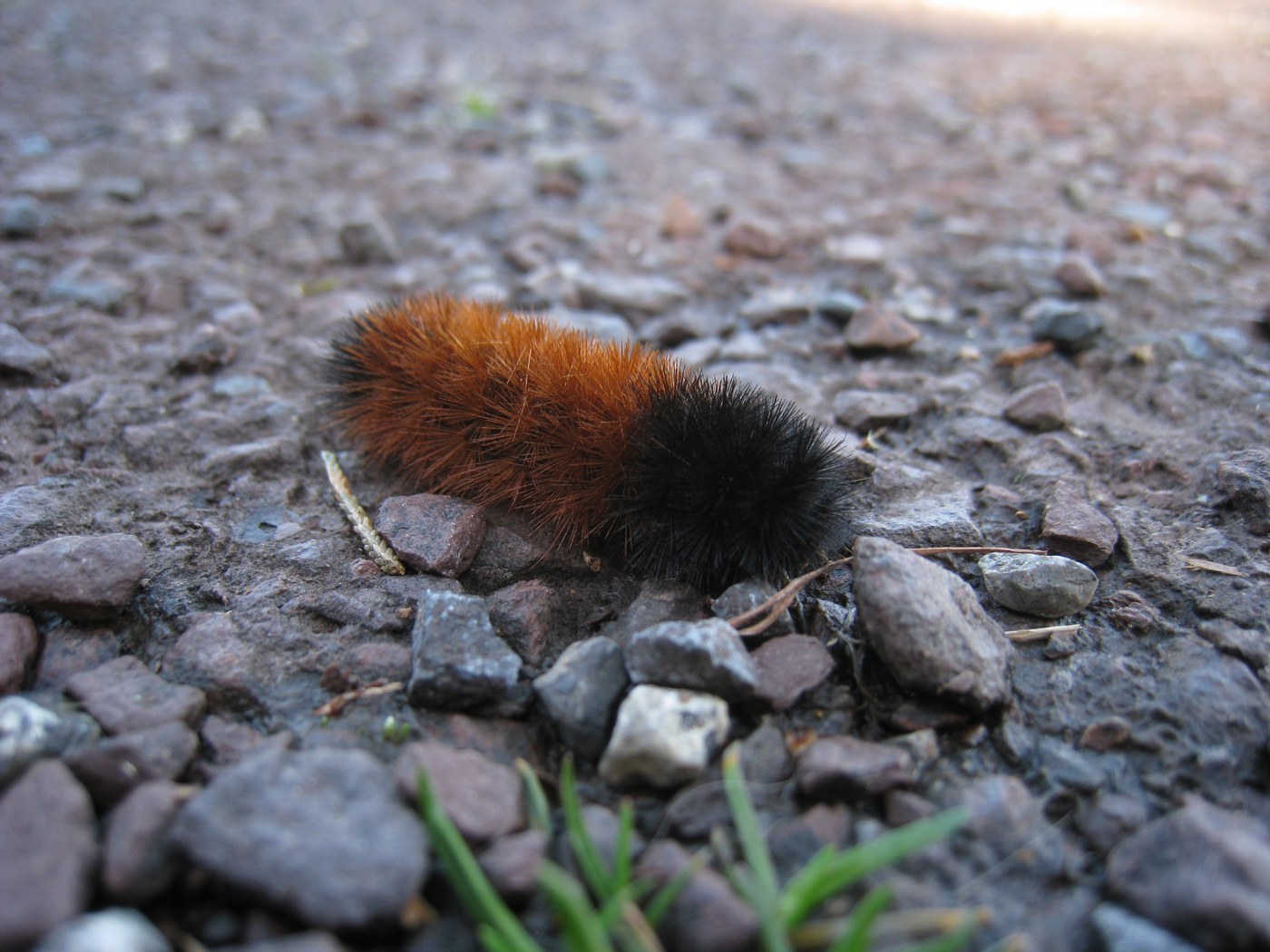
Woolly Bear Caterpillar
A densely bristled caterpillar banded in black at both ends with a rusty-orange middle section, famous in folklore for supposedly predicting winter severity and for rolling into a tight ball when touched.
caterpillar-larva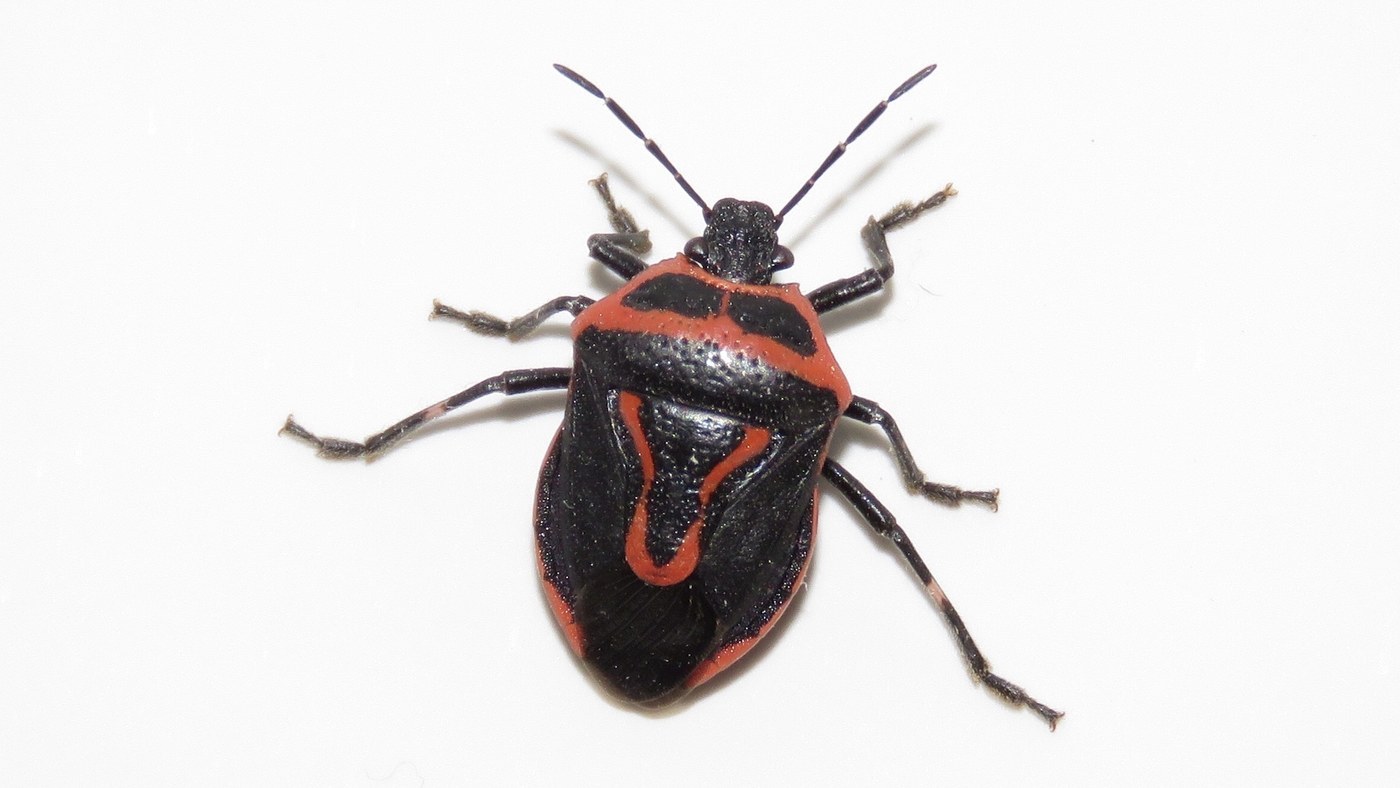
Two-Spotted Stink Bug
A boldly patterned black-and-orange predatory stink bug named for the pair of dark spots on its back, best known for hunting Colorado potato beetle larvae in gardens and fields.
true-bugSmall Tortoiseshell
A vivid orange-red European garden butterfly patterned with black and yellow blocks and a border of blue crescents, one of the most familiar and widely recognized butterflies across its range.
butterfly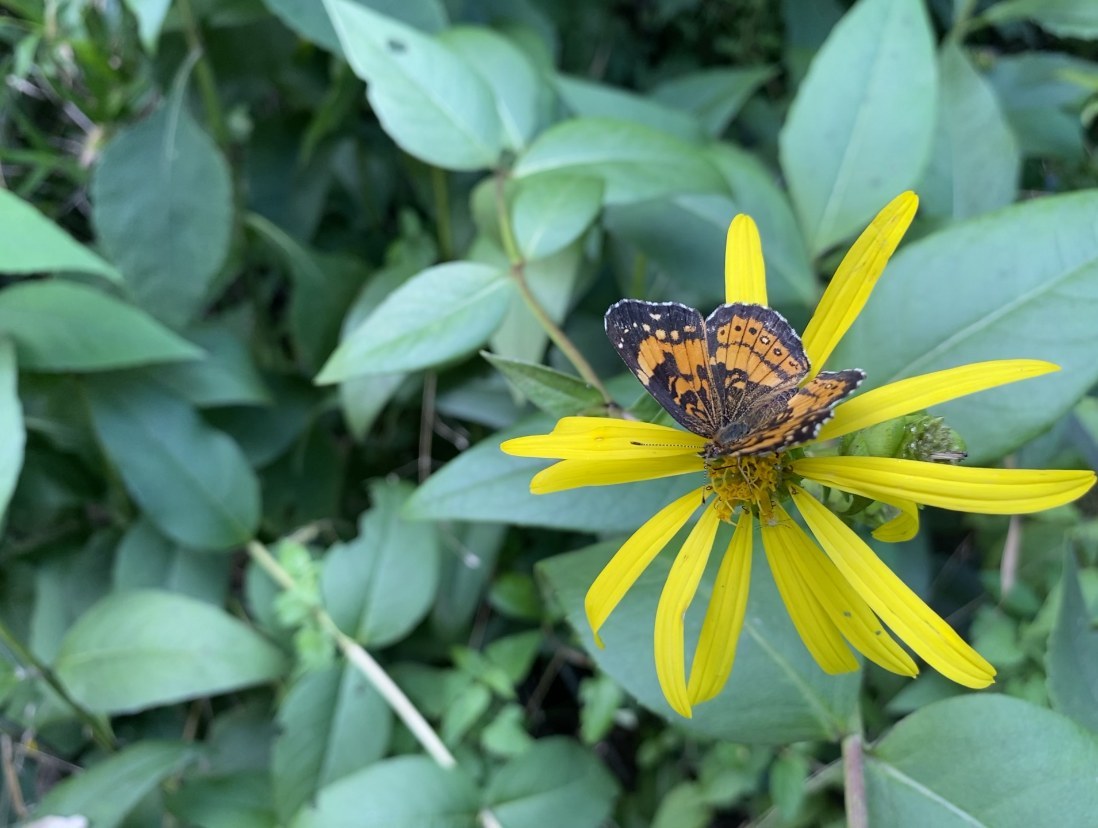
Silvery Checkerspot
An orange-brown checkered butterfly named for the row of small silvery-white crescent spots along the underside hindwing margin, commonly seen nectaring at composite flowers in open habitats.
butterflyPleasing Fungus Beetle
A shiny, smooth-bodied beetle marked with bold red or orange bands on a glossy black background, commonly found feeding on bracket fungi growing on dead or dying hardwood trees.
beetle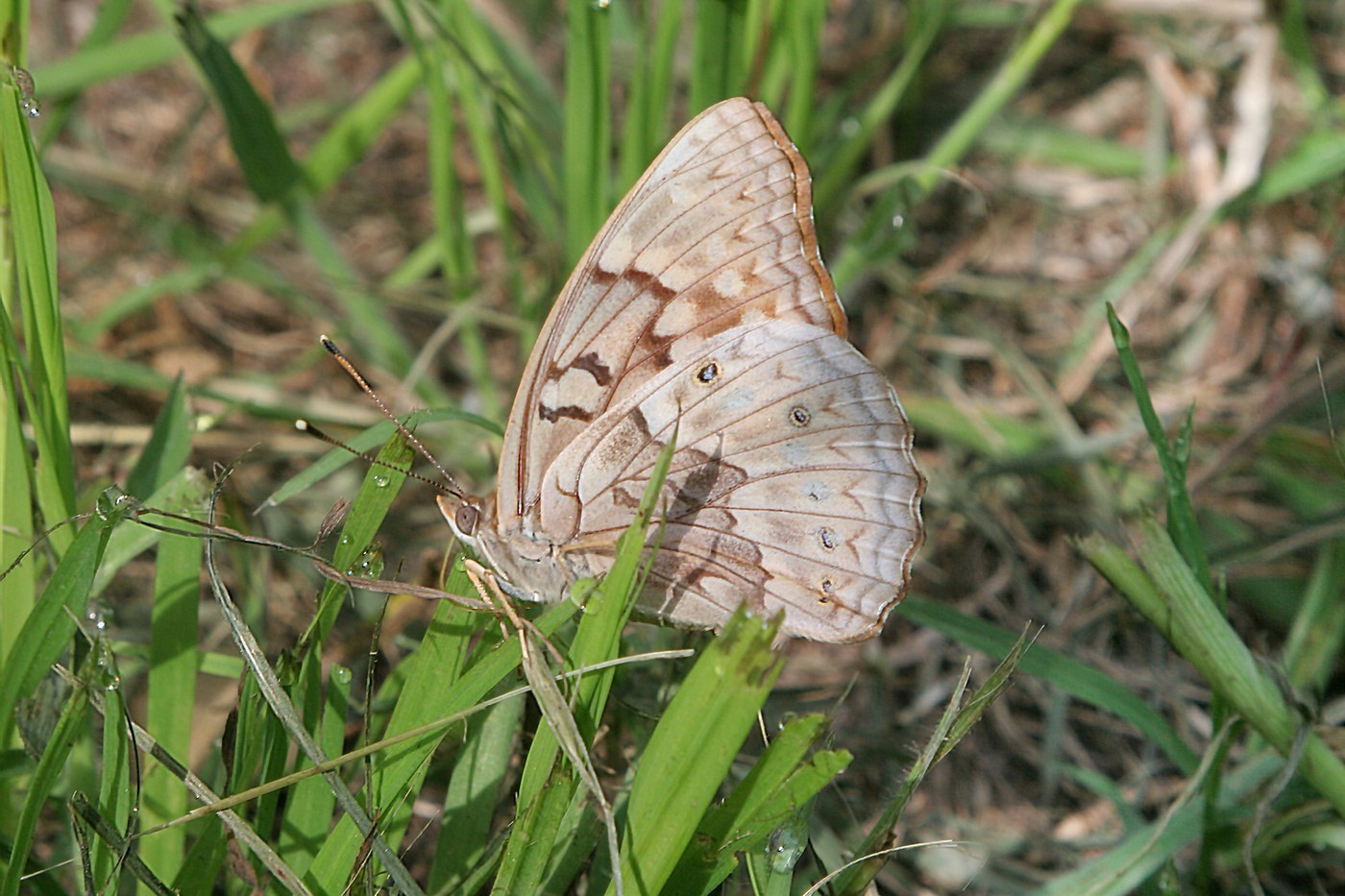
Tawny Emperor
A warm orange-brown woodland butterfly, close relative of the Hackberry Emperor, best distinguished by its lack of a forewing eyespot and its habit of feeding on sap and dung rather than flowers.
butterfly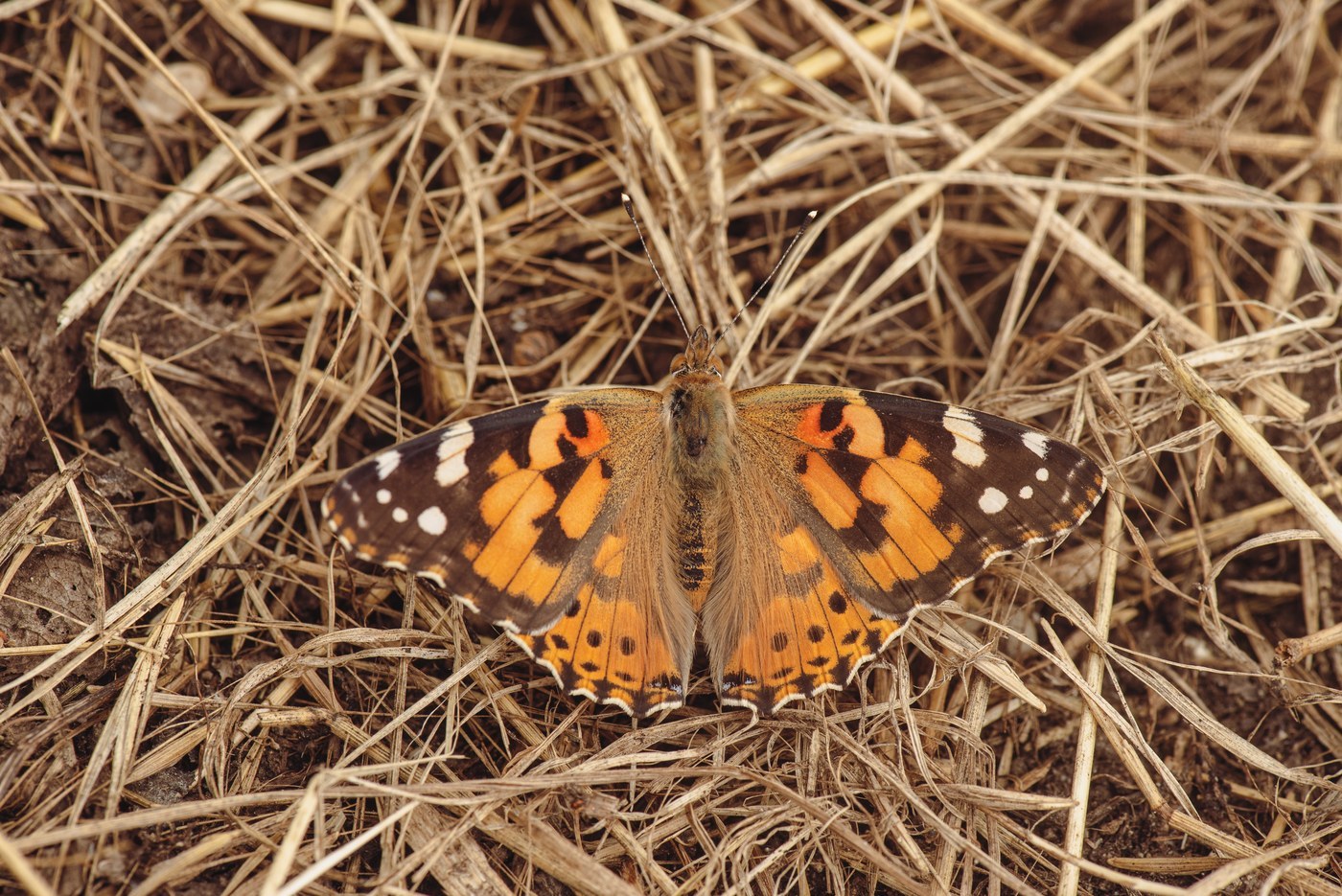
Painted Lady
One of the most widely distributed butterflies on Earth, recognized by its orange-and-black mosaic wings with white-spotted black tips and its habit of long-distance migration across continents.
butterfly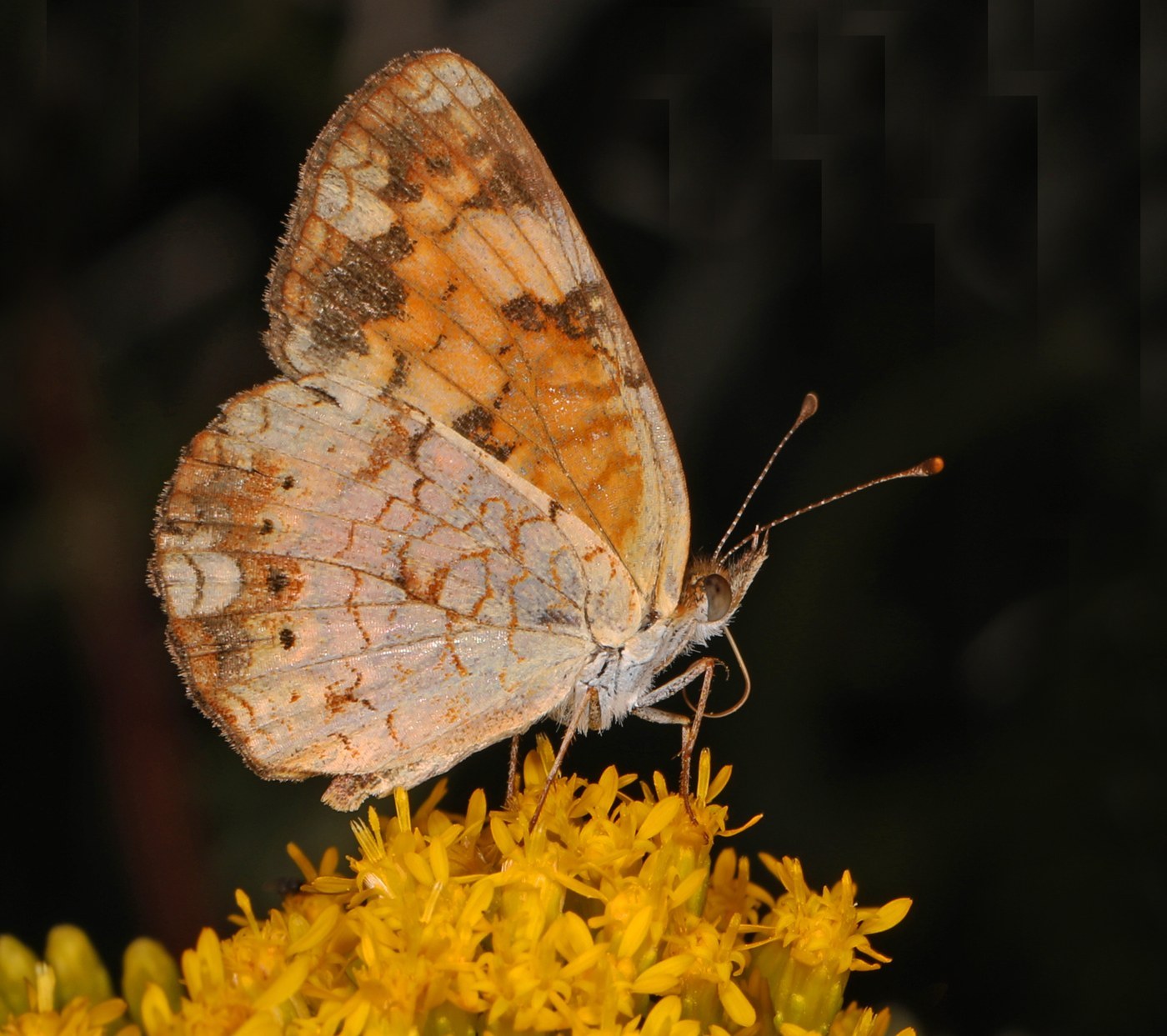
Pearl Crescent
A small, orange-and-black checkered butterfly that is one of the most abundant and widespread species in open fields across the continent, easily recognized by its crescent-shaped pale marking on the hindwing underside.
butterfly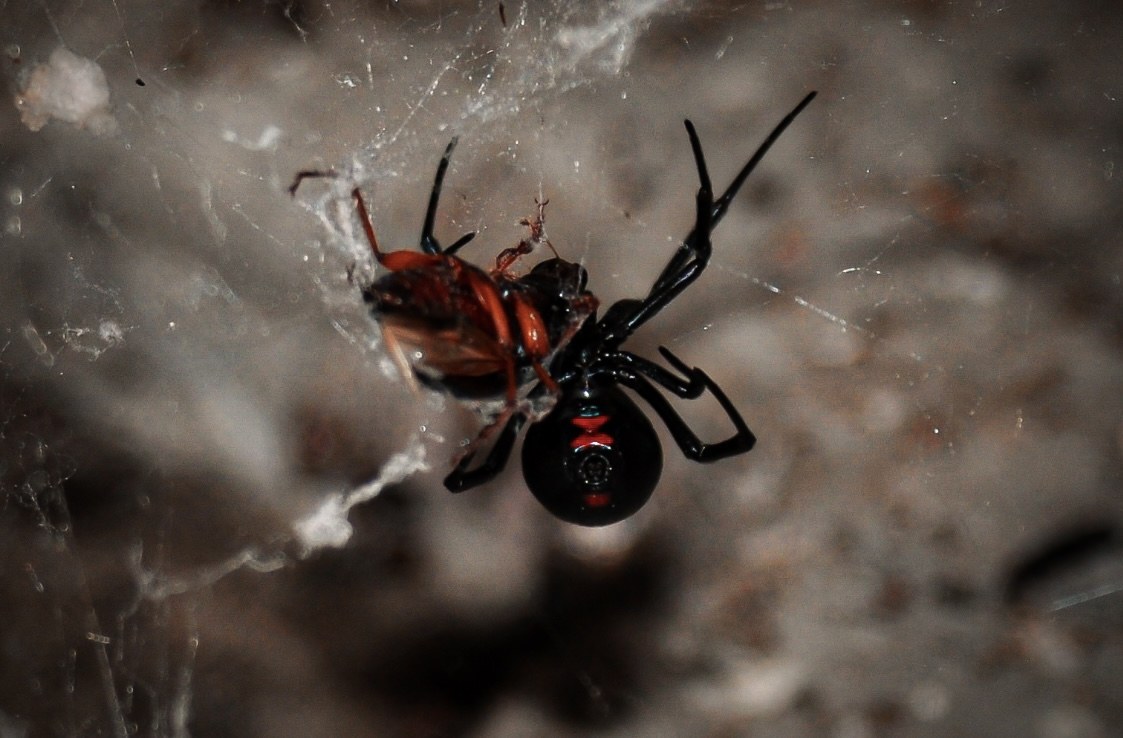
Black Widow Spider
A glossy black, globe-bodied spider best known for the red or orange hourglass marking on the underside of the female's rounded abdomen, usually found tucked in a tangled web near ground level.
spider