
Bug Encyclopedia
Search and identify bugs & insects — beetles, butterflies, moths, ants, bees, spiders and more — with size, habitat, danger, behavior, and how to tell them apart.
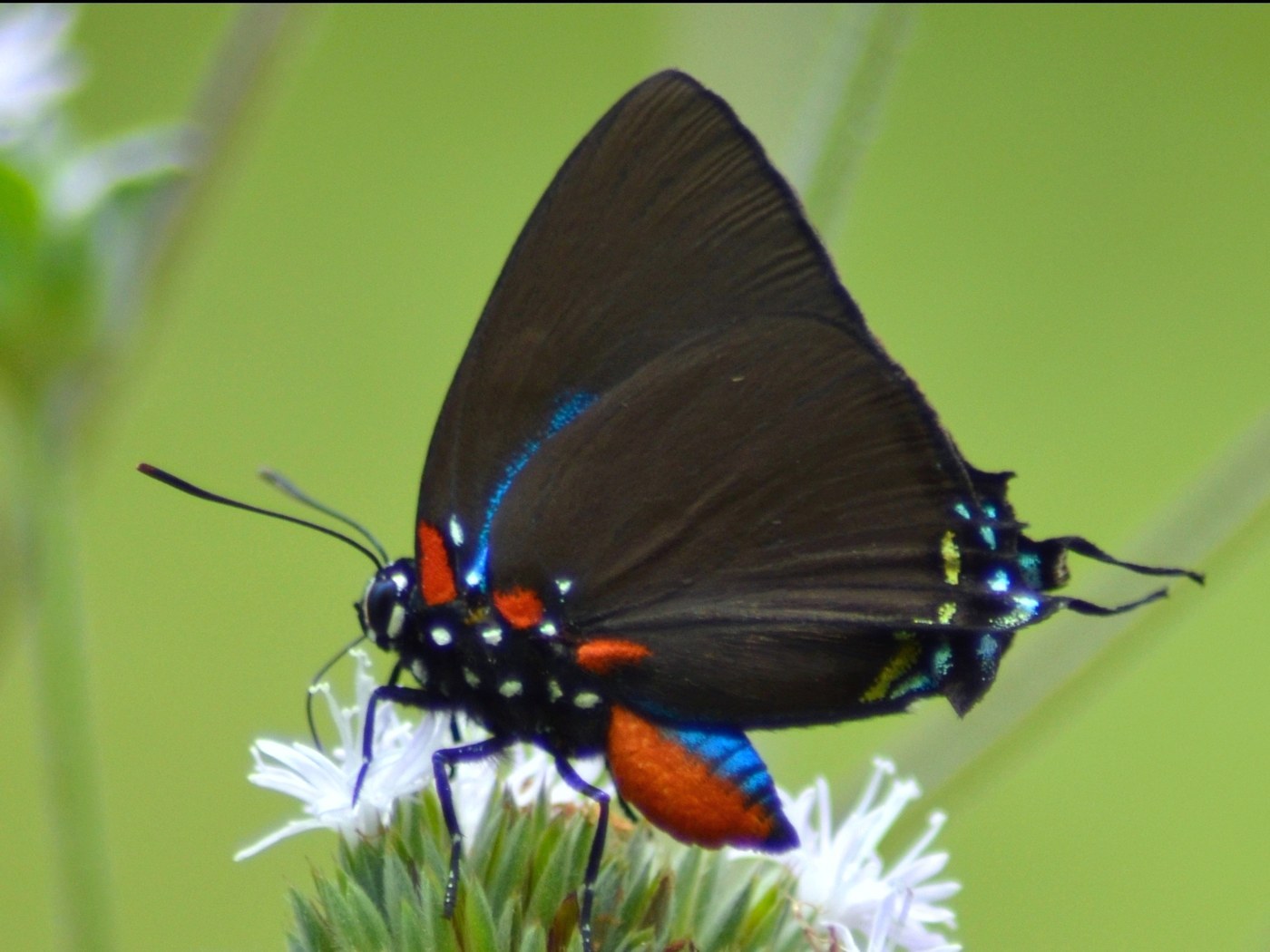
Great Purple Hairstreak
The largest and most iridescent hairstreak in North America, with brilliant blue-green upperwings, red-orange spots on the body and wing base, and long twin tails, its caterpillars feeding on parasitic mistletoe clumps in host trees.
butterfly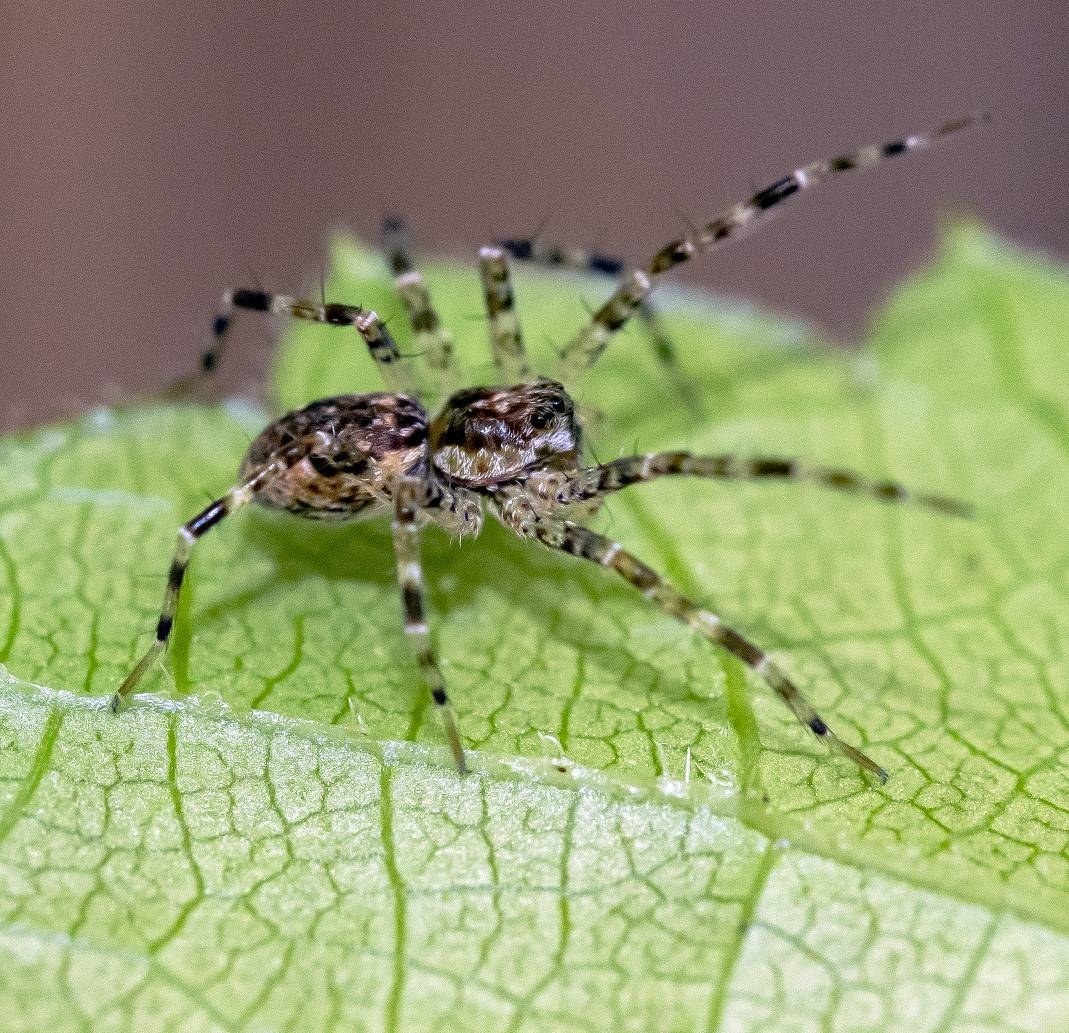
Fishing Spider
One of the largest spiders in North America, the fishing spider can walk on water, dive beneath the surface to escape danger, and ambush small fish and tadpoles with its front legs from the water's edge.
spider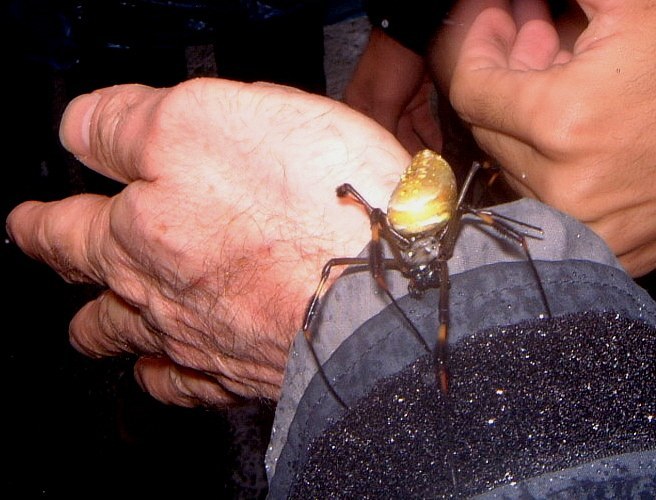
Banana Spider
"Banana spider" is a folk name applied inconsistently across the Americas, but in the southeastern United States it most often refers to the large, golden-silked orb weaver commonly seen spanning gaps between trees along shaded trails.
spider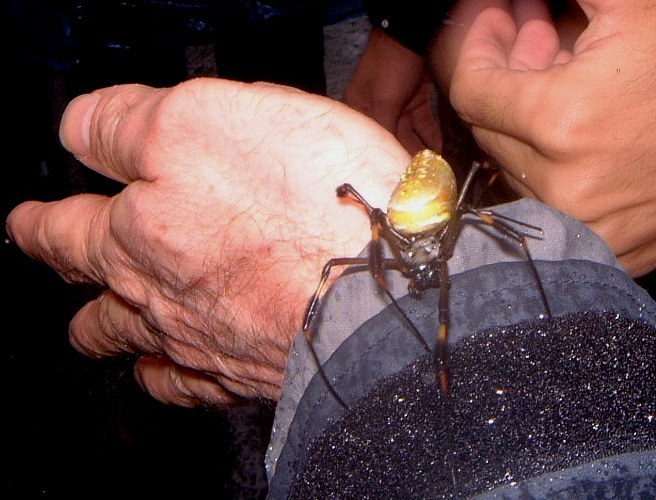
Golden Silk Orb Weaver
Suspended in a massive, glinting web strung between trees along a forest trail, the golden silk orb weaver is one of the largest and most striking web-building spiders in the Americas, spinning silk with a distinctive yellow-gold sheen.
spider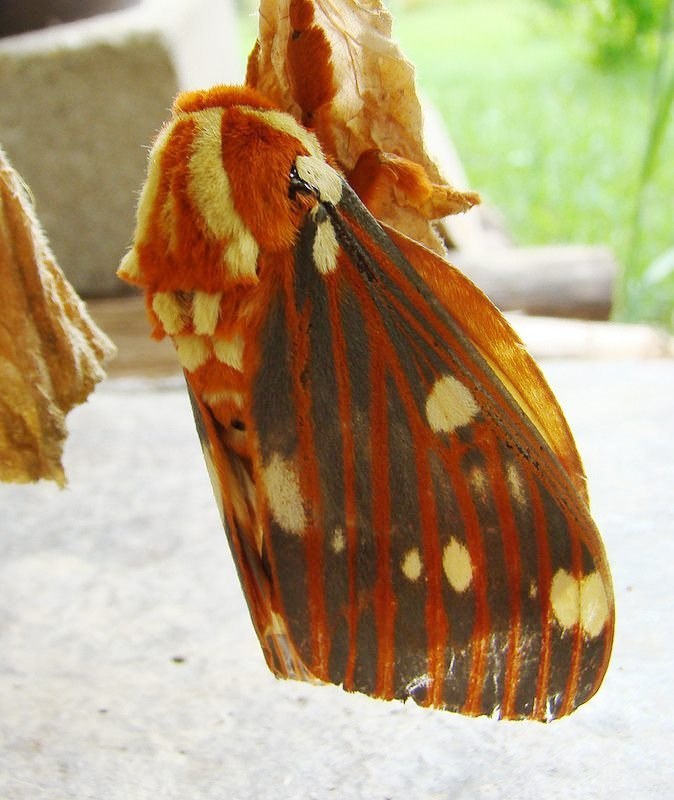
Regal Moth (Hickory Horned Devil)
One of the largest moths in North America, with orange-red and gray-veined wings on the adult, best known for its enormous, formidable-looking caterpillar, the hickory horned devil, a blue-green giant bristling with long orange spines.
moth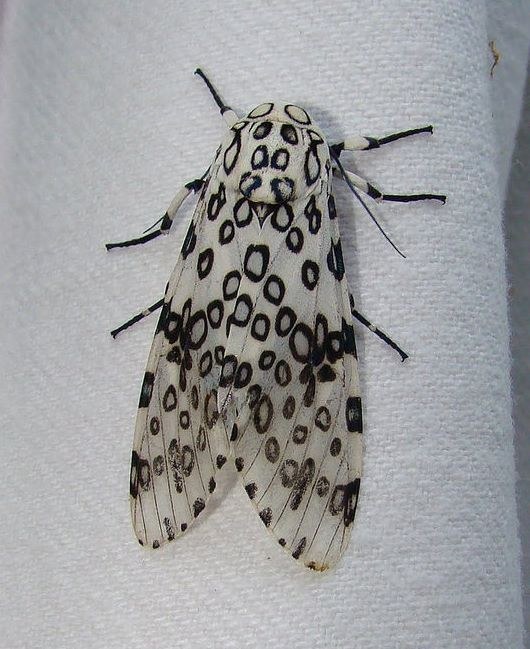
Giant Leopard Moth
A striking white moth patterned with bold, hollow black rings and dots resembling leopard spots, revealing an iridescent blue-black abdomen marked with orange when its wings part, making it one of the most eye-catching tiger moths in North America.
moth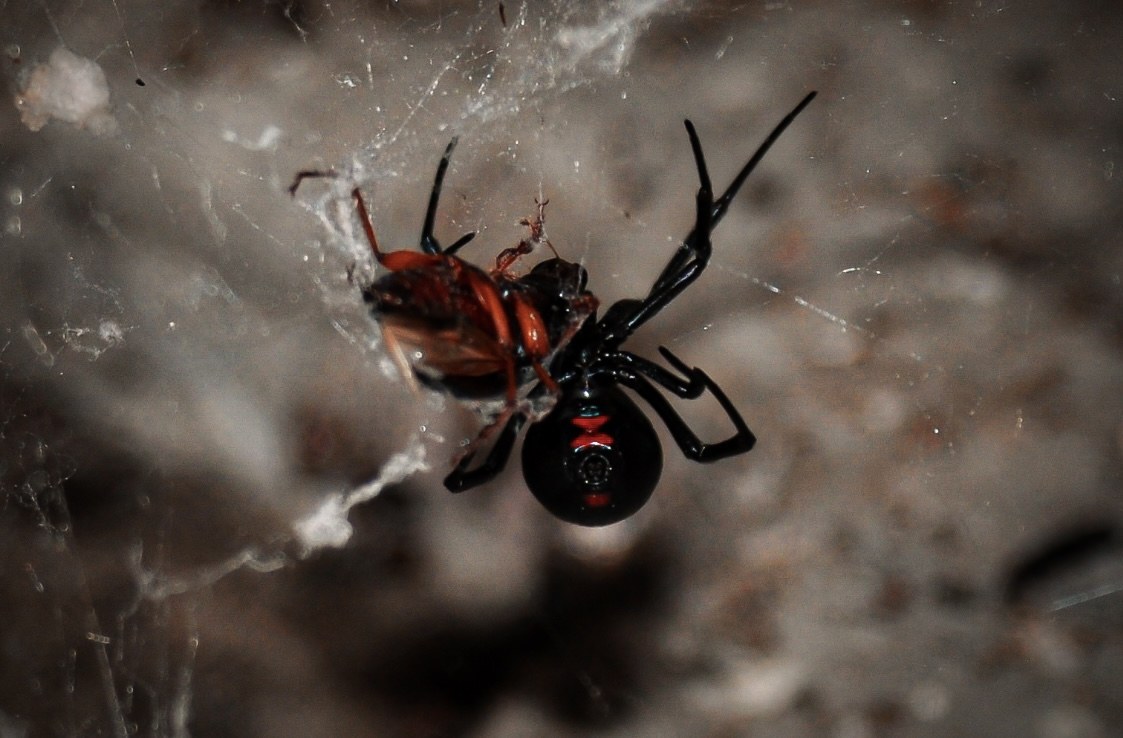
Southern Black Widow
Glossy jet-black and marked with a bright red hourglass on the underside of its rounded abdomen, the southern black widow is one of the most recognizable spiders in North America, typically found tucked into quiet, undisturbed corners rather than out in the open.
spider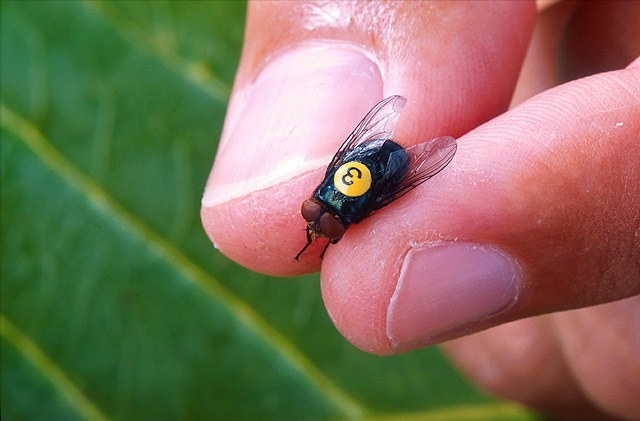
Screwworm Fly
A metallic blue-green blowfly whose larvae are unusual among maggots for feeding on living tissue rather than carrion, drawn to even small open wounds on warm-blooded animals. The species has been the target of one of the most successful large-scale insect eradication campaigns in history across much of North America.
fly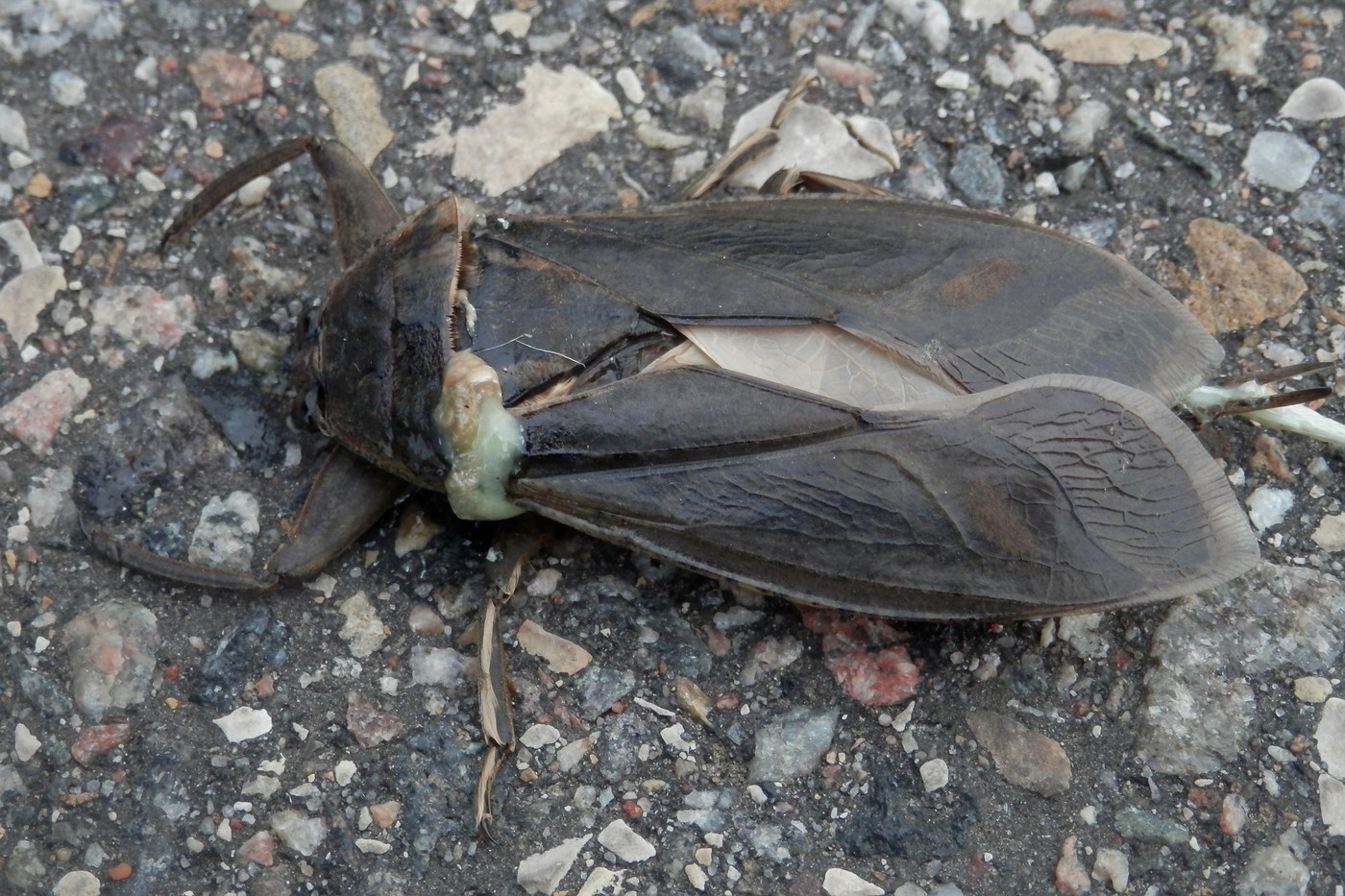
Giant Water Bug
A massive, flattened oval true bug with powerful grasping front legs, the giant water bug is North America's largest aquatic insect and an ambush predator lurking just below the surface of still water.
aquatic-insect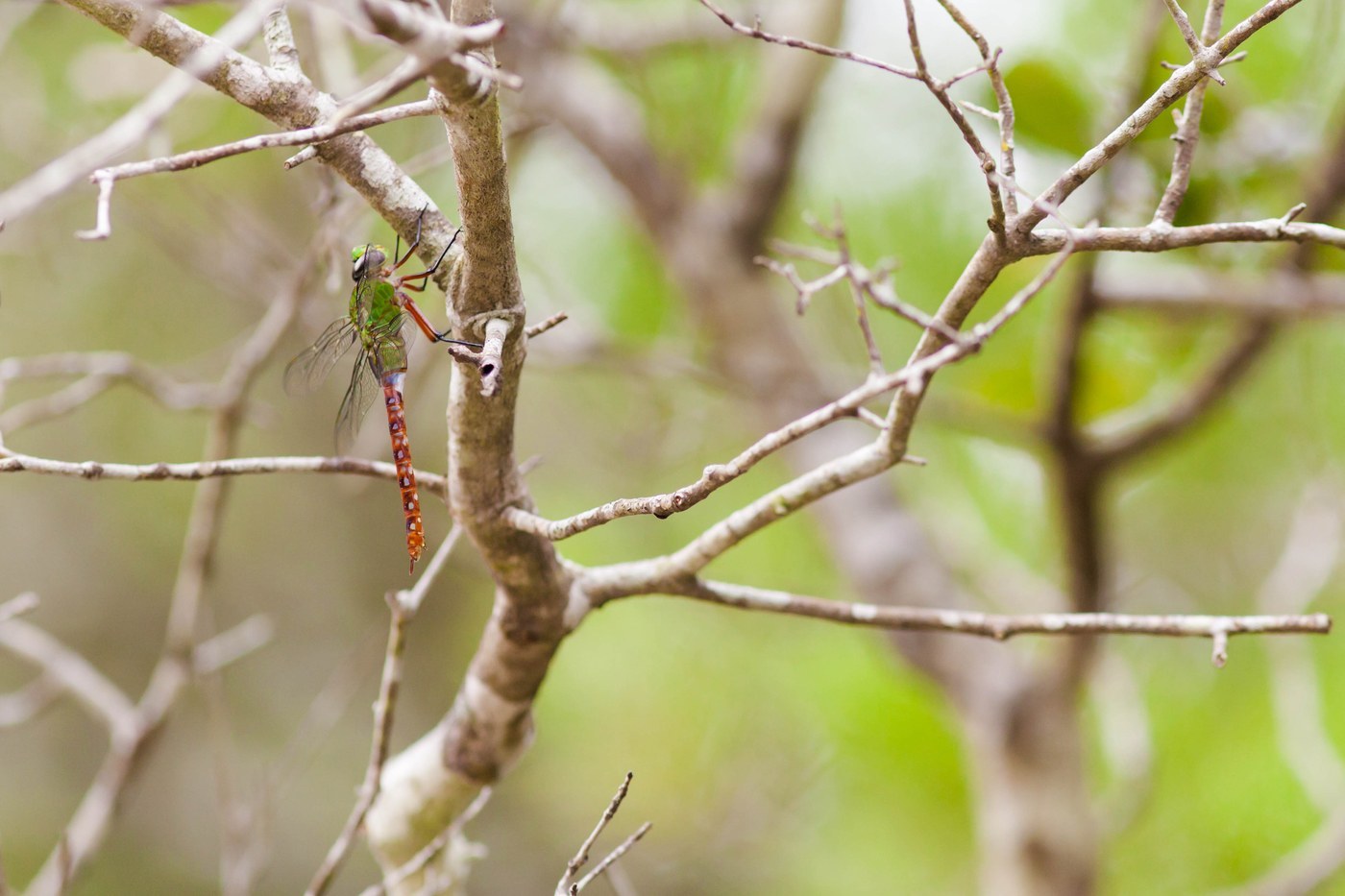
Comet Darner
One of North America's largest and fastest dragonflies, blazing across open water with a fiery red abdomen that gives it its cometary name.
dragonfly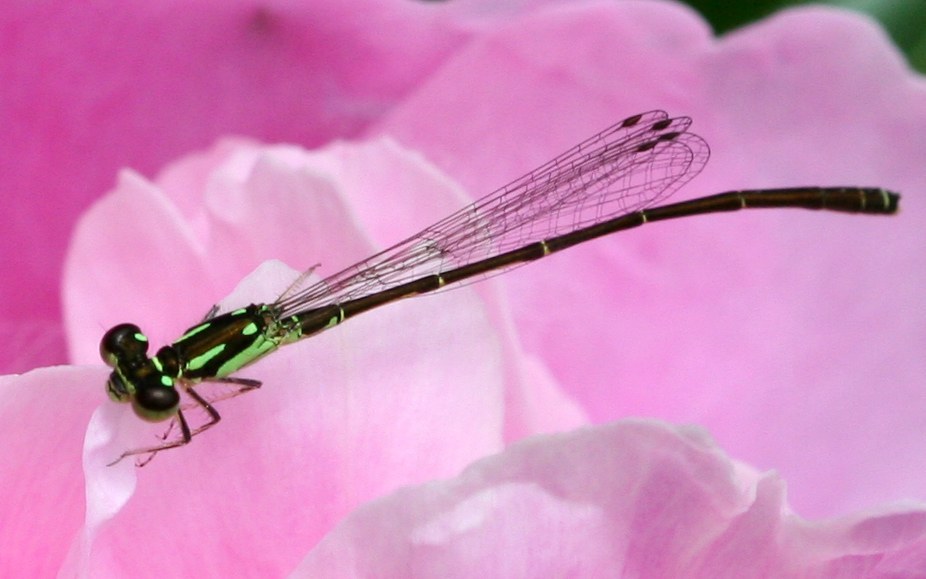
Fragile Forktail
One of North America's smallest and most delicate damselflies, the Fragile Forktail is best known for the pale green exclamation-point mark on top of its thorax.
dragonfly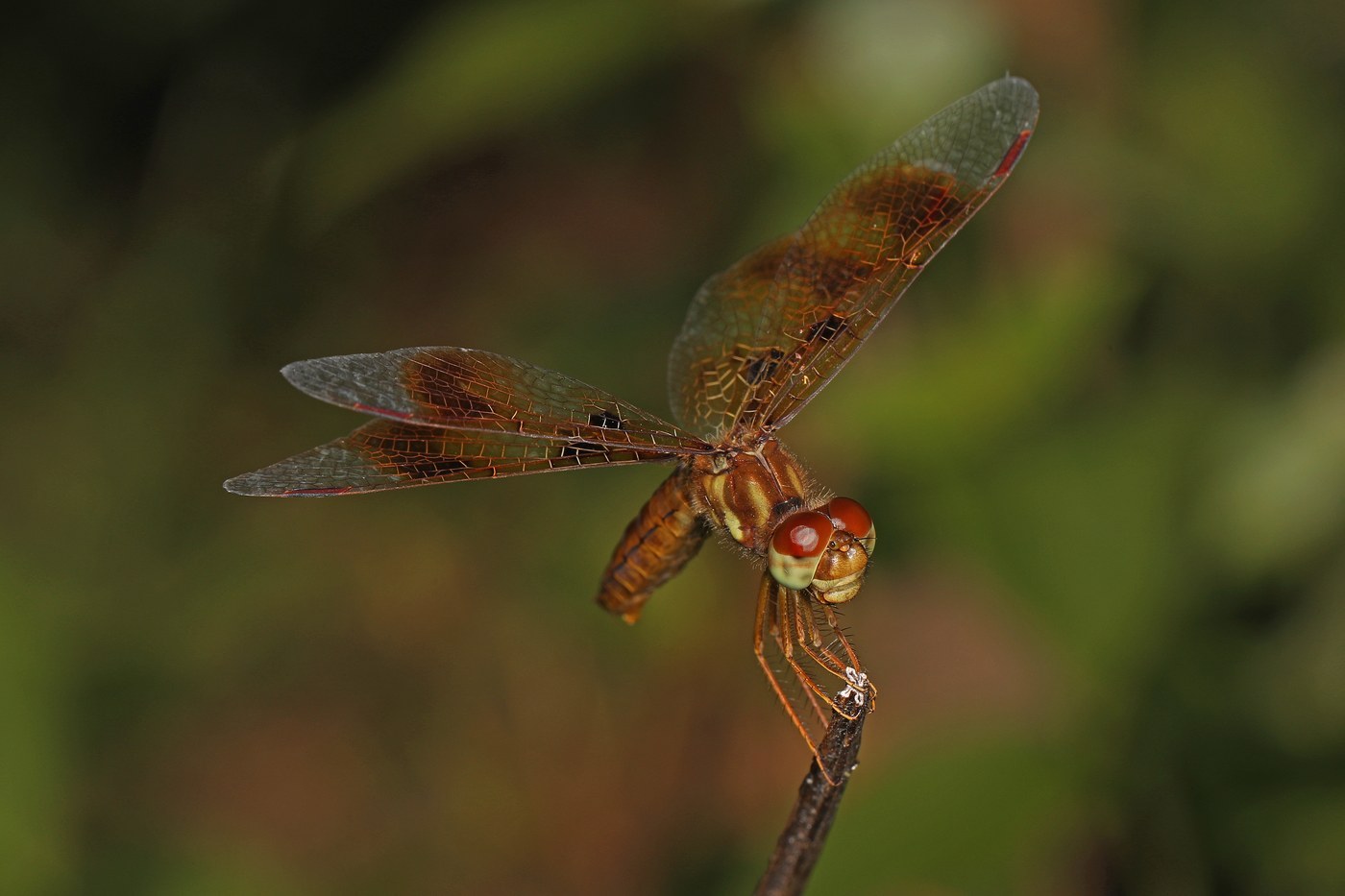
Eastern Amberwing
One of North America's smallest dragonflies, the male Eastern Amberwing glows with solid amber-orange wings and often wags its abdomen in a wasp-like display over floating algae.
dragonflyCecropia Moth Caterpillar
North America's largest native caterpillar, a bulky blue-green giant studded with rows of bright red, yellow, and blue knobby tubercles resembling tiny coral formations.
caterpillar-larvaDragonhunter
North America's largest clubtail, the Dragonhunter is a powerful predator that lives up to its name by capturing and eating other dragonflies, including species nearly its own size.
dragonfly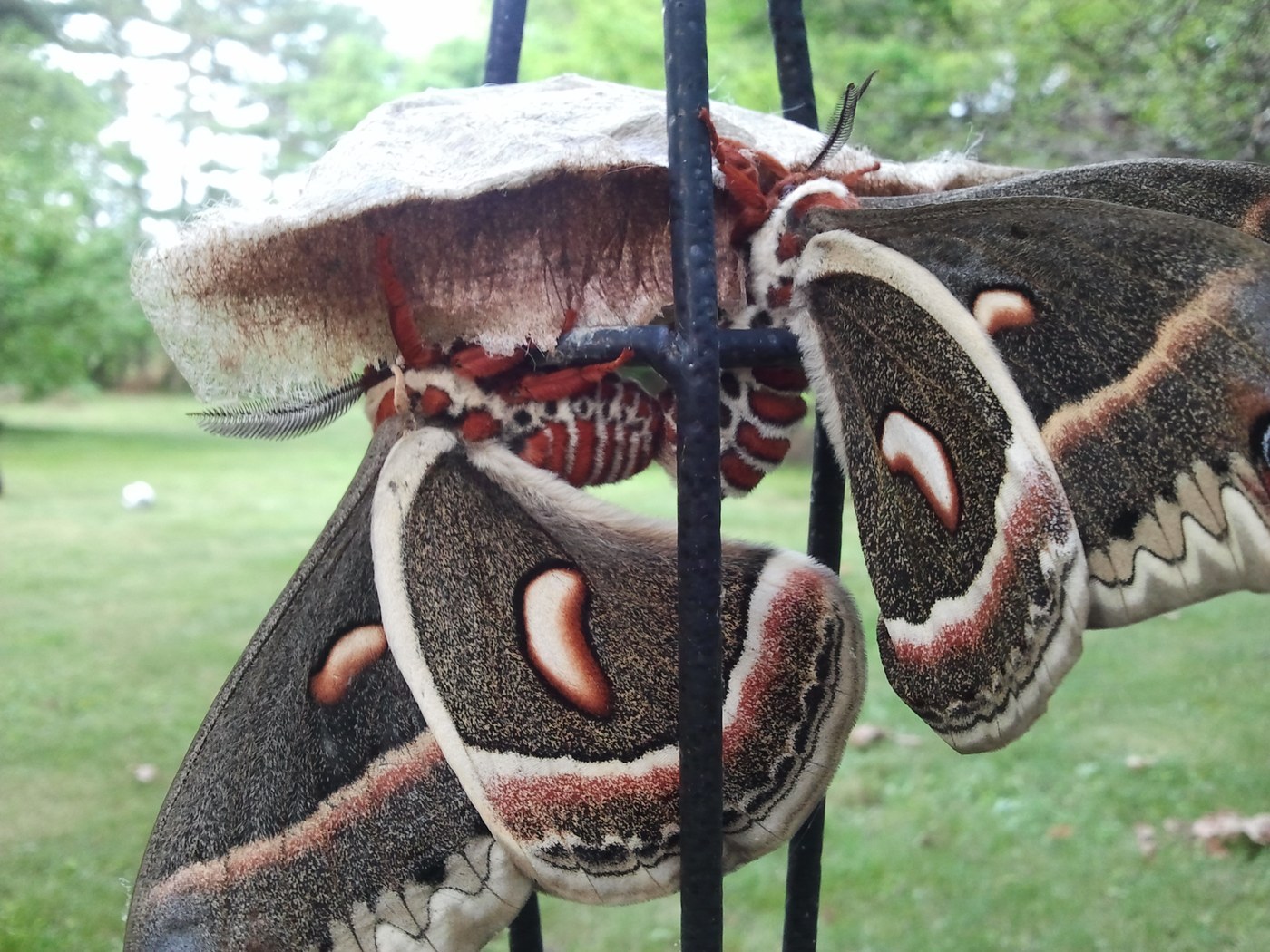
Cecropia Moth
North America's largest native moth, the Cecropia is a spectacular giant silkmoth with reddish-brown wings marked by crescent-shaped white spots and bold bands of red, white, and tan.
mothMonarch Caterpillar
A boldly banded caterpillar in white, yellow, and black stripes, unmistakable as it munches its way through milkweed leaves before transforming into North America's most famous migratory butterfly.
caterpillar-larva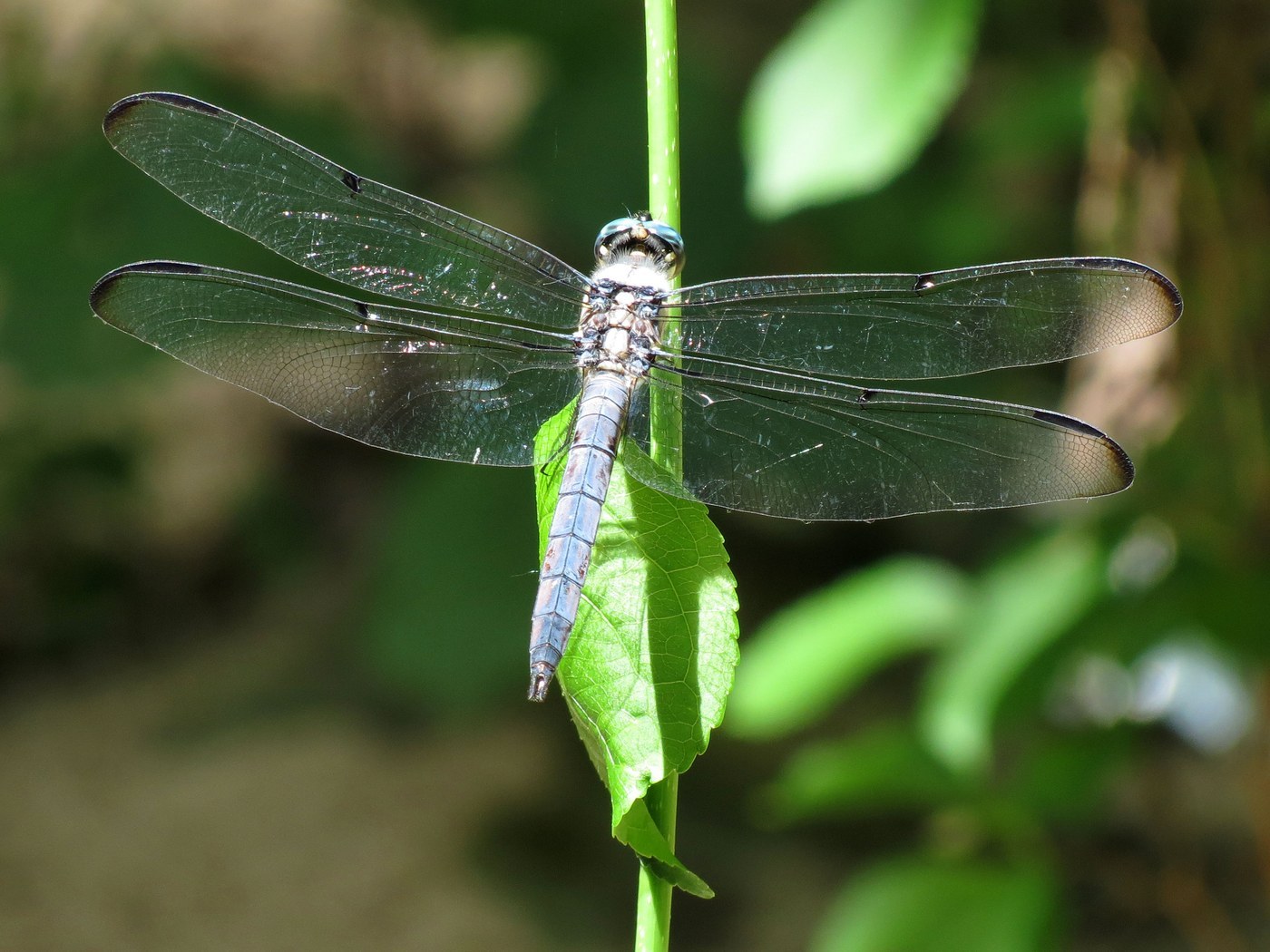
Great Blue Skimmer
One of North America's largest skimmers, the Great Blue Skimmer's powdery sky-blue body and pale green eyes make it stand out as it cruises woodland pond edges.
dragonfly
Luna Moth Caterpillar
A large, plump, apple-green caterpillar with faint yellow side stripes and rows of small red-orange tubercles, the larval form of one of North America's most beautiful giant silk moths.
caterpillar-larvaPurseweb Spider
A secretive, tube-dwelling spider that spends nearly its entire life hidden inside a silk-lined burrow extension camouflaged with soil and debris on the surface.
spider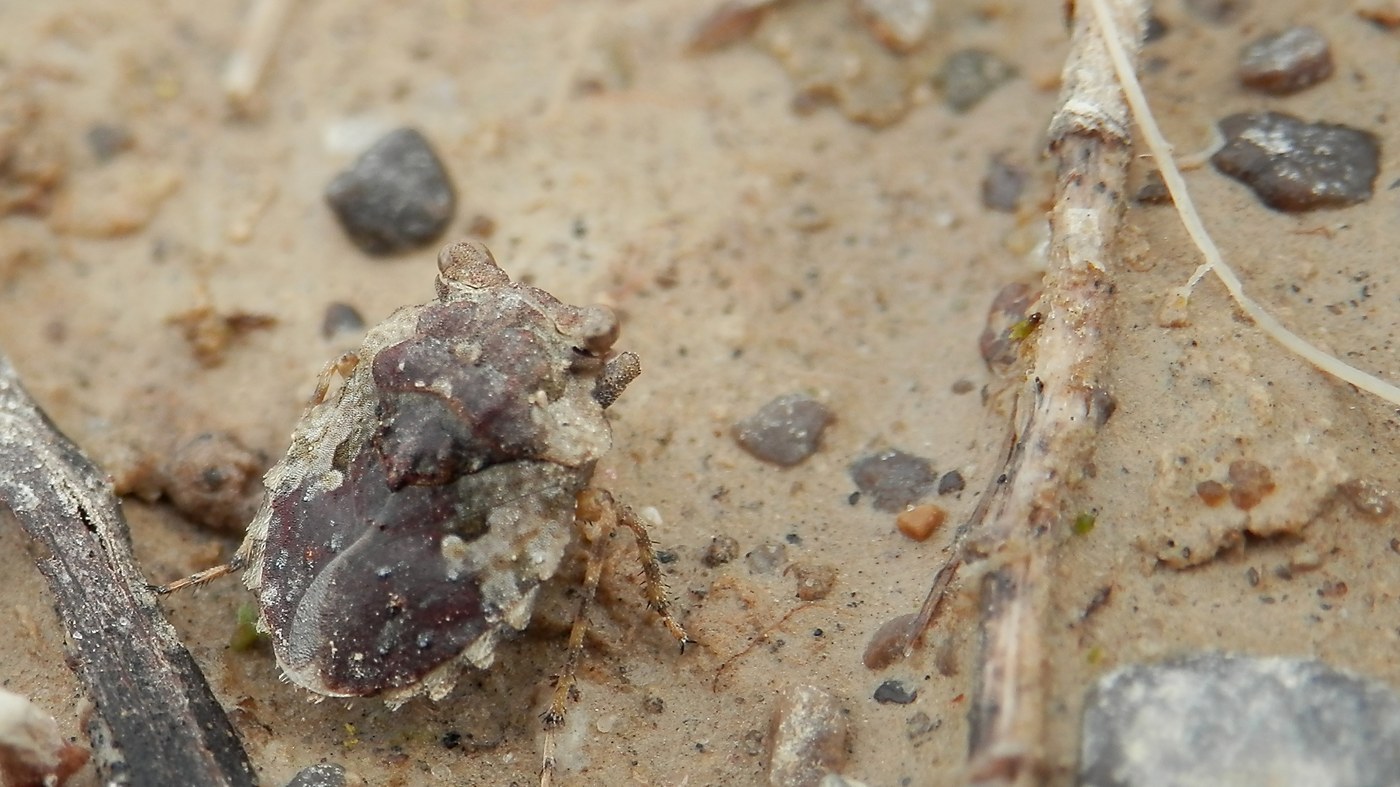
Toad Bug
A squat, warty-looking true bug with bulging eyes and a mottled brown pattern, so named for its uncanny resemblance to a tiny toad as it hops along muddy shorelines.
aquatic-insect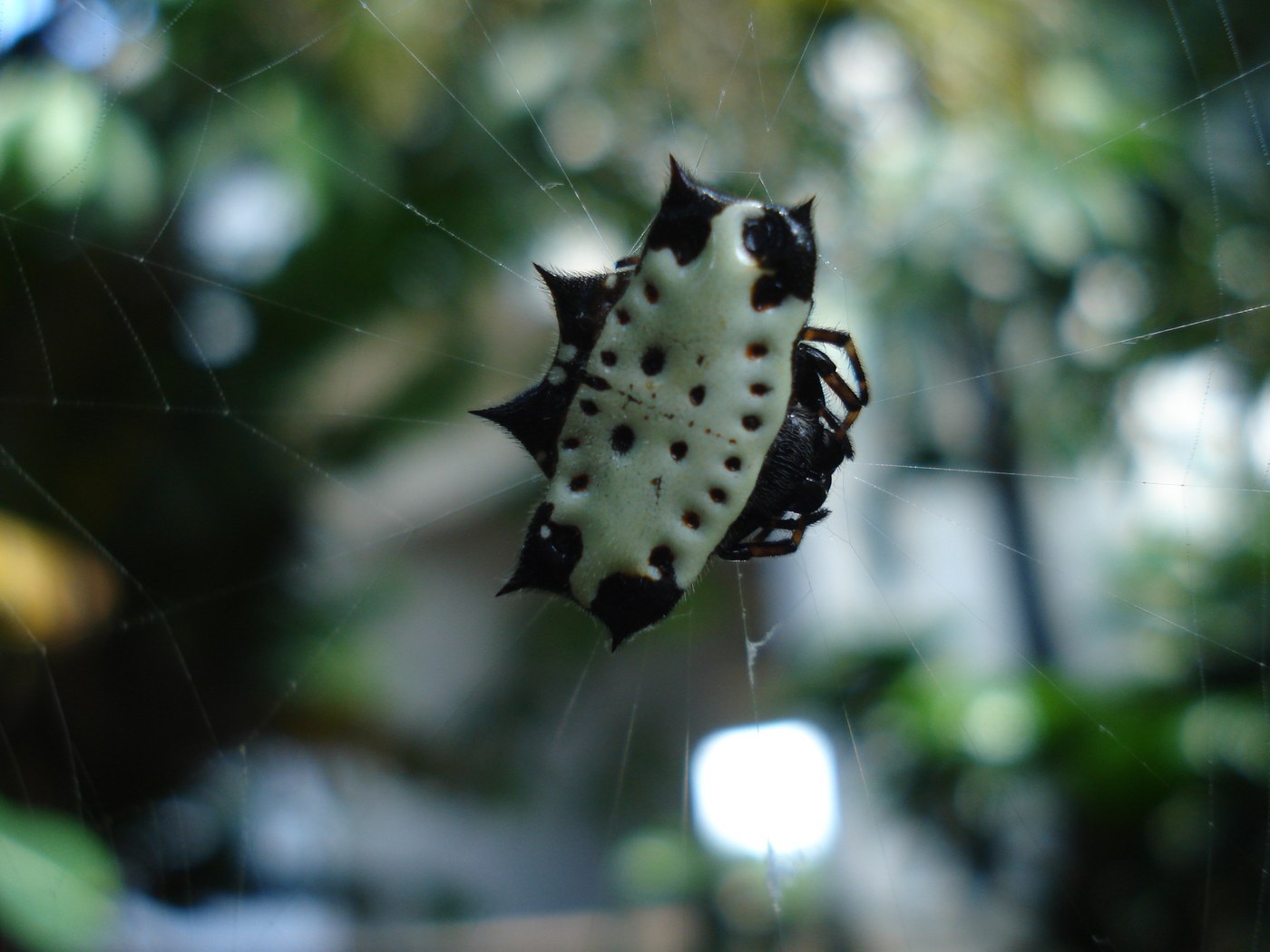
Spiny Orb Weaver
A small, hard-shelled orb weaver shaped like a tiny crab, with six sharp spines projecting from a brightly colored abdomen suspended in a neat wheel-shaped web.
spider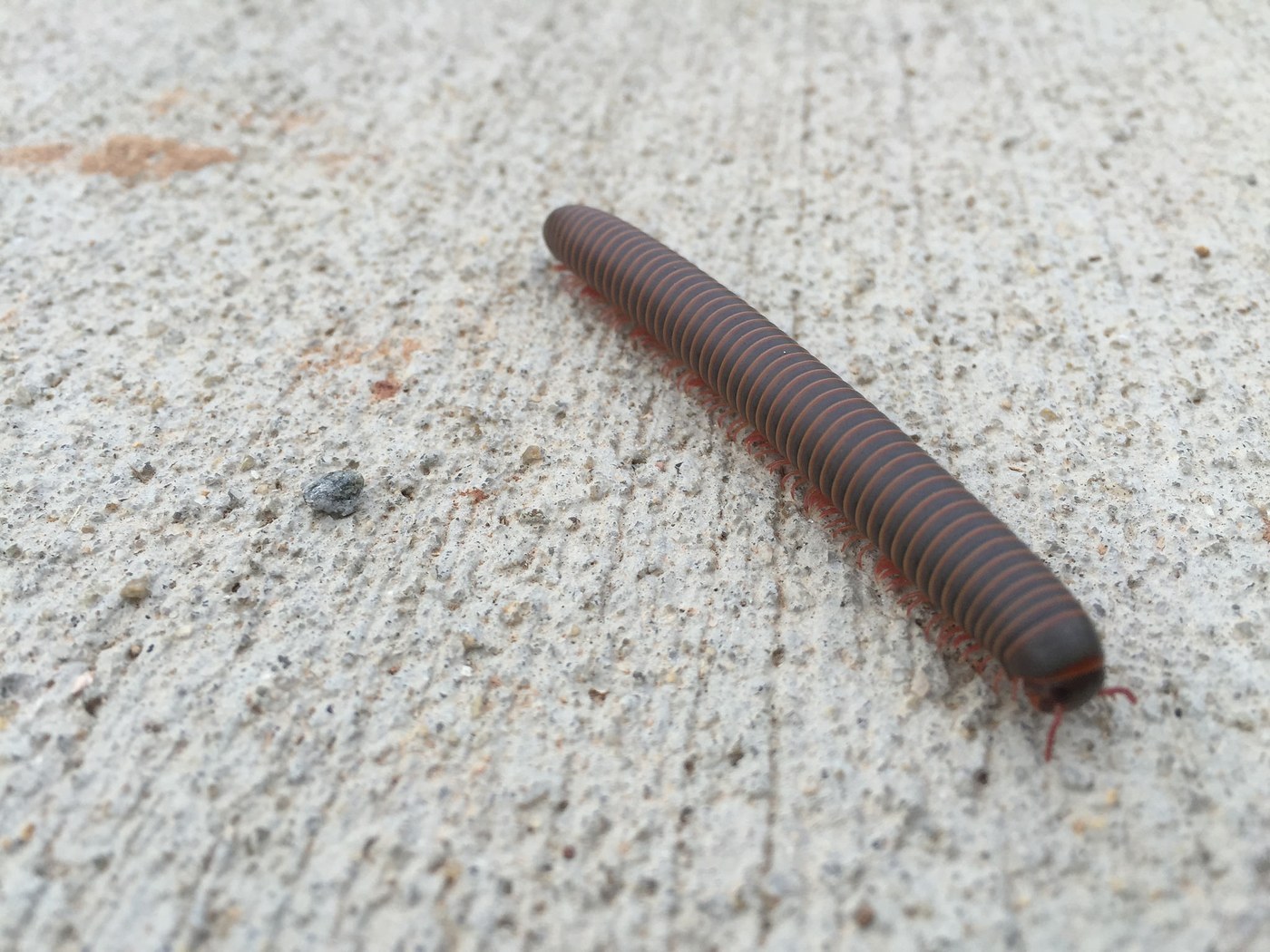
Millipede
A slow-moving, cylindrical, many-legged detritivore with two pairs of legs per body segment, often seen curling into a tight spiral when disturbed.
myriapodWhip Spider
A flattened, spider-like arachnid with no venom and no silk, using a pair of extremely long, whip-like front legs as sensitive feelers to navigate the dark.
arachnid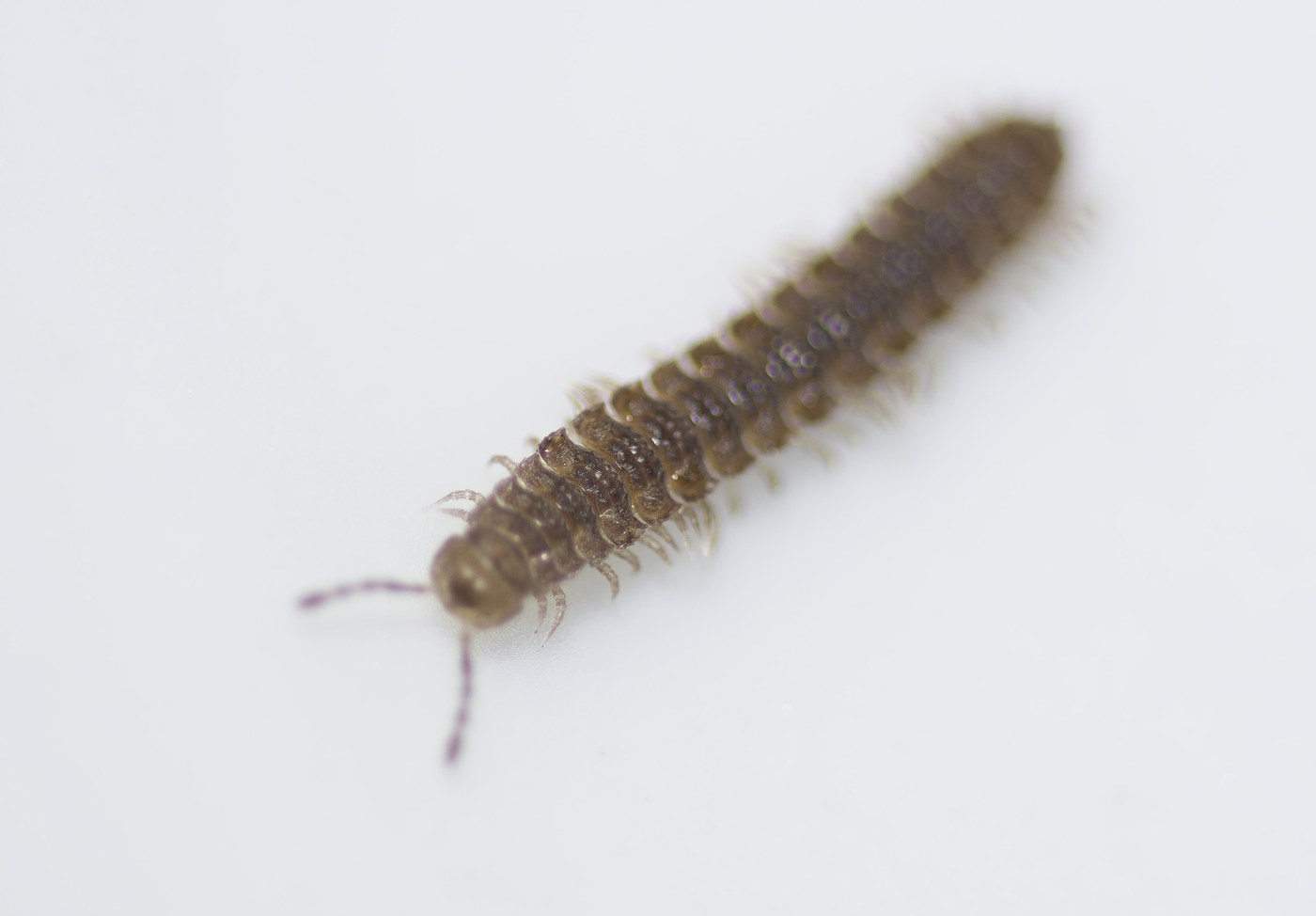
Flat-backed Millipede
A slow, armor-plated decomposer whose body segments flare into flat, wing-like keels, giving it a distinctly ribbed, tank-like silhouette compared to rounder millipedes.
myriapod