
Bug Encyclopedia
Search and identify bugs & insects — beetles, butterflies, moths, ants, bees, spiders and more — with size, habitat, danger, behavior, and how to tell them apart.
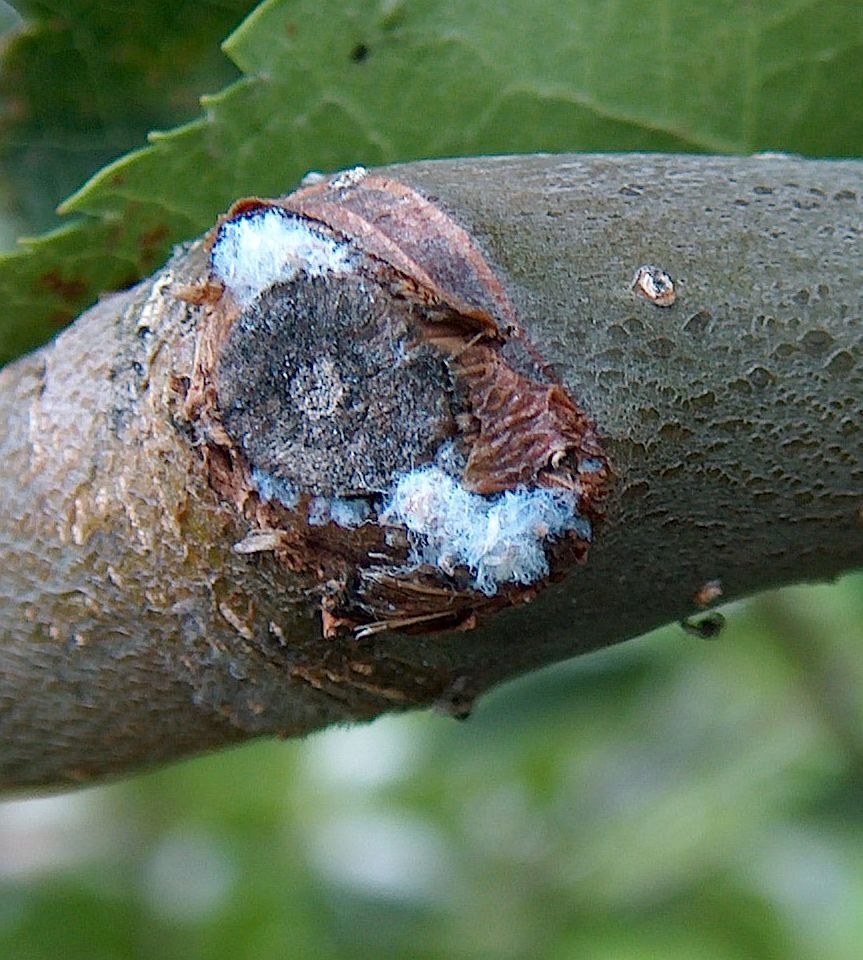
Woolly Aphid
A tiny, soft-bodied aphid that hides beneath a dense coat of white, cottony wax filaments, often appearing as fuzzy white patches clustered on bark or twigs rather than as recognizable insects.
true-bug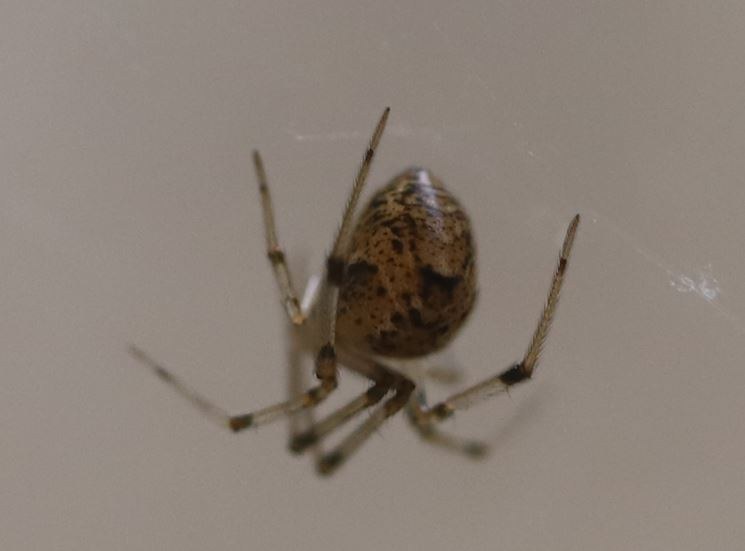
Common House Spider
Tucked into a messy tangle of silk in a quiet corner, the common house spider is one of the most familiar indoor spiders, quietly picking off flies and other small insects that blunder into its web.
spiderSilverfish Firebrat
Two closely related, wingless, silvery or mottled insects with fish-like darting movements and three long tail bristles, one favoring damp basements and the other thriving near warm ovens and furnaces.
otherBig-Eyed Bug
A small, broad-headed true bug named for its noticeably large, bulging compound eyes, the big-eyed bug is a beneficial predator that patrols low vegetation and soil surfaces for small pest insects.
true-bug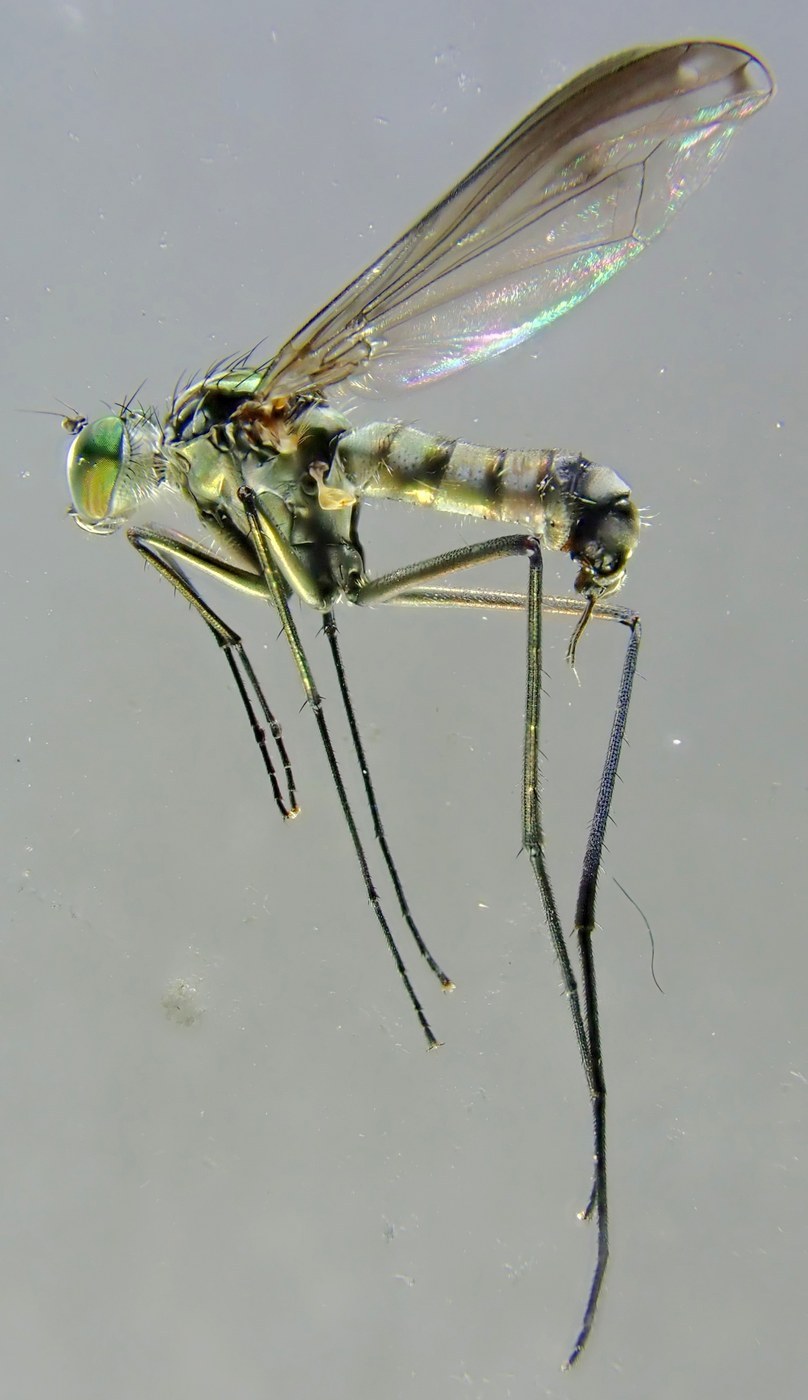
Long-Legged Fly
A jewel-bright little fly that flashes metallic green, blue, or bronze in the sunlight as it darts across leaves on comically long, stilt-like legs, pausing to perform quick territorial displays. Both adults and larvae are active hunters of even smaller insects, making this tiny fly a useful predator in gardens and wetlands alike.
fly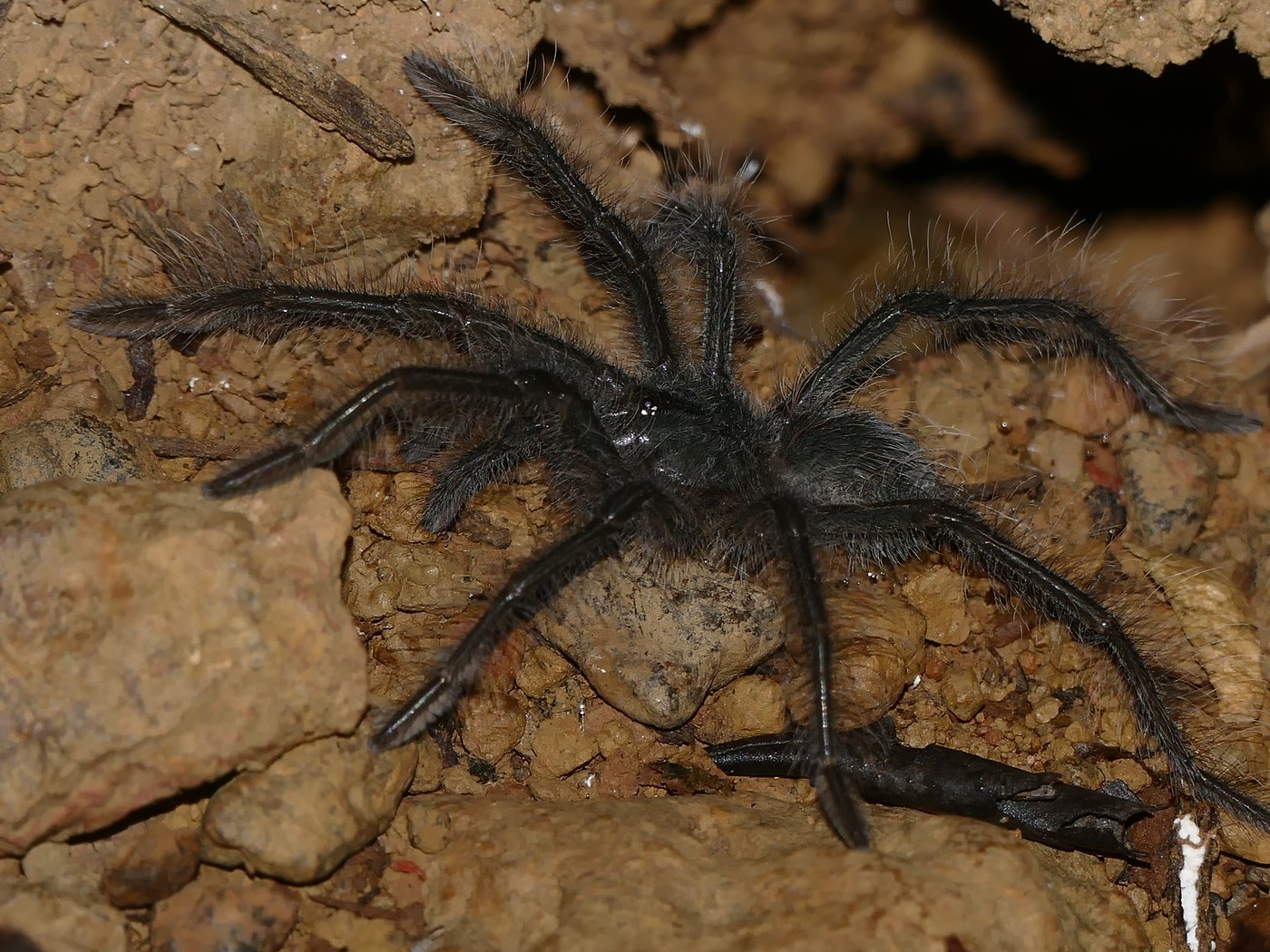
Goliath Birdeater
The heaviest spider in the world, the Goliath birdeater is a massive, hairy tarantula from the South American rainforest whose leg span can rival a dinner plate, though despite its name it primarily hunts insects and other invertebrates rather than birds.
spider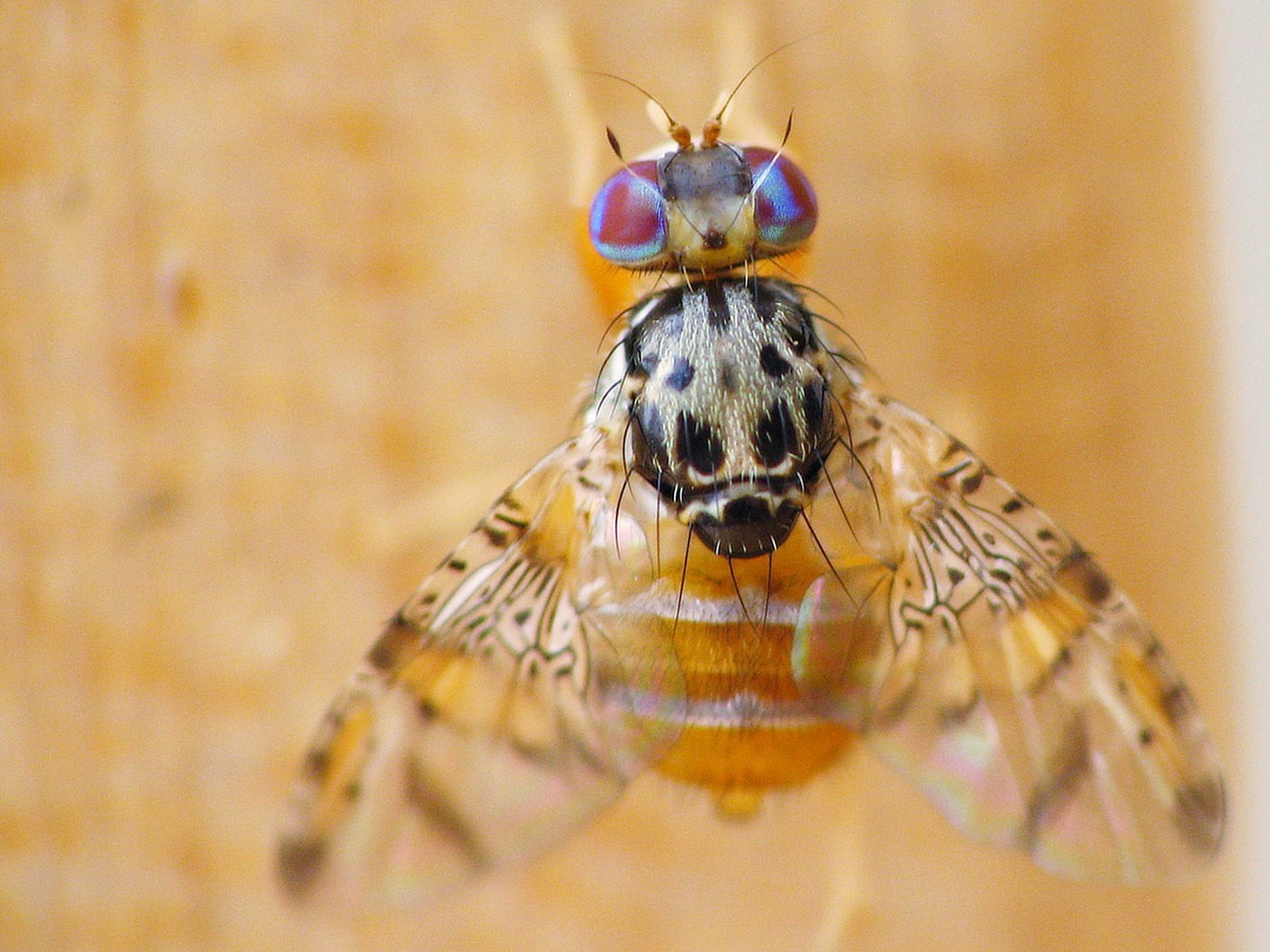
Fruit Fly (Mediterranean)
A small but strikingly patterned fly with mottled, banded wings held out to the sides in a fan and a body dotted with silvery spots, best known for larvae that tunnel through ripening fruit. Native to sub-Saharan Africa, it has spread with human trade to become one of the most widely recognized fruit-infesting insects in the world.
fly
Vinegar Fly
A tiny tan fly with bright red eyes that seems to appear out of nowhere the moment a banana starts to spoil, drawn in by the smell of fermentation rather than the fruit itself. Few insects have contributed more to the science of genetics, making this unassuming kitchen visitor one of the most studied animals on Earth.
flySnipe Fly
A slender, long-legged fly often seen perched head-down on a sunny tree trunk or fence post, patiently watching for smaller insects to ambush. Its tapered, wasp-like abdomen and habit of resting motionless with legs splayed give it a distinctive, almost sentry-like posture in woodland clearings.
fly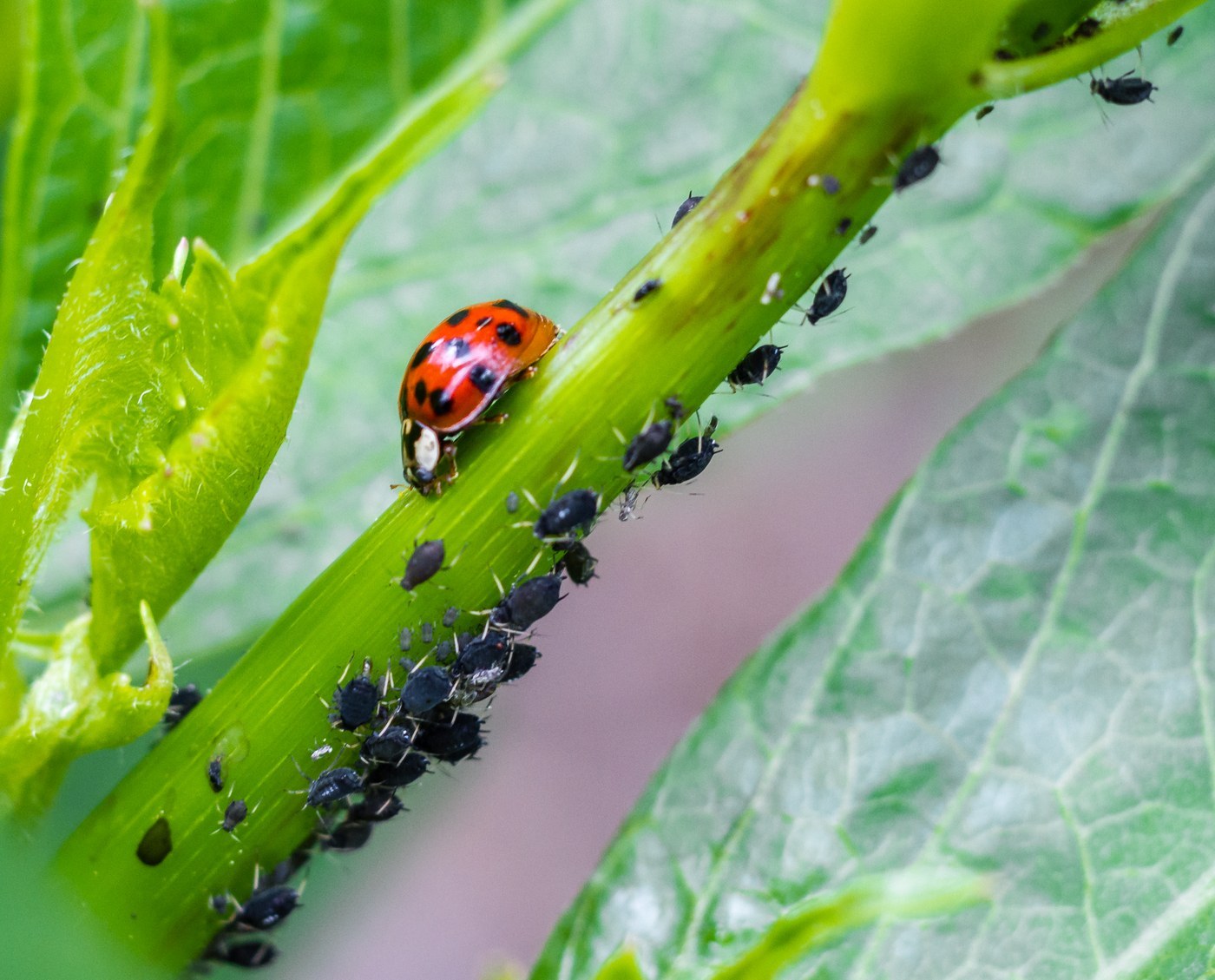
Asian Lady Beetle
A highly variable orange-to-red ladybird beetle, often bearing many black spots or none at all, famous for swarming into homes in large numbers during autumn.
beetle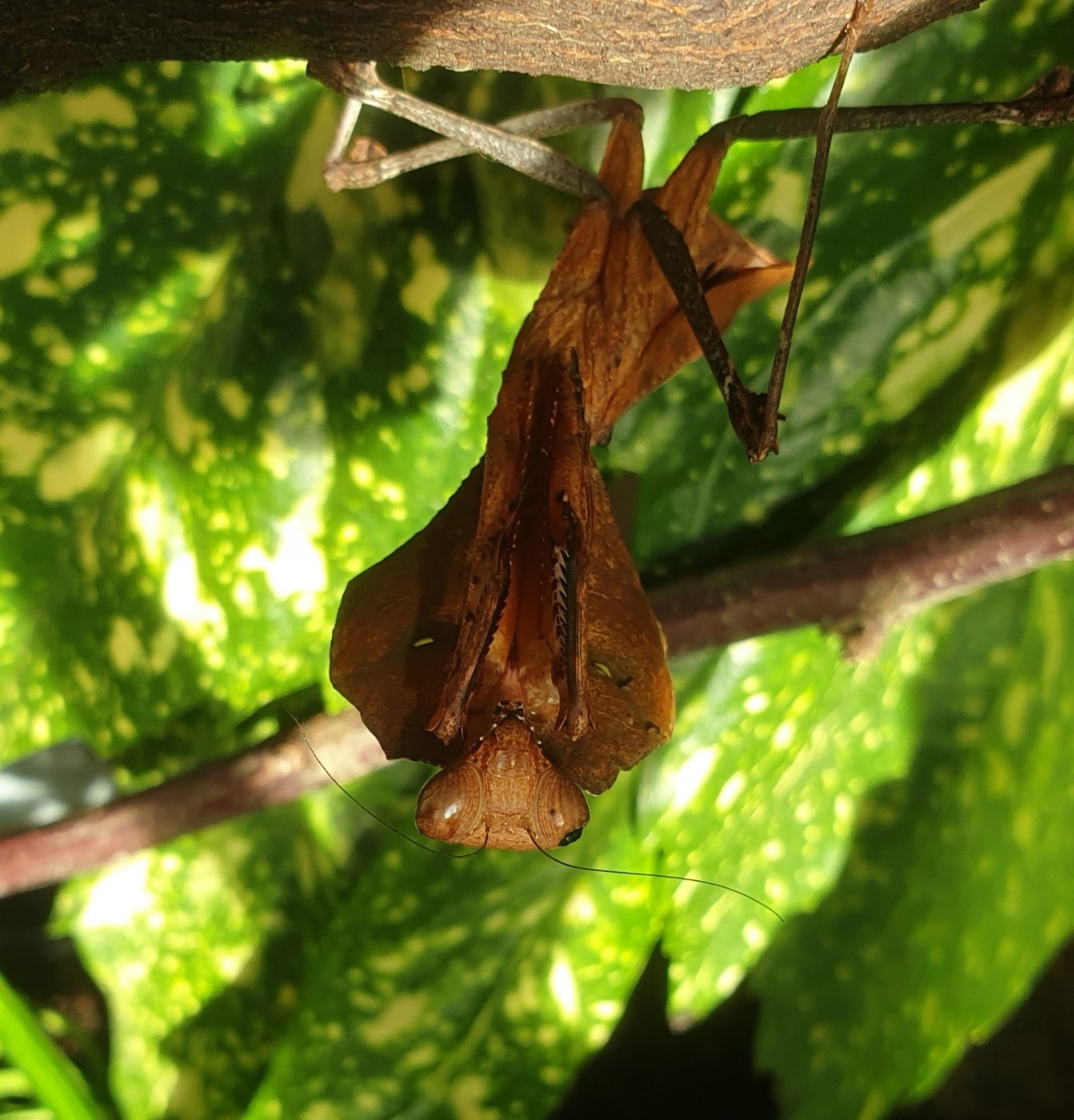
Dead Leaf Mantis
A master of disguise whose broad, curled, vein-textured body is nearly indistinguishable from a curled, decaying leaf lying on the forest floor.
mantis-stick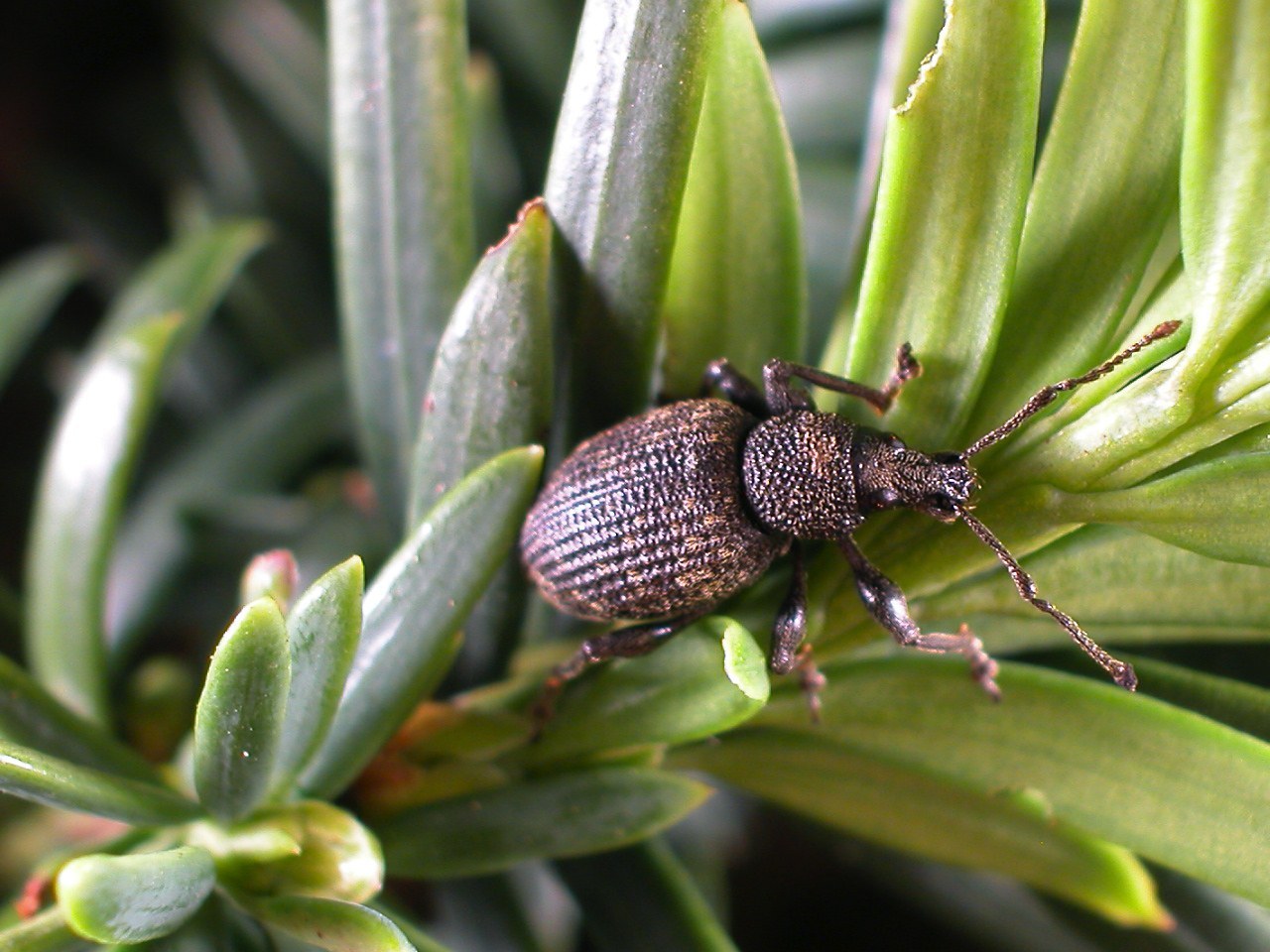
Vine Weevil
A slow, flightless, matte-black beetle that hides by day and emerges at night to notch neat semicircular bites from the edges of leaves.
beetleUnderwing Moth
A master of camouflage whose bark-patterned forewings hide brightly colored, banded hindwings that flash into view only when the moth is disturbed in flight.
mothLanternfly (Spotted Lanternfly)
A strikingly patterned planthopper with grey, spotted forewings that flash to reveal crimson hindwings when it leaps, now notorious as an invasive agricultural pest far from its native range.
true-bug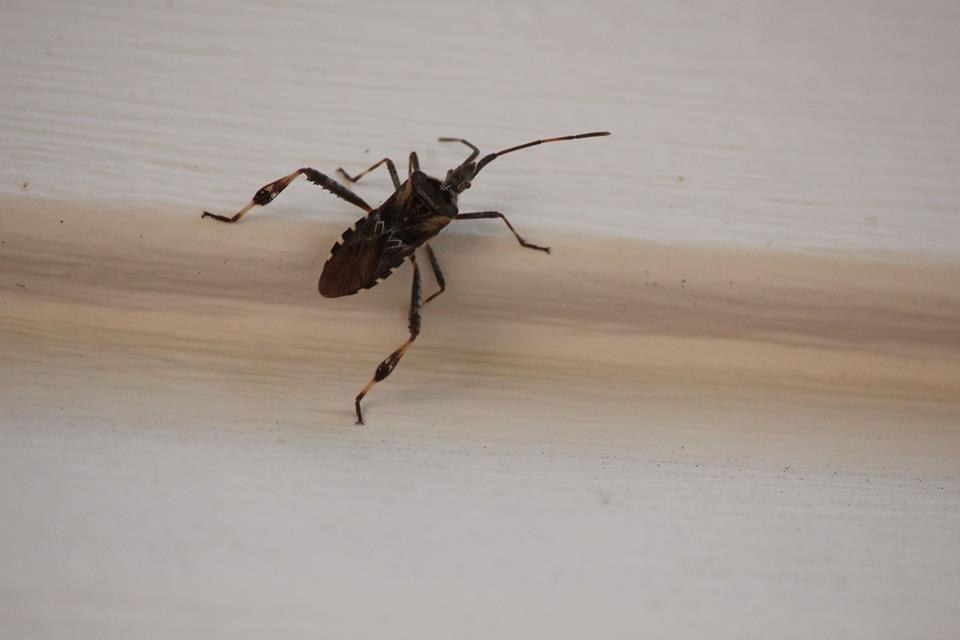
Western Conifer Seed Bug
A large brown true bug with flattened, leaf-shaped hind legs, native to conifer forests of the western United States but now widespread and notorious for gathering on and inside buildings as cooler weather approaches.
true-bug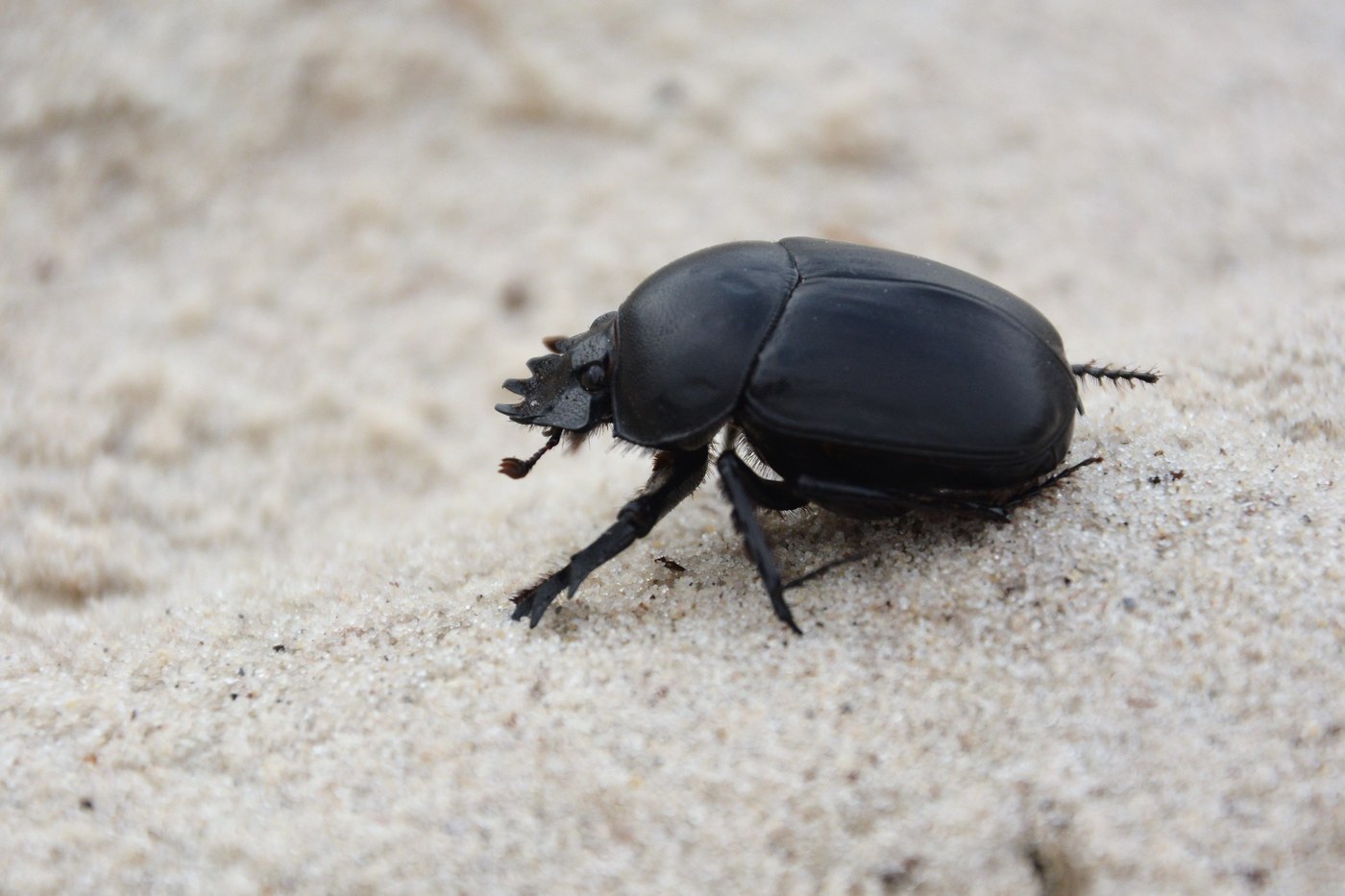
Sacred Scarab
A stout, matte-black dung beetle famous for rolling balls of dung across the ground with its hind legs, and revered in Ancient Egypt as a symbol of the sun and renewal.
beetleCamel Spider
A fast-running desert arachnid, neither a true spider nor scorpion, with enormous jaw-like chelicerae and a reputation exaggerated far beyond its actual behavior.
arachnid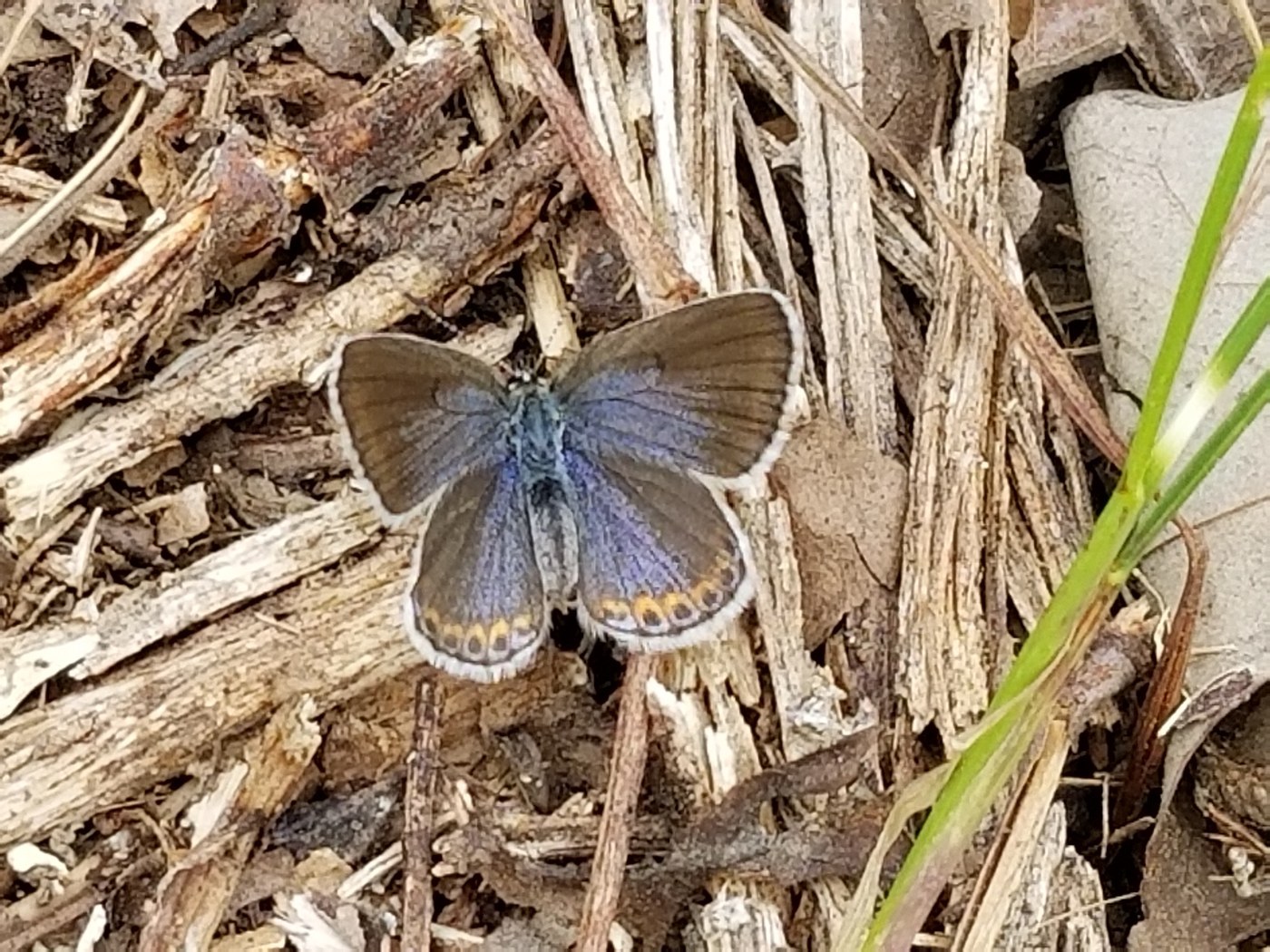
Karner Blue
A tiny, silvery-blue butterfly dependent entirely on wild lupine and now known chiefly from a small number of protected sandy-soil habitats in the Great Lakes and Northeast.
butterfly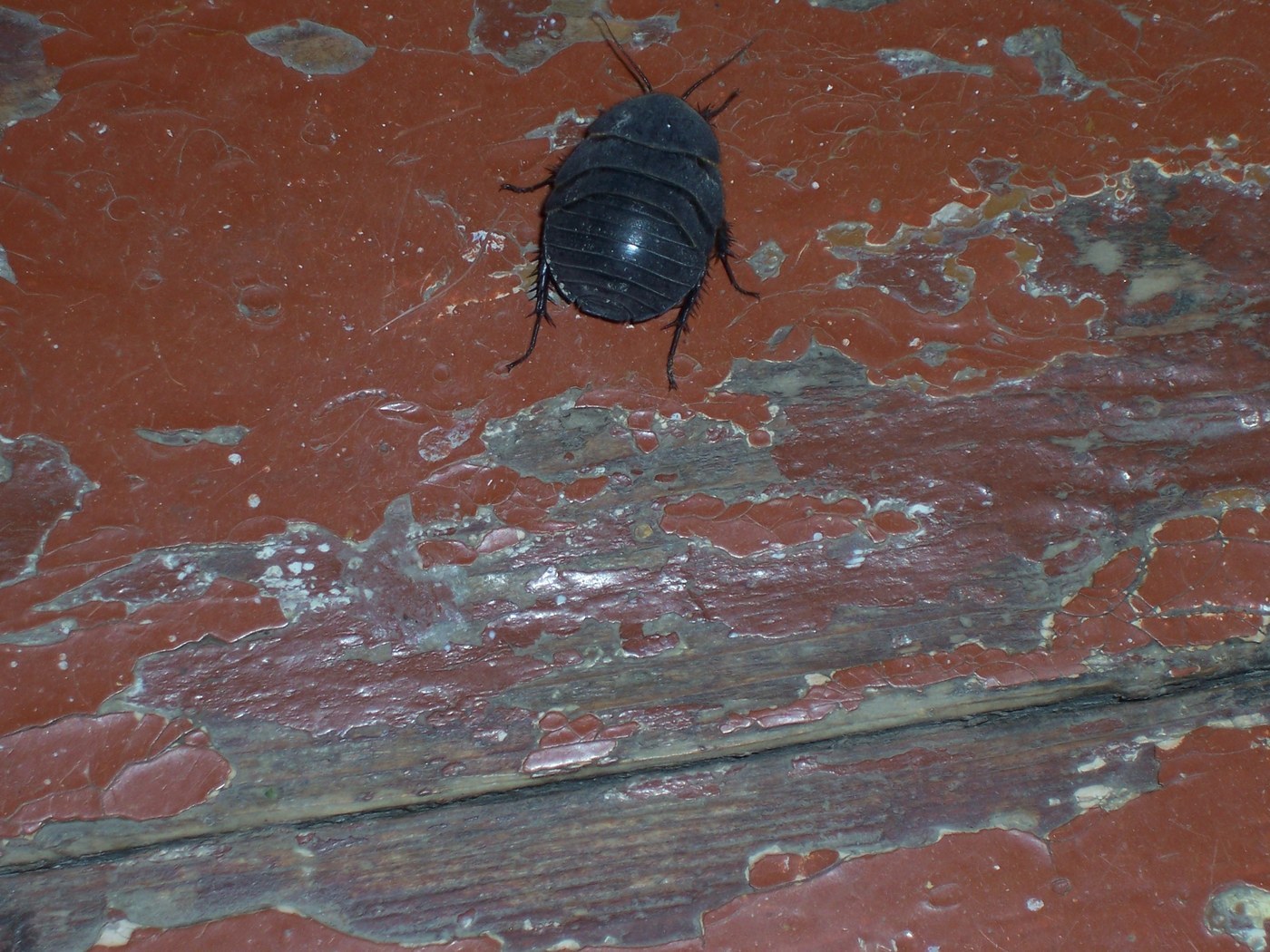
Oriental Cockroach
A dark, matte blackish-brown cockroach with short wings that do not cover the abdomen, especially in females, and a preference for cooler, damper hiding spots than most other common cockroaches.
other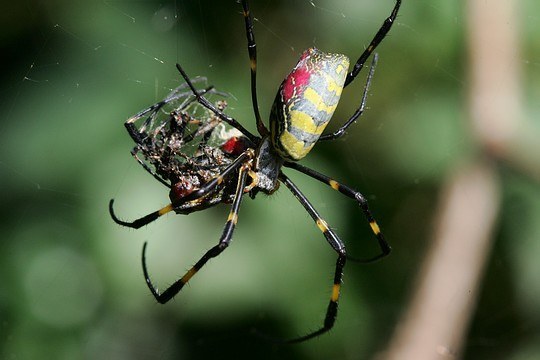
Jorō Spider
A large, strikingly colored East Asian orb weaver with yellow-and-blue-gray banding, now spreading rapidly across the southeastern United States and building enormous golden webs.
spider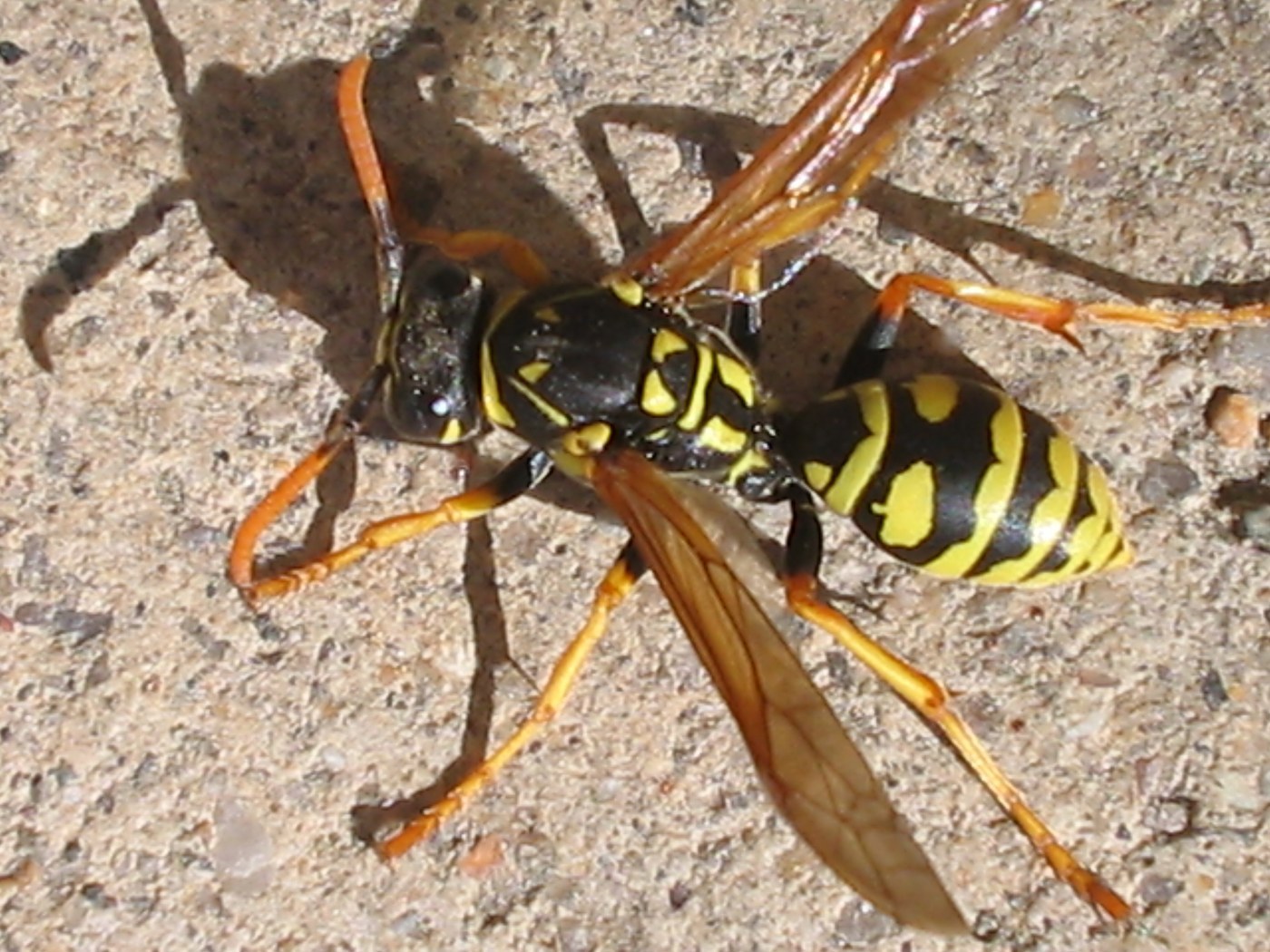
European Paper Wasp
A slender, orange-antennaed social wasp that builds small, open umbrella-shaped paper combs under eaves and ledges, now common well beyond its native European range.
waspDarkling Beetle
A uniformly dark, matte-black ground beetle often seen walking deliberately across open soil, known for tilting its rear end skyward in a distinctive defensive posture when disturbed.
beetle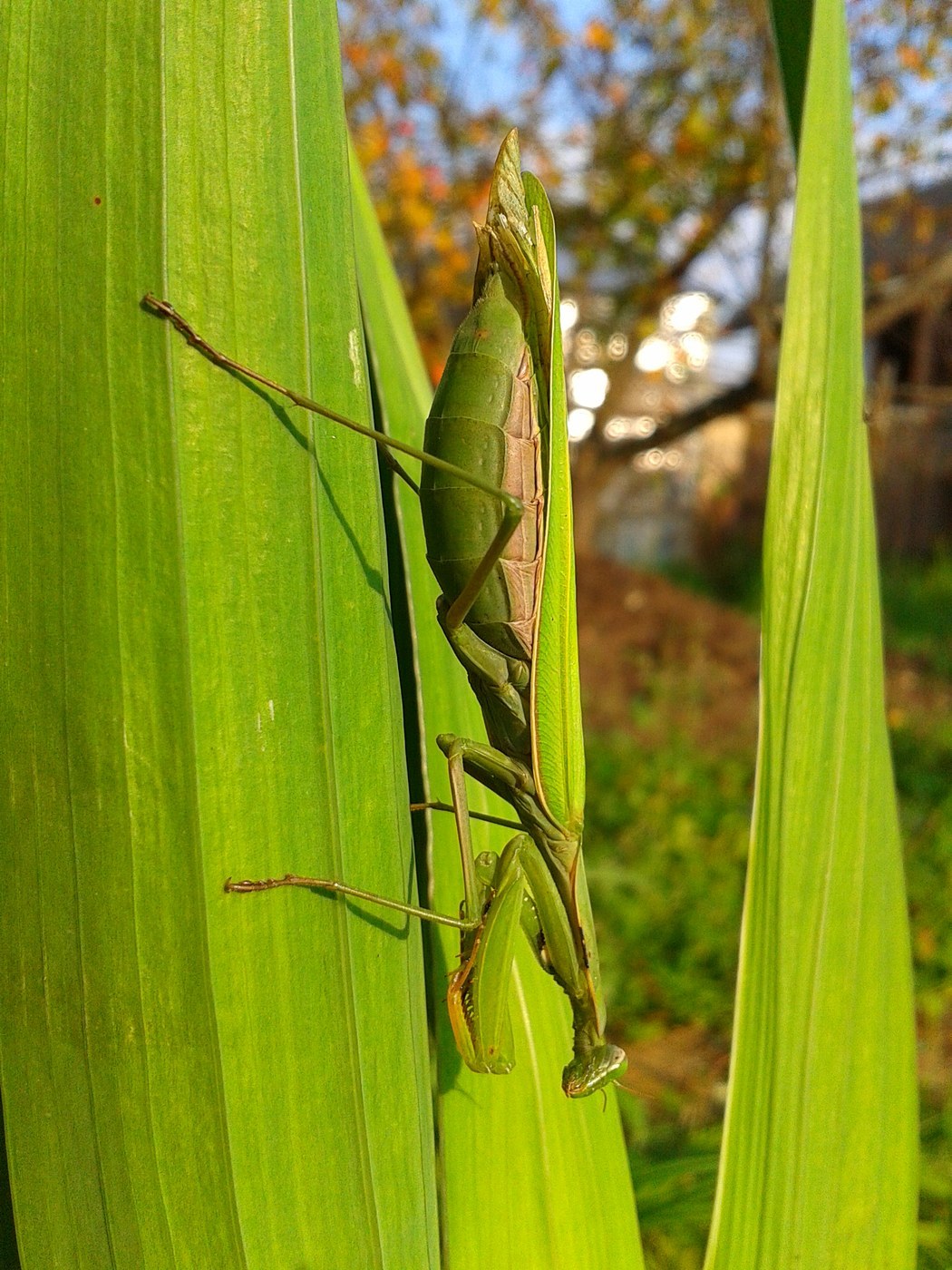
European Mantis
A slender, typically bright green mantis native to Europe, Africa, and Asia, now widely established in North America, easily recognized by a small dark bullseye mark on the inside of its front legs.
mantis-stick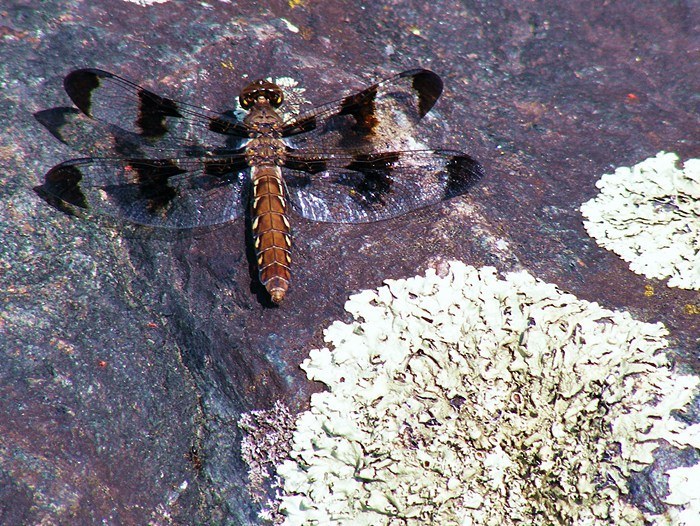
Common Whitetail Dragonfly
A stocky pond-side dragonfly whose mature males sport a broad, chalky white abdomen that flashes conspicuously against boldly banded wings.
dragonfly