
Bug Encyclopedia
Search and identify bugs & insects — beetles, butterflies, moths, ants, bees, spiders and more — with size, habitat, danger, behavior, and how to tell them apart.
Field Cricket
A stout, dark cricket whose loud, rhythmic chirping is one of the most familiar summer and fall night sounds in fields and lawns across much of the world.
grasshopper-cricket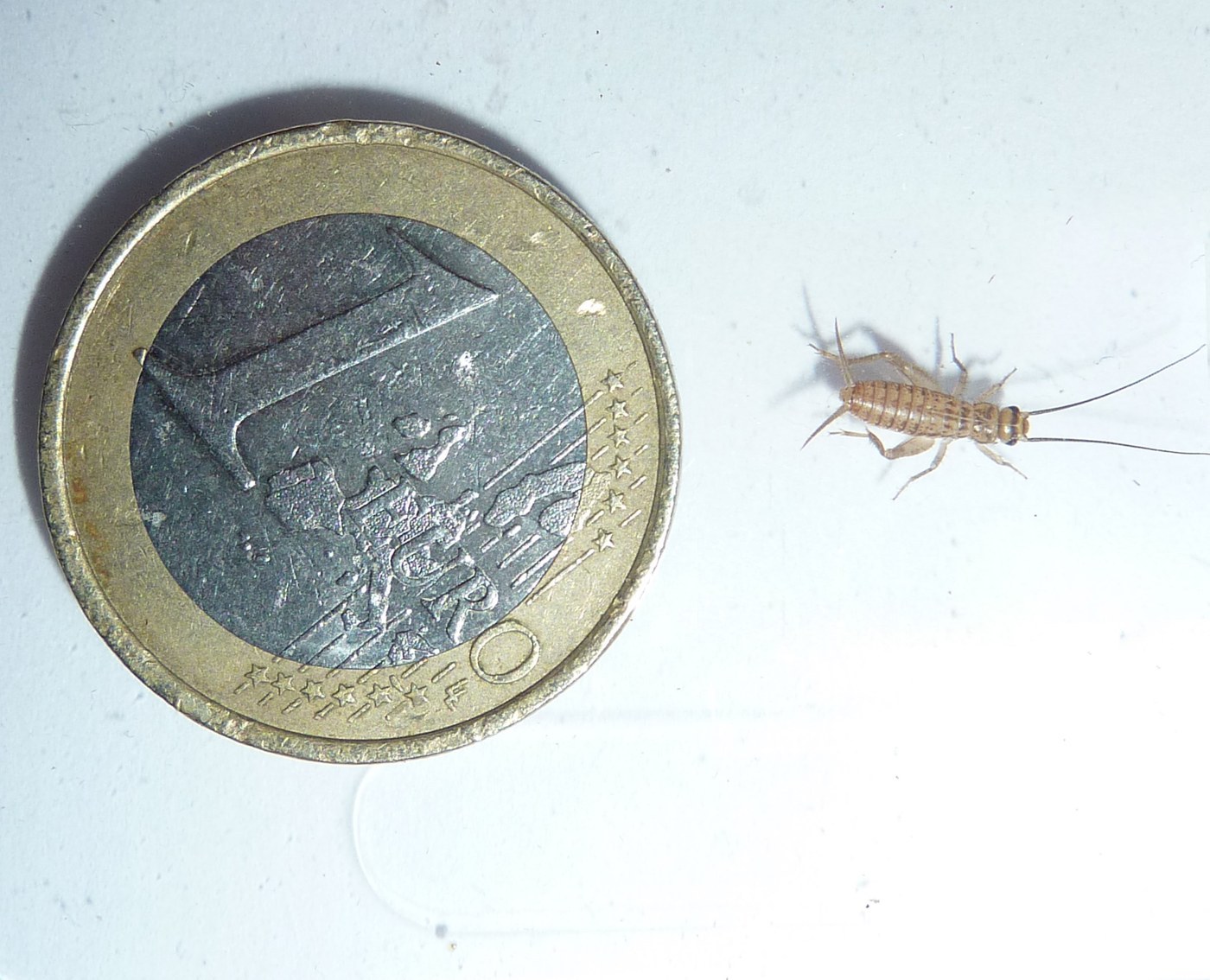
House Cricket
A pale tan, dark-banded cricket originally from warm regions of Asia that has spread worldwide both as an occasional indoor nuisance and as a widely farmed feeder insect.
grasshopper-cricketCricket
A dark, round-headed jumping insect best known for the rhythmic chirping song produced by males rubbing their forewings together, often heard rather than seen after dusk.
grasshopper-cricket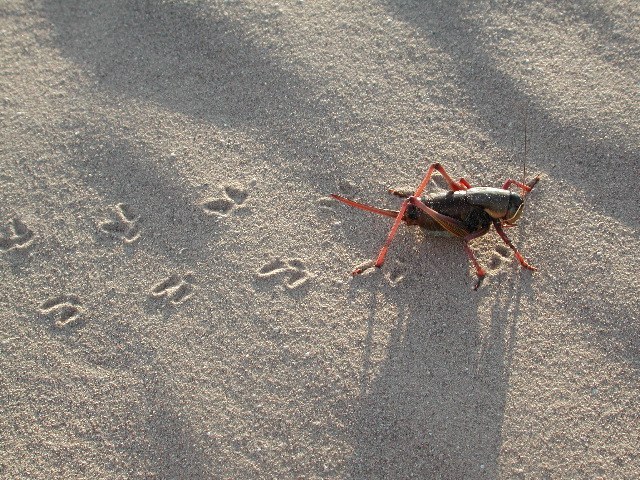
Mormon Cricket
A hefty, flightless katydid whose swarms can stretch for miles across western rangelands, marching en masse in search of food and mates.
grasshopper-cricketJerusalem Cricket
A large, wingless, ground-dwelling insect with a shiny amber body, a strikingly human-like face, and a robust, banded abdomen, most often uncovered while digging in soil.
grasshopper-cricketCave Cricket
Humpbacked and wingless with absurdly long legs and antennae, this pale, silent insect thrives in the total darkness of caves, basements, and damp crawl spaces.
grasshopper-cricket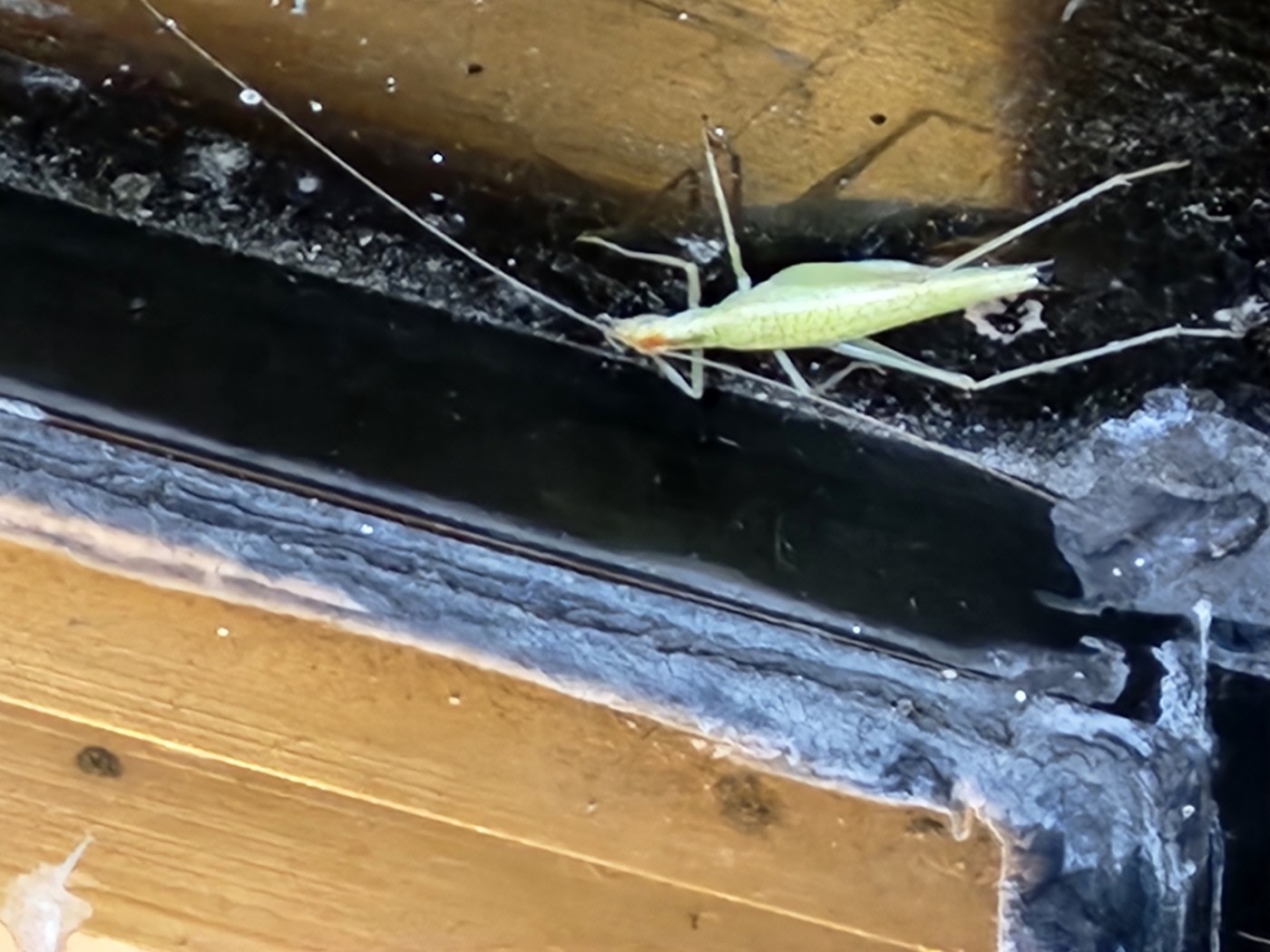
Snowy Tree Cricket
Nicknamed the thermometer cricket, this pale, delicate insect sings a steady, rhythmic chirp whose pace rises and falls so predictably with temperature that its chirp rate can be used to estimate the air temperature.
grasshopper-cricketSpotted Camel Cricket
A wingless, humpbacked cricket relative with mottled markings and enormous hind legs, more often found lurking in damp basements and cellars than singing in a meadow.
grasshopper-cricket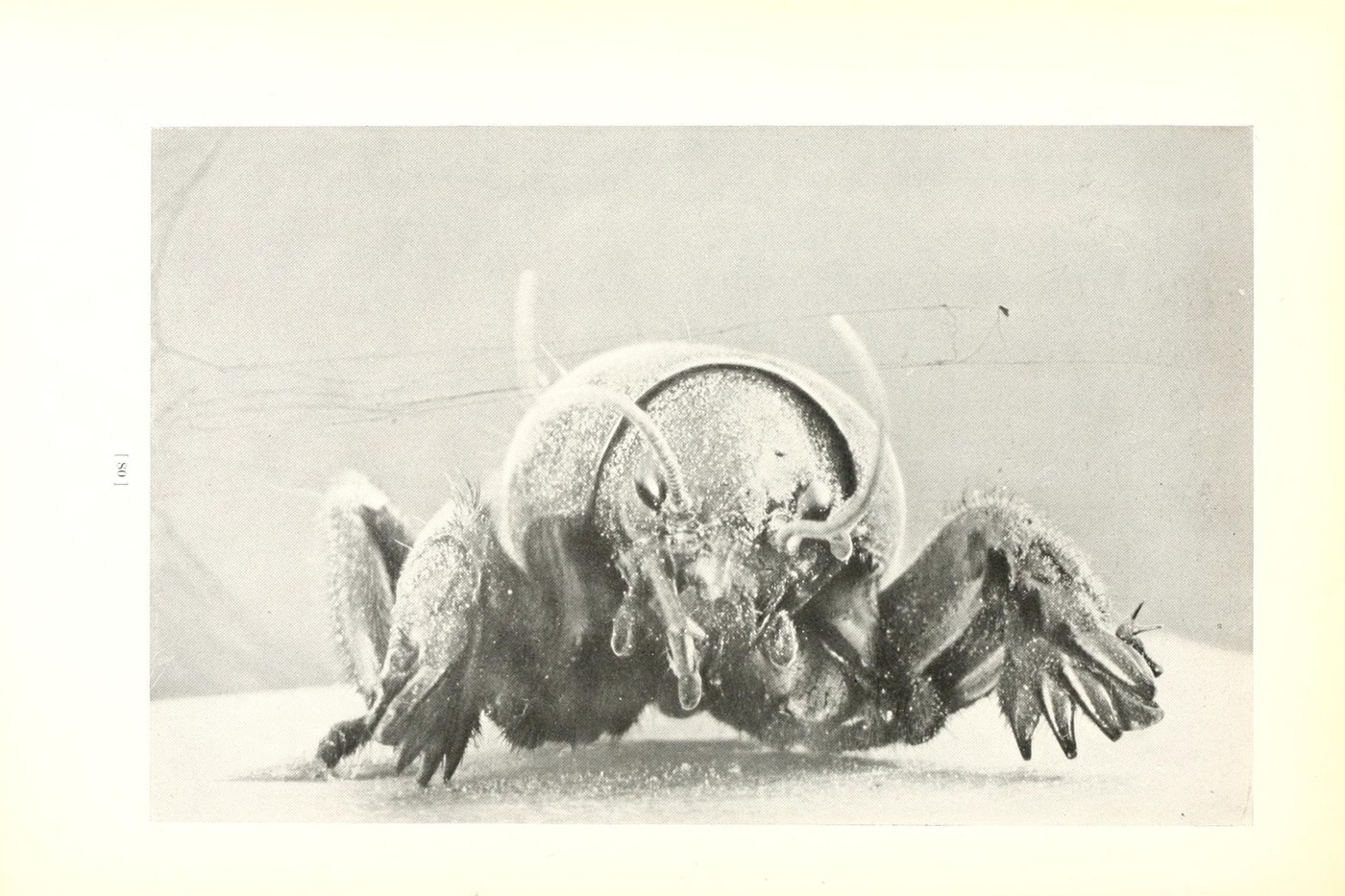
Northern Mole Cricket
A stout, velvety brown cricket with shovel-like front legs built for tunneling through damp soil, more often heard as a low buzzing trill at night than seen above ground.
grasshopper-cricket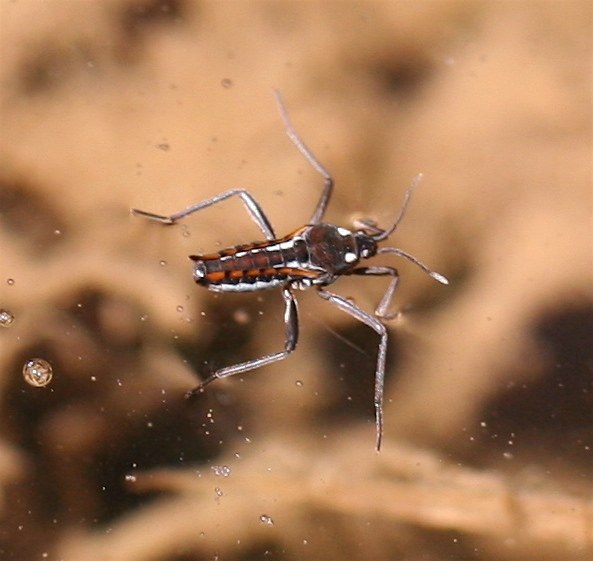
Water Cricket
Despite its name, the water cricket is not a cricket at all but a compact, velvety true bug that skates over the swirling surfaces of streams and riffles in search of trapped prey.
true-bug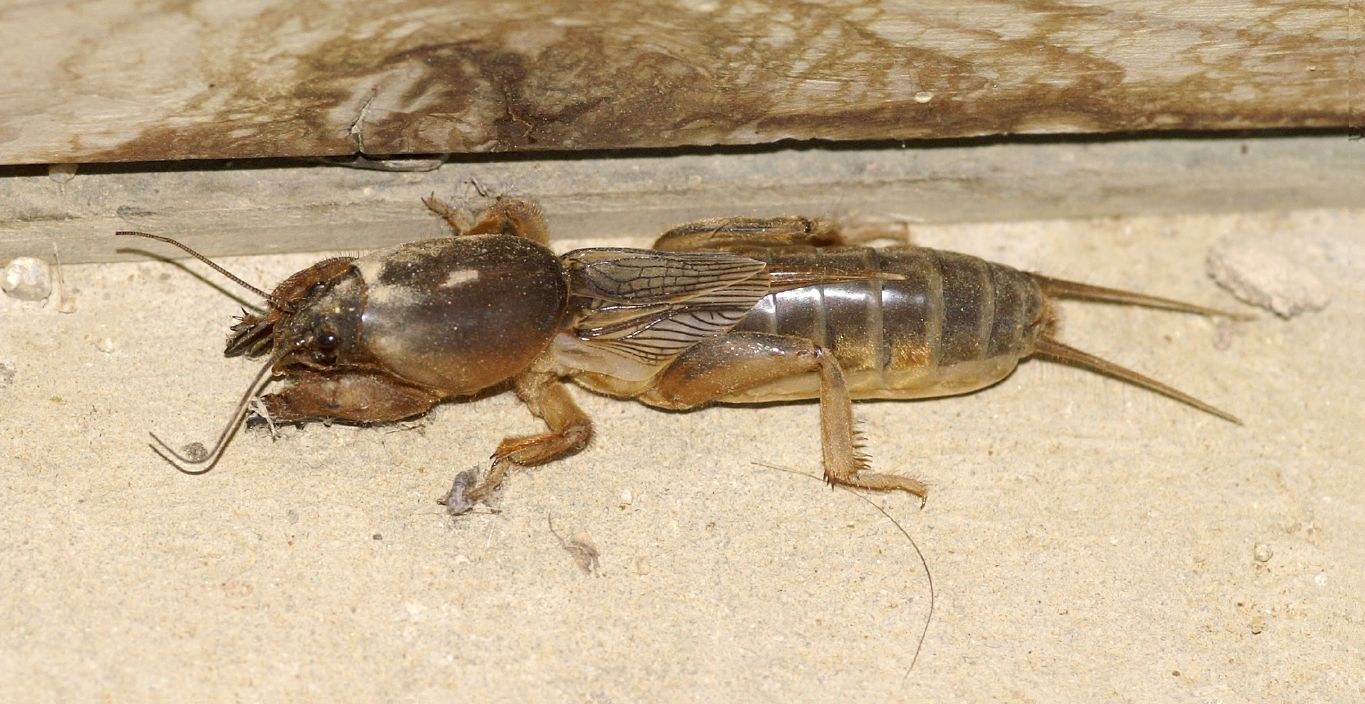
Mole Cricket
A stout, velvety brown cricket relative with broad, shovel-like front legs adapted for digging, spending most of its life burrowing just beneath the surface of moist soil.
grasshopper-cricketBush Cricket
Known by its long, thread-like antennae and evening chorus of chirps, this leaf-colored insect spends its life hidden among grass and foliage, often heard far more often than seen.
grasshopper-cricketCamel Cricket
A wingless, humpbacked cricket with unusually long legs that gives it a spider-like appearance, often startling people when it turns up in damp basements or crawl spaces.
grasshopper-cricket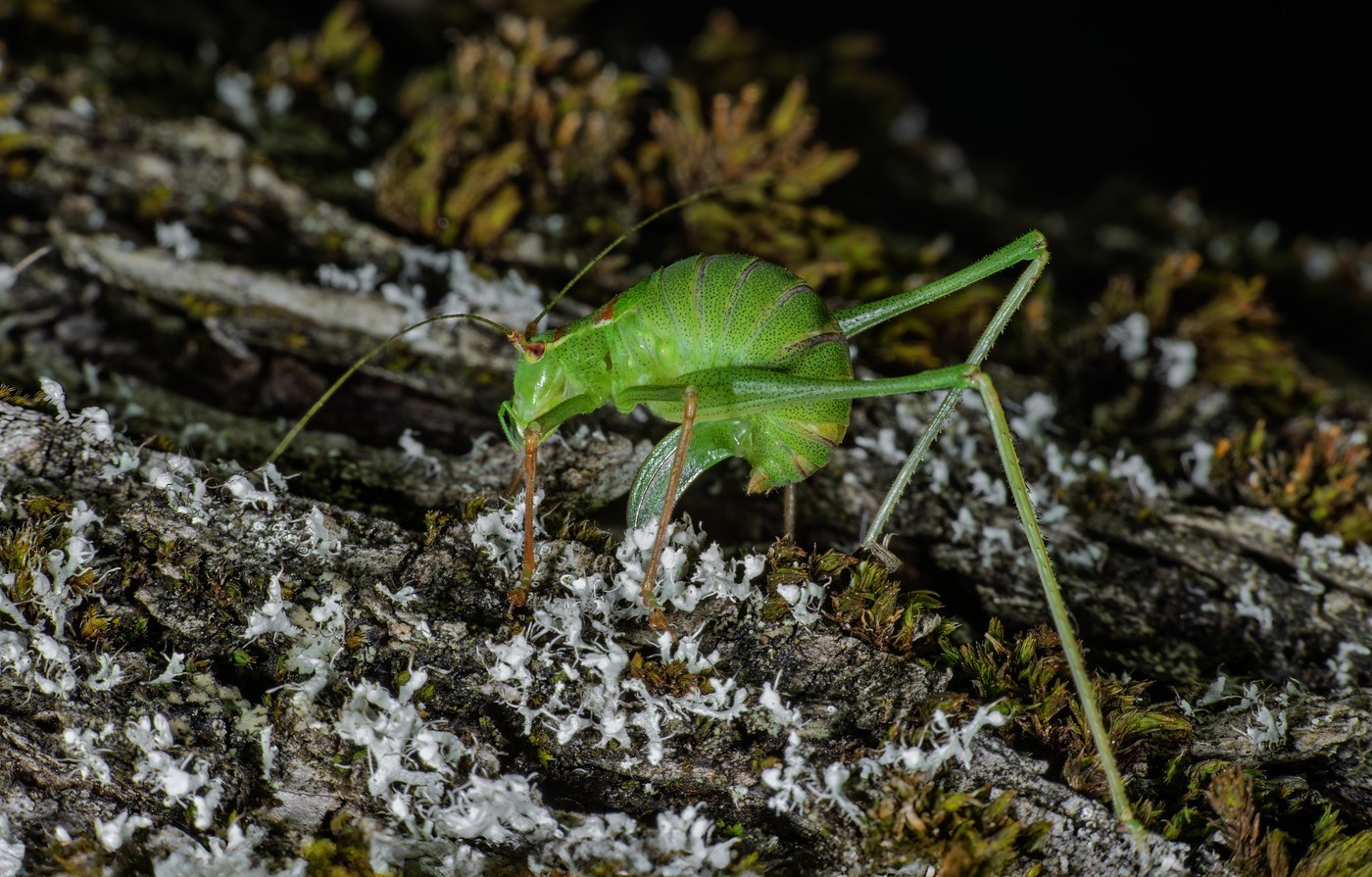
Speckled Bush Cricket
A tiny, plump, green insect finely dotted with dark speckles, this bush cricket forgoes song almost entirely, communicating instead through nearly silent, ultrasonic clicks.
grasshopper-cricket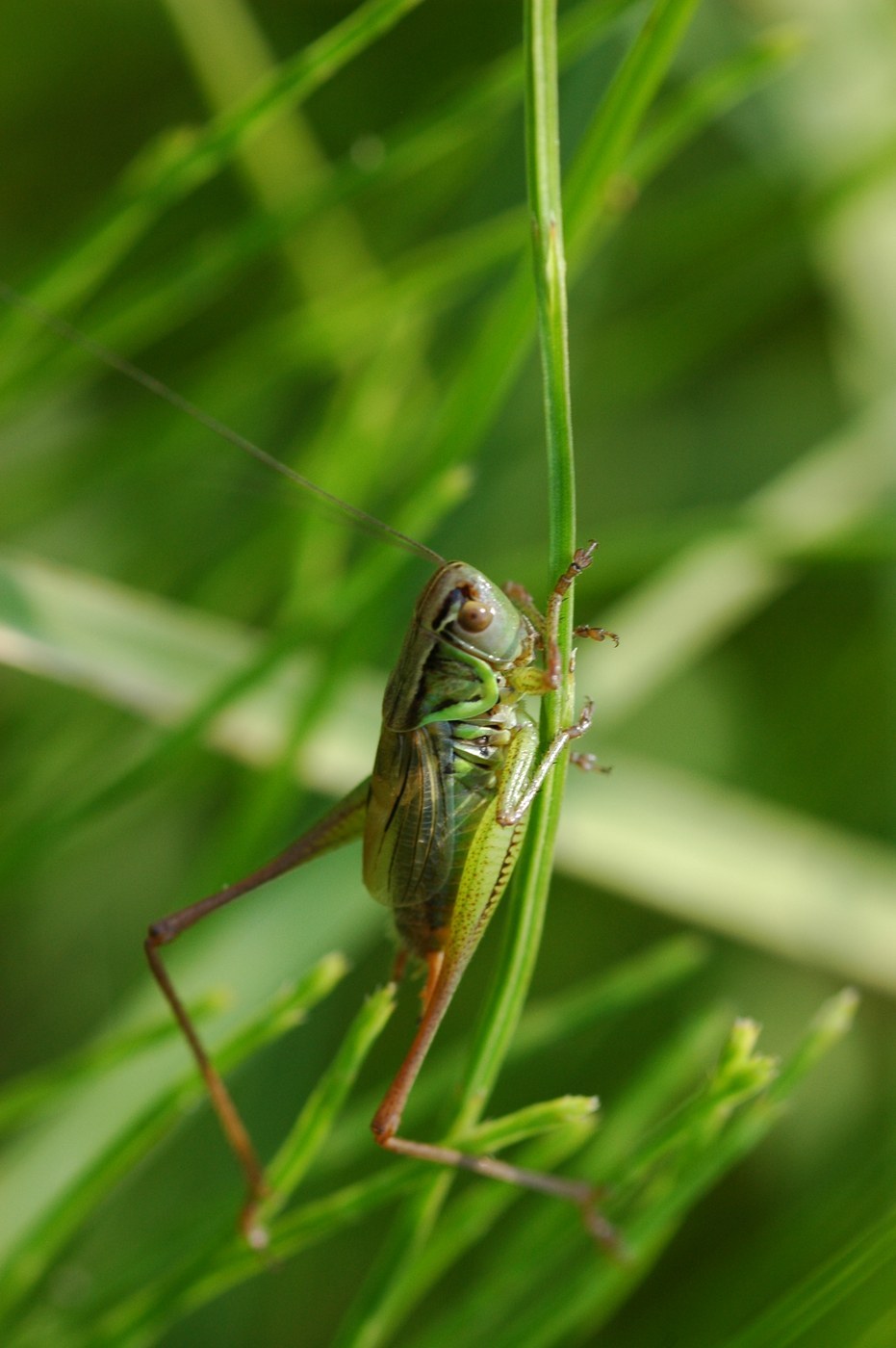
Roesel's Bush Cricket
Marked with a pale cream border along its thorax, this compact bush cricket produces a continuous, high-pitched, buzzing song reminiscent of an electrical hum from dense summer grass.
grasshopper-cricket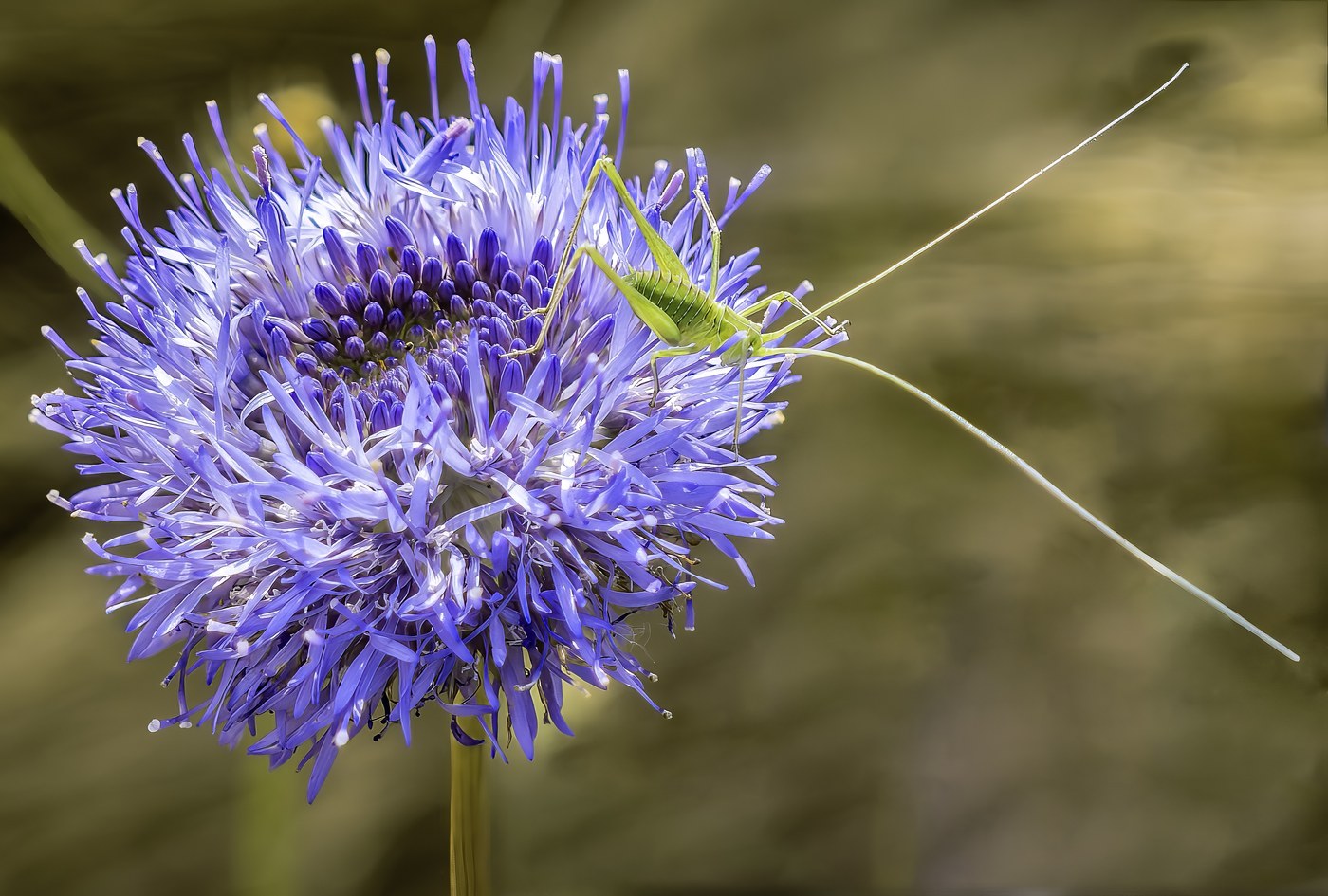
Great Green Bush Cricket
Europe's largest bush cricket, this brilliant grass-green insect fills warm summer evenings with a loud, sustained buzzing call audible from a considerable distance.
grasshopper-cricketKatydid
A leaf-mimicking insect with broad, veined green wings shaped remarkably like foliage, best known for the loud, rhythmic 'katy-did, katy-didn't' chorus males produce on warm summer nights.
grasshopper-cricket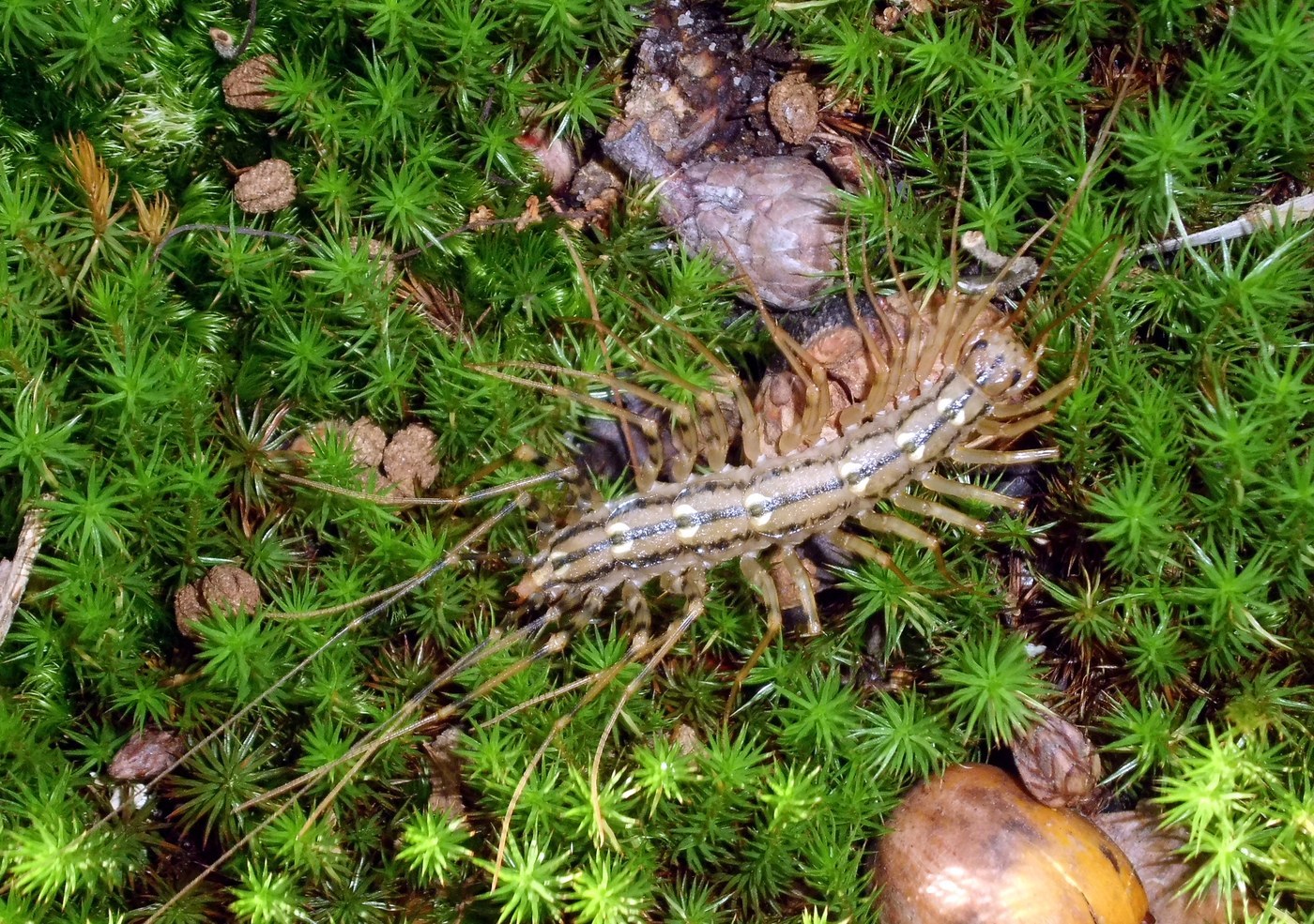
House Centipede
A fast, wiry arthropod with 15 pairs of extremely long, banded legs that make it look far bigger than its actual body size, often seen darting across bathroom or basement floors at night.
myriapod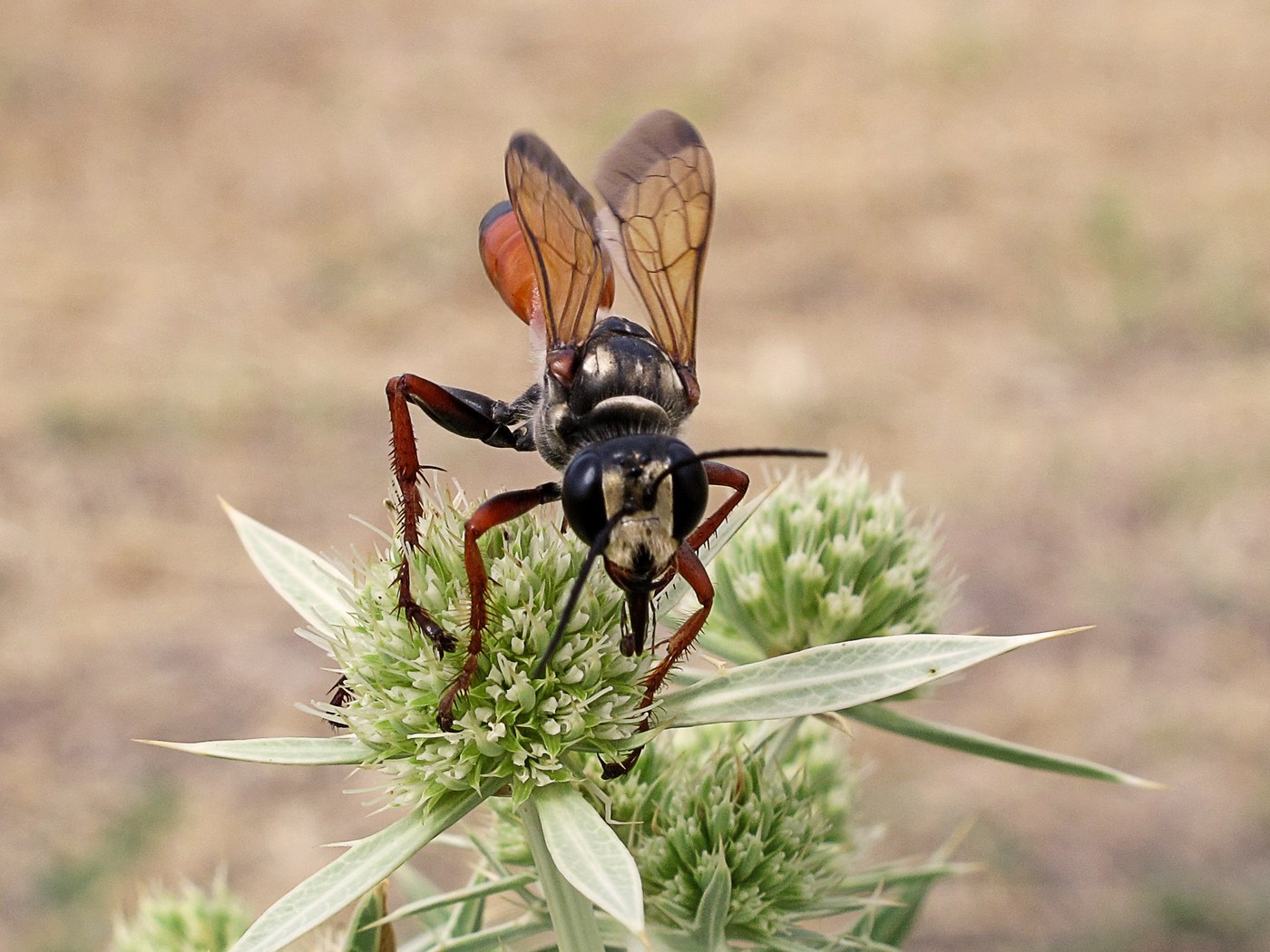
Great Golden Digger Wasp
A large, strikingly two-toned solitary wasp with a golden-haired thorax, reddish-orange midsection, and black-tipped abdomen, often seen digging burrows in bare soil to stock with paralyzed katydids and crickets.
waspGiant Weta
One of the world's heaviest insects, a giant flightless cricket relative endemic to New Zealand that has survived for millions of years by filling the ecological role usually taken by small mammals.
grasshopper-cricket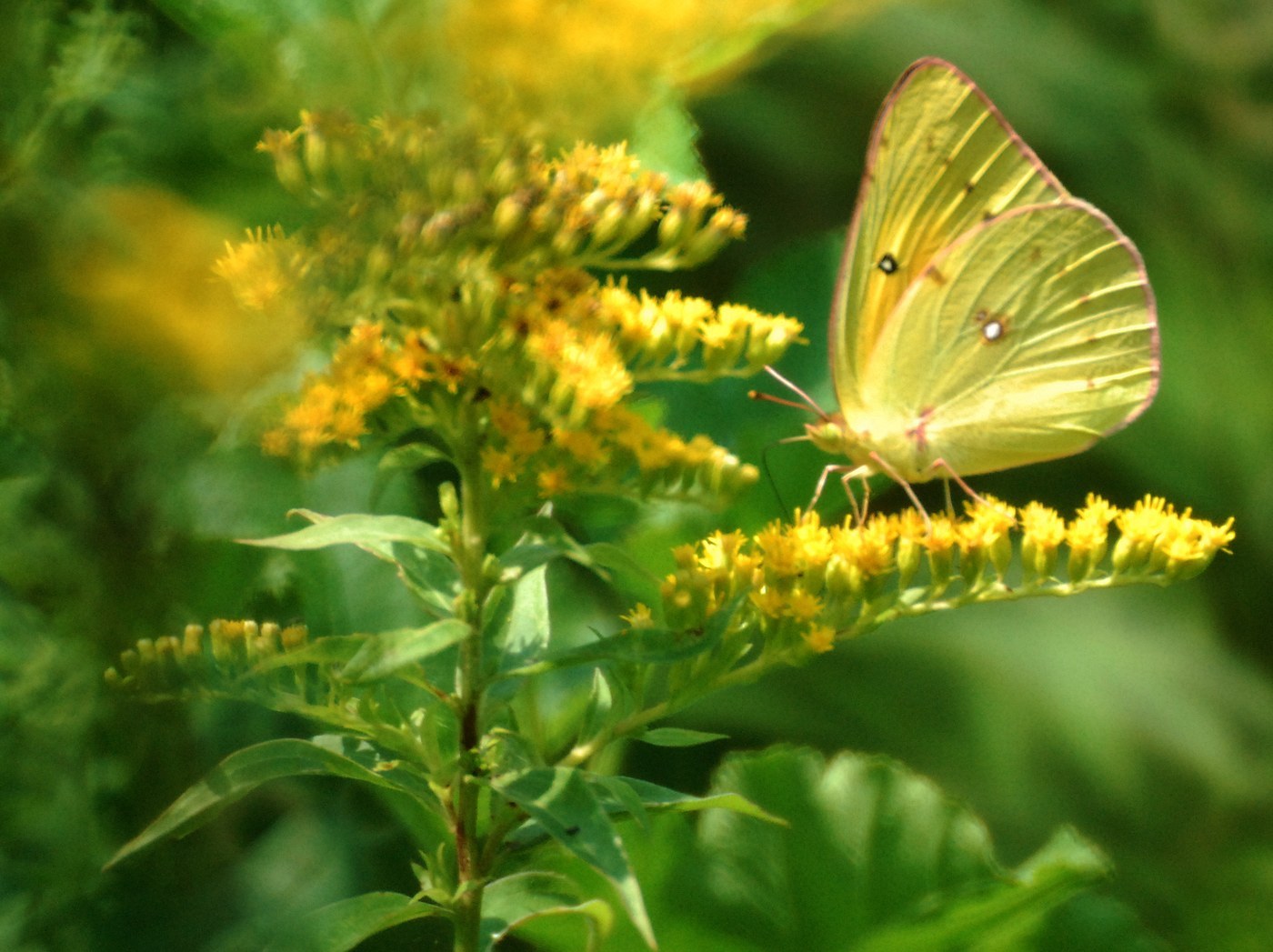
Orange Sulphur
A vivid orange-and-yellow butterfly with sharp black wing borders, one of the most common butterflies over open fields and alfalfa crops throughout North America.
butterflyFungus Gnat
A small, dark, mosquito-like fly with long legs and delicate smoky wings, often seen weakly fluttering around houseplants or crawling across damp potting soil.
flySoil Mite
A microscopic, heavily armored mite found by the millions in a single handful of soil, quietly breaking down leaf litter and helping build the fertile ground beneath forests and fields.
arachnidTsetse Fly
A stout grayish-brown fly of African woodlands whose rigid, forward-jutting proboscis and scissor-folded wings set it apart from any ordinary house fly.
fly