
Bug Encyclopedia
Search and identify bugs & insects — beetles, butterflies, moths, ants, bees, spiders and more — with size, habitat, danger, behavior, and how to tell them apart.
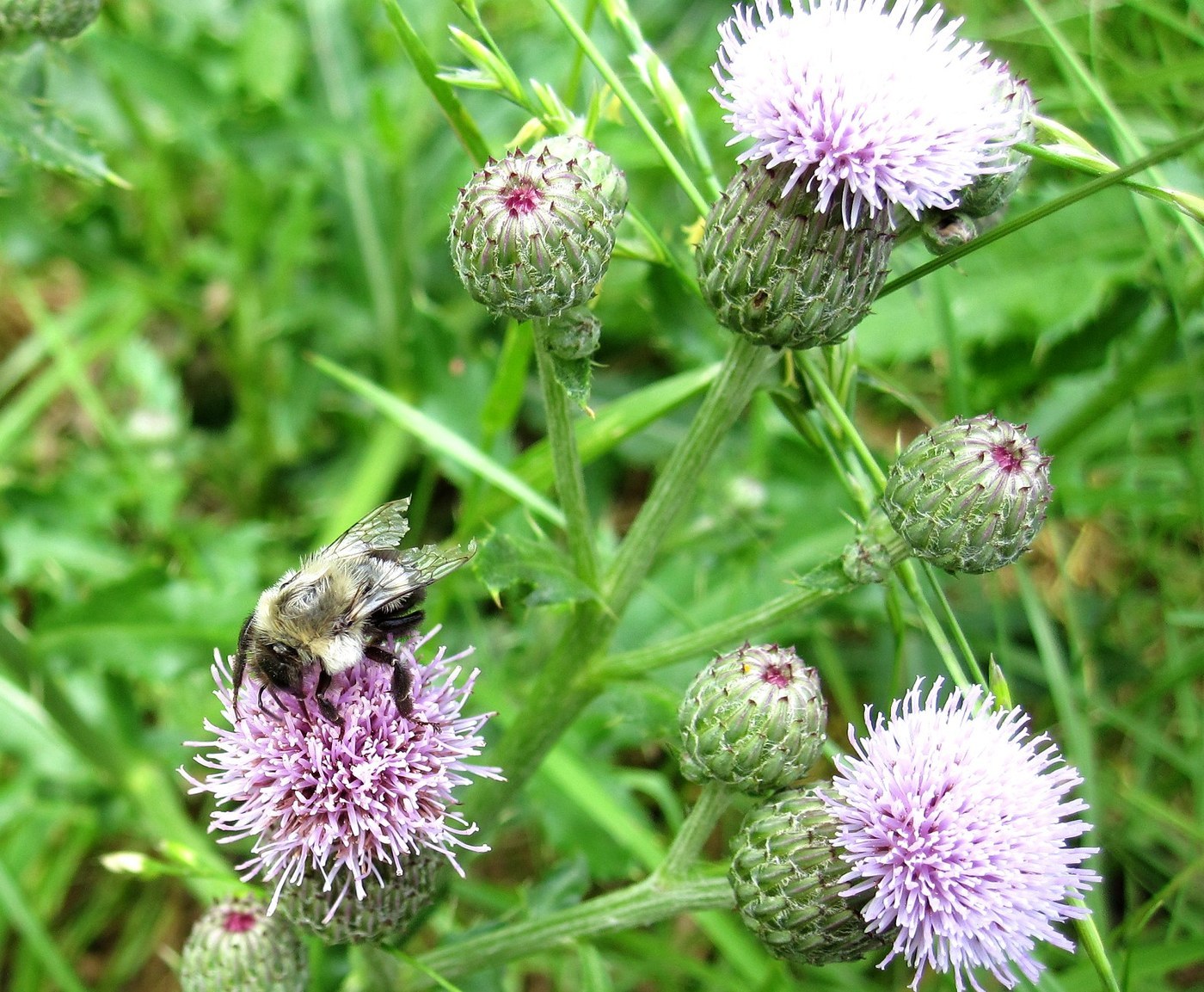
Bumblebee
A large, round, densely furry bee with bold black-and-yellow banding, known for its loud, low-pitched buzz and its ability to fly and forage in cooler temperatures than most other bees.
bee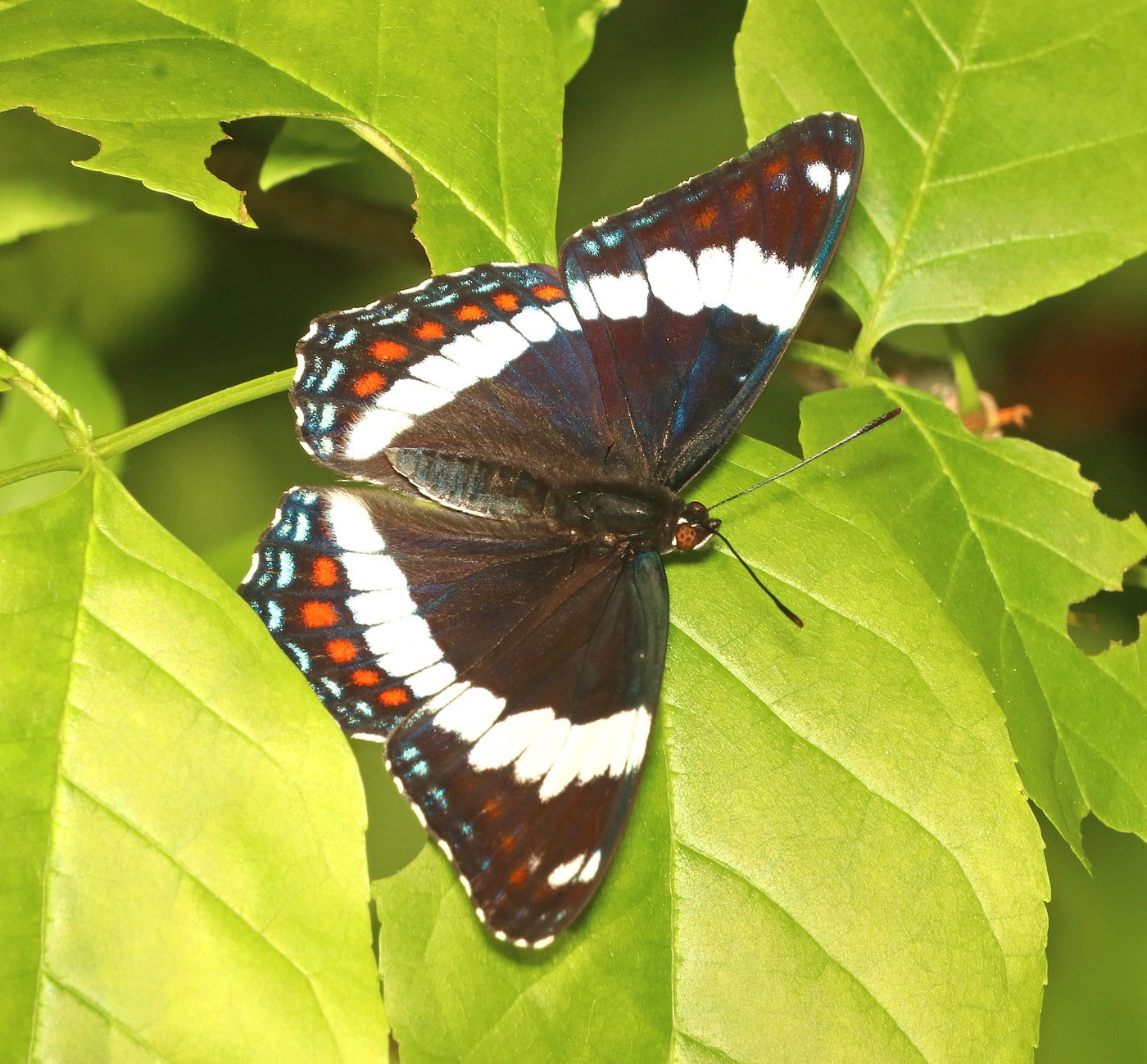
White Admiral
A large, dark butterfly crossed by a bold white band on both wings, the northern form of the same species that produces the iridescent blue Red-spotted Purple farther south.
butterfly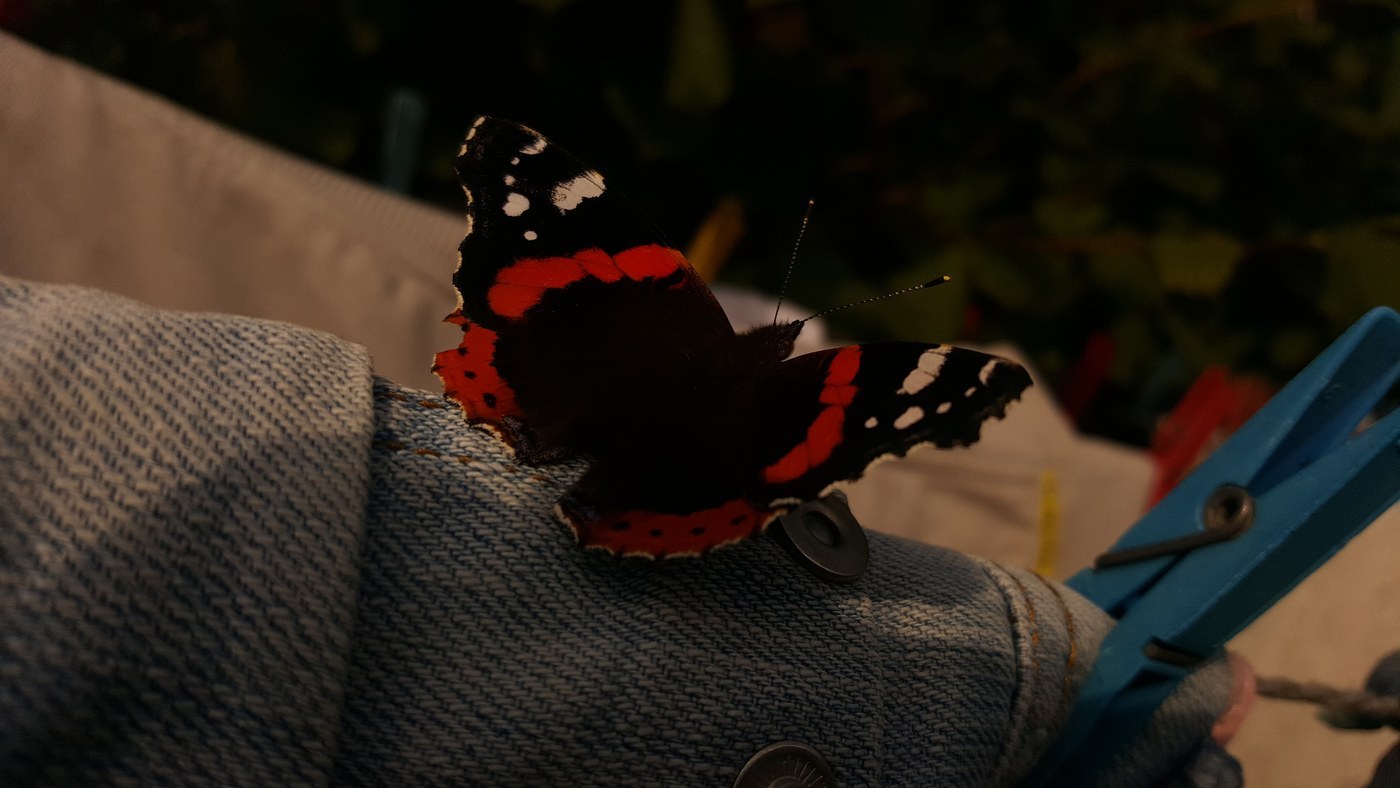
Red Admiral
A fast-flying, strikingly patterned butterfly with velvety black wings crossed by a bold orange-red band and white-spotted tips, often seen basking on tree trunks or sipping from fallen fruit.
butterflyKatydid
A leaf-mimicking insect with broad, veined green wings shaped remarkably like foliage, best known for the loud, rhythmic 'katy-did, katy-didn't' chorus males produce on warm summer nights.
grasshopper-cricket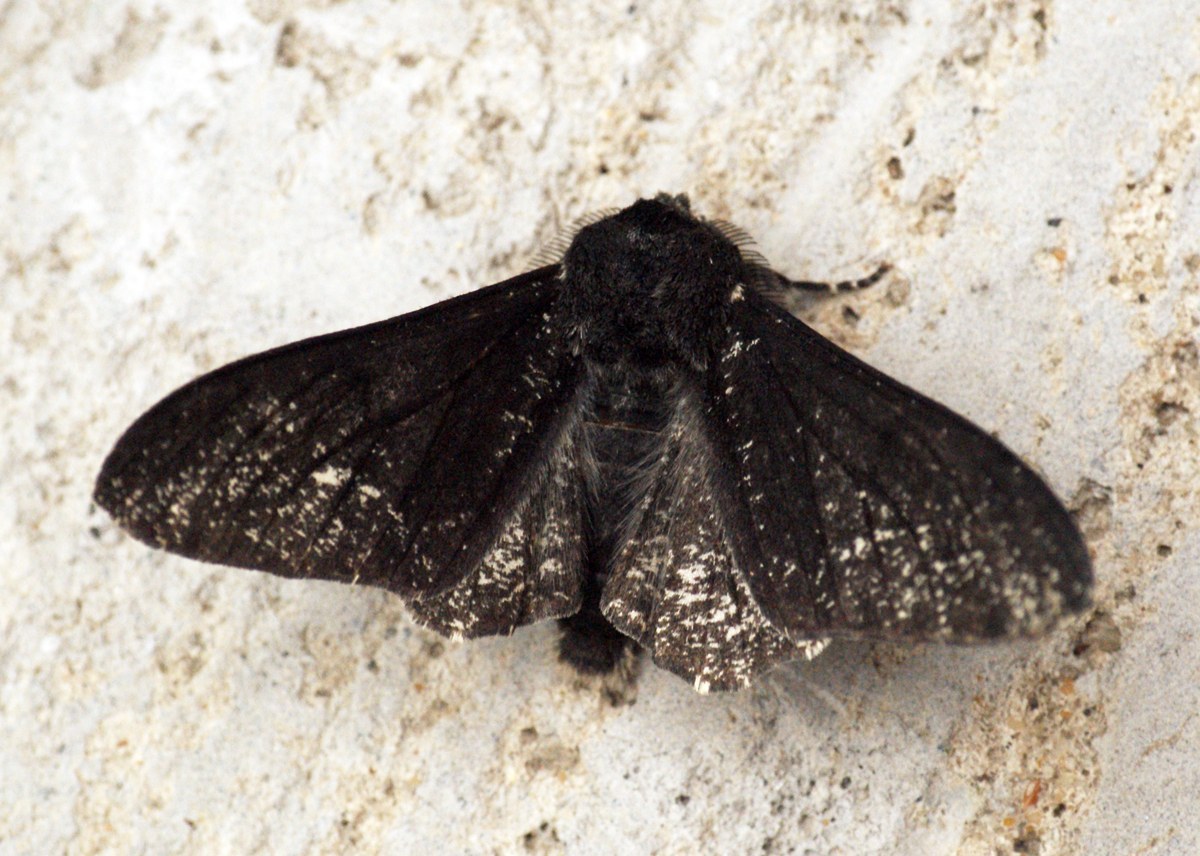
Peppered Moth
A medium-sized moth with finely speckled black-and-white wings that camouflage it against lichen-covered bark, world-famous as a textbook example of evolution in action during the industrial era.
moth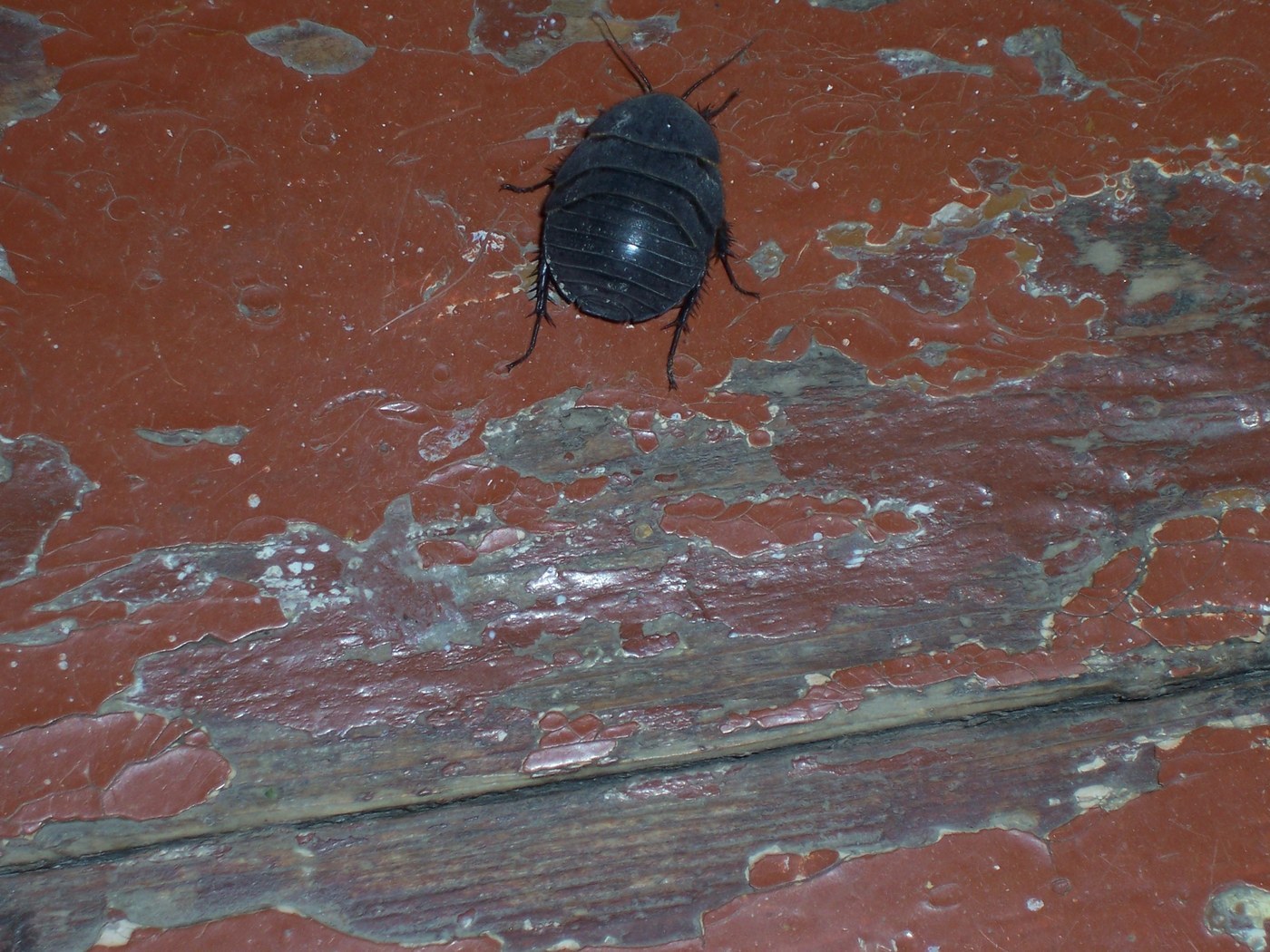
Oriental Cockroach
A dark, matte blackish-brown cockroach with short wings that do not cover the abdomen, especially in females, and a preference for cooler, damper hiding spots than most other common cockroaches.
other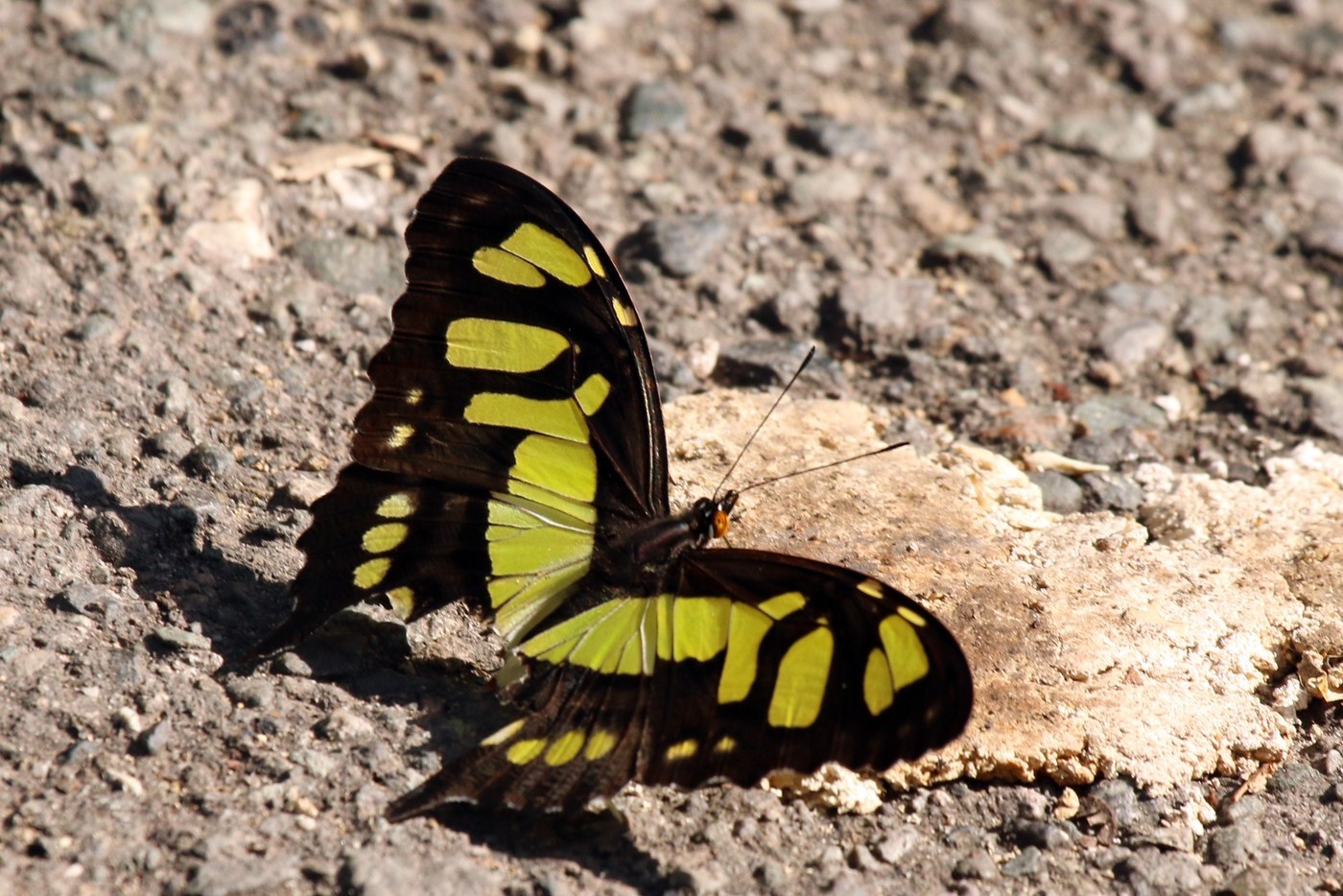
Malachite Butterfly
A large tropical butterfly named for the vivid green, mineral-like patches that break up its otherwise dark brown wings, giving it a translucent, stained-glass appearance in flight.
butterfly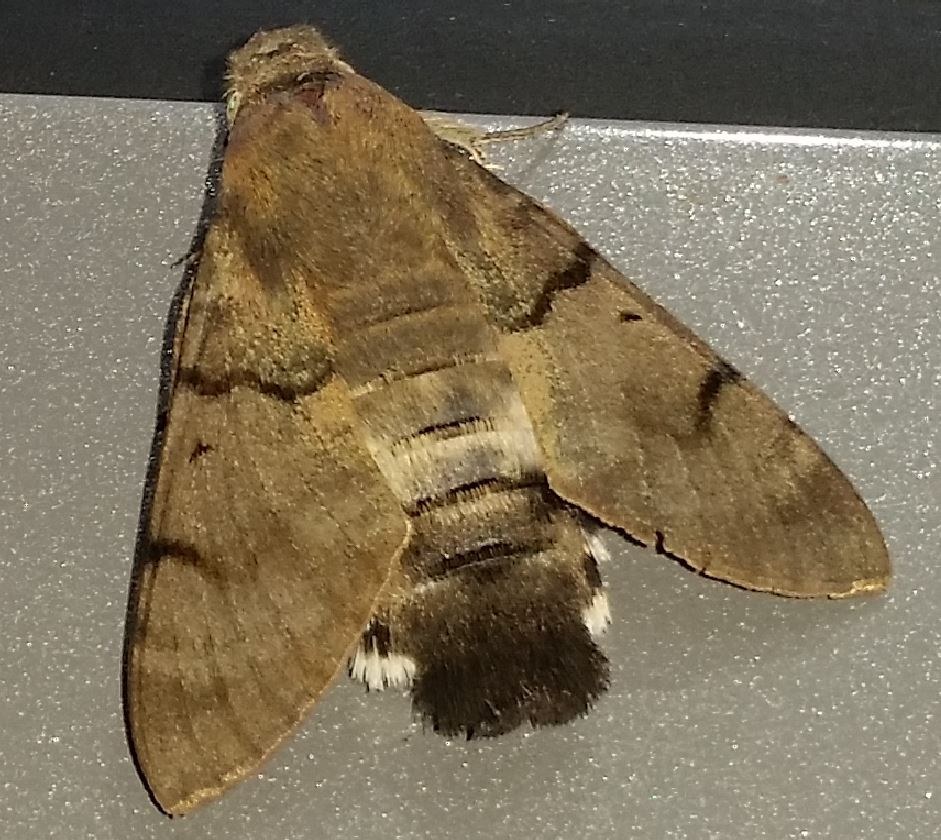
Hummingbird Hawk-Moth
A day-flying moth that hovers in front of flowers on blurring wings while unspooling a long proboscis to sip nectar, so closely mimicking a hummingbird in flight that it is frequently mistaken for one.
moth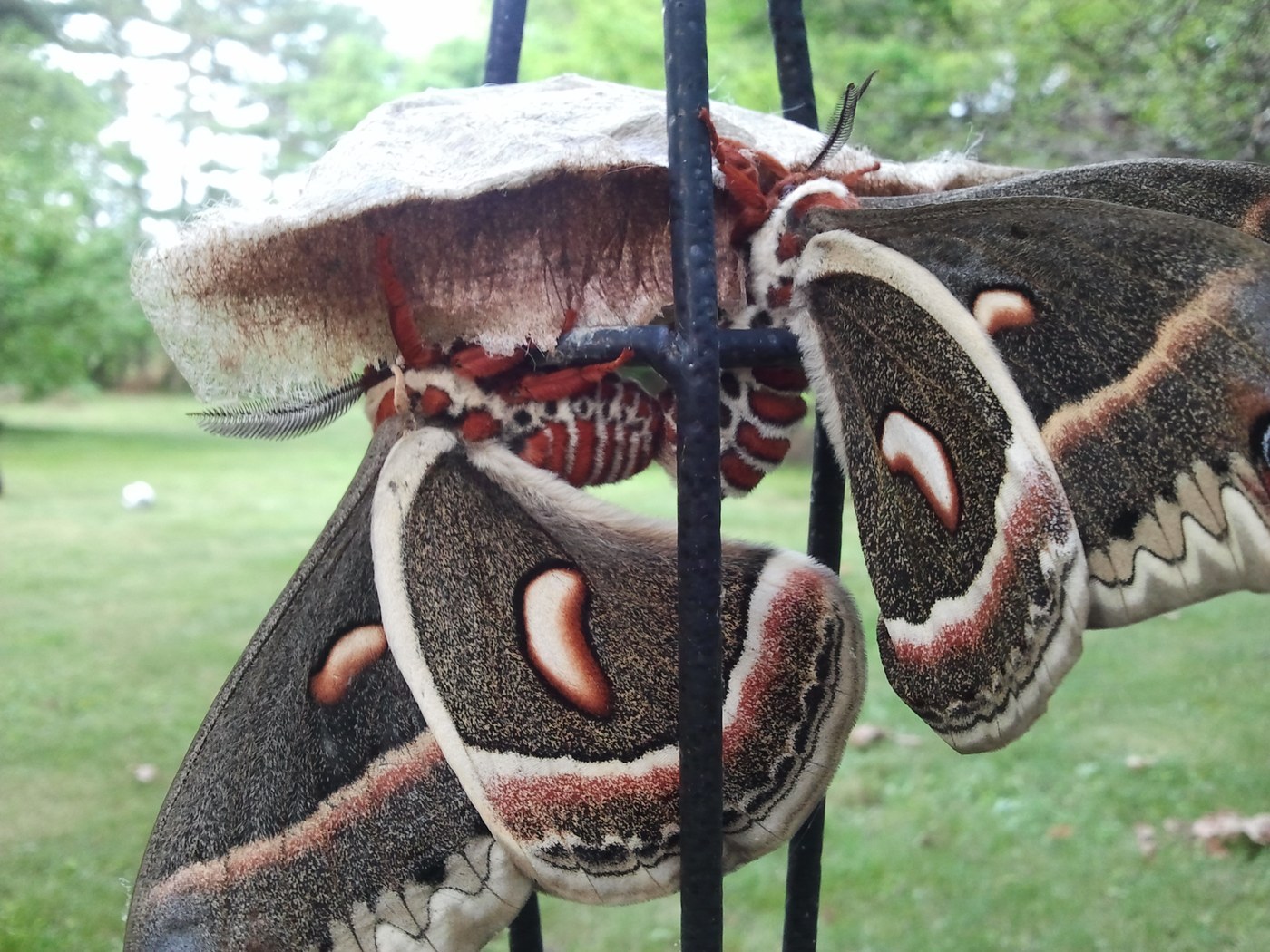
Cecropia Moth
North America's largest native moth, the Cecropia is a spectacular giant silkmoth with reddish-brown wings marked by crescent-shaped white spots and bold bands of red, white, and tan.
moth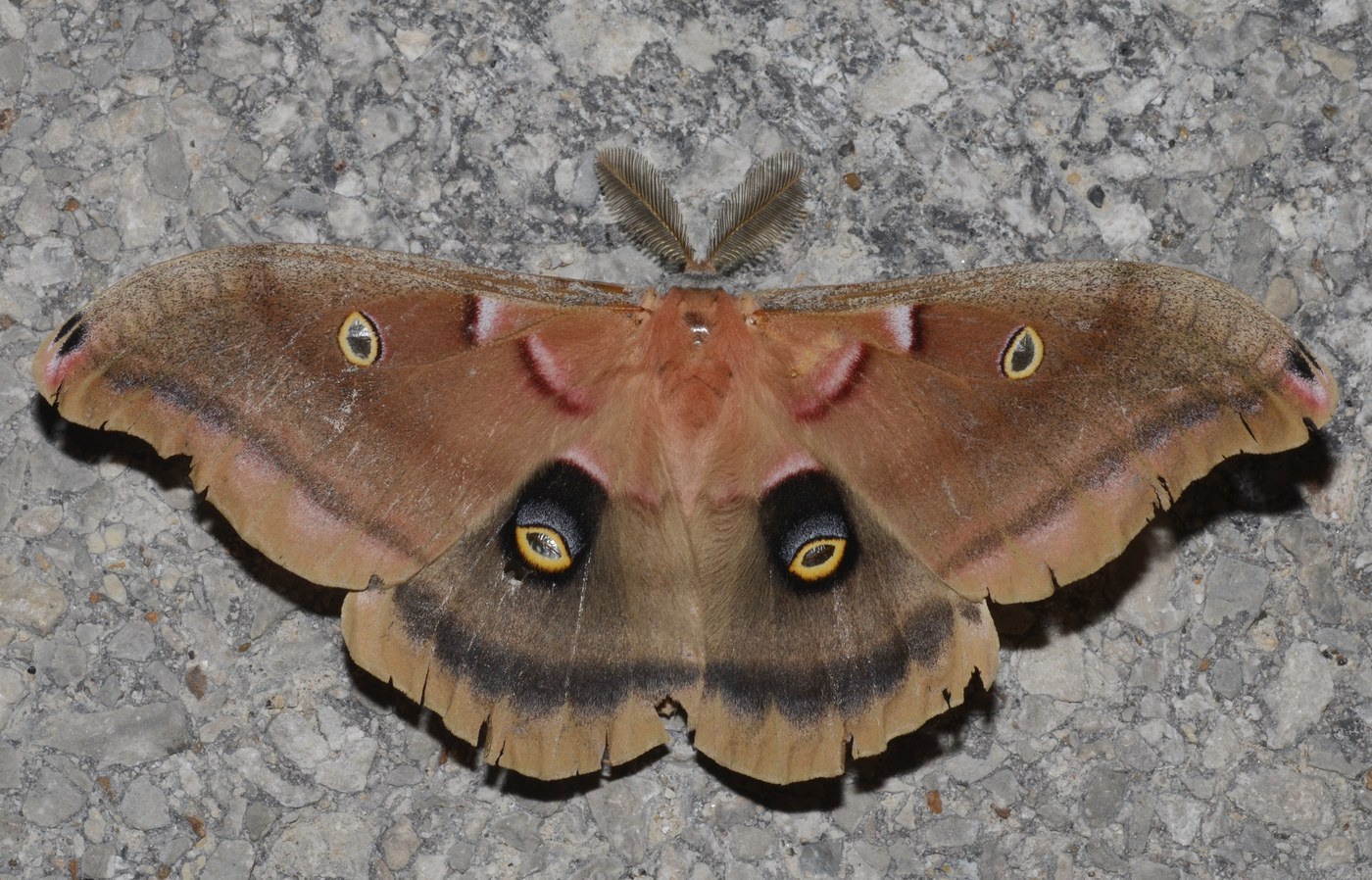
Antheraea Silkmoth
A large, robust silkmoth in the genus Antheraea with broad reddish-brown to tan wings, each marked with a prominent transparent, eye-like spot, representing a group of giant moths long valued for producing wild silk.
moth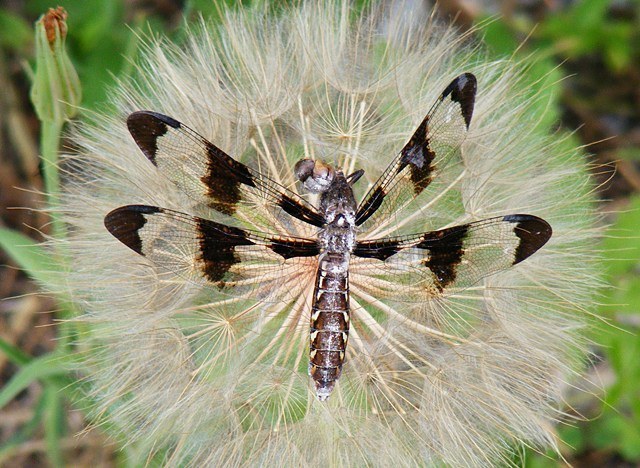
Twelve-spotted Skimmer
A big, boldly patterned skimmer whose wings each carry three chocolate-brown patches, and whose mature males add chalky white flashes between them for a striking black-and-white flicker in flight.
dragonfly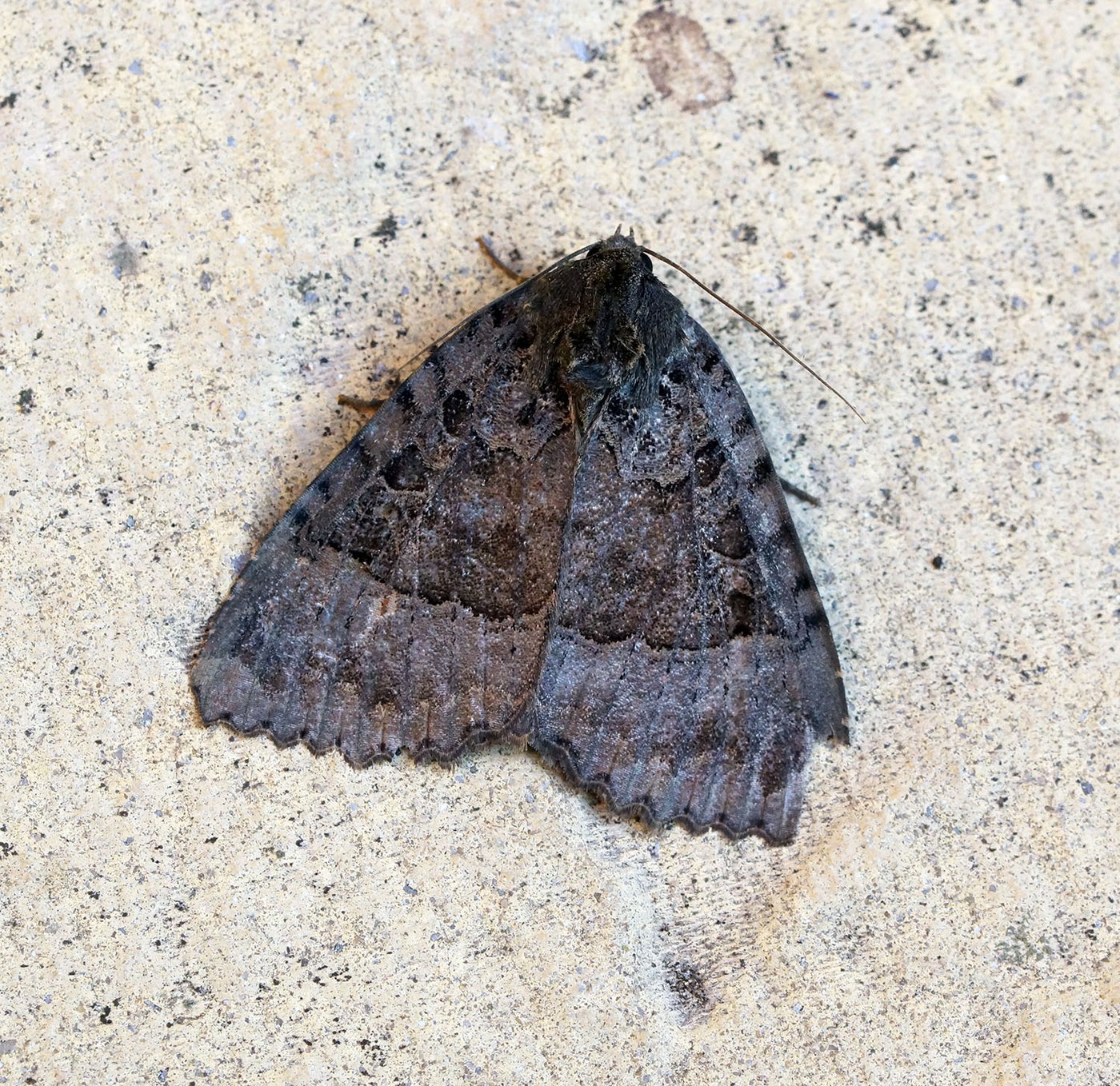
Old Lady Moth
A large, dusky brown noctuid moth with an intricate, wood-grain-like pattern of dark streaks and pale flecks across broad wings, often found resting motionless in sheds and against tree bark by day.
moth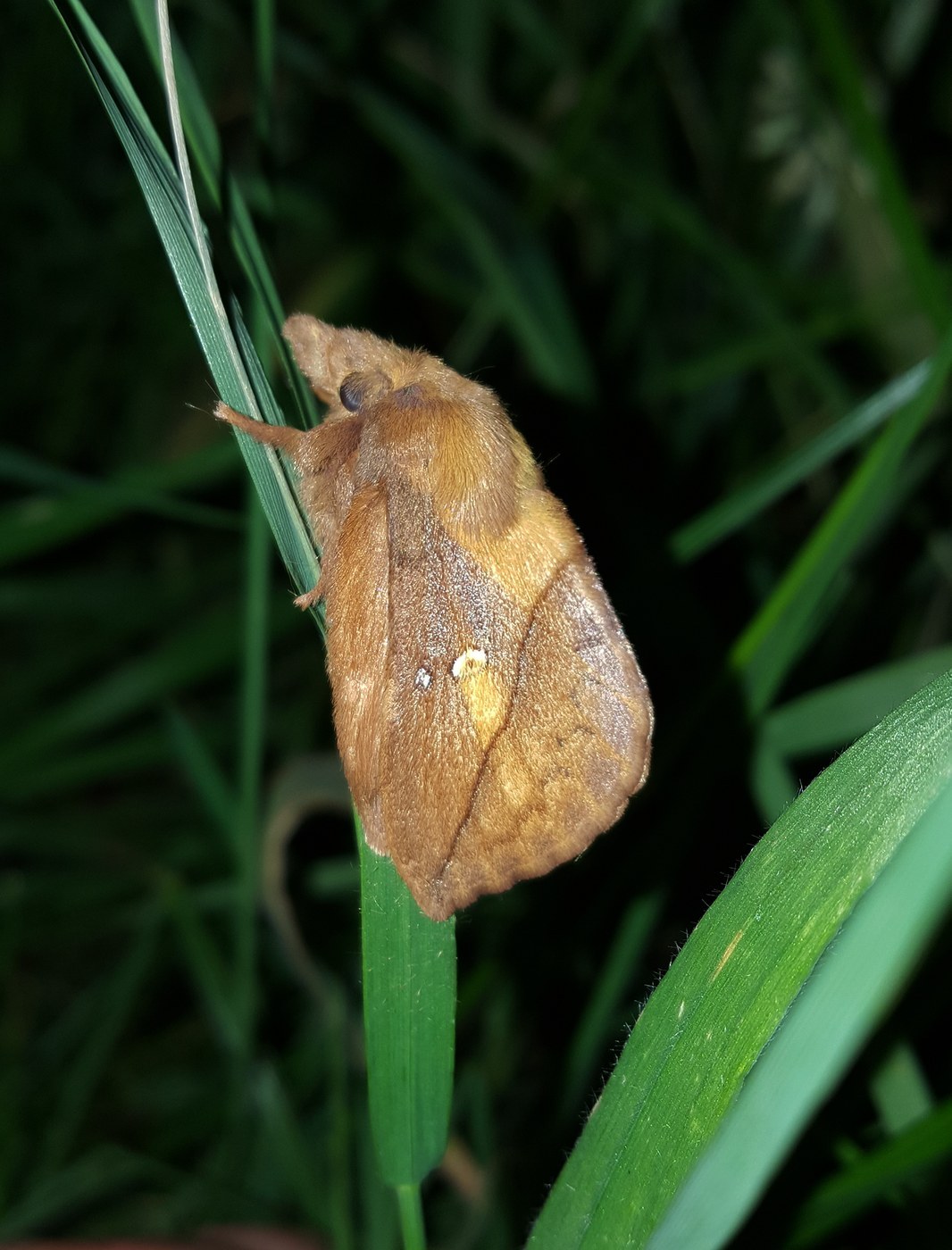
Drinker Moth
A stout, furry moth with warm tawny-orange to buff-brown wings marked by two small white spots on each forewing, named for its caterpillar's habit of drinking water droplets from grass blades.
moth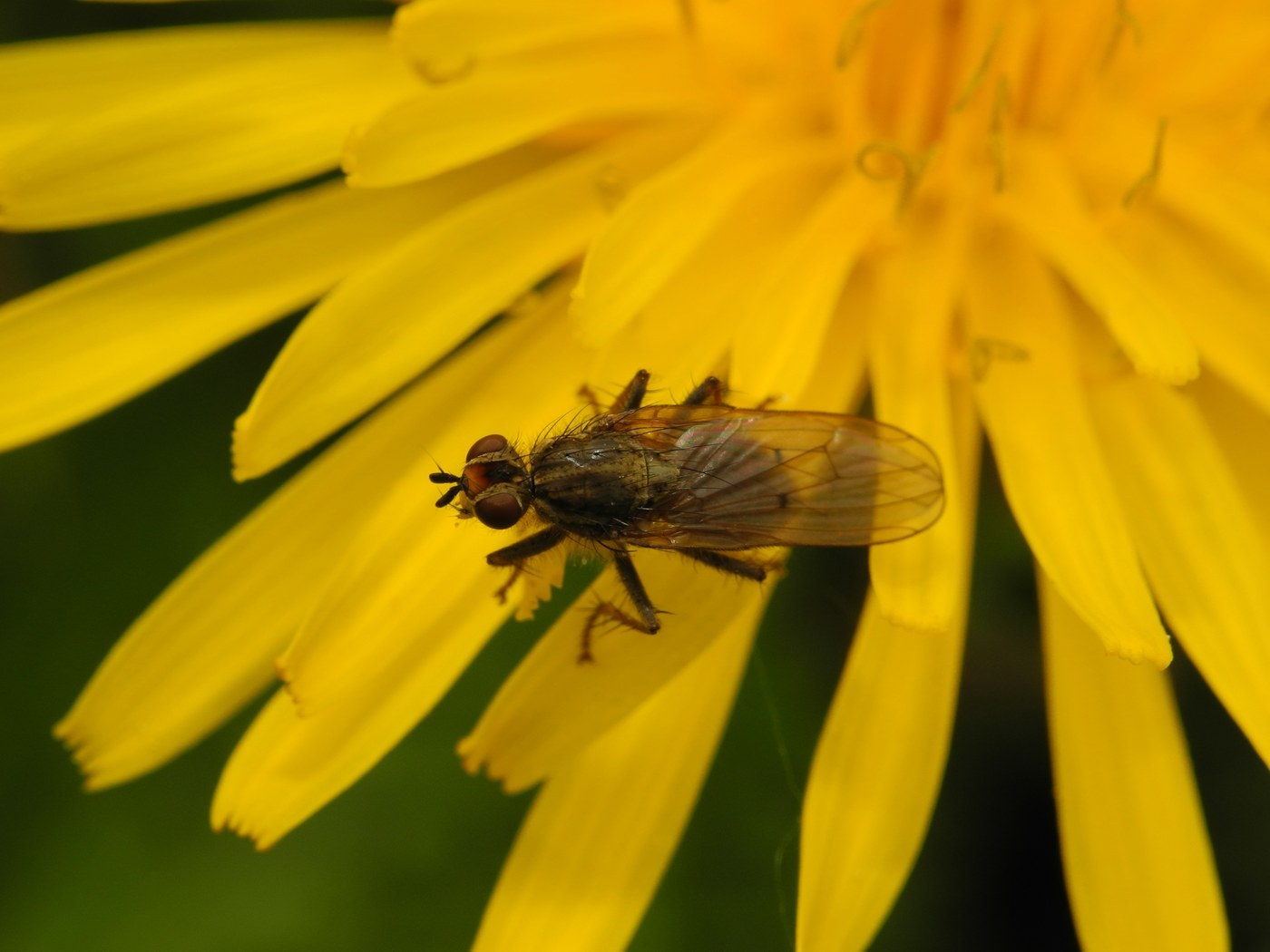
Yellow Dung Fly
A golden, densely furred fly whose bright males cluster on fresh cow pats in pastures, competing for mates while ambushing smaller insects drawn to the same spot.
fly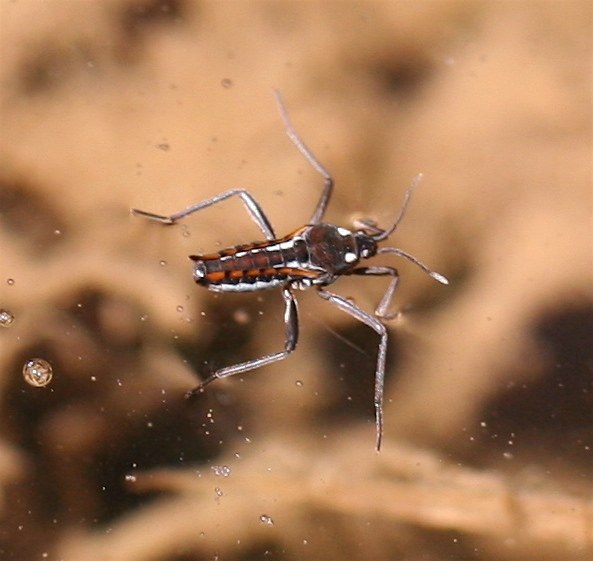
Water Cricket
Despite its name, the water cricket is not a cricket at all but a compact, velvety true bug that skates over the swirling surfaces of streams and riffles in search of trapped prey.
true-bugPurseweb Spider
A secretive, tube-dwelling spider that spends nearly its entire life hidden inside a silk-lined burrow extension camouflaged with soil and debris on the surface.
spider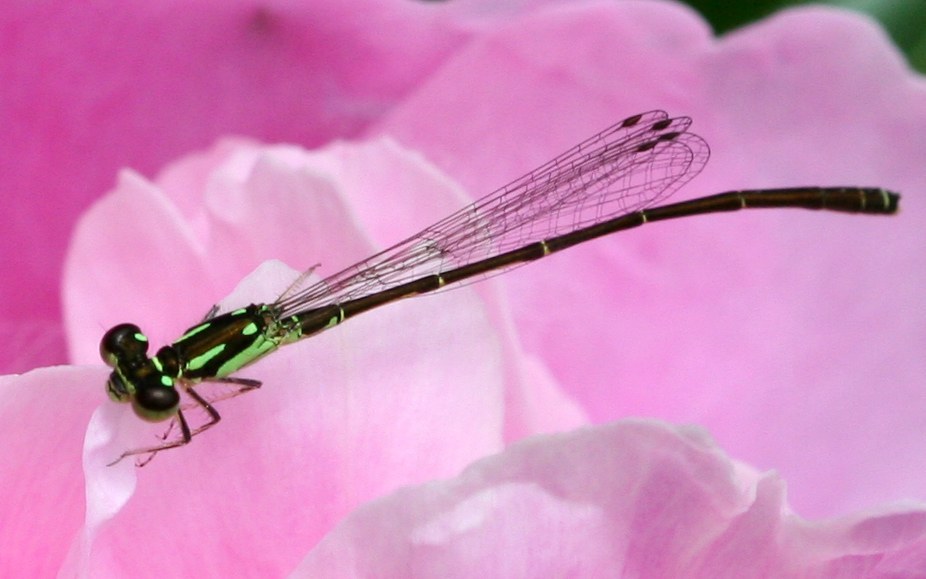
Fragile Forktail
One of North America's smallest and most delicate damselflies, the Fragile Forktail is best known for the pale green exclamation-point mark on top of its thorax.
dragonfly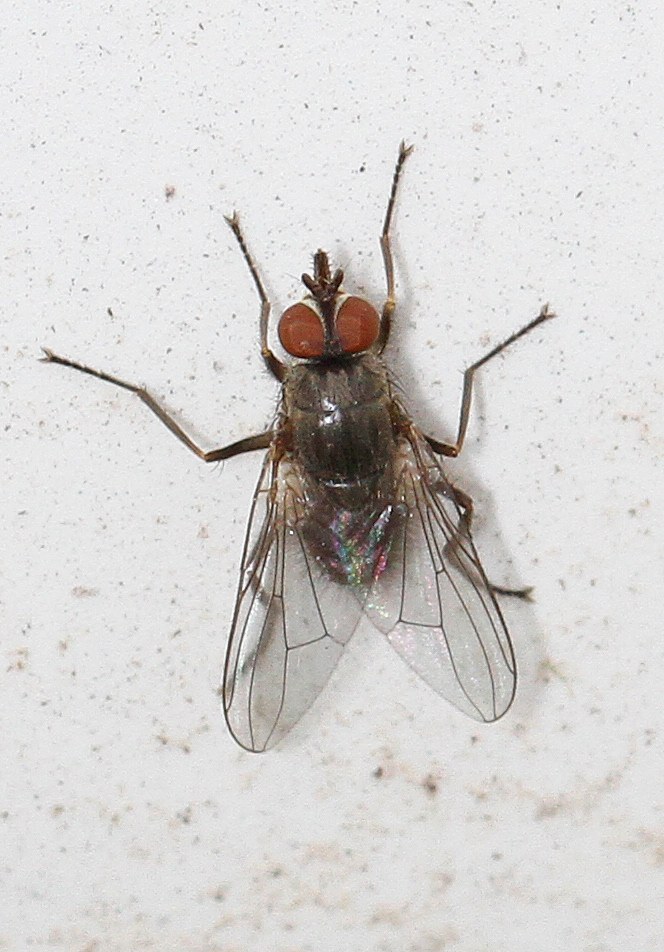
Horn Fly
A tiny, dark fly that clusters in dense patches on the backs and shoulders of grazing cattle, using piercing mouthparts to take frequent small blood meals.
fly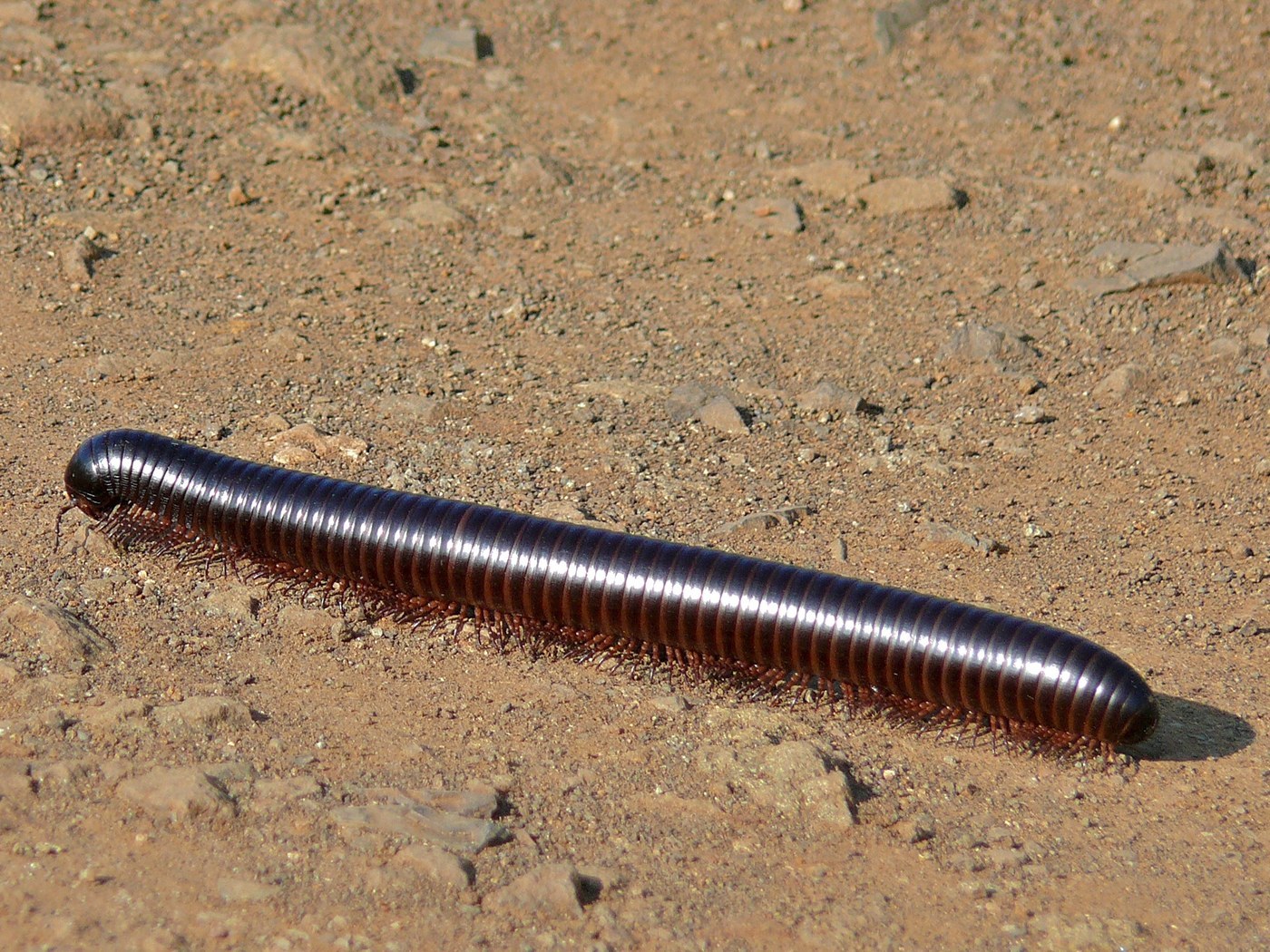
Giant African Millipede
One of the largest millipedes in the world, a slow-moving, cylindrical detritivore covered in hundreds of tiny legs that curls into a tight defensive coil when disturbed.
myriapod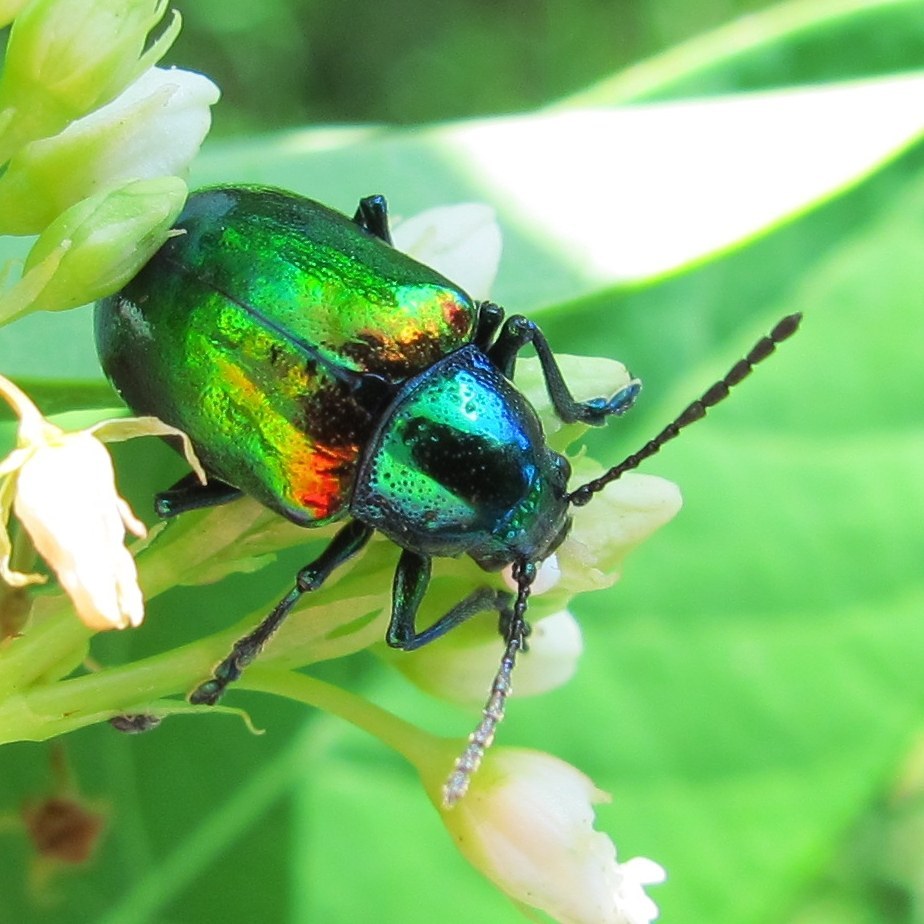
Dogbane Beetle
A small, brilliantly iridescent leaf beetle that shifts between shades of green, gold, blue, and copper depending on the viewing angle, always found on dogbane plants.
beetleCave Spider
A long-legged orb weaver adapted to the twilight zone of caves, spinning large webs across cavern mouths and dangling its egg sacs from silk threads deep within the darkness.
spiderDamselfly Nymph
A slender aquatic predator with three feathery tail gills, patiently stalking small prey among pond plants before emerging as a delicate flying damselfly.
aquatic-insect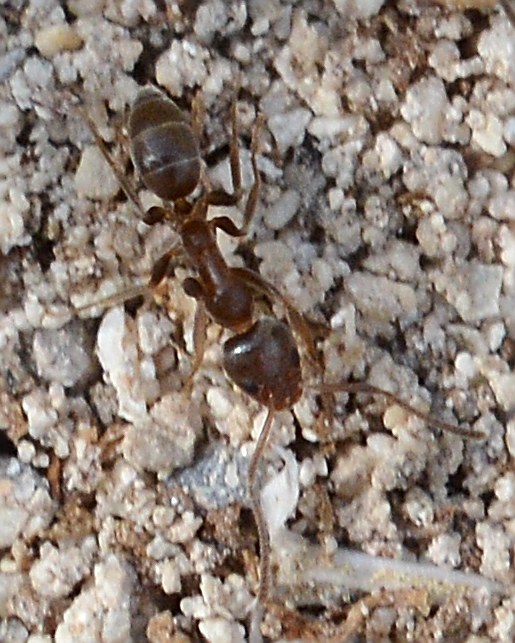
Argentine Ant
A small, uniformly light-brown ant that forms enormous, cooperative supercolonies stretching across entire regions rather than defending small individual nests.
antZebra Longwing Caterpillar
A creamy-white caterpillar dotted with black spots and armed with branching black spines, feeding exclusively on passionflower vines whose chemistry it stores for defense.
caterpillar-larva