
Bug Encyclopedia
Search and identify bugs & insects — beetles, butterflies, moths, ants, bees, spiders and more — with size, habitat, danger, behavior, and how to tell them apart.
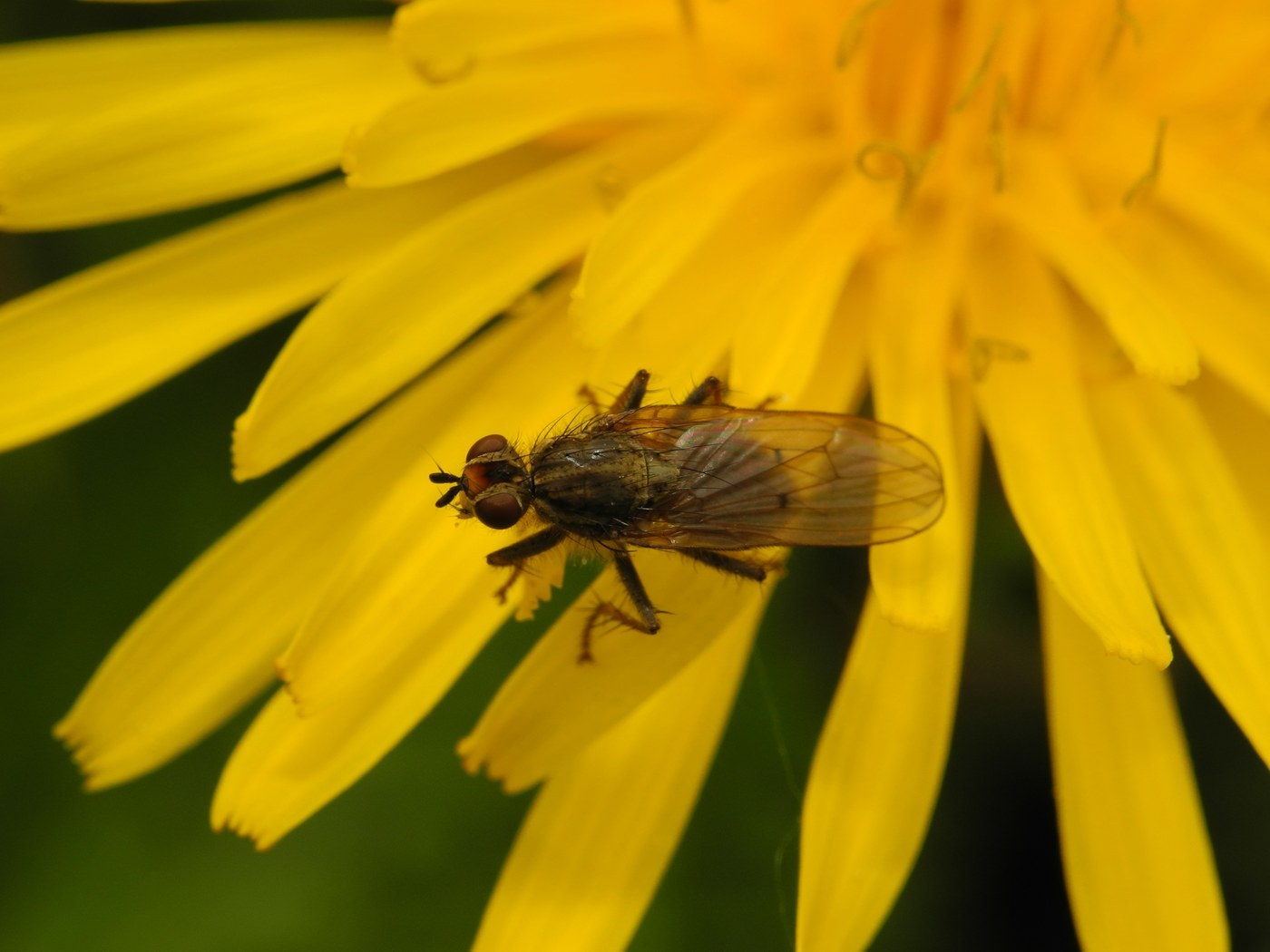
Yellow Dung Fly
A golden, densely furred fly whose bright males cluster on fresh cow pats in pastures, competing for mates while ambushing smaller insects drawn to the same spot.
fly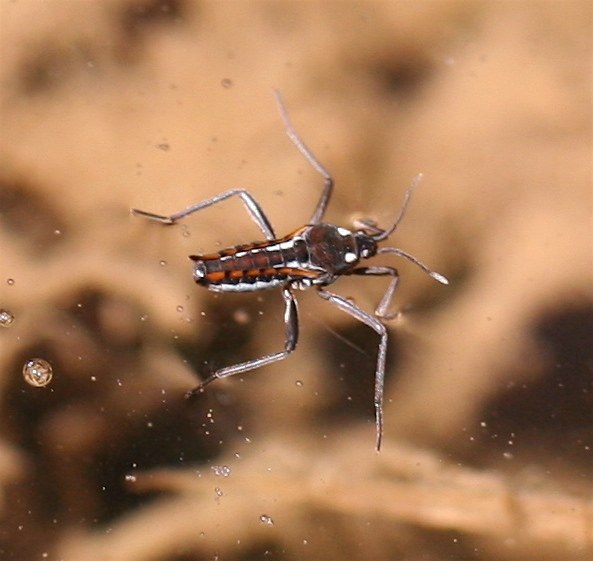
Water Cricket
Despite its name, the water cricket is not a cricket at all but a compact, velvety true bug that skates over the swirling surfaces of streams and riffles in search of trapped prey.
true-bug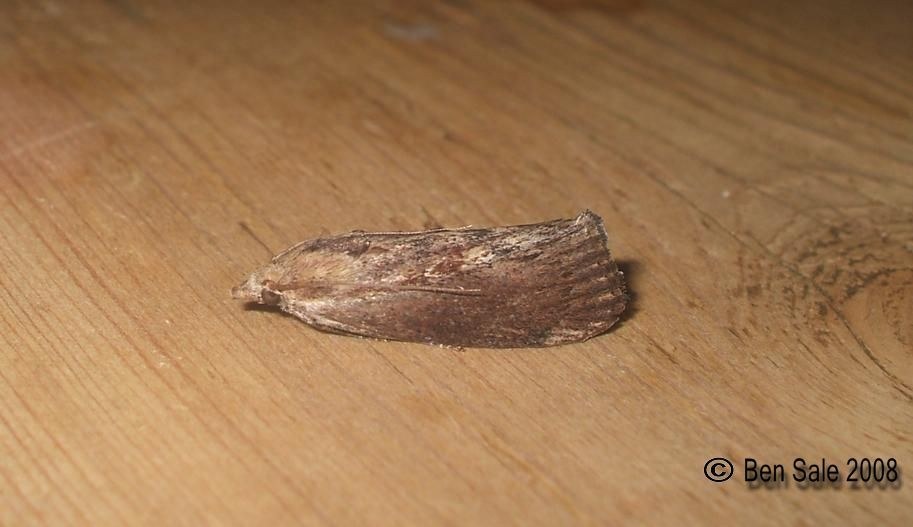
Waxworm
A soft, cream-colored grub found tunneling through beeswax comb, the waxworm is the larva of the wax moth and has become a household staple as fishing bait and reptile feed.
caterpillar-larvaTreehopper
A small, oddly shaped sap-feeding bug best known for an enlarged, often bizarre pronotum extending backward over its body, sometimes shaped like a thorn, leaf, or spike.
true-bugUnderwing Moth
A master of camouflage whose bark-patterned forewings hide brightly colored, banded hindwings that flash into view only when the moth is disturbed in flight.
mothSun Spider
A fast-running, fiercely built desert arachnid with oversized jaws, often mistaken for a giant spider despite belonging to an entirely different arachnid order.
arachnid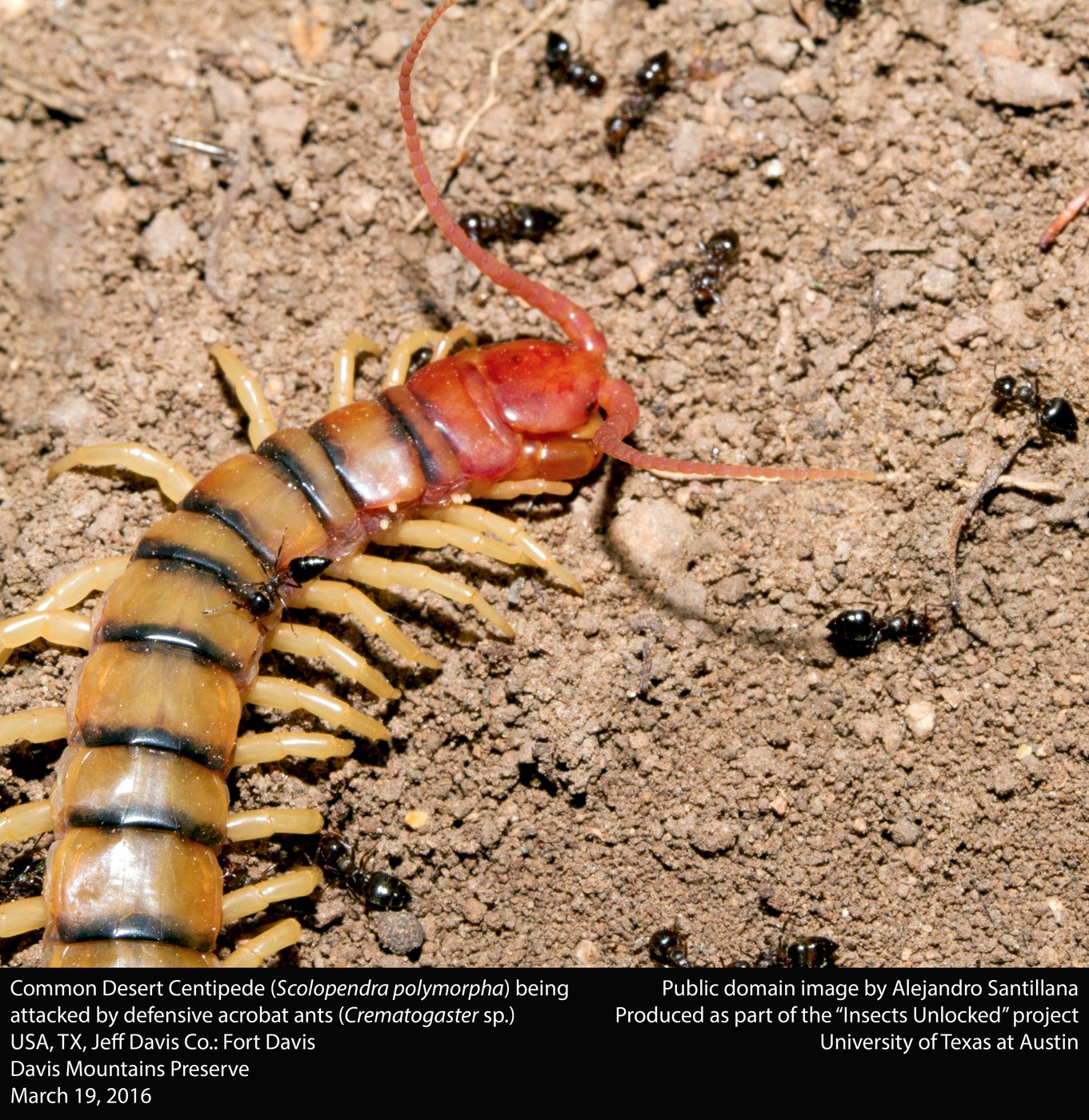
Tiger Centipede
A large, banded desert centipede with alternating dark and pale segments reminiscent of tiger stripes, capable of a fast, muscular scuttle across sand and rock.
myriapod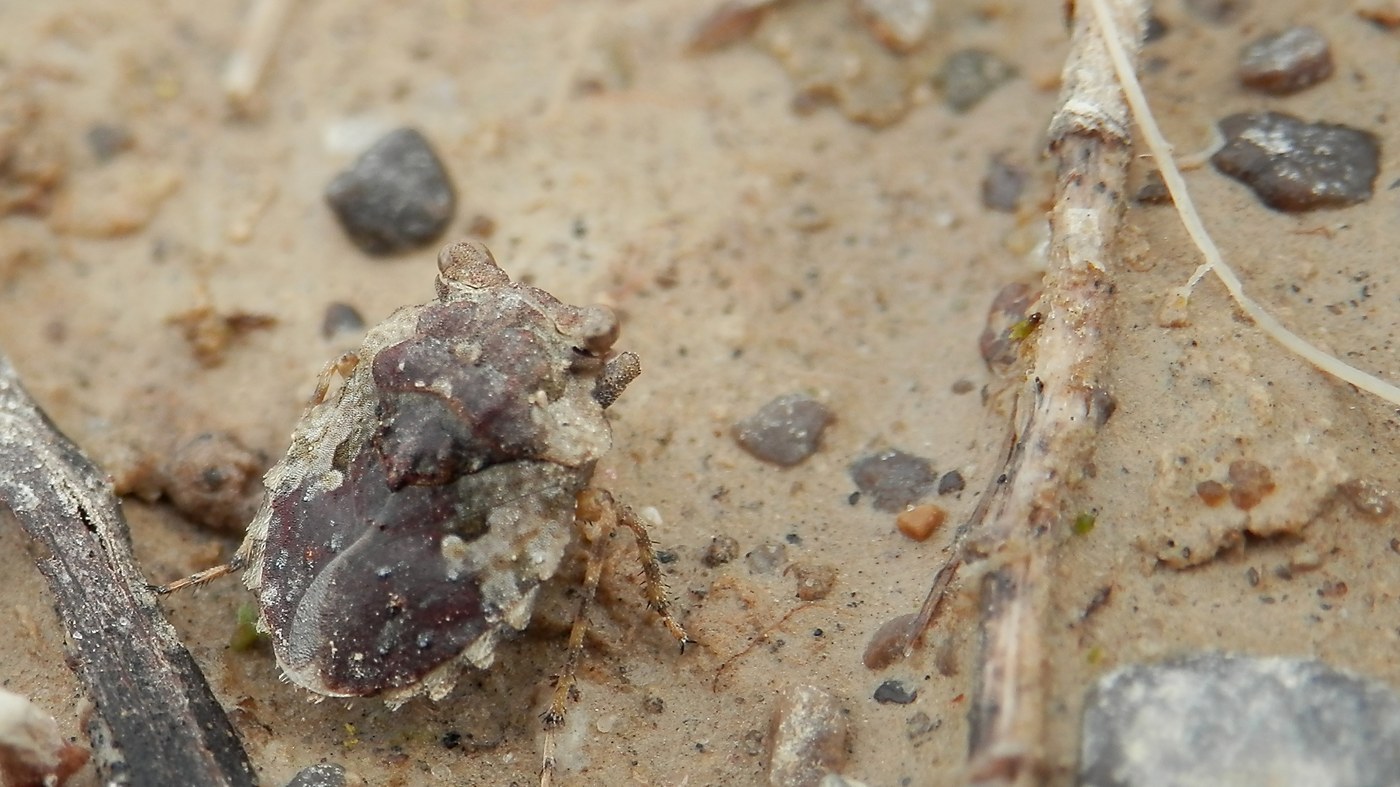
Toad Bug
A squat, warty-looking true bug with bulging eyes and a mottled brown pattern, so named for its uncanny resemblance to a tiny toad as it hops along muddy shorelines.
aquatic-insectStonefly Nymph
A flattened, armored aquatic nymph that clings tightly to rocks in swift, cold streams, serving as one of the most reliable signs of pristine water quality.
aquatic-insect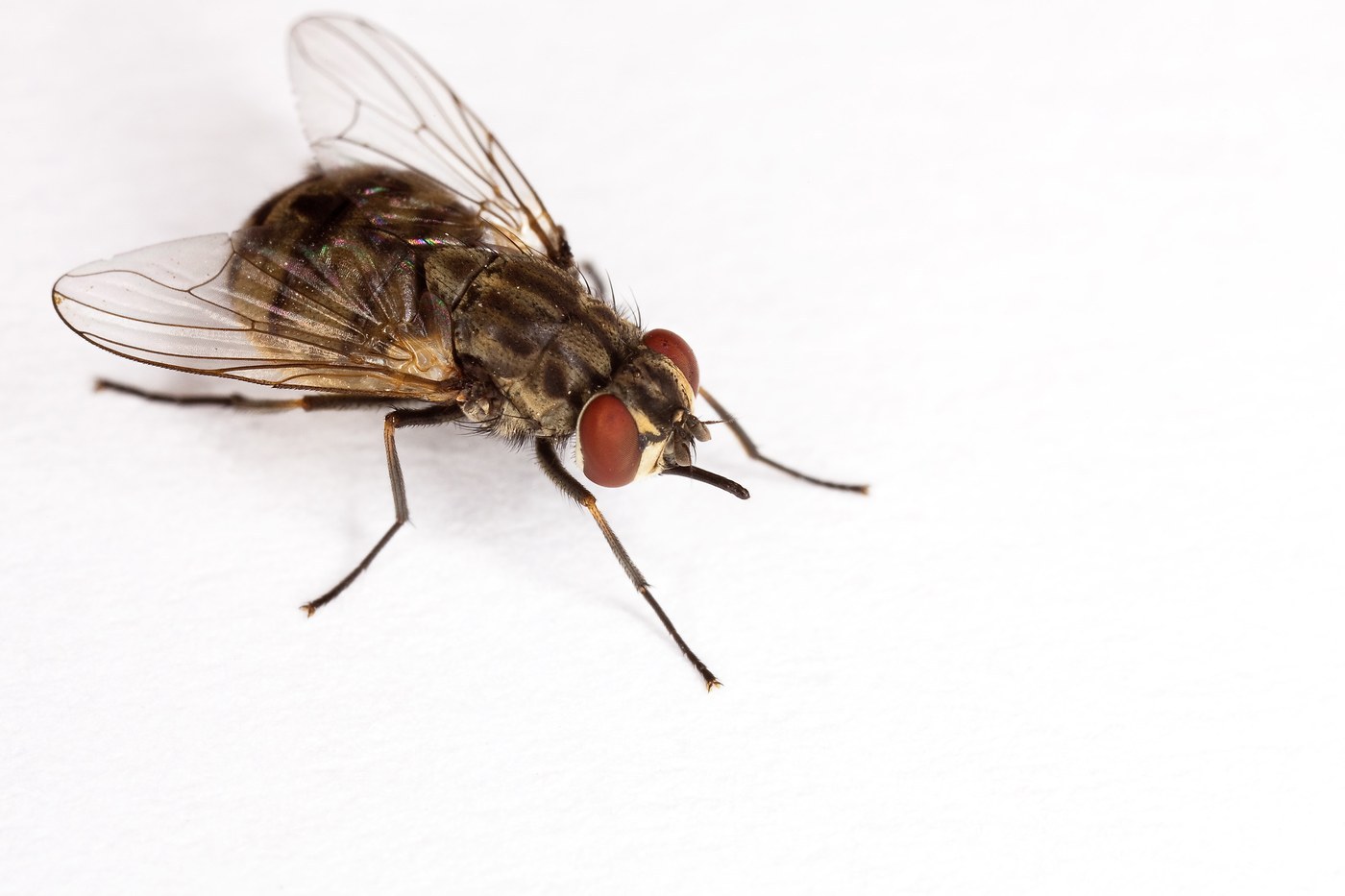
Stable Fly
A gray fly that looks almost identical to the common house fly, but carries a rigid, forward-pointing proboscis built for piercing skin rather than sponging up liquids.
fly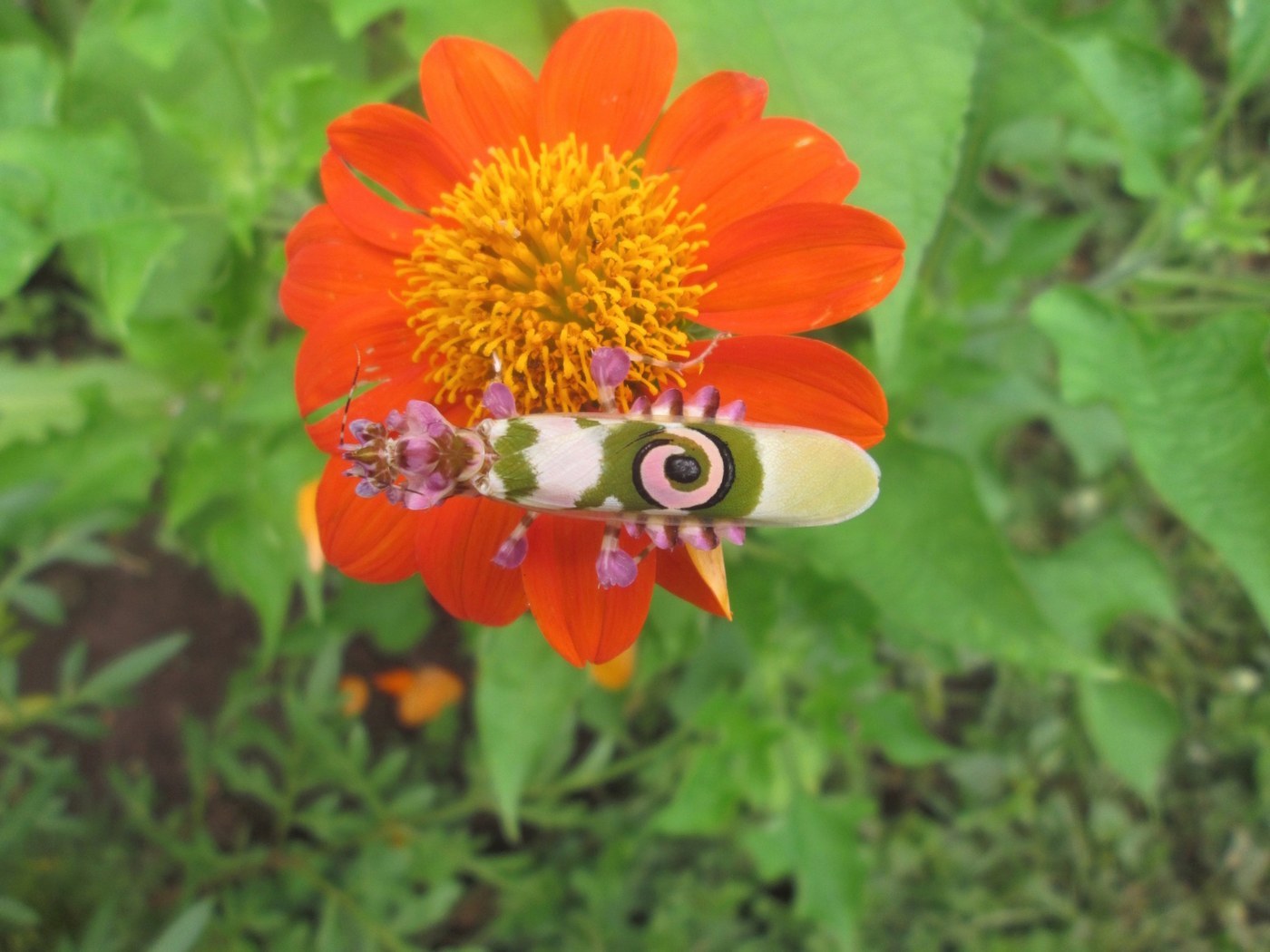
Spiny Flower Mantis
A small, boldly patterned mantis whose wing markings resemble a pair of eyespots, flashed open in a startling display whenever a predator ventures too close.
mantis-stick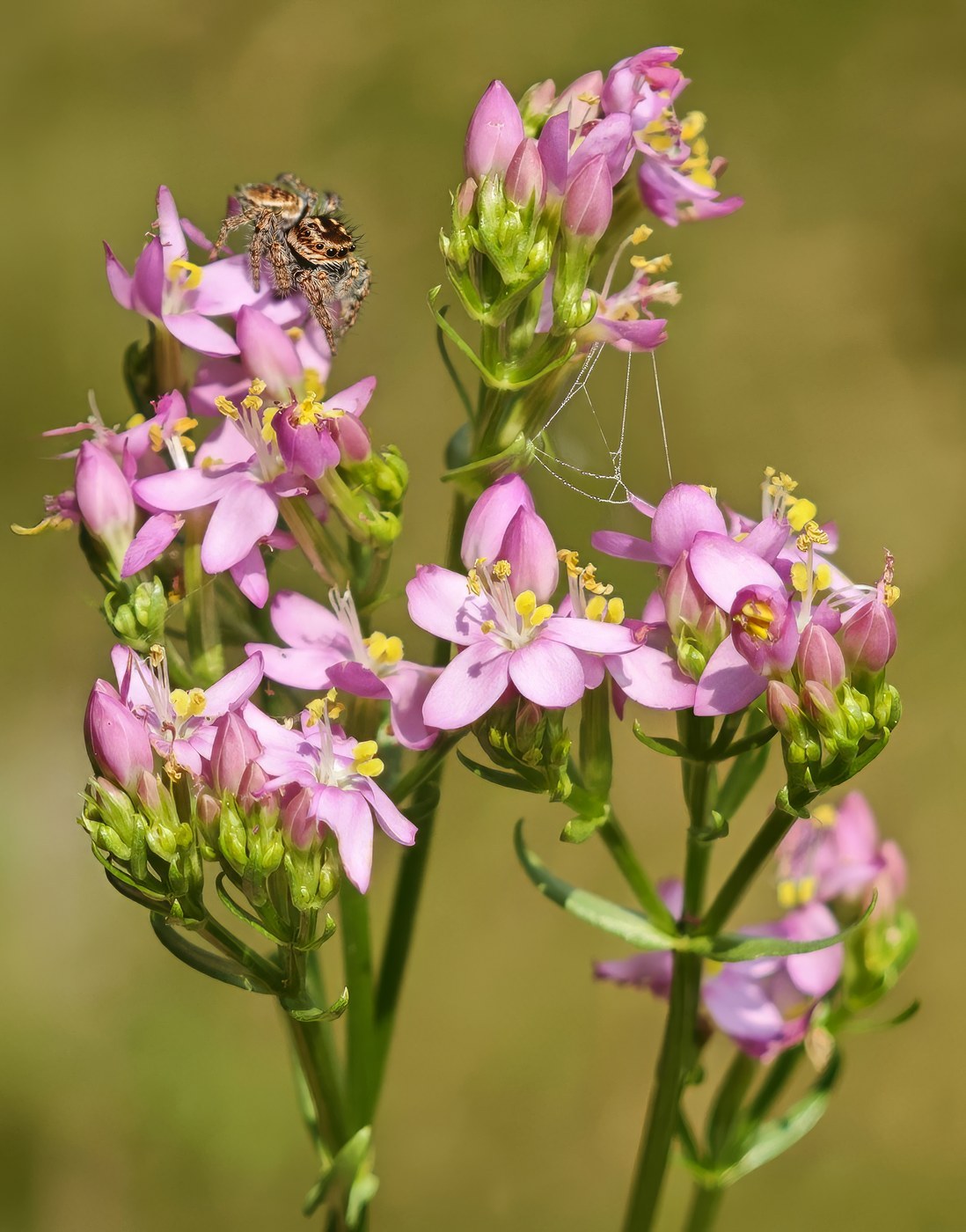
Regal Jumping Spider
One of the largest and most striking North American jumping spiders, with a velvety black body, bold markings, and huge iridescent green or blue-lined eyes.
spider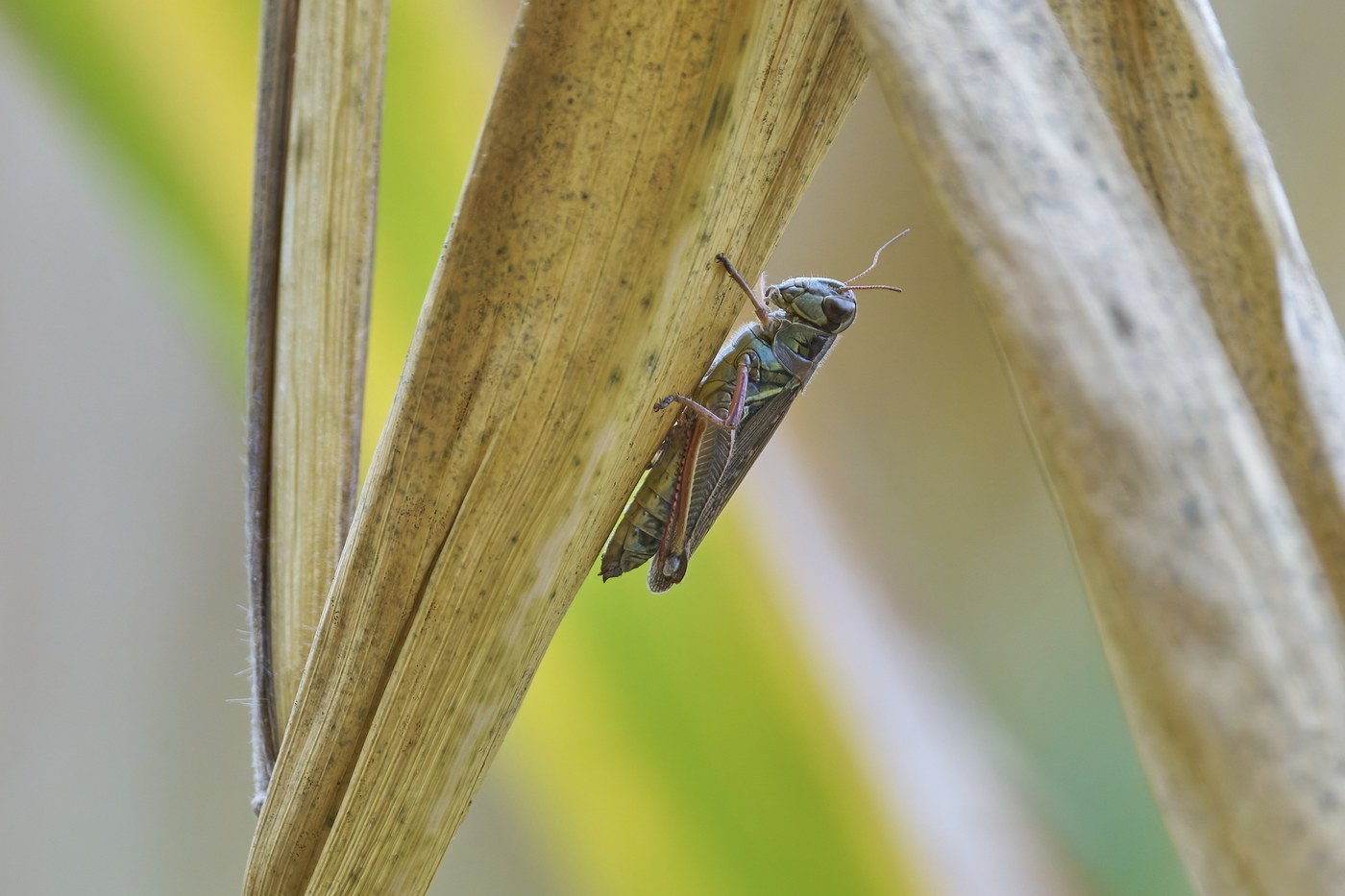
Red-legged Grasshopper
One of the most abundant and widespread grasshoppers in North America, the red-legged grasshopper is easily spotted by its reddish hind shins flashing amid a brown, mottled body.
grasshopper-cricket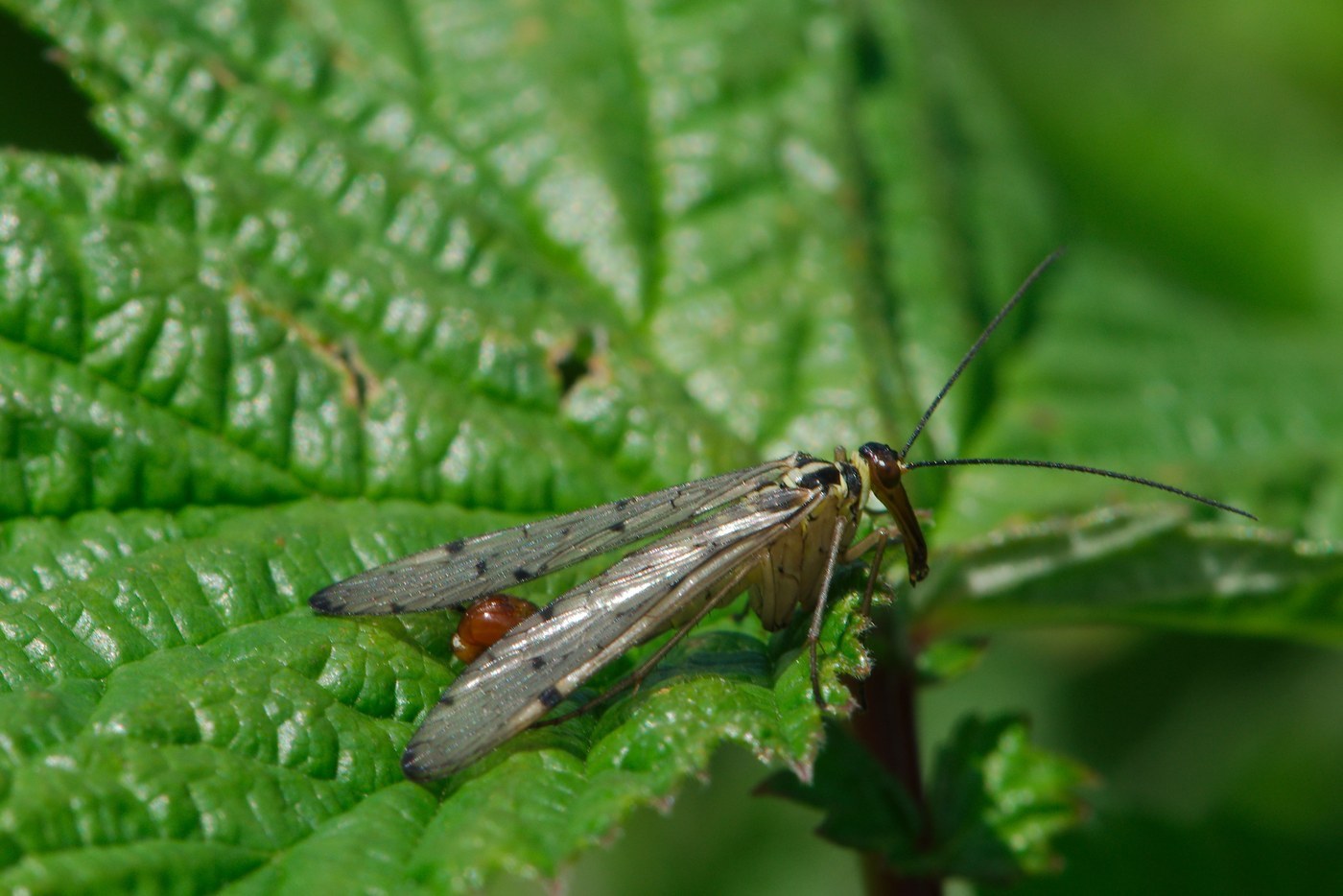
Scorpionfly
A harmless scavenger whose alarming name comes from the male's swollen, upturned abdominal tip, which curls like a scorpion's tail but carries no sting.
other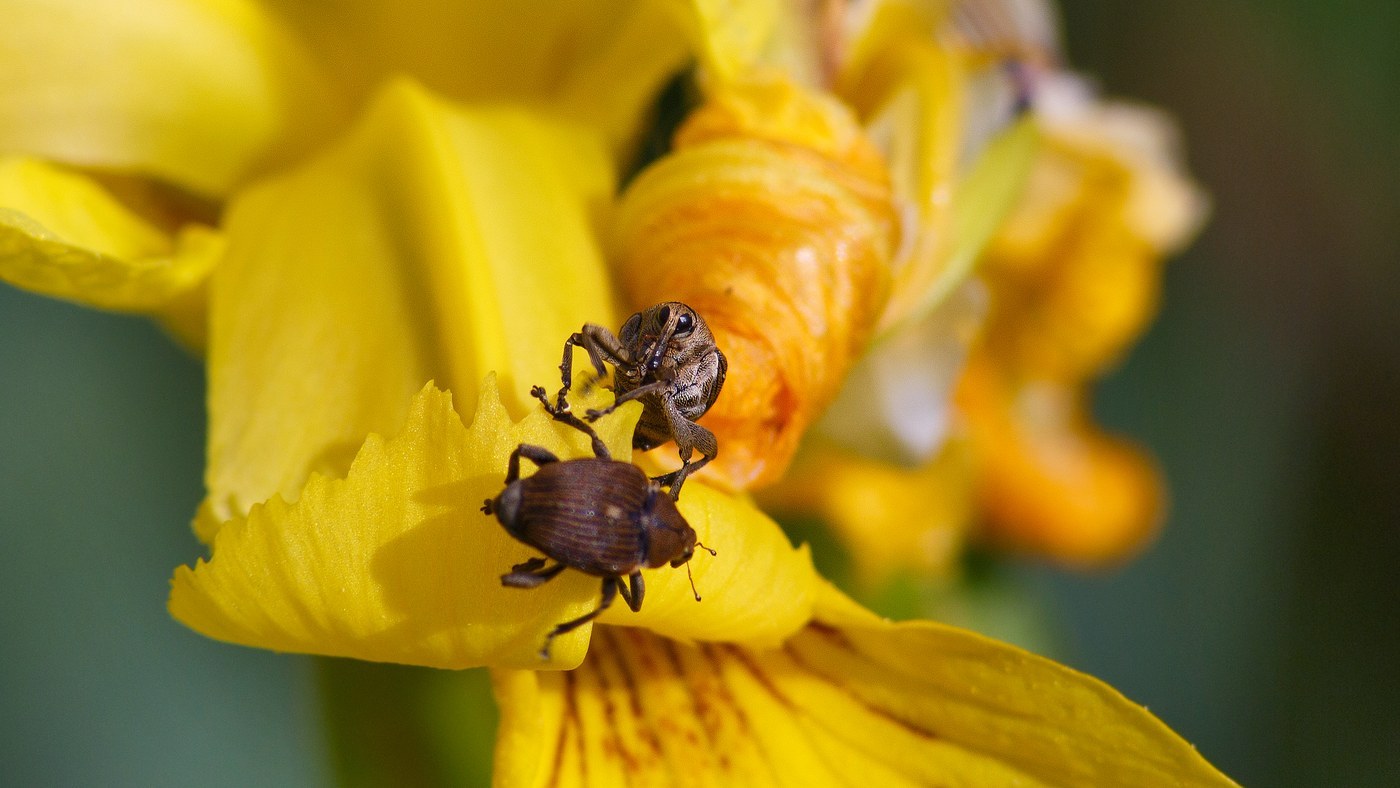
Snout Beetle
A small beetle instantly recognized by its elongated, downward-curving snout, tipped with chewing mouthparts, used to bore into seeds, nuts, stems, or fruit.
beetle
Rice Weevil
A tiny reddish-brown weevil with a long curved snout and four faint pale spots on its wing covers, commonly found infesting stored rice, wheat, and other grain products.
beetle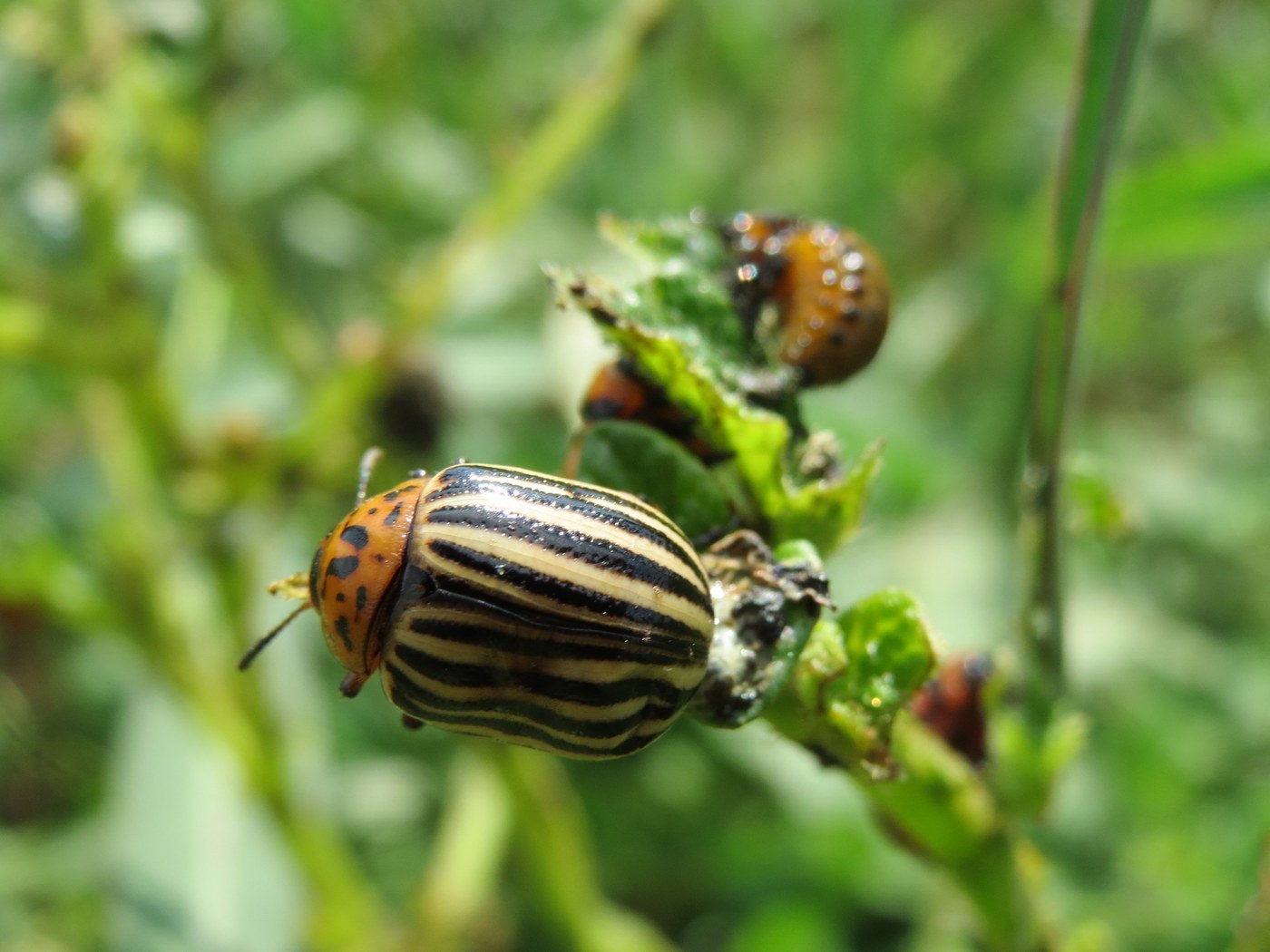
Potato Bug
A rounded, boldly striped beetle in cream and black that feeds on potato and other nightshade foliage, easily recognized by the ten black stripes running down its wing covers.
beetlePhorid Fly
A tiny, hump-backed fly best known for scuttling erratically across countertops and floors rather than taking flight, drawn to anything rotting or moist.
fly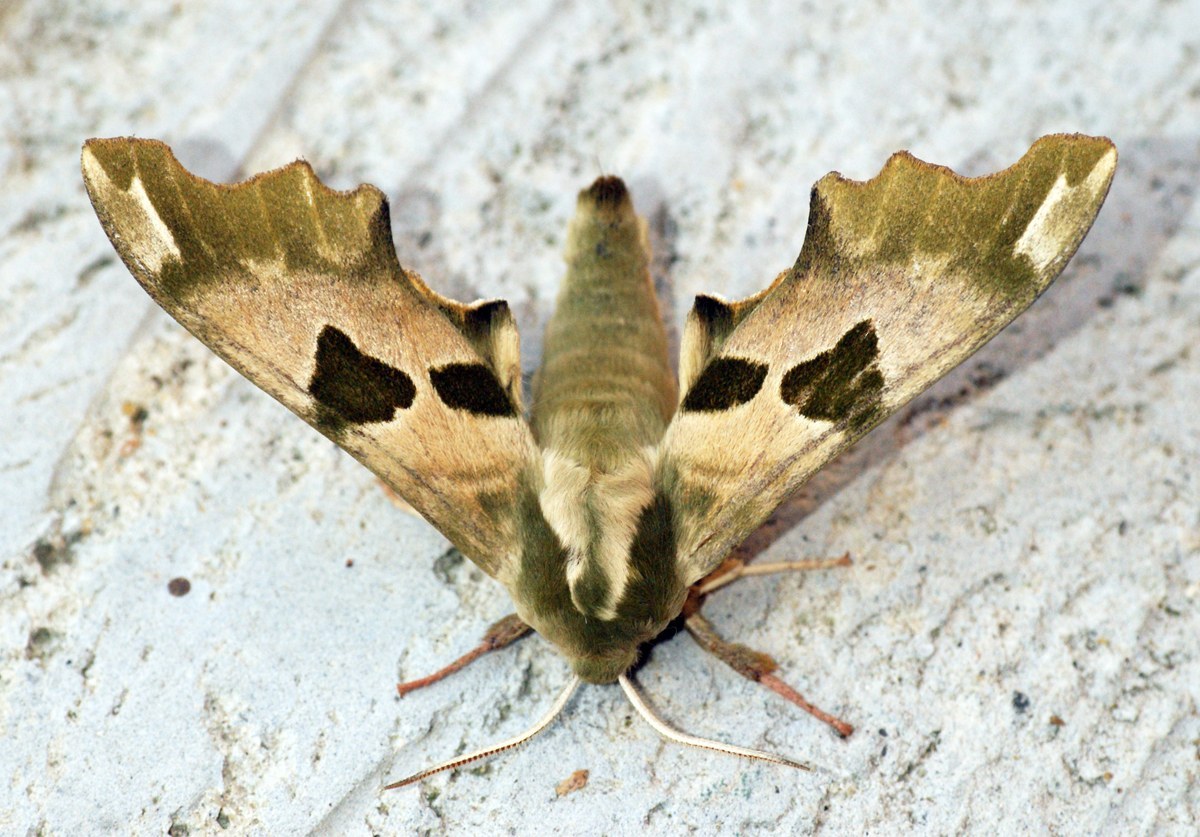
Lime Hawk-Moth
A stout, angular-winged hawk-moth in muted greens, browns, or pinks with deeply scalloped wing margins, closely tied to lime (linden) trees for its larval development.
mothLonghorn Bee
A fuzzy, medium-sized solitary bee named for the males' notably long, curved antennae, commonly seen foraging on sunflowers, asters, and other late-summer composite flowers.
bee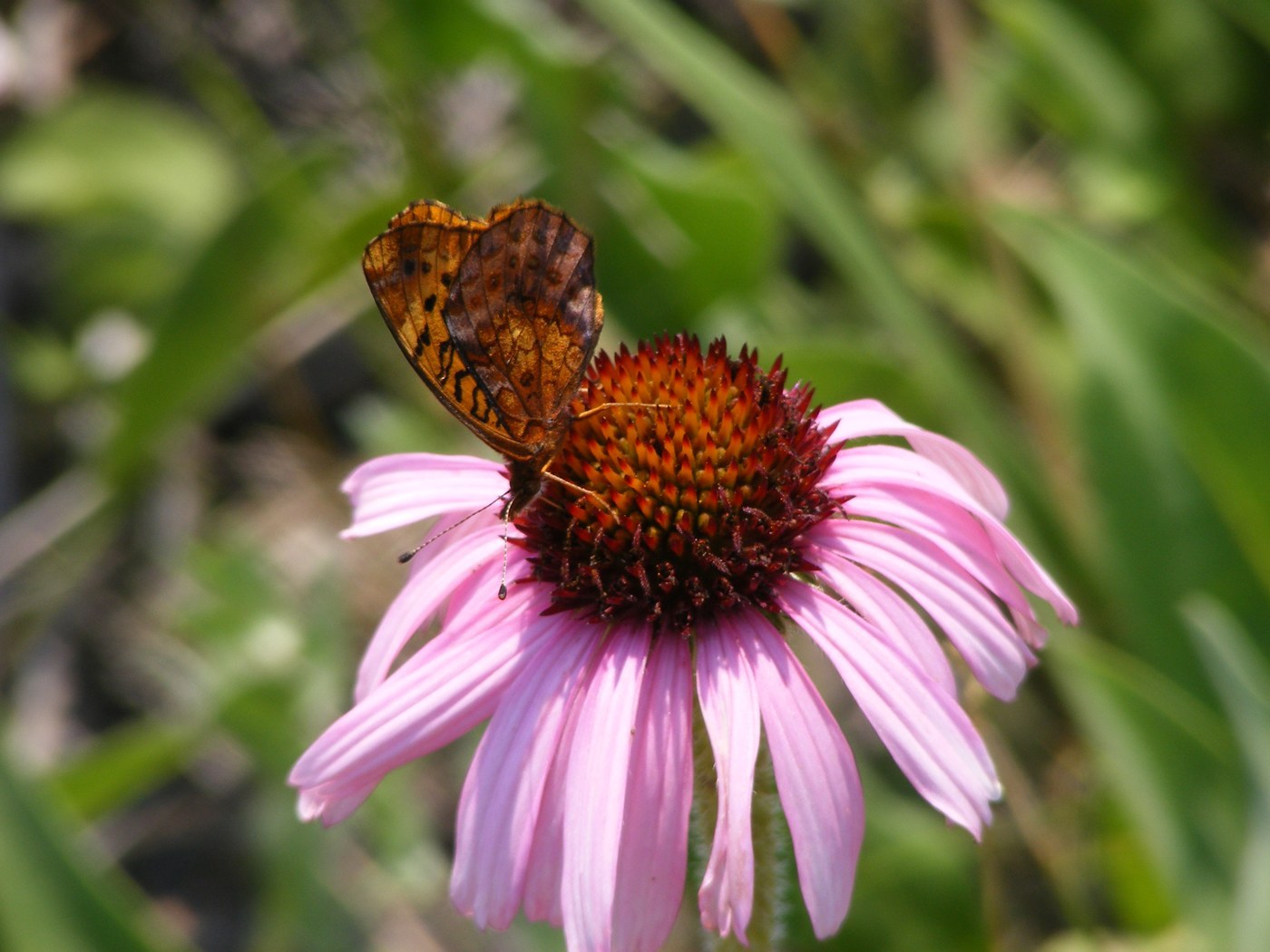
Meadow Fritillary
A small, fast-flying orange-and-black fritillary of open grassy fields, easily told from its larger cousins by its lack of silvery spots on the underside of the hindwing.
butterflyOgre-faced Spider
A twig-like nocturnal spider with enormous, light-gathering eyes that weaves a small rectangular net and hurls it over passing prey in a lightning-fast ambush.
spider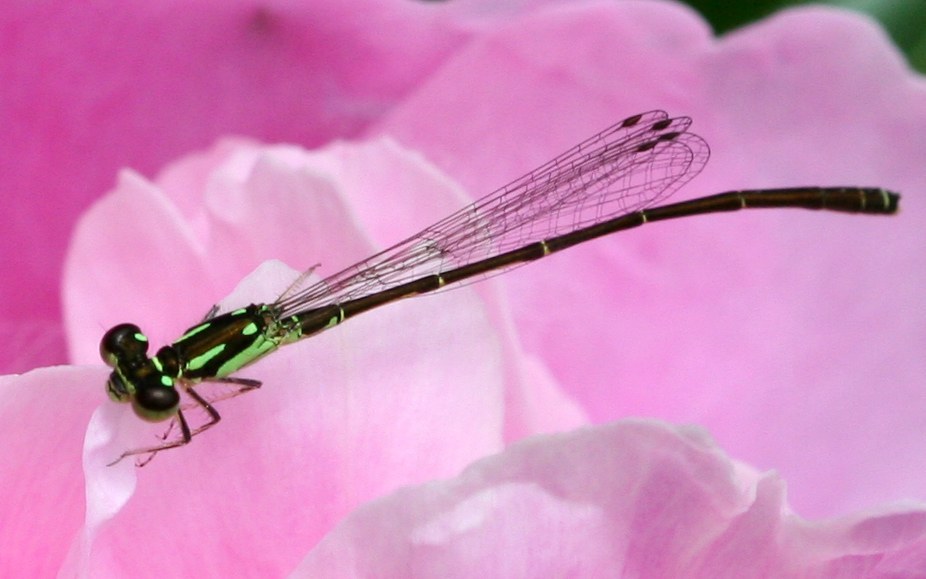
Fragile Forktail
One of North America's smallest and most delicate damselflies, the Fragile Forktail is best known for the pale green exclamation-point mark on top of its thorax.
dragonfly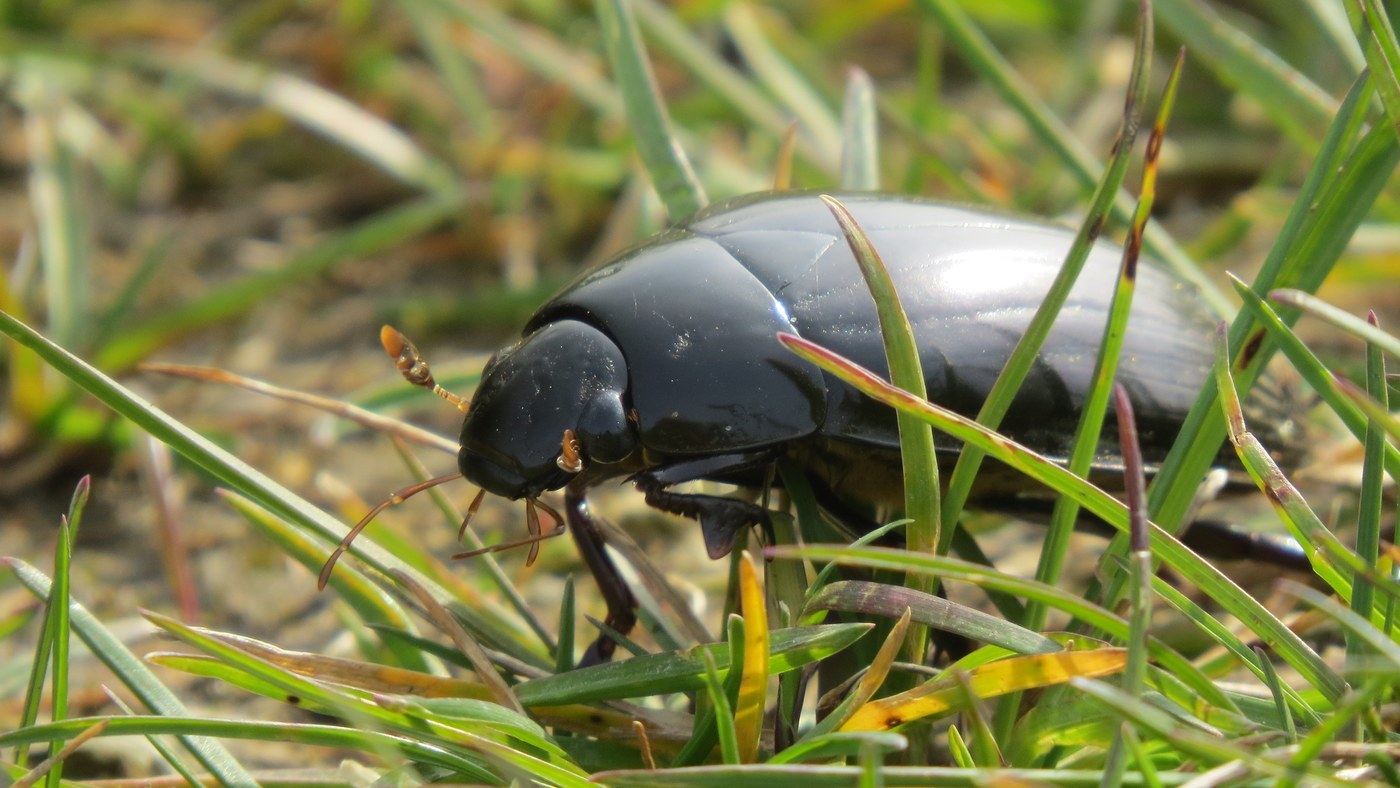
Great Silver Water Beetle
One of the largest beetles in Europe, the great silver water beetle is a glossy jet-black giant that rows through weedy ponds carrying a silvery film of air trapped beneath its body.
beetle