Bug Encyclopedia
Search and identify bugs & insects — beetles, butterflies, moths, ants, bees, spiders and more — with size, habitat, danger, behavior, and how to tell them apart.
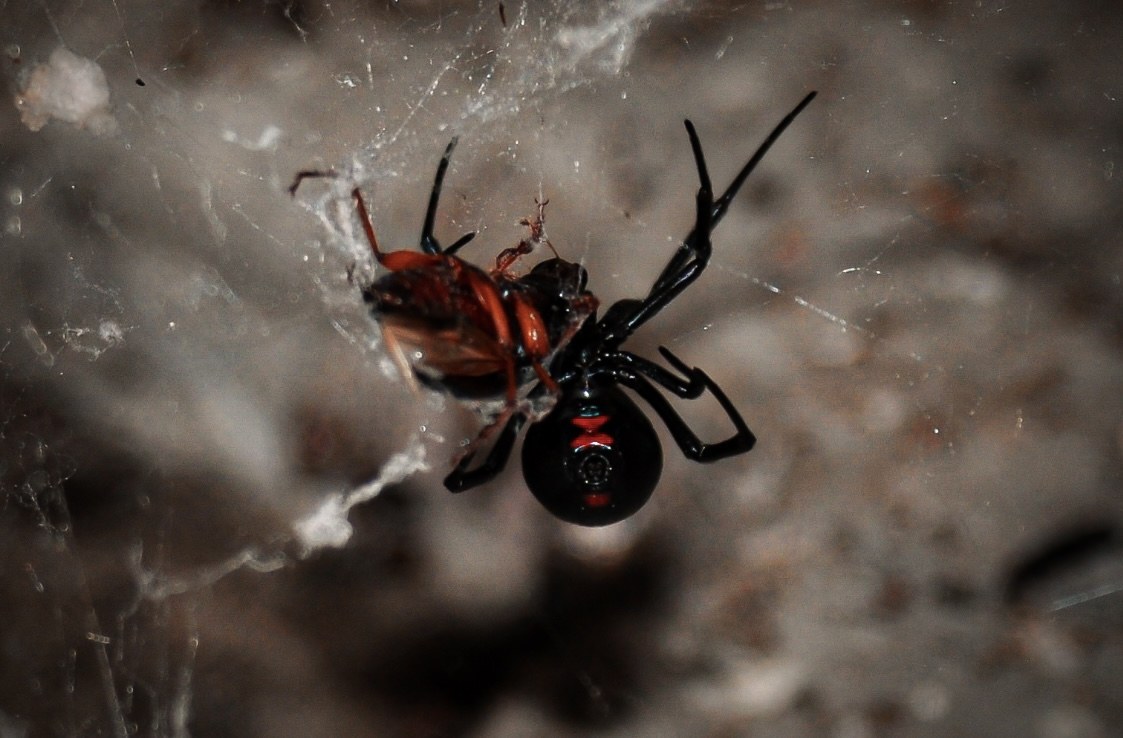
Southern Black Widow
Glossy jet-black and marked with a bright red hourglass on the underside of its rounded abdomen, the southern black widow is one of the most recognizable spiders in North America, typically found tucked into quiet, undisturbed corners rather than out in the open.
spider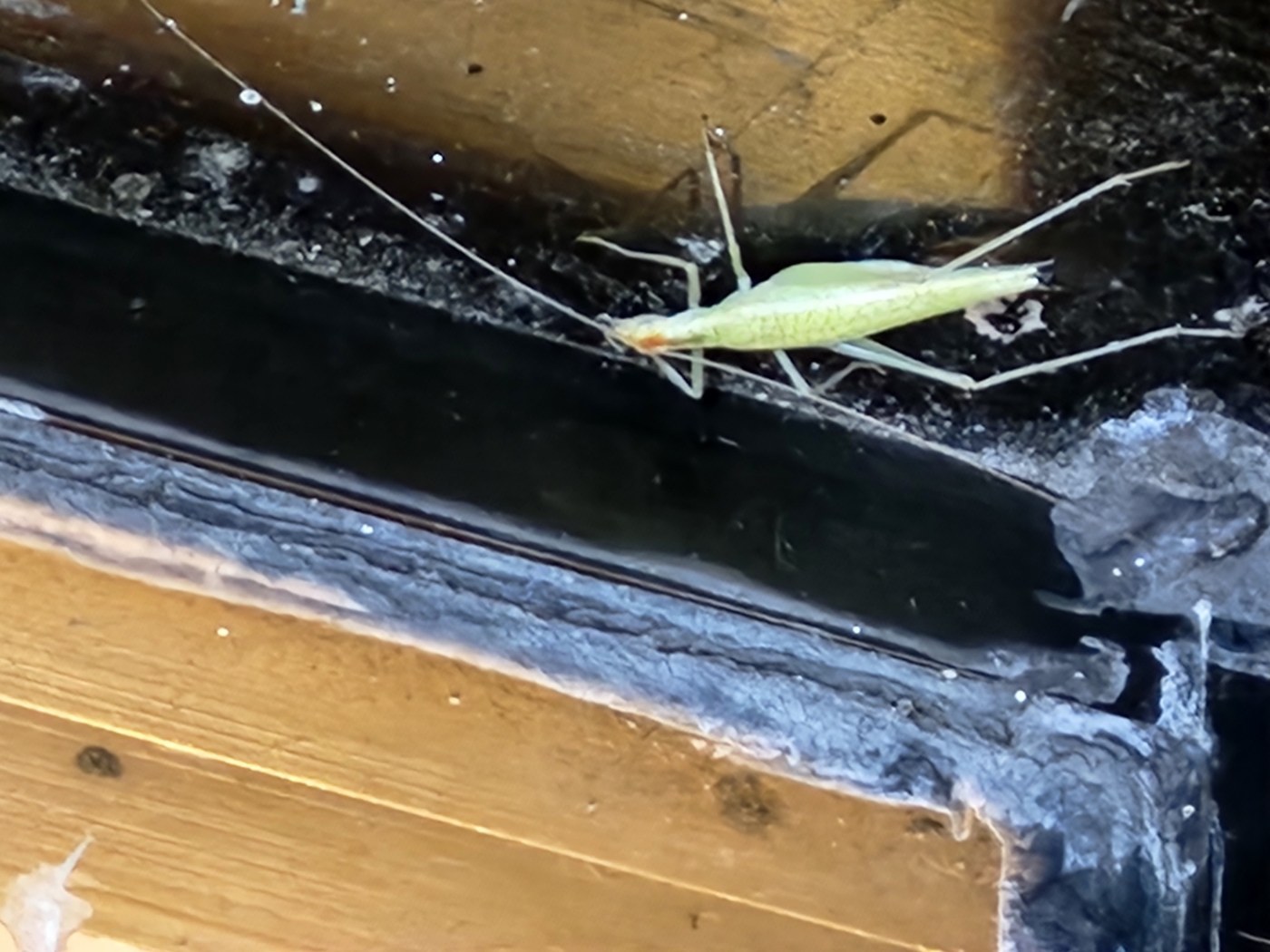
Snowy Tree Cricket
Nicknamed the thermometer cricket, this pale, delicate insect sings a steady, rhythmic chirp whose pace rises and falls so predictably with temperature that its chirp rate can be used to estimate the air temperature.
grasshopper-cricket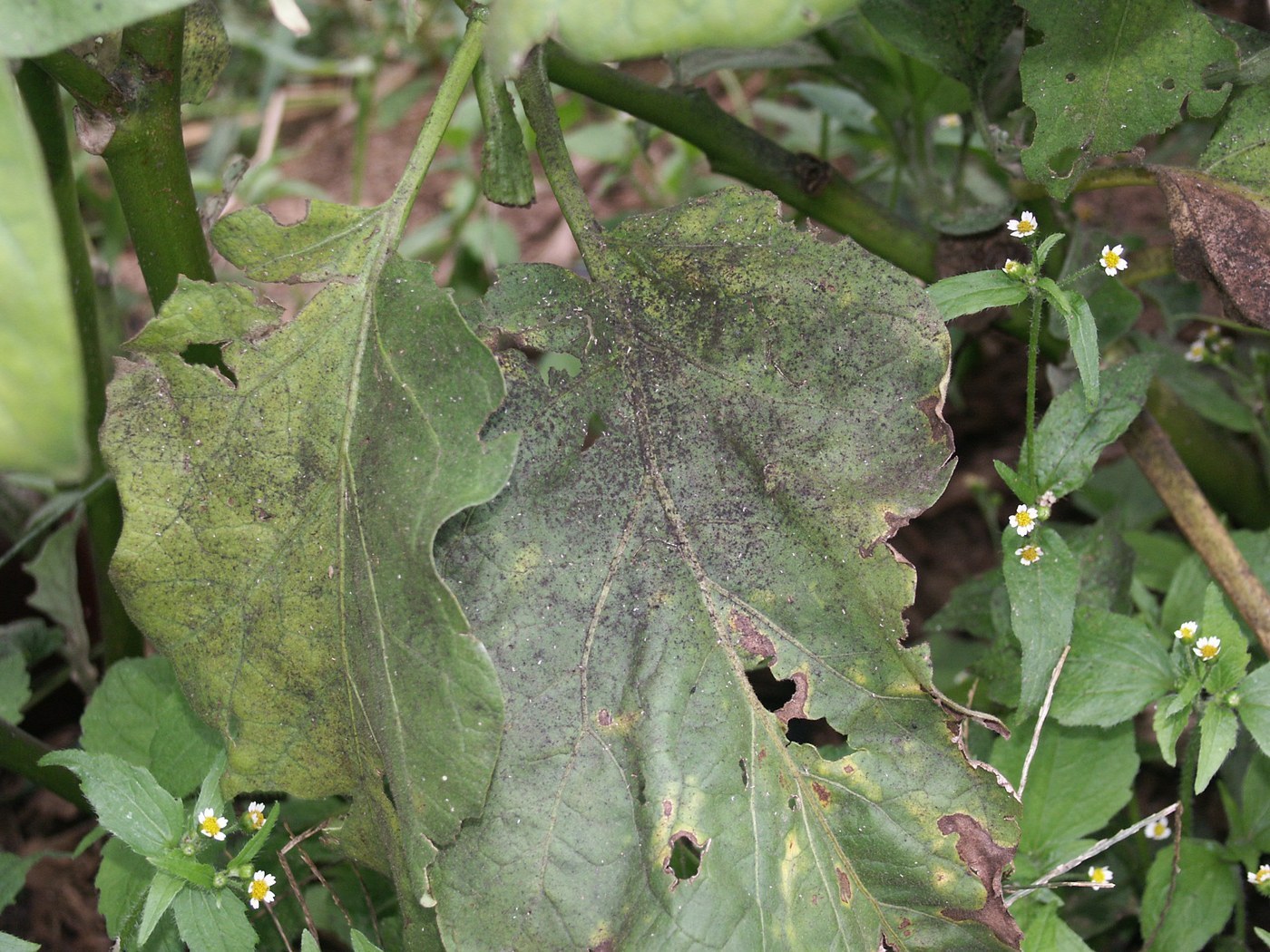
Whitefly
A tiny, moth-like white insect that clusters on the undersides of leaves and bursts into a snowy cloud when the plant is disturbed. Despite the name, it is not a true fly but a sap-feeding relative of aphids and scale insects.
true-bugBig-Eyed Bug
A small, broad-headed true bug named for its noticeably large, bulging compound eyes, the big-eyed bug is a beneficial predator that patrols low vegetation and soil surfaces for small pest insects.
true-bug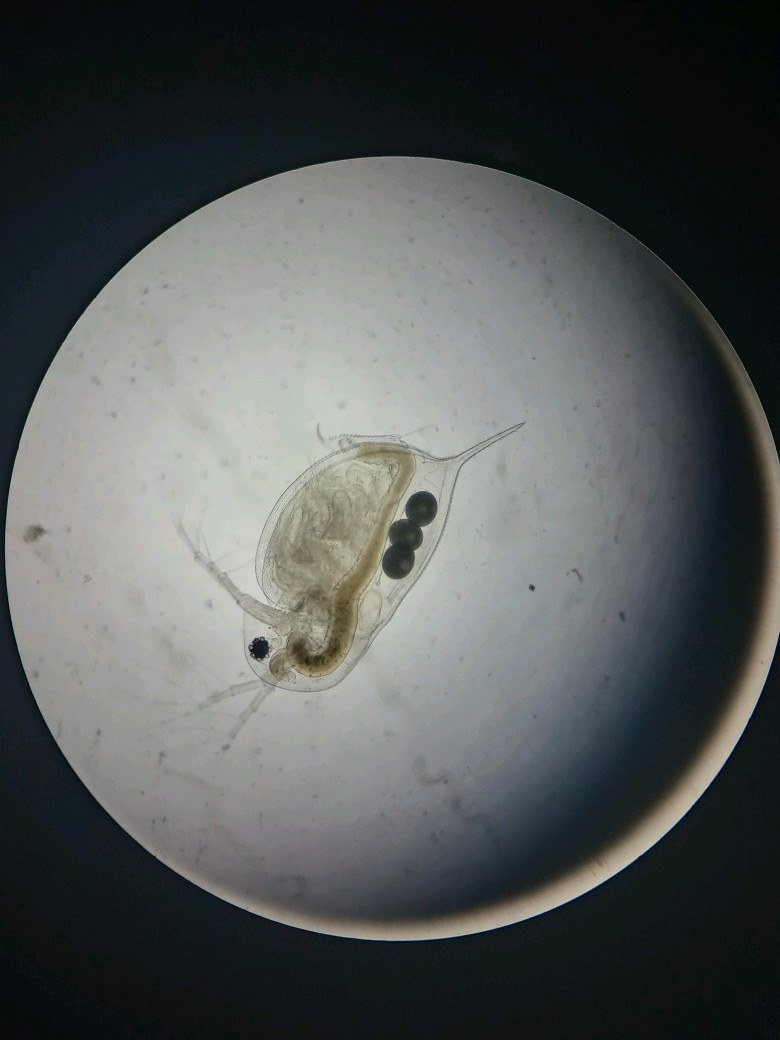
Water Flea
Despite the name, the water flea is not an insect at all but a tiny, jerky-swimming crustacean whose transparent body and single dark eye make it one of the most recognizable members of freshwater plankton.
other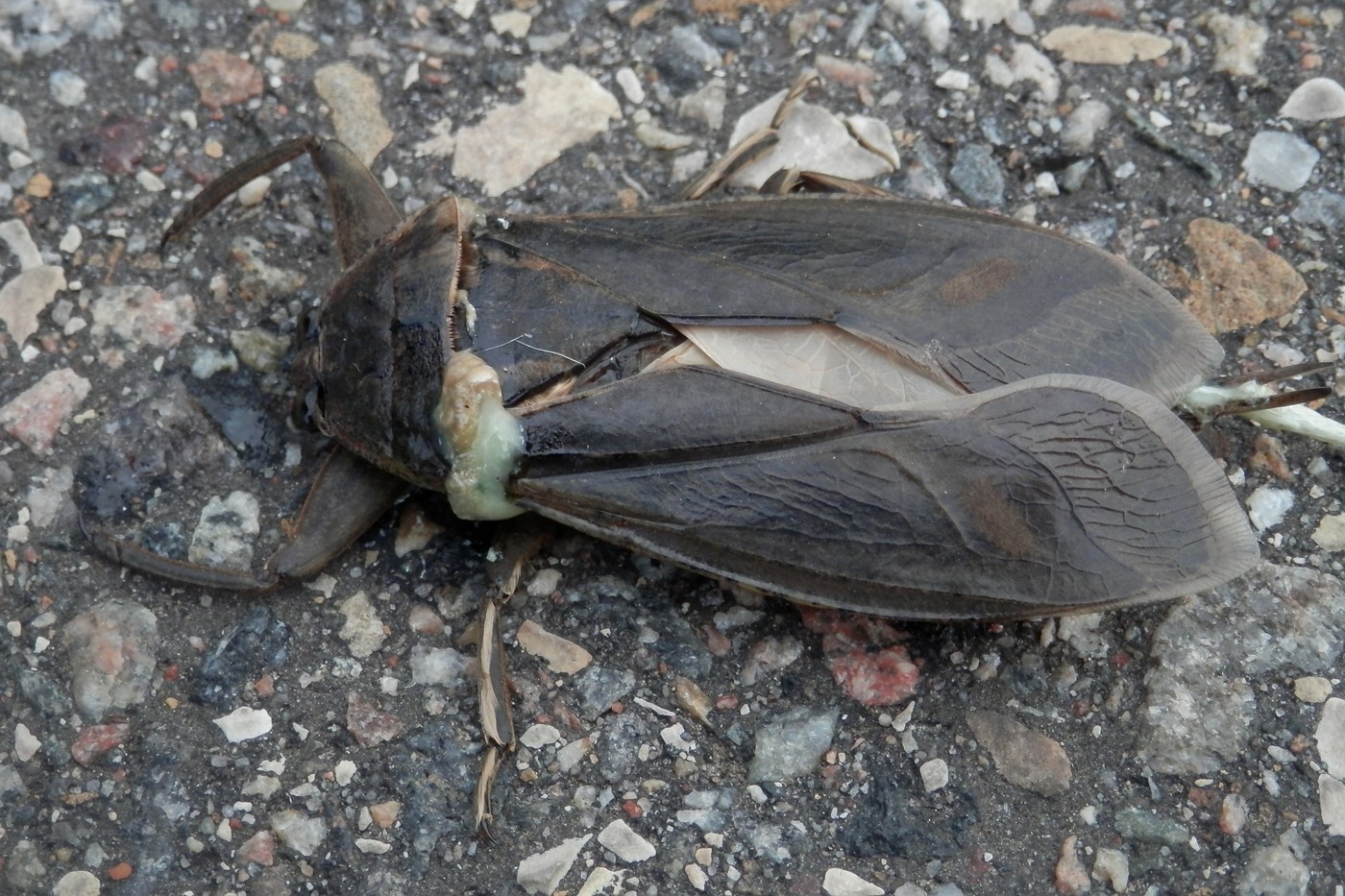
Giant Water Bug
A massive, flattened oval true bug with powerful grasping front legs, the giant water bug is North America's largest aquatic insect and an ambush predator lurking just below the surface of still water.
aquatic-insectJerusalem Cricket
A large, wingless, ground-dwelling insect with a shiny amber body, a strikingly human-like face, and a robust, banded abdomen, most often uncovered while digging in soil.
grasshopper-cricket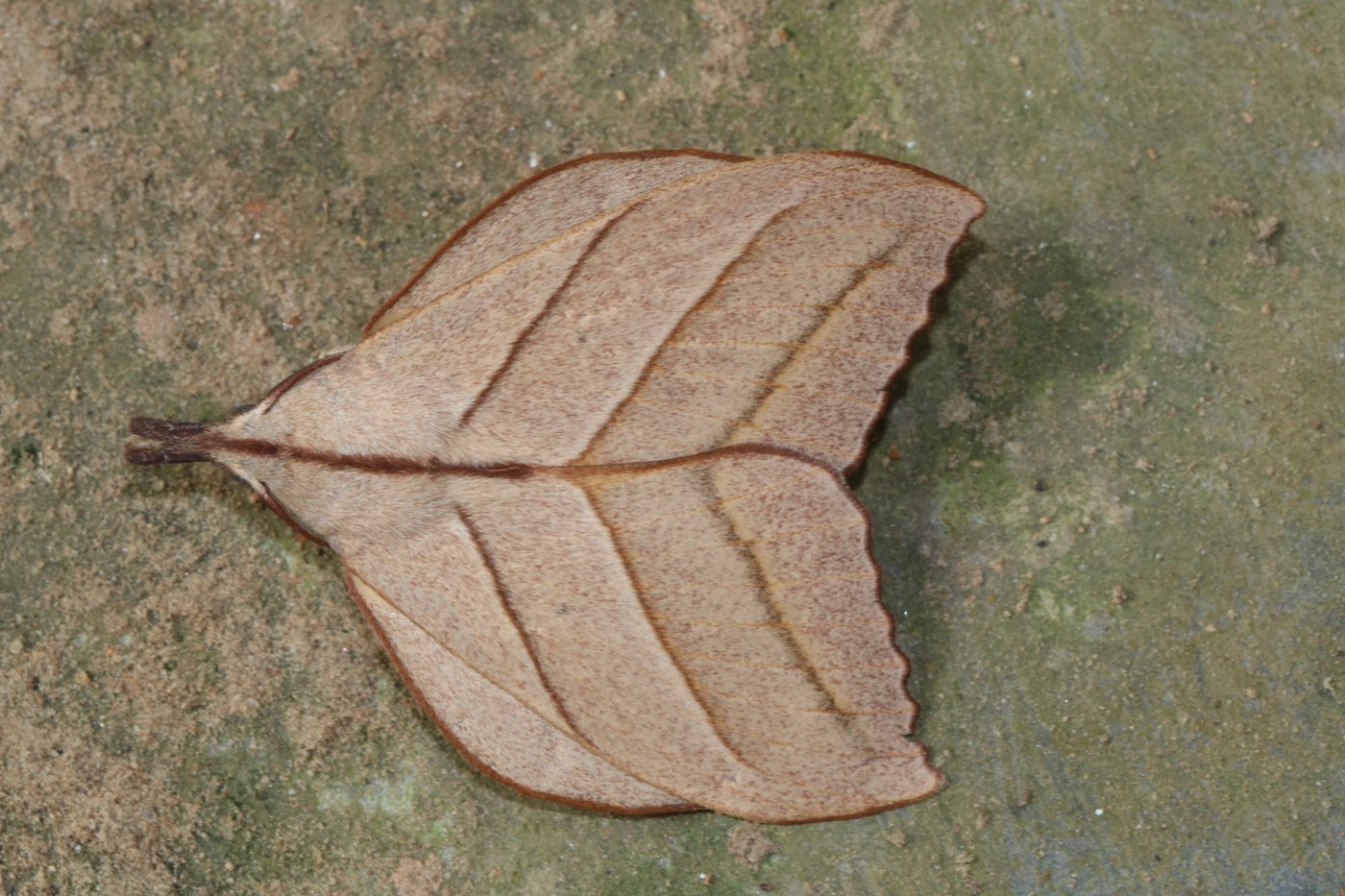
Moth
A broad group of scale-winged insects related to butterflies, typically nocturnal, with stout, often furry bodies and feathery or thread-like antennae.
moth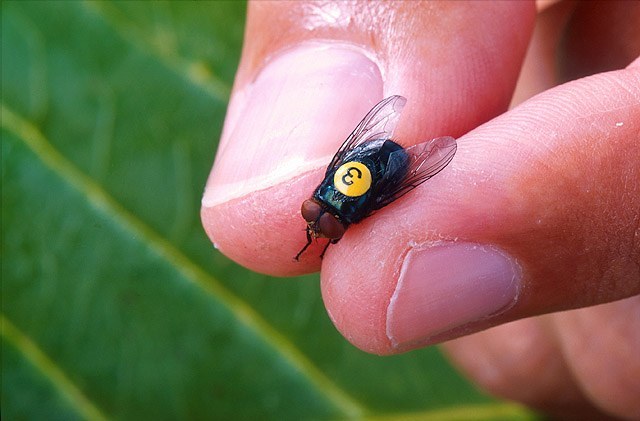
Screwworm Fly
A metallic blue-green blowfly whose larvae are unusual among maggots for feeding on living tissue rather than carrion, drawn to even small open wounds on warm-blooded animals. The species has been the target of one of the most successful large-scale insect eradication campaigns in history across much of North America.
fly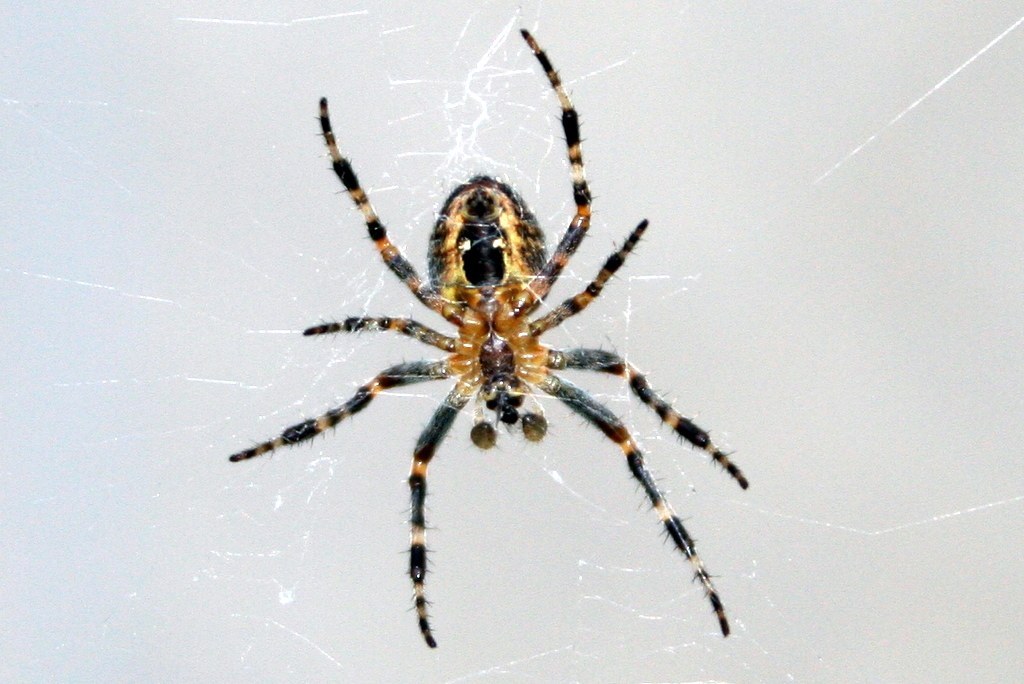
Barn Spider
A brownish, mottled orb weaver famous as the inspiration for Charlotte's Web, commonly found spinning large nightly webs on barns, porches, and other structures.
spider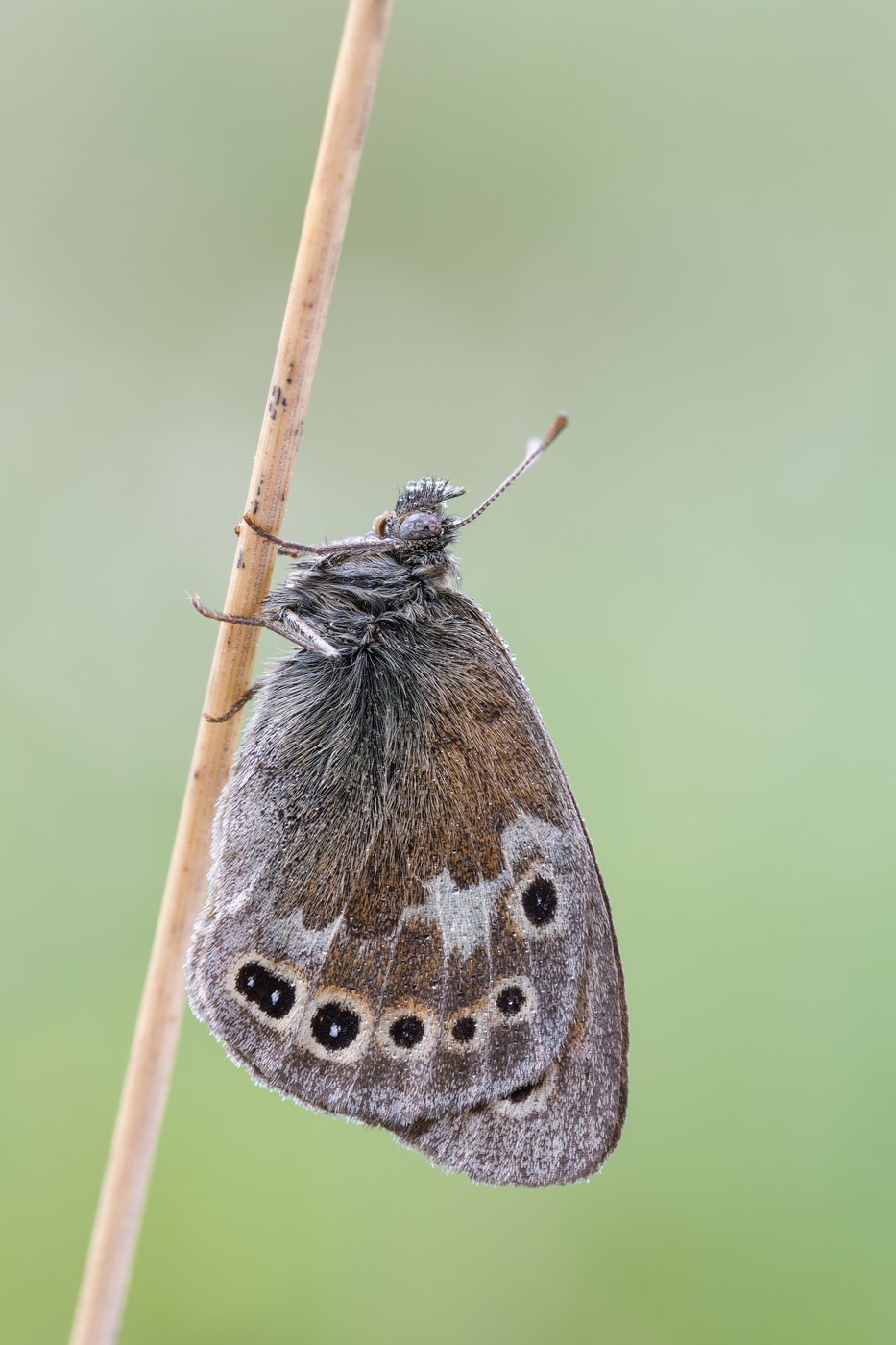
Common Ringlet
A small, plain buff-orange satyr butterfly of open grassy places, notable for its understated coloring and Holarctic distribution spanning North America, Europe, and Asia.
butterfly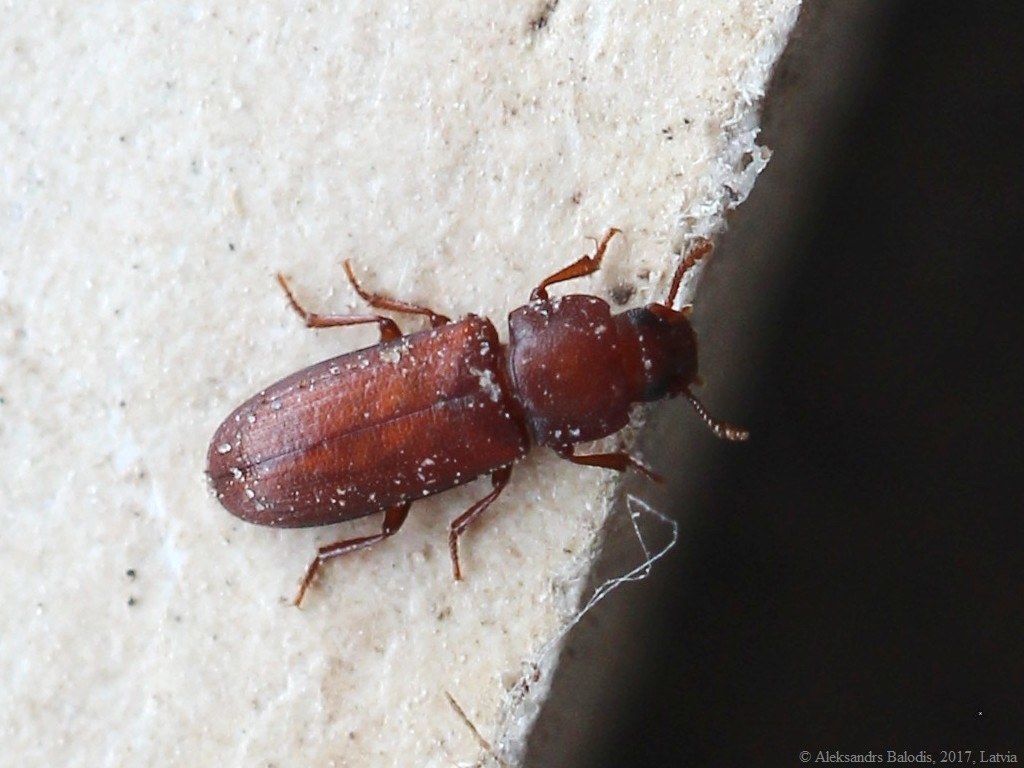
Confused Flour Beetle
A tiny, flattened, reddish-brown beetle commonly found in stored flour and grain products, distinguished from its near-identical relative the red flour beetle mainly by its antennae shape.
beetle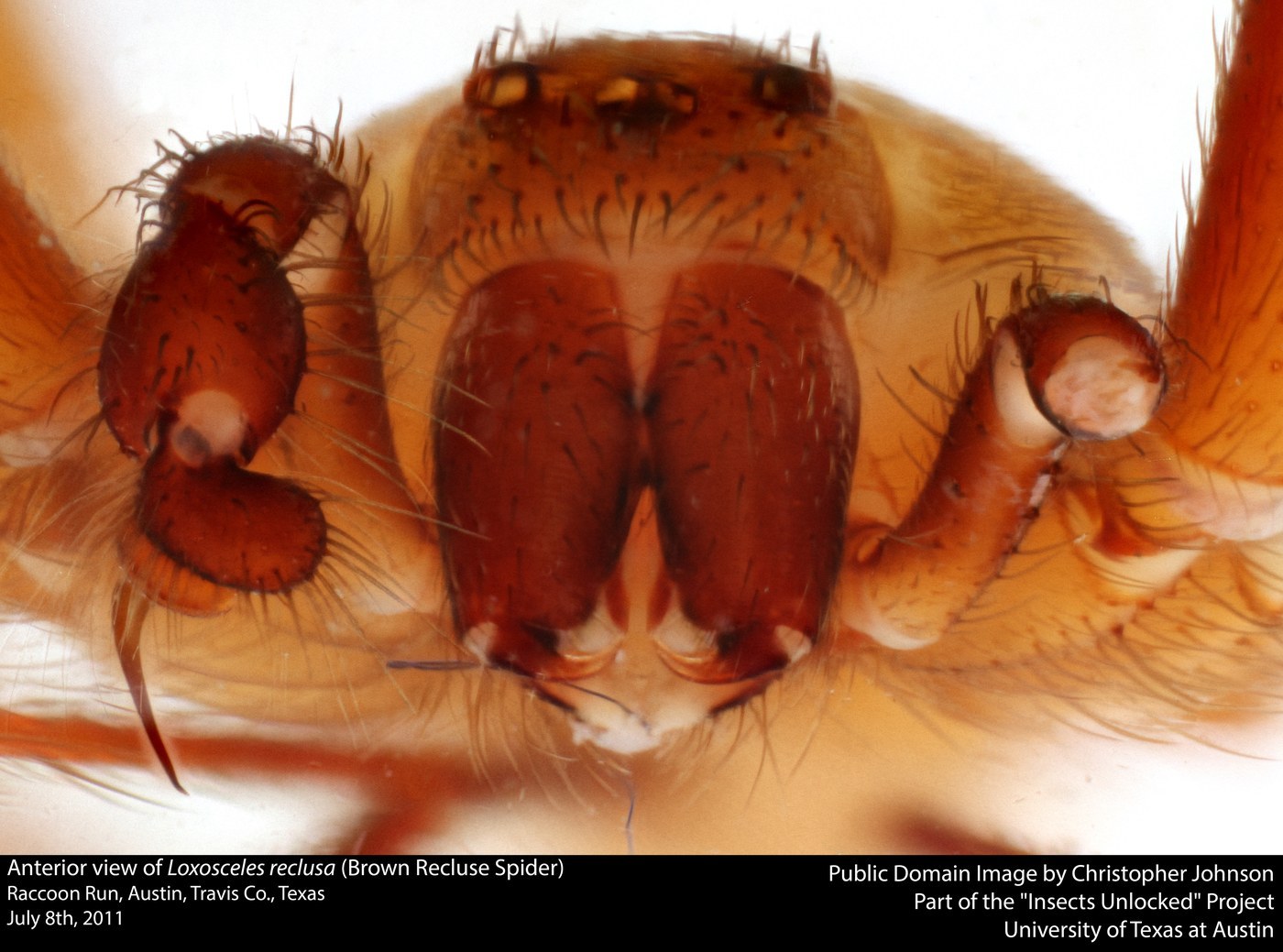
Brown Recluse Spider
A uniformly light-brown spider with a faint violin-shaped marking on its back and only six eyes instead of the usual eight, typically found hiding in dry, undisturbed indoor and outdoor spaces.
spider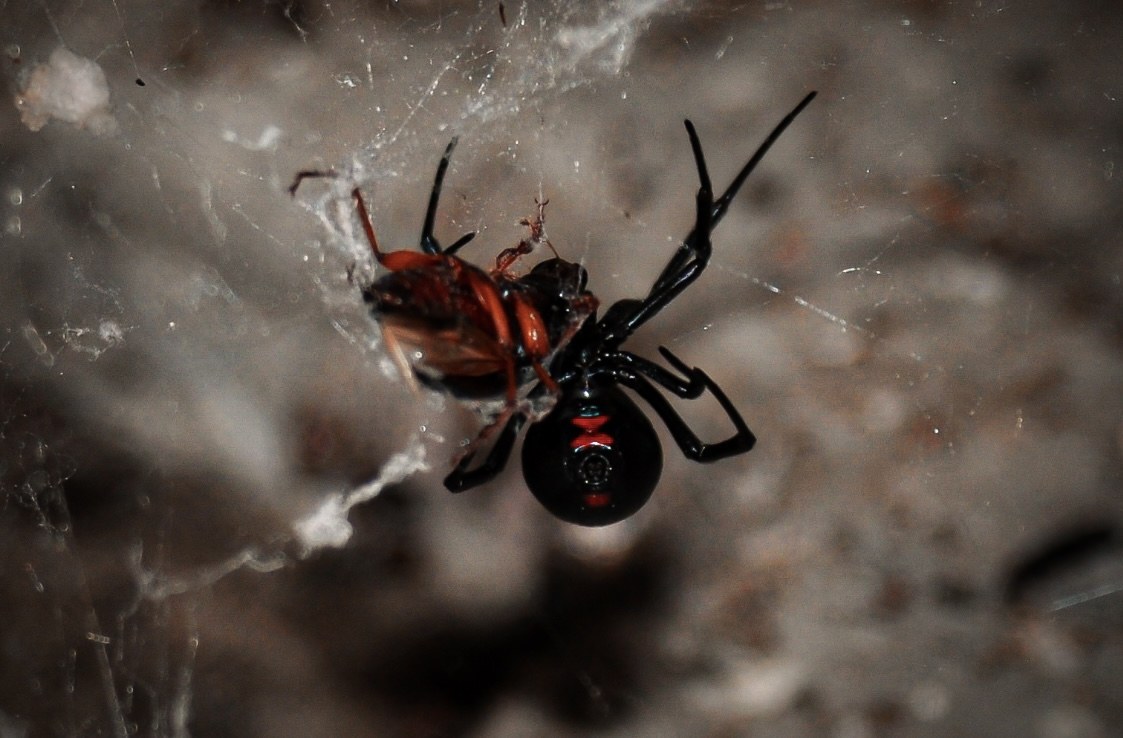
Black Widow Spider
A glossy black, globe-bodied spider best known for the red or orange hourglass marking on the underside of the female's rounded abdomen, usually found tucked in a tangled web near ground level.
spider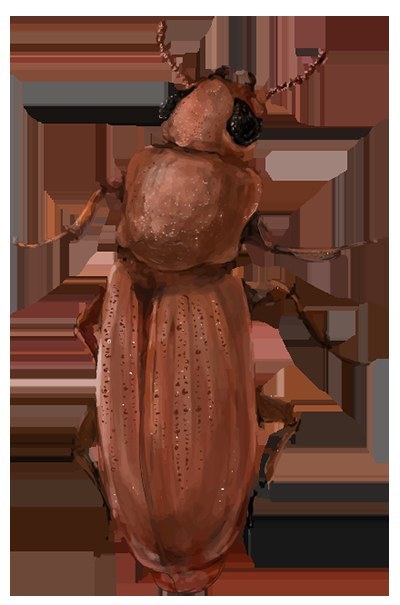
Red Flour Beetle
A tiny, flattened, rust-red beetle found in stored flour and grain worldwide, capable of flight and closely resembling the confused flour beetle apart from the shape of its antennal club.
beetle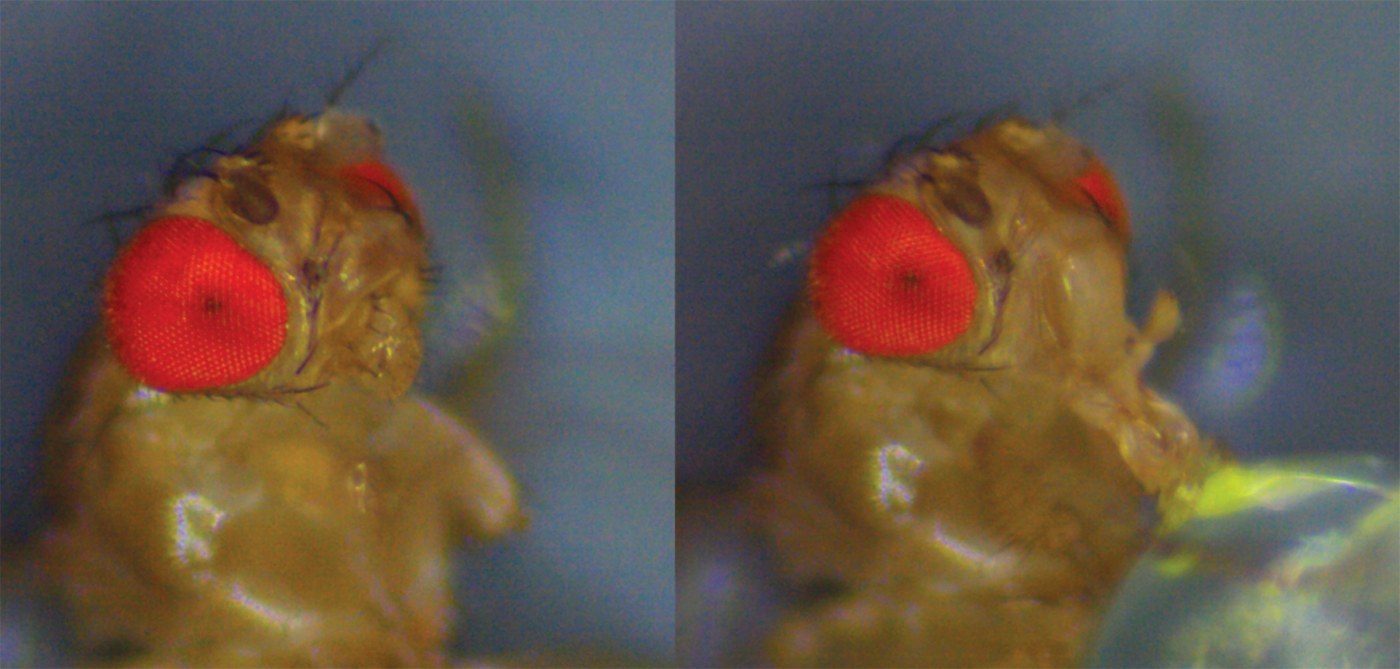
Vinegar Fly
A tiny tan fly with bright red eyes that seems to appear out of nowhere the moment a banana starts to spoil, drawn in by the smell of fermentation rather than the fruit itself. Few insects have contributed more to the science of genetics, making this unassuming kitchen visitor one of the most studied animals on Earth.
fly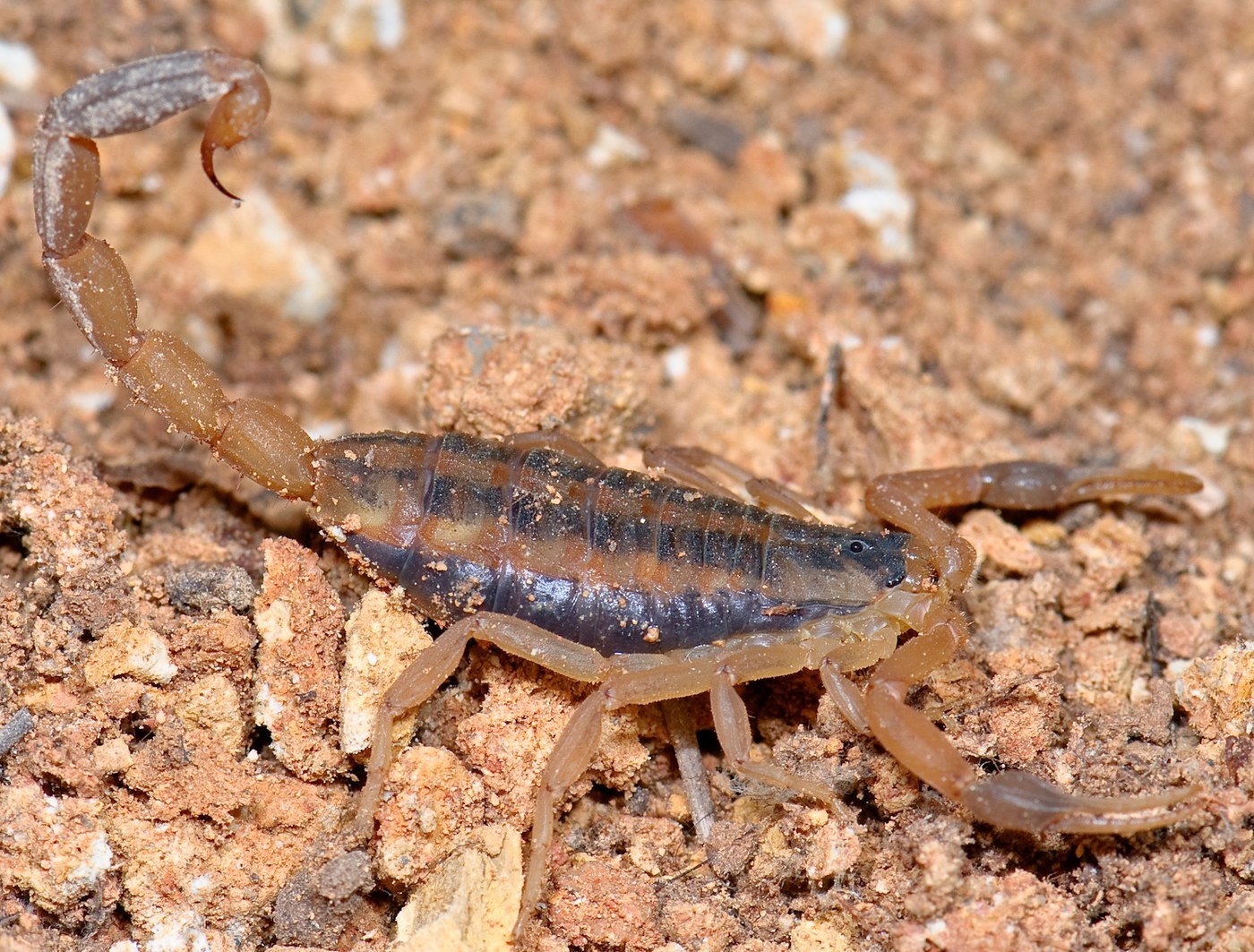
Striped Bark Scorpion
A slender, tan scorpion marked with two bold dark stripes down its back, often found tucked under bark, rocks, or debris across the central United States.
arachnid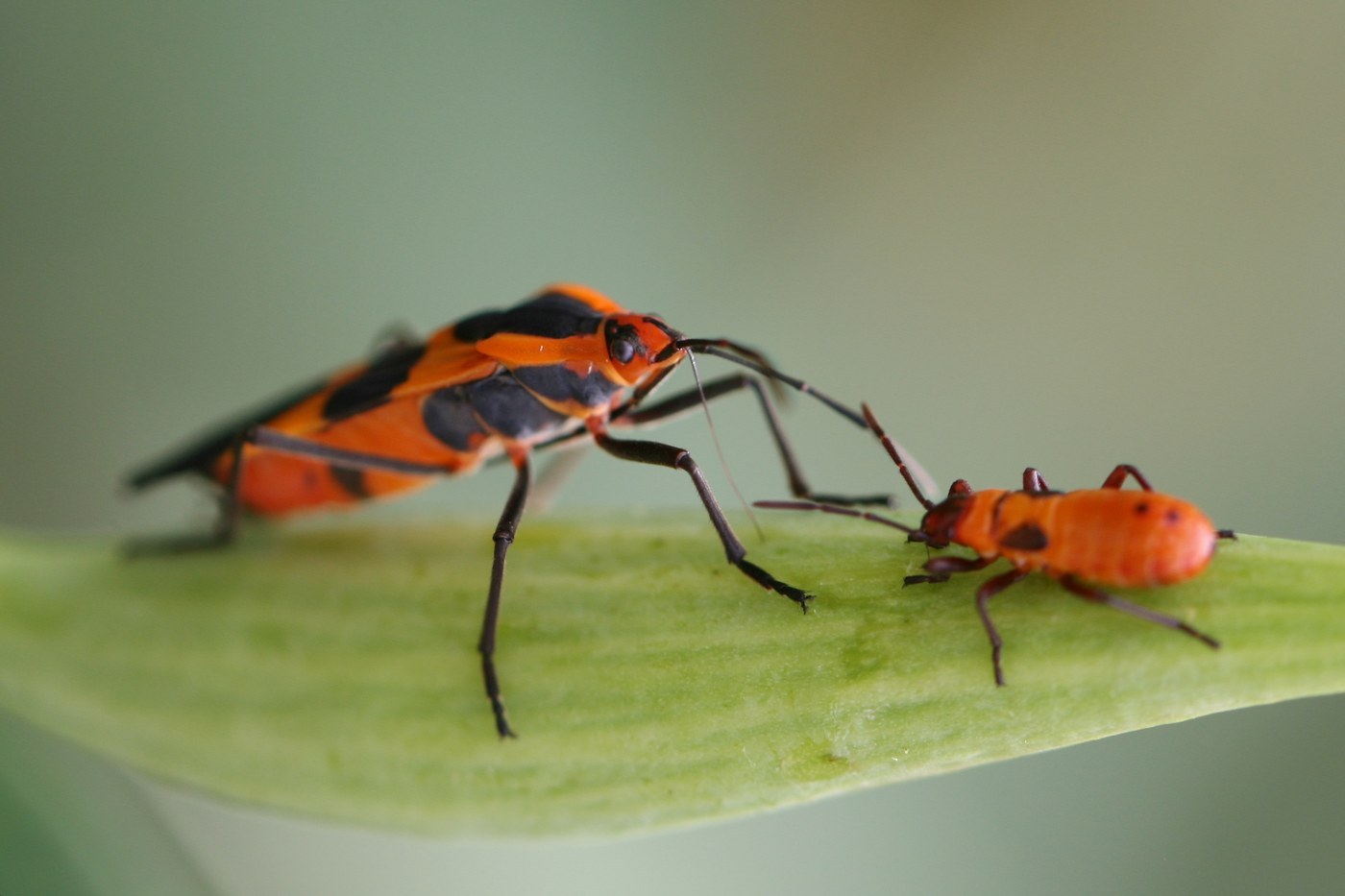
Milkweed Bug (Large Milkweed Bug)
A boldly patterned orange-and-black true bug found clustering on milkweed seed pods, sporting an elongated body with a distinctive black band across the wings.
true-bug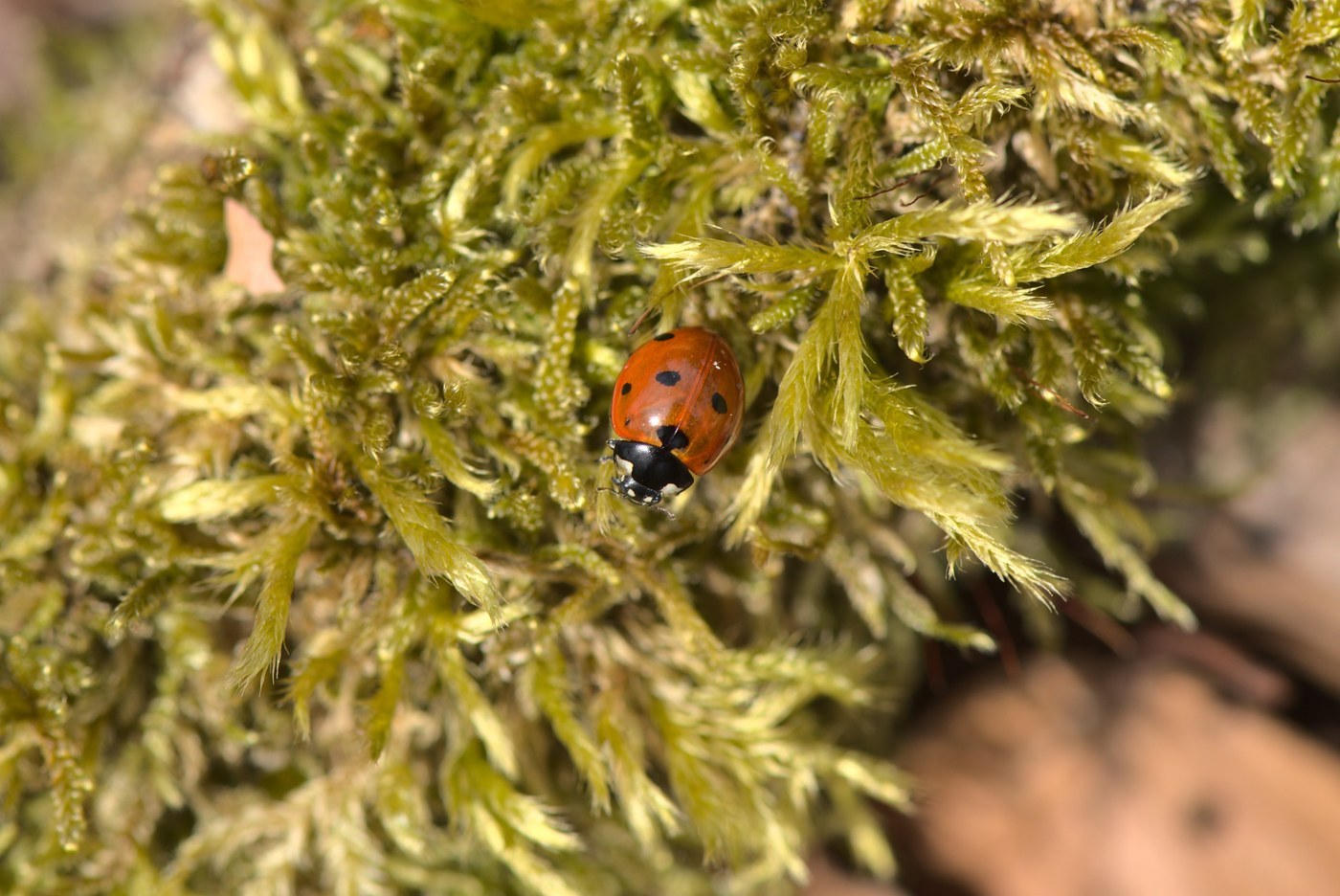
Ladybug
A small, round, brightly colored beetle with a domed, shiny shell typically red or orange with black spots, one of the most recognizable and beloved beetles found in gardens worldwide.
beetle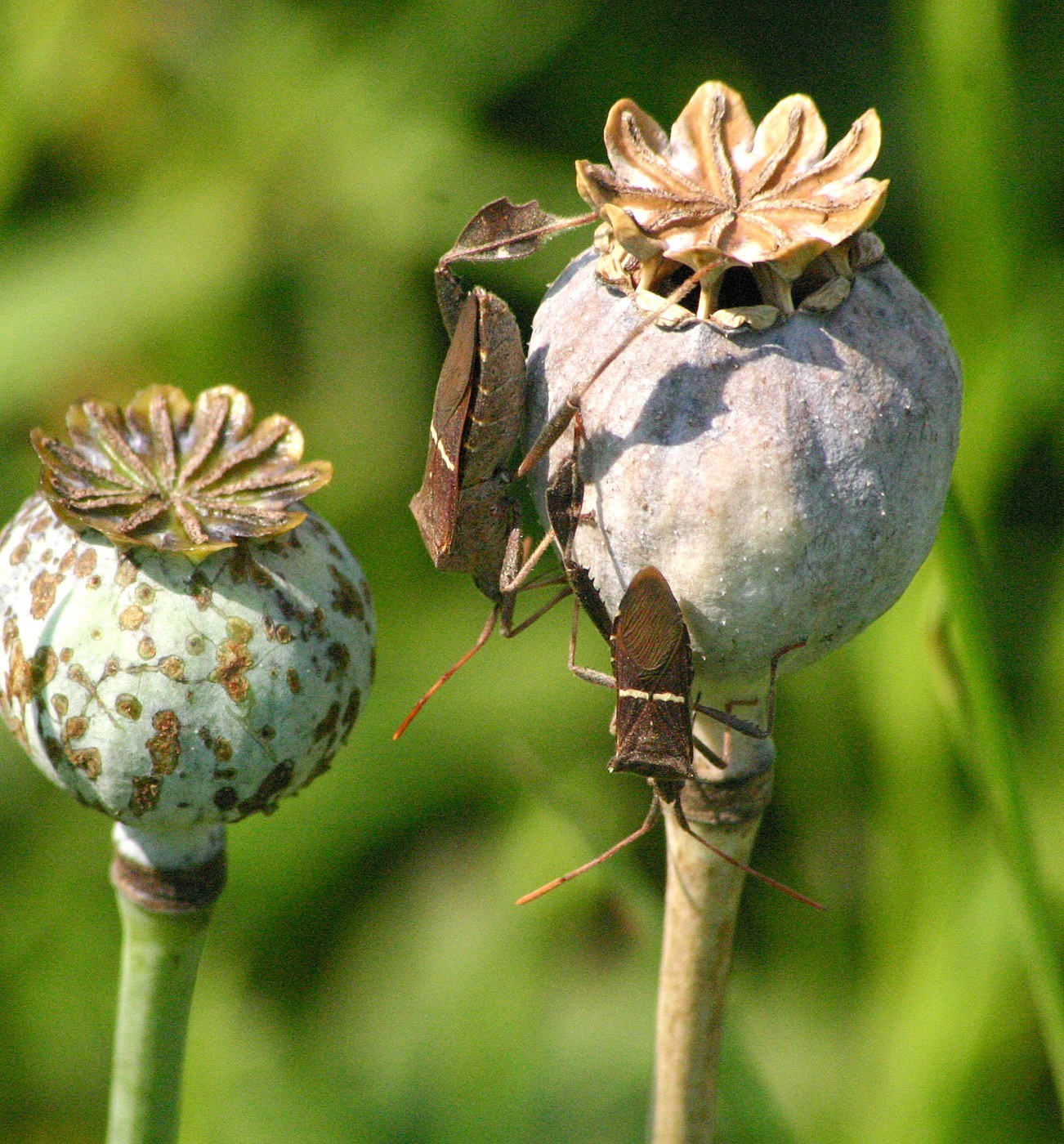
Leaf-Footed Bug
A large, elongated brown true bug named for the flattened, leaf-shaped expansions on its hind legs, often found feeding on fruits, seeds, and vegetables in gardens and orchards.
true-bug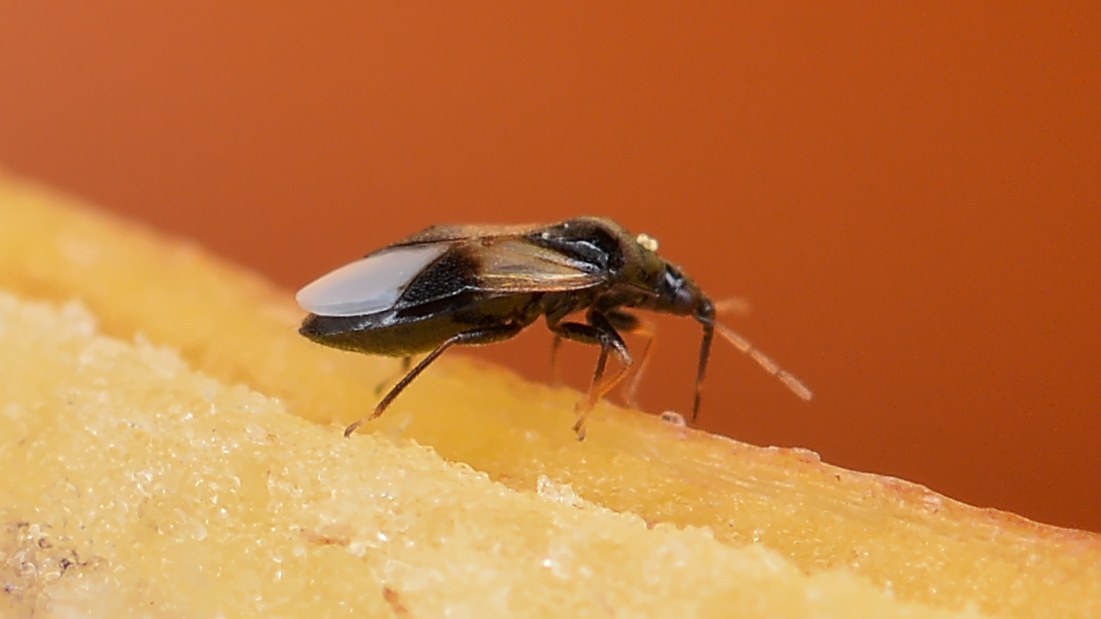
Minute Pirate Bug
A tiny, black-and-white patterned true bug barely visible without close inspection, the minute pirate bug is a voracious predator of thrips, mites, and insect eggs on flowers and foliage.
true-bugSoil Mite
A microscopic, heavily armored mite found by the millions in a single handful of soil, quietly breaking down leaf litter and helping build the fertile ground beneath forests and fields.
arachnid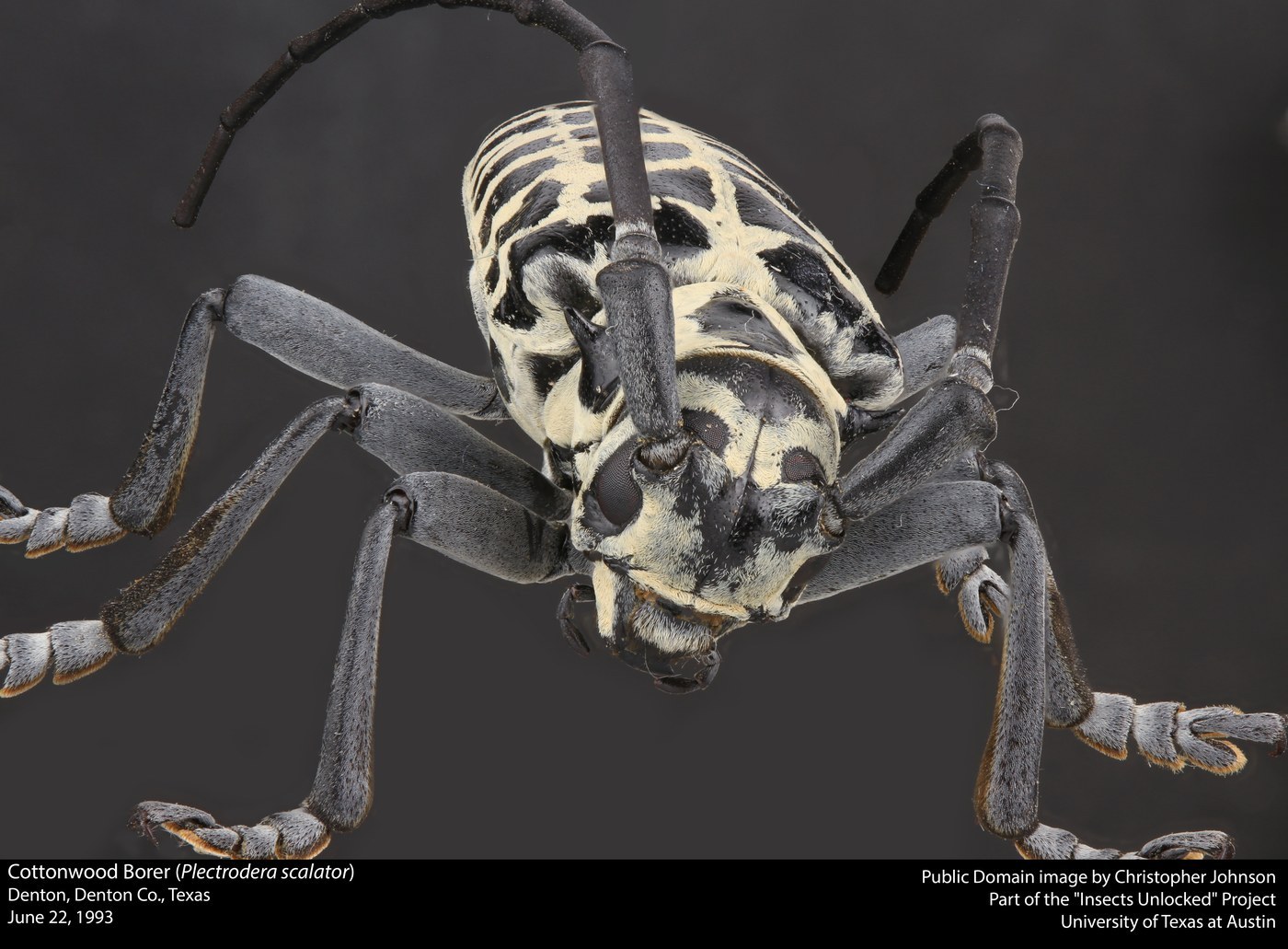
Cottonwood Borer
A large, boldly patterned longhorn beetle in black and chalky white checkerboard markings, often found clinging to the trunks of cottonwood and poplar trees near its larvae's root tunnels.
beetle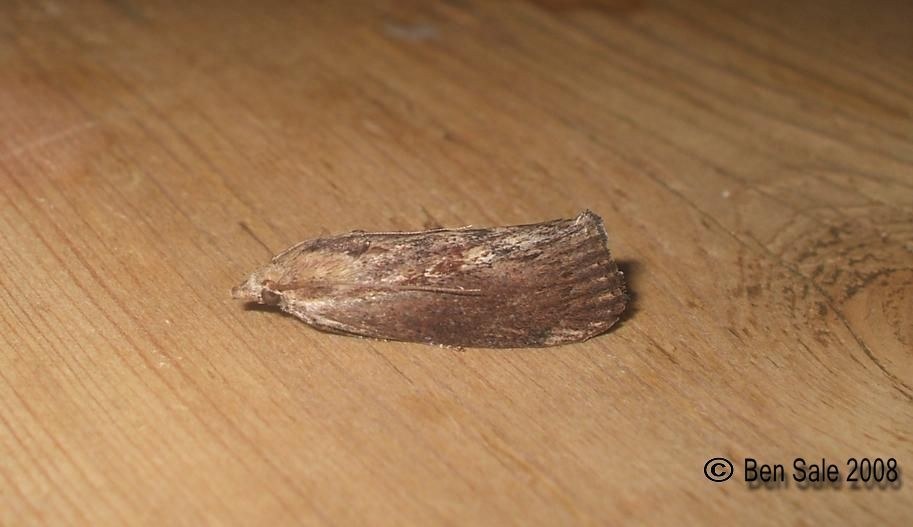
Waxworm
A soft, cream-colored grub found tunneling through beeswax comb, the waxworm is the larva of the wax moth and has become a household staple as fishing bait and reptile feed.
caterpillar-larva