
Bug Encyclopedia
Search and identify bugs & insects — beetles, butterflies, moths, ants, bees, spiders and more — with size, habitat, danger, behavior, and how to tell them apart.
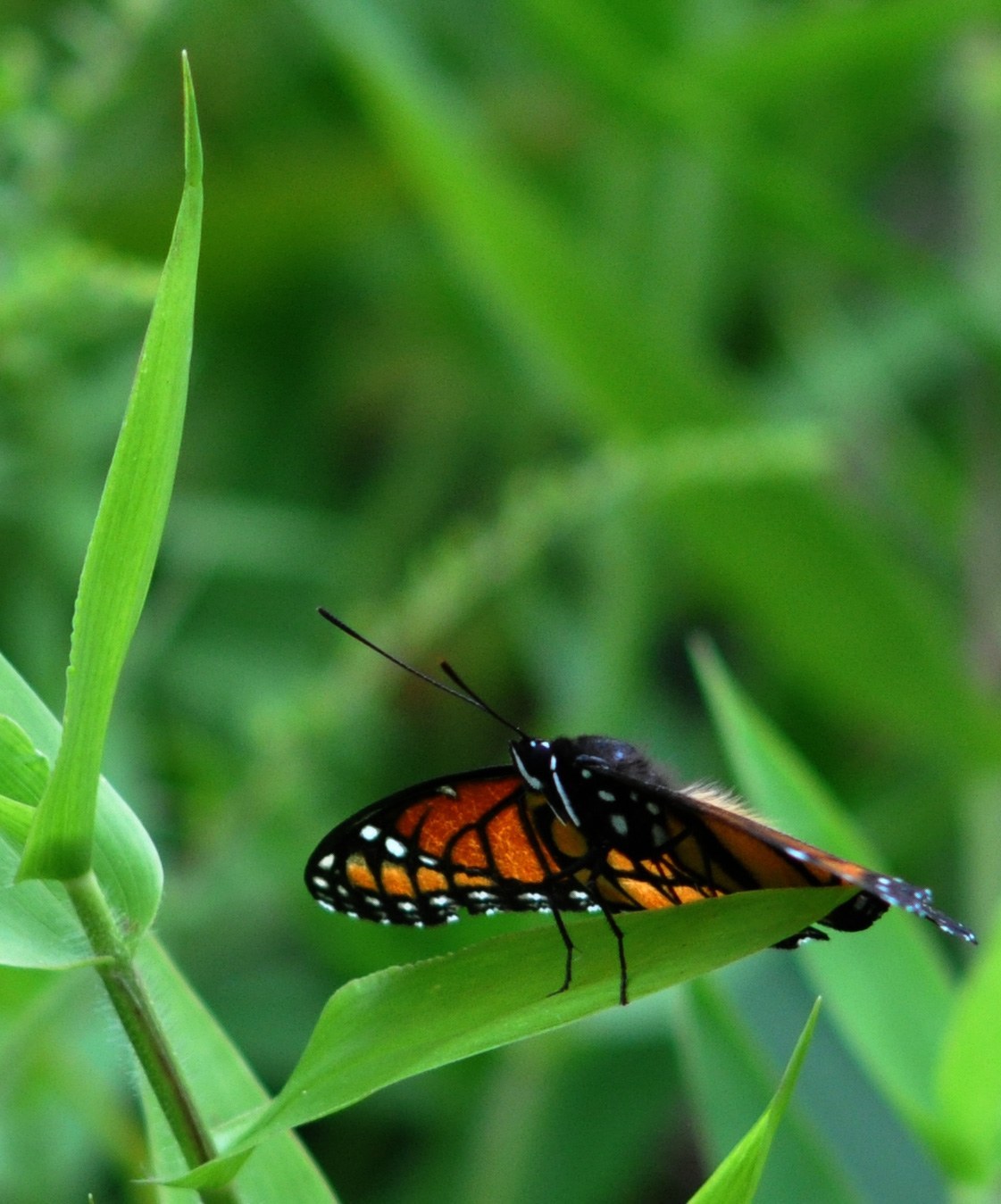
Viceroy Butterfly
An orange-and-black butterfly closely resembling the monarch, distinguished by a smaller size and a distinctive black line crossing the veins of the hindwing, and long cited as a classic example of mimicry between two unrelated species.
butterfly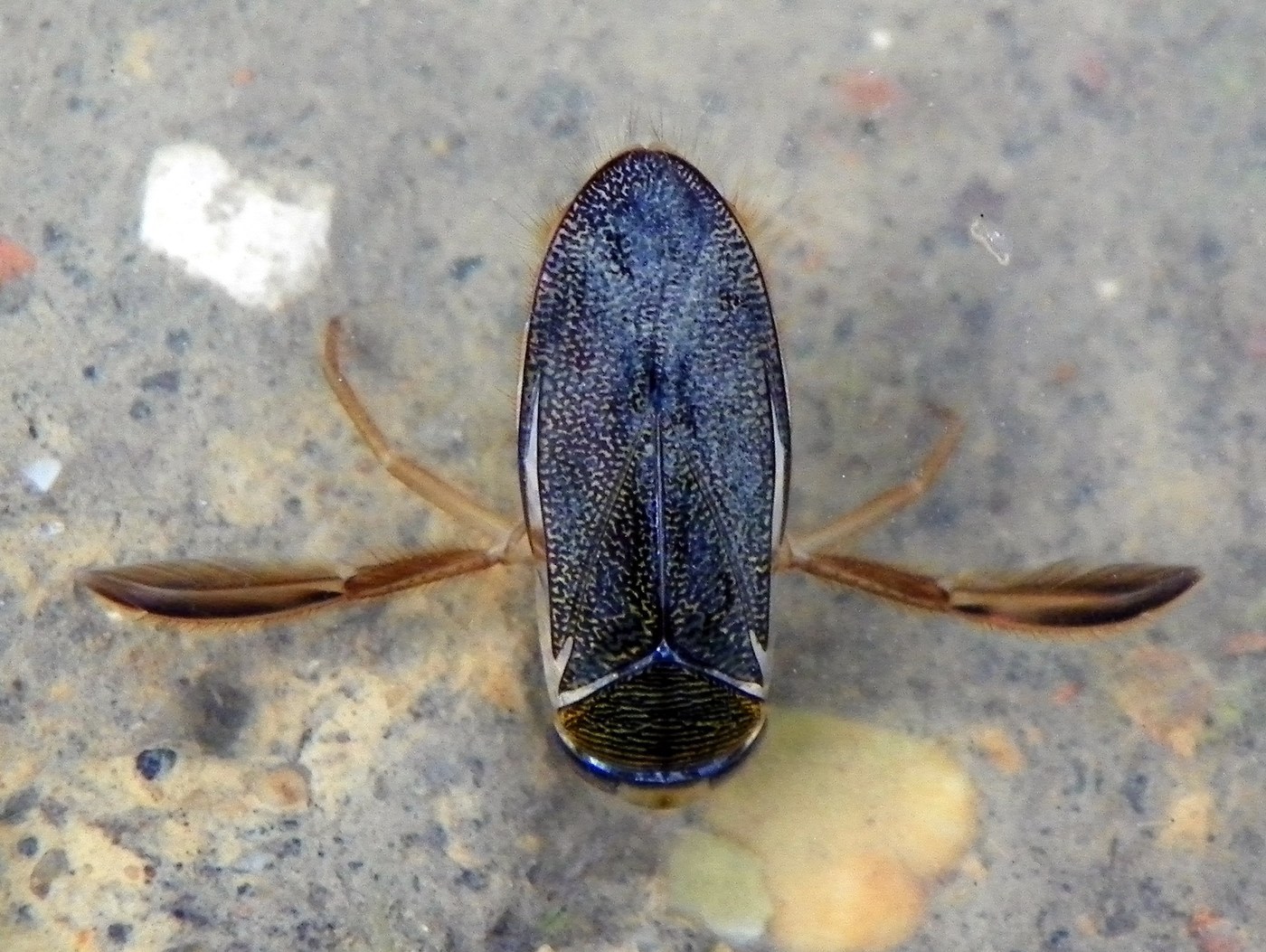
Water Boatman
A small, streamlined aquatic true bug with oar-like hind legs used for swimming, commonly seen gliding just beneath the surface of ponds and calm freshwater.
aquatic-insect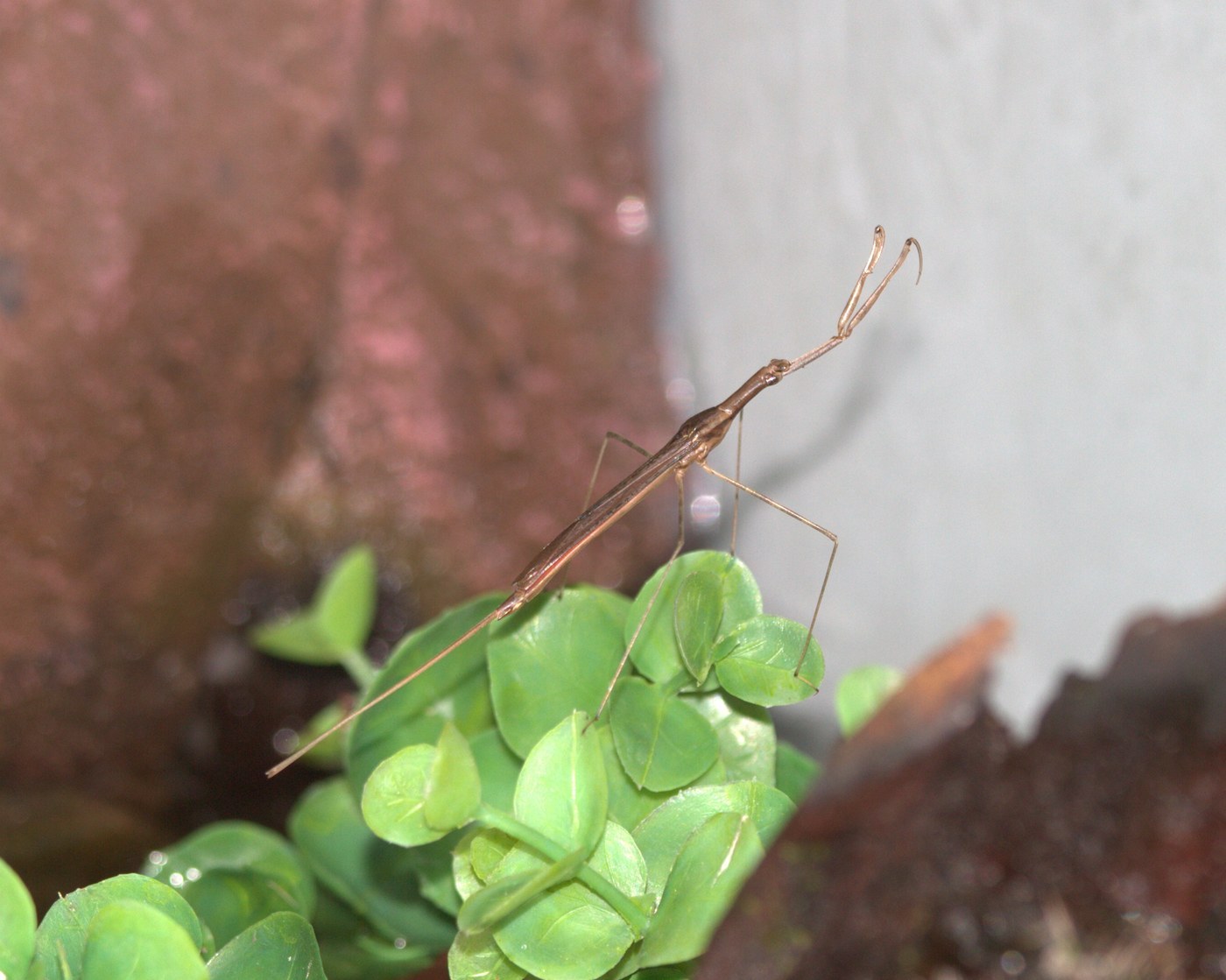
Water Scorpion
An elongated, twig-like aquatic true bug with grasping raptorial forelegs and a long, thin breathing tube at the tail end, resembling a slender scorpion as it lies in ambush among submerged plants.
aquatic-insect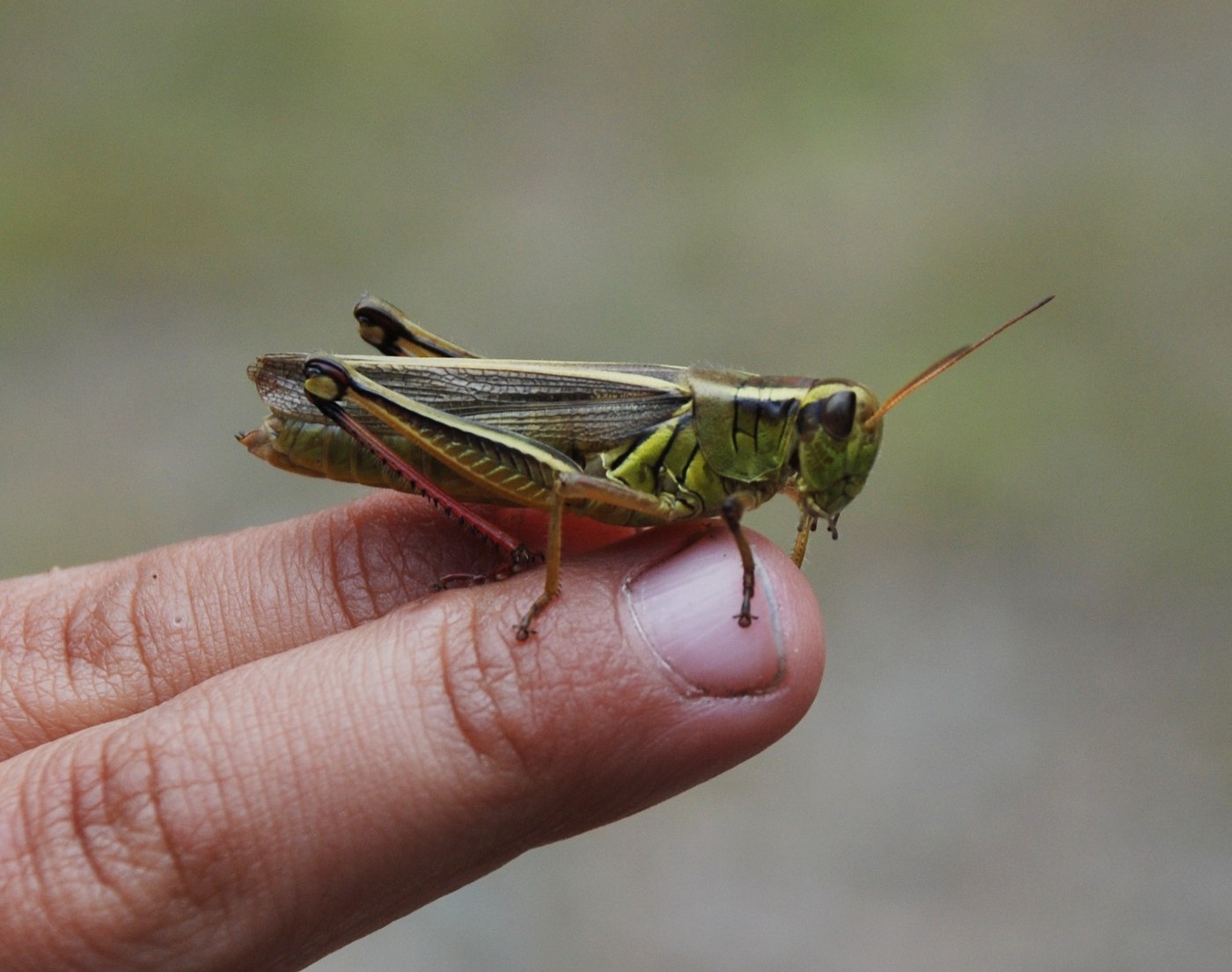
Two-striped Grasshopper
Easily spotted by the pair of pale cream stripes running the length of its body, the two-striped grasshopper is one of the largest and most economically important grasshoppers in North America.
grasshopper-cricketWeaver Ant
A tree-dwelling ant that builds its nest by stitching living leaves together with silk produced by its own larvae, forming elaborate arboreal colonies defended fiercely by its workers.
ant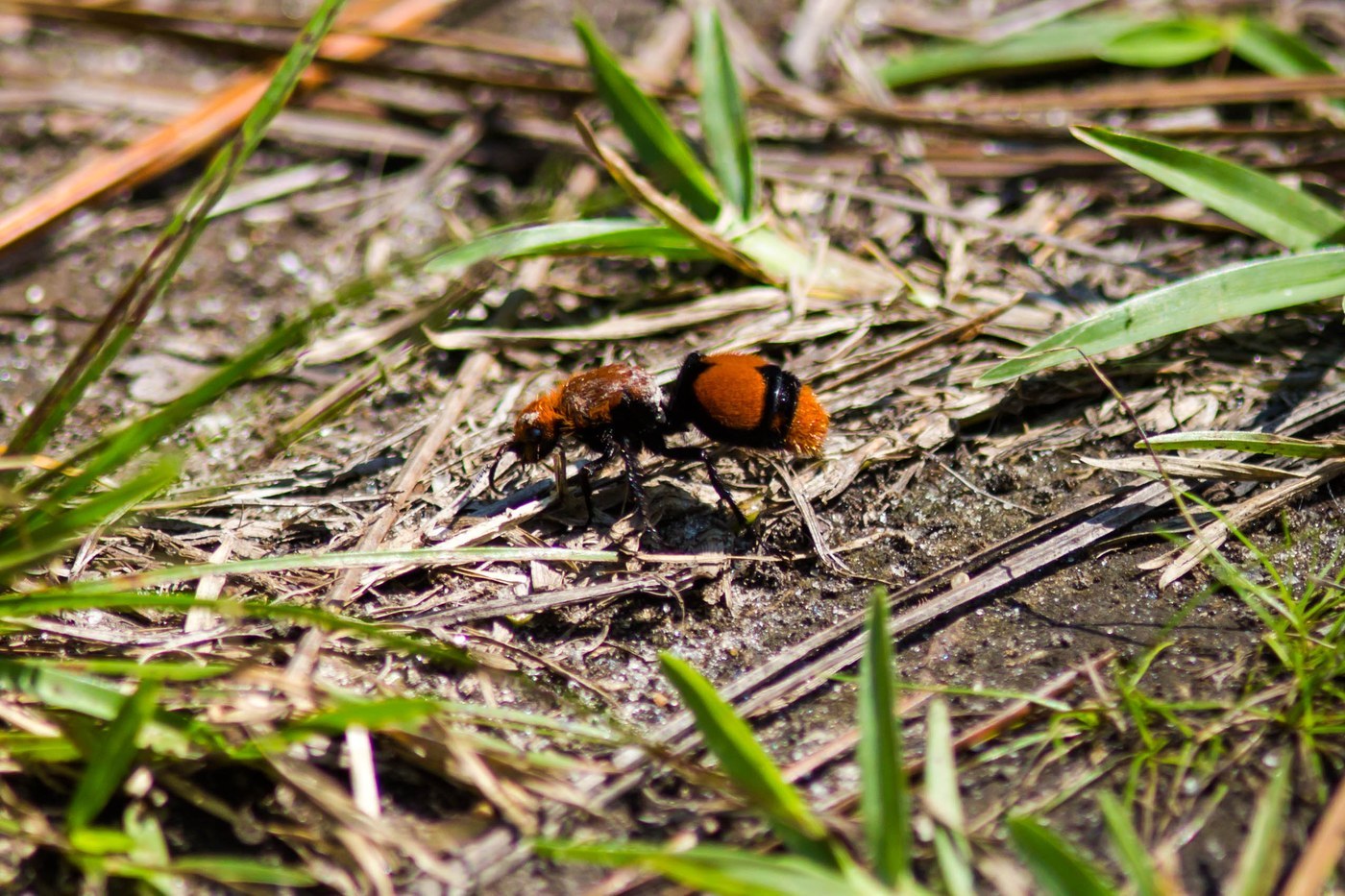
Velvet Ant
A densely fuzzy, brightly colored insect that looks like an oversized ant but is actually a wingless female wasp, instantly recognizable by its thick coat of red, orange, black, or white hair.
wasp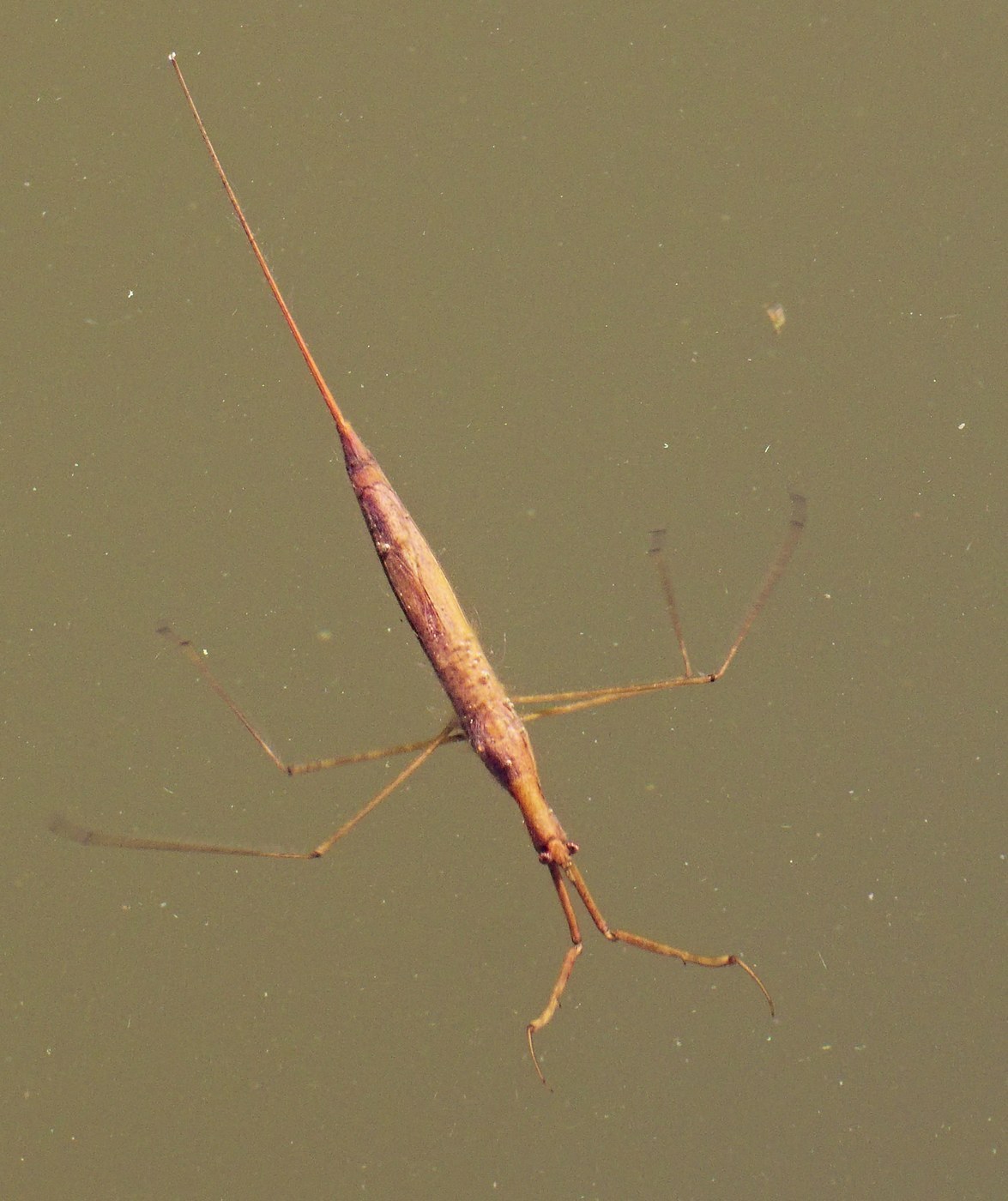
Water Stick Insect
An extraordinarily twig-like aquatic predator that lies motionless among pond weed, grasping passing prey with spiny raptorial forelegs while breathing through a long tail-like snorkel.
true-bugWater Mite
A brilliantly colored, ball-shaped mite that swims through freshwater ponds and streams using fringed, oar-like legs.
arachnidStonefly
A flattened, drab-winged insect whose nymphs are among the most reliable living indicators of pristine, well-oxygenated stream water.
aquatic-insect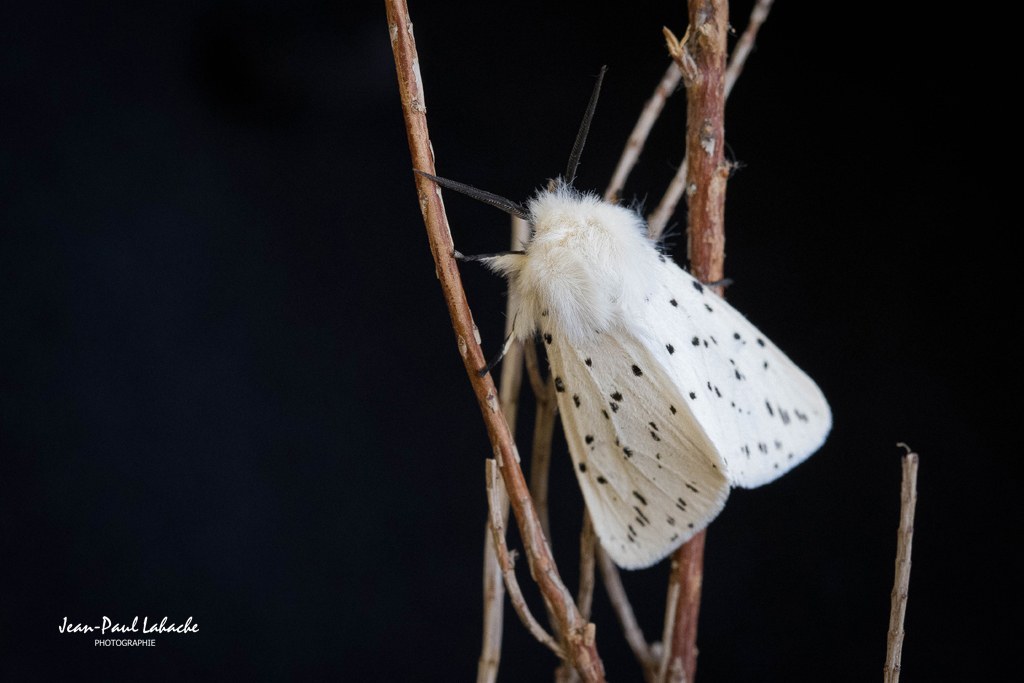
White Ermine Moth
A soft, fuzzy white moth speckled with small black dots, resembling the ermine fur trim after which it is named, commonly seen resting on vegetation or attracted to lights on summer nights.
moth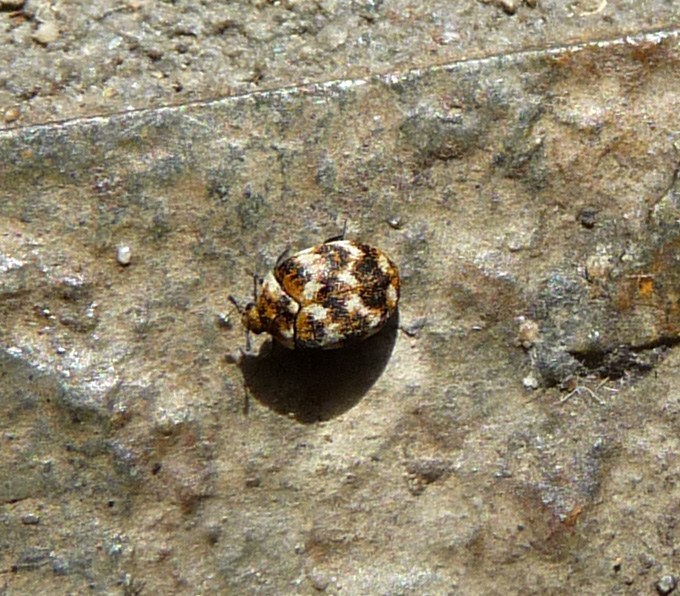
Varied Carpet Beetle
A tiny beetle mottled with white, brown, and yellow scales that, as a fuzzy larva, quietly grazes on natural fibers tucked away in closets and attics.
beetle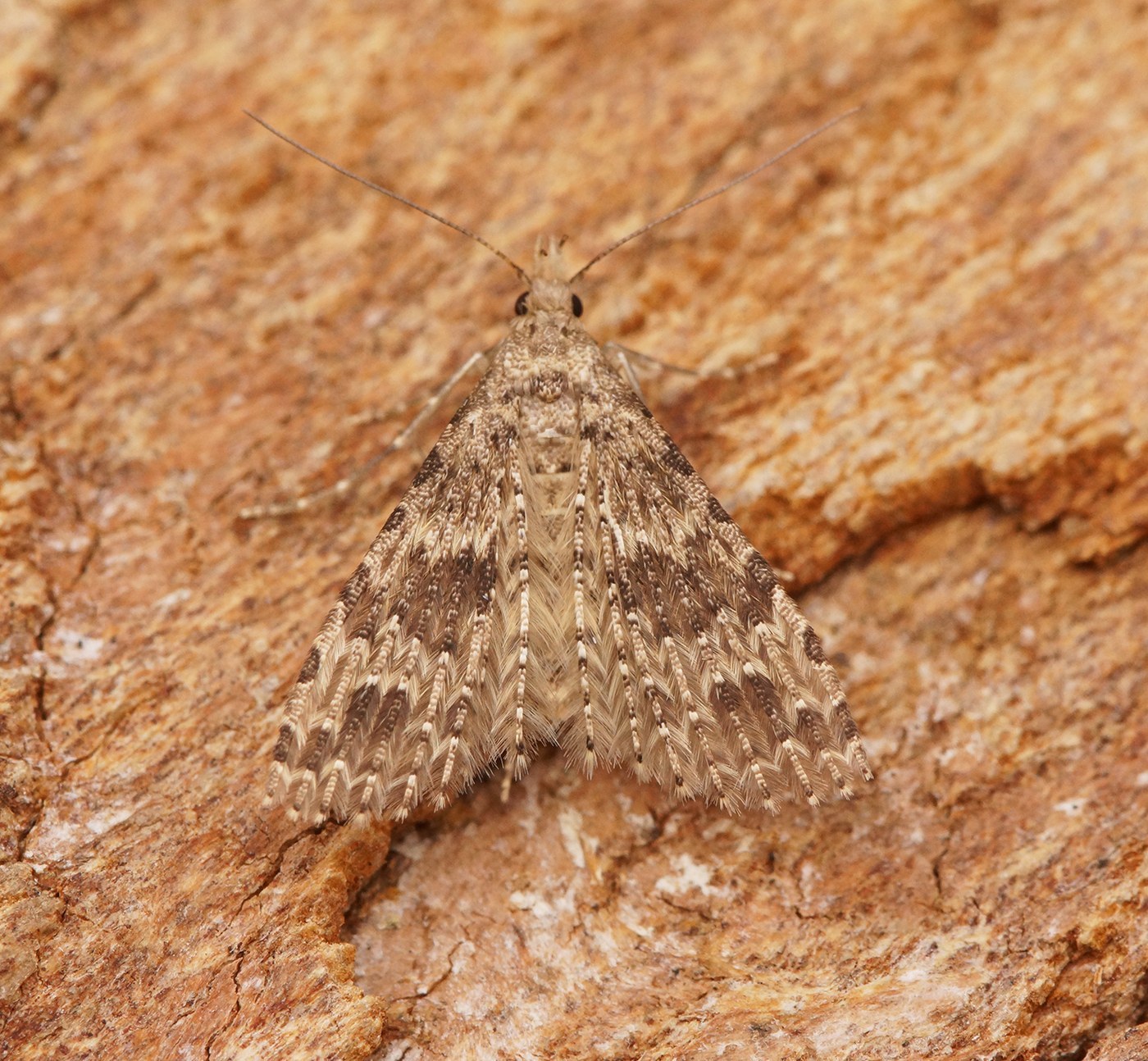
Twenty-plume Moth
A tiny, unusual moth whose wings are each divided into numerous slender, feather-like plumes rather than solid membranes, giving it a delicate, fringed appearance unlike almost any other moth.
mothRoot Maggot
A small, legless white grub that lives hidden in the soil, tunneling into the roots of cabbage-family vegetables where it feeds unseen.
fly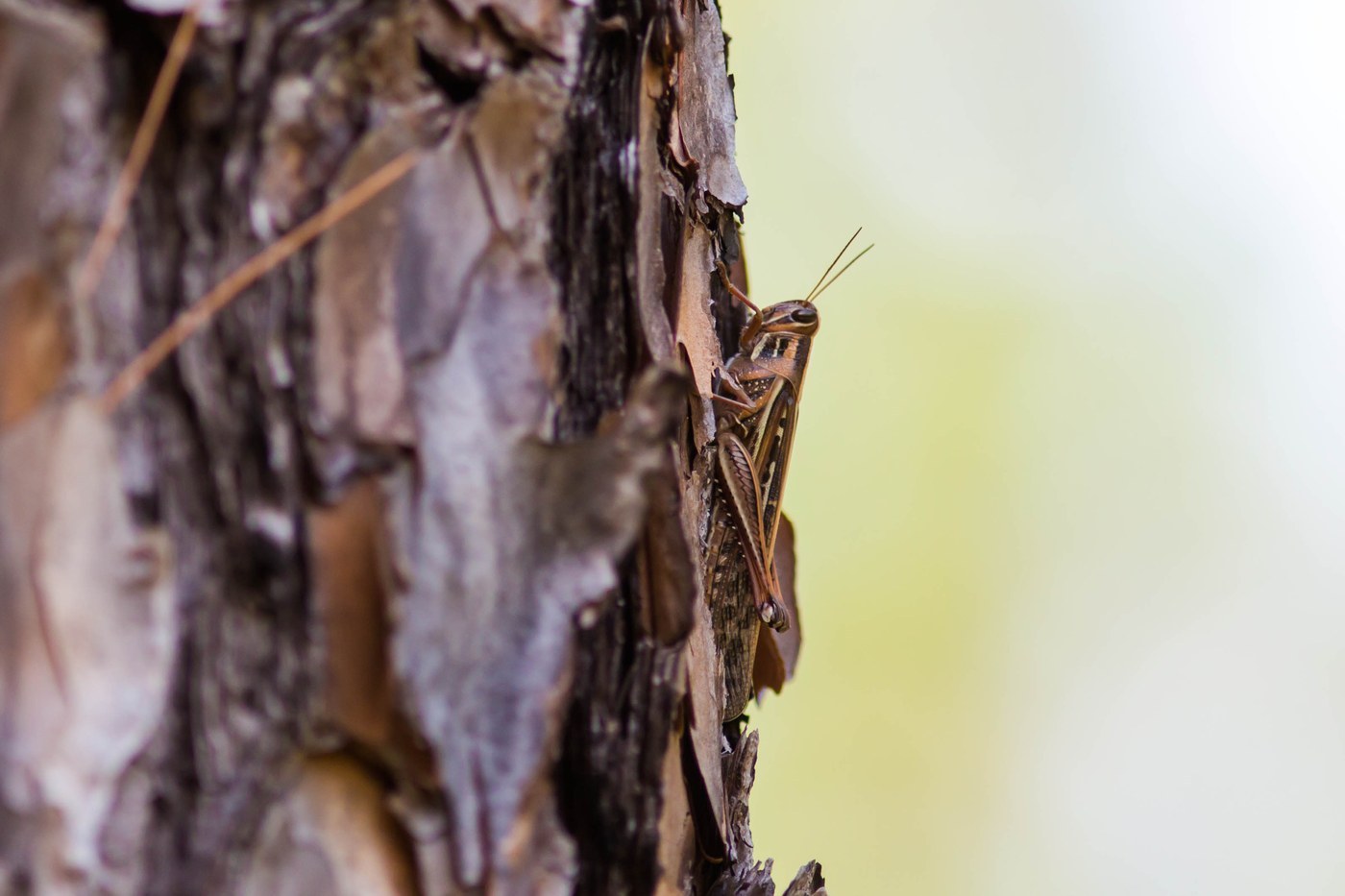
American Grasshopper
A large, strong-flying grasshopper related to the locusts of the Old World, the American grasshopper can occasionally form dense, damaging aggregations across the southern United States.
grasshopper-cricketRough Stink Bug
A gray-brown, textured stink bug with an irregular, jagged-edged outline that blends seamlessly against tree bark, making it one of the best-camouflaged members of its family.
true-bug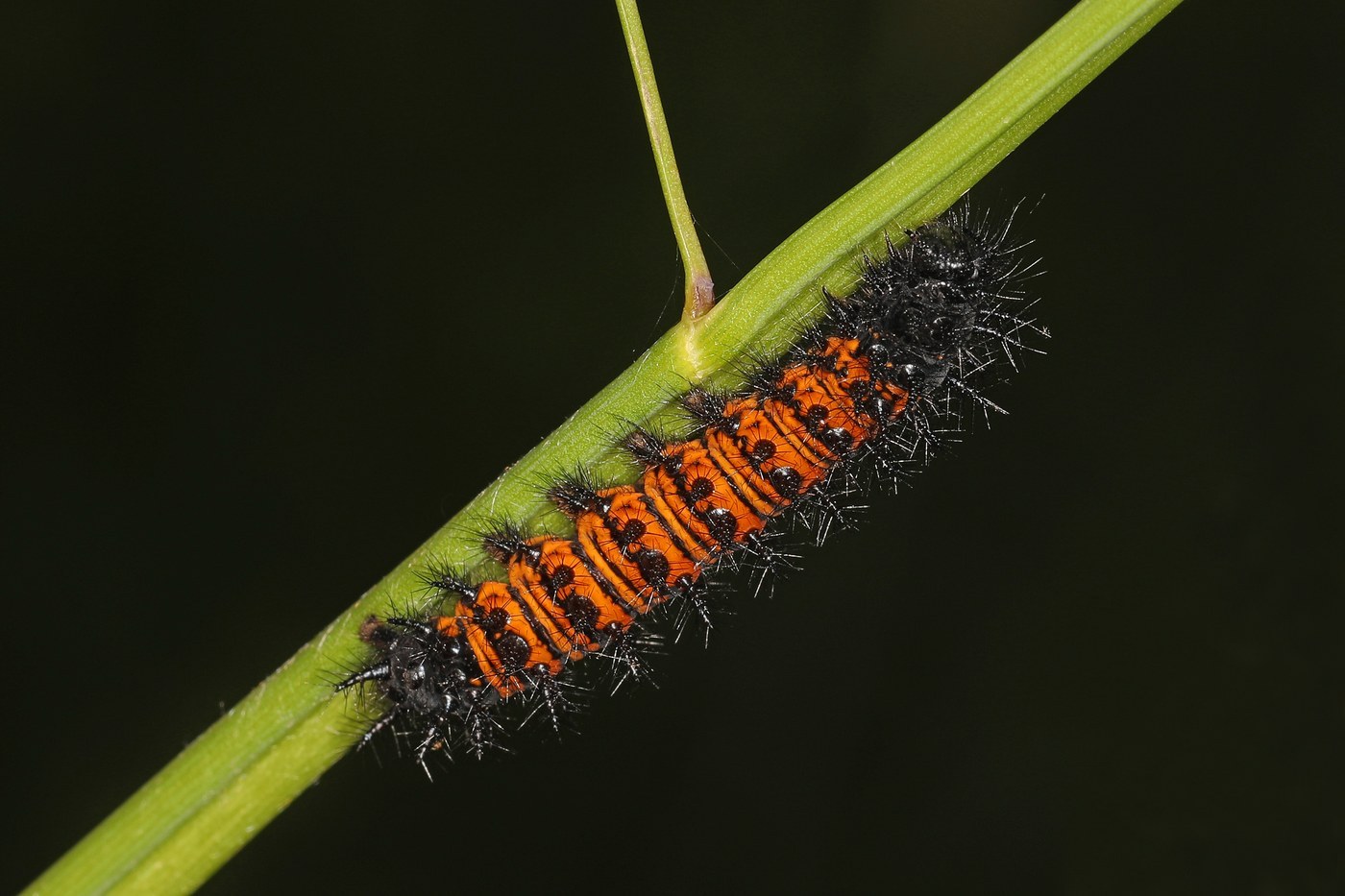
Baltimore Checkerspot
A striking black butterfly checkered with rows of orange and cream-white spots, closely associated with wet meadows and its turtlehead host plant, and recognized as a state insect symbol in parts of its range.
butterfly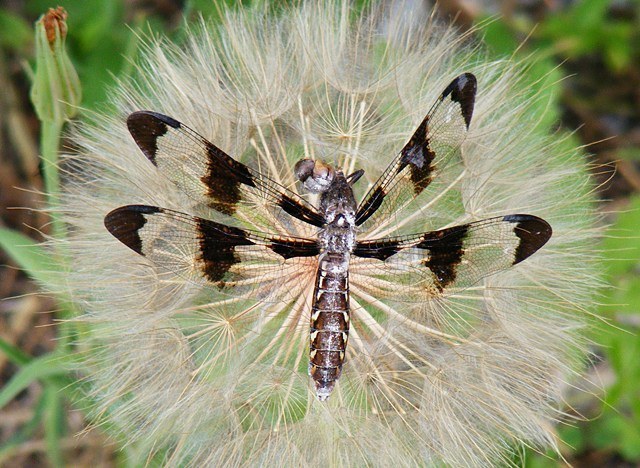
Twelve-spotted Skimmer
A big, boldly patterned skimmer whose wings each carry three chocolate-brown patches, and whose mature males add chalky white flashes between them for a striking black-and-white flicker in flight.
dragonfly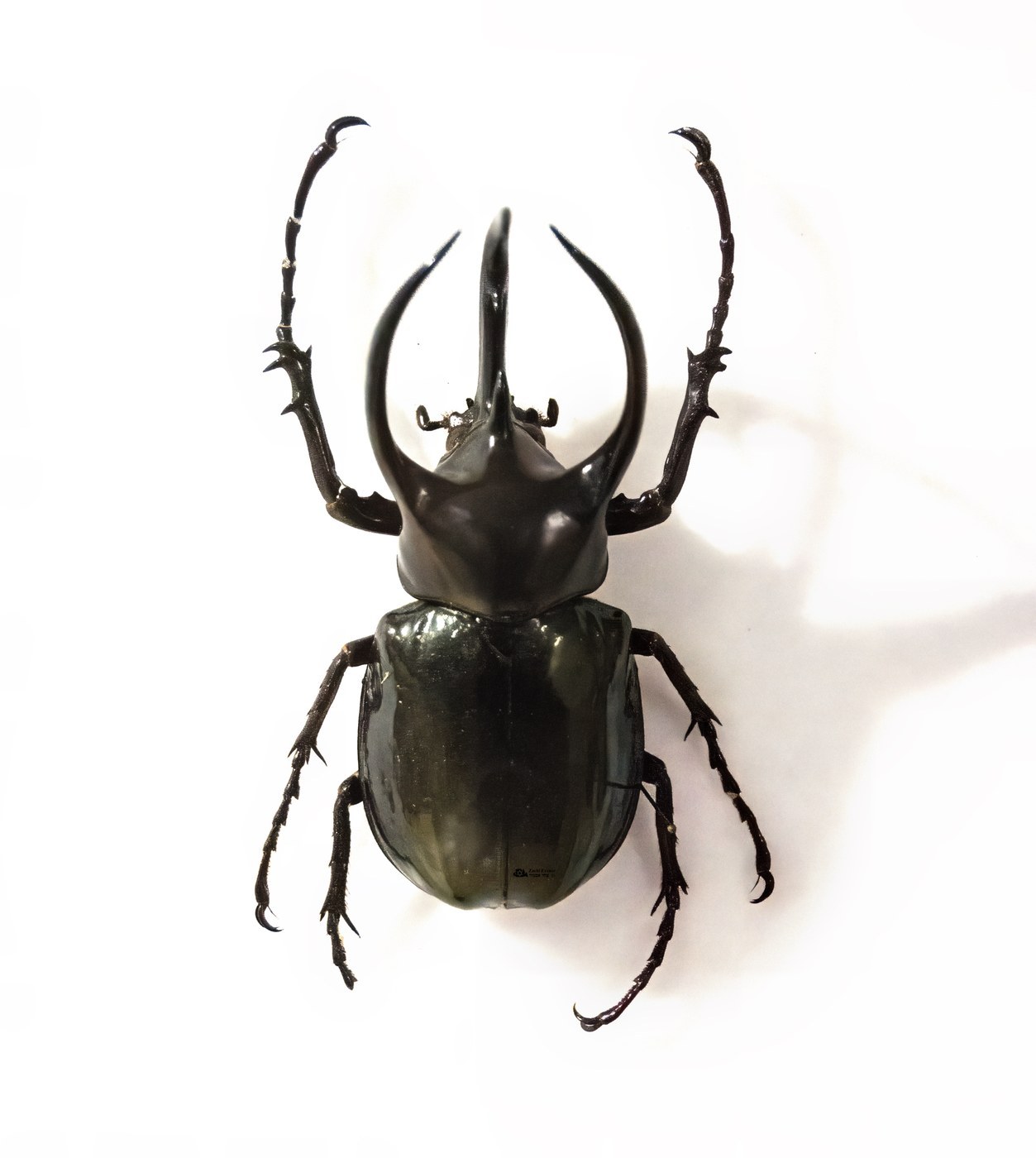
Atlas Beetle
A large, glossy black-to-metallic rhinoceros beetle in which males bear three long curved horns used for combat over food and mates.
beetle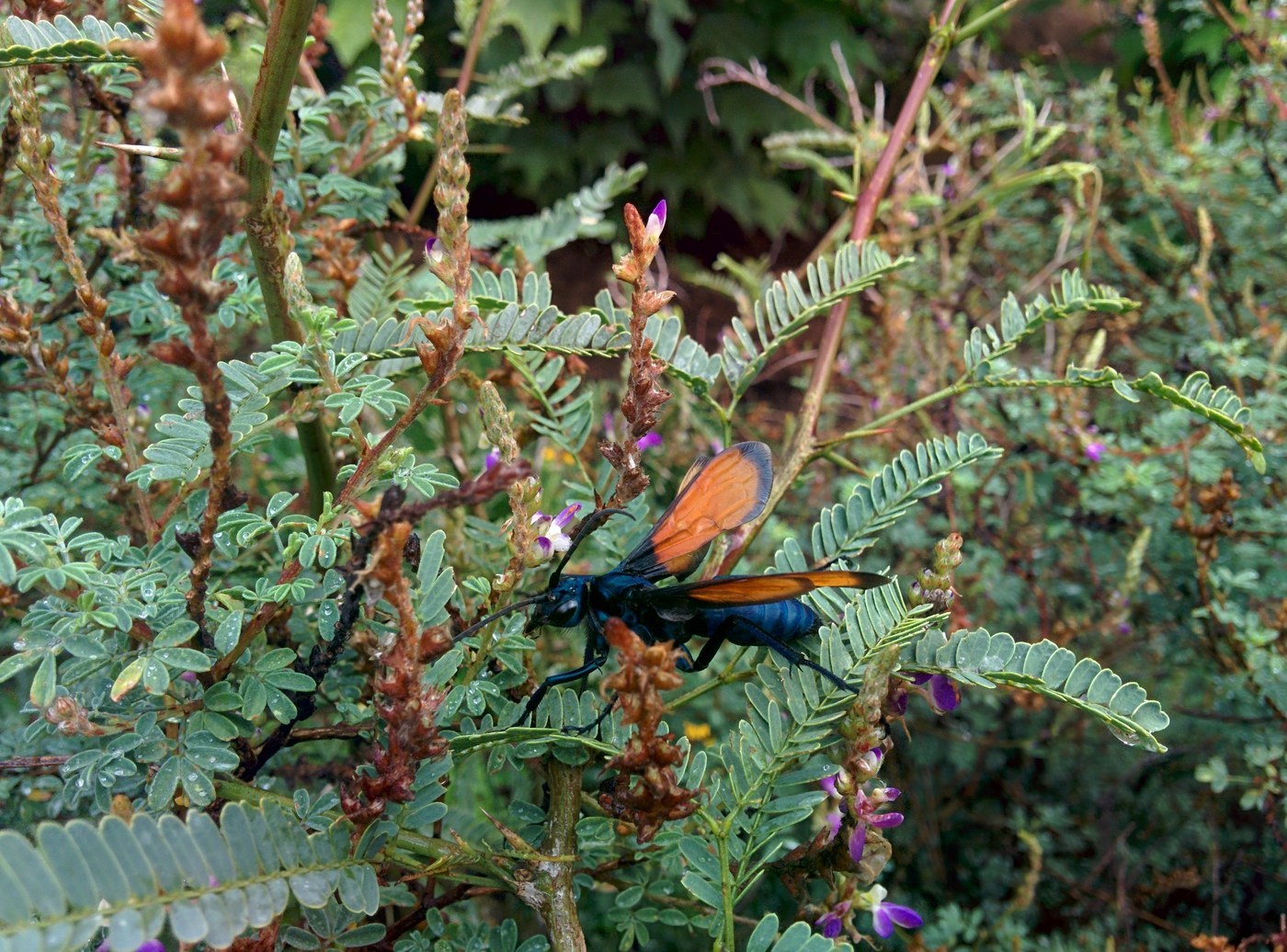
Tarantula Hawk
One of the largest wasps in the world, with a glossy metallic blue-black body and vivid burnt-orange wings, famous for hunting tarantulas to provision a single underground burrow for its larva.
wasp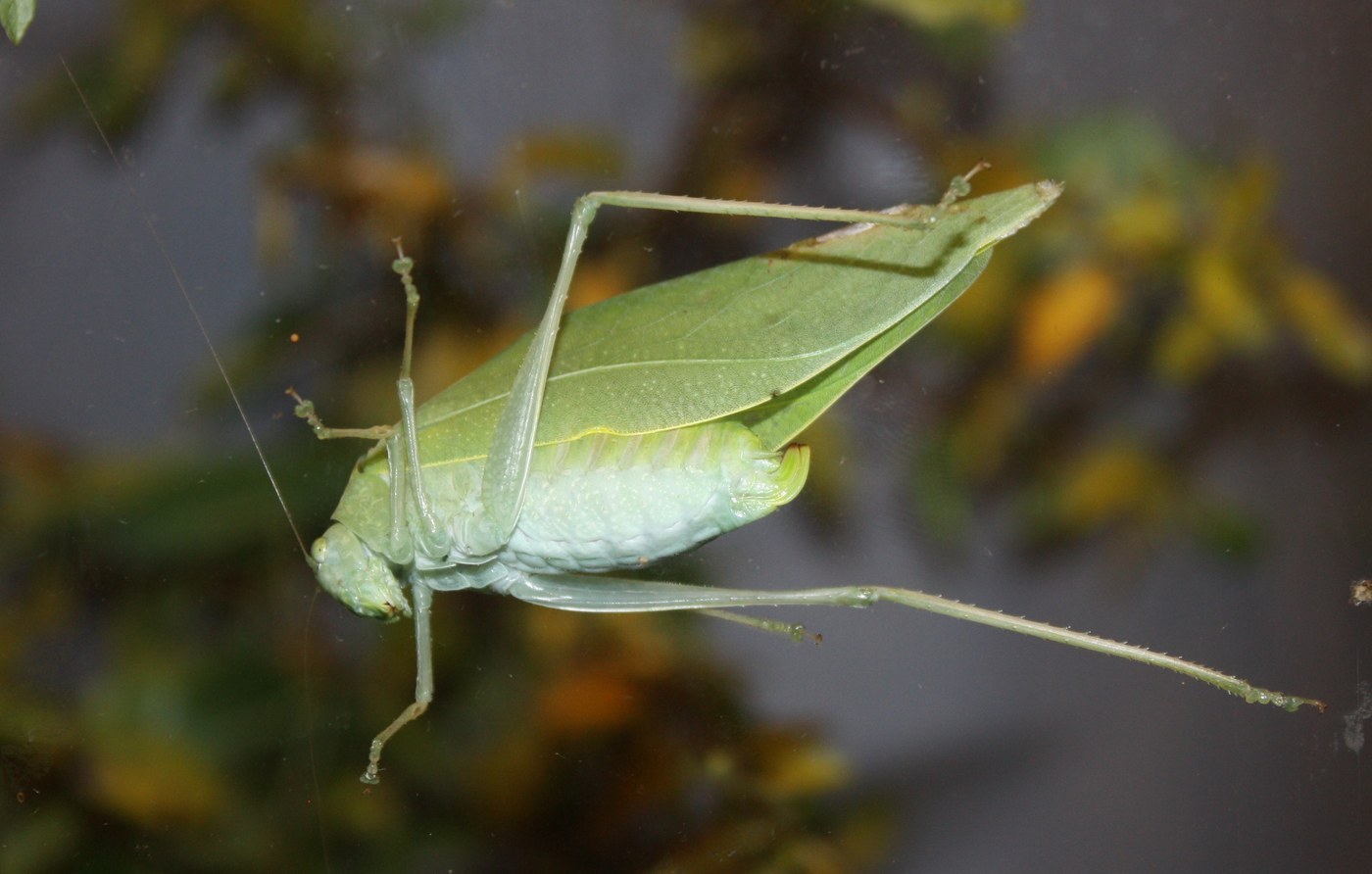
Angular-winged Katydid
A leaf-green katydid whose broad, leaf-shaped wings make it nearly invisible among tree foliage until its soft nighttime calls give it away.
grasshopper-cricket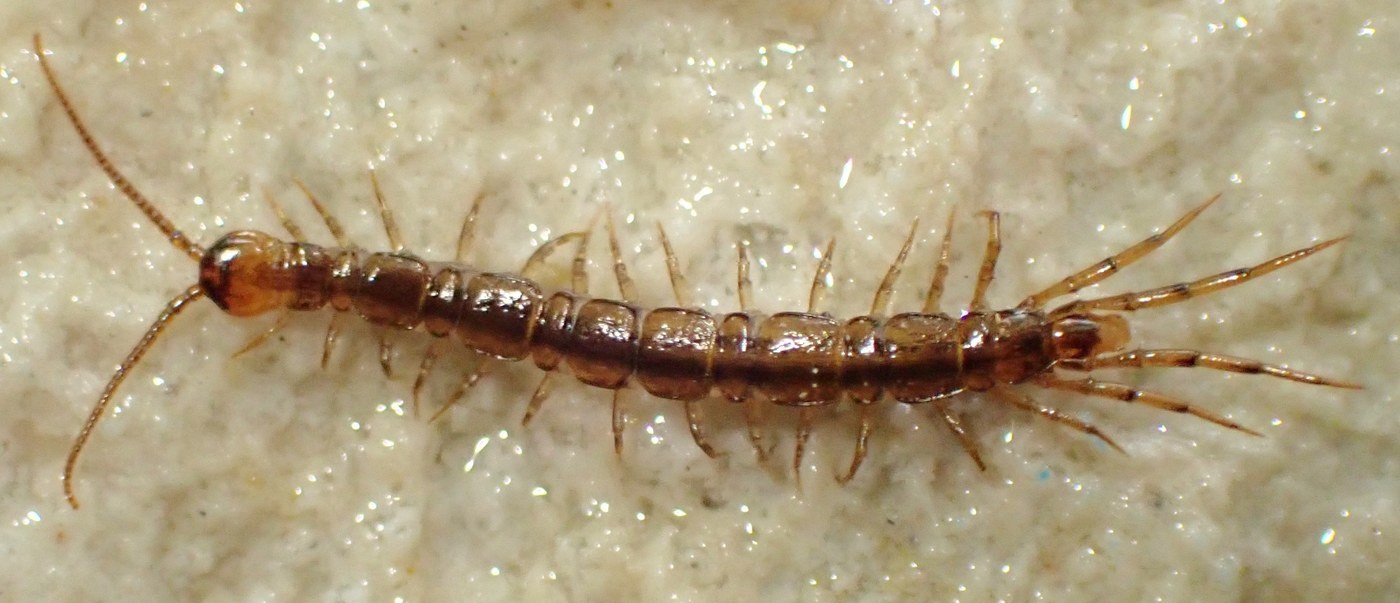
Stone Centipede
A quick, flattened, reddish-brown centipede that darts for cover the instant its stone or log shelter is lifted, one of the most commonly seen centipedes in temperate gardens.
myriapod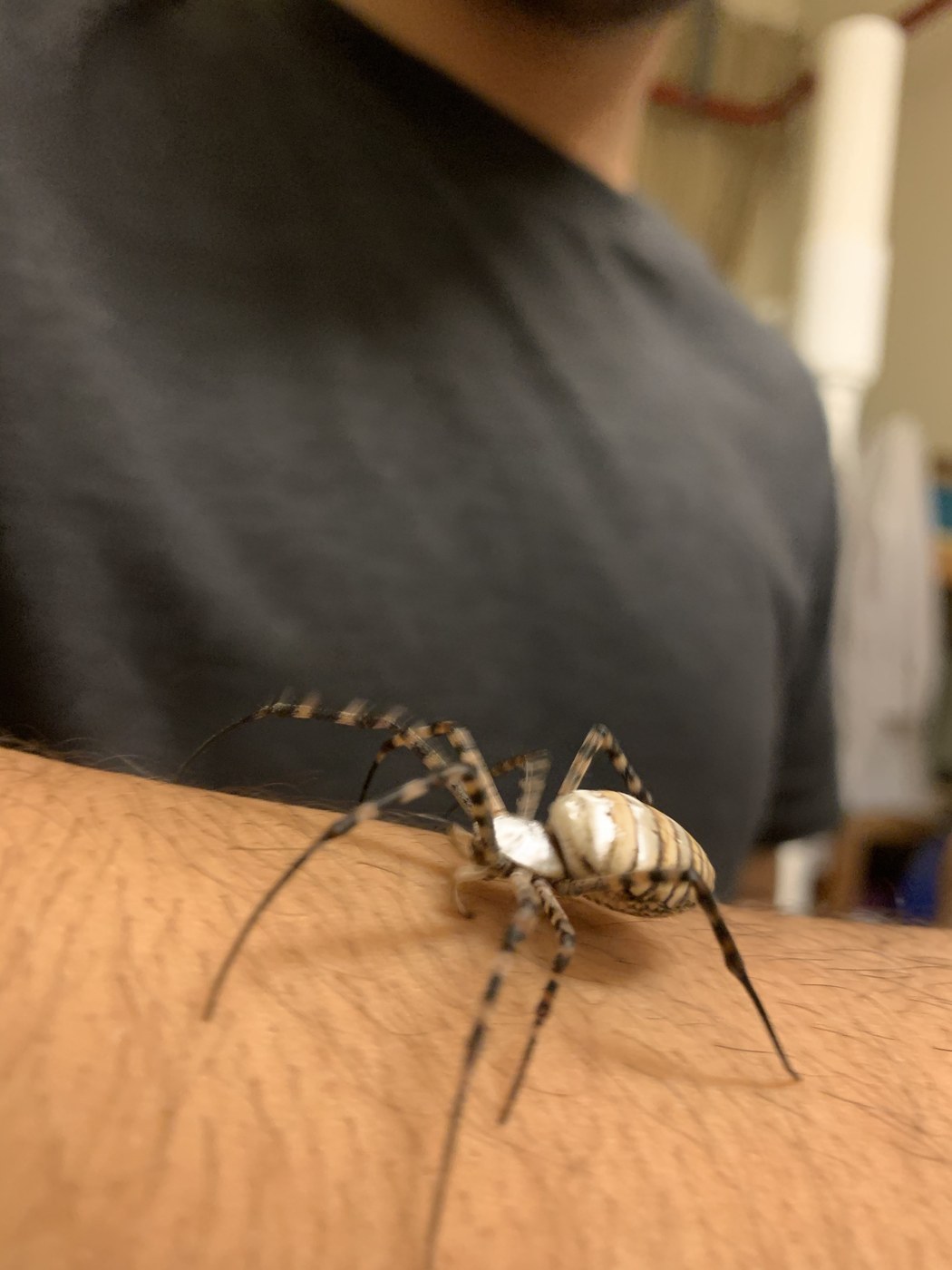
Banded Garden Spider
A large orb weaver with a silvery, banded abdomen striped in yellow and black, spinning a distinctive zigzag stabilimentum through the center of its web.
spider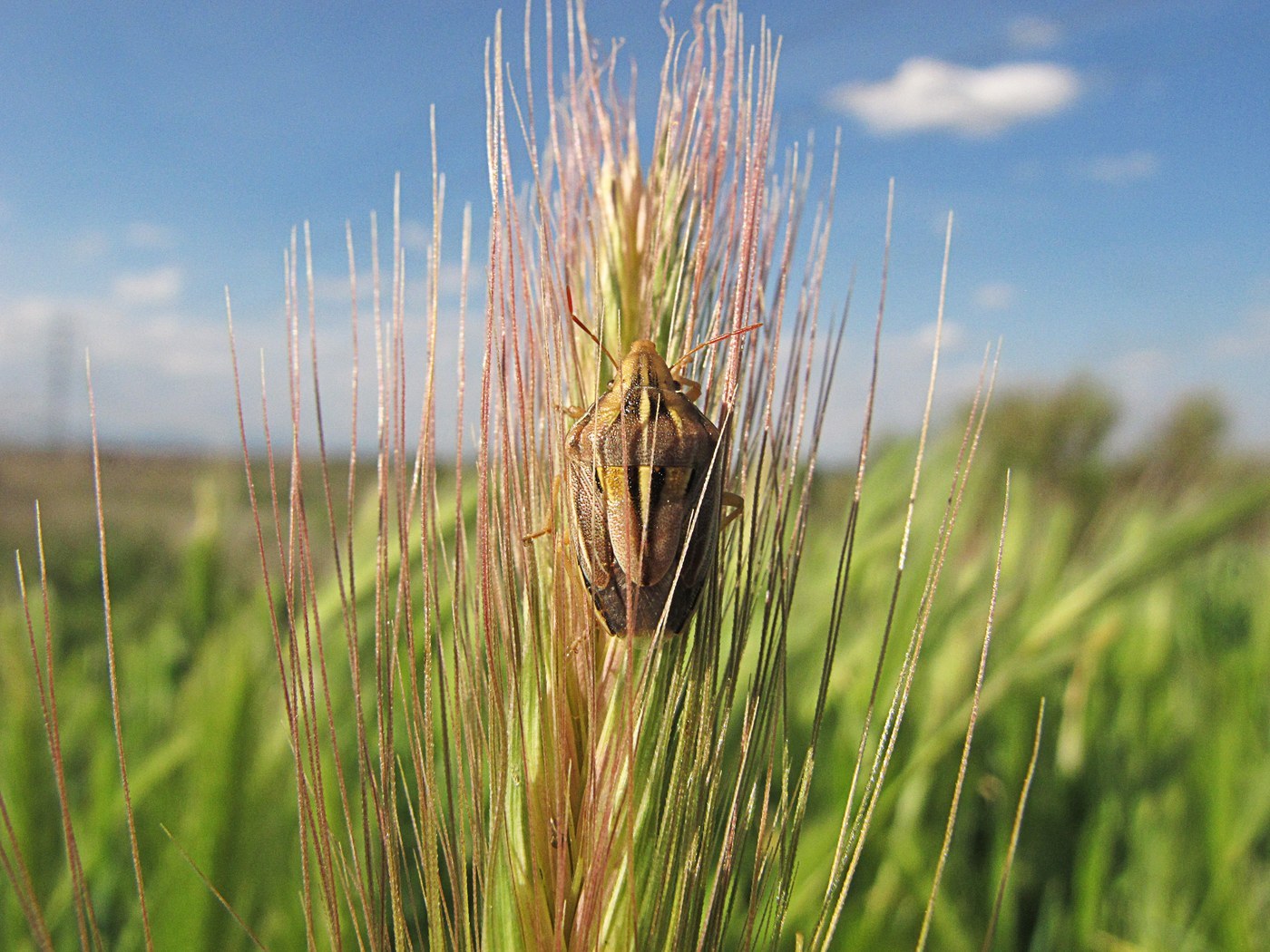
Stink Bug
A broad, shield-shaped true bug that releases a pungent defensive odor when handled or crushed, commonly found on garden vegetables and fruit trees.
true-bug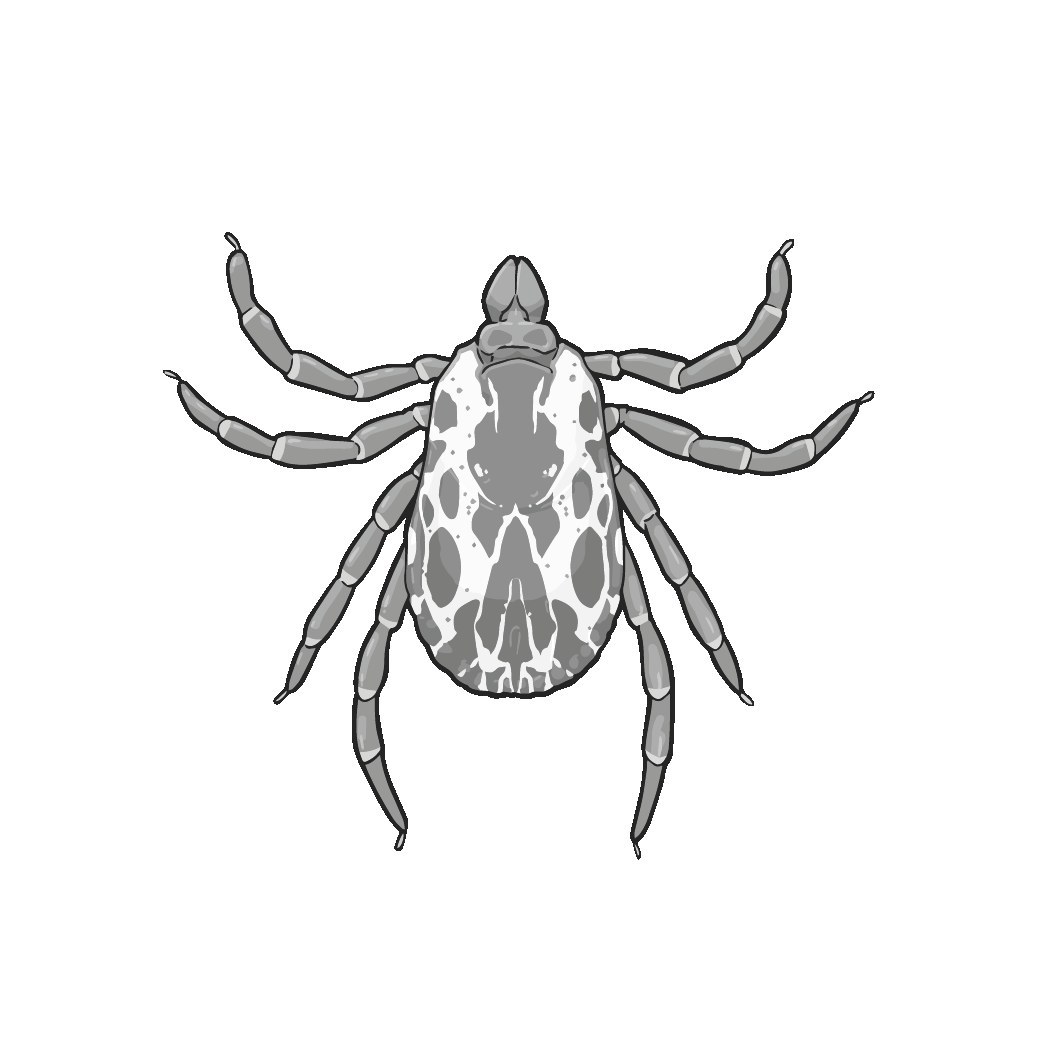
American Dog Tick
A stout, mottled brown-and-silver tick that waits on grass blades with its front legs outstretched, ready to latch onto a passing host.
arachnid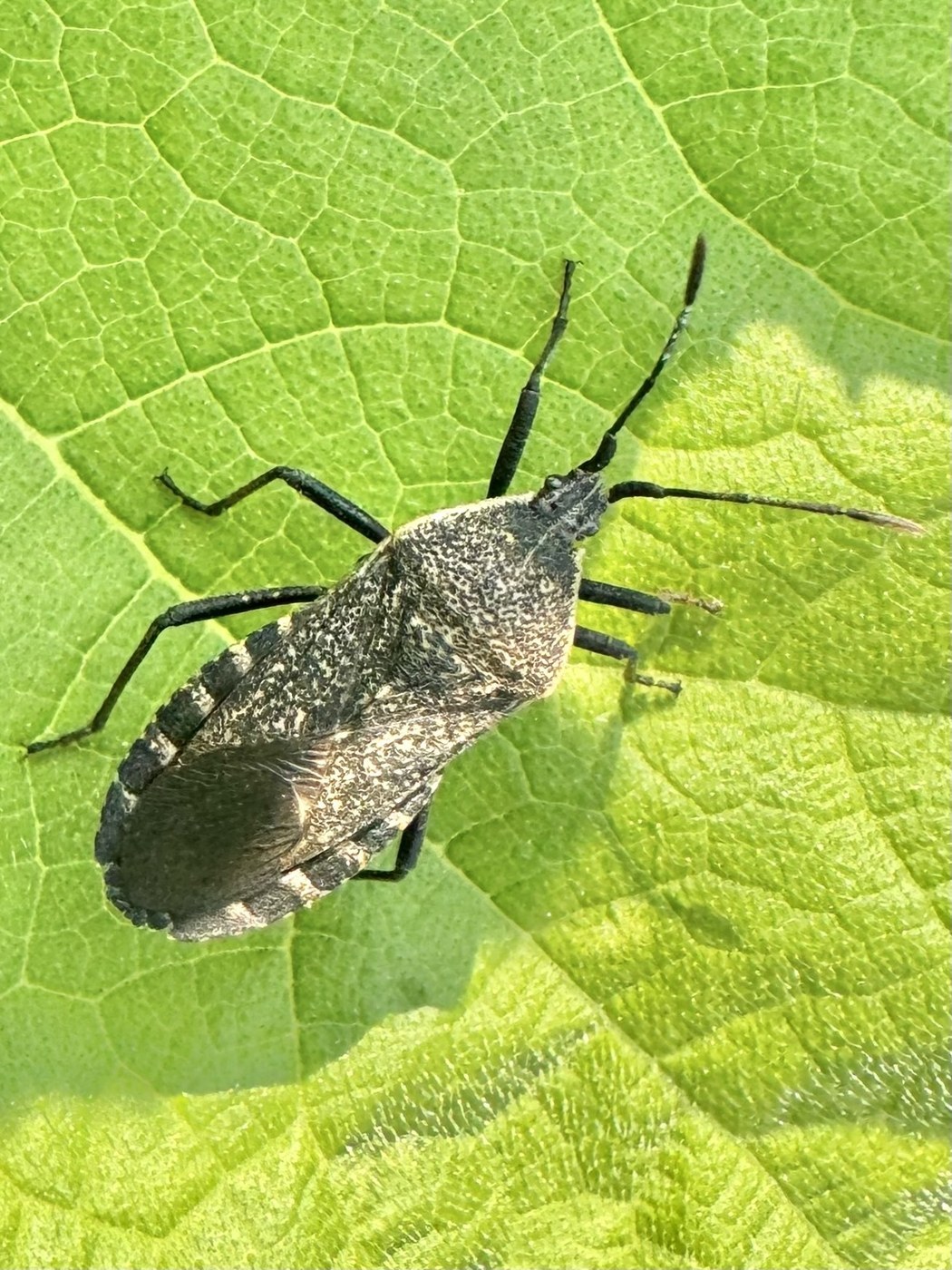
Squash Bug
A flat-backed, brownish-gray true bug commonly found clustered on the leaves and stems of squash and pumpkin plants, where it feeds by piercing plant tissue.
true-bug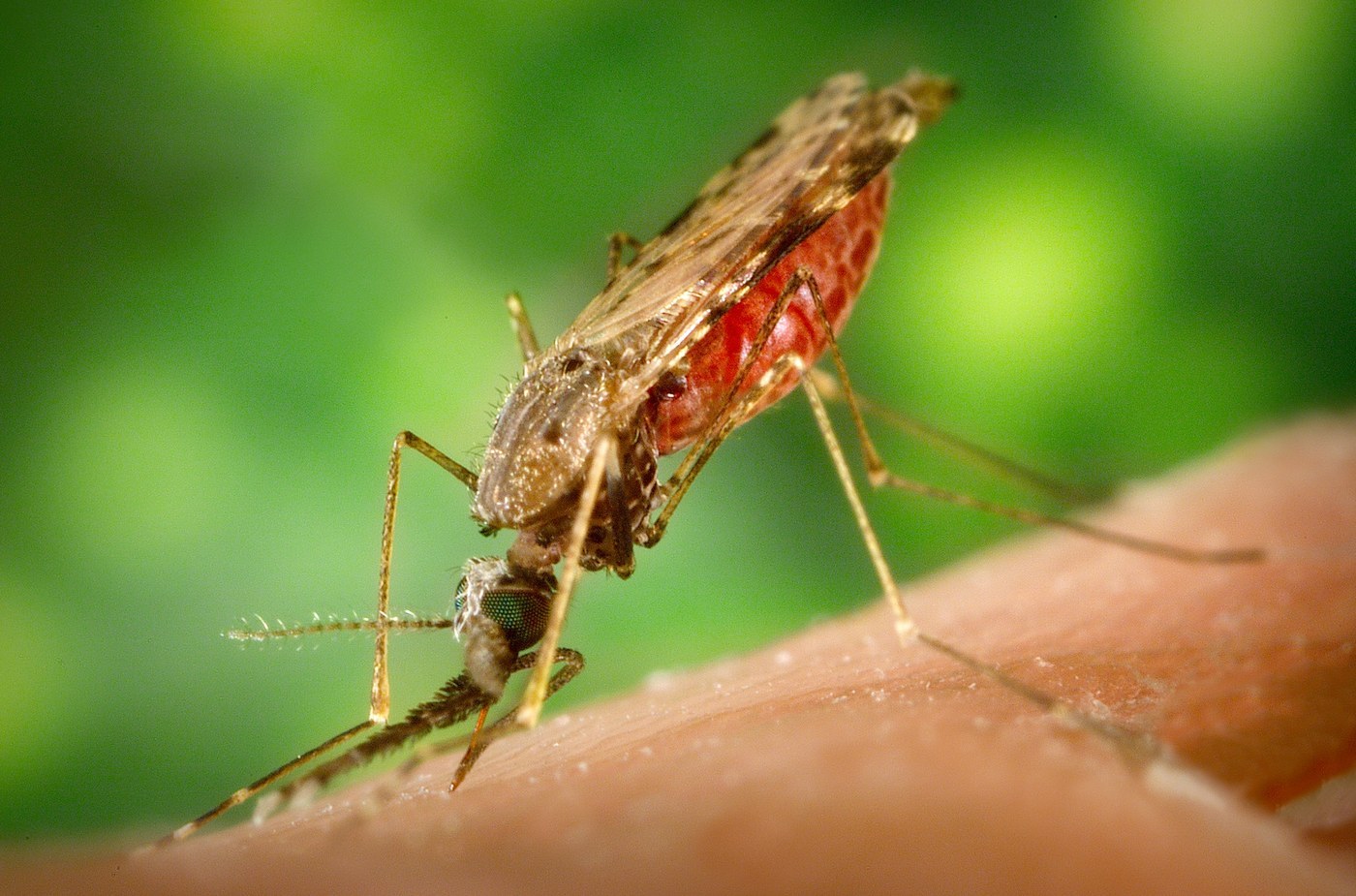
Anopheles Mosquito
A slim, mottled-winged mosquito best known for the distinctive head-down, tail-up posture it strikes while resting on walls and vegetation.
fly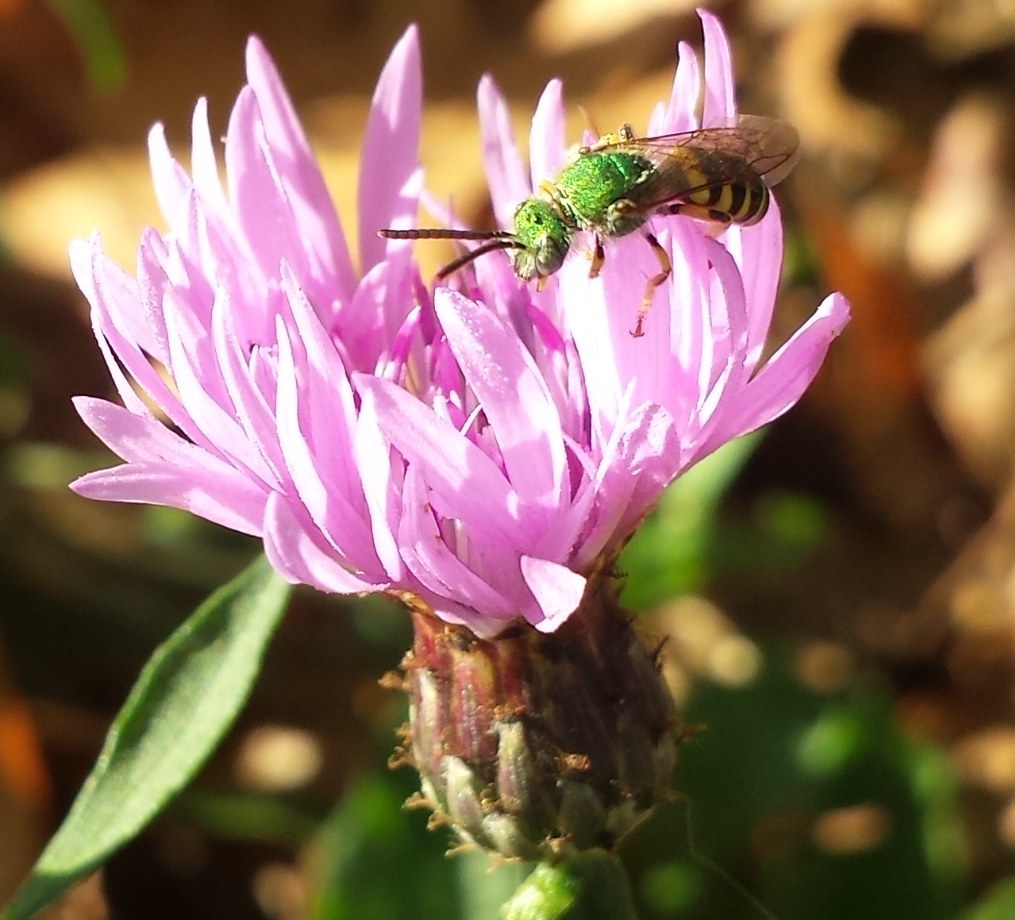
Sweat Bee
A small, often metallic green or bronze bee in the family Halictidae, named for its habit of landing on skin to sip perspiration, and an important generalist pollinator of wildflowers and crops.
bee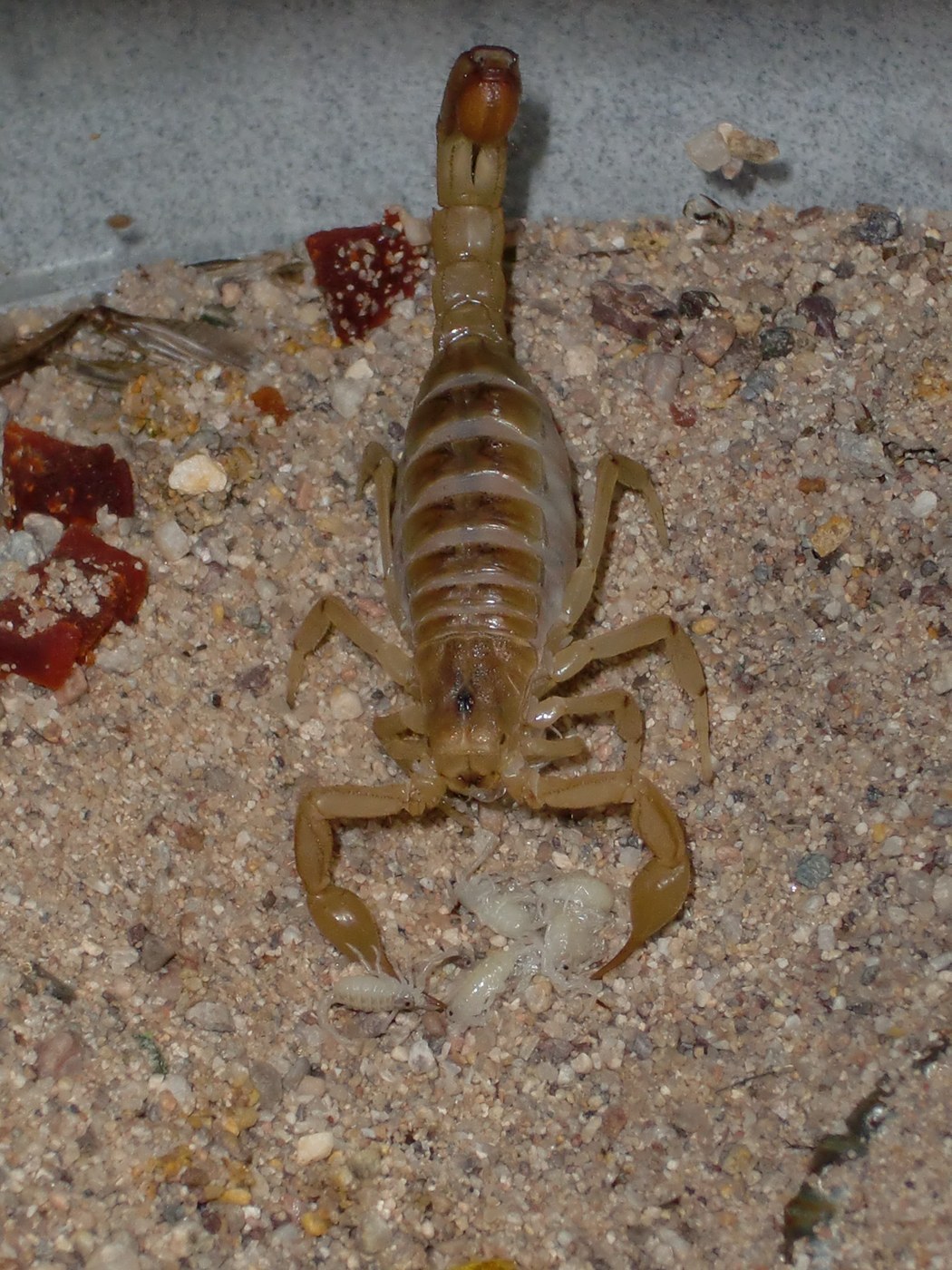
Arizona Bark Scorpion
A slim, pale tan scorpion of the Sonoran Desert that climbs trees, walls, and even ceilings with equal ease thanks to its excellent grip.
arachnid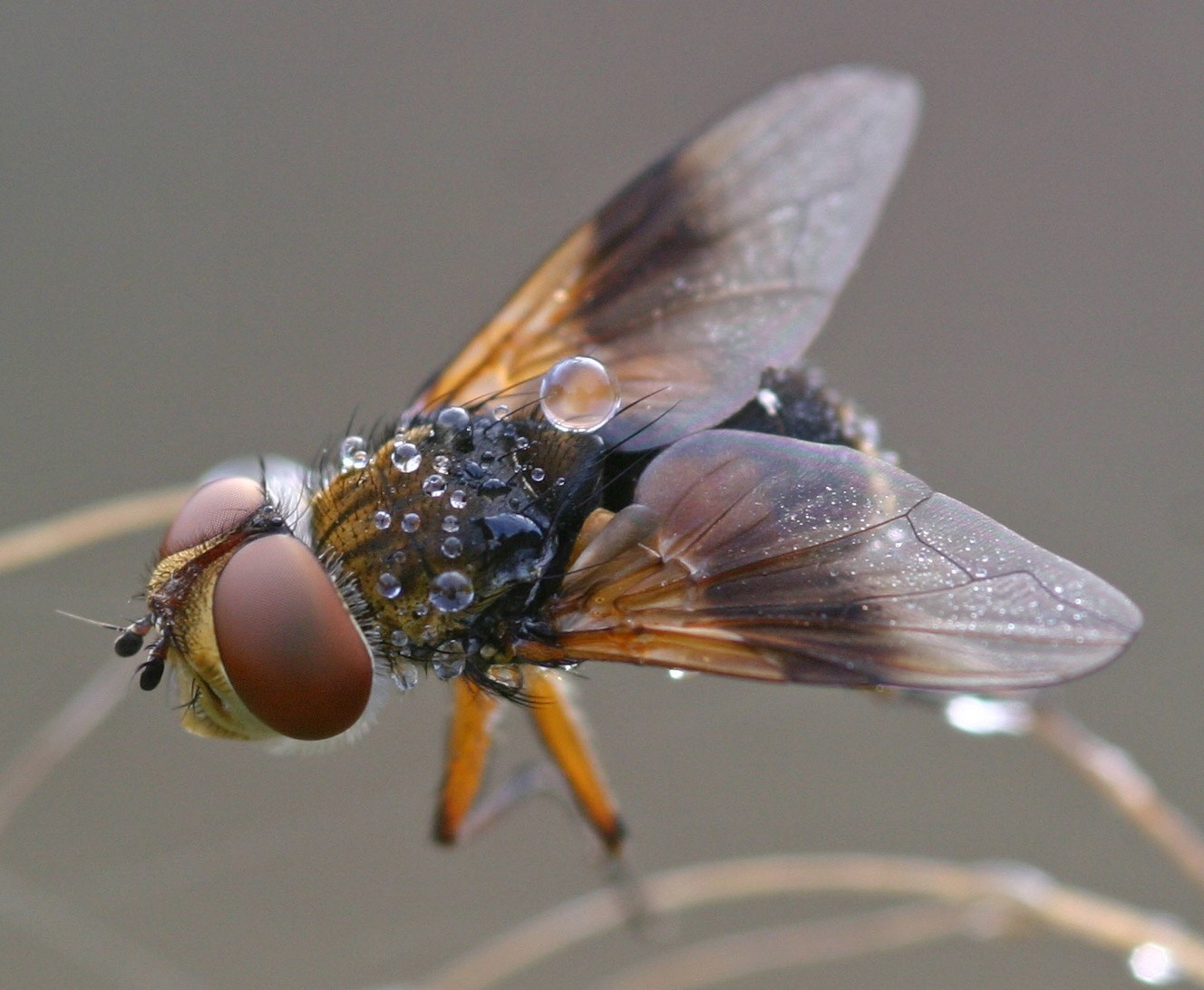
Tachinid Fly
A bristly, house-fly-like insect that looks unremarkable at a glance but hides one of the most important ecological roles among flies: its larvae develop as internal parasites of caterpillars, beetles, and other insects, quietly regulating populations across the landscape. Gardeners often welcome tachinid flies as natural allies against crop-damaging pests.
fly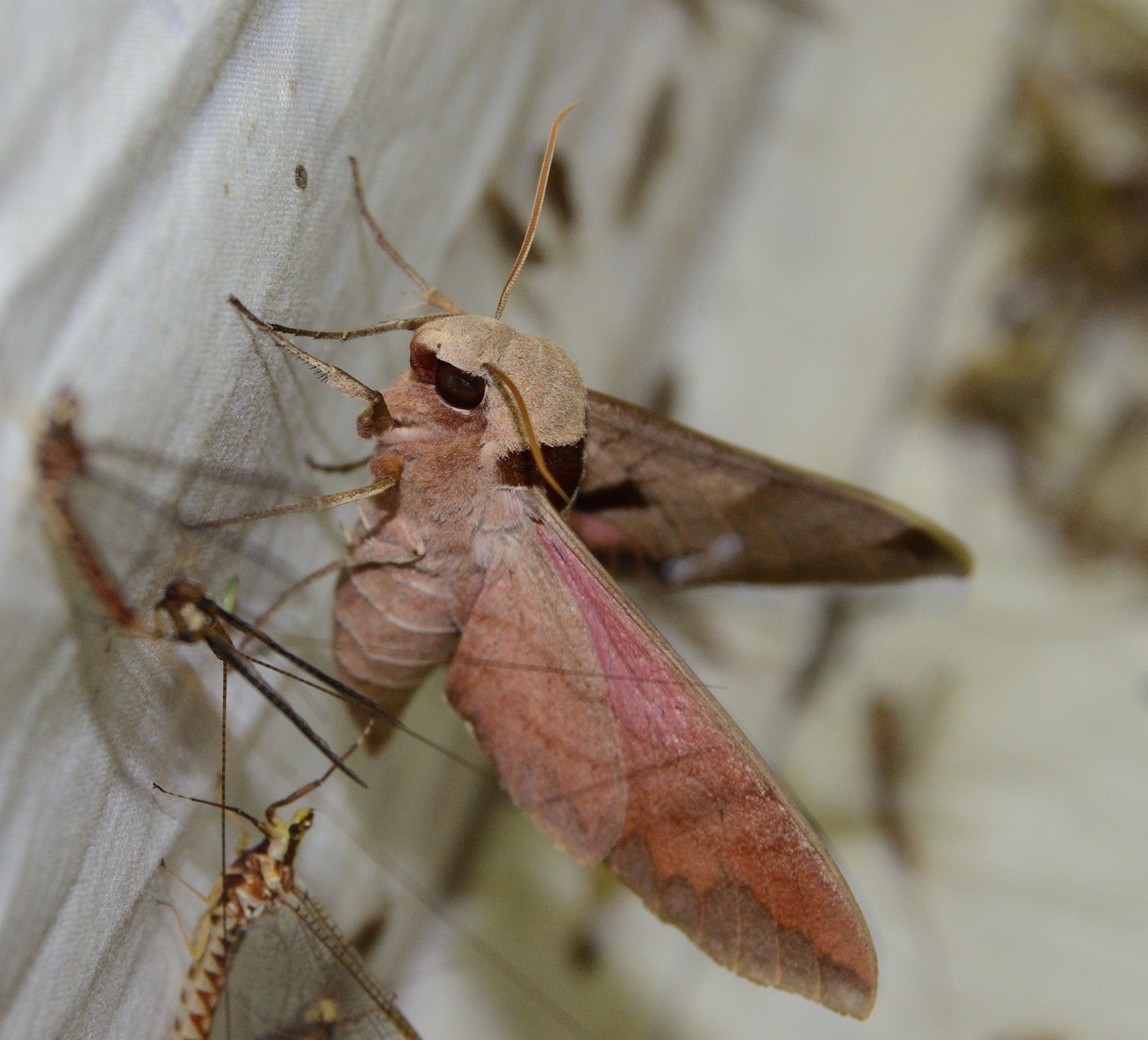
Achemon Sphinx Moth
A large, streamlined sphinx moth with pinkish-brown forewings marked by darker scalloped patches and rosy pink hindwings edged in black, closely tied to grapevines as a larval host.
moth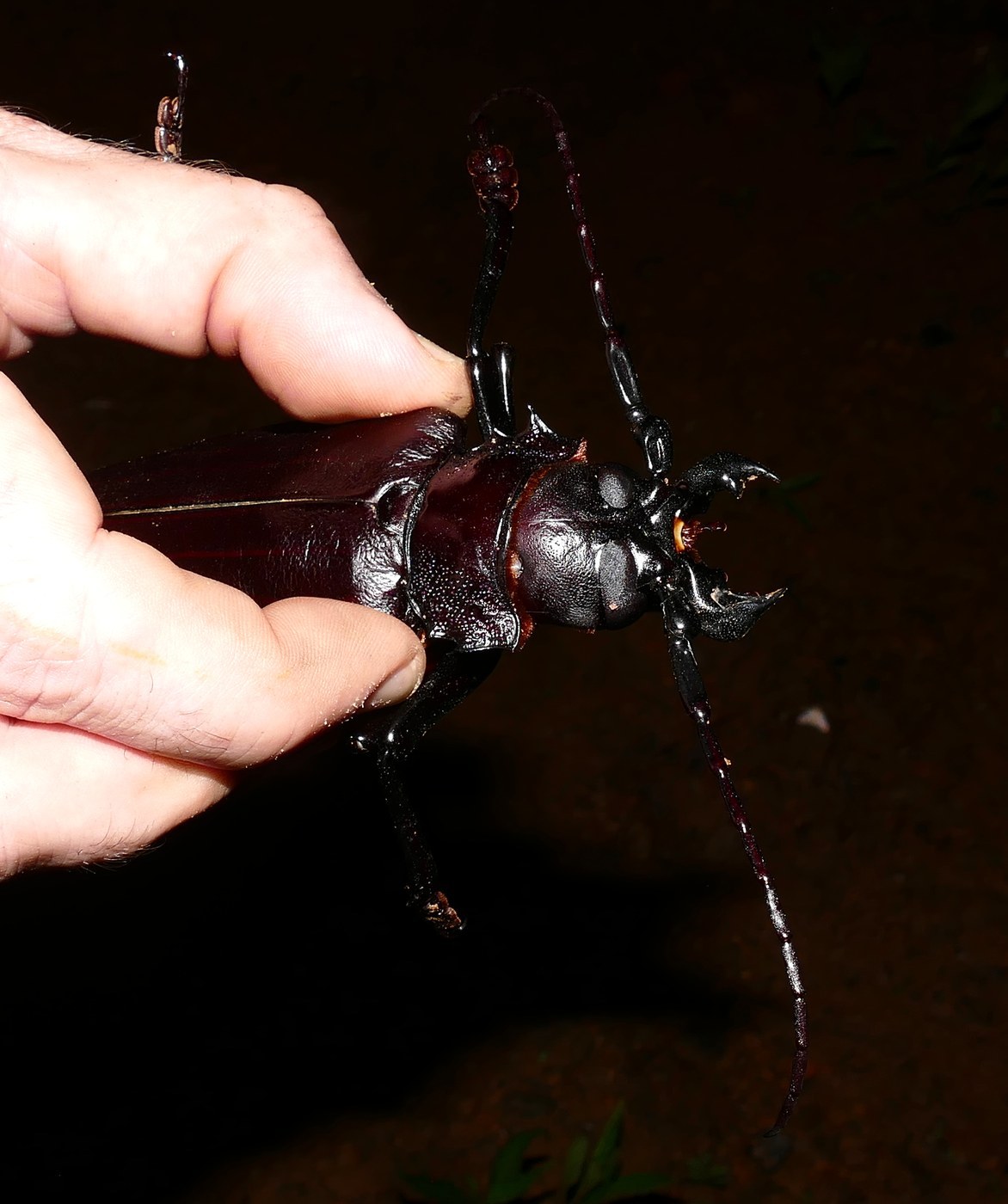
Titan Beetle
One of the largest insects on Earth, the titan beetle is a colossal longhorn from the Amazon whose body can exceed 16 cm. Its powerful jaws and loud hiss make it an imposing rainforest giant.
beetle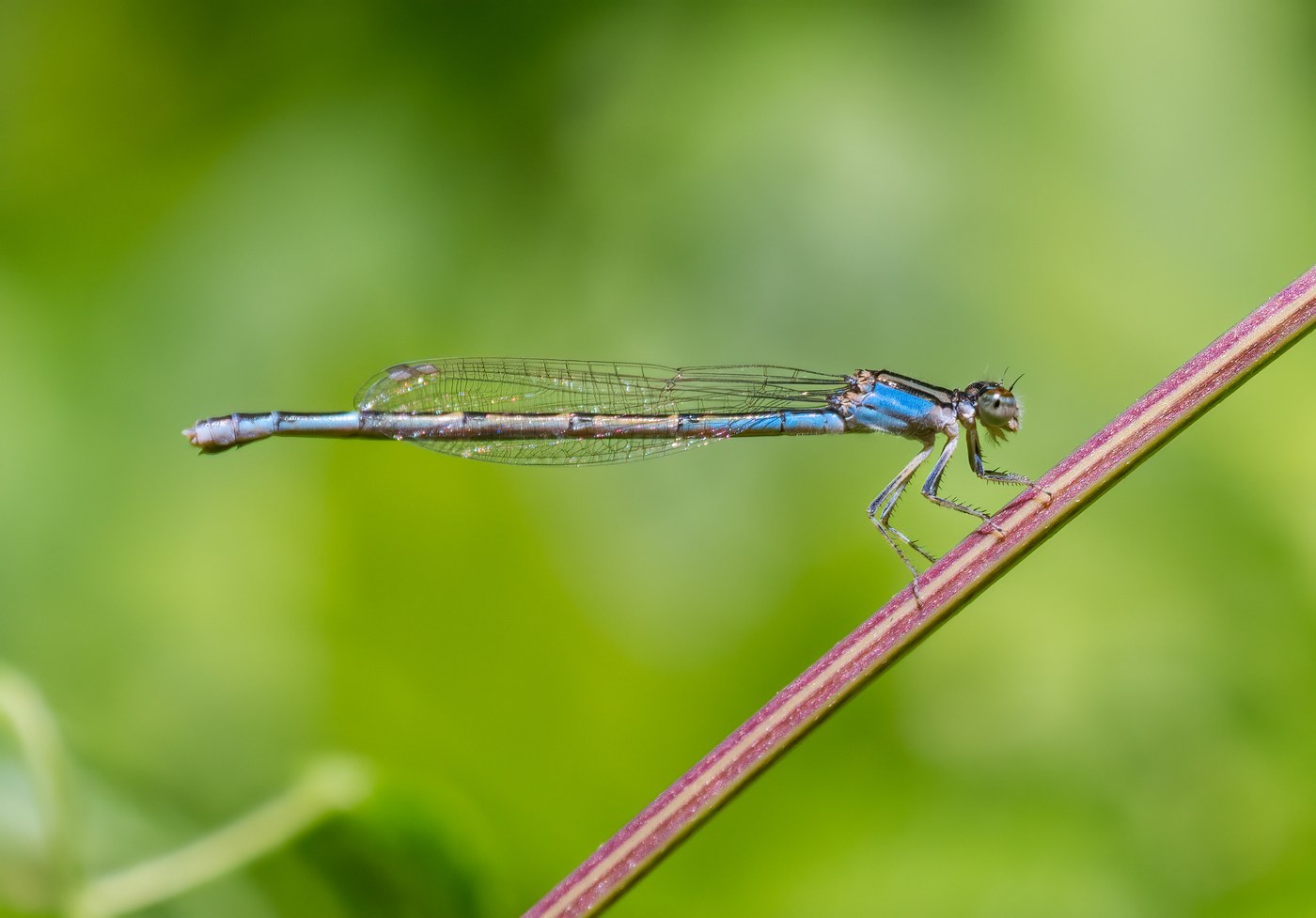
Azure Bluet
A sky-blue damselfly of quiet ponds, the Azure Bluet is named for its vivid blue coloration and is often seen resting in loose swarms over floating vegetation.
dragonflyTent Caterpillar
A social, blue-striped caterpillar that builds a conspicuous silken tent in the fork of a tree branch, sheltering large colonies of siblings that emerge together to feed on leaves.
caterpillar-larva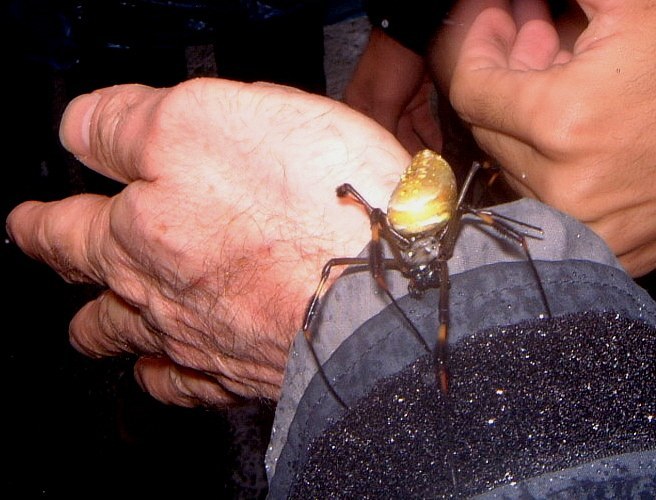
Banana Spider
"Banana spider" is a folk name applied inconsistently across the Americas, but in the southeastern United States it most often refers to the large, golden-silked orb weaver commonly seen spanning gaps between trees along shaded trails.
spider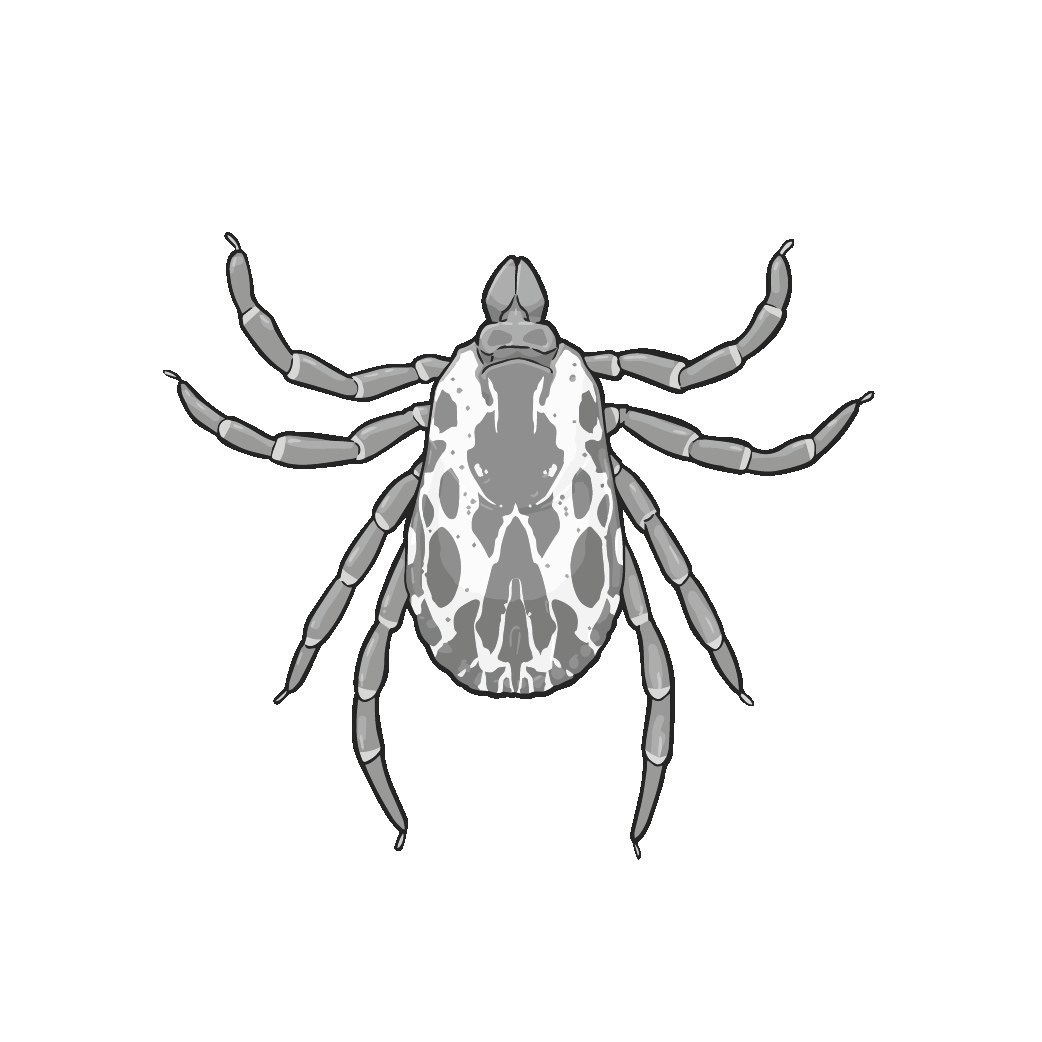
Tick
A small, flattened, oval arachnid with a hard shield-like plate on its back that waits on vegetation and attaches to passing hosts to feed on blood, swelling considerably once fed.
arachnid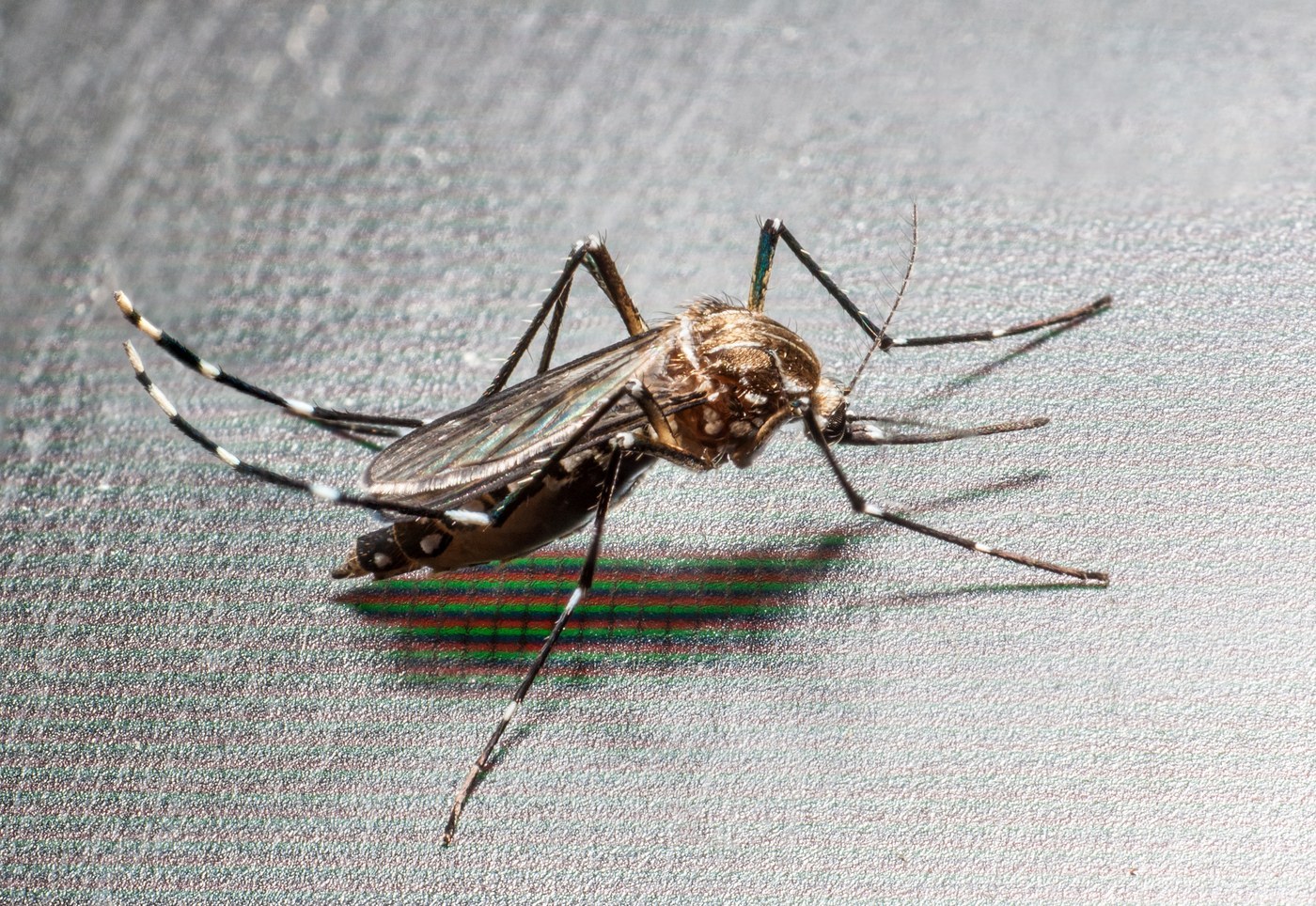
Asian Tiger Mosquito
A small, dark mosquito boldly marked with silvery-white stripes, including one distinctive stripe running straight down the center of its back, that bites readily in broad daylight.
fly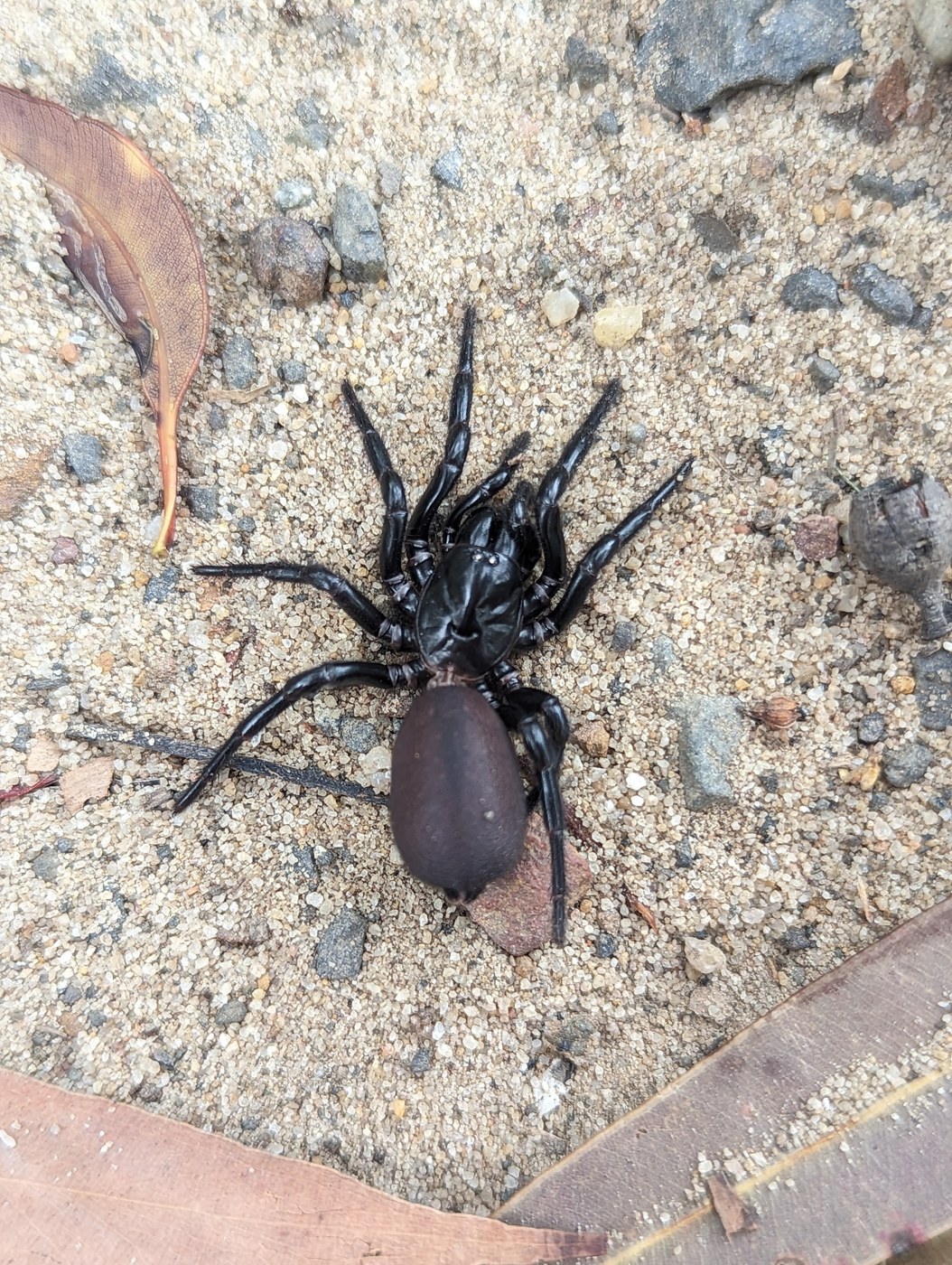
Sydney Funnel-web Spider
Glossy black and heavily built, with large fangs held ready in front of its face, the Sydney funnel-web spider shelters in a silk-lined burrow in moist, shaded ground across the Sydney region, one of Australia's most distinctive ground-dwelling spiders.
spider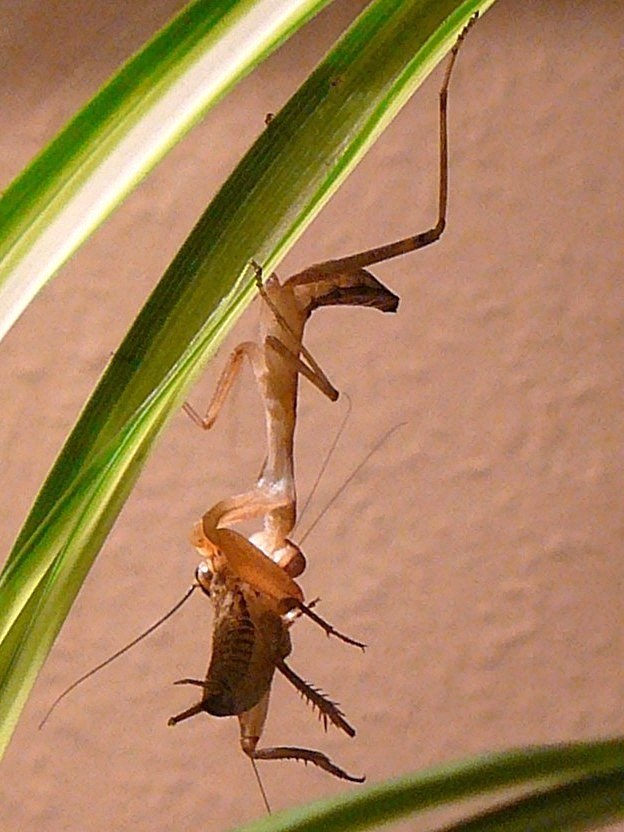
African Mantis
A large, sturdy green or brown mantis frequently found perched on garden shrubs, patiently scanning for insect prey with its sharply angled triangular head.
mantis-stick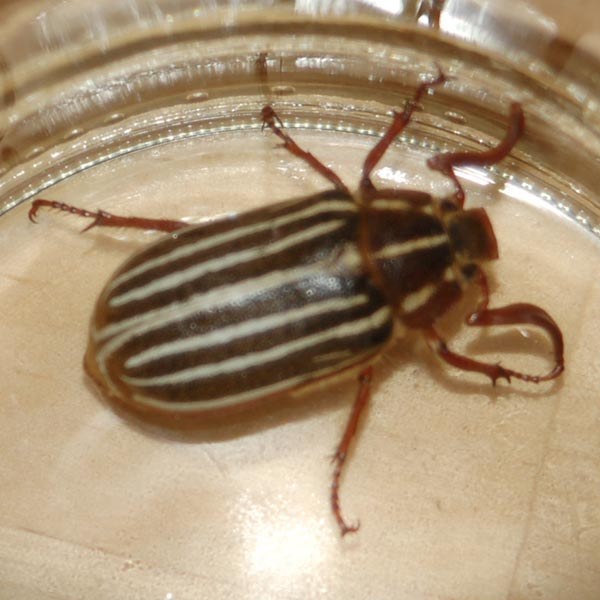
Ten-lined June Beetle
A large, brown scarab beetle marked with bold white racing stripes down its wing covers, known for its loud buzzing flight and hissing defensive squeak.
beetle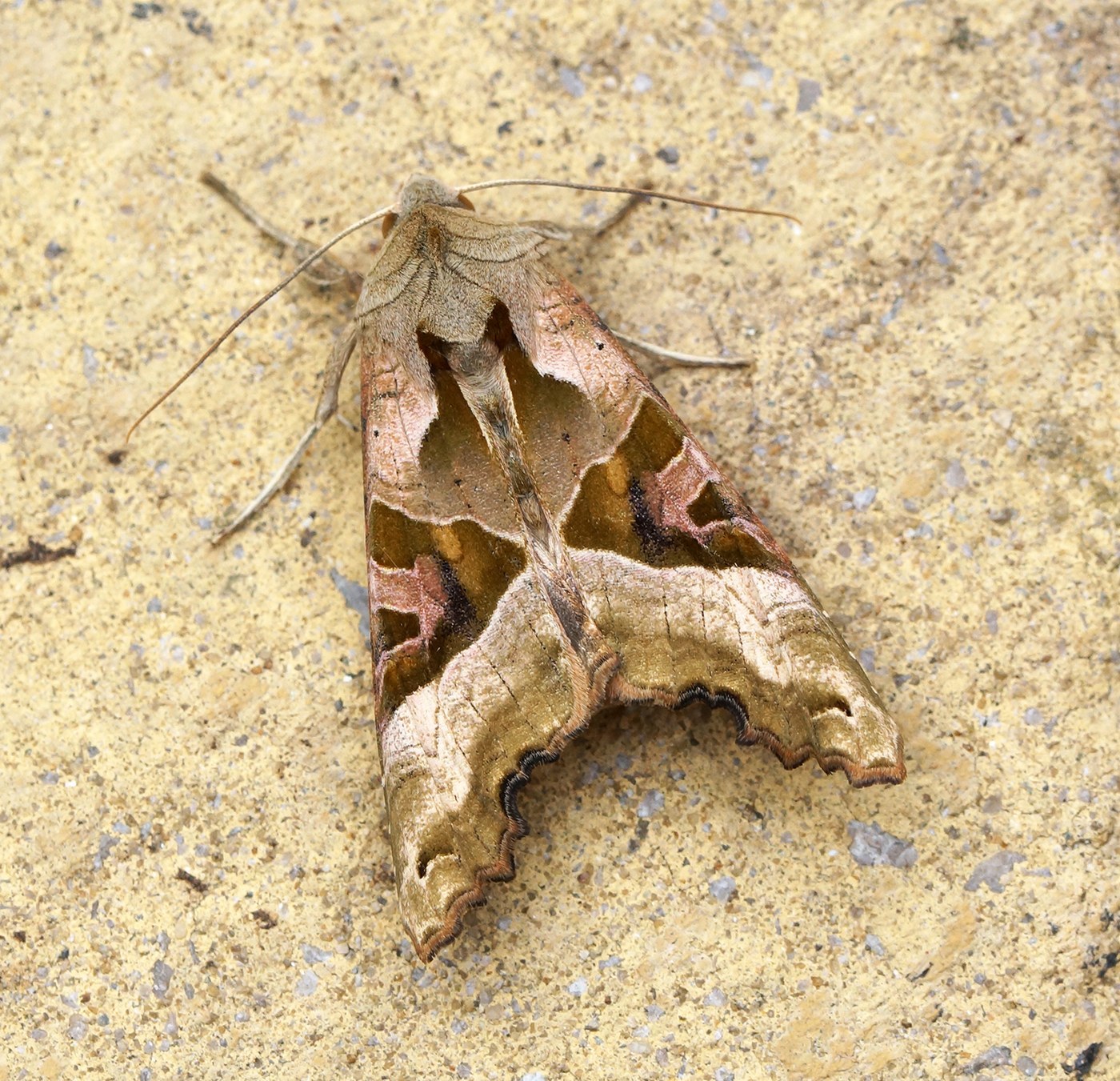
Angle Shades Moth
A common night-flying moth whose forewings fold into a crumpled, tent-like shape that mimics a withered or damaged leaf, marked with bold olive-green and pinkish-brown zigzag bands.
moth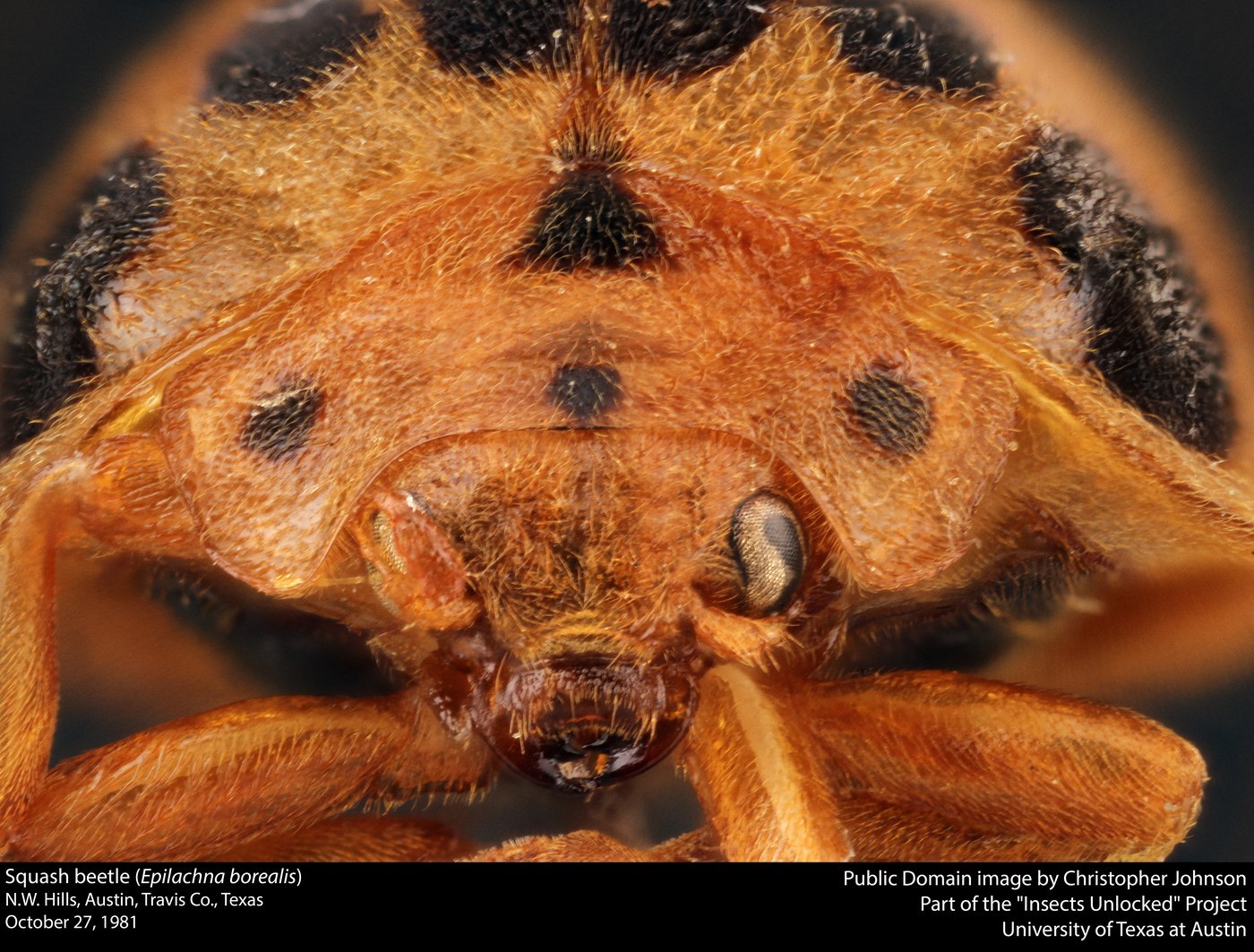
Squash Beetle
A large, coppery-orange, spotted beetle that resembles an oversized ladybird but, unlike most of its relatives, feeds on squash and pumpkin leaves rather than aphids.
beetle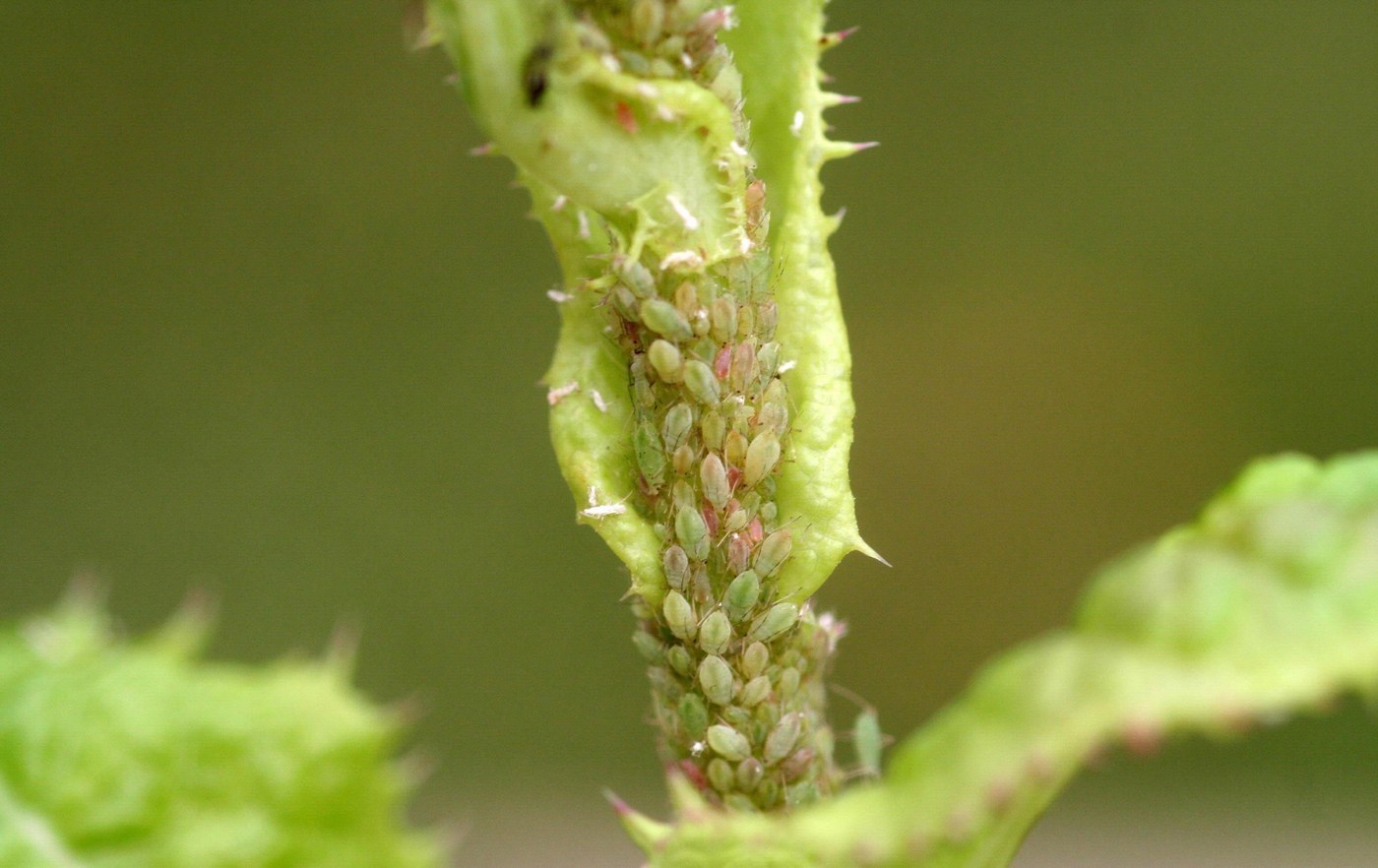
Aphid
A tiny, soft-bodied, pear-shaped insect that clusters in dense colonies on plant stems and leaf undersides, feeding on sap through needle-like mouthparts and often coated in sweet honeydew.
true-bugTrapdoor Spider
A stocky, burrowing spider that engineers a hinged, camouflaged silk door over its underground tunnel, waiting just inside to snap the lid open and seize passing prey in an ambush lasting a fraction of a second.
spider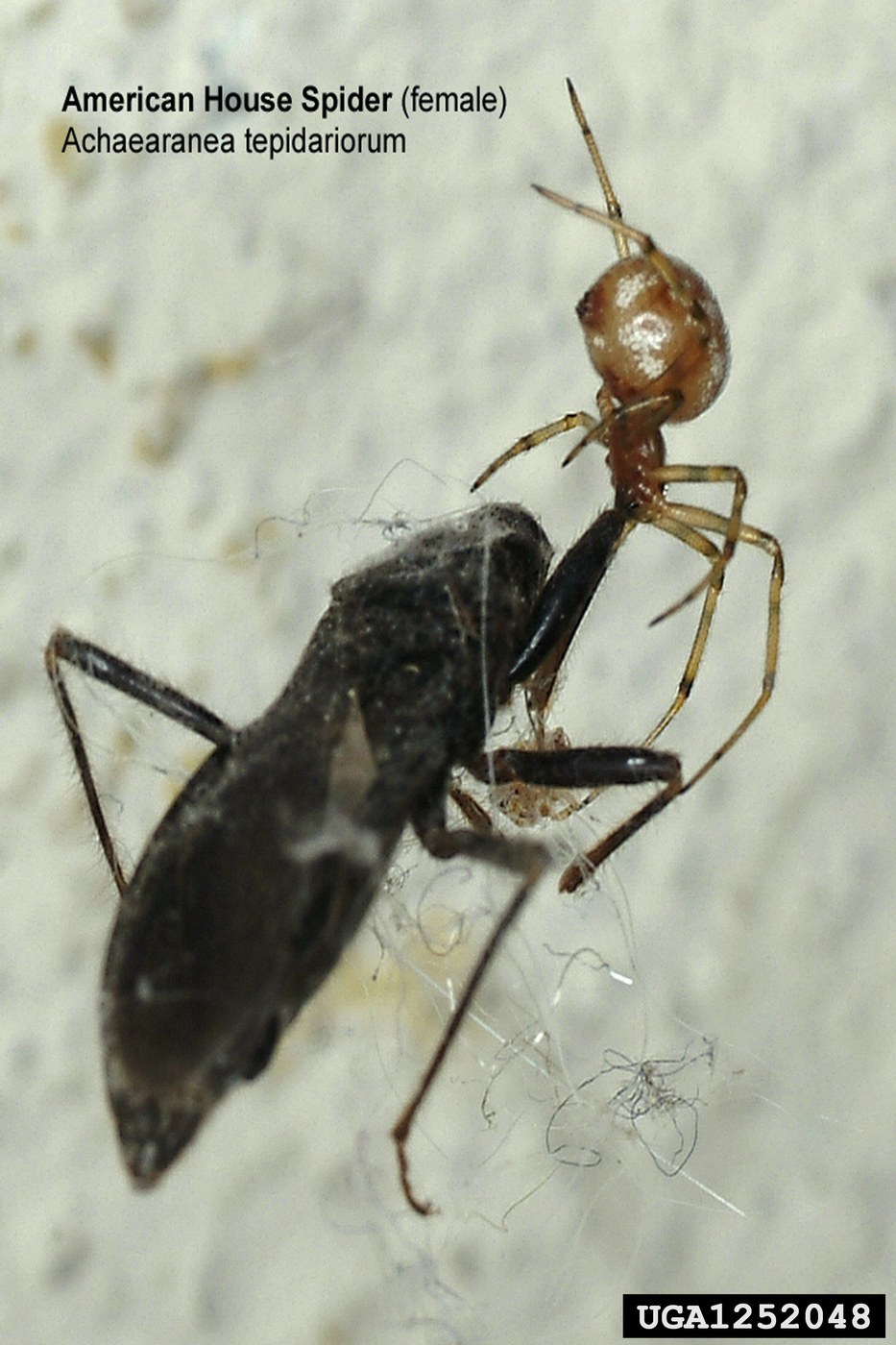
American House Spider
A small, brownish spider with a bulbous, mottled abdomen that spins loose, irregular tangle webs in quiet corners, ceilings, and window frames.
spiderTsetse Fly
A stout grayish-brown fly of African woodlands whose rigid, forward-jutting proboscis and scissor-folded wings set it apart from any ordinary house fly.
fly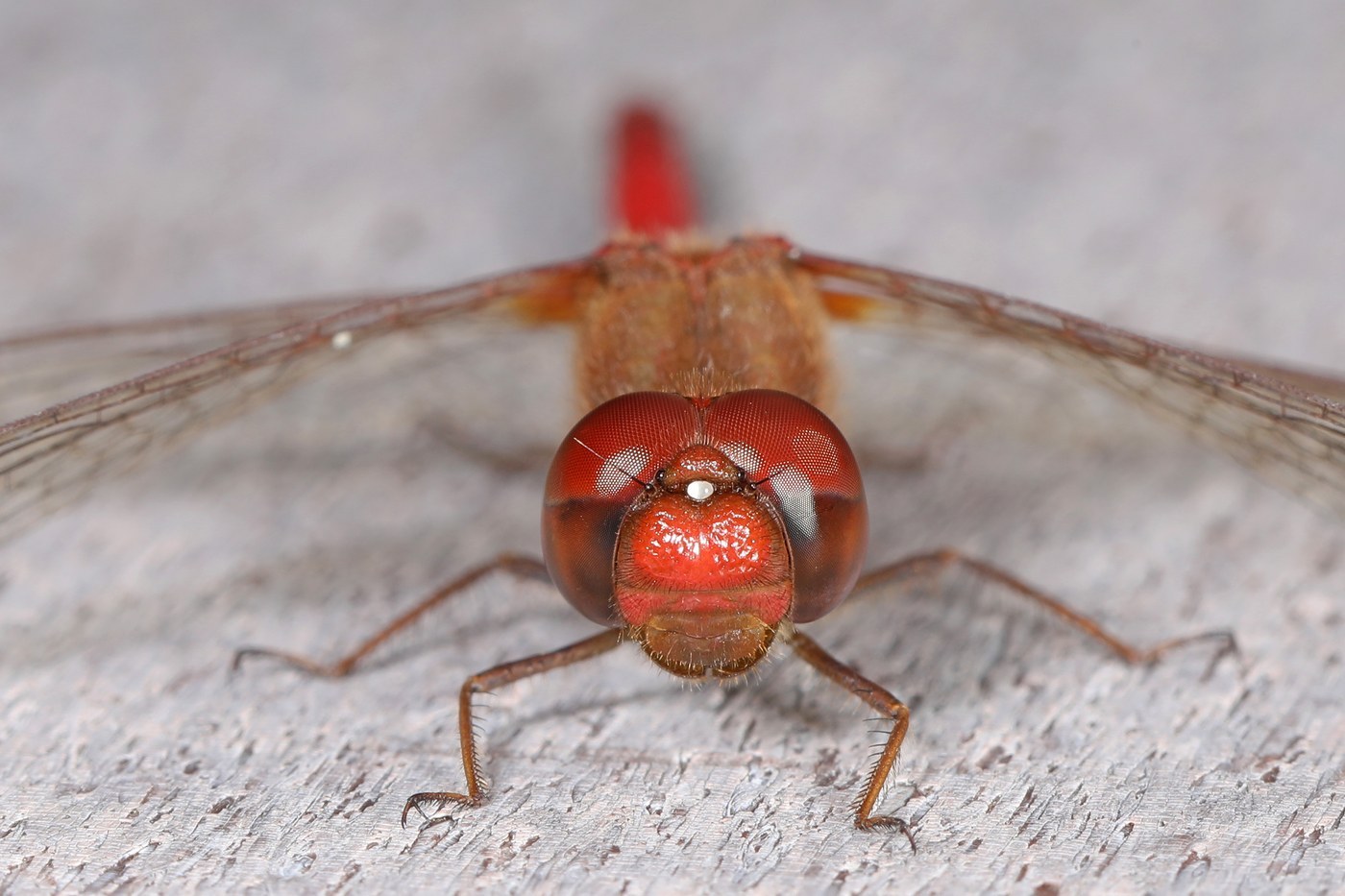
Autumn Meadowhawk
One of the last dragonflies still flying as autumn cools, this small pale-legged meadowhawk can be found sunning on trails and pond banks well into November in many areas.
dragonflyTube Web Spider
A sleek, cylindrical spider that lives inside a silk-lined tube and dashes out to seize insects that stumble across its radiating trip-lines.
spider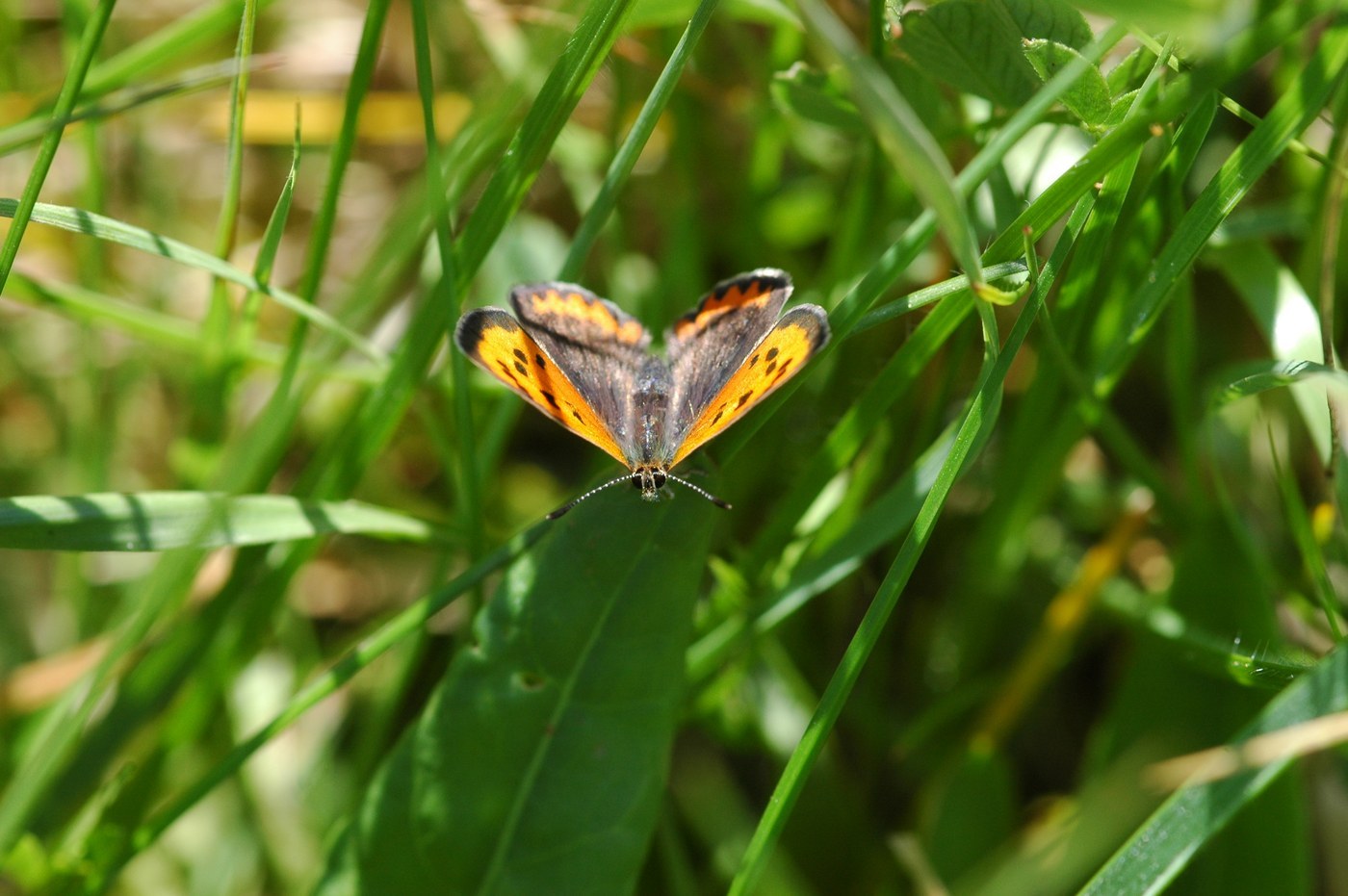
American Copper
A small, bright orange-and-black butterfly with fiery copper-colored forewings and dusky gray hindwings edged in orange, commonly seen darting low over weedy fields and vacant lots.
butterfly